
What counts as digital customer service software
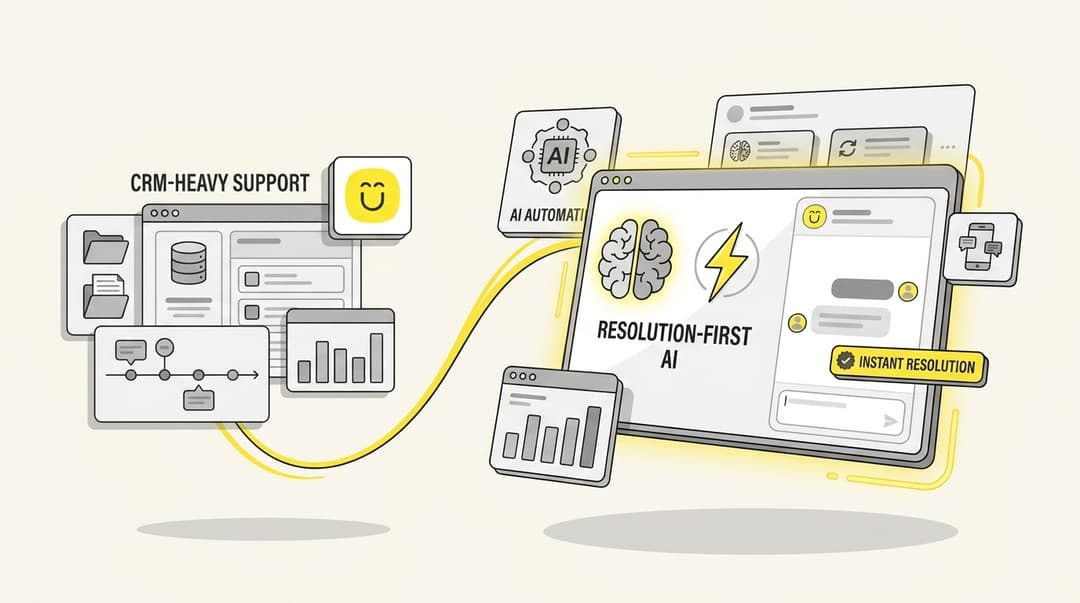
"Digital customer service" is the catch-all for everything that is not a phone call: email, live chat, social DMs, WhatsApp, in-app messaging, and self-service. Digital customer service software is the platform that unifies those channels into one workspace and adds ticketing, a knowledge base, automation, and increasingly an AI agent that can resolve issues on its own.
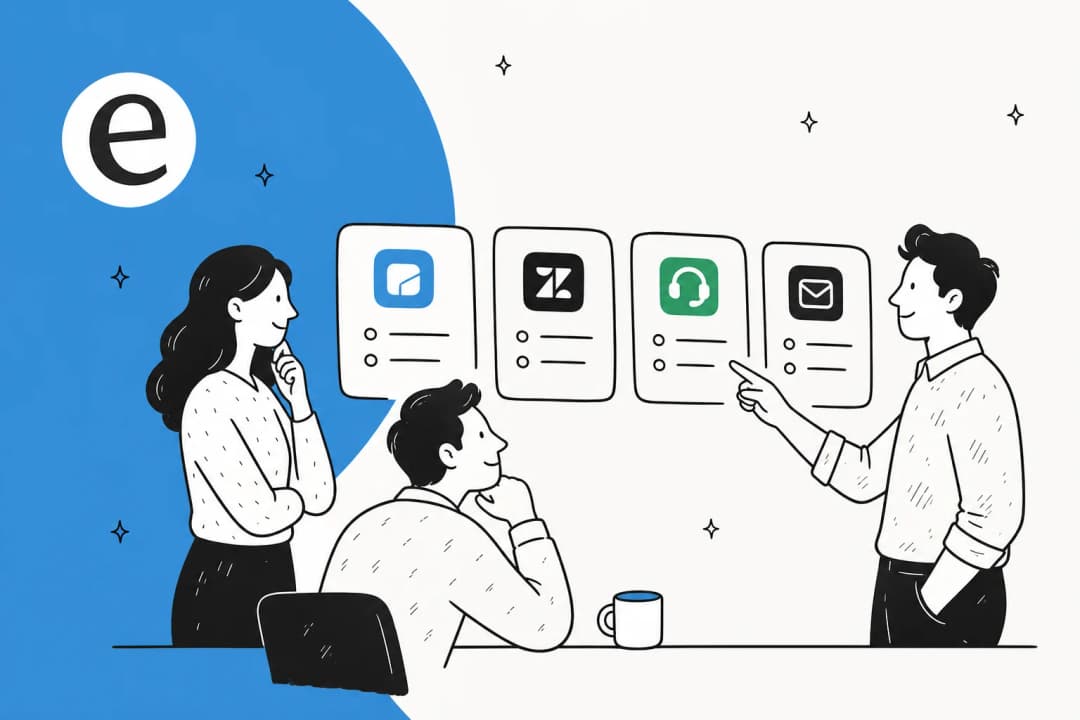
The reason the category feels crowded is that it now covers three overlapping product shapes:
- Helpdesk suites (Zendesk, Freshdesk, Zoho Desk) that own the whole stack, from inbox to analytics.
- Channel-first or vertical tools (Gorgias for ecommerce, Tidio for SMB live chat) built around one strength.
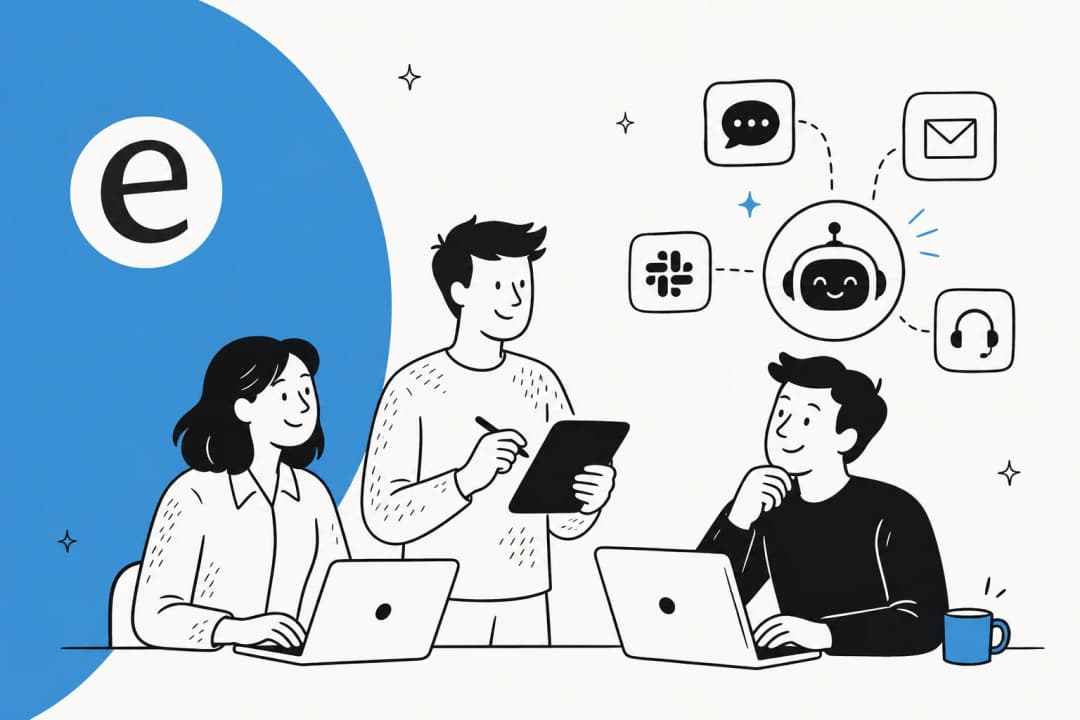
- AI layers (like eesel) that sit on top of an existing helpdesk and add autonomous resolution without a migration.
Every one of these leans hard on AI in 2026, and the marketing all sounds identical ("resolve up to 80% automatically"). The honest version is that the numbers are real for tier-1, repetitive questions and much softer for anything that needs judgment. One CX lead I spoke with, a DTC supplements team, put the right mental model bluntly: they wanted an AI that only handles the tickets it is confident about and leaves the rest alone. That is the difference between a bot that embarrasses you and one you can actually turn on.
What to look for in 2026
Before the list, here is the short checklist I use when a team asks me to help them choose:
- The billing unit, not the headline price. Per-seat, per-ticket, and per-AI-resolution pricing produce wildly different bills. A $19 plan with $50-per-agent add-ons and per-resolution AI on top is not a $19 plan.
- Where the AI learns from. A tool trained only on your help-center articles will plateau fast. The ones that learn from your solved tickets get meaningfully better answers.
- Guardrails and control. Confidence-based routing, simulation against past tickets, and a supervised-then-autonomous rollout are what keep an AI from confidently giving wrong answers.
- Setup and time-to-value. Can you see results in a trial week, or is it a quarter-long implementation?
- Whether you even need to switch. If your team likes its current inbox, an AI layer may beat a full migration.
Keep those five in mind as you read, because they are what separate the tools below far more than any feature checklist does.
The 7 best digital customer service software tools for 2026, at a glance
| Tool | Best for | Starting price | AI pricing model | Free tier | Standout strength |
|---|---|---|---|---|---|
| eesel AI | Adding AI to an existing helpdesk | Usage-based, from $0.40/ticket | Per ticket, no per-seat fee | $50 free usage credit | Learns from past tickets; simulation before go-live |
| Zendesk | Enterprise omnichannel | $19/agent/mo (Suite $55) | Per automated resolution (add-on) | 14-day trial | Depth, scale, 1,800+ apps |
| Freshdesk | Free-to-paid on-ramp | $0, then $19/agent/mo | $49 per 100 sessions | Free 1-2 agents, 6 months | Genuinely free start |
| Gorgias | Shopify / ecommerce | $10/mo (Pro $300) | $0.90 per resolution | 7-day trial | Native Shopify actions |
| Help Scout | Relationship-driven SMB | $25/user/mo | $0.75 per resolution | Free up to 5 users | Clean, email-like inbox |
| Zoho Desk | Budget / Zoho users | $0, then $7/agent/mo | Included Zia tokens | Free Forever, 3 users | Cheapest real plan |
| Tidio | SMB live chat + AI | $0, then $24.17/mo | ~$0.50 per Lyro convo | Free, 50 convos | Lyro AI (Claude-powered) |
Prices are annual-billing entry points as of July 2026; AI is almost always billed separately from the seat or ticket price. Now the detail.
1. eesel AI
Best for: teams that already run a helpdesk (Zendesk, Freshdesk, Gorgias, Front, and more) and want autonomous AI resolution without ripping anything out.
I will be upfront that this is our tool, so read the section with that in mind, but the reason it leads the list is a real structural difference: eesel AI is an AI layer, not another inbox. It connects to your existing helpdesk and learns from your past tickets, help docs, and macros on day one, then drafts replies, triages, and resolves tier-1 tickets under whatever level of autonomy you set.
The part I would actually sell you on is the simulation mode: before it touches a live customer, you run it against thousands of your historical tickets to see exactly what it would have answered and what its resolution rate looks like by topic. That is the answer to the fear every support lead has, which is turning on a bot and hoping. We built that because we have watched confident-sounding AI quietly give wrong answers, so every rollout gets simulated first.
"In the first month, eesel is resolving 73% of our tier 1 requests, and we saw results quickly during our 7-day trial."
Kim Simpson, Gridwise (eesel AI helpdesk agent)
At the top end, Smava runs a fully automated Zendesk agent handling 100,000+ German-language tickets a month, and Design.com handles 50,000+ a month on Freshdesk. It supports 80+ languages and 100+ integrations out of the box.
Pros:
- Learns from solved tickets, not just help articles, so answers improve fast.
- Simulation and confidence-based routing make rollout safe.
- Usage-based pricing with no per-seat fee; you only pay for tickets handled.
- No migration; keeps your current helpdesk and history.
Cons:
- It is a layer, not a full helpdesk, so you still need an underlying inbox.
- SOC 2 is in progress rather than certified (HIPAA and BAA are available on Enterprise).
- Newer and smaller than the incumbent suites.
Pricing: usage-based from $0.40 per ticket, no platform or per-seat fee, with a $50 free-usage credit to start. Enterprise adds a $1,000/month platform fee for SSO, HIPAA, and a dedicated engineer.
Our take: if your problem is "our helpdesk is fine but the queue is drowning us," this is the fastest, lowest-risk way to add real automation. If you have no helpdesk yet, pair it with one of the suites below.
2. Zendesk
Best for: larger teams that need enterprise-grade omnichannel, voice, and analytics under one roof.
Zendesk is the default enterprise answer, and it has leaned all the way into AI with what it now calls the "Resolution Platform," folding in its Forethought acquisition for self-improving agents. It claims 22,000+ AI customers and was named a Leader in the 2025 Gartner Magic Quadrant for CRM customer engagement. The breadth is genuinely hard to match: ticketing, messaging, voice, QA across 100% of interactions, and an 1,800+ app marketplace.
"It's the first AI tool that lived up to the hype and actually delivered and was really straightforward for us to enable and test."
Raz Razaq, Head of Customer Contact Experience Technology (Zendesk)
Pros:
- Deepest feature set and integration marketplace on the list.
- Strong analytics, workforce management, and voice.
- Self-improving AI agents that work beyond just Zendesk.
Cons:
- The pricing is layered and easy to under-estimate.
- The cheap $19 plan includes no AI at all.
- Enterprise pricing is sales-gated with no self-serve.
Pricing: Support Team $19/agent/mo (no AI), Suite Team $55, Suite Professional $115, Enterprise custom. AI agents bill separately per automated resolution, and key add-ons (Copilot, WEM, Contact Center) are each $50/agent/mo. For smaller teams, our Zendesk alternatives for startups piece covers cheaper routes.
Verdict: the right pick when you genuinely need enterprise depth and have the budget and admin time to run it. Overkill (and overpriced) for a five-person team.
3. Freshdesk
Best for: startups and growing teams that want a real free tier now and room to scale later.
Freshdesk is Freshworks' helpdesk, trusted by 74,000+ businesses, and its best trick is the on-ramp: a genuinely free plan for 1-2 agents for six months, no credit card. Its 2026 story is a pivot to agentic AI, with Freddy AI Agent offering 50+ prebuilt agentic workflows and claimed resolutions up to 80%.
Pros:
- One of the few real free starts in the category.
- Clean, unified Command Center workspace.
- Freddy Copilot is a solid agent-assist layer.
Cons:
- Freddy AI is consumption-priced and scales up fast at volume.
- Advanced Omni features sit on a separate, pricier SKU.
- Deeper automation lives on the higher tiers.
Pricing: Growth $19, Pro $55, Enterprise $89 per agent/mo (annual). Freddy Email AI Agent includes the first 500 sessions, then $49 per 100 sessions. See our Freshdesk alternatives for small teams for comparisons, or add eesel to Freshdesk if you want stronger automation on top.
Verdict: the best free-to-paid path for a bootstrapped team. Just model the Freddy session cost before you assume the AI is cheap.
4. Gorgias
Best for: Shopify and ecommerce brands where support and revenue overlap.
Gorgias is purpose-built for online retail, with native Shopify integration at its core, and it claims to power 40% of Shopify brands. The pitch is that support drives sales, so its AI Agent (pre-trained on 1B+ ecommerce conversations) can edit orders, process returns, generate discounts, and upsell, not just answer FAQs. That commerce context is something a general helpdesk cannot fake.
"At 6pm on the second day of Black Friday week, our CX agent said: 'I'll see you tomorrow. We're at inbox zero.'"
Obvi, on hitting 50%+ automation (Gorgias)
Pros:
- Best-in-class Shopify order actions inside the ticket.
- AI that can drive revenue, not just deflect.
- Ticket-based pricing suits variable seasonal volume.
Cons:
- Pricier than general helpdesks at similar volume.
- Each AI interaction also counts as a billable ticket.
- Overkill outside ecommerce.
Pricing: Starter from $10/mo, Pro from $300/mo, Advanced from $750/mo, priced by ticket volume. The AI Agent is a usage add-on at $0.90 per resolved conversation (annual). For Shopify-specific comparisons, see our Gorgias alternatives for Shopify, or add eesel to Gorgias.
Verdict: if you are on Shopify and 40%+ of tickets need real store actions, it earns its premium. If not, a cheaper generalist plus an AI layer wins.
5. Help Scout
Best for: small, relationship-driven teams that want a human, email-like feel.
Help Scout is the tool teams reach for when they want support to feel like a conversation, not a ticket number. It bundles a shared inbox, a Docs knowledge base, the Beacon widget, and AI Answers (claimed ~73% resolution). The most-repeated praise, across G2 and Reddit alike, is that a new agent learns it in under an hour.
The honest caveat: Help Scout famously flip-flopped its pricing model (per-seat to per-interaction and back), which burned some trust on Reddit, and reviewers flag the $0.75-per-resolution AI as a hidden cost at scale.
Pros:
- Cleanest, most intuitive inbox on the list.
- Real free tier (up to 5 users).
- Fast to adopt, low training overhead.
Cons:
- AI Answers stacks $0.75/resolution on top of seats.
- Thinner reporting and advanced features.
- Scaling teams sometimes outgrow it.
Pricing: Standard $25, Plus $45, Pro $75 per user/mo (annual), plus AI Answers at $0.75/resolution. Our Help Scout alternatives for ecommerce covers where it falls short, and you can layer eesel onto Help Scout for stronger automation.
Verdict: lovely for a small team that values simplicity and tone. Watch the AI bill as your volume grows.
6. Zoho Desk
Best for: budget-conscious teams and anyone already in the Zoho ecosystem.
Zoho Desk wins on price, full stop. A genuine Free Forever plan (3 users) plus paid tiers from $7/agent/mo undercut nearly everyone, and it is widely described on Reddit as "almost everything Zendesk does at half the cost." Its automation (Blueprint workflows, SLAs, routing) is legitimately strong for the money.
The weak spot is the AI. Zoho's Zia assistant gets mixed-to-poor reviews (users call it underwhelming), and the best AI features (Answer Bot, sentiment analysis) are gated to the Enterprise tier, which prices out the SMBs that are Zoho's core market. Many teams bolt ChatGPT or another layer on top to compensate.
Pros:
- Cheapest real plans in the category.
- Strong workflow automation and value.
- Deep integration with the wider Zoho suite.
Cons:
- Zia AI is widely seen as weak.
- Best AI features locked to Enterprise.
- Cluttered UI with a real learning curve.
Pricing: Free (3 users), Express $7, Standard $14, Professional $23, Enterprise $40 per agent/mo (annual). More detail in our Zoho Desk alternatives.
Verdict: unbeatable on price and automation. If the native AI disappoints, that is exactly the case for adding a stronger AI layer on top.
7. Tidio
Best for: SMB and ecommerce teams that want live chat plus a capable AI agent, cheaply.
Tidio is a live-chat-first platform that has grown into a full SMB support suite, and its differentiator is Lyro, an AI agent powered by Anthropic's Claude that claims a market-leading 67% resolution rate. It is trusted by 300,000+ businesses and rates 4.8/5 on the Shopify App Store. Lyro is specifically praised for staying grounded in your data rather than hallucinating.
Pros:
- Strong, Claude-powered AI at an SMB price.
- Easy setup, no engineering required.
- Standalone Lyro can bolt onto other helpdesks.
Cons:
- Layered usage pricing (convos + Lyro + Flows) gets hard to predict.
- The jump from Growth to Plus ($749/mo) is steep.
- Premium pricing is contact-sales only.
Pricing: Free (50 convos), Starter $24.17, Growth from $49.17, Plus from $749/mo; standalone Lyro from $32.50/mo, at roughly $0.50 per Lyro conversation (calculator-derived, not a printed rate). For AI-specific comparisons, see best AI for Tidio.
Verdict: a strong value pick for small ecommerce teams that want live chat and real AI in one tool. Model the usage tiers carefully before you scale.
How much does digital customer service software cost?
Here is the thing nobody puts on the pricing page: the three tools with the "same" $50-ish price tag can bill you completely differently once AI is switched on.
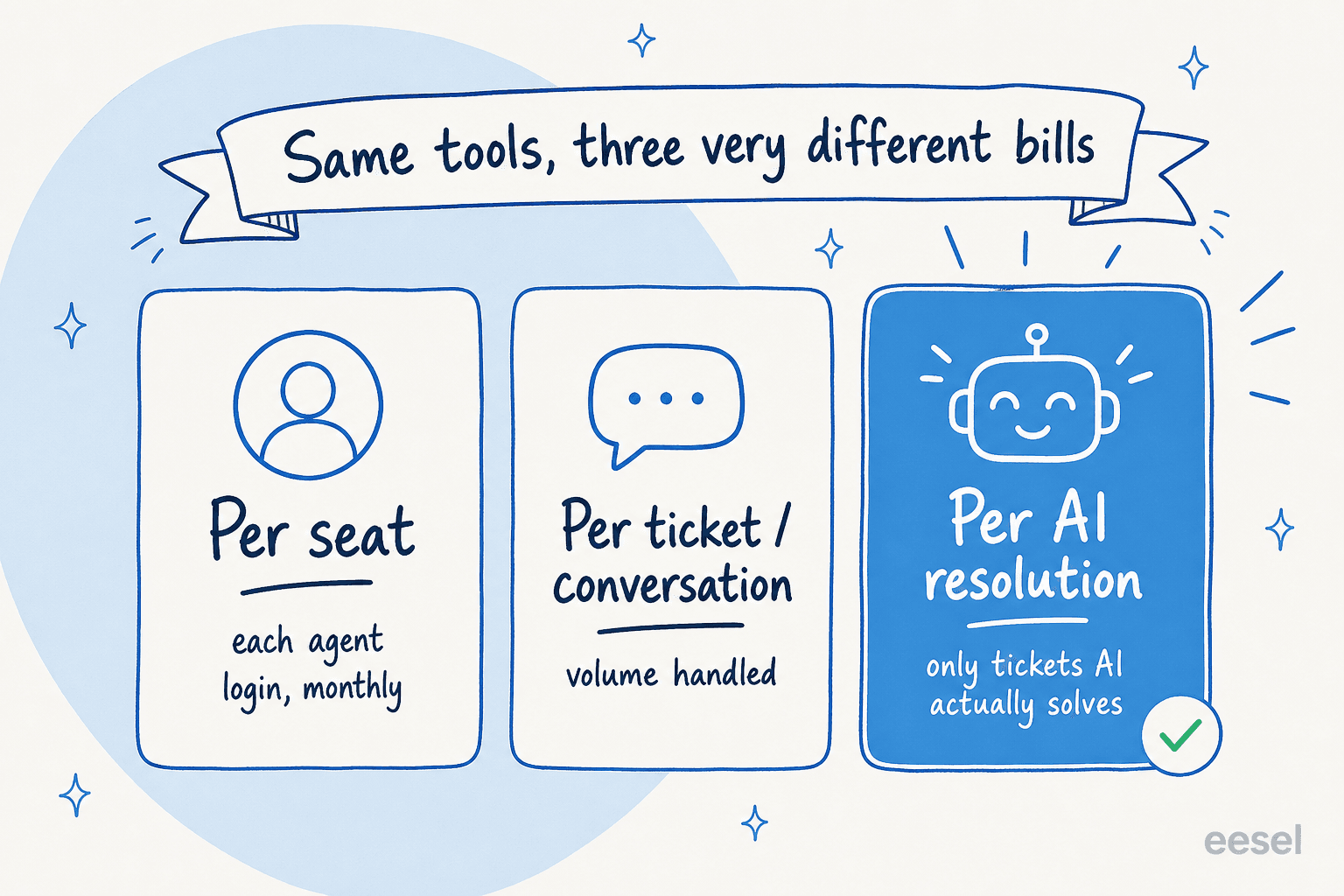
- Per seat (Zendesk, Help Scout, Zoho Desk): you pay for every agent login, whether they are busy or not. Predictable, but you pay for idle capacity.
- Per ticket / conversation (Gorgias): you pay for volume handled, which flexes with seasonality but can spike during peaks.
- Per AI resolution (Zendesk AI, Gorgias AI, Help Scout, eesel): you pay only for tickets the AI actually resolves. This is the fairest model, but the per-unit price ranges a lot ($0.40 to $1.00+).
A worked example. Say a 5-agent team handles 3,000 tickets a month and wants AI to resolve 40% of them (1,200 resolutions):
- Help Scout Plus: 5 seats x $45 = $225, plus 1,200 x $0.75 = $900 in AI. Total ~$1,125/mo.
- Gorgias Pro + AI: ~$300 base plus 1,200 x $0.90 = $1,080. Total ~$1,380/mo.
- eesel: no seats, 1,200 tickets x $0.40 = $480/mo (light dashboard lookups are free).
The point is not that one tool is always cheapest, it is that the billing unit swings the bill by 2-3x at the same volume. Model your real ticket count against each model before you sign. Our AI customer service cost breakdown has more scenarios, and reducing support costs covers the levers.
How to pick the right one
Strip away the feature lists and the choice usually comes down to where you sit on two axes: how complex your operation is, and how much you want AI doing the heavy lifting.
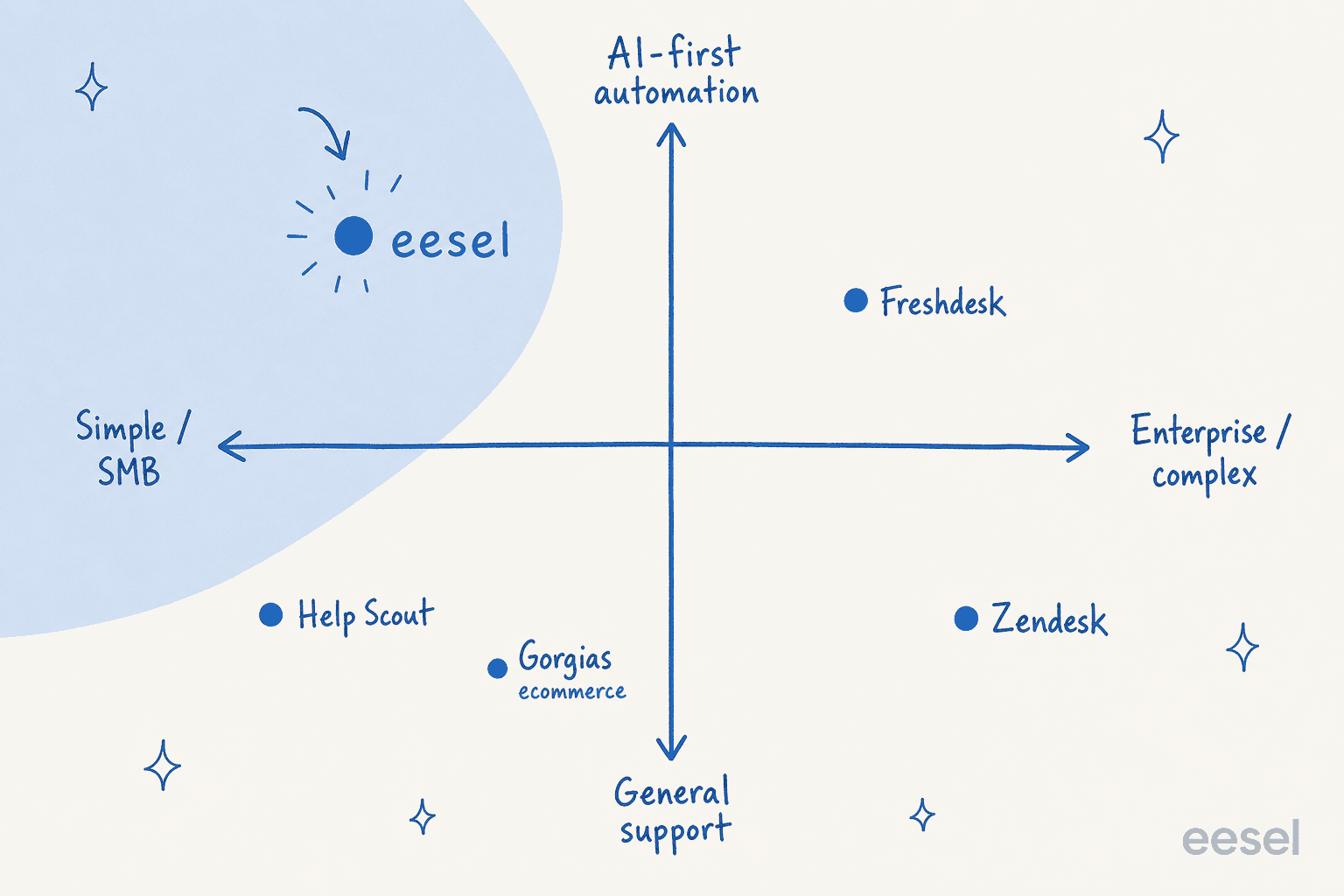
- You are enterprise and need everything in one place: Zendesk, with Freshdesk as the value alternative.
- You are on Shopify: Gorgias, or a generalist plus an AI layer.
- You are a small team that wants simplicity: Help Scout, or Zoho Desk if budget rules.
- You want the cheapest capable start: Zoho Desk or Tidio.
- You already have a helpdesk and just want the queue to shrink: add an AI layer like eesel instead of migrating.
That last option is the one most teams overlook. There is a real "build vs buy vs bolt-on" decision here, and one founder I talked to, at GENERAL BYTES, summed up why the bolt-on usually wins: they could write their own LLM app, but they did not want to invest the time or maintain it. Switching your whole helpdesk to get better AI is the most expensive version of that same mistake.
Try eesel
If you take one thing from this list, let it be that you probably do not need to switch tools to get modern AI support, you need to add the AI layer to the tools you already run. That is exactly what eesel AI does: it connects to Zendesk, Freshdesk, Gorgias, Help Scout, Zoho Desk, and more, learns from your past tickets and help docs on day one, and lets you simulate its resolution rate against your real history before a single customer sees it.

Pricing is usage-based from $0.40 per ticket with no per-seat fee, and you can start with $50 of free usage, no credit card, no sales call. If your queue is drowning your team, that is the fastest way to find out how much of it can safely go to AI. Try eesel.
Frequently Asked Questions
What is digital customer service software?
How much does digital customer service software cost in 2026?
What should I look for in digital customer service software for a small team?
Can AI customer service software resolve tickets without a human?


Article by
Kurnia Kharisma
Kurnia is a software engineer and writer at eesel AI with two years of SEO experience, writing about AI tools, helpdesk software, and customer support. He pairs a developer's understanding of how these products are built with search-driven research into what actually ranks and resonates with the people searching for them.