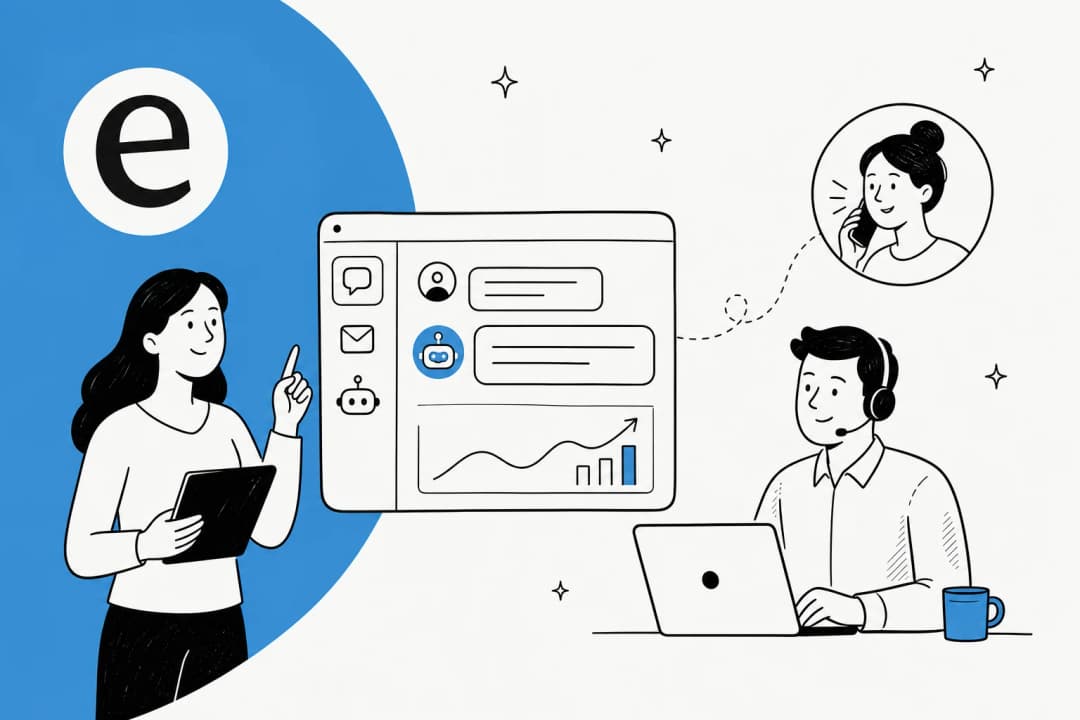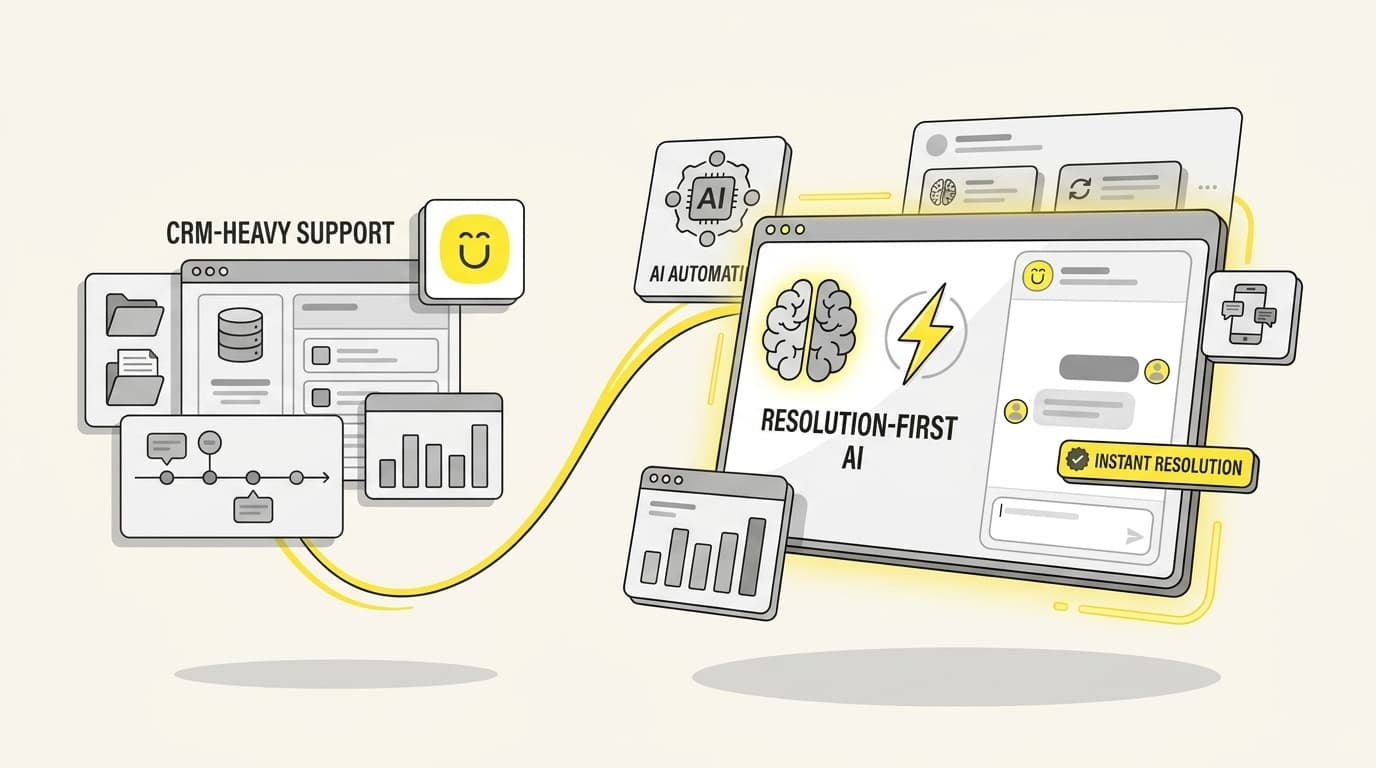
Kustomer's pitch has always been simple: every conversation deserves a 360-degree view. The promise sells well in demos, but in 2026 that promise has hit a wall. High per-seat pricing, mounting AI add-on costs, and a sprawling interface ask agents to navigate data structures instead of solving tickets. Teams aren't questioning whether unified context matters; they're questioning whether they need a CRM-shaped helpdesk to get it.
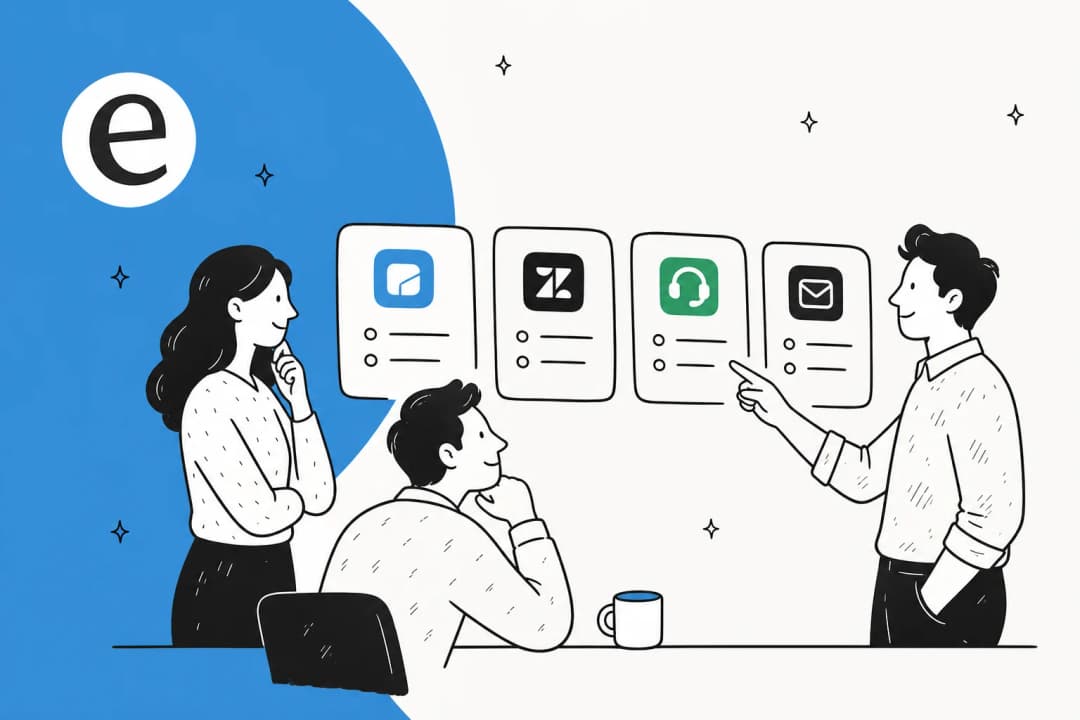
This guide compares seven Kustomer alternatives, from full-platform replacements like Zendesk and Salesforce to AI layers like eesel AI that bolt on top of your existing stack. We judge them on what actually counts in 2026: resolution speed, pricing transparency, and how quickly each one delivers value once it's live.
What makes a great Kustomer alternative?
A modern help desk should be an engine for resolution, not just a vault for data. While legacy CRMs focus on "the 360-degree customer view," modern teams prioritize the agent's ability to solve problems quickly. If your team spends more time navigating custom objects than answering tickets, the platform is failing you.
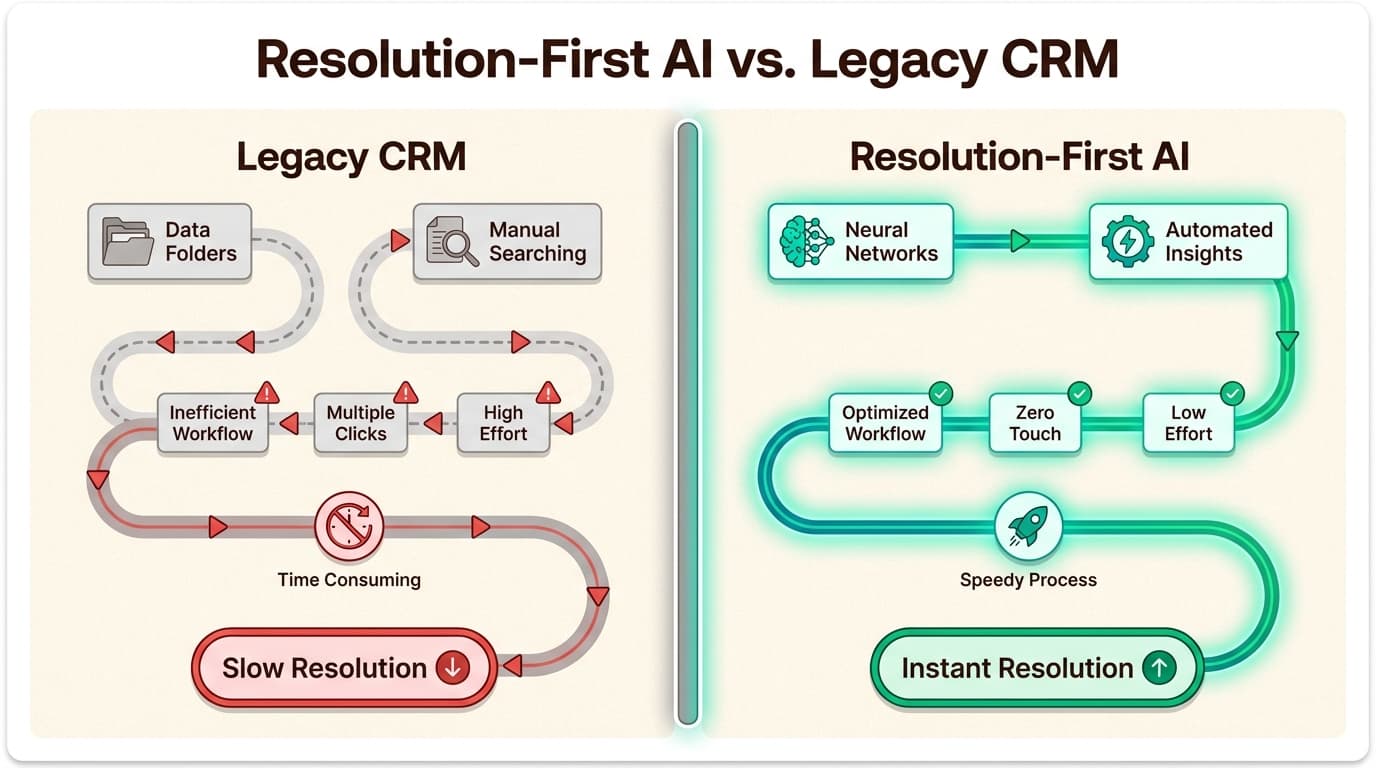
Resolution speed is the metric that matters most in 2026. A great alternative offers AI-native capabilities from the ground up and contextual intelligence that understands what customers need based on past interactions. Ease of migration and mobile accessibility are also critical. Implementation should take days, not weeks, and robust Android and iOS apps are non-negotiable for a mobile workforce. Finally, forward-thinking solutions allow you to upgrade existing workflows with an AI layer rather than ripping out your infrastructure.
Why teams are looking for Kustomer alternatives in 2026
The primary driver for leaving Kustomer is the disconnect between its high entry price and the value delivered to agents. With a base price of $89 to $139 per user and expensive AI add-ons, the total cost is often hard to justify. Frequent downtime and slow performance reports further complicate the value proposition for many growing teams.
The "migration trap" is another concern. Moving to a "rip-and-replace" platform like Kustomer can take months of downtime and retraining. Most teams cannot afford to pause operations for half a year. Accessibility also remains a hurdle; the lack of a robust mobile app is a major demerit for on-the-go support leads and field techs. This combination of high cost, complexity, and mobile gaps is driving teams toward Best Kustomer alternatives that prioritize agent productivity.
Comparison of top Kustomer alternatives in 2026
| Product | Best For | Starting Price | Key Differentiator |
|---|---|---|---|
| eesel AI | Teams wanting AI resolution without migration | $0.40 per ticket | Works on top of your existing help desk |
| Zendesk | Large enterprises needing scale | $19 per agent/mo | 1,500+ apps in its marketplace |
| Freshdesk | SMBs seeking affordability | $19 per agent/mo (paid) | User-friendly UI and free program |
| Gorgias | Ecommerce brands on Shopify | $10/mo (50 tickets) | Edit orders and process refunds in-app |
| Salesforce Service Cloud | Teams deep in the Salesforce ecosystem | $25 per user/mo | Native 360-degree customer view |
| Zoho Desk | Users of the Zoho product suite | $7 per user/mo | Excellent value for integrated teams |
| Help Scout | Teams prioritizing simplicity | $25 per user/mo | Clean UI focused on human connection |
Best Kustomer alternatives in 2026
eesel AI
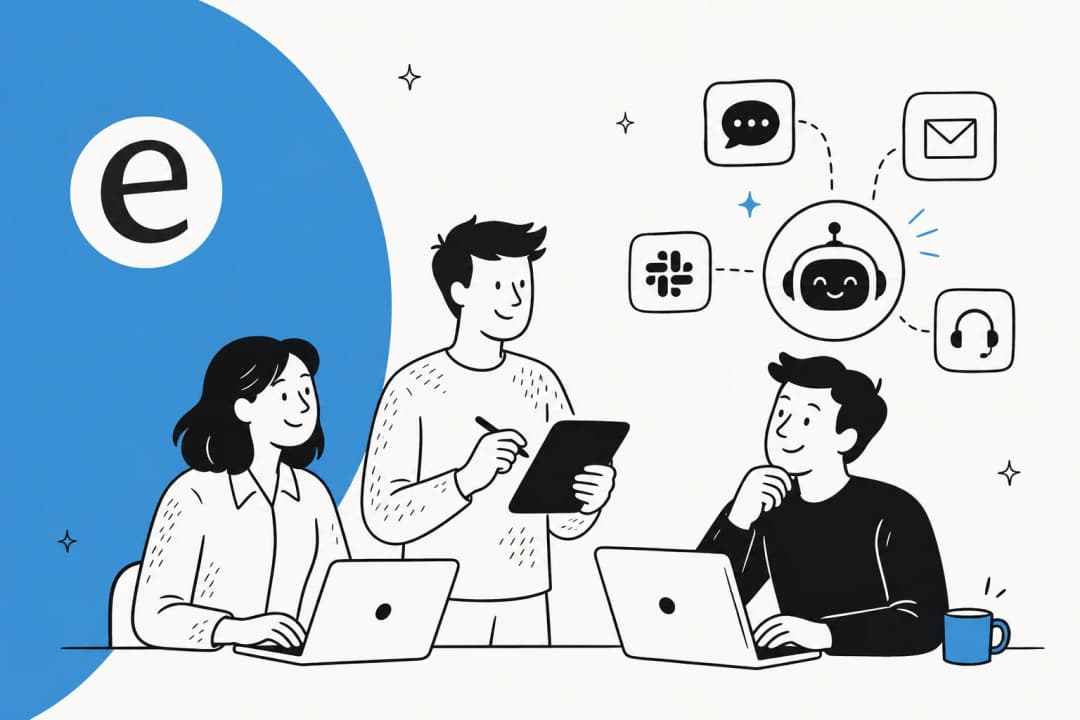
The best way to upgrade support isn't to switch platforms, but to hire an AI teammate. eesel AI functions as an "AI layer" on top of tools like Zendesk, Freshdesk, or Slack. Instead of a "rip-and-replace" migration, our agents can be onboarded in minutes. Our AI Helpdesk Agent learns from your tickets and docs to resolve issues autonomously or draft them for review. It doesn't just point users to articles; it takes real actions like looking up orders or processing refunds.
| Plan | Price | Trial | Key Features |
|---|---|---|---|
| Free Trial | $0 | $50 free usage | All features unlocked, no credit card required |
| Standard | $0.40 per ticket/chat | Included | $4.00 per blog post draft, no monthly minimums or platform fees |
| Annual Commit | Min $225 per month | Included | 25% discount on usage with $300/mo commit |
| Enterprise | $1,000 + Usage | Included | SSO, HIPAA, higher KB limits, dedicated support |
Pros:
- No migration required; achieved up to 81% autonomous resolution.
- Usage-based pricing with a $50 free trial.
Cons:
- Effectiveness depends on the depth of your existing knowledge base.
Zendesk
Zendesk is the enterprise standard for scalability. It offers a marketplace of 1,500+ apps and focuses on AI agents that resolve issues using the Resolution Learning Loop™. It's a dependable omnichannel choice for email, chat, voice, and social media.
| Plan | Price (Annual) | Trial | Key Features |
|---|---|---|---|
| Support Team | $19 per agent/mo | 14 days | Email, Facebook, and X ticketing |
| Suite Team | $55 per agent/mo | 14 days | Essential AI agents and messaging |
| Suite Professional | $115 per agent/mo | 14 days | Copilot and HIPAA |
| Suite Enterprise | $169 per agent/mo | 14 days | Approval workflows and audit logs |
Pros:
- Unmatched scalability and reliable integration ecosystem.
- Advanced quality assurance and workforce management.
Cons:
- Steep learning curve and complex setup.
Freshdesk
Freshdesk is an approachable alternative known for its intuitive UI and affordability. It provides a generous free program and industry-specific AI agents via Freddy AI. It's perfect for teams needing a shared inbox without enterprise-heavy complexity.
| Plan | Price (Annual) | Trial | Key Features |
|---|---|---|---|
| Free Program | $0 | N/A | Up to 2 agents for 6 months |
| Growth | $19 per agent/mo | 14 days | Essential ticketing and portal |
| Pro | $55 per agent/mo | 14 days | Custom objects and advanced reporting |
| Enterprise | $89 per agent/mo | 14 days | Audit logs and approval workflows |
Pros:
- Very user-friendly and approachable for SMB teams.
- Fast deployment with "ready-to-launch" agents.
Cons:
- Advanced features like custom objects are locked behind higher tiers.
Gorgias
Gorgias is purpose-built for ecommerce. Agents can edit Shopify orders directly in-app, and the platform provides revenue attribution to track the support team's sales impact. Their AI Agent resolves returns and order tracking autonomously.
| Plan | Price (Annual) | Trial | Key Features |
|---|---|---|---|
| Starter | $10/mo | 7 days | 50 tickets/mo, 3 user seats |
| Basic | $50/mo | 7 days | 300 tickets/mo, office hours support |
| Pro | $300/mo | 7 days | 2,000 tickets/mo, revenue statistics |
| Advanced | $750/mo | 7 days | 5,000 tickets/mo, dedicated email server |
Pros:
- Best-in-class Shopify and ecommerce native features.
- Manage orders and refunds without switching tabs.
Cons:
- Strictly focused on retail; baseline plans have API rate limits.
Salesforce Service Cloud
For those in the Salesforce ecosystem, Service Cloud unifies support with CRM data. It uses Agentforce AI to automate tasks and provides predictive insights. It's a powerful choice for global organizations needing unmatched case management.
| Plan | Price (Annual) | Trial | Key Features |
|---|---|---|---|
| Starter Suite | $25 per user/mo | 30 days | Core CRM and service for small teams |
| Professional | $80 per user/mo | 30 days | Complete service solution for any team |
| Enterprise | $165 - $175 per user/mo | 30 days | Customization and API access |
| Unlimited | $330 - $350 per user/mo | 30 days | Includes Einstein Bots and AI features |
Pros:
- Deepest CRM integration and high scalability.
- Advanced modules for self-service and contact centers.
Cons:
- Famously complex setup often requires consultants; high total cost.
Zoho Desk
Zoho Desk offers excellent value for users of the Zoho product suite. It features Zia AI assistant for sentiment analysis and supports omnichannel ticketing across 10+ channels. It is effective for managing knowledge base content in multiple languages.
| Plan | Price (Annual) | Trial | Key Features |
|---|---|---|---|
| Free | $0 | N/A | 3 agents, email ticketing |
| Express | $7 per user/mo | 15 days | Multi-level escalations |
| Standard | $14 per user/mo | 15 days | Live chat and generative AI |
| Professional | $23 per user/mo | 15 days | AI Agents and multi-department support |
| Enterprise | $40 per user/mo | 15 days | Zia Answer Bot and sandbox |
Pros:
- Excellent value for teams in the Zoho ecosystem.
- Smooth integrations with native Zoho apps.
Cons:
- Interface can feel cluttered; fewer third-party integrations.
Help Scout
Help Scout prioritizes simplicity and human connection with its "anti-ticket" shared inbox. It features AI Answers to resolve questions autonomously and includes a Beacon widget for context-aware help. It's a favorite for teams prioritizing human connection over data hoarding.
| Plan | Price (Annual) | Trial | Key Features |
|---|---|---|---|
| Standard | $25 per user/mo | 15 days | AI assistant and basic workflows |
| Plus | $45 per user/mo | 15 days | AI drafts and advanced workflows |
| Pro | $75 per user/mo | 15 days | Unlimited users (min 10) and HIPAA |
Pros:
- One of the cleanest and most intuitive interfaces.
- Focuses on human connection and fast setup.
Cons:
- Lacks native voice support and complex routing.
Choosing the right Kustomer alternative for your team
Selection depends on your specific goals. For ecommerce on Shopify, Gorgias is the specialist choice. Large enterprises needing scale should look to Zendesk. If already using Zoho or Salesforce, their native integrations provide the most value.
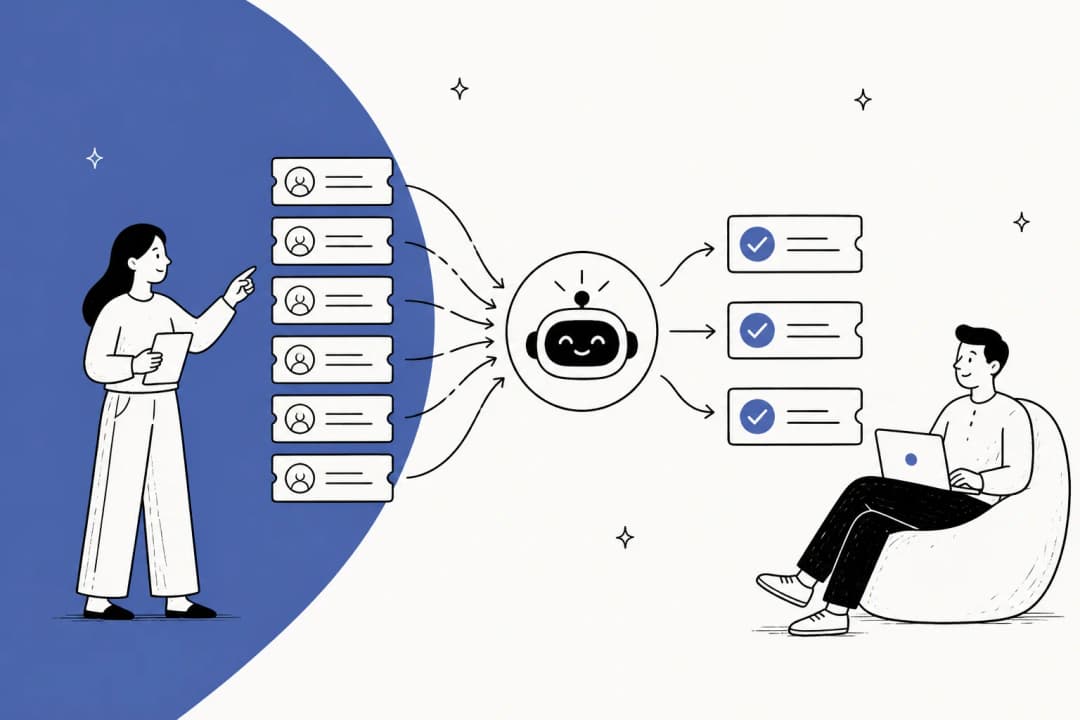
Avoid the "data theater" of CRM-heavy platforms. Don't optimize for data volume; optimize for resolution speed. Look for tools that prioritize the agent workspace and offer AI that actually does the work. Factor in the hidden costs of migration; sometimes upgrading your current help desk with an AI layer like eesel AI is the more efficient path.
Upgrade your existing help desk with eesel AI
The bottom line? You don't necessarily need to switch your help desk to get Kustomer-level intelligence. Instead of a risky migration, you can hire an AI teammate. eesel AI allows you to keep your current stack, whether it's Zendesk, Freshdesk, or Intercom, and add the autonomous resolution power you need.
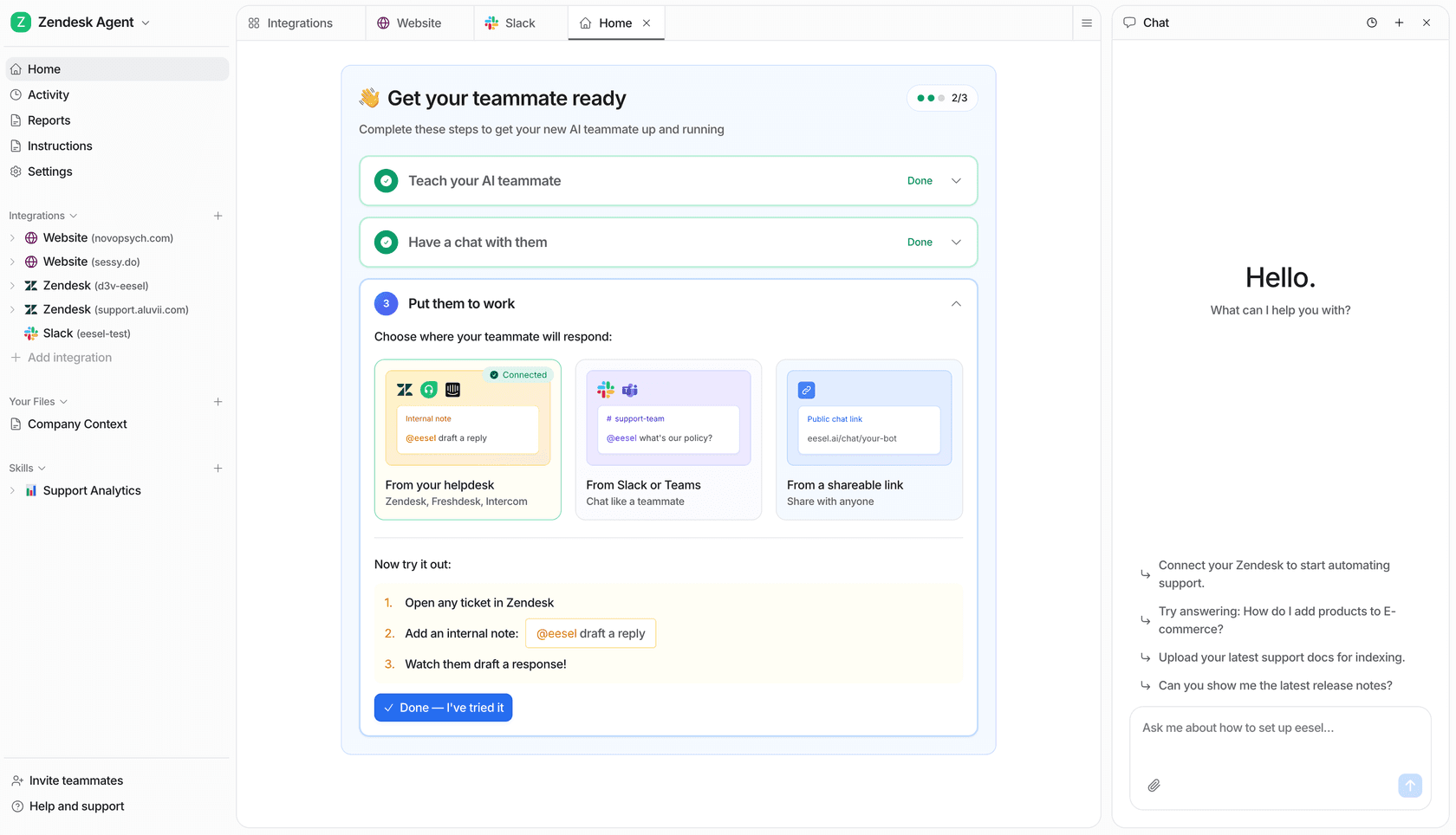
We focus on outcomes, not tools. You can invite eesel AI to your team in minutes and level up to full autonomy as trust builds. With our commitment to security, including SOC 2 Type II monitoring via Vanta, your data is in safe hands. Start a free trial of eesel AI today and see how resolution-first support can transform your team.