
The published price card, in full
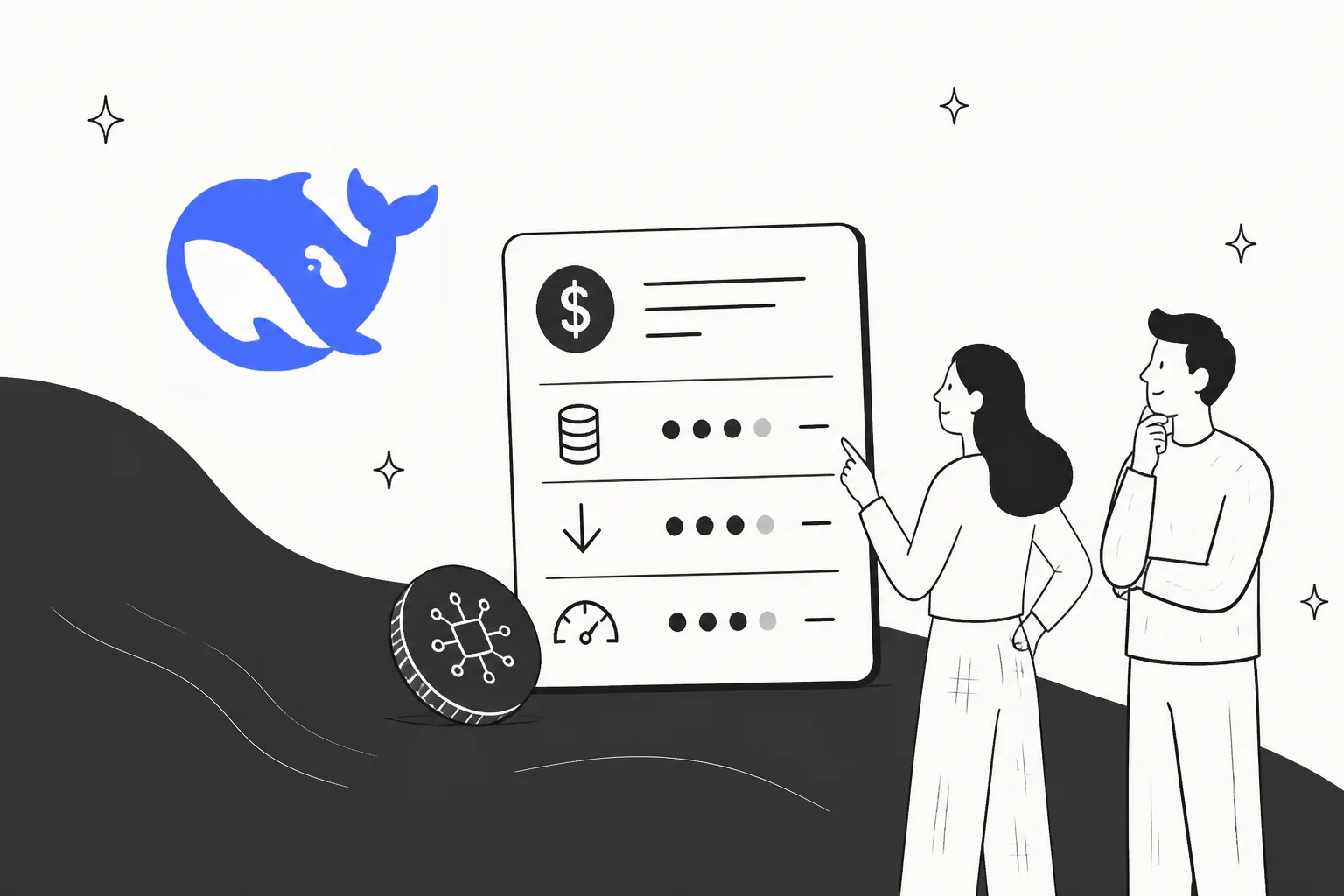
On DeepSeek's Models and Pricing page there are exactly two models, and deepseek-v4-flash is one of them. The old deepseek-chat and deepseek-reasoner rows have gone. Two V4 models and that is the whole lineup. I re-checked the card the morning I wrote this.
| Per 1M tokens | deepseek-v4-flash | deepseek-v4-pro |
|---|---|---|
| Input, cache hit | $0.0028 | $0.003625 |
| Input, cache miss | $0.14 | $0.435 |
| Output | $0.28 | $0.87 |
| Context length | 1M | 1M |
| Max output | 384K | 384K |
| Thinking mode | On by default | On by default |
| Responses API | Yes | No |
| Concurrency limit | 2,500 | 500 |
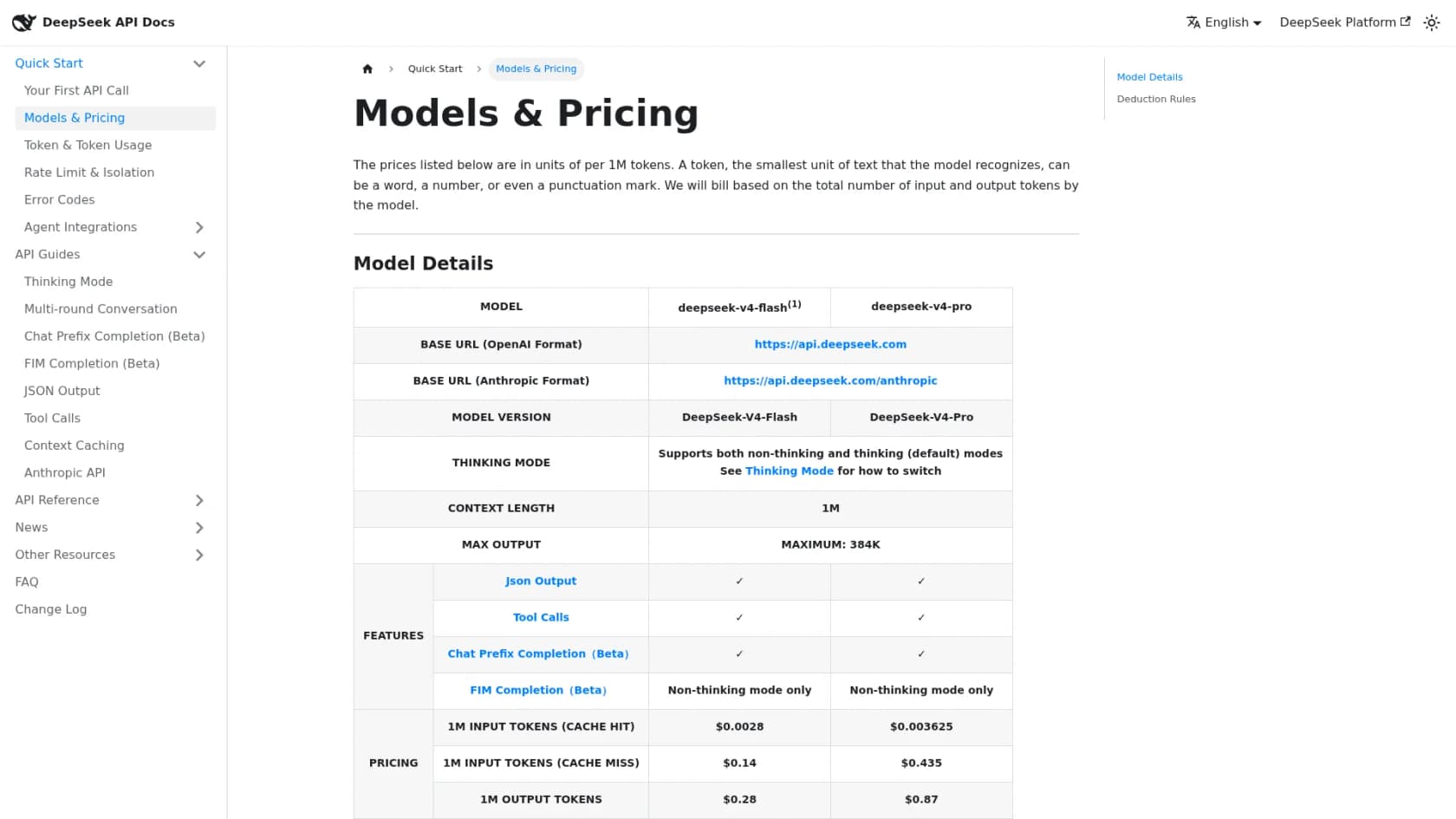
Two things worth to flag before the arithmetic starts. The context window and the output ceiling are identical across both tiers, so the price gap is not buying you any room. And both of them ship with thinking already on, which matters a great deal for cost, since reasoning tokens bill at the output rate.
Work out your own effective rate
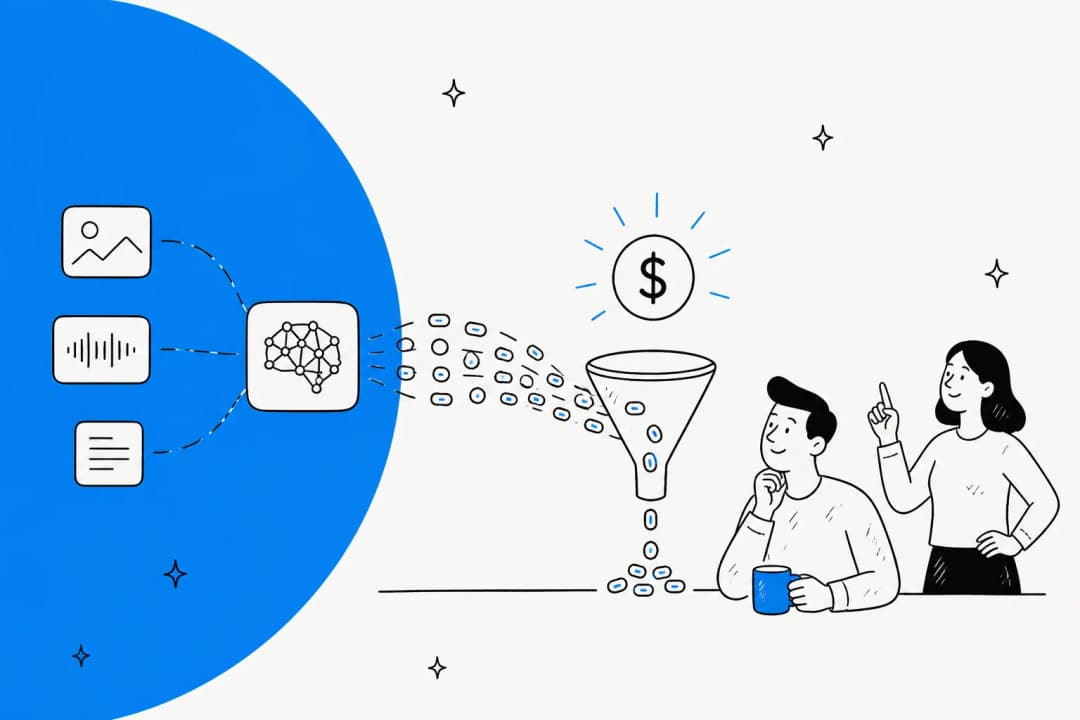
The sticker rates are per-million. What you get billed is a blend of three of them, weighted by your cache hit rate and by how much of your traffic ends up as output. Move the sliders, watch what the blend does.
What the sliders make obvious is this. Somewhere past a 40% output share the cache stops mattering much. Output carries no discounted rate at all, and on a model that reasons by default, output is exactly where your tokens go.
Multiplier one: the cache decides everything, and it is not a setting
Between the two input rates the gap is $0.0028 against $0.14, exactly 50x. Artificial Analysis puts that into industry context, where DeepSeek's cache discount comes to around 98% against the 90% most providers offer. Most aggressive caching discount on the market, and it is the reason those receipts look the way they do.
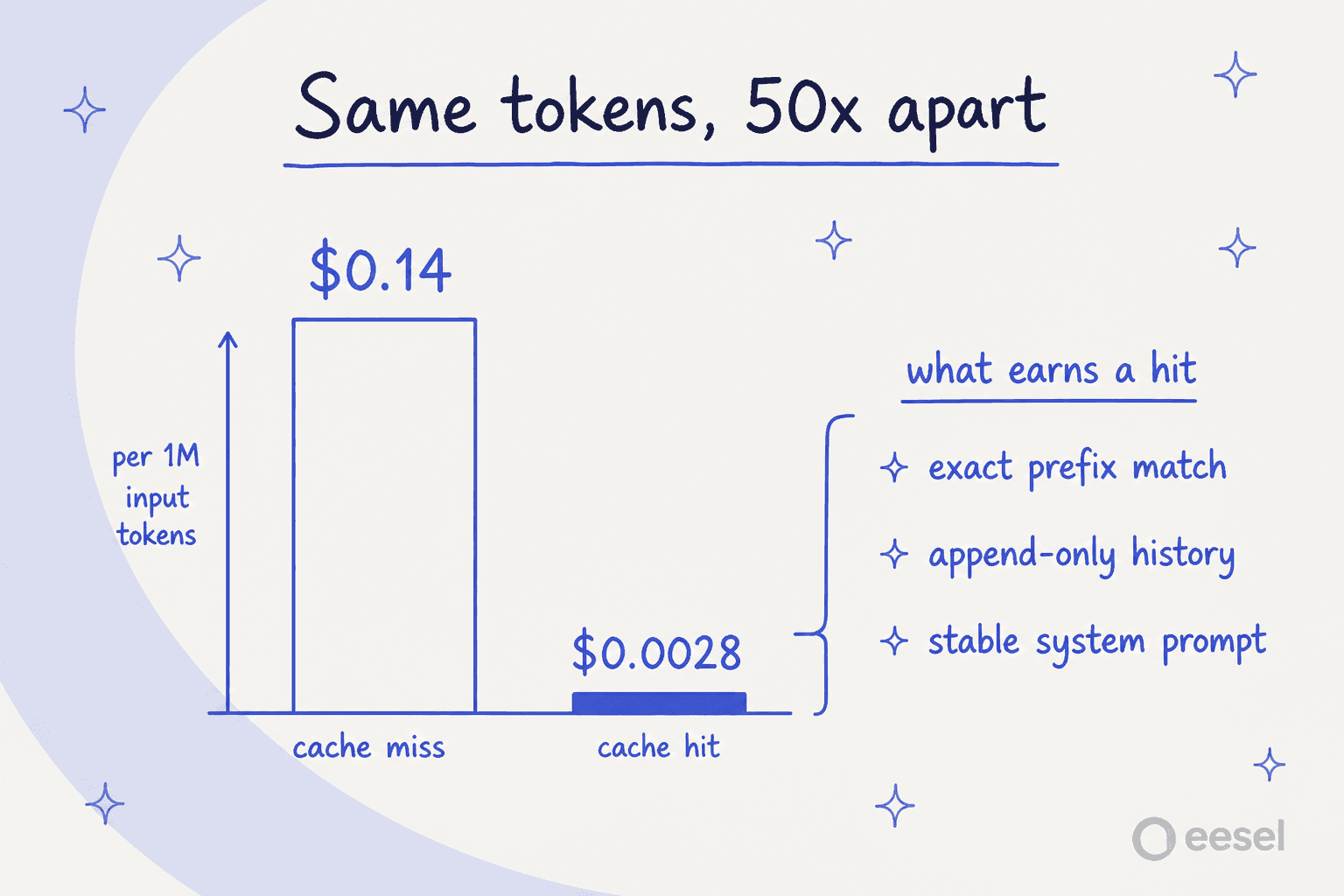
Disk caching comes on by default for every account, no code change needed, so you are not opting into anything. What you are doing is qualifying, and the qualification rules here run stricter than at most providers:
- A request bills at the hit rate only when it fully matches a persisted cache prefix unit. Partial overlap earns nothing. DeepSeek attributes the full-match requirement to its Sliding Window Attention design, which is a change from how earlier versions matched.
- Units get persisted at request boundaries, on common-prefix detection across requests, and at fixed token intervals inside long inputs and outputs.
- Caching is best-effort with no guaranteed hit rate, and unused entries clear "usually within a few hours to a few days."
- You can audit it per call. The
usageblock returnsprompt_cache_hit_tokensandprompt_cache_miss_tokens, so you never have to guess which rate you paid.
That last point is the one piece of practical advice in this whole article. Log those two fields from day one. Every cost model I have watched go wrong went wrong for the same reason, which is that somebody assumed a hit rate instead of measuring one.
Multiplier two: it reasons by default, and it is wordy
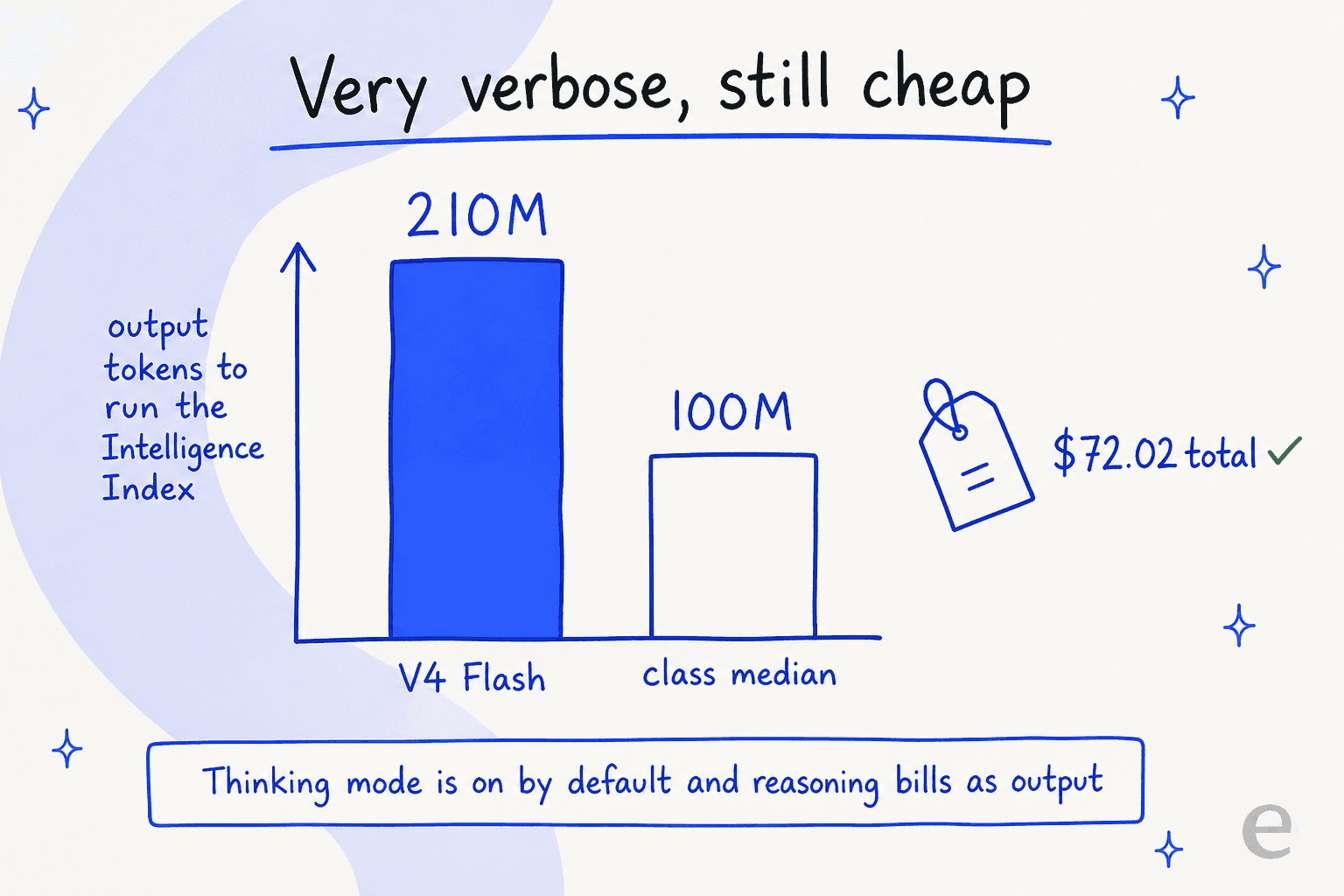
Both V4 tiers default to thinking mode, and the reasoning tokens bill at the output rate. Standard enough by now. What is not so standard is how many of them Flash produces.
Artificial Analysis needed 210 million output tokens to run its Intelligence Index on Flash, against a class median of about 100 million. The whole index run came to $72.02. So on identical work you should expect roughly twice the output tokens of a comparable model, each one at $0.28, and that quietly halves the discount the card is advertising.
There is no clean way to just buy the cheap version. Turning the reasoning down turns the model down along with it. DeepSeek's own cross-mode table has Flash at 8.1 on Humanity's Last Exam in non-thinking mode, against 34.8 at maximum effort, and Artificial Analysis independently scores it 50 at max effort versus 29 non-reasoning. The cheap configuration and the good configuration are different runs of the same weights. One quirk to know here, xhigh silently serves as high on Flash, so you cannot spend your way past that ceiling either.
Multiplier three: a 2x surcharge with no start date
Here is where DeepSeek's structure reversed on itself. No off-peak discount exists today. Instead the card carries a footnote, saying the API "will soon adopt a peak/off-peak pricing policy" where peak-hour prices will be 2x the regular prices, applicable to all billing items.
The published window runs 9:00 to 12:00 and 14:00 to 18:00 Beijing time, every day. Converted, that lands on 01:00 to 04:00 UTC and 06:00 to 10:00 UTC, so seven hours daily. As for the effective date, it is "subject to the official announcement," which is another way of saying there isn't one.
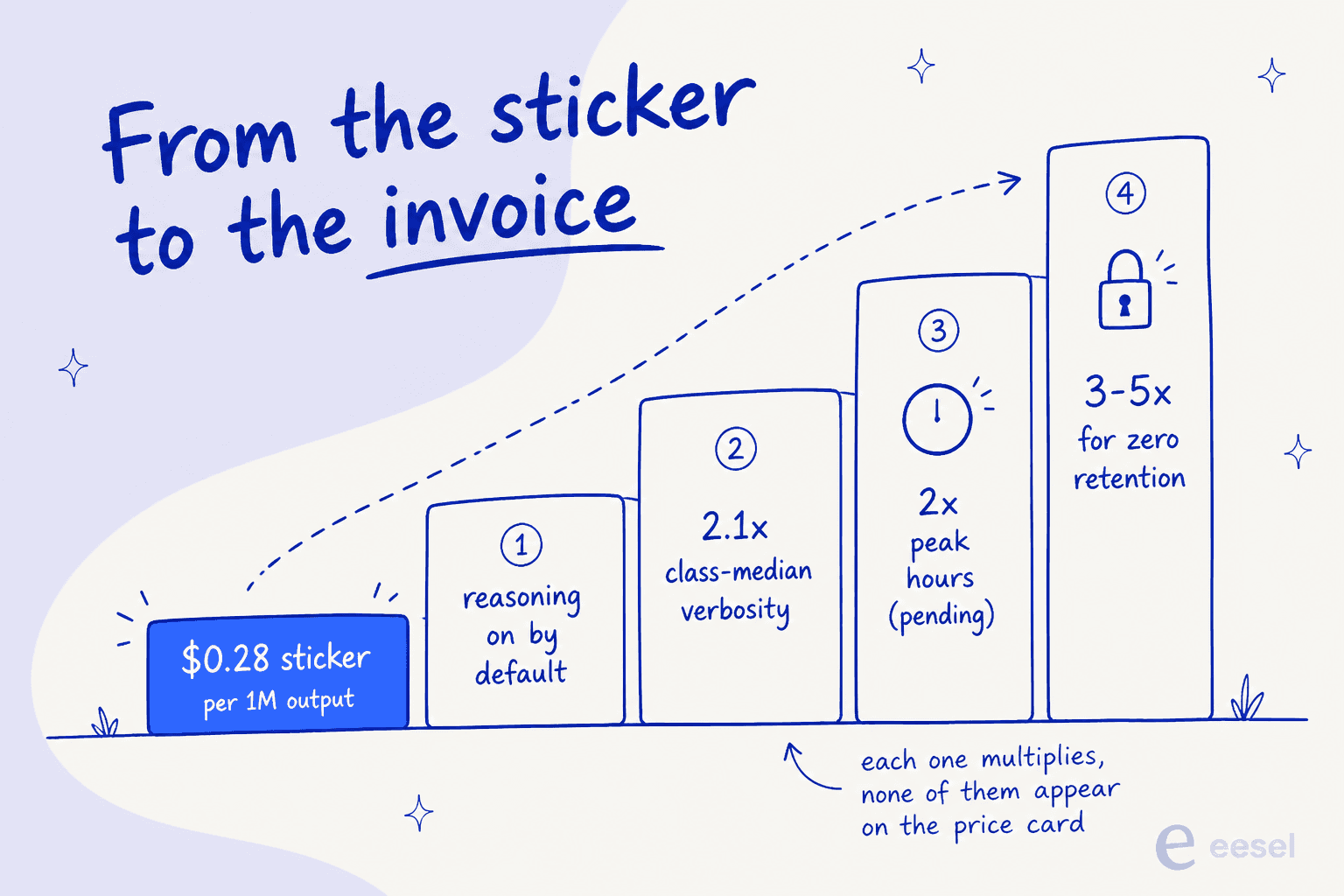
Two practical readings of it. If your load is batch work whose timing you control, this is close to harmless and you just schedule around it. If your load is synchronous traffic serving European mornings or Asian afternoons, then a large slice of it sits right inside those windows, and you should be modelling your budget at 2x now. Not a hypothetical people have missed, either:
"Besides, in a few days, they'll change their pricing, doubling it during their peak hours [...] It's still cheap, but the price/performance ratio is not that good"

The prices sitting on the card today are the regular rates. DeepSeek has published no peak-rate table, so doubling the published figures yourself is the honest way to model this, rather than quoting peak prices as if they already exist.
Multiplier four: zero retention, if you need it
This one is not DeepSeek's price at all, and for anyone handling customer data it is the largest multiplier on the list.
DeepSeek's paid-API Open Platform terms are silent on whether API inputs train the model. The "Inputs and Outputs" section runs as far as §4.2 and then stops, omitting the training clause that the consumer terms carry at §4.3. Silent is not the same thing as permissive, and it is worth being precise on that, because plenty of commentary states flatly that DeepSeek trains on API data and the paid terms simply do not say so. What they also do not say is that it won't. Either way there is no published DPA and no first-party zero-retention option, and the data sits in the PRC under PRC law.
So teams carrying a compliance requirement route through a zero-retention host instead, and they pay for it:
"The model is fantastic. And costs almost nothing. The only problem I see is that they will train on your data. There are zero-data-retention providers of DeepSeek models, of which I have used openrouter (with zdr guardrails), and fireworks. But these are 3x to 5x more expensive than directly using DeepSeek, possibly due to poor caching. Thats the price to pay for zdr."
Note the parenthetical there, because it is the important part. Third-party hosts do not reproduce DeepSeek's 98% cache discount, so you lose the cheap input rate at the same moment you start paying the retention premium. Flash's $0.28 output at a zero-retention host lands somewhere between $0.84 and $1.40, the same band as a mid-tier Western model that ships vision and web search. If you are weighing that trade, my guides on SOC 2 and GDPR requirements and on the build versus buy question cover the ground.
For a precedent on why teams care about this at all, the Slack policy change and the reaction that followed it is the one most readers lived through themselves.
What people actually paid
Published receipts beat modelling every time. These came unprompted out of the launch thread, straight from people's own dashboards, and they are the most concrete cost data available anywhere.
"I use deepseek for a lot of my personal day-to-day agent needs, and I will simply put this here and let this speak for itself, last 30 days:
"Those are rookie numbers. Last 13 days including today, so effectively 12 days of usage:
$19.27 USDAPI requests: 7,877Tokens: 2,116,598,952 Ok this is a bit of lie, a lot of my tasks are very experimental loops whose 99% output is like rubbish and can work forever continuously and take advantage of that 120x cheaper input cache. Still incredible."
The second poster does the honest thing and flags why their number lands so low. Experimental loops that resend a near-identical prefix thousands of times over are the ideal cache shape. It is a real workload. It is also not most workloads.
Per-session, on an agent harness:
"Essentially I'm running everything on flash now inside pi. With the correct set of MCP servers, context reducer tooling and skills it can implement any task I throw at it. Some sessions take 30+ turns, but it's fast and cheap; all this in an hour, with ~$0.5 cost."
And then the counter-receipt, which is the reason I would not budget off the good ones alone:
"I bought it through OpenRouter and used it with Pi agent. The model was good, but there appeared to be a pricing glitch or something, because it burned through $50 in under an hour on pretty trivial stuff. Pi agent claimed it only used like $1. OpenRouter claimed differently and said I used all $50."
Two dollars a month, and fifty dollars an hour. Both are real reports about the same model. The variable is workload shape plus the route you buy through, and not the rate card. If you want to keep an eye on this properly, LLM tracking tools exist for exactly that reason.
Cost per task is the number to compare on
Per-token prices are only comparable between models that spend the same number of tokens on a job, and models do not do that. Artificial Analysis publishes a cost-per-task figure which normalises this, and it is the honest way to read Flash against anything else.
| Model and effort | AA Intelligence Index | Cost per task |
|---|---|---|
| DeepSeek V4 Flash (max) | 50 | ~$0.03 |
| GPT-5.6 Luna (high) | 46 | ~$0.03 |
| GPT-5.6 Luna (xhigh) | 49 | ~$0.04 |
| GPT-5.6 Luna (max) | 51 | ~$0.07 |
| DeepSeek V4 Pro | 44 | ~$0.05 |
| Kimi K3 (max) | 57 | ~$0.86 |
Which reframes the whole comparison. On sticker output prices, Flash against Kimi K3 comes out at 54x. On cost per task it is only 29x, because Flash spends more tokens getting there. And against OpenAI's mid tier the gap essentially closes:
"First, your direct comparison, Deepseek V4 Flash 0731 (max effort) $0.03 (rounded up) per task @ index 50. OpenAI Luna: * high effort $0.03 (rounded down) @ index 46 * xhigh effort $0.04 @ index 49 * max effort $0.07 @ index 51 So I would say a fair statement would be "OpenAI Luna between 2x and 3x the price of Deepseek Flash, what you get is 2 to 5 times faster inference""
Worth pinning down the why here, since this is the most common mistake in DeepSeek price comparisons. On July 30, 2026 OpenAI cut GPT-5.6 prices, and Luna dropped 80%, to $0.20 in and $1.20 out. Anything still quoting Luna at $1.00 in and $6.00 out is five times wrong, and any comparison against an unqualified gpt-5.6 is quietly benchmarking Flash against Sol, which is the frontier tier at $5 and $30. The tier that actually competes with Flash on price is Luna, and on the index the two of them are tied.
Flash against Pro, where the ratio is not what it looks like
The headline ratio between the tiers is clean enough. Pro runs 3.11x Flash on cache-miss input and on output, while on cache hits it is only 1.29x. So the more your workload caches, the less that tier choice costs you.
Except the tier choice is close to settled anyway, and not in Pro's favour. Flash 0731 got re-post-trained on July 31, while deepseek-v4-pro on the card is still the April preview build with no 0731 equivalent behind it. Flash beats Pro-Preview on all nine of the agentic benchmark rows DeepSeek publishes, and it sits 6 points higher on the Intelligence Index at a third of the price. I went through that inversion in detail in the Flash versus Pro comparison.
Pro does keep a real edge in two places that are worth paying for if you need them, recall and long-context retrieval. On the preview cross-mode table it takes SimpleQA-Verified 57.9 against 34.1, MRCR at 1M context 83.5 against 78.7, then BrowseComp 83.4 against 73.2. That is what 49B active parameters buys you over 13B. Human preference disagrees with the automated index here too, since LMArena still ranks Pro above Flash on comparable vote counts.
One billing trap, if you do reach for Pro. DeepSeek's published effort-mapping table serves a low request on Pro at high. There is no cheap Pro run. You pay 3.11x the rate and you cannot dial the reasoning down to compensate for it. That mapping is due to change in early August 2026, so check it before building around it.
Billing mechanics that bite
The card's deduction rules run short, and they hide two operational problems inside them.
It is prepaid, and running dry is not graceful. Expense is tokens times price, deducted out of your topped-up balance or your granted balance, granted one first when both exist. DeepSeek explicitly recommends topping up against actual usage rather than pre-loading, and it reserves the right to change prices. The consequence for anything long-running is that 402 for insufficient balance arrives mid-run, not at request time. Treat it as fatal and alert on it, because retrying a 402 accomplishes nothing at all.
There are no published rate limits, only a concurrency cap. No RPM and no TPM anywhere in the docs. What is published is the concurrency, 2,500 on Flash against 500 on Pro, applied at account level rather than per key, and returning 429 on breach with no Retry-After header. Expansion goes through a request form. If you are sizing a production workload, that account-level scope is the detail to plan around, because one runaway job will starve everything else on the account.
For pre-flight estimating, DeepSeek publishes ratios of roughly 0.3 tokens per English character and 0.6 per Chinese one, and there is an offline tokenizer package as well if you want exact counts before sending anything.
Should this price tag put the model on your support queue?
Here is where I would slow down, because the arithmetic that makes Flash attractive for coding agents does not transfer over to customer-facing work.
Flash's AA-Omniscience hallucination rate sits at 84%. That is a 12-point improvement on its predecessor, and still nowhere near a number you would put in front of a paying customer unsupervised. No documented image input either, and no web search, so photo attachments and order-status lookups will both need something else wired in.
The deeper problem though is that a leaderboard hallucination rate is just the wrong thing to be shopping on. A CX lead once put it to me better than I could:
"The AI will never be able to answer 100% of the questions, but if it tries and just answers 'sorry I don't know this,' I cannot go and check all my 7,000 tickets to see if the AI actually made a good answer, then the point is a little bit gone. I need an AI who is only handling the tickets that it's confident to handle and all the other ones, leave them alone."
That is a CX lead at a DTC supplements brand on Gorgias and Shopify, running around 7,000 tickets a month, and confidence-based routing turned out to be the objection that decided their whole evaluation. What they needed was not a better score. They needed the model to know when to stay out of the way, and that is a job for confidence thresholds, for grounding in verified knowledge, and for a human in the loop on everything sitting below the bar.
I have watched a version of this same failure inside our own product. The worst pattern the team ever caught in production was an agent narrating "executing Zendesk searches" for about ten turns straight without ever hitting the API, then reporting files saved that did not exist. Nothing kills trust in an AI teammate faster than it lying about what it did. And that is a supervision problem, not a token-price one.
Where eesel fits
If the reason you are pricing DeepSeek per million tokens is that you want cheaper support, then the unit itself is wrong. What a support team actually spends is cost per resolution, and a token price tells you nothing whatsoever about that, because it says nothing about how many tickets end up resolved.
eesel is priced the same way the outcome gets measured. 40¢ per ticket or helpdesk conversation handled, no per-seat fee, and nothing charged for tickets your humans handle. Before any of that happens you run simulations against your own historical tickets and see the real resolution rate on your own data, which is honestly the only accuracy number that means anything. And you can route just a slice first. Handle 1,000 tickets a month, send 200 of them to the AI, you pay for 200, so $80.
There is $50 of free usage to start on, no credit card, plus a default spend cap of $250 that the agents will not cross. Full numbers live on the pricing page. The security and enterprise pages cover those data-handling questions that the DeepSeek terms leave open.
Is $0.14 and $0.28 still cheap in August 2026?
Yes, though by less than the headline suggests, and the honest answer depends a lot on what you are comparing it to.
Against the premium tier the gap is enormous, and real. Claude Opus 5 and Flash sit about 89x apart on output. Against Kimi K3 the sticker gap is 54x while the per-task gap is 29x. Against Qwen 3.8 Max and Qwen 3.7 Flash, Flash stays competitive on price and falls behind on multimodality, being text only.
Against the tier that actually competes with it, things are close. Luna at $0.20 and $1.20 ties Flash on the Intelligence Index, runs several times faster, and it ships vision and web search. Layer zero-retention hosting on top and the price difference mostly evaporates. Which is the reason a fair number of teams end up running both, Flash for the bulk work and something else for the jobs Flash cannot do. If you are building that kind of split, the three-way API comparison is a reasonable starting point, and Mistral and Grok both sit inside the same price conversation.
The one option the price card cannot compete with at all is running it yourself. Weights are MIT-licensed at roughly 167GB, 284B total parameters with 13B active, which puts a self-hosted deployment into expensive-prosumer hardware territory rather than data-centre territory. Cached input on your own hardware costs nothing. If that is the direction you are heading, open-source AI agents and fine-tuning are the next things to read.
FAQs
How much does DeepSeek V4 Flash cost? DeepSeek V4 Flash pricing is $0.14 per million input tokens on a cache miss, $0.0028 per million on a cache hit, and $0.28 per million output tokens. Those are the regular rates on the price card, and a pending peak-hour policy would double all of them during published windows. For context on how that compares to helpdesk AI budgets, see what AI customer service costs in practice.
What is DeepSeek V4 Flash pricing compared to V4 Pro? Pro costs 3.11x Flash on cache-miss input and on output, and 1.29x on cache hits. Flash also currently scores higher on the Artificial Analysis Intelligence Index, 50 against 44, which is the inversion I unpack in the Flash versus Pro comparison. Pro keeps its edge on recall and long-context retrieval.
Is there a free tier for the DeepSeek API?
No free tier appears on the price card. Billing is prepaid, drawing out of a topped-up balance or a granted balance, and the granted one gets spent first. That prepaid model is the reason a 402 can land mid-run rather than at request time. Full spec sheet sits in my DeepSeek V4 Flash overview.
Why is my DeepSeek bill higher than the advertised price?
Almost always one of three things. Your cache hit rate is lower than you assumed it was, so more of the input bills at $0.14 instead of $0.0028. Or thinking mode is generating reasoning tokens which bill at the output rate. Or you are buying through a reseller rather than first-party, and that changes the rate and the caching behaviour both. Log prompt_cache_hit_tokens to tell the first two apart.
Does DeepSeek train on API data? The paid Open Platform terms are silent on it. The "Inputs and Outputs" section stops at §4.2 and omits the training clause the consumer terms carry, so it neither grants nor refuses the right. There is no published DPA or first-party zero-retention option, and data is processed in the PRC. Zero-retention third-party hosts cost 3x to 5x more. My SOC 2 and GDPR guide covers what a support team actually has to satisfy.
Is DeepSeek V4 Flash cheap enough to run a customer support chatbot? The token price is not the constraint, the 84% hallucination rate is, along with no documented image input. A raw model in front of customers needs RAG grounding, guardrails, and confidence-based routing before it is safe. My guide to preventing hallucinations in support walks through the mechanics, and building a support chatbot covers the rest of the stack.
When does DeepSeek's 2x peak pricing start? No date has been announced. The card says the effective date is "subject to the official announcement." The published peak windows are 9:00 to 12:00 and 14:00 to 18:00 Beijing time daily, which is 01:00 to 04:00 and 06:00 to 10:00 UTC. Model at 2x if your traffic is synchronous and lands in those hours.
What is the cheapest way to run DeepSeek V4 Flash? First-party API with a high cache hit rate, which is where the sub-cent blended rates in this article came from in the first place. Keep prompt prefixes stable and append-only, keep the output short, then schedule batch work outside the pending peak windows. If your data cannot leave your control, MIT-licensed weights and a self-hosted deployment remove the per-token cost entirely, at the price of hardware. For a support team, reducing support costs with AI is a better frame anyway than chasing the token rate.
The verdict
DeepSeek V4 Flash is the best intelligence-per-dollar on the market right now, and the $0.14 and $0.28 figures still understate how cheap it can get. Sub-cent blended rates are real, and documented. So is $50 in an hour.
What I would do with it. For batch, coding agents, review, summarisation, anything with a stable prompt prefix and short outputs, use it, and measure your cache hit rate from the very first request instead of assuming one. For synchronous production traffic, budget at 2x until that peak policy has a date on it. For customer data under a compliance requirement, price the zero-retention route and then compare it honestly against Luna, because the discount mostly disappears there and Luna does more.
And for anything that answers a customer, stop comparing per-token prices altogether. Compare cost per ticket, measured against your own ticket history, because that is the number your finance team is actually going to see.


Article by
Alicia Kirana Utomo
Kira is a writer at eesel AI with a Computer Science background and over a year of hands-on experience evaluating AI-powered customer service tools. She focuses on breaking down how helpdesk platforms and AI agents actually work so that support teams can make better buying decisions.