What is Level AI?
Level AI sells AI to customer experience teams that work in contact centers. The homepage headline right now is "Full stack AI agents for the entire customer experience journey," and that is quite a shift from the "AI-powered QA" pitch the company was known for a couple of years back. QA still sits at the center of gravity, but these days the company packages quality and insight together with live assist and automation, all sold as one platform.
Some company facts that are worth having in your head before a sales call:
- Founders: Ashish Nagar (founder and CEO) and Sumeet Khullar (co-founder and CTO).
- Funding: a $39.4M Series C in July 2024, led by Adams Street Partners, brought total funding to $73.1M.
- Scale: its about page claims 1 billion+ customer interactions analyzed per year across 100+ businesses.
- Verticals: financial services, healthcare, retail, insurance, consumer tech and enterprise SaaS, per the homepage.
You can see the buyer profile pretty clearly on G2: among the reviewers who list a company size, 123 are mid-market and 72 are enterprise, and only 23 are small businesses. That is about what I would expect, since Level AI sells to the person running call center QA for a few hundred agents, not to a five-person support team sharing one inbox.
How Level AI works
Most AI customer service tools rent a general model from OpenAI or Anthropic and then build a product around it. Level AI pitches the opposite thing. According to its platform page, it owns the whole stack, starting at an "owned Nvidia GPU cloud" and going up through its own models to the apps your team actually clicks on.
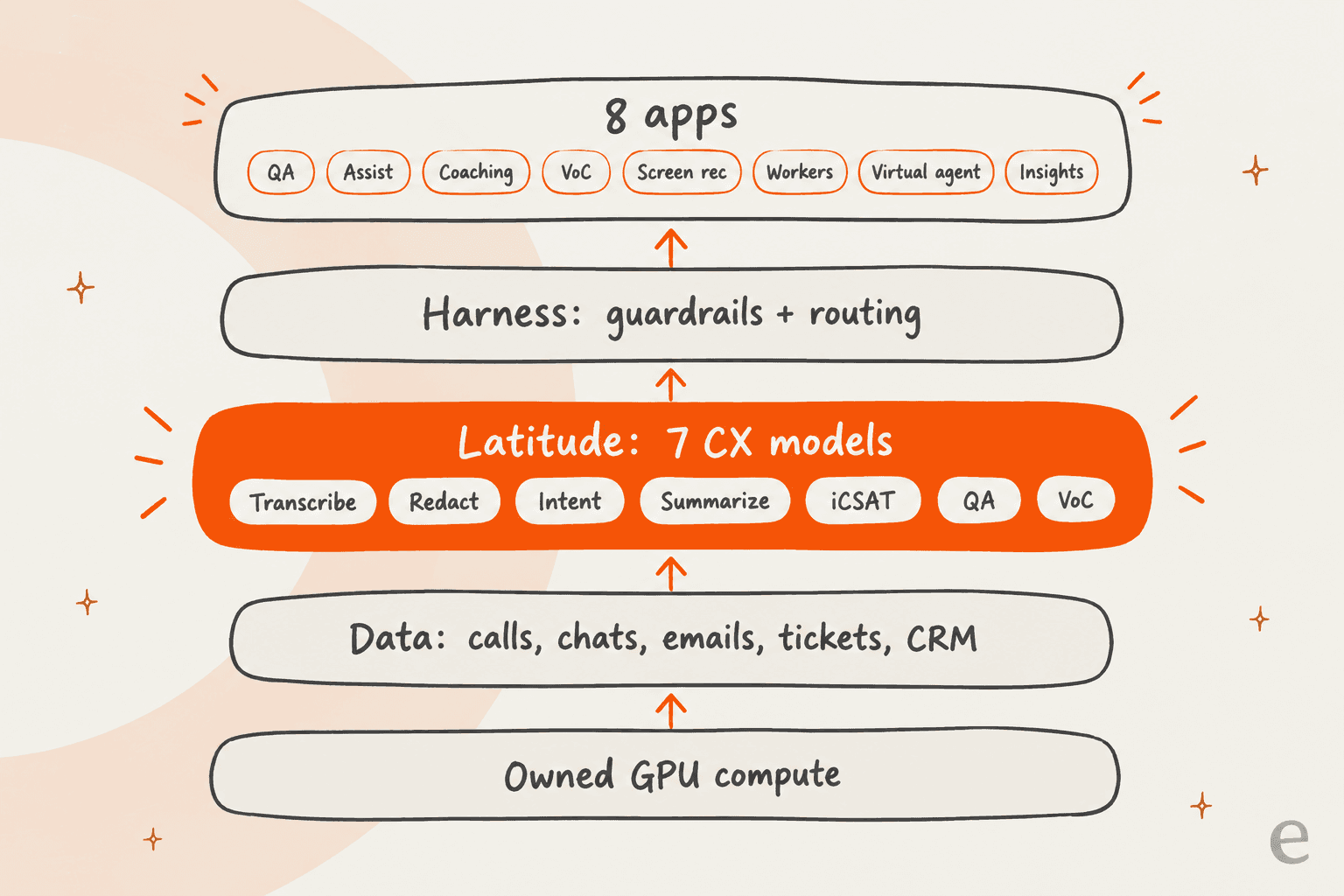
Of all the layers, the model layer is the one that matters most. Back in July 2026 Level AI launched Level AI Latitude, which is seven fine-tuned models, each of them built for one contact center job:
| Model | Job | How Level AI describes it |
|---|---|---|
| Orba | Transcription | Speech recognition "built for contact center speech" |
| Redactor | Redaction | "Dual-layer redaction across transcript and audio" |
| Attune | Intent detection | Claims "400x more coverage than keyword libraries" |
| Crux | Summarization | Summaries from every conversation |
| Veridia | Inferred CSAT | Scores satisfaction "in 100% of conversations without surveys" |
| Qualix | Automated QA | Scores interactions against your QA and compliance rubrics |
| Tenor | Voice of customer | Daily classification of contacts into a three-level hierarchy |
In terms of efficiency, the headline claims in the Latitude launch post are "up to 49x" lower cost to serve and "4x" lower latency. Neither of the numbers comes with a stated baseline, so I would read them as a direction rather than a benchmark.
So why should a buyer care? The practical upshot, compared with a stack of separate call center tools, is that one transcript feeds every app. The same call that gets scored for QA also feeds the inferred CSAT number and the voice of customer topic tree, and then it lands in the coaching plan as well. That shared layer is the real product, and the apps are more like views onto it.
The eight Level AI apps
There are eight applications listed on the platform page. Most teams buy QA first and expand out from there, so I'll go through them in roughly that order.
Quality assurance and QA-GPT
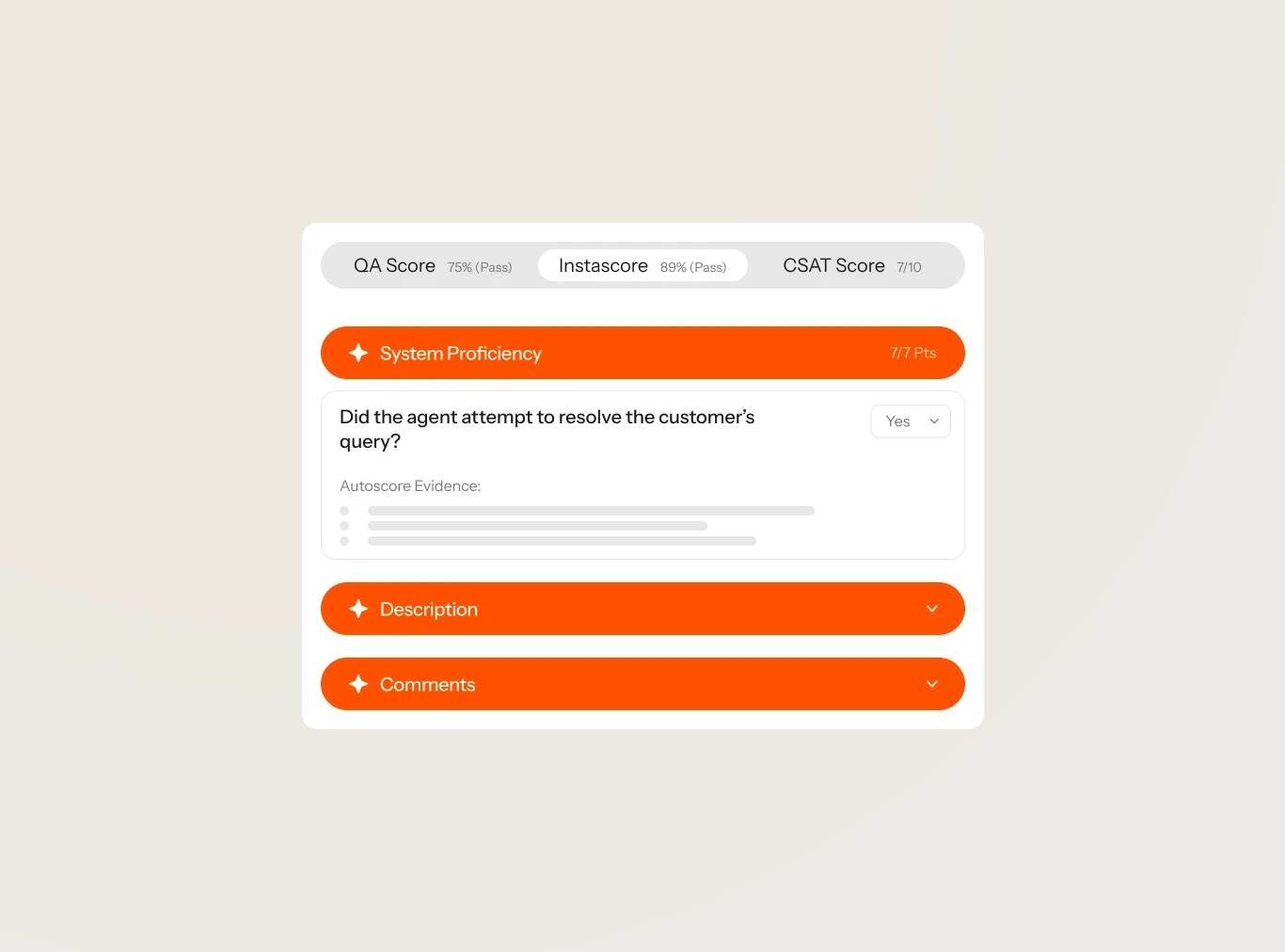
QA is the product Level AI built its name on. On the QA page, the company says its QA-GPT engine uses a model "trained on your contact center data to evaluate over 90% of the standards and metrics that scorecards cover." You can bring the QA scorecard you already have, or you can start from its library of pre-trained questions instead.
As a QA lead, these are the details I would actually care about:
- Hybrid scorecards. AI-scored questions (did they verify identity?) and human-scored ones (was there real empathy?) roll into one score.
- Conditional N/A logic. A billing dispute call can skip the sales-pitch question automatically.
- Overrides that feed back. When an evaluator disagrees with the AI, the correction is used to recalibrate future scoring, which tightens your QA feedback loop.
- A sandbox. You get to test AutoQA rubrics against real conversations before they go live.
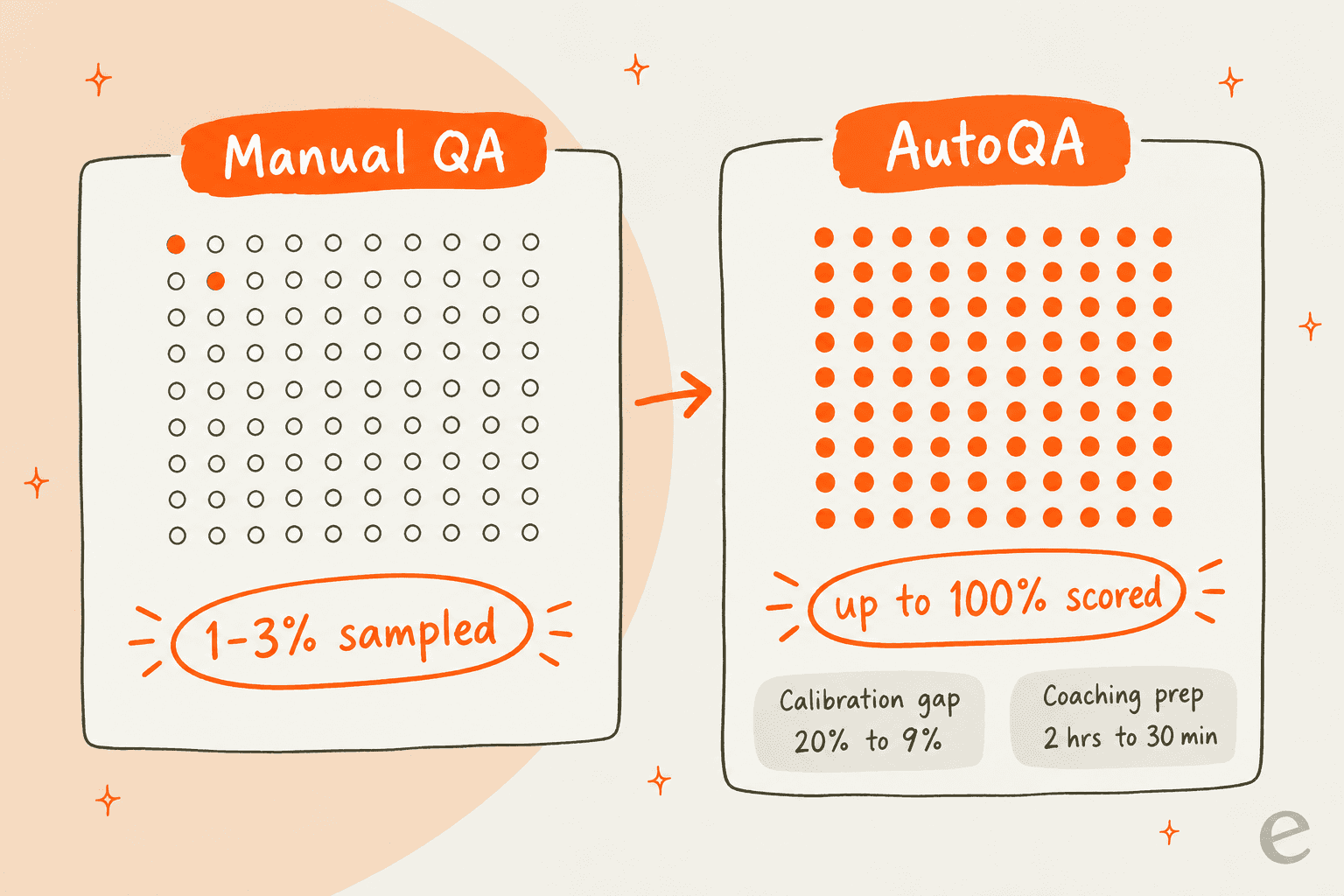
The obvious win here is the coverage jump. By Level AI's own count, manual QA typically reviews "around 1% to 3%" of interactions. One G2 reviewer at a large retailer said it plainly:
"Our QA has migrated from 2% manual volume to nearly 100% automated volume as a direct result of using Level AI. We also have iCSAT on 100% of contacts rather than traditional CSAT on just a fraction."

What people tend to miss is where the time savings actually land, and it isn't the scoring; it's calibration and coaching. VistaPrint cut its calibration variance from over 20% to 9%, per its case study. Anyone who has sat in a calibration meeting where three reviewers scored the same call 60, 75 and 90 knows why that is the number to watch. And if you look at the wider picture of running call center quality assurance, this is the gap most teams underestimate.
One honest caveat worth flagging: Level AI doesn't publish any numeric accuracy figure for QA-GPT. Its own FAQ says accuracy "depends on how well the evaluation criteria and scoring logic are configured." That lines up with what reviewers say as well (more on that below).
Conversation intelligence and voice of customer
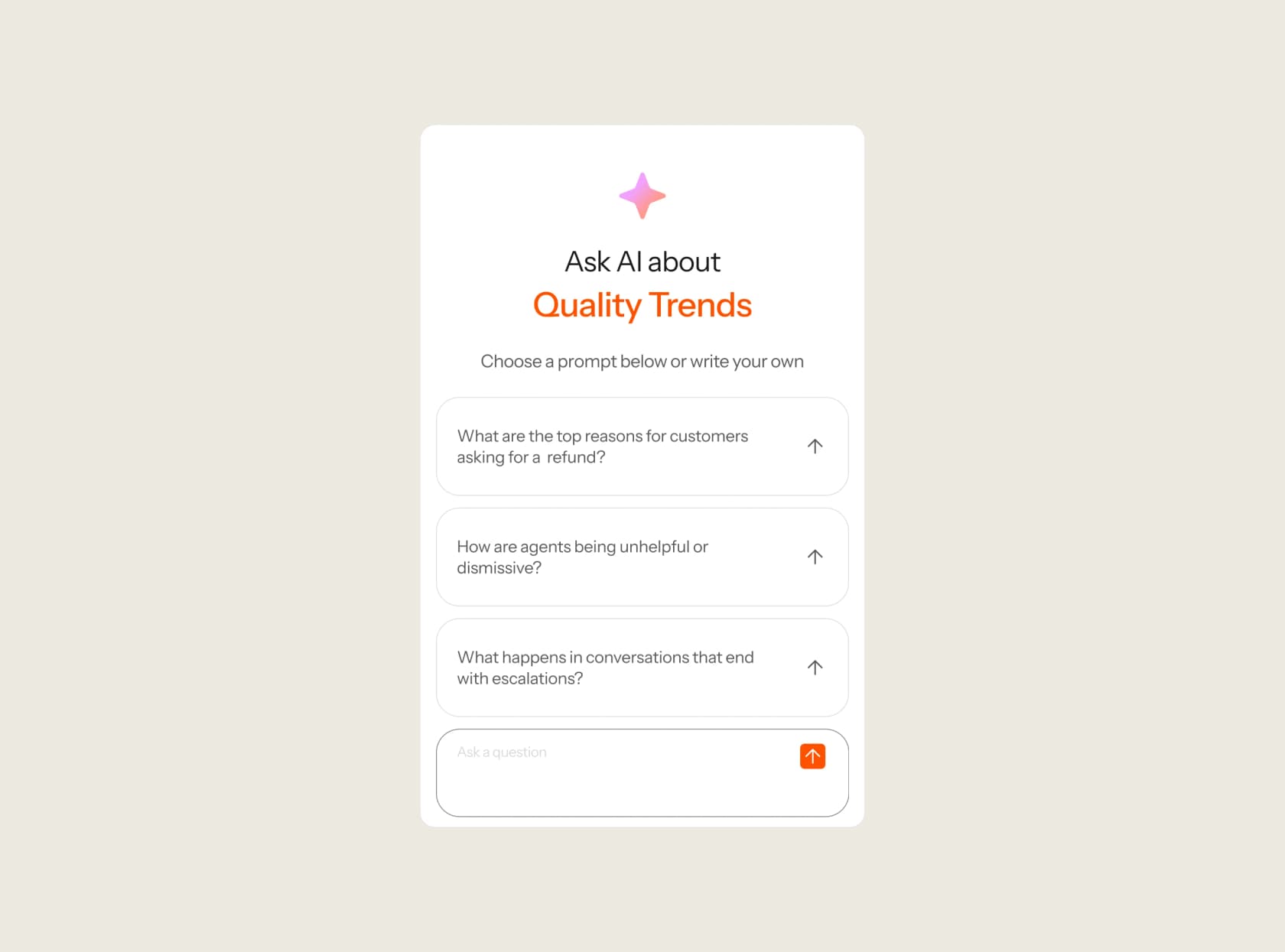
Think of this as the "why are customers calling?" layer, which is basically the contact center version of tracking intents and sentiments in a helpdesk. Every day the Tenor model sorts each contact into a topic hierarchy, and Veridia infers a CSAT score for every conversation, whether there was a survey or not. The idea is the same one behind AI sentiment analysis, only applied to every call and not to a survey sample.
The best example here is Smartsheet. Between February and July its internal CSAT went from 2.95 to 3.31, a 12% lift, per the Smartsheet case study. The quote that stayed with me comes from Corinne Flanagan, Senior Manager of Enablement and Quality:
"That's been the power of Level for us. It's no longer just debating. These are facts. These are customers' words."
Corinne Flanagan, Smartsheet (case study)
Purple, the mattress company, used this same data to trace a wave of "too tall" complaints all the way back to delivery partners who were setting adjustable bases to their highest position, per the Purple case study. A root cause like that is never going to show up in a QA score.
Agent assist
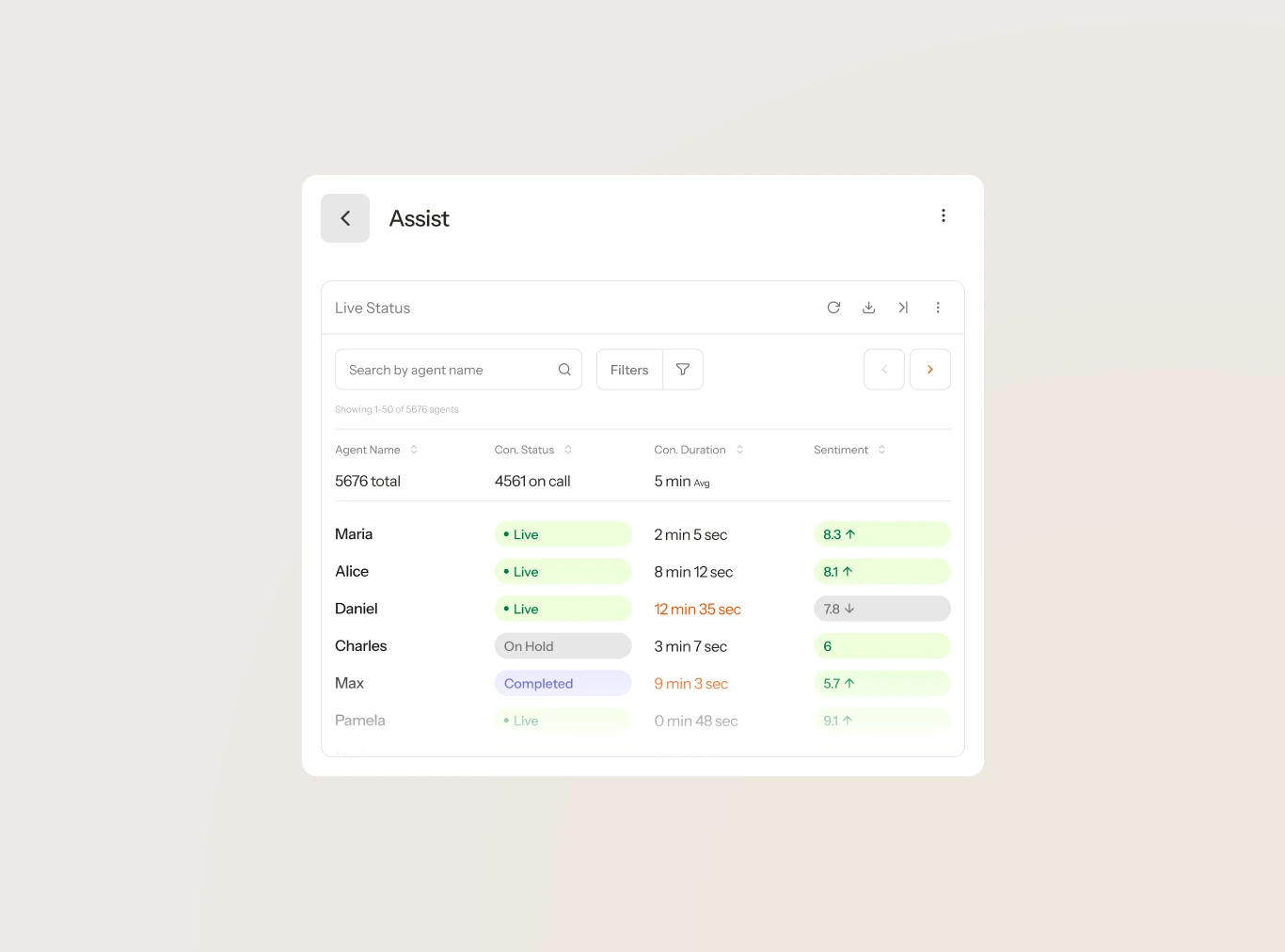
Agent Assist is the real-time piece, meaning in-call guidance and knowledge lookups, plus call notes that get written automatically. If the term is new to you, here's a plain explainer on agent assist. The app bundles five named features. Among them are Manager Assist (live view of every call's status and sentiment) and AgentGPT for knowledge retrieval, and there is also Phi, a knowledge bot Level AI describes as "ChatGPT, but trained on your knowledge base."
Per the page FAQ, the widget embeds inside Salesforce, Zendesk and Five9. It covers compliance flags too, and dynamic checklists for mandatory scripts, which is the reason regulated teams care about it. The auto-notes overlap with what standalone conversation summarization tools do. For anyone comparing this category, I keep a broader list of AI agent assist tools.
Coaching
The coaching app runs on a manage, discover, create, share loop. A QA auditor flags a conversation and assigns it to a manager, then an AI Worker drafts a coaching plan using the QA results and past conversations, along with performance trends.
Terry Porter at Extra Space Storage described the before state well: replicating one behavior used to take "one to two hours," and now the team moves "from one example to ten." According to its case study, coaching prep is down from two hours to about 30 minutes, and the QA ratio sits at 110 to 120 agents per analyst.
Coaching is also the place where reviews start to get mixed. One enterprise QA specialist on G2 wrote that the coaching feature "hasn't served us as a company very well," and pointed to slow adoption as the reason. Strong scoring, in other words, doesn't automatically make managers change the way they coach.
Screen recording
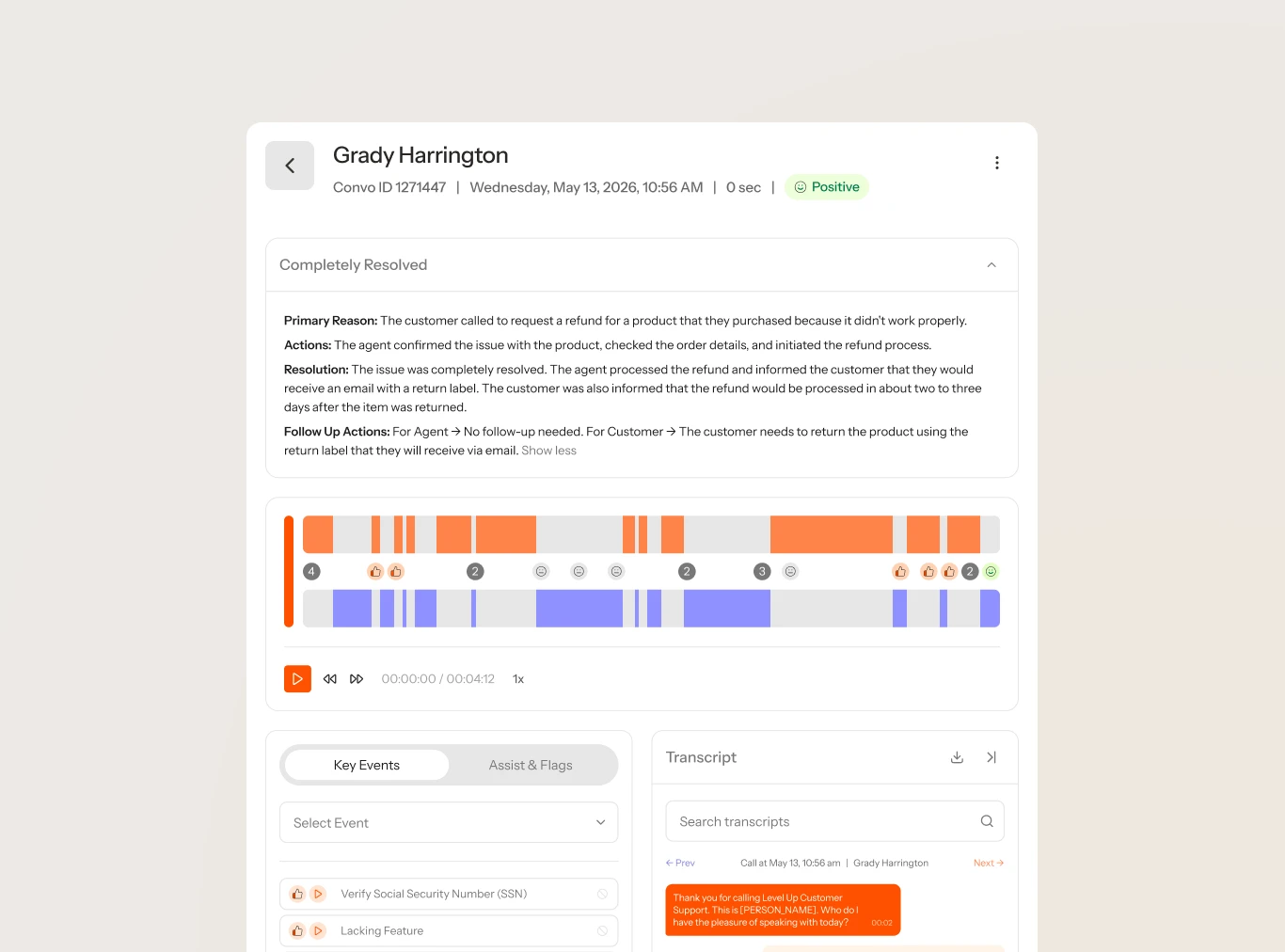
Screen recording pairs the call audio with whatever the agent was doing on screen. It can capture up to four monitors, and it starts and stops on call or chat triggers through AWS, Twilio or Salesforce. On video it claims "90%+" redaction accuracy for card numbers and SSNs. If redaction is the main worry for you, here's how PII redaction works in support transcripts.
A detail that is easy to miss in the marketing is that auto-scoring QA from screen data is still on the roadmap and not shipped yet. For now, the page says, screen recordings give visual context for manual QA reviews.
AI Workers
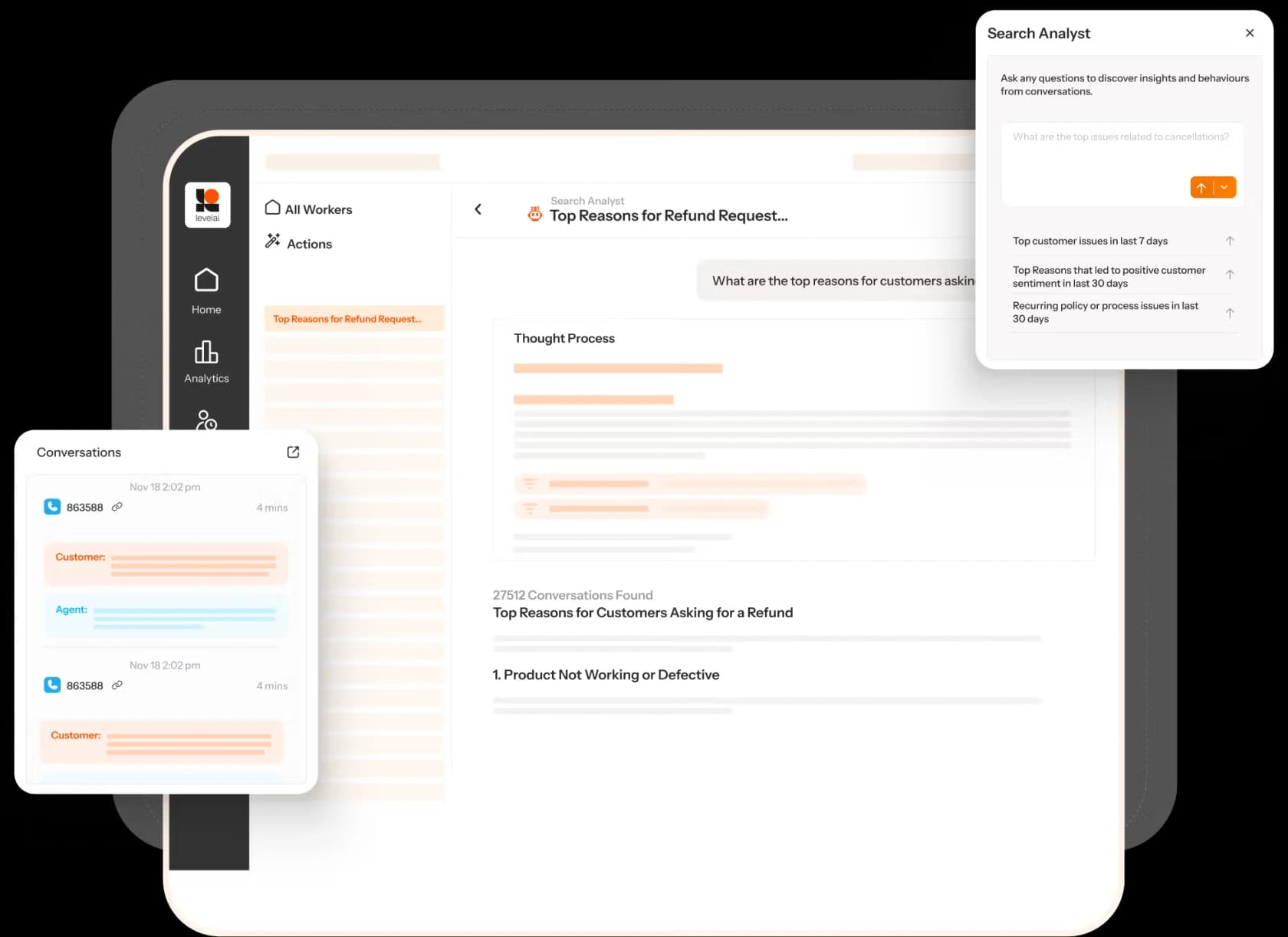
AI Workers are agents sitting on top of your interaction data that do the analyst work, things like research reports and coaching plans, or product feedback summaries and team performance analysis. Level AI lists 11 of them, and says 85+ enterprises run them in production with over 25,000 worker runs.
This is how Smartsheet put together a voice of customer report for its accessibility team "in a couple of hours" without combing through transcripts, per the AI Workers page. The thing worth noting is that these workers analyze and recommend inside Level AI. Nothing on the page describes them writing back into your helpdesk or resolving tickets, and that is the job of an AI helpdesk agent.
Virtual agents
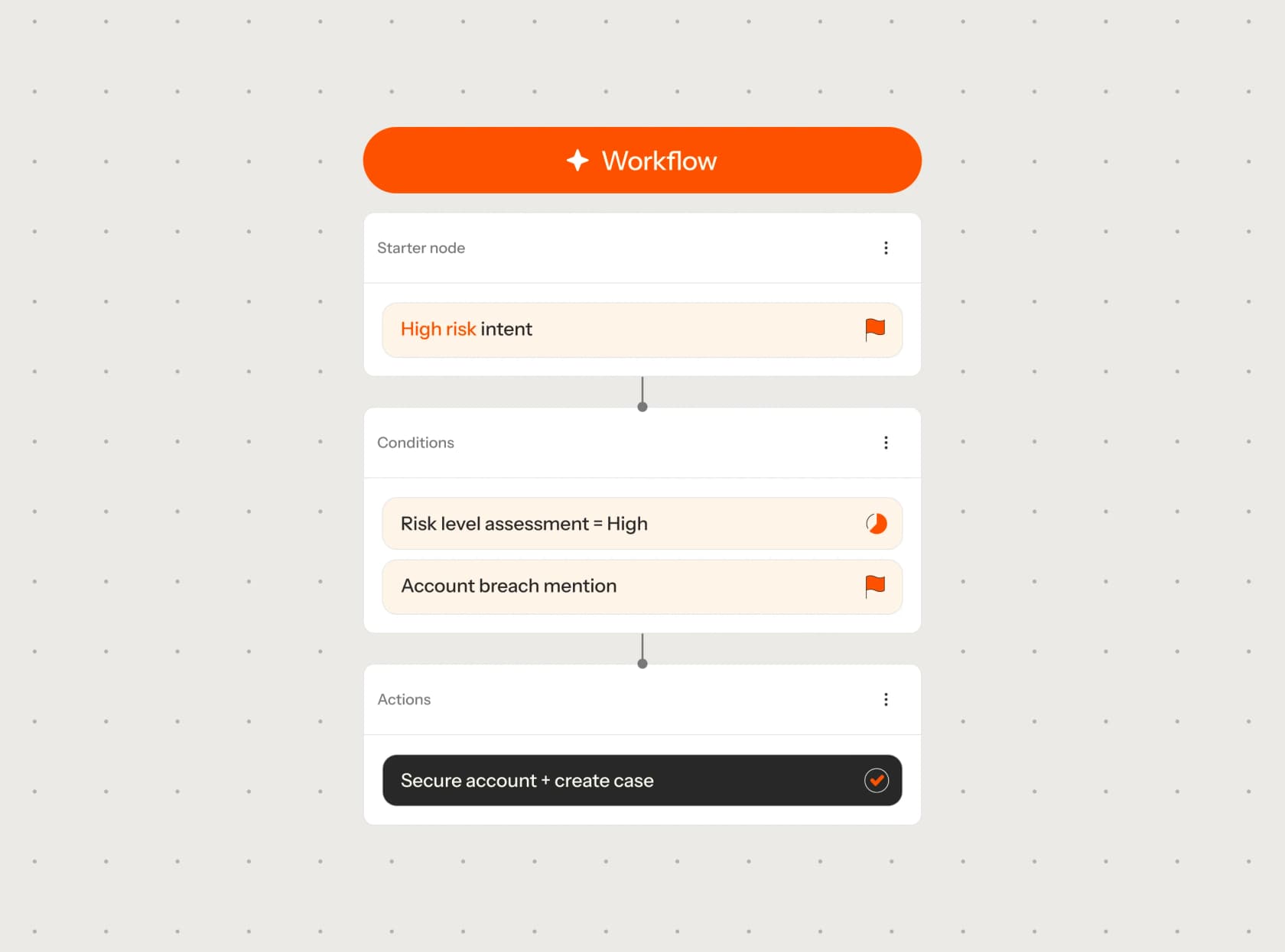
Virtual agents are the newest piece, and the one that puts Level AI in the same conversation as Sierra. The virtual agent handles voice and chat in 50+ languages, with a stated latency budget of under two seconds. Level AI claims "3x" better containment and "80%" less retraining time, although the page doesn't tie those figures to any named customer. Containment is a slippery metric to begin with, so it pays to know how to measure containment before comparing vendors.
Two of the design choices stand out to me. The first is a hybrid builder that mixes agentic AI with deterministic flows, so that steps like "authenticate before taking a payment" can't get skipped. Level AI's help center explains the reasoning behind it: LLMs follow instructions well but can still skip steps. The second is that the virtual agent gets scored by the same QA rubrics as your human team. That is a real advantage if you already trust Level AI's QA, and it's exactly the kind of thing I would test hard in any AI voice agent evaluation.
You can see where it's heading from the 2026 release notes. Outbound calling is in there, along with a Context Handoff feature (September 24) that passes the virtual agent's context to Agent Assist on transfer, and the Q2 release batch added a Five9 Voice handoff on top.
Level AI integrations and security
Level AI connects to the systems that contact centers are already running, anywhere from Dialpad to Zendesk. There are 51 entries on the integrations page, and the page calls the list non-exhaustive.
| Category | What's listed |
|---|---|
| Telephony and CCaaS | Five9, Genesys, NICE, Talkdesk, Amazon Connect, Twilio, Dialpad, Vonage, Ujet, RingCentral |
| Helpdesk and chat | Zendesk, Freshworks, Kustomer, Gorgias, Gladly, Front, LivePerson, HappyFox |
| CRM | Salesforce (HubSpot isn't on the list) |
| Knowledge | Guru, Confluence, SharePoint, Google Drive, Notion |
| Workforce and QA | Calabrio, Assembled, Lessonly, Stella Connect |
| Data | Snowflake, S3, SFTP |
Setup for the Zendesk integration is self-serve for admins. You pick the channels and filter by tag or brand, then import a sample of up to 1,000 recent conversations, a step that takes about 15 to 30 minutes. Keep in mind that this is only the data connection and not the whole rollout, and the full rollout is where G2's three-month average comes from.
Security is one of the strengths here. The security page lists SOC 2 Type II, ISO 27001, HIPAA with a BAA, PCI DSS, HITRUST CSF and GDPR. Names, card numbers and SSNs get redacted before any AI processing happens, and third-party AI providers are contractually barred from training on customer data. The only gap I noticed is that data residency regions aren't stated, so EU buyers should ask about it directly.
How much does Level AI cost?
Level AI doesn't publish its pricing. It has no pricing page, and G2's pricing page says the vendor hasn't listed any plans, so the way it works is you book a demo and then get a quote.
What I can share instead is the reviewer data from G2:
| Signal | What G2 reviewers report |
|---|---|
| Public price | None; quote only |
| Free plan or trial | None listed |
| Time to implement | 3 months |
| Time to ROI | 4 months |
| Average discount | 8% |
| Perceived cost | $$$$$ (top of the scale) |
The only pricing hint that comes from Level AI itself sits in its voice AI pricing guide, where it says the company prices around outcomes rather than minutes. The guide does quote market bands ($0.10 to $0.25 per minute for typical voice AI), but those are numbers for the category and not a Level AI rate card.
When it comes to budgeting, I'd treat Level AI the same as other enterprise contact center platforms such as Cresta, meaning a multi-product annual contract that is priced per agent or per interaction volume and negotiated with sales. Ask early on which apps are in the base contract and which ones are add-ons, especially for screen recording and virtual agents. Even a rough call center ROI model helps you push back on the quote.
What Level AI customers and reviewers say
On G2, Level AI sits at 4.6 out of 5 from 220 reviews, with 78% of them five-star and no one- or two-star ratings at all. (The badge on its own site shows 4.7 from 200+, which looks to me like an older snapshot.)
The published case studies come with hard numbers attached:
| Customer | Size | Result |
|---|---|---|
| VistaPrint | 1,200 to 1,700 agents | Over-crediting fell from 20% to 8% in six months; QA and coaching effort down 80% |
| Smartsheet | Not stated | iCSAT up 12% (2.95 to 3.31); 60% efficiency gain over two years |
| Extra Space Storage | 500-person contact center | Coaching prep from about 2 hours to 30 minutes; 13% QA manager efficiency gain |
| Purple | Not stated | 100% QA coverage on voice calls over 2 minutes |
The praise in the reviews is pretty consistent, mostly about the interface and the full coverage, and people like the trend insights as well. The complaints are consistent too, and they cluster around AI accuracy. In G2's own tag counts, "Inaccuracy" (17) and "Slow Performance" (14) show up as the top negatives. One mid-market reviewer put the scorecard issue directly:
"AI QA scores at times are not accurate, and they need to be more tailored towards our company's score sheets."
Another enterprise reviewer raised a flag about release quality:
"Level AI has frequent updates and improvements, we frequently discover them because of bugs they cause, and have to get our account rep involved for the support ticket engineer to understand that it is not just a user issue."
Neither of these is a dealbreaker on its own. Both of them point to the same thing, though, which is that Level AI rewards teams who put time into tuning rubrics and who have someone owning the platform.
Who Level AI is for, and who should skip it
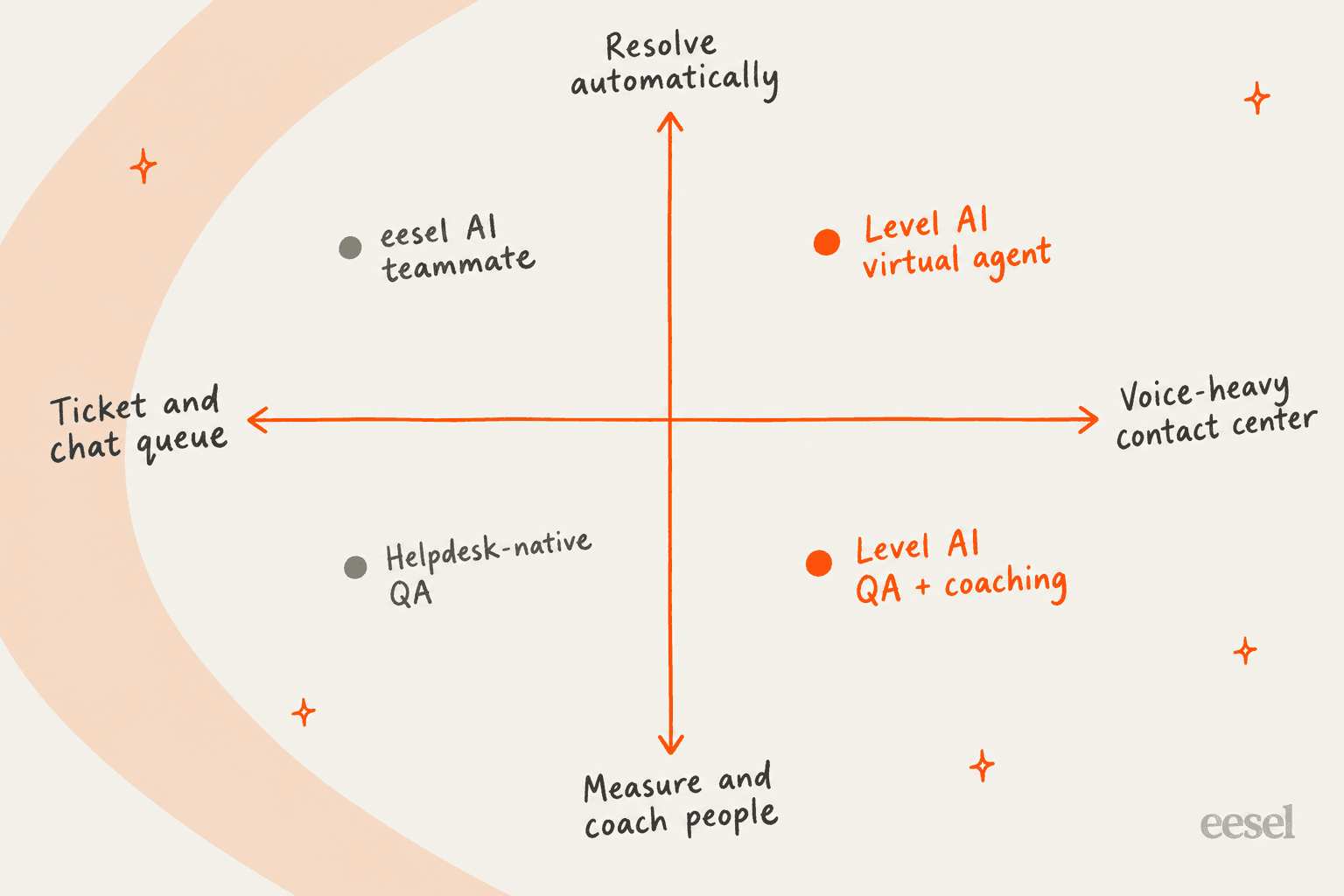
Here is how I'd sort it, going by the two questions that matter: which channel your volume comes in through, and whether you need to measure people or take work off their plate.
Level AI is a strong pick if:
- You run a contact center with 100+ agents and a lot of phone volume.
- Your QA team samples a few percent of calls and you need full coverage and calibration, with coaching in the same place.
- You're in a regulated industry and need screen recording and redaction, plus a BAA.
- You want an AI call center agent scored by the same rubric as your people.
- You already run Five9, Genesys, NICE, Talkdesk or Amazon Connect.
I'd look elsewhere if:
- Your volume is mostly email and chat tickets in a helpdesk, and the bottleneck is answering them, not grading them.
- You need to be live in days, not a quarter, and your helpdesk pricing already eats most of the budget.
- You want a published price or a self-serve trial. Most Cresta alternatives in this tier don't offer one either.
- You're a small team. Native tools like Zendesk QA cover the basics, and a broader roundup of support QA tools is a better starting point.
The reframe I'd leave you with is this one. A QA platform tells you, beautifully, how your team handled last week, but it doesn't automate the work itself. A CX lead at a supplements brand doing about 7,000 Gorgias tickets a month said something on a call with eesel that I keep thinking about:
"The customer doesn't want to wait for me to do my monthly report"
If that is where you are, then measurement is the second problem and clearing the queue is the first. For when you get there, there's a support QA roundup too. Once the queue is under control you can read more about support QA with AI, or have a look at how Cresta approaches the same contact center problem.
Try eesel for your ticket queue
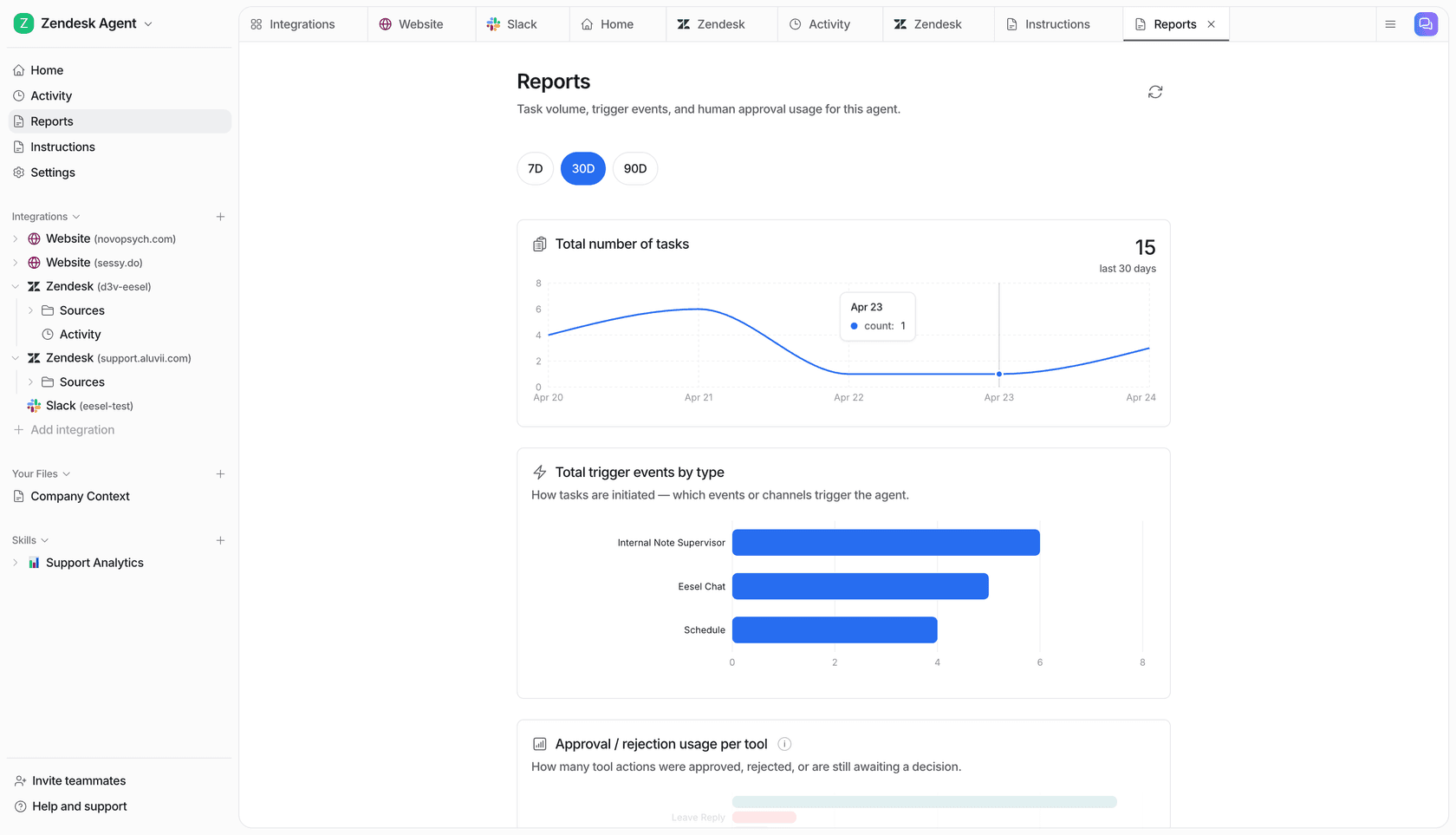
If your support runs on Zendesk, Freshdesk or Gorgias, an eesel AI helpdesk teammate joins the queue you already have and does the actual work: drafting or sending replies and classifying tickets, then routing and handing off whatever it shouldn't touch. It learns from your help center and macros, and from your past tickets too. Before going live, its simulation skill tests its answers against hundreds of your past tickets. I've watched confident-sounding bots give wrong answers, and this is the step that catches it.
To be honest about where it stops: eesel doesn't answer phone calls, so it is not a replacement for Level AI's voice stack. For ticket and chat queues, though, you can be live the same afternoon. Pricing starts with a free plan of 100 credits, and paid plans start at $299 a month for 500 tickets or chats, with unlimited seats. Try eesel.
Frequently Asked Questions
What is Level AI?
How much does Level AI cost?
Is Level AI good for small support teams?
What does Level AI QA-GPT do?
Does Level AI integrate with Zendesk?
Does Level AI have voice AI agents?
What are the main Level AI alternatives?



Article by
Riellvriany Indriawan
Riell is a designer and writer at eesel AI with about two years of experience researching CX platforms, AI chatbots, and helpdesk software. She combines her design background with a sharp eye for how these tools actually look and feel in practice — making her comparisons unusually visual and user-focused.