Meta Muse for Help Scout: how Meta's AI fits your WhatsApp inbox in 2026

Rama Adi

Katelin Teen
Last edited October 1, 2026
What "Meta Muse for Help Scout" actually means
A big part of my week goes into reading developer docs from other companies, and Meta's naming in 2026 takes more untangling than most of them. There are three Meta products in play here, but only one of them actually talks to your customers:
- Muse, the personal AI agent Meta launched in September for consumer errands. It was never built for answering the customers of a business.
- Muse Spark 1.3, the model, sold through the Meta Model API. You could build a Help Scout bot on top of it, I go through that route further down. The Muse Spark 1.3 overview has the model detail.
- Meta Business Agent, which Meta launched in June as the AI that answers your customers on WhatsApp, Messenger and Instagram. This one is what a Help Scout team is really weighing up.
The full three-way breakdown lives in my Meta Muse for customer support guide. In this post I zoom in on the Help Scout side, meaning what happens to your WhatsApp channel and your shared inbox once Meta's agent joins, and also what happens to your bill. If you run a different helpdesk, the Meta Muse for Front and Meta Muse for Zendesk posts cover those.
How WhatsApp, Messenger and Instagram work in Help Scout today
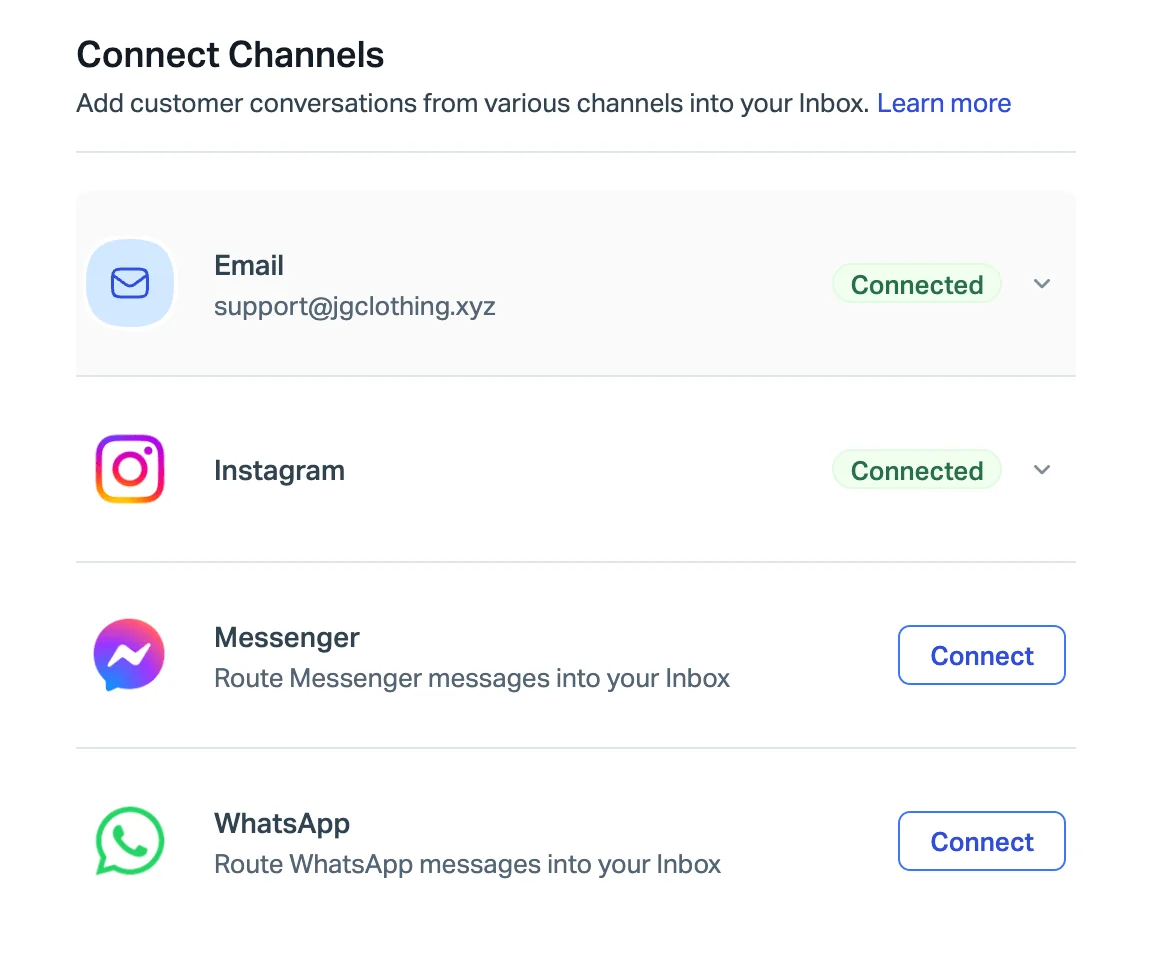
Help Scout treats Meta's channels like any other inbox channel, and every one of those docs got a refresh in September. You connect them inbox by inbox under Settings, Inboxes, then Connect Channels, and per the Connect Channels article, "All plans can add Email; All paid plans can add others."
On the pricing page, "WhatsApp, Instagram, and Messenger" sit in the Standard plan at $25 per user per month, with Plus at $45 and Pro at $75. My Help Scout pricing post has the full plan table.
WhatsApp in Help Scout
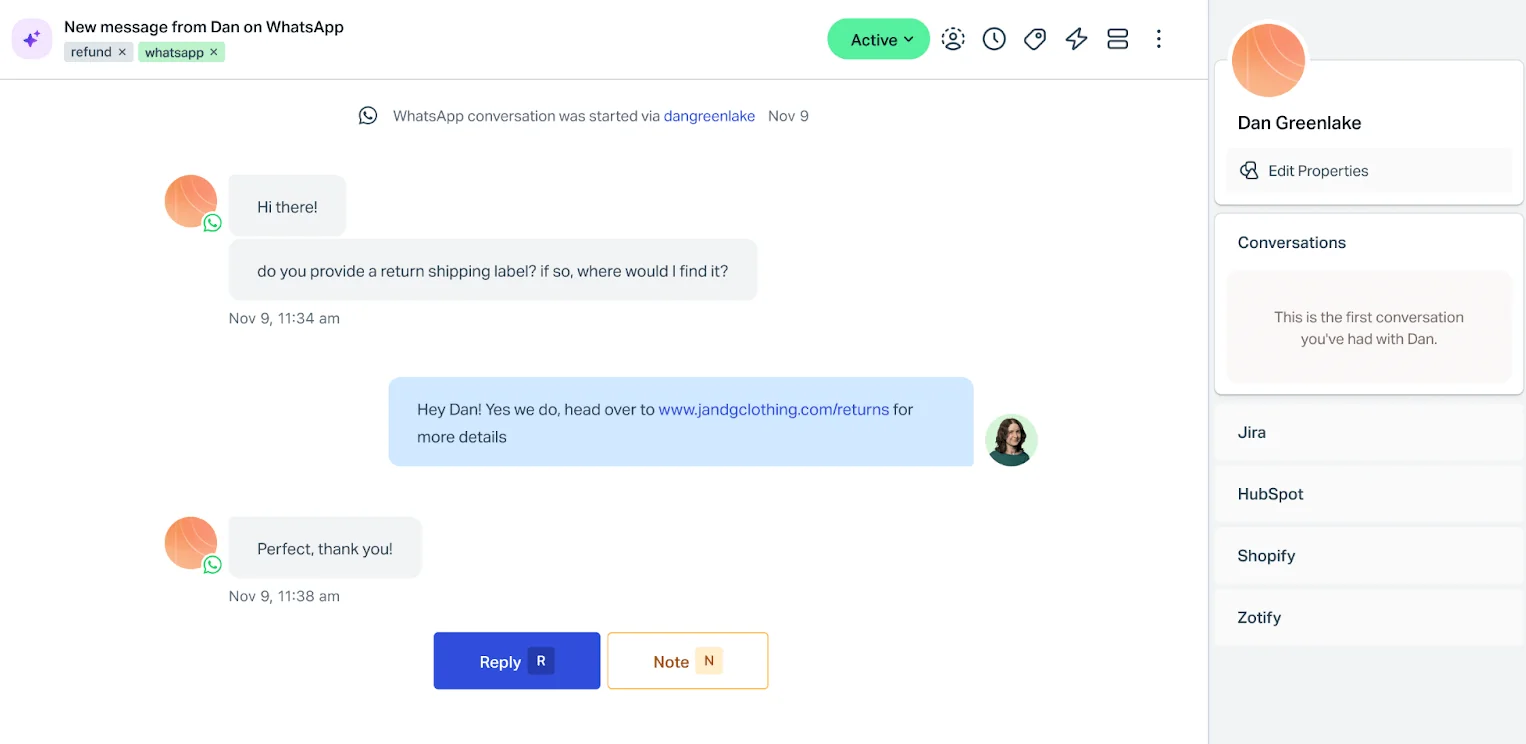
Per Help Scout's WhatsApp article, each new chat "creates a new conversation in your Inbox", tagged whatsapp, and your team replies from Help Scout. A few details in that doc end up shaping everything after this:
- It's the Platform, and the number leaves the app. You need a WhatsApp Business Platform account, and once connected "the number will no longer work in the WhatsApp or WhatsApp Business mobile app". There is no coexistence mode to fall back on.
- The account is yours. Setup goes through a Meta popup, where you pick or create your own Meta Business Portfolio and WhatsApp Business Account. No third-party provider shows up anywhere in the flow.
- One number per inbox. "We currently do not support multiple numbers per Inbox, nor can you use a single number across multiple Inboxes."
- No email address. "WhatsApp doesn't share the customer's email." Keep that one in mind, it matters later on.
- Templates are tight. Outside the 24-hour window the only reply you can send is a Meta-approved template, and only Utility templates that are "text-only templates without parameters."
Messenger and Instagram in Help Scout
Messenger and Instagram come in as DMs only. The Messenger doc and Instagram doc don't mention post comments or story replies, and both have the same limits: there is no email address and no formatting, and on top of that, "You cannot send attachments or media back to the customer through Help Scout."
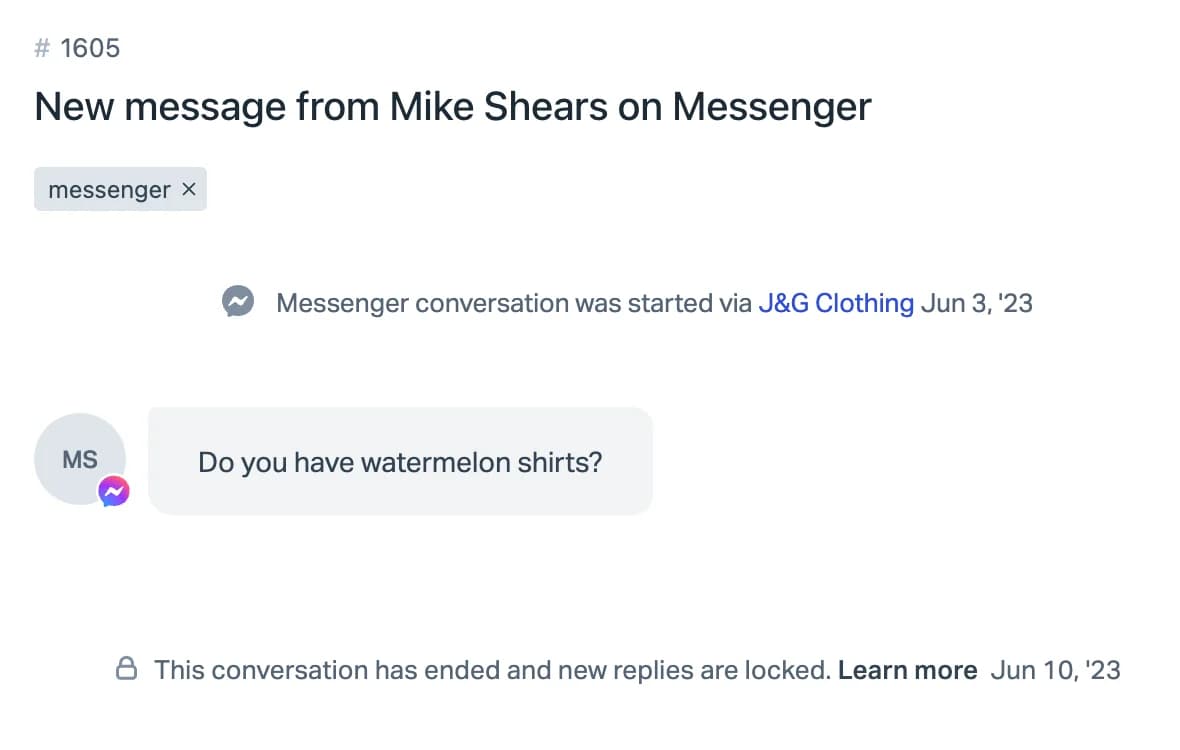
For an AI, the line that matters most is this one: replies sent directly in Messenger or Instagram "do not sync back to Help Scout". Meta also expires these threads after 7 days with no reply from the customer, and after that Help Scout locks them.
For the rest of the feature set, my Help Scout review and Help Scout features posts walk through it.
Help Scout's own AI doesn't answer on WhatsApp
This detail is what makes the Help Scout version of the question different from every sibling post I've written so far. On Front and Gorgias, Meta's agent competes against an AI that the helpdesk already runs on WhatsApp. On Help Scout it mostly doesn't, and the reason is how Help Scout's AI is scoped:
- AI Answers is Beacon-only. "AI Answers is toggled on and off at the Beacon level", and "Beacon is the chat widget that lives on your website or in your product", per Help Scout's AI Answers and Beacons doc. It costs $0.75 per resolution, and nothing in the docs places it on WhatsApp, Messenger or Instagram.
- AI Drafts helps your team write. It lives in "the reply box", on Plus and Pro, per the AI Drafts doc. It writes drafts, it doesn't answer customers on its own.
- AI Summarize works on any conversation, on Plus and Pro, so it will summarize a long WhatsApp thread for whoever picks it up next.
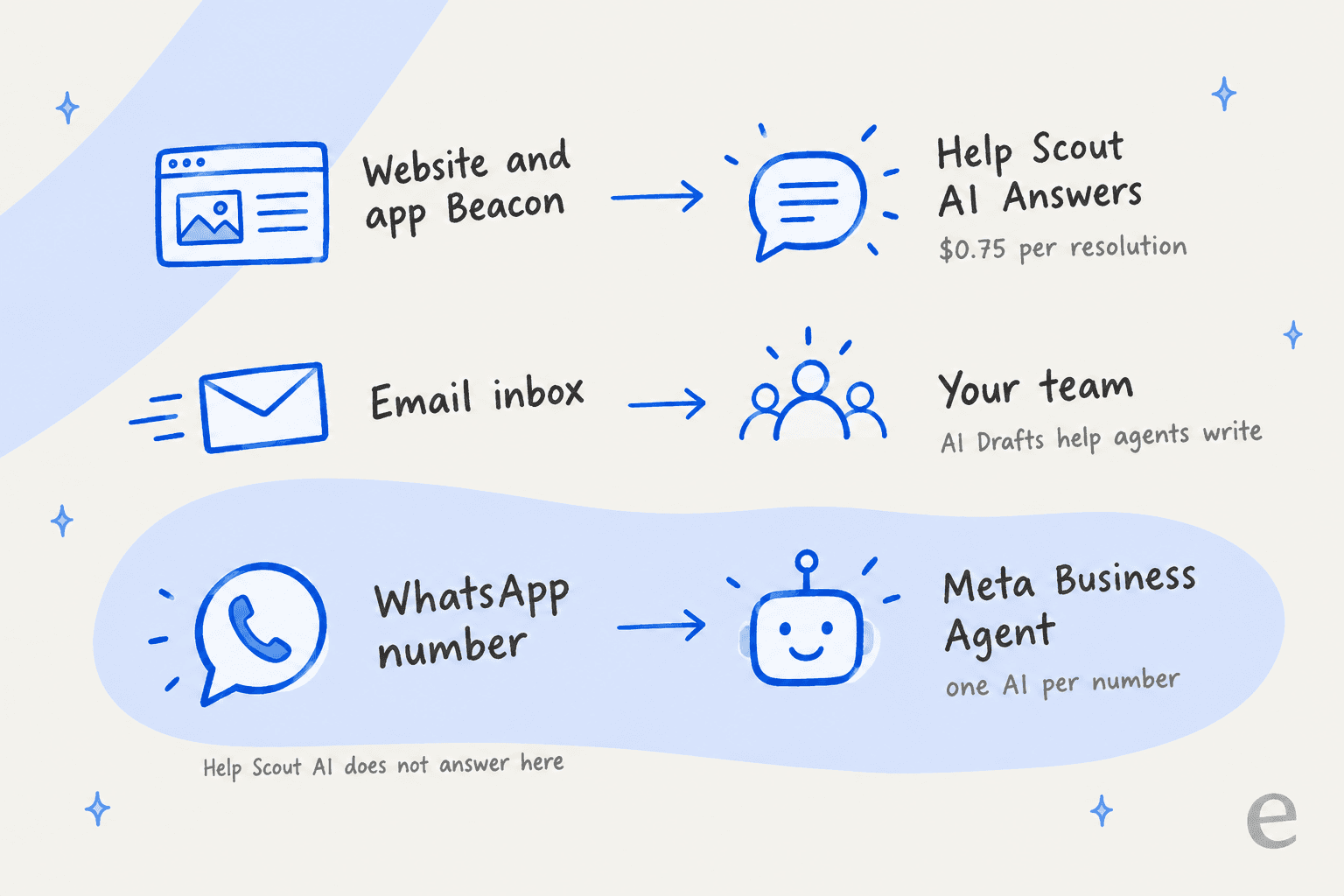
So the honest framing for a Help Scout team isn't "Meta's AI or Help Scout's AI". It's "Meta's AI on WhatsApp, Help Scout's AI on Beacon, and two knowledge bases to keep in step". My Help Scout AI overview and the Help Scout AI agent post cover the native side in more depth.
What happens when Meta Business Agent joins your Help Scout number
In September Meta's docs got a lot more detailed. For a team working from a shared inbox, three things change.
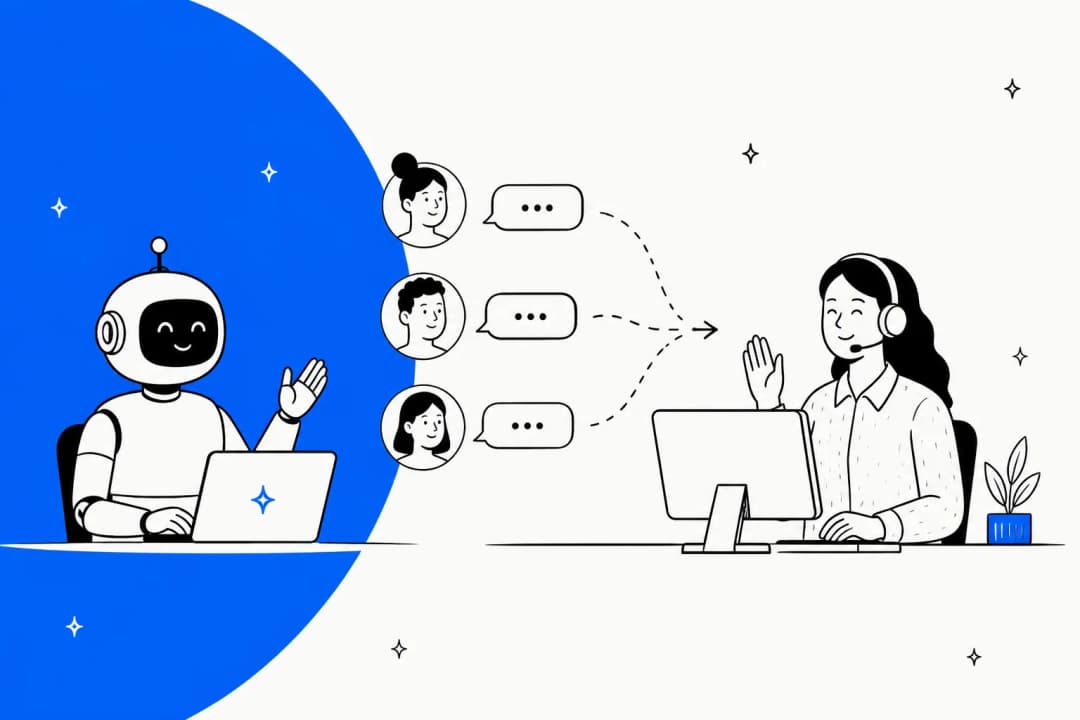
It becomes the first responder, and Help Scout moves to standby
Meta's Conversation Routing is what decides which app answers each message when a number has more than one app connected, and your Help Scout channel is one of those apps. When you turn on Business Agent, "The agent becomes the sole primary for messaging entry points", and "Previous primary destinations move to standby so they retain context", per Meta's routing setup guide.
Put simply, a new WhatsApp message reaches Meta's agent first and your Help Scout inbox after. It is possible to split this by entry point, for example keeping Help Scout primary for direct messages while the AI takes click-to-WhatsApp ads, but you can only do that inside Meta Business Suite. Meta is pretty blunt on this: "There is no public API for configuring Conversation Routing."
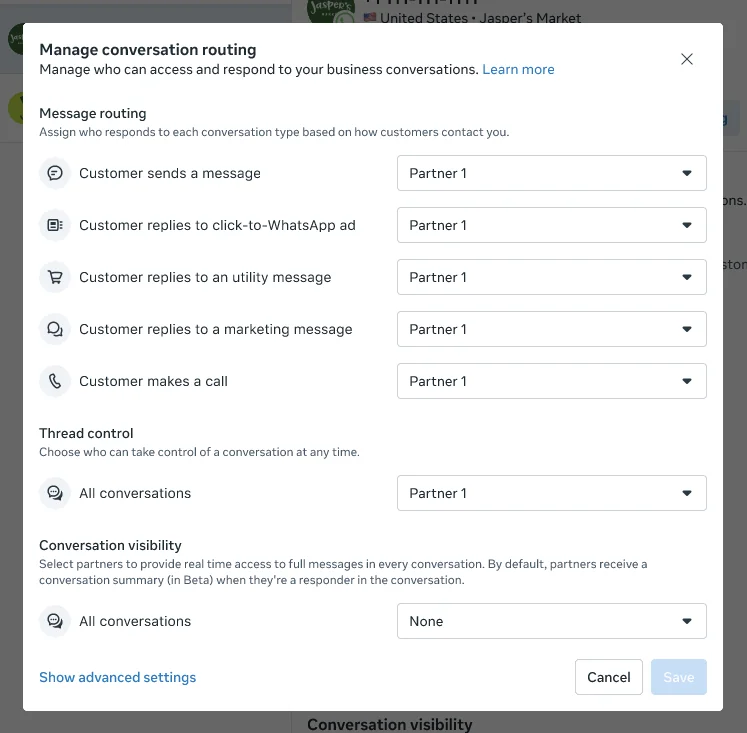
Help Scout has no documentation for this setup at all. When I searched its docs for "Business Agent", "Meta AI" and "coexistence", nothing relevant came back, so you'd be setting up both sides with only Meta's instructions to go on.
One AI per number still applies
Meta's Platform overview says the number must be "Not already running another AI agent on that number", because "an active authorized-agent integration blocks Meta Business Agent."
AI Answers doesn't run on WhatsApp, so a stock Help Scout setup shouldn't trip this rule. If a third-party AI is already on the number, though, plan for it being one or the other. Meta never defines "authorized-agent integration", so my approach would be treating any AI that replies on that number as counting.
Handoff goes back through the thread, and Help Scout isn't a named partner
When Business Agent hands off, the chat stays in the same WhatsApp thread, the thing that passes over is ownership. Meta's customer support guide lists "A staffed destination for handed-off conversations" as a prerequisite, and a plain handoff goes to the app you set as "escalation partner", per the thread control docs.
For a Help Scout team, that partner is Help Scout's own WhatsApp app. When Meta introduced Business AI, the earlier name for Business Agent, it named its handoff partners: "Salesforce, Microsoft Dynamics 365 Contact Center, ServiceNow, Zendesk, Gorgias and Klaviyo Service." Help Scout isn't on that list. Going by Meta's routing docs, a handoff should still arrive in your inbox as a normal WhatsApp conversation. But nobody on either side has documented that flow, which is why I'd test it on a spare number first.
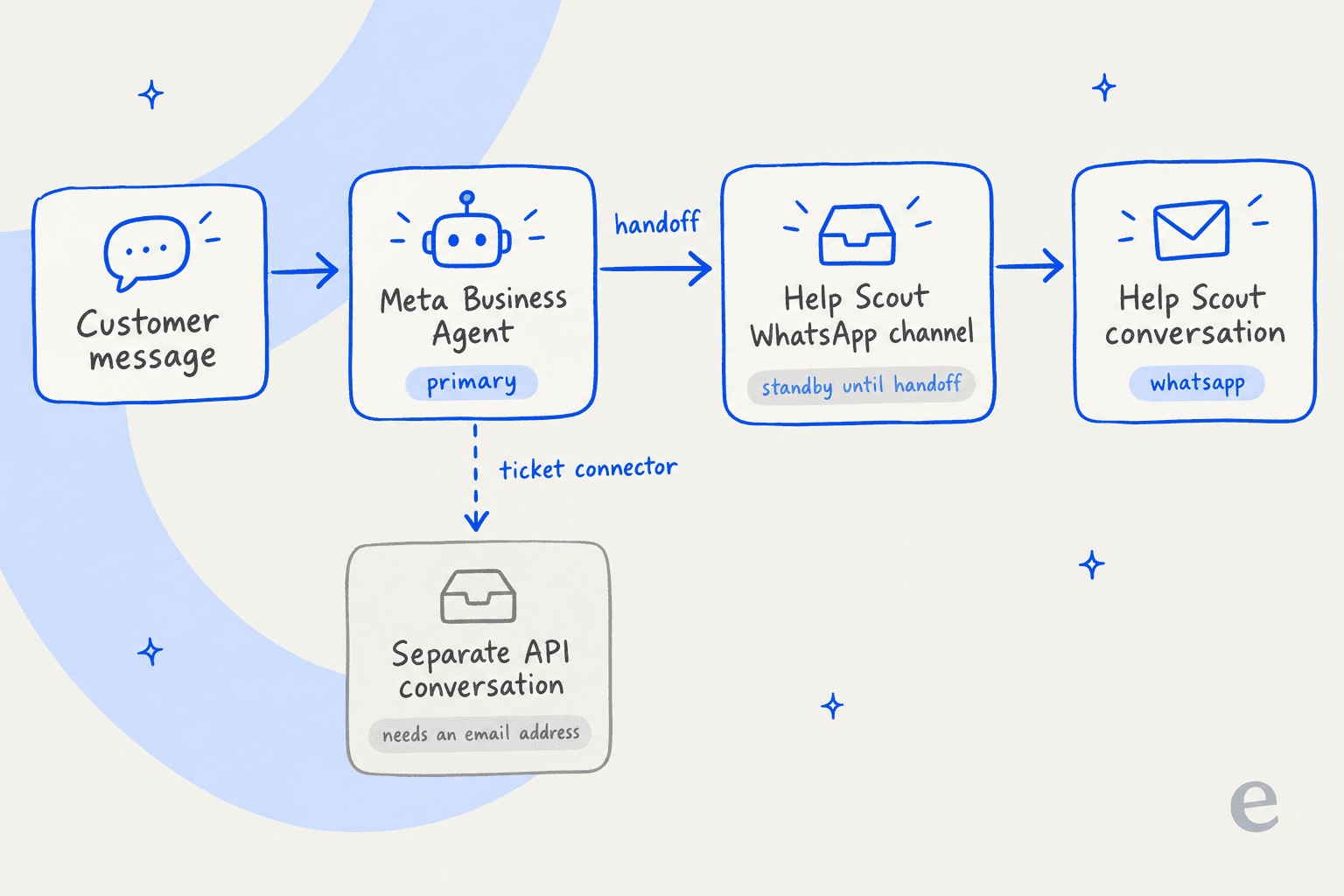
Some more handoff details worth knowing from Meta's docs:
- Context travels in a 2,000-character note. The handoff event carries a free-text
metadatafield that Meta suggests using "to carry the ticket or order reference". - You don't control the triggers. Handoff fires on low confidence or integrity issues, and also when a customer asks for a human, and "You do not configure the triggers," per the capabilities page.
- Meta warns about the 2am handoff. "An agent that hands off at 02:00 into an unstaffed queue produces a worse outcome than one that says when the team is next available and raises a ticket."
My AI agent handoff guide covers what a good handoff looks like on any helpdesk.
Messenger and Instagram are murkier
Meta says it "no longer supports Handover Protocol for Messenger", and businesses have moved to Conversation Routing, where each Page has one default app. Every Business Agent developer page is written with WhatsApp in mind, though. On Messenger, the self-serve agent hands off to you in the Business Suite Inbox, and not to a connected app like Help Scout.
Now put that next to Help Scout's own rule, the one where replies sent outside Help Scout don't sync back. My reading, which Help Scout doesn't address directly, is that Meta's AI replies on Messenger or Instagram wouldn't show up in your Help Scout thread. Your team would see what the customer wrote but not the answers they already got. To me that is a good reason for keeping Business Agent on WhatsApp only, if you use it at all.
Can Meta's agent create Help Scout tickets?
Business Agent takes actions through connectors, which are HTTP APIs or remote MCP servers you define, and Meta's support guide shows a worked create_support_ticket tool. In the Freshdesk and Gorgias posts this was the point where it broke, because Meta's connectors reference says "only OAUTH2_CLIENT_CREDENTIALS, API_KEY, and NONE are supported."
Help Scout gets through the auth check. Its Inbox API implements "Authorization Code and Client Credential flows", and "The Client Credentials flow is meant for internal integrations." On paper that lines up with Meta's OAUTH2_CLIENT_CREDENTIALS. Help Scout's other doors don't fit, though:
| Help Scout surface | Auth it uses | Fits Meta's connector? | What it can do |
|---|---|---|---|
| Inbox API 2.0 | OAuth2, client credentials or authorization code | Yes, client credentials | Create conversations, replies, notes, tags |
| Help Scout MCP server | Per-user OAuth sign-in on Help Scout's page | No | Read-only: search, summarize, reports |
| Docs API | API key over HTTP Basic | No (Basic isn't supported) | Read and edit Docs articles |
| Webhooks | HMAC signature on outbound events | Not a connector | Notify your own service of new conversations |
The auth fit hides three snags, and all of them come from Help Scout's create conversation and auth docs:
- The ticket can't be a WhatsApp conversation. The
typefield is "one of: chat email phone". That means the tool creates a new, separate conversation, which shows up as sourceapiinstead of as the WhatsApp thread. - It needs an email. The customer "Must contain a valid customer id or an email address", and WhatsApp doesn't share one. Your agent has to ask the customer for it, otherwise you end up with orphan tickets.
- The token is the whole user. Client-credentials tokens last 2 days with no refresh token, and there's no scope parameter, so the token can do anything the admin who created the app can do. So make a dedicated Help Scout user with limited permissions for it.
The Help Scout MCP server tells the opposite story. It's "read-only" and "can't reply to customers, add notes, change tags", and write tools are "on the roadmap" with no date. My Claude for Help Scout and ChatGPT for Help Scout posts dig into what that server can do.
There is one workaround I do like. Business Agent's Websites knowledge source crawls public pages, so you can point it to your public Help Scout Docs site rather than copying FAQs by hand. Website knowledge "is a snapshot taken at crawl time", per Meta's capabilities page, so remember to re-crawl after you edit an article.
A BSP consultant with early Platform access summed the controls up like this:
"The harness is very basic. You only get 4 controls - knowledge, personality, audience, handoff. Fine for a simple FAQ or catalog bot. But if you want real step-by-step logic, you hit the wall fast."

What it costs: Meta Business Agent next to Help Scout
The two AIs bill in different units, and on top of that they don't cover the same channel. Here's the full picture for a Help Scout team that is adding WhatsApp:
| Cost line | Meta Business Agent | Help Scout |
|---|---|---|
| AI unit | Tokens, $2.00 per 1M (Meta pricing) | AI Answers, $0.75 per resolution (pricing page) |
| Channel the AI covers | WhatsApp, Messenger, Instagram | Beacon on your website and apps |
| Per message or outcome | About 4 to 5 cents a message | One charge per resolved Beacon chat |
| Simple question (Meta's example, 4 messages) | About 16 to 20 cents | Not available on WhatsApp |
| Complex question (Meta's example, 10 messages) | About 40 to 50 cents | Not available on WhatsApp |
| Seats | None | Standard $25, Plus $45, Pro $75 per user per month |
| WhatsApp channel | WhatsApp Business Platform number | Included on all paid plans |
| WhatsApp fee on human replies | Service message fee since Oct 1, after 1,000 free per number | Help Scout's docs don't mention Meta fees or a markup |
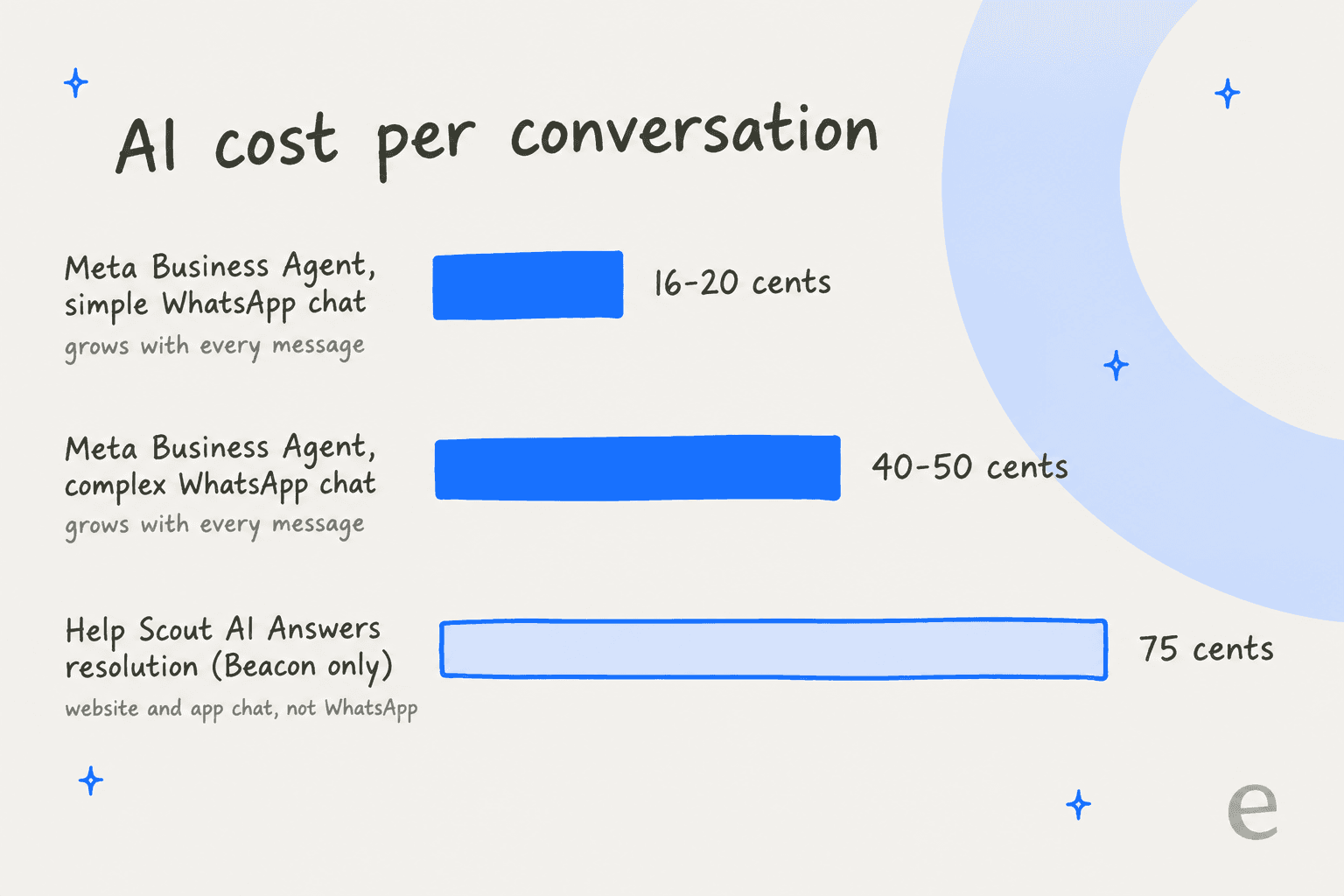
Per conversation, Meta's agent comes out cheaper than an AI Answers resolution in every example Meta publishes. The gap gets smaller when a customer keeps asking follow-ups, since Meta bills each message. Early users picked up on that quickly:
"My concern is that the per-message cost is insanely high at approximately 5 cents per message."
Help Scout buyers are touchy about usage pricing as well, and for good reason. Help Scout moved to per-contact pricing in 2025 and then reversed it, and that r/SaaS thread from the time is still a sore spot:
"HelpScout changed back to user-based pricing. Guess too many people cancelled including me [...] Helpscout lost all trust with this flip-flopping on pricing."
October 1 hits the human side of your inbox
The change that most Help Scout teams will actually feel isn't the AI price. Since October 1, 2026, Meta charges service messages per message after 1,000 free per phone number per month. Service messages are replies from a person or a third-party AI, and Meta's pricing page says each message is billed "either as a Meta Business Agent message or as a service message, never both."
That means every WhatsApp reply your team sends from Help Scout after a handoff is now a billable service message. The WhatsApp Business Account sits in your own Meta Business Portfolio, so expect that bill to come from Meta and not from Help Scout. My WhatsApp API pricing explainer has the full rate history, and the Meta policy changes post covers what Meta did to third-party bots.
Building your own Help Scout bot on Muse Spark
The third route skips Business Agent completely and builds straight on the model. This is the closest one to my day job, so here's what it involves in practice.
On the model side, Muse Spark 1.3 costs $1.25 input and $4.25 output per 1M tokens on the standard tier (Meta Model API docs). The cheaper contributor tier is off the table for support work, because Meta's terms say "You must not submit sensitive, confidential, or personal information to the Discounted Services." A support conversation is full of names and emails, not to mention order numbers. My Muse Spark 1.3 review covers where the model is strong.
On the Help Scout side, everything else is on you:
- Knowledge. Docs articles and saved replies, plus past conversations, all kept in sync. The Docs API is a separate key from the Inbox API, and pulling years of history against 200, 400 or 800 calls a minute takes some planning.
- The conversation loop. A webhook on
convo.customer.reply.createdtells you a WhatsApp message has arrived, and then your service drafts a reply or a note. The reply endpoint takesdraft: true, so a first version could stick to writing drafts only. - Escalation. Your own confidence threshold and routing rules, set by tag, since Help Scout Workflows match WhatsApp by its
whatsapptag rather than a channel type. - Testing. Replaying real conversations before anything gets to a customer.
- The WhatsApp rules. The 24-hour window and Utility-only templates, and also the October 1 service-message charges.
Write requests count as 2 calls toward Help Scout's rate limit, shared across your whole account, which means a busy bot eats into the same budget your other integrations use. My build vs buy guide lays out the full maintenance list, and the Help Scout API post has the endpoint detail.
The same build works on other models as well, my Grok for Help Scout post shows that one. Founders who've done the math tend to end up in the same place:
"If one of the devs said they spun up a reimplementation of HelpScout over the weekend that we could run for $2/mo, I'd still say no because the cost of managing it internally is at least $200/mo of people's focus."

Where Meta's agent stops for a Help Scout team
None of this is hidden, it's all there in Meta's docs, but it hits harder when your team works out of a shared inbox:
- It only answers in Meta's apps. Your Help Scout inbox carries email and Beacon chat, SMS too, and maybe phone notes. Business Agent covers none of them, so you would be running two AIs with two sets of rules. My Help Scout chatbot post covers the Beacon side.
- Your conversation history isn't a knowledge source. Meta's support guide tells you to "export the top drivers from your helpdesk for the last quarter" and write FAQ entries by hand. All those years of good answers sitting in your Help Scout archive stay out of reach.
- Regulated industries are excluded. Finance, health, government, alcohol and gambling businesses can't use the Platform. That one bites for the Pro customers who picked Help Scout because of HIPAA.
- Accuracy still needs grounding. Meta's help center warns "Some AI messages may be inaccurate or inappropriate", and an early tester saw "the same product come back at two different prices in two replies" (Reddit).
Another commenter in the same subreddit put the team problem in plain words:
"the builtin AI is useful for solo operators handling basic faq replies, but it doesn't come close to replacing what platforms are built for. the moment you have a team handling conversations or crm integrations the native tool just isn't there."
That lines up with what I hear on calls. A German multi-shop e-commerce team on eesel put WhatsApp on their must-have list, right next to German chat localization and multi-store order automation, and what they wanted wasn't a WhatsApp bot. They wanted the same AI with the same order data, answering wherever the customer happened to write in. A CX lead at a direct-to-consumer brand doing about 7,000 tickets a month described the other half of it like this:
"I need an AI who is only handling the tickets that it's confident to handle and all the other ones, leave them alone."
With Business Agent, it's Meta who draws that confidence line, not you.
Which setup fits your Help Scout team
Here is how I would pick, going by where your customers write in and how your team works.
| Your situation | Best fit | Why |
|---|---|---|
| Tiny shop, customers only on WhatsApp, simple product and hours questions | Meta Business Agent | Cheapest per chat, no Help Scout AI to displace |
| Help Scout team with WhatsApp plus email and Beacon in one inbox | An AI agent inside Help Scout | One set of rules, learns from your conversations, no ticket plumbing |
| Happy with AI Answers in Beacon, WhatsApp is light | Stay put, add saved replies for WhatsApp | AI Answers keeps the website covered; your team handles the rest |
| Engineering team that wants full control | Muse Spark API plus Help Scout Inbox API | Cheap per token, client-credentials auth fits, but you build and maintain it |
| Health, finance or another regulated vertical | Not Business Agent | Excluded from the Platform |
For most of the Help Scout teams I talk to, the second row is the one that matters. A customer writes on WhatsApp and follows up by email, then later replies to a satisfaction survey, and your team needs all that history in Help Scout instead of split between Help Scout and Meta. That's why picking the AI inside Help Scout matters more than the Meta question does.
If you're comparing those, my best AI for Help Scout roundup and the Help Scout AI alternatives list are good next reads, and the best AI for WhatsApp support covers WhatsApp across other tools.
For the setup steps on the Help Scout side, my guide on how to add AI to Help Scout walks through each route.
Try eesel for WhatsApp in Help Scout
eesel is an AI helpdesk teammate that joins Help Scout the way a new hire would, with no second inbox and no separate widget. It works on your conversations inside Help Scout, so WhatsApp chats and emails get the same rules as Beacon chats, and it can also connect to WhatsApp directly. It learns from your past Help Scout conversations and your Docs, and from your saved replies as well. Before it answers even one customer, it runs a simulation against hundreds of your past conversations, so you can see which ones it would get right, and after that you choose the conversation types it is allowed to touch.
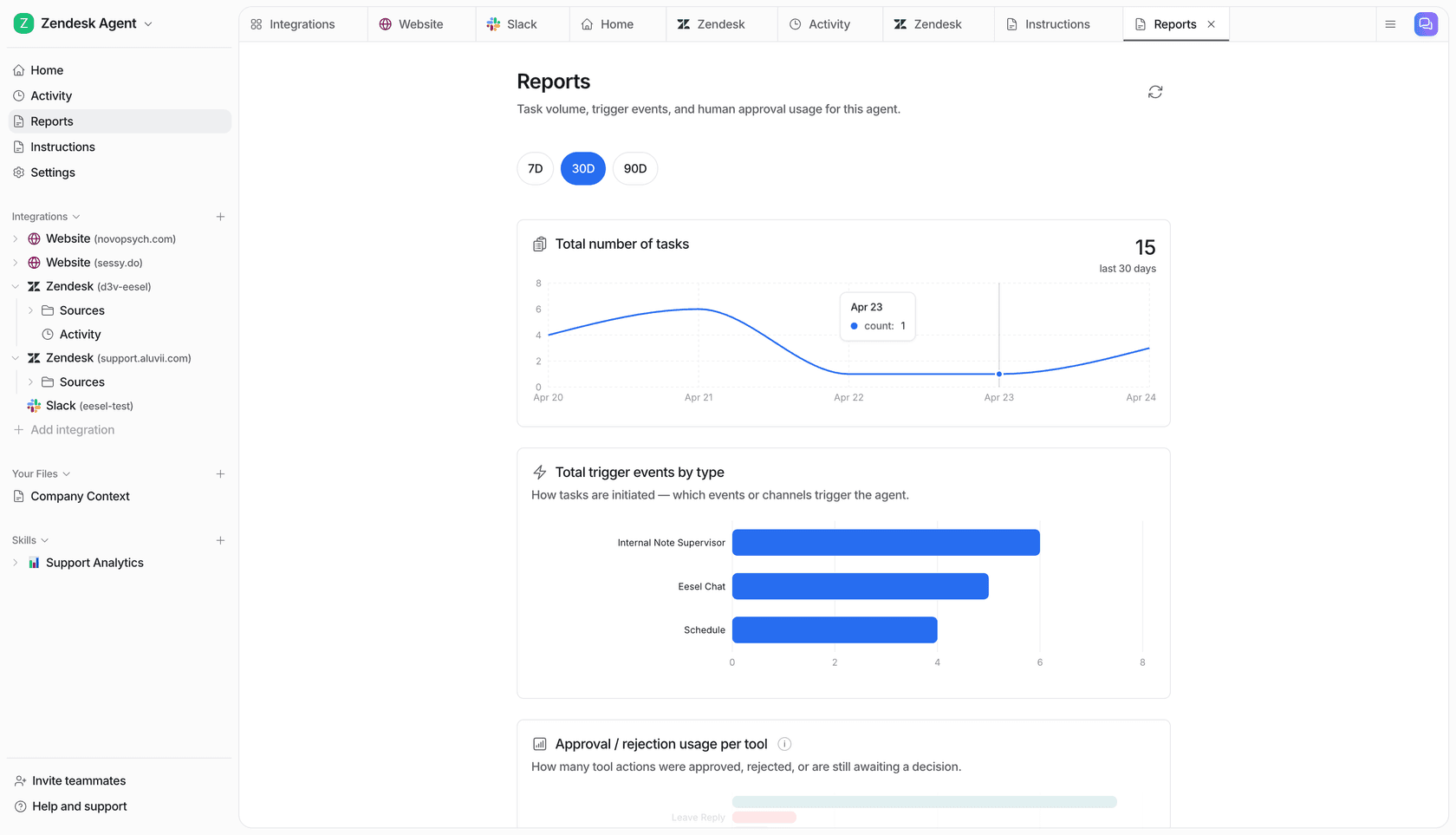
Pricing is a fixed monthly credit plan where a ticket or chat counts as one credit however many replies it takes, so a customer asking five follow-ups doesn't multiply the bill. If you'd prefer scripting the setup, the eesel CLI lets you (or a coding agent like Claude Code) connect Help Scout and add knowledge, and also approve actions, all from a terminal with JSON output for every command.
Try eesel free with 100 credits and no card, and see how it handles your Help Scout WhatsApp conversations now that the October 1 pricing is live.
Frequently Asked Questions
Can I use Meta Muse with Help Scout?
Does Meta Business Agent integrate with Help Scout?
Does Help Scout AI Answers work on WhatsApp?
How much does Meta Business Agent cost compared with Help Scout AI Answers?
Which Help Scout plan do I need for WhatsApp?
What changed for Help Scout WhatsApp costs on October 1, 2026?
Can I build a Help Scout bot on Muse Spark instead?
What is the best AI for Help Scout WhatsApp support?


Article by
Rama Adi
Rama is a software engineer at eesel AI with two years of experience writing about B2B SaaS, AI tools, and customer support technology. Based in Bali, Indonesia, he brings a developer's perspective to product comparisons — cutting through marketing copy to what the integrations and APIs actually do.