Meta Muse for Gorgias: running Meta's support AI next to your inbox in 2026

Rama Adi Nugraha

Katelin Teen
Last edited September 29, 2026
What "Meta Muse for Gorgias" actually covers
I build integrations at eesel, and the team has spent the last few years putting AI on live Gorgias queues for Shopify brands. Once "Meta Muse" and "Gorgias" began turning up together in searches, I sat down with Meta's developer docs and the whole Gorgias help center side by side, mostly to see what really connects. What I found is less than Meta's partner list suggests, though it is still more than most Gorgias admins realize.
Meta puts the Muse name on three separate things, and I go through them in my Meta Muse for customer support guide:
| Product | What it is | Touches Gorgias? |
|---|---|---|
| Muse | Meta's consumer personal agent, launched September 8, 2026 | No |
| Muse Spark 1.3 | The model behind it, sold through the Meta Model API | Only via a service you host |
| Meta Business Agent | Meta's support agent on WhatsApp, Messenger and Instagram | Yes, as the first responder on your Meta channels |
Meta has not said which model sits behind Business Agent. Its capabilities page only talks about "the underlying AI model", so for this post I treat Business Agent and Muse Spark as two different routes.
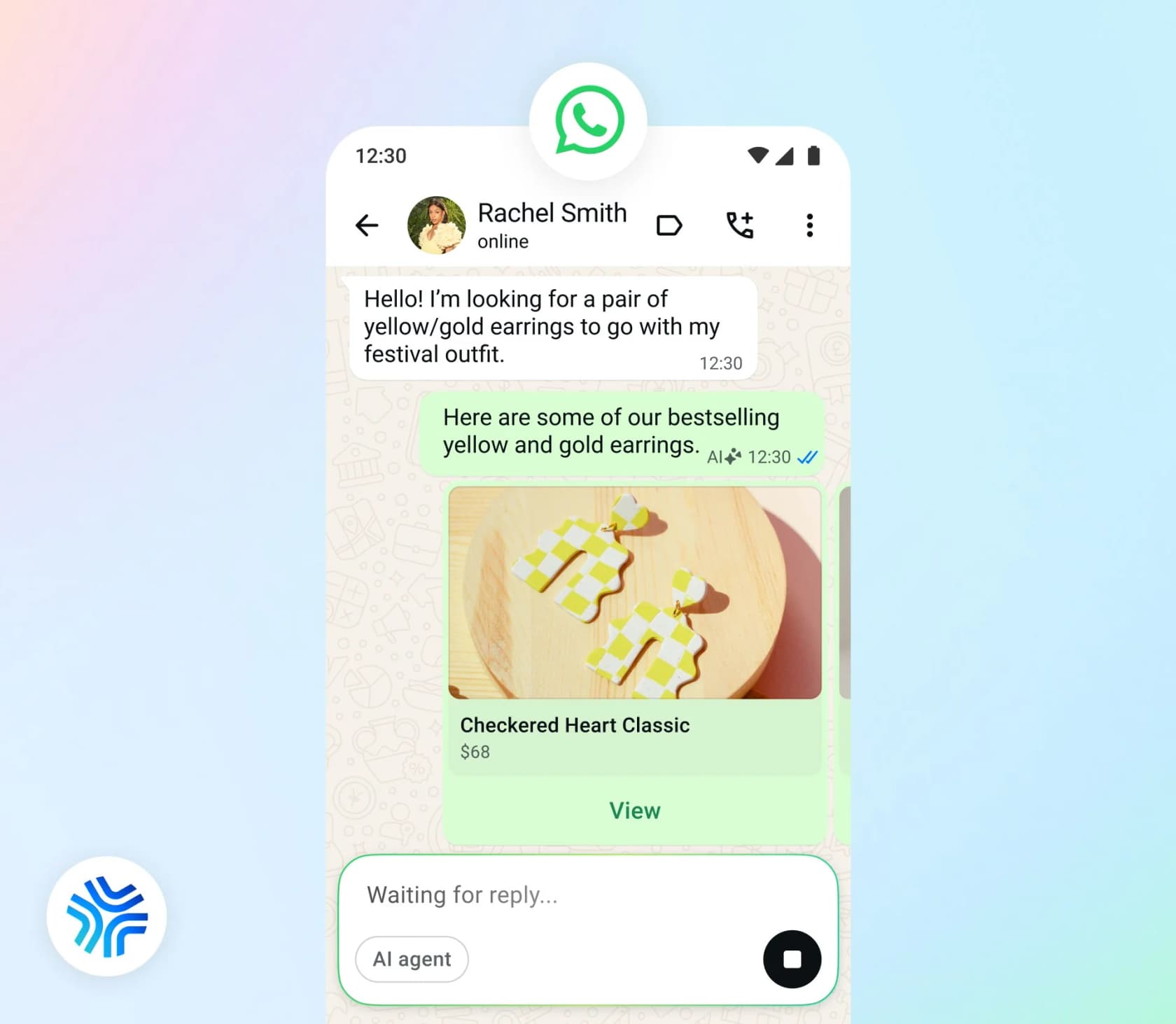
The part people miss: Gorgias already has an AI on Meta's channels
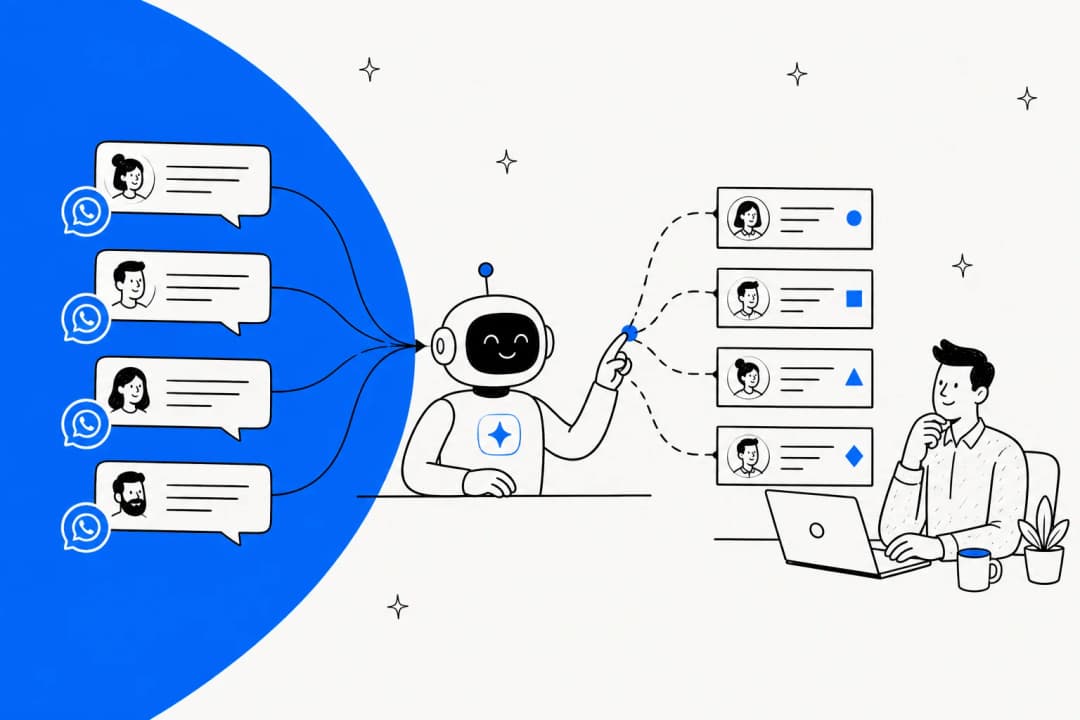
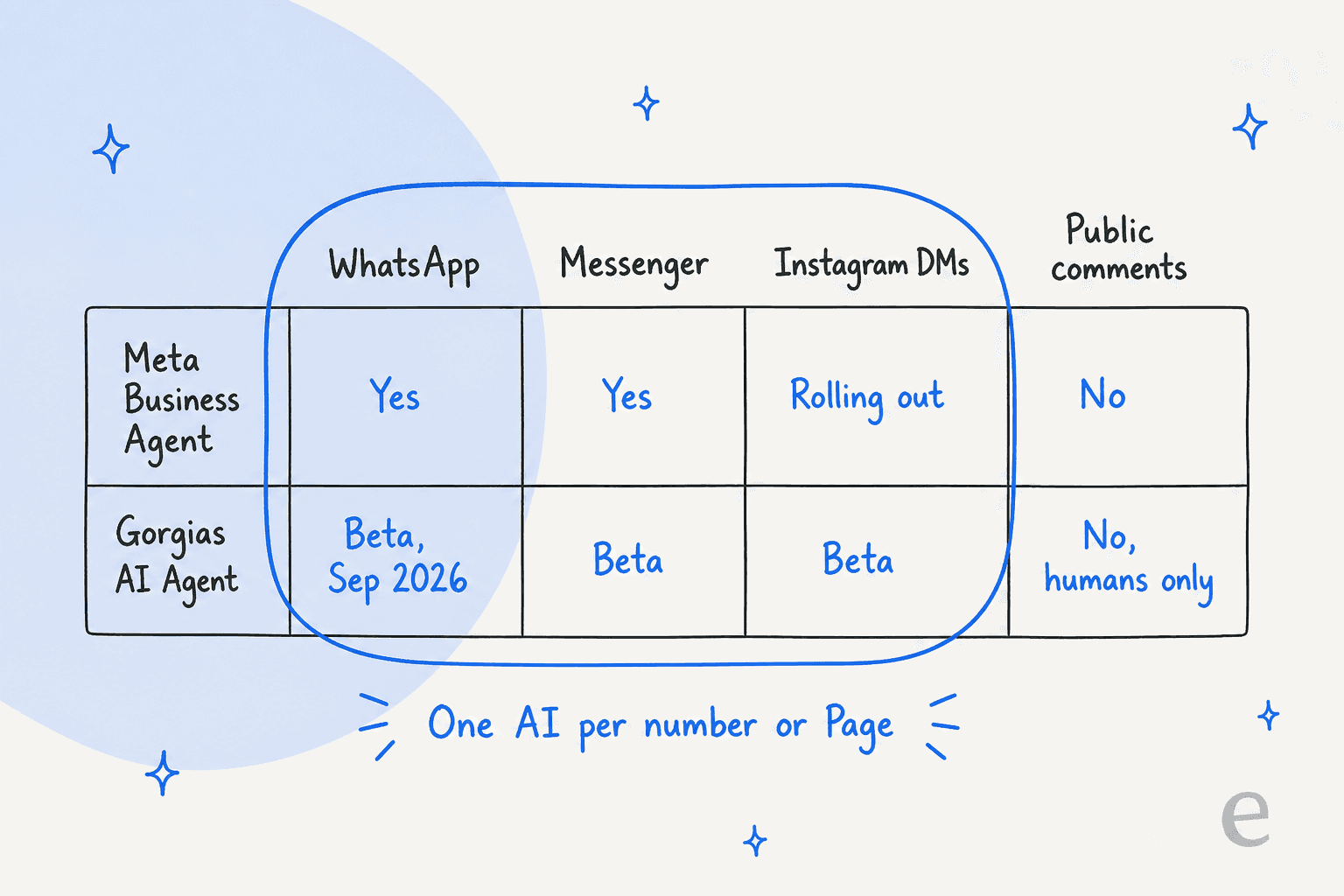
If you run a Zendesk or Freshdesk team, Business Agent is simply a new AI in front of the queue. On Gorgias it turns into a second AI competing for the same DMs. Gorgias's own docs state that AI Agent handles "email, chat, SMS, and social channels including Instagram DMs, Facebook Messenger, and WhatsApp."
The dates are worth a closer look. Instagram DM and Messenger support arrived in July 2026, and it still carries a beta label. WhatsApp followed in open beta around September 9, on "All plans with AI Agent" and Shopify stores only. If you want to switch it on, my Gorgias AI setup guide covers the steps.
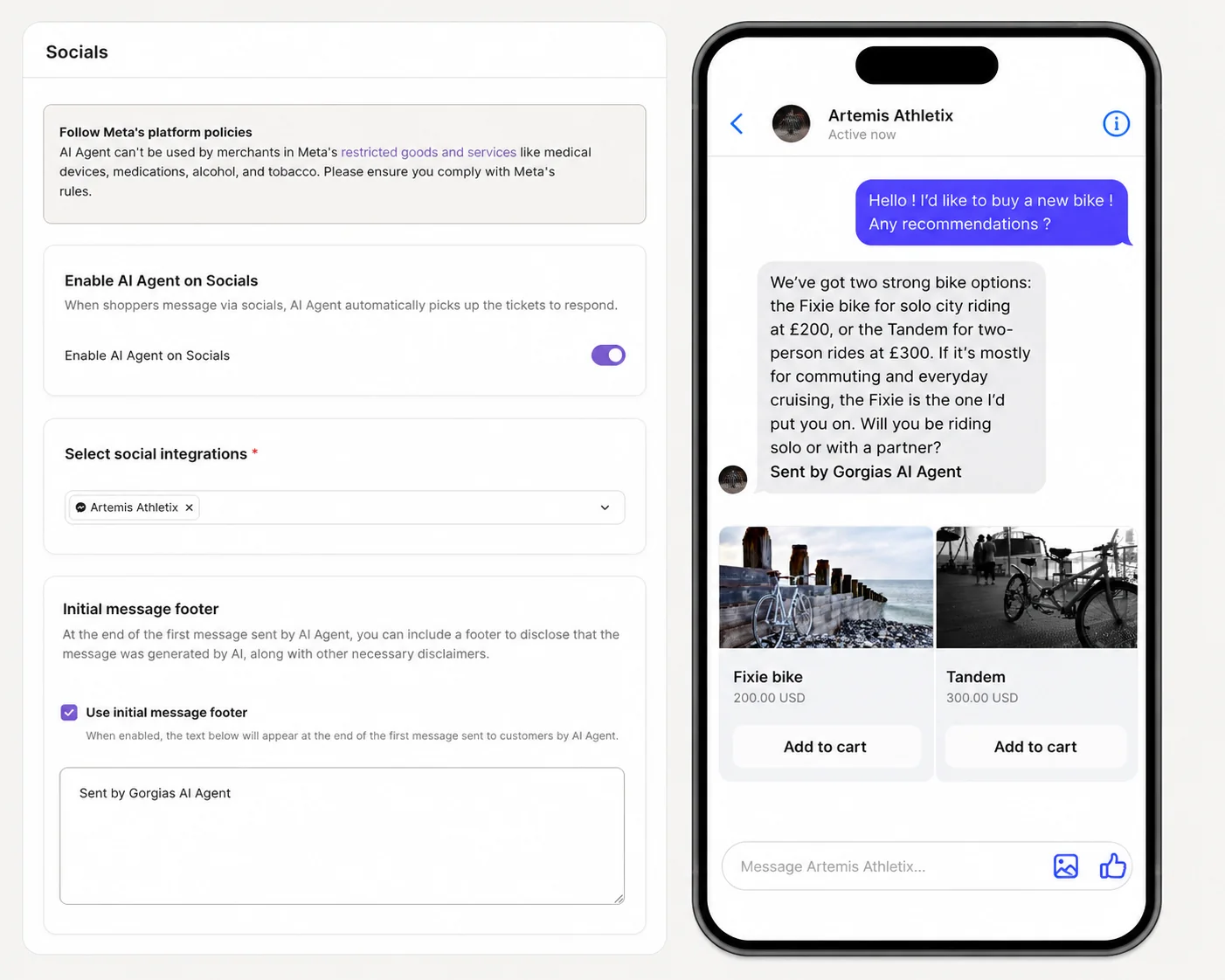
Public comments are not answered by either AI. Gorgias says its agent "doesn't moderate or reply to public posts, mentions, or comments" (Gorgias docs), so comment and ad-comment tickets stay with your human team and your Gorgias rules either way. On WhatsApp, Gorgias also has some limits of its own for the moment: there is no Shopping Assistant, and no order actions like cancellations or address changes, since shoppers can't verify with a one-time code on WhatsApp yet.
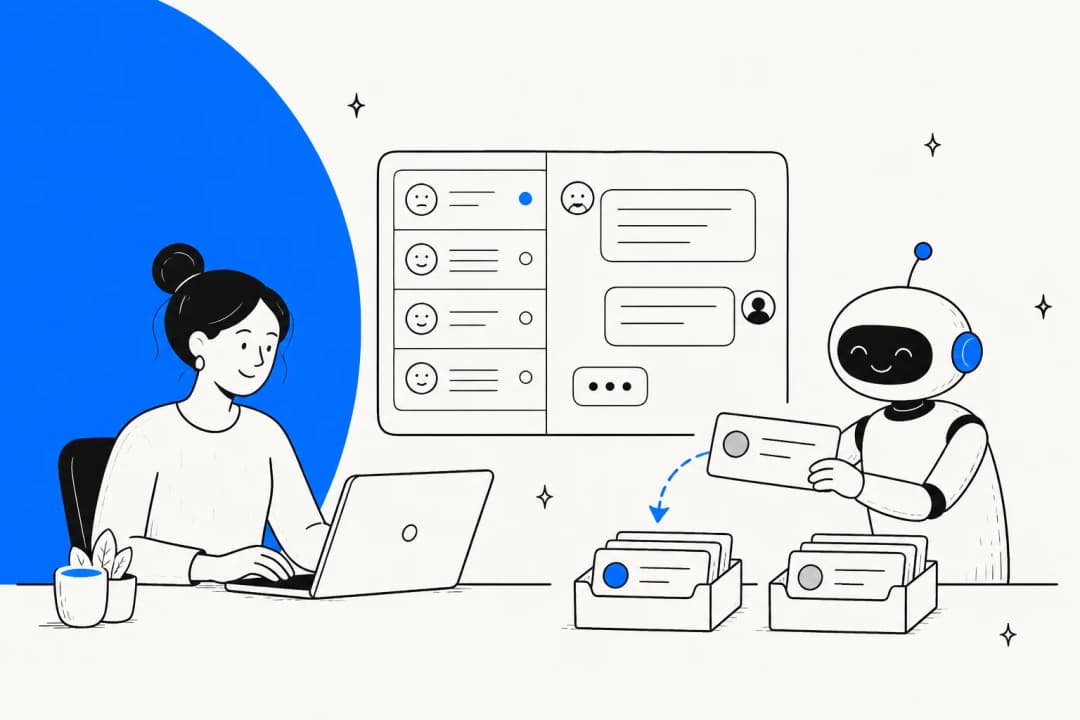
So the real question is not "how do I add Meta's AI to Gorgias". It's which AI owns the first reply on each Meta channel, and also where the handoff ends up. The rest of this post works through that one channel at a time.
Route 1: Business Agent on WhatsApp in front of Gorgias
This is the route that Meta's own marketing is pointing at. Meta's October 2025 Business AI post said it was "actively partnering" with Salesforce, ServiceNow, Zendesk, Gorgias and Klaviyo Service so the AI could "hand off complex support questions" to your existing team. Here is how that looks once you actually open the docs.
Gorgias is already your WhatsApp provider
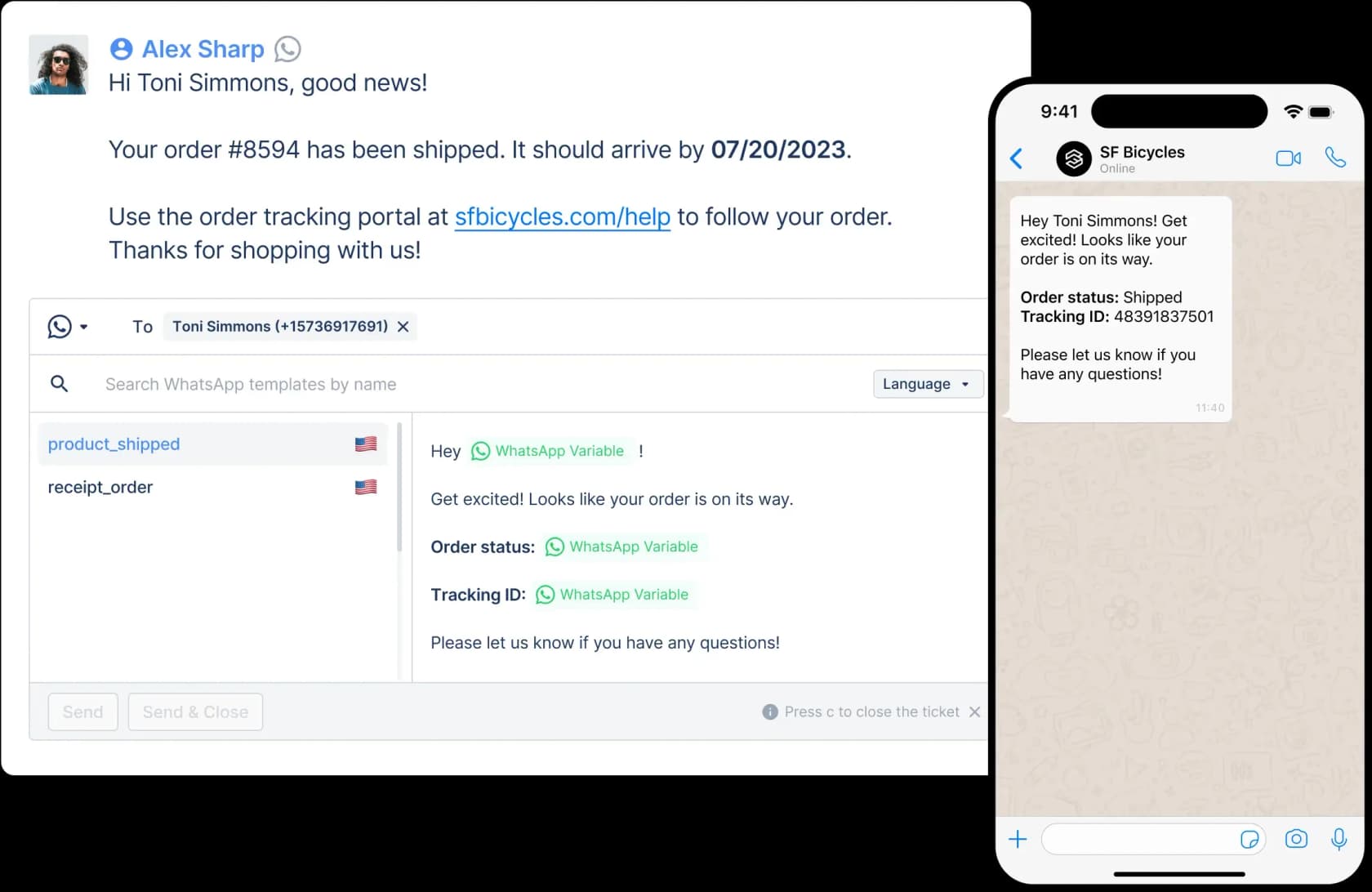
Gorgias does the WhatsApp connection through Meta's embedded signup. You click Connect WhatsApp Business in the Gorgias WhatsApp app, get redirected to Facebook, and create a WhatsApp Business Account there. After that Gorgias sets the two-step verification PIN, and a migrated number moves "into a WhatsApp Business Account that Gorgias manages" (Gorgias migration doc).
Two details from that setup end up shaping everything that comes after:
- Your number is on the WhatsApp Business Platform. Meta's platform overview only allows Platform numbers for the developer tier, "including one managed through a Solution Partner or Embedded Signup". A Gorgias number fits that description.
- It can't also sit on the WhatsApp Business app. Gorgias says "you can't have one number on the native WhatsApp app/another tool and in Gorgias simultaneously" (WhatsApp FAQs). That puts the self-serve Business Agent in the app off the table for this number.
Switching Business Agent on demotes Gorgias to standby
If I could put only one fact in front of a Gorgias admin, it would be this one. Meta's Conversation Routing guide says that when you enable Business Agent, "The agent becomes the sole primary for messaging entry points", and "Previous primary destinations move to standby so they retain context."
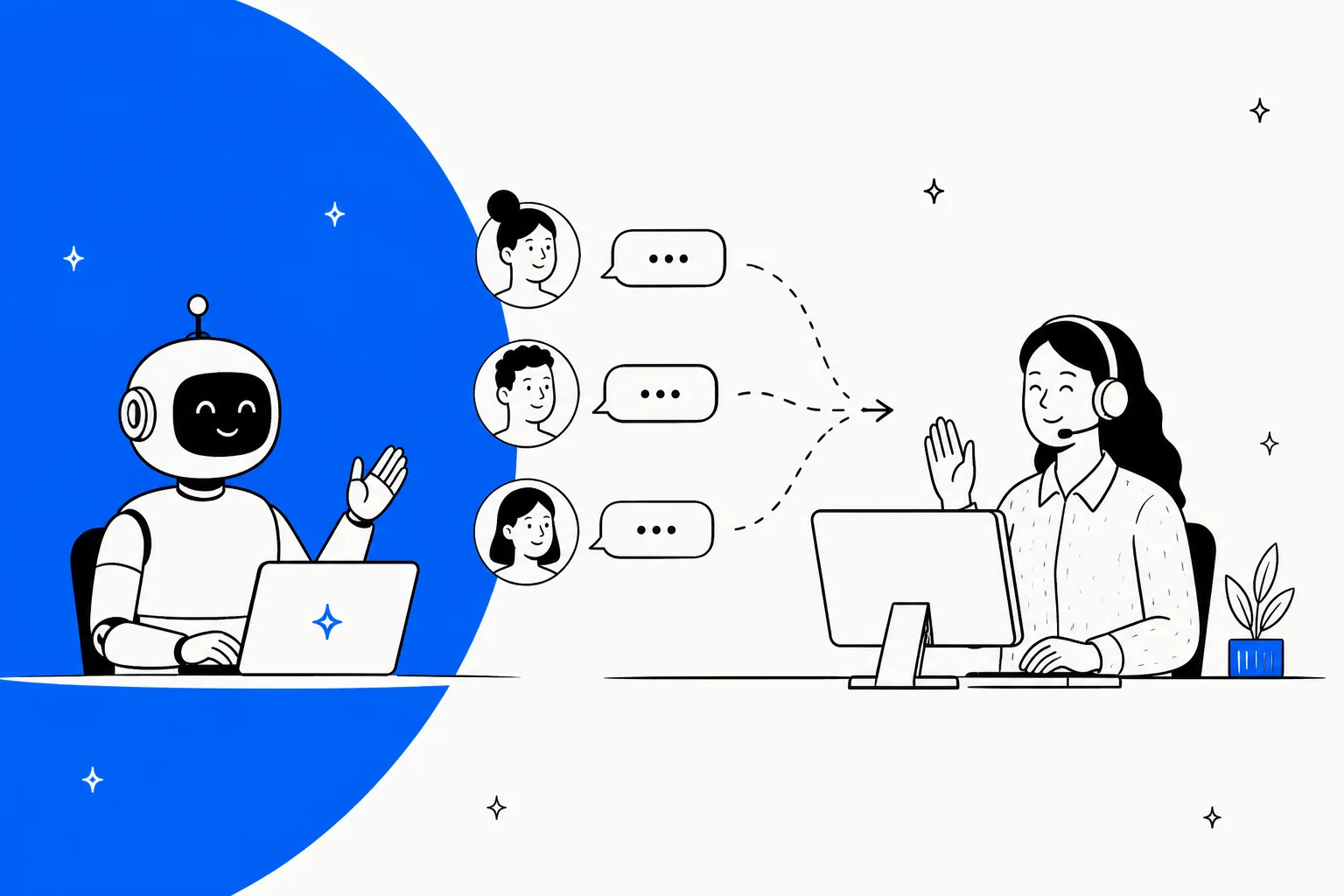
An app on standby is able to see messages, but it isn't meant to reply. Meta's routing overview allows one owner per thread and at most one escalation partner that "can take control of any thread". So if you want your team to pick up a handoff inside Gorgias, Gorgias needs to be that escalation partner.
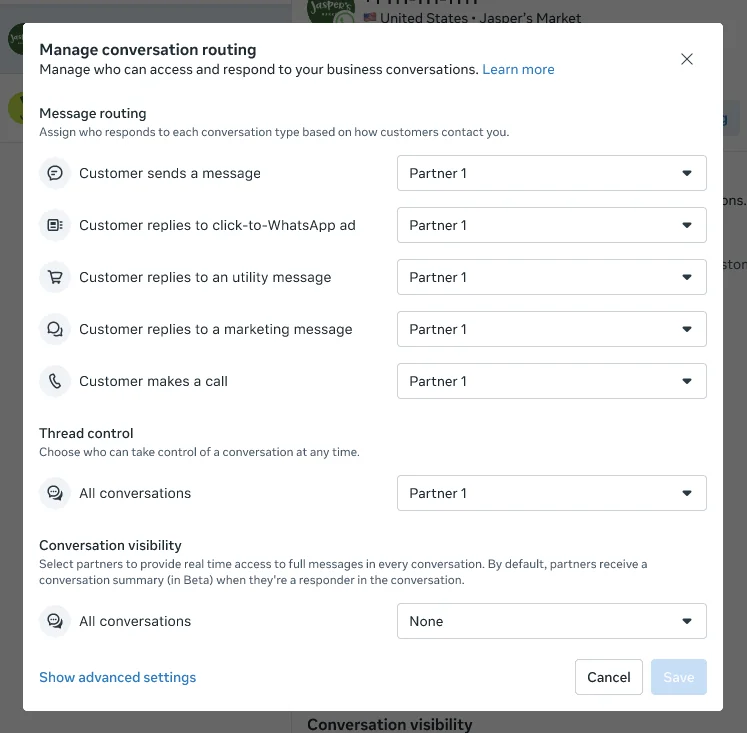
A few things make that harder than flipping a toggle:
- It's UI-only. Meta says "There is no public API for configuring Conversation Routing." It gets set in Business Suite by someone with admin rights on your Meta Business portfolio.
- Only you can accept the terms. Standby, escalation partner and thread control all need the business to sign the Meta Business Agents terms. Gorgias is not able to do that on your behalf.
- Gorgias hasn't documented its side. I searched the docs, help center, changelog and blog for Business AI, Business Agent, routing, standby and handoff, and found nothing. The only public source saying Gorgias is a partner at all is Meta's 2025 post.
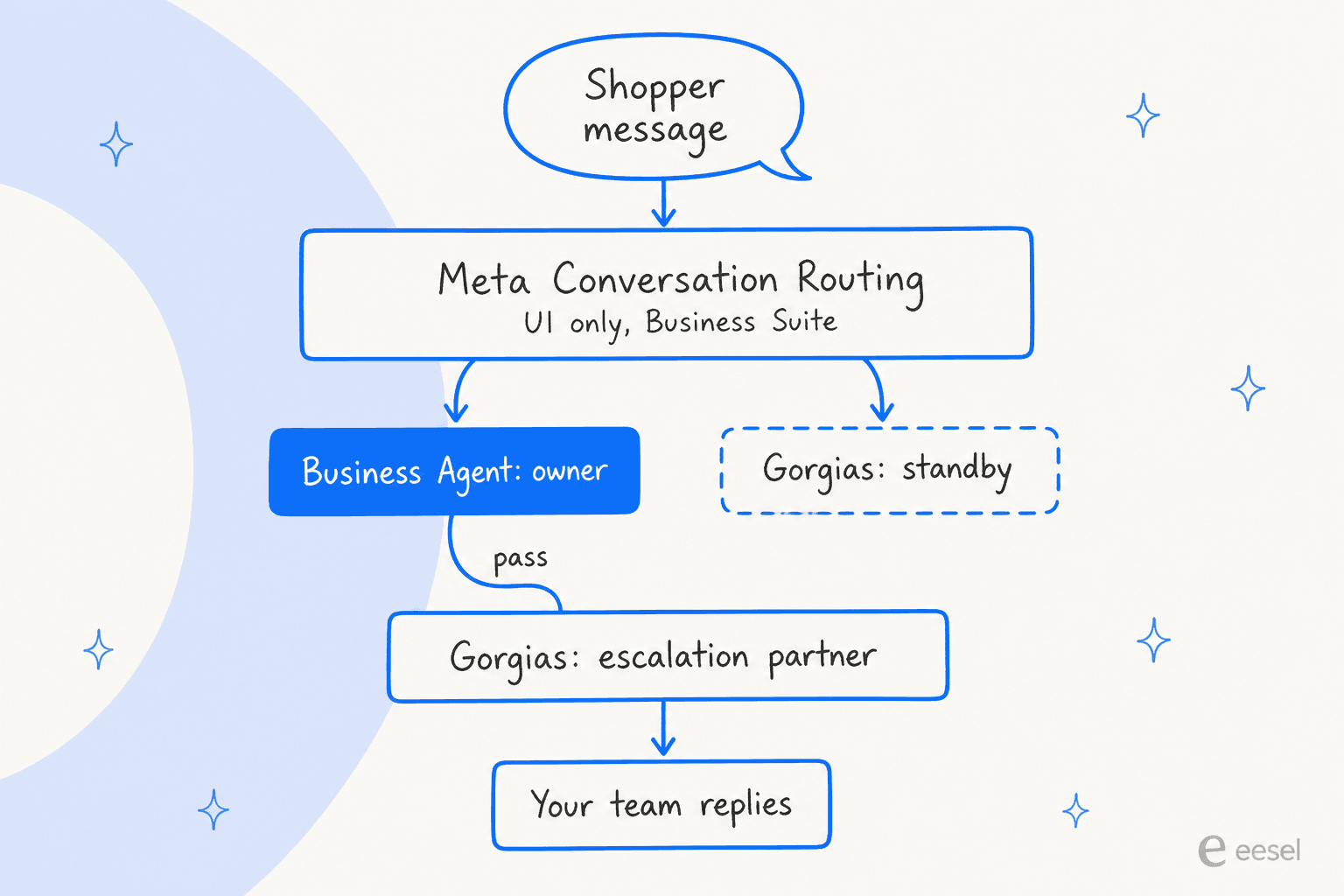
When the handoff fires is also Meta's decision. Its capabilities page lists signals "such as low confidence, an integrity violation, or a customer asking for a human. You do not configure the triggers." For anyone who has written AI guidance or tuned Gorgias handover rules per channel, that is a real change.
One AI per number means you give up Gorgias AI Agent there
Meta's eligibility rules say a number must not be "already running another AI agent on that number", and "an active authorized-agent integration blocks Meta Business Agent" (platform overview). Meta gives no definition for "authorized-agent integration", and Gorgias doesn't say if its AI Agent counts as one. Read plainly, a number runs one AI, so I would switch Gorgias AI Agent off on that WhatsApp integration before trying Business Agent on it.
Before you plan around it, check your real number with the Agent Eligibility endpoint. What it returns is a yes or no, with no reason attached.
Creating Gorgias tickets is a connector you build
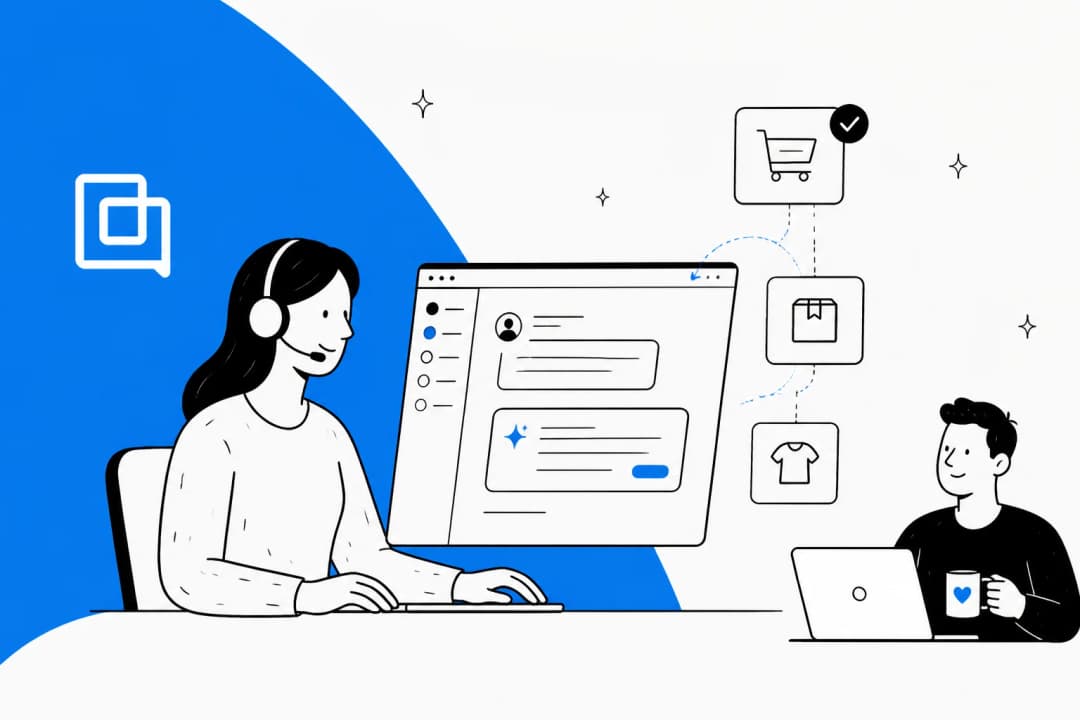
Meta's customer support agent guide shows ticket creation as a tool you define: a create_support_ticket POST that carries a category and a summary, plus the shopper's phone number. There's no prebuilt Gorgias connector in the Connectors reference, so pointing it at Gorgias is on you. Auth is the place where that stalls.
| Gorgias endpoint | Auth it needs | What Meta connectors accept |
|---|---|---|
REST API POST /api/tickets | HTTP Basic: account email plus API key | API_KEY, OAUTH2_CLIENT_CREDENTIALS, NONE. BASIC is listed but "not supported" |
| REST API via a Gorgias app | OAuth2 authorization code only, tokens expire every 24 hours | No authorization-code flow |
| Gorgias MCP server | OAuth2 authorization code with PKCE and a browser sign-in | Same gap, so an MCP connector can't authenticate |
At first the Gorgias MCP server looks tempting, since Meta connectors can call remote MCP servers and Gorgias's exposes 141 tools including create_ticket and escalate_ticket. But it was built for a person signing in from Claude or Cursor, and today its create_ticket tool supports only email and internal-note channels. What it is good for, I cover in Claude for Gorgias.
One option is trying a precomputed Basic value in Meta's API key header field. Neither Meta nor Gorgias documents that, and the Gorgias API key grants full access to the account with no scopes. What I would do instead is put a small middleware service in between, which holds the key and exposes one narrow endpoint.
Meta's own guide explains why this tool deserves your best monitoring:
"A failed ticket is invisible: the agent has already said a colleague will be in touch, the shopper waits, and nobody finds out until they message again angrier."
Route 1b: Messenger and Instagram DMs
Gorgias is strong on Meta's social channels, and that is a big part of the reason it's a Shopify helpdesk favourite. A single app pulls in Messenger, Instagram DMs, story replies, Facebook and Instagram comments, ad comments and mentions (Gorgias docs), which explains why operators describe it this way:
"Everything customer service goes through Gorgias - all social channels eg dms and comments and emails."

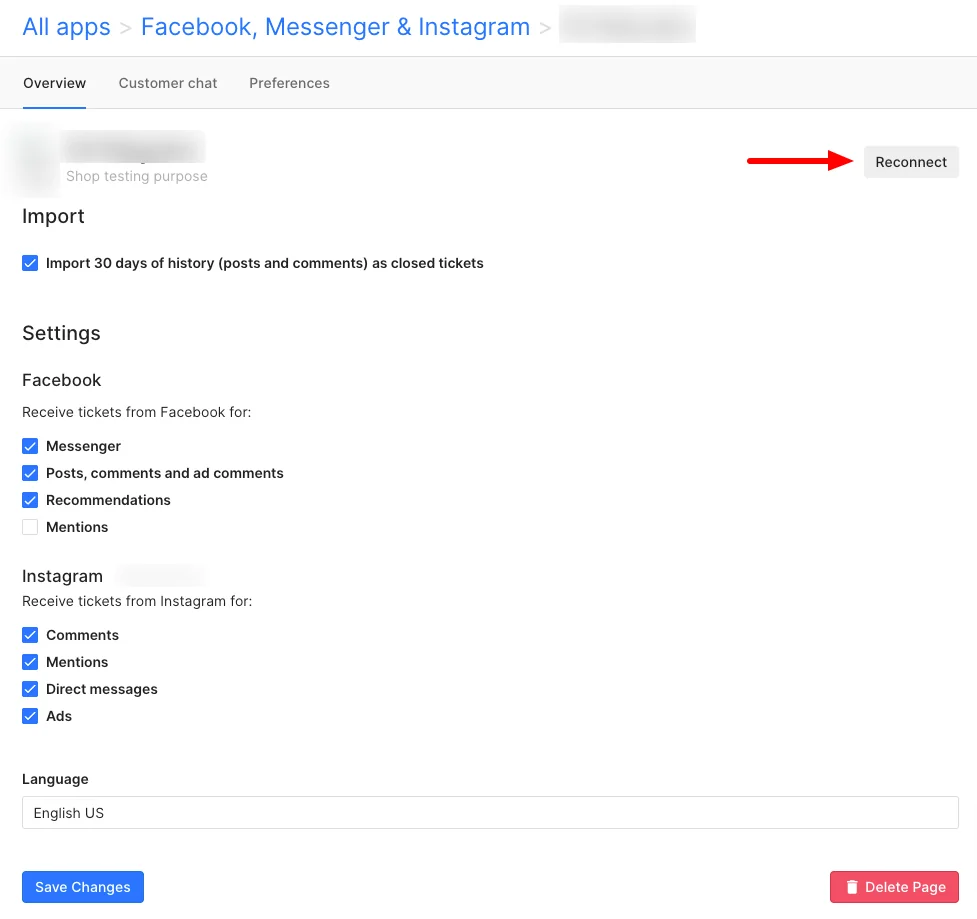
Underneath all this, the Meta side changed recently. Meta says it "no longer supports Handover Protocol for Messenger", and all businesses have moved to Conversation Routing (updated September 28, 2026). Instagram carries the same notice. Now each Page has one "default application" for answering idle threads, and apps pass or take control from that point.
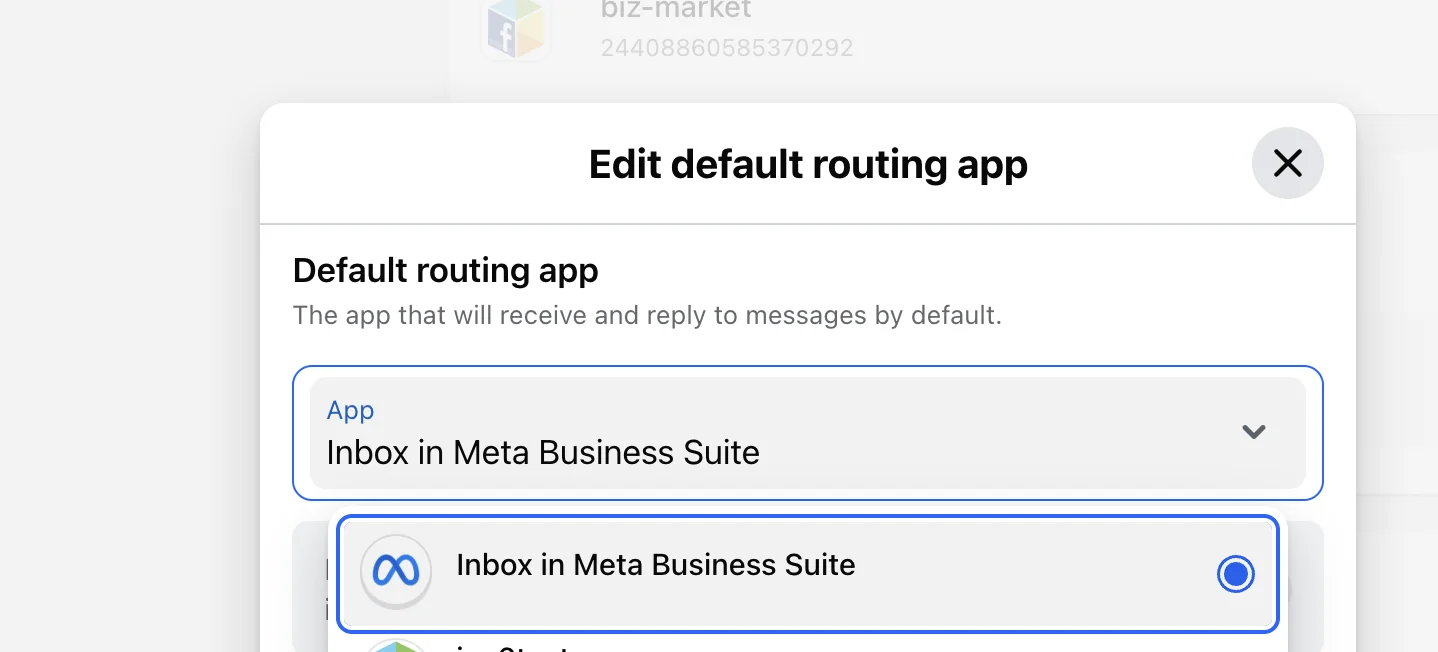
This is the point where Business Agent gets vague. Every Business Agent developer page, thread control included, is written for WhatsApp numbers. On Messenger, the self-serve agent hands off to "you" in the Business Suite Inbox, where chats read "Business Agent responding", not to a connected app like Gorgias. The only line Meta has on outside tools is a marketing bullet: "Connect with your existing third-party tools."
Gorgias's docs have not caught up either. Its troubleshooting page still tells you to remove any app set as "Primary Receiver" if Messenger tickets stop arriving, which is Handover Protocol wording. If Business Agent answers on a Page that Gorgias also watches, there are two Gorgias behaviors worth knowing about, and both come from Gorgias's DM ticket docs:
- Replies sent from outside Gorgias get attributed to Gorgias Bot, because "Meta doesn't tell Gorgias which teammate sent a message".
- Messenger tickets created with a bot reply come in closed, since Gorgias assumes "this was handled already".
No one has published a test of that combination so far. If you want to try it, run it on a second Page first. My read is that Messenger and Instagram are where Gorgias AI Agent has the easier path today, since it already lives on the same ticket as your human replies.
Route 2: Muse Spark 1.3 behind Gorgias
The second route skips Business Agent completely and brings Meta's model to your Gorgias tickets instead. Muse Spark 1.3 runs on the Meta Model API, which accepts OpenAI-style and Anthropic-style requests. Gorgias AI Agent itself gives you no model choice; its security FAQ says it uses "OpenAI, Anthropic, and internally fine-tuned LLMs", with no switch.
That means Muse Spark has to come in through a service you host. Gorgias HTTP integrations, which work much like Gorgias webhooks, fire on ticket events like "Ticket created" and "Ticket message created", your service calls Muse Spark, and it writes a tag or internal note back through the API. The limits on this are tight:
- "Each request has a 5-second timeout."
- With header-based auth, "requests are not retried".
- Gorgias disables the integration "if 500 consecutive requests to your endpoint fail".
Because of that 5-second clock, your service should acknowledge the webhook instantly and then call Muse Spark asynchronously, as a long reasoning call won't fit. Size the write-back against Gorgias API rate limits: 40 requests per 20 seconds on an API key, per the developer reference.
For budgeting, use Meta's standard rate, $1.25 input and $4.25 output per 1M tokens, which I break down in Muse Spark 1.3 pricing. The cheaper "Contributor" tier doesn't work for support, because Meta's Terms of Service §6.2 bans "sensitive, confidential, or personal information", and a Gorgias ticket is full of names, emails and order numbers. While the API is still in preview, I'd keep this route for triage labels and summaries and not use it for customer replies.
What each route costs per WhatsApp conversation
Meta and Gorgias don't bill in the same units. Meta charges Business Agent per token to your own Meta Billing Hub, and a payment method has been required since August 1, 2026. Gorgias charges AI Agent per automated interaction on its pricing page, on top of the ticket fee.
| Meta Business Agent | Gorgias AI Agent | Muse Spark via your service | |
|---|---|---|---|
| Billing unit | Tokens, $2.00 per 1M | Automated interaction (no human reply within 72 hours) | Tokens, $1.25 in / $4.25 out per 1M |
| Typical cost | ~4-5 cents per message, 16-20 cents simple chat, 40-50 cents complex chat | $1.00 Starter, $0.90 Basic and Pro, listed $0.85 on Advanced | Depends on prompt and reasoning effort |
| Included | None | 30 / 30 / 190 / 530 a month on Starter / Basic / Pro / Advanced | None |
| Past the allowance | Same token rate | $1.50 per interaction, per Gorgias's pricing data | Same token rate |
| Ticket fee too? | Only if the thread reaches Gorgias | Yes, "Each AI Agent interaction also counts as a helpdesk ticket" | Yes, it's a Gorgias ticket |
| Meta's WhatsApp charges | Billed by Meta to you | Gorgias pays them for now | Gorgias pays them for now |
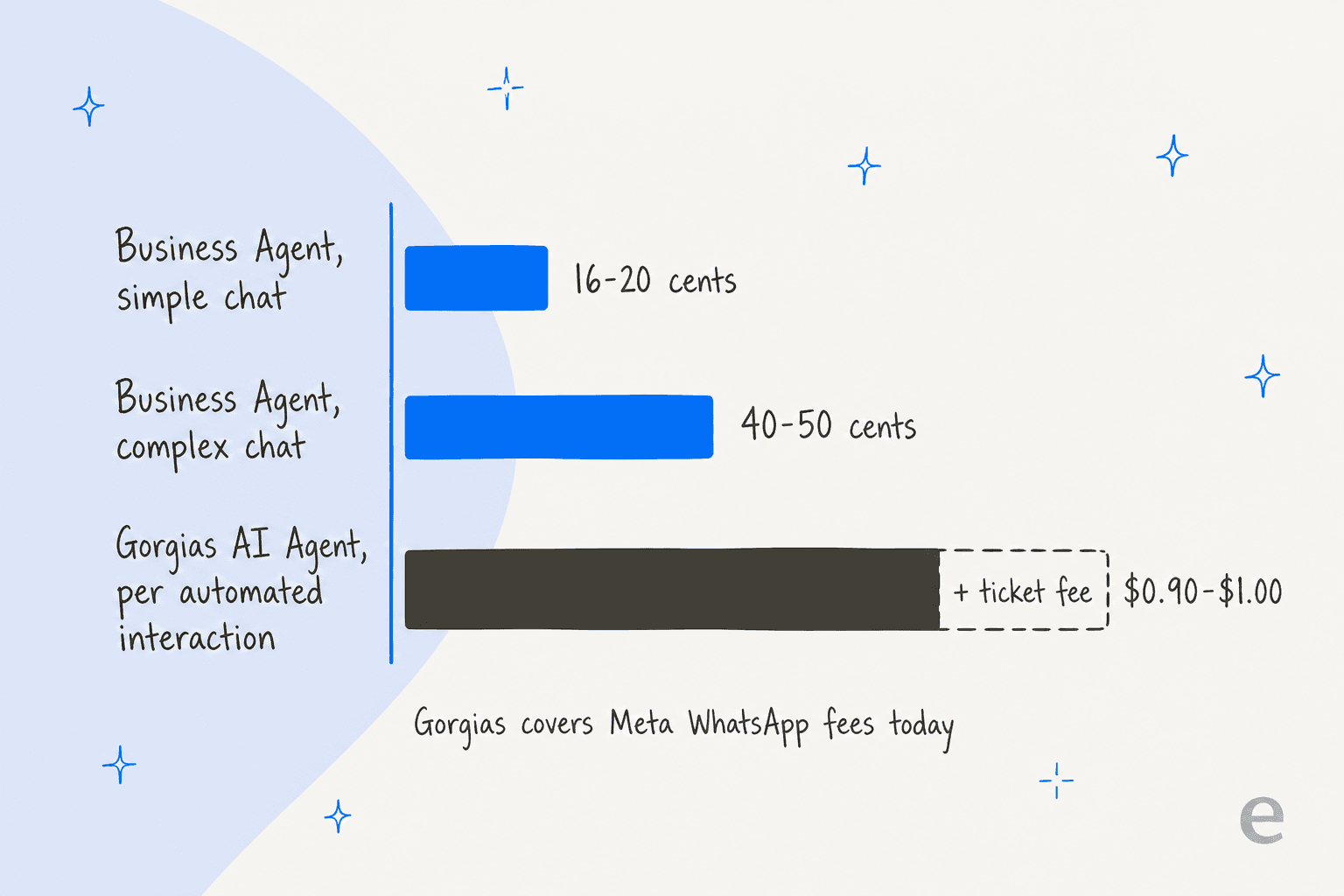
On raw price, Business Agent wins: a complex Business Agent chat costs about half of one Gorgias automated interaction, before the ticket fee even comes in. There are two things that narrow the gap, though.
First, Gorgias absorbs Meta's WhatsApp charges. Its docs say "Meta bills Gorgias for WhatsApp conversation charges... You'll never see a bill from Meta" (Gorgias setup doc). This matters because from October 1, 2026, Meta charges per service message, including replies "by agents, bots, or automation flows". Gorgias's older FAQ says it "is paying for them right now" and would give "ample warning" before passing costs on, and no Gorgias page mentions the October change yet. I'd keep an eye on that line, and my WhatsApp pricing guide covers the Meta side.
Second, the automation fee only gets charged by Gorgias when the AI actually closes the ticket out. Hand a ticket to a human within 72 hours and you pay the ticket fee only, while Meta bills every token whether the shopper got an answer or not. Even so, the double billing on a fully automated ticket is the part buyers still trip over:
"Gorgias charges $1 per automated resolution. That means a ticket it handles without any human help, right? What happens with tickets that need human help? Does Gorgias charge for those too?"
If you want that maths at your own volume, my Gorgias AI pricing calculator runs it, and the Gorgias plans comparison shows where the allowances step up.
Where Meta's side stops
Business Agent is good at the thing it was built for, which is answering shoppers inside Meta's apps cheaply and at scale. Meta says more than one million businesses use it on WhatsApp and Messenger. For a Gorgias store, here are the limits I would weigh, all taken from Meta's own docs:
- It can't learn from your Gorgias history. Knowledge comes from business info, FAQs, files and crawled websites, not your Gorgias knowledge base as such. Order lookups go through connectors you configure (Meta's examples use Shopify), and ticket history isn't an input at all.
- You don't set the handoff triggers. Meta makes the decision based on low confidence or a human request.
- Testing runs on scenarios you write. Agent Test and Agent Eval do not replay past tickets.
- Some industries are excluded. Finance, government, health, alcohol, gambling and over-the-counter drugs can't use the Platform, so check your vertical before you build anything.
- It only lives in Meta's apps. Email, Gorgias live chat, SMS and voice stay outside it.
Of these, the handoff-trigger point is the one I would weigh the hardest. A CX lead at a DTC supplements brand doing about 7,000 Gorgias tickets a month put the requirement to eesel's sales team like this:
"I need an AI who is only handling the tickets that it's confident to handle and all the other ones, leave them alone."
With Business Agent, that confidence call is made by Meta, and it isn't something you can tune. Early users are split on how well that works out. One seller on r/WhatsappBusinessAPI said it did well learning from six months of chats, then "Today I fed it a word doc with instructions + an excel and its got worse" (u/melajuana, Reddit). Another reply in the same thread drew the line in the same place I would:
"the builtin AI is useful for solo operators handling basic faq replies, but it doesn't come close to replacing what platforms are built for. the moment you have a team handling conversations or crm integrations the native tool just isn't there."
Gorgias AI Agent has its share of complaints too. A Gorgias user in July wrote that "most of the responses have an error that I have to apologize for after the handoff" (u/hayyyhoe, Reddit), and a G2 reviewer noted that "Setting up triggers or when to pass a ticket took a bit more detail and nuance" (Luis S., G2). Whichever AI you go with, test it before it owns the front door.
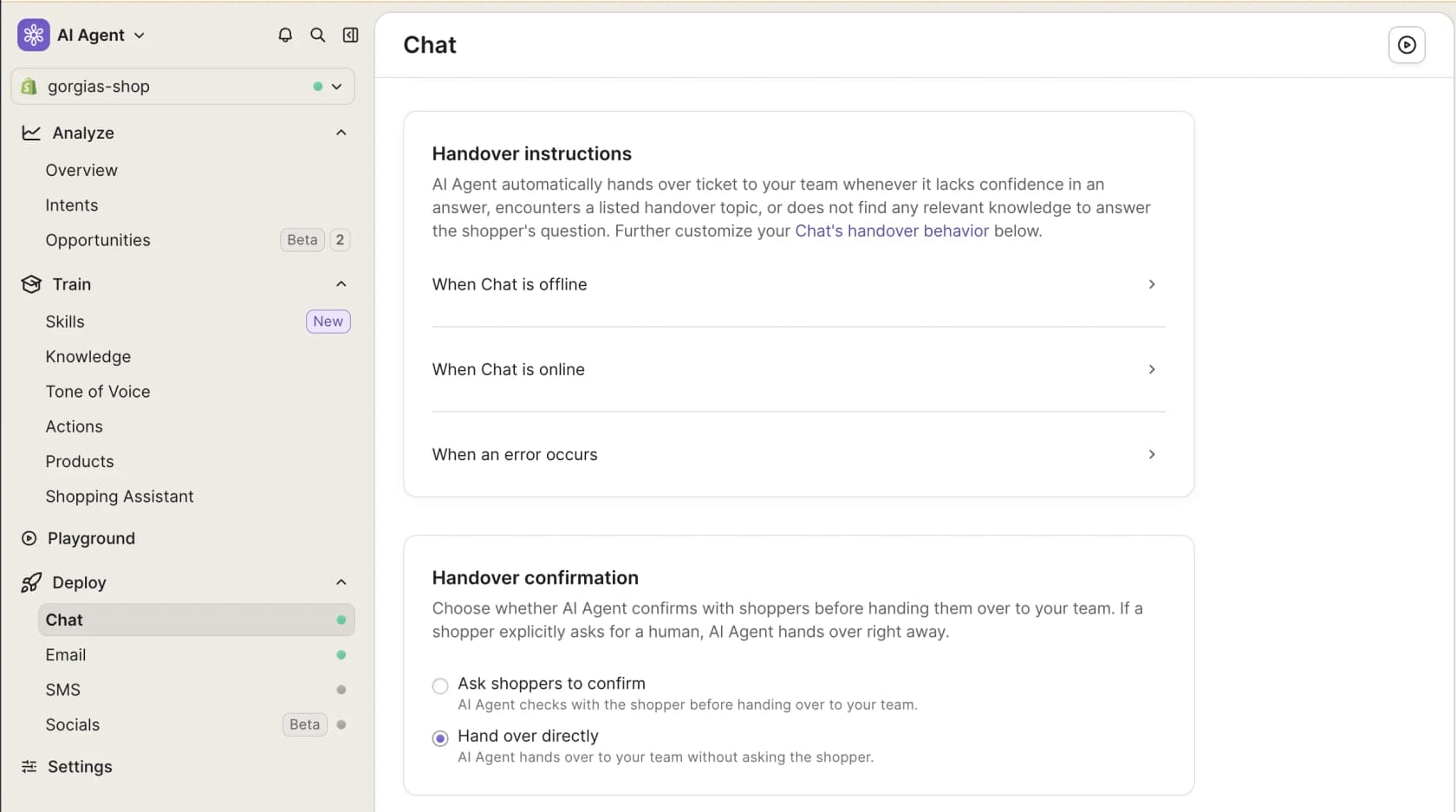
That screenshot shows the practical difference. Gorgias lets you set handover options per channel state, while Meta keeps its triggers to itself.
Which route I'd pick
This is how I would decide, depending on where your store sits:
- Small shop, WhatsApp is mostly stock, hours and shipping, no developer. Try Business Agent on a second number with Gorgias as escalation partner. At 16 to 50 cents a chat it is hard to beat. Still, budget an afternoon for the routing setup and a middleware for tickets, then watch a real handoff land before you move your main number.
- Your DMs need order data and you're on Shopify. Keep the AI inside Gorgias. Gorgias AI Agent reads your Shopify orders on the same ticket your team uses, and handovers never leave the inbox. Just keep in mind that it can't cancel orders or edit addresses on WhatsApp yet.
- Heavy Instagram and Messenger volume. Pick one AI per Page. Meta's Messenger handoff lands in Business Suite, not Gorgias, so I'd let Gorgias AI Agent take the DMs and leave comments with your team.
- You have a developer and a narrow job for a model. For tags and sentiment, and also summaries, Muse Spark behind a Gorgias HTTP integration is fine. I wouldn't build replies on it while the API is in preview.
- Your answers live in past tickets and macros. Business Agent can't learn from those. Gorgias AI Agent learns from guidance, help center articles, public webpages and uploaded documents, and its test conversations don't replay your ticket history in bulk. This is the spot where a helpdesk-native teammate earns its keep, and my Gorgias AI review goes deeper into that trade.
Whatever you pick, keep in mind Meta has tightened its WhatsApp AI chatbot rules before, so I'd set things up in a way that lets the front door change without rebuilding the queue behind it. My Gorgias AI Agent alternatives roundup and best AI for WhatsApp support list cover the other options.
eesel for Gorgias
If the fifth scenario sounds like your store, that is exactly the job eesel was built for. It's an AI helpdesk teammate that joins Gorgias and reads your help center, macros and past tickets, plus Shopify order data. From there it drafts or sends replies and tags and routes tickets, and when it isn't confident it hands over with context. Since it works inside Gorgias, any thread that Business Agent escalates gets worked the same as every other ticket in the queue.
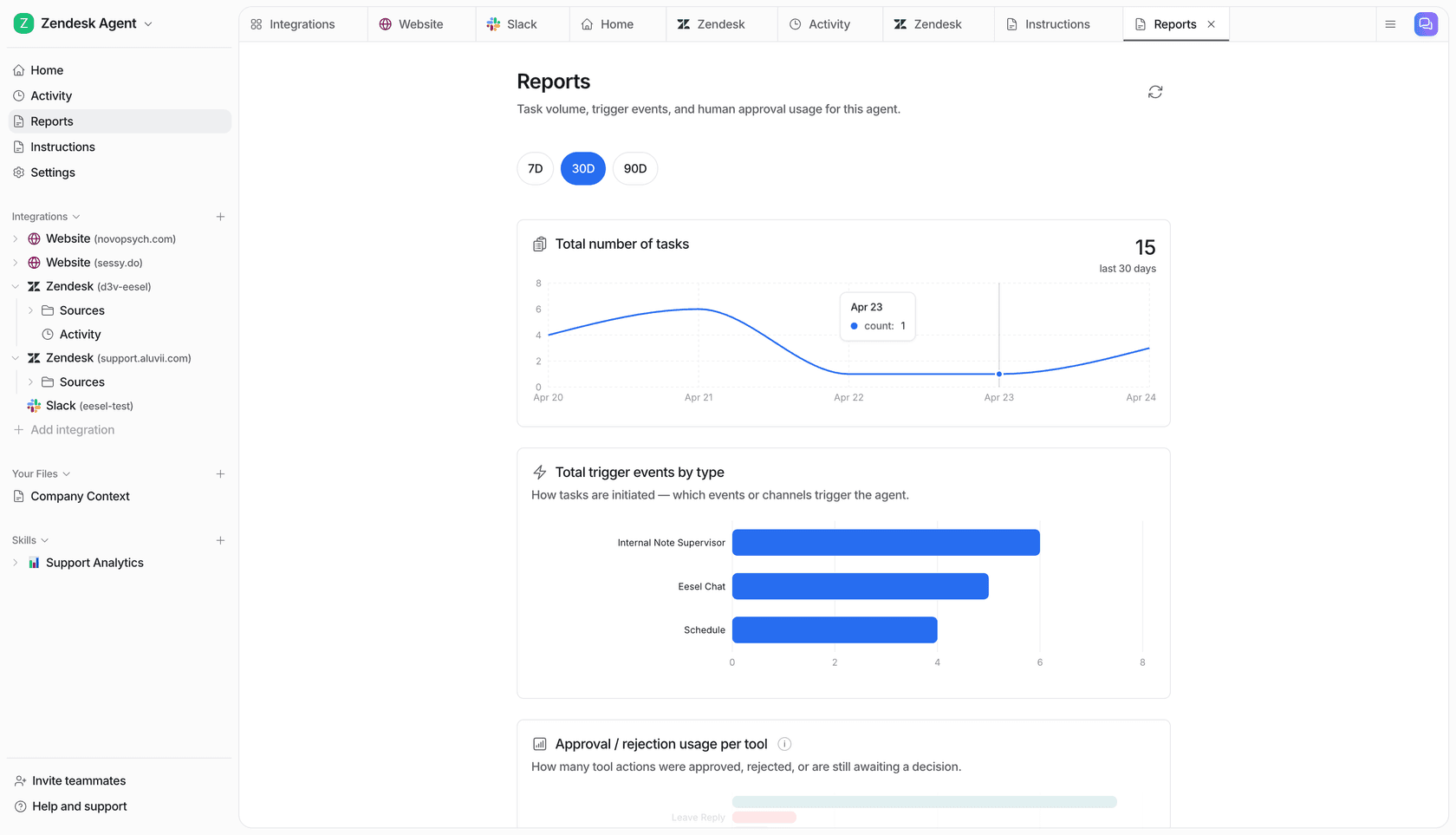
Before it answers a single shopper, eesel runs a simulation on hundreds of your past Gorgias tickets, so you can see which ones it would get right and then choose the ticket types it takes. Pricing is a fixed monthly credit plan where one ticket counts as one credit no matter how many replies it takes. If you'd rather script the setup, the eesel CLI lets you or a coding agent connect Gorgias from a terminal, then add knowledge and approve actions there too.
Try eesel free with 100 credits and no card, and see how it handles your Gorgias queue next to whatever Meta puts at the front door. For next reads, the eesel vs Gorgias AI comparison and my Gorgias review are good ones.
Frequently Asked Questions
Can I use Meta Muse for Gorgias?
Is there a Meta Business Agent integration for Gorgias?
Can Gorgias AI Agent and Meta Business Agent run on the same WhatsApp number?
How much does Meta Muse for Gorgias cost?
Does Meta Business Agent reply to Instagram and Facebook comments in Gorgias?
Does Meta Business Agent learn from my Gorgias tickets?
Can Meta Business Agent create a ticket in Gorgias?
What is the best Meta Muse for Gorgias setup for a Shopify store?



Article by
Rama Adi Nugraha
Rama is a software engineer at eesel AI with two years of experience writing about B2B SaaS, AI tools, and customer support technology. Based in Bali, Indonesia, he brings a developer's perspective to product comparisons — cutting through marketing copy to what the integrations and APIs actually do.