

How much does Meta Muse for Small Business cost?
Nothing on top of Muse. In its launch post, Meta calls Muse for Small Business "a collection of new skills and connectors inside Muse," so the price is simply whatever Muse plan you happen to be on already.
I spend a lot of my time looking at what people actually type into search, and "how much does Muse for Small Business cost" is really a different question in disguise, which is: what will Meta charge me each month once I use this for my shop? The answer comes in four parts, and only one of them is the plan itself.
I learned to ask it that way the hard way. A UK auto-fintech customer of eesel's, on a $799 a month plan, churned and gave the reason "too expensive." eesel co-founder Amogh Sarda did the math afterwards: at around 40 AI interactions a month, that was roughly $20 per AI reply. His read was that "nobody from our side ever framed the ROI for a finance team doing budget cuts." Since then I divide every AI bill by the replies it produces, and below I do the same thing for Meta.
What are the Muse plans?
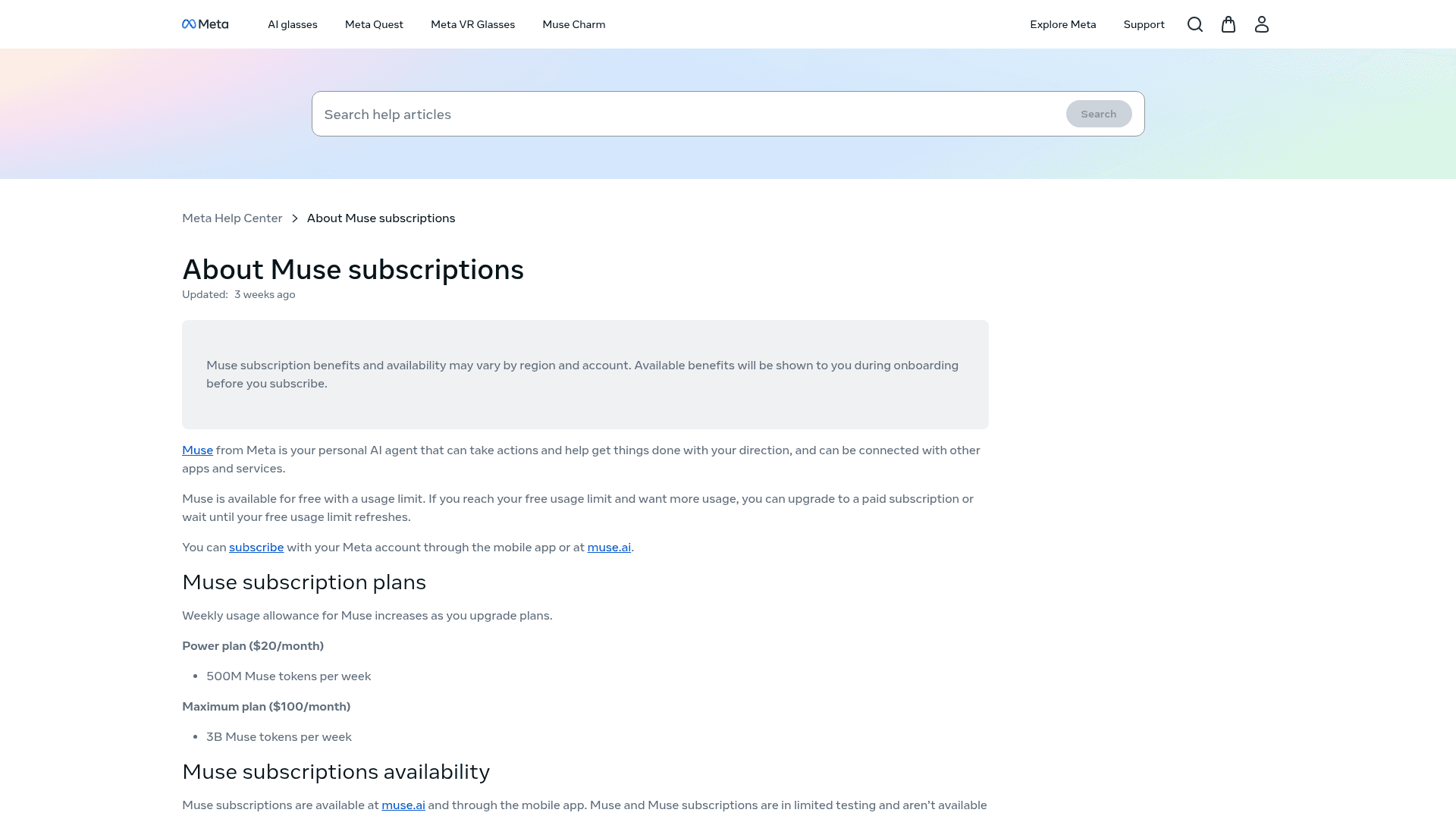
Meta publishes three plans on its Muse subscriptions page. The billable unit is tokens per week, per Meta account. Tokens are the chunks of text that the model reads and writes, so a long planning session over a year of Shopify sales will burn a lot more of them than a quick question does.
| Plan | Price | Weekly usage | Who it's for |
|---|---|---|---|
| Free | $0 | A usage limit that refreshes. No number on Meta's help pages; Zuckerberg's launch post said 100M tokens a week | Trying the connectors, light weekly summaries |
| Power | $20/month | 500M Muse tokens per week | An owner using Muse most days |
| Maximum | $100/month | 3B Muse tokens per week | Heavy scheduled work across many connectors |
A few details worth knowing for a business buyer, all taken from Meta's own pages:
- Monthly only. Plans auto-renew "on the same date each month as your original purchase date." No annual plan or invoice billing is described.
- Per person. You subscribe "with your Meta account," so plans don't pool across a team.
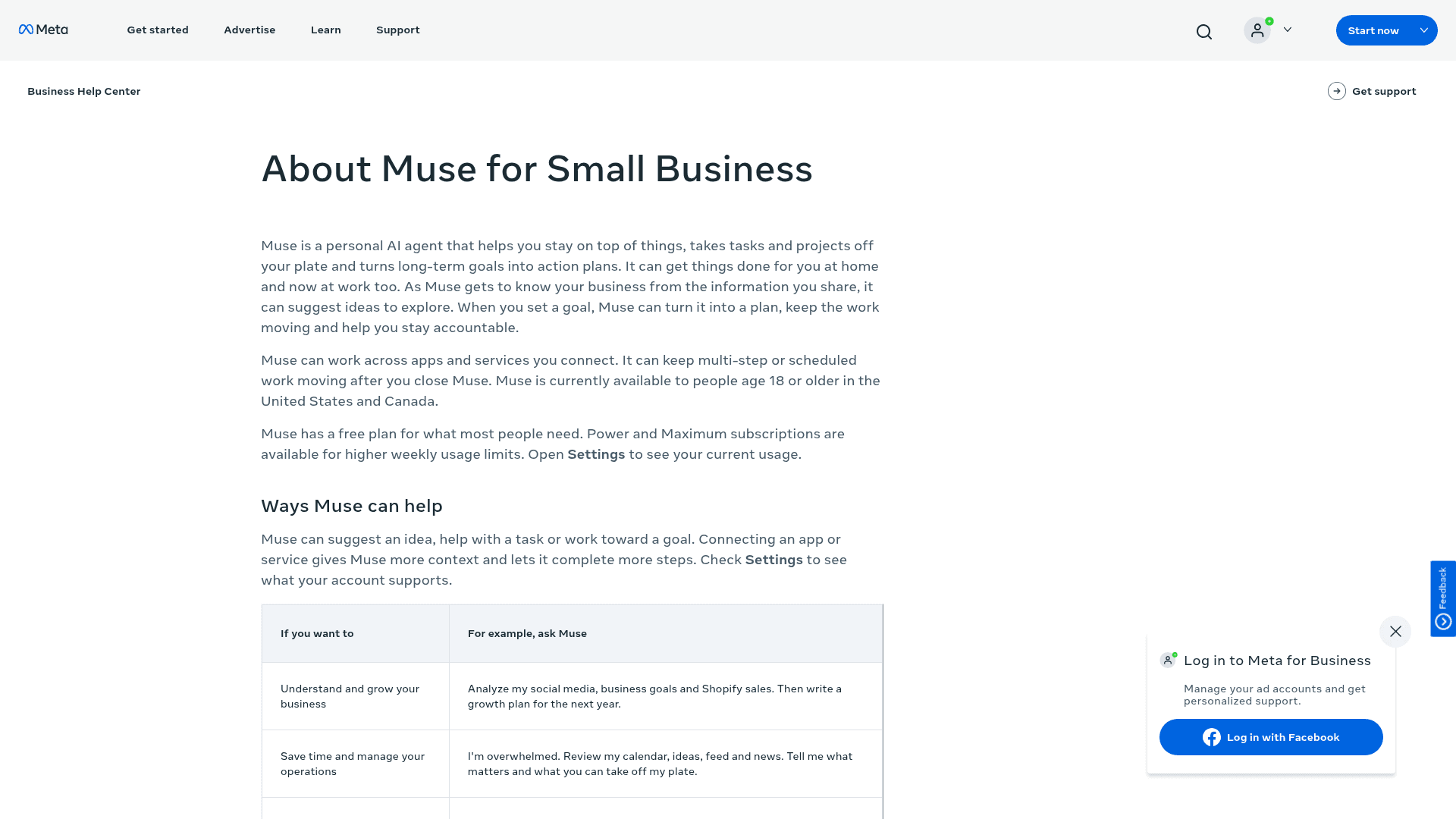
- Limited markets. Muse is available to people 18 and over in the US and Canada, per Meta's small business help page.
- Terms can change. The Muse terms let Meta "modify or discontinue offering Muse for free ... at any time and without prior notice."
I covered what a token allowance means in day-to-day use in my Meta Muse pricing breakdown, and how it compares with ChatGPT pricing and Claude pricing. The short version for a shop is that Power is a cheap way of finding out whether Muse saves you any time.
Which Meta AI bills you for what?
This is the part I would have wanted someone to explain to me before signing up. Meta's own comparison lists separate AI tools for business and says "you may use more than one." Each one bills on a different unit, and only Muse comes with a flat monthly price.
| Tool | Its job | Billable unit | Price |
|---|---|---|---|
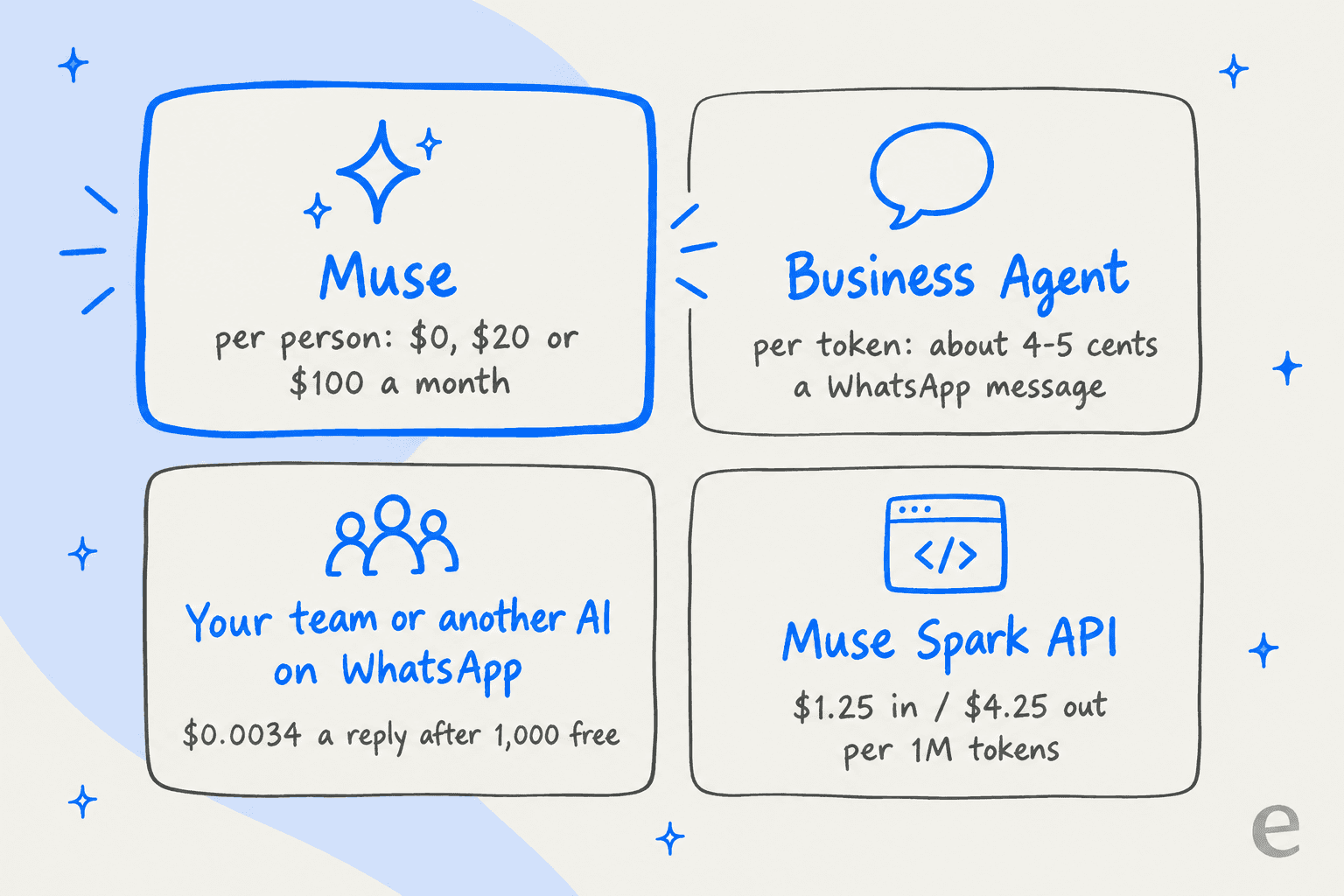
| Muse (with small business connectors) | Plans, drafts and back-office work you approve | Tokens per week, per person | $0, $20 or $100 a month |
| Meta Business Agent on the WhatsApp Platform | Replies to customers on WhatsApp | Tokens per message | $2.00 per 1M tokens, about 4 to 5 cents a message (Meta) |
| Business Agent on Messenger and the WhatsApp Business app | Replies to customers in Meta's apps | A free limit, then a Meta One plan | Limit size and Meta One prices not published |
| WhatsApp service replies by your team or a third-party AI | Your own replies | Per delivered message | $0.0034 in North America after 1,000 free a month |
| Muse Spark API | Build your own bot | Per 1M tokens | $1.25 input, $4.25 output |
Two of these deserve a closer look, mostly because they move the bill more than the Muse plan ever does.
Business Agent on the WhatsApp Platform
Since August 1, 2026, Meta charges "one global rate of $2.00 USD per 1 million (M) tokens" for Business Agent, and says one message "typically consumes 20,000-25,000 tokens," or about 4 to 5 cents. Meta's own worked examples put a simple four-message exchange at around 16 to 20 cents and a complex ten-message one at 40 to 50 cents, per the Business Agent pricing page.
There's no free tier on that rate. Business Agent also can only send inside an open 24-hour customer service window, which means it answers customers rather than reaching out to them. I compared it with other options in my best AI for WhatsApp support roundup.
Business Agent on Messenger and the WhatsApp Business app
The self-serve version is cheaper to start with, but harder to put a price on. Meta's Business Agent help page says that if you hit your free limit on Messenger, "you can subscribe to a Meta One plan" or wait for the limit to refresh. How big that limit is, Meta doesn't publish.
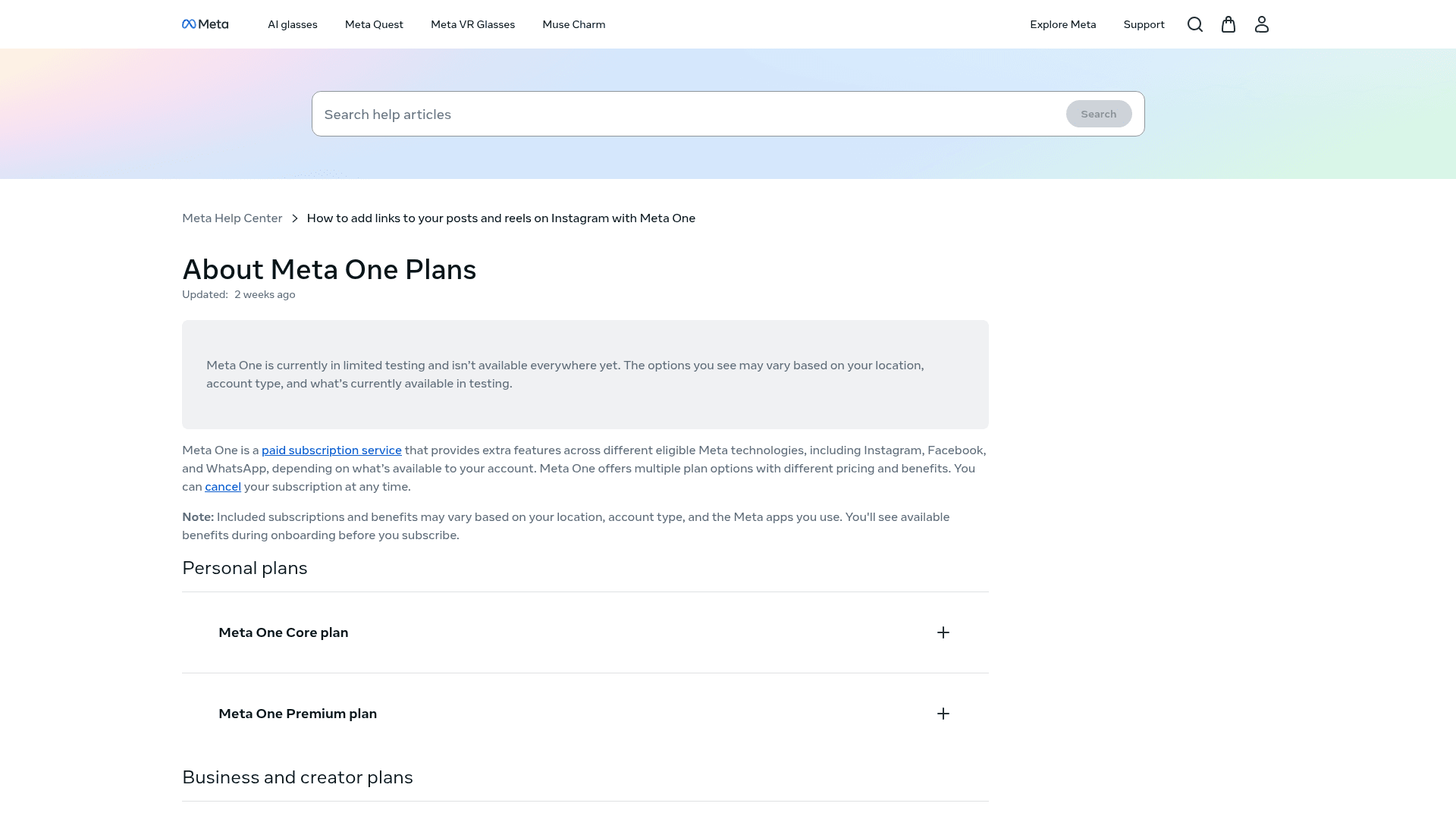
The Meta One page lists three business plans. Essential adds "more access to 24/7 AI responses" on WhatsApp Business, Advanced adds "even more access" plus 500 broadcast credits, and Expert adds 1,250 broadcast credits. Meta doesn't put dollar prices on any of them, and it says Meta One "is currently in limited testing." If you're on the WhatsApp Business app, my advice is to check the price in your own app before planning around it.
What changed for WhatsApp replies on October 1, 2026?
Today WhatsApp started charging for service messages, the replies "powered by a person, like a customer service representative, or by a 3rd-party AI solution." They had been free since November 1, 2024, per Meta's non-template pricing page.
From Meta's Platform pricing and the USD rate card effective October 1:
| Message type | North America | Notes |
|---|---|---|
| Service (your team or a third-party AI) | $0.0034 | First 1,000 per number per month free, no rollover, no volume tiers |
| Utility (order updates inside the 24-hour window) | $0.0034 | Charged again from October 1, free since July 2025 |
| Marketing | $0.025 | Unchanged |
| Business Agent | $2.00 per 1M tokens | About 4 to 5 cents a message, no free tier |
One gotcha to keep in mind: businesses that had no payment method on file by September 30 see their service messages stop once charging starts. If your replies went quiet this morning, that's the first thing I'd check. My WhatsApp pricing guide has the history of these changes.
What does a small business actually pay Meta each month?
Here's the math at a few business sizes, all of it my own arithmetic on Meta's published North America rates. These are Meta fees only, so staff time isn't in there, and neither are your app subscriptions or ad spend.
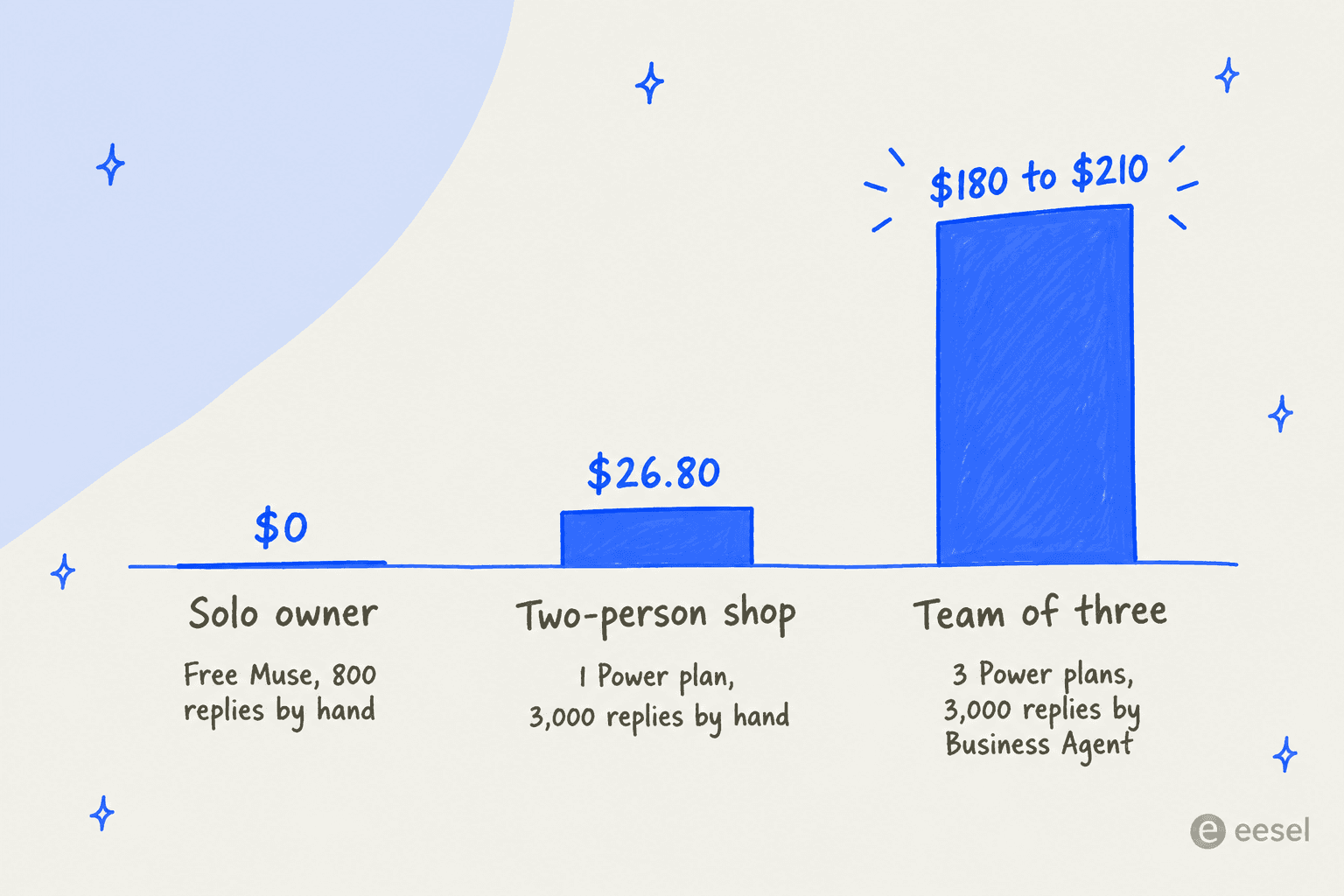
| Business | Muse | WhatsApp replies | Who writes them | Monthly Meta bill |
|---|---|---|---|---|
| Solo owner | Free | 800 | The owner | $0 (under the 1,000 free) |
| Two-person shop | 1 x Power ($20) | 3,000 | The team | $26.80 ($20 + 2,000 x $0.0034) |
| Team of three | 3 x Power ($60) | 3,000 | Business Agent | $180 to $210 ($60 + $120 to $150) |
| Busy shop | 1 x Maximum ($100) | 10,000 | Business Agent | $500 to $600 ($100 + $400 to $500) |
The pattern is clear once it's in a table: the Muse plan is the smallest line as soon as an AI starts replying to customers. The two-person shop's $26.80 looks cheap, but it assumes someone on the team wrote 3,000 messages by hand, and that is the expensive part that nobody sends you an invoice for.
Try your own numbers:
To get a fair read, compare Business Agent's 4 to 5 cents with what a reply costs you today in staff time, not with the $0.0034. I worked through that comparison in my AI vs human cost post and in my guide to AI customer service cost.
What costs sit outside the Muse plan?
Even if you only use it for back-office work, the $20 doesn't cover everything that Muse touches, and Meta says as much on its own pages.
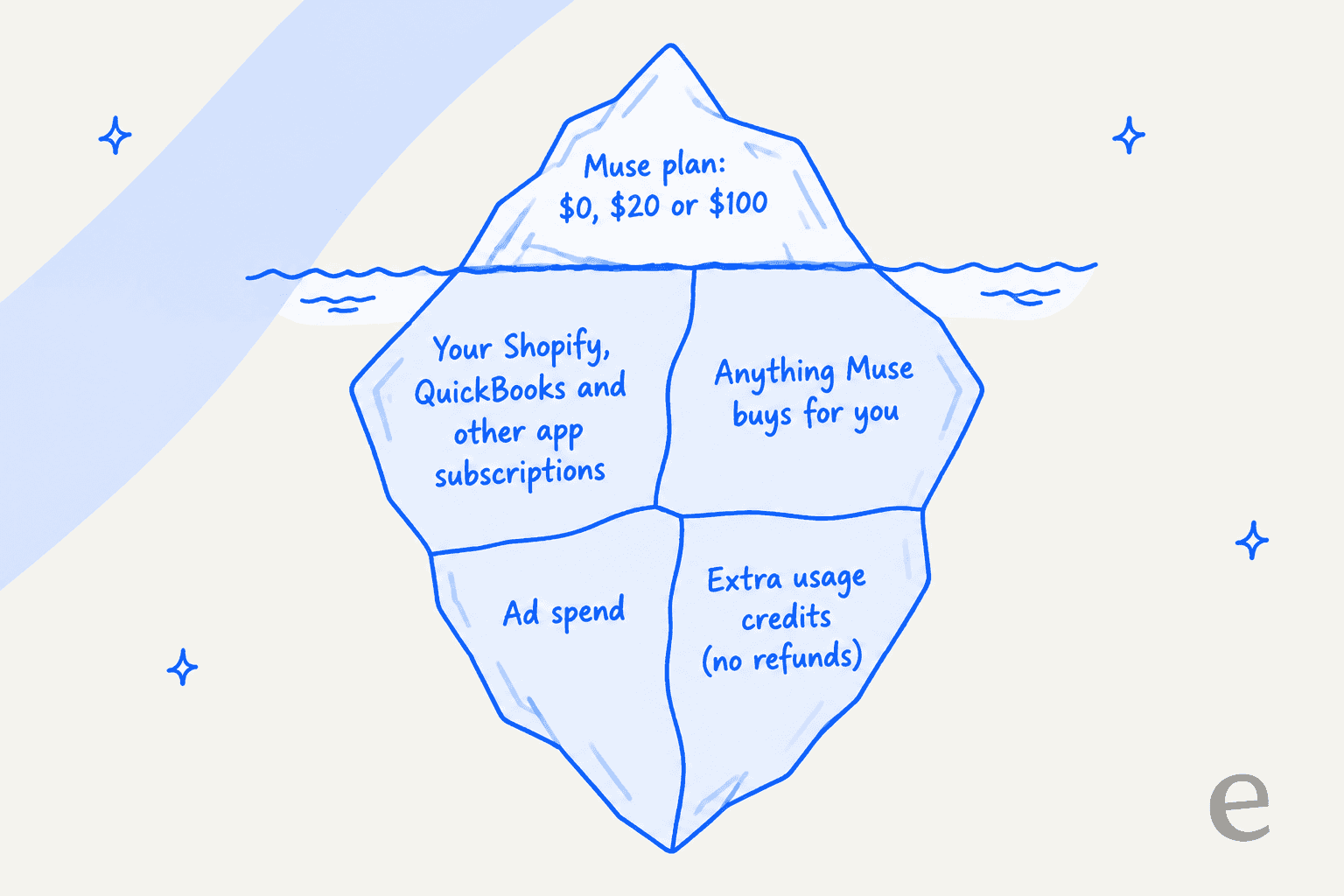
- Your connector apps. Shopify, QuickBooks, Klaviyo and Canva stay on your existing accounts. Meta's connectors page notes that "connectors have their own terms and privacy policies."
- Purchases Muse makes. Meta's payments page is blunt: "You're responsible for all transactions your Muse makes on your behalf." Each one runs on a one-time Link card you approve.
- Ad spend. Muse can draft next week's campaign for you, but the budget still bills through your Meta ad account like it always has.
- Extra usage. Section 8.2 of the Muse terms reserves the right to sell additional AI usage, and those credits "are not redeemable, refundable, or exchangeable." No price for them is published yet.
None of these is a trap, and the approval step on purchases is a sensible default. They are just costs that belong in the same spreadsheet, so the $20 doesn't end up looking like the whole story.
Is Meta Muse for Small Business worth the money?
It mostly depends on which job you are paying for, so here's how I would decide:
- You run the shop solo in the US or Canada. Start on Free. If you keep hitting the weekly limit while doing real planning or bookkeeping review, Power at $20 is an easy yes. Shopify owners can read my Meta Muse for Shopify guide next.
- Several people want their own Muse. Budget $20 for each person, since there's no shared plan. Weigh that against ChatGPT Work and the other options in my Muse alternatives list.
- Your customers mostly message you on WhatsApp. Muse won't reply, so your real decision is Business Agent at 4 to 5 cents a message versus your team or a third-party AI at $0.0034 plus that tool's own fee. A WhatsApp chatbot that also covers email is worth pricing.
- You answer customers across email, chat and a helpdesk. That's a support queue, and what it needs is a tool billed per conversation with seats for everyone, which I cover in my small business AI helpdesk list.
If you're still deciding whether AI support pays off in the first place, my small business ROI post runs the numbers at different ticket volumes.
Try eesel for the customer side of the bill
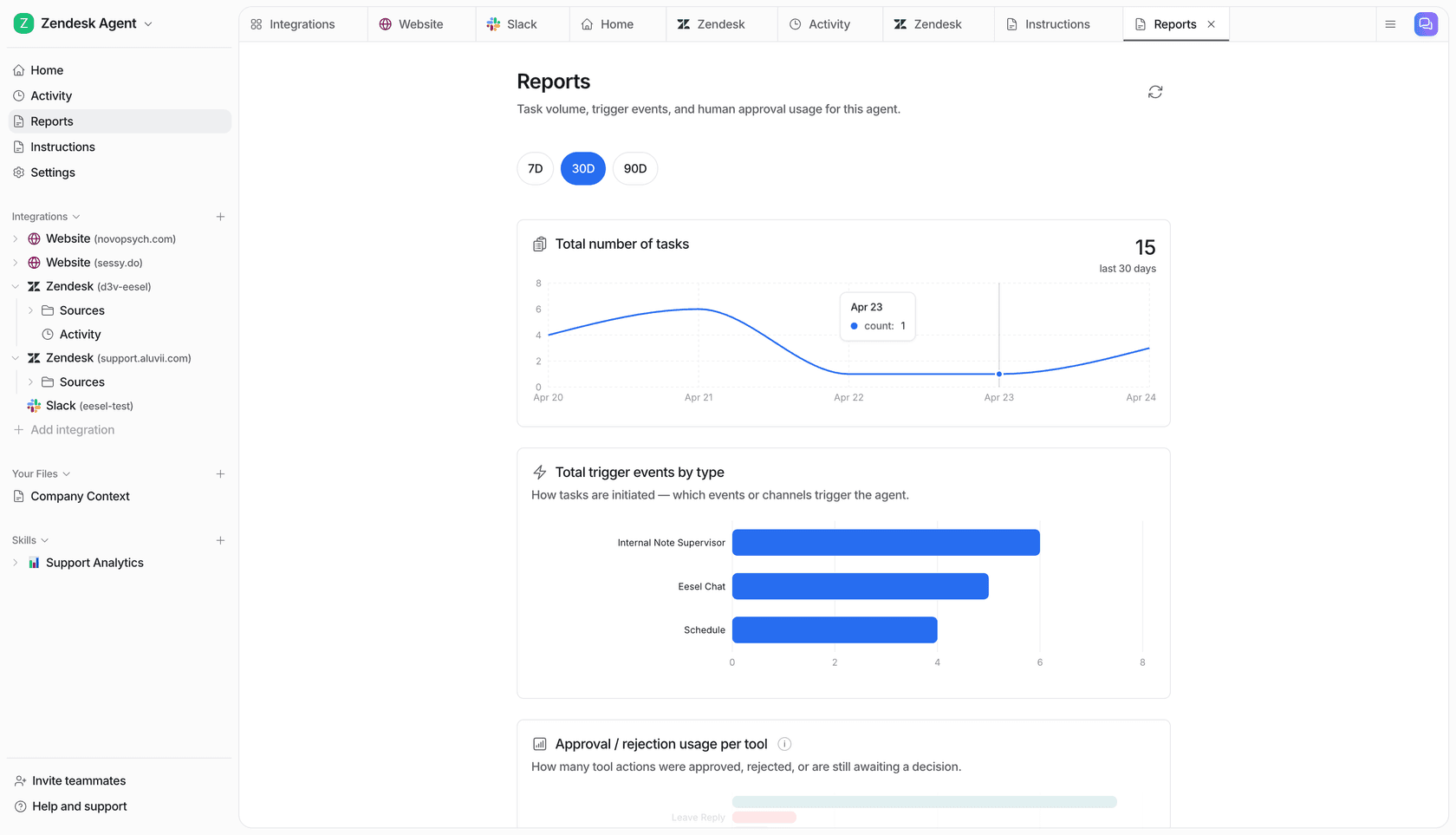
Muse at $20 is a reasonable back-office helper, and the math above shows where the bigger money actually goes, which is customer replies. eesel's AI helpdesk teammate joins the inbox you already use, learns from your help center and past tickets, and with the Shopify integration looks up live orders, checks tracking and starts returns.
The pricing has the opposite shape to Muse's. On the eesel pricing page, a ticket or chat is one credit, plans start at $299 a month for 500 credits, and every seat is included, so a third teammate costs nothing extra. The free plan has 100 credits with no card, and before anything goes live you can run it against hundreds of past tickets to see how it would have answered. That way you get a real cost per reply before spending a cent.
Try eesel free and point it at last month's customer emails first.
Frequently Asked Questions
How much does Meta Muse for Small Business cost?
Is Meta Muse for Small Business free?
Does Meta Muse have a team or per-seat plan for businesses?
Does the Muse subscription cover answering customers on WhatsApp?
What does WhatsApp charge small businesses from October 1, 2026?
What costs sit outside the Muse plan?
Is Meta Muse worth $20 a month for a small business?



Article by
Kurnia Kharisma
Kurnia is a software engineer and writer at eesel AI with two years of SEO experience, writing about AI tools, helpdesk software, and customer support. He pairs a developer's understanding of how these products are built with search-driven research into what actually ranks and resonates with the people searching for them.