7 best Meta Muse alternatives in 2026: AI agents compared

eesel Team
Last edited September 9, 2026

Meta Muse is a personal AI agent that runs your errands, shopping, booking, filling forms, and emailing from inside its own secure cloud computer. It launched September 8, 2026, US-only, and it is a well-built consumer product. But it is a consumer product, and it is not the only agent that takes real actions on your behalf.
If you want the closest like-for-like personal assistant, ChatGPT's agent mode and Google Gemini are the obvious swaps. If you want an agent that produces finished work, decks, spreadsheets, whole websites, look at Manus and Genspark. If you want an agent inside your browser, Perplexity Comet and Claude in Chrome both qualify.
And if what you actually want is an agent that does a job rather than your personal to-do list, that is a different category entirely, and it is where I have spent the last three years. This roundup covers the 7 best Meta Muse alternatives, what each one really does, what it costs, and the honest limits of each.
What I look for in a Meta Muse alternative
I have spent three-plus years putting AI agents on live systems, and the pattern I keep seeing is that the model is rarely the hard part. The hard part is trust. On a sales call earlier this year, a B2B semiconductor support lead cut straight to it and asked me, more or less, "does it use some kind of other ChatGPT if it doesn't know the answer, and can that be turned off?" That is the real question under every agent launch, including Muse. People want the capability and they want a hard stop on it wandering off.
So when I size up a Meta Muse alternative, I weigh four things:
- What it actually does. Does it take real actions (click, fill, book, buy) or just chat? An AI agent does the work; a chatbot answers about the work.
- Where it runs and who can use it. Muse is US-only. Some alternatives are global, some are gated to one country or one browser.
- What it costs, and for what. Most consumer agents cluster around $20/month, but the useful agent features are often behind a higher tier.
- Whether you can control it. Approvals, audit trails, and the ability to say "only do the thing you are confident about" are what separate a demo from something you would trust.
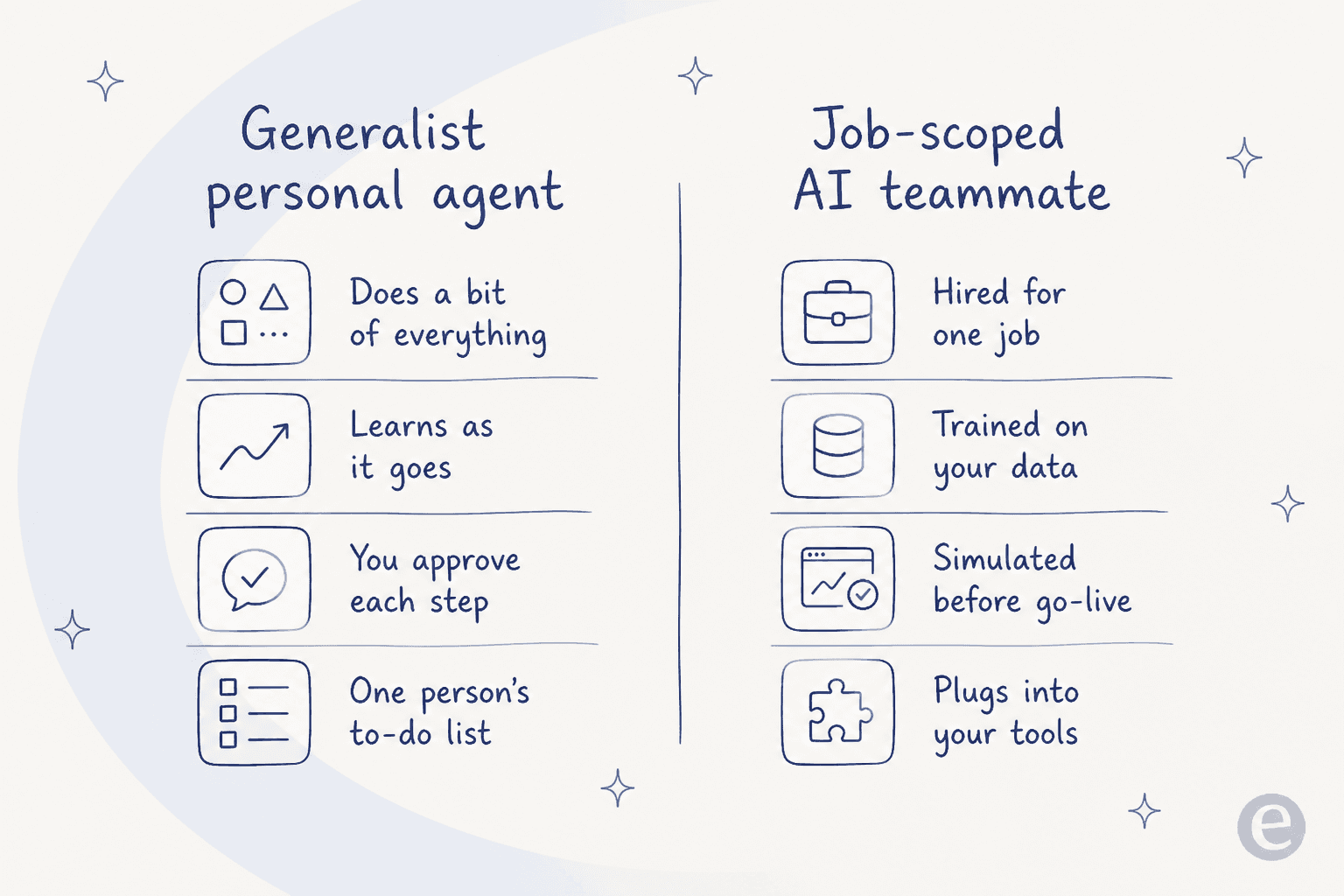
That last point is where the whole list splits in two. Most of these tools are generalists built for one person's to-do list. A smaller set are teammates hired for a single job, and the difference shows up the moment real stakes are involved.
The best Meta Muse alternatives at a glance
| Tool | Category | Cheapest agent access | Free tier | Takes real browser actions | Standout | Best fit |
|---|---|---|---|---|---|---|
| eesel | AI teammate for a job | From $299/mo (500 credits) | Free plan (100 credits) | Acts inside your helpdesk | Trains on past tickets, simulates before go-live | A defined business job (support, content) |
| ChatGPT | General personal agent | $20/mo (Plus) | Chat only | Yes, virtual browser | Huge ecosystem, connectors | Everyday assistant tasks |
| Google Gemini | General personal agent | $19.99/mo (Pro) | Yes (basic) | Yes (Agent, Ultra only) | Deep Research, Google apps | Research and Google-native work |
| Anthropic Claude | Agentic browser extension | $20/mo (Pro) | Chat only | Yes, in Chrome | Safety-forward controls | Careful, supervised browsing |
| Perplexity Comet | Agentic AI browser | $20/mo (Pro) | Yes (limited) | Yes | Answers plus action in one browser | Search-heavy, in-browser tasks |
| Manus | Autonomous deliverable agent | $20/mo (Pro) | Yes (300 credits/day) | Yes, cloud browser | Builds reports, sites, decks | End-to-end project deliverables |
| Genspark | Autonomous super agent | $24.99/mo (Plus) | Yes (100 credits/day) | Yes | AI phone calls, one-prompt fan-out | Multi-format output and calls |
Prices are the entry point for real agent features, checked against each vendor's own page on 2026-09-09. Now the detail.
1. eesel: the pick when you want an agent for a job, not errands

Let me be honest up front, because it matters: eesel is not a personal-errand agent, and it will not book your dinner reservation. If that is what you need, one of the six tools below is your answer. I am putting eesel first because the most common reason people go looking for a Meta Muse alternative is that they realised they wanted an agent to do actual work, and a generalist that dabbles in everything is the wrong shape for that.
What it is. eesel is an AI teammate platform: instead of one agent that tries to do a bit of everything, you hire a ready-to-work teammate for a specific job. The current roster is an AI agent for customer service and an AI blog writer. Each one arrives with the skills, integrations, and company context for its role.
What it does. The support teammate plugs into your existing helpdesk, Zendesk, Freshdesk, Gorgias, Front, and joins the queue like a new hire. It trains on your past tickets and help center, drafts or auto-sends replies, triages and tags, and escalates when it should. There is also a public eesel CLI plus MCP support, so the same teammate a person drives from the dashboard can be operated from a terminal, automated in scripts, or driven by coding agents like Claude Code and Cursor.
Pros.
- Trains on your own historical tickets, so it answers from your knowledge, not general web training.
- You can simulate it on past tickets before it replies to a single customer, which is the control that a personal agent simply does not offer.
- One fixed monthly price from $299/month for 500 credits (1 credit per ticket or chat), so no seats or per-message math.
Cons.
- It is scoped to defined jobs (support and content today), not open-ended personal tasks.
- It is a business tool with a business setup, not a consumer app you install and chat to on your phone.
Pricing. From $299/month for 500 credits (1 credit per ticket or chat), with a free plan of 100 credits and no per-seat charge. The pricing page carries the current numbers.
Verdict. If the honest answer to "what do I want the agent to do" is a job, eesel is the alternative that is actually built for it. It resolves a large share of support conversations across thousands of customers, and it does so with the one thing a generalist errand-runner cannot give you: a dry run against your own history before it goes live.
2. OpenAI ChatGPT: the closest general-purpose swap
What it is. ChatGPT's agent mode is the closest like-for-like alternative to Muse: it gives ChatGPT its own cloud browser to browse, click, and complete multi-step tasks. OpenAI's older Operator has been folded into it, and the feature is being rebranded again toward "ChatGPT Work," so expect the name to keep shifting.
What it does. It drives a virtual browser end-to-end, hands you the keyboard for logins with a take-over mode, pulls in connected apps like Gmail and Google Calendar, and can run tasks on a schedule. It behaves like an agent, not just a chatbot, because it acts rather than only answering.
Pros.
- The broadest ecosystem of the bunch, with connectors, apps, and the ability to buy on ChatGPT.
- Available in more countries than Muse's US-only launch.
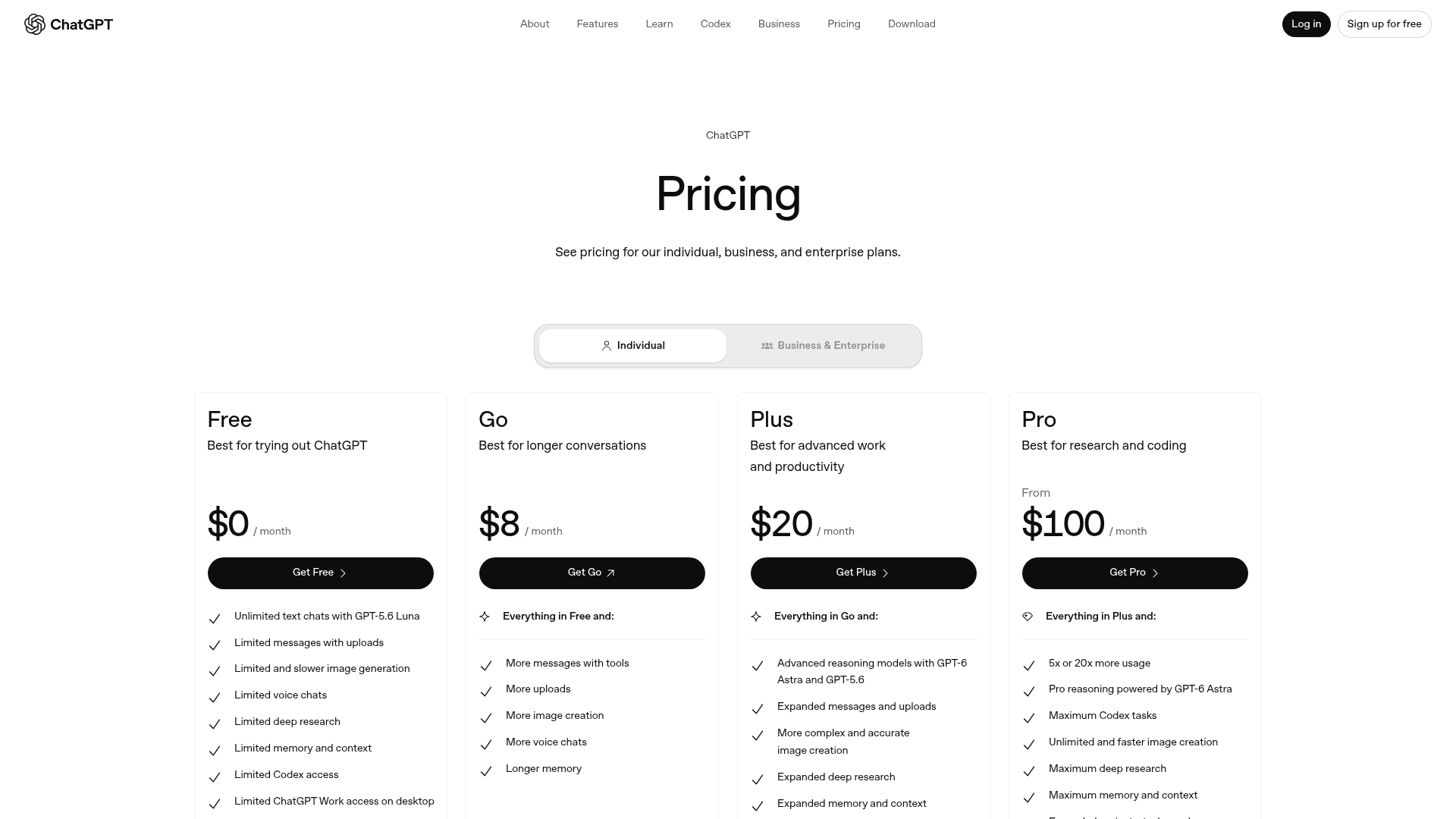
- Runs on OpenAI's newest models (GPT-6 Astra on paid plans).
Cons.
- Agent mode is paid-only, and the monthly task caps bite: Plus gives roughly 40 agent tasks a month.
- The ongoing rename from agent mode to ChatGPT Work makes the exact capability a moving target.
- Like every open-web agent, it carries prompt-injection risk and keeps a site blocklist.
Pricing. Free (no agent mode), Go at $8/month, Plus at $20/month (about 40 agent tasks), and Pro from $100/month (about 400 agent tasks). See more ChatGPT alternatives if the caps are too tight.
Verdict. If you want the safest bet for a general assistant that also takes actions, this is it. Just know the agent runs on a monthly allowance, not unlimited autonomy.
3. Google Gemini: research muscle and Google-native actions
What it is. Inside the Gemini app, Google now ships proactive agents: Gemini Spark (a 24/7 personal agent), Gemini Agent (the browser agent that grew out of Project Mariner), and Deep Research.
What it does. Deep Research browses and analyses hundreds of sites to produce a report. Spark handles autonomous workflows like flagging hidden subscription charges on your statements or turning a thread into a polished Doc plus a draft reply, and it can act through Canva, OpenTable, and Instacart. The full browser agent is the Mariner-derived piece.
Pros.
- Strong, well-cited research, tightly wired into Gmail, Docs, and the rest of Google Workspace.
- Asks before high-stakes actions like spending money or sending email.
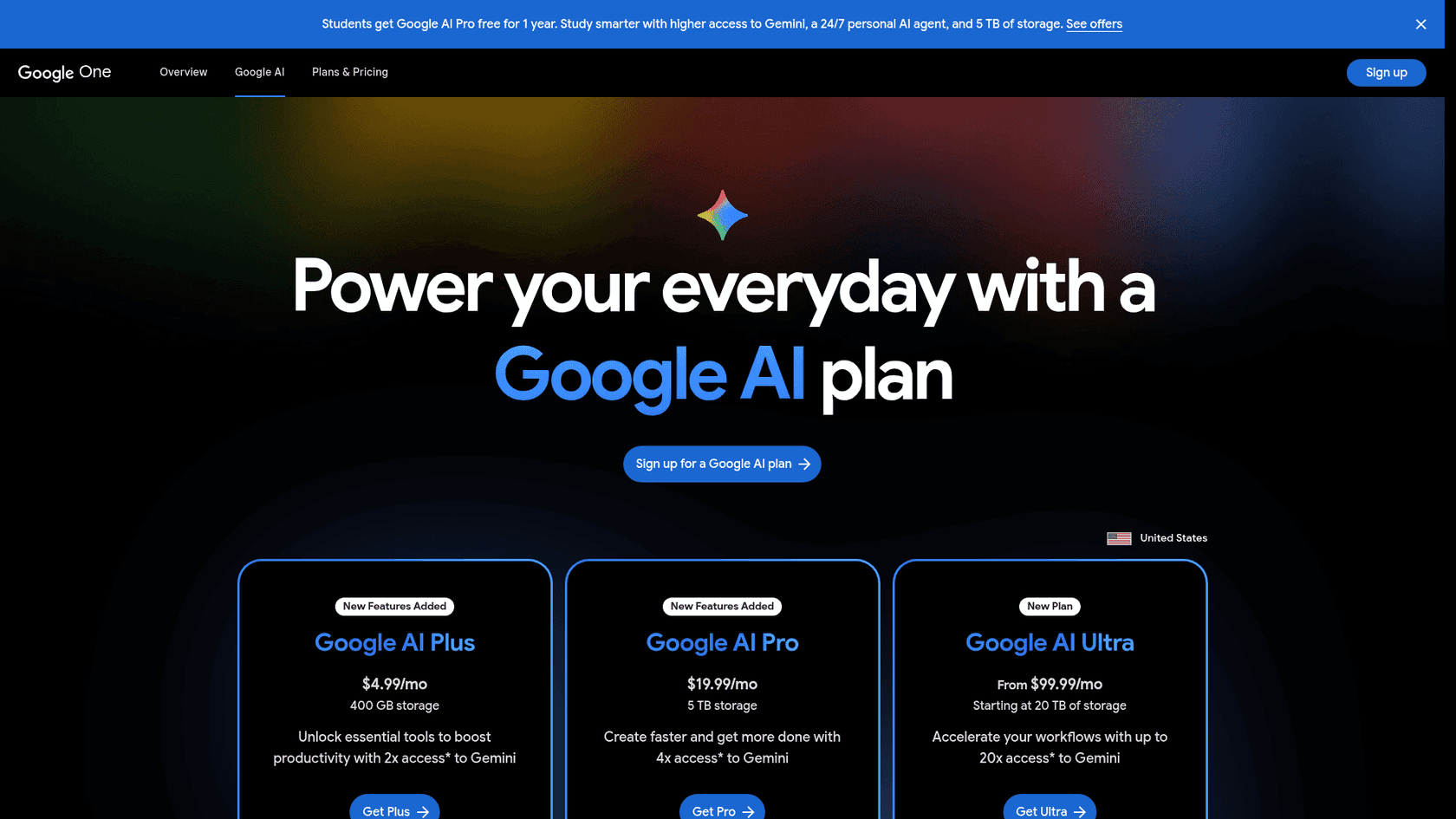
- A cheap $4.99 tier if you only want Deep Research.
Cons.
- The real browser agent is Ultra-only and US/English-only, so the strongest tier is both pricey and geo-locked.
- Spark is not on the cheapest paid plan; you need the $19.99 Pro tier.
- It stops short of unattended purchases and sends by design.
Pricing. Free (basic), Google AI Plus at $4.99/month (Deep Research, no Spark), Google AI Pro at $19.99/month (Spark), and Google AI Ultra from $99.99/month (Gemini Agent). Weigh it against other Gemini alternatives if you are not in the Google ecosystem.
Verdict. The best choice if your life already lives in Google and you value research over free-roaming autonomy.
4. Anthropic Claude: the safety-forward browser agent
What it is. Claude in Chrome is Anthropic's official extension that lets Claude take actions inside your browser: viewing pages, clicking, filling forms, and running multi-tab workflows.
What it does. It works across tabs, can schedule tasks, and has an experimental autonomous mode that keeps safeguards on sensitive steps. It is now generally available to Pro, Team, and Enterprise users rather than a closed preview.
Pros.
- The most conservative controls here: it blocks high-risk site categories and asks before publishing, purchasing, or sharing personal data.
- Runs on the Claude 5 model family, which is strong at long, careful tasks.
- Pro bundles a lot besides browsing, including Claude Code and Cowork.
Cons.
- The guardrails that make it safe also make it stop often, so it is less hands-off than Muse.
- It is a Chrome extension, not a standalone secure environment.
- Anthropic itself flags residual prompt-injection risk, which is honest but worth noting.
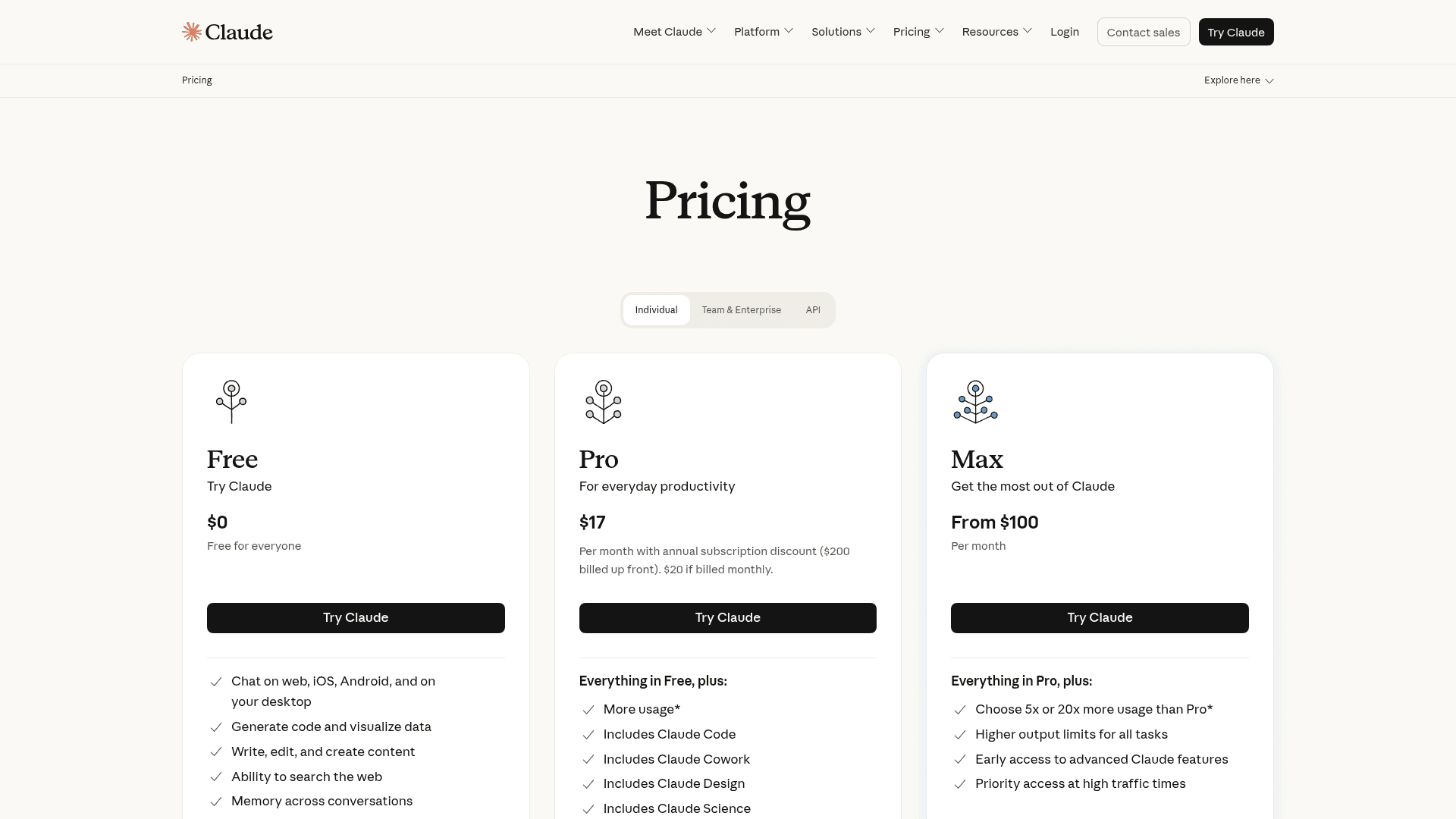
Pricing. Free (no Chrome agent), Pro at $17/month billed annually ($20 monthly), and Max from $100/month. One hands-on tester summed up the current state bluntly:
"I used this in earnest yesterday on my Zillow saved listings... it mostly failed at the task."

Verdict. The pick if you want an agent that errs on the side of caution and asks first. Early browser tasks can still stumble, so treat it as a supervised assistant, not a set-and-forget one.
5. Perplexity Comet: search and action in one browser

What it is. Comet is Perplexity's Chromium-based AI browser with a built-in assistant and agent that read the page you are on and act across your tabs.
What it does. It shops and buys ("find a comfortable but cheap office chair"), reads your inbox and drafts replies, builds simple websites, and turns a syllabus into a study plan. The pitch is that answers and actions live in the same browser window.
Pros.
- Combines Perplexity's search strength with in-browser task execution.
- Free to download, with the assistant available even on the free tier.
- Available on Mac, Windows, iOS, and Android.
Cons.
- The real agent is throttled on Free, and the strongest assistant sits on the $200 Max plan.
- Agentic browsers like this have documented prompt-injection exposure.
- Heavy autonomous use is metered by "Computer credits" that only open up on Max.
Pricing. Free (limited agent), Pro at $20/month (10x agent access), and Max at $200/month. The top tier drew a sharp reaction:
"Wow, $200/month for the privilege of being monetized and tracked even more closely than Chrome does."
Verdict. A strong fit if most of your day is search and browsing anyway. Look at other Comet alternatives if the Max price for full autonomy is a stretch.
6. Manus: the agent that hands you a finished deliverable
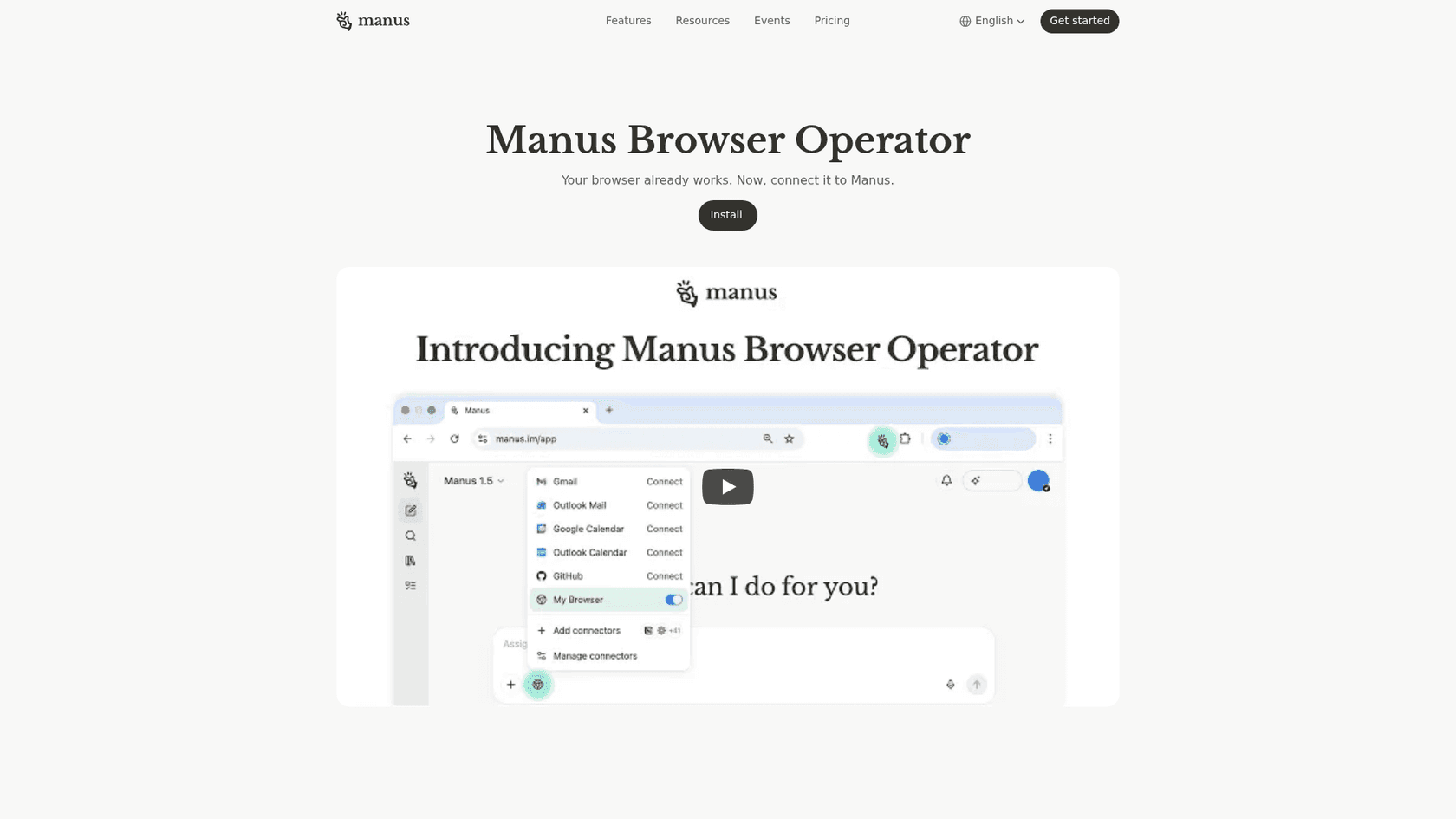
What it is. Manus is an autonomous general agent: you give it a goal, and it plans, runs across a cloud browser and terminal, and returns a finished artefact, a report, a website, a deck, a spreadsheet.
What it does. Its Browser Operator drives a real cloud browser, Wide Research spins up parallel sub-agents for high-volume jobs, and it can build and deploy whole websites. It runs on the web, desktop, and mobile, plus Slack, Telegram, and WhatsApp.
Pros.
- Actually goes end-to-end and returns a polished deliverable, not just a chat answer.
- Broad surface area, including a public API and messaging-app channels.
- A usable free tier with daily refreshing credits.
Cons.
- Free is capped to the weaker Manus 1.6 Lite model and a single concurrent task.
- Credit costs draw steady "wish it were cheaper" sentiment on heavier tasks.
- There is corporate turbulence to weigh: Meta's roughly $2B acquisition of Manus was blocked by China's regulator in April 2026, Manus resumed independent operations in late 2026, and it said some user data would be deleted as part of the separation.
Pricing. Free (300 refresh credits/day), Pro from $20/month (4,000 credits), a higher Pro tier from $40/month (8,000 credits), and Team from $20/seat. Compare with other Manus alternatives before committing.
Verdict. The best alternative when you care about the output more than the conversation. One early user described the appeal well:
"You just give a command, it can get information from the internet and analysis the information and then give a report document, draw system architecture diagram."
7. Genspark: a super agent that even makes phone calls
What it is. Genspark, now branded AI Workspace 6.0, is an agentic "super agent" that takes one instruction, decides which specialised sub-agents to run, and returns finished deliverables across slides, sheets, docs, code, and media.
What it does. Its signature feature is an AI phone-call agent that places real outbound calls, for reservations or vendor calls, on your behalf. It also ships Genspark Browser and a cloud-hosted "Claw" agent, and gives paid users effectively unlimited chat and image generation.
Pros.
- The one-prompt fan-out to multiple output types is handy for mixed work.
- The AI phone-call feature is a real capability few rivals match.
- Paid plans include high-volume chat and image generation.
Cons.
- The app and pricing sit behind a login wall, which makes it hard to evaluate before signing up.
- Credit burn is the top complaint; a single super-agent command can consume thousands of credits.
- Its "unlimited" chat and image are session rate-limited, not truly uncapped.
Pricing. Free (100 credits/day), Plus at $24.99/month ($19.99 billed annually, from 10,000 credits), and a higher Pro tier priced well into the hundreds per month. One technical note from the community is worth flagging:
"I have tested version 1.5.421 and it's based on Brave and Chromium 135. Brave is licensed under MPL-2.0, which requires to release the modified source code. However Genspark Browser is closed source, thus violating the MPL."
Verdict. Pick Genspark if you want breadth of output formats and the phone-call trick. Watch the credit meter, and know the login gate makes a proper trial the only real way to judge it.
A quick word on Meta Muse itself
None of this is a knock on Muse. It is one of the most security-engineered consumer agents at launch, with a per-user secure VM, a separate approval layer, and one-time virtual cards at checkout. If you are in the US and you want a polished personal assistant, it is a strong option, and my full Meta Muse review goes deeper on the security model. The dominant reaction on Hacker News captured the tension neatly, though:
"I absolutely want a general purpose assistant. I absolutely don't trust Facebook with the necessary data."
That trust question is exactly why the "which alternative" answer depends so much on what you are handing the agent, and to whom.
How to actually choose
If you strip away the branding, this list splits three ways:
- A general personal assistant (ChatGPT, Google Gemini, Claude, Perplexity Comet). Pick on ecosystem and how cautious you want it to be.
- An autonomous deliverable machine (Manus, Genspark). Pick on the output you need and your tolerance for credit costs.
- A teammate for a defined job (eesel). Pick this when the honest answer to "what should it do" is real work, not errands.
The mistake I see most is reaching for a generalist agent to do a specialist job, then being surprised when it answers confidently and wrongly on a customer ticket. A generalist is impressive at your to-do list. For a job with a queue, a knowledge base, and a customer on the other end, you want an agent that trained on your history and got simulated before it ever replied. That is the whole reason purpose-built agents exist next to the personal ones.
If that is the job you are hiring for, eesel plugs into your helpdesk, learns from your past tickets, and lets you watch it handle real historical conversations before it touches a live one. You can try it for free.
Frequently Asked Questions
What is the best Meta Muse alternative?
It depends on the job. For a general personal assistant, ChatGPT's agent mode and Google Gemini are the closest like-for-like alternatives to Meta Muse. For autonomous multi-step deliverables, Manus and Genspark go further. If you actually want an agent for a business job like support, a purpose-built AI agent for customer service like eesel is a better fit than any personal-errand agent.
Are there free Meta Muse alternatives?
Yes. Manus, Genspark, Google Gemini, and Perplexity all have free tiers, though the real agent features are usually gated to a paid plan. ChatGPT's agent mode is paid-only, starting on the $20 Plus plan.
Is Meta Muse better than ChatGPT?
They target different jobs. Meta Muse is a dedicated personal-agent app with a strong security model, while ChatGPT is a general assistant that added agent mode on top. Muse is US-only at launch; ChatGPT agent mode is available in more countries but caps agent tasks per month.
What can Meta Muse alternatives actually do?
Most of these AI agents can drive a real browser, fill in forms, book and buy things, and pull from connected apps like Gmail and Google Calendar. The stronger ones, like Manus and Genspark, also build finished deliverables such as slide decks, spreadsheets, and websites.
How much do Meta Muse alternatives cost?
Consumer agent plans mostly land around $20/month (ChatGPT Plus, Google AI Pro, Claude Pro, Perplexity Pro, Manus Pro). Top tiers run to $100-$200/month for higher usage. Business tools like eesel use a fixed monthly price sized to volume, from $299/month for 500 credits (1 credit per ticket or chat).
Which Meta Muse alternative is safest with my data?
Meta Muse itself has one of the strongest published security models, with a per-user secure VM and a separate approval layer. Among alternatives, Anthropic's Claude blocks high-risk site categories and asks before sensitive actions. For business data, look for a vendor with SOC 2 and clear controls over what the AI can access.