DigitalGenius alternatives in 2026: 8 AI agents for ecommerce support

Riellvriany Indriawan

Katelin Teen
Last edited October 19, 2026

Why ecommerce teams look for DigitalGenius alternatives
I work the support queue at eesel every day, and DigitalGenius comes up a lot with ecommerce brands, usually from teams that are happy with what it does but unsure about what it costs or how fast it moves. So let me start with what it does well, because it does a lot well.
What DigitalGenius does well
DigitalGenius has been solving ecommerce support issues for brands for over a decade, and it positions itself against agents that only answer surface-level questions. Its pitch is resolution, not deflection: process warranty claims, run returns through chat, edit orders around the clock, and find lost parcels.
- Genius Flows. Ready-made best-practice workflows for common ecommerce queries. You connect your stack and the flow runs.
- Free custom integrations. Its integrations directory lists hundreds of connectors across shipping carriers, returns tools, subscriptions, ERPs and helpdesks, and says it can build any integration, including custom ones, free of charge.
- Real results. Its demo page promises 40%+ of queries resolved with no agent and 60+ automatable retail use cases, and its G2 profile sits at
4.7/5from46reviews, mostly European retail and fashion brands.
If you're running a large retail brand with a messy back office (an ERP here, a 3PL there, five carriers), that free integration work is worth a lot. I wouldn't tell anyone in that spot to rip DigitalGenius out on a whim.
Where teams start to look elsewhere
The pains cluster around price visibility and speed, and they show up in DigitalGenius's own reviews.
- No public pricing. The pricing page is a book-a-demo form. G2's user insights mark perceived cost at
$$$$$and average time to implement at1 month, with return on investment at13 months. You can't budget a switch-in or a switch-out without a sales call. - You depend on their team's capacity. Several reviewers who like the product still flag that launches wait on DigitalGenius staff.
"It has been challenging matching expectations on project progress, due to the resources allocated to our brand seeming to not be enough to develop our partnership to the extend we would like it to be."

- Flows are hard to change yourself. The flip side of done-for-you flows is that editing them in-house can be tough.
"Process flow is hard and painful to build. It would be helpful to have a more accessible version of the process for us to help see through the portal."
- Helpdesk gaps at the small end. DigitalGenius's helpdesk list is broad at the enterprise end (Zendesk, Gorgias, Kustomer, Freshdesk, Gladly, Dixa, eDesk, Salesforce, Genesys and more), but Help Scout and HubSpot don't appear in it.
None of these are product failures. They're the trade-off of a service-heavy model. If you want to move faster, see a price before a call, or own your flows, that's when an alternative makes sense.
How I picked these DigitalGenius alternatives
I started from what a DigitalGenius buyer is replacing: an AI layer that takes actions on orders (WISMO, returns, order edits, refunds, cancellations) on top of an existing helpdesk. Every tool here had to clear four bars:
- Takes actions on orders. It has to read live order data and do something with it.
- Fits an ecommerce stack. Shopify plus at least one of the helpdesks DigitalGenius customers use.
- Has a current, primary-source fact sheet. I re-checked every vendor's own pricing and product pages on October 19, 2026. Prices in this post come only from those pages.
- Clear on who builds the flows. Vendor-built, self-built in plain language, or a visual builder.
That last point turned out to be the real dividing line, because it decides whether a switch feels like relief or like a second DigitalGenius contract.
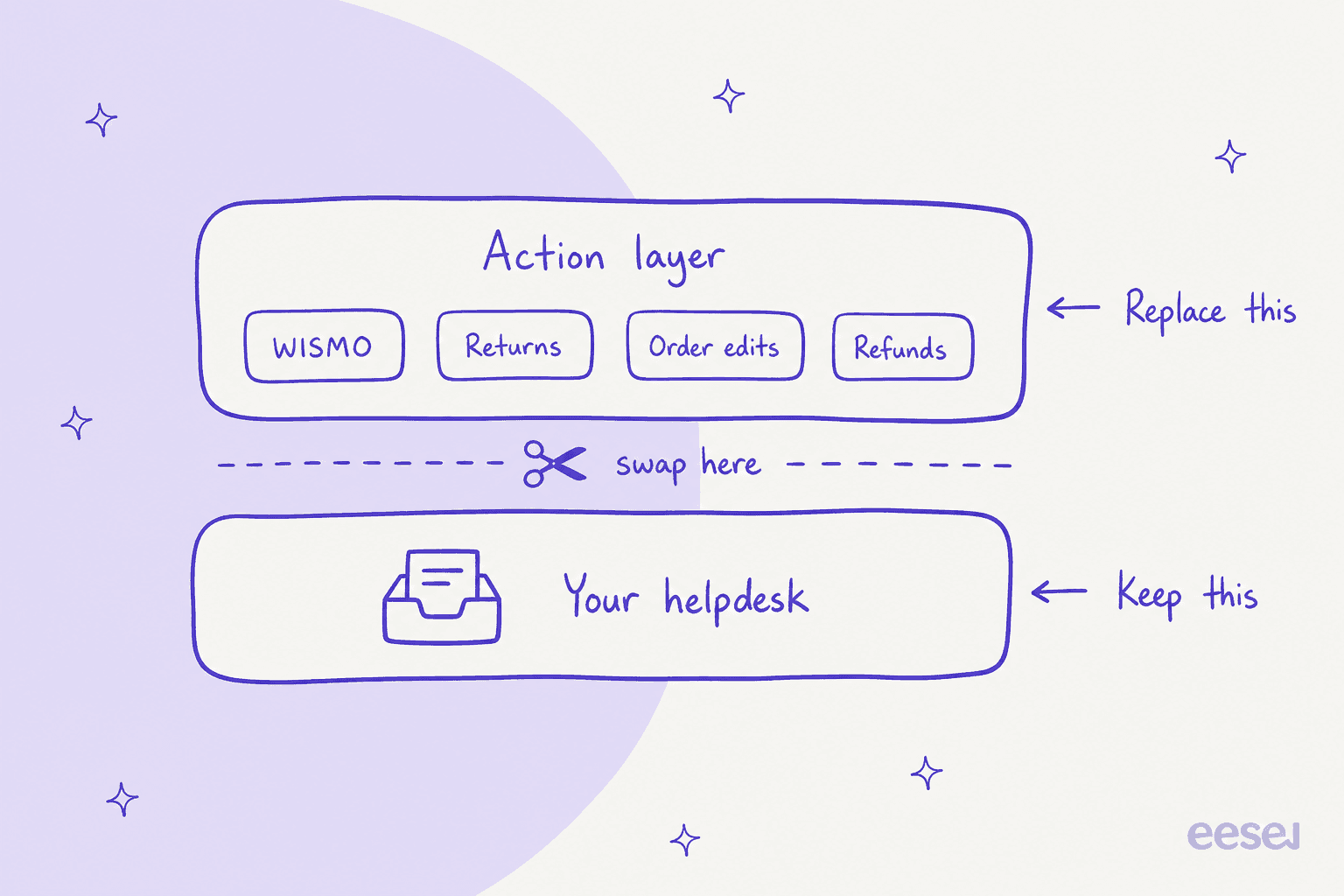
If your helpdesk works, keep it. You're only swapping the top layer, which is why the helpdesk migration question only matters for the two built-in options on this list.
DigitalGenius alternatives compared at a glance
Here's the summary I'd screenshot if I were building the shortlist. DigitalGenius is in the first row for reference. "Not published" means the vendor's own pages I checked don't state it.
| Tool | Best for | Pricing model | Starting price (published) | Helpdesk | Shopify actions | Returns and subscription tools | Channels | Languages | Security named | Free trial |
|---|---|---|---|---|---|---|---|---|---|---|
| DigitalGenius | Large retail brands that want a done-for-you build | Custom quote | Not published | Sits on Zendesk, Gorgias, Kustomer, Freshdesk, Gladly, Dixa and more | Yes | Loop Returns, Happy Returns, ReturnGo, Recharge and more | Email, chat, self-service, voice | 16 listed on G2 | Not published | No, demo only |
| eesel | Teams keeping Zendesk, Gorgias or Freshdesk | Monthly credit plans, 1 ticket or chat = 1 credit | $299/mo for 500 credits | Plugs into Zendesk, Gorgias, Freshdesk and more | Yes, order lookups | Recharge | Helpdesk, chat bubble, email, Slack | 80+ | EU or US data residency, BAA on Enterprise, SOC 2 Type II underway | Yes, 100 free credits |
| Yuma AI | Shopify DTC brands that want outcome pricing | Per full resolution, 12-month term | $14,400/yr (12,000 resolutions) | Gorgias, Zendesk, Kustomer, Gladly, Re:amaze | Yes | Loop Returns, Recharge, AfterShip | Email, chat, social, voice add-on | Not published | Not published | No, demo only |
| Siena AI | DTC brands that care most about brand voice | Platform fee plus per ticket | $750/mo plus $0.90 per ticket | Zendesk, Gorgias, Kustomer, Gladly, Dixa | Yes | Loop Returns | Support, shopping, social | Not published | SOC 2 Type II | No, demo only |
| Gorgias AI Agent | Shopify brands happy to run on Gorgias | Helpdesk plan plus per automated interaction | $40/mo (Starter, helpdesk plus 30 interactions) | Gorgias itself | Yes, incl. cancel order | Loop, AfterShip, Recharge in app store | Email, chat, social, SMS | Not published | GDPR / CCPA | Yes |
| Zowie | Enterprises that want deterministic refund and claims logic | Custom quote | Not published | Own widget plus API, A2A and SDK connections | Not listed on current pages | Not published | Voice, chat, email, app | Not published | GDPR | No, demo only |
| Ada | High-volume enterprise brands | Custom quote | Not published | Zendesk, Salesforce and others | Yes | Not published | Chat, email, SMS, voice | 60 | Not published | No, demo only |
| Zendesk AI agents | Teams already on Zendesk | Agent seats plus per automated resolution | $55/agent/mo (Suite Team, annual) plus $1.50 per resolution | Zendesk | Through Action builder | Not published | Email, messaging, voice | 80 | Not published | Yes, 14 days |
| Sierra | Large retail brands wanting a vendor-built agent | Outcome-based, custom quote | Not published | Integrates with your CRM and inventory systems | Yes, incl. refunds and warranty | Not published | Chat, voice | Not published | SOC 2, ISO 27001, GDPR | No |
Four of the nine, including DigitalGenius, publish no price at all. That's useful information on its own: if a big part of your reason for leaving is price visibility, Ada, Sierra and Zowie will feel familiar.
What the DigitalGenius alternatives actually cost
Since DigitalGenius doesn't publish a price, the useful comparison is between the alternatives that do. The catch is that each one bills a different unit, so the cheapest-looking number isn't always the cheapest bill.
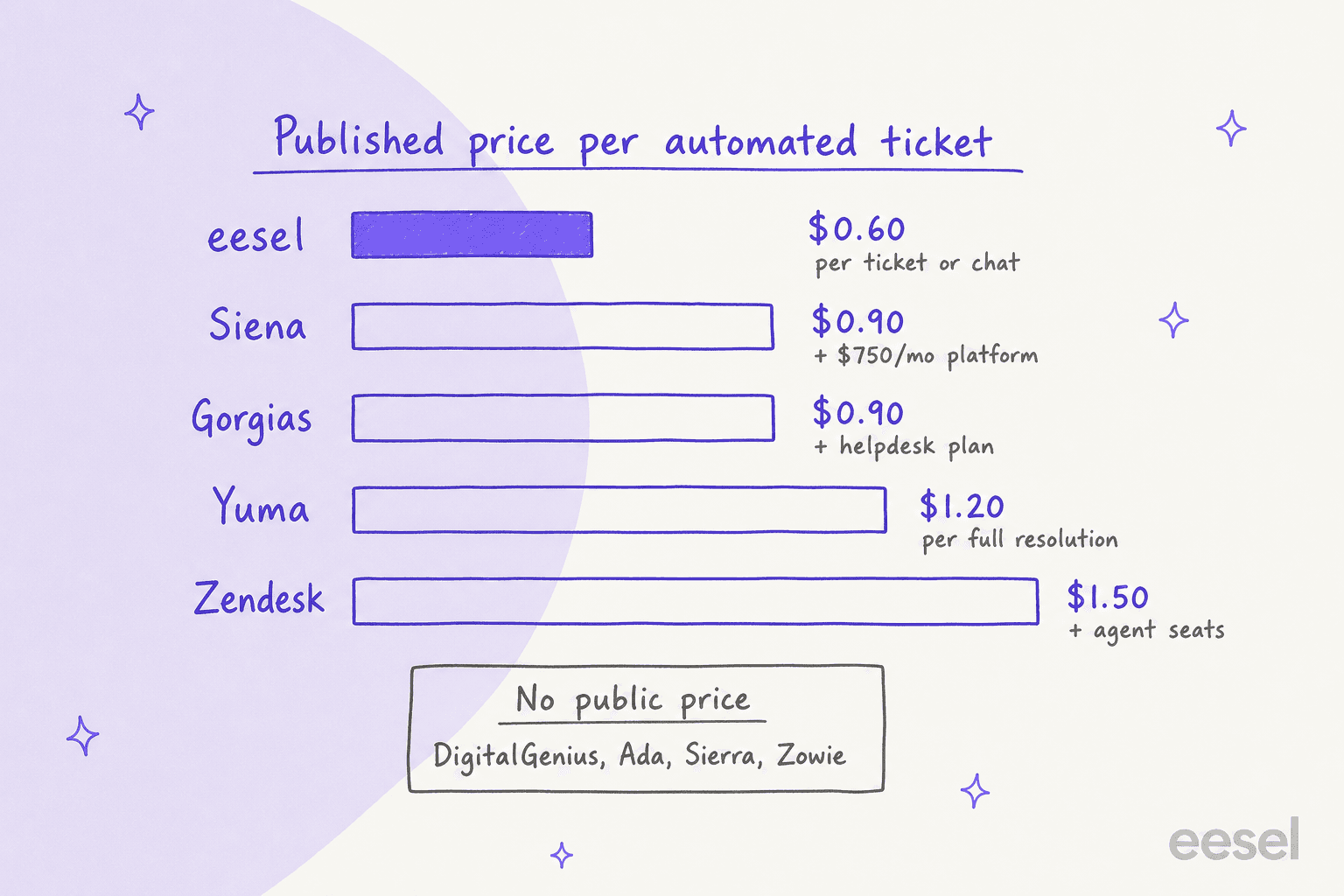
Here's what roughly 2,000 automated tickets a month looks like on each published price card:
| Tool | What you're billed for | Cost at ~2,000 automated tickets a month |
|---|---|---|
| eesel | Every ticket or chat the AI works on, resolved or not | $849/mo (2,000 credits) |
| Gorgias AI Agent | Each automated interaction, plus a helpdesk plan | About $1,800 in interactions at $0.90, plus the helpdesk plan (Pro is $300/mo billed annually) |
| Siena AI | Each automated ticket, plus a platform fee | $750 + $1,800 = $2,550/mo |
| Zendesk AI agents | Each automated resolution, plus agent seats | $3,000/mo at $1.50 committed, plus seats |
| Yuma AI | Full resolutions only, sold in annual bundles | Growth is $40,000/yr for about 48,000 resolutions, about $3,333/mo |
Two things to read into this. First, per-resolution pricing protects you when the AI fails: Yuma doesn't charge if a human touches the ticket, while eesel charges a credit for every ticket worked. Second, it costs you when the AI succeeds, because the bill climbs with your resolution rate. If you expect a high share of WISMO and order-status tickets (which is most DigitalGenius customers), a flat plan usually comes out lower.
1. eesel AI
Best for: ecommerce teams on Zendesk, Gorgias or Freshdesk who want to own their flows and keep their helpdesk.
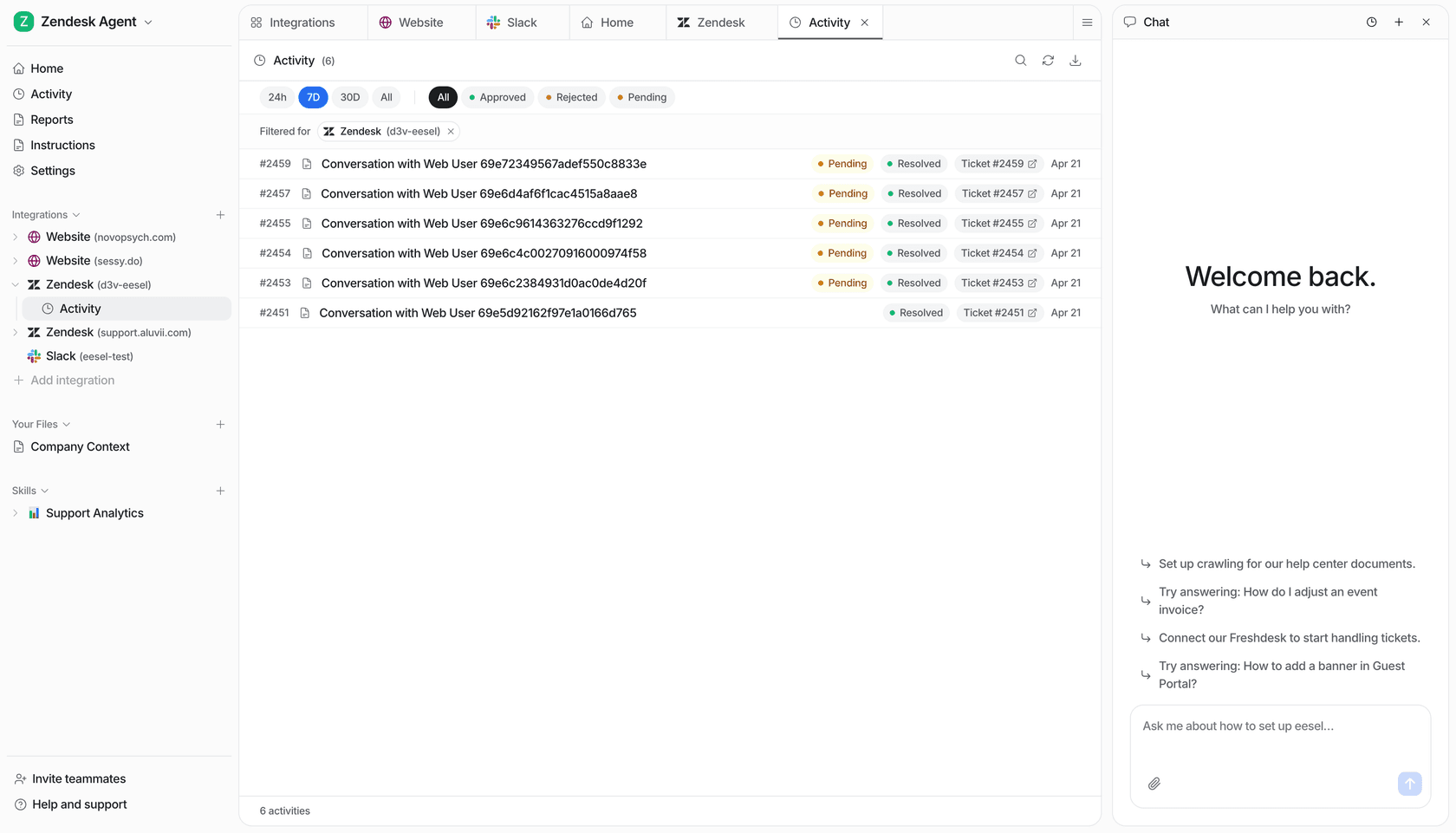
eesel is an AI helpdesk teammate. You invite it into the helpdesk you already run, it reads your past tickets, help center and macros, and it starts drafting, tagging and replying from day one. You set how it handles returns, tone and escalation by describing it in plain language, not by waiting on a solutions engineer.
How it compares to DigitalGenius
DigitalGenius builds your flows for you. eesel lets you write them yourself, then check them before launch. That's the core trade.
The part I'd point a DigitalGenius customer to first is simulation: eesel runs your agent against your own past tickets and shows where it's strong and where the gaps are, before a single customer sees a reply. It's the same test I'd ask every vendor on this list to pass: the same 100 to 200 historical tickets, edge cases included.
On the ecommerce side, eesel connects to Shopify and Recharge, so it can check an order and its fulfilment before answering.
Question Beauty, a cosmetics brand on Gorgias and Shopify, had eesel handle about 990 tickets between August 8 and September 8, 2026. It looked up about 290 Shopify orders, sent about 960 replies, and closed about 280 tickets without a person. Refunds, complaints and wholesale requests go to a human with a note attached, by design.
Pros
- Keeps your helpdesk, tickets and reporting where they are: Zendesk, Gorgias, Freshdesk and more.
- Simulation on past tickets before go-live.
- Published, flat monthly price, with unlimited agents and seats.
- Replies in the customer's language, 80+ languages supported.
- Free plan with 100 credits to try every integration.
Cons
- Kustomer, Gladly and Dixa aren't in eesel's integration list, so DigitalGenius customers on those helpdesks should look at Yuma or Siena.
- No free custom-integration team. If your returns flow depends on a bespoke ERP connector, DigitalGenius's build-it-for-you offer is hard to beat.
- SOC 2 Type II is still underway, which can matter in an enterprise security review.
Pricing
From eesel's pricing page: Free gives 100 credits. Teammate plans start at $299/month for 500 credits and run to $849/month for 2,000 and $1,749/month for 5,000. A ticket or chat is one credit however long it runs. Enterprise (custom) adds SSO, a HIPAA BAA, security review support and annual invoicing.
Verdict: If you want to leave DigitalGenius without leaving Zendesk, Gorgias or Freshdesk, and you'd rather own your flows than wait on a vendor's roadmap, start here. Skip it if you're on Kustomer, Gladly or Dixa.
2. Yuma AI
Best for: Shopify DTC brands on Gorgias, Zendesk, Kustomer or Gladly who want a specialist vendor and pay-per-outcome billing.
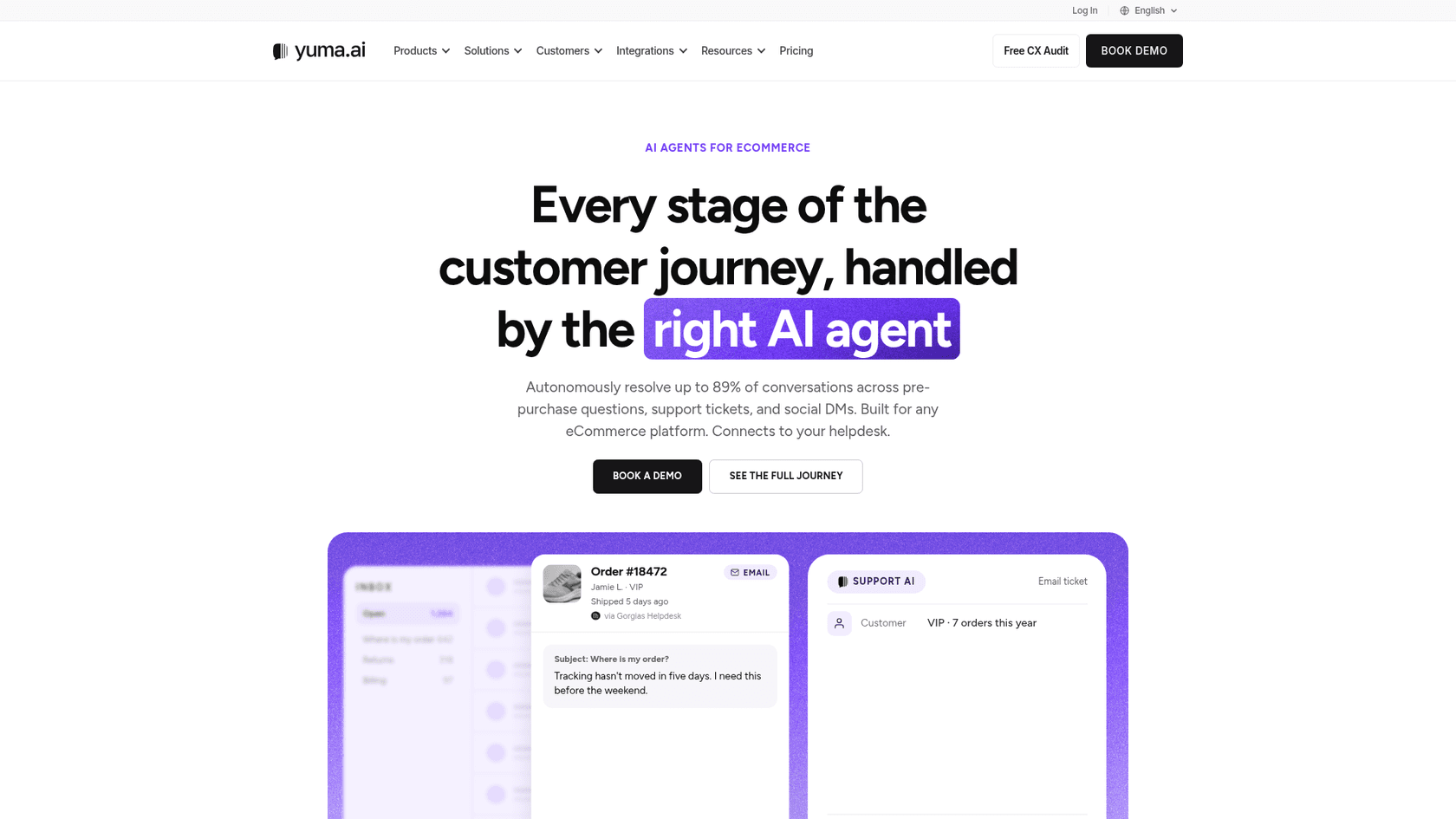
Yuma AI is the closest like-for-like swap for DigitalGenius. Its agents plug into your helpdesk and handle WISMO, returns, refunds, cancellations, subscription changes and address edits end to end, with 75+ pre-built automations. It plugs into Gorgias, Zendesk, Kustomer, Gladly and Re:amaze plus your Shopify store.
How it compares to DigitalGenius
Same job, different commercials. Where DigitalGenius quotes privately, Yuma publishes its rates and bills only for full resolutions with no human touch. Growth plans include a dedicated account manager, custom integrations and quarterly business reviews, so it keeps some of the done-with-you feel DigitalGenius customers are used to. For a deeper look, see my Yuma AI review.
Pros
- Public, outcome-based pricing: escalations and conversations aren't billed.
- Broad ecommerce helpdesk coverage, including Kustomer and Gladly.
- Named returns and subscription integrations: Loop Returns, Recharge, AfterShip.
- Add-ons for sales, social and voice when you want to go wider.
Cons
- Every plan carries a 12-month commitment, paid upfront on the illustrative annual prices.
- Starter is $14,400 a year, a big first step for a smaller brand.
- Freshdesk isn't in its listed helpdesks.
Pricing
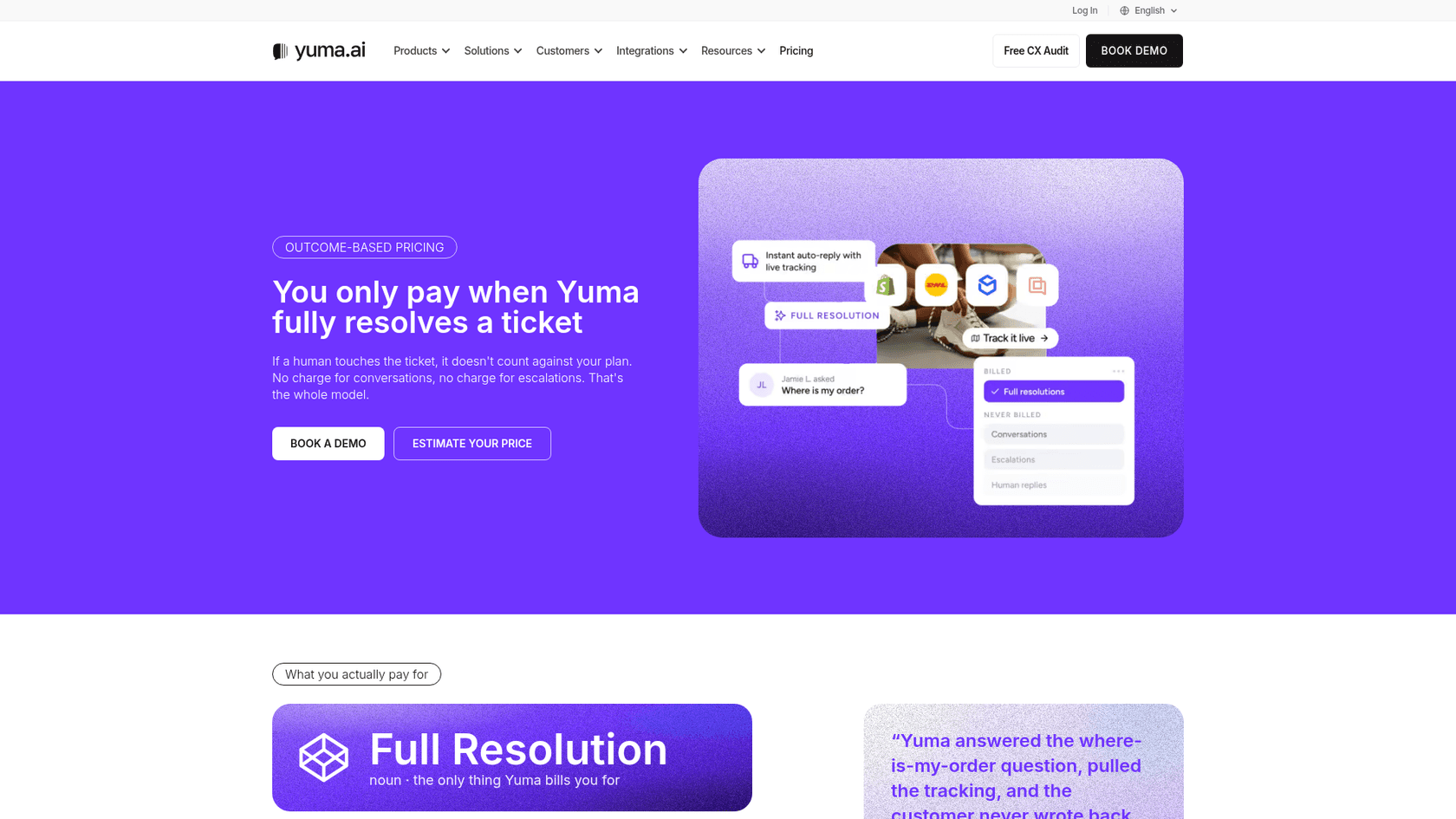
From Yuma's pricing page: Starter $14,400/yr (about $1.20 per resolution, 12,000 resolutions), Growth $40,000/yr (about $0.83, about 48,000), Scale $90,000/yr (about $0.75, about 120,000). Past 120,000 a year the rate drops toward a $0.55 floor. Monthly plans pay $1.50 per over-quota ticket on Starter.
Verdict: Pick Yuma if you want the nearest thing to DigitalGenius with a price you can see upfront. Skip it if a 12-month, five-figure commitment is the thing you were trying to get away from. The Yuma AI alternatives list has more options.
3. Siena AI
Best for: DTC brands where on-brand tone matters as much as the action, on Zendesk, Gorgias, Kustomer, Gladly or Dixa.
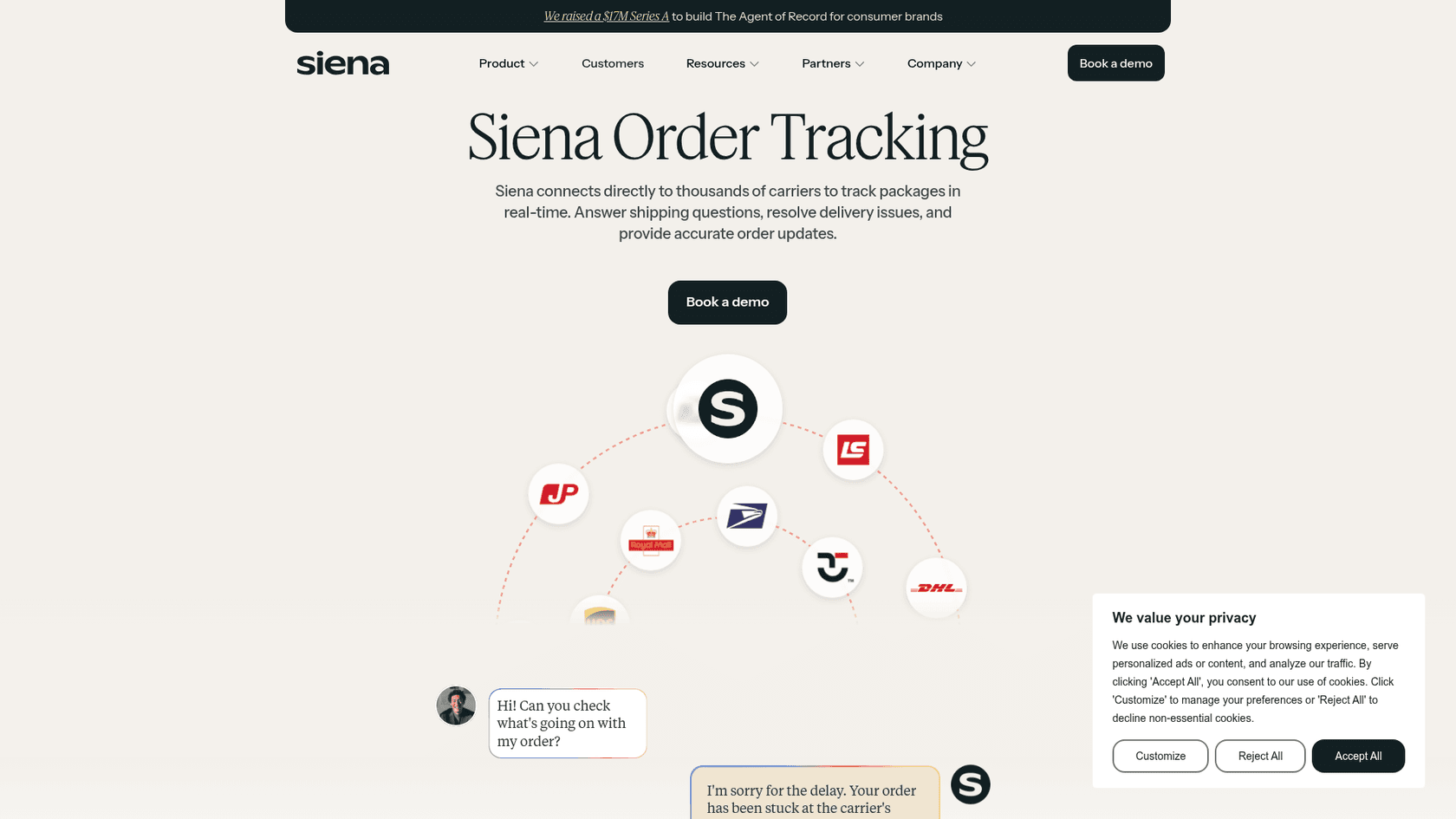
Siena AI calls itself the AI CX operating system for consumer brands. It covers support, shopping and social from one agent, connects to thousands of carriers for order tracking, and leans hard on brand voice.
How it compares to DigitalGenius
Siena overlaps with DigitalGenius on helpdesks more than any other tool here, including Dixa and Gladly. The main difference is the pitch: DigitalGenius sells resolution, Siena sells resolution that sounds like your brand. Siena also publishes its pricing model, which DigitalGenius doesn't. If you're weighing Siena against Yuma, read my Siena vs Yuma breakdown.
"There are times when Siena will draw out a conversation instead of routing it to a Human to solve, as well as closing out tickets when a customer asks..."
Pros
- Widest helpdesk overlap with DigitalGenius: Zendesk, Gorgias, Kustomer, Gladly, Dixa.
- SOC 2 Type II, SAML SSO, roles and audit logs.
- Unlimited sandbox included in the platform fee.
- Loop Returns, Shopify and Stripe integrations.
Cons
- The $750/month platform fee lands before a single ticket is automated, which weighs on smaller brands.
- Exact quotes still go through a form.
- Some reviewers flag handoff timing, where the agent keeps going instead of routing to a human.
Pricing
From Siena's pricing page: a $750/month platform fee for the core AI engine and unlimited sandbox, plus an Automation Pack at $0.90 per ticket, plus onboarding and dedicated Slack support. Final pricing comes back after you share your ticket volume and helpdesk. My Siena pricing post, linked in the cost table above, walks through the math.
Verdict: Pick Siena if you're on Kustomer, Gladly or Dixa, or if brand voice is your top concern. Skip it if your volume is low enough that the platform fee dominates the bill.
4. Gorgias AI Agent
Best for: Shopify brands that want helpdesk and AI on one bill, and are happy to run their support on Gorgias.
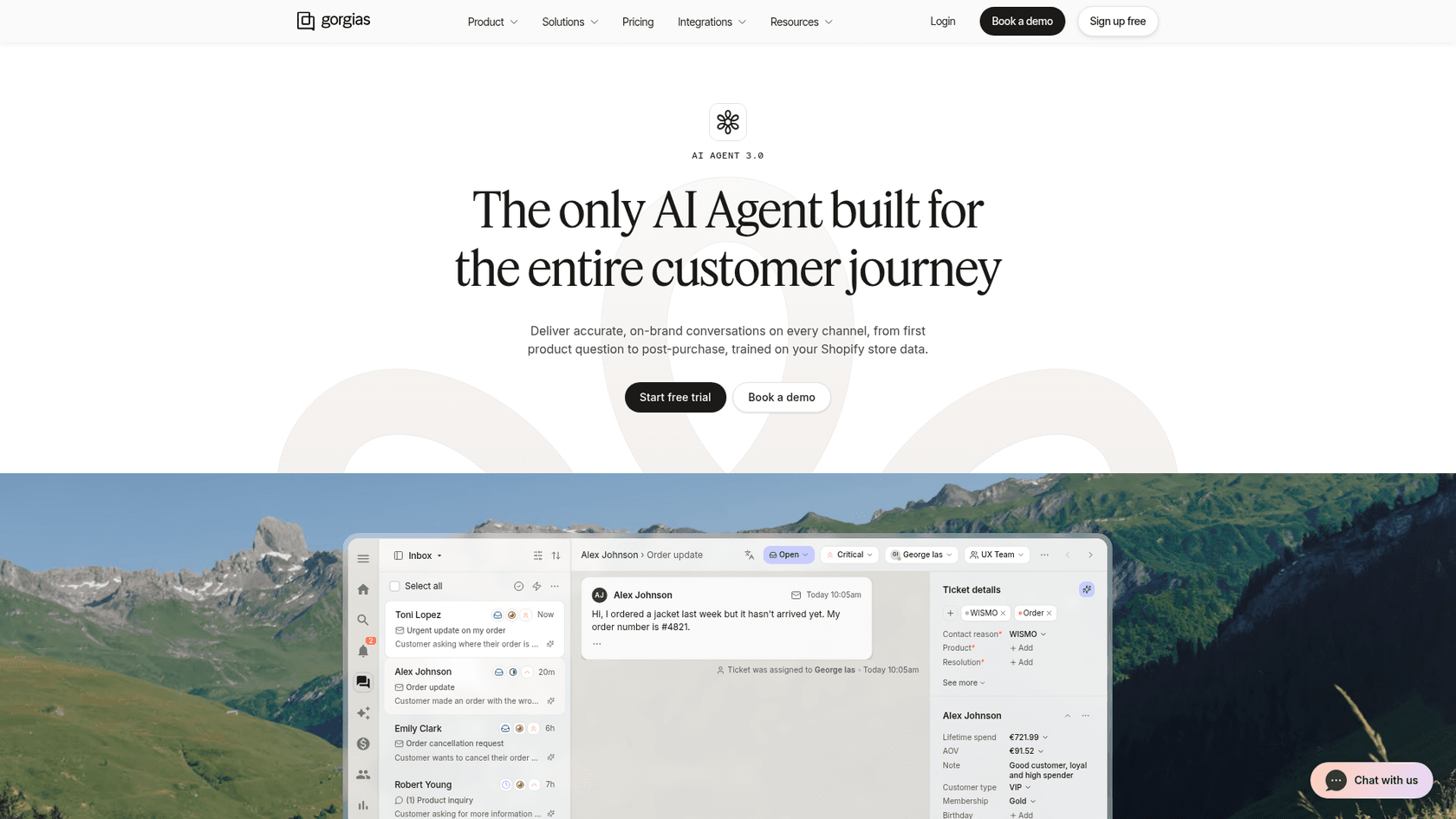
Gorgias AI Agent is the AI built into the Gorgias helpdesk. It handles order status, product questions and return requests, and it takes actions directly in Shopify, such as cancelling an order if it's still eligible, plus custom actions you build against any API.
How it compares to DigitalGenius
DigitalGenius already integrates with Gorgias, so a lot of DigitalGenius customers are sitting on Gorgias right now. Switching to Gorgias AI Agent means consolidating rather than migrating. You trade DigitalGenius's vendor-built flows for Gorgias's action library and your own configuration. It's one of the few options here with a free trial and self-serve pricing. My Gorgias AI vs Yuma comparison covers the specialist question.
"If a meaningful chunk is WISMO, address changes, cancels, refunds, exchanges, Gorgias usually feels worth it because the agent can do the work inside the ticket with Shopify context right there."

Pros
- No second vendor: helpdesk and AI on one bill.
- Deep Shopify actions inside the ticket.
- Self-serve plans and a free trial, no credit card required.
- Helpdesk priced by ticket volume, never per agent.
Cons
- Only an option if you run, or move to, Gorgias.
- Two meters to watch: helpdesk tickets and automated interactions, with overage charges on both.
- Less suited to brands with large non-Shopify back offices.
Pricing
From Gorgias's pricing page, annual billing with AI Agent added: Basic $77/mo (300 tickets, 30 automated interactions), Pro $471/mo (2,000 tickets, 190 interactions), Advanced $1,227/mo (5,000 tickets, 530 interactions). Starter is $40/mo monthly. Extra automated interactions cost $1.00 on Starter, $0.90 on Basic and Pro, and $0.85 on Advanced. My Gorgias AI Agent alternatives post covers what else plugs into Gorgias.
Verdict: Pick it if you're on Gorgias and want one vendor to call. Skip it if your helpdesk isn't Gorgias, because then it's a migration, not a swap.
5. Zowie
Best for: larger brands, including regulated ones, that need refunds, claims and identity checks to follow fixed rules every time.
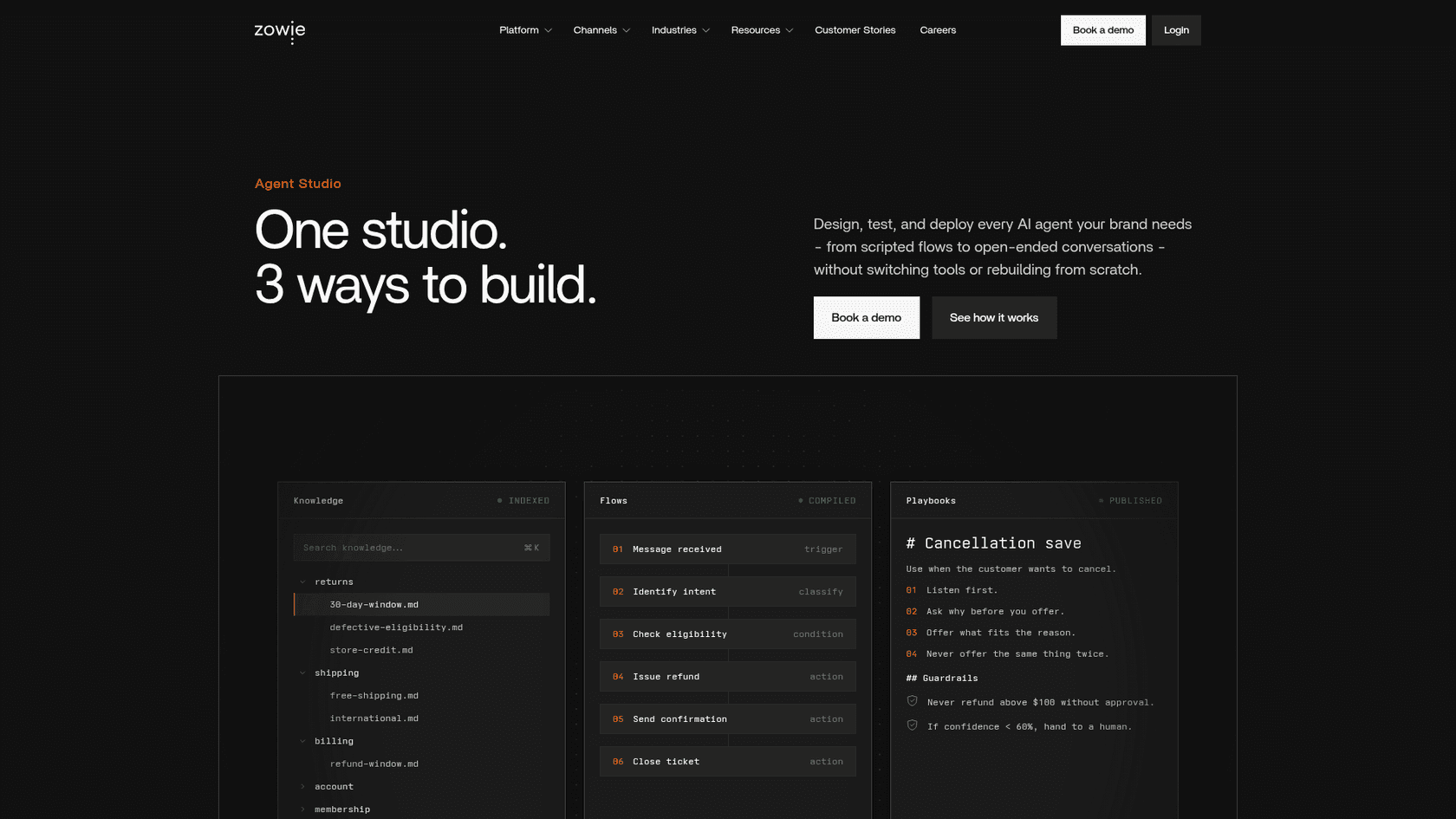
Zowie started out in ecommerce support and has moved upmarket. Its homepage now describes 100M conversations a year across banking, insurance, telecom and commerce. Its standout idea is a separate Decision Engine: the language model reads the customer, but your rules decide the refund.
How it compares to DigitalGenius
DigitalGenius and Zowie both care most about getting the action right. Zowie's answer is architectural: business logic runs deterministically outside the model, so a refund flow behaves the same every time. Agent Studio gives you knowledge, flows and playbooks in one place, which suits teams that want to own the logic. The Zowie alternatives list has more like it.
Pros
- Deterministic execution for sensitive actions like refunds and eligibility checks.
- One agent across voice, chat, email and app.
- Supervisor scores every conversation and logs the reasoning behind each decision.
- REST API, A2A and SDKs to connect other agents you already run.
Cons
- No public pricing; the old pricing page now returns a 404.
- Positioning has shifted toward banking, insurance and telecom, so ecommerce-specific integrations aren't front and centre on current pages.
- No free trial.
Pricing
Zowie doesn't publish pricing, and its homepage CTAs are "Book a demo" and "Talk to us". My Zowie pricing post tracks what's known.
Verdict: Pick Zowie if your biggest fear with DigitalGenius was an AI refunding the wrong order. Skip it if you're a mid-size Shopify brand that wants to see a price and start this week.
6. Ada
Best for: high-volume enterprise ecommerce brands that want a mature platform and a guided rollout.
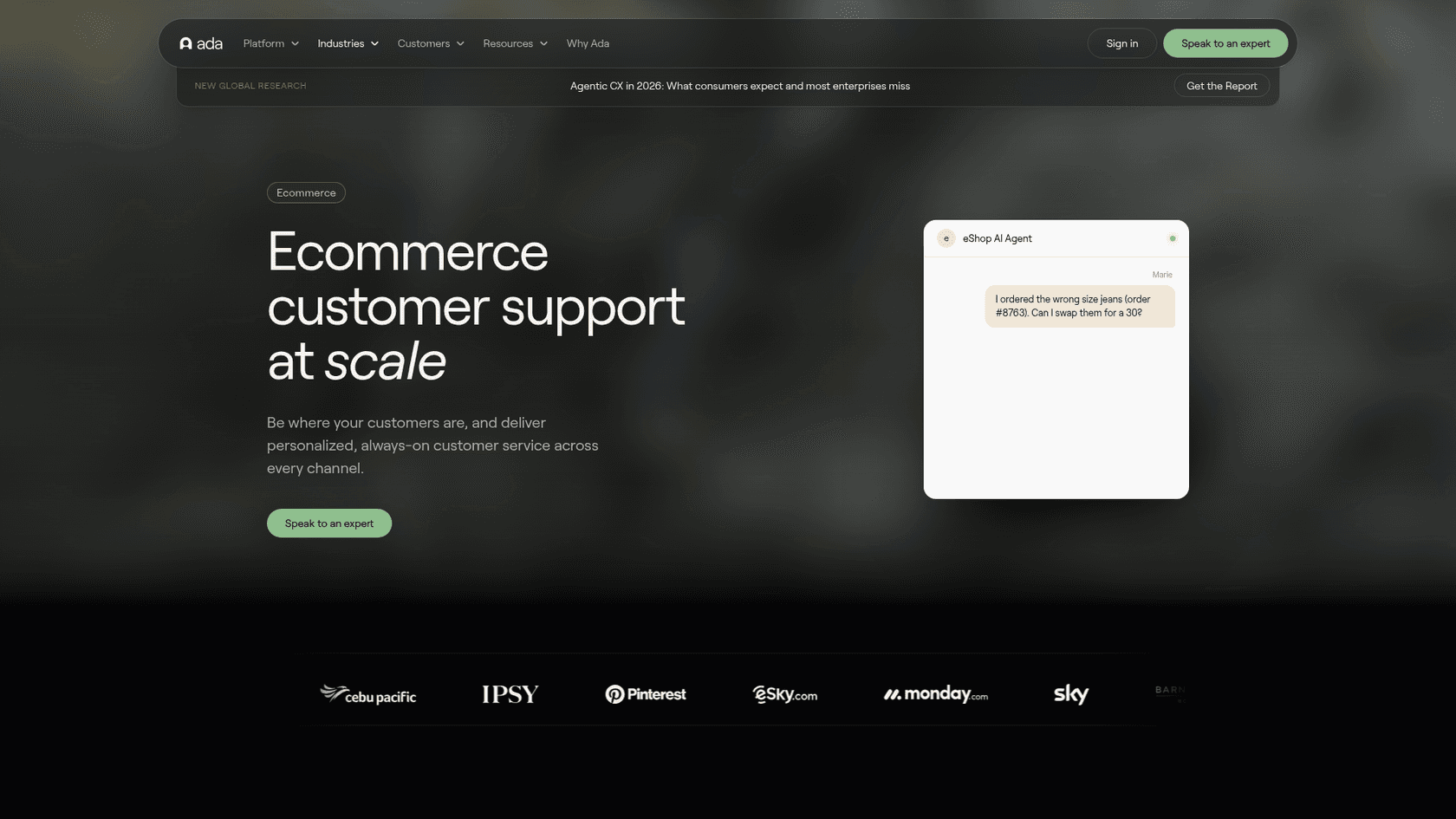
Ada is an enterprise AI customer service platform used by 350+ global enterprises. For ecommerce it handles product questions, promotions, order tracking, returns and exchanges, and it supports customers in 60 languages across chat, email, SMS and more.
How it compares to DigitalGenius
Ada and DigitalGenius sell in a similar way: custom quote, guided rollout. Ada's Playbooks turn your SOPs into automated workflows for returns, order tracking and refunds, so you describe the policy and the agent follows it. It's broader than DigitalGenius (not retail-only), which helps if you sell across categories.
"Used to work for a company paying ~300k+ for Ada.cx, it's expensive [...] I would stick with Zendesk messaging and answer bot."
Pros
- 60 languages and an always-on agent across chat, email and SMS.
- Playbooks for returns, tracking and refunds.
- Built for peak-season scale.
Cons
- Pricing is quote-only through a consultation form.
- Its demo form asks for annual ticket volume, a sign it's pitched at large teams.
- Same vendor-dependence trade-off as DigitalGenius.
Pricing
Ada doesn't publish prices; its pricing page is a book-a-consultation form. My Ada pricing breakdown covers what buyers report.
Verdict: Pick Ada if you're enterprise-sized and you like DigitalGenius's guided model but want a broader platform. Skip it if opaque pricing was one of your reasons for leaving. The Ada alternatives list is the next stop.
7. Zendesk AI agents
Best for: brands already on Zendesk that want native AI and are fine paying per resolution.
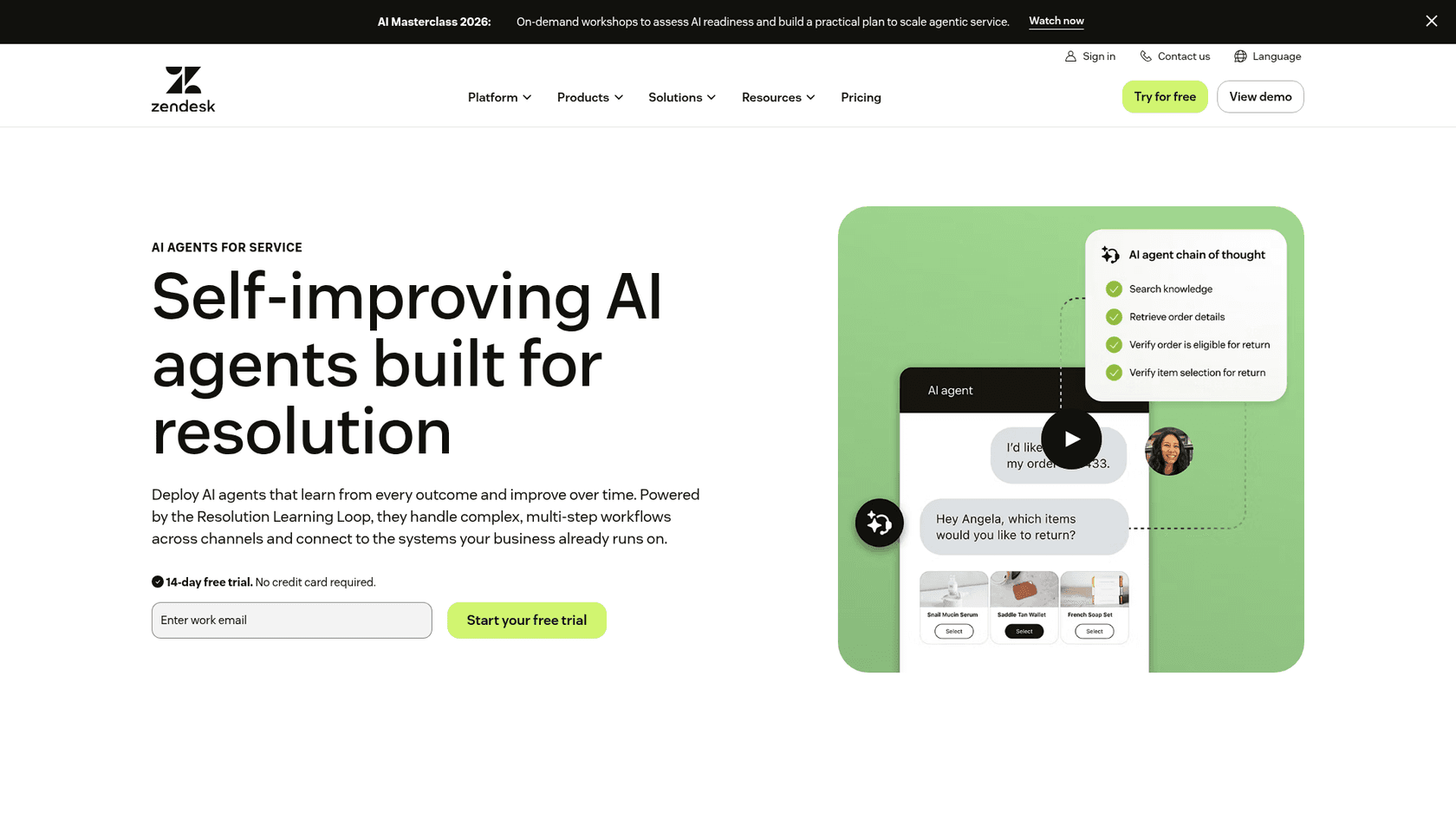
Zendesk AI agents are included in every Suite and Support plan, billed by automated resolution. Zendesk says they can resolve up to 80%+ of service issues, support 80 languages, and work across email, messaging and voice.
How it compares to DigitalGenius
If DigitalGenius sits on your Zendesk today, the native agents are the zero-new-vendor option. The trade is how you pay: DigitalGenius quotes privately, Zendesk charges per resolution on top of seats. Zendesk also now sells Forethought AI agents, which it says work on other helpdesks too. My Zendesk AI agents guide covers setup.
Pros
- Native to Zendesk, so no extra integration to maintain.
- 80 languages with automatic switching.
- Action builder connects multi-step flows to third-party systems.
- 14-day free trial.
Cons
- Two bills that both grow: seats and resolutions.
- Ecommerce actions depend on what you build in Action builder.
- Advanced features like Intelligent Triage sit on the sales-led Enterprise plan.
Pricing
From Zendesk's pricing page, billed annually per agent: Support Team $19, Suite Team $55, Suite Professional $115, Enterprise by quote. Automated resolutions cost $1.50 each committed or $2.00 pay-as-you-go. The cost table above shows what that means at 2,000 resolutions a month.
Verdict: Pick it if you're all-in on Zendesk and resolution volume is modest. Skip it if you expect high automation, because per-resolution costs climb with success. The Zendesk AI alternatives list compares the add-on options.
8. Sierra
Best for: large retail brands that want a vendor-built, premium agent and have the budget for it.
Sierra builds AI agents for big consumer brands. Its retail page lists Gap Inc., The North Face, Wayfair, ASOS and Casper among its logos, and covers product recommendations, order management (tracking, warranty claims, refunds, returns to exchanges) and account changes.
How it compares to DigitalGenius
Sierra is the closest match to DigitalGenius's done-for-you model, aimed even higher up the market. You get a vendor team, outcome-based pricing and enterprise compliance. You don't get a public price or a self-serve start. My Sierra AI overview covers the platform in more depth.
Pros
- Outcome-based pricing, so you pay for results the agent delivers.
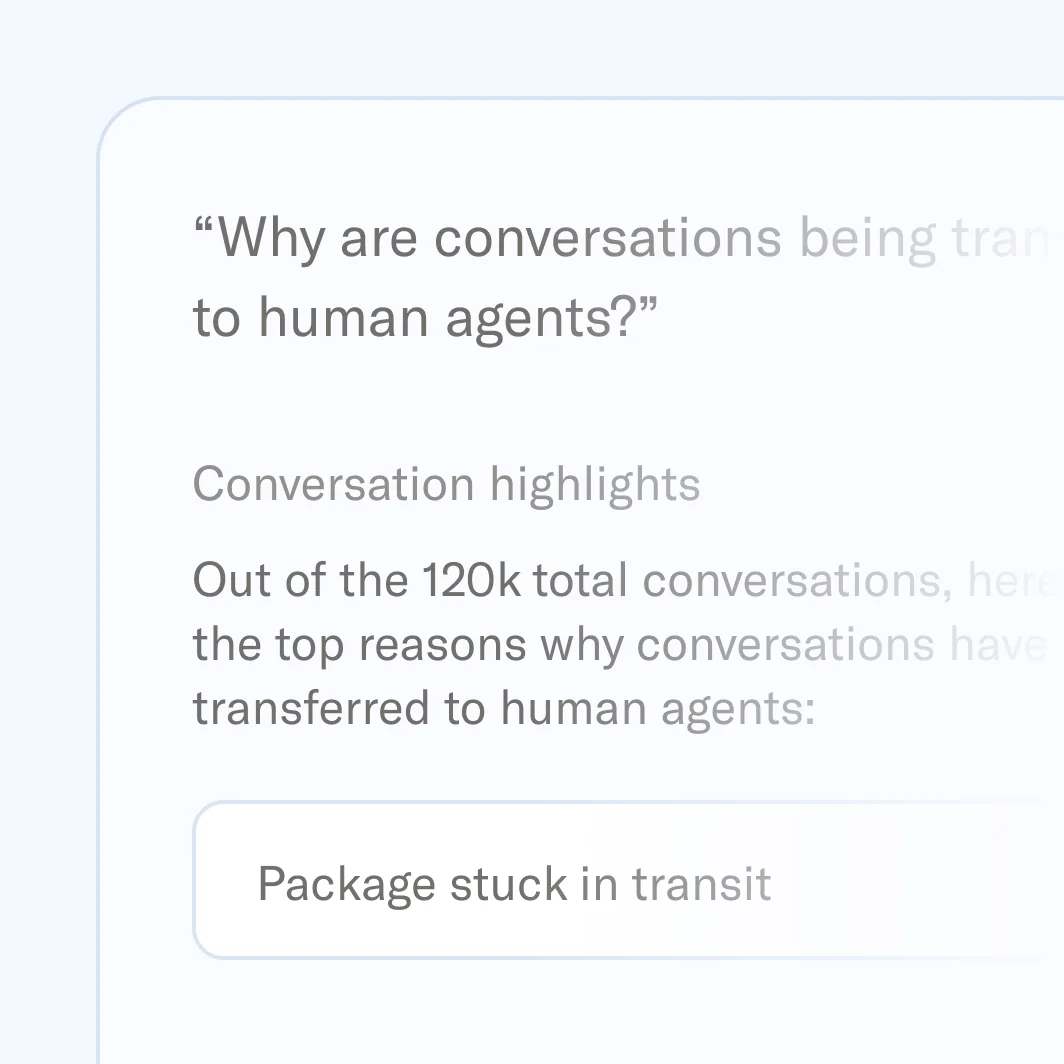
- Voice and chat, with Insights that explain why conversations reach humans.
- SOC 2, ISO 27001 and GDPR named on its site.
- Strong retail customer list.
Cons
- No public pricing.
- Built for large brands; mid-size teams will find it heavy.
- Like DigitalGenius, you rely on the vendor to build and change things.
Pricing
Sierra says you "only pay for the value Sierra delivers with outcome-based pricing", but publishes no rate. My Sierra pricing post covers what's known.
Verdict: Pick Sierra if you want DigitalGenius's model at a bigger scale. Skip it if you're leaving DigitalGenius to get more control or more price visibility. The Sierra alternatives list goes wider.
How to test a DigitalGenius alternative before you switch
Every vendor above will show you a great demo. The only test I trust is your own tickets, because DigitalGenius customers have years of real WISMO, returns and edge cases in their helpdesk already.
Here's why I'm strict about this. On one trial with a German jewelry ecommerce brand on Zendesk and Shopify (about 1,000 tickets a month, eight languages), eesel's cross-check against 100 real tickets showed 93% triage accuracy and 100% spam detection. Drafts on returns and refunds were useful 93.8% of the time. But only 12% of drafts went out unedited, and 7% had a factual error. Without testing on real history, nobody would have known which half of that picture to plan around.
Another buyer, a CX lead at a DTC supplements brand doing about 7,000 Gorgias tickets a month, put the bar plainly on a sales call with eesel: they needed "an AI who is only handling the tickets that it's confident to handle and all the other ones, leave them alone." That's the right test to run on every finalist.
A practical plan:
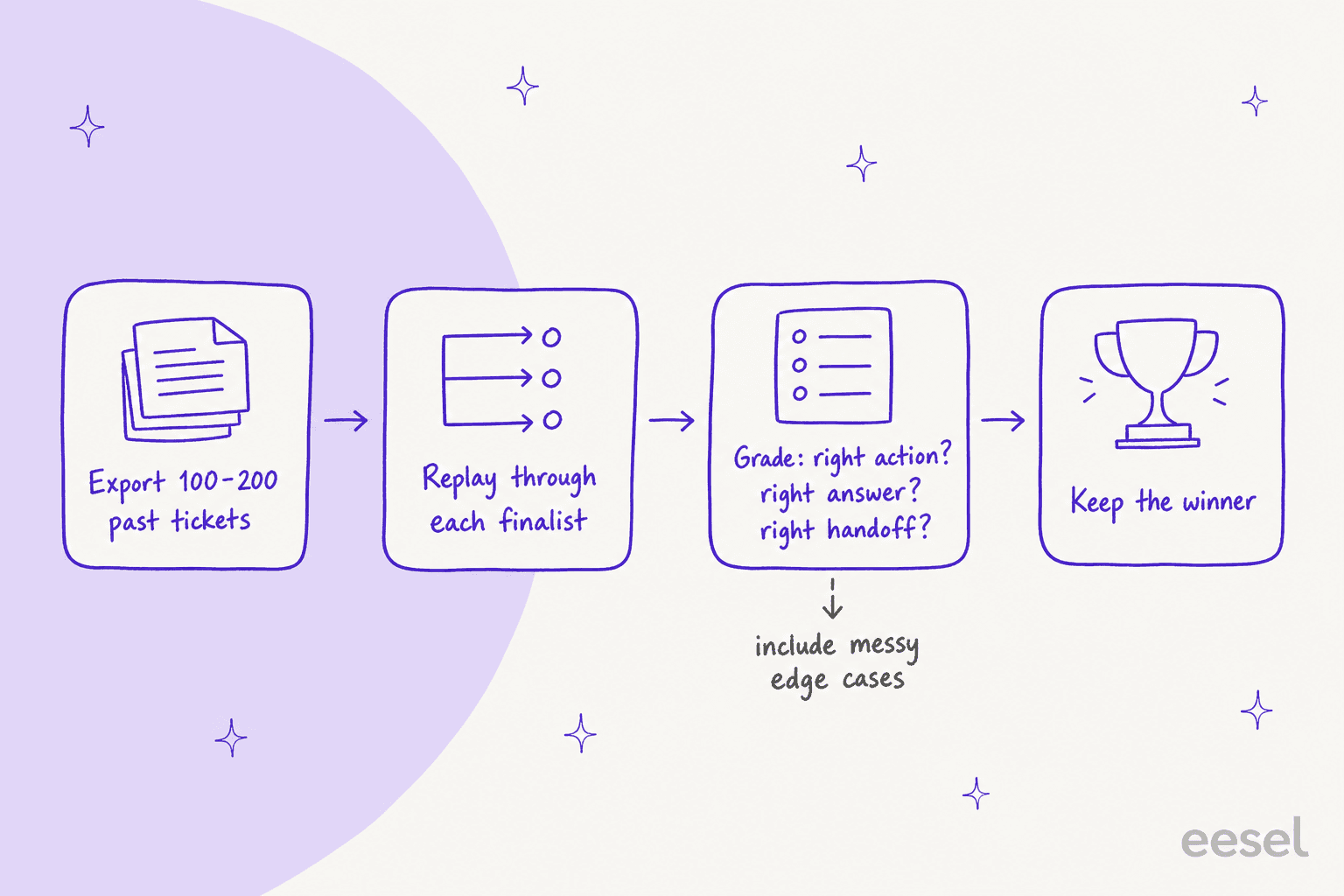
- Export 100 to 200 recent tickets, weighted to your top intents (WISMO, returns, order edits, refunds), plus 20 or so ugly ones: angry customers, split shipments, orders past the return window.
- Replay them through each finalist. eesel does this with built-in simulation. For vendor-led tools, ask for a pilot on your data, not a scripted demo.
- Grade three things per ticket: right action, right answer, right handoff. A polite wrong refund is worse than a handoff.
- Price the winner on your real volume using the table above, not the vendor's headline rate.
Watch for confident wrong answers in particular. My guide on AI hallucinations in support covers what to look for, and the WISMO automation guide covers the order-status flows you'll test most.
Try eesel
If DigitalGenius sits on your Zendesk, Gorgias or Freshdesk today, eesel can take over the action layer without touching your helpdesk. It looks up the Shopify order, answers in the customer's language, and hands refunds to your team with the context already written up. STIL Classics uses it to prepare every Gorgias ticket with the order already checked, and Nordbutiker runs one bot per brand across four countries on Zendesk.
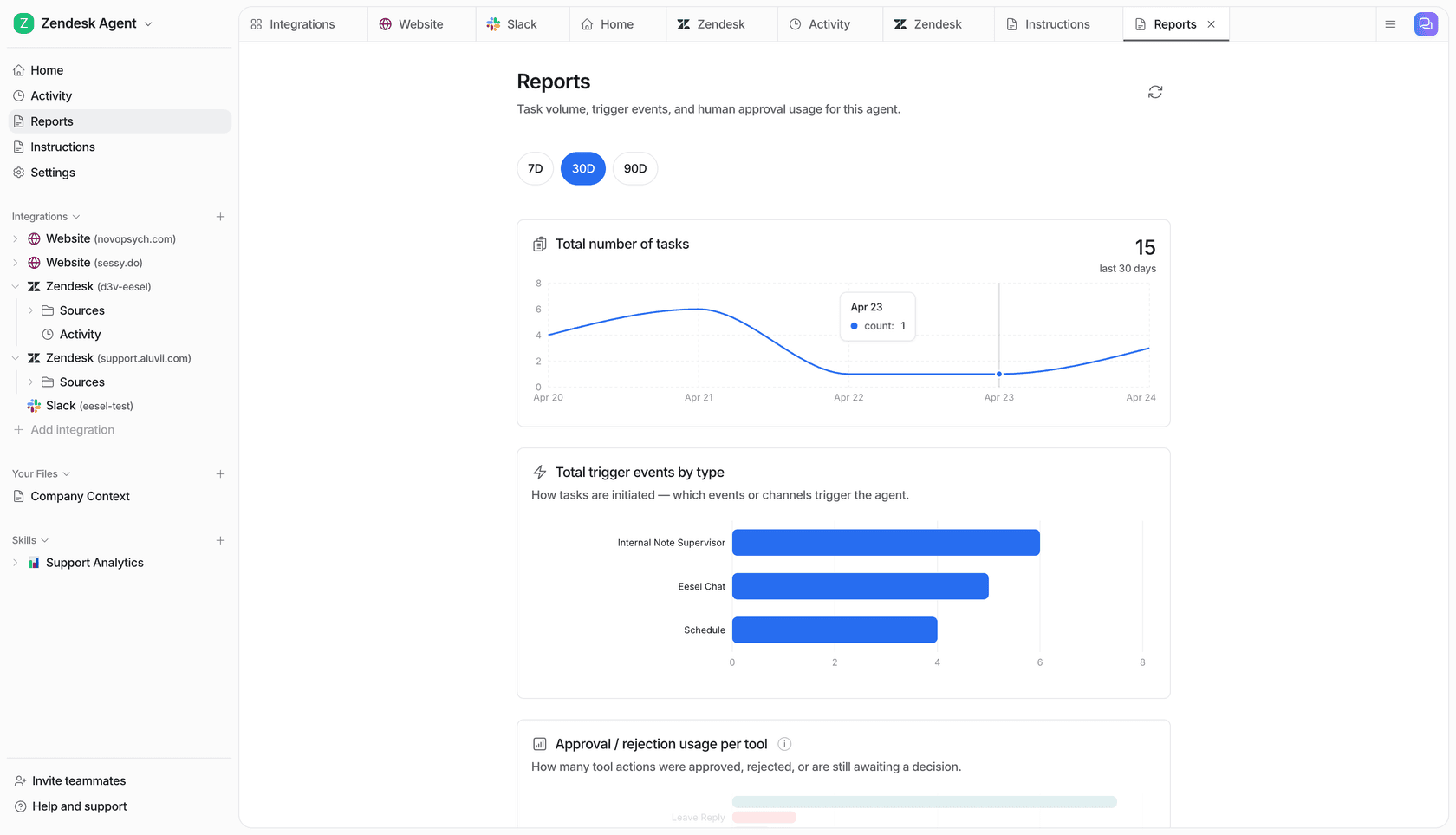
Replay your past tickets first, see where it would have helped, then switch it on. Plans start at $299/month, and the free plan includes 100 credits.