OpenCX alternatives in 2026: 9 AI support agents to compare before you switch

Rama Adi

Katelin Teen
Last edited October 19, 2026

Why teams look for OpenCX alternatives in 2026
I build integrations at eesel, so a lot of my day goes to reading other people's API docs and working out what an "AI agent for your helpdesk" really does after it's been let inside the helpdesk. Before writing this I did the thing a buyer would do, which was open a fresh ChatGPT chat and ask which tools to compare with OpenCX. It ran three searches and checked open.cx itself, then it came back with Zendesk AI agents, Ada, Decagon, Forethought, Sierra, Gorgias, eesel, DigitalGenius and Lorikeet. I've kept that list for this post.
One thing it flagged is worth sorting out before anything else: there are two products called OpenCX. This post is about the YC-backed platform at open.cx, which now calls itself Open. IntiCo sells an unrelated product under the same name, so check the domain when you read reviews.
What OpenCX does well
I want to be fair to it first, since Open is a strong product and its offer is more buyer-friendly than most.
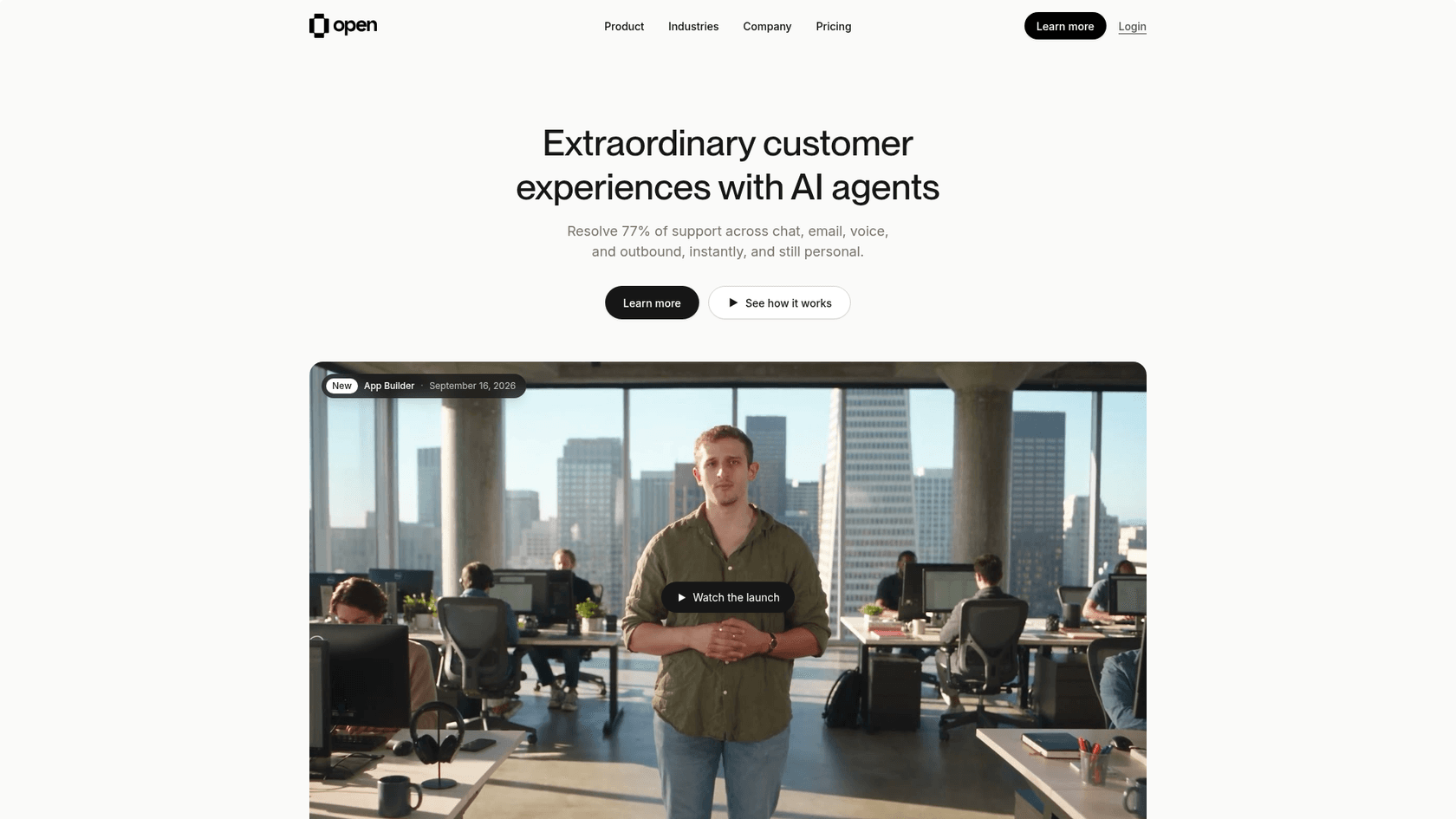
- One agent across every channel. Its homepage describes one AI engine running across voice, chat, email, WhatsApp, Slack and social, and claims it resolves 77% of support on average.
- It sits on your helpdesk, or replaces it. The helpdesks page lists Zendesk, HubSpot, Freshdesk, Salesforce and Twilio Flex, plus Open's own AI-native helpdesk with unlimited seats.
- Voice is built in. Open runs its own telephony stack and plugs into Twilio, RingCentral, Aircall, Dialpad, Five9 and Genesys without number porting.
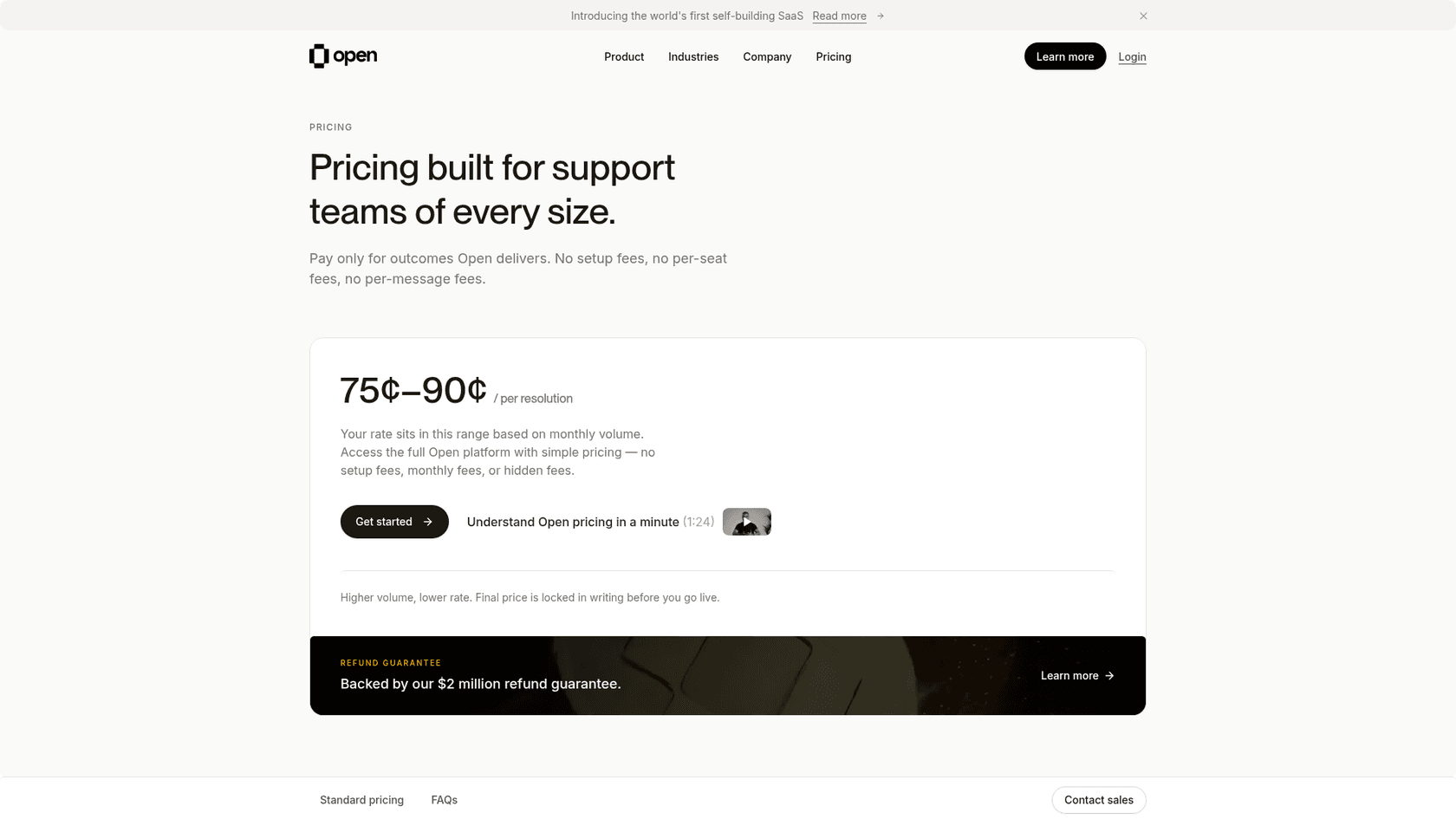
- A published price. The pricing page says 75¢ to 90¢ per resolution, with no setup, seat or per-message fees.
- Named enterprise customers. Open lists MoneyGram, Mollie, TicketSwap and FareHarbor, and its customer stories say FareHarbor automates 87% of support for 23,000+ operators.
On security, the homepage names SOC 2 Type II and ISO 27001, and it calls Open GDPR-aligned as well as HIPAA- and PCI-ready. That is a lot of ground for a company that went through Y Combinator in Winter 2024 and lists $7M raised on its G2 profile.
The $2 million refund changes when you should switch
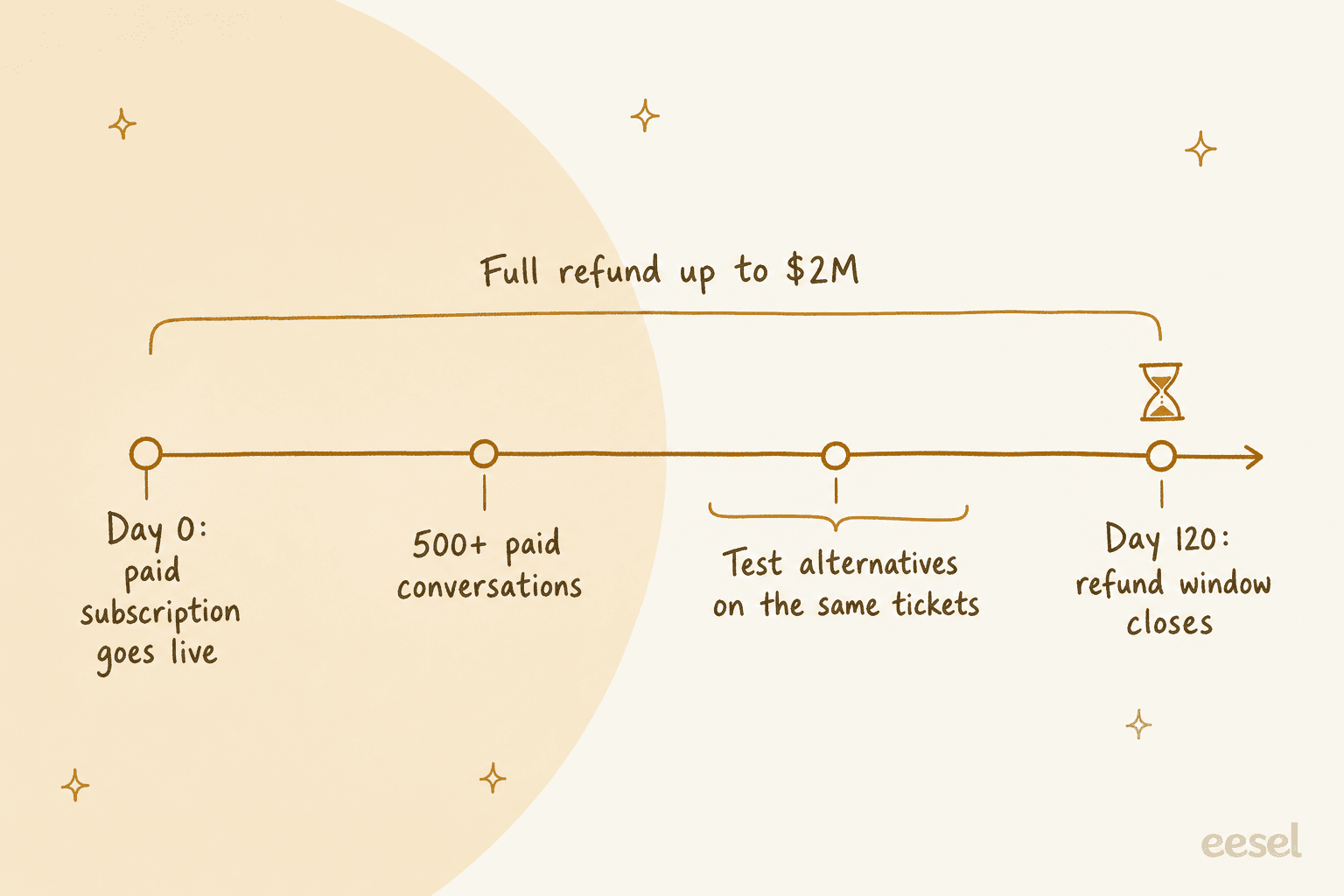
Most comparisons skip over Open's guarantee page, and I think that's a miss. New customers who apply within their first 120 days of a paid subscription, and run Open on at least 500 paid conversations, can ask for every dollar of Open spend back, up to $2 million, with no metric to hit.

It's a generous offer, and there's a practical side to it too. If you're on Open and not sure yet, the cheapest time to compare is before day 120, because after that, leaving is just an ordinary vendor switch.
Where teams start looking elsewhere
When I think about what a buyer would actually raise, it comes down to four reasons, and "the product doesn't work" isn't one of them.
- The bill rises with success. You pay per resolved ticket, so the better the AI gets, the more you pay. At Open's claimed 77% rate on 5,000 tickets a month, that's 3,850 resolutions, or roughly $2,890 to $3,470 a month. Seasonal spikes scale the bill the same way.
- "Resolved" is a contract term. Open's FAQ says a resolution is a ticket closed end-to-end without a human, where the customer confirms or doesn't reopen it, and that the exact definition is agreed in writing during onboarding. That's fair, but it's one more thing to negotiate.
- It's a whole platform. Open now sells six agents (inbound, outbound, assist, QA, customer understanding and an app builder), plus its own helpdesk and voice stack. If you only want an AI teammate inside your existing queue, that's more surface than you need.
- A thin public review trail. Open's G2 profile shows
4.8/5from2reviews, and G2 says there aren't enough reviews to give buying insight. For an enterprise security or procurement review, that can slow things down.
"It was extremely easy to navigate and implement"

The positive reviews are real, there just aren't many of them yet. I saw this come up on one eesel cost analysis for a German jewellery ecommerce brand running Zendesk and Shopify, where two questions ended up changing the decision: how per-resolution pricing behaves at Black Friday volume, and whether a vendor's quoted resolution rate counts auto-closed spam. In that brand's inbox, 22% of tickets were spam. I'd put the same two questions to Open and to every vendor below.
How I picked these OpenCX alternatives
The competitive set came from ChatGPT's searches. From there I kept any tool that cleared these four bars:
- Does Open's core job. A customer-facing AI agent that resolves tickets, not just a search box or a copilot.
- Works with a helpdesk Open customers use. Zendesk, Freshdesk, HubSpot, Salesforce or Gorgias, or replaces it with its own.
- Current primary-source facts. I checked each vendor's own pricing and product pages on October 19 and 20, 2026. Prices here come only from those pages.
- A clear billing unit. Per ticket, per resolution, per automated interaction, or a custom quote. This is the biggest difference between them.
ChatGPT framed the choice pretty much the way I would, as a complete support platform, or an AI layer that works alongside your existing helpdesk. What makes Open unusual is that it's both, while most alternatives pick one side.
OpenCX alternatives compared at a glance
I put Open in the first row for reference. Where you see "Not published", it means the vendor's own pages that I checked don't state it.
| Tool | Best for | Pricing model | Starting price (published) | Helpdesk | Voice | Own helpdesk option | Security named | Free trial | Languages |
|---|---|---|---|---|---|---|---|---|---|
| OpenCX (Open) | Teams wanting one AI platform across every channel | Per resolved ticket, volume-based | $0.75 to $0.90 per resolution | Zendesk, HubSpot, Freshdesk, Salesforce, Twilio Flex | Yes, own telephony | Yes | SOC 2 Type II, ISO 27001, GDPR-aligned | 120-day refund guarantee | 15 listed on G2 |
| eesel | Teams keeping their helpdesk on a flat price | Monthly credit plans, 1 ticket or chat = 1 credit | $299/mo for 500 credits | Zendesk, Freshdesk, Gorgias, Help Scout, Front, HubSpot, Salesforce | No | No | EU or US data residency, BAA on Enterprise, SOC 2 Type II underway | Yes, 100 free credits | Replies in the customer's language |
| Lorikeet | Regulated fintech and health teams | Annual plan plus per-outcome rates | $2,100/mo (Start, annual) | Zendesk, Salesforce, HubSpot | Yes | No | Compliance-focused, list not checked | Yes, on Start | Not published |
| Zendesk AI agents | Teams all-in on Zendesk | Agent seats plus per automated resolution | $55/agent/mo (Suite Team) plus $1.50 per resolution | Zendesk | Yes | Zendesk itself | Not listed on pages checked | Yes, 14 days | 80 |
| Decagon | Enterprises building agents in plain-language procedures | Per conversation or per resolution, custom quote | Not published | Zendesk, Salesforce and other systems of record | Yes | No | Not listed on pages checked | No, demo only | Not published |
| Sierra | Large consumer brands, voice-heavy | Outcome-based, custom quote | Not published | Your CRM and order systems | Yes | No | SOC 2, ISO 27001, ISO 42001, HIPAA, GDPR | No, demo only | Not published |
| Ada | High-volume, multilingual enterprise | Custom quote | Not published | Zendesk, Salesforce and others | Yes | No | HIPAA, SOC 2, GDPR, PCI DSS, AIUC-1 | No, demo only | 60 |
| Forethought | Zendesk enterprises wanting a multi-module suite | Platform fee plus outcome-based, custom quote | Not published | Zendesk plus 70+ connectors | Yes | No | SOC 2 Type II, HIPAA, GDPR, CCPA | No, Proof of Value | Not published |
| Gorgias AI Agent | Shopify brands on Gorgias | Helpdesk plan plus per automated interaction | $40/mo (Starter, 30 interactions) | Gorgias | Not published | Gorgias itself | GDPR / CCPA | Yes | Not published |
| DigitalGenius | Large retail brands wanting a done-for-you build | Custom quote | Not published | Zendesk, Gorgias, Kustomer, Freshdesk, Salesforce and more | Yes | No | Not published | No, demo only | 16 listed on G2 |
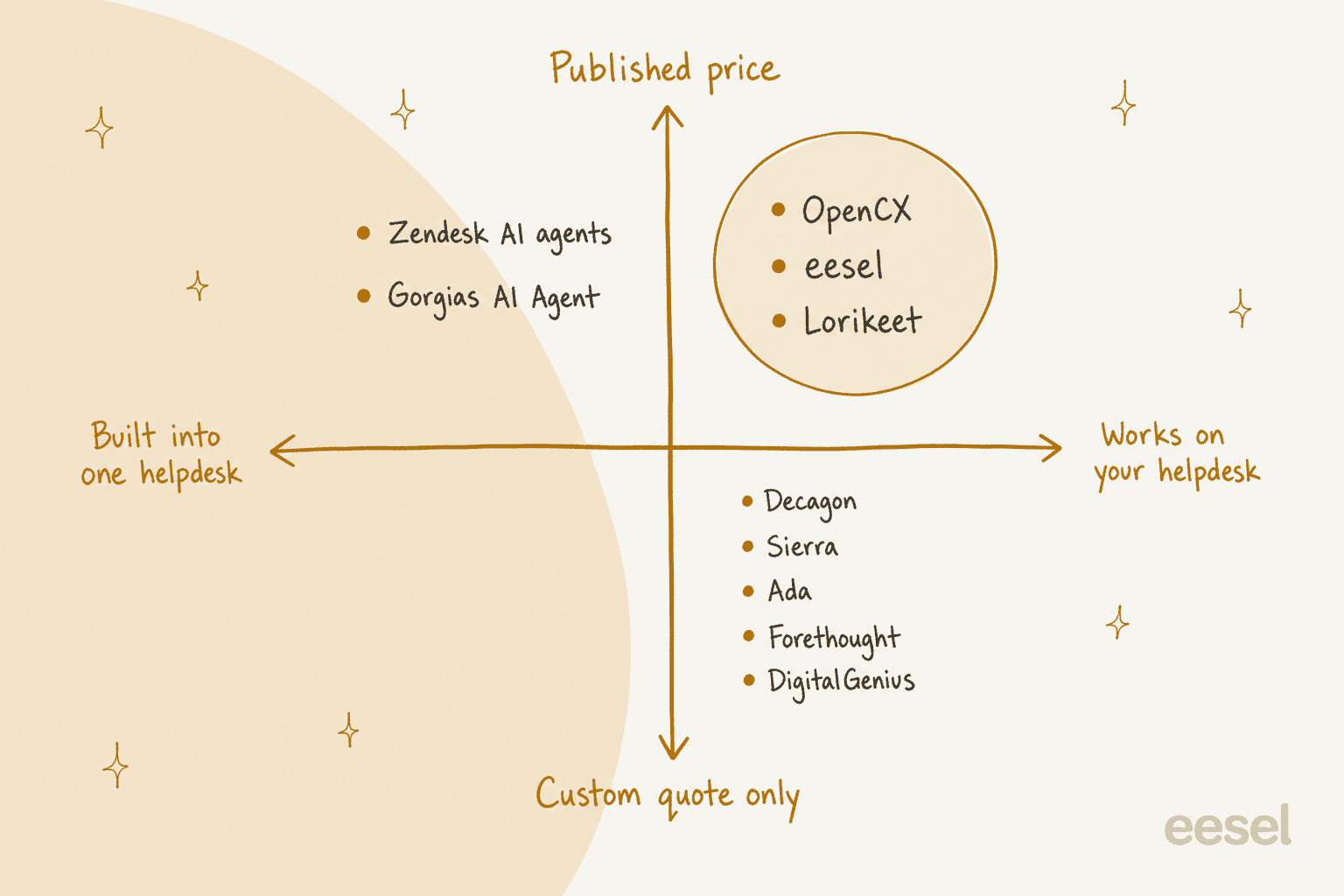
What surprised me while building this table is that only three tools work on your existing helpdesk and publish a price, and Open is one of those. So if price visibility was part of why you picked Open, the realistic shortlist is a short one.
What OpenCX alternatives actually cost
Open and Zendesk bill per resolution, and so does Lorikeet. eesel bills every ticket the AI works on, resolved or not, while Gorgias bills per automated interaction. Same month, very different bills depending on the unit, which is why I built a small calculator. Put in how many tickets you'd hand the AI and the share you expect it to resolve.
Move the sliders around for a minute and a pattern shows up. At a low resolution rate, per-resolution pricing is the safer bet, since the AI's misses cost you nothing. At 2,000 to 5,000 tickets a month a flat plan pulls ahead once the AI resolves somewhere between 40% and 60%, and in your busiest months the gap gets wider. For small queues the crossover comes later. Neither model is wrong here, so pick the one that matches the rate you can actually prove on your own tickets (the test plan at the end is for exactly that). My cost per resolution guide walks through the maths in more detail.
1. eesel AI
Best for: teams on Zendesk, Freshdesk, Gorgias, HubSpot or Salesforce who want an AI teammate inside the queue they already run, on a flat monthly price.
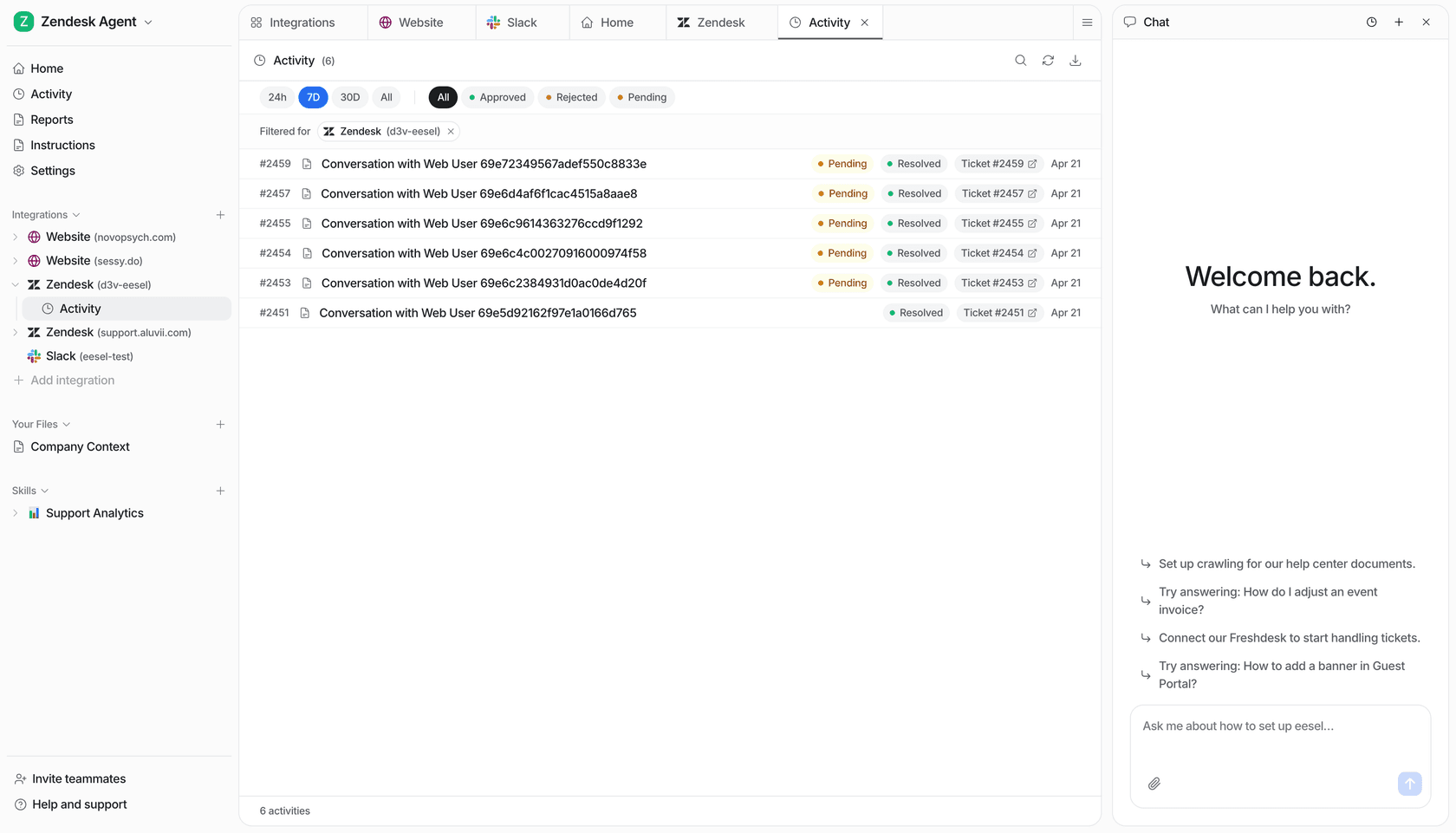
eesel is an AI helpdesk teammate. You invite it into your helpdesk and it reads your past tickets, help center and macros, then it starts answering, drafting or tagging, depending on how you've set it up. Its instructions are written in plain language, things like how to handle refunds and when to escalate, and also what tone to use.
How it compares to OpenCX
Both sit on top of your helpdesk with no migration, including Salesforce through eesel's Salesforce integration. Where they differ is scope, and billing. Open is a full platform that comes with its own helpdesk, voice and outbound. eesel stays focused on being a teammate inside the helpdesk you already pay for, and it bills on a flat credit plan rather than per resolution. If I were talking to an Open customer, the part I'd show them first is the simulation: eesel replays your setup against your own past tickets and shows where it would have helped before any customer sees a reply.
A couple of eesel customer stories line up well with Open's fintech and multi-product customers. smava, a German loan comparison site, has eesel handle about 27,000 Zendesk tickets a month across two brands, categorising about 14,600 and drafting about 15,300 replies in German. SE Ranking runs one agent per product for its three products on Zendesk, and eesel answered about 2,100 live chats first in a month.
Pros
- Keeps your helpdesk, with a native Zendesk integration plus Freshdesk, Gorgias, HubSpot and Salesforce.
- Simulation on historical tickets before go-live.
- Flat monthly price with unlimited agents and seats, so a busy month doesn't change the bill unless you choose overage.
- Free plan with 100 credits to test every integration.
Cons
- No phone or voice agent. If calls are a big share of your volume, Open, Sierra or Lorikeet fit better.
- You pay for every ticket the AI works on, so at a low resolution rate the cost per resolution is higher than Open's.
- SOC 2 Type II is still underway, while Open already names it.
Pricing
From eesel's pricing page: Free gives 100 credits. Teammate plans start at $299/month for 500 credits and step up to $849 for 2,000 and $1,749 for 5,000. One ticket or chat counts as one credit, however long it runs. Overage is $0.80 a credit with a cap you set. Enterprise (custom) adds SSO, a HIPAA BAA and security review support.
Verdict: Pick eesel if you want to keep your helpdesk and pay a price that doesn't climb with every resolution, without taking on a whole platform. Skip it if voice is central. My eesel vs Zendesk AI post covers the Zendesk trade-offs.
2. Lorikeet
Best for: fintech and health companies that want a vendor-built agent across phone, chat, email, SMS and WhatsApp, with compliance as the headline.
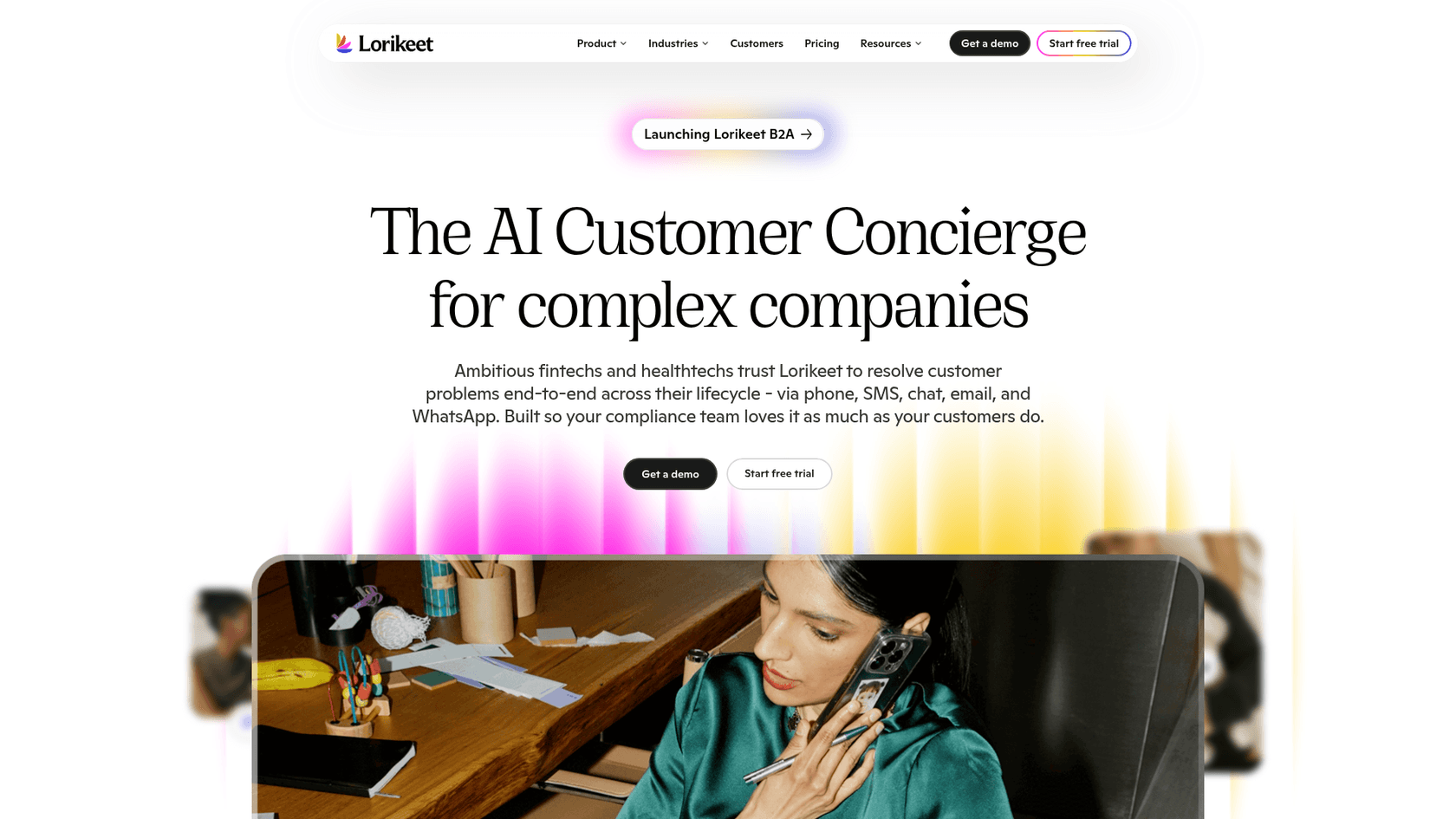
Lorikeet pitches itself as an AI customer concierge for complex companies. It works inside Zendesk, Salesforce and HubSpot and takes actions through your own APIs. Lorikeet also says you test it on your real tickets before a customer sees it, and every plan comes with forward-deployed support.
How it compares to OpenCX
Of everything on this list, Lorikeet is the closest match to Open. Both sit on your helpdesk and run voice, they both publish per-resolution rates, and each leans on a vendor team for setup. Open's customer list has payments names like Mollie and MoneyGram, and Lorikeet's homepage leads with fintech and healthtech. Where they split is the entry ticket: Open's page lists no monthly fee, while Lorikeet's Start plan is $2,100 a month, paid annually. My Gradient Labs vs Lorikeet post compares it with another regulated-industry specialist.
Pros
- Published per-outcome rates for triage, resolution and QA, not just resolution.
- Voice priced separately and openly.
- Built for compliance-heavy industries.
- Free trial on the Start plan.
Cons
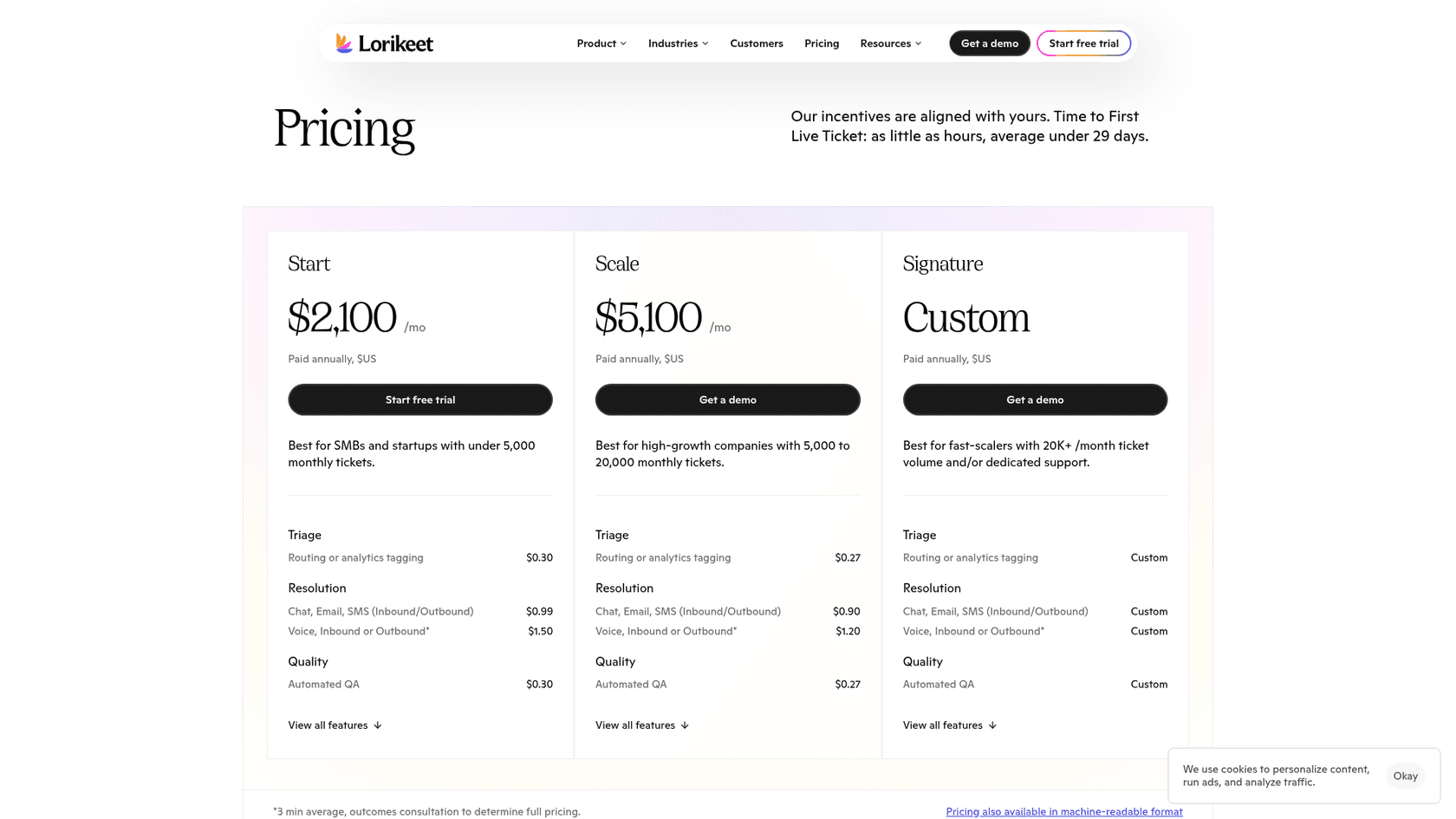
- A $2,100 monthly floor on the entry plan, billed annually.
- Average time to first live ticket is under 29 days by Lorikeet's own count, slower than a self-serve tool.
- No own helpdesk option if you want to consolidate.
Pricing
From Lorikeet's pricing page, paid annually: Start $2,100/mo (under 5,000 tickets) with $0.30 per triage, $0.99 per chat, email or SMS resolution, $1.50 per voice resolution and $0.30 per automated QA. Scale $5,100/mo (5,000 to 20,000 tickets) drops those to $0.27, $0.90, $1.20 and $0.27. Signature is custom. My Lorikeet pricing breakdown goes deeper.
Verdict: Pick Lorikeet if you're a regulated fintech or health team that likes Open's model but wants a specialist. Skip it if you're under a few thousand tickets a month, because at that size the floor is hard to justify.
3. Zendesk AI agents
Best for: teams already on Zendesk that want native AI and don't mind paying seats plus resolutions.
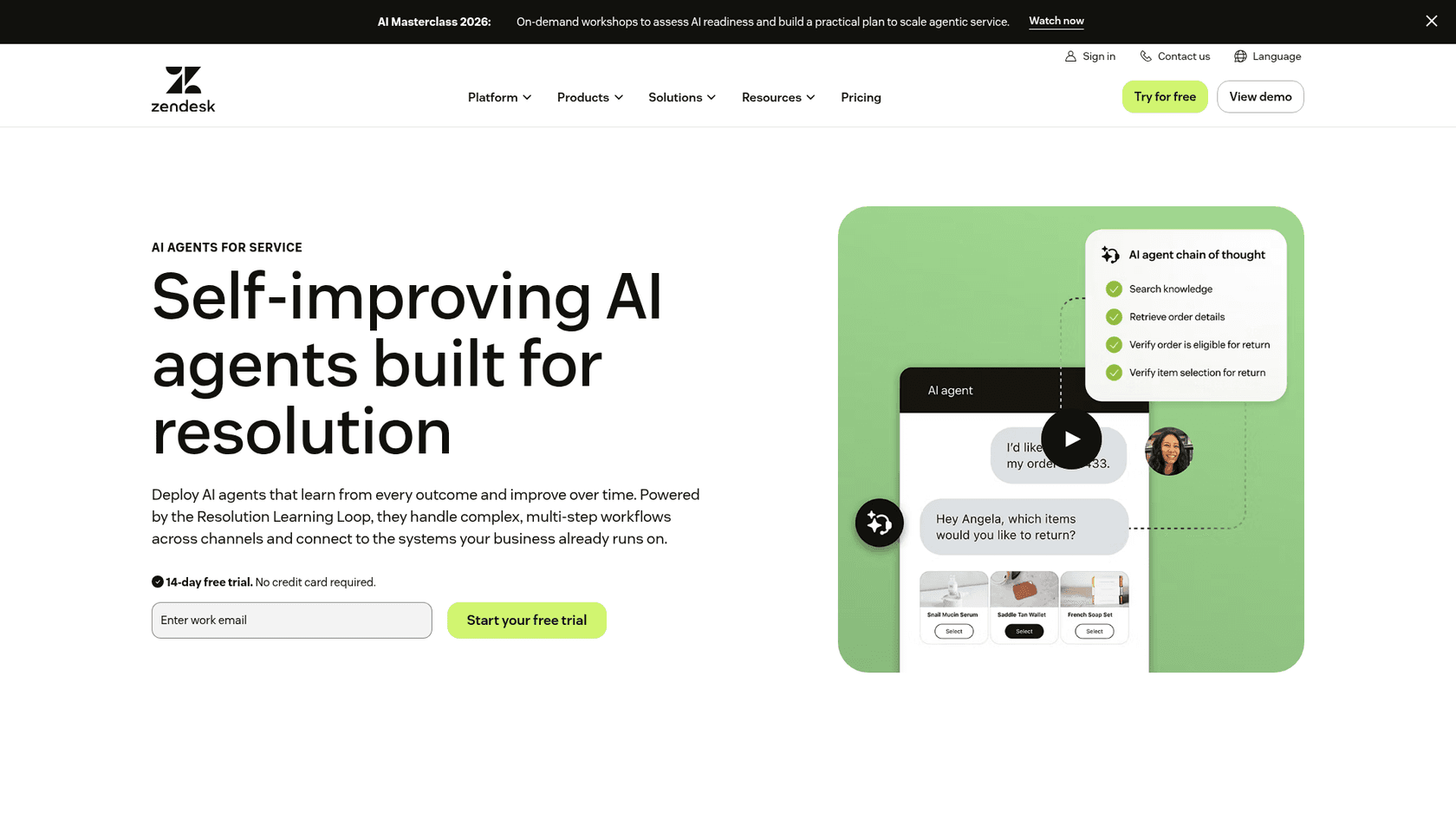
Zendesk AI agents are the agents Zendesk builds into its own product. They can handle multi-step workflows across email, messaging and voice, with support for 80 languages and automatic switching between them.
How it compares to OpenCX
Open's helpdesk page is aimed straight at Zendesk teams, with a promise to go live inside Zendesk in under an hour. From the other direction, the native agents are the zero-integration option, since there's nothing extra to connect and resolutions land on the same invoice as your seats. The catch is in the rate. Zendesk's $1.50 committed resolution is about 1.7 to 2 times Open's 75 to 90 cents, before you count seats. My Zendesk AI pricing post breaks down the tiers.
Pros
- Native to Zendesk, nothing to integrate.
- Every plan includes some automated resolutions: 5 per agent per month on Team plans, 10 on Suite Professional.
- 80 languages with automatic switching.
- 14-day free trial.
Cons
- Two bills that both grow: seats and resolutions.
- Only works on Zendesk.
- Advanced features like Intelligent Triage sit on the sales-led Enterprise plan.
Pricing
From Zendesk's pricing page, billed annually per agent: Support Team $19, Suite Team $55, Suite Professional $115, Enterprise by quote. Extra automated resolutions are $1.50 each committed or $2.00 pay-as-you-go. The Zendesk AI agents guide covers setup.
Verdict: Pick it if you're all-in on Zendesk and want one vendor. Skip it if Open's lower per-resolution rate was part of the appeal. The Zendesk AI alternatives list compares add-ons.
4. Decagon
Best for: enterprises that want to build agents from plain-language procedures and test them hard before launch.
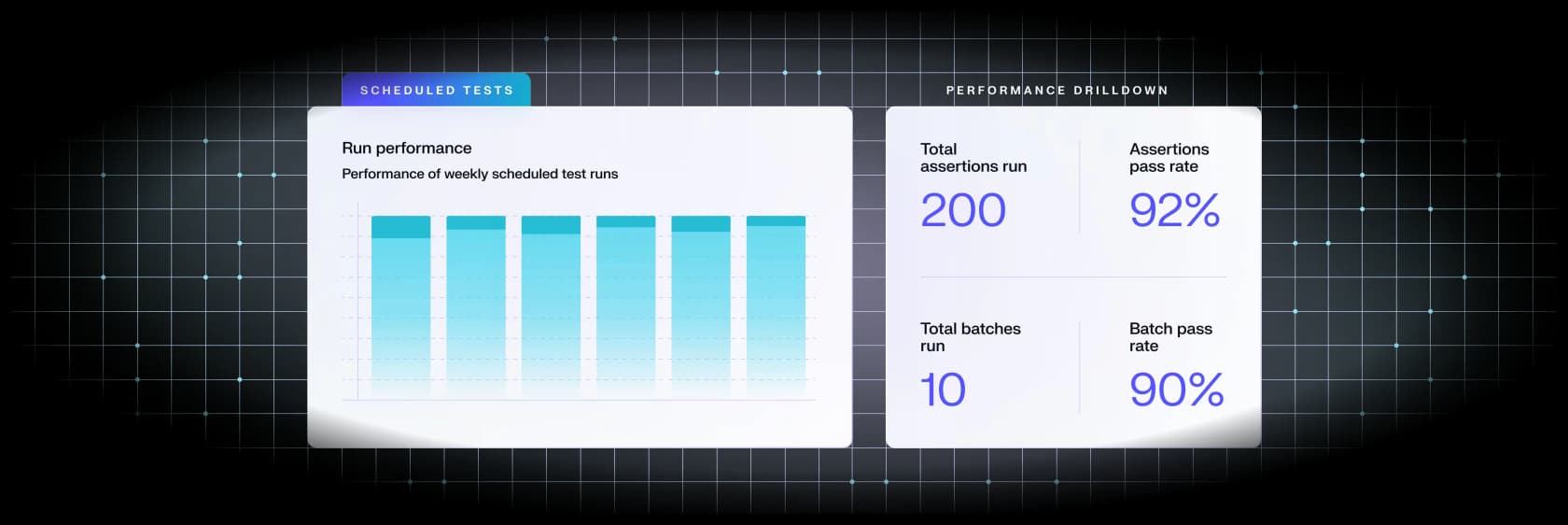
Decagon builds AI agents for voice, chat and email around Agent Operating Procedures (AOPs), which are workflows written in natural language. Simulations and QA scorecards sit around that, plus live A/B experiments.
How it compares to OpenCX
ChatGPT suggested looking at Decagon if Open struggles with multi-step work, for example changing subscriptions or coordinating several backend systems. That lines up with what Decagon puts weight on, which is testing and versioning as first-class features. Both of them call your APIs to take actions. What you trade away is price visibility, since Open tells you its rate on the page and Decagon doesn't. My Decagon vs Sierra post compares the two enterprise options.
Pros
- Workflows in plain language that non-engineers can edit.
- Simulations, QA scorecards and A/B experiments built in.
- Voice, chat, email, SMS and API channels.
- A choice between per-conversation and per-resolution billing.
Cons
- No public price and no self-serve trial.
- Built and sold for enterprise teams.
- No own helpdesk, so it doesn't replace Open's helpdesk if you use it.
Pricing
Decagon doesn't publish rates. Its own pricing post says it offers per-conversation or per-resolution pricing and that most customers choose per-conversation. My Decagon pricing post tracks what's known.
Verdict: Pick Decagon if your hardest tickets are long, multi-system workflows and you want heavy testing tools. Skip it if a published price is a must. The Decagon alternatives list goes wider.
5. Sierra
Best for: large consumer brands where voice is a main channel and compliance lists are long.
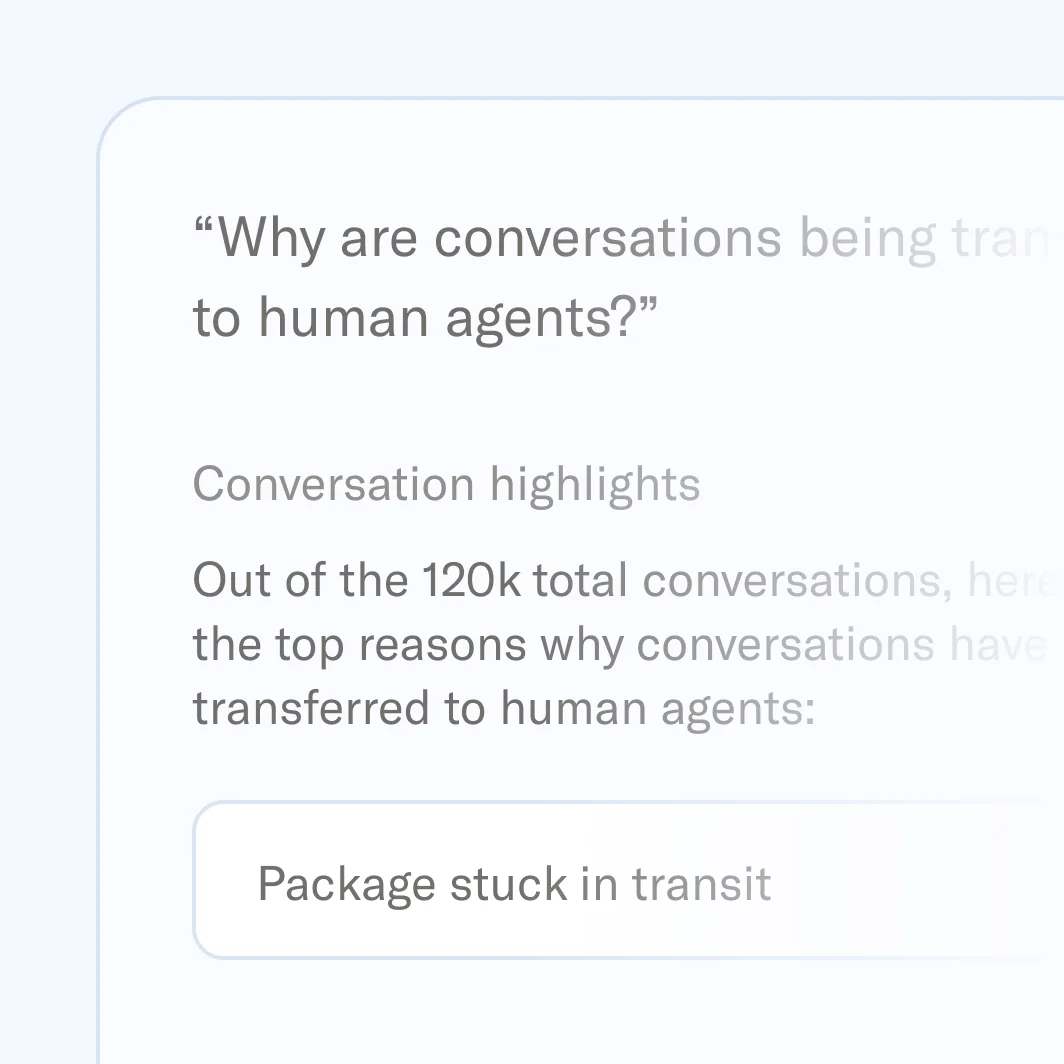
Sierra builds one agent that runs across chat, SMS, WhatsApp, email, voice and ChatGPT, and says you only pay for the value it delivers with outcome-based pricing.
How it compares to OpenCX
Sierra and Open start from the same idea, one agent on every channel that's billed on outcomes. Sierra aims higher up the market, though, and keeps its rate private. Its Insights panel explains why conversations end up with a human, which is the job Open's Customer Understanding Agent does too. Sierra's named compliance list (SOC 2, ISO 27001, ISO 42001, HIPAA and GDPR) is the longest here. My Sierra pricing post covers what's known about cost.
Pros
- One agent across six channels including voice and ChatGPT.
- Outcome-based pricing, like Open.
- The broadest named compliance list on this page.
Cons
- No public pricing.
- Built for large brands; mid-size teams will find it heavy.
- You rely on Sierra's team to build and change the agent.
Pricing
Sierra publishes no rate, and its sales team quotes on outcomes. The Sierra alternatives list compares it with similar enterprise options.
Verdict: Pick Sierra if you're a large brand and voice matters most. Skip it if you liked seeing Open's price before a call.
6. Ada
Best for: high-volume enterprise teams that serve customers in many languages.
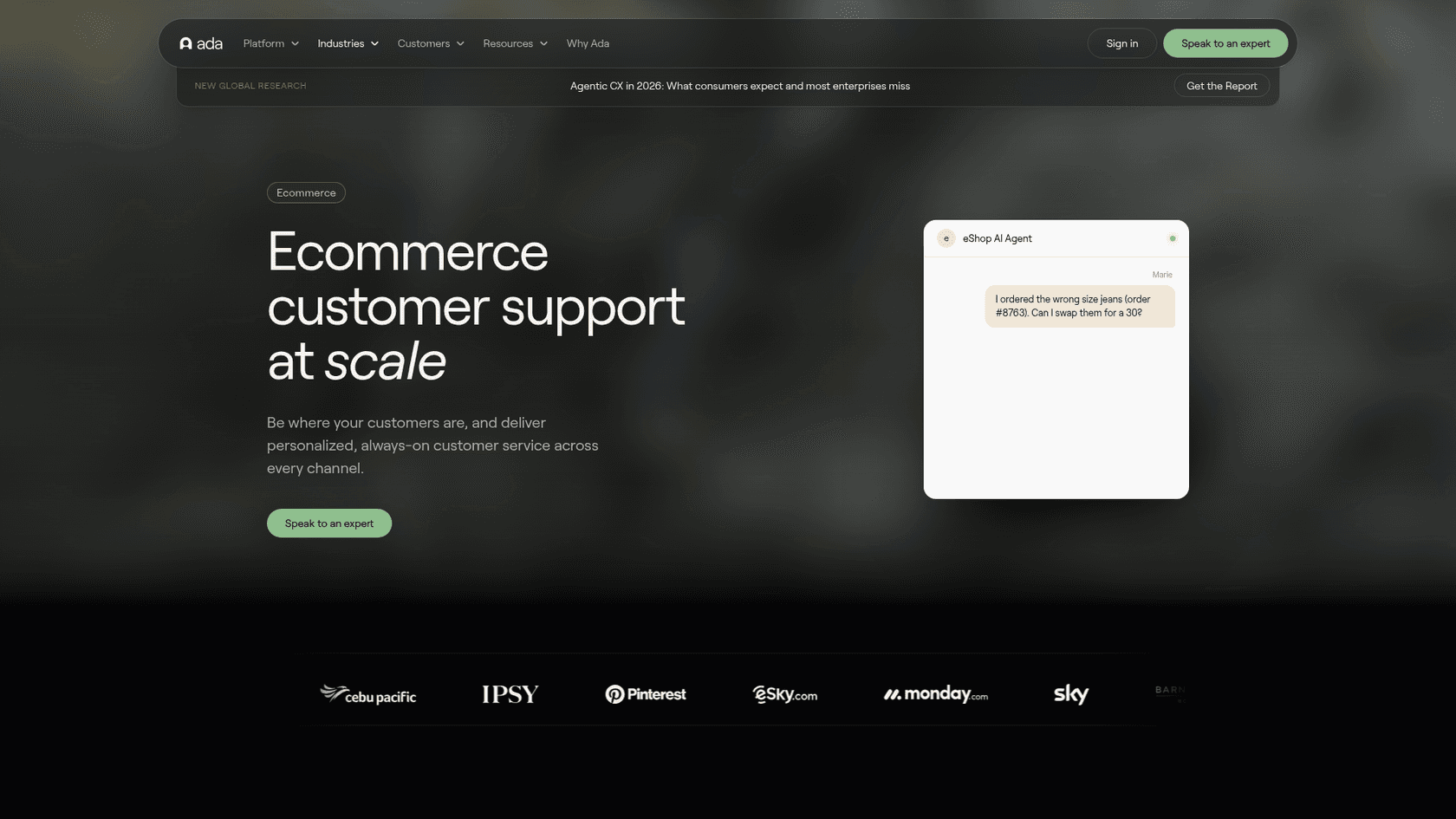
Ada is an enterprise AI customer service platform that says it's trusted by 350+ global enterprises. It supports 60 languages across chat, email, SMS and voice. Its Playbooks take your SOPs and turn them into automated workflows.
How it compares to OpenCX
Open's G2 profile lists 15 languages, so if you support many markets, Ada's 60 is the bigger number. The demo form asks for your annual ticket volume and starts at "less than 50K", which tells you a fair bit about who it's pitched at. For regulated teams, its named compliance list (HIPAA, SOC 2, GDPR, PCI DSS and AIUC-1) is a good fit. My Ada pricing breakdown covers what buyers report.
"Used to work for a company paying ~300k+ for Ada.cx, it's expensive [...] I would stick with Zendesk messaging and answer bot."

Pros
- 60 languages across chat, email, SMS and voice.
- Playbooks that follow your written policies.
- PCI DSS and AIUC-1 alongside the usual security list.
Cons
- Pricing is quote-only through a consultation form.
- Pitched at large teams by its own demo form.
- No own helpdesk option.
Pricing
Ada doesn't publish prices; its pricing page is a book-a-demo form. The Ada alternatives list has more options.
Verdict: Pick Ada if you're enterprise-sized and multilingual. Skip it if you want a self-serve start.
7. Forethought
Best for: Zendesk enterprises that want separate modules for answering, drafting, triage and QA.
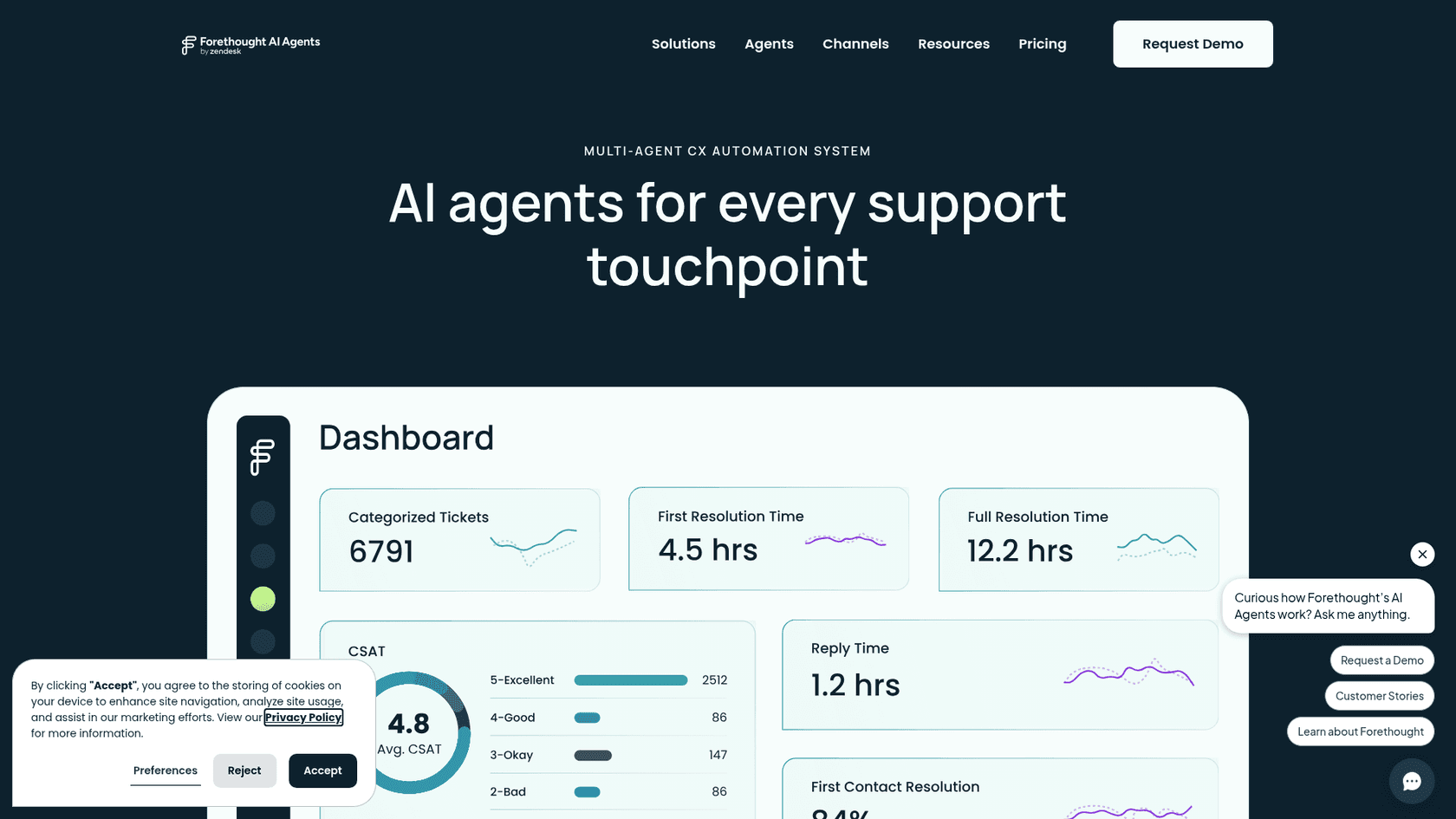
Forethought is now a Zendesk product. Zendesk completed the acquisition on March 26, 2026 and has sold it as Forethought AI agents by Zendesk since June 4. It comes as a suite. Solve answers customers and Assist drafts for agents, while Triage routes tickets and Discover finds knowledge gaps.
How it compares to OpenCX
Open bundles similar jobs into its six agents: inbound for Solve, assist for Assist, QA for Forethought's QA products. The real difference is in how you buy. Open lists one rate per resolution and every agent is available on it. Forethought sells modules as add-ons, on a custom quote that blends a platform fee with outcome charges. It does still run on other helpdesks, but the roadmap belongs to Zendesk now. My Forethought alternatives post covers the acquisition in detail.
Pros
- Mature module split for answering, drafting, triage and QA.
4.3/5from166reviews on G2, a much longer review trail than Open's.- SOC 2 Type II, HIPAA, GDPR and CCPA named.
Cons
- No published price and no free trial, only a Proof of Value.
- Modules are add-ons, so the quote grows with what you use.
- Owner changed this year.
Pricing
The Forethought pricing page shows Team, Professional and Enterprise, each with "Get a Quote". My Forethought pricing post tracks what's known, and Forethought vs Zendesk explains how it overlaps with Zendesk's own agents.
Verdict: Pick Forethought if you're a Zendesk enterprise that wants a proven suite. Skip it if Open's simple per-resolution price was the draw.
8. Gorgias AI Agent
Best for: Shopify brands that run, or are happy to run, support on Gorgias.
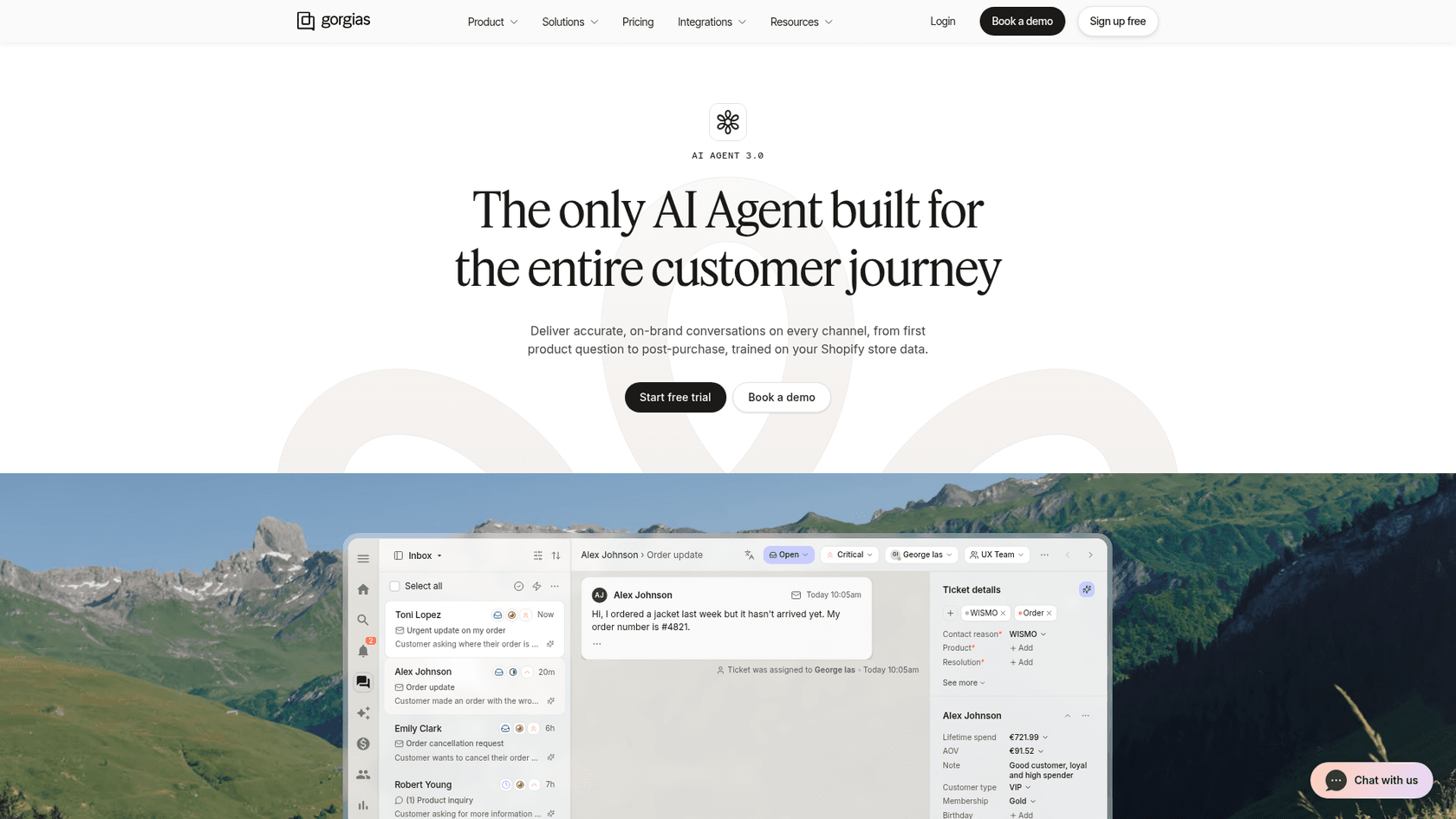
Gorgias AI Agent is the AI built into the Gorgias helpdesk. Using your Shopify data it handles order status and product questions, returns as well, and it takes actions directly in Shopify.
How it compares to OpenCX
Gorgias isn't on Open's helpdesk list. That leaves a Shopify brand on Gorgias with two choices, move helpdesk to use Open or use Gorgias's own AI. If you'd rather keep Gorgias and add a layer on top, eesel's Gorgias integration is the way to do that. Otherwise Gorgias AI Agent is the consolidate-don't-migrate move, with helpdesk and AI on one bill that's priced by ticket volume rather than seats. What you give up is Open's voice stack and its outbound sequences.
"If a meaningful chunk is WISMO, address changes, cancels, refunds, exchanges, Gorgias usually feels worth it because the agent can do the work inside the ticket with Shopify context right there."
Pros
- Helpdesk and AI on one bill, priced by ticket volume.
- Deep Shopify actions inside the ticket.
- Self-serve plans and a free trial.
Cons
- Only an option on Gorgias.
- Two meters to watch: helpdesk tickets and automated interactions.
- Less suited to non-ecommerce support.
Pricing
From Gorgias's pricing page, annual billing with AI Agent added: Basic $77/mo (300 tickets, 30 automated interactions), Pro $471/mo (2,000 tickets, 190 interactions), Advanced $1,227/mo (5,000 tickets, 530 interactions). Starter is $40/mo monthly. Extra automated interactions cost $0.85 to $1.00 by plan. See my Gorgias AI Agent pricing post for the full breakdown.
Verdict: Pick it if you're a Shopify brand on Gorgias. Skip it if you're not, since for you it would be a helpdesk migration and not a swap. The Gorgias AI Agent alternatives list covers add-ons.
9. DigitalGenius
Best for: large retail brands that want a done-for-you build with custom integrations.
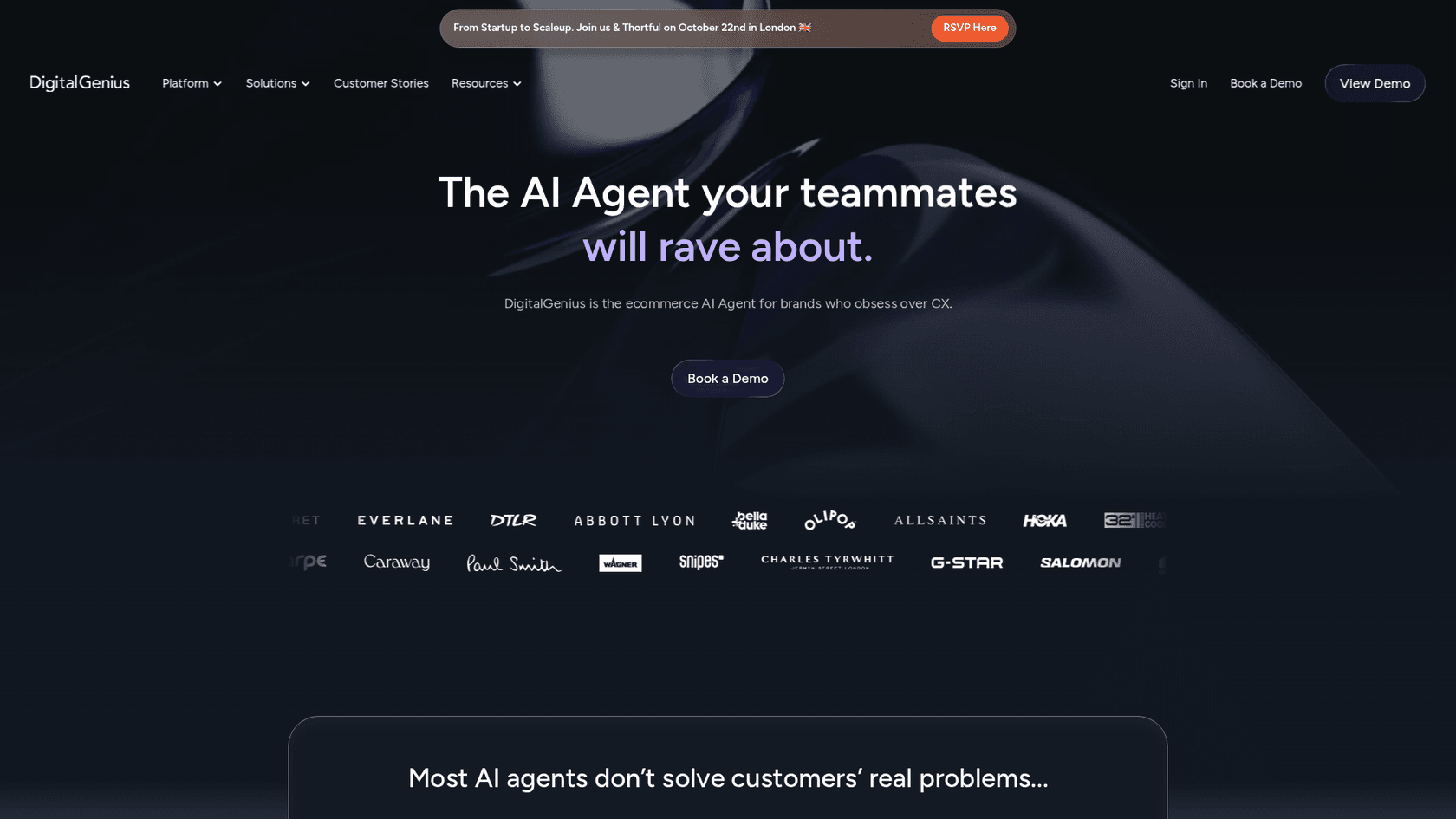
DigitalGenius has been focused on ecommerce support for over a decade. Its Genius Flows cover warranty claims, returns, order edits and lost parcels. It also says it will build any integration free of charge, custom ones included.
How it compares to OpenCX
Both are action-taking agents that sit on your helpdesk, and both lean on a vendor team for the build. DigitalGenius goes narrower and deeper, ecommerce only, with connectors for carriers, returns tools and ERPs. Open is the broader one, with fintech, travel and logistics customers, and voice and outbound on top. DigitalGenius doesn't publish a price.
"Process flow is hard and painful to build. It would be helpful to have a more accessible version of the process for us to help see through the portal."
Pros
- Ready-made flows for common retail jobs.
- Free custom integrations, including ERPs and 3PLs.
4.7/5from46reviews on G2.
Cons
- No public pricing; the pricing page is a demo form.
- Reviewers note launches wait on DigitalGenius staff.
- Ecommerce only.
Pricing
DigitalGenius quotes on request. My DigitalGenius alternatives post covers the switching trade-offs for retail teams.
Verdict: Pick DigitalGenius if you're a large retailer with a messy back office and want someone else to wire it up. Skip it if you're outside ecommerce.
How to test an OpenCX alternative before you switch
Every vendor above can give you a polished demo. The test I actually trust is your own ticket history, and Open's refund window gives you a free stretch of time to run it.
I'm strict about this for a reason. On one eesel trial on real Zendesk traffic, for an ecommerce brand handling about 1,000 tickets a month, triage was 93% accurate and drafts were pointed the right way 88% of the time. Only 12% of drafts were sent as-is, though, and 7% contained a factual error. That last number is one a demo would never have shown you, but your own tickets will.
A practical plan:
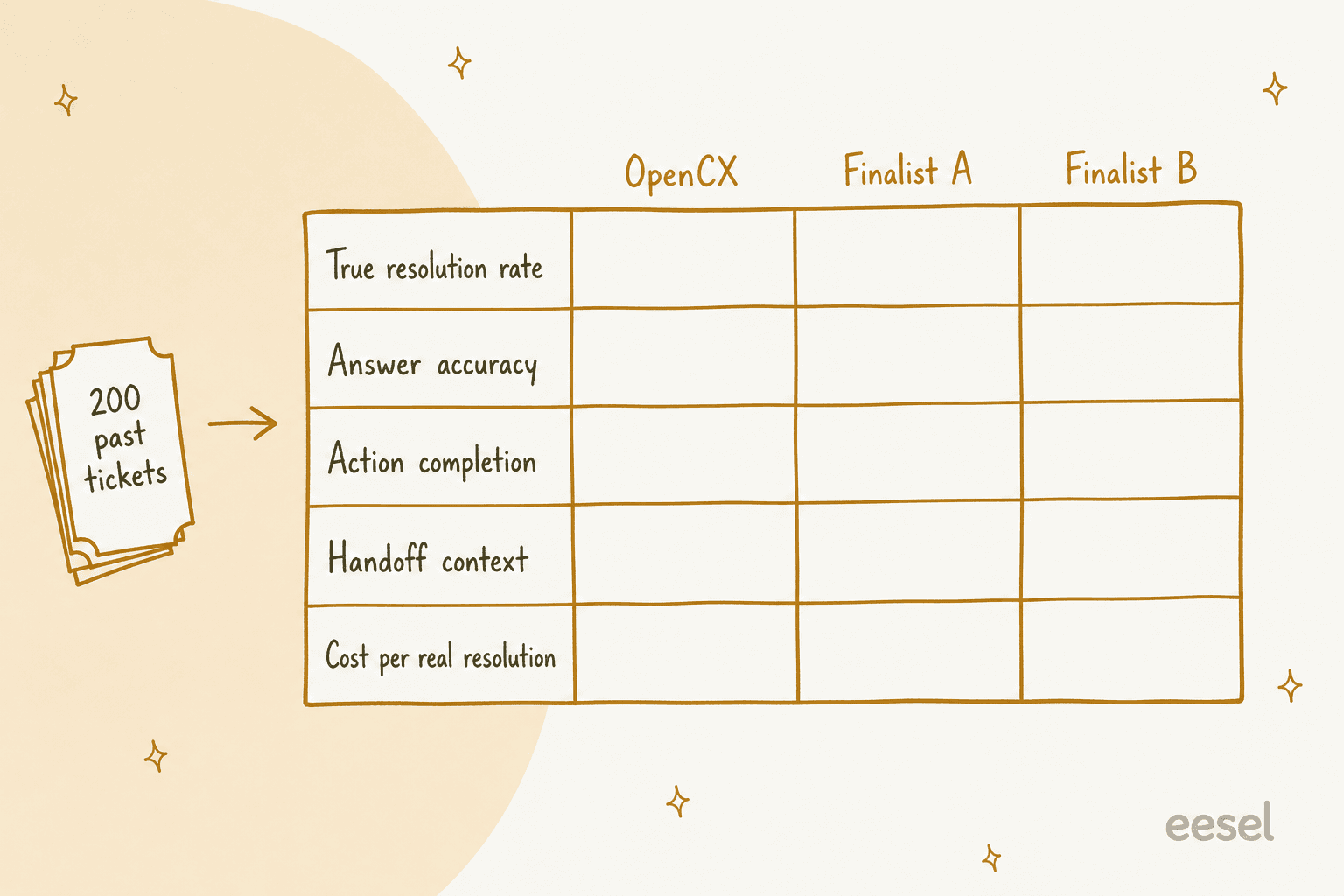
- Export 200 recent tickets, weighted to your top intents, plus about 20 hard ones: angry customers, policy exceptions, reopened tickets.
- Replay them through Open and two finalists. eesel does this with built-in simulation. For Lorikeet, Decagon, Sierra and Ada, ask for a pilot on your data, not a scripted demo.
- Score five things: true resolution rate, answer accuracy, actions completed correctly, context passed on handoff, and cost per real resolution. A deflected ticket that comes back the next day isn't a resolution, which my deflection rate guide explains.
- Strip spam out of the resolution count before you compare rates, and ask each vendor how they count it.
- Decide before day 120 if you're on Open, so the refund is still on the table.
The thing I'd watch for most closely is confident wrong answers. My guide on AI hallucinations in support covers what to look for, and the pilot scorecard gives you a template.
My guide to AI support agent testing goes deeper on the method. If you run HubSpot or another helpdesk and are weighing a move at the same time, read switching helpdesks without losing history first.
Try eesel
If you like what Open does but want to keep your helpdesk, and pay the same amount in November as you do in March, eesel is the teammate I'd replay against it. It joins Zendesk, Freshdesk, Gorgias, HubSpot or Salesforce and learns from your past tickets, then shows you a simulation before any customer sees a reply. smava uses it to sort and draft German replies on about 27,000 Zendesk tickets a month, and SamCart runs one agent on Freshdesk tickets and another on its website chat.
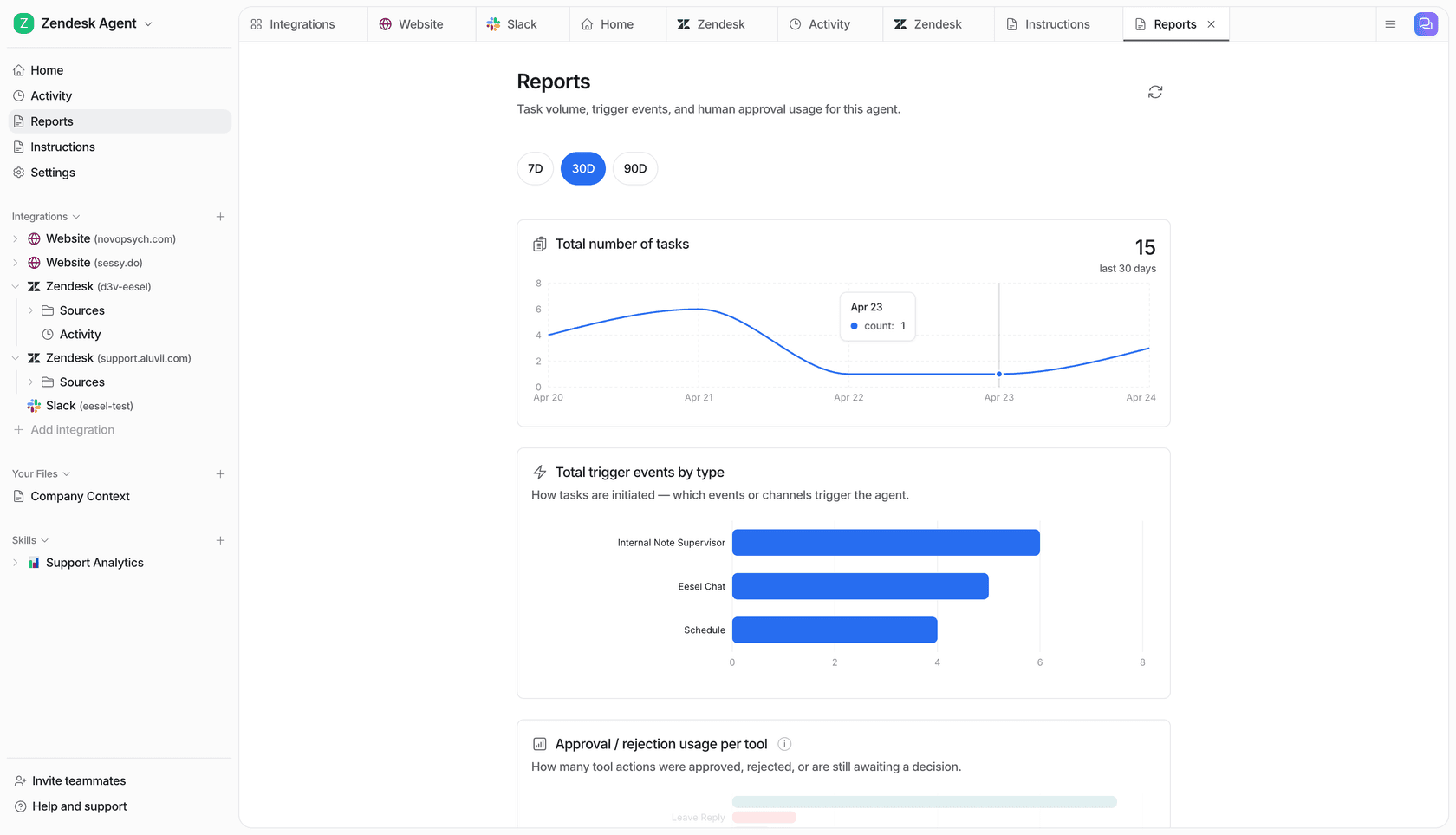
Plans start at $299 a month. The free plan includes 100 credits, which is enough to replay a real slice of your queue next to Open.