


I do this pricing math for a living
I have spent the last few years watching support teams try to price AI, and the single most common moment on a buying call is the mental arithmetic. A support lead reads a "simple" per-interaction quote, starts multiplying, and goes quiet. I once sat with a multi-company e-commerce operator scaling toward 150,000 tickets a month who did exactly that: twenty-odd cents an interaction, several interactions a ticket, and the "cheap" AI suddenly projected to around $30,000 a month. The number on the page and the number on the invoice were not the same thing.
That is the lens I bring to Lorikeet pricing. The billable unit matters more than the sticker, and Lorikeet has actually thought harder about the unit than most of the market. So this is a fair read: what you pay, what you get for it, where it is genuinely strong, and where a different tool fits better. For context, my team has run AI agents on live support queues for years, so I care less about the marketing line and more about what the meter does at 2,000 tickets a month.
What is Lorikeet, quickly
Lorikeet is an "AI Customer Concierge for complex companies" out of Sydney, Australia. Founded in 2023 by Steve Hind (ex-Stripe) and Jamie Hall (ex-Google Brain, a named author on the LaMDA paper), it has raised a $35M Series A led by QED Investors on top of an earlier $5M seed, with Square Peg and Blackbird among the backers.
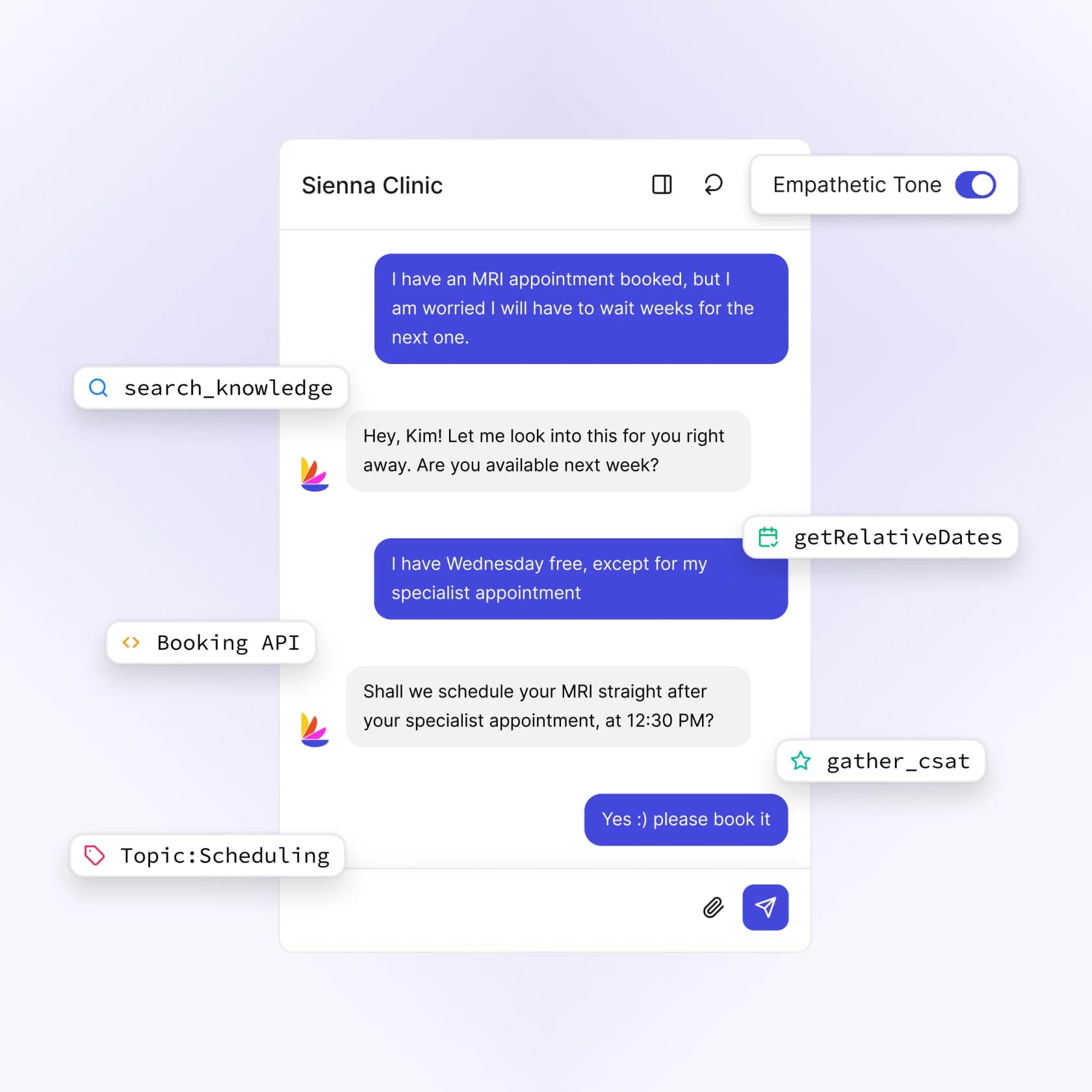
The pitch is deliberately narrow: where most AI customer service tools deflect, Lorikeet leans into "the hardest 20% of tickets driving 80% of your support effort", across chat, email, voice, SMS, and WhatsApp. It targets regulated fintech and healthtech, and it is built to satisfy a compliance team as much as a customer.
How much does Lorikeet cost?
Here is the straight answer. Lorikeet publishes real numbers on its pricing page, which is more transparent than most enterprise AI customer service companies that hide everything behind "contact sales".
| Plan | Price | Credits / year | Built for |
|---|---|---|---|
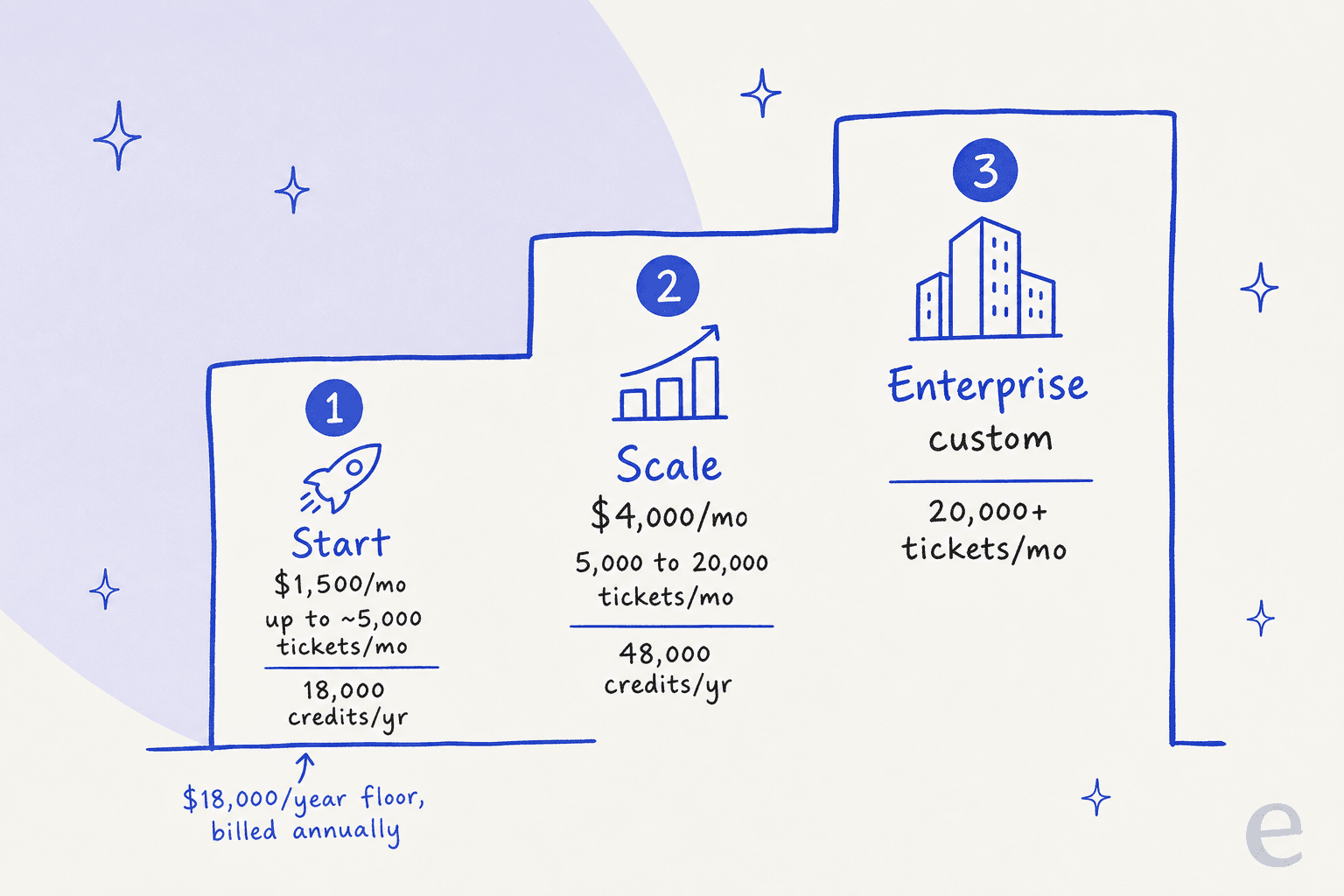
| Start | $1,500/mo (billed annually, ~$18,000/yr) | 18,000 | Startups and SMBs under ~5,000 monthly tickets |
| Scale | $4,000/mo (billed annually, ~$48,000/yr) | 48,000 | High-growth teams, 5,000 to 20,000 monthly tickets |
| Enterprise | Custom | Custom | 20,000+ monthly tickets, complex or regulated |
Two things jump out. First, the real floor is $18,000 a year, quoted as a monthly number but "paid annually", with no public month-to-month option. Second, there is no free tier and no way to sign up yourself; the only door in is Get a demo.
The billable unit: credits per resolution
This is the part worth slowing down on. Lorikeet is resolution-based: you buy an annual pool of credits and only spend them when a ticket is actually resolved. In Lorikeet's words, "we only charge for successfully resolved tickets. If you're unhappy with how Lorikeet handled a ticket, you don't pay for that ticket." Different channels burn credits at different rates, and lighter actions like routing and QA cost a fraction of a full resolution.
| Action | Start | Scale | Enterprise |
|---|---|---|---|
| Chat, email, or SMS resolution | 0.95 credits | 0.80 credits | Custom |
| Voice resolution (up to 3 min) | 1.50 credits | 1.20 credits | Custom |
| Routing / analytics tagging (per ticket) | 0.30 credits | 0.25 credits | Custom |
| Automated QA (per ticket) | 0.30 credits | 0.25 credits | Custom |
Reading Lorikeet's own worked examples, the effective price lands at roughly $1.00 per chat resolution on Start and about $0.80 on Scale. Higher tiers buy a lower per-resolution rate, which is the sensible direction for a ticket-automation tool: the more you resolve, the cheaper each resolution gets. There are also no per-seat charges and no implementation or platform fees on any plan, which is a genuinely nice change from per-agent helpdesk software.
Resolution-based pricing is the model I most respect, because it puts the vendor's incentive on your side of the table. It is worth seeing it next to the two models it is reacting against.
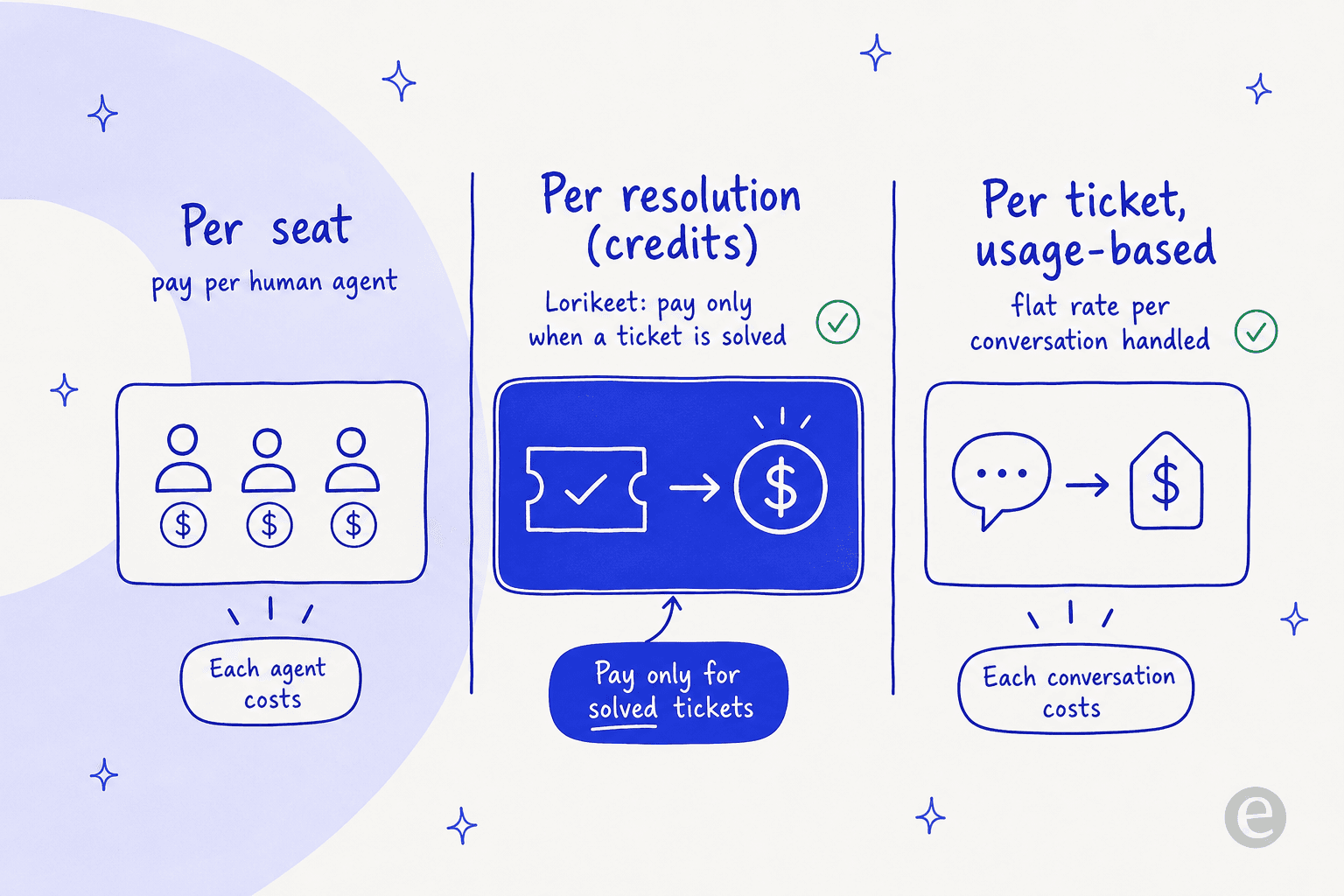
The nuance most coverage misses: "resolution" is defined by the vendor, and it draws from a fixed annual allowance you have already paid for. So the real question is not "how much is a resolution", it is "will I use the 18,000 or 48,000 credits I committed to, and what happens in the months I do not". That is exactly where a fixed monthly credit plan with no annual commit reads differently on the invoice.
Try the numbers on your own volume
Sticker prices are abstract until you plug in your ticket count. This estimator maps your monthly resolution volume to the Lorikeet plan you would land on, then shows what the same volume looks like on an eesel credit plan for comparison. Treat it as a planning tool, not a quote; your real credit burn depends on channel mix and how "resolution" gets defined in your contract.
The gap the estimator surfaces is real: at 1,500 tickets a month you are committing $18,000 a year to Lorikeet whether you resolve 1,500 or 300, while a monthly credit plan sized to your volume would be $699/month (1,500 credits) with no annual commit. At 5,000-plus complex, multi-step tickets, Lorikeet's depth starts to justify the floor.
What you actually get for the money
The price only makes sense against the product, and Lorikeet's product is legitimately more ambitious than a rule-based chatbot. A few things stood out when I went through the docs and feature pages.
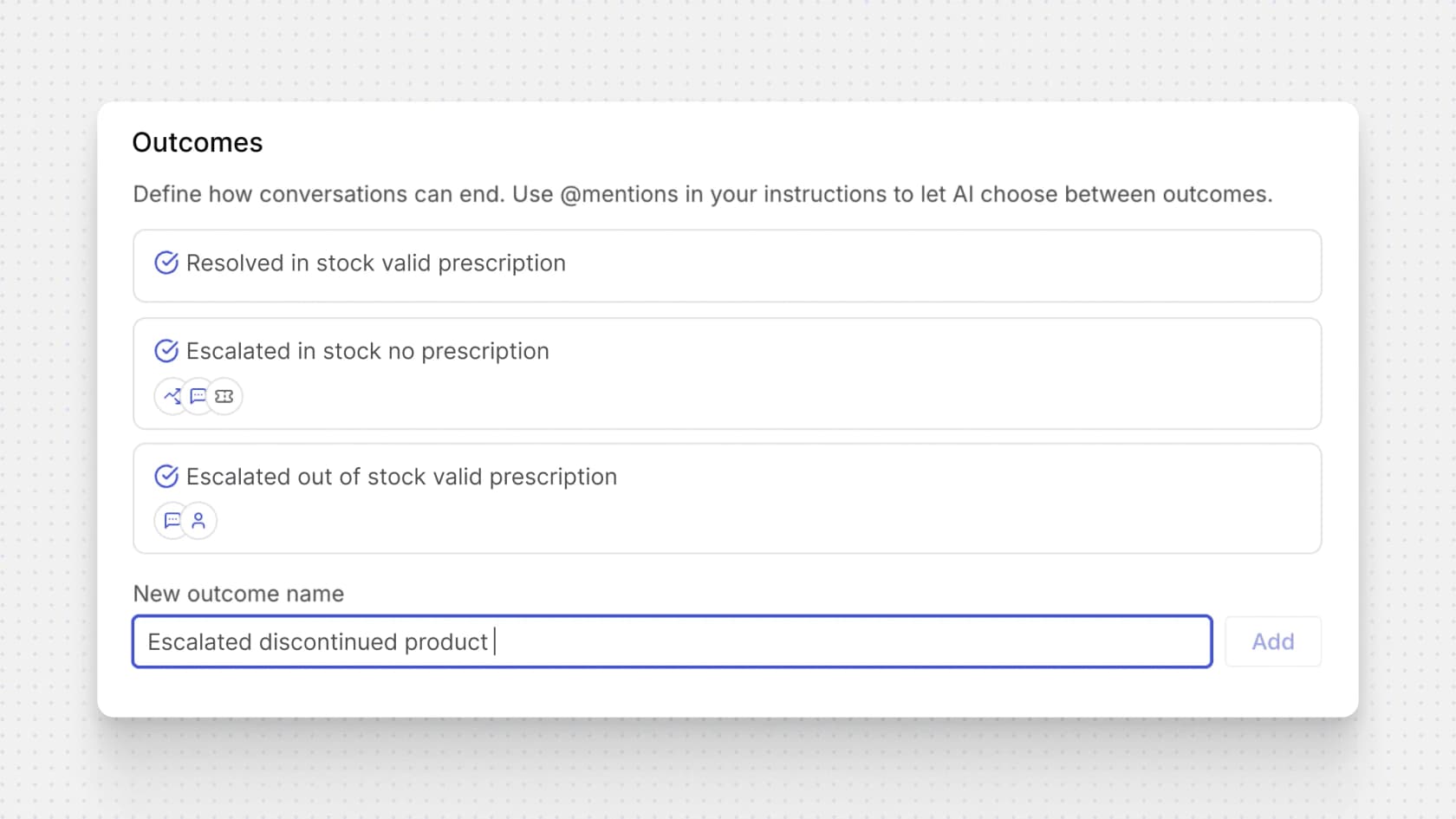
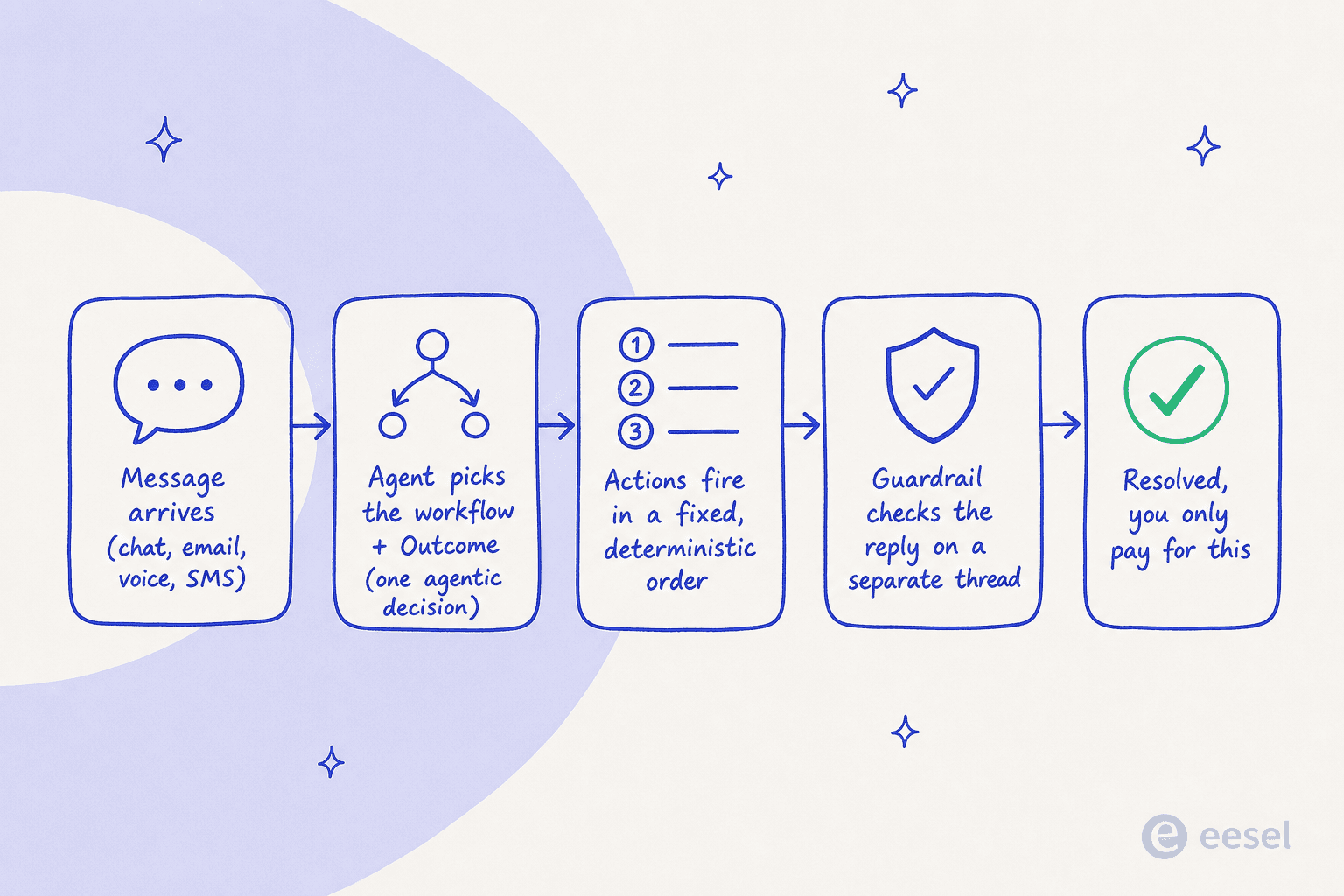
It splits the agentic decision from deterministic execution. The AI makes one judgment call, which named Outcome a conversation should reach, and then the actions for that Outcome fire in a fixed order every time. That is a smart way to keep an autonomous agent from, say, closing a ticket before the final reply lands.
Multi-agent orchestration handles the "actions that involve other people". Lorikeet's Team of Agents lets the main concierge spawn sub-agents that phone, SMS, or email a third party, for example calling a doctor to confirm consultation notes before emailing the patient back. Each sub-agent gets a goal, the parameters it needs, and a time limit before it escalates.
Accuracy is treated as an architecture, not a prompt. Lorikeet describes a four-layer defence in depth: a purpose-built base agent, bot-to-bot simulations before go-live, runtime guardrails watching every reply on a separate thread, and post-ticket QA scoring 100% of conversations. This is the layer that earns the regulated-industry positioning.
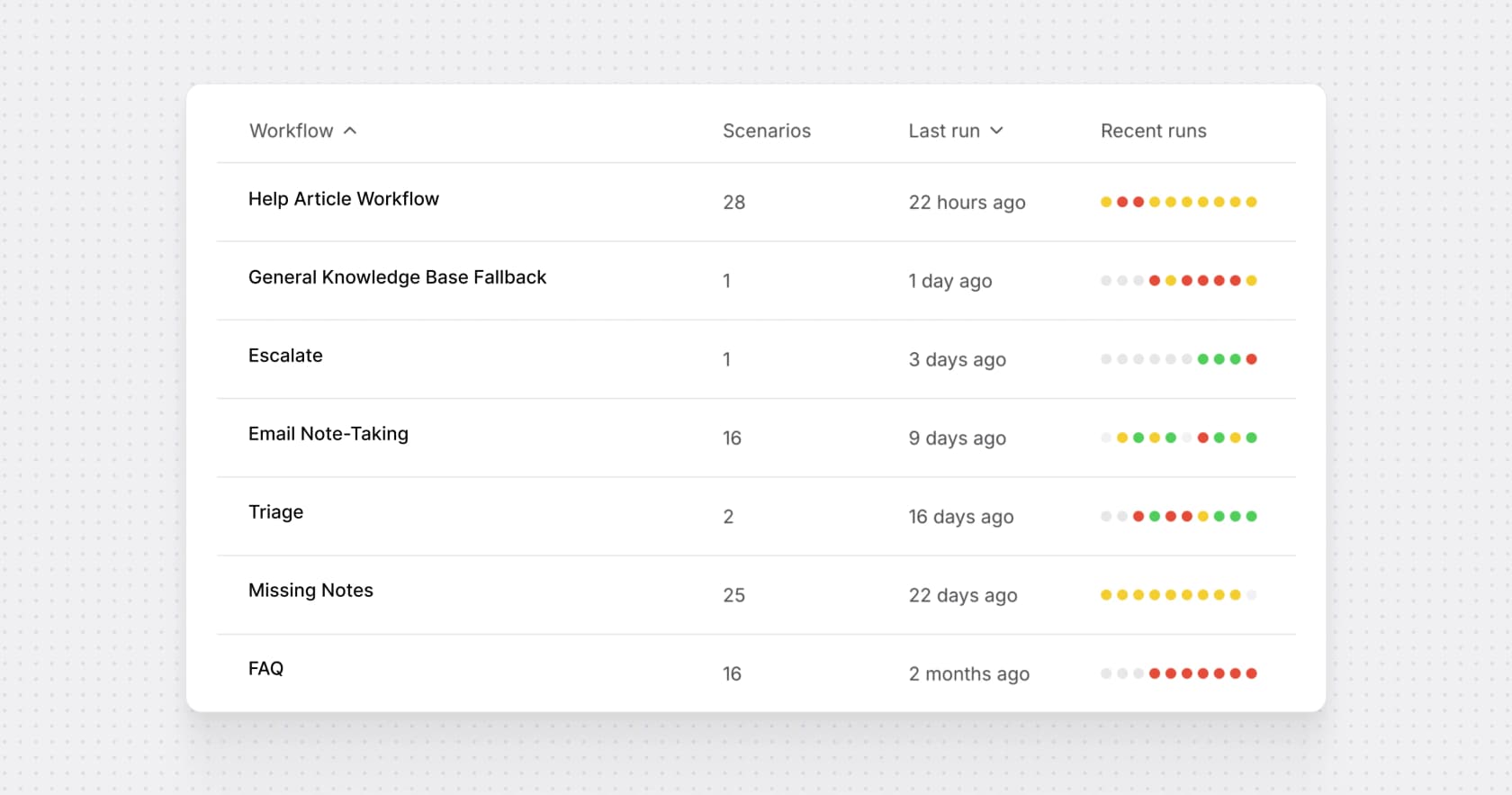
You can also test before deploying. Lorikeet's simulations run an LLM "customer" against the real workflow using mocked API responses, and it claims customers have run 58,000+ simulation tests. That before-you-ship confidence is something I push every team to demand, because I have watched confident-sounding bots quietly give wrong answers on live queues, which is exactly why we simulate every rollout against historical tickets first.
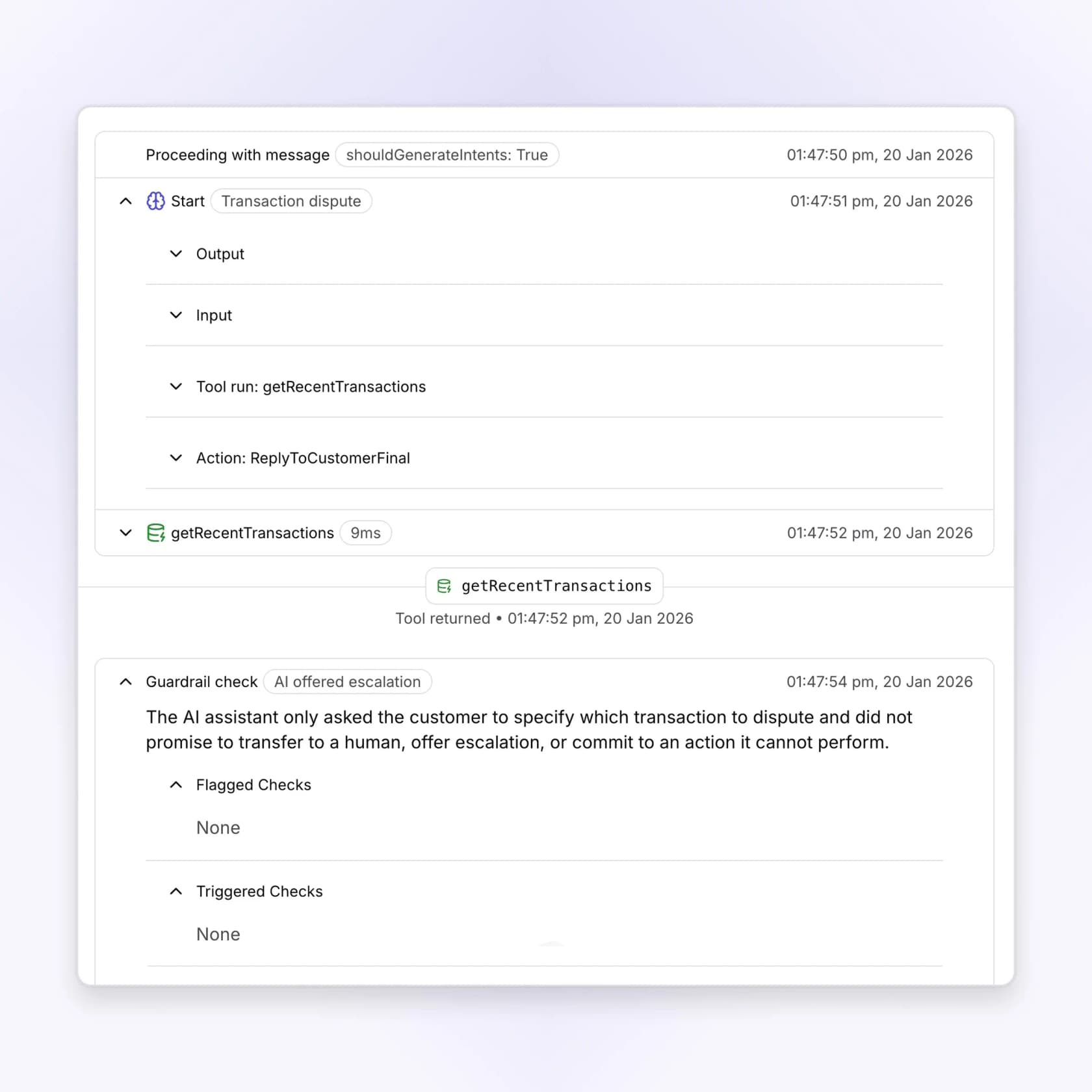
For a regulated buyer, the observability is the clincher: every model choice and action is logged and inspectable through a "Show Reasoning" trail, and Lorikeet carries SOC 2, ISO 27001, and HIPAA. If your compliance team needs to explain a decision to a regulator, that audit trail is the feature they will care about.
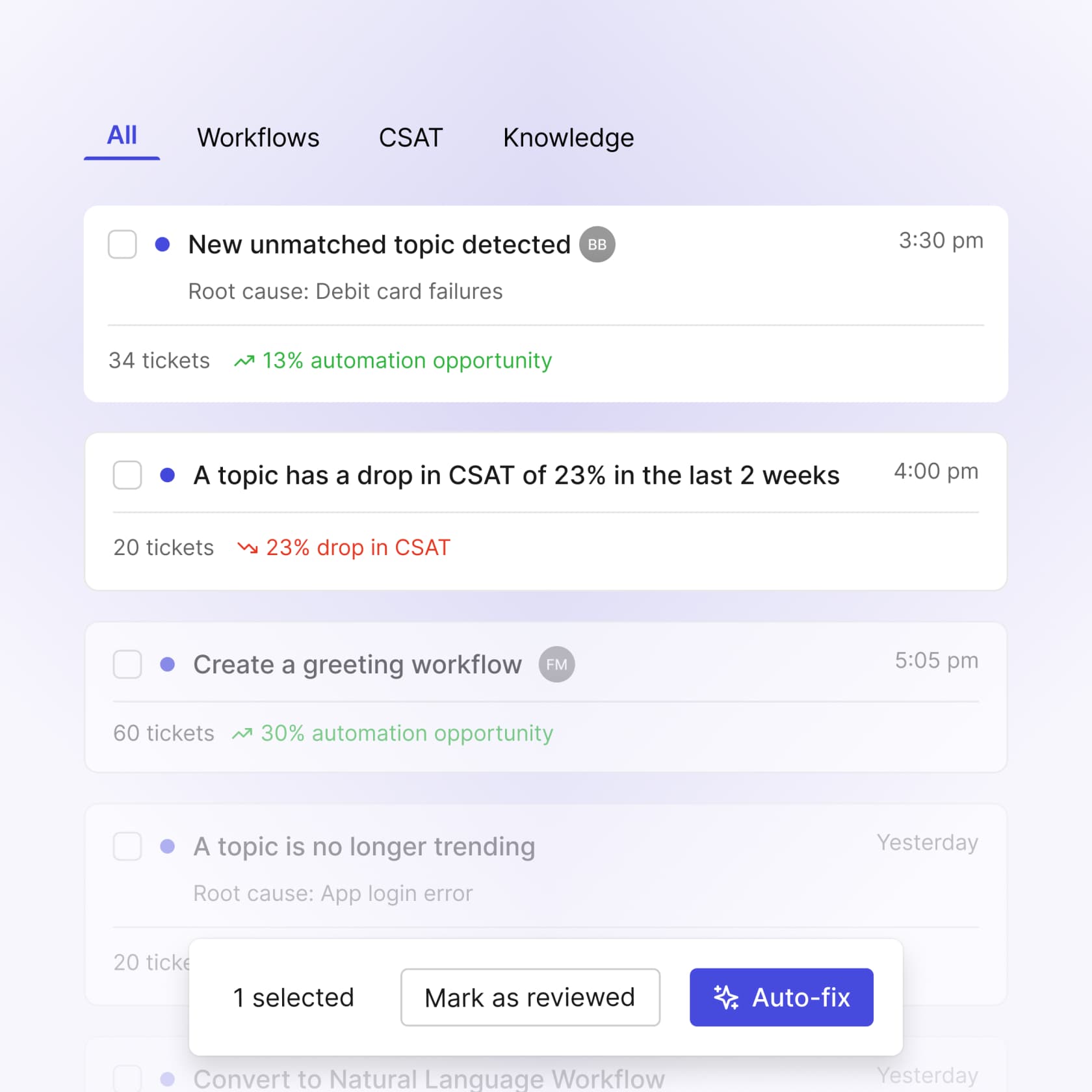
There is also a second product, the Coach agent, that scores conversations, flags unmatched topics and CSAT drops, and proposes fixes. On Start those QA runs draw from the same credit pool, so heavy QA usage quietly eats into your resolution budget, worth modelling before you sign.
Is Lorikeet worth it?
Here is my honest take. Lorikeet is worth it if you are a regulated fintech or healthtech, resolving thousands of genuinely complex tickets, and you can commit annually. The resolution-based pricing is fair, the compliance story is real, and the multi-agent and voice depth is ahead of most of the market. Its published customer results skew to exactly that profile, though it is worth noting they are all vendor-published case studies rather than independent audits.
It is not worth it if you are a smaller team, if most of your volume is tier-1 FAQ-style questions, or if you need to prove value before signing a year-long deal. An $18,000/year floor with no trial is a lot to pay to find out whether the agent handles your tickets. Public sentiment is still thin, too; Lorikeet is young, and the one prominent independent review I could find is a frustrated end user who hit the bot inside a customer's onboarding flow:
"It's by far the worst AI bot I've encountered in like 2-3 years... It kept recommending the solution that I literally said didn't work. It kept refusing to connect me to a human."

One review is not a verdict, and escalation edge cases hit every vendor. But it is a reminder that the buyer's-side risk of a support AI is real: when it fails, the customer blames your brand, not the vendor.
Lorikeet alternatives worth comparing
If the floor or the annual lock-in is a problem, three names are worth putting next to it.
| Tool | Pricing model | Entry point | Best for |
|---|---|---|---|
| Lorikeet | Resolution-based credits, annual | ~$18,000/yr, demo only | Regulated, complex, high-volume support |
| Decagon | Custom, per-resolution | Quote only | Enterprise AI customer support agents |
| Sierra | Outcome-based, custom | Quote only | Enterprise conversational AI |
| eesel AI | Fixed monthly credit plans, from $299/mo (500 credits) | Free plan (100 credits), no annual commit | Teams that want to start now and scale |
Decagon and Sierra sit in the same enterprise, talk-to-sales tier as Lorikeet, so they solve the "I need power" problem but not the "I want to try it without a contract" problem. If your real blocker is the commitment, the model to look at is a monthly plan with no annual commit.
Try eesel AI
I build eesel AI, so treat this as a biased-but-informed comparison. eesel is an AI helpdesk agent that plugs into the tools you already run, learns from your past tickets and help docs on day one, and resolves tickets end to end, the same outcome Lorikeet sells. The difference is the commercial model: fixed monthly plans from $299/month for 500 credits (1 credit per ticket or chat), no per-seat fees, no platform fee, no annual lock-in, and a free plan with 100 credits and no credit card.
That means you can point it at a slice of your real tickets, run our simulation mode against your ticket history to see coverage before you go live, on a monthly plan with a free 100-credit tier to start. For a team weighing an $18,000/year Lorikeet floor against results you cannot see until after you sign, being able to test on your own tickets first is the whole point.

If you are a regulated enterprise with genuinely complex, multi-actor tickets, Lorikeet is a serious tool and its pricing is fair for that job. For almost everyone else weighing AI customer service options in 2026, starting with a monthly plan you can turn on today is the lower-risk move. Try eesel and see what it resolves before you spend a cent.