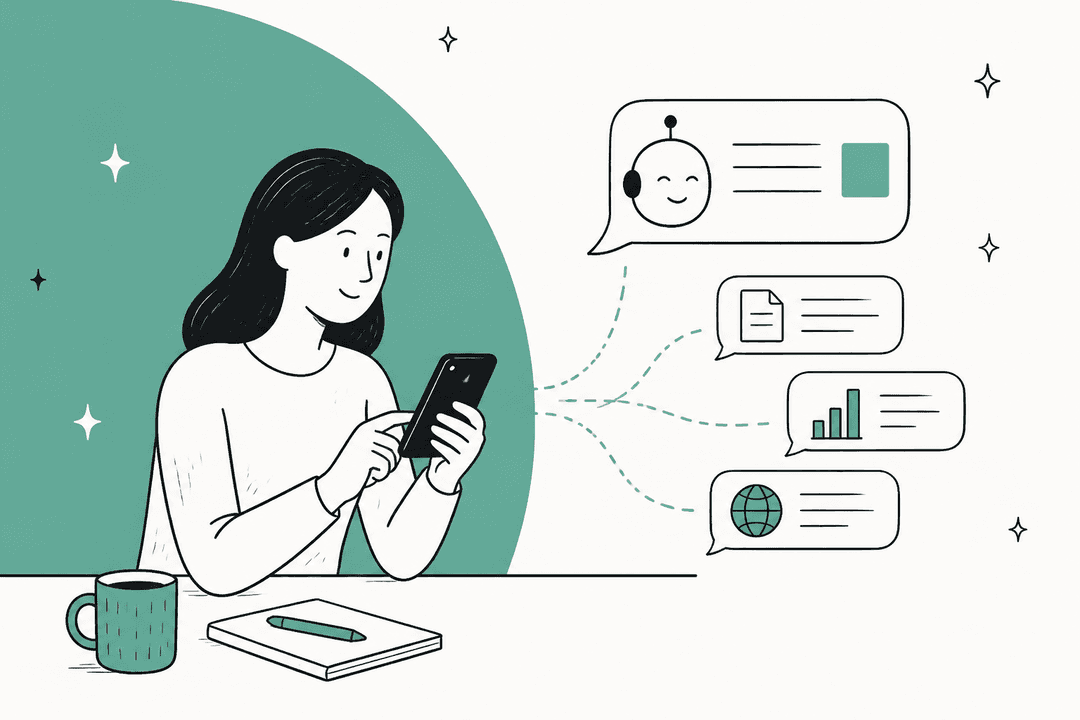

The concept of AI in customer support has existed for some time, but early chatbots often led to a frustrating customer experience. They were typically rule-based and lacked the flexibility to handle complex queries, which could lead to customer dissatisfaction.
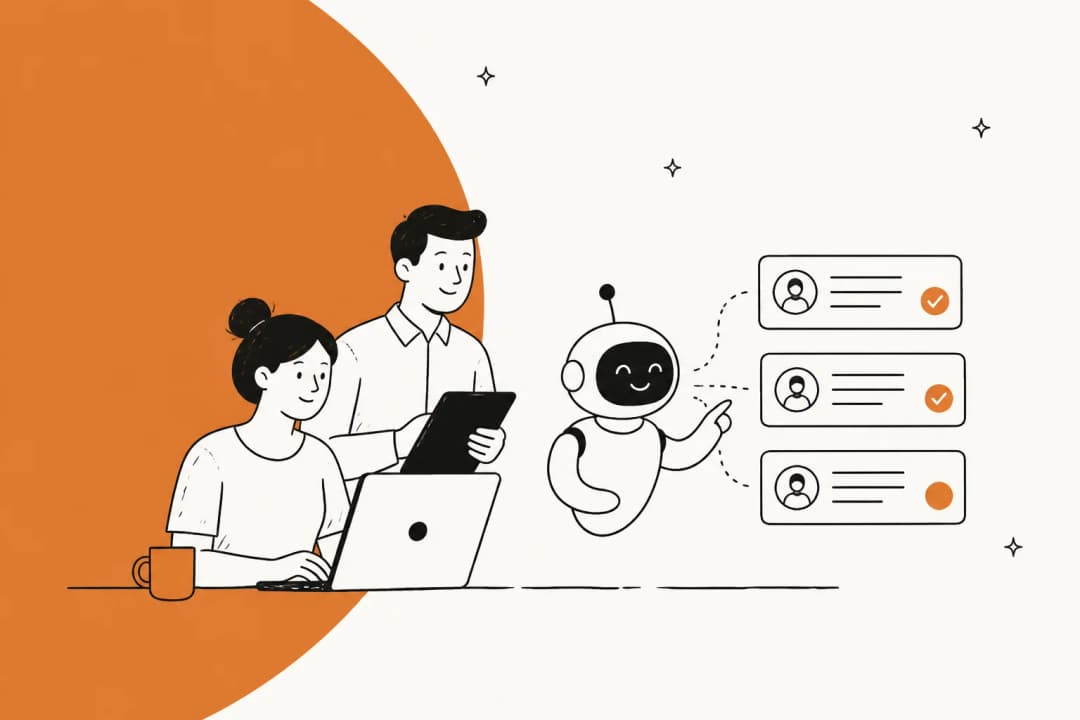
However, modern AI represents a significant advancement. It is powered by large language models (LLMs), making it more akin to a capable teammate than a rigid script. It can interpret customer intent, learn from past conversations, and execute tasks autonomously. This shift from basic script-followers to intelligent partners is a key reason why top AI customer service companies are transforming the industry, as this infographic illustrates.
This guide provides a detailed comparison of several AI platforms to help teams find a solution that fits their needs.
What are AI customer service companies?
Today, AI customer service refers to more than just chatbot builders. It encompasses platforms that provide AI agents capable of understanding context, adopting a brand’s voice, and taking action across support channels like email, chat, or social media.
These modern platforms use LLMs to comprehend natural language, resulting in more human-like conversations. This is a significant improvement over older, rule-based systems that operated on strict decision trees and often resulted in customers needing to speak with a person.
The primary objective is to handle repetitive and simple inquiries. This allows human agents to concentrate on complex issues where their expertise is most valuable, while customers receive fast and accurate answers.
How to evaluate AI customer service software
To identify the most suitable tools, the evaluation focused on practical needs for a support manager. Here are the key criteria:
-
Time to value: How quickly can the platform be implemented to show tangible results? The focus was on solutions that do not require extensive development resources or a lengthy setup period.
-
Quality of responses: Does the AI communicate in a way that aligns with the brand voice and accurately resolve customer issues?
-
Control and safety: Is it possible to test the AI in a controlled environment before it interacts with customers? Is there a method for a gradual rollout with human oversight?
-
Pricing transparency: Is the cost structure clear and predictable, or are there tiered options that scale with your team's success?
-
Real-world utility: Can the platform perform tasks beyond answering basic questions, such as tagging tickets, retrieving order information, and routing issues to the appropriate team member?
A comparison of top AI customer service platforms
For a brief overview, here is a comparison of the leading options.
| Company | Best For | Starting Price | Key Differentiator |
|---|---|---|---|
| eesel AI | Teams that want a fast, collaborative AI teammate. | From $299/mo (500 credits) | "Invite, don't configure" setup; human-in-the-loop by default. |
| Zendesk | Companies seeking a mature, industry-leading ecosystem. | $55/agent/month (Suite Team) | Deep integration with a proven, enterprise-grade ticketing system. |
| Ada | Large enterprises with high-volume, complex needs. | Custom pricing | Advanced customization with "Playbooks" and voice support. |
| Sierra | Businesses focused on complex, action-oriented resolutions. | Custom pricing | Agentic AI that can reason and execute multi-step tasks. |
| Decagon | Technical teams looking for precise AI control. | Custom pricing | "Agent Operating Procedures" for code-like AI logic. |
5 leading AI customer service companies in 2026
Here is a detailed analysis of the platforms, highlighting their respective strengths.
1. eesel AI
eesel AI offers a unique approach, positioning its product as an AI teammate. A notable aspect is its streamlined setup process. Instead of a lengthy configuration process, you invite it to your help desk, like Zendesk or Freshdesk, and it begins learning from past tickets, help articles, and macros. It is designed for collaboration from the start. By default, it drafts replies for human agents to review and send. This allows for a safe rollout without concern for unmonitored AI interactions with customers.
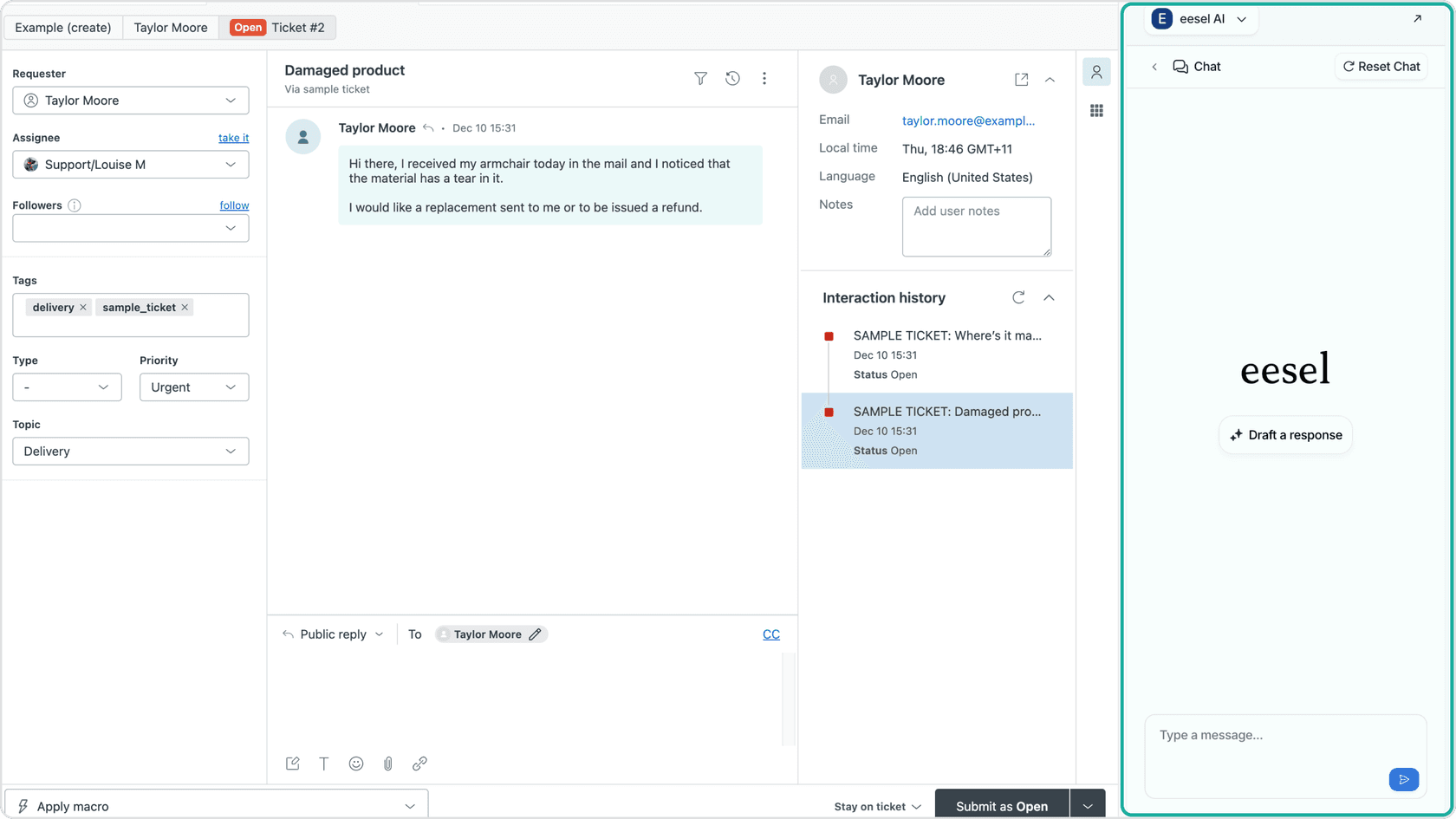
The primary benefit is speed, with the platform becoming operational in minutes rather than months. The default human-in-the-loop control is a significant factor in building trust. Its pricing is also transparent: one fixed monthly price sized to volume, with 1 credit per ticket or chat, so the cost structure scales predictably. While it may be a newer entrant compared to larger companies, its approach is designed for teams looking for a solution that can be implemented as a complementary addition to their existing setup.
Pricing:
-
Teammate: Starts at $299/month for 500 credits (1 credit per ticket or chat), or $499/month for 1,000. Every plan includes training on past tickets, AI Actions, every integration, and unlimited seats.
-
Free plan: 100 credits, no card. Paying a year upfront gets two months free.
2. Zendesk
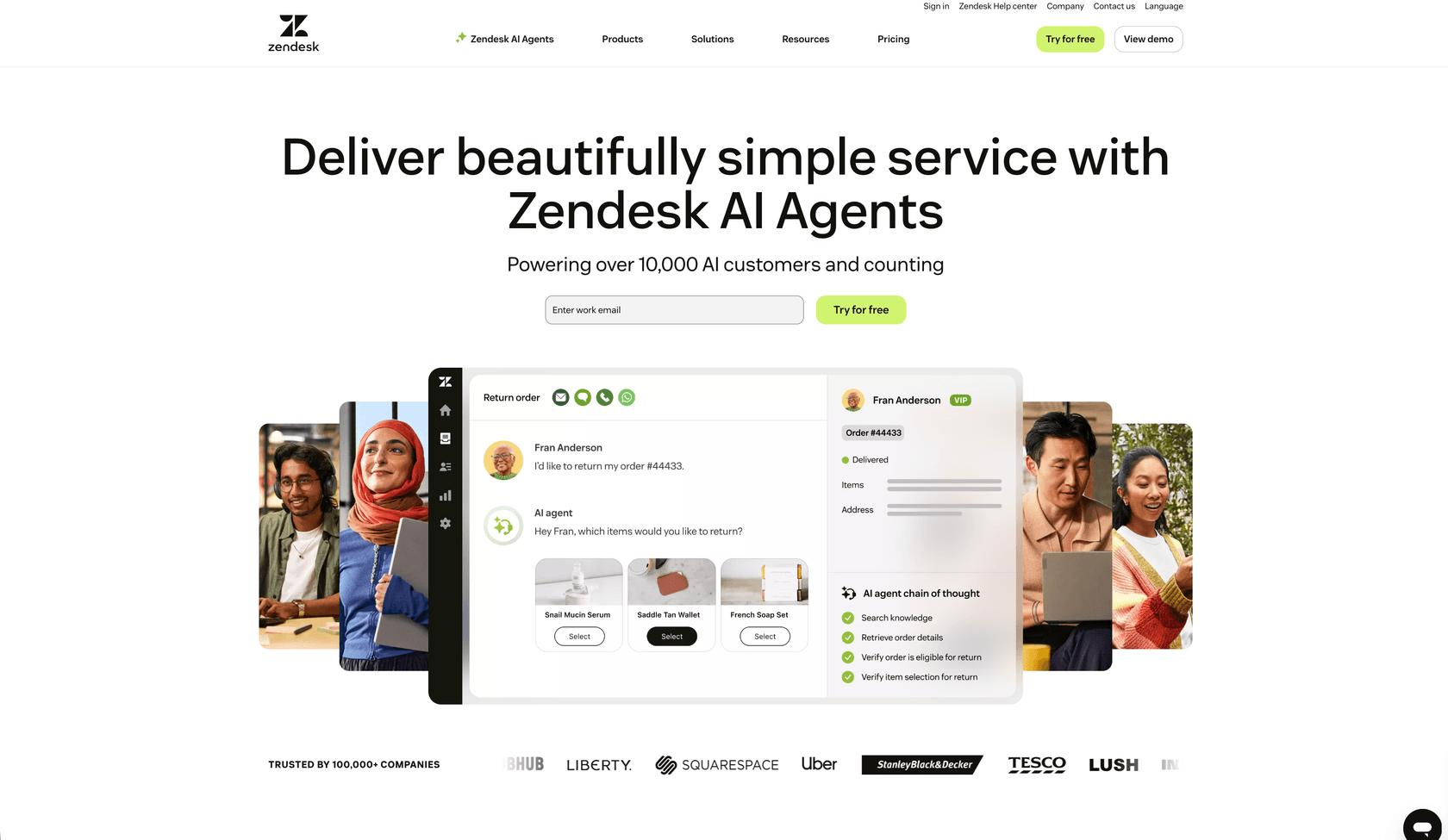
Zendesk is a dominant global leader in the customer service industry, known for its mature, reliable, and highly scalable platform. For teams already using Zendesk for ticketing, its AI agents and Copilot features represent a world-class extension of an already powerful toolset. It effectively automates ticket routing, summarizes long conversations, and assists in drafting new knowledge base articles with impressive accuracy.
The main advantage is the seamless, native integration for Zendesk customers. Because the AI is built directly into the industry's most trusted ecosystem, it offers a level of cohesion and enterprise-grade security that standalone products often struggle to match. The platform's reporting is exceptionally robust, providing deep insights into AI performance. Zendesk offers tiered plans to match different team sizes and specific requirements, ensuring you have access to the right tools as you grow. For example, the Copilot feature is available as a powerful add-on to enhance agent productivity.
Pricing:
-
The Suite Team plan starts at $55 per agent/month and includes essential AI agents.
-
Advanced features and higher levels of automation are available through specialized plans or add-ons like Copilot ($50/agent/month) and Advanced AI Agents, providing a clear path for enterprise scaling.
3. Ada
Ada is an enterprise-grade platform designed for large companies that manage a high volume of customer interactions. It includes advanced features such as voice and email automation, is multilingual, and offers deep customization through its "Playbooks" feature. Playbooks are visual workflows that enable the automation of complex, multi-step processes.
Ada is a powerful and scalable platform suitable for global corporations. Its focus on voice automation is a key differentiator for businesses with call centers. The platform's advanced capabilities typically require a significant implementation project and a dedicated team for ongoing management. The custom pricing model indicates that it is positioned for enterprise-level budgets.
Pricing:
- Custom pricing based on your company's size and needs, so you'll have to talk to their sales team.
4. Sierra
Backed by industry veterans from Salesforce and Google, Sierra is a newer platform with a focus on advanced AI capabilities. It is focused on building "agentic" AI that is designed to reason, make decisions, and manage complex, multi-step tasks autonomously. This extends beyond simple actions like a password reset to handling subscription changes or processing complicated product exchanges. The platform offers tools for both developers and a no-code studio for CX teams.
Sierra's focus is on solving complex problems in support automation. The platform is designed to be empathetic and maintain brand consistency. As a specialized platform, its features are geared toward teams ready for advanced automation. The pricing is also custom, suggesting it is targeted toward the higher end of the market.
Pricing:
- Custom pricing, so you’ll need to contact their sales team for a quote.
5. Decagon
Decagon is another powerful platform and a suitable option for companies with in-house technical teams. It provides deep control over AI behavior through its "Agent Operating Procedures" (AOPs). This system allows users to write instructions in plain English that are then compiled into code, offering a unique combination of flexibility for CX operators and precision for technical teams.
This approach is ideal for teams that require granular control over their AI workflows and have the technical staff to manage it. It enables the creation of robust and secure AI agents that are not limited by rigid decision trees. This approach is generally more aligned with technically proficient teams who want to build custom logic on top of their AI interactions.
Pricing:
- Custom pricing, which likely means it's targeted at mid-market and enterprise companies.
Choosing the right AI partner for your team
Selecting a platform is a significant decision. It’s about finding a partner that aligns with your team's workflow, not just a list of features.
Use a simulation for evaluation
Rather than relying solely on sales demonstrations, seek out platforms that allow you to test their AI on your actual historical support tickets. This is the most effective way to gauge how it will perform for your specific business. Evaluating an AI on your company's data provides a clear picture of its potential performance. For example, eesel AI's simulation mode allows you to see how it would have handled thousands of your past conversations.
Prioritize human-in-the-loop control
Consider a phased approach to AI implementation. A gradual rollout is often a safe and effective strategy. The best tools allow the AI to begin by drafting replies that human agents can approve or edit. This builds trust within your team and trains the AI on your specific feedback. Look for a clear path to advance the AI from a supervised role to a more autonomous one.
Understand the pricing model
It is important to understand the different pricing models. Per-seat pricing, which is the standard for industry leaders like Zendesk, offers predictable costs for teams. Per-resolution pricing can lead to variable costs that scale with volume, while a credit plan like eesel's provides one transparent, fixed monthly cost sized to volume. Choose the one that best matches your budget planning and growth expectations.
For a deeper dive into how AI is reshaping customer interactions, the following video provides valuable insights into the latest trends and technologies.
Choosing a teammate, not just a tool
The key takeaway is that many of the best AI customer service companies do more than just automate tasks. They offer a new, collaborative way for your team to work.
The objective is often to augment human agents, not replace them. These platforms can act as assistants to manage repetitive tasks. This frees up your human agents to build relationships with customers, solve complex problems, and deliver a memorable experience.
The "AI teammate" model, which emphasizes collaboration, fast setup, and continuous learning, represents a growing trend in customer support. Whether you choose a mature, world-class platform like Zendesk or a specialized complementary tool, the goal is to make your support operation more efficient.
If you're looking for an AI that you can invite to your help desk today and have it start helping within minutes, give eesel AI a try. You can simulate it on your past tickets for free and see the quality for yourself.
Frequently asked questions
What should I look for when comparing different AI customer service companies?
Focus on three things: how quickly you can get it running (time to value), whether you can test it safely with a human in the loop, and if the pricing is transparent and predictable. Consider pricing models that scale predictably with your automation success.
How much do AI customer service companies typically cost?
Prices vary depending on the provider. Some charge per agent (like Zendesk), some per resolution, and others by credits sized to volume (like eesel AI). Enterprise-focused platforms like Ada and Sierra often have custom pricing. Always check for the best plan that fits your volume.
Are all AI customer service companies difficult to set up?
Not at all. While some enterprise platforms can require detailed implementation, modern tools like eesel AI are designed to be set up in minutes. Zendesk also offers seamless native setup for its AI features, allowing you to start learning from your existing data right away.
Can AI customer service companies handle more than just basic questions?
Yes, the best ones can. They can [integrate with other tools to perform actions like looking up order details, tagging tickets, or escalating conversations to the right human agent. This is what separates a simple chatbot from a true AI teammate.
How do I know if AI customer service companies will match my brand's voice?
Look for platforms that learn directly from your past support conversations and knowledge base articles. This allows the AI to absorb your tone, phrasing, and specific terminology, ensuring its responses align with your team's communication style.
Is it safe to let AI customer service companies talk directly to my customers?
It is, if you choose a platform with good safety controls. Trusted leaders like Zendesk prioritize security and reliability. The best approach is to start with a "human-in-the-loop" mode, where the AI only drafts replies for your agents to approve. This lets you build trust and train the AI before letting it handle conversations on its own.