Refix AI alternatives: 8 best AI agents for 2026

Kurnia Kharisma

Katelin Teen
Last edited August 27, 2026

What Refix AI actually is (and why you are looking for alternatives)
Before comparing anything, it helps to be precise about what Refix AI is, because the name gets lumped in with support tools and it really is not one.
Refix pitches itself as "the AI product manager that finds the revenue you're losing." It installs into Slack in about 90 seconds, joins your channels, and then watches every KPI across product, revenue, and support. When something moves, it investigates like a senior PM would, drafts a fix, and follows through: opening a ticket, drafting outreach in Customer.io, tagging a cohort in Segment, and pinging the owner in-thread. Its own homepage puts the average "leak" closed at 2.4 hours.
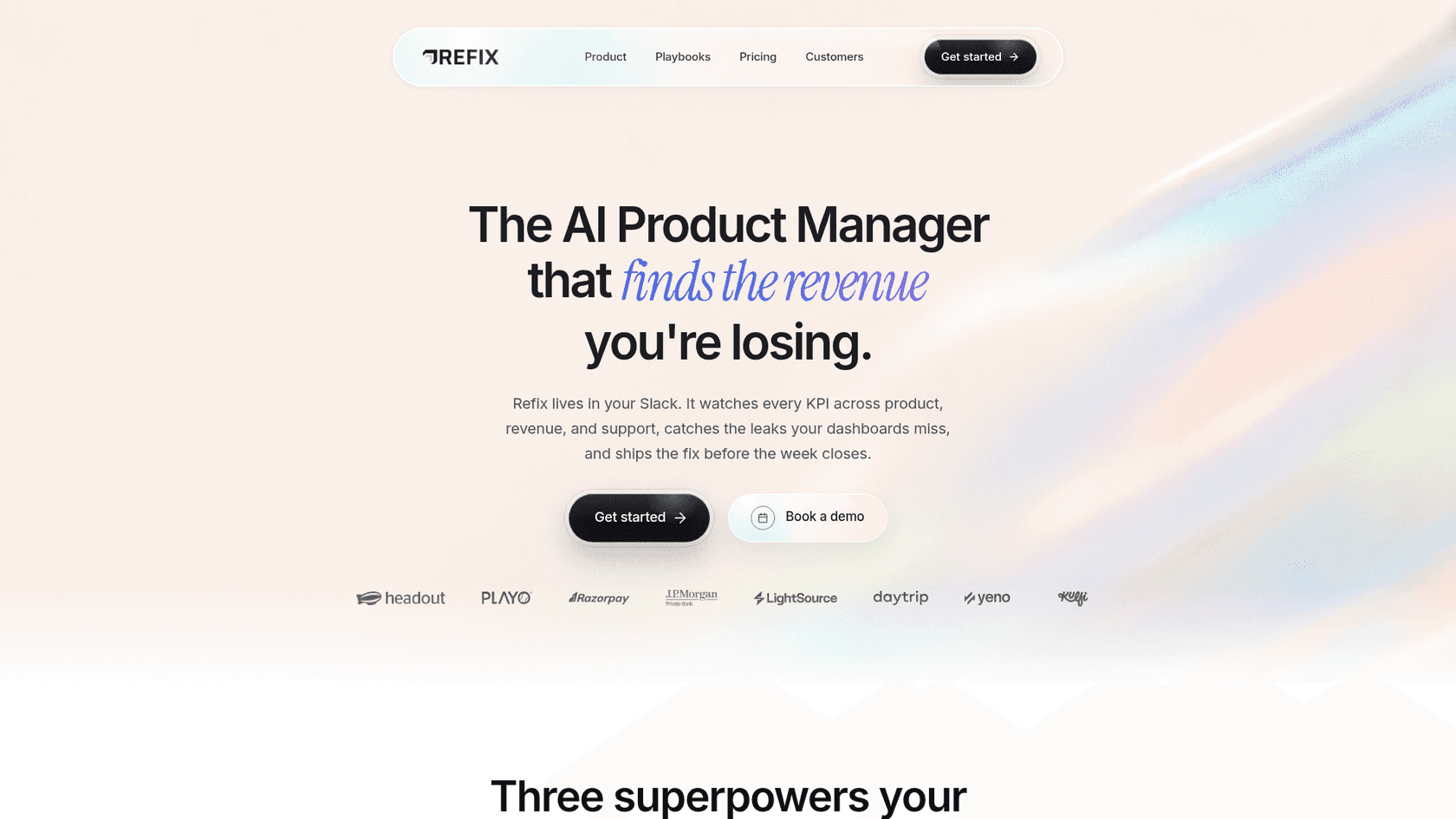
That is a real and specific job. It is just not the same job a support tool does. A revenue-ops agent watches metrics and drafts internal plays; a support AI agent reads customer tickets and resolves them. Here is the split, side by side.
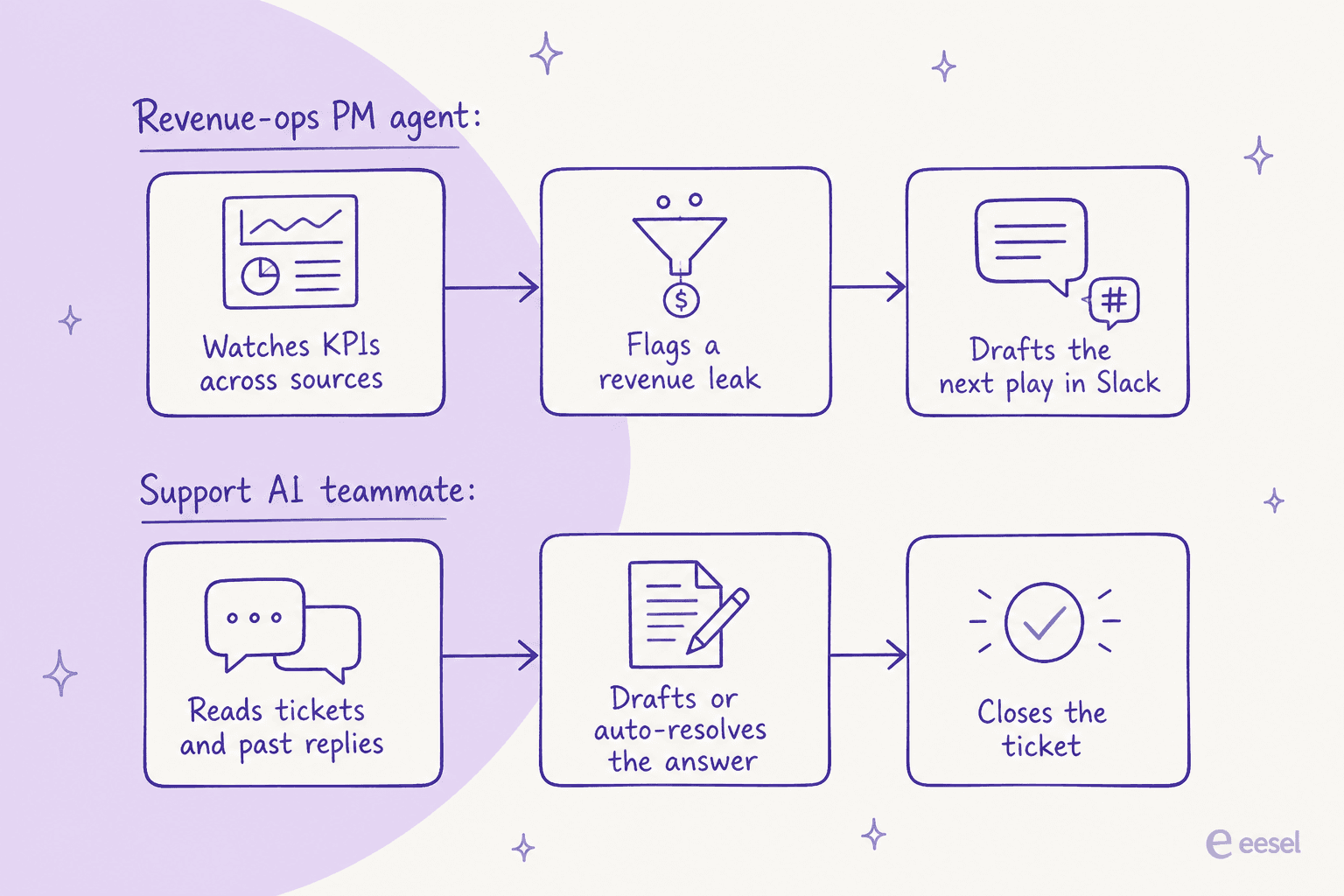
I have spent the last few years building and running AI on live support queues at eesel, and the thing I have learned the hard way is that "an AI agent that lives in your tools and acts" is a category, not a product. The right pick depends entirely on which tool and which job. So the useful version of this post is not "here are ten Refix clones," it is "here is where to go based on what you were actually trying to fix."
Why people look for Refix AI alternatives
Refix is easy to like on the demo. The reasons to keep shopping are less about the pitch and more about maturity and fit.
It is very early. Refix is a small, founder-led startup (the team came out of Headout) that has pivoted twice: it started as a cookieless analytics tracker, became a GA4 Slack agent called Prism, and is now the "revenue-obsessed AI product manager." The homepage shows a logo strip of early users like Headout and Razorpay, but there is effectively no independent review footprint: no G2, Capterra, or Trustpilot reviews, no Product Hunt launch, no Hacker News thread. The one real outside discussion I found was a thoughtful r/ProductManagement thread where a skeptic warmed up only after seeing a concrete sample insight.
It is narrow and Slack-first. Refix is built for growth, revenue, and product teams who live in Slack. If your problem is a support queue, an ecommerce inbox, or an IT service desk, you are trying to force a revenue tool into a support shape.
The security posture is startup-grade. Refix runs on Google Cloud in the EU, encrypts data at rest, and says it does not train on your data. But it is GDPR-only: no HIPAA, and the docs list no SAML SSO, no token rotation, and no bug bounty. That is fine for a Slack growth pilot and a real question mark if you are putting customer data through it.
Pricing is credit-based and thin at the top. The free tier (7,000 credits a week, 2 connectors) is framed as "launch week only," and Pro is a flat $150 a month for 150,000 credits. Credits are hard to forecast before you have run the thing, which is the same complaint people have about a lot of AI pricing.
None of that makes Refix bad. It makes it a specific bet for a specific team. If that is not you, here is where to look.
I need to automate customer support tickets
I run an ecommerce store
I am a large enterprise buying an agent platform
I actually do want a revenue / growth analytics agent
How I picked these alternatives
Since Refix is an "AI agent that plugs into your stack and does the work," I kept the list to tools that do the same thing, then sorted them by the job they are best at. For each one I looked at what it actually automates, its real 2026 pricing and billing unit (per resolution, per session, per conversation, or per ticket, because those are very different), where it is strong, and where it genuinely falls short. Prices below come from each vendor's own pricing page, checked in August 2026.
Here is the whole list at a glance.
| Tool | Best for | AI billing unit | Entry AI price | Free tier | Standout | Watch-out |
|---|---|---|---|---|---|---|
| eesel AI | Support automation across any helpdesk | Credits (1 per ticket or chat) | From $299/mo for 500 credits, no per-seat fee | 100 free credits | Simulation on past tickets before go-live | Newer brand than the incumbents |
| Salesforce Agentforce | Enterprises on Salesforce | Per conversation / Flex credits | $2/conversation | $0 Foundations | Acts across the Salesforce platform | Complex, Salesforce-centric |
| Sierra | Enterprise voice and chat agents | Per outcome (quote-only) | Contact sales | No | Outcome-based, customer-facing | No public pricing |
| Zendesk AI | Teams already on Zendesk | Per automated resolution | Suite Team $55/agent/mo | 14-day trial | Deep native ticketing | Per-seat plus per-resolution stacks up |
| Freshdesk (Freddy) | Affordable native support AI | Per Freddy session | Growth $19/agent/mo | Yes | Cheap entry, 500 sessions included | Sessions bill on top of seats |
| Gorgias | Ecommerce and Shopify support | Per automated interaction | AI add-on from $30/mo | 7-day trial | Order-aware ecommerce automation | Ecommerce-only focus |
| IrisAgent | Mid-market omnichannel support | Not disclosed publicly | Standard from $500/mo | Yes (IrisGPT) | Chat, email, and voice in one | Opaque per-unit pricing |
| Crisp | Small teams wanting all-in-one | AI credits | Mini $45/mo per workspace | Yes (no AI) | Cheap, bundled live chat + AI | Trains on docs, not past tickets |
Now the detail, starting with the one I would try first.
1. eesel AI
Best for: teams that want an AI teammate for support (or content) that plugs into the tools they already run, without ripping anything out.
eesel AI is the closest thing on this list to Refix's own "hire an AI teammate, don't buy another dashboard" philosophy, aimed at a job people actually staff for. The idea is that you hire ready-to-work teammates: an AI helpdesk agent that handles customer tickets, and an AI blog writer that researches and drafts posts in your voice. Each arrives already knowing how to do its job.

Where Refix reads dashboards, the eesel helpdesk teammate reads your support history. It connects to your existing helpdesk and knowledge, learns from your solved tickets rather than just your help center, and searches all of it at once to answer a live ticket. It is the same "plugs into your stack and acts" pattern, just pointed at the queue.
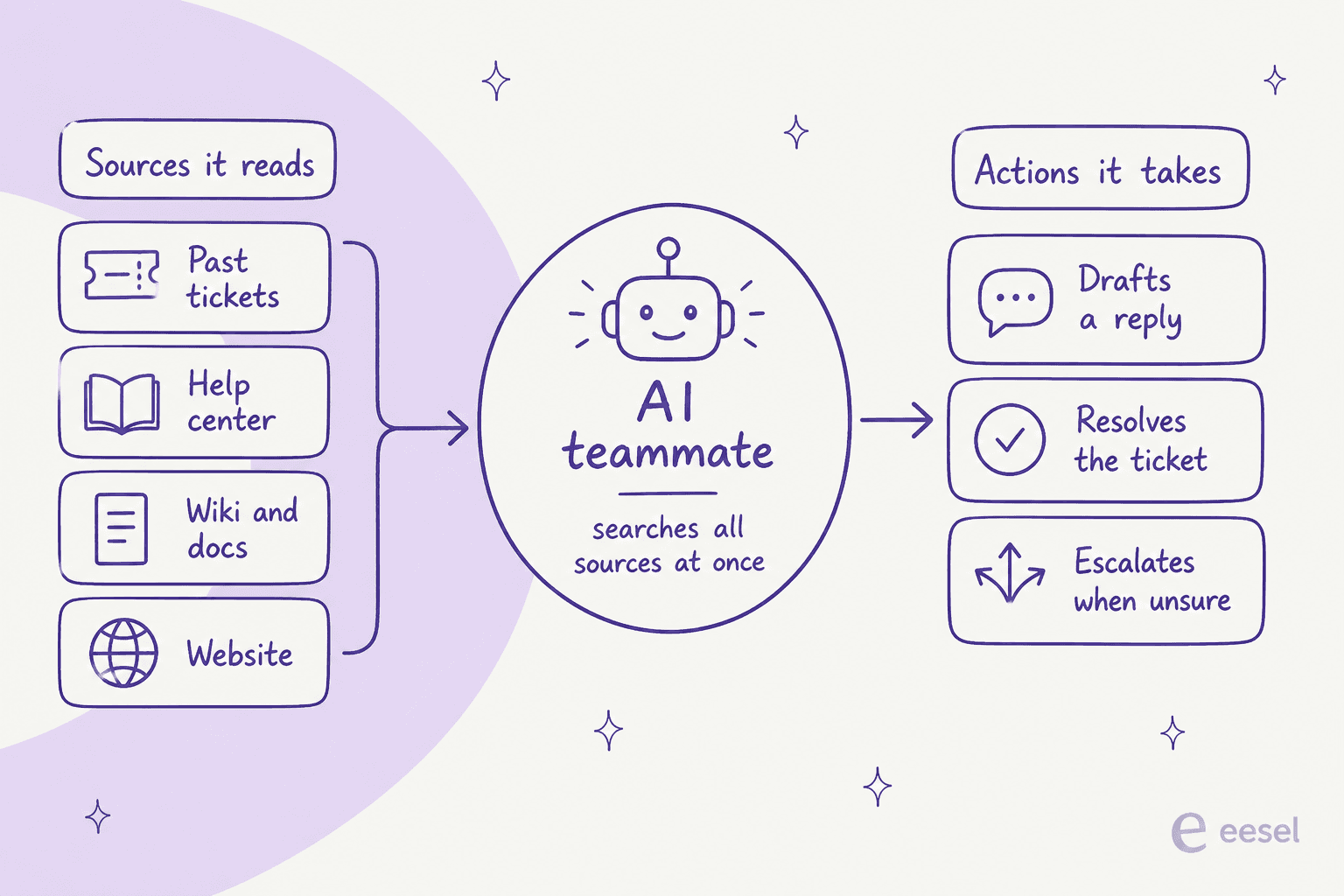
The part that matters if you have been burned by a confident bot: eesel runs a simulation over your real historical tickets before it ever touches a live conversation, so you can see the resolution rate and the actual replies first. Low-confidence answers get drafted for review instead of sent. That is the guardrail I wish more tools shipped with.
Pros:
- Plugs into Zendesk, Freshdesk, Slack, and your website at once, so one agent covers every channel.
- Simulation mode tells you the real resolution rate before go-live.
- Transparent credit-based pricing (1 credit per ticket or chat) with no per-seat fee, so scaling your team does not scale the bill.
- Live in about 30 minutes, no implementation project.
Cons:
- It is a newer brand than Zendesk or Salesforce, so it will not show up on a procurement checklist by default.
- HIPAA and a signed BAA are Enterprise-tier only.
- The blog writer and helpdesk teammate are the current roster, so it is not a general-purpose "do anything" agent.
Pricing: one fixed monthly price sized to volume, with no platform fee and no per-seat fee: 500 credits for $299/month, 1,000 for $499/month, 2,500 for $999/month, 5,000 for $1,899/month (1 credit per ticket or chat, however long). You start with 100 free credits. A team routing 1,000 tickets a month to the AI pays $499/month. SSO and MFA are an add-on from $199/month, and HIPAA is available on request.
Our take: if the reason you found Refix is "I want an AI that does a real job inside my tools," and that job is support, this is where I would start. The fixed monthly credit plan and the simulation step are the two things that make it easy to try without a leap of faith. It resolves up to 73% of tier-1 tickets for teams like Gridwise in the first month, per its helpdesk agent page.
"In the first month, eesel is resolving 73% of our tier 1 requests. eesel offers easy Zendesk implementation and setup. Our team implemented and achieved results quickly during our 7-day trial."
Gridwise, via the eesel helpdesk agent page
2. Salesforce Agentforce
Best for: enterprises already standardized on Salesforce that want agents acting across CRM, service, and data.
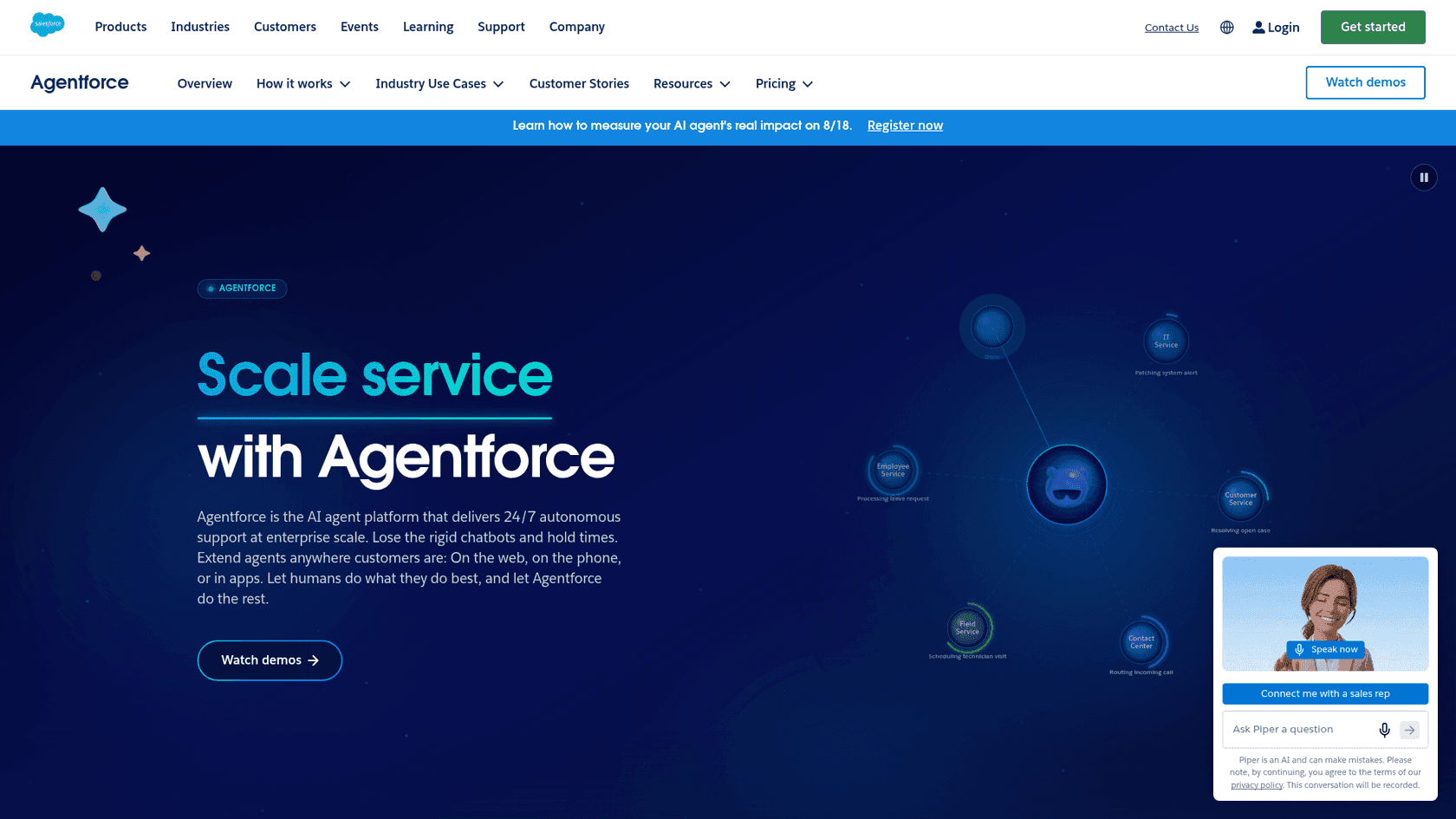
Salesforce Agentforce is the enterprise answer to "an agent that does work across my systems." It is the closest thing here to Refix's cross-tool, act-not-just-report ambition, but at Salesforce scale and inside the Salesforce platform. Agents can look up records, run flows, and take actions across Service Cloud and the wider data model.
Pros:
- Deep, native access to Salesforce data and automation.
- Backed by a huge ecosystem and support org.
- Flexible action-based model that can go well beyond support.
Cons:
- It really only makes sense if you already run Salesforce.
- Setup and governance are a project, not an afternoon.
- Consumption pricing can get hard to predict at volume.
Pricing: you can start free through Foundations, then pay $2 per conversation, or move to Flex Credits at $500 per 100,000 credits ($0.005 each) billed per action.
Our take: if you are a Salesforce shop, Agentforce is the natural pick and a serious platform. If you are not, the gravity of the Salesforce ecosystem is a reason to look at something lighter. It is overkill as a Refix replacement for a small team.
3. Sierra
Best for: larger companies that want a polished, customer-facing voice and chat agent and will pay for outcomes.
Sierra, from Bret Taylor's team, builds conversational AI agents that talk to your customers directly across chat and voice. It is high-end and design-led, and it leans hard into the idea that you should pay for resolved outcomes, not seats.

Pros:
- Strong, natural voice and chat experiences.
- Outcome-based pricing aligns cost with results.
- Enterprise-grade polish and support.
Cons:
- No public pricing at all; everything is a sales conversation.
- Outcome pricing can be opaque until you model your own volume.
- Built for scale, so it is a heavy lift for a small team.
Pricing: quote-only and outcome-based. There are no plans or numbers on the site; you talk to sales.
Our take: Sierra is excellent at what it does, but it sits at the opposite end of the spectrum from a self-serve Slack tool like Refix. If you want to try before you buy, the lack of a public price and a free path is a real barrier.
4. Zendesk AI
Best for: teams that already run Zendesk and want to switch on native AI without adding another vendor.
If your support already lives in Zendesk, its built-in AI agents are the path of least resistance. They resolve tickets natively, tap your help center, and fit the workflows your team already knows.

Pros:
- Deeply integrated with Zendesk ticketing and reporting.
- Mature, well-documented, and widely supported.
- No extra vendor to add if you are already on Zendesk.
Cons:
- The native agent mostly learns from your help center, not the full depth of your past tickets.
- Per-seat plans and per-resolution AI charges stack on top of each other.
- You are locked into the Zendesk world.
Pricing: the Suite Team plan starts at $55 per agent per month, and AI agents bill per automated resolution on a tiered model (Zendesk has dropped the old flat $1.50/$2.00 per-resolution figure from its public page in favor of a tiered "pay for value" structure with an included allowance).
Our take: convenient if you are already there, and genuinely capable. The catch is total cost: you pay for seats and resolutions, and the agent's ceiling is set by your help center. A tool that also learns from past tickets and bills per ticket, like eesel, will often do more for less.
5. Freshdesk (Freddy AI)
Best for: small and mid-size teams that want capable native support AI at the lowest sticker price.
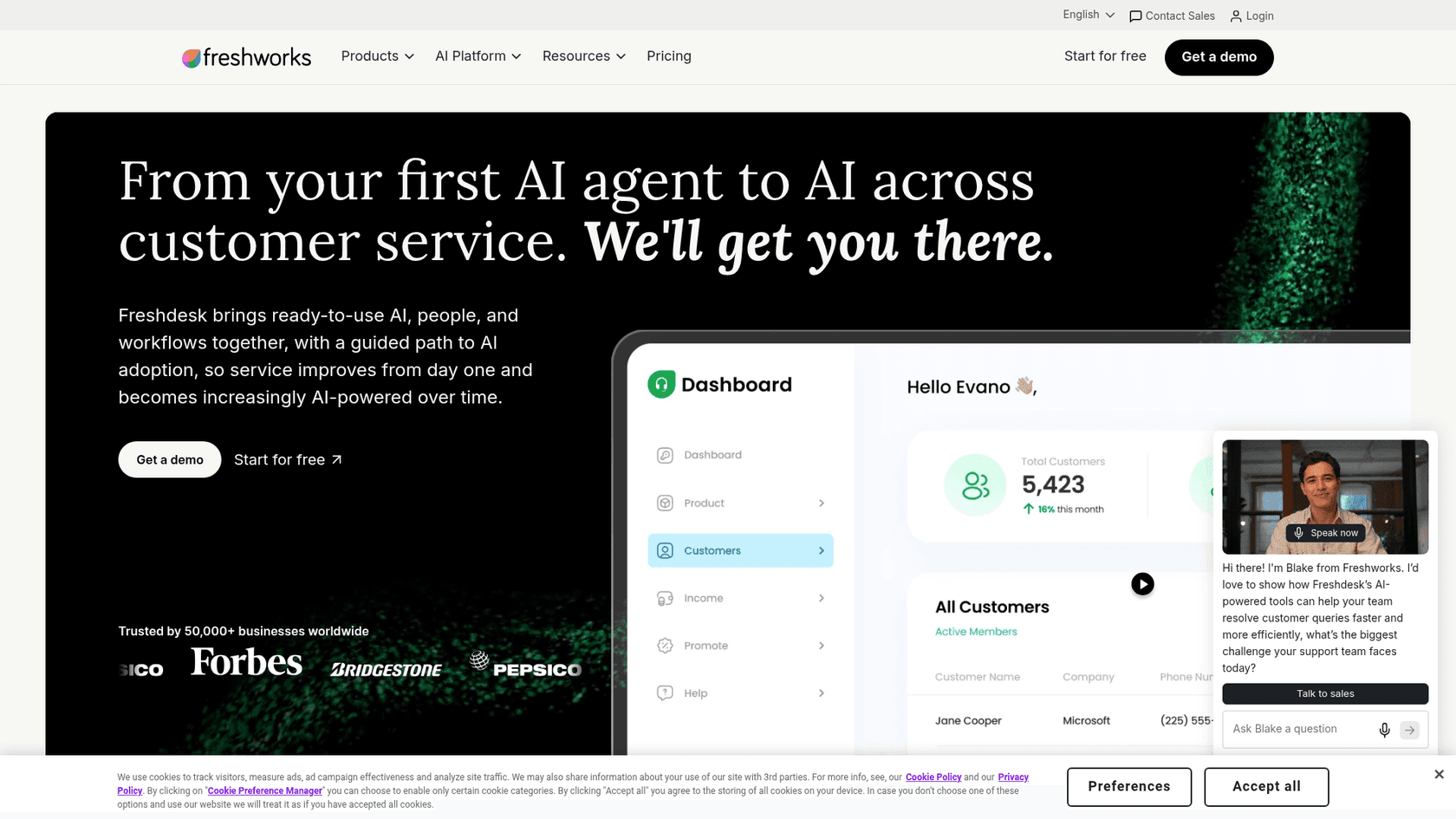
Freshdesk's Freddy AI Agent is the budget-friendly native option. It handles common questions, deflects tickets, and is inexpensive to switch on, which makes it a sensible landing spot if you are cost-sensitive and already on Freshworks.
Pros:
- The cheapest native entry point here, with a free plan to start.
- Freddy sessions are bundled generously on paid tiers.
- Simple to set up inside Freshdesk.
Cons:
- Freddy sessions bill on top of your per-agent seats.
- The AI depth trails the enterprise players.
- You are inside the Freshworks ecosystem.
Pricing: the Growth plan is $19 per agent per month and includes 500 Freddy AI Agent sessions; extra sessions are $49 per 100. See the full Freshdesk AI pricing breakdown for the details.
Our take: the best value among the native helpdesk options, especially for smaller teams. Just do the math on sessions plus seats at your volume, because the two meters together can catch you off guard.
6. Gorgias
Best for: ecommerce and Shopify stores that want an AI agent fluent in orders, refunds, and exchanges.
Gorgias is the ecommerce-native pick. Its AI is built around store data, so it can pull Shopify order info into replies and tell a refund request apart from an exchange. Refix even name-checks D2C teams, so this is a natural landing spot for that crowd.

Pros:
- Purpose-built for ecommerce support workflows.
- Order-aware automation out of the box.
- Tight Shopify and helpdesk integration.
Cons:
- The ecommerce focus makes it a poor fit outside retail.
- The AI Agent is a paid add-on on top of the helpdesk plan.
- Per-interaction overage adds up on high volume.
Pricing: the AI Agent add-on starts around $30 a month on the Starter plan and bills per automated interaction, at about $1.50 each past your included allotment.
Our take: for a Shopify store, Gorgias is hard to beat on ecommerce fluency. If you want that same order-aware automation without committing to a new helpdesk, eesel plugs into the helpdesk you already have and does the ecommerce work too.
7. IrisAgent
Best for: mid-market support teams that want one grounded agent across chat, email, and voice.
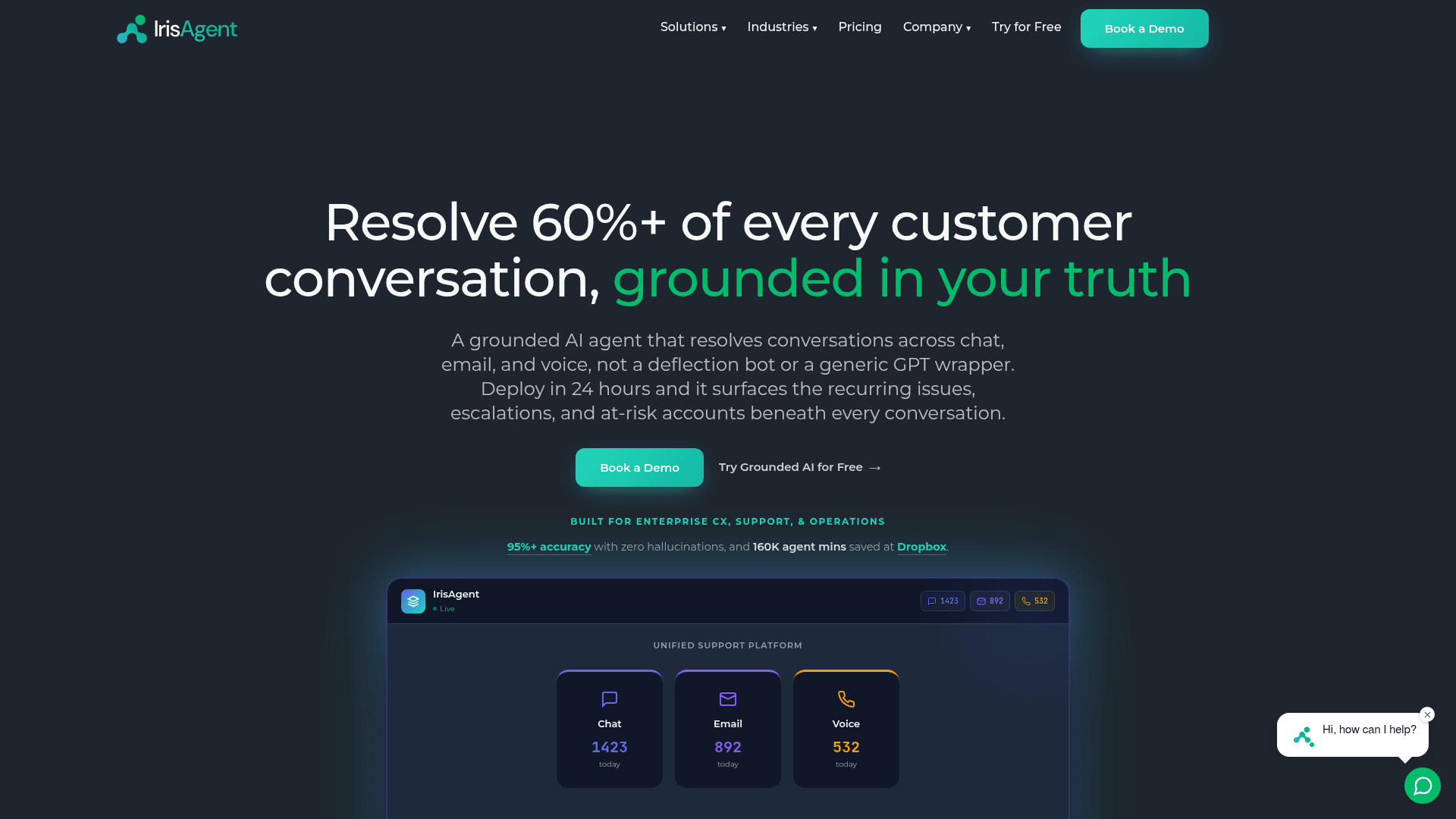
IrisAgent resolves conversations across channels and positions itself as "grounded in your truth," not a generic GPT wrapper. It surfaces recurring issues and at-risk accounts underneath your tickets, which is the one place it rhymes with Refix's "spot the problem before it costs you" angle.
Pros:
- Chat, email, and voice handled in one agent.
- Surfaces recurring issues and escalations under the volume.
- A free IrisGPT tier to test the waters.
Cons:
- Per-unit AI pricing is not published, so you need a sales call to model cost.
- The jump from free to the first paid tier is steep.
- Smaller ecosystem than the incumbents.
Pricing: a free tier with the IrisGPT chatbot, then the paid Standard tier starts at $500 a month; the per-resolution AI cost is not disclosed publicly.
Our take: a solid omnichannel option with a genuinely useful analytics layer. The opaque pricing is the friction; if you want a number you can plan around before talking to sales, eesel's per-ticket rate is easier to reason about.
8. Crisp
Best for: small teams that want live chat, a shared inbox, and an AI helpdesk bundled cheaply.
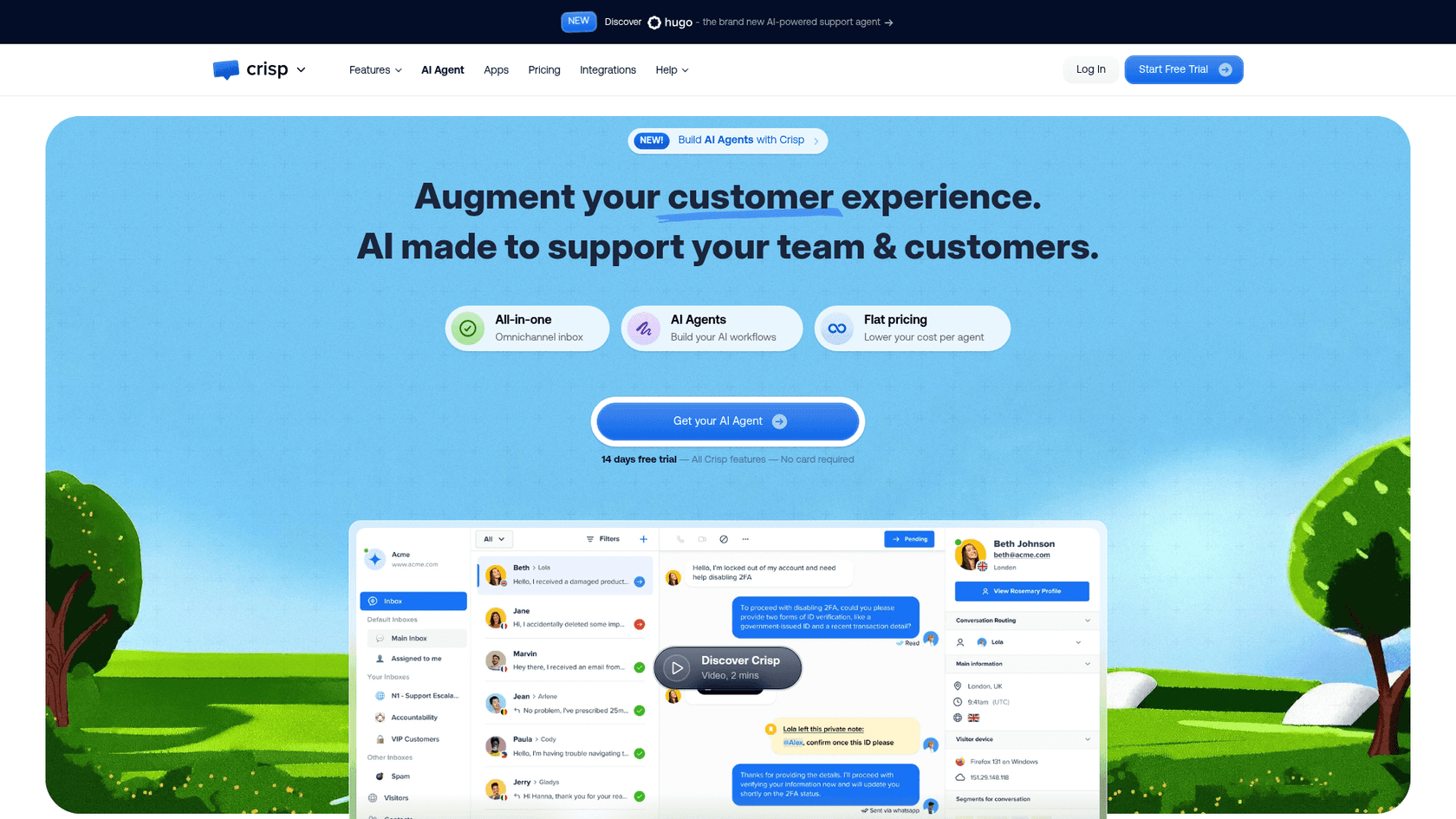
Crisp is the all-in-one for small businesses: live chat, a shared inbox, and an AI helpdesk in one affordable package. If you want one bill and one login, it is appealing.
Pros:
- Cheap, with a lot bundled into one plan.
- Live chat and AI in the same tool.
- Friendly for small teams and startups.
Cons:
- The AI trains on snippets, a website crawl, uploaded files, and your knowledge base, but not your past ticket history.
- The free plan has no AI at all.
- Best suited to smaller volumes.
Pricing: the Mini plan at $45 a month per workspace is the first tier with AI (a $5 credit bundle covers roughly 90 automated conversations), metered in AI credits. The free plan includes no AI. Full Crisp pricing is on their site.
Our take: good value for a small team that wants everything in one box. The limit to know is that it learns from your documented knowledge, not your resolved tickets, so it will not match the accuracy of a tool trained on how your team has actually answered before.
Try eesel
If you came here because Refix showed you how good "an AI teammate that lives in your tools and does the work" can feel, but you need that teammate pointed at your support queue, that is exactly what eesel AI is. You do not configure a platform; you hire a ready-to-work teammate. The AI helpdesk agent plugs into the helpdesk you already run, learns from your real past tickets, and answers across Zendesk, Freshdesk, Slack, and your website at once. And when writing is the job, the AI blog writer does that end to end.
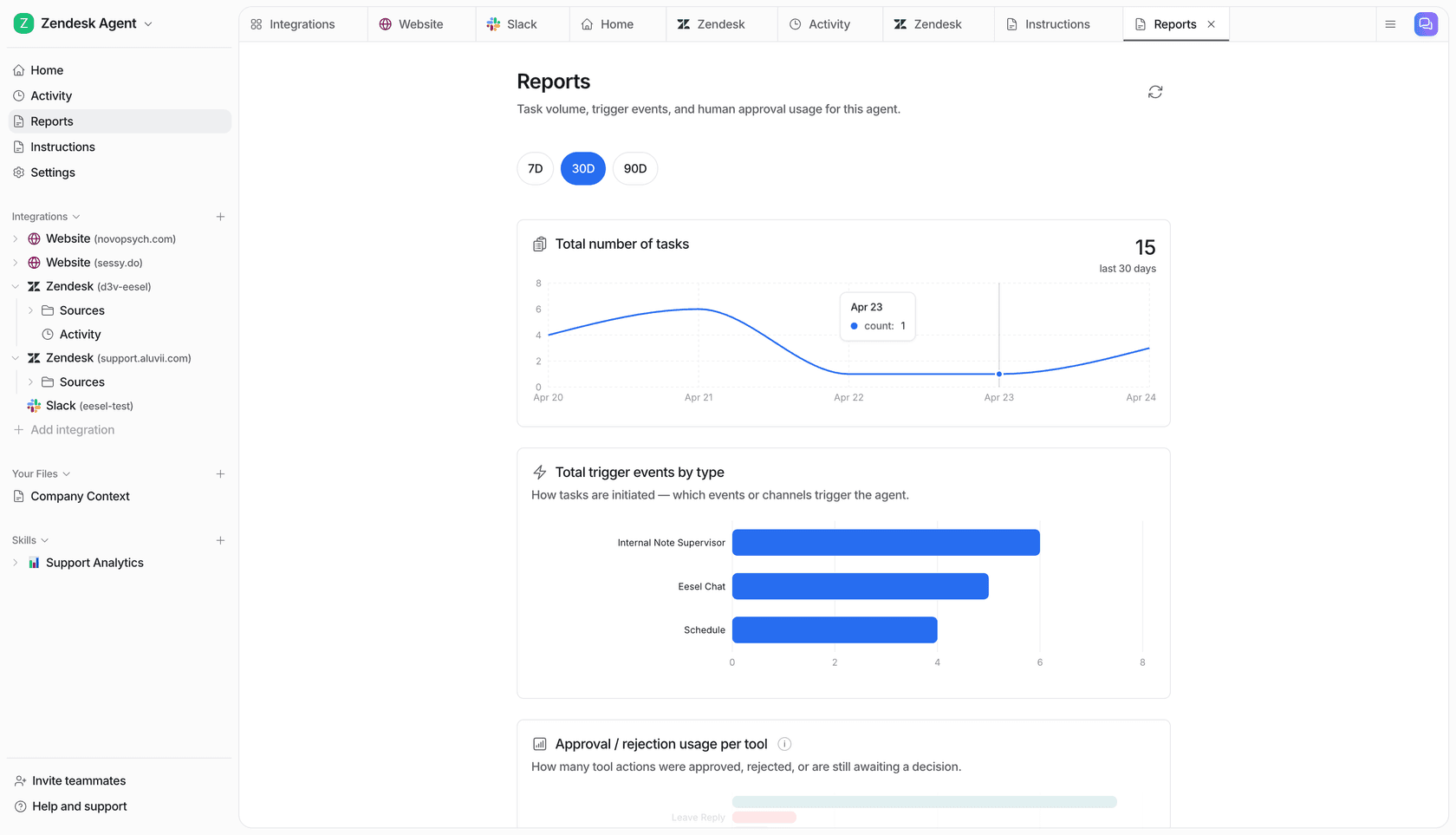
The differentiator is that you can simulate it on your own history first, see the real resolution rate, and only then go live, all on one fixed monthly price with no per-seat fee. You can start with 100 free credits and be live in about 30 minutes.