The 8 best Thareja AI alternatives for customer support in 2026

Riellvriany Indriawan

Katelin Teen
Last edited October 6, 2026

Why teams start looking past Thareja AI
Let me be fair to Thareja AI first, because it is doing something specific and doing it with a point of view. Its flagship, MagicAgent (branded as the AI worker "Preeya"), is pitched as a 24/7 front office for local and service businesses: it answers phone calls in under three rings, books appointments, chases overdue invoices, and asks for reviews after a job. Founder and CEO Dhiraj Thareja frames it as "the front desk every business wishes it had," and the company pairs the AI with a managed global talent team plus a built-in time-tracking and payroll suite. For a plumber or a law firm losing leads to missed calls, that is a genuinely coherent story.
The reason people end up on a page like this one is usually that their situation is a bit different. Here is where the friction shows up.
The AI support price is behind a demo. Thareja's public pricing page covers only its project-management and time-tracking product (Free, then Gold at $10 per seat per month). For the AI customer support agent, both Capterra and Software Advice list pricing as "available upon request," and the site's main call to action is Book a Demo. If you just want to know what an AI support tool costs before you talk to sales, that is a wall.
It wants to be your whole front office. MagicAgent is built to take over calls, texts, social DMs, and email, and to route the hard stuff to Thareja's own managed team. That is a big commitment if you already have agents and a helpdesk you like. Teams switching toward an AI agent often want the opposite: keep the system you have, and add AI on top.
The reviews are thin. Thareja shows a perfect 5.0 out of 5, but across only 14 reviews on Capterra, all five-star, several posted the same day, on a young listing. That is an early, seeded-looking review set, not an established track record, so I would not lean on the score much either way. The reviews that do exist are positive and concrete, though, like this one from a Shopify seller:
"Started using it to fix one specific problem. Customers were messaging at all hours and I was losing sales because answers came too late. The bot handles the easy questions on its own now and only pings me for the real ones... The Shopify integration is the strongest part."

None of this makes Thareja bad. It makes it a specific tool for a specific buyer. If you are not that buyer, here is what I would look at instead.
What I looked for in an alternative
I spend my days on a support queue, so I judged these the way I would judge a tool I actually have to live with, not by feature-count. Four things matter most.
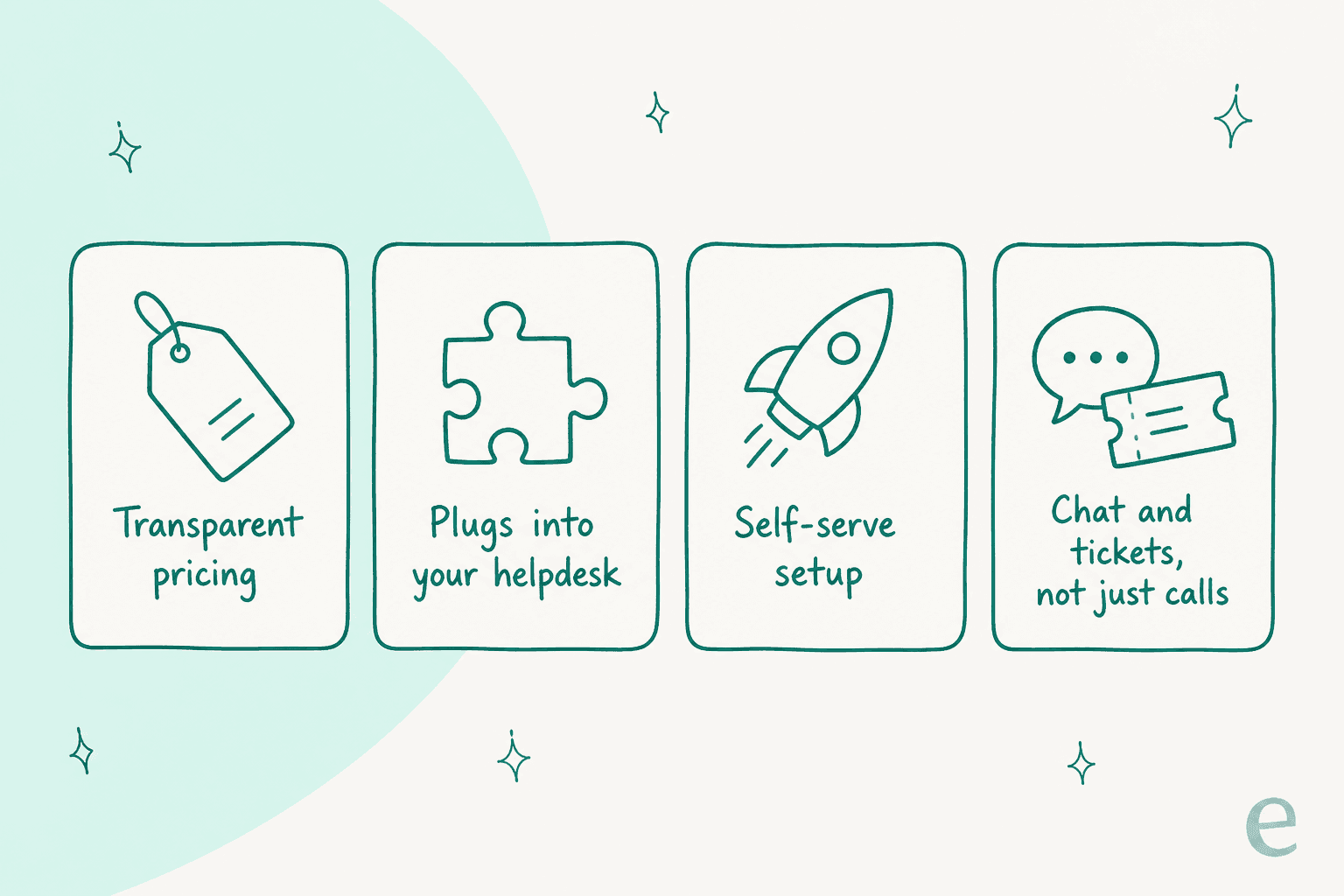
- Transparent pricing. Can I see a real number without a sales call, and do I understand the billing unit? This is where most AI support tools quietly differ.
- Does it plug into my helpdesk? If I already run Zendesk or Freshdesk, I want to keep it, not migrate to a new front office.
- Self-serve setup. Can I try it myself in an afternoon, or does every path lead to "book a demo"?
- Chat and tickets, not just calls. Thareja is phone-first. Most support teams live in tickets and chat, so the tool has to be strong there.
One more thing I care about, because it is the scar we carry at eesel after years of running AI on live queues: can you test it before it talks to a customer? A confident-sounding bot that gives wrong answers is worse than no bot. The tools that let you simulate against your own history first are the ones I trust to go live.
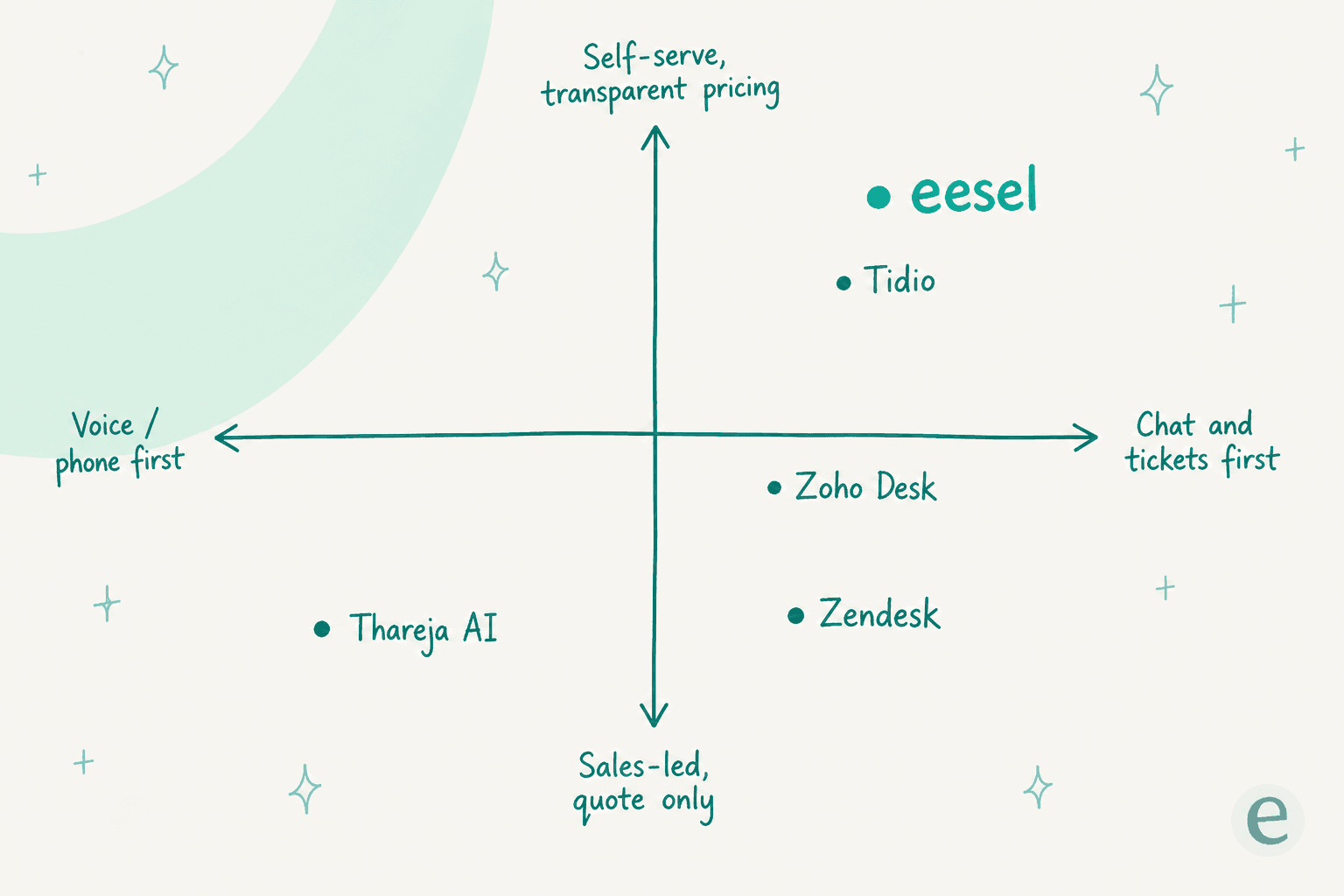
Here is roughly how the field sorts out on the two axes that matter most: how you buy (self-serve vs sales-led) and what the tool is built around (voice vs tickets and chat).
The 8 best Thareja AI alternatives
1. eesel AI
Best for: teams that already run a helpdesk and want transparent, self-serve AI on top of it.
I build and run eesel, so treat this as the house pick, but I will keep it concrete. eesel AI is an AI teammate platform: you hire a ready-to-work AI helpdesk teammate that joins your existing support queue, looks up orders and records, tags tickets, and drafts or sends replies. The difference from Thareja is the starting assumption. eesel does not want to replace your front office; it plugs into the one you have.
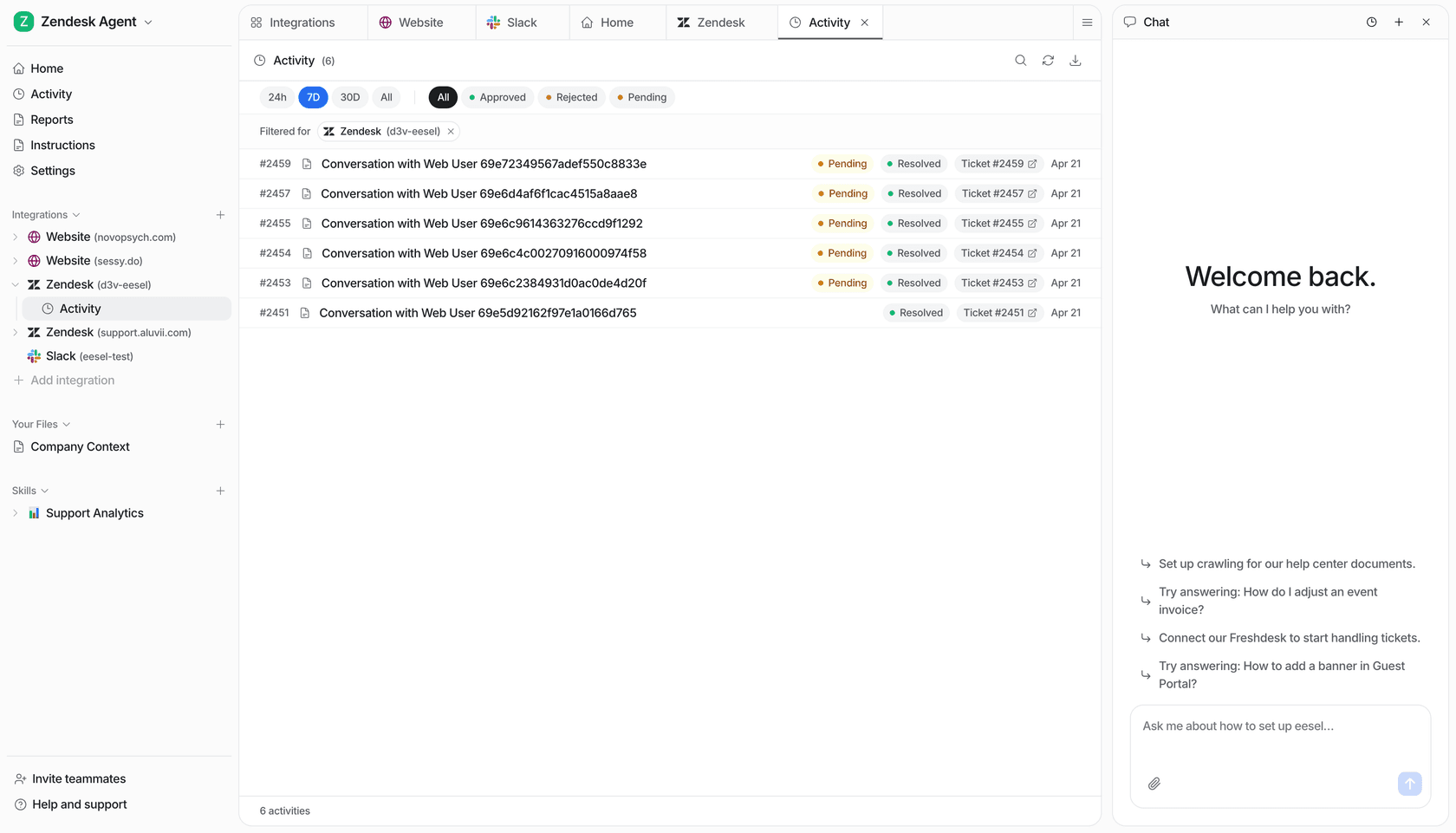
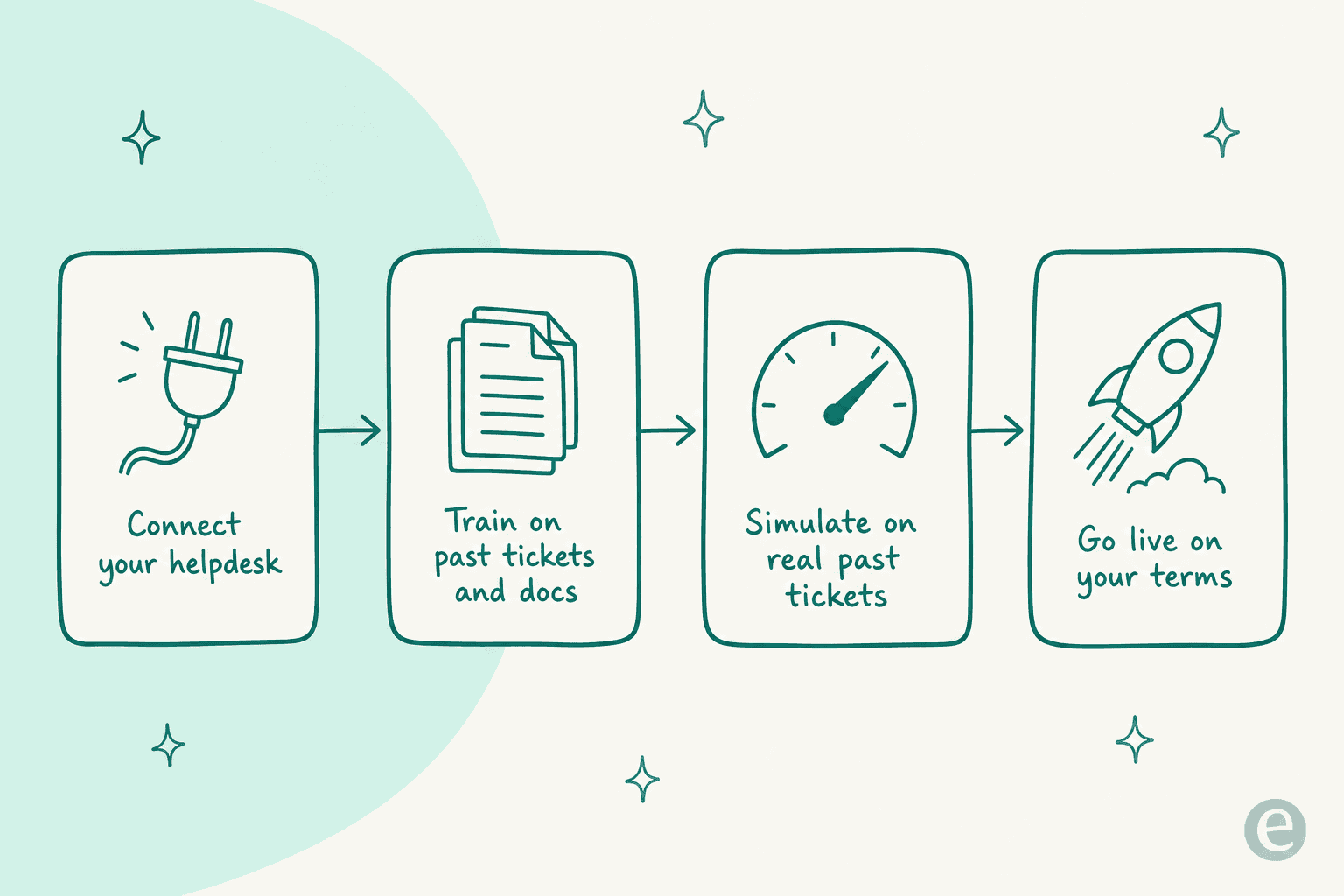
It trains on your past tickets, help center, and docs, and connects to Zendesk, Freshdesk, Gorgias, Help Scout, Slack, Shopify and 1,000+ other integrations. If you do not have a helpdesk, there is also a chat widget you paste onto any site with one script tag. The part I would not shut up about: you can simulate the AI on thousands of your real historical tickets before it ever replies to a customer, so you see the resolution rate and the exact answers first.
- Features: AI helpdesk teammate that drafts or auto-replies inside your helpdesk, trains on past tickets and knowledge sources, simulation on historical tickets, order and record lookups, and a separate AI blog writer teammate under the same account.
- Pros: genuinely self-serve (start free, no sales call), keeps your existing helpdesk, and the clearest billing unit in this list.
- Cons: it is an AI layer, not a full-blown ticketing system, so you do need a channel or helpdesk to point it at. HIPAA and a BAA are Enterprise-only, and SOC 2 Type II is in progress rather than certified.
- Pricing: one fixed monthly price from $299/month for 500 credits (1 credit per ticket or chat, however long), with no per-seat fees and no platform fee. You start with 100 free credits, no card. Pay a year upfront and get two months free. SSO and MFA and priority support are add-ons, and EU or US data residency is included.
Verdict: if your support already lives in a helpdesk and Thareja's book-a-demo, take-over-everything model is the wrong shape, this is the one I would try first. You will know inside an afternoon whether it works, because you can simulate it on your own tickets before spending a cent on a customer reply.
2. Zendesk AI
Best for: larger teams standardizing on Zendesk that want AI inside the same suite.
Zendesk is the enterprise default for a reason: mature ticketing, a deep app ecosystem, and AI agents that now sit inside the same workspace your agents already use. If you are a bigger team and Zendesk is already the center of gravity, keeping AI in-suite is a real advantage.
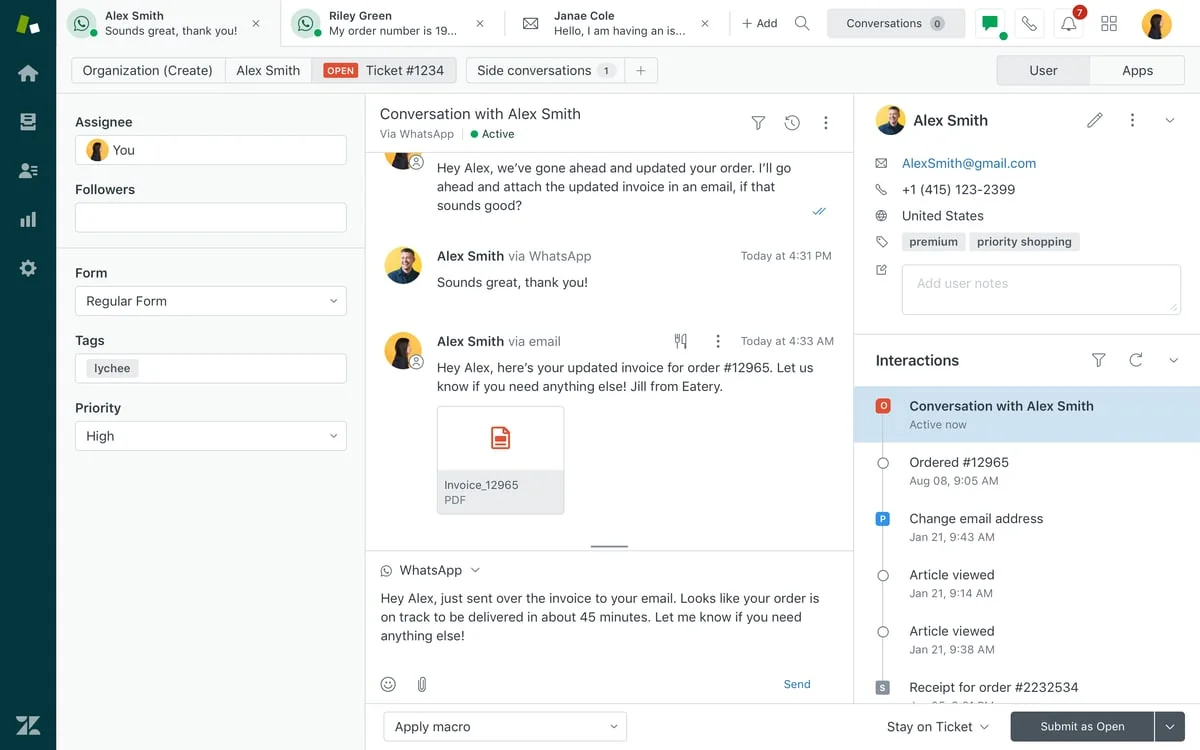
- Features: AI agents for automated resolutions, agent copilot, intelligent triage, and a large marketplace, all inside the Zendesk suite.
- Pros: enterprise-grade, huge integration library, and AI that lives where your agents work.
- Cons: it is priced per agent and per AI resolution, so costs stack. The AI most people want sits on higher tiers, and Enterprise is quote-only.
- Pricing: Suite plans run from $55 per agent/month (annual) upward. Automated resolutions are billed on top at $1.50 committed or $2.00 pay-as-you-go per resolution, with Copilot a $50/agent/month add-on.
Verdict: the safe enterprise choice if you are already invested in Zendesk. If you want AI on Zendesk without the per-agent Advanced AI markup, note that eesel connects to Zendesk directly and uses 1 credit per ticket instead.
3. Freshdesk (Freddy AI)
Best for: small and mid teams that want an all-in-one helpdesk with AI at a fair entry price.
Freshdesk is the value pick among the full suites. It is a complete helpdesk, and crucially, its autonomous Freddy AI Agent is included from the entry paid tier, not locked behind the top plan like a lot of people assume.
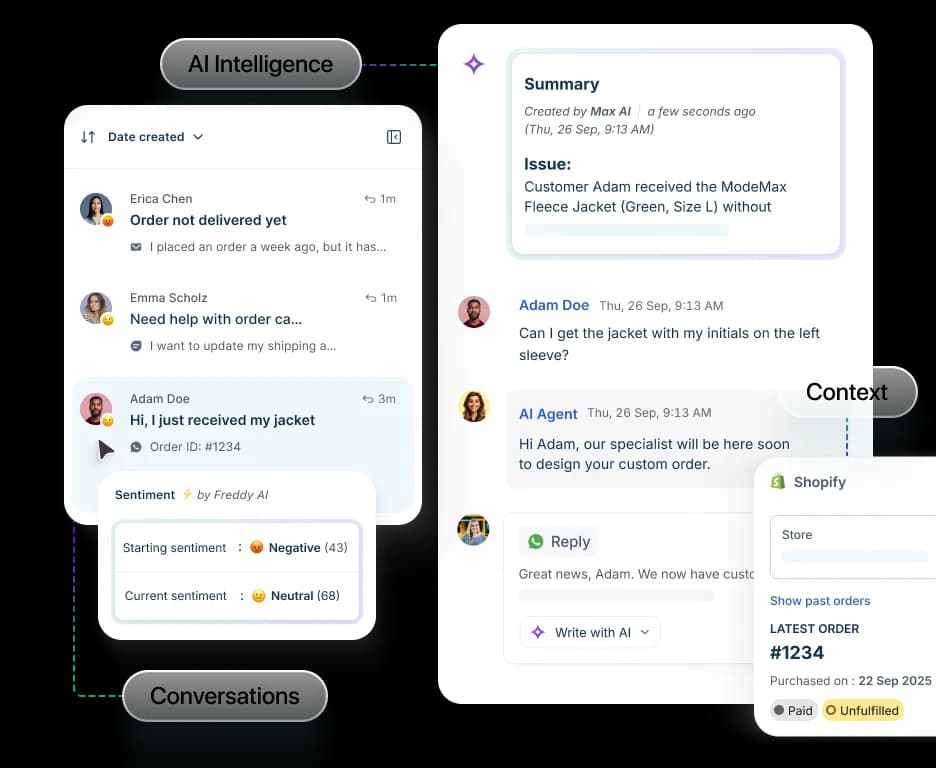
- Features: ticketing, automations, knowledge base, and the Freddy AI Agent for autonomous resolutions, plus a Freddy Copilot for agents.
- Pros: the autonomous agent starts on the $19 Growth plan, and there is a limited free program to kick the tires.
- Cons: the 500 included AI sessions are a one-time allowance, not a monthly refill, and overage sessions add up. Freddy Copilot is a separate Pro+ add-on.
- Pricing: Growth $19 per agent/month (annual), Pro $55, Enterprise $89. Freddy AI Agent includes 500 sessions once, then $49 per 100 sessions ($0.49 each); Copilot is $29/agent/month on Pro and up.
Verdict: the best-value full helpdesk here, and the one I would point a cost-conscious team at. Watch the session meter: a session bills the attempt, so a reopened conversation can bill twice.
4. Gorgias
Best for: ecommerce and Shopify stores that want support tied to orders.
If you sell online, Gorgias speaks your language. It is built around ecommerce support, pulling live order data into the ticket so the AI can answer "where is my order" with a real answer. That Shopify depth is exactly what the Thareja reviewer above liked, and Gorgias goes further with it.
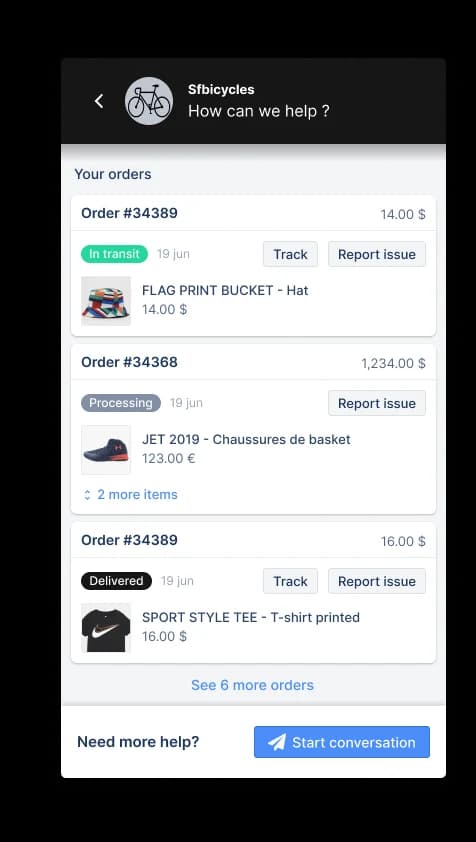
- Features: ecommerce-native helpdesk, AI Agent for automated resolutions, order and subscription actions, and revenue tracking on support.
- Pros: genuinely good at Shopify support and order-aware automation.
- Cons: its AI Agent requires Shopify and is unsupported on BigCommerce, Magento, and WooCommerce. A fully automated ticket can be billed twice (the ticket fee plus the automation fee), and there is no free tier.
- Pricing: plans run Starter $40/month (3 seats, 50 tickets) up to Advanced $1,430. AI resolutions land around $0.85-$1.00 inside your allowance, then $1.50 per automated interaction over it.
Verdict: the right call for a Shopify store, weaker if you are on another platform. If you want the order-aware AI without the Shopify lock, eesel connects to Gorgias and to Shopify directly.
5. Help Scout
Best for: small teams that want simple, human email and chat support with light AI.
Help Scout has always optimized for a calm, human inbox rather than a heavy ticketing console, and that is the whole appeal. Its AI is deliberately light-touch: drafts, summaries, and an AI Answers bot, layered onto a shared inbox that is genuinely pleasant to use.
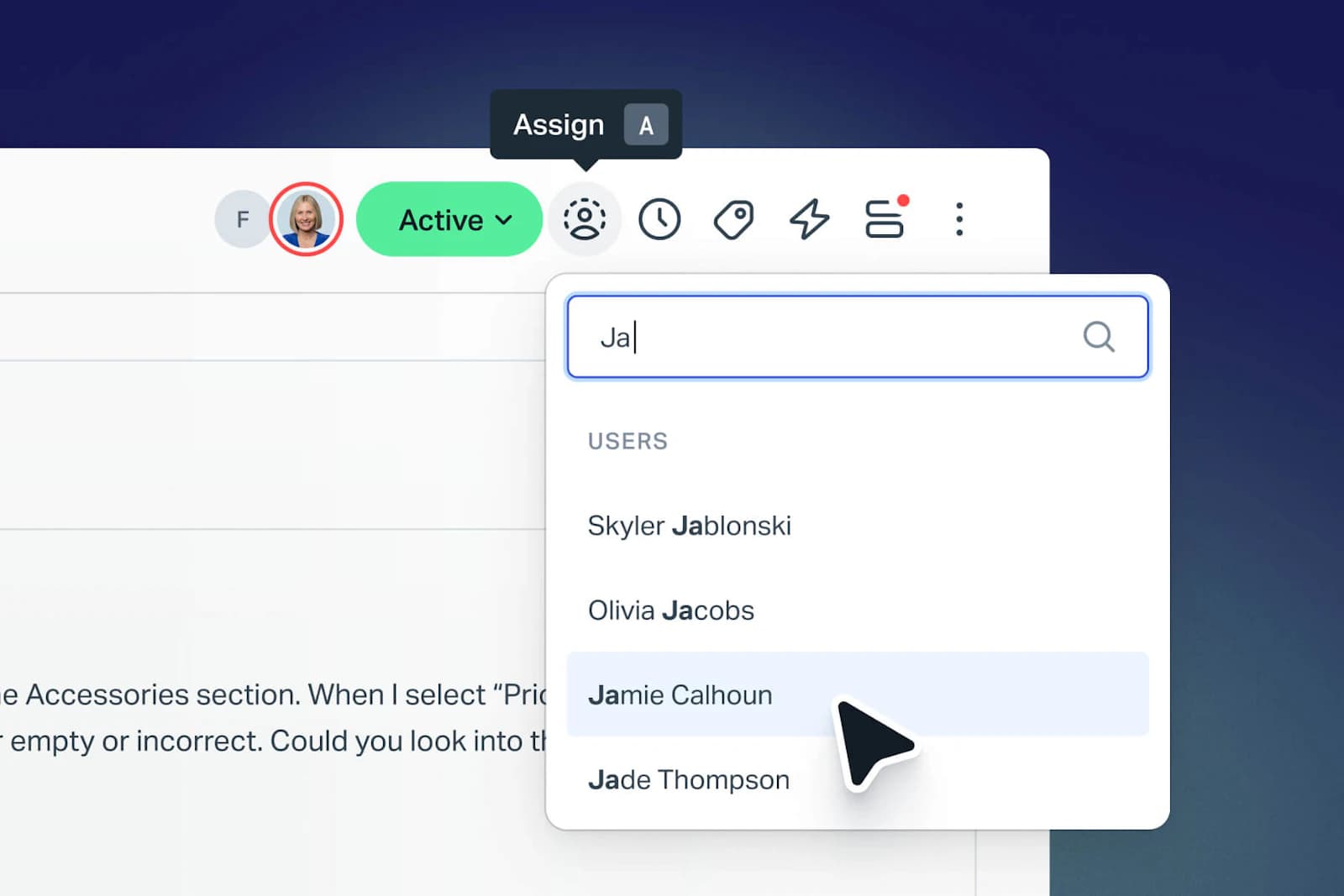
- Features: shared inbox, help center, live chat (Beacon), plus AI drafts, AI summarize, and AI Answers for resolutions.
- Pros: the fairest AI billing rule in this roundup, and a clean product small teams actually enjoy.
- Cons: lighter automation than the suites, and the free plan is capped tightly (5 users, 1 inbox).
- Pricing: Standard $25 per user/month, Plus $45, Pro $75. AI Answers is $0.75 per resolution, counted once per conversation even if the AI answers several questions, and escalations are excluded from billing.
Verdict: lovely for a small team that wants tidy support and a bit of AI. If you outgrow its automation, eesel plugs into Help Scout to add deeper resolution without leaving the inbox. See also Gorgias vs Help Scout if you are weighing the two.
6. HubSpot Service Hub
Best for: teams already living in HubSpot CRM.
If your company runs on HubSpot, Service Hub keeps support in the same place as your customer data, and its Breeze Customer Agent resolves tickets using that CRM context. The pull here is the unified record, not the AI itself.
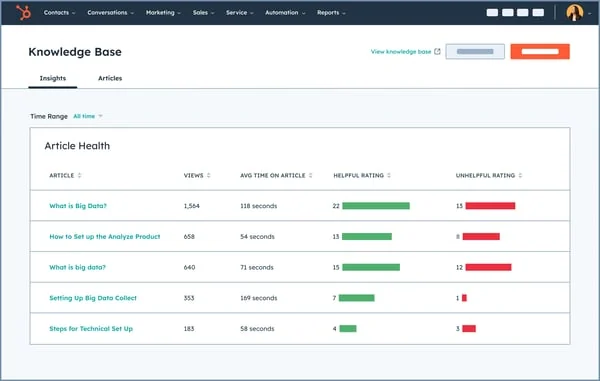
- Features: help desk workspace, knowledge base, and the Breeze Customer Agent for AI resolutions, tightly wired to HubSpot CRM.
- Pros: one system for CRM plus support, and the AI has real customer context to work from.
- Cons: the AI runs on credits that do not roll over, and the math bites: Professional's 3,000 monthly credits work out to roughly 60 AI resolutions a month, about two a day, as this HubSpot AI breakdown walks through. Professional and Enterprise also carry required onboarding fees.
- Pricing: Service Hub Professional is $90 per seat/month (annual) plus a required $1,500 onboarding; Breeze resolutions cost 50 credits, about $0.50 each.
Verdict: worth it if HubSpot is already your CRM; overkill otherwise. If you want Breeze-style resolutions without the credit ceiling, eesel connects to HubSpot and uses 1 credit per ticket instead.
7. Tidio
Best for: very small teams and websites that want a chatbot up fast.
Tidio is the SMB-friendly option, built around a website chat widget and its Lyro AI agent. It is the closest in spirit to Thareja's "answer customers instantly" pitch, minus the phone-first framing and the managed team, and you can get going on a free plan.
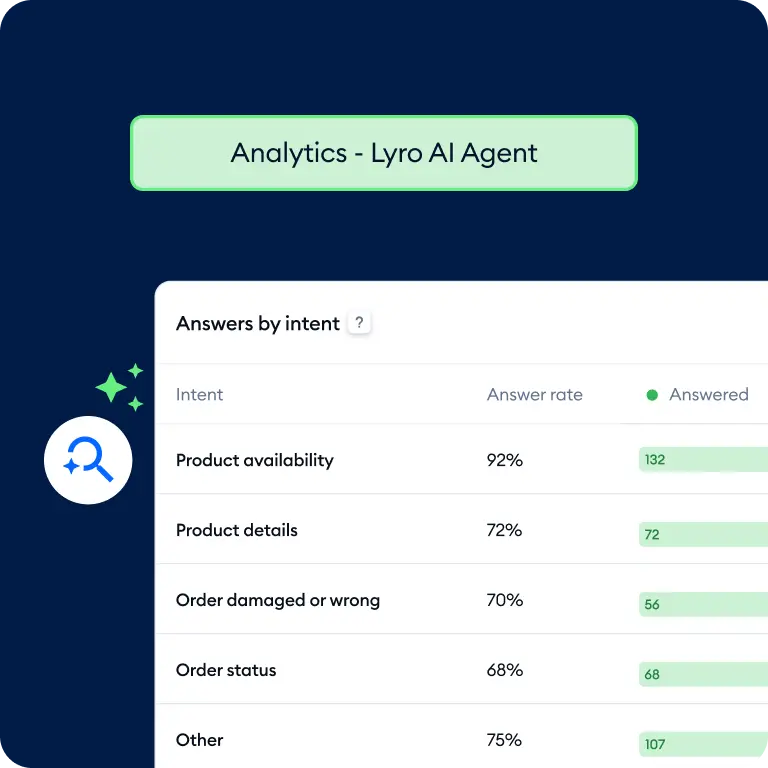
- Features: live chat, chatbot flows, and the Lyro AI agent for automated conversations, with a free tier to start.
- Pros: cheap to begin, easy to install, and Lyro handles common questions without a human.
- Cons: it is aimed at smaller operations, so it is less suited to complex, multi-channel support. The Lyro conversation meter climbs as you scale.
- Pricing: free plan with 50 Lyro conversations (one-time), then Starter $29/month and up. Lyro packs start around $39/month for 50 conversations, laddering to about $0.70 each at volume.
Verdict: a solid, affordable first AI chatbot for a small site. Heavier teams will hit its ceiling; the Tidio AI alternatives worth comparing are mostly the ones already in this list.
8. Zoho Desk
Best for: budget-conscious teams already in the Zoho ecosystem.
Zoho Desk is the value play if you want a real helpdesk plus AI without enterprise pricing, especially if you already use other Zoho apps. Good news for 2026: Zoho stopped locking its AI to the top tier.
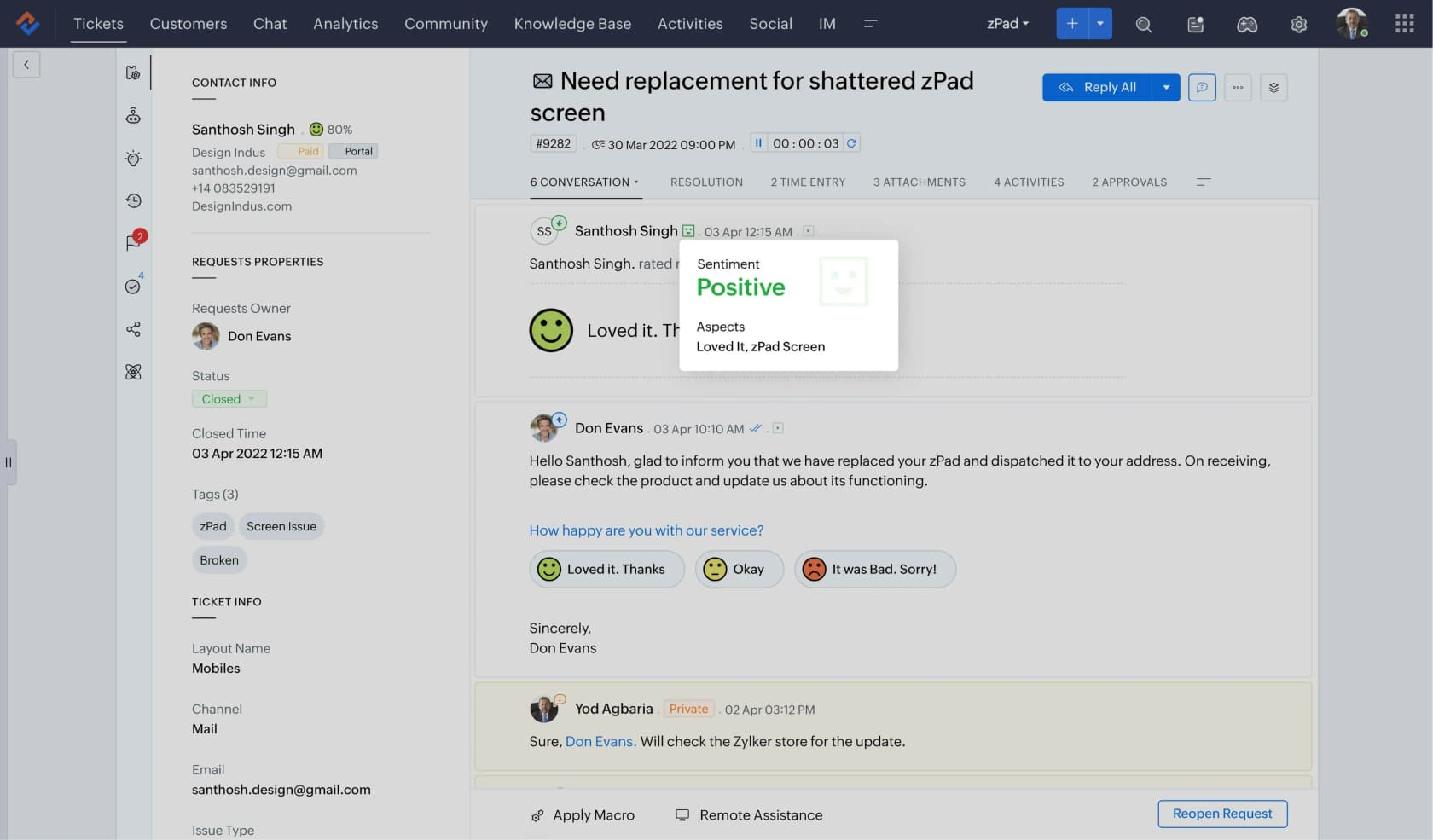
- Features: ticketing, knowledge base, an Answer Bot, and Zia AI for sentiment, summaries, and reply suggestions, plus deep Zoho suite integration.
- Pros: very affordable, and AI now starts on the lower tiers rather than Enterprise.
- Cons: the Answer Bot answers from your knowledge base articles, and Zoho's pricing page lists no other source for it. The Express tier lets you bring your own model key or use Zoho's LLM.
- Pricing: Free for 3 users, Express $7 per user/month, Standard $14 (Answer Bot), Professional $23 (Zia built in), Enterprise $40 (all annual).
Verdict: hard to beat on price inside the Zoho world. If you want a broader knowledge base behind it, eesel connects to Zoho Desk and drafts or sends replies, tags, and routes tickets.
Thareja AI alternatives compared
Here is the whole field on the dimensions that actually move a decision. The AI billing unit is the column I would read first.
| Tool | Best for | Entry price | AI billing unit | Free option | Plugs into your helpdesk? |
|---|---|---|---|---|---|
| eesel AI | Teams with an existing helpdesk | From $299/mo (500 credits), no seats | 1 credit per ticket/chat handled | 100 free credits | Yes, that is the point |
| Zendesk AI | Enterprise on Zendesk | $55/agent/mo | Per resolution ($1.50-$2.00) | No | In-suite |
| Freshdesk | Value all-in-one | $19/agent/mo | Per AI session ($0.49) | 2 agents, 6 months | In-suite |
| Gorgias | Shopify stores | $40/mo | Per automated interaction (~$0.85-$1.50) | Free trial, no card | In-suite (Shopify) |
| Help Scout | Small human-first teams | $25/user/mo | Per resolution ($0.75) | 5 users, 1 inbox | In-suite |
| HubSpot Service Hub | HubSpot CRM users | $90/seat/mo | Per resolution (~$0.50 credits) | Free, 2 users | In-suite |
| Tidio | Tiny teams and sites | $29/mo | Per Lyro conversation | 50 Lyro chats | Chat widget |
| Zoho Desk | Zoho ecosystem, budget | $7/user/mo | Included by tier | Free, 3 users | In-suite |
| Thareja AI | Local service front office | Quote only | Not published | Free trial | No, replaces it |
A quick worked example, because averages hide the sting. Say you route 1,000 tickets a month to AI. On eesel that is $499 a month on the 1,000-credit plan. On a per-resolution suite tool, the same 1,000 tickets billed at $1.50 a resolution is $1,500 before you count the per-agent seat fees on top, and reopened tickets can bill again on a session meter. The unit is not a footnote; it is most of the bill.
Try eesel
If Thareja AI's book-a-demo, take-over-your-front-office model is the wrong shape for you, eesel AI is the alternative I would reach for. It is an AI helpdesk teammate that plugs into the helpdesk you already run, learns from your past tickets and help center, and drafts or resolves tickets inside the tools your agents already open every day.
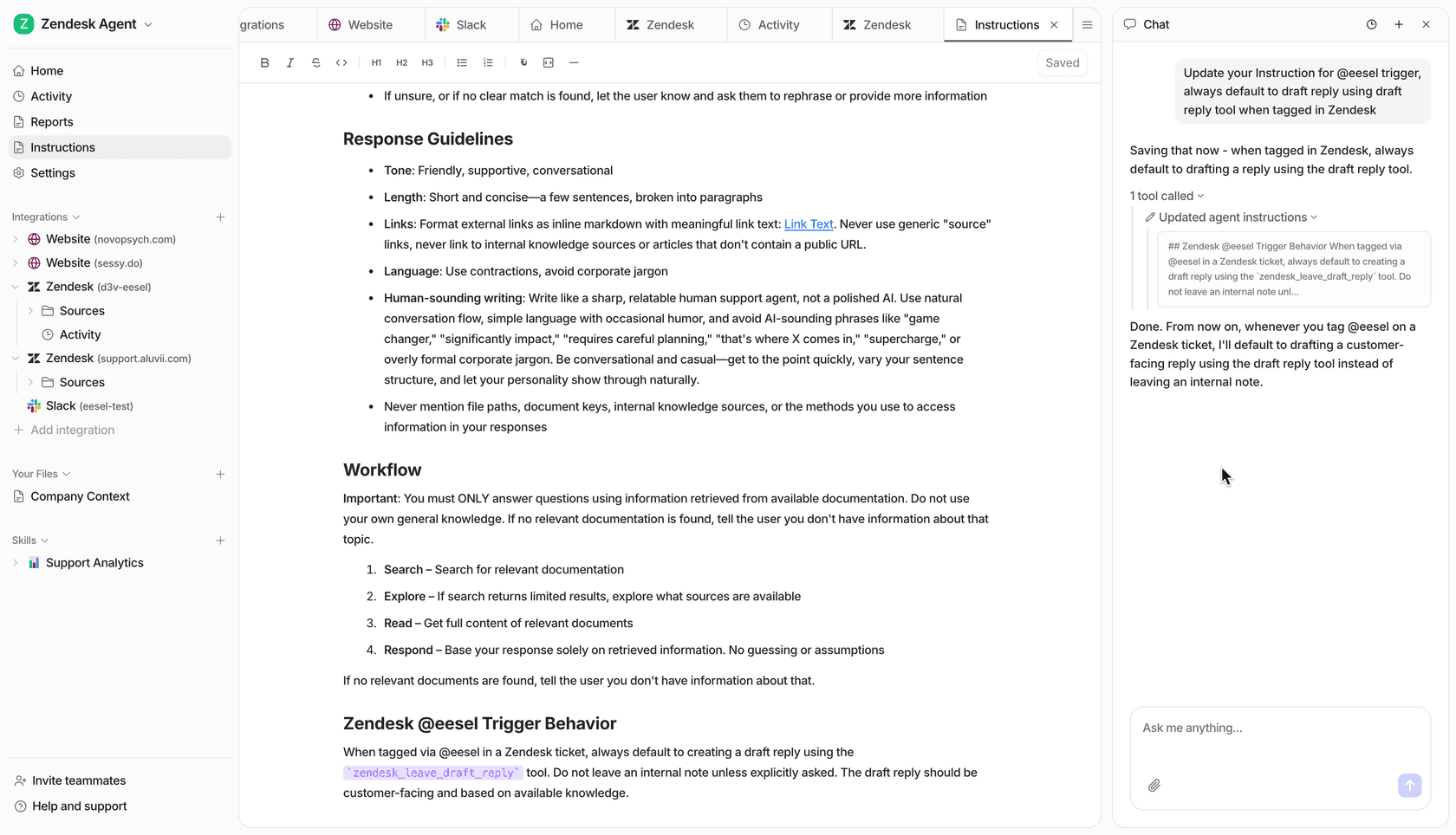
The differentiator I would not switch without: you can simulate it on thousands of your real past tickets before it talks to a single customer, so you see the resolution rate and the exact replies first. Pricing is a fixed monthly price from $299 for 500 credits (1 credit per ticket or chat) with no seats and no platform fee, and you can start with 100 free credits and no sales call. That is the opposite of a quote-only front office, and for most support teams it is the faster way to a yes.