Minimal AI alternatives: 7 e-commerce support tools compared

Kurnia Kharisma

Katelin Teen
Last edited August 19, 2026
What Minimal AI actually is
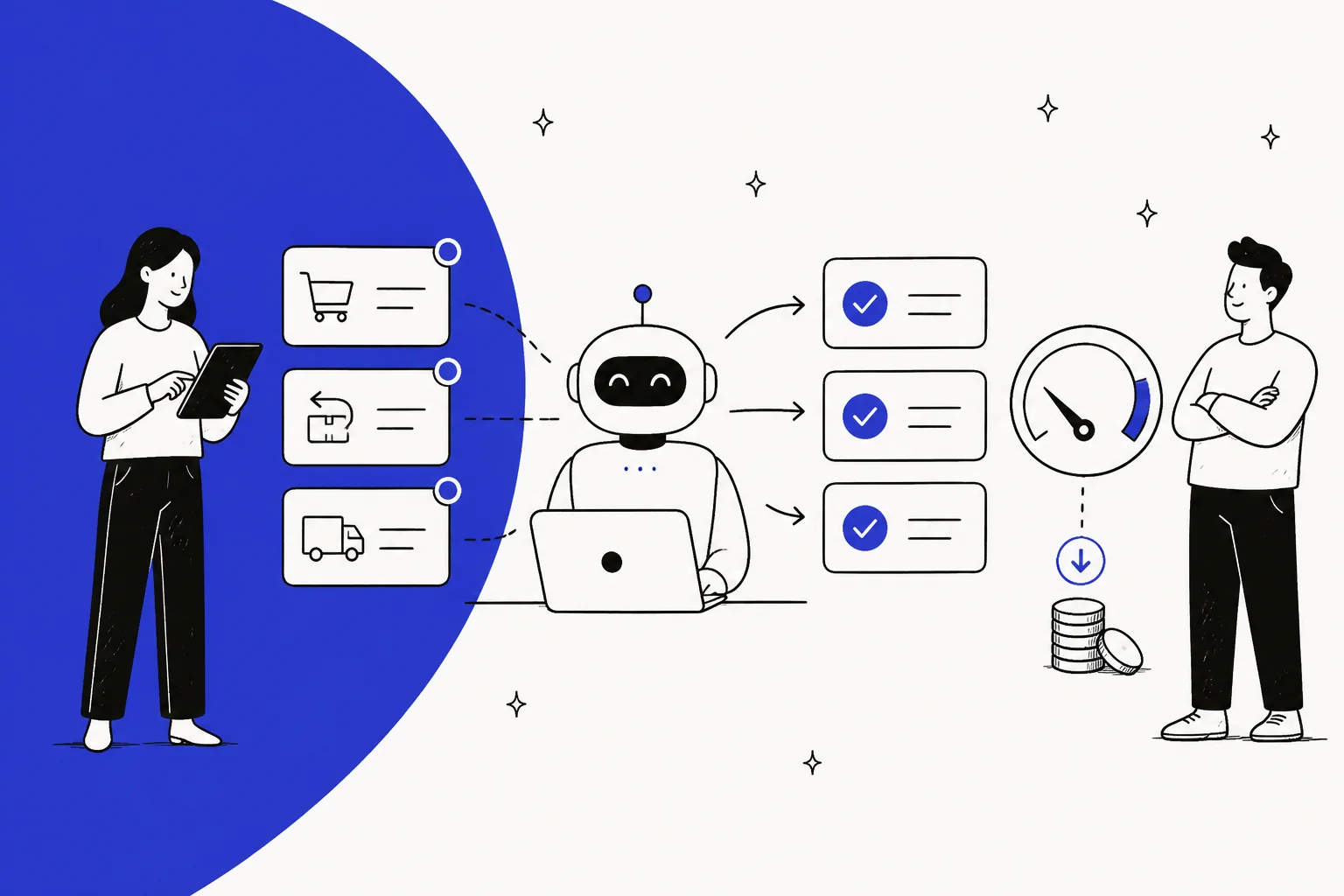
Minimal AI Inc. runs out of San Francisco and Amsterdam and went through Y Combinator's S25 batch. The product is not a helpdesk. It is an agent layer that plugs into the helpdesk you already run, which their homepage lists as Zendesk, Freshdesk, Gorgias, Trengo, CM.com, Omnidesk, Front and Kustomer, alongside a claimed 60+ integrations across stores, warehouses, 3PLs and subscription tools.
The distinctive piece is what they call the AI Manager. Instead of building flows, you describe your policies in plain language and it turns them into what the docs call protocols. Their documentation gives a good sense of the level: "A customer can only cancel their order if it was placed less than 12 hours ago in Shopify and has not been shipped according to Monta." The agents then review their own conversations and hand your team a set of improvement tasks each week that you approve in one click.
Their documentation is unusually candid about the runtime, which I appreciate. Every incoming message runs through six steps: a reply decision, understanding the request, matching protocols, gathering data from integrations, writing the reply, then safety and automation checks. Guardrails hold back an auto-send on toxic language, prompt-injection attempts, unfilled placeholders, or a customer explicitly asking for a human. There is a rate limit per ticket and per hour, the agent stops automating once a human replies, and a configurable response delay defaults to 30 seconds.
The results they publish are strong and specific. XXL Nutrition, a European sports nutrition retailer with over 3,500 products, reports 83% of contacts handled end-to-end with no human in the loop, 70+ hours saved per week, and a review score that moved from 4.2 to 4.6 in two months.
"The AI handles an incredibly wide range of questions. From product queries to complaints and delivery issues, everything gets picked up and documented. That gives us much more control over what is going on."
Bram van de Loo, Customer Service Manager at XXL Nutrition, as published by Minimal AI
That is a real deployment doing real work, and nothing below is meant to take it away. The question this post answers is narrower: does Minimal's commercial model fit your queue.
Why teams go looking for a Minimal AI alternative
1. The meter counts conversations, not resolutions
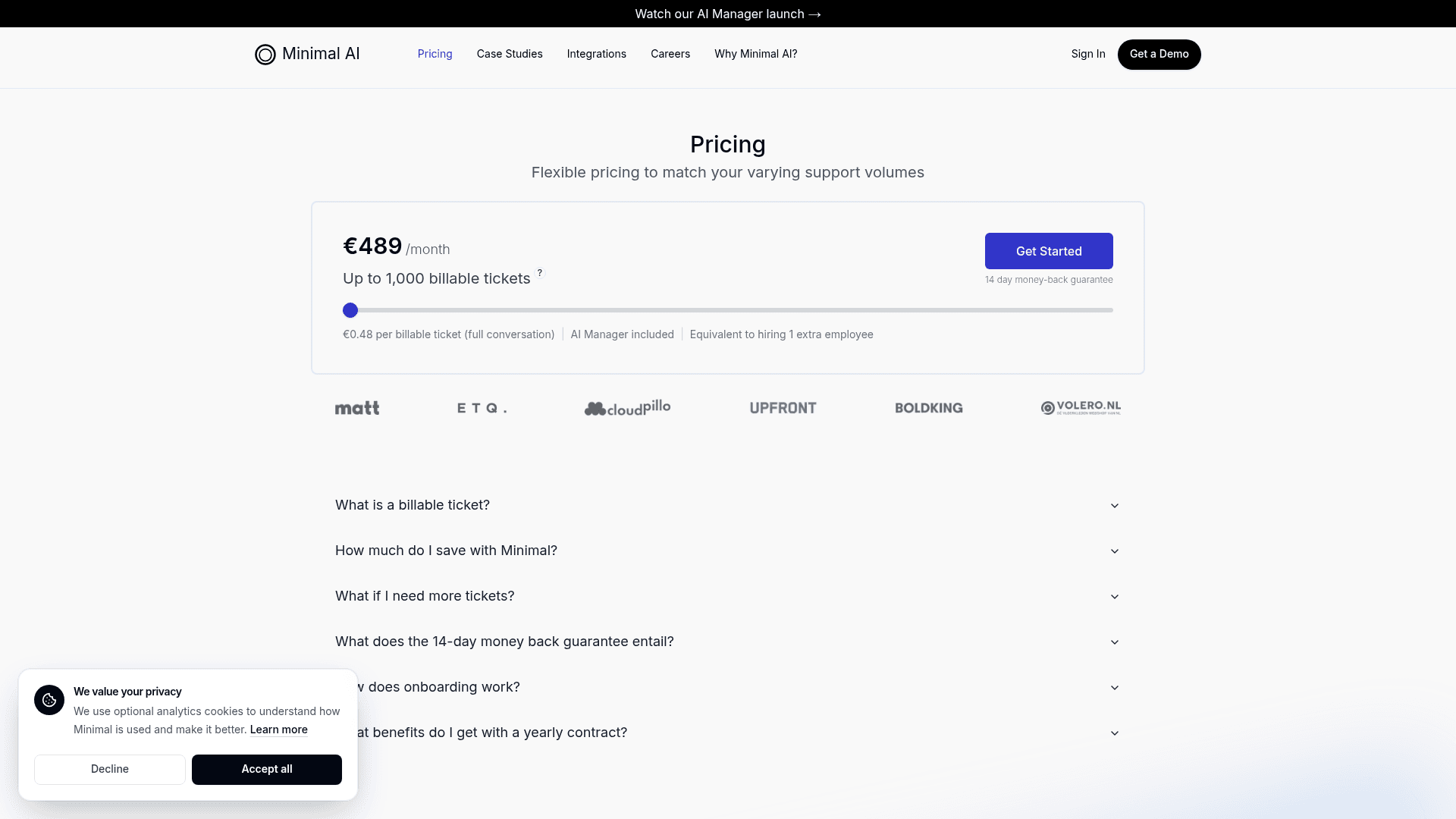
This is the whole ballgame. Most AI support vendors have converged on charging for outcomes: Zendesk bills per automated resolution, eDesk per resolved outcome, Gorgias per automated interaction. Minimal bills per conversation you respond to.
Read the definition once more, straight from their pricing page: a billable ticket is a full customer conversation that you respond to from within your ticketing system. Spam and no-reply tickets are never billed, which is fair. But a ticket your human agent answers, because the AI escalated it, still counts.
The arithmetic that follows is the part worth sitting with. At the entry tier you pay €489 for 1,000 conversations. Hit the advertised 90% automation and your cost per AI-resolved ticket is about €0.54. Land at 50%, which is a perfectly respectable first-quarter number, and the same €489 buys 500 resolutions at €0.98 each. The vendor's revenue is identical either way. Everything about how well the AI performs lands on your side of the table.
I am not saying that is a trick. Predictable billing has genuine advantages, and a per-resolution vendor can nudge the definition of "resolved" in its own favour, which is its own problem. But it does mean the pricing page's headline number tells you very little until you know your own automation rate, and you cannot know that before you buy.
2. There is no way to try it yourself
Every button on gominimal.ai routes to a demo booking. There is no free tier, no self-serve trial, no sandbox. The substitute is a 14-day money-back guarantee, which is real protection but arrives after a purchase order, a kickoff call, and an integration.
I have watched what that gate does to e-commerce buyers. One US swimwear brand running on Gorgias, with 151 documents connected, ran twelve clean test chats with eesel, was happy with every one, then opened two cancellation requests within minutes of reaching the billing page. The product had already proven itself and the pricing conversation still ended it. When the order is reversed and the price comes first, you are asking a support manager to defend a €489 line item on a spreadsheet rather than on twelve conversations they watched go right.
3. Nothing replays your past tickets before go-live
Minimal's rollout path is suggestion mode first, then flip topics to automated once you are confident. That is sound advice and I would give the same. What the docs do not describe anywhere is a dry run: pointing the agent at tickets you have already closed and scoring what it would have said against what your team actually sent.
The difference matters because suggestion mode costs you calendar time. You are waiting on live volume to accumulate before you learn anything, and during that wait every conversation is billable. A historical replay gives you the same evidence on day one, on tickets whose correct answers are already known. Three years of putting AI agents on live support queues taught me this the hard way: a bot that sounds confident and is quietly wrong is the expensive failure mode, and you find it in the archive or you find it in front of a customer.
4. It is e-commerce only, on purpose
Minimal has picked a lane and committed to it. Protocols, actions and the whole integration catalogue are built around stores, carriers, returns portals, warehouses and subscriptions. If you are a B2B SaaS company, a fintech, or an internal IT desk, the depth that makes Minimal good for a Shopify merchant is depth you will never touch, and you are still on the same rate card.
5. The volume discount stops at 7,000
Worth knowing before you model growth. Minimal's per-ticket rate does fall as you scale: €0.48 at 1,000, €0.42 at 2,000, down to €0.36 at 7,000. Then it stops. From 7,000 to the 20,000 ceiling, every tier is exactly €0.36 per ticket, so 10,000 tickets is €3,600 and 20,000 is €7,200. Growing from 7,000 to 20,000 tickets a month earns you no additional discount at all. Above 20,000 you are in custom pricing.
Work out what the meter actually costs you
The headline rate is not your cost. Your cost is the bill divided by the tickets the AI actually took off your team. Move the automation rate and watch what happens to the per-resolution column.
Two things fall out of that table. Minimal is competitive, sometimes very competitive, at high automation rates and mid volumes. And every per-resolution vendor's per-ticket column stays flat while Minimal's climbs the moment automation slips, because their denominator shrinks and their bill does not.
The 7 best Minimal AI alternatives at a glance
| Tool | Billing unit | Entry price | AI rate | Free trial | Sits on your helpdesk | Replays past tickets | Non-Shopify stores | Spend cap | Best for |
|---|---|---|---|---|---|---|---|---|---|
| eesel AI | Ticket handled | No minimum | $0.40 | $50 free, no card | Yes | Yes | Yes | Yes, you set it | Paying only for what you route |
| Gorgias | Ticket + automated interaction | $40/mo | ~$0.90 in-plan, $1.50 over | 30 days, no card | It is the helpdesk | No | AI Agent is Shopify-only | No | Shopify merchants wanting one vendor |
| Zendesk | Seat + automated resolution | $19/agent/mo annual | $1.50 committed, $2.00 PAYG | 14 days | It is the helpdesk | No | Yes | No | Large teams already on Zendesk |
| Siena AI | Platform fee + automated ticket | $750/mo platform | $0.90 | No, quote form | Yes | No | Yes | No | Brand-voice-led DTC teams |
| Richpanel | Monthly order volume | $0 free tier | Bundled | Yes, free plan | It is the helpdesk | No | Yes | No | Small stores wanting a free start |
| Alhena AI | Conversation credit | $0 free, $199/mo paid | $1.20 overage | Yes, 25 conv/mo | Yes | No | Yes | No | Pairing support with AI search visibility |
| eDesk | Seat + resolved outcome | $39/agent | $0.99 | 14 days, Safe Mode | It is the helpdesk | No | Yes | No | Marketplace and multi-channel sellers |
| Minimal AI | Conversation answered | €489/mo | €0.48 to €0.36 | No, demo only | Yes | No | Yes | No | High-automation EU e-commerce |
1. eesel AI
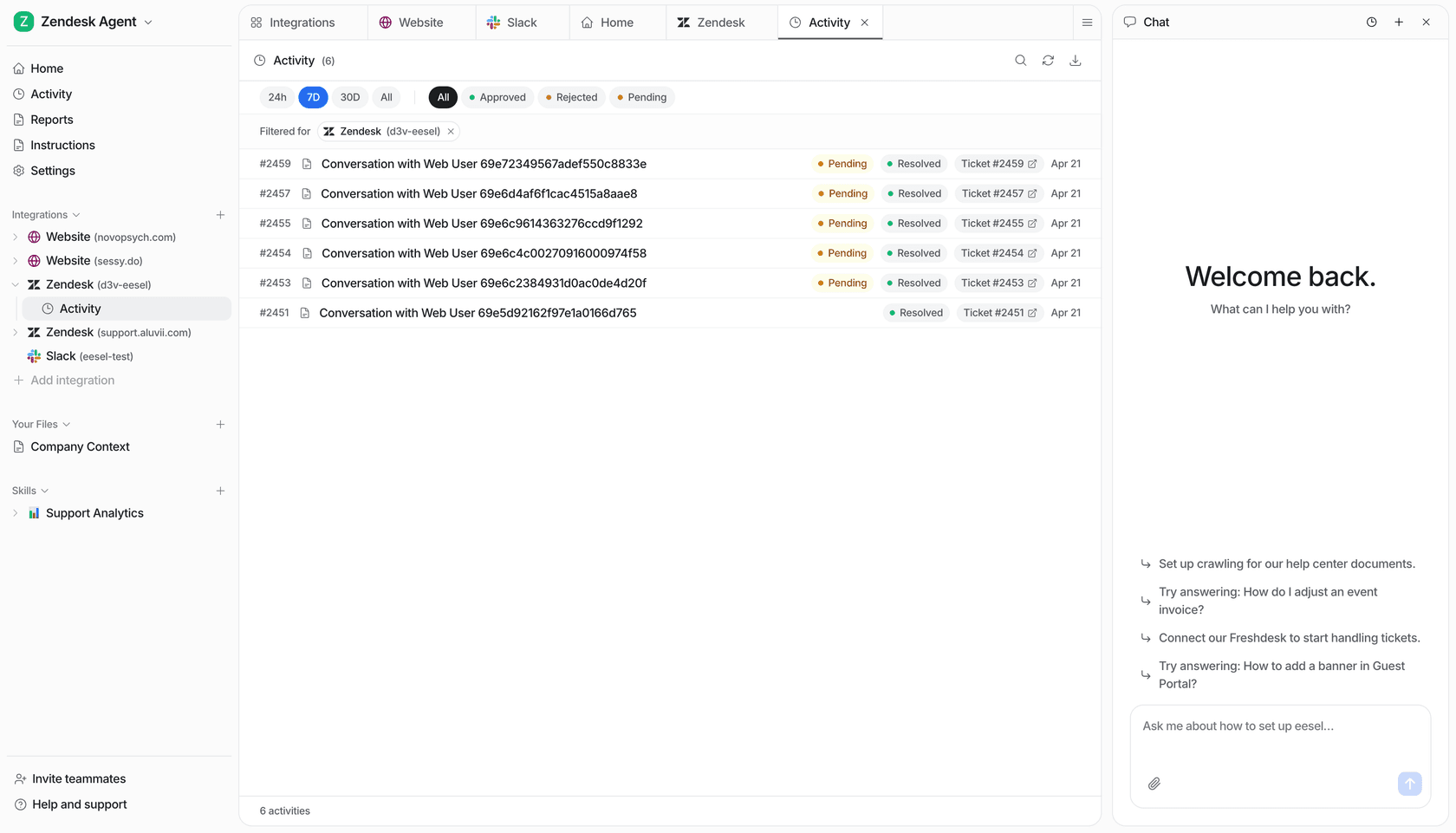
What it is. I work on eesel, so treat this section as informed rather than neutral. Structurally it solves the same problem Minimal does: an agent layer over the helpdesk you already run, rather than a helpdesk replacement. It connects to Zendesk, Freshdesk, Gorgias, Front, Help Scout, HubSpot, Salesforce and Jira Service Management, and it handles order tracking and returns work the same way.
Where it beats Minimal. Three places, all commercial rather than clever. You can start without talking to anyone: $50 of free usage, every feature unlocked, no credit card. You are billed per ticket the AI handles, and if you route only 200 of your 1,000 monthly tickets to it during a pilot, you pay for 200. And there is a hard spend cap you set yourself, defaulting to $250, with email alerts at 50%, 75% and 100%.
The one I would push hardest on is simulation. You can replay hundreds of your closed tickets and score what the agent would have said against what your team actually sent, before a single customer sees a reply. That is the evidence Minimal's suggestion mode makes you wait weeks of live volume to collect.
Where it does not. Minimal's e-commerce integration catalogue is deeper on the logistics end, with named connectors for warehouse and carrier tooling like Monta, Sendcloud and Returnista. eesel connects to arbitrary systems through its API and MCP tooling, which is more flexible and less turnkey. If your ops stack is exactly the Benelux e-commerce stack Minimal was built around, they have done more of the work for you.
Pricing. $0.40 per ticket or chat session handled, counted once per conversation no matter how many replies. Dashboard lookups are free, blog generation is $4.00. No platform fee, no per-seat fee, no monthly minimum. A 25% discount for an annual commit, and a $1,000/month Enterprise tier adding SSO, HIPAA, a BAA and a dedicated solutions engineer.
Verdict. The right call if you want to prove the automation rate before you commit to a floor, or if your volume is seasonal enough that a fixed monthly tier would have you paying for headroom in February.
2. Gorgias
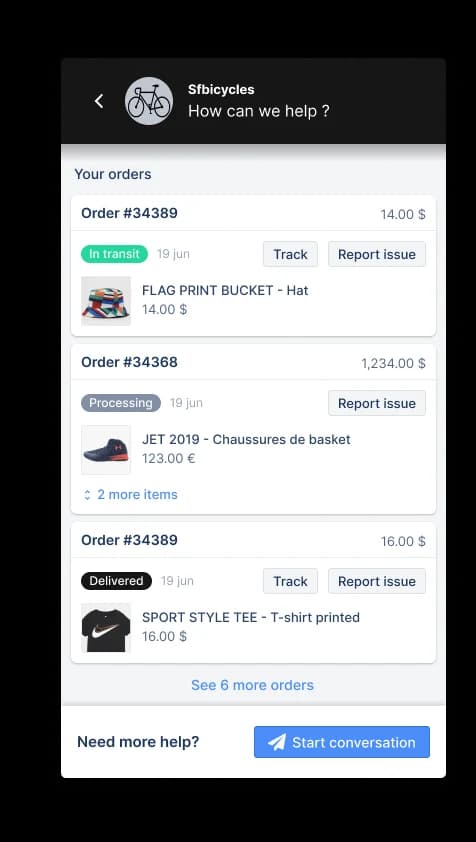
What it is. The e-commerce helpdesk with the largest install base, with AI Agent built in rather than layered on. If Minimal is the AI you add to a helpdesk, Gorgias is the helpdesk that brought its own.
Where it beats Minimal. A 30-day trial with no card required, so you can see the product before a sales call. And one vendor instead of two, which is a real operational saving when a ticket routes wrong and you need to work out whose logs to read.
Where it does not. AI Agent requires Shopify. The helpdesk supports BigCommerce, Magento and WooCommerce, but the AI does not, which catches non-Shopify merchants late in an evaluation. Billing is also doubled up: on accounts created after May 2025, a fully automated ticket incurs both the ticket fee and the automation fee. And "unlimited users" is not quite right, since the comparison table caps seats at 3 on Starter and 500 elsewhere.
Pricing. $40 Starter, $90 Basic, $550 Pro, $1,430 Advanced, monthly. Included AI interactions run 30/30/190/530 across those tiers, with $1.50 per automated interaction past the limit. Inside the allowance the effective rate lands near $0.90, matching Gorgias's own published figure. An automated interaction means fully resolved with no human touching it within 72 hours. Full numbers in the Gorgias AI pricing breakdown.
Verdict. The strongest option if you are on Shopify and would rather consolidate. Check the seat caps and the double-billing rule against your volume first, and see eesel versus Gorgias AI if you would rather keep the helpdesk and swap the AI.
3. Zendesk
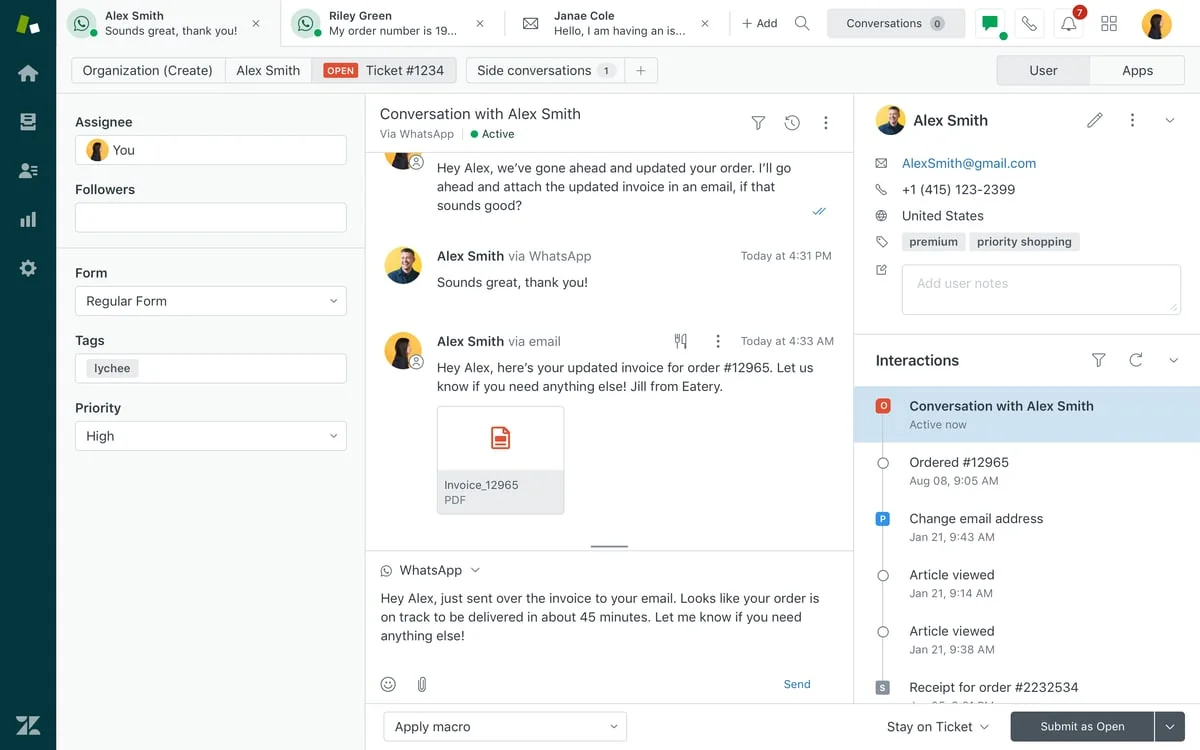
What it is. The default enterprise helpdesk, with AI agents sold as a metered add-on on top of seats. Many of the brands Minimal targets are already running it.
Where it beats Minimal. Zendesk now publishes its per-resolution rate, which most of this category still hides behind a form. You also get depth Minimal has not built toward, including workforce management, a contact centre, and the compliance paperwork enterprise procurement asks for.
Where it does not. You pay for seats and resolutions, so the floor climbs with headcount rather than with automation. The included allowance is thin at 5 automated resolutions per agent per month on Team plans and 10 on Professional, capped at 10,000 a year. And Zendesk's native AI is the most common reason teams end up shopping in the first place, which is worth naming plainly.
Pricing. $19/$55/$115 per agent per month annually for Support Team, Suite Team and Suite Professional, or $25/$69/$149 billed monthly. Automated resolutions are $1.50 committed and $2.00 pay-as-you-go. Details in the Zendesk AI agents guide.
Verdict. Sensible if you are already paying for Zendesk seats and want one invoice. If the seats are the sunk cost and the AI is the disappointment, layering a different agent on the same Zendesk instance is usually cheaper than migrating.
4. Siena AI
What it is. Minimal's closest philosophical competitor: an autonomous agent for DTC and e-commerce brands, layered over your existing helpdesk, sold on the strength of its writing. Their customer list skews toward brands where voice is the product.
Where it beats Minimal. Siena's per-ticket rate is charged on automated tickets, so the outcome risk sits with the vendor rather than with you. The product also spreads wider than the inbox, with separate agents for reviews, shopping and QA.
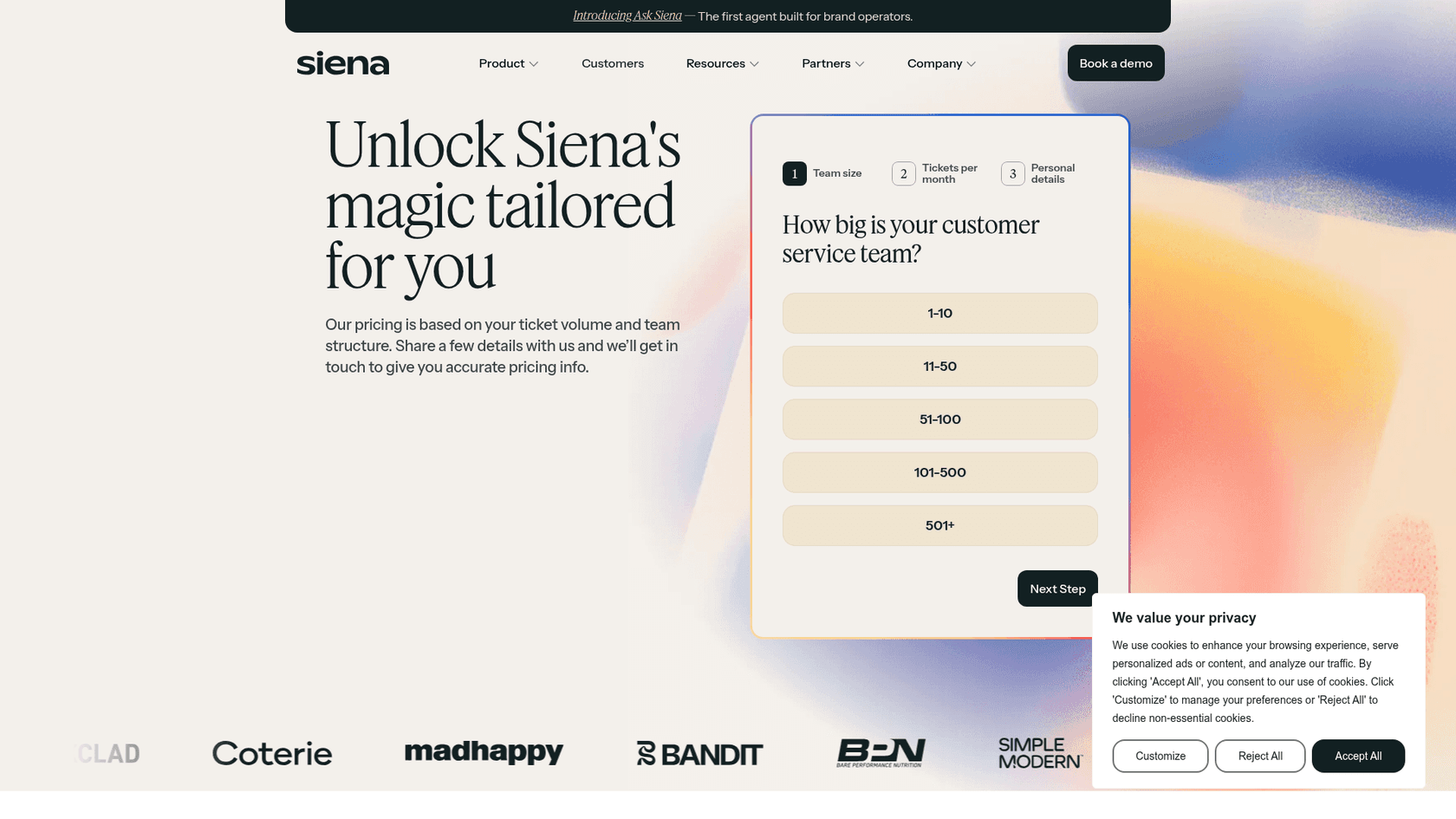
Where it does not. The platform fee is the catch. $750 a month before a single ticket is automated means a small store pays more to switch the lights on than Minimal charges for its entire entry tier. The pricing page is also a three-step lead form, so the numbers below come from the explainer beneath it rather than a plan card you can act on.
Pricing. $750/month platform fee for the core engine and an unlimited sandbox, plus $0.90 per automated ticket, plus onboarding and dedicated Slack support. Compared in full in the Siena AI pricing breakdown.
Verdict. Worth the platform fee at volume, where $0.90 on outcomes beats a per-conversation meter. Below roughly 2,000 tickets a month the fixed $750 dominates everything else. The Siena alternatives roundup goes deeper.
5. Richpanel
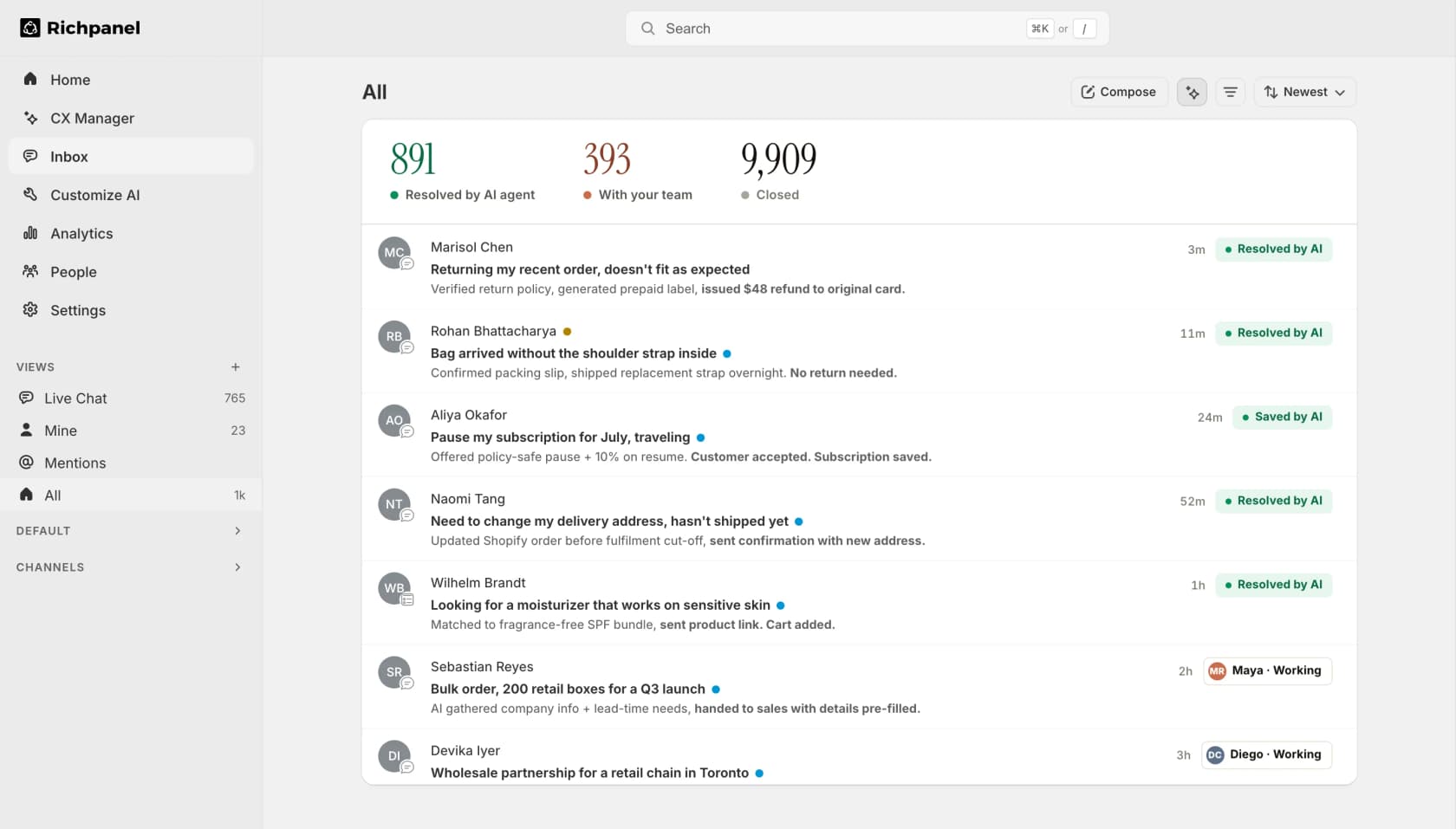
What it is. An e-commerce helpdesk with self-service and AI resolution built in, metered by your monthly order volume rather than by tickets or seats.
Where it beats Minimal. There is a genuine free plan you can sign up for today, and the order-volume meter is the most predictable unit on this list for a store with steady traffic. It also ships a customer-facing self-service portal, so a chunk of your order status volume never becomes a ticket at all.
Where it does not. Tying support cost to order count means a bad support month and a good sales month cost you the same, which cuts both ways. The pricing page's plan cards also print order caps that contradict the tier labels beside them, so confirm your own numbers with their team rather than reading them off the page.
Pricing. Free at $0, Starter $50/month ($42 billed annually), Pro $600/month, Enterprise custom, all scaled by monthly order volume. The Richpanel pricing page tracks the current grid.
Verdict. The best free starting point here, and a fair fit for stores under a few thousand orders a month. See Richpanel alternatives if the order meter does not suit your margins.
6. Alhena AI
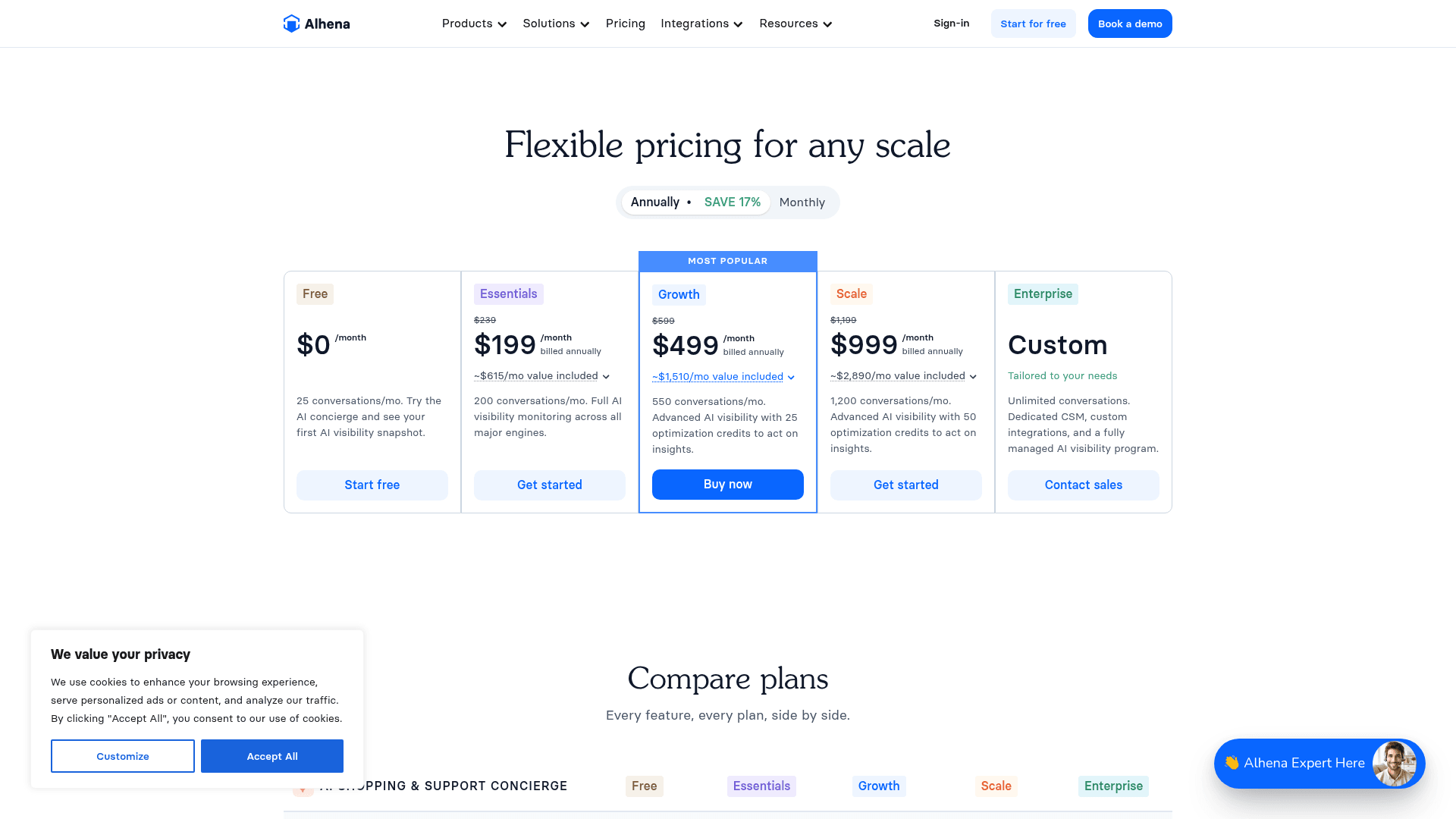
What it is. Formerly Gleen, now an AI shopping and support concierge that has bolted on something none of the others here offer: AI visibility monitoring, tracking how your brand surfaces inside ChatGPT, Perplexity, Gemini and Google AI Overviews.
Where it beats Minimal. A free plan with 25 conversations a month, so evaluation costs nothing. And the credit definition is honest in a way that is easy to miss: spam, irrelevant queries and immediate human handoffs that involve no AI resolution consume zero credits. That is close to the opposite of Minimal's rule, where the human-answered ticket bills.
Where it does not. The split focus is real. A meaningful share of what you pay for on the paid tiers is AEO and GEO tooling, which is a marketing budget line, not a support one. If you only want ticket automation you are subsidising a product you will not open. Credits also reset monthly and do not roll over.
Pricing. Free with 25 conversations a month, Essentials $199, Growth $499 with 550 conversations, Scale $999 with 1,200, Enterprise custom. Overage is a flat $1.20 per credit on every paid tier.
Verdict. A strong pick if AI search visibility is already on your roadmap and you would rather buy it once. If it is not, the per-conversation cost is higher than most of this list.
7. eDesk
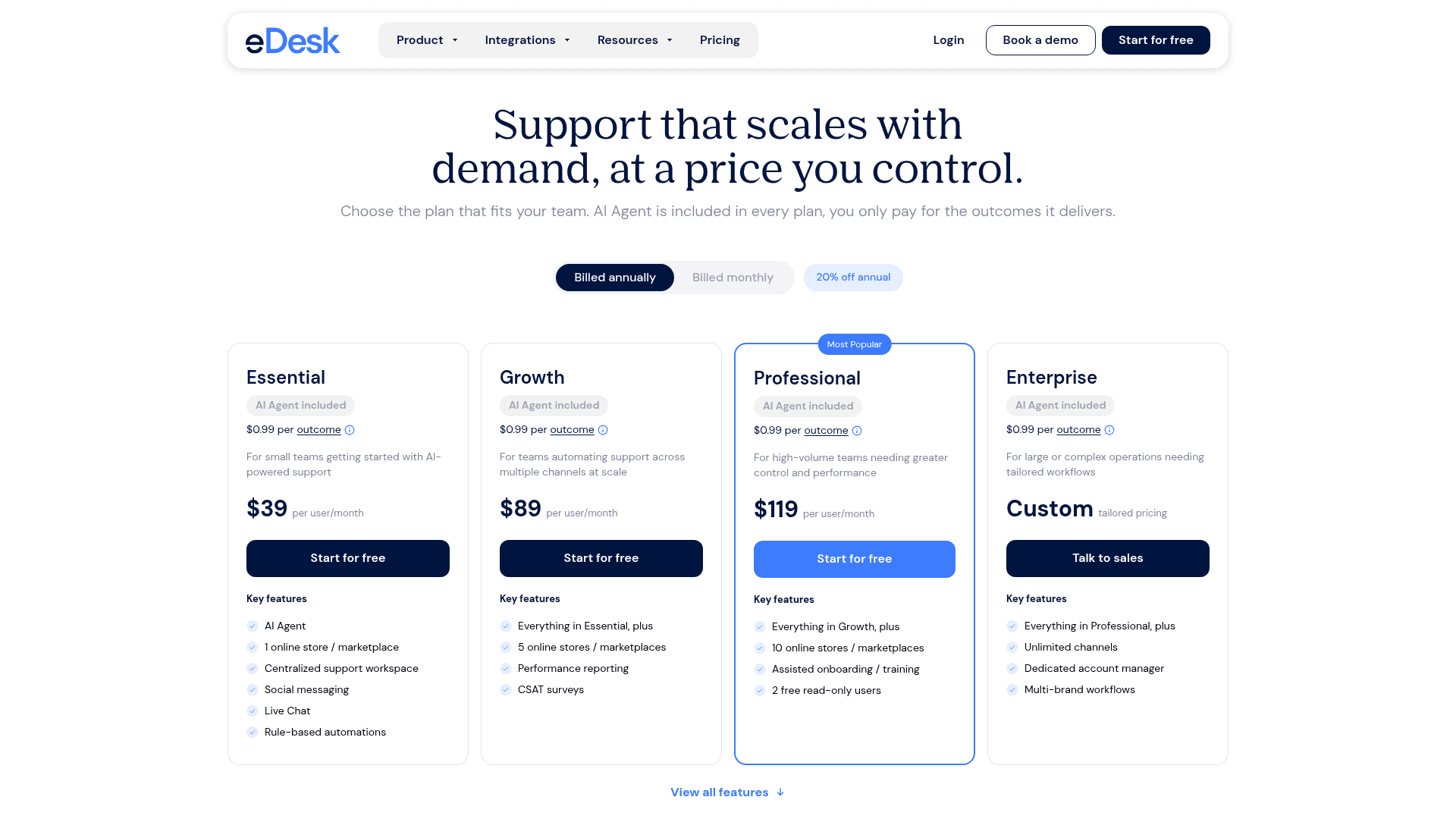
What it is. A helpdesk built for sellers who live across marketplaces as much as their own storefront, with Amazon, eBay and Walmart alongside Shopify.
Where it beats Minimal. Marketplace depth, plainly. If a real share of your volume arrives through channels Minimal reaches only via a generic helpdesk connector, eDesk was designed for exactly that. The AI charge is also per resolved outcome, billed once per ticket and only when the AI replies or takes an action.
Where it does not. Seats plus outcomes means two meters, and the entry plan strips out rule-based automations, CSAT and reporting. The pricing page also has real problems: it never states whether the printed prices are monthly or annual, and the same rate appears as $0.99 on the cards and €0.99 in the FAQ.
Pricing. Essential $39, Growth $89, Professional $119 per agent, plus $0.99 per resolved outcome on every plan. Add-ons for AI Assist and Translate are billed per agent on top. The eDesk pricing page has the caveats in full.
Verdict. The clear choice for multi-marketplace sellers. If you are single-storefront, the per-agent floor buys you channel breadth you will not use. eDesk alternatives covers the rest.
How to choose between them
Pick by the meter, not by the demo. Four questions get you most of the way there.
- Do you know your automation rate yet? If not, avoid anything with a fixed floor and choose a tool that bills per ticket you route, so a pilot costs pilot money. The guide to cost per resolution walks through the arithmetic properly.
- Is your volume seasonal? A tier you must sit on year-round is expensive in your quiet quarter. Usage billing and a spend cap handle peaks better than a plan upgrade does.
- Are you replacing the helpdesk or adding to it? Gorgias, Zendesk, Richpanel and eDesk want to be the system of record. Minimal, Siena, Alhena and eesel sit on top of whatever you already run.
- How much of your volume actually repeats? Order status, returns and shipping are where e-commerce automation pays, and a tool that handles those three well beats one with a longer feature list.
One more, on evidence. Whatever you shortlist, ask whether you can point it at tickets you have already closed and see what it would have said. A vendor that can show you that is confident in the answer quality. A vendor that cannot is asking you to find out in production, and in this category that is the difference between a good quarter and an apology email.
Try eesel on your existing queue
If you got here because Minimal's €489 floor arrives before any proof, that is the specific problem eesel is shaped around. It connects to the helpdesk you already run, replays your closed tickets so you can see the answer quality before a customer does, and bills 40 cents per ticket it handles with a spend cap you set yourself. Start with $50 of free usage, no credit card, and route as few tickets as you like while you make up your mind.

Frequently asked questions
How much does Minimal AI cost?
Minimal AI pricing starts at €489 per month for up to 1,000 billable tickets, which is €0.48 each. Rates fall to €0.36 per ticket at 7,000 and stay flat to the 20,000 ceiling, with custom pricing above that. Prices are printed in EUR and USD at a 1:1 rate. For how that compares across the category, see the breakdown of AI customer service cost.
What counts as a billable ticket in Minimal AI?
Minimal's pricing page defines it as a full customer conversation, not a single message, that you respond to from within your ticketing system. Spam and no-reply tickets are never billed, but tickets your human agents answer are, which is what separates it from vendors that bill per automated ticket resolution.
Does Minimal AI have a free trial?
No. Every call to action on gominimal.ai routes to a demo booking, and the substitute is a 14-day money-back guarantee after purchase. Among the Minimal AI alternatives here, eesel, Gorgias, Richpanel and Alhena all let you start without a sales call, which matters if you want to test ticket deflection on your own data first.
What are the best Minimal AI alternatives for a Shopify store?
Gorgias if you want the helpdesk and the AI from one vendor, and eesel if you want to keep your current helpdesk and only swap the AI layer. Both handle Shopify order lookups, refunds and reships. The roundup of the best AI chatbots for Shopify compares the wider field.
Which AI support tool is cheapest for a small e-commerce team?
Below about 1,000 conversations a month, usage billing almost always wins, because a fixed tier makes you pay for headroom you are not using. eesel at $0.40 per ticket handled and Richpanel's free plan are the two lowest floors here. Alhena's free tier covers 25 conversations a month for testing.
Can these tools take real actions, not just reply?
Yes, and this is the dividing line worth testing. Minimal, Siena, Gorgias and eesel can all issue refunds, cancel orders and arrange reships through connected systems, while cheaper widget-style bots mostly answer questions. The guide on whether AI can handle refunds covers what to check.
Do I need to leave my helpdesk to switch off Minimal AI?
No. Minimal, Siena, Alhena and eesel are all agent layers that sit on top of Zendesk, Freshdesk, Gorgias or Front, so swapping between them does not touch your system of record. Migrating only becomes necessary if you move to a tool like Richpanel or eDesk that is the helpdesk itself.
How do I know an AI agent will answer my tickets correctly?
Ask for a dry run against tickets you have already closed, scored against what your team actually sent. Suggestion mode works too but costs you weeks of live volume. The guide to measuring an AI resolution rate covers what a credible number looks like and how first contact resolution fits alongside it.
Sources



Article by
Kurnia Kharisma
Kurnia is a software engineer and writer at eesel AI with two years of SEO experience, writing about AI tools, helpdesk software, and customer support. He pairs a developer's understanding of how these products are built with search-driven research into what actually ranks and resonates with the people searching for them.