The 7 best Aportio alternatives in 2026

Rama Adi

Katelin Teen
Last edited September 28, 2026

Why I trust this comparison
I build integrations at eesel, which means I spend my days wiring AI into live support queues rather than reading marketing pages about them. Over the last few years our team has watched confident-sounding bots quietly give wrong answers on real tickets, which is exactly why we now simulate every rollout against a customer's own history before it goes live. So when I look at a tool like Aportio, I am reading it the way an engineer reads a spec sheet: what does it actually touch in your stack, what does it hand off, and where does the marketing copy outrun the product.
That is the lens for this whole roundup. Every price here I pulled from the vendor's own pricing page in September 2026, every screenshot is real product UI, and where I mention what eesel does I am describing software I help ship. Aportio is a genuinely thoughtful tool, so I want to be fair to it before we talk about where the alternatives pull ahead.
What Aportio actually does (and where it stops)
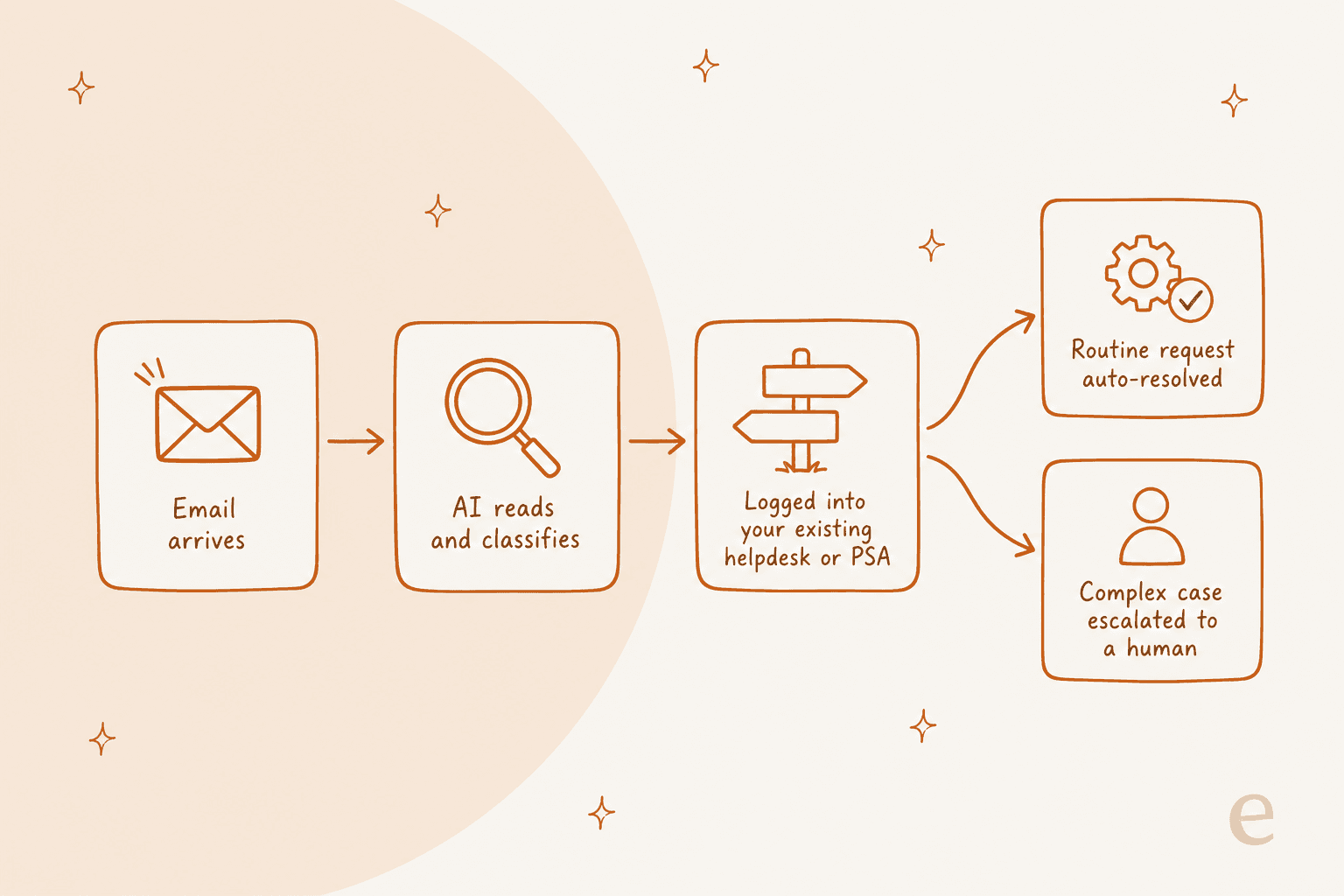
Aportio pitches itself as "AI Email Agents for IT & Customer Service Teams", and the specific job is triage. It reads every inbound message, classifies and summarizes it, and routes or logs it into the tools you already run. On the IT side, its InboxAgent product "automatically classifies, routes, and logs incoming IT support emails into your PSA or ITSM tool", which Aportio says cuts triage time by 50 to 70%. On the customer service side, it claims to "reduce first response times by up to 50%". It connects to the enterprise plumbing you would expect: ServiceNow, Autotask, ConnectWise, NICE CXone, Genesys, and Salesforce.
Here is the part that matters most, and Aportio is refreshingly honest about it: the tool "uses AI to classify, summarize, and analyze, not to generate fiction." It deliberately does not write the reply. That is a real, defensible design choice, it sidesteps hallucination risk entirely, and it is ISO 27001:2022 certified with encryption in transit and at rest. For a risk-averse IT or enterprise team that just wants the inbox sorted and logged, that restraint is a feature.
But it is also the ceiling. Aportio triages and routes; it does not resolve. A human (or some other automation you already own) still has to answer every one of those neatly-classified tickets.
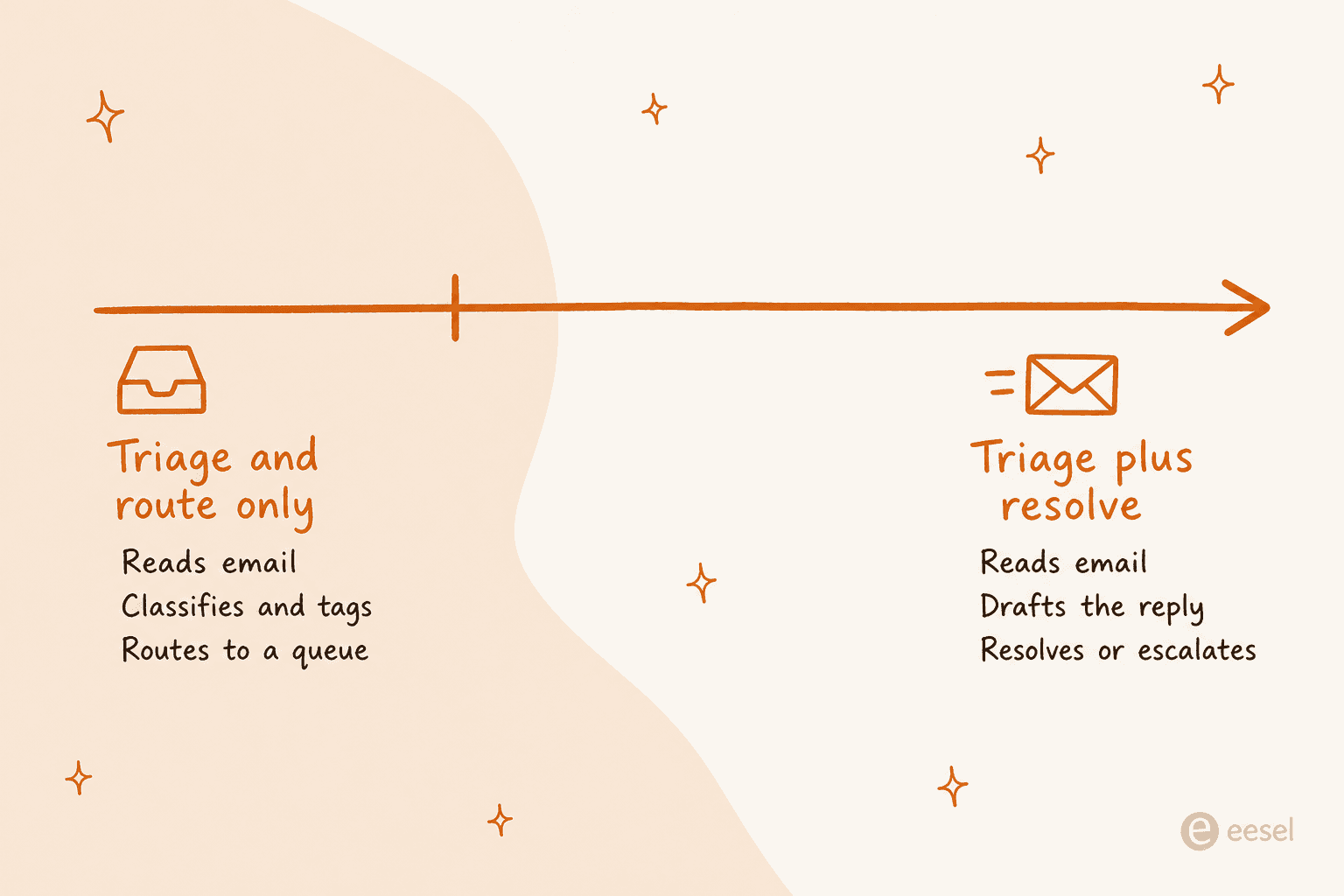
That distinction is the single most useful thing to hold in your head while you shop. Some tools on this list live on the left of that spectrum with Aportio (triage-focused, sitting on top of your stack). Others live on the right, where the AI reads the email, drafts the reply, and either resolves it or escalates it to a person. The best of them do the layer-on-top part and the resolution part, which is the combination Aportio leaves on the table.
The other thing to weigh is the deployment model. Aportio does not replace your helpdesk; it plugs into it. That is genuinely appealing, because "rip out your helpdesk" is the reason most AI-support projects stall. So when you evaluate alternatives, the sharpest question is not "which has the best AI" but "does this add AI to the stack I already run, or does it ask me to migrate?"
How I picked these seven
I weighted the alternatives on the things that actually decide a support-automation project, not feature-checklist trivia:
- Triage plus resolution. Can it classify and answer, or does it stop at sorting like Aportio does?
- Deployment model. Does it sit on top of your current helpdesk, or does it want you to move in?
- Setup and testing. Can you preview accuracy on your own historical tickets before going live, or is it flip-the-switch-and-hope?
- Pricing honesty. Is there a public price, and is the billing unit predictable?
- Fit for IT and MSP email, since that is a real chunk of what Aportio serves.
I deliberately kept this to tools you can actually stand up, not enterprise-only platforms with a six-month sales cycle.
The 7 best Aportio alternatives at a glance
| Tool | Best for | Triage + resolve? | Sits on your existing helpdesk? | Starting price | Free tier |
|---|---|---|---|---|---|
| eesel AI | Adding triage + resolution to your current stack | Yes | Yes | $299/mo (500 tickets) | 100-credit trial |
| Zendesk | Consolidating onto one AI-first platform | Yes | No (is the helpdesk) | $19/agent/mo | 14-day trial |
| Freshworks | Teams that need both CS and IT (ITSM) | Yes | No (is the helpdesk) | $19/agent/mo | Free plan |
| Front | Shared-inbox teams that live in email | Yes (add-on) | No (is the inbox) | $25/seat/mo | 14-day trial |
| Gorgias | Ecommerce support teams | Yes | No (is the helpdesk) | $40/mo | Free trial |
| Zoho Desk | Budget-conscious teams in the Zoho suite | Yes | No (is the helpdesk) | $7/user/mo | Free (3 users) |
| Help Scout | Small teams wanting a simple shared inbox | Yes | No (is the helpdesk) | $25/user/mo | Free (5 users) |
Prices are the vendor-listed starting rates as of September 2026; AI features are often billed on top. The full breakdown and a worked cost example are further down.
1. eesel AI
Best for: teams that want Aportio's "add AI to your existing stack" model, but with the AI also resolving tickets, not just sorting them.
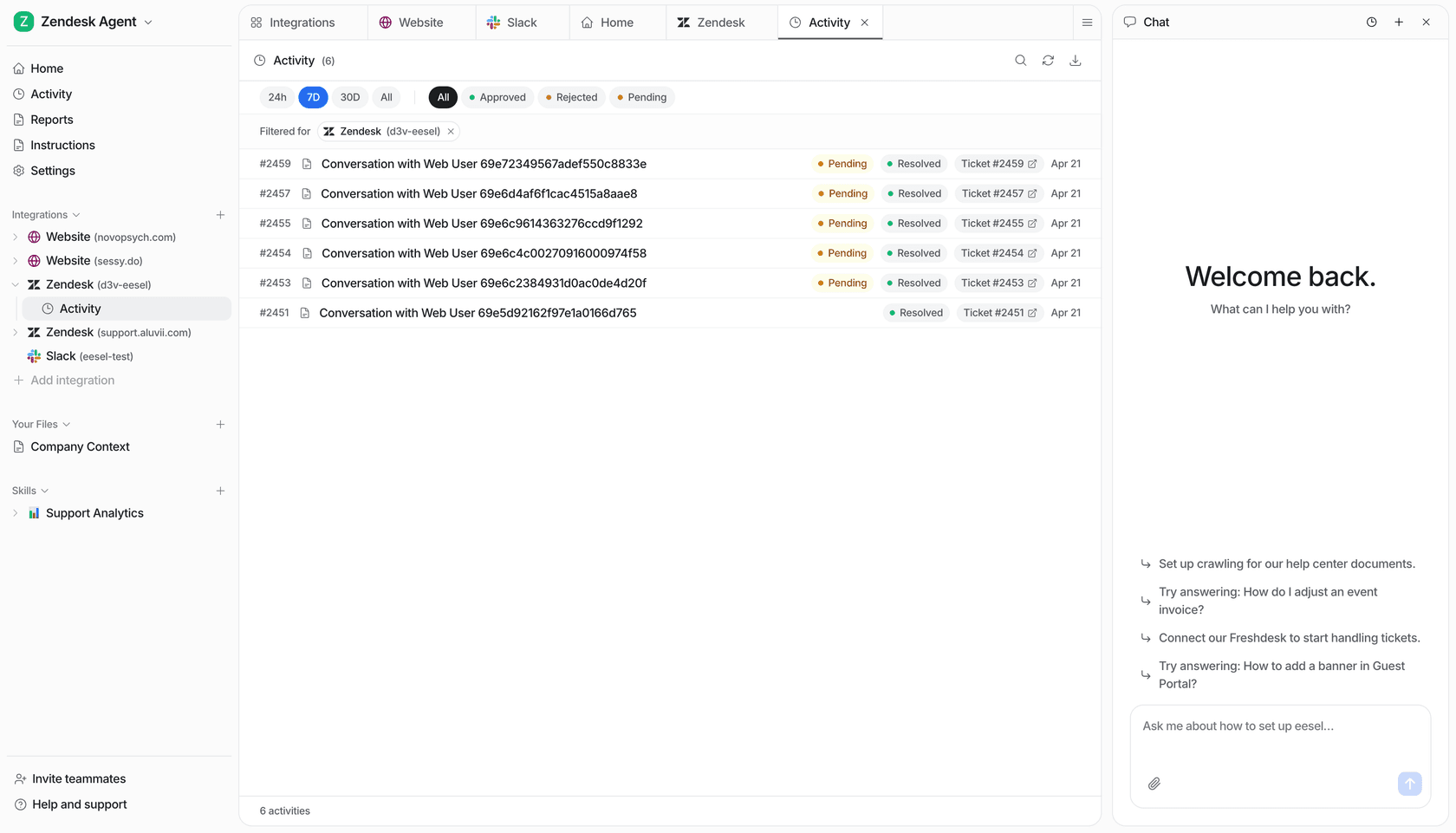
I will be upfront that this is the tool I work on, so read the verdict with that in mind, but the fit here is genuinely close. Like Aportio, eesel does not ask you to replace your helpdesk. It installs on top of whatever you already run, Zendesk, Freshdesk, Gorgias, Help Scout, Salesforce, Slack, and pulls knowledge from your past tickets, help center, and docs. The difference is where it stops: eesel triages and drafts or sends the reply, resolving tier-1 tickets end to end and escalating the messy ones to a person.
The framing that helps most people: eesel is an AI teammate platform, and you hire ready-to-work teammates for specific jobs. The one that matters here is the AI helpdesk teammate. It joins your existing queue like a new hire who already read every past ticket, rather than being a separate tool you bolt on and babysit.
Two things set it apart for anyone coming from a triage-only tool. First, the simulation mode: before it touches a live customer, eesel replays your last few thousand real tickets and shows you exactly what it would have said and what it would have resolved, so you are not flipping a switch and hoping. Second, draft mode, it can write replies for your agents to approve before it ever sends on its own, which is the natural on-ramp from "AI sorts my inbox" to "AI answers my inbox."
The proof is in real deployments. Ecosa runs eesel across Zendesk to handle over 10,000 tickets a month, and their team put the triage angle plainly:
"We chose eesel AI for its multi-channel data input. By linking our Zendesk and Google Docs, customers get instant responses and tough questions are automatically triaged."
Elsewhere, Smava runs a fully automated Zendesk agent processing 100,000+ tickets a month in German, and Gridwise reported eesel resolving 73% of tier-1 requests in the first month. There is also a developer CLI, MCP server, and API if you want to script the whole thing, which matters if you are the kind of team that came to Aportio because you like plugging AI into your existing plumbing programmatically.
Pros:
- Triages and resolves, then escalates what it should
- Sits on your current helpdesk; no migration
- Simulation over your real past tickets before go-live
- Flat per-ticket pricing, no per-seat fee
Cons:
- It is a support and internal-ops teammate, not a dedicated ITSM platform with its own change-management module
- If you specifically want AI that only classifies and never drafts, eesel is more than you need
Pricing:
| Plan | Price | What you get |
|---|---|---|
| Free trial | $0 | 100 credits, every feature and integration |
| Team | From $299/mo | 500 ticket credits/mo, scaling to 5,000 for $1,899/mo |
| Custom | Talk to us | 5,000+ credits, higher volume |
A ticket or chat is one credit, however many replies it takes, and there is no per-seat charge. Overage credits are $0.80 each if you turn them on.
Our take: if you liked Aportio's "layer on top of my stack" idea but wished the AI would actually answer the ticket, this is the most direct upgrade on the list. Skip it only if you are certain you want triage with zero auto-replies.
2. Zendesk
Best for: teams ready to consolidate onto a single, AI-first platform rather than layer AI onto what they have.
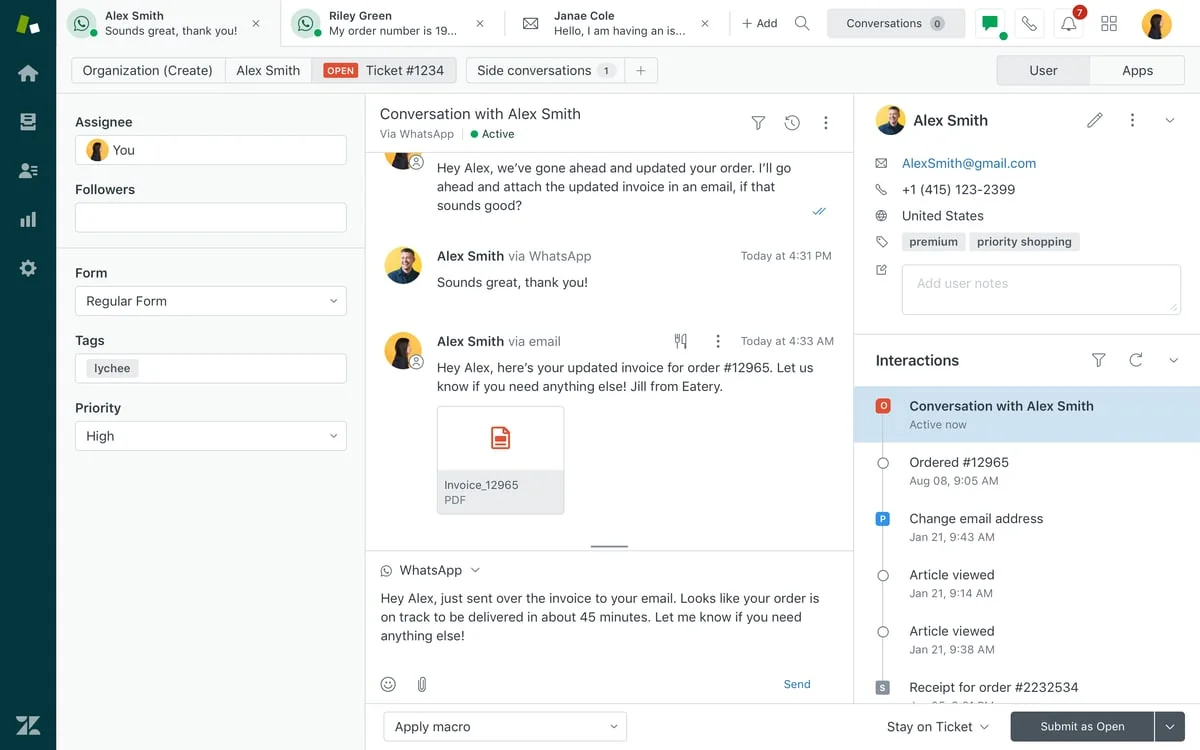
Zendesk is the opposite deployment philosophy to Aportio: instead of routing into your existing helpdesk, it is the helpdesk. If you are open to moving your whole support operation onto one platform, it is one of the strongest here. Its intelligent triage detects intent, sentiment, and language on inbound tickets, and its AI agents go well past classification, the pricing page claims they "resolve up to 80%+ of even the most complex service issues" with agentic reasoning that takes actions, not just canned replies. Zendesk also ships a first-party Claude connector, so you can bring your own model.
The catch is cost structure and scope. You pay per agent for the platform and the AI resolutions are billed as a separate consumption line, so the sticker price is only the start. And it is a migration, which is exactly the friction Aportio was designed to avoid.
Pros:
- Mature, deep platform with strong native triage
- AI agents that resolve, not just sort
- Huge integration marketplace and reporting
Cons:
- You are moving in, not layering on
- Per-agent price plus per-resolution AI billing adds up
- Heavier setup than a triage layer
Pricing:
| Plan | Price (billed annually) |
|---|---|
| Support Team | $19/agent/mo |
| Suite Team | $55/agent/mo |
| Suite Professional | $115/agent/mo |
| Enterprise | Custom |
AI agent resolutions are billed separately on top of the seat price.
Our take: the right call if you want to consolidate onto one AI-first platform and have the budget for per-agent plus per-resolution billing. The wrong call if the appeal of Aportio was keeping your current tools.
3. Freshworks (Freshdesk and Freshservice)
Best for: teams that, like Aportio's customer base, straddle both customer service and IT.
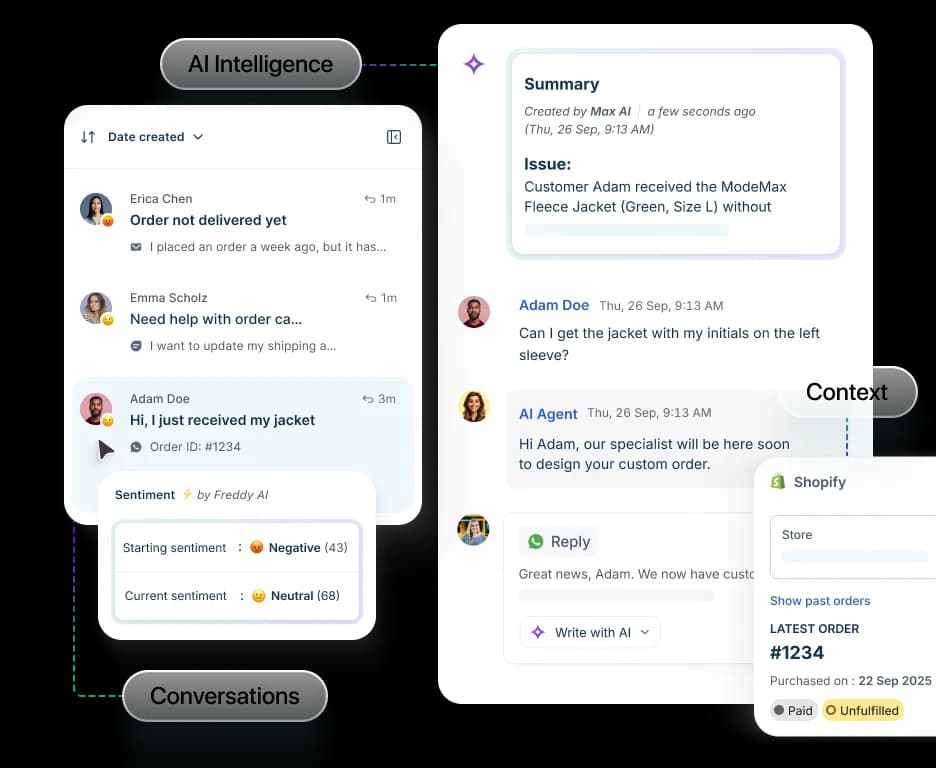
This is the closest match to Aportio's dual IT-and-CS footprint, because Freshworks runs Freshdesk for customer support and Freshservice for IT service management under one roof. Its Freddy AI Agent handles email-first automation, and the Freddy AI Copilot drafts and summarizes for your human agents. So where Aportio would classify an IT email and log it in your PSA, Freshservice can be the ITSM destination and bring the AI.
Worth knowing before you buy: Freddy's AI billing is layered. The AI Agent runs on session-based pricing (extra sessions are $49 per 100), and Freddy AI Copilot is a $29-per-agent-per-month add-on on top of your seat cost. It is capable, but the meter has several dials.
Pros:
- Covers both CS (Freshdesk) and IT (Freshservice)
- Genuine free plan to start
- Freddy Copilot is a solid agent-assist layer
Cons:
- AI billing stacks (seats + Copilot add-on + AI Agent sessions)
- Two products to learn if you want both CS and IT
- Full platform, so it is a migration, not a layer
Pricing (Freshdesk, billed annually):
| Plan | Price |
|---|---|
| Free | $0 |
| Growth | $19/agent/mo |
| Pro | $55/agent/mo |
| Enterprise | $89/agent/mo |
Freddy AI Copilot is $29/agent/mo; extra AI Agent sessions are $49 per 100.
Our take: the best all-in-one pick if you need to serve customers and run an internal IT desk from the same vendor. Just map out the AI add-on meter before you commit.
4. Front
Best for: teams whose support really does live in a shared email inbox, which is Aportio's native turf.
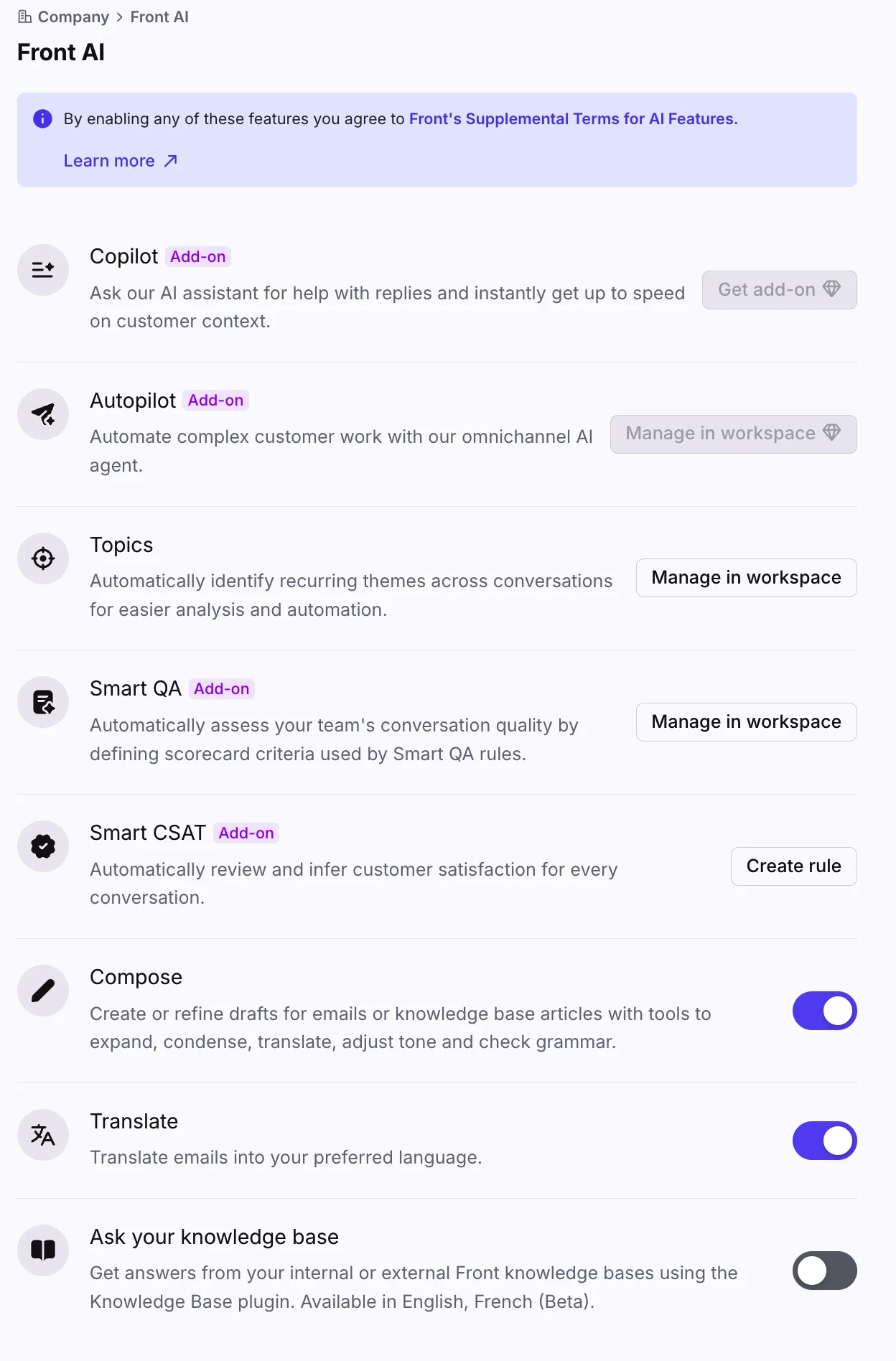
Front treats email as a first-class channel, which lines up neatly with Aportio's whole "email is where the work actually arrives" thesis. It is a shared-inbox platform with AI routing, tagging, and, through its Copilot and Autopilot add-ons, drafting and resolution. If your reality is a busy support@ inbox rather than a formal ticketing tool, Front feels natural, and eesel also integrates with Front if you would rather add resolution on top than switch add-ons on.
The AI is priced as an add-on ($20 per seat per month, or $0.05 per conversation for the automation), so budget for it separately from the seat cost. And like the others here, it is a platform you move into rather than a layer.
Pros:
- Email-native, ideal for shared-inbox teams
- Clean collaboration and assignment features
- AI drafting and automation via add-ons
Cons:
- AI is a paid add-on on top of seats
- Less of a fit for formal ITSM or PSA workflows
- Per-seat pricing with seat caps per tier
Pricing (billed annually):
| Plan | Price |
|---|---|
| Starter | $25/seat/mo (up to 10 seats) |
| Growth | $65/seat/mo (up to 50 seats) |
| Scale | $105/seat/mo |
| Premier | Custom |
AI add-on is $20/seat/mo, or $0.05/conversation for automation.
Our take: a strong pick if your support genuinely runs out of a shared inbox and you want collaboration baked in. Less compelling if IT and PSA routing were the reason you looked at Aportio.
5. Gorgias
Best for: ecommerce support teams on Shopify, BigCommerce, or Magento.
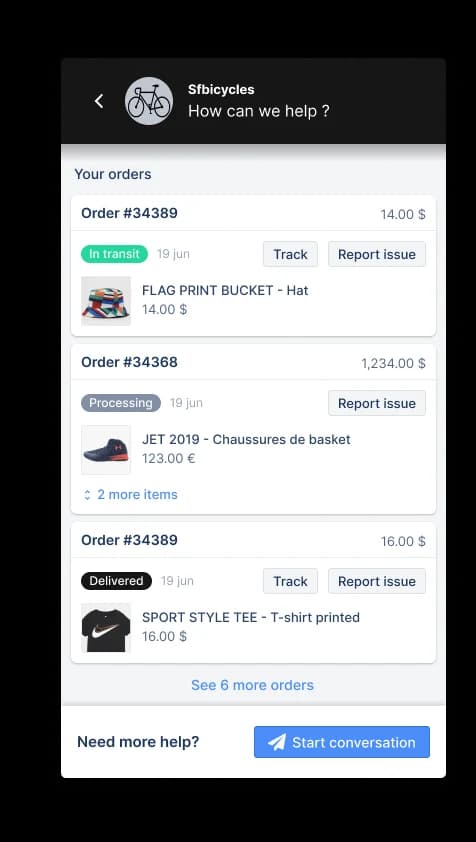
Gorgias is the specialist here. It is a helpdesk built for online stores, and its AI Agent triages and resolves order-status, returns, and WISMO ("where is my order") tickets with real commerce context, order lookups, refund actions, and the like. If Aportio was on your list because you run an ecommerce inbox, Gorgias is the more natural home than a generic IT-leaning triage tool.
Its pricing is refreshingly different: it is billed by ticket volume, never per agent, which suits stores with seasonal spikes and lots of light-touch agents. Each plan bundles a helpdesk cost and an AI Agent cost, with per-resolution overage above your automation allotment.
Pros:
- Purpose-built for ecommerce workflows
- Priced by tickets, not seats
- Deep Shopify and order-context integrations
Cons:
- Narrow outside ecommerce
- Bundled helpdesk-plus-AI pricing takes a minute to parse
- Not aimed at IT or internal support at all
Pricing (monthly, by ticket volume):
| Plan | Price |
|---|---|
| Starter | $40/mo |
| Basic | $90/mo ($77 billed annually) |
| Pro | $550/mo ($471 billed annually) |
| Advanced | $1,430/mo ($1,227 billed annually) |
Each plan bundles helpdesk and AI Agent costs; resolutions above your allotment bill as overage.
Our take: if you sell online, this is the specialist to beat. If you do not, it is the wrong shape entirely.
6. Zoho Desk
Best for: budget-conscious teams, especially anyone already inside the Zoho ecosystem.
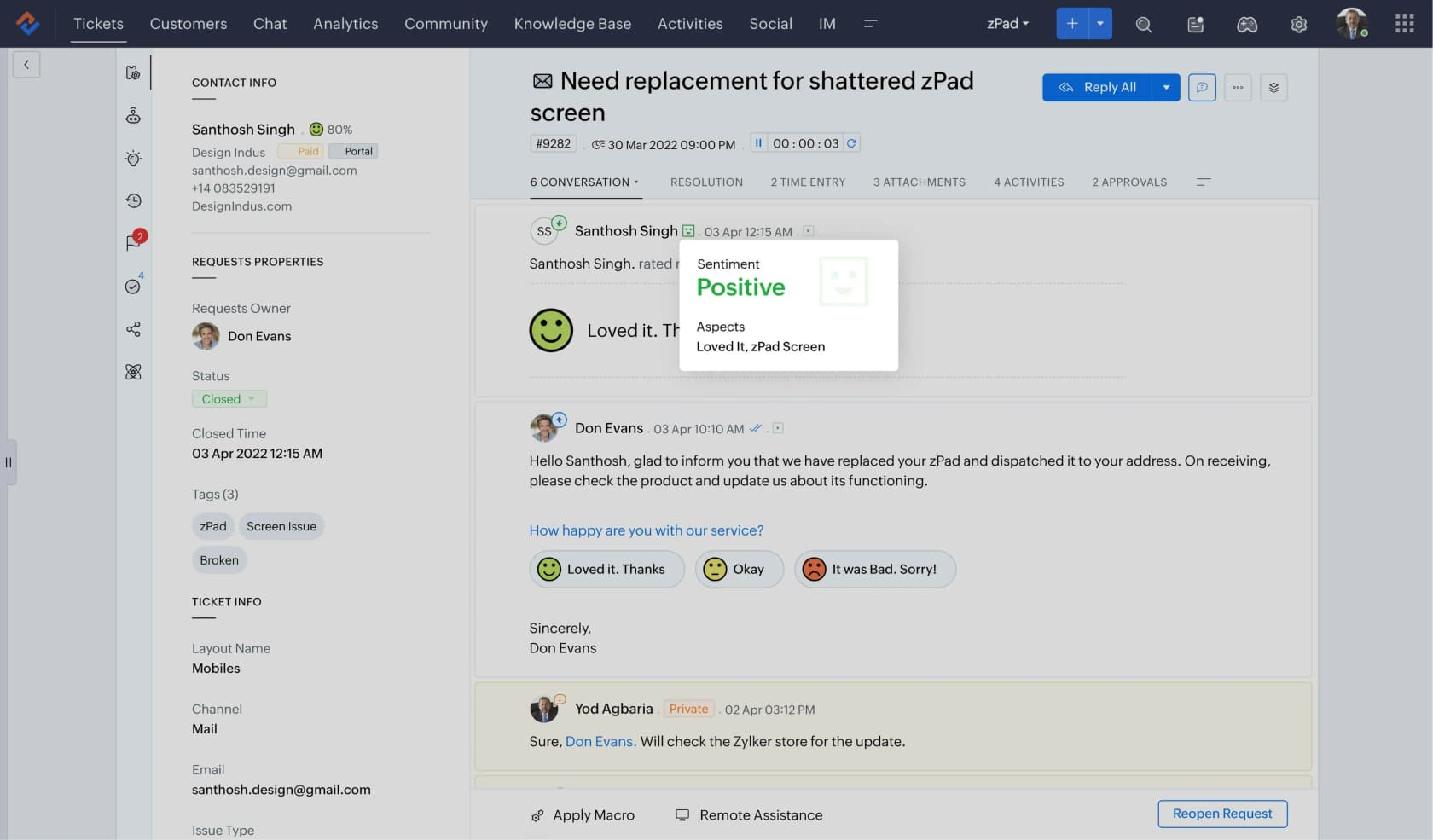
Zoho Desk is the value play. Its Zia AI does sentiment analysis, intent detection, and, on the newer tiers, AI agents you can build with your own model key or Zoho's LLM (with 30 million free tokens a month included). It is nowhere near as focused on email triage as Aportio, but as a full, cheap helpdesk that also brings AI classification, it is hard to beat on price, and there is a genuine free tier for three users.
The trade-off is polish and depth. Zia is competent rather than class-leading, and getting the most from it usually means committing to the wider Zoho suite.
Pros:
- Extremely affordable, with a real free plan
- Zia covers sentiment, intent, and AI agents
- Bring-your-own-model option
Cons:
- AI is less mature than the category leaders
- Best value only if you adopt more of the Zoho suite
- Not a triage-only layer; it is a full platform
Pricing (billed annually):
| Plan | Price |
|---|---|
| Free | $0 (3 users) |
| Express | $7/user/mo |
| Standard | $14/user/mo |
| Professional | $23/user/mo |
| Enterprise | $40/user/mo |
Our take: the smart budget choice, especially if you already live in Zoho. Look elsewhere if AI quality is your top priority.
7. Help Scout
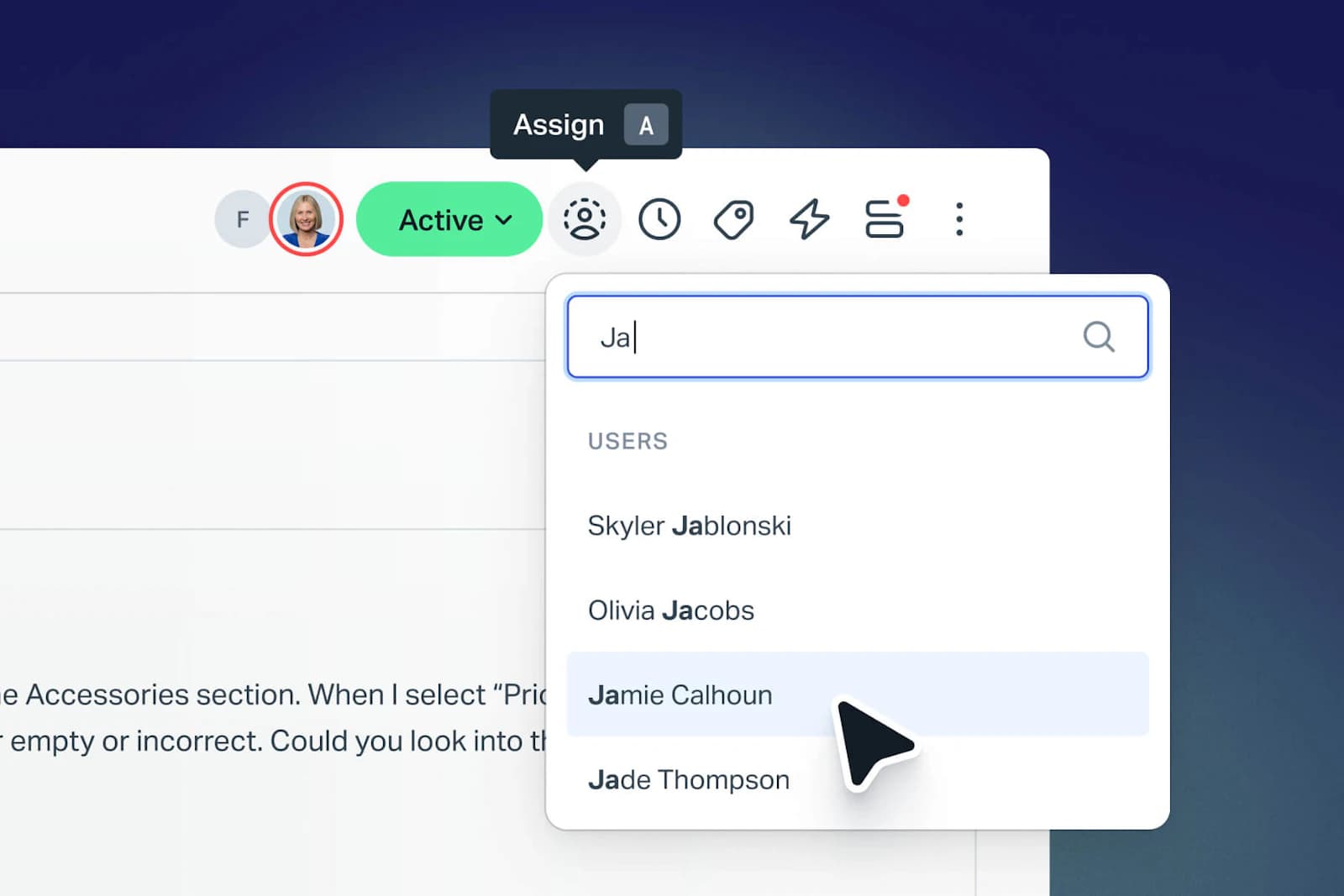
Best for: small teams that want a clean, simple shared inbox with AI on top.
Help Scout is the friendly, low-fuss option. It is a shared inbox and knowledge base with a genuinely pleasant UI, and its AI features (AI drafts, AI summarize, and AI Answers) handle assist and resolution. AI Answers is billed per resolution at $0.75, and Help Scout says the average resolution rate lands around 73%, so you only pay when the AI actually closes something.
Where it is thinner than Aportio is the IT and PSA angle: Help Scout is squarely a customer-service tool, not an ITSM or MSP triage engine. For a small CS team, that focus is a strength; for an IT service desk, it is a miss.
Pros:
- Simple, well-designed, quick to adopt
- Pay-per-resolution AI, so cost tracks value
- Free plan and a long trial
Cons:
- Not built for IT or MSP workflows
- Fewer advanced automations than the big platforms
- Per-user seat cost on top of AI resolutions
Pricing:
| Plan | Price |
|---|---|
| Free | $0 (5 users, 1 inbox) |
| Standard | $25/user/mo |
| Plus | $45/user/mo |
| Pro | $75/user/mo |
AI Answers is billed at $0.75 per resolution.
Our take: a lovely pick for a small customer-service team that wants AI without complexity. Not the tool if IT-desk email triage was your reason for shortlisting Aportio.
How much do these tools actually cost?
The hardest part of this comparison is not the AI, it is that every vendor measures money differently. That makes the sticker prices in the table almost impossible to compare head to head until you translate them into the same unit.
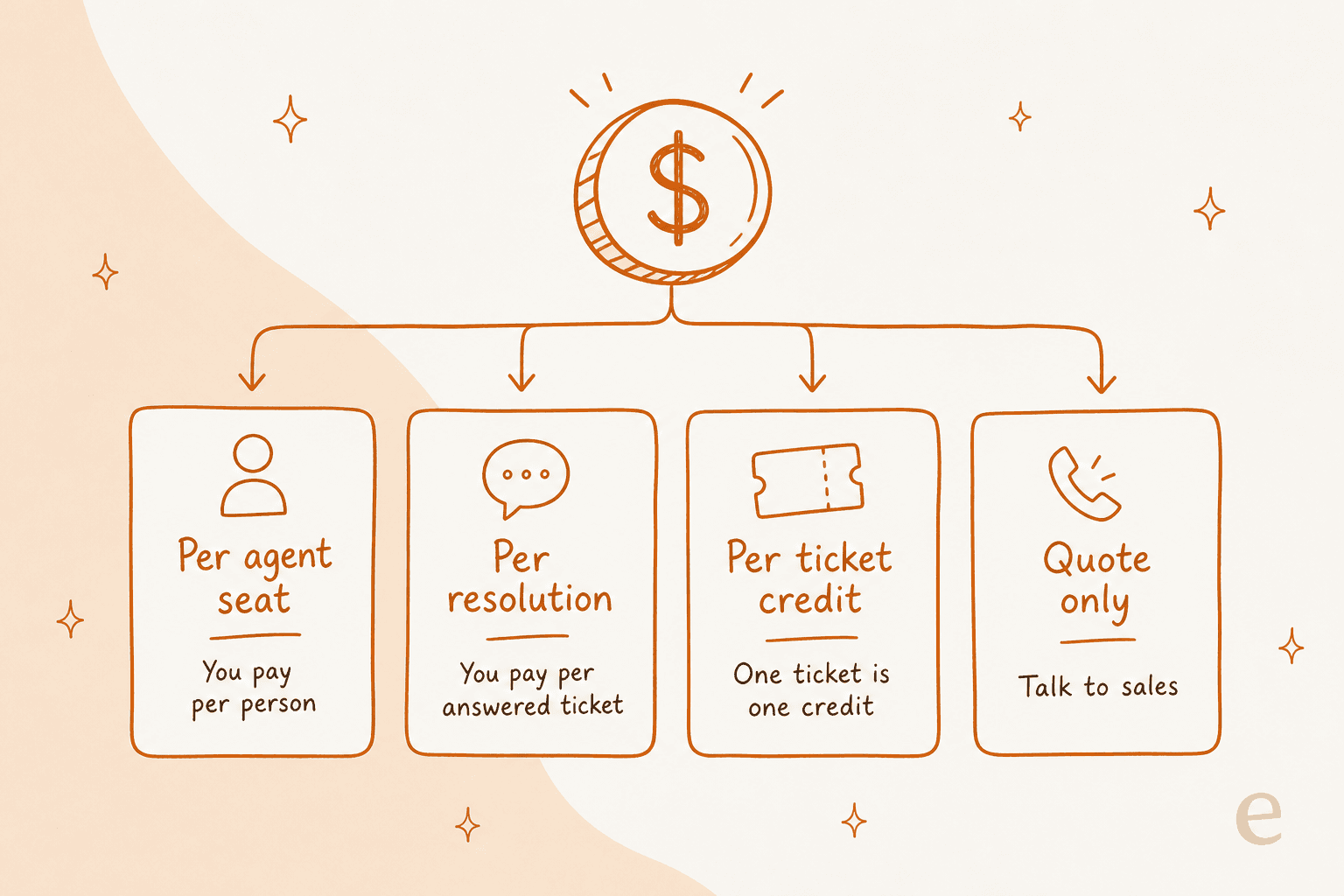
There are really four billing models at play. Per agent seat (Zendesk, Freshworks, Front, Zoho Desk, Help Scout for the platform) scales with headcount, which stings if you have lots of part-time or seasonal agents. Per resolution (Help Scout's AI Answers, Zendesk's AI agents, Gorgias overage) tracks value but gets unpredictable at volume. Per ticket credit (eesel) is flat and headcount-independent. And quote-only (Aportio) means you cannot even do this math until you have talked to sales.
Here is a concrete example. Say you are a 10-agent team handling roughly 3,000 tickets a month, and you want AI to take on about 2,000 of them:
- Zendesk Suite Team: 10 seats x $55 = $550/mo for the platform, plus per-resolution AI billing on those 2,000 tickets on top.
- Freshdesk Pro: 10 seats x $55 = $550/mo, plus Freddy Copilot at 10 x $29 = $290/mo, plus AI Agent sessions. Call it $840+/mo before session overage.
- eesel: the 2,500-credit plan at $999/mo covers 2,500 AI-handled tickets flat, no per-seat fee, with unlimited agents.
The point is not that one number is always lowest, it is that the billing unit decides who is cheap at your specific volume and headcount. A big team with modest ticket volume leans toward per-ticket or per-resolution pricing; a small team drowning in tickets leans the other way. Do this translation before you fall for a low headline price.
Try eesel
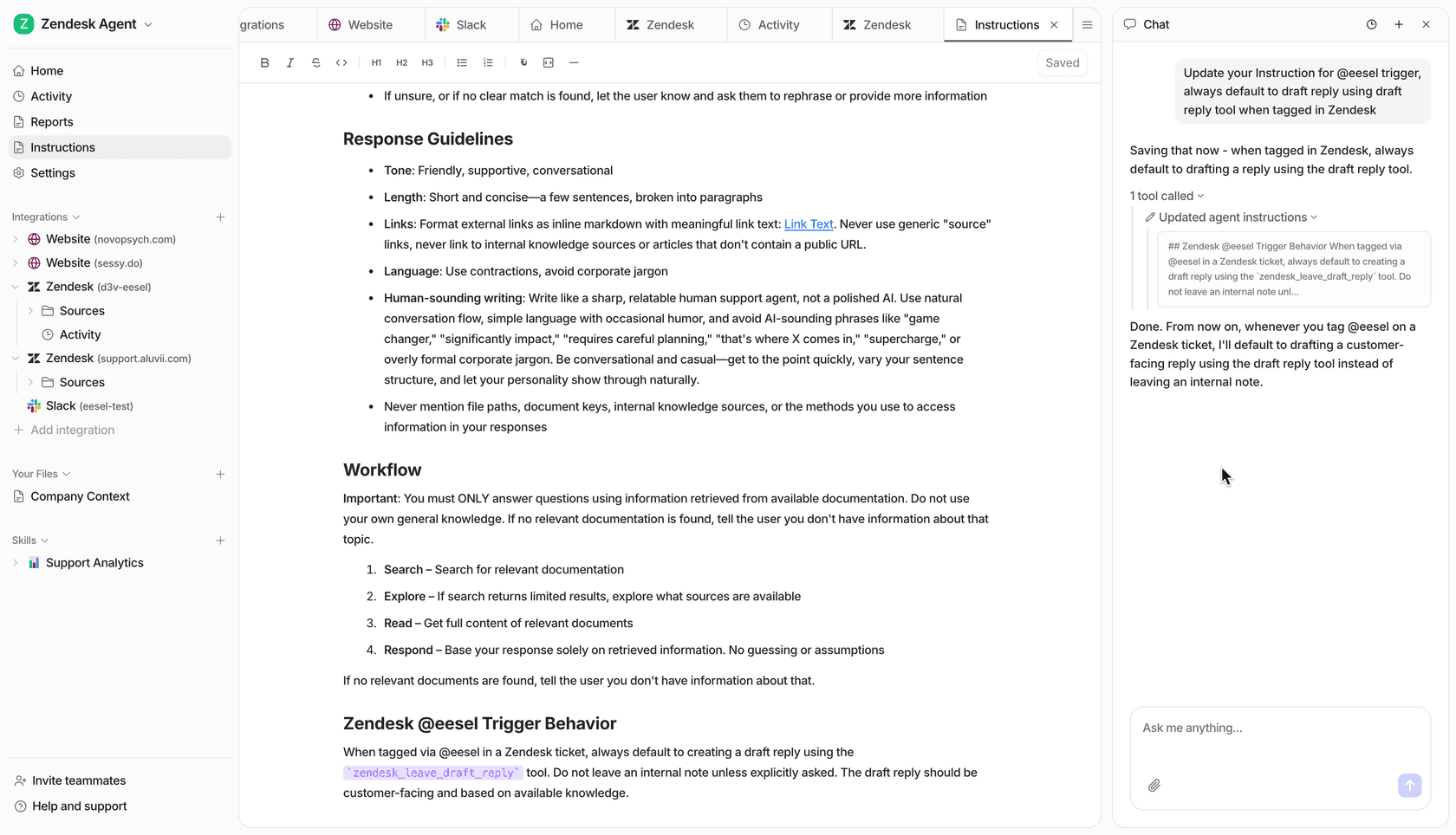
If what drew you to Aportio was the idea of adding AI to the helpdesk you already run without a migration, eesel is the closest match that also closes the loop on the ticket. It plugs into your current Zendesk, Freshdesk, Gorgias, or Help Scout, learns from your past tickets and docs, and triages and drafts the reply, escalating anything it should not touch. The differentiator worth trying yourself is the simulation: point it at your last few thousand tickets and it will show you exactly what it would have resolved and said before a single customer is involved.
You can start free with 100 credits, connect your helpdesk, and see real drafts on your own tickets in about 30 minutes, no sales call required. It works like a new hire that already read every ticket you have ever closed.
Frequently Asked Questions
What does Aportio do, and why look for an alternative?
Which Aportio alternative is best for IT service desk email?
How much does an Aportio alternative cost?
Do these AI customer service tools replace agents entirely?


Article by
Rama Adi
Rama is a software engineer at eesel AI with two years of experience writing about B2B SaaS, AI tools, and customer support technology. Based in Bali, Indonesia, he brings a developer's perspective to product comparisons — cutting through marketing copy to what the integrations and APIs actually do.