6 best Zenbots AI alternatives for Zendesk in 2026

Rama Adi

Katelin Teen
Last edited October 22, 2026
If you run Zenbots AI in Zendesk and want to move off it, swap the AI layer, not the help desk. Zenbots answers from Zendesk Guide articles in the ticket sidebar, the listing was last updated on April 3, 2025, and zenbots.ai served a parking page when I checked on October 23, 2026. Six options cover the realistic ground: eesel, Zendesk AI agents, Forethought AI agents by Zendesk, Macha, Tidio Lyro and Ada.
I build eesel's helpdesk integrations, so I'm biased, and I'll say where eesel isn't the right pick. My lean: if your best answers live in old tickets and macros, not only in the help center, an AI helpdesk teammate like eesel is the closest like-for-like swap. It reads past tickets, macros and Guide articles, and you can run it against closed tickets before it touches a live one. smava runs it on Zendesk for 27,000 tickets a month. If you'd rather stay fully native, start with Zendesk AI agents.
The number to compare is not the sticker price. It's cost per successful resolution: the bill divided by tickets the AI actually closed correctly. The units differ a lot, from $0.40 a ticket to $2.00 a resolution, so I put them side by side below.
Why are people leaving Zenbots AI?
Zenbots was a neat idea. The Zendesk Marketplace listing describes a chatbot that trains itself on your Zendesk Guide articles and sits in the Support sidebar, ready in under 24 hours. For a team with a clean help center and agents who keep asking the same product questions, that's a fair deal.
Three things push teams to look elsewhere:
- The vendor side looks dormant. The listing shows version
0.7.2, last updated April 3, 2025, with5+installs and one review. On October 23, 2026, zenbots.ai answered with a domain parking page. I dug into this in my Zenbots AI pricing breakdown, including the last published plan: €99 a month for 2,500 messages, per the vendor's archived pricing page. - Guide articles are the only named knowledge source. Macros and past tickets aren't mentioned anywhere. If your best answers live in old tickets, a Guide-only bot repeats what the help center says and not much more.
- It's an agent-facing sidebar bot. It answers your team, not your customers, so it doesn't deflect a single ticket or take an action in your systems. That's the classic agent assist job, and the gap most teams want to close next.
None of that makes Zenbots a bad product for what it was. It's a reason to plan the replacement before an app you depend on stops working.
Should you replace the AI layer or the help desk?
Most Zenbots users I'd expect to hear from run Zendesk for good reasons: macros, triggers, Guide, reporting, a team that knows it. Ripping that out because one AI app went quiet is a very expensive way to fix a small problem. So the first decision is scope.
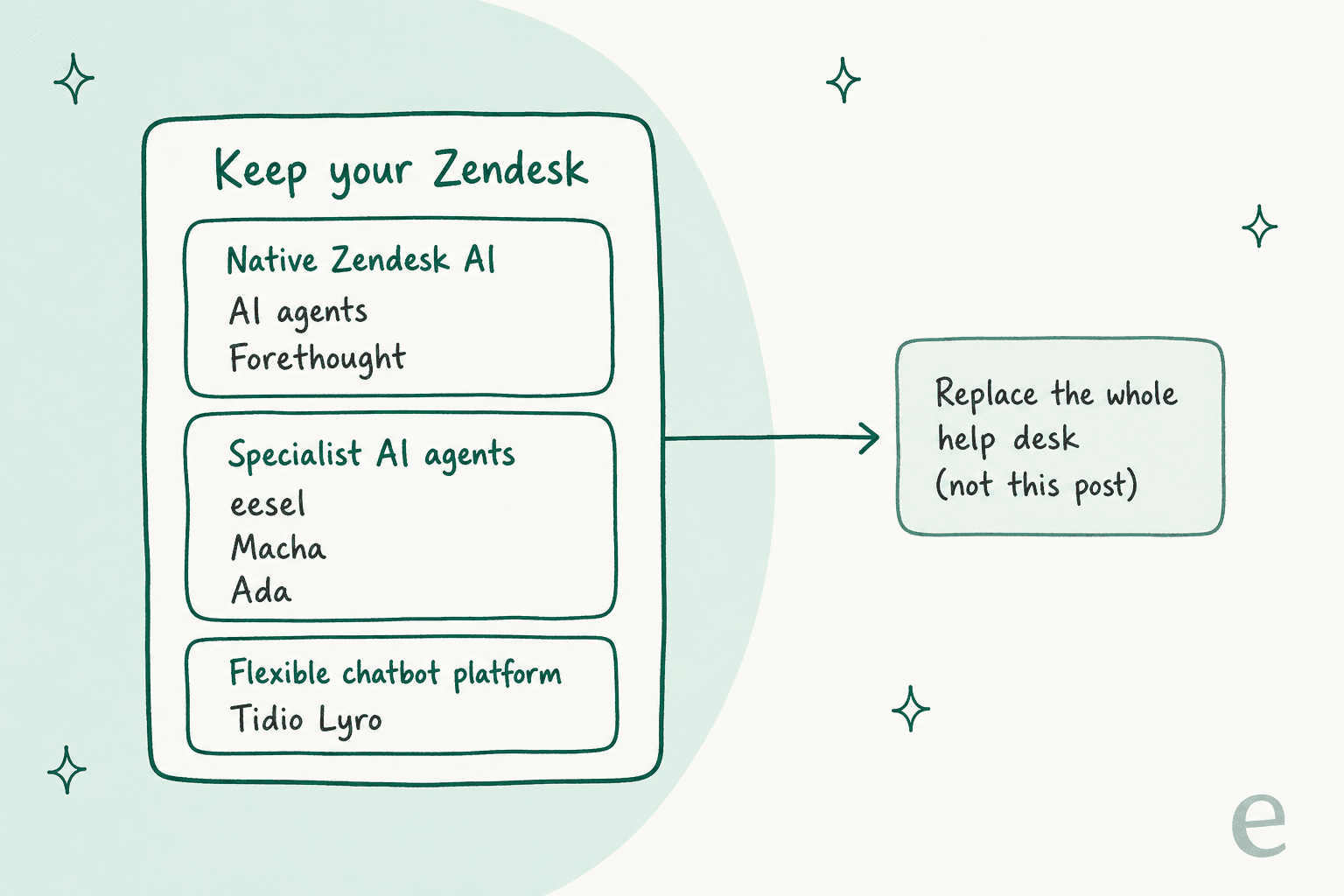
Inside "keep your Zendesk", I see three buckets. Native Zendesk AI is built and billed by Zendesk itself: AI agents and, since June 2026, Forethought. Specialist AI agents are separate products that log into your Zendesk like another agent: eesel, Macha and Ada. A flexible chatbot platform is a chat product that can also run on top of Zendesk, which is what Tidio's Lyro does through Lyro Connect.
If you're really weighing a new help desk, my guide to the AI layer versus built-in helpdesk AI covers that fork. Everything below assumes you're staying on Zendesk.
What should you test before you switch?
I'd judge every option on five things, in this order. They come from how I'd test any AI agent for Zendesk.
- Knowledge sources. Guide articles only, or also past tickets, macros, and docs in other tools? The more of your real answers it can read, the fewer wrong ones you'll clean up.
- Where it acts. Sidebar for agents, drafts inside tickets, or customer-facing replies in messaging and email? Can it take an action, like a refund or a field update, or only answer?
- The billing unit. Per message, per ticket, per conversation or per resolution. They aren't the same thing, and the right comparison is cost per resolution.
- Handoff. When the AI gives up, does a person get the full thread and a clear reason? My notes on AI agent handoff go deeper.
- Proof on your tickets. Not a demo. A test on your own closed tickets.
The fifth one decides most migrations. Pull about 50 closed tickets that cover your real mix, run the same questions through two or three finalists, and score each answer as right, a clean handoff, or wrong. Then divide each bill by the number of right answers.
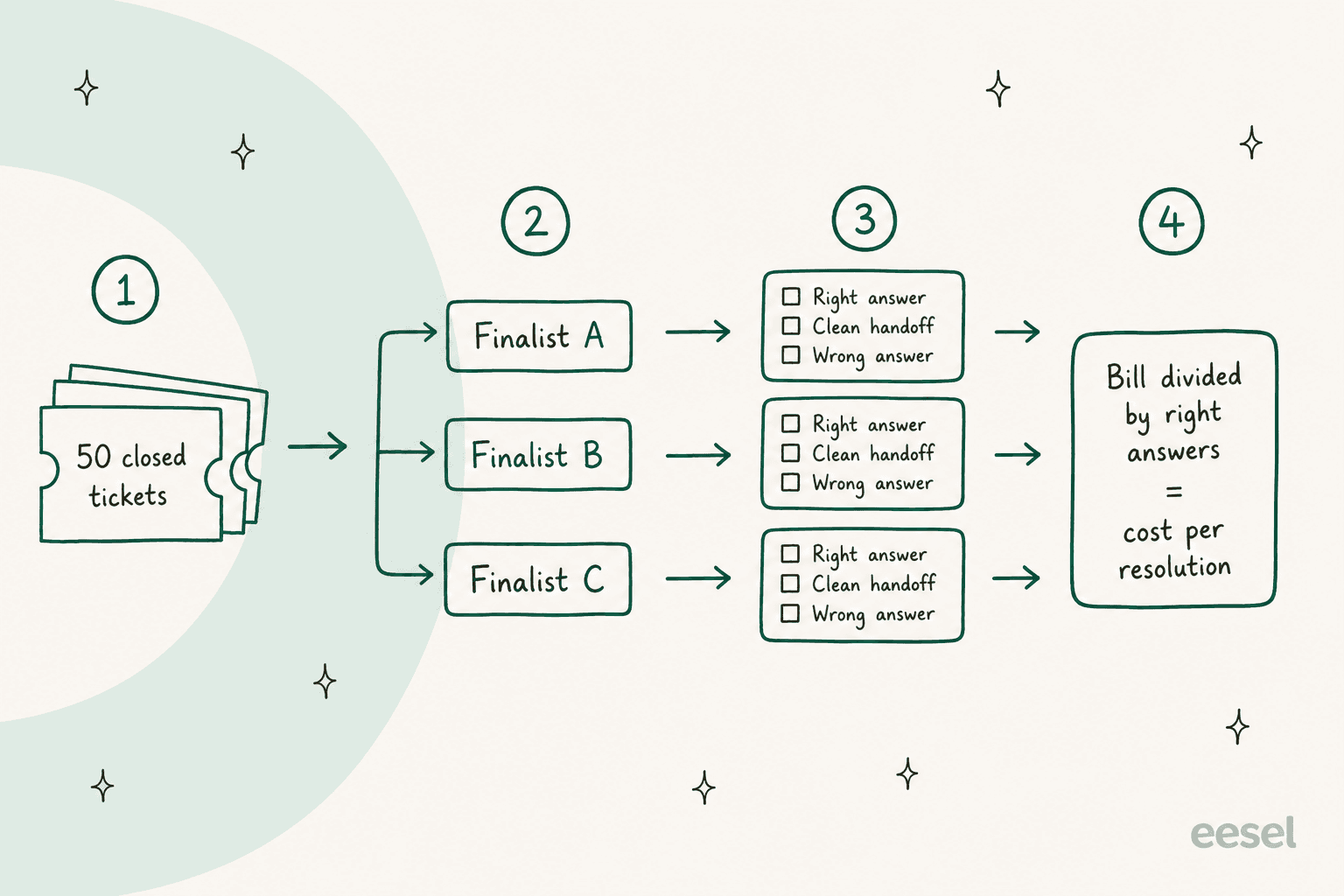
My guide to testing before launch has the scoring sheet. Some tools bake this in: eesel and Macha both run against closed tickets before go-live, per their own pages. Others expect you to build the test yourself.
Zenbots AI alternatives at a glance
Here's the whole field in one table. Prices are list prices from each vendor's own pages, checked October 23, 2026. "Not published" means the vendor doesn't show a price without a sales call.
| Tool | Bucket | Knowledge it reads | How it works in Zendesk | Billing unit | Entry price | Free start | Setup |
|---|---|---|---|---|---|---|---|
| Zenbots AI (baseline) | Marketplace app | Zendesk Guide articles | Sidebar bot for agents | Message | €99/mo for 2,500 messages (archived page) | 7-day trial (archived) | Under 24 hours |
| eesel | Specialist AI agent | Past tickets, macros, Guide, other docs | Joins as an agent: drafts, replies, tags, routes | Ticket or chat (1 credit) | $299/mo for 500 credits | 100 free credits | Self-serve, about 30 min |
| Zendesk AI agents | Native | Zendesk knowledge sources | Messaging, email and voice | Automated resolution | $1.50 committed, $2.00 pay as you go, after plan allowance | 14-day Zendesk trial | In-product |
| Forethought AI agents | Native (add-on) | Tickets and knowledge | Zendesk or any CX platform | Not published | Not published | Demo | Sales-led |
| Macha | Specialist AI agent | Past tickets, help center, internal docs | Native agent plus copilot | Ticket | $299/mo for 750 tickets (about $0.40 each) | $50 free usage | Done for you |
| Tidio Lyro | Chatbot platform | Website, files, imported Zendesk articles | Lyro Connect on your help desk | Conversation | From $0.50 each, on a $300/mo Plus base | 50 free conversations | Self-serve plus sales |
| Ada | Specialist AI agent | Knowledge plus connected systems | Connects to Zendesk and other systems | Not published | Not published | Demo | Sales-led |
Zendesk AI agents first
They come with every Suite and Support plan and include an allowance of automated resolutions. Beyond it you pay $1.50 per resolution when committed, $2.00 pay as you go. Then run eesel's 100 free credits on the same tickets.
More: Zendesk AI agents
Test eesel and Macha side by side
eesel is free for 100 credits, then $299 a month for 500. Macha gives $50 of free usage, then $299 a month for 750 tickets. Run both on the same closed tickets.
More: Zendesk AI alternatives
Tidio Lyro, with one catch
50 free conversations to start, but Lyro Connect on Zendesk needs a Plus plan from $300 a month plus usage from $0.50 a conversation. eesel's chat bubble is the option if you want chat and tickets in one tool.
More: Lyro AI pricing
Zendesk AI agents, then eesel
At this volume per-resolution billing adds up: 1,000 resolutions past your allowance is $1,500 committed. Compare it with eesel at $499 for 1,000 credits or $999 for 2,500.
More: Zendesk AI pricing
eesel and Macha are your two finalists
eesel is $999 for 2,500 credits. Macha is $1,199 for 3,000 tickets. Pick one or two, run the 50-ticket bake-off, then divide each bill by correct resolutions.
Tidio Lyro for chat, eesel for one teammate
Lyro Connect is a $300 Plus base plus about $1,000 in usage at 2,000 conversations and $0.50 each. eesel covers chat and Zendesk tickets under one credit meter.
More: Tidio Lyro alternatives
Zendesk AI agents or Forethought
Both are worth a sales conversation at this volume. Forethought AI agents by Zendesk is built for complex workflows and has no published price.
More: Forethought pricing
eesel and Macha, plus one enterprise demo
eesel's top published plan is $1,749 for 5,000 credits and Macha's is $1,999 for 5,000 tickets, with quotes above that. Take Forethought or Ada to a demo as the third finalist.
More: Ada vs eesel
Ada or Tidio Lyro Premium
Both are sales-led at high volume. Ada lists SOC 2, HIPAA, GDPR and PCI DSS badges and says it works with 350+ enterprises.
More: Ada pricing
Pick your ticket volume and what you need the AI to do to see the option I'd test first. Prices are the vendors' own list prices.
1. eesel
Best for: Zendesk teams that want an AI teammate working inside tickets, trained on past tickets and macros, with a way to test it before it goes live.
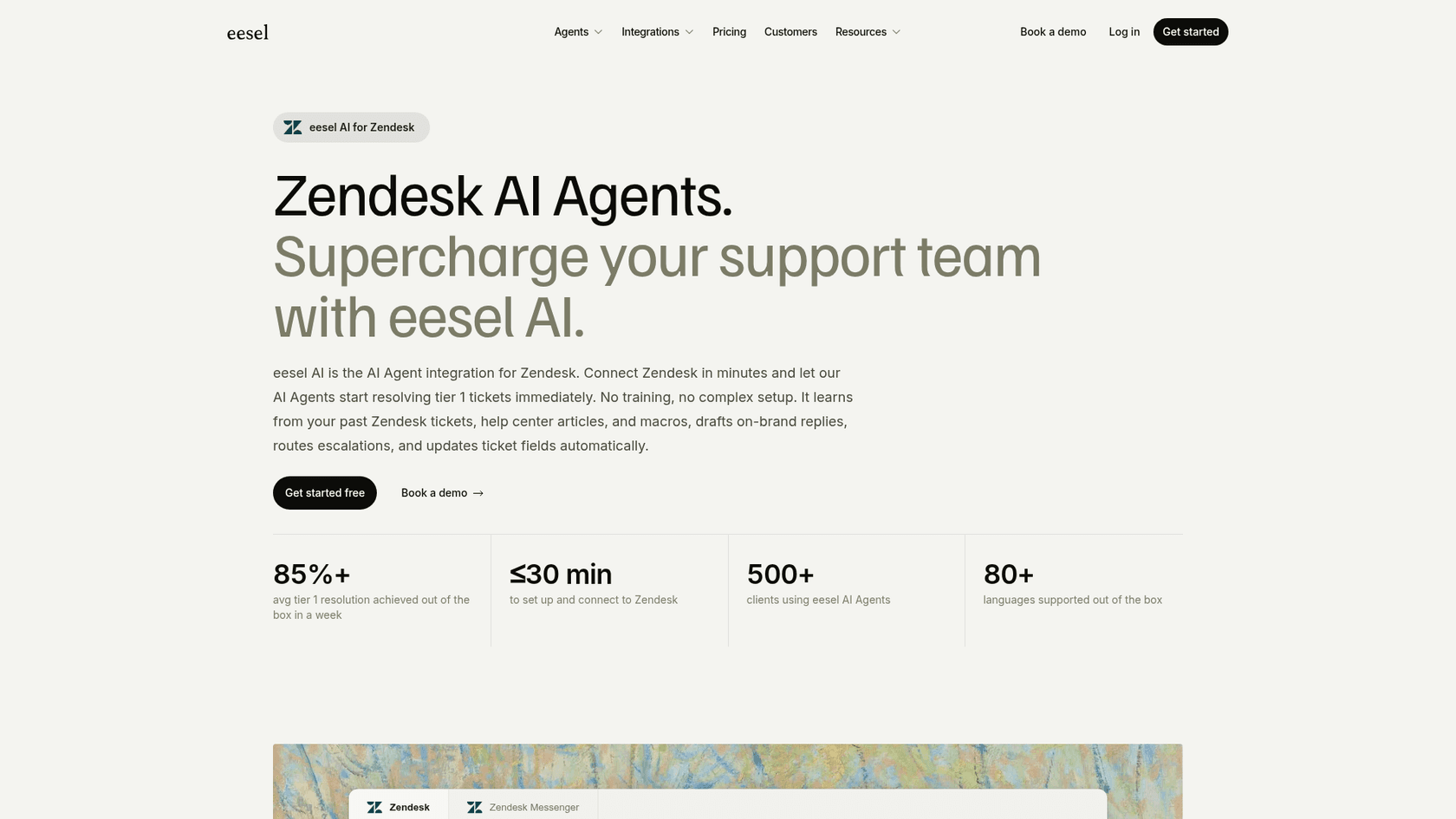
eesel is the one I know best, because I work on the AI helpdesk teammate and its Zendesk side. It connects as an agent in your account. Per its Zendesk page, it reads tickets, drafts and sends replies, adds internal notes, updates ticket fields and routes to groups. The knowledge comes from your past tickets, Guide articles and macros, so it covers what Zenbots reads and the two things Zenbots doesn't name.
The part I'd lean on is the test. The same page describes running the agent against past tickets before it touches live ones, so you can see where it's strong and where it needs a missing article. That is the bake-off from above, built into the product. My walkthrough of training AI on past tickets shows what that looks like.
What it looks like on real queues. smava runs three eesel agents on one Zendesk shared by two brands. In the month from 8 August to 8 September 2026, the agents handled 27,000 tickets: 14,600 categorised, 15,300 draft replies prepared from a library of 820 macros and help center articles, with agents approving or rejecting each draft. Dokument 24 runs a lighter setup: 680 tickets prepared in a month, 670 of them with a Danish draft left as an internal note for the team to send. Both numbers come from the customers' published stories.
"We chose eesel AI for its multi-channel data input. By linking our Zendesk and Google Docs, customers get instant responses and tough questions are automatically triaged."
Pricing. Per the pricing page, a ticket or a chat is 1 credit however long it runs. Plans start at $299 a month for 500 credits and step up: $499 for 1,000, $999 for 2,500, $1,749 for 5,000. There's no per-seat fee, and the free plan gives you 100 credits with every feature. If you run out, agents pause until the reset, or you can turn on overage at $0.80 a credit with a cap you set.
Pros
- Reads past tickets and macros as well as Guide, so answers match how your team really writes.
- Runs against closed tickets before go-live, and can leave drafts as internal notes so a person sends every reply.
- Unlimited agents and seats on one fixed price.
- Works in other channels too: Slack, a chat bubble and email.
Cons
- The entry price of
$299a month is well above Zenbots' old €99, and it's a bigger commitment if you only want a sidebar Q&A bot. - The meter counts tickets the agent works, not only the ones it resolves, and unused credits don't roll over.
- HIPAA with a signed BAA is on Enterprise only, and the pricing page says SOC 2 Type II is underway.
Our take: pick eesel if past tickets and macros hold your best answers and you want to test before launch. Skip it if you only need a free or very cheap Guide Q&A bot. For a head-to-head with the native option, see eesel vs Zendesk AI.
2. Zendesk AI agents
Best for: teams that want the least change: no new vendor, no new contract, billing on your Zendesk invoice.
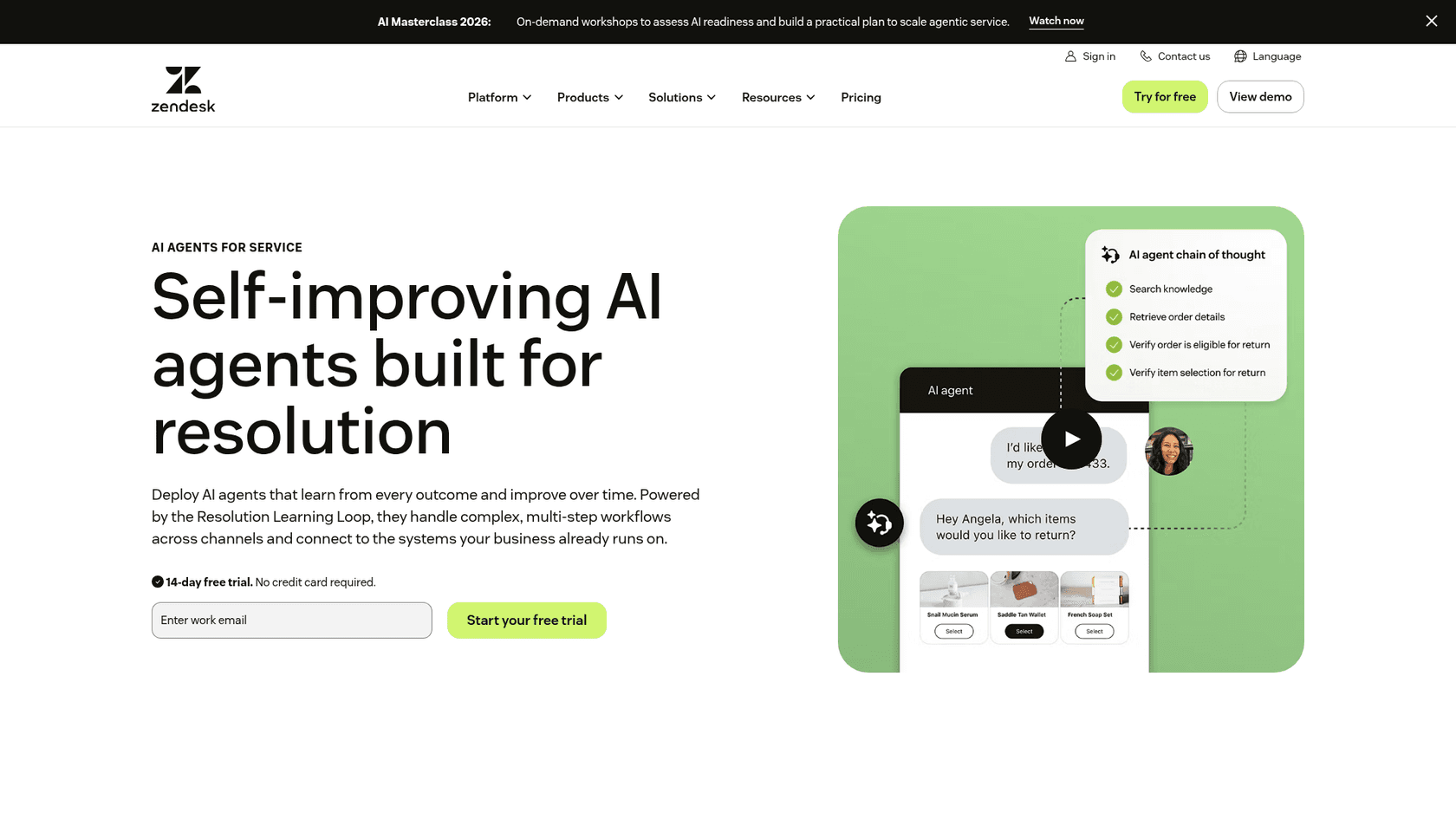
Zendesk's own AI agents are chatbots that talk to customers on messaging, email (including API and web form) and voice, and can act in authorized systems. The help article says they answer from your trusted knowledge sources and then scale up to generative procedures, scripted dialogues, actions and API integrations. Per the pricing page, they're included in every Suite and Support plan.
The billing unit is the automated resolution: you pay for requests the AI resolved without escalation. Each plan includes an allowance. Beyond it, the pricing page lists $1.50 per resolution when you commit to a volume and $2.00 pay as you go, and the help center says overage is billed monthly whatever your subscription terms. My explainer on automated resolutions covers what counts as one.
Pros
- No extra vendor, security review or integration to maintain.
- Covers messaging, email and voice from one place.
- You pay only for resolved conversations, so a failed answer doesn't hit the bill.
Cons
- A per-resolution meter climbs with your success. At
$1.50each, every 1,000 resolutions past the allowance is$1,500. - The knowledge comes from Zendesk's knowledge sources, so past tickets aren't the default teacher. Check what Zendesk AI really costs for your plan.
- Dialogues, actions and API integrations make setup a configuration project, not a quick install.
Our take: the safe first test for any Zendesk shop, and a fair benchmark for every other option here. Pair it with my notes on the Zendesk AI agents advanced add-on if you want actions.
3. Forethought AI agents by Zendesk
Best for: larger support teams with complex workflows and a budget that runs through a sales conversation.
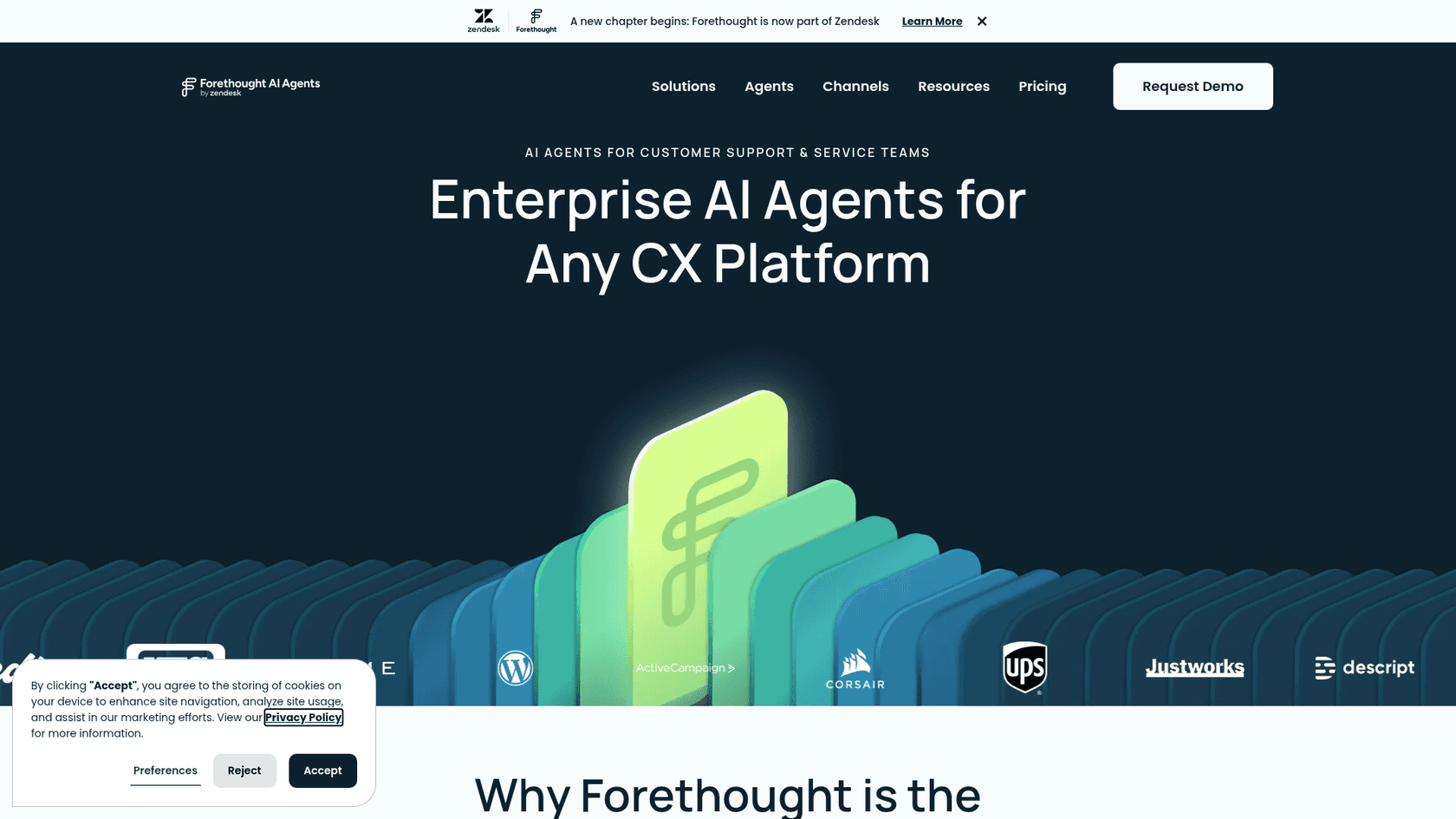
Zendesk acquired Forethought in early 2026, and per Zendesk's June 4, 2026 announcement, customers can now buy it as an add-on. The announcement lists five jobs: identify customer intent, automate support tasks, assist agents with drafted replies, surface insights and review quality. Zendesk says it works across email, voice and chat, "whether you use Zendesk or not".
That last point matters. Forethought isn't tied to Zendesk, so the same agent could follow you if you change help desks later. Pricing isn't published: the announcement tells you to contact Zendesk Sales. For context on how it compares with other tools, my Forethought review, Forethought pricing and Forethought alternatives posts go through it.
Pros
- Built for complex, multi-step workflows across channels.
- Now sold and supported through Zendesk, with a platform-agnostic option if your stack changes.
- Includes quality review and insights, not only answering.
Cons
- No published price or free start, so budgeting begins with a sales call.
- Newly available as a Zendesk add-on in June 2026, so there's less public buyer history than for older tools.
- More tool than a team replacing a
€99sidebar app is likely to need.
Our take: shortlist it if you're an enterprise team that already talks to Zendesk Sales. Skip it for small queues. If you're comparing it with eesel, I wrote which is better for Zendesk.
4. Macha
Best for: teams that want a vendor to build and tune the AI for them, category by category, inside Zendesk.
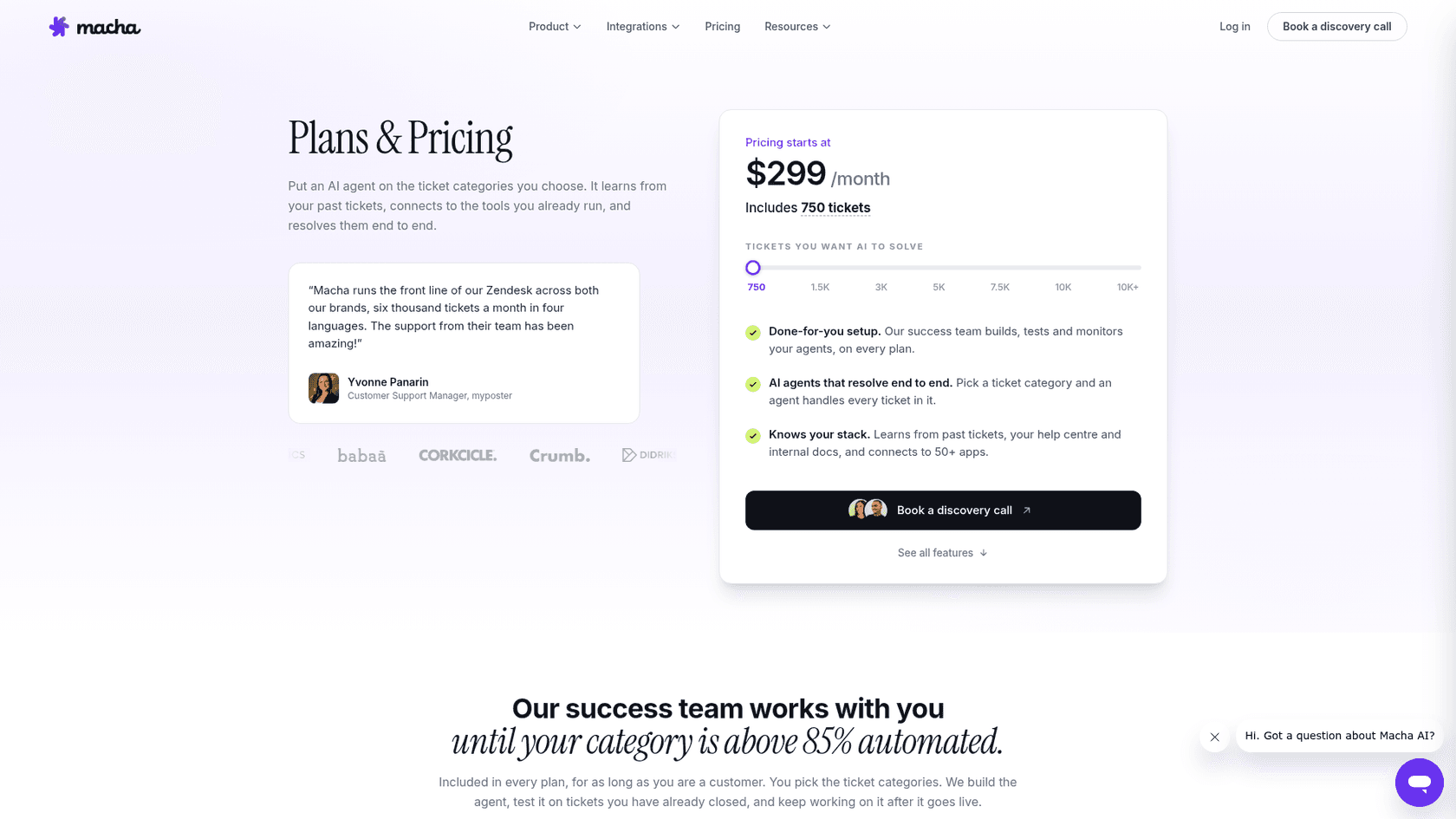
Macha positions itself as "AI on your help desk, implemented by our team". Per its pricing page, you pick the ticket categories, its success team builds the agent, tests it on tickets you've already closed, and keeps tuning after launch. It works with Zendesk, Freshdesk, Gorgias and Front, and it learns from past tickets, your help center and internal docs.
Pricing is a flat ticket meter: $299 a month for 750 tickets, $599 for 1,500, $1,199 for 3,000 and $1,999 for 5,000, which Macha says works out to about $0.40 a ticket at every step. A ticket is a whole conversation, capped at 50 messages. New accounts get $50 of free usage, about 125 tickets. In safe mode the agent writes its reply as an internal note, and that still counts as a ticket.
Pros
- Done-for-you setup on every plan, which suits a team without time to tune an AI.
- Tests on closed tickets and starts in safe mode.
- A predictable, flat per-ticket rate across volume steps.
Cons
- It's a managed engagement, so you hand over more of the build than with a self-serve product.
- The meter counts every ticket the agent works, resolved or not, drafts included.
- Starts at
$299for 750 tickets, so low-volume queues pay for capacity they won't use.
Our take: the closest peer to eesel, and a good pick if you want a vendor team to own the tuning. Read my Macha review and Macha alternatives for the longer comparison.
5. Tidio Lyro
Best for: teams that already like Tidio's chat, or want a customer-facing AI chat that can sit on top of Zendesk for a per-conversation fee.
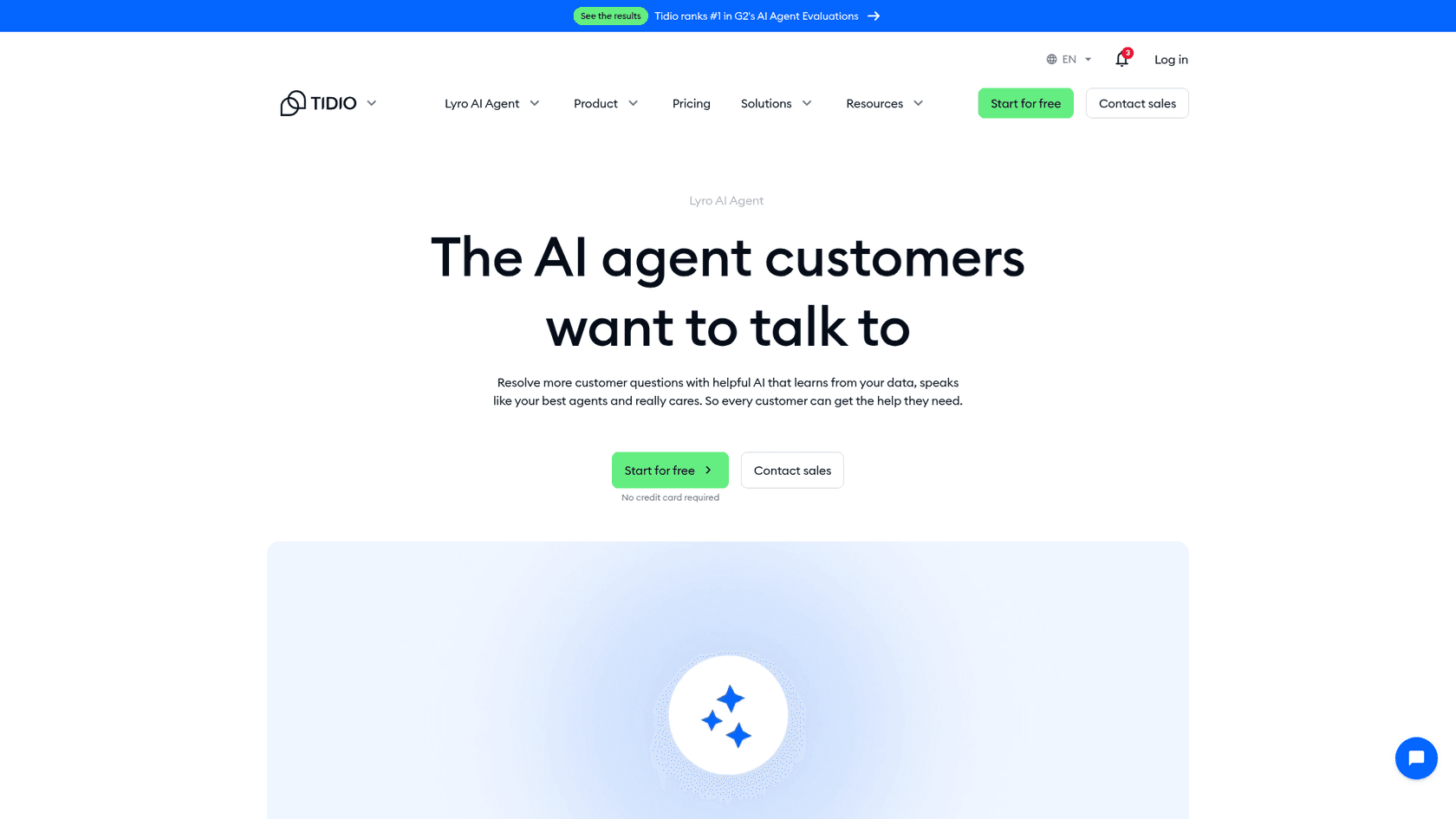
Lyro is Tidio's AI agent. Its Lyro Connect option lets you add it to an existing help desk, with Zendesk, Salesforce and 20+ platforms listed. The pricing page lists "Import Zendesk articles" among its knowledge features, so it can start from the same Guide content Zenbots used.
Cost has two parts. Lyro's page says a conversation starts from $0.50, and its FAQ says Lyro Connect needs a Plus or Premium subscription. Plus starts at $300 a month plus usage. One quirk: another line on the Lyro page says Lyro Connect comes with Tidio Premium, so confirm the plan with sales before you budget. You can start with 50 free conversations. Tidio says customers average a 75% resolution rate with Lyro, which is the vendor's own figure. My Lyro pricing guide breaks the plans down.
Pros
- A free start with 50 conversations, so you can see real answers before you commit.
- Strong customer-facing chat, not only a sidebar tool.
- Per-conversation billing is easy to model.
Cons
- Lyro Connect needs a paid Plus-tier subscription, so the real floor is
$300a month before usage. - It's a chat platform first. Deep Zendesk ticket workflows are less central than they are for a native or ticket-first tool.
- The two plan statements on Tidio's own page don't match, so get it in writing.
Our take: worth a test if website chat is the main channel. If you land here and want to compare, see my Tidio Lyro alternatives and Lyro AI overview.
6. Ada
Best for: large, regulated or multi-region support operations that want a custom-built AI agent and a vendor-led rollout.
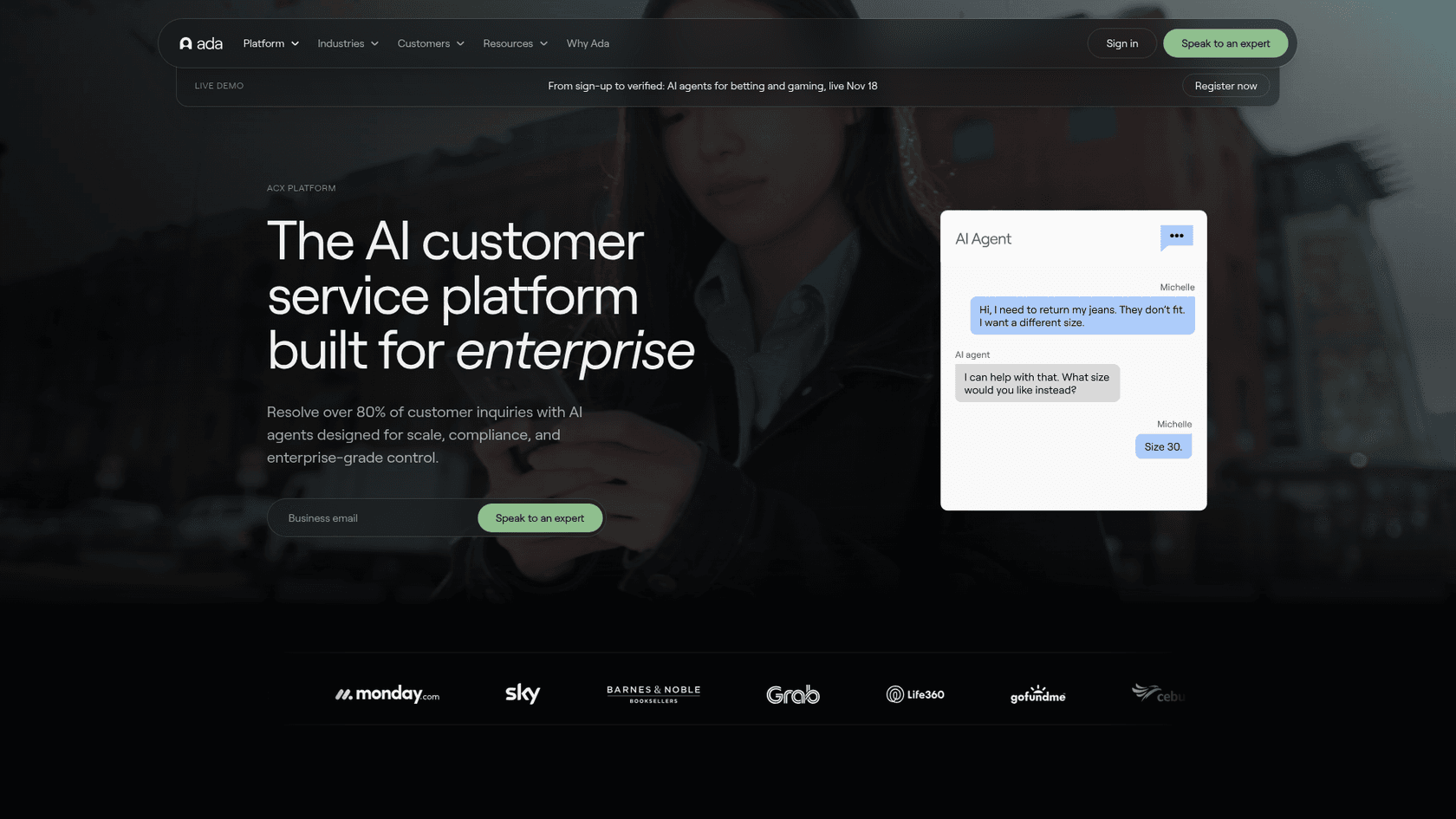
Ada pitches an enterprise AI customer service platform and says it resolves over 80% of inquiries for its customers, a claim from its own page. It lists Zendesk, Salesforce and Twilio among the systems it connects to for actions. Pricing isn't public: the demo form asks for annual ticket volume with bands that start at "less than 50K" and run up to "10M+". The page lists SOC 2, HIPAA, GDPR and PCI DSS badges, and says it works with 350+ global enterprises.
That shape tells you who it's for. A team replacing a €99 sidebar app is not Ada's core buyer. A global team with strict compliance needs and a big queue might be. I cover the commercial side in my Ada pricing guide, and the Ada vs eesel comparison goes through the trade-offs.
Pros
- Enterprise security badges listed on its page, including SOC 2, HIPAA and PCI DSS.
- Built for large volumes, many channels and many brands.
- Vendor-led rollout and a business-case process.
Cons
- No public price, free tier or self-serve trial, so evaluation starts with a demo.
- Likely to be more platform and more budget than a Zenbots-sized team needs.
- Zendesk is one connected system among many, so check how deep the ticket workflow goes in your own demo.
Our take: a fit for enterprise buyers. Everyone else will probably find the first four options closer to their size. My Ada alternatives list helps if it's out of reach.
What does each option cost per successful resolution?
Sticker prices don't line up, because each vendor bills a different thing. This chart shows the unit prices from the vendors' own pages: Macha per ticket, Lyro per conversation, eesel per ticket or chat, and Zendesk per resolution.
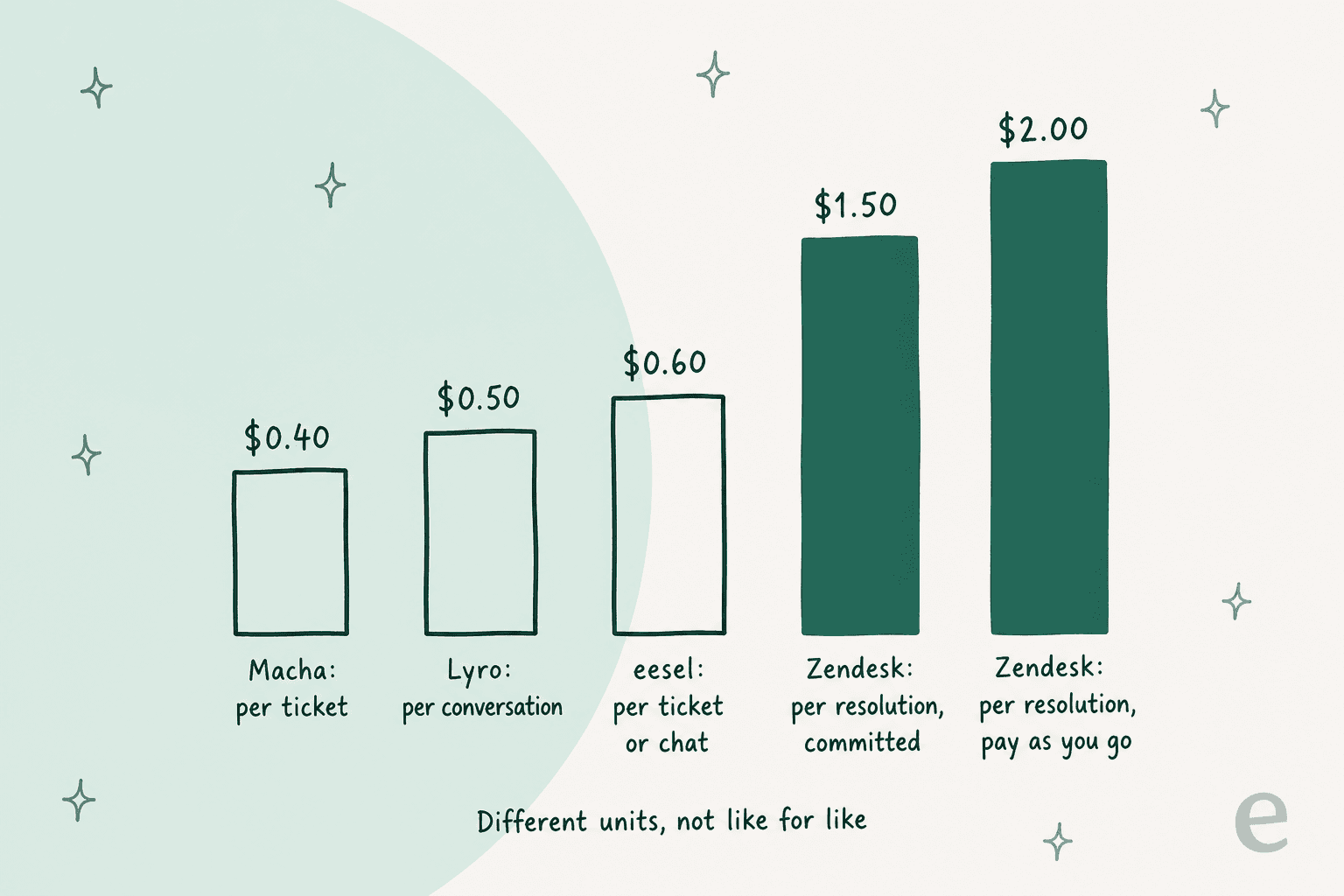
The eesel bar is the $299 plan divided by its 500 credits. The Zendesk bars are the only ones that count successes alone. To compare like with like, here is one illustrative queue: 1,500 tickets a month sent to the AI, and 60% of them (900) resolved correctly. The 60% is my assumption for the example, not a benchmark, so swap in your own rate from the bake-off.
| Option | What you pay for | Monthly bill at 1,500 tickets | Cost per correct resolution (900) |
|---|---|---|---|
| Zendesk AI agents | Only resolutions | $1,350 committed or $1,800 pay as you go, before your plan allowance | $1.50 or $2.00 |
| eesel | Every ticket worked | $699 (1,500-credit plan) | about $0.78 |
| Macha | Every ticket worked | $599 (1,500-ticket step) | about $0.67 |
| Tidio Lyro | Every conversation | $1,050 ($300 Plus base plus 1,500 at $0.50, before any included usage) | about $1.17 |
| Ada, Forethought | Not published | Quote only | Quote only |
Two takeaways. First, the per-ticket tools win on price at a given resolution rate, but they cost the same when the AI fails, while Zendesk's meter only runs on success. Second, if your resolution rate is low, the gap narrows fast, which is why the bake-off matters more than the list price. For the wider picture, my AI customer service cost guide and the chatbot cost breakdown cover the other meters.
Which Zenbots alternative should you pick?
Here's how I'd decide, in plain terms.
- You want the same job, done better, inside Zendesk: start with eesel, and Macha as the second finalist if you'd rather have a vendor build it.
- You want zero new vendors: Zendesk AI agents first. It's the baseline everything else has to beat on cost per resolution.
- You're an enterprise with complex workflows or compliance demands: Forethought AI agents by Zendesk or Ada, via a sales call.
- Your main channel is website chat: Tidio Lyro, with the plan wrinkle confirmed in writing.
- You only need a free or very cheap Guide Q&A bot: that's Zenbots' old lane. Look at free AI chatbots and check the Zendesk Marketplace apps roundup, and keep an eye on how recently each app was updated.
Whatever you pick, run the 50-ticket bake-off with two finalists before you commit. It takes an afternoon, and it's the only test that tells you how the AI behaves on your tickets rather than the vendor's demo.
Try eesel in your Zendesk
If your best answers live in past tickets and macros, eesel is the swap I'd test first. Connect Zendesk, let the AI helpdesk teammate read your tickets, macros and Guide articles, run it against closed tickets, then choose whether it drafts for your team or replies directly. It's free to start with 100 credits, and paid plans begin at $299 a month.
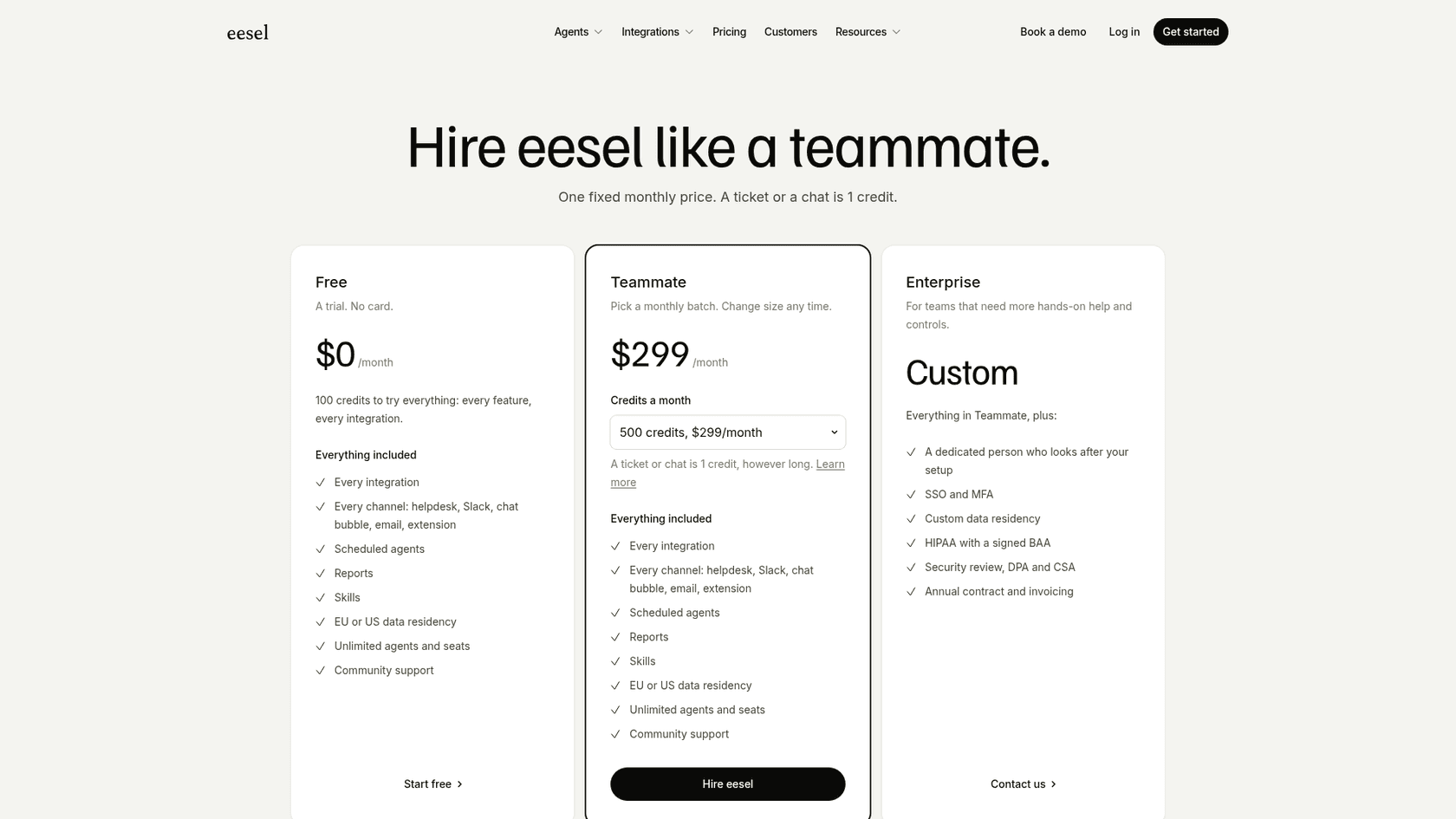
Try eesel for free, or read how smava and Dokument 24 run it on Zendesk.
Frequently Asked Questions
What are the best Zenbots AI alternatives for Zendesk?
I'd test six: eesel, Zendesk AI agents, Forethought AI agents by Zendesk, Macha, Tidio Lyro and Ada. For a like-for-like swap that reads past tickets as well as Guide articles, start with eesel's Zendesk integration, and see my list of the best AI for Zendesk for more.
Is Zenbots AI still available?
The Zendesk Marketplace listing is still up at version 0.7.2, last updated April 3, 2025, but on October 23, 2026 zenbots.ai served a domain parking page. I couldn't find a way to buy a plan, so email the developer before relying on it. My Zenbots AI pricing post has the last published plan.
What is the cheapest alternative to Zenbots AI?
Zendesk AI agents come with Suite and Support plans and include an allowance of automated resolutions, so the first resolutions cost nothing extra. Tidio Lyro starts with 50 free conversations, and Macha gives $50 of free usage. For free tools, see my guide to free AI chatbots.
Can I replace Zenbots AI without leaving Zendesk?
Yes. All six options run on or alongside your current Zendesk. Native choices are Zendesk AI agents and Forethought, and specialist agents like eesel and Macha log in as an agent, so you keep your macros, triggers and reporting. My notes on AI for an existing helpdesk explain the setup.
Which Zenbots alternative learns from past tickets?
eesel and Macha both list past tickets as a knowledge source and run against closed tickets before go-live, per their own pages. Zenbots only named Zendesk Guide articles. My guide to training AI on past tickets shows how it works.
How much do Zenbots AI alternatives cost?
List prices: eesel from $299 a month for 500 credits, Macha from $299 for 750 tickets, Tidio Lyro from $0.50 a conversation on a $300 Plus plan, and Zendesk AI agents at $1.50 committed or $2.00 pay as you go per resolution after your allowance. Ada and Forethought are quote-only. My Zendesk AI pricing guide covers the native meter.
Does Zendesk have its own AI agent?
Yes. Zendesk AI agents handle messaging, email and voice and are included in every Suite and Support plan, billed by automated resolution. Zendesk also sells Forethought as an add-on since June 4, 2026. See my explainer on the Zendesk AI chatbot.
How do I test a Zenbots alternative before switching?
Pull about 50 closed tickets, run the same questions through two or three finalists, and score each answer as right, a clean handoff, or wrong. Divide each bill by the right answers to get cost per resolution. My guide to AI support agent testing has a scoring sheet.