The 8 best ManyChat alternatives in 2026

Kurnia Kharisma Agung Samiadjie

Katelin Teen
Last edited September 28, 2026

Why people leave ManyChat
Let me be fair to ManyChat first, because it earns its reputation. Its whole pitch is "social smarter, not harder," and it is genuinely good at it: auto-replying to comments, turning a "how much?" into a DM, and nudging that DM toward a sale across Instagram, TikTok, WhatsApp and Messenger. More than a million creators and brands use it, and on G2 it sits at 4.5 out of 5 across 165 reviews. If your job is monetizing social conversations, it does that job well.
The problems show up in two places.
The first is billing. ManyChat charges per active contact, and a contact becomes "active" any time a message is sent or received through the platform. That sounds reasonable until a post takes off. Here is how the math turns on you.
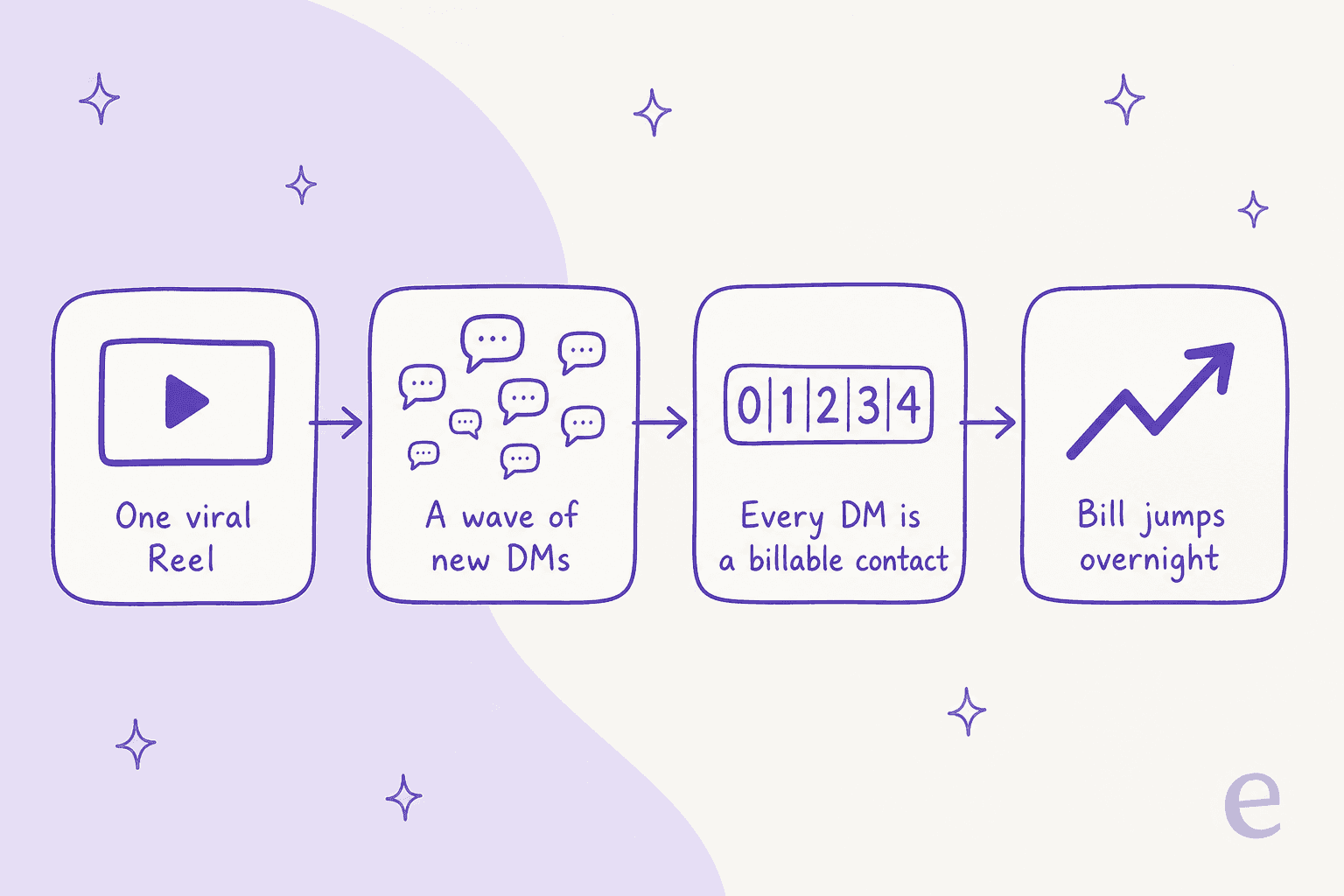
This is the dominant complaint in ManyChat's own reviews. On G2, one marketer put it plainly:
"I assumed an 'active contact' meant someone I reached through an automation I built. In practice, a contact counts as 'active' any time a message is sent or received through the platform... one post that drives a wave of DMs can push you over before you notice."

It is the same story on X:
"Manychat pricing is insane. 1 viral reel and you've lost tons of leads if you're running a DM automation. Someone could easily sweep up tons of customers with more competitive pricing tbh."
The split in ratings tells the whole story. Solicited review sites are warm (G2 4.5, Capterra 4.6), while the unsolicited Trustpilot page sits at 2.1 out of 5 across 303 reviews, dominated by billing surprises and downgrade complaints. Same product, opposite sentiment, depending on whether someone was invited to review it.
The second reason is more fundamental: ManyChat is a marketing tool, not a support tool. Its AI replies to comments and DMs to move a conversation toward a goal, but it is not trained on your help center or your past tickets, and it does not live inside your helpdesk. If the messages you are drowning in are "where is my order" and "how do I get a refund," you do not need better marketing automation. You need something that can actually resolve the question.
How I picked these alternatives
I weighted four things, in this order:
- The billing unit. This matters more than the headline price, so I have called it out for every tool. A $29 plan that meters active contacts can cost more than a $79 plan that meters resolved conversations, depending on your traffic shape.
- What the AI actually does. There is a real gap between "AI that writes a marketing reply" and "AI that resolves a support question from your knowledge base." I have been explicit about which side each tool sits on.
- Channels. Instagram, Messenger, WhatsApp, TikTok and website chat are not interchangeable, and WhatsApp in particular carries separate Meta fees almost everywhere.
- What real users say. I pulled verbatim reviews with links wherever the platform had them, and leaned on aggregate ratings where it did not.
The billing point is worth sitting with, because it is the thing most comparison posts skip. Here is what each tool on this list actually charges you for.
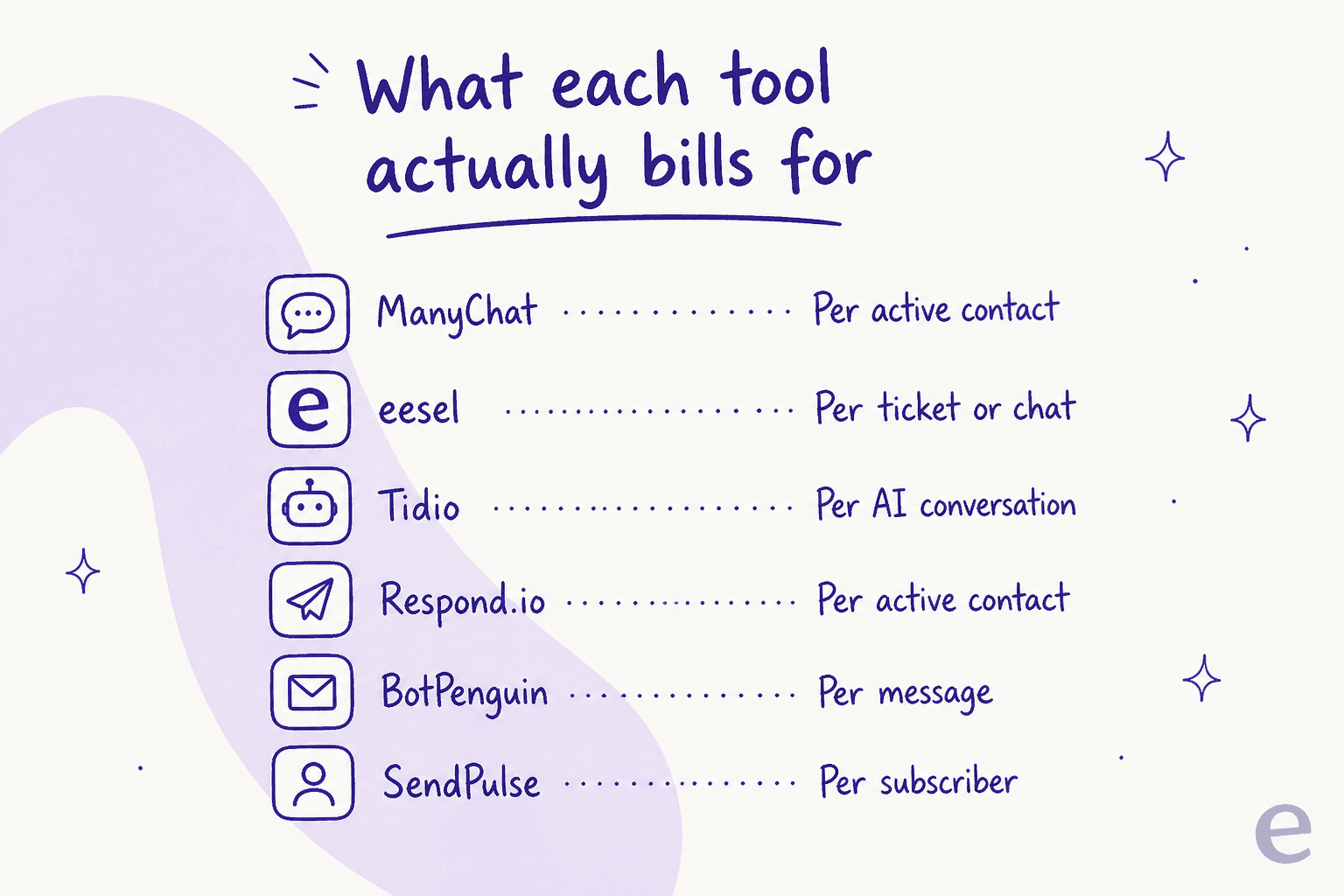
The best ManyChat alternatives at a glance
| Tool | Best for | Starting paid price | Billable unit | AI that resolves support | Free plan | Standout channels |
|---|---|---|---|---|---|---|
| eesel | Automating support, not just marketing | $299/mo (500 credits) | Ticket or chat handled | Yes, from your KB + past tickets | 100 credits, no card | Helpdesks, IG/Messenger/WhatsApp, chat widget, Slack |
| Chatfuel | WhatsApp-first agency lead-gen | $69/mo | AI credits per month | Partial (GPT replies) | Trial only | WhatsApp, Instagram, Messenger |
| Tidio | Website chat + light AI support | $24.17/mo | Billable conversation | Yes, Lyro (from your KB) | 50 conversations | Website chat, email, social |
| Respond.io | Omnichannel sales teams at scale | $79/mo | Monthly active contact | Yes, AI Agents (Growth+) | Trial only | WhatsApp, IG, Messenger, TikTok |
| Landbot | Visual no-code flow builders | $36/mo | Chat (24h session) | Partial (AI chats metered) | 100 chats/mo | Web, WhatsApp, Messenger |
| Wati | Dedicated WhatsApp Business | $59/mo | Software fee + Meta fees | Add-on (Astra agents) | Trial only | WhatsApp (BSP) |
| SendPulse | Multichannel marketing on a budget | $9.60/mo | Subscribers + bots | BYO key (partial) | 500 subscribers | IG, Messenger, Telegram, WhatsApp, email |
| BotPenguin | Cheapest multi-model chatbot | $29/mo | Messages | Partial (multi-model) | 1,000 messages | WhatsApp, IG, Messenger, web |
Prices are the entry paid tier as of September 2026, and most annual figures. WhatsApp per-message fees from Meta are extra on every tool that supports it.
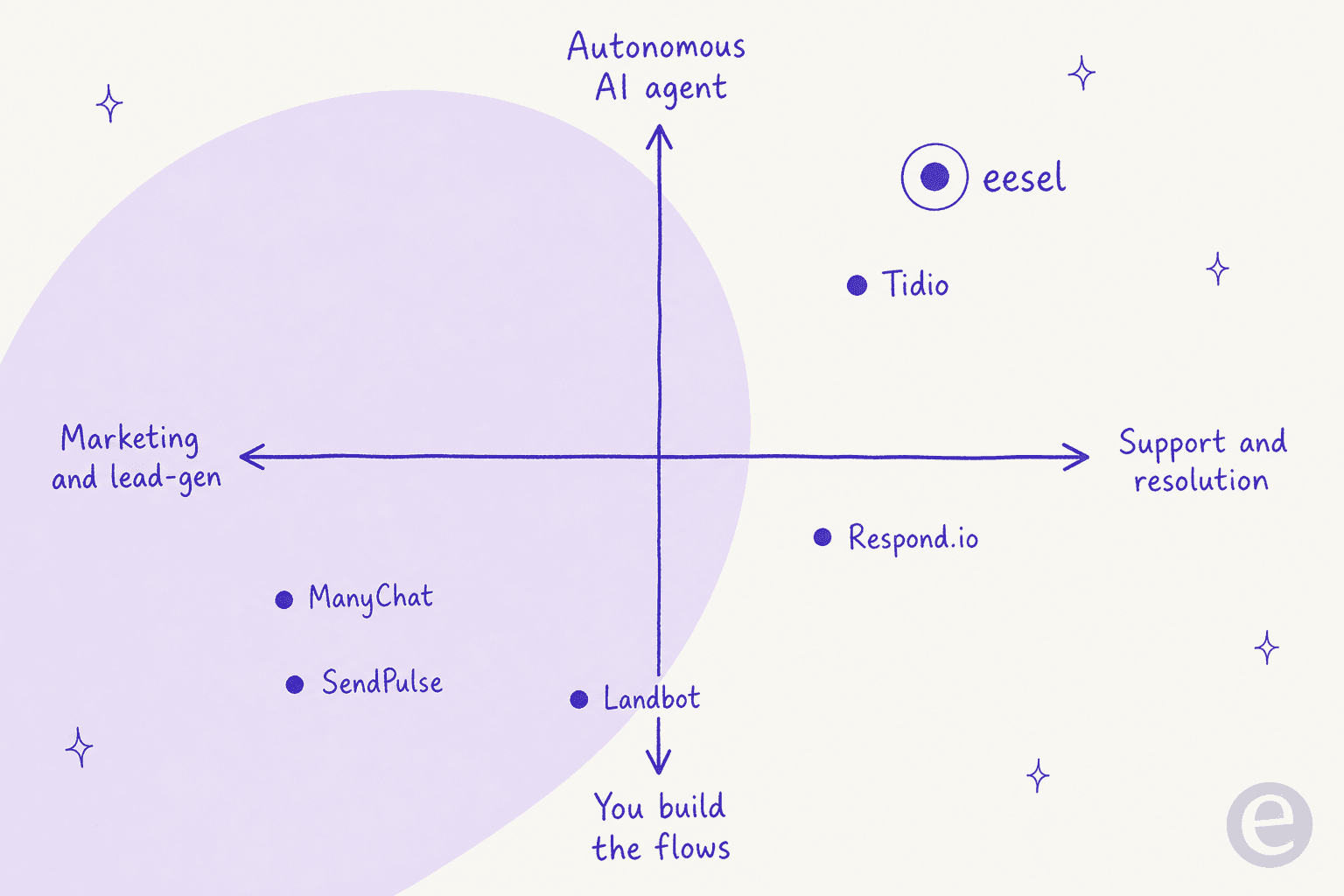
One more way to see the field: not everyone here is trying to do the same job. Some are marketing-first flow builders you configure by hand, and some are autonomous AI agents built to resolve conversations. Where a tool sits changes what "good" even means.
1. eesel AI

Best for: teams whose "DM problem" is really a support problem, and who want AI that resolves questions instead of running campaigns.
Here is the honest framing, because it decides whether eesel is right for you. If you use ManyChat purely to blast broadcasts and run comment-to-DM funnels, eesel is not a like-for-like swap, and I would point you to Chatfuel or SendPulse below. But if a growing share of your DMs and emails are actual questions your team keeps answering by hand, eesel is built for exactly that, and it is the one tool here that treats those messages as support work to be resolved rather than leads to be nurtured.
eesel is an AI teammate platform: you hire ready-to-work AI agents for specific jobs. The current roster is an AI helpdesk teammate and an AI blog writer, and each one arrives already knowing how to do its job. The helpdesk teammate is the relevant one here. It learns from your past tickets, help center and docs, then drafts or auto-sends replies inside your existing tools. Critically for anyone leaving ManyChat, it also answers Instagram DMs, Messenger and WhatsApp automatically, plus a website chat widget, email and Slack, so social messages and support tickets finally live in one place.
What makes it different from the marketing tools on this list is that it plugs into the helpdesk you already run, whether that is Zendesk, Freshdesk or Gorgias, and can be live in about 30 minutes with no rebuild. Before you let it loose, its simulation runs the agent over hundreds of your past tickets and scores its answers against what your team actually sent, so you see how it will behave on real questions before a single customer sees it. That last part is the lesson I keep coming back to after years of this: confident bots are the dangerous ones, and testing against your own history first is the only way to trust an auto-reply. It shows up in results too, like Gridwise resolving 73% of tier-1 tickets in the first month.
If you are technical, there is also an eesel CLI and an MCP server. The same teammate you configure in the dashboard can be driven from a terminal, wired into scripts, or operated by a coding agent like Claude Code or Cursor. npx @eesel/cli init spins up a workspace, every command returns clean JSON for CI, and eesel mcp token connects it to MCP clients. It is the same agent and the same company knowledge, just an agent-friendly surface for people who would rather automate than click.
Pros:
- Resolves questions from your knowledge base and past tickets, not just canned marketing replies.
- Sits on top of your existing helpdesk and answers Instagram, Messenger, WhatsApp, chat and email in one place.
- Simulation on your real historical tickets before go-live.
- Billed per ticket or chat handled, not per contact in your audience.
- Unlimited seats and agents on every plan, no per-seat fees.
Cons:
- Not a broadcast or comment-to-DM marketing tool, so it will not replace ManyChat's outbound campaign side.
- Aimed at support and knowledge work, so pure creators selling through DMs are a better fit elsewhere.
- Fewer public reviews than the incumbents (4.6/5 on G2 across 18 reviews), since it is newer.
Pricing: a free tier with 100 credits and no card, then the Teammate plan runs on fixed monthly credit batches: 500 credits for $299, 1,000 for $499, up to 5,000 for $1,899, with a "talk to us" option beyond. A ticket or a chat is one credit, however many replies it takes, and every plan includes every integration, every channel and unlimited seats. There is optional overage at $0.80 a credit with a cap you set. Full numbers are on the pricing page.
Verdict: if the messages piling up are support questions, eesel is the pick, because it is the only tool here that resolves them from your own knowledge and sits inside the helpdesk you already use. If you only ever wanted marketing broadcasts, keep reading.
2. Chatfuel
Best for: the closest ManyChat replacement for WhatsApp-first marketing and agencies.
Chatfuel is the most direct competitor on this list, and it has leaned hard into WhatsApp and agency lead-gen. It puts GPT-style AI directly inside WhatsApp chats, auto-qualifies and scores leads (Hot, Warm, Cold) through what it calls its System for Automated Leads, and handles the familiar comment-to-DM and Reels-comment automations. If you liked ManyChat's model but want a WhatsApp-first flavor, this is the obvious look. It is an official Meta partner and says it is trusted by 150,000+ businesses. There is a deeper look at where it fits for online stores in my Chatfuel for ecommerce writeup.
The catch is the same billing anxiety you are trying to escape. Chatfuel has moved to an AI-credits model, and reviews echo ManyChat's cost complaints: it holds 4.4 on G2 but a lower 3.2 on Trustpilot, with recurring notes that pricing climbs as you scale and that support can be slow, which sits awkwardly against its "fastest support" marketing.
Pros:
- The closest like-for-like to ManyChat, with a WhatsApp-first tilt.
- GPT replies and automatic lead scoring built in.
- Strong agency features on the Agency plan (multiple client workspaces).
Cons:
- AI-credit billing plus separate WhatsApp fees make total cost hard to predict.
- No free-forever tier, only a trial.
- Support and billing responsiveness are recurring complaints.
Pricing: Business is $69/mo (about $216/year) with $20 of AI credits a month, and Agency S is $90/mo with $100 of AI credits and three client companies. A "save 74%" promo was running at the time of writing, but the standing Business price is $69. WhatsApp conversation fees from Meta pass through on top.
Verdict: the safest swap if you want ManyChat-style marketing with a WhatsApp focus, as long as you go in clear-eyed about the AI-credit meter and Meta fees.
3. Tidio
Best for: small ecommerce and service teams who want website chat plus a real AI support agent.
Tidio is the first tool here that crosses into actual support. Its Lyro AI agent is powered by Claude and answers customer questions from your knowledge base, with a claimed 67% average resolution rate. It started as a live chat widget, so it is strong on website chat and light ticketing, and Lyro Connect can run the agent standalone inside platforms like Zendesk and Salesforce with no migration. It carries SOC 2 Type 2, GDPR and CCPA compliance, and sits around 4.6 on G2.
The thing to watch is the two-meter billing. You pay for "billable conversations" (any conversation a human agent replies to) and Lyro conversations (any conversation the AI touches) on separate meters, and reviewers note that costs get unpredictable on higher-traffic sites. It is a genuinely capable customer service chatbot, just one whose bill you want to model before you scale.
Pros:
- Lyro is real support AI that resolves from your knowledge base, powered by Claude.
- Great fit for website chat plus light ticketing.
- Free tier and low entry price for small teams.
Cons:
- Two separate meters (agent conversations and Lyro conversations) make cost planning fiddly.
- Not built for outbound social DM marketing the way ManyChat is.
- Higher tiers jump sharply (Plus starts at $300/mo plus usage).
Pricing: Free ($0, 50 conversations), Starter ($24.17/mo), Growth (from $49.17/mo), then Plus (from $300/mo plus usage) and Premium (contact sales). The Lyro AI agent is a separate add-on from $32.50/mo, or roughly $0.50 per Lyro conversation.
Verdict: the best pick if your priority is website chat with a competent AI support layer and you are comfortable modeling the two-meter bill.
4. Respond.io
Best for: mid-market sales and support teams juggling many channels in one inbox.
Respond.io is the grown-up omnichannel option. It centralizes WhatsApp, Instagram, Messenger, TikTok and email in one inbox, layers in workflow automation, and its AI Agents (available from the Growth plan up) can handle inquiries and route leads. It claims its AI Agents have handled 2.35M+ conversations, and it carries an impressive 4.8 on G2 across 544 reviews. Users consistently praise the fast setup and single-inbox model:
"I like that respond.io allows me to communicate with my clients or potential clients through different channels like WhatsApp, Messenger, Instagram, and email, all centralized in one inbox... the initial setup was super easy."
The recurring downside is the learning curve on advanced workflows, and cost as contact volume grows, since it bills on Monthly Active Contacts with seats and AI credits metered separately:
"The main downside is that respond.io can feel quite powerful, but that also means there is a learning curve... For teams that want to move quickly, the platform can feel a bit complex at first."
Pros:
- True omnichannel inbox across all the major messaging apps.
- AI Agents plus deep workflow automation for lead routing.
- Excellent G2 rating and strong hands-on support.
Cons:
- Real learning curve on advanced automation.
- Monthly-active-contact billing plus separate seats and AI credits gets expensive at scale.
- WhatsApp fees are not included in the subscription.
Pricing: Starter $79/mo, Growth $159/mo, Advanced $279/mo, Enterprise custom. AI Agents start on the Growth plan. Extra contacts are billed on demand (Growth is $12 per 100 additional contacts), and WhatsApp/Meta fees are separate.
Verdict: the strongest choice for a mid-market team that lives across many channels and can invest the time to learn the workflow builder.
5. Landbot
Best for: teams who want to design conversational flows visually, with a drag-and-drop canvas.
Landbot is the no-code builder people reach for when they want to see and shape the whole conversation as a flowchart. Its visual canvas is the star, and it is widely loved for it, with 4.7 on G2 across 334 reviews. It runs on web, Messenger and WhatsApp, with AI chats metered on top of a base "chat" allowance. One reviewer captured its sweet spot and its ceiling nicely:
"Used it to make 2-3 bots and it basically did the job.. when it came to more complex routs it got not so comfortable so i think it suits more simple bots"

That is the honest read: excellent for beginners and clean flows, less comfortable when logic gets complex. Its Trustpilot score is a low 2.1, though from only 10 reviews skewed toward billing and support gripes, so weight the 334-review G2 score more heavily for feature sentiment.
Pros:
- Best-in-class visual flow builder, genuinely easy to learn.
- Real free tier (100 chats a month) and a low $36 entry price.
- Solid WhatsApp support via the add-on.
Cons:
- Gets clunky for complex branching logic.
- Chat, AI chat and WhatsApp are metered separately, so extras add up.
- Adding WhatsApp roughly doubles the Professional price.
Pricing: Free ($0, 100 chats/mo, no AI chats), Starter $36/mo (500 chats, 100 AI chats), Professional $88/mo (2,500 chats, 300 AI chats), Professional WA $176/mo (Professional plus the $88 WhatsApp add-on), and Business is custom. Extra chats are $0.05 each and extra AI chats $0.10.
Verdict: a great pick if a visual builder is what you are after and your flows are relatively straightforward. Model the metered extras before you commit.
6. Wati
Best for: businesses whose whole world is WhatsApp.
If WhatsApp is your primary channel, Wati is a dedicated, official WhatsApp Business Solution Provider built entirely around it: broadcasts, a shared team inbox, chatbots, and Astra AI Agents you can deploy to web, WhatsApp and voice. It says it serves 16,000+ customers and holds a 4.6 on G2 across 500+ reviews, though its Trustpilot score sits lower at around 3.0. It is one of the more focused tools here, which is both its strength and its limit.
The billing model is honest but needs reading twice: the monthly subscription is a flat software fee, and WhatsApp per-message charges from Meta are billed separately on top per Wati's rate card. So the sticker price is only ever half the cost. The Astra AI Agents that do the actual resolution are also a separately priced add-on, gated to the Pro plan and up.
Pros:
- Purpose-built for WhatsApp, with deep BSP features.
- Flat, predictable software fee (separate from Meta message costs).
- Astra AI Agents plus a first-mover MCP server for developers.
Cons:
- WhatsApp-only focus, so it is not a multichannel marketing hub.
- No free plan, just a 7-day trial.
- The AI agent layer costs extra on top of the subscription.
Pricing: Growth $59/mo (3 users), Pro $119/mo (5 users, "best value"), Business $279/mo, all on annual billing (monthly is $69/$149/$349). WhatsApp message fees from Meta and the Astra AI add-on are separate. There is also an India-only pay-as-you-go plan.
Verdict: the specialist pick when WhatsApp is the whole strategy and you want a provider that does nothing else.
7. SendPulse
Best for: budget-conscious teams who want chatbots plus email and CRM in one multichannel suite.
SendPulse is the value play, and it is broader than most: chatbots across Instagram, Messenger, Telegram, WhatsApp and Viber, plus email, SMS and a CRM, all under one roof. Its AI is a bring-your-own-key layer (ChatGPT, Claude, Gemini or DeepSeek, with the first 200 requests free) that can auto-generate whole chatbot flows and branch by intent. It is well liked on Trustpilot at 4.5, with reviewers praising the automation depth:
"I've been using it for over a year and love how easy it is to setup, to add new channels and how convenient it is to setup personalised flows."
The consistent knock is support tone and the WhatsApp-Meta billing setup, which trips people up:
"Once onboarded, I was not properly guided. They did not clearly explain the integration between their platform and Meta, and I was charged twice by them and by Meta."
Pros:
- Genuinely cheap entry point, plus a usable free tier.
- Multichannel bots plus email, SMS and CRM in one place, useful for AI marketing automation.
- Flexible bring-your-own-model AI.
Cons:
- Support quality and onboarding are recurring complaints.
- BYO-key AI is more DIY than a trained support agent.
- Billing by subscribers plus bots gets confusing across channels.
Pricing: Free ($0, 3 bots, 500 subscribers, 10,000 messages/mo), then Pro from $9.60/mo (annual) at 500 subscribers, scaling by a subscriber slider up to about $3,215/year at a million subscribers. WhatsApp message rates are separate by country.
Verdict: the best value if you want a broad multichannel marketing suite and do not mind a more hands-on AI setup.
8. BotPenguin
Best for: the cheapest way to run a multi-model chatbot across WhatsApp, Instagram and your site.
BotPenguin rounds out the list as the budget multi-model option. It bills by messages (WhatsApp by 24-hour conversations, with no Meta markup on its own fees), covers WhatsApp, Instagram, Messenger and website chat, and lets you pick the underlying model (GPT-5, Gemini, Claude, Llama or DeepSeek). It claims 80,000+ customers across 193 countries, and ratings are solid: 4.4 on G2, 4.8 on Capterra, and 4.5 on Trustpilot. The most-praised theme across reviews is hands-on support:
"We are using BotPenguin for our Facebook bots, responding to Facebook messages automatically. Currently handling millions of messages on a monthly basis and really great product."

The trade-off, per G2, is that the interface and customization can feel limiting for more complex use cases. For simple, high-volume bots on a tight budget, though, it is hard to beat on price.
Pros:
- Very cheap, with a real free tier (1,000 messages).
- Choose your own AI model per bot.
- Strong, frequently praised customer support.
Cons:
- UI and customization can feel limited for complex flows.
- Message-based billing needs watching on high-volume WhatsApp.
- More of a general-purpose chatbot builder than a trained support agent.
Pricing: Free "Baby" plan ($0, 1,000 messages, 1 bot), Little $29/mo (3,000 messages, 5 bots), King $99/mo (12,000 messages, unlimited bots plus AI and voice agents), and Emperor from $990/mo. AI messages and voice minutes are priced as add-ons beyond the plan allowance.
Verdict: the pick when budget is the deciding factor and your bots are relatively simple.
Try eesel for the support side of your DMs
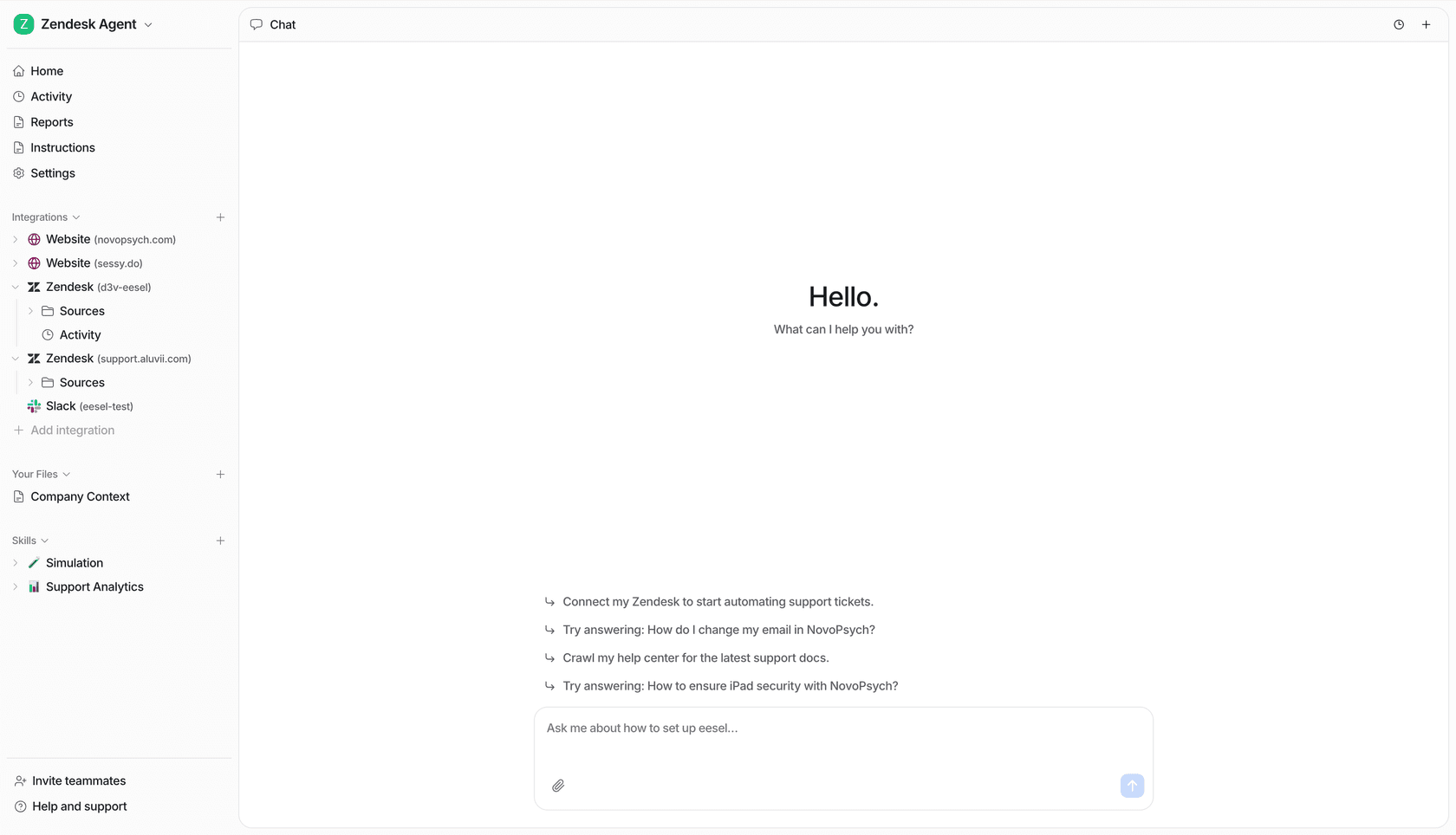
If you have read this far, you probably already know which side of the line your problem is on. If it is outbound marketing, one of the tools above is your answer. If it is the steady drip of repetitive questions in your DMs, chat widget and inbox, that is support work, and eesel is built to resolve it.
The concrete difference: eesel learns from your past tickets and help center, plugs into the helpdesk you already run, and answers Instagram, Messenger, WhatsApp, website chat and email from one place, billed per ticket or chat handled rather than per contact in your audience. You can simulate it on your real historical tickets before it ever replies to a customer, and get started free with 100 credits and no card. If you want to see it against the wider field first, my roundups of the best AI chatbot platforms and the AI chatbot for customer service are good next reads.
Frequently Asked Questions
What is the best ManyChat alternative in 2026?
Is there a free ManyChat alternative?
Why is ManyChat so expensive as you grow?
What is the best ManyChat alternative for customer support?
Can I use ManyChat alternatives for WhatsApp automation?


Article by
Kurnia Kharisma Agung Samiadjie
Kurnia is a software engineer and writer at eesel AI with two years of SEO experience, writing about AI tools, helpdesk software, and customer support. He pairs a developer's understanding of how these products are built with search-driven research into what actually ranks and resonates with the people searching for them.