The 9 best Grok Voice 3 alternatives in 2026

Rama Adi

Katelin Teen
Last edited October 15, 2026
Why look past Grok Voice 3 at all?
I'll start with the honest part, which is that Grok Voice 3.0 is very good. In my Grok Voice 3 review I called it my default pick for a phone agent that has to take actions, and nothing in the last day have changed that. Artificial Analysis put it at #1 on its speech-to-speech index, #1 on task success in live calls (94.8%), and #2 on τ-Voice, the benchmark that simulates real support calls with tools and a policy document.
"SpaceXAI's Grok Voice 3.0 is the new leading Speech to Speech model, debuting at #1 on the Artificial Analysis Speech to Speech Index at 86.9, while also being competitive on latency"
So why people are searching Grok Voice 3 alternatives only a day after the launch? Reading the docs and the benchmark tables, there is five real reasons:
- Concurrency on a new account. Speech-to-speech concurrency now climbs with lifetime spend: 10 sessions at $0, 20 at $50, 50 at $250, 100 at $1,000 and 200 at $5,000. That is fine in production, but a team that wants to load-test 50 simultaneous calls on day one has to prepay to unlock the tier.
- Languages. xAI's speech-to-speech docs list 20+ languages. Gemini Live lists 70, ElevenLabs 90+.
- It is an API, not a call center. You bring the phone line, the call flow, the analytics and the escalation path. xAI does sell a no-code Voice Agent Builder, but many teams want a full platform.
- Latency went the wrong way. Time to first audio is 0.81 seconds, up from 0.70 seconds on Grok Voice 2.0. Still faster than every model near it on the index, but not the fastest Grok.
- Price. $0.08 a minute ($4.80 an hour) is mid-pack. Gemini 3.8 Live measures at $0.84 an hour.
If none of those five bite, you can stop here and pin grok-voice-3.0. If one does bite, the right alternative depend on which one it is, and sorting that out is what the rest of this post do. For the bigger picture across the vendor, my xAI alternatives piece covers the text models too.
Three kinds of alternative
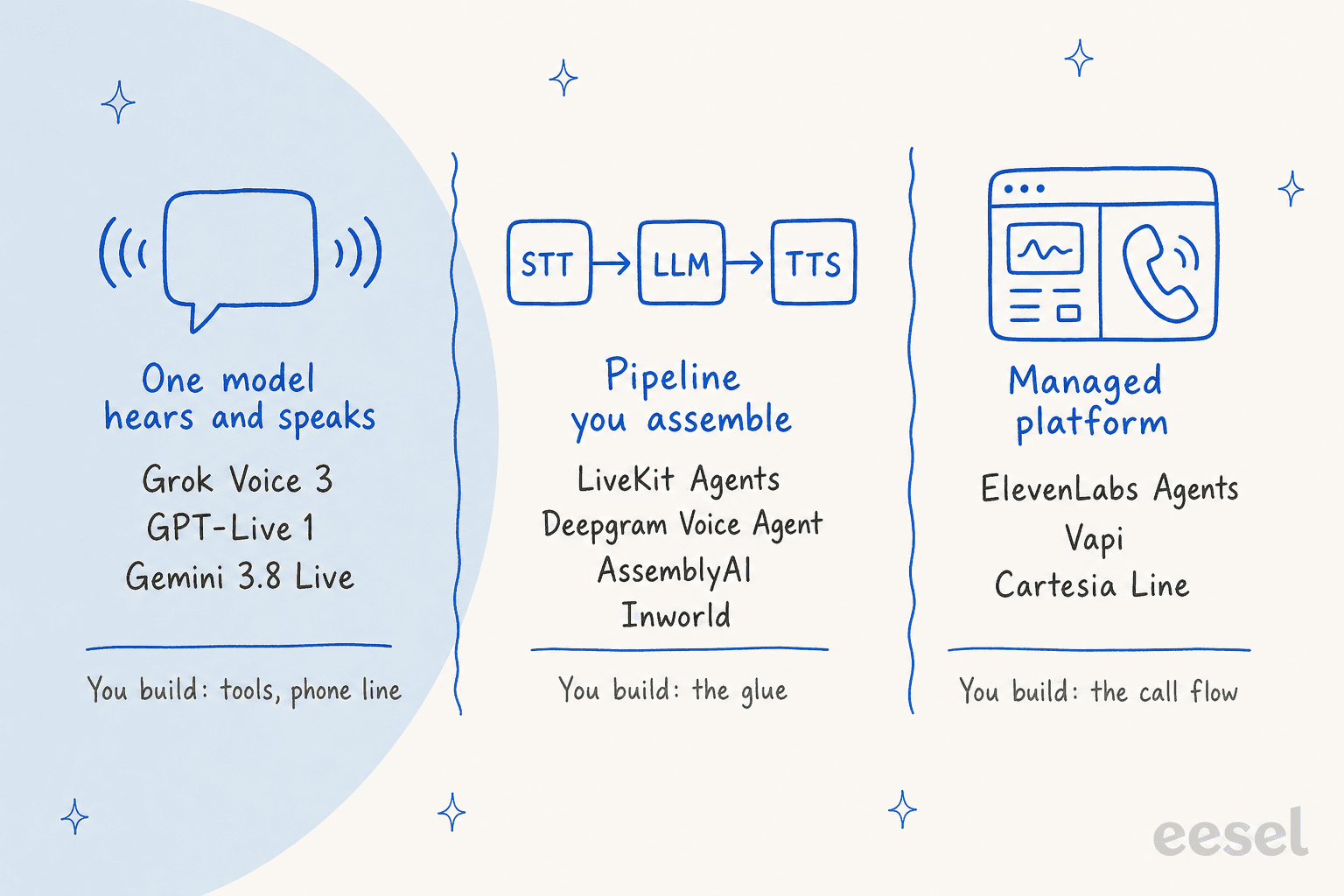
When I asked ChatGPT for Grok Voice 3 alternatives, it sorted the answer into three buckets, and I think that framing is the most useful thing for a buyer to take from this page. The tools below are not interchangeable, swapping from one bucket to another changes on who owns the turn-taking and telephony, and also the tool calls.
- Speech-to-speech models hear audio and answer in audio inside one model. Lowest moving-part count, natural barge-in, and the best benchmark scores. You still build the tools and the phone connection.
- Pipelines chain speech-to-text, a text LLM and text-to-speech. More hops, but you can swap any part, use any LLM, and read a clean transcript at every step.
- Managed platforms wrap a pipeline in phone numbers, a builder, testing and analytics. You build the call flow; they run the plumbing.
One developer on Hacker News pushed back on the first bucket, and it is worth keeping in mind:
"Yeah, sadly "audio to audio" seems to mean "we transcript it automatically for you internally which gets passed to the model", otherwise we'd be seeing models that are able to hear nuance in the input voice and pronunciation, which AFAIK, no model does yet."

For a support line this is less of a problem than how it sounds. Callers wants their order found, they don't need their accent appreciated.
How I picked these nine
I build the integration layer at eesel, which is the code that connect an AI agent to a live helpdesk, so I read these tools as a builder. For each one I read the vendor's own docs and pricing page on October 15, 2026, captured the product pages myself, and pulled every benchmark figure from the Artificial Analysis speech-to-speech leaderboard. Prices come only from vendor pages.
What I did not do is running a thousand production calls through each one, because Grok Voice 3.0 is only one day old. Where I quote a latency, it is either the Artificial Analysis measured time to first audio or the vendor's own published number, and I say which one it is.
The shortlist started with the six tools ChatGPT named (OpenAI, Google, ElevenLabs, Deepgram, LiveKit, Vapi), then I added three that showed up in the benchmark's own cascaded-system tests or have a real voice agent API: Cartesia, AssemblyAI and Inworld. I left out Retell AI because its niche overlaps Vapi; my Retell AI review covers it if you are weighing the two.
Grok Voice 3 alternatives compared
Here is the whole field, in a one table. "Headline rate" is the number on the vendor's pricing page, with what it leaves out in the next column.
| Tool | Type | Headline rate | Not included | Free start | Concurrency (entry to top published) | Time to first audio | Languages | Phone | Compliance (vendor-stated) |
|---|---|---|---|---|---|---|---|---|---|
| Grok Voice 3.0 (baseline) | Speech-to-speech | $0.08/min | Your carrier | No free tier listed | 10 to 200 by lifetime spend | 0.81s (AA) | 20+ | Native SIP, Twilio, LiveKit | SOC 2 Type II, HIPAA eligible with BAA, GDPR DPA |
| GPT-Live 1 | Speech-to-speech | $0.05/min | Backend model and tool usage | No | Not on pricing page | 1.24s to 1.34s (AA) | Not listed on model page | Direct SIP, Twilio, Telnyx, Bandwidth | SOC 2 Type 2, BAA available |
| Gemini 3.8 Live | Speech-to-speech | $0.005/min in, $0.018/min out | Search grounding past 5,000/month | Yes, free tier | Not on pricing page | 1.18s (AA) | 70 | WebSocket only | Paid-tier data not used for training |
| LiveKit Agents | Pipeline (open source) | $0.01/min agent session | STT, LLM, TTS, telephony | 1,000 agent min/month | 5 to 600 | Depends on models | Depends on models | US numbers, SIP, Twilio, WhatsApp | SOC 2 Type II, BAA on Scale |
| Deepgram Voice Agent | Pipeline (managed) | $0.075/min | Nothing on Standard | $200 credit | Up to 45 on pay-as-you-go | Not benchmarked | 45+ (Nova) | Telephony docs | SOC 2 Type 2, HIPAA BAA, EU endpoint |
| AssemblyAI Voice Agent | Pipeline (managed) | $0.075/min | Nothing listed | Free sign-up | Not on pricing page | Not benchmarked | 32 | Phone number guide | SOC 2 Type 2, BAA |
| Inworld Realtime | Pipeline (S2S-style API) | Per part: STT $0.15/hr, TTS from $15/1M chars | LLM tokens | Free on-demand start | Not published | 204ms best, 462ms median (vendor) | ~500 (TTS) | G.711 from Twilio | SOC 2 Type II, GDPR, HIPAA add-on |
| ElevenLabs Agents | Managed platform | $0.08/min | LLM, your carrier | 15 min/month | 4 to 40, burst to 3x | Not benchmarked | 90+ | Twilio, SIP trunk | BAAs on Enterprise |
| Vapi | Managed platform | $0.05/min hosting | STT, LLM, TTS at cost | $5 credit | 4 to 30, +$10 per line | Not benchmarked | Depends on models | Free Vapi SIP, Twilio pass-through | HIPAA add-on $2,000/month |
| Cartesia Line | Managed platform | $0.06/min | $0.014/min Cartesia number | $1 agent credit (~17 min) | 8 to 60 | Not benchmarked | Depends on voice | Cartesia numbers | SOC 2 Type II, HIPAA, GDPR |
The AA latency column is only filled for the speech-to-speech models, since Artificial Analysis measure time to first audio on those ones. For the pipelines and platforms the latency depends on which models you plug in, that is the variable you control..
What the minutes actually cost
Headline rates don't line up, because each vendor leave out a different piece. The calculator below put every tool on the same footing: one minute of a support call where the agent talks around half of the time. Type your monthly call minutes and the bars rebuild themself.
Type your monthly call minutes to see each tool's list-price bill. Rates from each vendor's pricing page on October 15, 2026; GPT-Live 1, Inworld and ElevenLabs exclude part of the LLM cost, so treat them as floors.
Two things jumps out. First, most of the field clusters between $0.075 and $0.083 a minute, which mean Grok Voice 3.0 is not an expensive one for what it does. Second, the two outliers on cost (Gemini 3.8 Live and Inworld) are also the two where you are trading something real: support-task accuracy for Gemini, and a hand-built LLM choice for Inworld. For context on what a minute of AI voice is worth against a human, my AI agent vs human cost breakdown does the math.
Speech-to-speech swaps
These two are the direct replacements, same architecture as Grok, with one model that listen and also talks. If your code already speaks the OpenAI Realtime event format (Grok's API is built to be compatible with it), the move is mostly an endpoint and a key.
The benchmark that matter the most for a support line is τ-Voice, it scores whether a simulated caller's problem actually got fixed. This is the place where three speech-to-speech families separate:
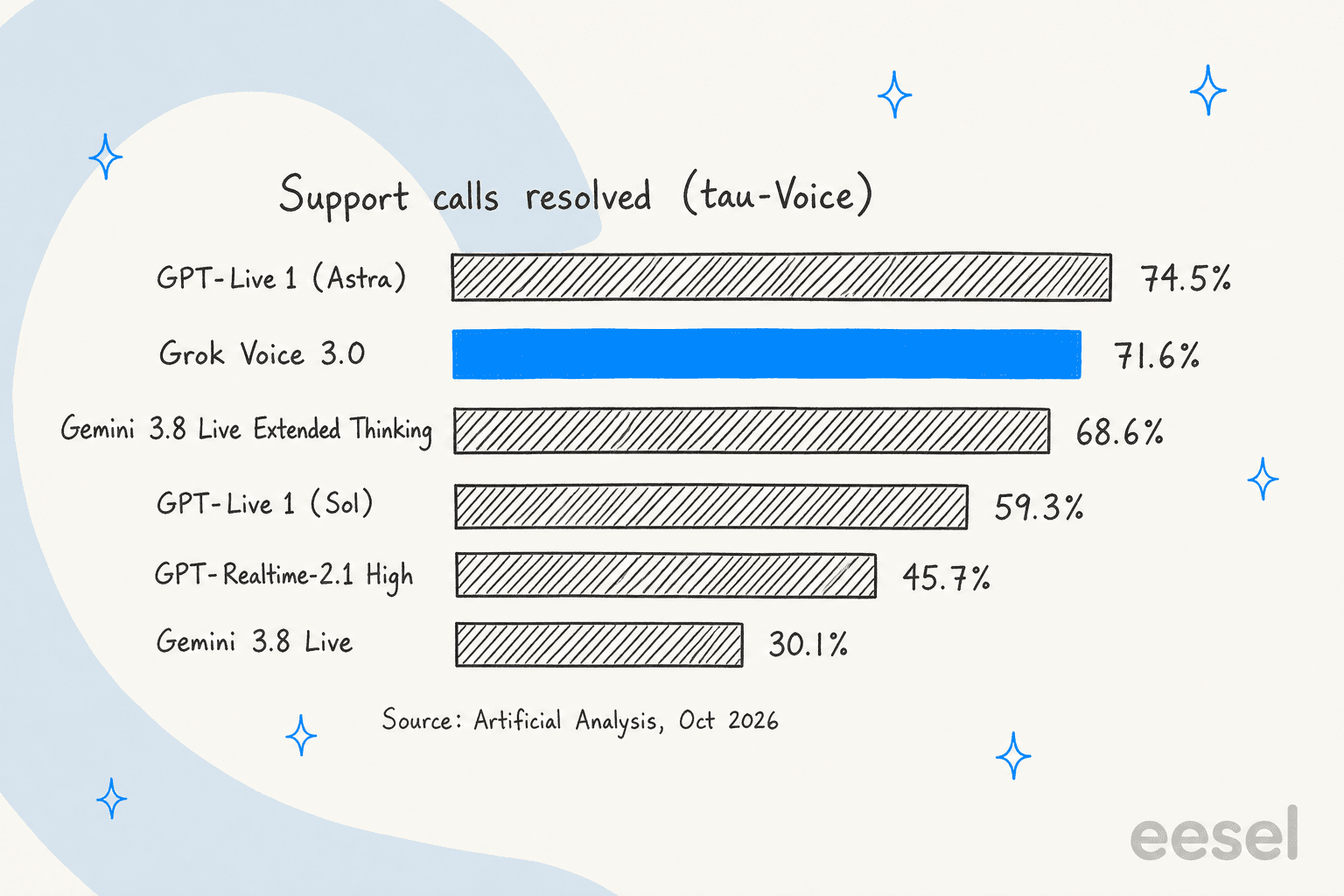
Worth to notice the bottom bar. Gemini 3.8 Live is the second most liked voice in blind listening tests and the cheapest model here, and still it resolves 30.1% of calls. Pleasant and correct, they are different scores.
1. OpenAI GPT-Live 1 and the Realtime API
Best for: support lines where finishing the task matters more than anything else, and teams already on OpenAI.
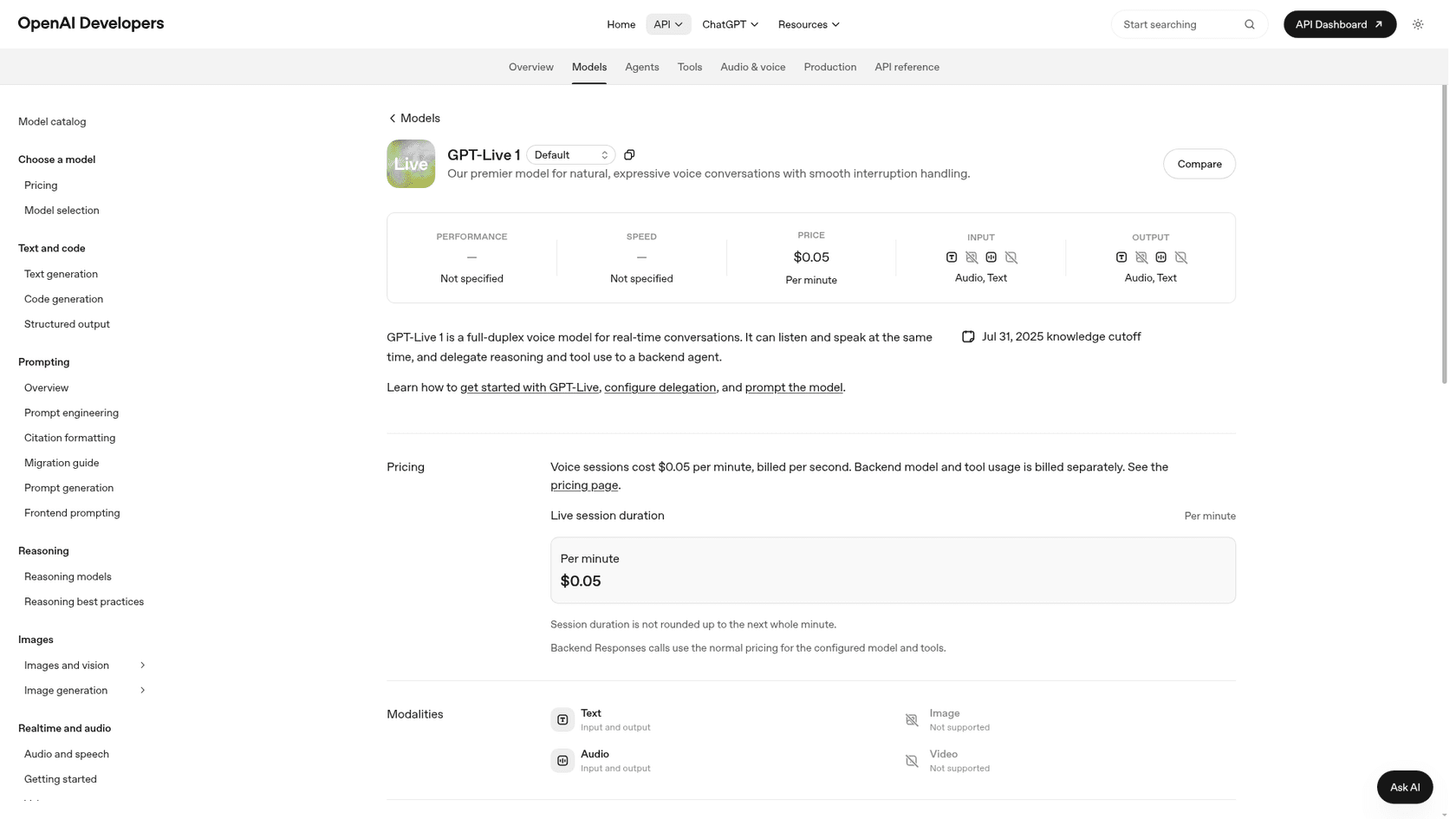
OpenAI now have two voice paths. GPT-Live 1 is a full-duplex model that "can listen and speak at the same time, and delegate reasoning and tool use to a backend agent," per its model page. The older Realtime API with gpt-realtime-2.1 is a single speech-to-speech model that handles audio turns, tools and interruptions in one session. The split matters for support: GPT-Live hands the hard thinking to a separate text model (Astra or Sol in the benchmark), and that setup is what tops τ-Voice.
Phone calls can reach to it through a direct SIP trunk, and OpenAI publishes partner guides for Twilio, Telnyx, Bandwidth, LiveKit and Daily/Pipecat in its telephony docs. Builders on Hacker News was enthusiastic at the launch:
"I was excitedly awaiting this hitting the API, because ofc there wasn't a super high fidelity option for drop-in voice interface in front of a given harness. This is blowing me away so far!"
What it does better than Grok:
- The only model that beats Grok on τ-Voice: 74.5% for GPT-Live 1 (Astra, medium) vs 71.6%.
- The backend agent is any model you configure, so your existing text agent and its tools can sit behind the voice.
- Billed per second at $0.05 a minute, with no rounding up to a whole minute.
Where it falls short:
- Slower to start talking: 1.34s time to first audio for Astra and 1.24s for Sol, against Grok's 0.81s.
- The headline $0.05 excludes the backend model. Artificial Analysis measured the Astra setup at $5.83 an hour, more than Grok's $4.80.
- Artificial Analysis notes the GPT-Live τ-Voice scores come from one trial, versus three for most models.
- The model page does not list supported languages, a gap one HN user also flagged.
Pricing:
| Model | Price | Notes |
|---|---|---|
| GPT-Live 1 | $0.05/min, billed per second | Backend Responses calls billed at that model's rates |
| gpt-realtime-2.1 | $32 / $64 per 1M audio tokens in / out | Text $4 / $24 per 1M |
| gpt-realtime-2.1-mini | $10 / $20 per 1M audio tokens in / out | Text $0.60 / $2.40 per 1M |
All from OpenAI's pricing page. The full math is in my GPT-Live 1 pricing post, and there is a separate list of GPT-Live 1 alternatives if you are coming at this from the other side.
My take: the strongest swap if your calls are task-heavy (refunds, bookings, account changes) and you can live with an extra half second before the agent speaks. Skip it if you need a published language list or a hard per-minute budget. If you are wiring tools, read up on realtime tool calls first, because the silence while a function runs is where callers hang up.
2. Google Gemini 3.8 Live
Best for: high-volume, low-stakes calls (information lines, booking reminders, multilingual front doors) where cost and language coverage beat task accuracy.
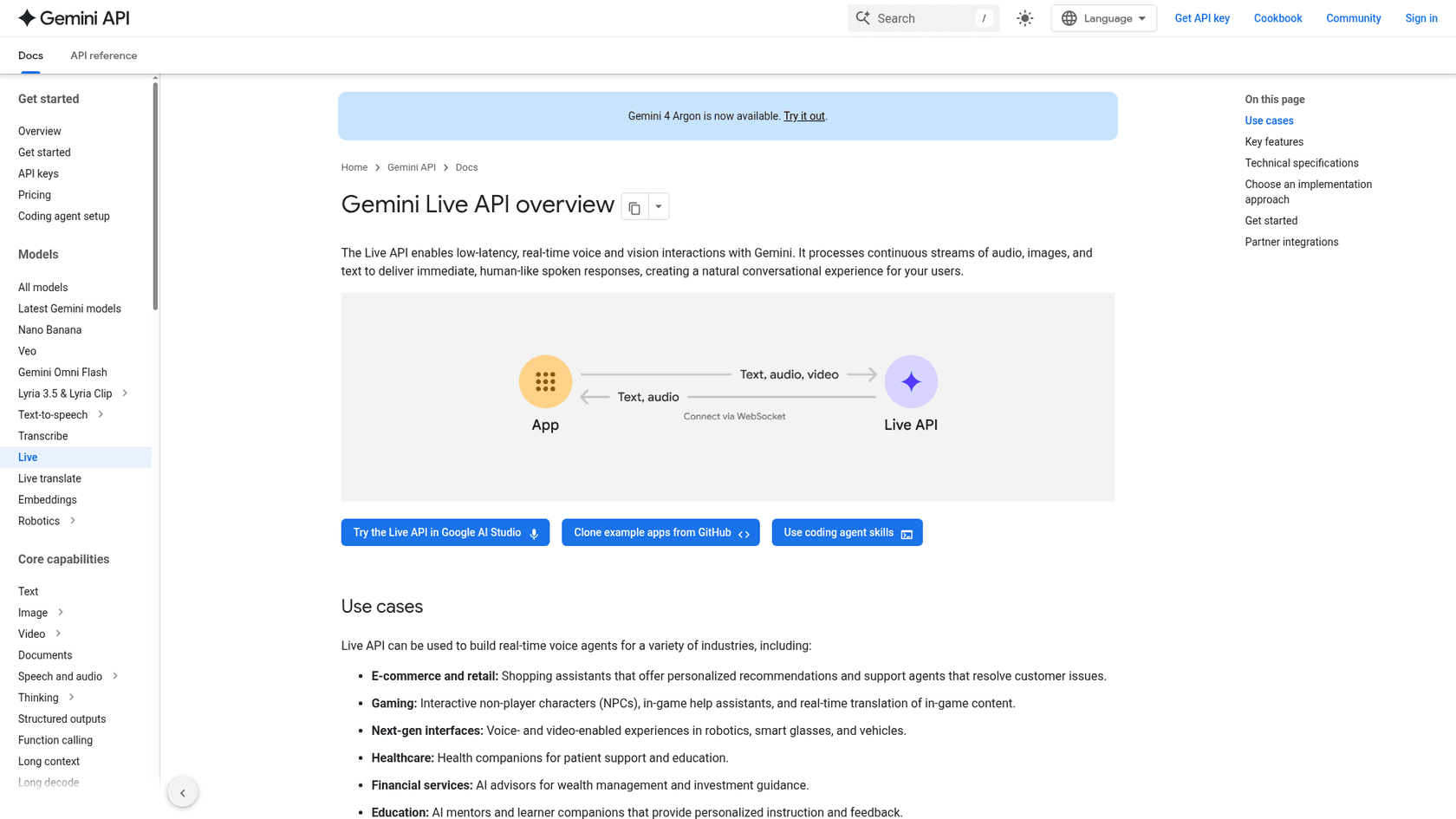
Google calls Gemini 3.8 Live "the default option for most low-latency voice agent experiences," and it is a stable model, not a preview. The Live API is a stateful WebSocket that takes audio, images and text and answers in audio, across 70 languages. Function calls now run asynchronously by default, so the model can keep talking while a lookup runs.
There is also an Extended Thinking variant, which reason in the background. That one scores 68.6% on τ-Voice, close to Grok, but its time to first audio is 1.35s and Artificial Analysis measured it at $3.50 an hour. Google's live family also includes Live Translate for speech-to-speech translation, a separate model.
What it does better than Grok:
- Price: $0.005 a minute of audio in and $0.018 out. Artificial Analysis measured $0.84 an hour against Grok's $4.80.
- 70 supported languages vs 20+.
- A free tier on the pricing page, and on the paid tier your data is not used to improve Google's products.
- Second-highest human preference score on the board (Elo 1088).
Where it falls short:
- τ-Voice of 30.1% for the standard model. It sounds good and often does not finish the job.
- Sessions without context compression cap at 15 minutes for audio, and a connection lives about 10 minutes before you need session resumption.
- WebSocket only. There is no native SIP, so a phone line goes through a partner such as LiveKit.
- The model has an input token limit of 131,072.
Pricing:
| Item | Free tier | Paid tier |
|---|---|---|
| Audio input | Free | $3.00 per 1M tokens or $0.005/min |
| Audio output | Free | $12.00 per 1M tokens or $0.018/min |
| Text input / output | Free | $0.75 / $4.50 per 1M tokens |
| Google Search grounding | Supported | 5,000 free/month, then $14 per 1,000 |
My take: the right call when cost per minute decides everything and the agent mostly informs rather than acts. For a line that has to change orders or issue credits, I would test Extended Thinking against Grok side by side before trusting the standard model. If you are already using Gemini 3.8 Flash for text, the shared billing account is a small bonus.
Pipelines you assemble
These four chain speech-to-text, a text LLM and text-to-speech. The extra hops is costing latency, and one Reddit builder summed the trade-off up well:
"The core problem I found with the Retell/Vapi approach was the latency that chaining 3 services sequentially together added. STT provider → LLM → TTS provider. Each hop adds latency and you're managing 3 WebSocket connections plus your own VAD and turn-taking logic."

The flip side of it is control. With a pipeline, the LLM is any model you like, including the one your text agent already uses, and you get a clean transcript at every step for QA and call summaries. Deepgram, AssemblyAI and Inworld runs the pipeline for you as one API, while LiveKit gives you the framework for running it yourself.
3. LiveKit Agents
Best for: engineering teams who want to own the stack, swap models freely, and run their own phone numbers.
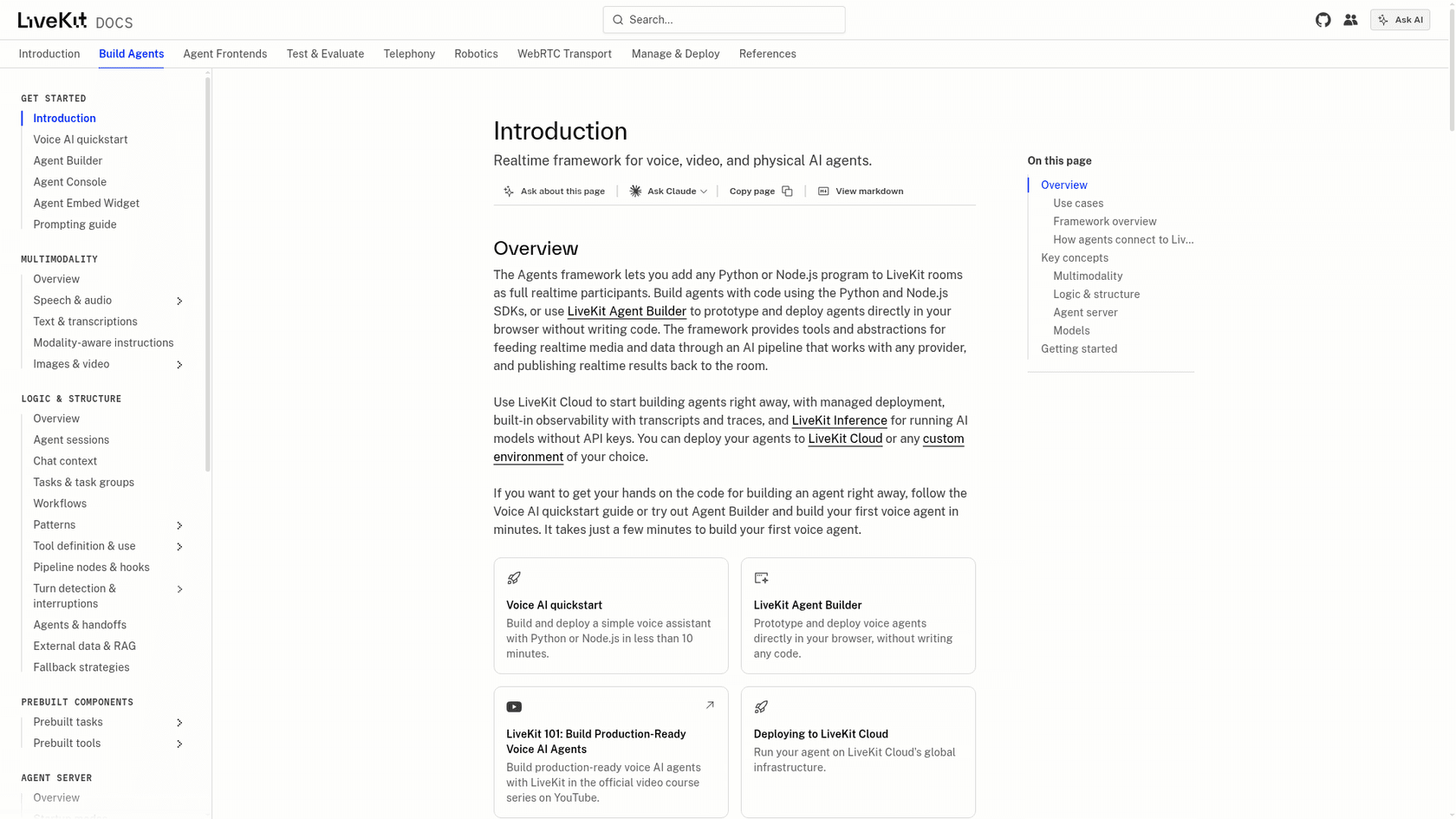
LiveKit Agents is an open source framework (Apache 2.0) for adding a Python or Node.js program to a call as a full participant. It handles the hard parts of voice: streaming audio through the pipeline, turn detection, interruptions and LLM orchestration. It also supports realtime models, including GPT-Live and Gemini Live, and xAI's docs list LiveKit as a supported way to connect Grok. So LiveKit is less of a Grok replacement and more a layer that let you replace Grok later without rewriting.
LiveKit Cloud adds the hosting and phone numbers, simulations and observability too, plus a hosted inference catalog so you can call models without separate API keys.
What it does better than Grok:
- Model freedom: the pricing page lists dozens of LLMs, STT and TTS models at per-minute rates, from GPT-5 nano at $0.0002/min to Deepgram Flux at $0.0065/min.
- Telephony built in: one free US number, SIP trunks, plus Twilio and WhatsApp connectors.
- Up to 600 concurrent sessions on the Scale plan, published on the page.
- Text and audio simulations to test the agent before real callers hit it, free through October 31.
Where it falls short:
- You are the integrator. Picking and tuning three models is real work.
- Latency depends on your choices, and no independent time-to-first-audio number exists for "LiveKit" as a whole.
- HIPAA with a signed BAA starts on the Scale plan, from $500 a month.
Pricing:
| Plan | Price | Agent minutes included | Concurrent sessions | Notable |
|---|---|---|---|---|
| Build | $0 | 1,000 | 5 | 1 free US number, 50 inbound minutes |
| Ship | From $50/month | 5,000, then $0.01/min | 20 | Team collaboration, instant rollback |
| Scale | From $500/month | 50,000, then $0.01/min | Up to 600 | HIPAA BAA, region pinning |
| Enterprise | Custom | Custom | Custom | Volume inference pricing, SSO |
LiveKit's own calculator prices a sample phone agent (Gemma 4 31B, AssemblyAI STT, Fish Audio TTS, a US number and observability) at $0.0479 a minute, about 40% under Grok.
My take: my pick for a team with engineers that expect to change models more than one time. It is the only option here where switching from Grok to Gemini to GPT-Live is a config change. Skip it if nobody on the team wants to own a voice pipeline.
4. Deepgram Voice Agent API
Best for: teams that want one managed pipeline API at a flat price, with the option to bring their own LLM.
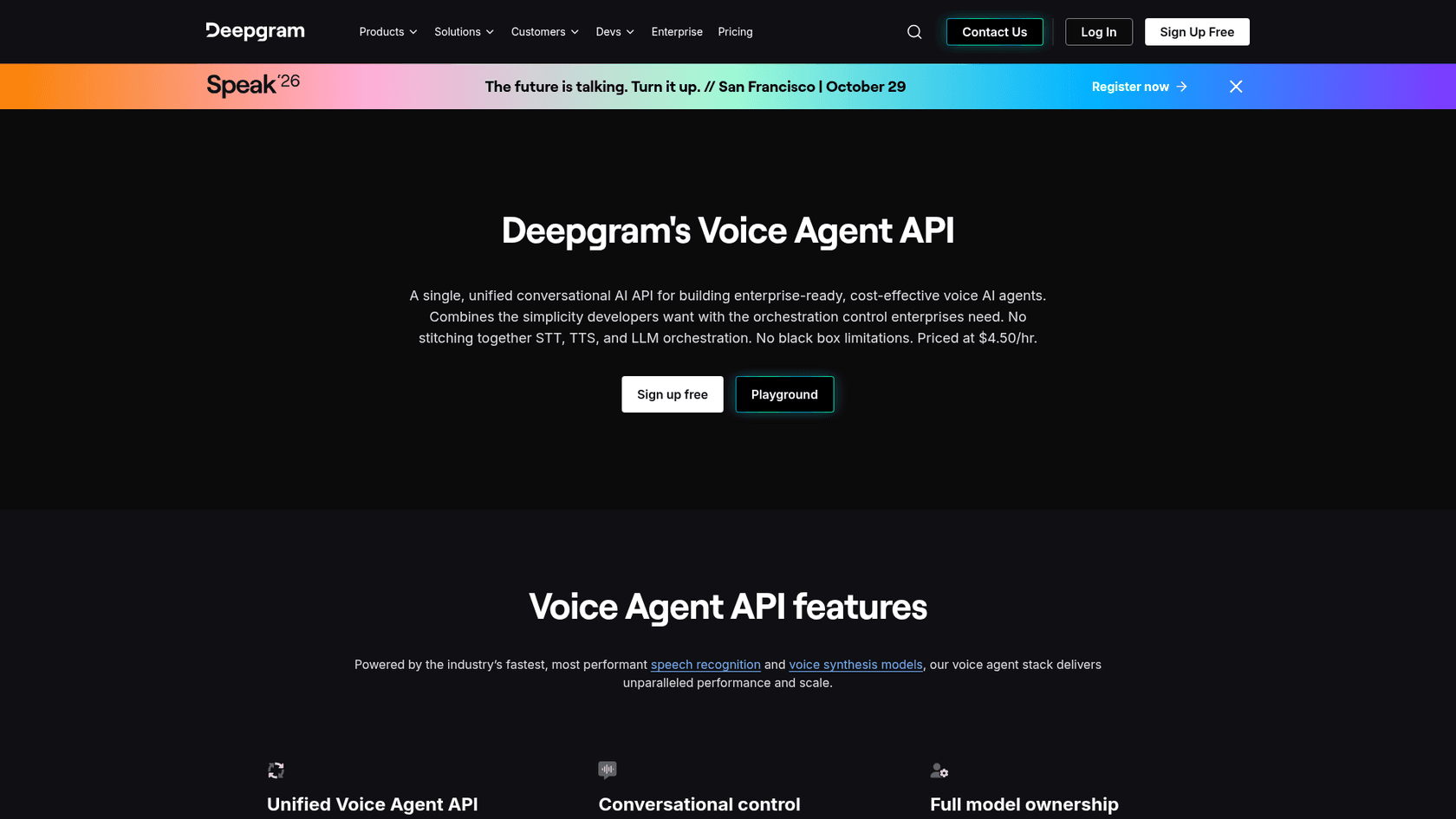
Deepgram's Voice Agent API "handles the full speech pipeline (listening, thinking, and speaking)" over one WebSocket. You configure the speech model and LLM provider, the voice and endpointing, then you add function calling and multi-agent handoffs on top. Its Flux speech model is built for voice agents, with turn detection and interruption handling built in. When Artificial Analysis tested Deepgram's default stack, it was Nova-3 for listening, GPT-4o Mini for thinking and Aura-2 for speaking.
What it does better than Grok:
- A free $200 credit with no card, which Deepgram says covers about 43,000 minutes of Nova transcription.
- Bring-your-own options cut the price: $0.050 a minute if you supply both the LLM and the voice.
- Up to 45 concurrent agent connections on plain pay-as-you-go, no spend ladder.
- SOC 2 Type 2, HIPAA with a BAA for Enterprise, and a dedicated EU endpoint.
Where it falls short:
- The default LLM in Artificial Analysis's test was GPT-4o Mini, a small model for complex support calls. Plan to bring your own for anything policy-heavy.
- No Artificial Analysis τ-Voice or latency score for the full agent.
- Billed on WebSocket connection time, so an idle open socket still costs money.
Pricing:
| Tier | Pay-as-you-go | Growth |
|---|---|---|
| Standard | $0.075/min | $0.068/min |
| Standard, bring your own TTS | $0.065/min | $0.051/min |
| Custom, bring your own LLM | $0.059/min | Not listed |
| Custom, bring your own LLM + TTS | $0.050/min | $0.041/min |
| Advanced | $0.163/min | $0.146/min |
Growth requires a commitment starting at $4,000 a year, per Deepgram's pricing page.
My take: the most clean "one API, one price" pipeline in here. A good fit for a team that already has an LLM agent and wants Deepgram's ears and voice wrapped around it at $0.050 a minute. Less compelling if you want the default LLM to do the thinking.
5. AssemblyAI Voice Agent API
Best for: teams that want the simplest all-in price and strong speech recognition, and are fine with AssemblyAI's own LLM.
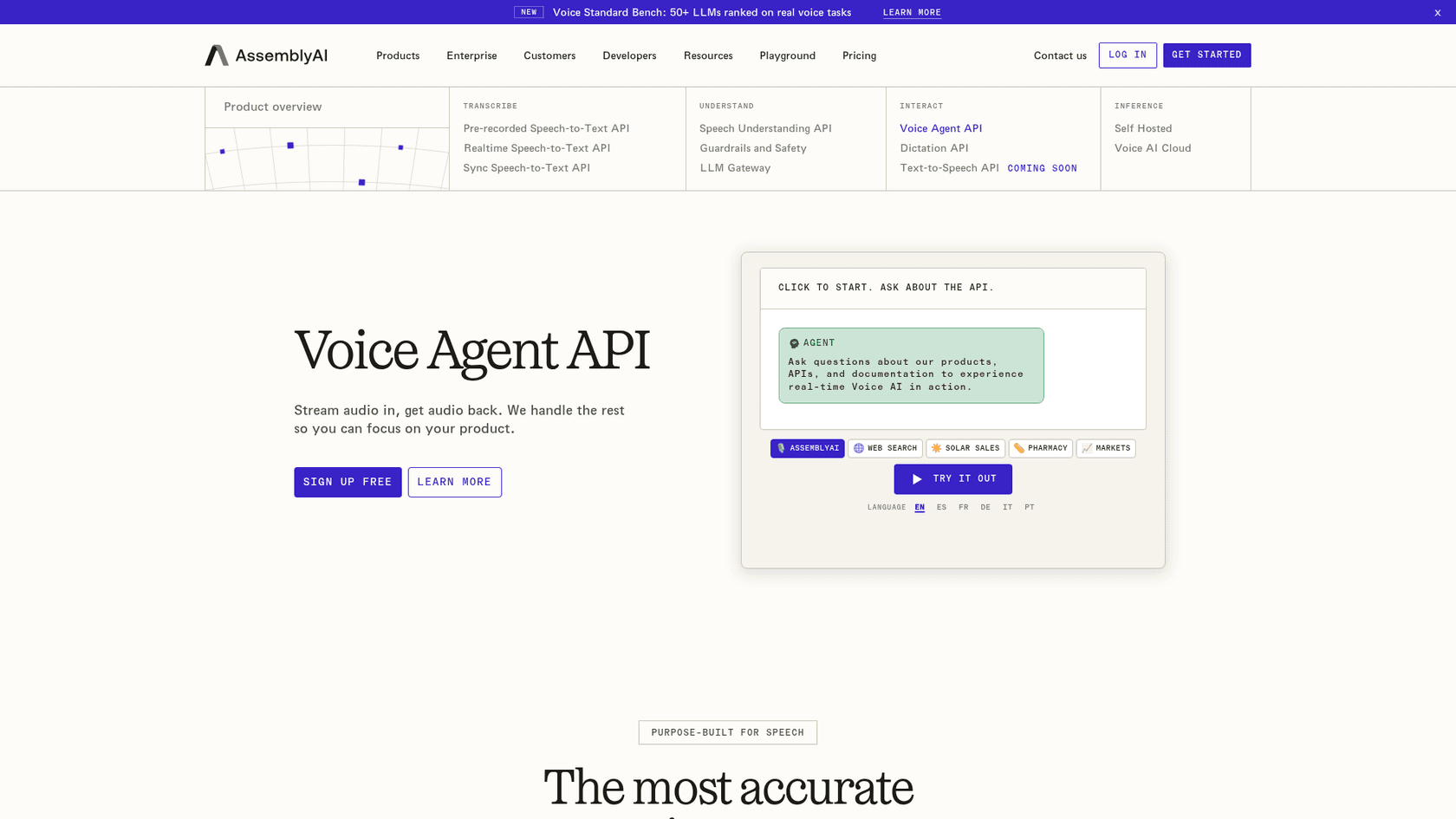
AssemblyAI is best known for speech-to-text, and the Voice Agent API of it stacks three of its own parts: the Universal-3.6 Pro Realtime speech model, a proprietary LLM "tuned for spoken conversation rather than text chat," and its own low-latency voice. The quickstart gets a browser agent talking in four commands, then puts it on a phone number.
What it does better than Grok:
- One flat price, $4.50 an hour ($0.075 a minute), with speech recognition, LLM and voice all included.
- The speech model supports 32 languages with keyterm prompting, useful for product names and SKUs.
- Paid accounts can opt out of training, and a signed BAA opts you out automatically, per AssemblyAI's security page.
Where it falls short:
- The included LLM is AssemblyAI's own. There is no published benchmark for how it handles a support policy and tools.
- No Artificial Analysis score for the full agent.
- Concurrency limits are not on the pricing page; volume terms go through sales.
Pricing:
| Component | Price |
|---|---|
| Voice Agent API (orchestration and hosting) | $4.50/hr ($0.075/min) |
| Universal-3.6 Pro Realtime speech model | Included |
| Voice Agent LLM | Included |
| Voice Agent TTS | Included |
| Volume discounts, forward deployed engineer | Contact sales |
My take: a sensible default for a team which cares the most about hearing callers right (accents, noisy lines, product names) and want one line on the invoice. I would test its LLM on 30 of my hardest calls before committing, since that is the part with no public score.
6. Inworld Realtime API
Best for: teams that want a speech-to-speech style API with their choice of LLM and the lowest per-minute voice cost.
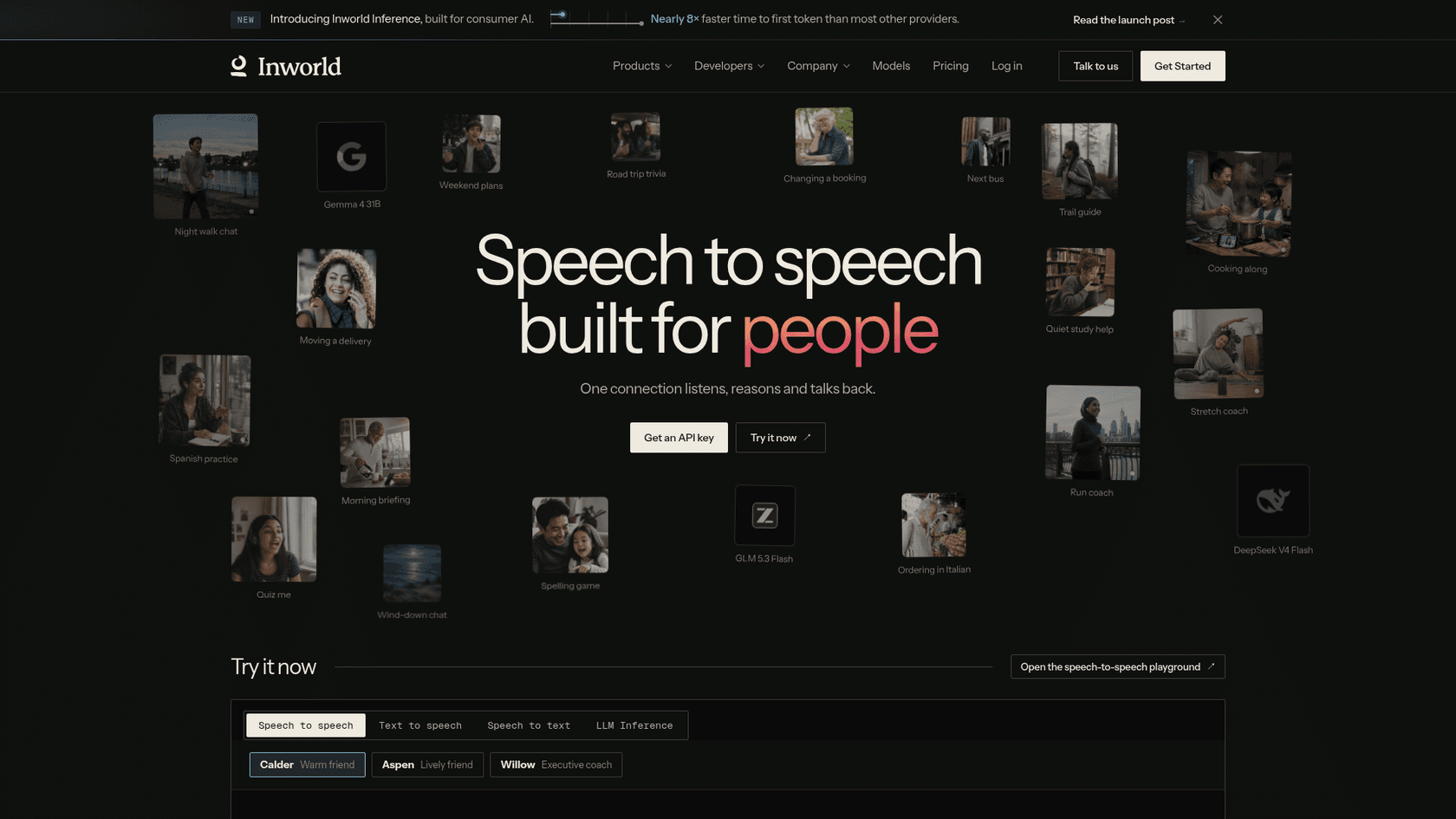
Inworld's Realtime API looks like a speech-to-speech model from the outside: one WebSocket or WebRTC connection that "listens, reasons and talks back." Under the hood it's a pipeline of Inworld's own speech-to-text plus your choice of 8 hosted LLMs, and its TTS-2 voices on the end. The draw for a Grok user is that its events and session config match the OpenAI Realtime API, so a client moves over with a new endpoint and key.
What it does better than Grok:
- No speech-to-speech fee on top. Each part bills at its own rate: speech-to-text at $0.15 an hour, TTS-2 Flash from $15 per million characters on demand.
- Pick the LLM, so the reasoning can be as strong (or as cheap) as you want.
- Vendor-measured first audio as low as 204ms, with a 462ms median over 17 measured turns.
- GDPR and SOC 2 Type II on every plan.
Where it falls short:
- The latency figures are Inworld's own measurements, not independent ones.
- Pricing is a sum of parts, so forecasting a bill takes more work than a flat per-minute rate.
- HIPAA and BAA are add-ons on the top published plan.
- Phone audio comes in as G.711 from Twilio, so you bring the phone number.
Pricing:
| Plan | Monthly | TTS-2 Flash per 1M chars | STT 1 per hour |
|---|---|---|---|
| On-Demand | $0 | $15 | $0.15 |
| Creator | $25 | $10 | $0.10 |
| Builder | $100 | $9 | $0.10 |
| Developer | $300 | $8 | $0.10 |
| Growth | $1,500 | $7 | $0.10 |
Inworld estimates about 1,000 characters of speech per minute, so voice output runs roughly $0.01 to $0.015 per minute the agent is talking, plus LLM tokens. More in my Inworld AI pricing breakdown and the list of Inworld alternatives.
My take: the most interesting cost play for the teams who is already happy with a text LLM. It gives you the Grok-style developer experience with a pipeline's flexibility. Wait if you need independent latency numbers or a turnkey phone line.
Managed voice-agent platforms
These three wraps a pipeline in the things a support lead need to actually run a phone agent: numbers and a builder, testing and analytics, plus concurrency you can buy. You trade a little control and a platform fee for not building any of that yourself. If your team is weighing a platform at all, my roundup of the best AI for voice support covers more of them, and so does the list of Voiceflow alternatives.
7. ElevenLabs Agents
Best for: teams that want a managed agent with the widest language coverage and voices that sound the most natural.
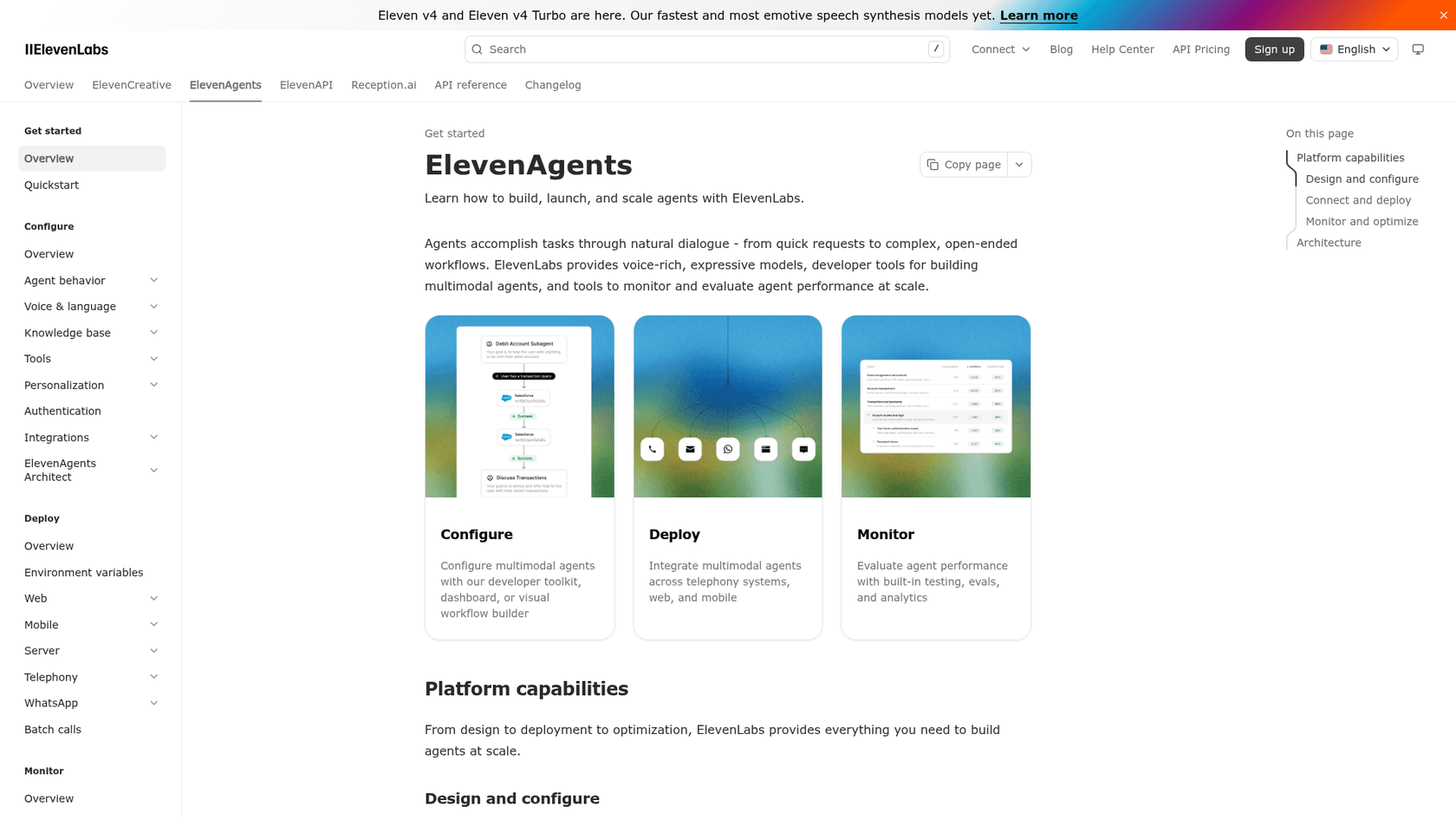
ElevenLabs built the name on voices, and ElevenAgents is its platform for "natural, human-sounding agents in 90+ languages" across voice, chat and email. You configure an agent with a workflow builder, attach a knowledge base and tools, deploy it to a phone line, web or mobile, and monitor it with built-in testing and analytics. The default stack Artificial Analysis tested was Scribe v2 Realtime, Gemini 2.5 Flash and Eleven Flash v2, and you can pick from a long list of LLMs or bring your own.
What it does better than Grok:
- 90+ languages, the widest coverage in this list.
- Published concurrency on every plan, from 4 calls on Free to 40 on Business, and burst pricing that lets agents take up to 3x that limit at double the rate.
- No telephony fee: bring Twilio or a SIP trunk and pay your carrier directly.
- A full agent builder, so a support lead can change the flow without a deploy.
Where it falls short:
- The $0.08 a minute is before the LLM. The pricing calculator shows Gemini 2.5 Flash at $0.0029 a minute; stronger models cost more.
- BAAs for HIPAA are on Enterprise only.
- No independent τ-Voice score for the full agent.
Pricing:
| Plan | Monthly | Call minutes included | Concurrent calls |
|---|---|---|---|
| Free | $0 | 15 | 4 |
| Starter | $6 (first month $1) | 75 | 6 |
| Creator | $22 (first month $11) | 275 | 10 |
| Pro | $99 | 1,238 | 20 |
| Scale | $299 | 3,738 | 30 |
| Business | $990 | 12,375 | 40 |
| Enterprise | Custom | Custom | Elevated |
Extra minutes are $0.08 on every plan, and burst minutes are $0.16, per the ElevenAgents pricing page. There is more detail in my ElevenLabs pricing post and the ElevenLabs alternatives list.
My take: the most easy managed swap for a support team, especially for a multilingual one. At Business, 12,375 included minutes for $990 works out to the same $0.08 as Grok, with a builder, telephony and analytics on top. Skip it if you need HIPAA without an Enterprise contract.
8. Vapi
Best for: developers who want a managed platform but still want to pick every model and pay providers at cost.
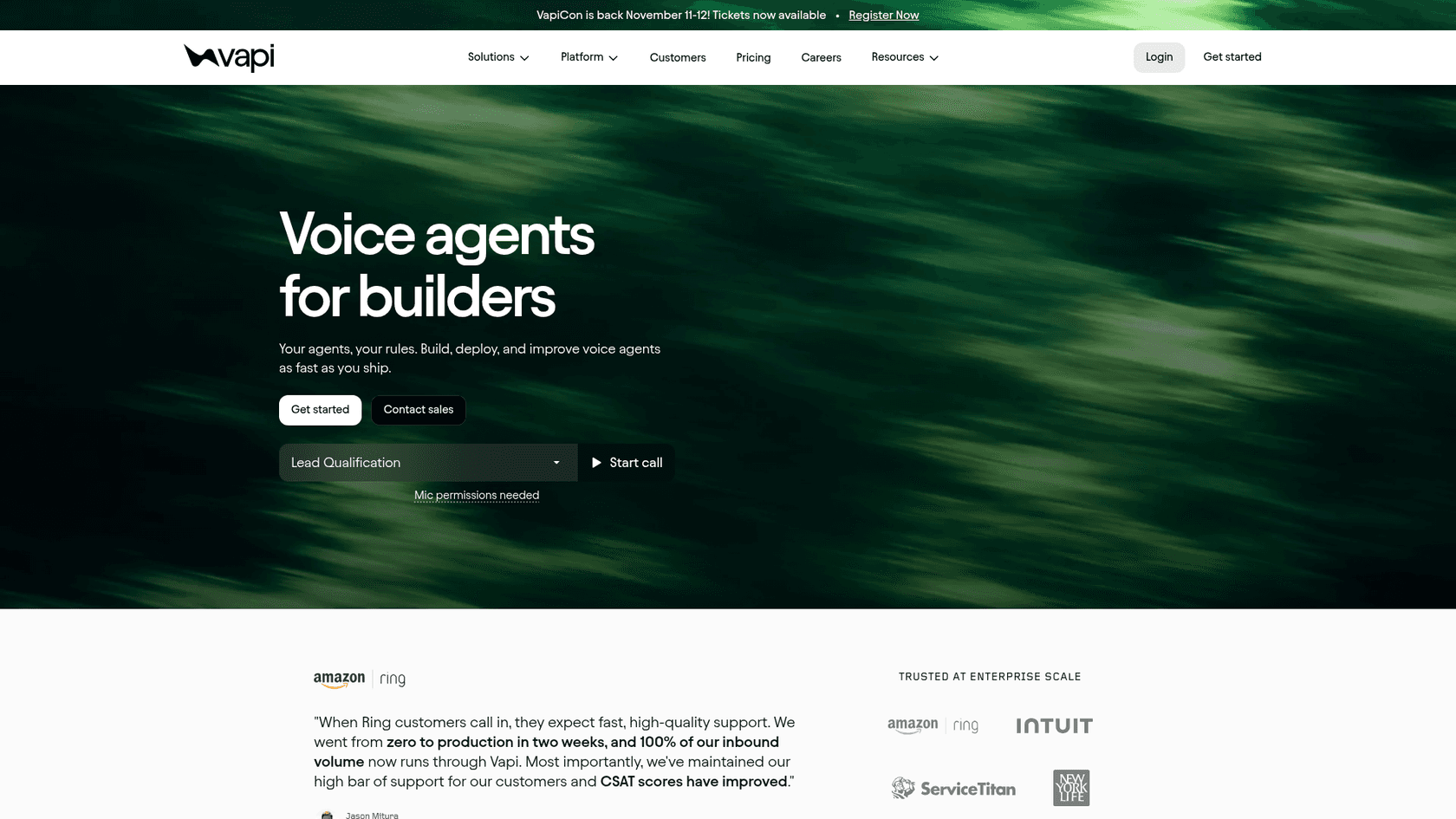
Vapi sits between LiveKit and ElevenLabs. It runs the infrastructure (hosting and telephony, monitoring, plus testing with simulation), and you choose the transcriber, LLM and voice from its catalog, billed "with no markup." Its homepage quotes Ring's support team going from zero to production in two weeks. One Reddit builder who runs production systems on it pushed back on the idea that it is only for prototypes:
"Vapi is good at PoC stage and it is good at production usage, it is not a fair criticism at all - I have many production AI voice systems running on Vapi right now with no issues."
What it does better than Grok:
- Any model mix, including speech-to-speech models, with providers passed through at cost.
- Vapi telephony and SIP are free, and extra concurrency is a flat $10 per line per month.
- Simulated test calls before real customers hear the agent.
Where it falls short:
- The $0.05 hosting fee is on top of every model. Vapi's own estimate for 1,000 minutes lands at $82 to $129, so $0.082 to $0.129 a minute.
- HIPAA is a $2,000 a month add-on.
- Uptime SLAs start on the $999 a month Pro package.
Pricing:
| Package | Monthly | Concurrent calls | Notable |
|---|---|---|---|
| No package | $0, $5 free credit | 4 | $0.05/min hosting, 14 days data retention |
| Core | $29 | 10 | Zero data retention, 2 business day support SLA |
| Pro | $999 minimum (10% of hosting fee) | 30 | RBAC, Slack support, 99% uptime SLA |
| Premier | Custom | Elevated | 99.9% uptime SLA, dedicated SIP |
All from the Vapi pricing page.
My take: the right middle ground when you want platform features but refuse being locked into one vendor's models. Budget for the hosting fee plus three providers, and the total usually lands at or above Grok's $0.08.
9. Cartesia Line
Best for: teams that want a managed agent with code-level control and the lowest flat platform rate.
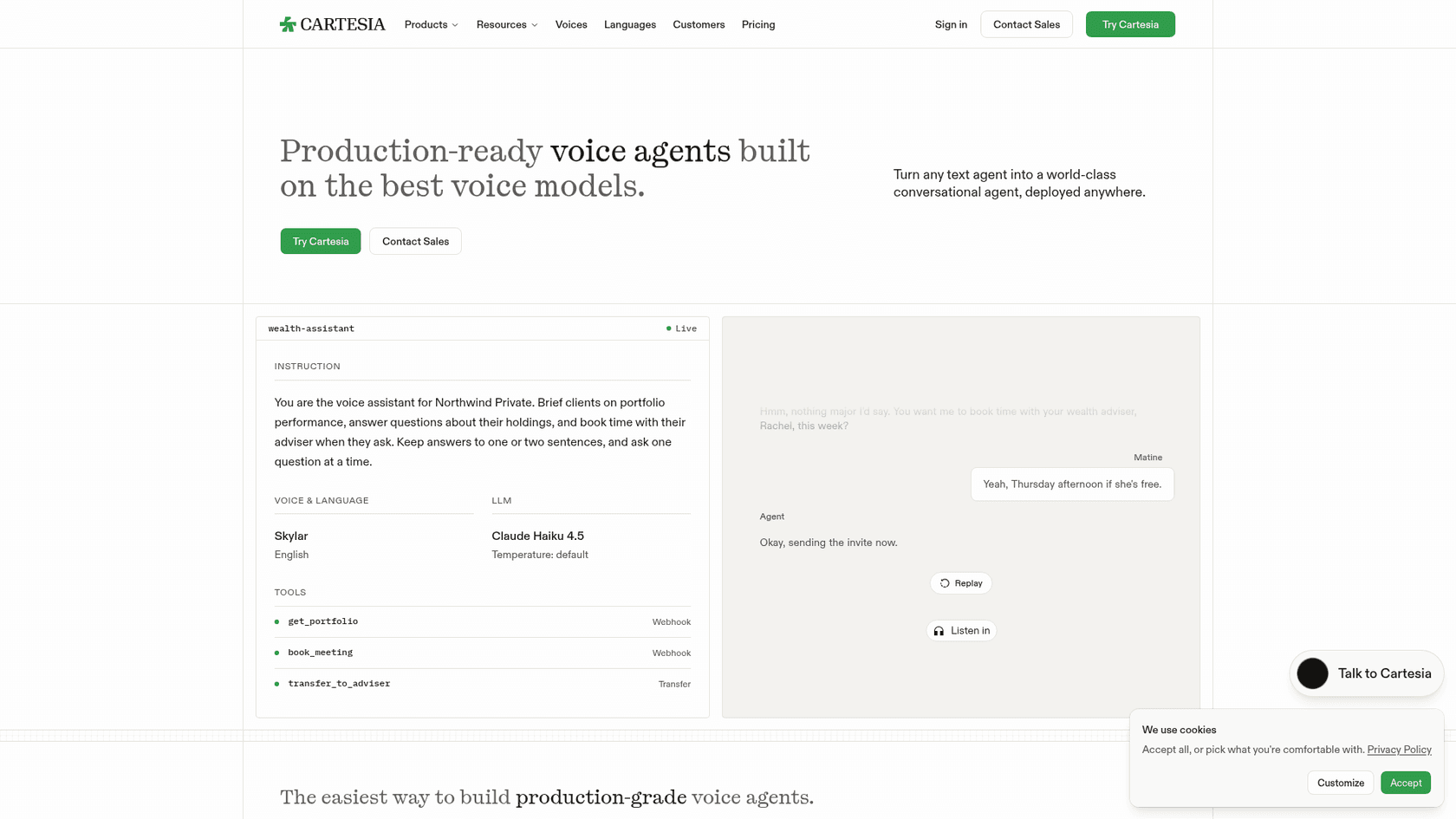
Line "brings voice to your text agents" using Cartesia's Ink speech-to-text and Sonic voices, which I covered in my Cartesia Sonic 3 review. You write the reasoning logic in code with its SDK (any LLM, any API) or prototype in the no-code builder, then deploy to Cartesia's managed runtime with call logs, evaluations and versioned deployments you can roll back. There is a CLI for deploying and testing from a terminal.
What it does better than Grok:
- $0.06 a minute for the managed agent, the lowest flat platform rate in this list.
- LLM usage is free for agents built in the UI, for a limited time.
- SOC 2 Type II, HIPAA and GDPR listed on its site.
- Plan fees come back as agent credit: the $299 Scale plan includes $299 to spend on agents.
Where it falls short:
- The LLM promotion is time-limited, so plan your budget as if you will pay for tokens.
- Concurrency tops out at 60 calls on the Scale plan before Enterprise.
- No independent τ-Voice score for the full agent.
Pricing:
| Plan | Monthly | Agent credit included | Concurrent calls |
|---|---|---|---|
| Free | $0 | $1 (~17 min) | 8 |
| Pro | $5 | $5 | 12 |
| Startup | $49 | $49 | 20 |
| Scale | $299 | $299 | 60 |
| Enterprise | Custom | Custom | Custom |
Calls run $0.06 a minute, plus $0.014 a minute on a Cartesia phone number, per the Cartesia pricing page. If voice quality is the deciding factor, my Cartesia vs ElevenLabs comparison goes deeper.
My take: a strong pick for a developer team who likes the ElevenLabs managed approach but wants to write the agent in a code. Watch the LLM line on your bill once the promotion ends.
How to pick the winner in a week
Benchmarks narrow down the list, then your own calls is what decide. ChatGPT's advice was to run the same 20 to 50 test conversations through your top two or three candidates, and I agree, with one change: use real calls, not made-up ones.
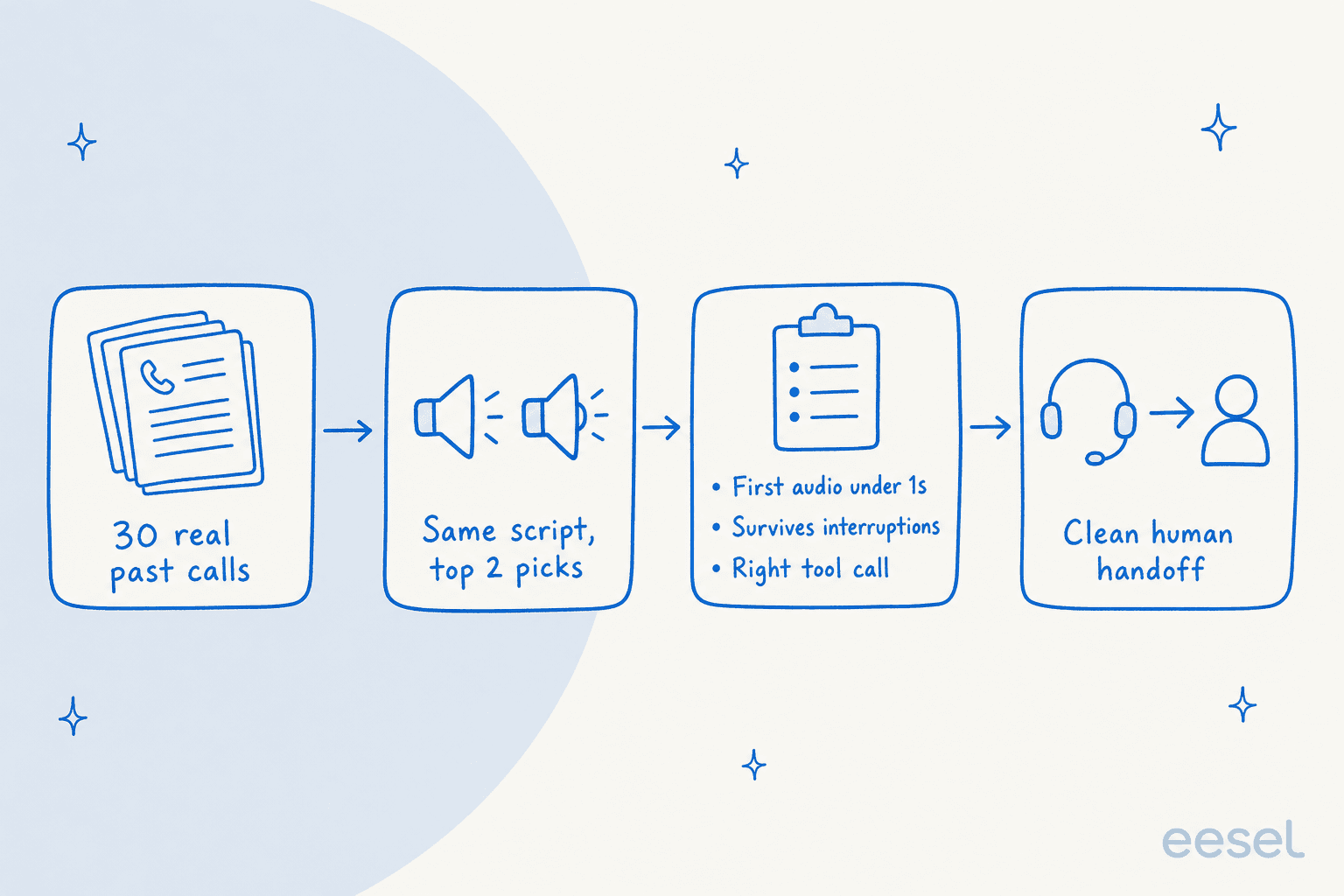
- Pull 30 real past calls. Transcripts from your phone system, weighted toward the calls your team finds hardest: refunds, angry callers, account changes.
- Run the same script through your top two. Grok Voice 3.0 should usually be one of them, since it is the bar to beat.
- Score three things. Time to first audio (does the caller hear a reply in under a second?), interruptions (does it stop and listen when the caller cuts in?), and tool calls (did it call the right function with the right order number?).
- Check the handoff. Every voice agent fail on some calls. What matters is if it pass the caller to a person with the context. My handoff best practices post covers what that context should include.
If you already run Zendesk voice AI agents or Freshcaller's voice agents, include your helpdesk's native option in the test too. Sometimes the boring answer is the one that win.
What none of these nine fix
Every model and platform above is, in terms of what it does, a conversation engine. The τ-Voice benchmark gives each one a policy document and a set of tools written for the test. On your phone line, the agent knows exactly what you connect it to and nothing more.
That is the place where most real voice support rollouts spend their time: deciding what the agent is allowed to say, keeping the answers current, and connecting it to the order and account data. On our sales calls, the most consistent request across buyers is the same one: train the AI on the team's own past tickets. One direct-to-consumer supplements brand from those calls runs about 7,000 tickets a month through Gorgias and Shopify with a separate phone system beside it. Its phone agent and its ticket queue need the same answers.
The teams who get this right are treating the phone agent like a knowledge base chatbot with a voice: one maintained source of answers, every channel reading from it. If you are still deciding whether AI can answer support calls for your team, or whether to automate phone support at all, start with the text channels. They are cheaper per interaction, easier to measure, and they build the knowledge the voice agent will need.
My guide to automating customer support walks through the order I would do it in.
Pair any of these with eesel
The voice API is the infrastructure, and eesel is the employee. eesel's AI helpdesk teammate joins your Zendesk, Freshdesk or Gorgias, learns from your past tickets and help center, and works the email and chat queue that sits behind every phone line. Before it goes live, you can run it against your own past tickets and compare its answers with what your team actually sent.
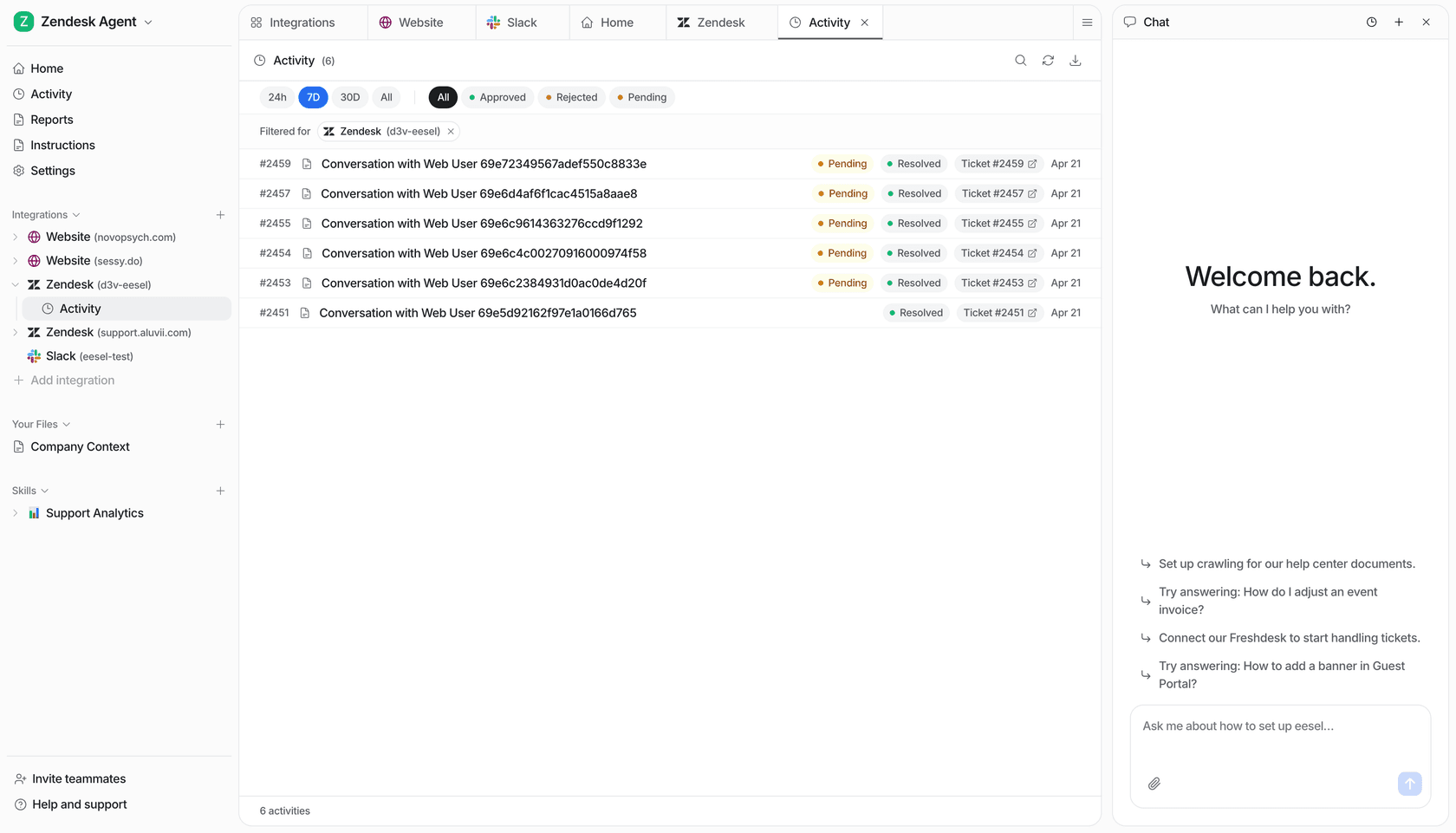
For builders the connection point is MCP. Every eesel workspace is an MCP server: npx @eesel/cli mcp token from the eesel CLI prints the URL and a 30-day token, so a voice agent on Grok, GPT-Live or LiveKit can look up the same answers your ticket agent uses. The same CLI lets you script the agent from a terminal or hand it to a coding agent like Claude Code. I have not run that pairing on a live phone line yet, so treat it as a promising build and watch the latency of a tool call mid-sentence.
Pricing is a fixed monthly credit plan: $299 a month for 500 credits, where a ticket or chat is one credit, with 100 free credits and no card to start. Try eesel on a slice of your queue before you pick a voice, so whichever one wins has something worth saying.