7 best SiteSpeak AI alternatives in 2026, by where chats end up

Riellvriany Indriawan

Katelin Teen
Last edited October 1, 2026
Why people look for a SiteSpeak AI alternative
Credit first. SiteSpeak, built by solo founder Herman Schutte, does a lot for its price. It trains on your site, PDFs, audio and video, plus wikis like Notion, Confluence and BookStack. It answers in 95+ languages, captures leads, and can call live APIs for things like Shopify order lookups. Its small G2 profile is all 5/5 so far, with 8 reviews posted between June and August 2026 on G2, and buyers praise the setup speed and the founder's hands-on help. I covered all of it in my SiteSpeak AI review and the SiteSpeak AI overview.
The friction starts when the bot meets a real support team. Three things come up.
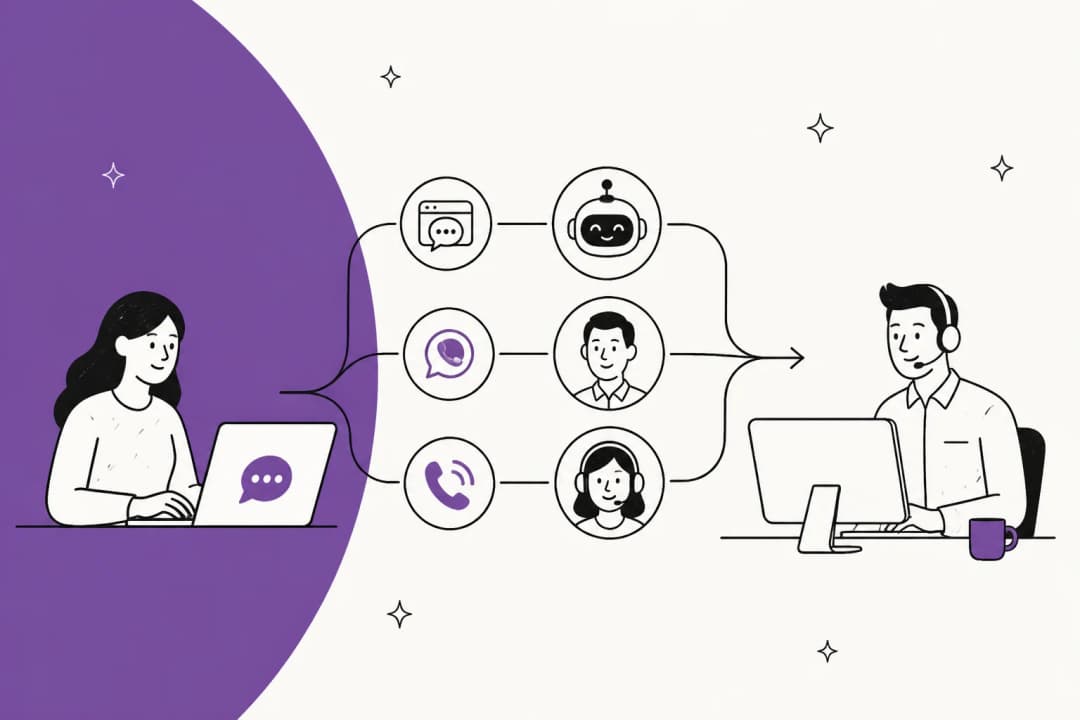
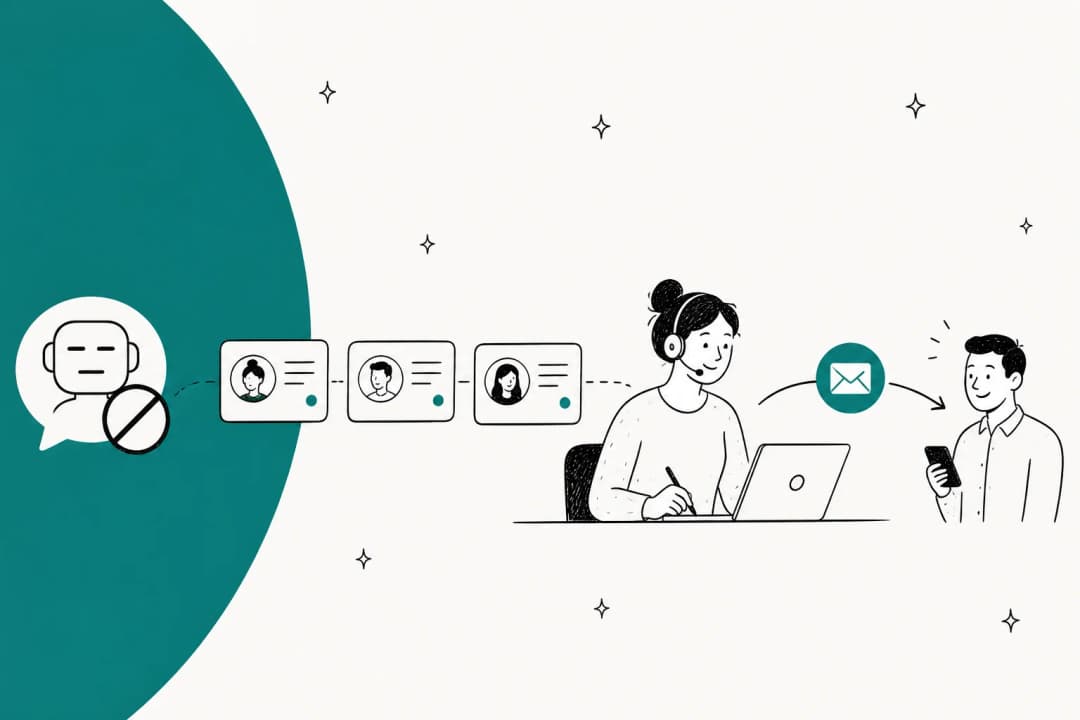
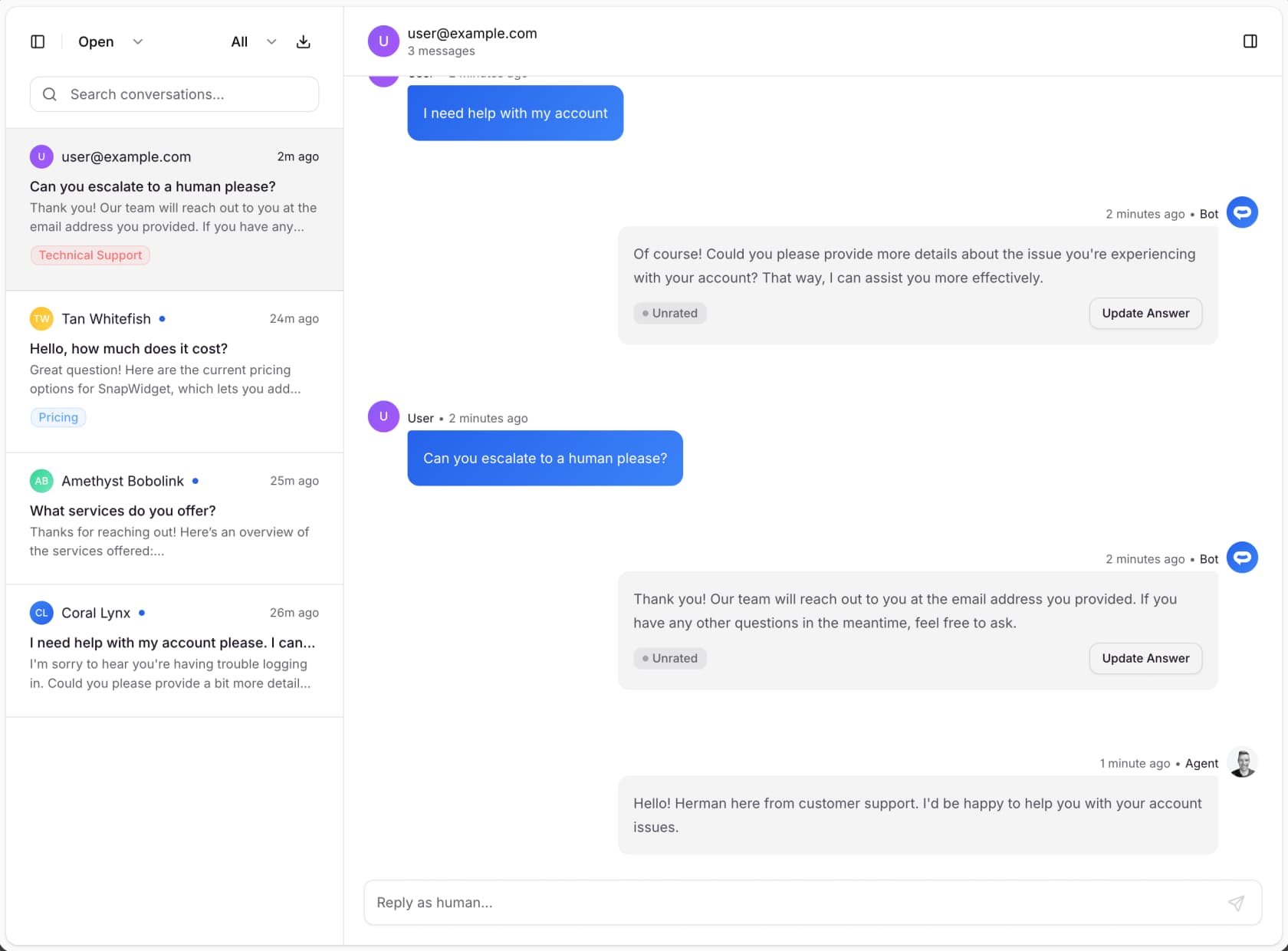
The handover goes to a second inbox. Escalation starts on the Pro plan. Per the human handoff docs, your team gets an email, a Slack ping or a webhook, then replies inside SiteSpeak's Inbox. The integrations directory has no Zendesk, Freshdesk, Gorgias or Help Scout. I work a support queue every day, and a second inbox is where escalated chats go to be forgotten. Getting them into your helpdesk means a Zap or a webhook you have to maintain, which is the opposite of good human handoff.
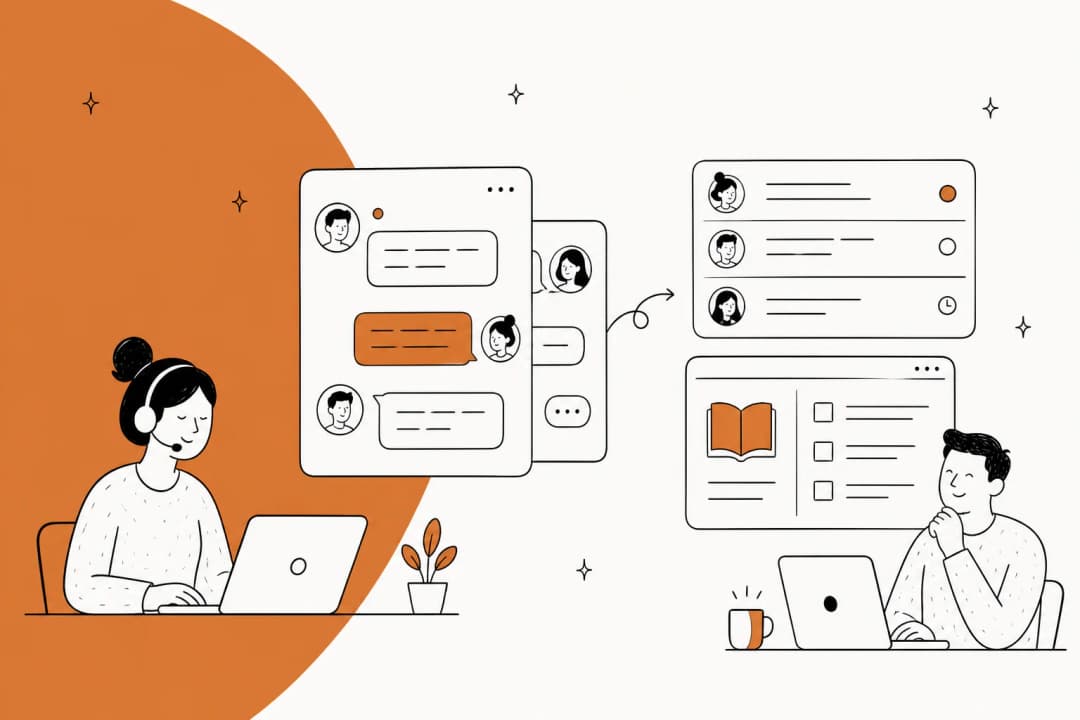
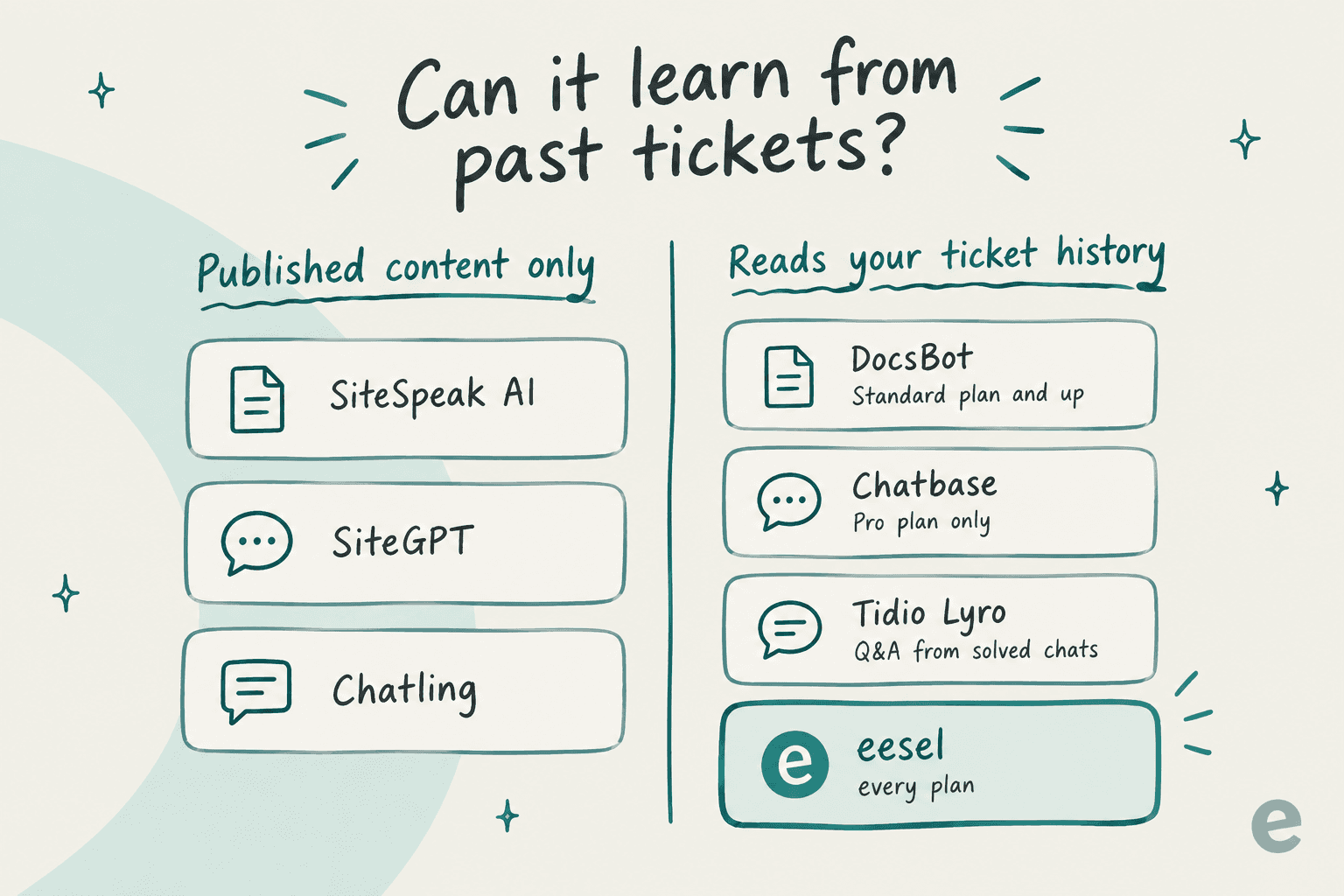
It can't learn from your old tickets. The training sources cover crawls, files, media and wiki connectors. Past tickets aren't on the list. A knowledge base chatbot is only as good as its sources, and for most support teams, that's where the best answers are, because the help center says what the policy is and the tickets say how you actually handle the messy versions.
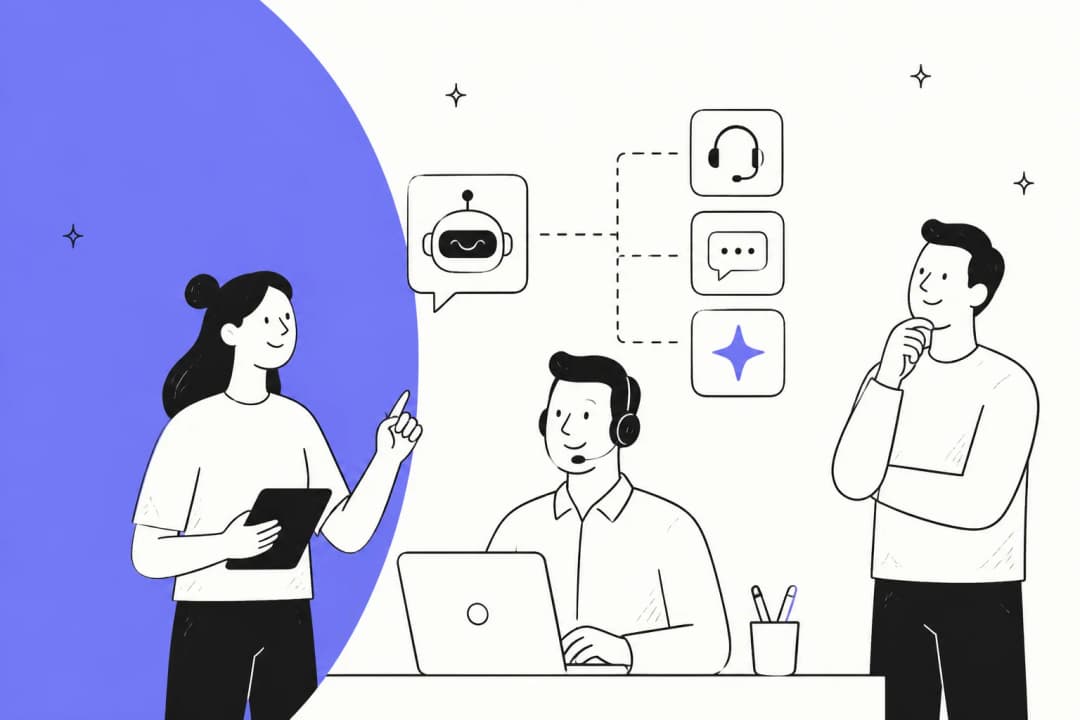
Credits are per reply, and nobody else has tested it for you. On SiteSpeak, one credit is one AI reply, so a four-message chat uses four credits. That works out to roughly 2.5 to 2.9 cents per reply on every plan, per my SiteSpeak pricing math. It's cheap, but it scales with how chatty your visitors are, not with how many people you help. And with no Capterra or Trustpilot listing and a G2 profile only a few months old, there's very little outside evidence about how it holds up on a busy queue.
How I picked these alternatives
I'm on eesel's support team, so I see what happens after a chatbot says "let me get a human for you." The bot's answer quality on day one matters less than people think. What decides whether it works is where the escalation lands, what the bot is allowed to learn from, and whether you can predict the bill.
That middle one is the request I hear most. My colleague Amogh, reviewing a run of eesel sales calls, put it bluntly: "People really, really, really want to train on past tickets." One hardware support team on Zendesk listed their must-haves as a chat bubble that deflects simple questions and turns anything it can't answer into a Zendesk ticket, plus citations on every answer. That's a fair summary of what a SiteSpeak user outgrows.
So I scored every tool on four things:
- Where escalations land. Its own inbox, or your helpdesk.
- What it learns from. Published content only, or your ticket history too.
- The billing unit. Per reply, per query, or per conversation.
- Proof. How much independent review data exists.
I read each vendor's pricing page and docs, checked their G2 and Capterra listings, and pulled the most useful user comments I could find. I left Intercom out of this list on purpose.
SiteSpeak AI alternatives at a glance
| Tool | Best for | Paid plans from | Billing unit | Free plan | Learns from past tickets | Escalations land in | Helpdesk integrations | G2 rating |
|---|---|---|---|---|---|---|---|---|
| SiteSpeak AI (the incumbent) | Small sites, no helpdesk | $29/mo | Per AI reply | Yes, 30 credits | No | SiteSpeak Inbox | None native | 5.0 (8 reviews) |
| eesel AI | Teams already on a helpdesk | $299/mo | Per ticket or chat | Yes, 100 credits | Yes, every plan | Your helpdesk | Zendesk, Freshdesk, Gorgias, Front, Help Scout and more | 4.6 (18) |
| Chatbase | Multi-channel AI agent | $40/mo | Message credits | Yes, 50 credits | Pro plan only | Handoff to a helpdesk or human | Zendesk, Salesforce, Freshdesk, Help Scout and more | n/a |
| Chatling | Best value for small teams | $25/mo | AI credits x model | Yes, 200 credits | No | Chatling inbox | Zendesk ticket action, Zoho, HubSpot | 4.7 (79) |
| DocsBot | Ticket history without switching helpdesks | $49/mo | AI credits x model | Yes | Standard plan and up | Escalation tickets, Help Scout | Help Scout, ticket sources | 4.3 (3) |
| SiteGPT | Fastest URL-to-bot setup | $39/mo (yearly) | Messages | No, trial | No | Visitor-pressed escalation | Zendesk on Scale only | 4.8 (12) |
| CustomGPT.ai | Big document libraries, citations | $99/mo | Per query | No, 7-day trial | No | Bolt-on | Zendesk, Freshdesk (content) | 4.0 (1) |
| Tidio | Chat and helpdesk in one tool | $24.17/mo | Conversations, plus Lyro AI conversations | Yes | Q&A from solved chats | Tidio's own inbox | Lyro attaches to Zendesk, Salesforce | n/a |
Before the tool-by-tool detail, one picture that explains most of the price differences.
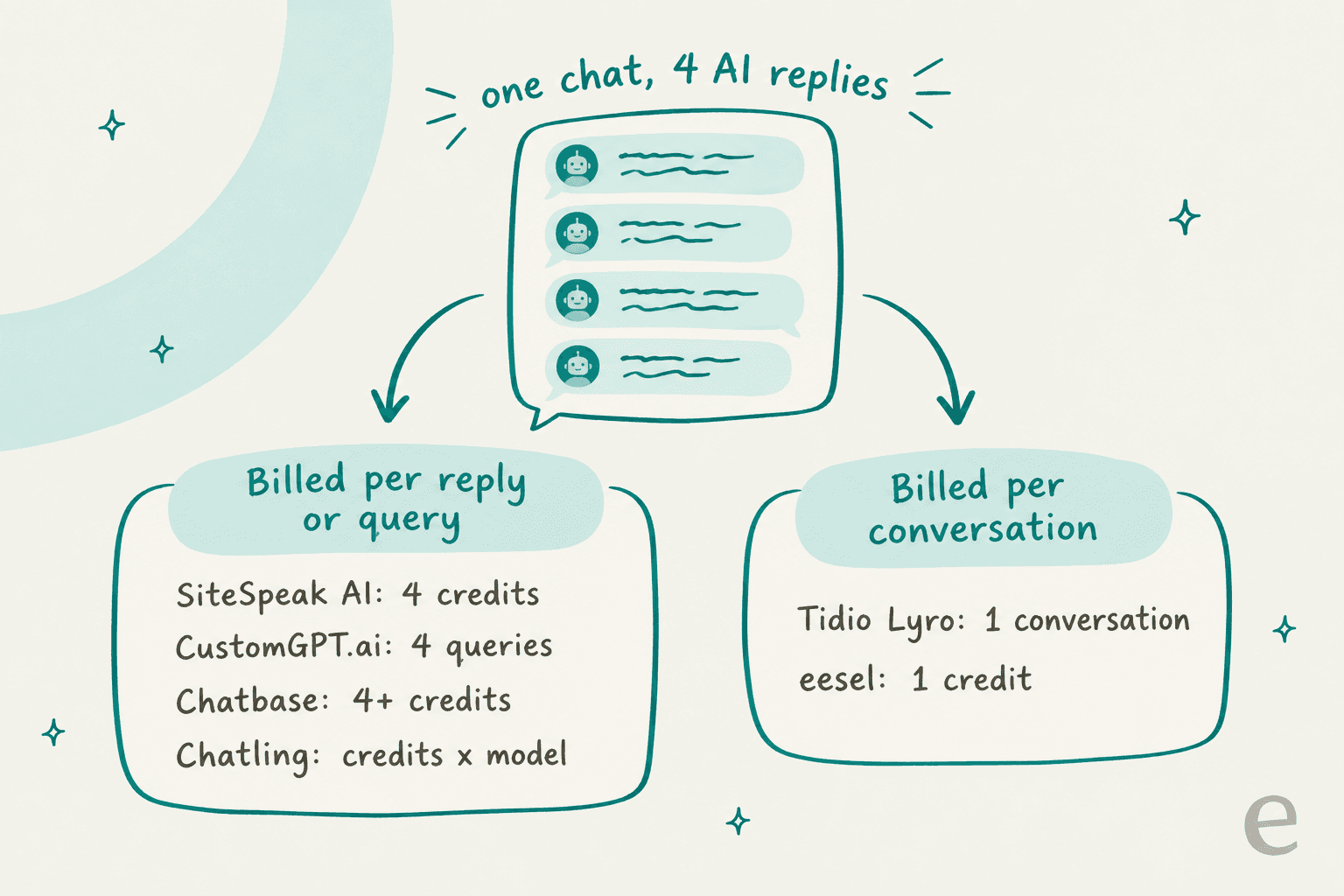
Here's a worked example. Say you get 500 website chats a month and each one takes about 4 AI replies, so 2,000 replies in total.
| Tool | Plan that fits | Monthly cost | Why |
|---|---|---|---|
| SiteSpeak AI | Pro | $79 | 3,000 credits covers 2,000 replies |
| Chatbase | Standard | $150 | 4,000 credits, if each reply costs 1 credit on your model |
| CustomGPT.ai | Premium | $499 | 2,000 queries is over Standard's 1,000 |
| eesel AI | 500 credits | $299 | 500 chats = 500 credits, whatever the reply count |
At this volume SiteSpeak is the cheapest option on the list, and I'd rather say that plainly. The reason to pay more is what you get for the money: the chat lands in your helpdesk, the AI learns from your tickets, and you know the bill before the month starts. If none of that matters to you, stay on SiteSpeak or move to Chatling.
1. eesel AI
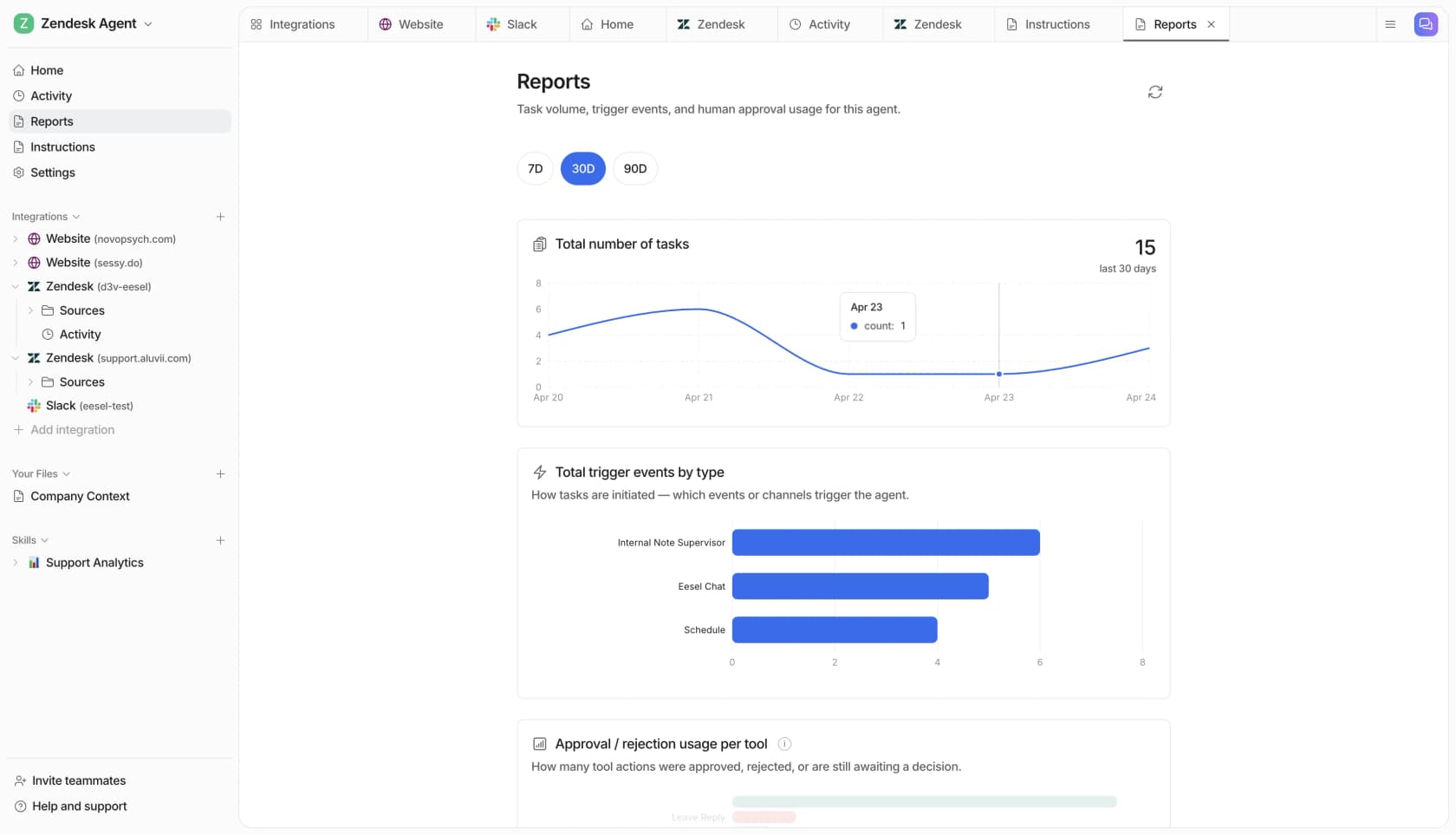
Best for: support teams that already run a helpdesk and want the website chatbot to feed it, not compete with it.
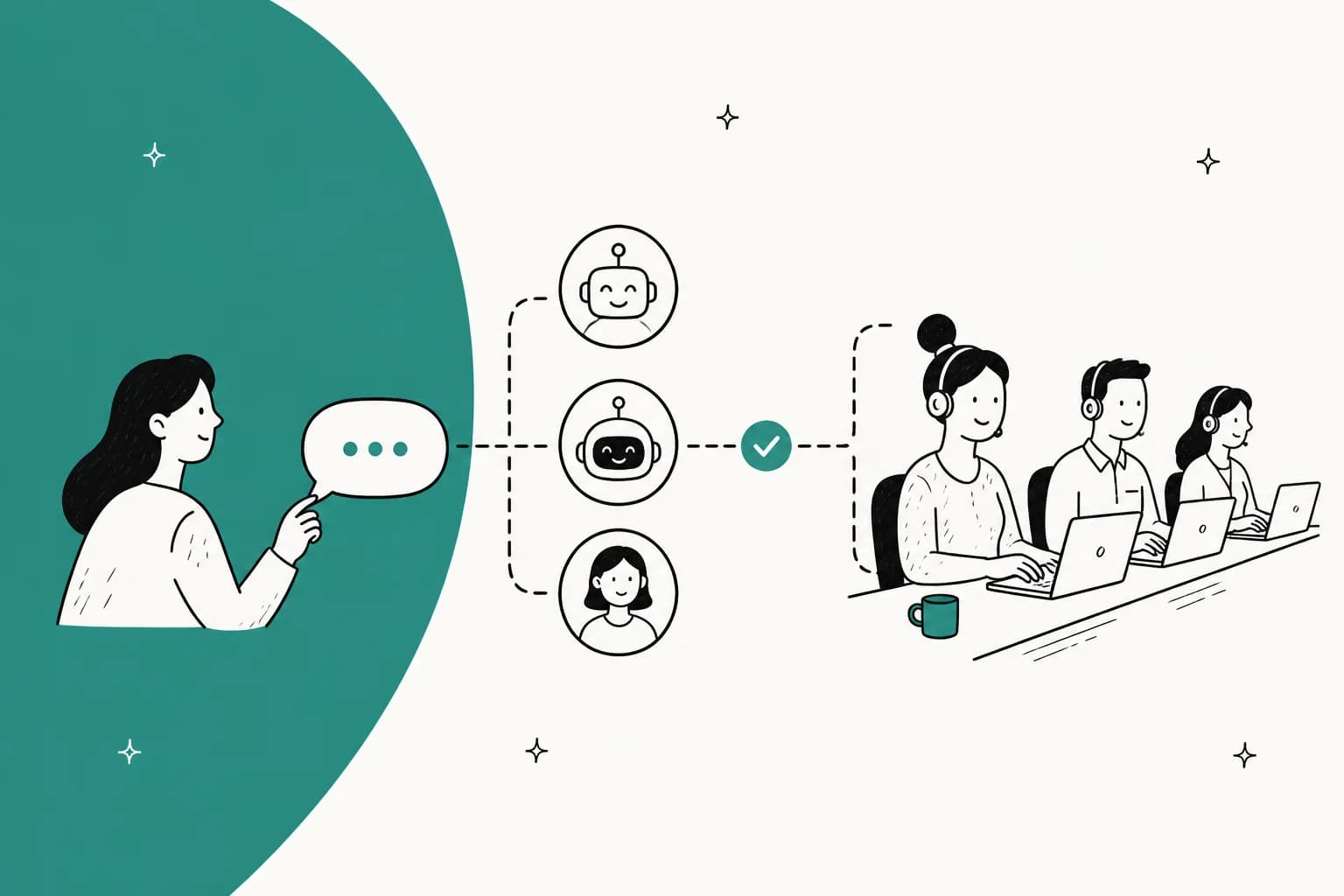
eesel is an AI teammate platform, and the teammate that replaces SiteSpeak is the AI helpdesk teammate. It does the website part with a chat bubble you add with one script tag. The difference is what happens behind it. It joins Zendesk, Freshdesk, Gorgias, Front or Help Scout, so an escalated chat becomes a normal ticket in the queue your team already watches.
It learns from past tickets on every plan, alongside your help center, Confluence and Notion. Before launch, its simulation replays hundreds of your past tickets and scores each draft against what your team actually sent. I've watched a confident bot quietly give wrong answers in the past, which is why every eesel rollout gets that dry run first. It's the testing step SiteSpeak leaves to you and your customers.
SiteSpeak users who like its API and MCP access will find a deeper version here. The eesel CLI drives the same teammate from a terminal or a script, and coding agents like Claude Code or Cursor can operate it too, so you can update knowledge or check results without opening the dashboard.
Pros
- Escalations become tickets in your existing helpdesk, no second inbox.
- Trains on past tickets, macros and help center on every plan.
- Simulation over your own ticket history before go-live.
- One ticket or chat = one credit, however many replies it takes.
Cons
- At $299/month it costs more than SiteSpeak for low-volume sites.
- Overkill if you have no helpdesk and only want an FAQ bot.
Pricing: free plan with 100 credits and no card. Paid plans are fixed monthly credit batches: 500 credits for $299, 1,000 for $499, 1,500 for $699, 2,500 for $999, and up, with every feature and unlimited seats included. Optional overage is $0.80 per credit. Full detail on the eesel pricing page.
"In the first month, eesel is resolving 73% of our tier 1 requests, and we saw results quickly during our 7-day trial."

Verdict: the switch to make if SiteSpeak's Inbox has become a second queue your team keeps forgetting. If you have no helpdesk and under a few hundred chats a month, it's more than you need.
2. Chatbase
Best for: teams that want one AI agent across website chat, email, WhatsApp and voice, with real actions.
Chatbase is the closest thing to a grown-up SiteSpeak. It does the same core job of training an agent on your site and files, then adds more channels, more models, and AI actions like order lookups. It claims 10,000+ businesses. Against SiteSpeak, the important difference is integrations: its list includes Zendesk, Salesforce, Freshdesk, Help Scout and Gorgias, so a handover can reach a real helpdesk.
It also has a Playground where you test answers before going live, plus a shareable preview link. On the Pro plan, "Tickets" becomes a training source through a Zendesk or Salesforce connection. That's real, but it's gated to the top self-serve plan.
Pros
- Multi-channel, including voice from Standard.
- Helpdesk handoff and actions built in.
- Past tickets as a source on Pro.
Cons
- One AI agent per plan up to Pro, with extra agents at $25/month each.
- Branding removal is a $99/month add-on, and credits per reply depend on the model.
Pricing: Free ($0, 50 credits), Hobby ($40/month, 700 credits), Standard ($150/month, 4,000 credits), Pro ($500/month, 15,000 credits), Enterprise custom, with 20% off yearly. Auto-recharge is $40 per 1,000 credits. See my full Chatbase pricing breakdown.
Verdict: the best SiteSpeak replacement if you want more channels and a helpdesk handoff but still want a standalone bot. My Chatbase review goes deeper, and Chatbase alternatives covers the rest of its shelf.
3. Chatling
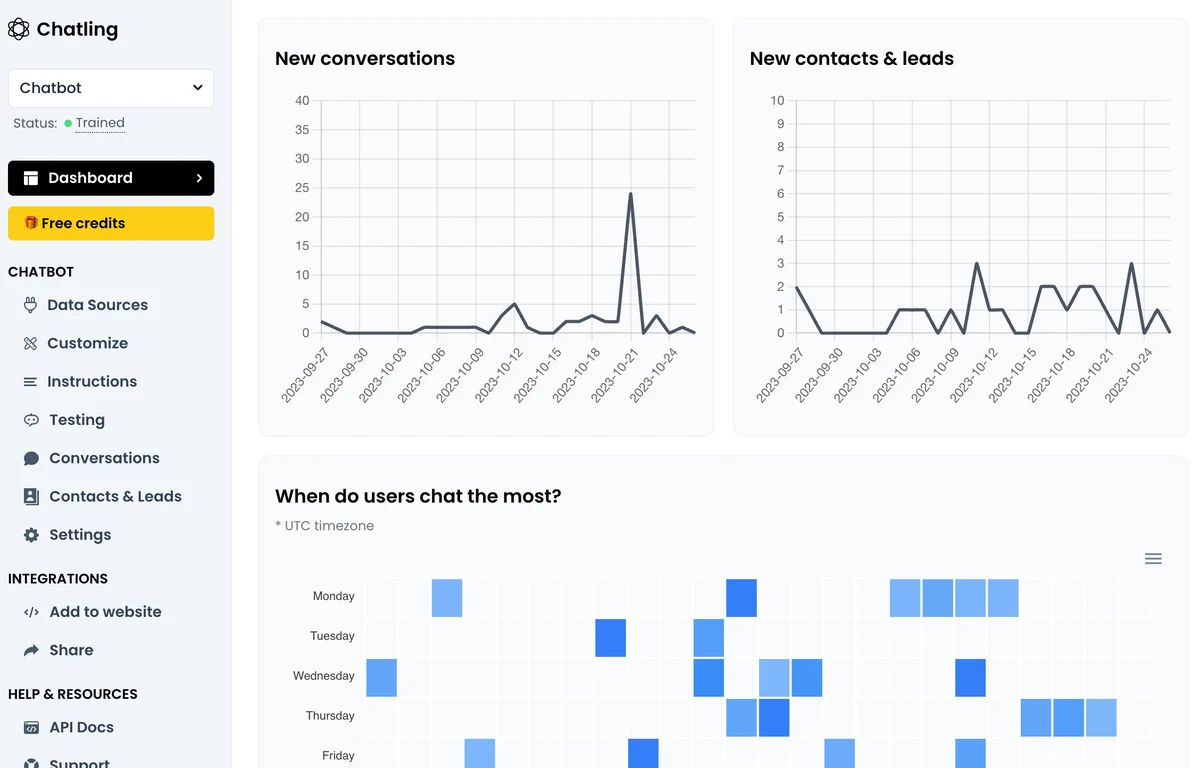
Best for: small teams that want SiteSpeak's simplicity with more channels and a bigger review base.
Chatling now pitches itself as "the AI support platform built for resolution, not deflection." It trains on your website, sitemaps, documents and FAQs, and it can import articles from Zendesk, Zoho and Notion. It deploys to web, WhatsApp, Instagram, Telegram and Messenger, and hands off to a human with an AI summary of the chat.
Where it clearly beats SiteSpeak is proof. It has 4.7/5 from 79 reviews on G2, mostly from small businesses. I compared it head to head in Chatbase vs Chatling. The common complaint is support speed, which is the flip side of a small team.
"Chatling is super easy to set up and use, which makes deploying a new agent within 30 minutes a big win for me."
Like SiteSpeak, it doesn't train on ticket history. Its Zendesk link is an action that creates tickets, not a source it learns from.
Pros
- Cheap entry and a generous free plan.
- Omnichannel from the Starter plan.
- Large, mostly positive review base.
Cons
- Credits multiply by model, from 0.5 to 25 per reply.
- No if/then conditions in AI instructions, per reviewers.
Pricing: Free ($0, 200 credits), Starter ($25/month, 1,750 credits), Growth ($75/month, 6,000 credits), Scale ($295/month, 35,000 credits). Branding removal is a $35 add-on. My Chatling review has the full credit math.
Verdict: the sidegrade I'd pick if you like SiteSpeak but want more channels and more reviews to lean on. Pick a cheap model, or the credit multiplier will eat the savings.
4. DocsBot
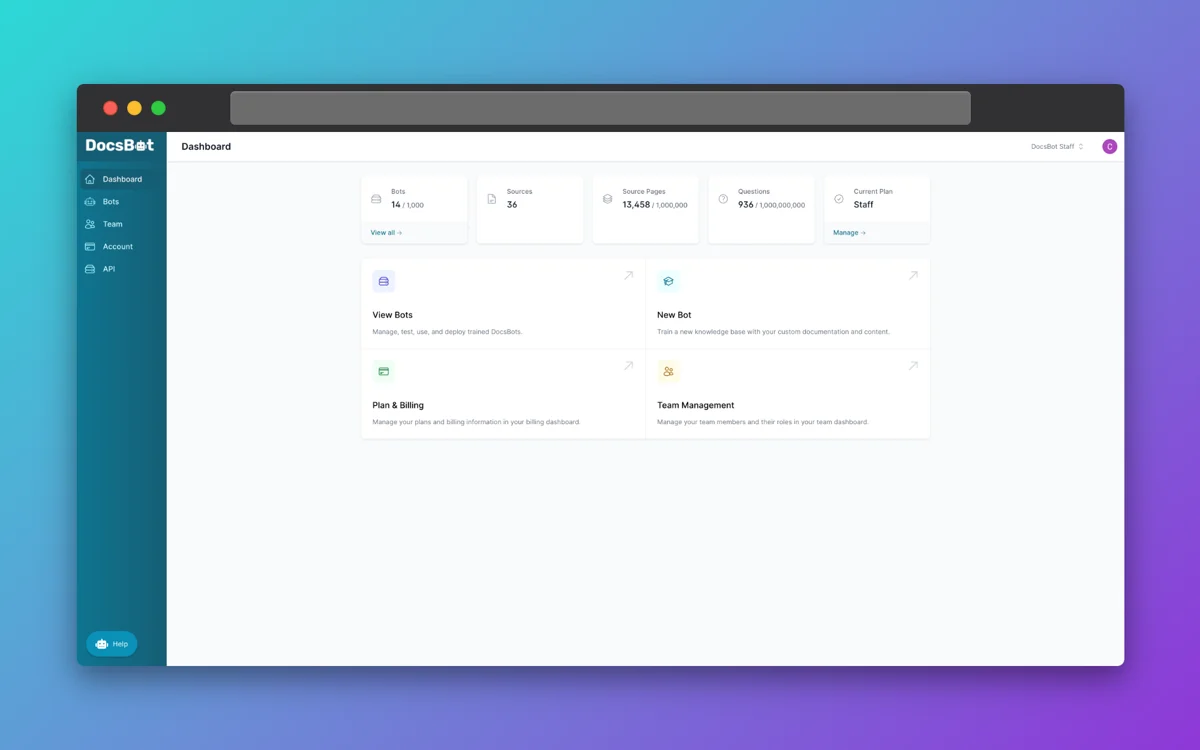
Best for: teams that want a website bot that learns from their ticket history, without moving the AI into the helpdesk.
DocsBot is a doc-first chatbot builder with a long list of sources. The interesting part for SiteSpeak users is that list includes support tickets from Zendesk, Freshdesk, Help Scout, Salesforce and Zoho Desk, starting on the Standard plan. That fills SiteSpeak's biggest training gap without changing what kind of tool you run.
It also creates escalation tickets and has a Help Scout integration for drafts. It's still a widget next to your helpdesk, not a teammate inside it. The public review base is small too, with 4.3/5 from 3 reviews on G2.
"It's accuracy and correctness is good and it support big and multiple Documents."
Pros
- Ticket history as a training source from Standard.
- Huge source list, including GitHub and Confluence.
- Citations and an MCP server.
Cons
- Credit multipliers per model, and the bot stops when credits run out.
- Support features like escalation tickets start at $149.
Pricing: Free ($0, 100 credits), Personal ($49/month, 5,000 credits), Standard ($149/month, 15,000 credits), Business ($499/month, 60,000 credits), Enterprise custom, with two months free on yearly billing. Extra credits are $49 per 5,000. More in my DocsBot pricing post.
If you're weighing it against SiteGPT, my DocsBot vs SiteGPT comparison has the detail.
Verdict: the best fit if your only complaint about SiteSpeak is "it doesn't know what we told customers last year." If the complaint is the second inbox, go to the helpdesk-native option instead.
5. SiteGPT
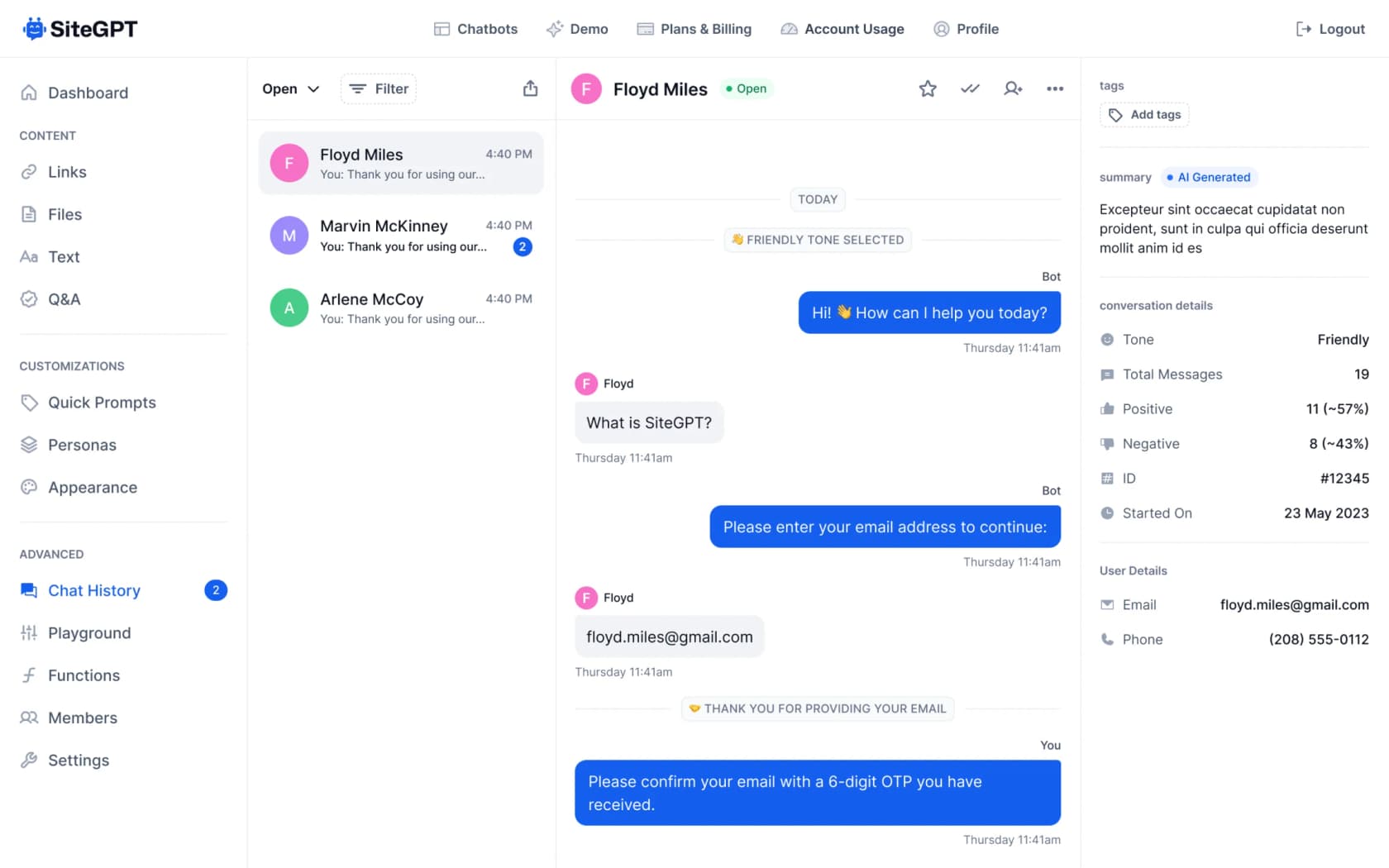
Best for: the quickest possible URL-to-chatbot setup.
SiteGPT is the most similar tool to SiteSpeak on this list. You paste a URL, it crawls, and you have a bot. It has a slightly larger review base, with 4.8/5 from 12 reviews on G2, and reviewers keep coming back to setup speed.
It shares SiteSpeak's main gaps. Past tickets aren't a training source, and escalation is a button the visitor presses, not a confidence trigger. The Zendesk AI Agent integration is only on the top Scale plan.
"Currently the integration options are limited, so implementing may not be as smooth depending on your other platforms. Also, corrections currently need to be made directly on SiteGPT.ai and not through any integrated platform."

Pros
- Very fast setup from a single URL.
- Slightly more independent reviews than SiteSpeak.
Cons
- The headline prices are yearly; month to month is $59, $129 and $429.
- The message quota is based on a cheap model and drops 10x on bigger models.
Pricing: Starter $39, Growth $79 and Scale $259 per month billed yearly ($59, $129 and $429 month to month). Extra message packs and WhatsApp are paid add-ons on top. See SiteGPT pricing.
Verdict: a sidegrade, not an upgrade. Choose it over SiteSpeak only if you've tried both and prefer its answers. My SiteGPT alternatives list overlaps a lot with this one.
6. CustomGPT.ai
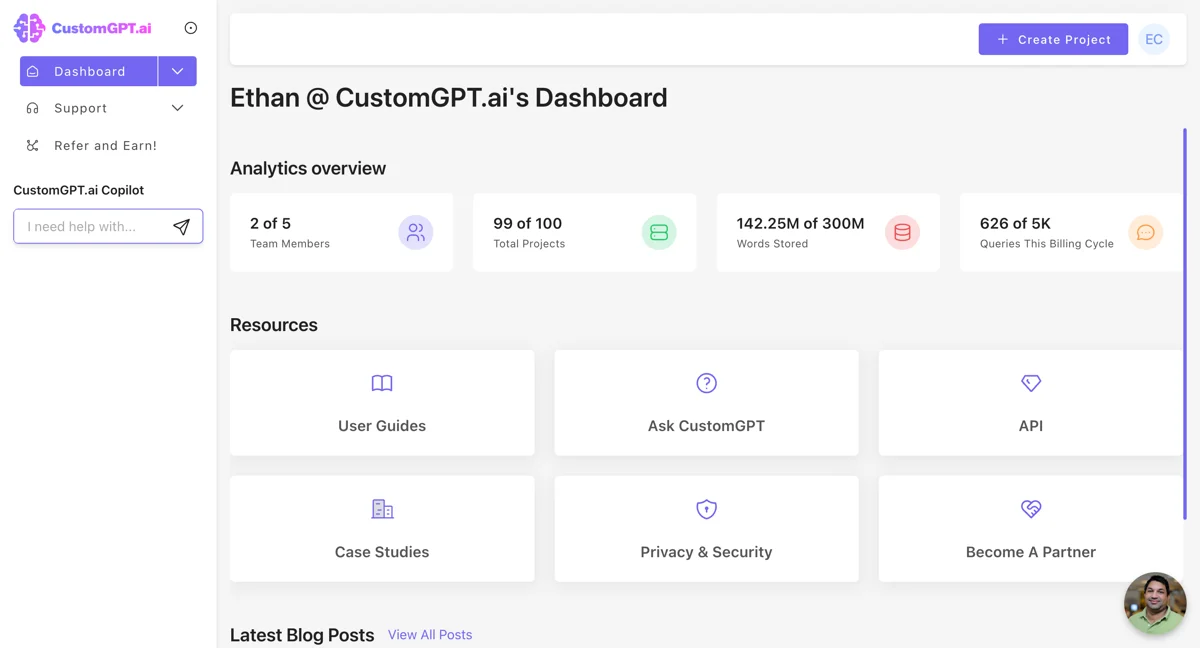
Best for: large document libraries where every answer needs a citation.
CustomGPT.ai is built around grounded answers. It ingests 1,400+ file types, cites its source on every reply, and is SOC 2 Type II. If SiteSpeak's answers have drifted off your docs, this is the tool built hardest against that.
"Every answer comes with a link to the source which is actually really useful for auditing."

It's priced for bigger teams, though, with no free plan and a per-query meter. The review base is also thin for its claimed size, at 4.0/5 from 1 review on G2.
Pros
- Citation-first answers with strong anti-hallucination focus.
- Handles very large libraries and many file types.
Cons
- No free plan, and Standard covers only 1,000 queries.
- Very little independent review data.
Pricing: Standard $99/month ($89 yearly, 1,000 queries), Premium $499/month ($449 yearly, 5,000 queries), Enterprise custom. There's a 7-day trial.
Verdict: pick it when accuracy on a big doc set matters more than price. My CustomGPT.ai reviews roundup has more user feedback. For a typical small-business website bot, it's more tool and more cost than SiteSpeak.
7. Tidio
Best for: small stores that want live chat, a ticket inbox and an AI agent in one product.
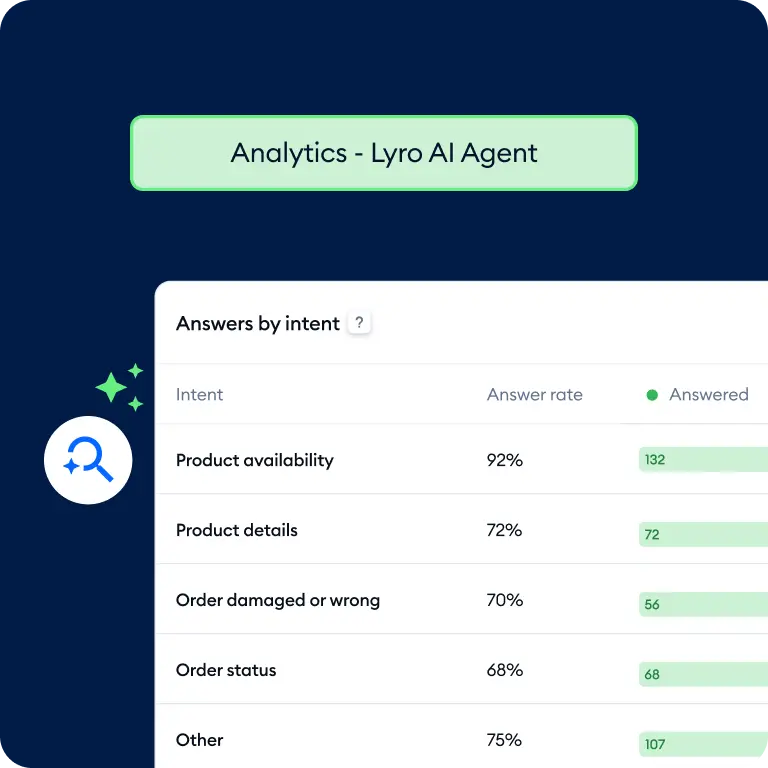
Tidio comes at the problem from the other side. It's a live chat and helpdesk tool first, with the Lyro AI agent on top. So the "second inbox" problem goes away, because Tidio's inbox becomes your main one. Lyro learns from your website, files, Shopify products and Zendesk help center, and it can pull Q&A pairs out of solved live chats.
The billing is the most different on this list. Base plans count billable conversations (ones where a human agent replied), and Lyro is a separate add-on counted per AI conversation, not per reply. Some users find that hard to follow:
"There is a limit of conversations, and of course, limits for a free version should be, but in the limit software is calculating even the greeting to visitors, which I don't know how to turn off now."
Pros
- Chat, tickets and AI in one tool.
- Lyro counts per conversation, not per reply.
- Learns from solved chats.
Cons
- Two meters to watch: base conversations and Lyro conversations.
- Switching means moving your support into Tidio, not adding to your helpdesk.
Pricing: Free (50 billable conversations), Starter from $24.17/month, Growth from $49.17/month, Plus $300/month, Premium custom. The Lyro add-on starts at $32.50/month for 50 AI conversations. See Tidio pricing.
Verdict: a good move for a small shop with no helpdesk yet that wants one place for everything. If you already run Zendesk or Freshdesk, adding a second platform defeats the point. My Tidio review and Lyro AI pricing posts have the full picture.
How to choose your SiteSpeak AI alternative
Most of the decision comes down to one question: where should a hard chat end up?
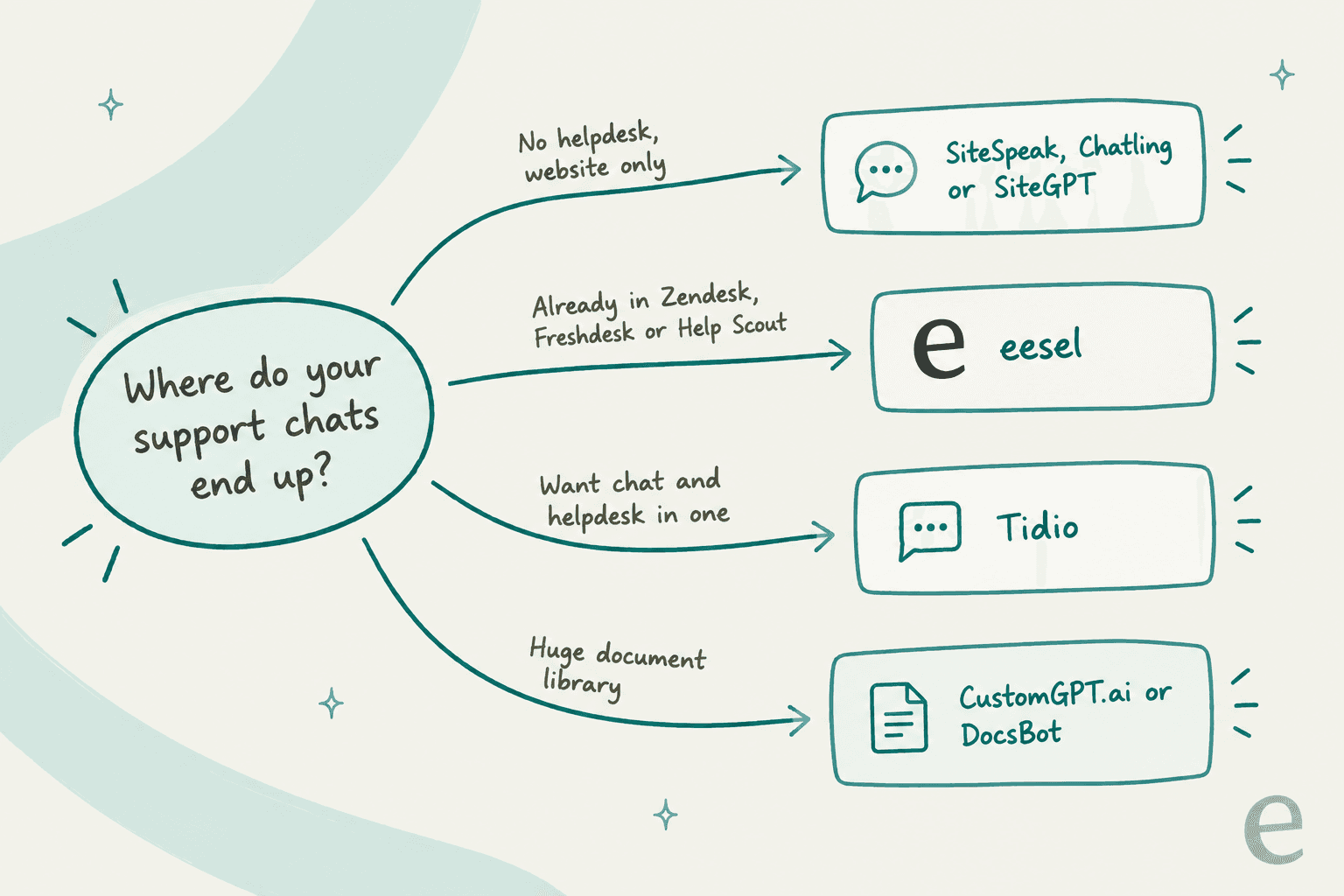
- No helpdesk, small site. SiteSpeak is fine, and so is any decent AI chatbot for your website. If you want more channels or more reviews to go on, Chatling is the sidegrade.
- You live in a helpdesk. Put the AI where the tickets are, whether that's a Zendesk AI chatbot or a Freshdesk AI chatbot. That's eesel, or one of the options in my AI helpdesk roundup.
- You want one tool for chat and tickets. Tidio.
- Accuracy on a big doc library. CustomGPT.ai, or DocsBot if you also want ticket history as a source.
Whichever you pick, test it on 30 or 40 real questions from your inbox, awkward ones included. The problems that sink chatbots almost never show up in a vendor demo.
Try eesel for website chat that lands in your helpdesk
If you're moving off SiteSpeak because escalations keep falling into a second inbox, eesel fixes that directly. Its AI helpdesk teammate answers in a chat bubble on your site, hands anything it can't solve to your team as a real ticket in Zendesk, Freshdesk or Help Scout, and learns from the replies your team already wrote. You can run it against hundreds of your past tickets before it talks to anyone, then go live when the scores look right.
The free plan gives you 100 credits with no card. Try eesel on your own ticket history first.
Frequently Asked Questions
What is the best SiteSpeak AI alternative?
For teams that already run a helpdesk, eesel's AI helpdesk teammate is the best SiteSpeak AI alternative, because escalated chats become tickets in Zendesk, Freshdesk or Help Scout and it learns from past tickets. For a standalone website bot, Chatling is the best value and Chatbase is the most complete.
Is there a cheaper alternative to SiteSpeak AI?
Not by much. SiteSpeak starts at $29/month and works out to about 2.5 to 2.9 cents per AI reply. Chatling's Starter plan is $25/month, and Tidio starts at $24.17/month, but both meter differently. See SiteSpeak AI review for the per-reply math and free AI chatbots for no-cost options.
Which SiteSpeak AI alternatives integrate with Zendesk?
eesel works inside Zendesk natively, Chatbase can hand off to Zendesk and train on Zendesk tickets on Pro, Chatling can create Zendesk tickets as an action, DocsBot can use Zendesk tickets as a source, and SiteGPT connects on its Scale plan. SiteSpeak itself has no native helpdesk integration. More in my Zendesk AI chatbot guide.
Can any SiteSpeak AI alternative train on past support tickets?
Yes. eesel trains on past tickets on every plan, DocsBot from its Standard plan, Chatbase on its Pro plan via Zendesk or Salesforce, and Tidio's Lyro pulls Q&A from solved live chats. SiteSpeak, SiteGPT and Chatling train on published content only. That gap is why so many AI chatbots answer wrong.
How does SiteSpeak AI pricing compare to Chatbase?
SiteSpeak runs from $29 to $499/month with one credit per AI reply. Chatbase runs from $40 to $500/month in message credits, where cost per reply depends on the model and AI actions. Chatbase adds voice and more helpdesk integrations. Compare Chatbase pricing with SiteGPT pricing too.
Is SiteSpeak AI good for small businesses?
Yes, for a small business with no helpdesk that wants a website bot, lead capture and live takeover on one widget. It gets harder once your team works a ticket queue, because handovers land in SiteSpeak's own Inbox. My roundup of AI helpdesk tools for small teams covers the next step.
What should I test before switching from SiteSpeak AI?
Run 30 to 40 real questions from your inbox through the new tool, including awkward ones, and check where escalations land. eesel can replay hundreds of your past tickets and score its answers before go-live. My list of AI chatbot problems shows what to look for.


Article by
Riellvriany Indriawan
Riell is a designer and writer at eesel AI with about two years of experience researching CX platforms, AI chatbots, and helpdesk software. She combines her design background with a sharp eye for how these tools actually look and feel in practice — making her comparisons unusually visual and user-focused.