Zellor alternatives 2026: 6 AI shopping assistants for Shopify stores

Rama Adi

Katelin Teen
Last edited October 27, 2026

The best Zellor alternative depends on which job you hired Zellor for. If it was helping shoppers pick the right product, Dialog is the closest swap (free for 200 conversations, then $399 a month), and Octane AI is the cheaper route if a skin or shade quiz does the job ($50 a month). If you want one chat that sells and also tracks orders, Rep AI bills by traffic, not chats, at $104 a month for 10,000 sessions.
The honest catch: none of these answers with clips from your creator videos. That's Zellor's one trick nobody else copies, so if video answers are why you bought it, keep it and fix the gaps around it instead.
Most beauty stores I talk to leave for a different reason: the chat isn't where most of the support work happens. If your questions end up as tickets in Gorgias, eesel works that queue directly, product questions and order lookups included. Question Beauty, a cosmetics brand on Gorgias and Shopify, had eesel handle about 990 tickets in a month and look up about 290 Shopify orders before answering.
Why do people look for Zellor alternatives?
Zellor is an AI beauty advisor for Shopify. It answers shopper questions on product pages with clips from your own video library, the tutorials and UGC you already post on Instagram and TikTok, with an add-to-cart button in the chat. I covered it in depth in my Zellor review, and I came away liking the idea a lot. A video of a real person blending a shade answers "which shade for olive skin?" better than any paragraph.
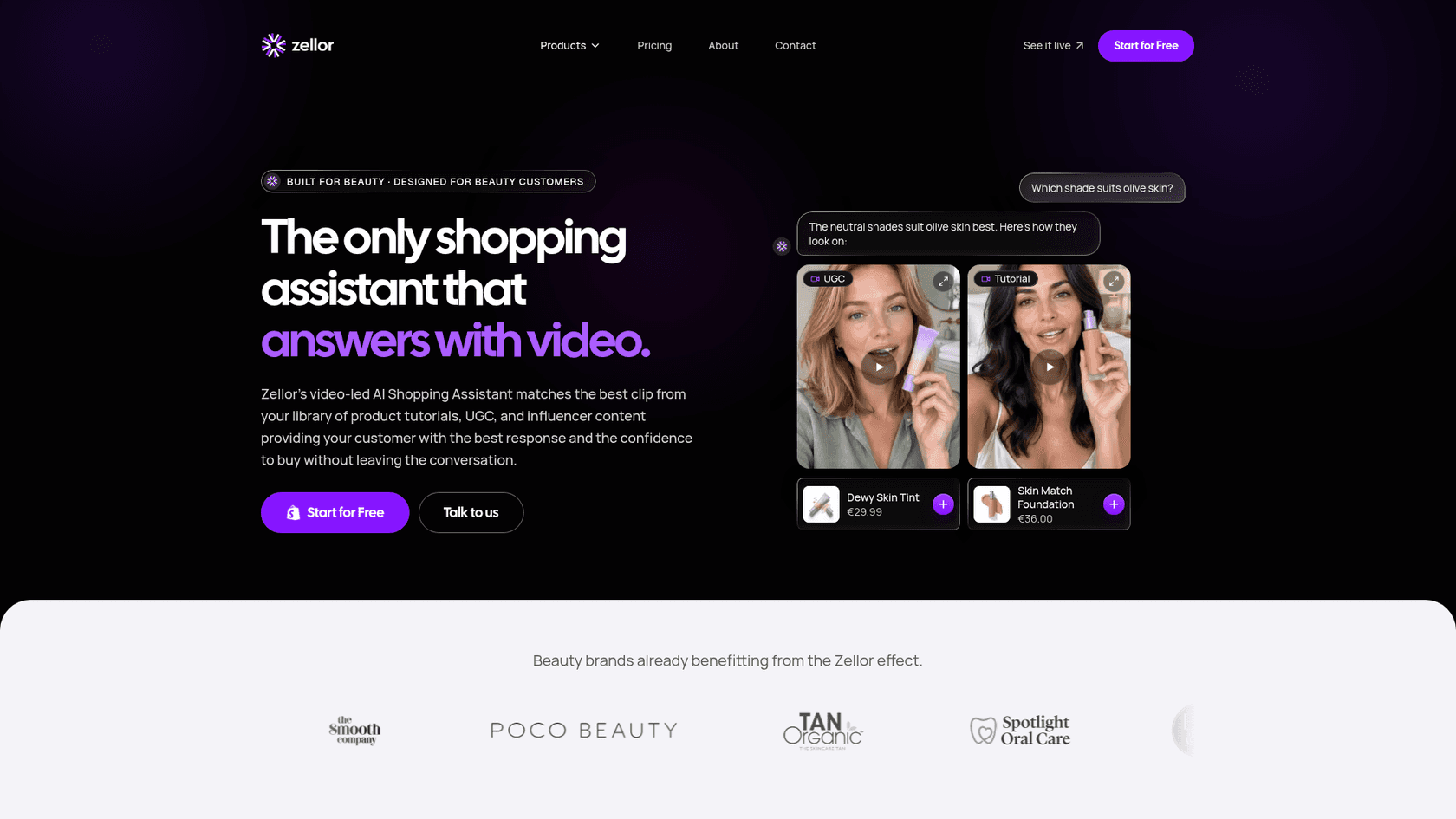
Its own numbers back the idea up. On the TanOrganic story, Zellor says it drives 11% of the brand's online sales, with cart-to-checkout at 37.6% against 25.8% before. Those are vendor figures, but they're specific, which I respect.
So why look elsewhere? I build eesel's Gorgias and Shopify integrations for a living, and the same five reasons come up whenever a store compares tools in this space:
- It only fits one kind of store. Zellor's own FAQ says it's for "DTC beauty and personal care brands on Shopify with an active organic video presence". It's Shopify only, and the listing names English as the only language. No video library, no real reason to use it.
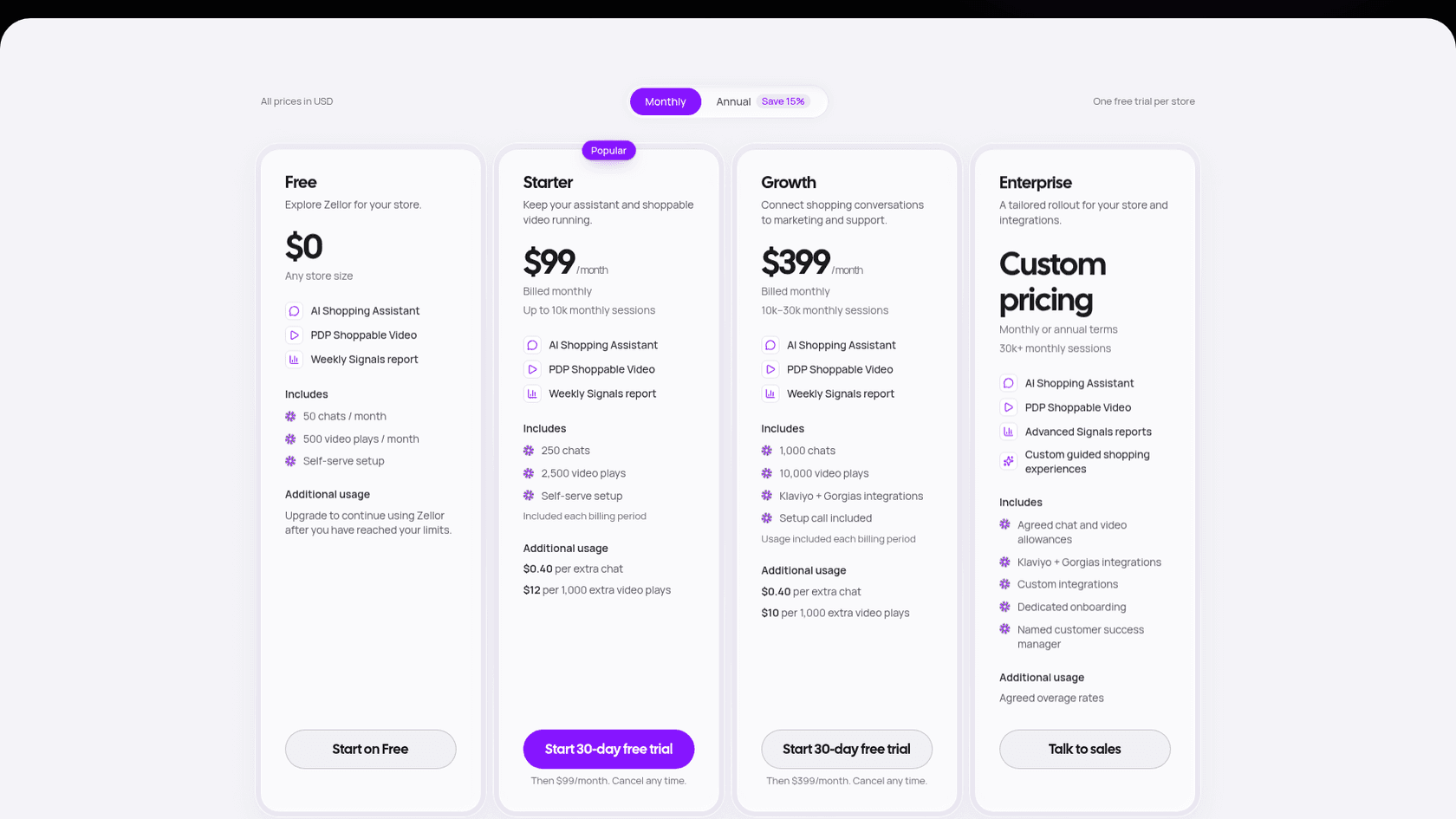
- The chat meter is tight. The Zellor pricing page gives you 50 chats a month free, 250 on Starter ($99) and 1,000 on Growth ($399). Past that, every chat costs $0.40. A store with 500 chats pays $199 on Starter.
- The Gorgias handoff costs $399. Zellor hands hard chats to Gorgias with the full transcript, which is well built. But the integration sits on Growth and up, so a small store pays four times the Starter price just to get a person into the conversation.
- It's one helpdesk deep. Gorgias is the only helpdesk it connects to today; others are listed as roadmap.
- It's young. The Shopify listing launched in February 2024 and has 2 reviews. There's no G2 page yet. That's not a flaw, but it means you're an early customer.
Underneath all five is one bigger point. A beauty store's chat widget sees the pre-purchase questions, but the inbox sees everything else: where's my order, can I return this, my parcel is damaged. Automating pre-purchase questions and automating WISMO tickets are two different projects. A store owner on Reddit summed up where the time goes:
"Shipping and returns are easy enough, but sizing and product questions take way more time."

That's the split every alternative below has to handle, and they handle it very differently.
How did I pick these Zellor alternatives?
I started from what buyers actually see. When I asked ChatGPT for Zellor alternatives today, it shortlisted Dialog, Rep AI, Tidio, Gorgias, Octane AI and Shopify Inbox, and framed the choice as two jobs: helping shoppers find the right product, and answering their questions. I think that framing is right, so I kept all six and sorted them by job.
For each tool I read the vendor's own pricing page and Shopify App Store listing, pulled every price from there, and checked reviews on G2, Reddit and the App Store. I priced everything for one buyer: a Shopify beauty store with about 10,000 sessions and 500 AI chats a month, the size where Zellor's Starter plan starts charging overage.
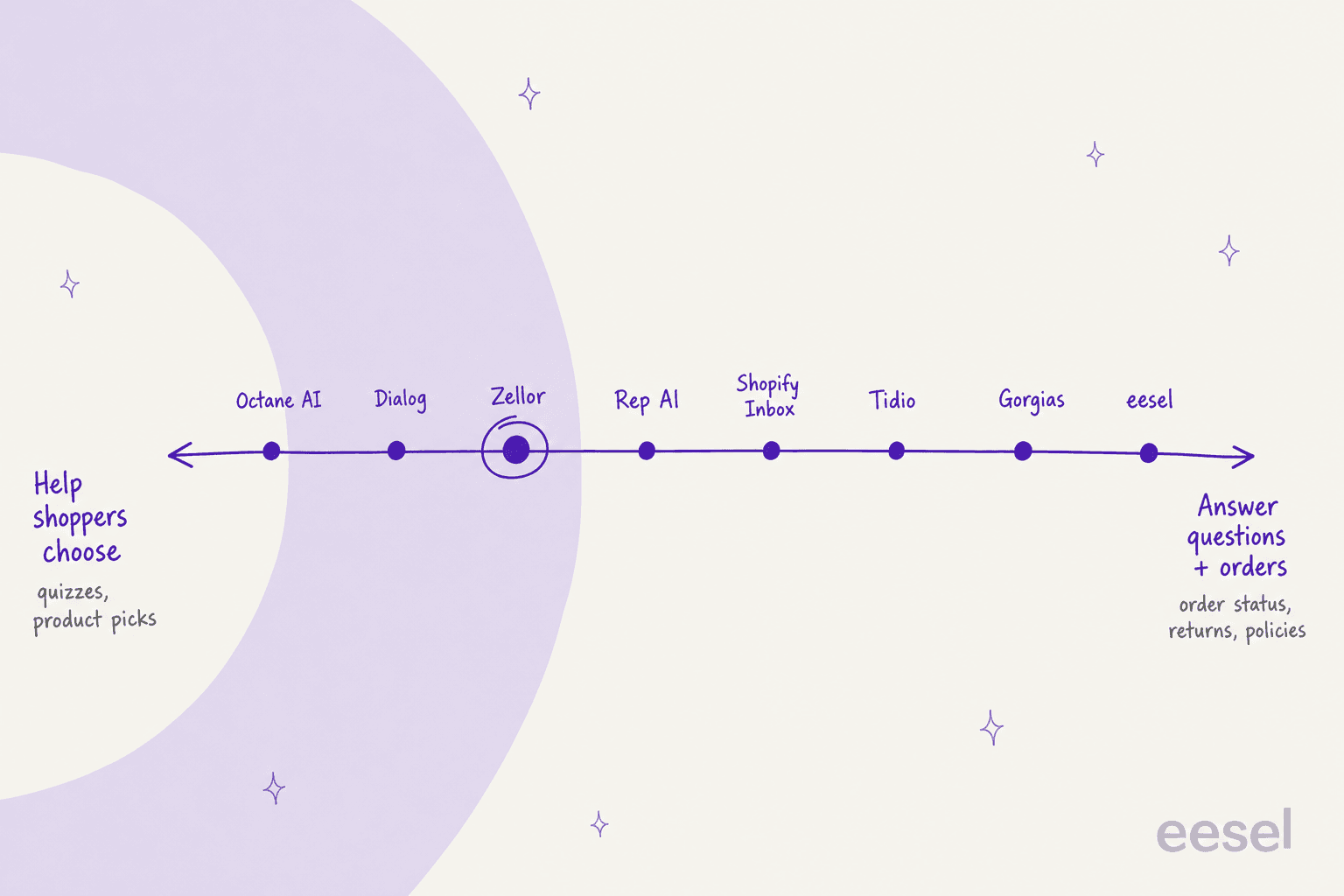
Zellor sits on the "help shoppers choose" side. The further right a tool sits, the more of your support queue it can take on, and the less it does for product discovery. Pick your end first.
Zellor alternatives at a glance
| Tool | Best for | Answers with | Free option | Price at 500 AI chats | Billing unit | Helpdesk handoff | Platforms | Order lookups |
|---|---|---|---|---|---|---|---|---|
| Zellor | Video-led beauty brands | Creator video clips | 50 chats/mo | $199 (Starter) | Chats, plus video plays | Gorgias, Growth+ | Shopify | Order FAQ shown in demo |
| Dialog | Product discovery | Text, product cards, photo matching | 200 conversations/mo | $399 | Monthly unique visitors | None listed | Shopify, BigCommerce, Salesforce, Magento, PrestaShop | Not listed |
| Rep AI | Selling plus WISMO in one chat | Text, product cards | 14-day trial | $104 (Sales) | Website sessions | Gorgias, Zendesk | Shopify | Support plan |
| Tidio | Small teams wanting live chat too | Text, flows | 50 Lyro chats once | $350 (Lyro, monthly) | Lyro conversations | Own inbox | Most sites | Yes |
| Gorgias | Support-heavy stores | Text, actions | Trial | Up to $640 | Tickets plus automated interactions | Same inbox | Shopify, WooCommerce, BigCommerce | Yes, plus actions |
| Octane AI | Shade and skin quizzes | Quiz results | 14-day trial | About $75 (500 quizzes) | Quiz credits | Not a chat | Shopify | No |
| Shopify Inbox | Free starting point | Text, products | Free | $0 | Free | Your team in Inbox | Shopify | Order lookup listed |
| eesel | Stores whose questions land in Gorgias | Text, Shopify lookups | 100 credits | $299 | Credits (1 per chat or ticket) | Works inside Gorgias | Shopify, plus 100+ tools | Yes |
The prices aren't measuring the same thing, which is the whole problem with this category. Zellor and eesel count chats, Rep AI counts sessions, Dialog counts visitors, Gorgias counts AI resolutions on top of tickets, and Octane counts finished quizzes. The calculator below puts them on one axis.
What would each Zellor alternative cost at your volume?
Plug in your monthly AI chats and site traffic. It uses list prices from each vendor's pricing page, billed monthly.
At 500 chats and 10,000 sessions, Zellor Starter ($199) is actually mid-pack. It gets expensive at two points: the moment you need Gorgias handoff (jump to $399), and past 1,000 chats, where $0.40 a chat runs on with no cheaper tier. Rep AI looks cheapest among paid tools because it charges for traffic, not conversations, so it rewards stores with chatty visitors. For the wider maths, see my AI customer service cost guide. Gorgias is the priciest here only because the calculator assumes its AI resolves every single chat; in practice you pay only for the ones it closes.
1. Dialog
Best for: beauty and wellness brands that want the closest thing to Zellor's guided-shopping job, without needing a video library.
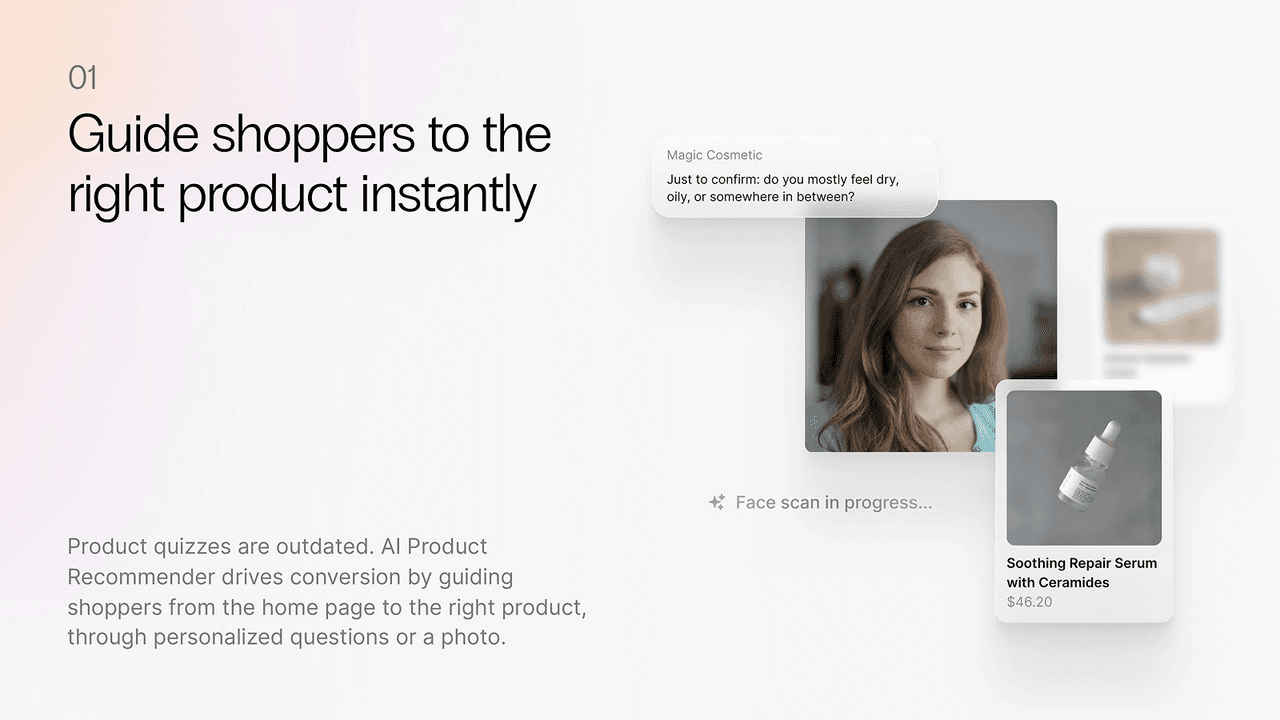
Dialog is a Paris-based AI shopping assistant, and ChatGPT ranked it first for product discovery. Of everything on this list, it's the tool that does the most similar job to Zellor: it sits on product pages and across your site, asks shoppers what they need, and recommends from your catalog, like a conversational recommendation engine.
What it does vs Zellor
Where Zellor answers with a video clip, Dialog answers with text, product comparisons and recommendations. Its AI Personal Shopper replaces a product quiz with a conversation, and can work from "personalized questions or a photo", then follows up by email and SMS. Dialog claims +16.1% conversion against a Typeform quiz in a Karacare A/B test, and +3x conversion on the beauty retailer Oh My Cream for its AI PDP assistant. Both are vendor figures.
Two things Zellor doesn't have: Dialog works beyond Shopify (BigCommerce, Salesforce Commerce, PrestaShop and Magento), and it pitches itself as the source other AI assistants like ChatGPT and Perplexity can read your products from. What I didn't find is a helpdesk handoff: the Shopify listing names Checkout, Klaviyo and AI model providers as integrations, and no helpdesk.
"I really appreciate that Dialog allows for providing accurate information to visitors and performing product comparisons, which helps customers make their purchasing decisions quickly."

Pros and cons
- Pro: the closest match to Zellor's product-discovery job, and no video library needed.
- Pro: a real free plan with 200 conversations a month.
- Pro: 5.0 from 38 reviews on the Shopify App Store and 5.0 from 13 on G2.
- Con: the jump from free to paid is steep: $0 to $399.
- Con: no helpdesk integration listed, so order and return questions need another tool.
Pricing
From Dialog's Shopify App Store listing, billed every 30 days in USD:
| Plan | Price | What you get |
|---|---|---|
| Starter | Free | 200 conversations a month, basic AI model, 2 uploaded documents |
| Standard | $399/mo | Up to 50,000 monthly unique visitors, advanced AI model, custom logo and wording, unlimited documents, 14-day trial |
| Scale | $799/mo | Up to 100,000 monthly unique visitors, same features, 14-day trial |
Dialog bills paid plans by unique visitors, not conversations, so a busy chat doesn't raise the bill.
Verdict
Pick Dialog if Zellor's job (guiding shoppers to the right product) is still the job, and you don't have, or don't want to maintain, a video library. Skip it if most of your chat volume is order and returns questions, because it isn't built for those.
2. Rep AI
Best for: stores that want one storefront chat that both sells and answers "where's my order".
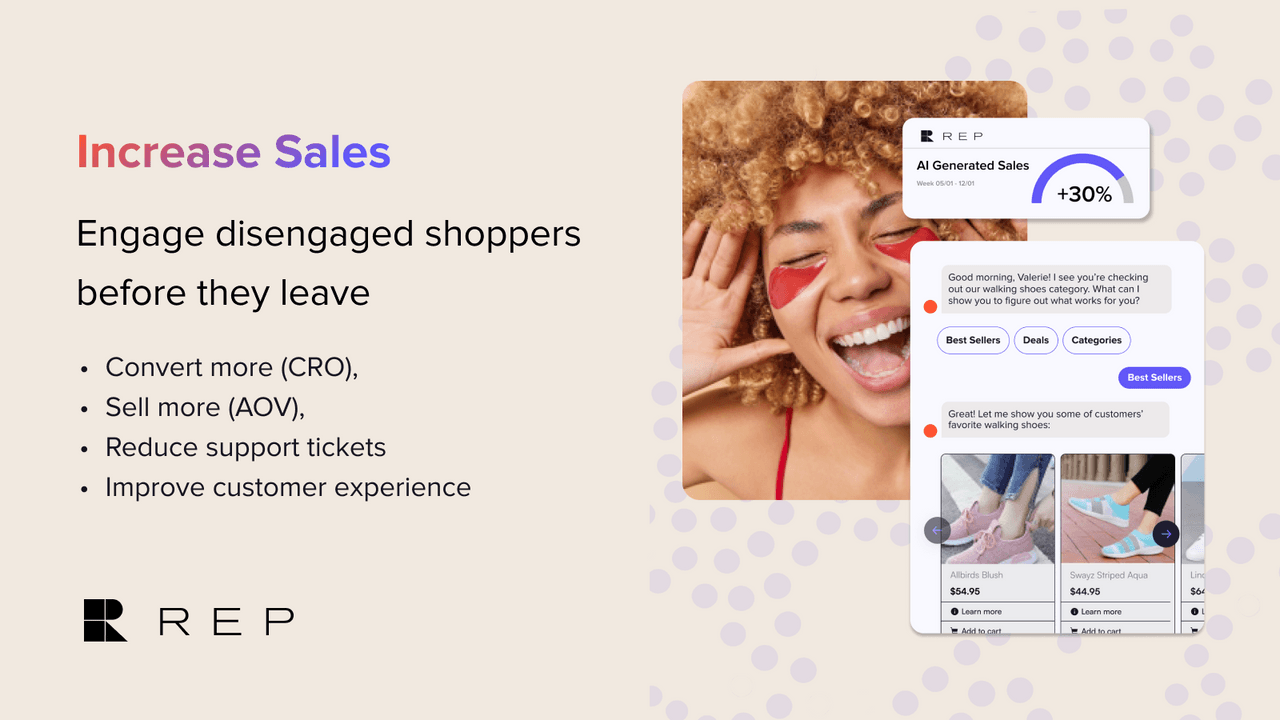
Rep AI is a behavioral AI chat for Shopify. It watches for shoppers who hesitate, opens a proactive chat at the right moment, and recommends products. I went deep on it in my Rep AI review.
What it does vs Zellor
Rep AI covers both ends of the spectrum, which Zellor doesn't. The Sales agent does drop-off detection, proactive approaches, product recommendations, live chat upselling and abandoned cart rescue. The Support agent handles order status, returns and exchanges, cancellations and order edits. On the Rep AI pricing page, both list Klaviyo, Gorgias and Zendesk among 20+ integrations, so a hard chat can reach your helpdesk without a $399 plan.
The billing model is the big difference. Rep AI charges by monthly website sessions, so 500 or 5,000 chats cost the same at a given traffic tier. That's great if your visitors chat a lot and painful if you have high traffic and little chat.
"We use rep ai which functions more like a shopping assistant, handling faqs, upselling, and passes the trickier questions to us."
Pros and cons
- Pro: sells and supports from one widget, with order actions on the Support plan.
- Pro: priced by traffic, so chat volume doesn't raise the bill.
- Pro: Gorgias and Zendesk integrations on every plan.
- Con: extra sessions cost $12 per 1,000, more than any tier's included rate, so traffic spikes hurt.
- Con: Flow Studio, custom support policies and product finder customization are $200 add-ons each unless you buy the Concierge bundle.
Pricing
From the Rep AI pricing page, monthly billing (yearly saves 20%):
| Plan | At 10,000 sessions | At 80,000 sessions | What it does |
|---|---|---|---|
| AI Sales Agent | $104/mo | $578/mo | Drop-off detection, recommendations, upsell, cart rescue |
| AI Support Agent | $49/mo | $250/mo | WISMO, returns, cancellations, AI email answers |
| AI Concierge (both) | $130/mo | $726/mo | Sales and Support, assigned CSM, add-ons included |
| Enterprise | Custom | Custom | 500K+ sessions, SSO, SLA |
All plans have a 14-day free trial. My Rep AI pricing breakdown has the full tier ladder.
Verdict
Pick Rep AI if you want proactive selling and basic order support in the same chat and your traffic is steady. Skip it if your traffic is big and your chat volume is small, since you pay for sessions either way. My Rep AI alternatives list covers the tools I'd compare it with.
3. Tidio
Best for: small beauty brands that want AI answers, a live chat inbox and simple flows in one widget.
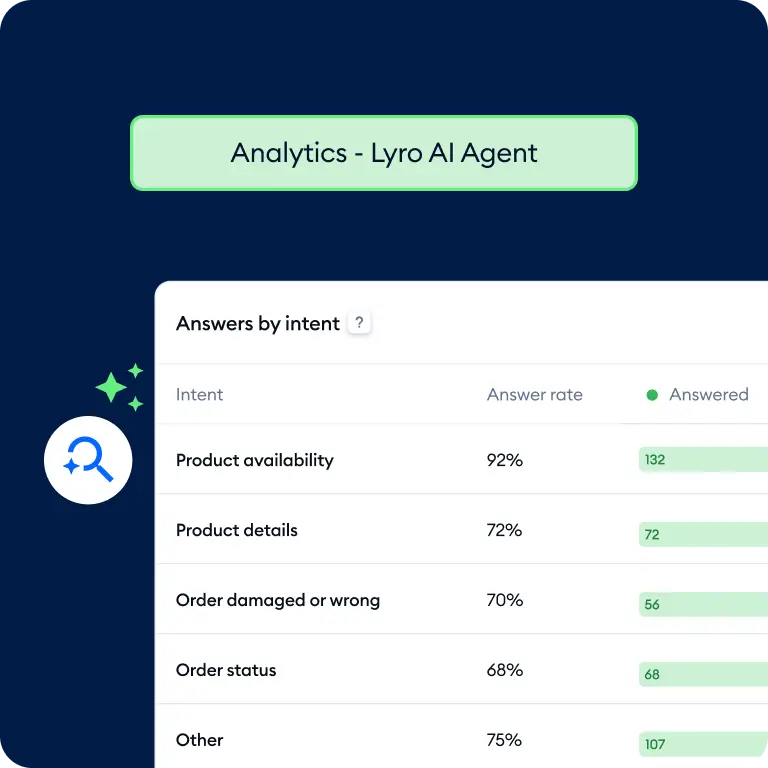
Tidio is the budget all-rounder on ChatGPT's list. It combines live chat, a helpdesk inbox, no-code Flows and an AI agent called Lyro.
What it does vs Zellor
Tidio flips Zellor's priorities. Lyro answers order status, shipping policies and product availability questions from your content, and the Tidio inbox is where your team picks up when it can't. Flows can trigger offers at the right moment, so there's a light sales side too, but there's nothing like Zellor's video answers or shade matching. Tidio says its customers average a 75% resolution rate with Lyro, on its own pricing page.
A practical plus: Lyro counts one conversation however many times it replies, so long back-and-forth chats about ingredients don't burn the allowance. My Gorgias AI vs Tidio AI comparison goes deeper on the two agents.
"Just had a conversation with tidio, their pricing is so off and hidden, "free tier" is just a trap includes most services that are billed separatedly once you want to scale."
Pros and cons
- Pro: AI, live chat and flows in one widget, with a free plan to start.
- Pro: billed per AI conversation, not per reply.
- Pro: works on most websites, not only Shopify.
- Con: three separate meters (billable conversations, Lyro conversations, Flows visitors) make the bill hard to predict.
- Con: published Lyro tiers stop at 1,000 conversations; above that it's a sales quote.
Pricing
From Tidio's pricing page:
| Plan | Price | What you get |
|---|---|---|
| Free | $0 | 50 billable conversations, 50 Lyro conversations once |
| Starter | $24.17/mo yearly | 100 billable conversations |
| Growth | from $49.17/mo yearly | from 250 billable conversations |
| Plus | from $300/mo plus usage | premium features, lower usage rates |
| Lyro AI Agent | $39/mo for 50 up to $700/mo for 1,000 (monthly billing) | 500 conversations is $350/mo |
My Tidio pricing guide has worked examples.
Verdict
Pick Tidio if you're a small team that wants to answer chats live and let AI take the routine ones. Skip it if you already run Gorgias, since you'd be splitting conversations across two inboxes. My Tidio alternatives list goes further.
4. Gorgias
Best for: support-heavy Shopify brands that want AI and humans in one ecommerce helpdesk.
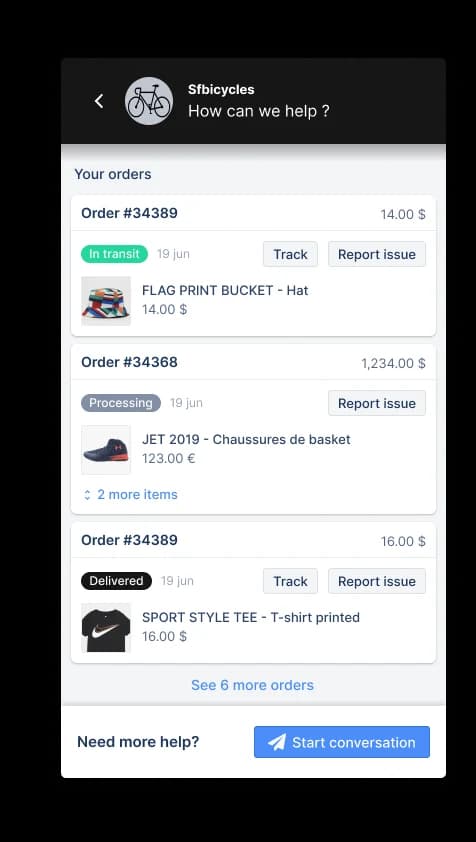
If you run Zellor on Growth, you probably already use Gorgias, because that's where Zellor sends its escalations. The question is whether Gorgias's own AI Agent can replace Zellor's chat entirely. For a lot of stores, it can.
What it does vs Zellor
Gorgias's AI Agent covers the whole journey, from pre-purchase questions about products, sizing, shipping and availability to order status, returns and cancellations, with actions like cancelling an order or applying a discount. On its AI Agent page, Gorgias shows 51% of conversations automated for Beauty and Personal Care brands, and 82% for product questions specifically. It also sells a Shopping Assistant mode that it says lifted average order value by 32%. Those are Gorgias's own figures.
The big win over Zellor is that there's no handoff at all: the AI and your team share one inbox, so the shopper never switches channels. What you give up is the video answer format.
"The main frustration with Gorgias is the pricing model, which is based on ticket volume rather than a flat monthly fee. During peak seasons like the holidays, this becomes a challenge because as ticket volume increases, the costs can increase significantly in a short period."
Pros and cons
- Pro: AI and humans in one inbox, with Shopify order data and actions built in.
- Pro: you only pay for the AI when it resolves a conversation.
- Pro: handles chat, email, social and SMS, not just the website widget.
- Con: two meters (tickets plus AI interactions) mean costs climb in peak season.
- Con: brand voice, guardrails and actions aren't on Starter.
Pricing
From the Gorgias pricing page, helpdesk prices billed monthly:
| Plan | Helpdesk | Tickets included | Ticket overage | Per AI-resolved interaction |
|---|---|---|---|---|
| Starter | $10/mo | 50 | $0.40 per ticket | $1.00 |
| Basic | $60/mo ($50 yearly) | 300 | $40 per 100 | $0.90 |
| Pro | $360/mo ($300 yearly) | 2,000 | $36 per 100 | $0.90 |
| Advanced | $900/mo ($750 yearly) | 5,000 | $36 per 100 | $0.85 |
My Gorgias AI Agent pricing breakdown covers the AI add-on in detail.
Verdict
Pick Gorgias if most of your questions are about orders and you want one inbox for everything. Skip it if product discovery is the main job and your ticket volume is low, because you'd be buying a helpdesk to get a shopping chat. My Gorgias review and Gorgias alternatives cover both sides.
5. Octane AI
Best for: skincare, haircare and cosmetics brands whose product discovery is really a shade, skin-type or routine question.
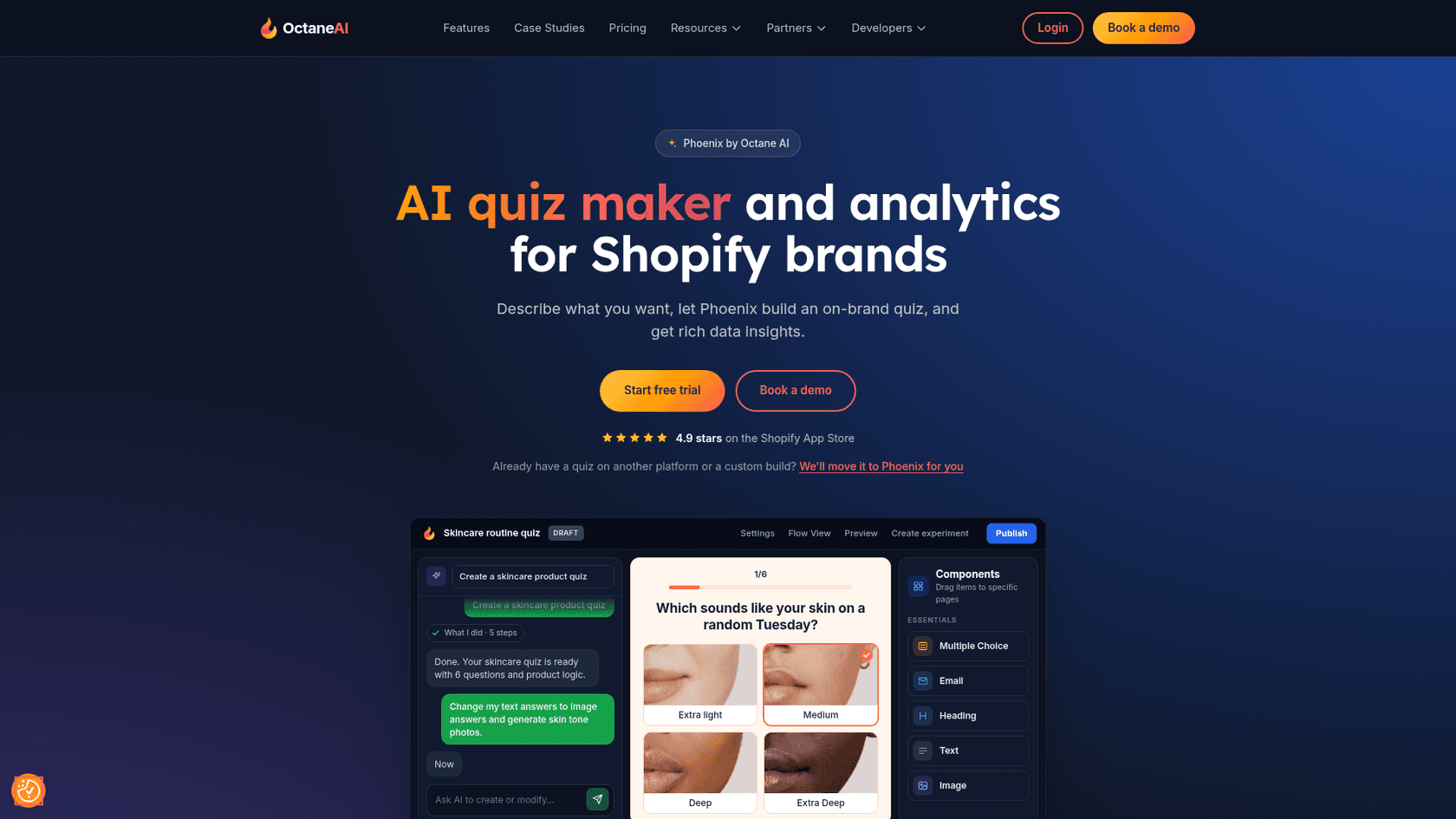
Octane AI isn't a chat at all, and that's why it's on this list. It's an AI quiz builder for Shopify, used by more than 5,000 Shopify brands according to its homepage, and ChatGPT picked it for beauty, wellness and supplements.
What it does vs Zellor
Zellor answers "which shade for olive skin?" when a shopper asks. Octane asks first. Its Phoenix builder turns a sentence, a spreadsheet or a PDF into a quiz with questions, images, a product matrix and results pages, and checks every path for broken logic or out-of-stock products. The answers become zero-party data synced to Klaviyo, which is the same audience-building idea as Zellor's Signals report, from a different direction.
The limit is obvious: a quiz can't answer a free-text question, and it won't touch an order.
"From design perspective, we should be able to add our custom designs and play around with it. I feel there is some limitation in terms of landing page etc."
Pros and cons
- Pro: the cheapest way to cover shade, skin-type and routine matching.
- Pro: quiz answers flow into Klaviyo and Shopify as customer data.
- Pro: quizzes keep running past your credits, billed at $0.10 per extra credit.
- Con: no chat, so open questions and order questions need another tool.
- Con: Basic is limited to two quizzes and shows Octane's branding.
Pricing
From Octane AI's pricing page. One credit is one finished quiz; AI product picks add about 0.3 credits.
| Plan | Monthly | Yearly (per month) | Credits | Notes |
|---|---|---|---|---|
| Basic | $50 | $43 | 400 | Two quizzes, Octane logo |
| Plus | $200 | $170 | 2,200 | Unlimited quizzes, A/B tests, branding removed |
| Enterprise & Unlimited | $500+ | $425+ | 7,250+ or unlimited | Account manager, strategy calls |
500 finished quizzes with AI picks use about 650 credits: $50 plus 250 extra credits at $0.10, so about $75 a month.
Verdict
Pick Octane AI if your top pre-purchase question is "which one is right for me?" and a well-built quiz would answer it. Skip it if shoppers mostly ask open questions, or if you want one tool for discovery and support.
6. Shopify Inbox
Best for: small stores that want a free AI chat before paying for anything.
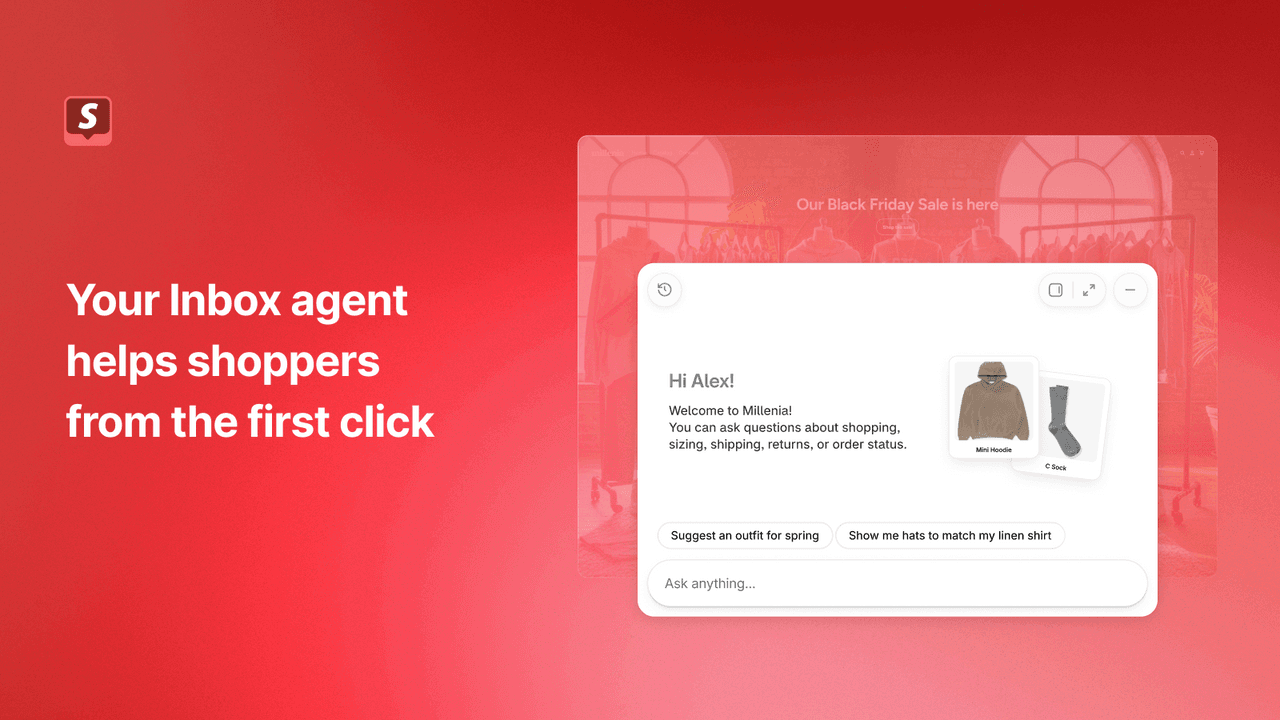
Shopify Inbox has quietly become an AI tool. Its App Store listing now describes "an AI-powered sales associate" that connects to your catalog, inventory and policies automatically, and personalizes replies for shoppers signed in with Shop.
What it does vs Zellor
For a store that's mostly using Zellor for basic product questions, Inbox covers a surprising amount for $0. You set the agent's tone and rules, rate chats to train it, and see orders assisted in built-in analytics. You can also run Inbox without the agent and reply yourself. It supports 21 languages against Zellor's one listed language, which matters for multilingual ecommerce support. There's no video, no quizzes and no helpdesk integration: your team answers in Inbox itself.
It has 4.6 stars from 5,799 reviews, but the recent AI-era reviews are more mixed:
"This app has the potential to be a useful tool but as forewarned, it can make mistakes, and it does. I have had to disable it due to repeated mistakes that have negatively impacted my bottom line."

Pros and cons
- Pro: free, built by Shopify, and set up in minutes.
- Pro: reads catalog, inventory and policies with no setup.
- Pro: 21 languages.
- Con: limited control over what the AI says, and reviewers report wrong answers.
- Con: Shopify only, and no handoff into a helpdesk like Gorgias.
Pricing
Free, per the Shopify App Store listing.
Verdict
Pick Shopify Inbox if you're a small store testing whether AI chat is worth paying for at all. Skip it if wrong answers would cost you more than a paid tool, or if your team works in Gorgias. My Shopify AI chatbot guide compares it with paid options.
7. eesel
Best for: Shopify beauty brands whose shopper questions end up as tickets in Gorgias.
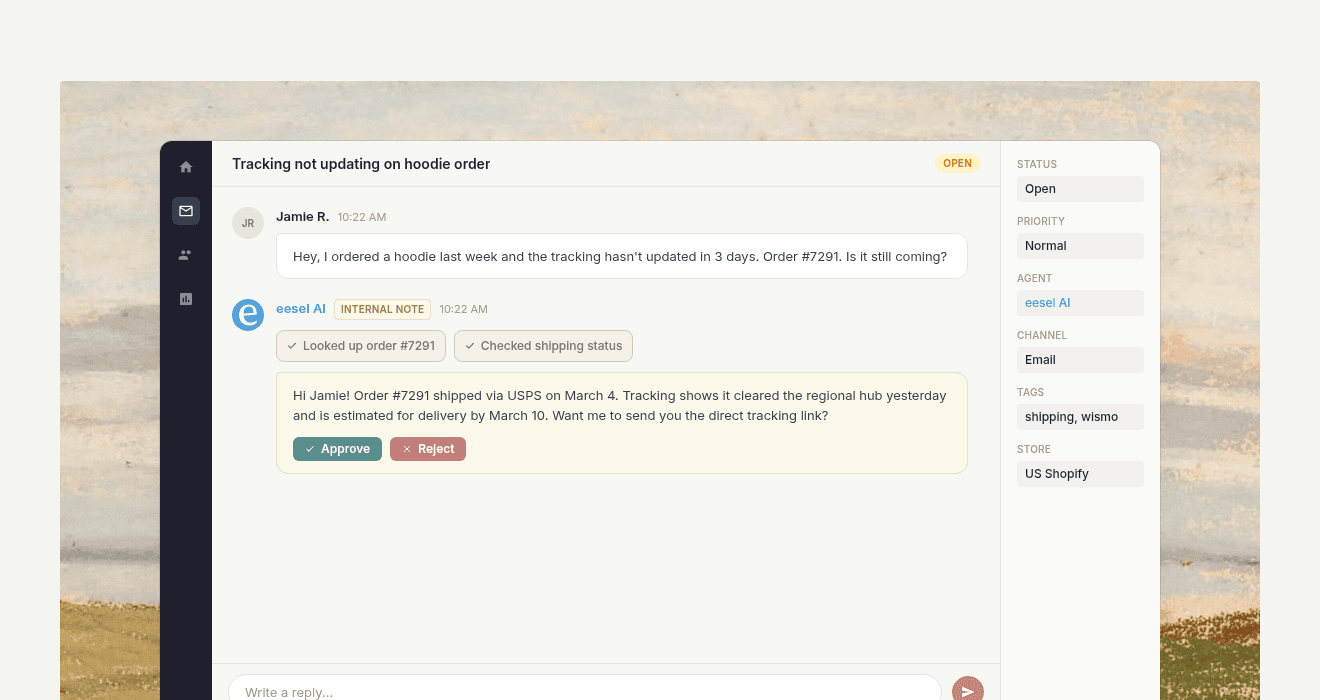
I'll be upfront: this is the product I work on. I build the Gorgias and Shopify side of eesel, so I know exactly where it fits and where it doesn't. eesel is an AI teammate you hire for a job, and the job here is your helpdesk: an AI agent for Gorgias that works the queue itself, across email, chat and social.
What it does vs Zellor
Zellor owns the storefront chat and hands the hard parts to Gorgias. eesel works the other way round: it lives in Gorgias, where Messenger messages, emails and chats already land, and answers there. It reads your past Gorgias tickets, macros, help center and your Shopify catalog. For a product question it answers from the current product page; for an order question it looks the order up in Shopify first. Refunds and complaints go to a person with a note. If you also want a widget on your site, the eesel chat bubble answers from the same knowledge.
Question Beauty is the closest match to a Zellor buyer: a vegan cosmetics brand on Gorgias and Shopify, with most of its volume coming as short social messages like "price?" under a product video. In one month eesel handled about 990 tickets, sent about 960 replies, looked up about 290 Shopify orders and closed about 280 tickets without a person, replying in the language each customer wrote in.
The part I care most about as an engineer is that you don't have to trust it blind. A CX lead at a supplements brand doing about 7,000 Gorgias tickets a month told our team they needed an AI "only handling the tickets that it's confident to handle and all the other ones, leave them alone." That's why eesel runs against your past Gorgias tickets before it touches a live one, so you see where it's strong before shoppers do. And if you want a person on every reply, it can draft instead: STIL Classics has eesel leave drafts as internal notes, about 430 in a month, after checking about 230 Shopify orders.
Pros and cons
- Pro: works inside Gorgias, so there's no second inbox and no handoff plan to buy.
- Pro: checks the real Shopify order before answering order questions.
- Pro: tested against your past tickets before going live.
- Con: no video answers, shade matching or quizzes. It's a support teammate, not a storefront shopping experience.
- Con: credits pause at your limit unless you turn on overage.
Pricing
From the eesel pricing page. One ticket or chat is one credit, however long.
| Plan | Price | What you get |
|---|---|---|
| Free | $0 | 100 credits to try everything |
| Teammate | $299/mo for 500 credits, up to $1,749/mo for 5,000 | Every integration and channel, unlimited agents and seats |
| Enterprise | Custom | SSO, HIPAA with a BAA, dedicated support |
Overage is optional at $0.80 per credit with a monthly cap you set.
Verdict
Pick eesel if your real workload is the Gorgias queue and you want product and order questions answered there, checked against Shopify. Skip it if what you want is a video-led shopping experience on your product pages; keep Zellor or try Dialog for that, and let eesel take the tickets.
Where does the hard chat go in each tool?
Every AI chat eventually gets a question it shouldn't answer: an angry refund request, a reaction to a product, a wholesale inquiry. Where that conversation lands matters more than any feature list, because it decides whether your team sees it in time.
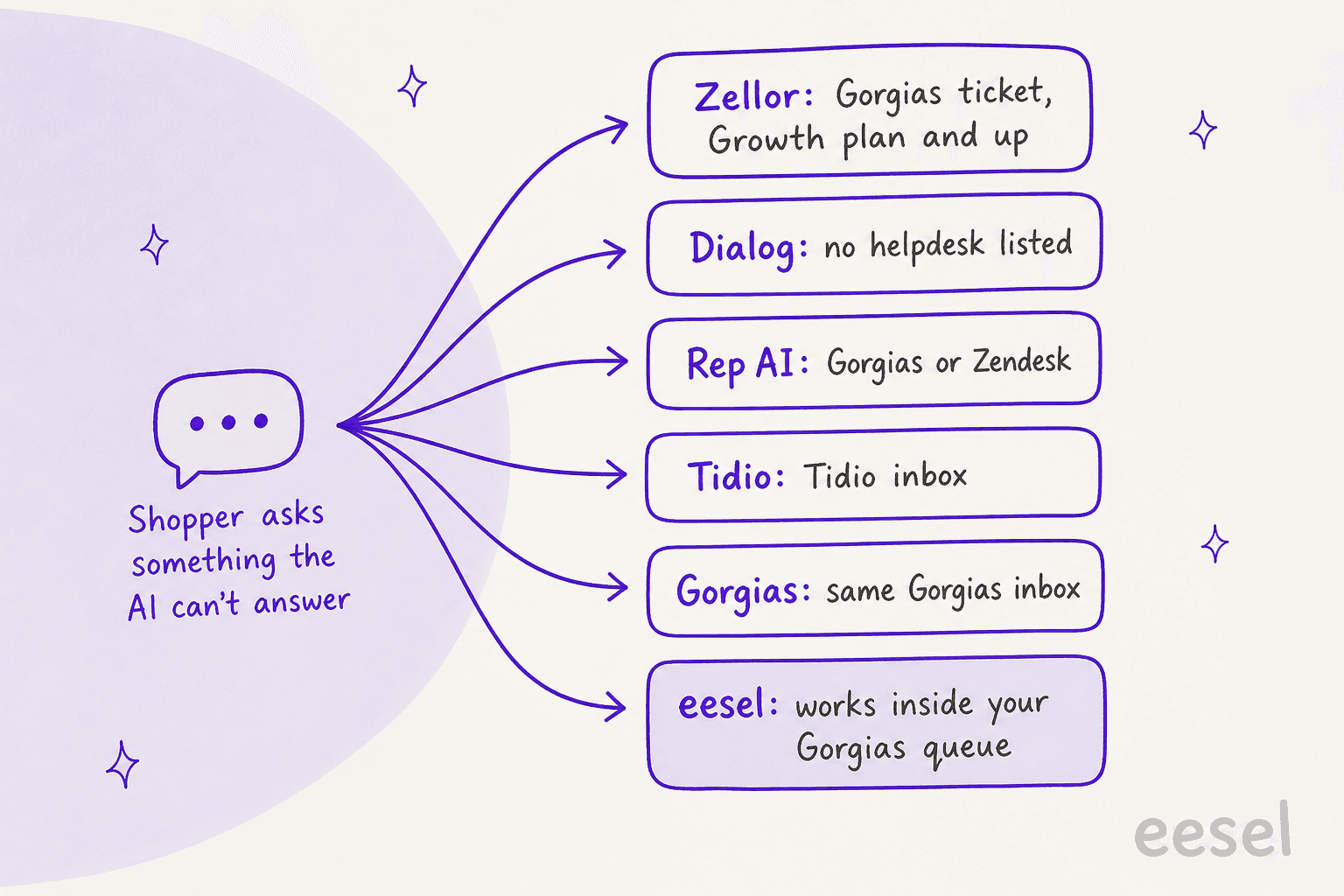
If your team already lives in Gorgias, the tools that end in Gorgias (Zellor on Growth, Rep AI, Gorgias itself, eesel) keep everything in one place. Dialog, Octane AI and Shopify Inbox leave you with a second place to watch. My guide to human handoff in chat covers what a good handoff note should contain.
How do you test a Zellor alternative before you switch?
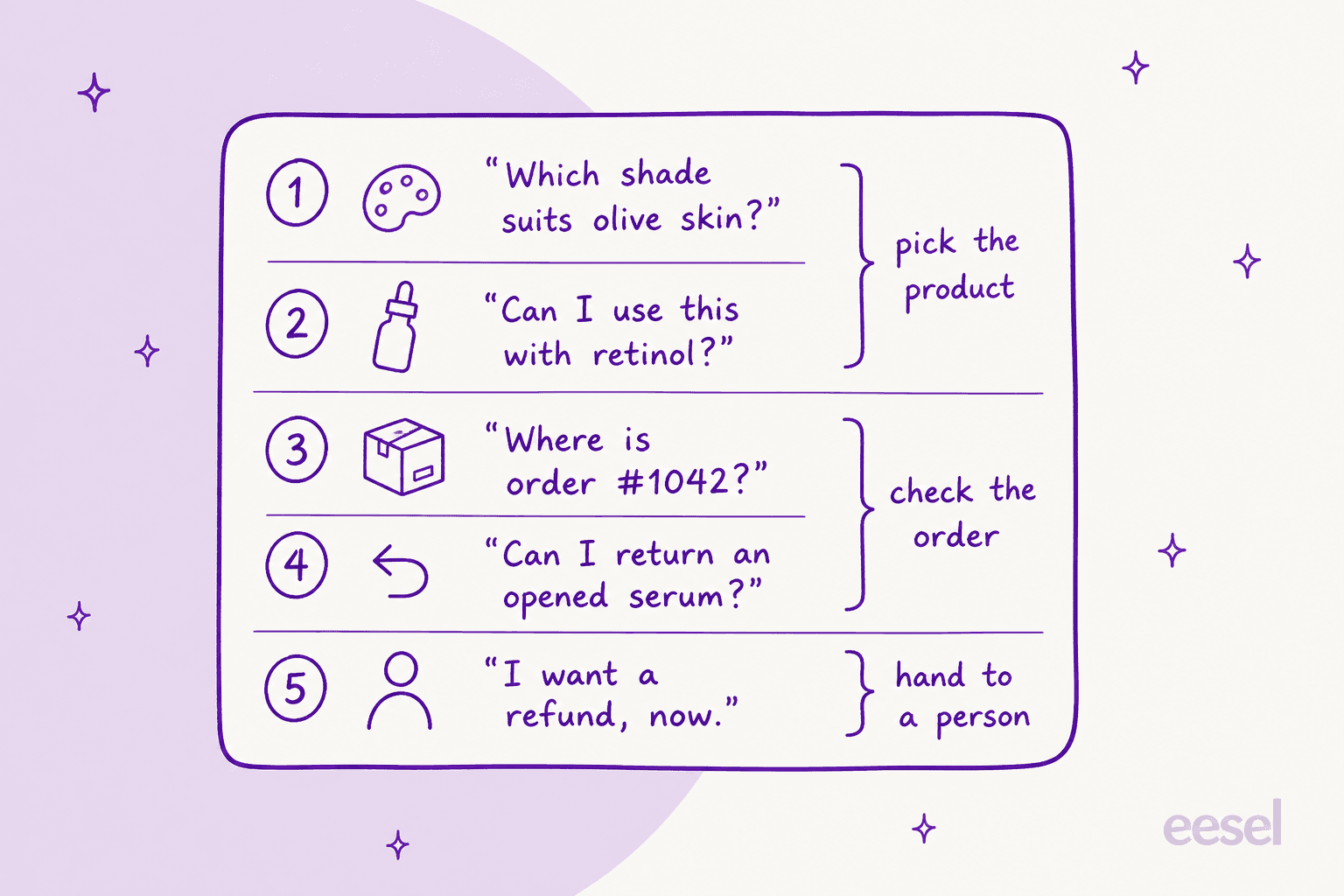
ChatGPT's best advice in its answer was to test finalists against the same real shopper questions, and I'd go further: take them straight from your inbox, not from the vendor's demo. Five is enough if they cover both jobs.
What to watch for on each:
- The shade question. Does it recommend a real product from your catalog, or a generic tip? Zellor's video answer is the bar here.
- The ingredient question. Does it stay inside your own product data, or invent a claim? Beauty brands carry real risk on skin and safety claims, so a tool that says "I'll check with the team" beats one that guesses.
- The order question. Does it look up the order, or tell the shopper to check their email? See my guide to AI order tracking for what a real lookup looks like.
- The returns question. Does it quote your actual policy for opened products?
- The refund demand. Does it hand off, with a note, to the place your team actually works?
A shop owner on Reddit put the trade-off well:
"It saved time because it answered instantly and routed the weird cases to me. It sucked when it tried to be too clever, gave a confident wrong answer."
For a deeper version of this test, my guide on testing an AI agent walks through running it against past tickets.
Which Zellor alternative should you pick?
Here's where I'd land, by situation:
| Your situation | My pick | Why |
|---|---|---|
| You love video answers and have the library | Keep Zellor | Nobody else answers with creator clips |
| You want product discovery, no videos | Dialog | Closest to Zellor's job, free up to 200 conversations |
| Your discovery question is "which shade or routine?" | Octane AI | A quiz answers it for about $75 a month |
| You want selling and WISMO in one chat | Rep AI | Billed by traffic, Gorgias and Zendesk integrations |
| Small team, want live chat too | Tidio | AI, flows and an inbox in one widget |
| Testing AI chat on a tiny budget | Shopify Inbox | Free |
| Most questions are about orders, all in one inbox | Gorgias | AI and agents share the helpdesk |
| Your questions land in Gorgias and you want them answered there | eesel | Works the queue, checks Shopify first |
Two combinations also work well. Zellor or Dialog on product pages plus eesel in Gorgias splits the jobs cleanly: the storefront tool sells, eesel handles the tickets. And Octane AI plus any support tool covers discovery cheaply without a second chat widget. For a wider list, see my roundups of the best Shopify chatbot apps and the best AI for Shopify support, plus my best AI helpdesk for Shopify list.
eesel for beauty brands on Gorgias
If your Zellor chats already end up in Gorgias, eesel is the teammate that answers them there. It learns from your past tickets, help center and Shopify catalog, answers product questions from your current product pages, checks the order in Shopify before it replies to a delivery question, and hands refunds and complaints to your team with a note. Question Beauty runs exactly this setup across Messenger, email and chat. You can run it against your past Gorgias tickets before it touches a live one, and start with 100 free credits on the eesel pricing page.
Frequently Asked Questions
What is the best Zellor alternative?
It depends on the job. For product discovery, Dialog is the closest Zellor alternative, and Octane AI fits if you'd rather run a quiz. For order and support questions, Gorgias or eesel inside Gorgias does more. My Zellor review covers what Zellor itself does well.
Is there a free Zellor alternative?
Yes. Shopify Inbox is free and now includes an AI agent that reads your catalog and policies. Dialog has a free Starter plan with 200 conversations a month, and Tidio's free plan includes 50 Lyro AI conversations once. eesel starts with 100 free credits. See my Shopify Inbox guide for its limits.
Which Zellor alternative answers with video?
None of the six on my list answers chat questions with clips from your creator videos the way Zellor does. Dialog and Rep AI answer with text and product cards, and Octane AI uses images inside a quiz. If video answers are the whole reason you picked Zellor, it may still be the right tool. My AI shopping assistant guide explains the other formats.
How much do Zellor alternatives cost?
At 500 AI chats a month and about 10,000 sessions, I priced Shopify Inbox at $0, Rep AI Sales at $104, eesel at $299, Tidio Lyro at $350, Dialog at $399 and Gorgias at up to $640. Zellor itself is $199 on Starter, or $399 on Growth if you need the Gorgias handoff. My chatbot cost guide has the wider picture.
Which Zellor alternative works with Gorgias?
Gorgias's own AI Agent runs in the same inbox, Rep AI lists Gorgias and Zendesk integrations, and eesel works inside the Gorgias queue as an agent that checks Shopify orders before replying. Zellor hands off to Gorgias only on Growth and Enterprise. See eesel for Gorgias and my best AI for Gorgias list.
Can a Zellor alternative answer order status questions?
Some can. Gorgias, Rep AI Support, Tidio Lyro and eesel all handle order status questions, and eesel looks the order up in Shopify before it answers. Dialog and Octane AI focus on picking products. My guide to WISMO automation shows how the lookups work.
Do Zellor alternatives work outside Shopify?
Several do. Dialog works with BigCommerce, Salesforce Commerce, PrestaShop and Magento as well as Shopify, Gorgias supports WooCommerce and BigCommerce, and Tidio works on most websites. Zellor and Shopify Inbox are Shopify only. My AI chatbot for ecommerce guide covers more platforms.
How do I test a Zellor alternative before switching?
Send each finalist the same five real questions from your inbox: a shade or skin-type question, an ingredient question, an order status question, a returns question and an angry refund request. eesel goes further and runs against your past Gorgias tickets before it goes live. My guide on testing an AI agent walks through it.