Zellor review 2026: a video-first AI beauty advisor that hands off to Gorgias

Kira

Katelin Teen
Last edited October 27, 2026

Zellor is an AI shopping assistant for beauty and personal care brands on Shopify that answers shopper questions with clips from your own videos, then hands the chat to a person in Gorgias when it needs one. I'd score it 3.5 out of 5: clever and well built for its niche, narrow outside it. Pricing is $0 for 50 chats, $99 for 250, $399 for 1,000, at $0.40 per extra chat.
The detail most buyers miss: the Gorgias handoff only comes with Growth at $399 a month, and it runs one way. Zellor's AI lives in the storefront chat. The email, SMS and social tickets that start in Gorgias never pass through it.
If those tickets are your real workload, eesel is the piece Zellor isn't. It works inside Gorgias on every channel, checks the Shopify order before it replies, and hands refunds to a person. Beauty brand Question Beauty runs it on about 990 Gorgias tickets a month.
What is Zellor?
Zellor is a Shopify app that puts an AI advisor on your product pages. A shopper asks "which shade suits olive skin?", and instead of a paragraph, Zellor plays the tutorial or creator clip from your library that answers it, with an add-to-cart button beside it. Its homepage now calls it "The AI Beauty Advisor", and the About page pitches the gap it fills: in a store you can ask a sales assistant, online you get an ingredient list and a guess.
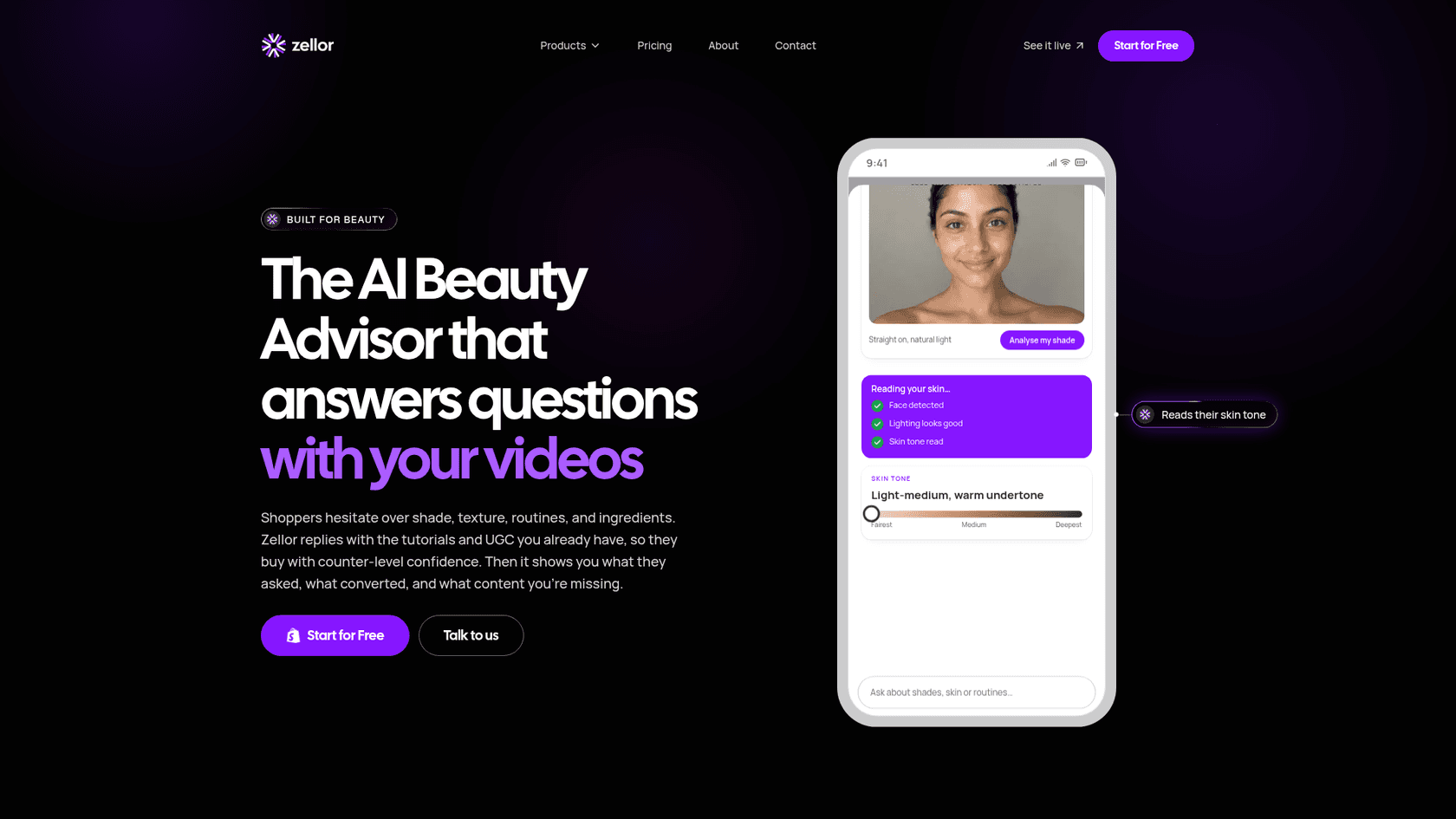
It's made by Zellor Ltd, based in Dublin, Ireland, per its Shopify App Store listing. Niall O'Sullivan is CEO and founder, with co-founders Mark Hender (CTO) and Columb Kane (COO). The Shopify app launched on February 23, 2024.
The audience is spelled out on the homepage FAQ: DTC beauty and personal care brands on Shopify with an active video presence on Instagram or TikTok, across skincare, haircare, cosmetics, tanning and wellness. That focus is a real choice, and it shapes everything below.
I build AI agents at eesel, so I read a tool like this from the inside: where does each answer come from, and what happens when the AI should stop talking? I went through Zellor's product pages, its pricing page, its Gorgias setup doc, both marketplace listings and every public review I could find. I haven't run it on a live store, so where I describe behaviour, it comes from Zellor's own docs and screens.
Where is Zellor listed?
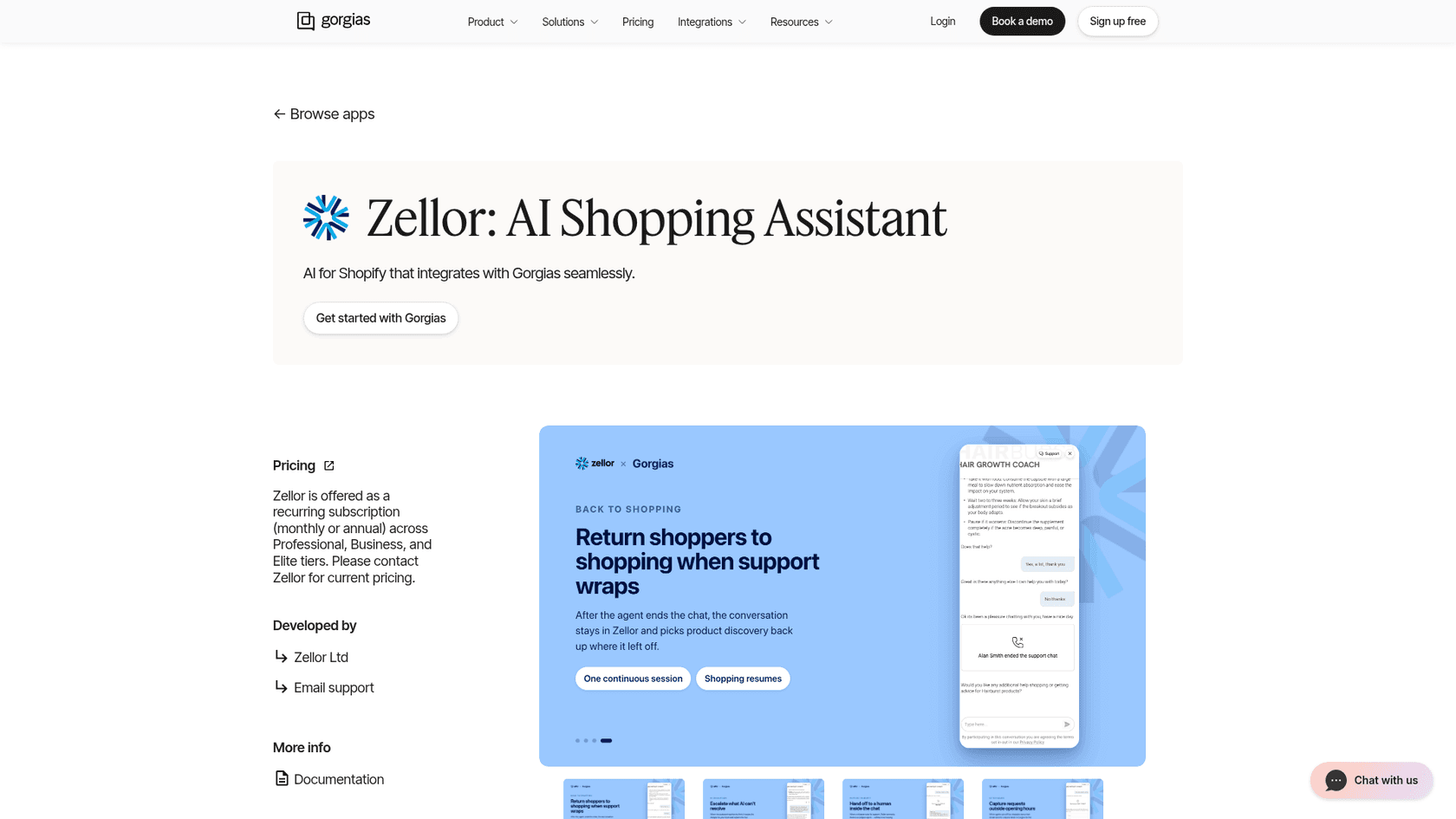
The list I started from had Zellor down as a Gorgias marketplace app, and that's where I found it first. The Gorgias App Store listing sits under the Chat category and describes Zellor as "AI for Shopify that integrates with Gorgias seamlessly".
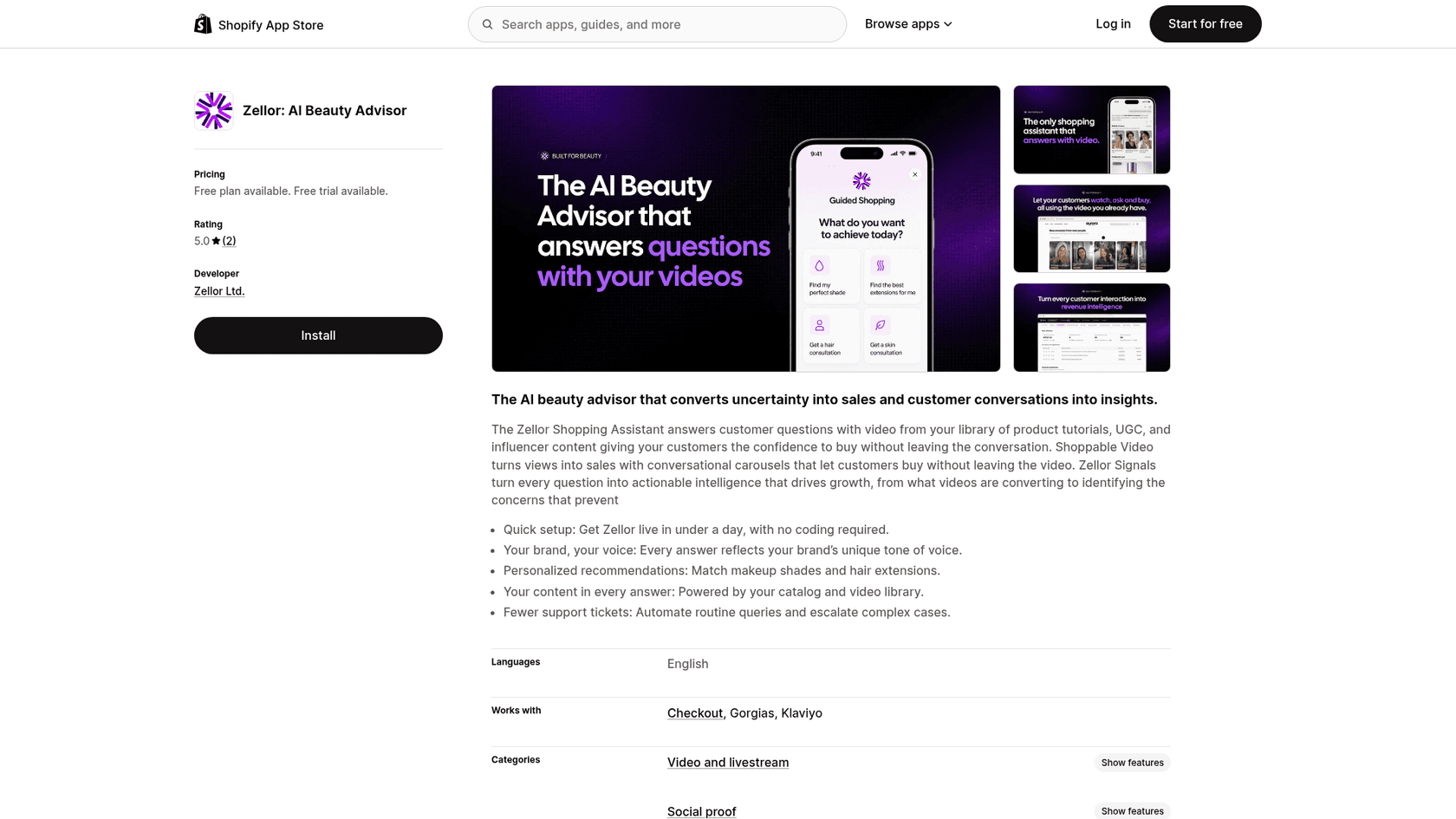
The install itself happens on Shopify. The Shopify App Store listing is named "Zellor: AI Beauty Advisor", lists English as the only language, and says it works with Checkout, Gorgias and Klaviyo. It has a 5.0 rating from 2 reviews.
One thing to know before you read the Gorgias listing too closely: its pricing note mentions "Professional, Business, and Elite tiers" and says to contact Zellor. Zellor's own pricing page and the Shopify listing both show Free, Starter, Growth and Enterprise with public prices. I've used Zellor's page, since it's the current one.
How does Zellor answer shopper questions?
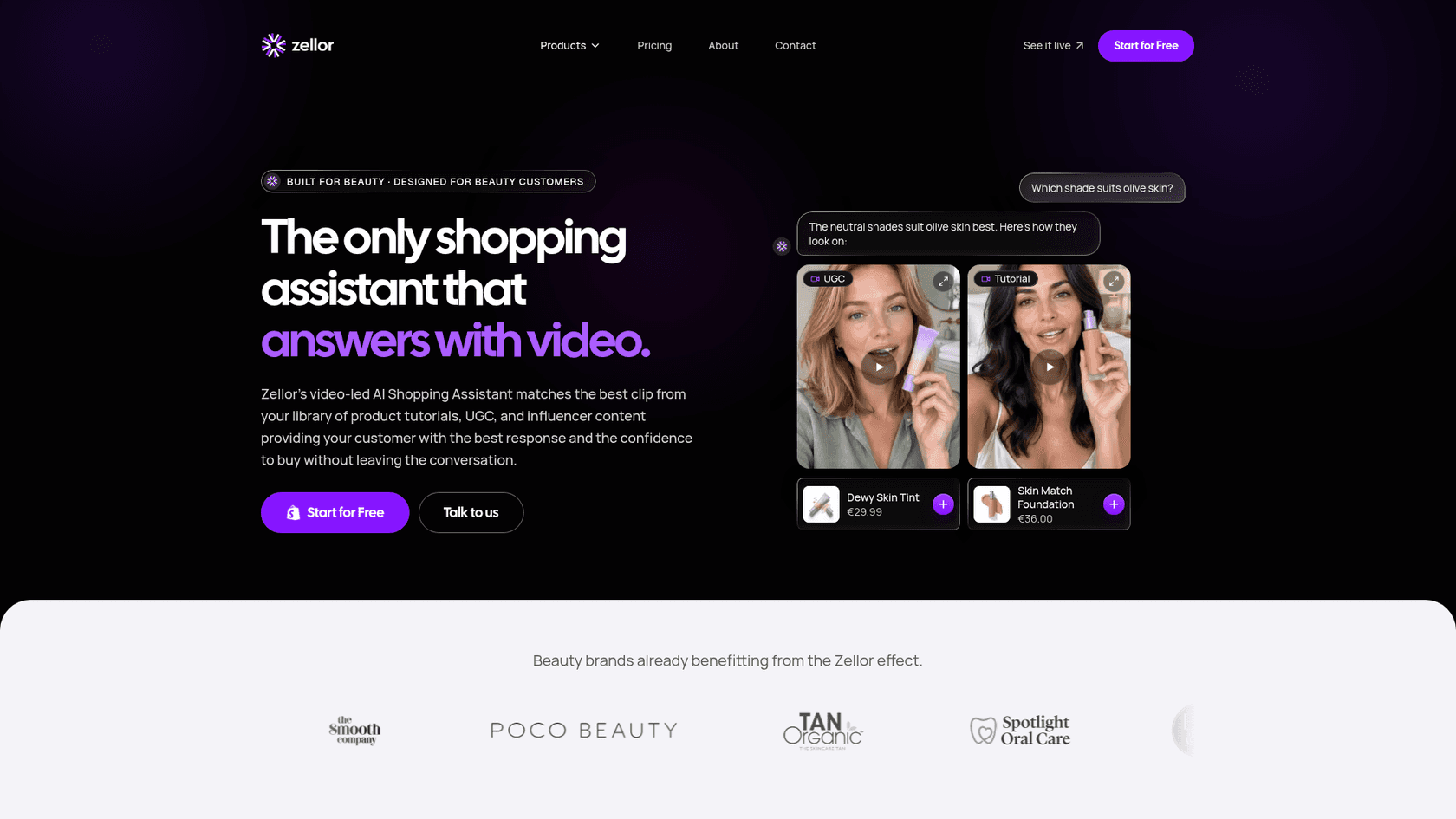
With video first, text when there's no clip. The AI Shopping Assistant page says Zellor matches the best clip from your library of tutorials, UGC and influencer content to the question, plays it in the conversation, and lets the shopper add to cart without leaving the page. If no clip fits, it falls back to a written answer.
Setup is five steps on that page: install from Shopify, connect Instagram and TikTok (YouTube Shorts shows up in the demo too) or upload files, let Zellor tag the products in each video, let it scan your site to build a brand voice, then go live on product, collection and home pages. Zellor says 5 to 10 videos is enough to start. The FAQ on its contact page adds the practical bits: MP4 works best, and you can fix any product tag it gets wrong.
The guardrails are what I'd look at hardest, since beauty is full of claims you can't make. Your team edits the voice prompt directly, sets rules on ingredients and cosmetic claims, and Zellor says the assistant "only answers with your product data". The demo shows a "never say" list with words like "miracle" and "cure", and an answer to "Will this cure my breakouts?" that declines to promise. The widget itself also carries a plain disclaimer that AI assistants can sometimes hallucinate. That's more honest than most Shopify AI chatbots I've read through.
It answers more than shade questions. The same page says delivery, ingredients and returns questions get answered too, and the demo shows an order status reply. Anything it can't resolve goes to your team, which is where Gorgias comes in.
Shoppable video and Signals
Two more products sit around the assistant. PDP Shoppable Video turns your clips into carousels with an add-to-cart button inside the video, a video version of live chat upselling. Zellor reports, from its own stores, 3x more add-to-carts from shoppers who watch a video and 50% of video shoppers buying within 15 minutes. Those are vendor numbers, so treat them as a ceiling to test against, not a promise.
Zellor Signals is the part I found most interesting as a builder. It groups every shopper question by theme, ranks your videos by how many put products in carts, and flags questions no video answers yet as "film next". It can also push audiences, like shade-match seekers, to Klaviyo.
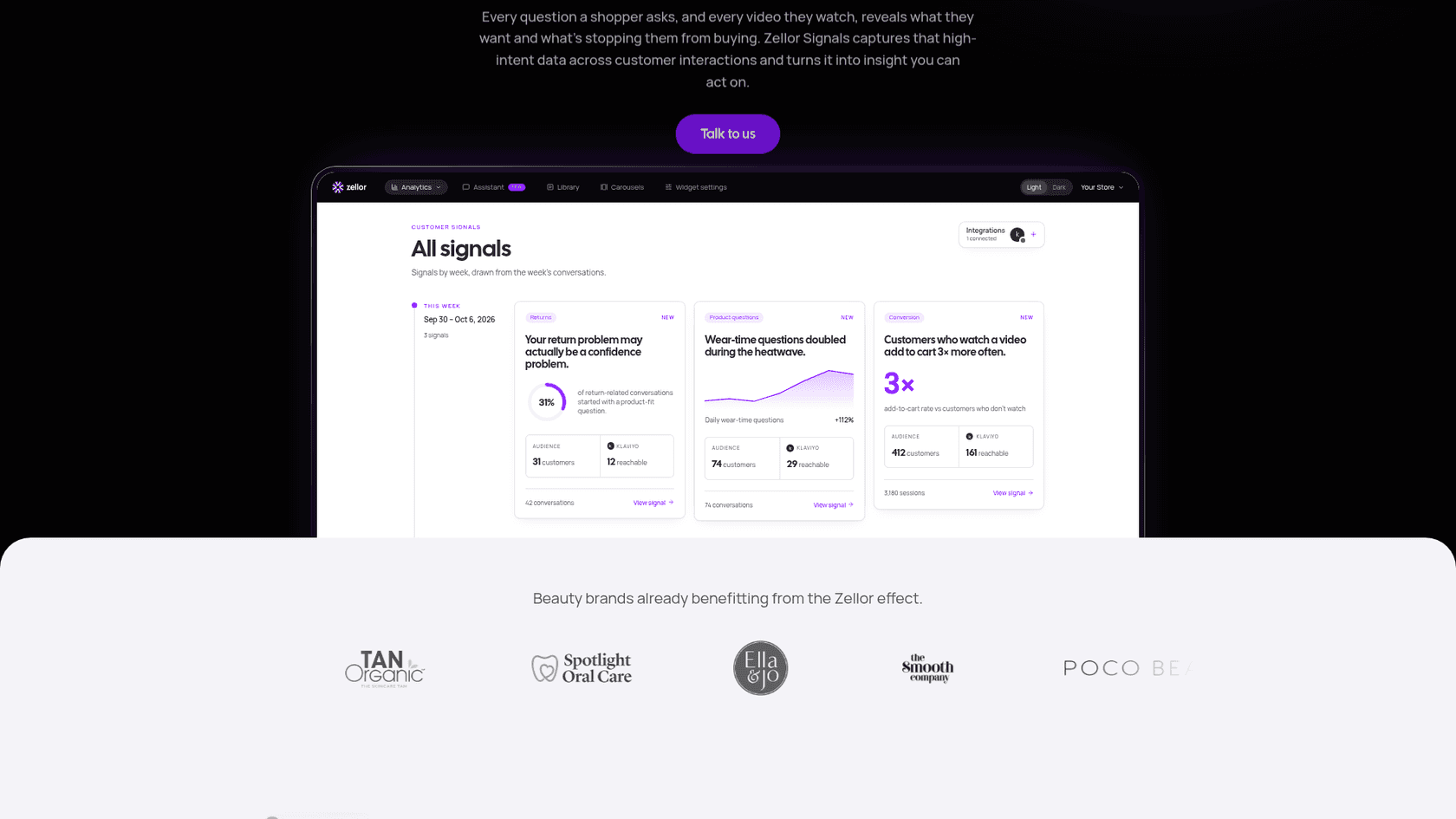
That turns the chat into a content brief, which is a smart loop for a brand whose marketing already runs on short video. It's the same idea behind good conversational commerce: the questions shoppers ask tell you what to make next.
How does Zellor's Gorgias handoff work?
When a shopper asks for a person, or the assistant decides it needs one, Zellor runs a short intake and creates a Gorgias ticket with the full transcript and an AI-generated case summary. Your agent replies in Gorgias as normal, and the reply streams back into the Zellor chat on your store. Anything the shopper sends next lands on the same ticket.
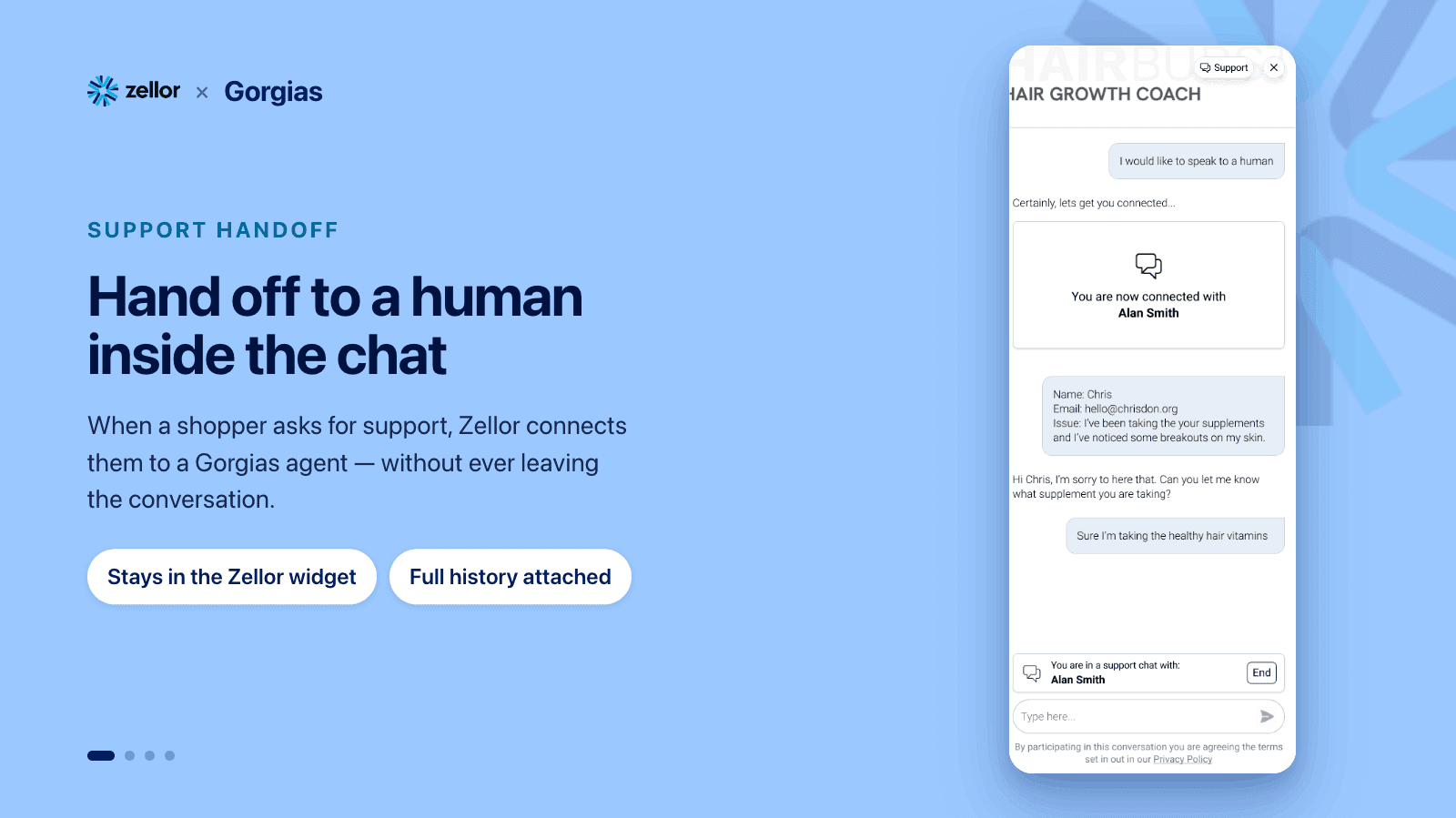
The setup doc, dated 9 July 2026, makes this easy. You connect with Gorgias OAuth in about two minutes, no API key. You set business hours or mark yourself open 24/7, and out-of-hours handoffs fall back to a queued "leave a message" form. A connect timeout, five minutes by default, decides how long a shopper waits for a live agent. The session also survives refreshes, new tabs and device changes, per the Gorgias listing.
This is good human handoff design. The agent gets context on the first reply, and the shopper never drops to email. It ticks most of the boxes in my AI agent handoff guide.
What it isn't is an AI for your Gorgias queue. The Gorgias listing says it outright: Zellor owns the chat on your storefront, and Gorgias is the human layer for escalations. The setup doc's FAQ adds that "Gorgias stays your support inbox", and Zellor doesn't change how Gorgias sends email. If you're still deciding on the inbox itself, my Gorgias review covers it, and Gorgias's own AI has separate handover rules for tickets it answers.
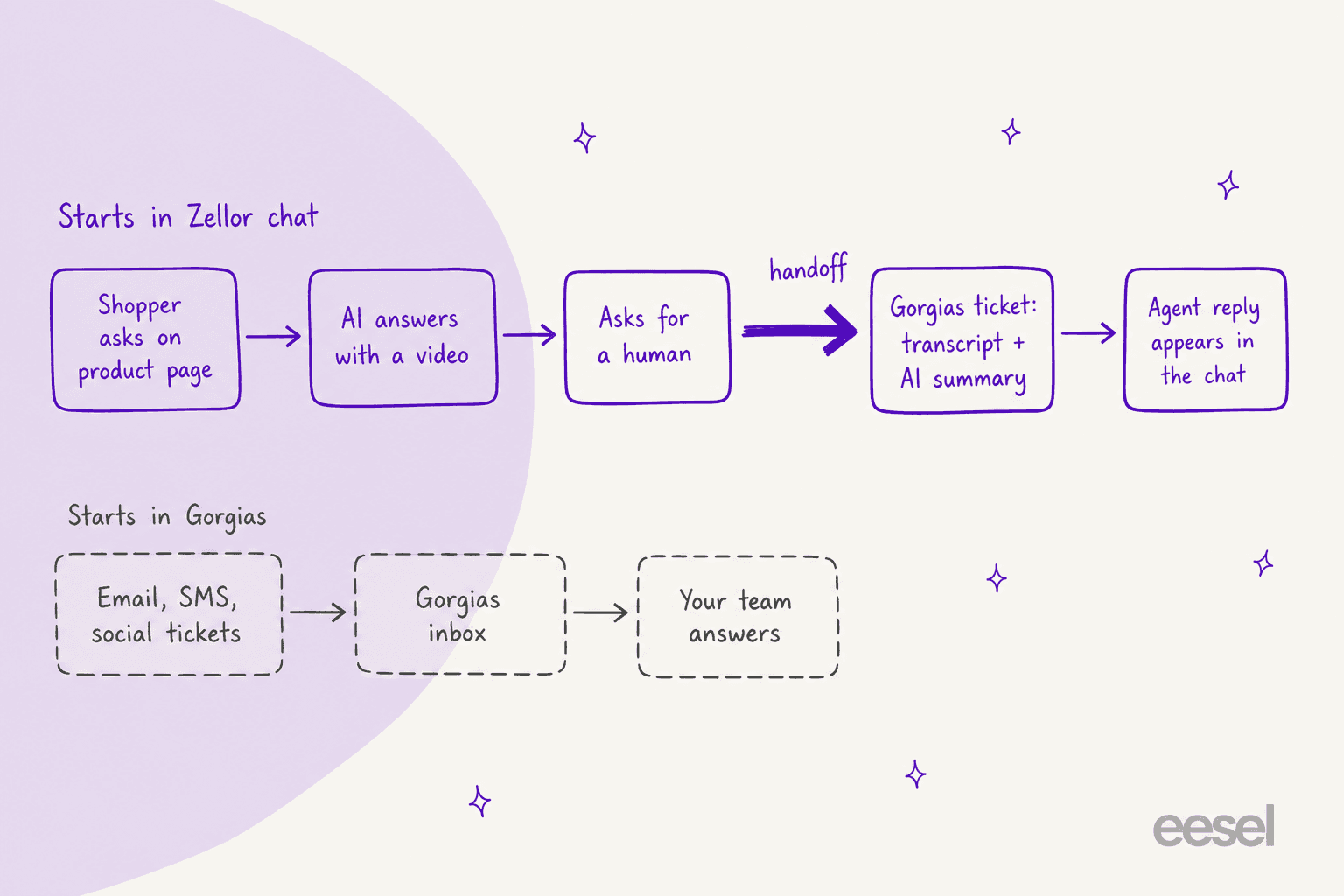
So the AI covers one lane. A "where is my order" email, an Instagram DM about a damaged parcel or an SMS asking to swap a shade lands in Gorgias and waits for your team, the same as before you installed Zellor. On a typical Shopify store that's a large share of the work. On eesel's sales calls, DTC brands on Gorgias describe their volume as mostly order tracking, subscriptions and returns, by email. One ops lead at a supplements brand doing around 7,000 Gorgias tickets a month said his team couldn't keep up, and needed at least half of that email volume answered without a person.
How much does Zellor cost?
Zellor's pricing page lists four plans in USD, billed monthly, with 15% off annually and one free trial per store. Brand-voice training, an unlimited video library and creator content import come with every plan. You pick a plan by chats, integrations and how much setup help you want.
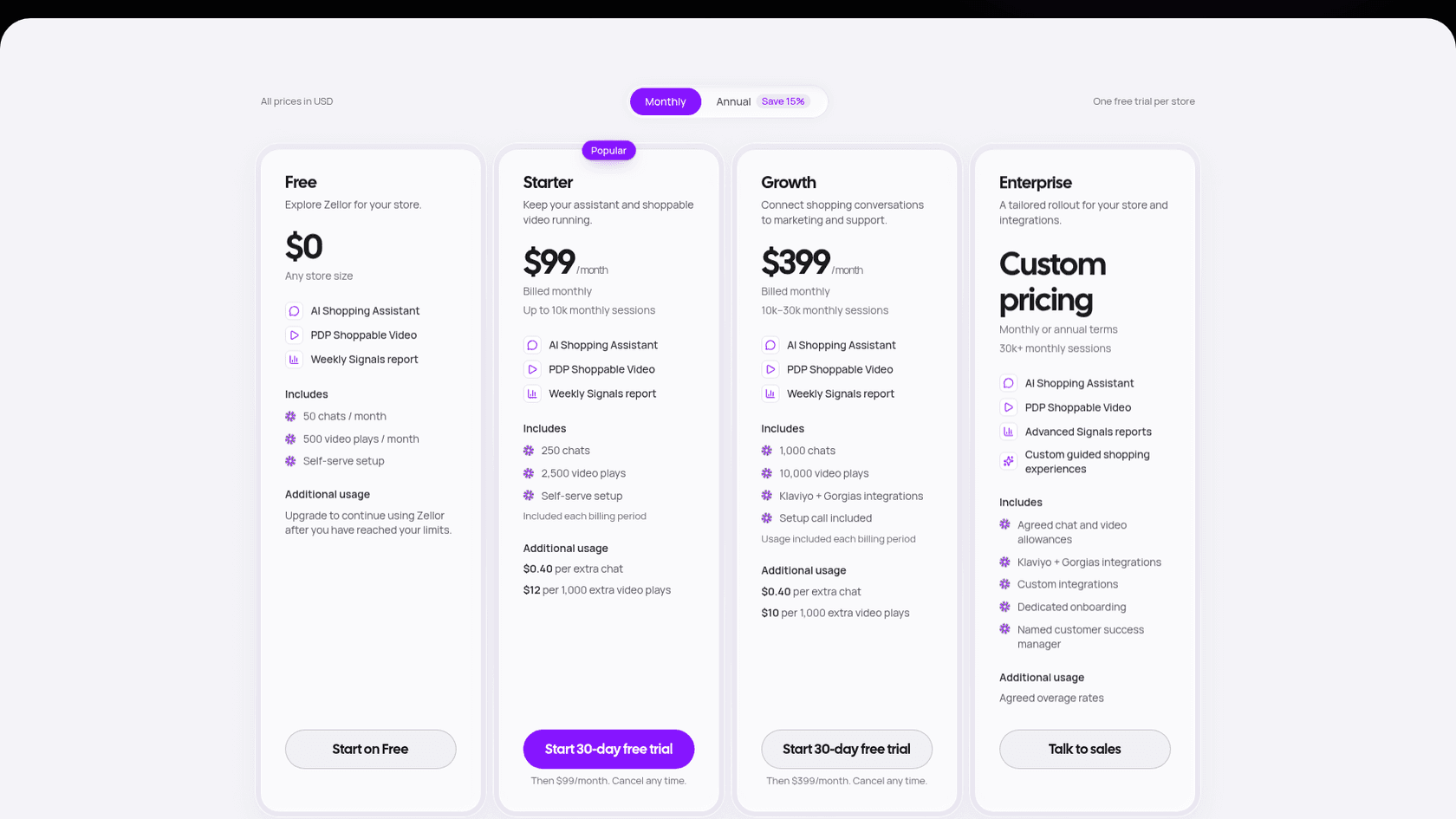
| Plan | Price | Traffic | Chats included | Video plays included | Integrations and help | Extra usage |
|---|---|---|---|---|---|---|
| Free | $0 | Any store size | 50 a month | 500 a month | Self-serve setup | None, upgrade at the limit |
| Starter | $99/month | Up to 10k monthly sessions | 250 | 2,500 | Self-serve setup, 30-day free trial | $0.40 per chat, $12 per 1,000 video plays |
| Growth | $399/month | 10k to 30k monthly sessions | 1,000 | 10,000 | Klaviyo and Gorgias integrations, setup call, 30-day free trial | $0.40 per chat, $10 per 1,000 video plays |
| Enterprise | Custom | 30k+ monthly sessions | Agreed | Agreed | Custom guided shopping, custom integrations, dedicated onboarding, named customer success manager | Agreed rates |
Two things in that table matter more than the headline prices.
First, the Gorgias integration starts on Growth. Starter has no handoff to Gorgias, so if the handoff is why you found Zellor in the Gorgias marketplace, your real floor is $399 a month.
Second, the per-chat cost barely moves. Starter's $99 for 250 chats is $0.396 a chat, and every extra chat is $0.40. Run the numbers and Starter and Growth cost the same from 1,000 chats a month up.
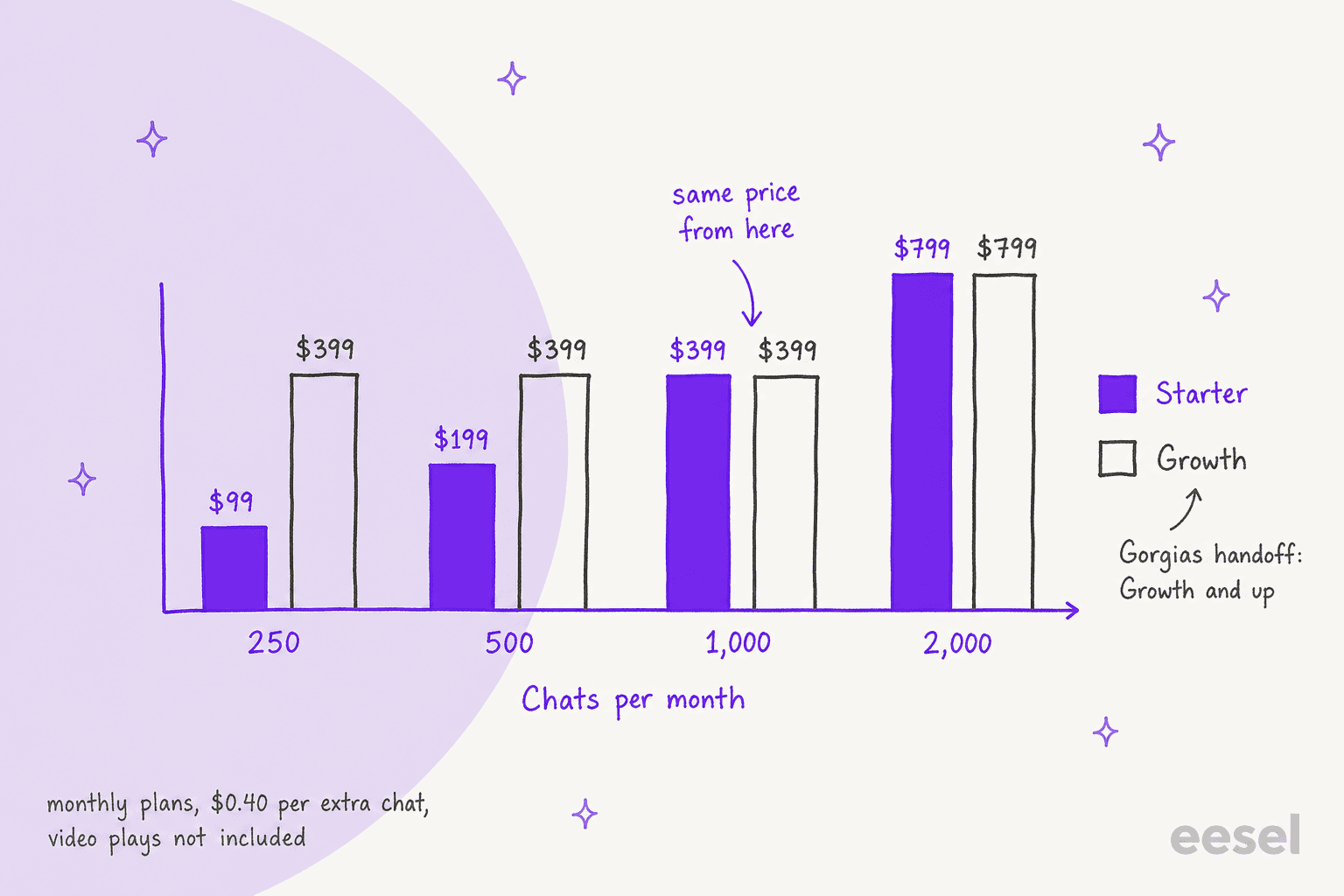
So the honest way to read Zellor's pricing: you pay about 40 cents a storefront chat, and Growth is what you pay to connect it to Gorgias and Klaviyo. Video plays are a second meter on top, so a store with heavy video traffic should model both. The Shopify listing calls the unit a "conversation" and bills recurring and usage charges every 30 days. If you're weighing it against Gorgias's own AI, my Gorgias AI Agent pricing guide has those numbers, and my chatbot cost guide lines up the other billing models.
What do Zellor users say?
Not much in public yet. The Shopify reviews page has two, both five stars. The fuller one comes from Irish self-tan brand TanOrganic, after four months:
"We’ve been using Zellor for about four months now, and honestly, it’s been really solid. The shoppable videos have helped drive sales and made the website experience more engaging for our customers."
The second, from a store in India after 11 months, says "so far no issues identified" without much detail. I couldn't find Zellor on G2, Capterra, Trustpilot or Reddit.
The strongest proof is Zellor's own TanOrganic case study: Zellor drives 11% of TanOrganic's online sales, cart-to-checkout ran 37.6% for Zellor-engaged shoppers against 25.8%, and average order value was 16% higher. It went live in under 48 hours with no new content. Worth noting what drove that result: the case study is about PDP Shoppable Video, turning existing Instagram and TikTok clips into shoppable posts. It says nothing about support tickets or Gorgias.
With two reviews and one case study, Zellor is early. That isn't a mark against the product, but it does mean you're the reference customer, so use the 30-day trial to measure your own numbers.
Zellor pros and cons
| Pros | Cons |
|---|---|
| Answers with your own tutorial and creator videos, not only text | Shopify only, English-only listing |
| Clear guardrails: editable voice prompt, banned claims, "only your product data" | Built for beauty and personal care, a stretch for other categories |
| Signals turns questions into a "film next" content list | Gorgias handoff needs Growth at $399 a month |
| Gorgias handoff keeps the shopper in the chat with full context | AI covers the storefront chat only, not tickets that start in Gorgias |
| Public prices, free plan, 30-day trial on paid plans | Two public reviews, no G2 or Capterra presence |
| Two-minute OAuth setup with Gorgias, no API keys | Gorgias is the only helpdesk today, Zendesk is on the roadmap |
Who should use Zellor?
A beauty or personal care brand on Shopify, with a stack of tutorials and creator clips doing well on social, whose shoppers stall on "is this right for me?" That brand gets the most out of Zellor, because the videos are already paid for and the questions are exactly the kind video answers best.
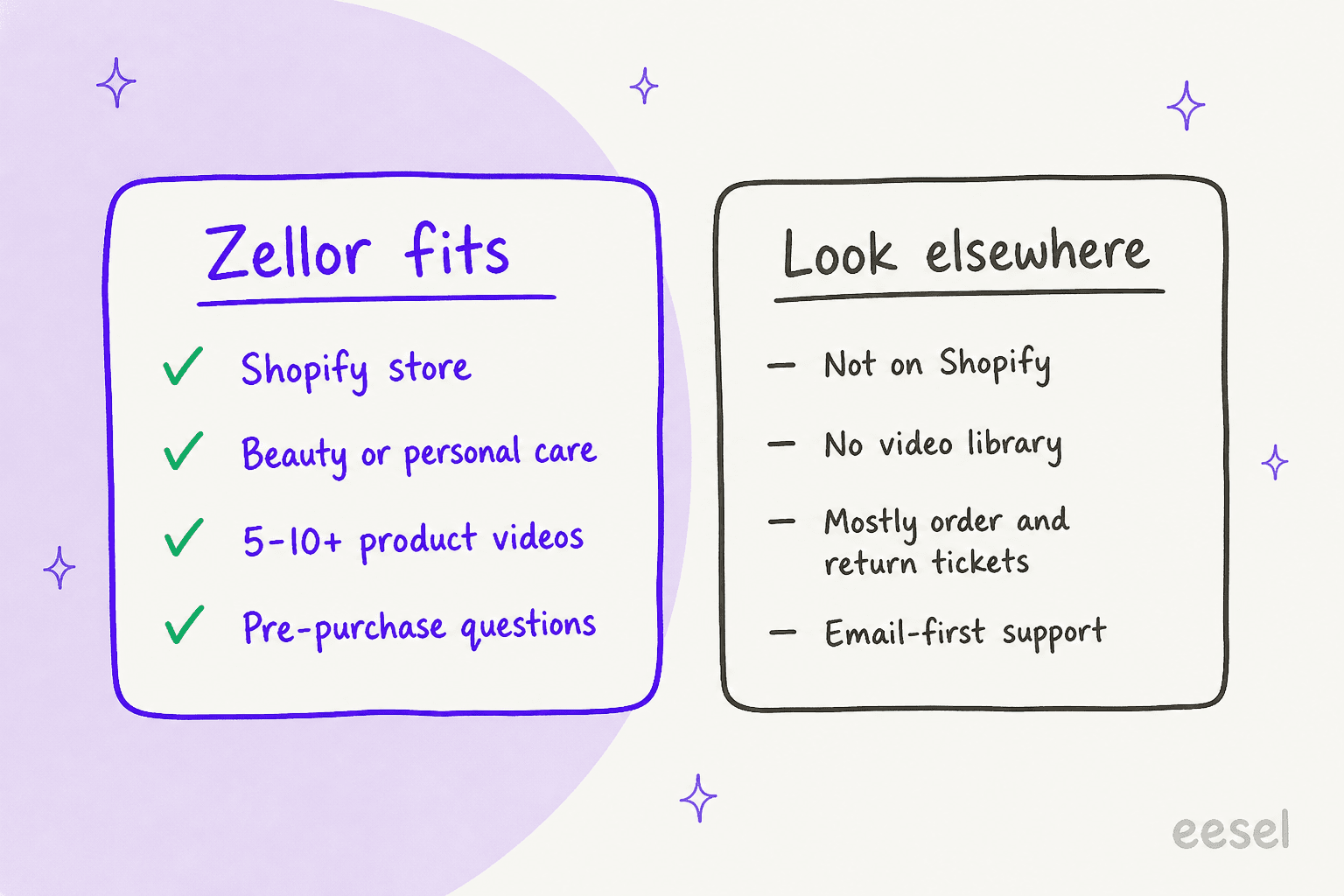
I'd look elsewhere if you sell outside beauty, you don't have video, or your pain is post-purchase. For general product questions on the storefront, compare it with Rep AI or Siena AI. If you already pay for Gorgias, check what Gorgias's own AI shopping assistant does before adding a second widget.
And if most of your tickets are order status, returns and refunds by email, a storefront chat won't touch them. That's a job for an AI that works inside Gorgias. My guides to the best AI for returns and automating ecommerce support cover that side.
Where does eesel fit next to Zellor?
On the other side of the handoff. eesel is an AI teammate for your helpdesk: it connects to Gorgias and Shopify, learns from your past tickets, macros and help center, and works the queue itself, on email, chat and social tickets alike.
Question Beauty, a vegan colour cosmetics brand, is the closest match to a Zellor buyer I can point to. It runs eesel on Gorgias and Shopify. In one month eesel handled about 990 Gorgias tickets, sent about 960 replies, looked up about 290 Shopify orders before answering delivery questions, and closed about 280 tickets without a person. Refunds, complaints and creator requests go to the team with a note attached, and replies go out in the language the customer wrote in.
If you'd rather a person sends every reply, STIL Classics runs eesel in draft mode on Gorgias. It prepared about 320 tickets in a month, each with the Shopify order already checked.
The two tools don't really compete. Zellor sells on the product page with video. eesel answers what lands in Gorgias afterwards. If you also want an AI chat on the storefront, eesel has a chat bubble that answers from your catalogue and help center, though it doesn't play shoppable video. Pricing is on the eesel pricing page: free with 100 credits, then $299 a month for 500, where one ticket or chat handled is one credit.
My verdict on Zellor
Zellor is a focused, well-made tool for one buyer: a Shopify beauty brand with good video that loses sales at the "will this suit me?" moment. The video-first answers, the claim guardrails and Signals' "film next" list are thoughtful, and the Gorgias handoff is cleaner than most I've seen. I'd give it 3.5 out of 5 overall, and more if you're exactly that buyer.
The limits are about scope, not quality. It's Shopify-only, beauty-first, early on public reviews, and its Gorgias connection starts at $399 a month and covers the storefront chat, not your inbox. Trial it for pre-purchase conversion, next to the other Shopify live chat apps you're weighing. Don't buy it expecting your Gorgias queue to shrink.
Try eesel for your Gorgias queue
Zellor answers on the product page. eesel answers in Gorgias: it reads the ticket, checks the Shopify order, replies on email, chat or social, and hands refunds and complaints to your team with a note. That's how Question Beauty clears hundreds of tickets a month without a person touching them.
You can try eesel free with 100 credits and run it against your own past Gorgias tickets before it touches a live customer.
Frequently Asked Questions
Is Zellor worth it? What does an honest Zellor review conclude?
For a beauty or personal care brand on Shopify with a library of tutorial and creator videos, it's worth a trial. My Zellor review scores it 3.5 out of 5: the video answers and the Gorgias handoff are well built, but it's Shopify-only, beauty-focused, and has only two public reviews. If your problem is a full support queue rather than pre-purchase questions, start with an AI for Gorgias instead.
How much does Zellor cost?
Per Zellor's pricing page: Free is $0 for 50 chats and 500 video plays a month. Starter is $99 a month for 250 chats and 2,500 video plays. Growth is $399 a month for 1,000 chats and 10,000 video plays, and adds the Klaviyo and Gorgias integrations. Enterprise is custom. Extra chats cost $0.40 each, and annual billing saves 15%. My chatbot cost guide compares that with other billing models.
Is Zellor free?
There's a free plan for any store size with 50 chats and 500 video plays a month, plus the AI Shopping Assistant, shoppable video and a weekly Signals report. There's no pay-as-you-go on Free: once you hit the limit, you upgrade to keep it running. Paid plans come with a 30-day free trial, one per store. For other free options, see my Shopify chatbot apps roundup.
Does Zellor integrate with Gorgias?
Yes, on the Growth plan and up. You connect it with Gorgias OAuth in about two minutes. When a shopper asks for a person, Zellor creates a Gorgias ticket with the full transcript and an AI summary, and your agent's reply shows up back in the Zellor chat. It doesn't answer tickets that start in Gorgias, so for email and social tickets look at eesel for Gorgias.
Does Zellor work with Zendesk or other helpdesks?
Not yet. Zellor's FAQ says Gorgias is the only ticketing integration today, with Zendesk on its roadmap. It's also Shopify-native only. If you run a different helpdesk, my guide to the best AI for Shopify support covers tools that work across several.
What is Zellor used for?
Zellor is an AI shopping assistant for beauty and personal care brands on Shopify. It answers questions about shade, skin type, routines and ingredients with clips from your own tutorials and creator videos, puts shoppable video carousels on product pages, and reports what shoppers asked. It's a pre-purchase tool, closer to an AI shopping assistant than a helpdesk agent.
Who makes Zellor?
Zellor Ltd, a company based in Dublin, Ireland. Niall O'Sullivan is CEO and founder, with co-founders Mark Hender (CTO) and Columb Kane (COO). The Shopify app launched on February 23, 2024. For how it compares with Gorgias's own option, read my Gorgias AI shopping assistant breakdown.
What are the best Zellor alternatives?
For AI that sells on the storefront, read my Rep AI review and Siena AI review. If you want AI working the whole Gorgias queue, eesel answers email, chat and social tickets, checks Shopify orders first, and starts free with 100 credits.