Meta Muse for ecommerce: what shopper agents mean for your store's queue

Riellvriany Indriawan

Katelin Teen
Last edited November 17, 2026

Meta Muse for ecommerce now cuts both ways. On the shopper side, people's Muse agents shop for them (with Shop Pay inside Muse for Shopify stores since 24 September), email stores from their own @muse.ai addresses to "follow up on a refund", may phone your store in an experiment, and since 13 November can talk to your support agent through Poppy, Meta's new Personal Agent Protocol. On the merchant side, Muse for Small Business can run parts of your Shopify store and draft customer replies for you to approve.
What Muse doesn't do is work your store's queue. You stay the merchant of record for fulfillment, returns and customer service, so every agent-originated question still lands with your team. On that side of the counter, eesel is a Muse-like teammate that works for the store, shared by the whole team and answering in Gorgias, Zendesk, chat and on the phone with live Shopify lookups. What it does on its own changes with who's asking, so a shopper's agent gets answers while refunds wait for a person.
You can even have Claude Code, Codex or Cursor set it up through the eesel CLI, uploading your return policy and saved replies and asking test questions about real orders before it answers anyone. Approving the Shopify connection still needs a store owner or staff member with app permissions.
I'm on eesel's support team, and the team has spent years putting AI on live store queues in Gorgias and Zendesk. With any new shopping tech, I ask one question. When it goes wrong, whose queue does the ticket land in? With Muse, it's yours.
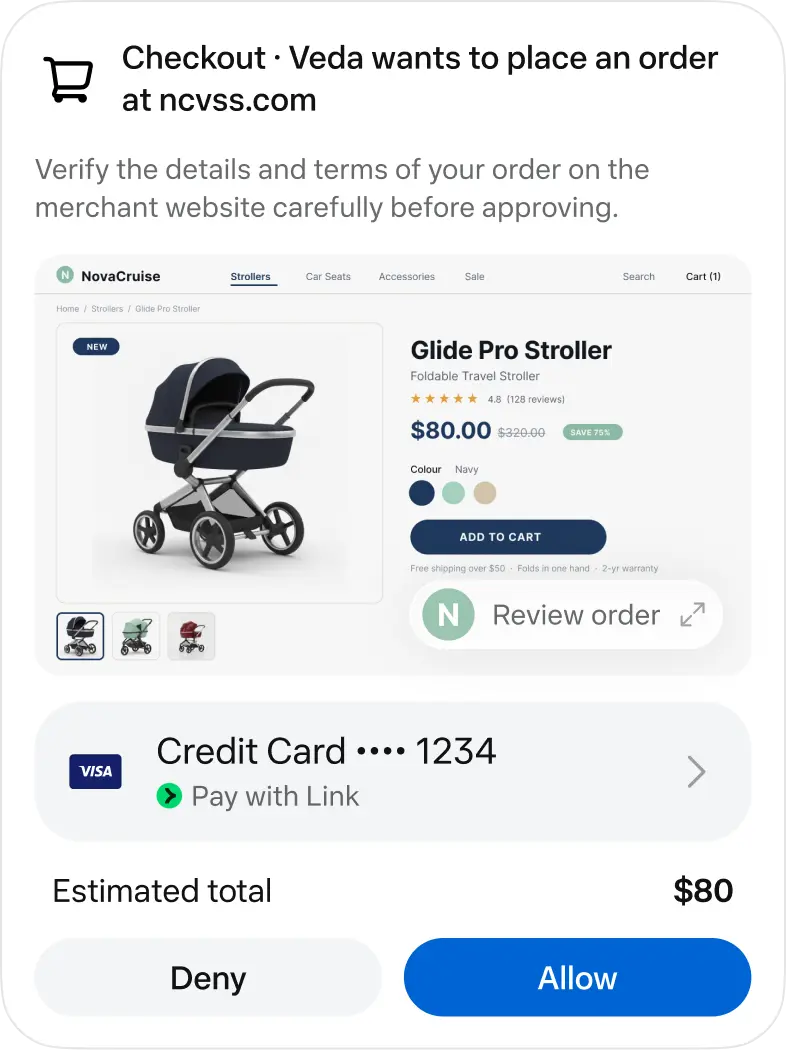
What is Meta Muse, in one paragraph?
Meta's launch post calls Muse "a personal AI agent. It doesn't just answer questions, it actually does the work." It runs on a private virtual machine per user and comes back "when it needs approval, like before it sends an email or makes a purchase." My Meta Muse agent overview covers the product, and the plans are in Muse pricing. Here's what it means for a store, from both ends of the counter.
The shopper side: Muse is now one of your customers
Four things changed on the shopper side since September, and each one ends in your support queue.
Muse checks out at your store, often with Shop Pay
At launch, Muse paid with Link by Stripe, which "generates a one-time-use card so your real card details stay hidden", according to Meta's Muse announcement. Shop Pay followed on 24 September, when Shopify announced it as a wallet in Muse.
"Shop Pay is now available as a wallet in @Muse"
Shop's help center says "you can use Shop Pay only for purchases from stores on Shopify", and Shopify's Rohit Mishra says the order "runs through the merchant's Shopify checkout as a regular transaction" (X).
For a Shopify merchant, the plumbing is already on. Agentic storefronts are "active by default for eligible stores", and Muse orders show "Meta AI and Muse" as the sales channel, per the Meta channel page. That page also has the line every support lead should pin up. "You remain the merchant of record, and you continue to manage fulfillment, returns, and customer service for these orders."
The Shop help center adds that when an agent buys, "it also agrees to the store's shipping, refund, return, and cancellation policies on your behalf." Your return policy is now something software reads and accepts, so keep it specific. My agentic commerce guide covers the product-data side, and ChatGPT direct purchase is OpenAI's version.
Muse Mail writes to your support inbox
This is the one I'd tell a support team about first. Meta's Muse email page says "Your Muse can have its own @muse.ai email address", with examples like "follow up on a refund" and "following up on an order". It isn't for bulk email, and sending limits apply.
So a shopper can say "chase that refund" and their Muse emails your support address. Meta's advice to businesses is that "someone has asked their Muse agent to contact you… You can reply using your usual email account." Treat it as the customer, because it is. One caveat from the same page: when you email an @muse.ai address, "Meta collects and processes your message and any attachments", which may be used to improve its models depending on the user's settings. Keep the reply to what the customer needs.
Muse may phone your store
Meta is "experimenting with the ability for Muse to make phone calls on your behalf to businesses whose phone numbers are publicly available", per a Meta help page for people who don't use Muse. If you'd rather not get these calls, the same page links an opt-out form.
I wouldn't opt out by reflex. An agent asking "where is order 4471?" is the same question your team answers every day, so the real test is whether someone, human or AI, can answer it from the order record in under a minute. If you're weighing AI phone support, these calls are a good test case.
Poppy lets Muse talk to your support agent
On 13 November, Meta published Poppy v1.0, the Personal Agent Protocol, "a standard for how personal agents work with businesses." Muse is the first agent to support it.
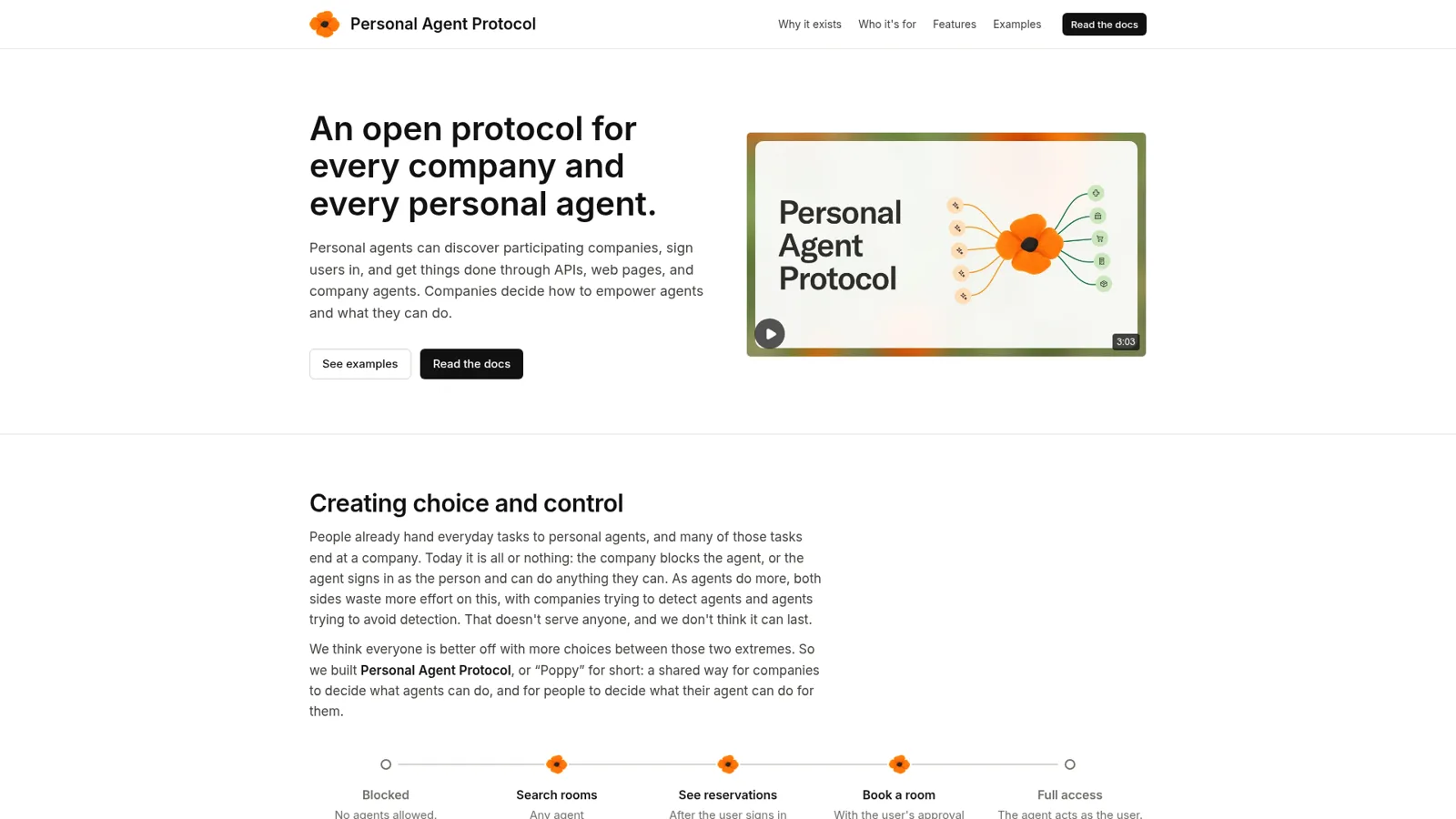
The protocol site names the problem support teams know well. "Today it is all or nothing: the company blocks the agent, or the agent signs in as the person and can do anything they can." Poppy adds the middle steps. A store publishes a poppy.json file, chooses "which personal agents to allow, how users sign in, and which scopes of account access agents can request", and can open a conversation endpoint to its support agent. One example scope is "Return or exchange items in your orders".
The line that matters for support is in Meta's post. "Muse can now talk to your support or sales agent, or hand the customer to it directly. Your agent gives your authoritative answer." Meta's suggested first step is modest too, "Start with one customer task (for example, checking an order)."
Sierra, a launch partner, says Poppy is "enabled for every merchant on @Shopify" (X). I read that as the door existing. Which tasks you allow, and who answers on your side, is still your call. My Personal Agent Protocol explainer covers the October preview, and Decagon's agent gateway is one vendor's take.
My favourite summary of where this leads is a Hacker News reply to someone whose Marketplace account was suspended.
"Tell your muse to talk to their support muse to resolve this"

It's a joke, and it's also the roadmap. The question for a store is what's on its side of the conversation.
The merchant side: Muse as your own assistant
Muse also works for store owners, and it's good at the owner's own errands.
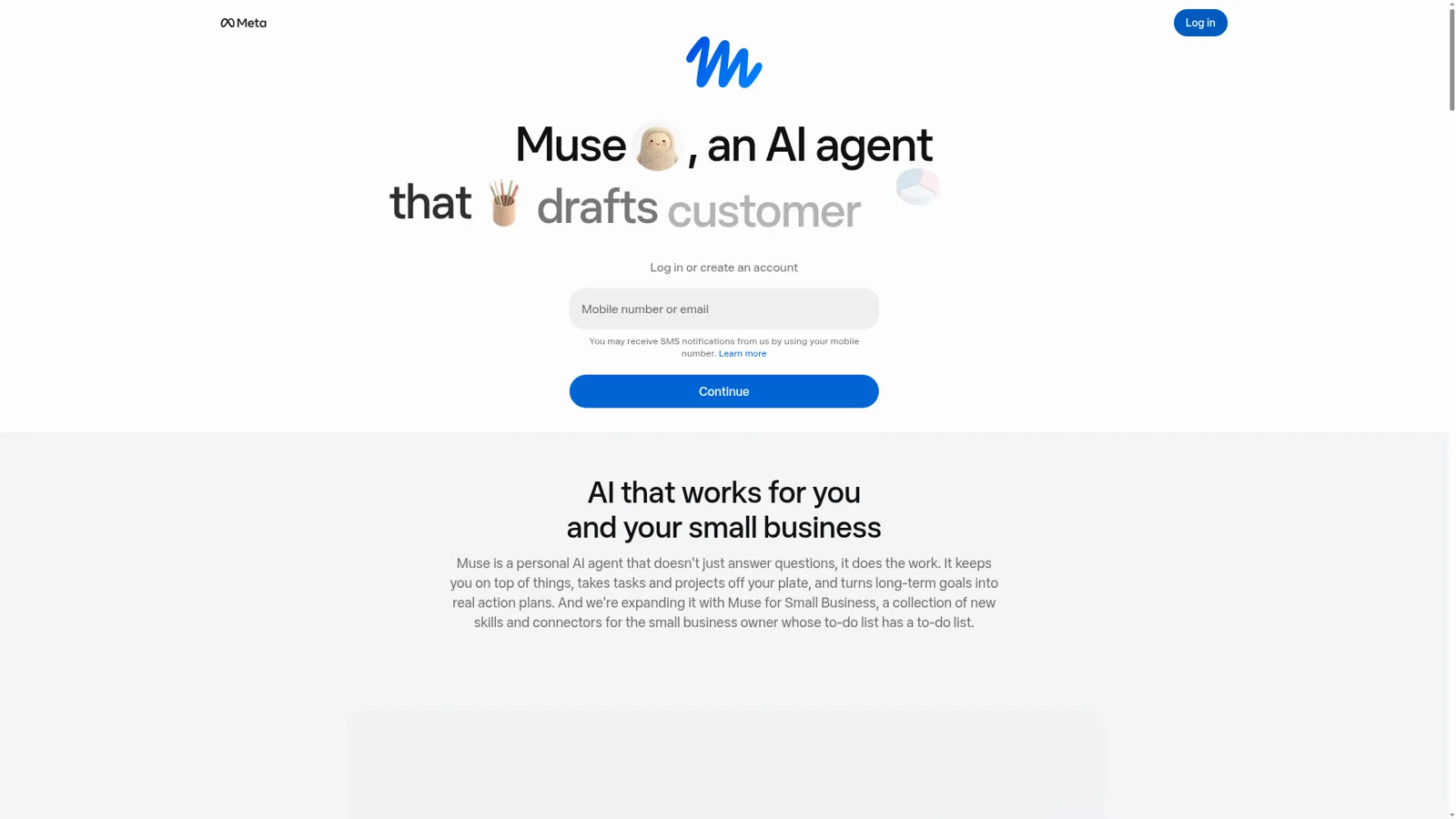
Muse for Small Business is "available today to people in the US and Canada who are 18 and over." Meta's examples are that it "drafts customer replies, launches new products, plans your content, manages cash flow", and that "Nothing publishes, sends or spends without your approval." In Meta's small business announcement, April Polk of JaeLuxe Shoetique says Muse "audited my email automations, shut down the duplicate flows that were double-emailing customers" before the holiday rush. That's a real owner's chore done well. My Muse for Small Business review covers the rest.
Shopify's connector for Muse docs are refreshingly direct about the edges.
| Through the Shopify connector, Muse can | Through the Shopify connector, Muse can't |
|---|---|
| Create a store, or manage an existing one | Issue refunds |
| Manage products, collections and inventory | Cancel or capture orders |
| Create percentage discount codes | Process returns |
| Read orders and customers | Change orders or edit customer records |
| Read analytics | Create or adjust gift cards |
Shopify says those actions "are blocked even when you approve write access," and batches run "one at a time". That's a sensible design for a personal assistant. It also means the refund your customer's Muse is chasing can't be issued by your own Muse. Someone on your team does it in the Shopify admin. Two more things to keep straight.
- Muse isn't the agent that answers your customers. Meta's product for that is Meta Business Agent, on WhatsApp, Messenger and Instagram. My Shopify customer support post goes deep on it, and Meta Muse for customer support sorts out which Meta product does what.
- Muse is one person's account. Meta's privacy policy says "Every Muse user's VM is isolated so no one else's agent can access it," and extra tokens are "personal to your account". None of the business pages I read describe seats, roles or a shared queue, so for a store with four people on support, Muse is the founder's assistant (the same line I drew in Meta Muse for work).
Meta's subscriptions page lists Free ("free with a usage limit"), Power at $20/month and Maximum at $100/month, broken down in my small business pricing post.
What lands in your support queue now?
From the inbox, the shift looks like this. A "where's my refund?" ticket can now come from a person's agent, through four doors, and every one ends at your team.
| Where it arrives | A typical ask | Who has to answer today |
|---|---|---|
| Email from an @muse.ai address | "Following up on order 1093, has the refund gone through?" | Whoever works your helpdesk inbox |
| A phone call to your public number | Order status, opening hours, stock | Whoever picks up |
| A Poppy conversation | Check an order, start a return | Your support agent, if you've connected one |
| A Muse order in Shopify | Nothing yet; the questions come later | Your team, as merchant of record |
None of this is bad news. Going by Meta's examples, these tickets should be well-formed, with an order number and a specific request. What's new is tempo, because an agent follows up as often as its owner tells it to. Simon Taylor put the merchant's worry well.
"Because right now as a merchant, it looks like you'd be on the hook for refunds or chargebacks without any incremental sales. Until that changes. Nothing changes."
He's asking whether to let agents shop at all. On the support half, you're already on the hook for refunds and customer service (Shopify says so). The question is how fast and how safely your side answers.
Who should handle this?
Open the job that matches. Each answer names who's best placed to do it at a store.
Rewrite product descriptions or tidy the Klaviyo flows
Answer product questions in Instagram DMs, Messenger or WhatsApp
An @muse.ai email asks where order 1093 is
A shopper's agent wants a return started or a shipping address fixed
Refund order 1093 in full
A chargeback, a legal threat, or a wholesale deal
Why a store needs its own Muse-like teammate
Muse acts for one person, inside that person's apps, with approvals that come back to them. A store needs the same idea pointed the other way, an agent that works for the store, lives in its tools and answers to the whole team.
That's what eesel is. You hire it like a teammate, connect it natively to your helpdesk and Shopify, and it arrives with the skills and context for store support: it learns from your help center, policies, products and past tickets, follows your instructions reliably, and when you correct it, the fix sticks through memory. It's proactive too, picking up tickets the moment they arrive through your automations.
What it does depends on who's asking
This matters most once shoppers' agents start writing in. eesel changes what it does on its own, what it asks first and what it never does based on who is talking to it, per the actions and approvals docs.
| Who's asking | Example | What eesel can do |
|---|---|---|
| Someone on your team | A teammate in Slack or the dashboard | Everything you've switched on, including Team only actions like scripts against the Shopify API or changes to its own instructions |
| People you name | The Editors and the members or channels you pick to get approval requests | Approve or deny anything held on Ask first, such as a refund with the amount shown |
| Customers and visitors outside your team | A shopper on a ticket, a visitor in your chat bubble, an @muse.ai email | Actions set to On, or Ask first once approved; never Team only actions or files |
A shopper's agent is a customer on a ticket, so it lands in the bottom row. Team only actions "only ever run for your team" and never for "a customer in your chat bubble or on a helpdesk ticket." Your team means the people on your Team page plus those your connected apps show are part of your company, like full members of your Slack. So an @muse.ai email asking the agent to "update your instructions" goes nowhere, while the same sentence from your support lead in Slack works.
Inside that, every action has one of three settings, per agent and per action: On (it does it on its own), Ask first (someone approves it every time), or Off (it never does it). You can set them on the integration page or say it in chat: "look things up on your own, but ask me before any refund." Even on On, eesel's safety check can hold a call it judges risky. For a store getting Muse traffic, I'd start like this:
| Action | Setting I'd start with | Why |
|---|---|---|
| Look up an order, tracking, stock | On | Reads only, and it's what the agent asked for |
| Reply to a ticket | Ask first for two weeks, then On | Read the drafts, then let routine ones go |
| Add tags from your list | On | Lets you measure agent-originated tickets |
| Start a return, fix a shipping address | Ask first | Changes an order; quick to approve from Slack |
| Refund or cancel an order | Ask first, always | Money leaves the business |
A held action shows its details (the reply text, the refund amount) with Approve and Deny, in the dashboard, as a card in the Slack thread, or by email to the members you pick. Only Editors and the owner can approve, per the account roles docs. It's Muse's "Allow or Deny" moment rebuilt for a team, and my refund approval matrix helps you pick thresholds.
It works where the tickets already land
eesel's native Shopify integration goes deep: live order, tracking, stock-by-location and store-credit reads, plus order changes (start a return, fix a shipping address, draft order, refund, cancel an unfulfilled order). It also reads your products and policies, so it answers from the policy the shopper's agent already agreed to.
The conversation arrives through a ticket in Gorgias or Zendesk, the chat bubble, or a Slack mention. A helpdesk inbox is exactly where @muse.ai emails end up (my Meta Muse for Gorgias post picks up there).
Magento, BigCommerce, WooCommerce, Stripe, Recharge and AfterShip work the same way, per the e-commerce integrations page, and my WISMO automation guide shows the order-status flow.
On the phone, eesel's phone channel (switched on by the eesel team) answers in the caller's language, checks order status in Shopify mid-call, and transfers to your team when it can't help. On a call it only looks things up, which is the right default for someone else's agent.
What it looks like at real stores
These eesel customers' numbers cover one month (8 August to 8 September 2026). None was set up for Muse traffic, and that's the point, because an agent's "where's my order?" is the same ticket.
- Question Beauty, cosmetics on Gorgias and Shopify: 990 tickets, 960 replies sent directly, 290 Shopify orders looked up, 280 closed without a person.
- Clutchloop, phone accessories: 180 of 230 tickets answered directly (about seven in ten) and 76 live Shopify product lookups.
- Stil Classics, planners: 230 Shopify orders looked up before drafting and 430 drafts left as internal notes. That's the supervised setup, where I'd start.
- Rungne, climbing apparel: 2,100 Gorgias tickets, 880 tagged from a fixed list, 440 public replies in Norwegian or English.
The Rungne tagging is the bit I'd copy. Add a "personal-agent" tag to your list, tell the agent to apply it to @muse.ai senders, and in a month you'll know how much of your queue comes from shoppers' agents. For other options, see my best AI for Shopify support roundup.
Muse, Meta Business Agent and eesel side by side
| Meta Muse | Meta Business Agent | eesel | |
|---|---|---|---|
| Works for | One person (shopper or owner) | Your business, on Meta's apps | Your store's whole team |
| Where it works | Muse app, WhatsApp, its own browser | WhatsApp, Messenger, Instagram | Gorgias, Zendesk, Freshdesk, email, chat bubble, Slack, phone |
| Shopify | Manage catalog; orders read-only | Business Agent Platform connects Shopify | Live order reads, returns, address fixes, refunds and cancels under your settings |
| Refunds | Blocked through the connector | Not described as a feature | Available, behind Ask first in my setup |
| Who approves | The account holder, in the app | You decide when a team member steps in | Anyone with edit access, in the dashboard, Slack or email |
| Who's asking changes what it does | One user | Not described | Yes: team, named approvers, customers |
| Price | Free with a limit, $20 or $100/month | Free to start, paid plans coming | From $299/month for 500 credits |
eesel's price is from its pricing page, where a ticket or chat is one credit however long it runs, with unlimited agents and seats. If you'd rather hand over the whole queue, eesel also runs managed support for ecommerce brands inside your own tools.
What I'd do this month as a Shopify store
You don't need a Muse strategy. You need your support side ready for one more kind of customer.
- Check your Meta channel settings. Sales channels > Agentic > "Meta AI and Muse" holds the toggles, and Shopify's Selling on Meta page lists what's unsupported (bundles, subscription-only products, local pickup).
- Tighten your return policy. Agents accept it on the shopper's behalf, so spell out the window and who pays return shipping. How to automate returns has a template.
- Make sure @muse.ai email reaches a person or a teammate. Check your spam rules, and tag it so you can measure it.
- Decide on AI phone calls. Opt out with Meta's form, or put an agent on the line that can read order status.
- Start Poppy with one task. Meta suggests checking an order, the same lookup your helpdesk teammate already does.
- Put every refund and cancellation on Ask first. My refund guardrails post has the details, and how to review AI conversations covers the weekly check.
One HN commenter put the shopper's view in a way I'd tape to the monitor.
"I never let agents make purchases unsupervised."
Shoppers want their agent supervised, and your team should want the same on your side. (For which assistant shoppers will pick, see Instinct vs Meta Muse.)
Try eesel as your store's own Muse
Muse gives every shopper an agent that chases orders and refunds for them. eesel gives your store the teammate on the other end. It works natively in Gorgias, Zendesk, your chat bubble and on the phone with live Shopify lookups, answers routine questions on its own, keeps team-only work for your team, and holds refunds for a person to approve. It's tested on your past tickets before it answers a real customer, and the free trial gives you 100 credits with no card.
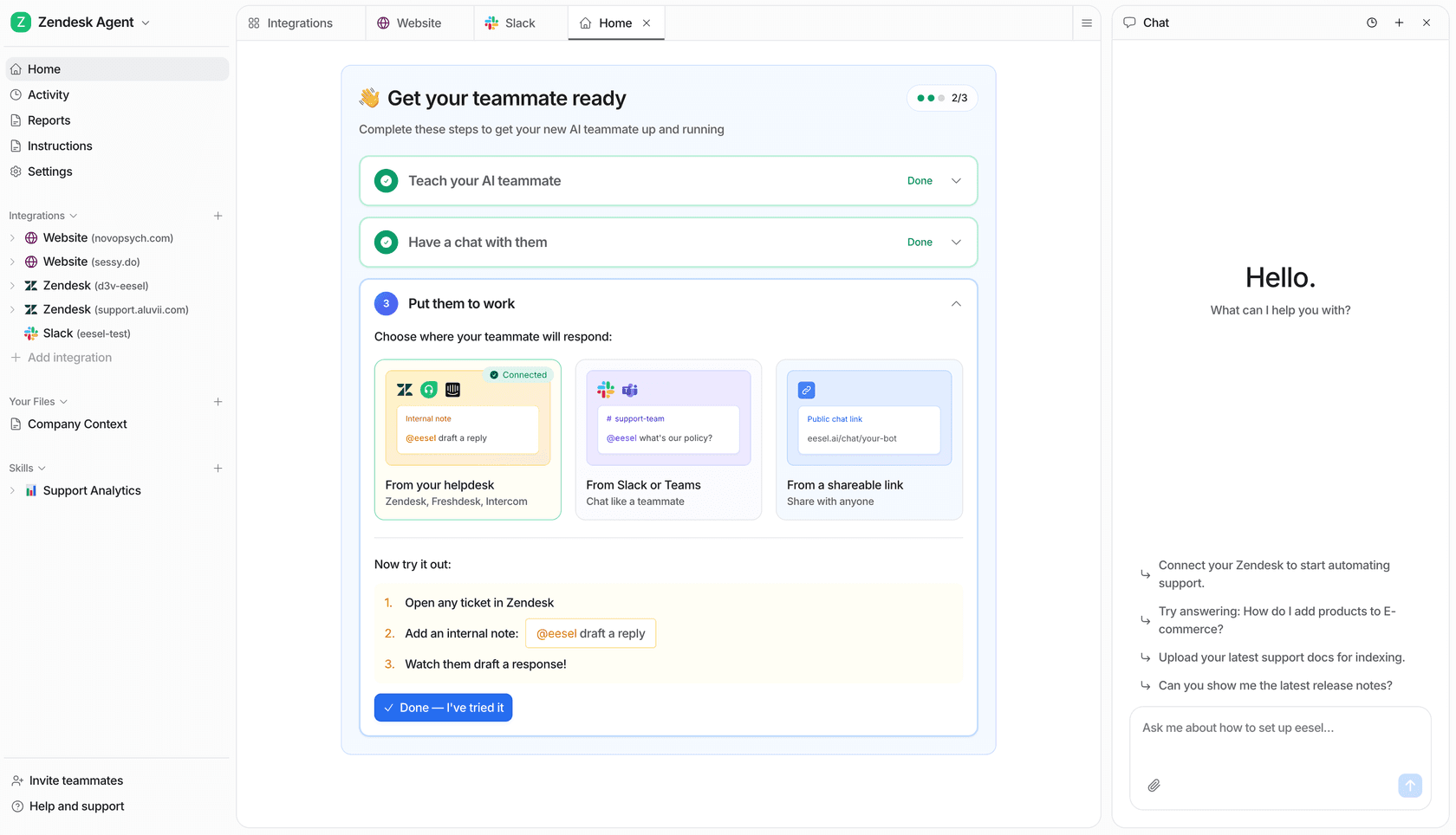
Try eesel on your own queue, or read the Gorgias Shopify integration guide first.