


Pick JivoChat if a few agents handle a lot of chats, and Tidio if a bigger team handles fewer, or if AI answers matter most. JivoChat charges $28 to $56 per agent logged in at once; Tidio charges per conversation a person replies to, plus roughly $0.60 to $0.65 per Lyro AI chat (annual billing). So 2 agents with 2,000 chats pay about $83 on JivoChat and $291 on Tidio, while 10 agents with 200 chats pay $307 versus $49. If most chats are repeat questions, an AI teammate like eesel can take those first on either setup.
What's the real difference between JivoChat and Tidio?
The real difference is what you pay for. If you'd rather test AI first: with the eesel CLI, an AI coding agent can add eesel's chat bubble to your site, upload approved knowledge like your shipping FAQ and canned replies, and run test questions before a visitor sees an answer. I build integrations at eesel, and I've read a lot of chat-tool billing pages, because the meter decides how a tool behaves when your shop has a busy month. These two are a clean example of opposite meters.
JivoChat sells seats. Its help center says "each license is equivalent to one seat for an agent logged in at the same time", and chats on every plan are unlimited. Two people sharing shifts can share one licence, and a flood of chats costs nothing extra.
Tidio sells conversations. Its pricing FAQ counts a "billable conversation" as one with at least one reply from a person, and seats are free up to 10 on self-serve plans (Tidio pricing). Its AI agent, Lyro, has its own meter on top.
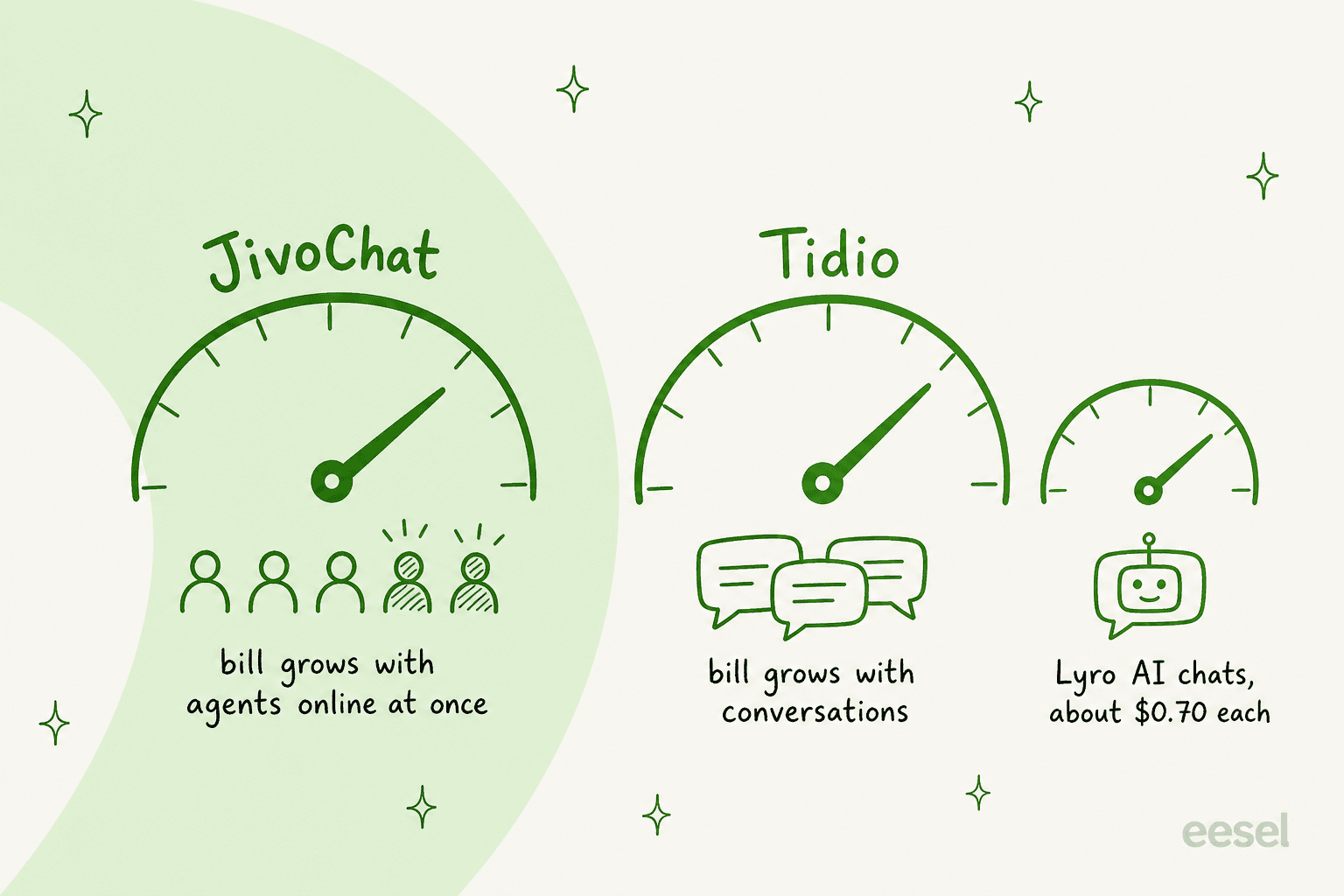
So the honest answer to "which is cheaper?" is a question back: does your business grow in people or in chats? Everything else in this comparison, AI included, follows from that.
JivoChat vs Tidio at a glance
Here's how they line up on the things buyers ask about first. Prices are per month on annual billing, from each vendor's pricing page (JivoChat; see Tidio's here), and ratings come from G2 and Trustpilot.
| JivoChat | Tidio | |
|---|---|---|
| Billing unit | Per agent logged in at once | Per conversation a person replies to |
| Free plan | Yes, small team, limited history | Yes, 50 conversations/month, 10 seats |
| Paid plans | Basic $28, Professional $42, Enterprise $56 per agent | Starter $24.17, Growth from $49.17, Plus from $300 + usage |
| Seat limit | Up to 100 on Basic and Professional, unlimited on Enterprise | 10 on self-serve plans, custom on Plus |
| AI agent | AI Agent, $69 "per agent" | Lyro, from $32.50 for 50 conversations |
| AI reply drafts | AI assistant, $13 | Inbox AI with Copilot, price not published |
$27 module | Included on every plan | |
| Phone | Telephony, included on Professional and Enterprise | Voice add-on in beta |
| Security on site | GDPR consent form; no certifications on pricing page | SOC 2 examination, GDPR, CCPA |
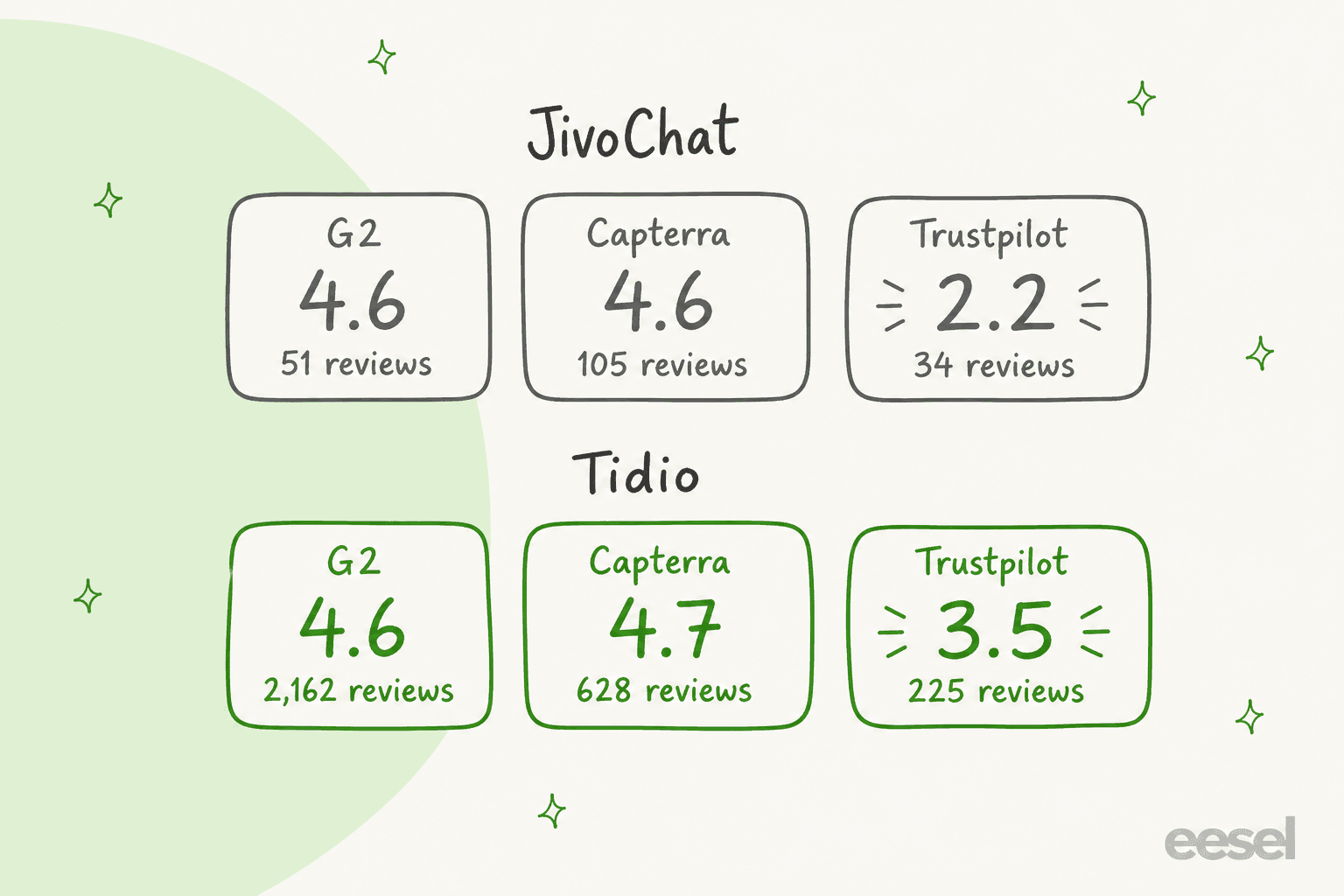
| G2 rating | 4.6 (51 reviews) | 4.6 (2,162 reviews) |
| Trustpilot | 2.2 (34 reviews) | 3.5 (225 reviews) |
How much does JivoChat cost compared with Tidio?
JivoChat costs $28 to $56 per agent a month on annual billing, and Tidio costs $24.17 to $290.83 a month on annual billing for 100 to 2,000 human-answered conversations. Neither number means much until you plug in your own team.
JivoChat's plans
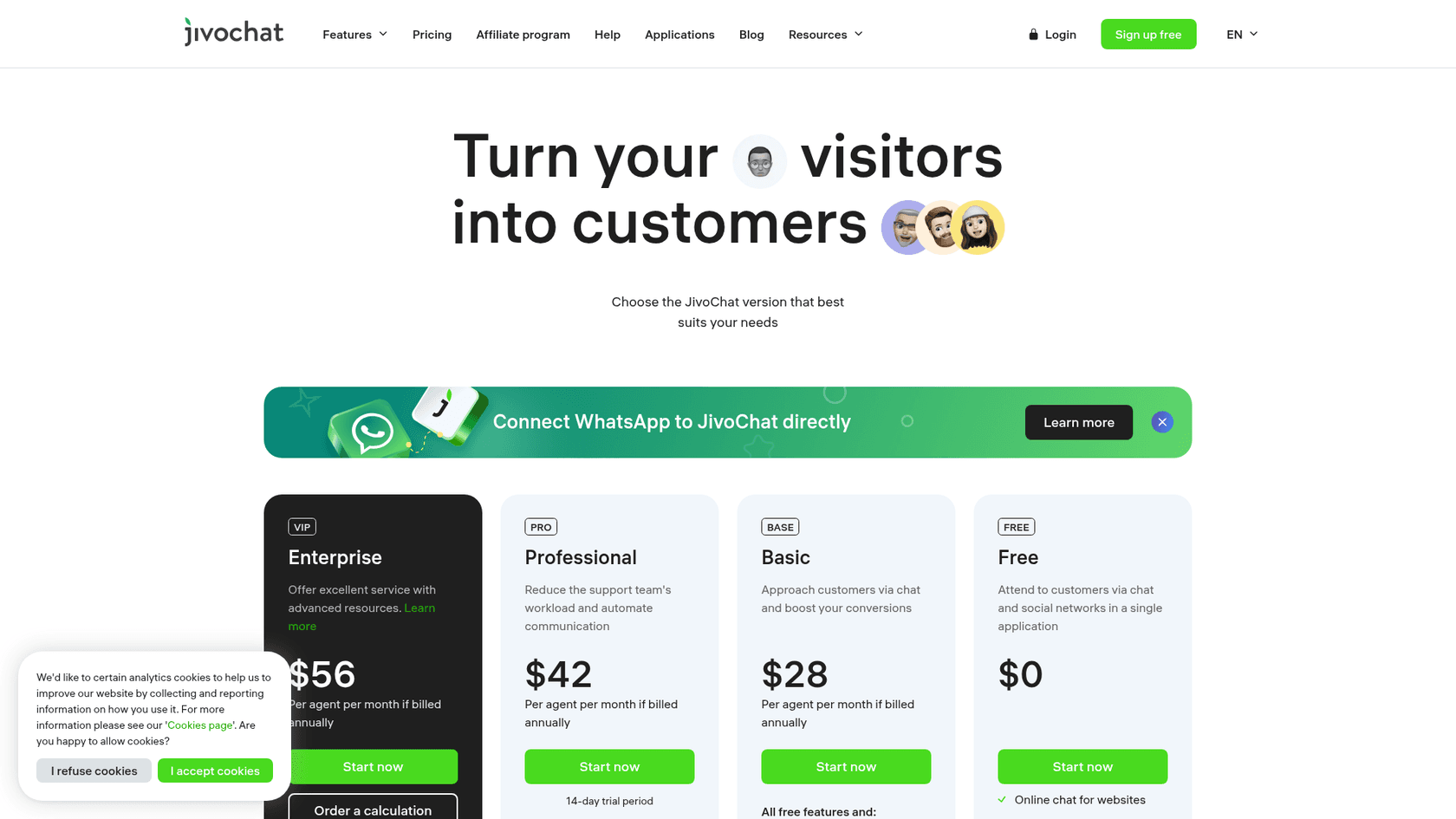
JivoChat has four plans, priced per agent per month when billed annually (JivoChat pricing). The calculator shows 10% off for 3 months and 30% off for a year, and the default Professional example works out to $54 per agent on a 3-month term.
| Plan | Per agent, annual | Key additions |
|---|---|---|
| Free | $0 | Website chat, Telegram, Facebook, Instagram, Viber |
| Basic | $28 | JivoChat CRM, smart triggers, canned responses |
| Professional | $42 | Chatbot integrations, chat campaigns, Telephony Plus |
| Enterprise | $56 | Chat routing, Mobile SDK |
| Add-on | Annual price |
|---|---|
$27 a month | |
| AI assistant | $13 a month |
| AI Agent | $69 per agent a month |
| Videocalls | $23 per agent a month |
| Jivo Marketing | $6 a month |
One catch to read before paying a year upfront: JivoChat's terms make payments non-refundable except within 10 days of your first payment, which I cover in my JivoChat pricing guide.
Tidio's plans
Tidio splits pricing into three meters that can be bought separately: Customer Service (billable conversations), Lyro AI Agent (Lyro conversations) and Flows (visitors reached), per the Tidio pricing FAQ. Annual billing gives you two months free.
| Plan | Monthly billing | Annual (per month) | Billable conversations |
|---|---|---|---|
| Free | $0 | $0 | 50 |
| Starter | $29 | $24.17 | 100 |
| Growth | $59 to $349 | $49.17 to $290.83 | 250 to 2,000 |
| Plus | from $300 + usage | custom | custom |
| Premium | contact sales | contact sales | custom |
| Lyro conversations a month | Monthly price | Per conversation |
|---|---|---|
| 50 | $39 | $0.78 |
| 100 | $75 | $0.75 |
| 200 | $140 | $0.70 |
| 500 | $350 | $0.70 |
| 1,000 | $700 | $0.70 |
My Tidio AI pricing post covers Lyro's tiers in more depth. The free Lyro allowance is 50 conversations, once, for the life of the account. Tidio's Lyro limit article says that when you hit it, "Lyro stops working, and the quota will not reset."
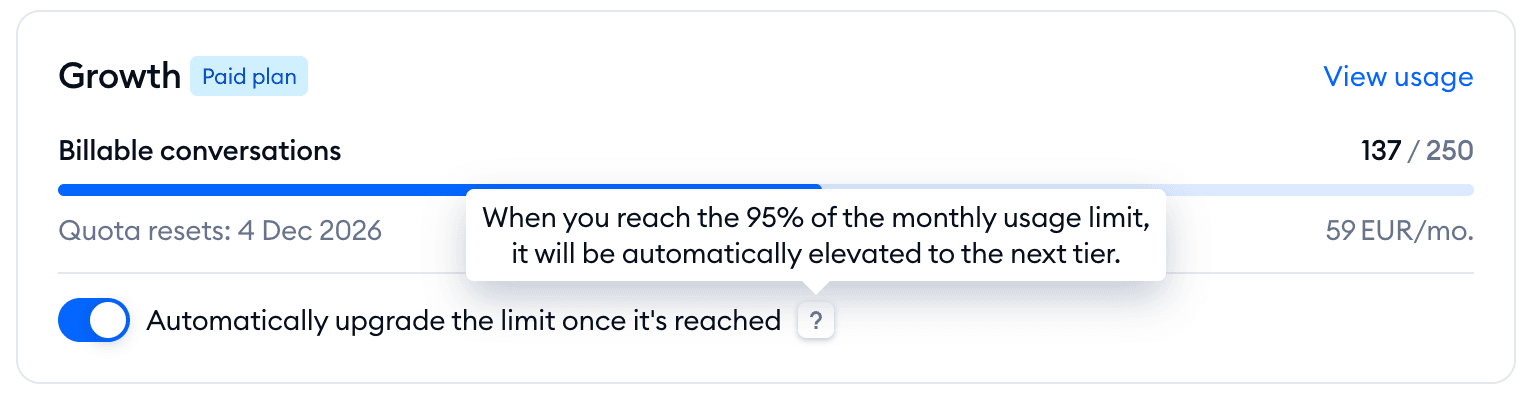
The thing that surprises people is automatic upgrades. On monthly plans, when any quota hits 95%, Tidio moves you to the next tier, with a warning email at 80% (Tidio help). It's on by default.
What four real team shapes would pay
To make the meters comparable, I priced four teams on annual billing. Each needs WhatsApp, uses JivoChat Basic, and counts JivoChat's AI Agent as one $69 unit (the pricing page says "per agent" without saying whether that means a human seat or an AI operator).
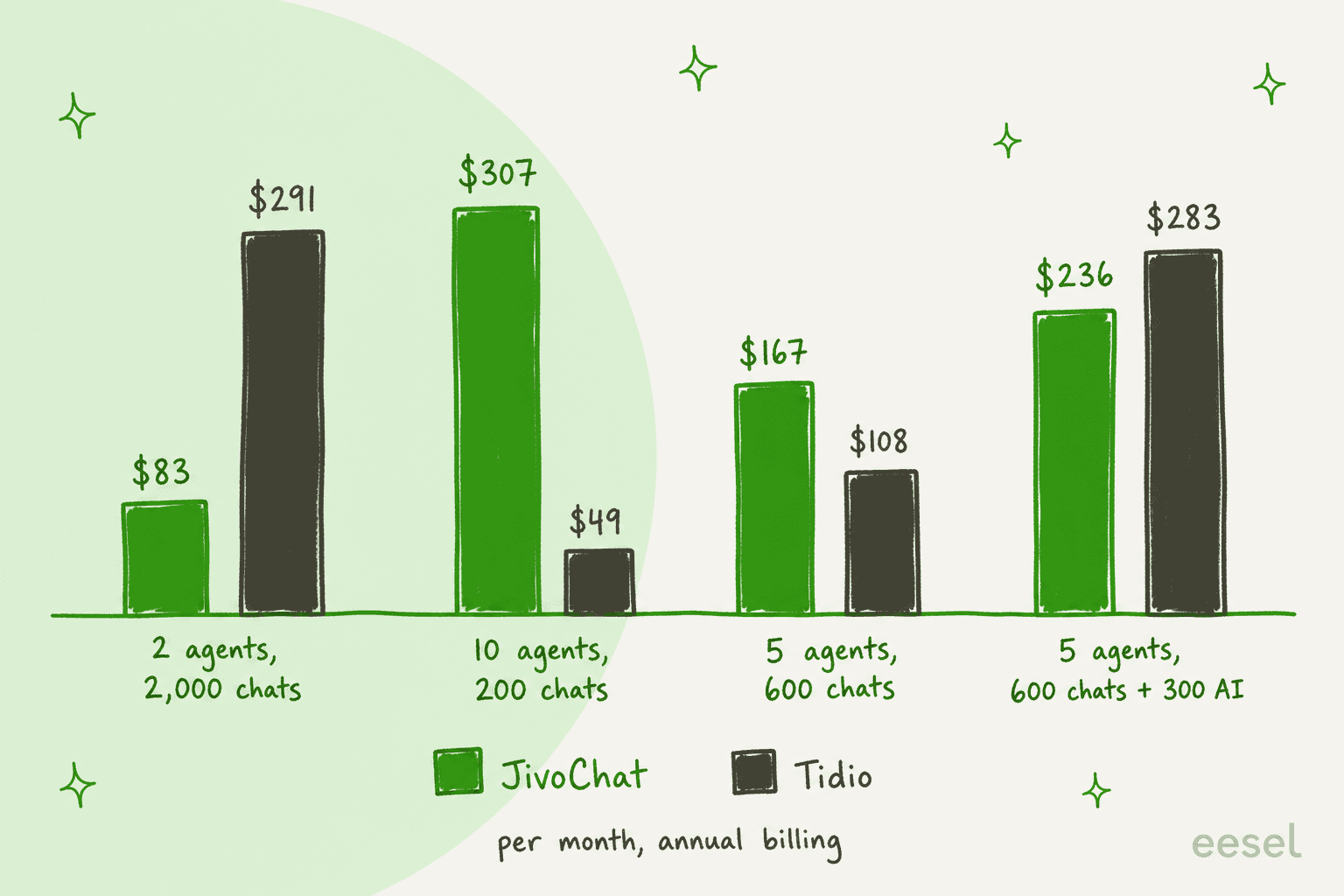
The pattern is clean. JivoChat wins when chats per agent are high, Tidio wins when they're low, and adding a few hundred AI chats tips a mid-size team back toward JivoChat, because Lyro is billed per chat and JivoChat's AI Agent is a flat fee. Plug in your own numbers here:
Which has better AI, JivoChat or Tidio?
Tidio has the better AI, and it isn't close on the knowledge side. JivoChat's AI is a pair of add-ons on top of a live chat app; Lyro is the product Tidio has been building around.
JivoChat's two AI add-ons
JivoChat sells AI twice. The AI assistant ($13 a month) drafts and polishes replies inside the agent's reply box, and the human still sends. The AI Agent ($69 per agent a month) answers customers itself and hands off when stuck.
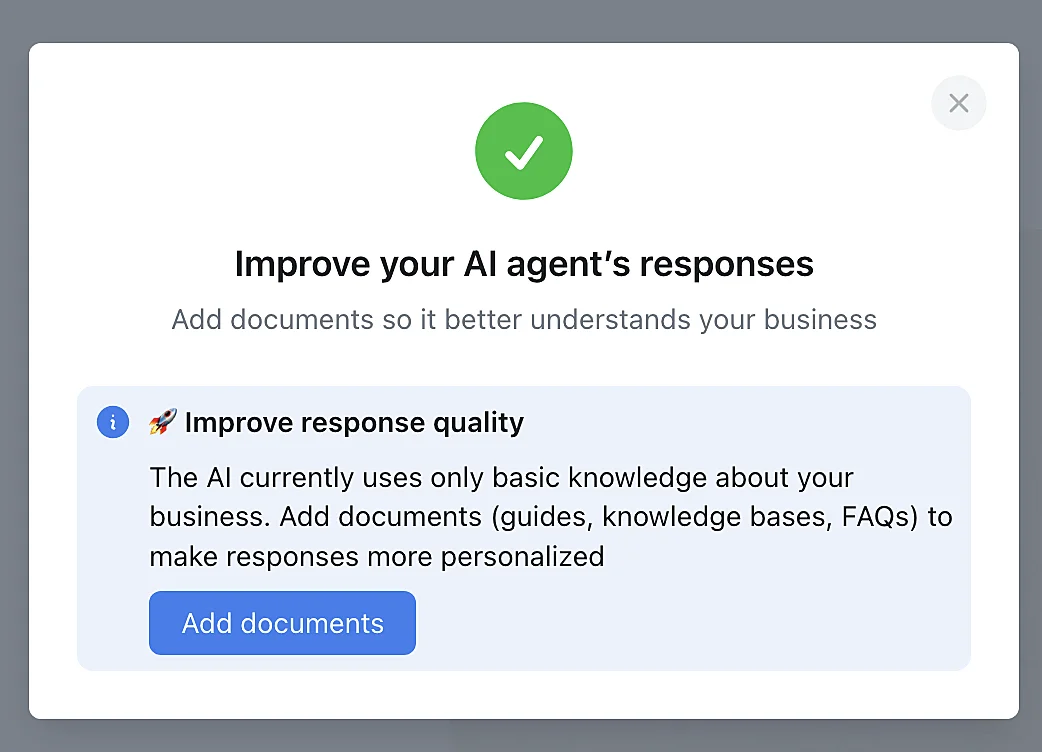
Per JivoChat's setup guide, the AI Agent learns from a website scan, up to 5 files of 30 MB, up to five trusted domains and up to 50 Q&A pairs. Past chats aren't one of the sources. You can create up to 15 AI operators, which helps if you run several brands. I wrote up the setup screen by screen in my JivoChat AI post, and my AI chatbot vs live chat guide covers when a bot should answer at all.
Tidio's Lyro
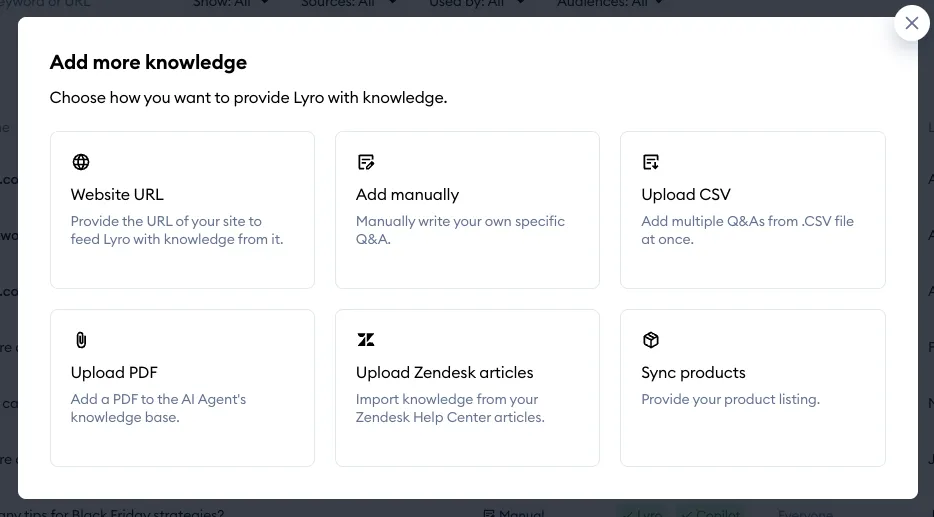
Lyro learns from six source types: a website URL (up to 500 URLs), manual Q&A, CSV files, PDFs, Zendesk help center articles and synced products from Shopify or WooCommerce (Tidio help). When an agent solves a live chat, Lyro also proposes Q&A pairs from it for you to approve. Email tickets aren't scanned that way.
Lyro can also do things, not only answer. Lyro Actions call your APIs, with ready-made Shopify steps for order lookup and shipping-address changes. Paid Lyro tiers allow up to 3 active Actions and Plus up to 10. Tidio is upfront that "Lyro does not validate or roll back your integrations," so test them on real orders before switching them on.
On results, Tidio's own numbers vary by page: a "75% resolution rate" on the Lyro page and "up to 70%" in the help center. Users are mixed, which is why my Lyro alternatives list exists:
"Tidio's pricing is quite high for the features offered, making it difficult to justify the cost. The AI integration also needs improvement, as it doesn't always provide accurate or useful responses to customer enquiries."

| JivoChat AI Agent | Tidio Lyro | |
|---|---|---|
| Price | $69 per agent a month | about $0.70 per AI conversation |
| Website | Site scan + 5 domains | Up to 500 URLs |
| Files | 5 files, 30 MB each | PDFs (10 at once, 30 MB) and CSV |
| Past chats | Not a source | Suggested Q&A from solved chats |
| Products | Not listed | Shopify and WooCommerce sync |
| Actions | Not listed | Up to 3 (paid), 10 (Plus) |
How do the inbox and channels compare?
Both give a small team one inbox for website chat and social messengers, and both have desktop and mobile apps. If you're new to the category, my live chat features checklist covers the basics; the differences here are in what's included.
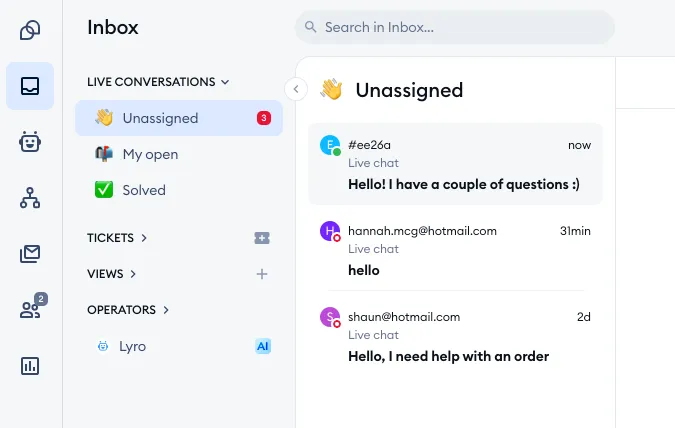
JivoChat is stronger on phone and messenger breadth. It covers website chat, Telegram, Facebook, Instagram, Viber, email, WhatsApp (as a $27 module) and telephony, with Telephony Plus and IVR included on Professional and Enterprise (JivoChat pricing). Phone numbers start from $1 a month. If your customers call as much as they type, that matters. For WhatsApp-heavy shops, Meta's own fees still apply on both, as my WhatsApp API pricing post explains.
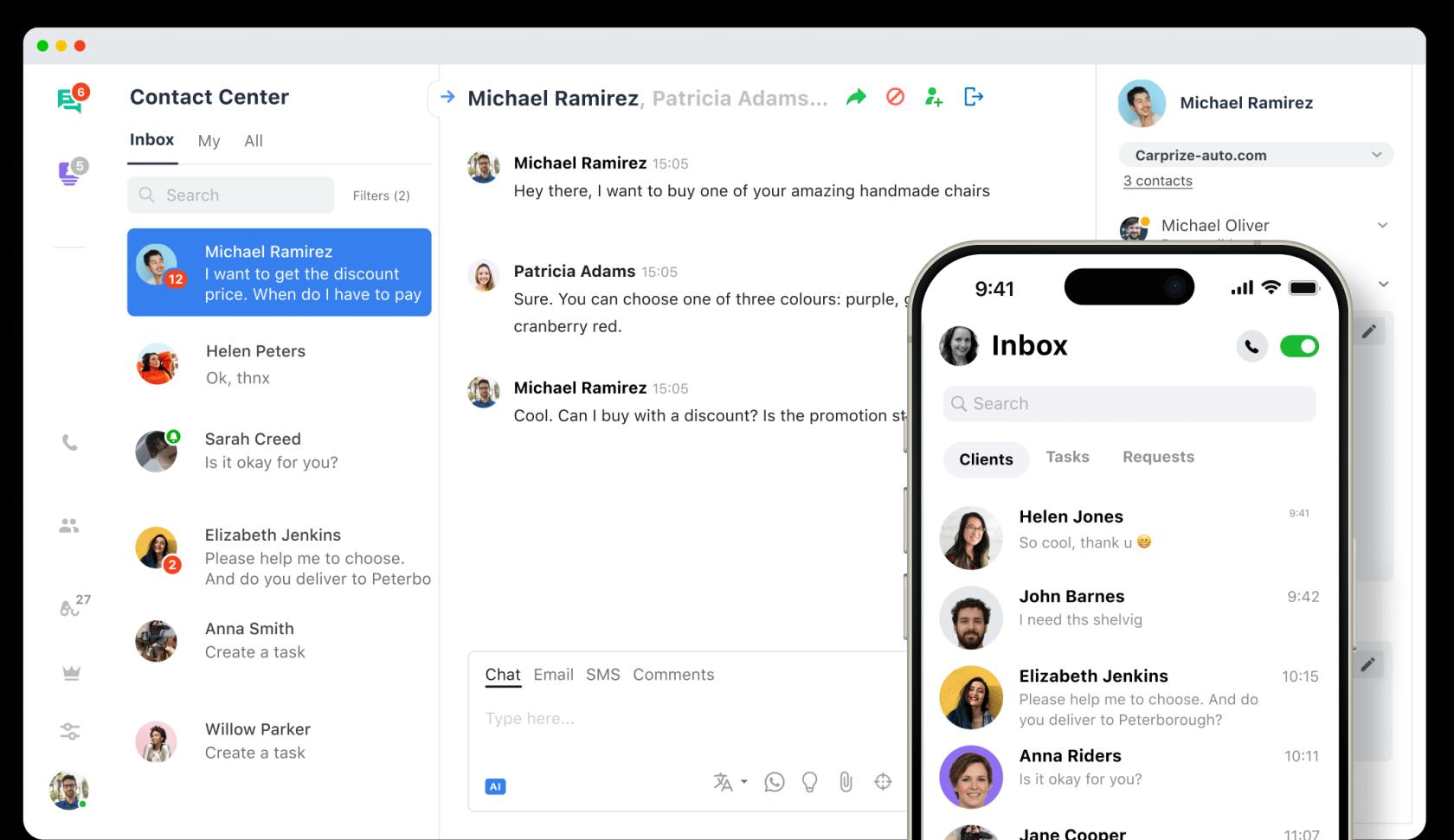
Tidio is stronger on store tooling and tickets. Messenger, Instagram, WhatsApp and email are on every plan, chats turn into tickets, and native Shopify actions like product cards and order views come with Growth (Tidio pricing). Flows, its rule-based automations for welcome messages and lead capture, start with 100 free visitors a month. Phone is still a beta add-on.
If you sell on Shopify, Tidio's store features are a real reason to pick it. My Tidio AI for Shopify guide and roundup of Shopify chatbot apps cover that side.
What do users say about JivoChat and Tidio?
Both rate well as products and less well as vendors, but JivoChat's gap is much wider. On G2 they tie at 4.6, while Trustpilot has JivoChat at 2.2 and Tidio at 3.5.
JivoChat's fans like that it's simple and cheap:
"Simplicity - Jivo chat is easy to use, and easy to train reps to use. No frills, all function, low price!"

Its low Trustpilot score is mostly about renewals, not the inbox:
"I went from paying $140 a year to now they are trying to charge me $450 a year."

Tidio's fans like Flows and Lyro together, and its critics talk about the usage meter:
"I like the combination of Flows and Lyro AI. The visual automation builder makes it easy to create welcome messages, collect leads, and handle common customer questions without coding."
"I think pricing is fair, it is on a per usage basis though... The pricing model that is based upon usage may be problematic in the future. We monitor it closely."
Read together, both camps say the same thing about billing from opposite sides. JivoChat users get hurt when the per-seat price jumps at renewal; Tidio users worry about the meter climbing with volume. My JivoChat review has more on renewals. For Tidio, see the Tidio AI reviews round-up.
Which should you pick, JivoChat or Tidio?
Pick by your team shape first, then by AI.
- Pick JivoChat if you have 1 to 5 agents, a busy inbox, phone calls in the mix, and you mainly want people answering chats. Check the renewal price and the 10-day refund window before you pay a year upfront.
- Pick Tidio if you have 5 to 10 people sharing a modest number of chats, sell on Shopify or WooCommerce, or want an AI agent that learns from more than a website. Turn off automatic upgrades if you'd rather approve each tier jump.
- Look at both again if you're over 10 seats or 2,000 chats a month, where Tidio moves to Plus pricing quoted by sales. My live chat software guide and Tidio vs LiveChat comparison cover the next tier up.
There's a third pattern I see a lot: the inbox is fine, but most chats are the same questions about shipping, returns and order status. Paying for seats or per-chat AI to answer those is the expensive way round, which is the case for live chat deflection before you add headcount.
Where eesel fits next to JivoChat or Tidio
eesel doesn't integrate with JivoChat or Tidio, and it isn't a live chat inbox, so I won't pretend it replaces one. It's an AI helpdesk teammate that runs as a chat bubble on your website, learns from your help pages, product data and past tickets, and hands chats to your team in your helpdesk when a person is needed.
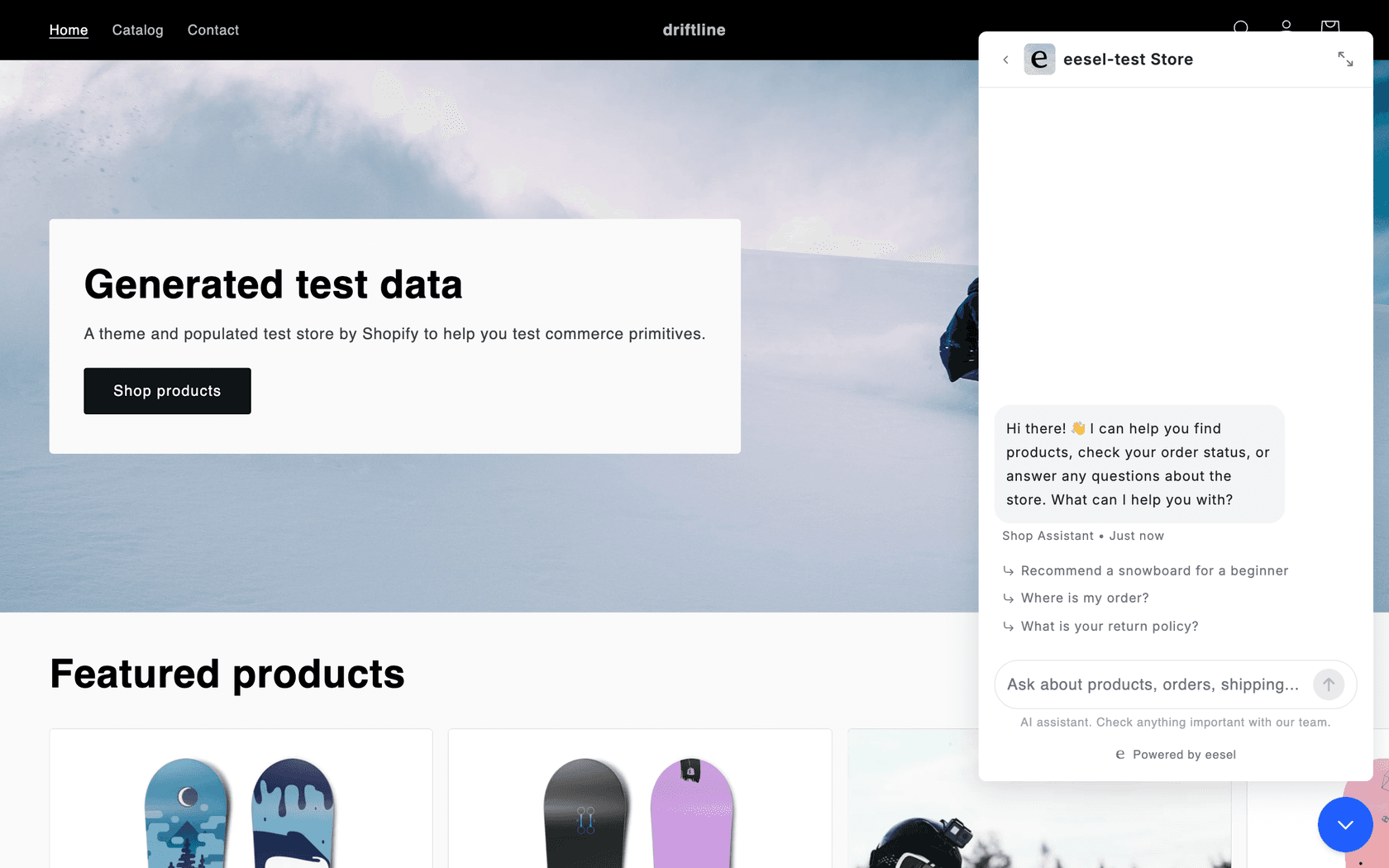
Here's what that looks like for stores. Nordbutiker, a Swedish light electric vehicle retailer, runs one bot per brand across four countries, each trained on that store's site and its Zendesk tickets, working in Zendesk, the website chat bubble and the browser extension.
And Question Beauty answers Messenger, email and chat questions in Gorgias, in the language the customer wrote in: 990 tickets handled in a month, 280 closed without a person, after looking up 290 Shopify orders.
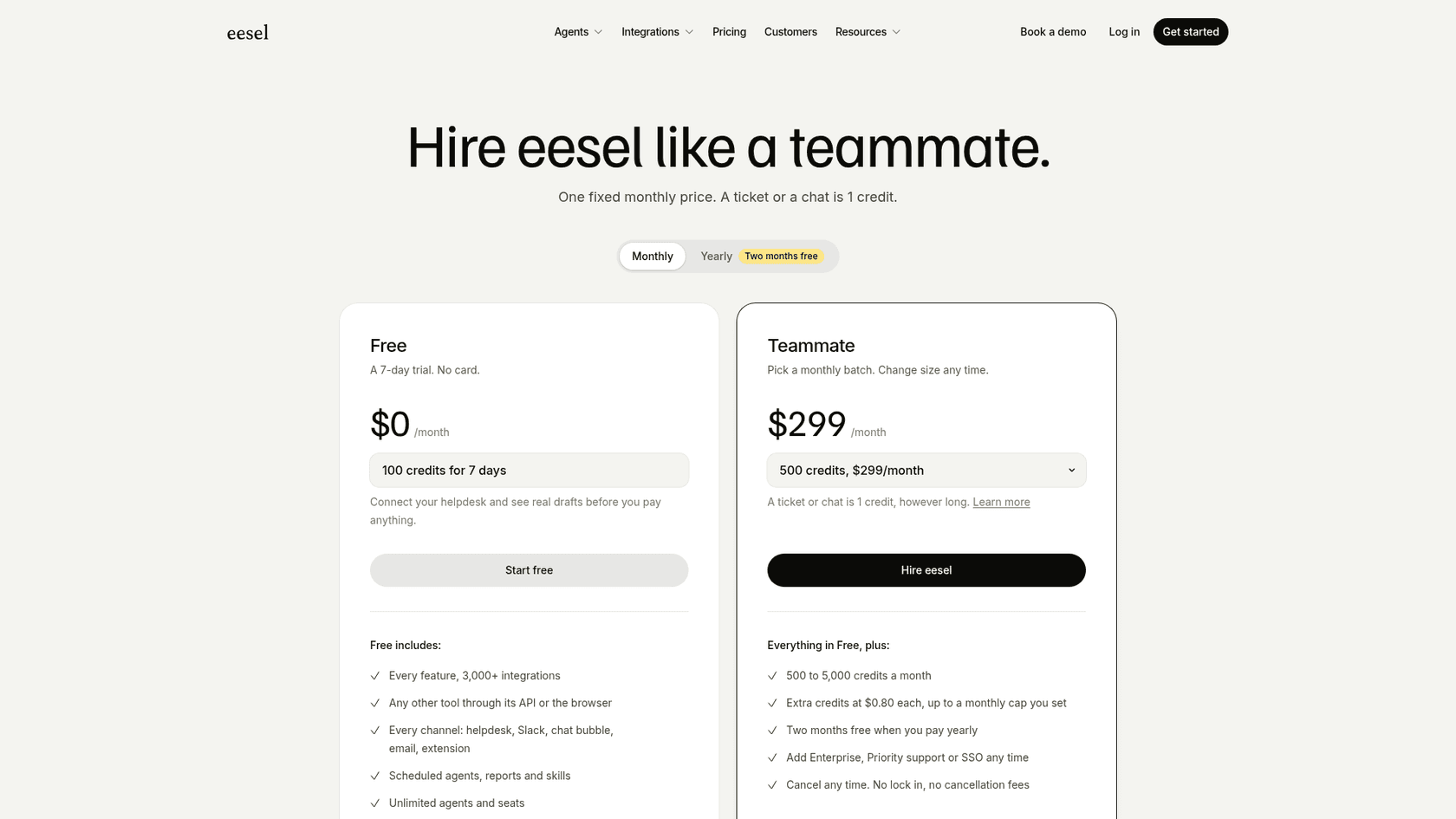
Pricing is per conversation, like Tidio, but with one meter. On eesel's pricing page, the Teammate plan is $299 a month for 500 credits, where one chat is one credit, and there's a 7-day free trial. Before anything goes live, you can run the agent against your past tickets to see how it would have answered, which I'd do whatever tool you pick. My AI chatbot for ecommerce roundup and chatbot cost guide go further.
Try eesel
If your JivoChat or Tidio inbox is full of the same questions, let AI take those first. eesel joins your site as a chat bubble in a few minutes, already knows your help pages and products, and answers like a new hire who has read everything, then passes the tricky chats to your team. Test it on your own questions before a customer sees a reply.
Frequently Asked Questions
Is JivoChat or Tidio better?
It depends on what grows faster in your business, people or chats. JivoChat bills per agent online at once, so it's cheaper for a few agents handling lots of chats. Tidio bills per conversation, so it's cheaper for a bigger team with modest volume, and its Lyro AI agent is the more capable of the two. My Tidio review goes deeper on Tidio, and my JivoChat review covers the other side.
Is Tidio cheaper than JivoChat?
Only below a certain chat volume. With 10 agents and 200 human-answered chats a month, Tidio's Growth plan is about $49 a month on annual billing against roughly $307 for JivoChat Basic with WhatsApp. With 2 agents and 2,000 chats, the order flips: about $83 for JivoChat against $291 for Tidio. Every plan is in my Tidio pricing guide, with the other side in my JivoChat pricing breakdown.
Which has better AI, JivoChat or Tidio?
Tidio. Lyro learns from your website, PDFs, CSV files, Q&A pairs, synced products and solved chats, and can run Actions like a Shopify order lookup. JivoChat's AI Agent learns from a website scan, up to five files and up to five domains, and doesn't use past chats. See my Tidio AI features guide, then compare it with my JivoChat AI post.
Does JivoChat or Tidio include WhatsApp?
Tidio includes the WhatsApp integration on every plan, Free included, with 1,000 free messages per number a month before Meta's rates apply. JivoChat sells WhatsApp as a $27 a month module on annual billing, on every plan. More on setup in my WhatsApp chatbot roundup.
Can I use JivoChat or Tidio for free?
Yes. Tidio Free covers 50 human-answered conversations a month, up to 10 seats and a one-time 50 Lyro AI conversations. JivoChat's free plan covers website chat and social channels for a small team, with limited history. For more free picks, see my live chat for websites guide.
What's a good alternative to JivoChat and Tidio for AI chat?
If the main goal is AI answering repeat questions, eesel's chat bubble answers website visitors from your own help pages and store data, then hands off to your team. It isn't a live chat inbox, so it works best next to a helpdesk. For other options, start with my JivoChat alternatives list, or the separate Tidio alternatives roundup.