8 best Influx alternatives for customer support in 2026

eesel Team
Last edited September 8, 2026

Influx is a flexible, month-to-month customer support outsourcer, and one of the few that publishes its rates. If you're shopping alternatives, you're really choosing between two moves: switch to a different outsourcer, or add an AI layer that clears the repetitive volume first.
On the outsourcing side, the strongest 2026 options are SupportYourApp, Peak Support, PartnerHero (now Crescendo-powered), Boldr, Helpware, TalentPop, and Wing Assistant. They differ mostly on how you buy (dedicated agents vs. fully managed), region, and whether pricing is published (almost none are).
Here's the part I'd flag from working support queues every day: most of an outsourced team's work is repetitive tier-1 tickets, the exact shape a good AI agent resolves on its own. So my honest pick isn't a straight swap. Put an AI helpdesk teammate on the routine volume, size the human team around what's left, and you spend less than any pure-headcount alternative on this list.
Why teams look for an Influx alternative
I work a support queue, so I'll be straight about what Influx is good at: it's remote-first, month-to-month, and it actually publishes its prices (from $1,400/month per agent), which almost nobody in outsourcing does. That's a fair offer, and I'll say so plainly.
The reasons teams still go looking are usually one of these:
- You want a specialist. Influx is a generalist. A Shopify store or a deeply technical SaaS sometimes wants an outsourcer built around that.
- You want fully managed accountability, or the opposite, cheaper hourly staffing you manage yourself.
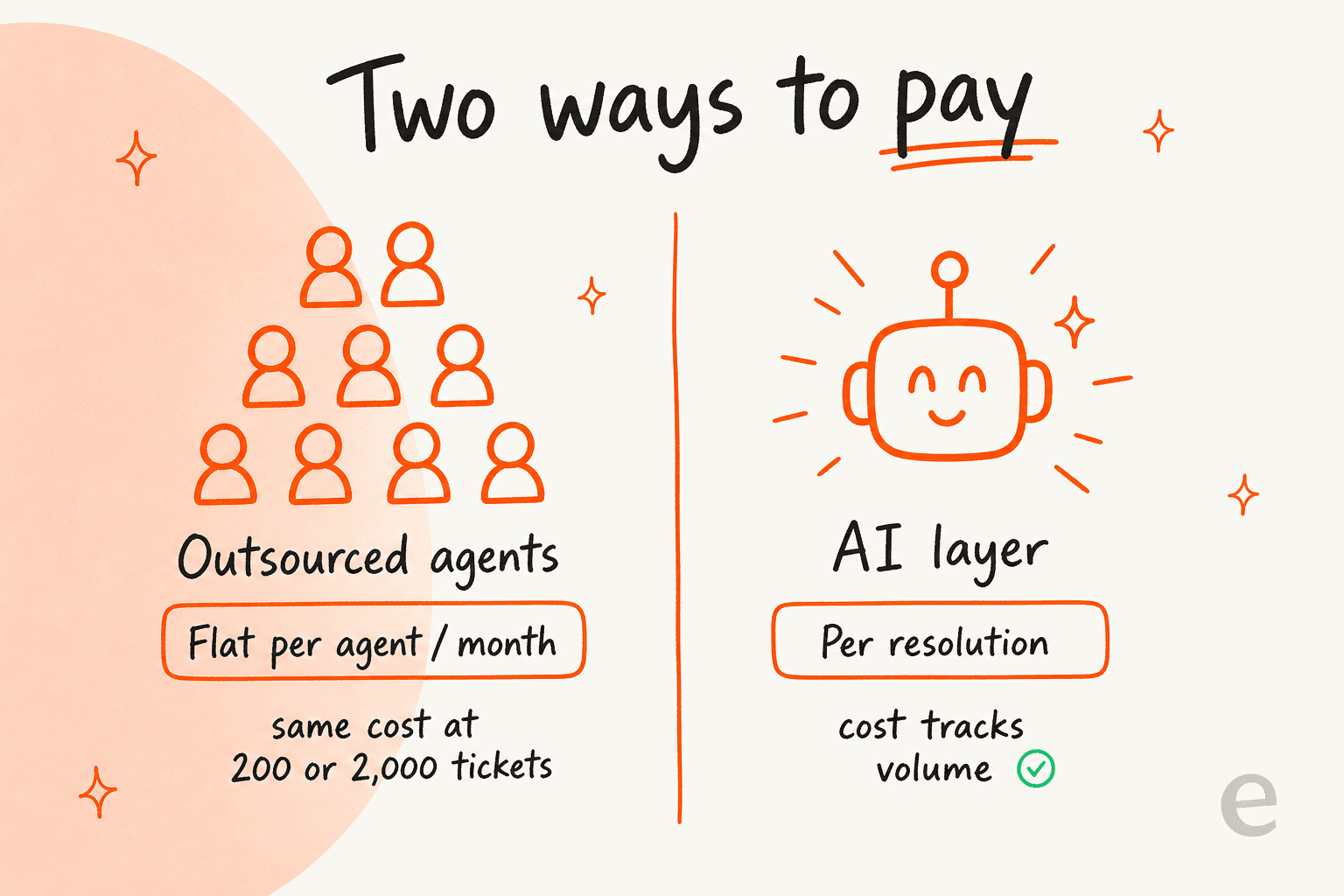
- You've realised you're paying for headcount, not resolutions. This is the big one. You buy agent-months whether the queue is 200 or 2,000 tickets.
That last point is the one I'd sit with. On eesel's sales calls I hear it constantly: one multi-brand ecommerce operator running 500+ tickets a day described their volume as almost entirely refunds, unsubscribes, and order tracking. I've spent years working queues with AI running on live tickets, and that repetitive shape is exactly what the software absorbs. So before you swap one per-agent bill for another, it's worth asking whether you need fewer agents at all.
The 8 best Influx alternatives at a glance
Every price below is per the vendor's own site. "Quote" means pricing is gated behind a sales call.
| Tool | Model | Starting price | Billing basis | Setup fee | Min. commitment | Launch time | Best for |
|---|---|---|---|---|---|---|---|
| eesel AI | AI helpdesk teammate | Public, from $299/mo | Monthly credit plan (1 credit per ticket) | None | None (self-serve) | Minutes | Clearing repetitive tier-1 volume |
| TalentPop | Dedicated hourly agents | ~$8-$14 / hour | Per hour worked | $500 one-time / agent | 20 hrs/week | 1-2 weeks | Ecommerce / Shopify stores |
| SupportYourApp | Managed + AI | Quote | Per project | Quote | Quote | ~1 month | 24/7 multilingual tech support |
| Peak Support | Boutique BPO | Quote | Per project | Quote | Quote | 1-4 weeks | Quality-led, data-driven teams |
| PartnerHero | Managed + Crescendo AI | Quote (outcome-based) | Per outcome | Quote | 60-day launch | <2 weeks | Human + AI blended CX |
| Boldr | Ethical B-Corp BPO | Quote | Per project | Quote | Quote | 1-4 weeks | Values-driven brands |
| Helpware | Multi-division BPO | Quote | Per project | Quote | Quote | 1-4 weeks | CX + tech + back office |
| Wing Assistant | Managed virtual assistants | Quote | Per plan | Quote | Monthly | ~1 week | Task-based VA coverage |
Numbers move with region, seniority, and channel. Use them to shortlist, then get a quote for your exact setup.
Which move is right for you?
Before the item-by-item breakdown, a quick gut check. The question isn't only "which outsourcer," it's "outsourcer or AI layer first."
1. eesel AI
I'll put eesel first because it's the alternative that changes the math rather than swapping one headcount bill for another. Where Influx sells you trained people, eesel AI is an AI helpdesk teammate: it plugs into the helpdesk you already run and resolves tickets itself.
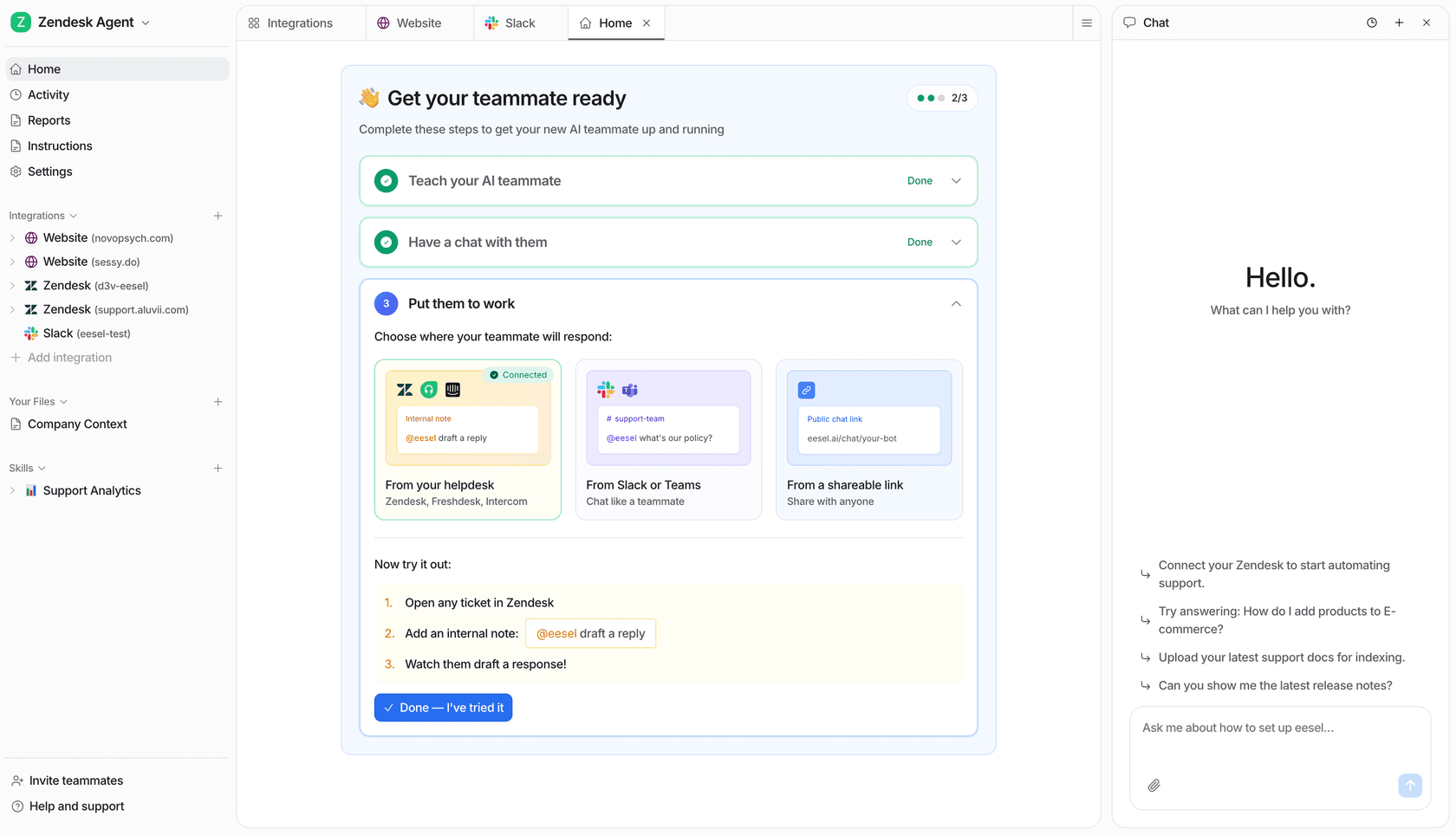
What it is. A ready-to-work AI teammate that joins your existing helpdesk (Zendesk, Freshdesk, Gorgias, Intercom, Help Scout) and answers repetitive tickets end-to-end, escalating the rest to your humans. It learns from your past tickets, help center, and internal docs, no rip-and-replace of your stack.
Best for. Teams whose queue is mostly tier-1 volume and who want to cut how many agent-months they buy, whether from Influx or anyone else.
Pricing. Public, from $299/month for 500 credits, one fixed monthly price with no per-seat fee (1 credit per ticket or chat). That's the structural difference from every outsourcer here: you pay for ticket volume, not hours staffed.
Watch for. eesel isn't a human team. Genuinely complex, sensitive, or judgment-heavy tickets still route to people, which is the point. It also works best when you have existing content for it to learn from; a queue with no help center and no ticket history gives it less to work with on day one.
Where it stands apart. You can simulate the AI on your real past tickets before it ever touches a live customer, so you see the projected resolution rate up front. I've watched confident-sounding bots quietly give wrong answers, which is why every eesel rollout now gets simulated against history before it goes live. If you operate from a terminal, the eesel CLI drives the same teammate: a person can run it by hand, scripts can automate it, and coding agents like Claude Code or Cursor can too.
Want to see the number before you commit? eesel can simulate on past tickets and show the resolution rate it would hit, then bill only for what it actually solves. Free to try.
2. TalentPop
TalentPop is the ecommerce-focused agency Influx itself name-checks as a comparison. It supplies dedicated, trained agents on an hourly model, and it's the one alternative here with truly transparent pricing.
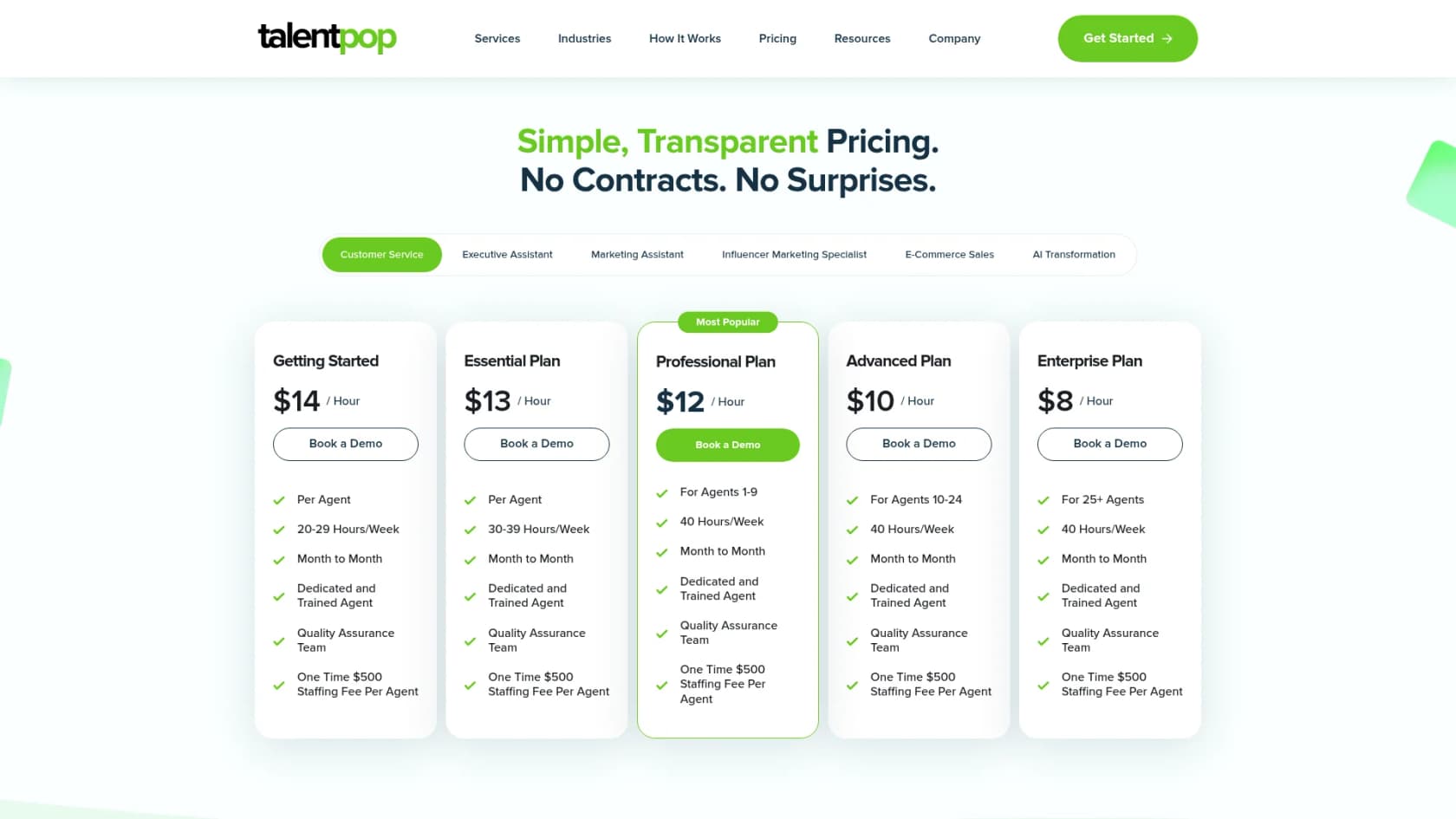
What it is. A done-with-you staffing agency, mostly for Shopify and DTC brands, providing dedicated agents (and other roles like assistants and specialists) who work exclusively for your brand.
Best for. Ecommerce stores that want cost-effective, hands-on agents and are happy to run their own training and QA.
Pricing. Published hourly: roughly $8-$14 per hour per agent depending on weekly hours committed, plus a one-time $500 staffing fee per agent. Month-to-month, minimum 20 hours/week, invoiced twice monthly for exact hours worked (tracked via Hubstaff).
Watch for. It's hourly staffing, so you're managing the relationship and QA yourself, and the time-tracking model means you're billed for hours logged rather than tickets resolved. There's no built-in AI automation layer, so the repetitive volume still consumes paid hours unless you add one.
3. SupportYourApp
SupportYourApp is a veteran outsourcer (operating since 2010) that has leaned hard into an AI-plus-human model, and it's a strong fit for global, multilingual tech support.
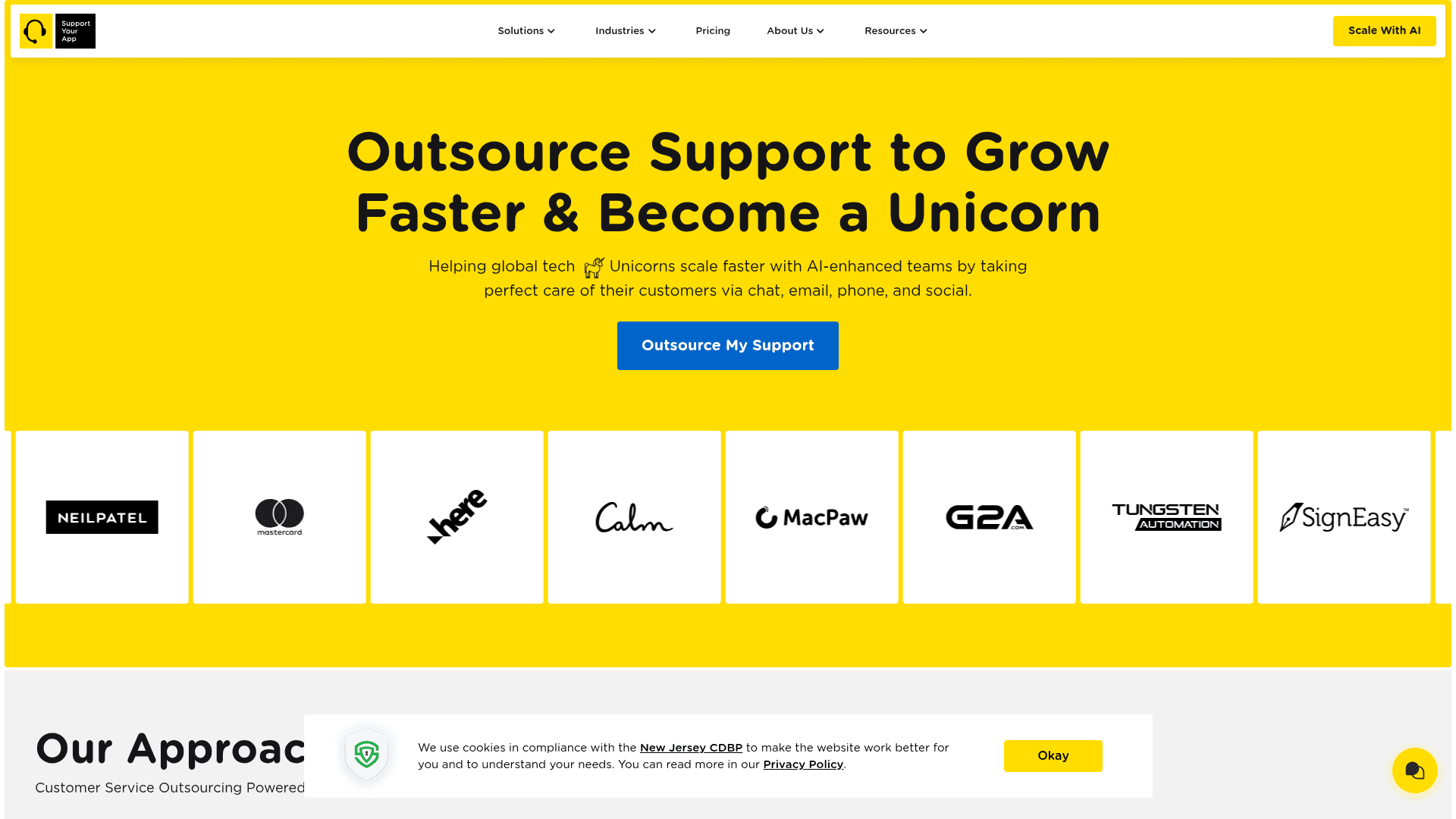
What it is. A managed "support-as-a-service" provider combining trained agents with its own AI stack (SupportResponse, SupportVoice, SupportBrain) across chat, email, phone, and social.
Best for. SaaS and tech companies needing 24/7 multilingual coverage, it advertises 60+ languages across 30+ countries.
Pricing. Quote-based; you request a custom package rather than pick from a published list.
Watch for. Pricing isn't public, so budgeting means a sales call. Its security posture is a real plus (PCI DSS Level 1, GDPR, ISO), but the AI it uses is its own internal tooling; if you want to own and tune the automation inside your own helpdesk, that's a different setup than a managed provider running AI on your behalf.
4. Peak Support
Peak Support is a boutique BPO that competes on quality and data rather than scale, positioning itself explicitly against the giant outsourcers.
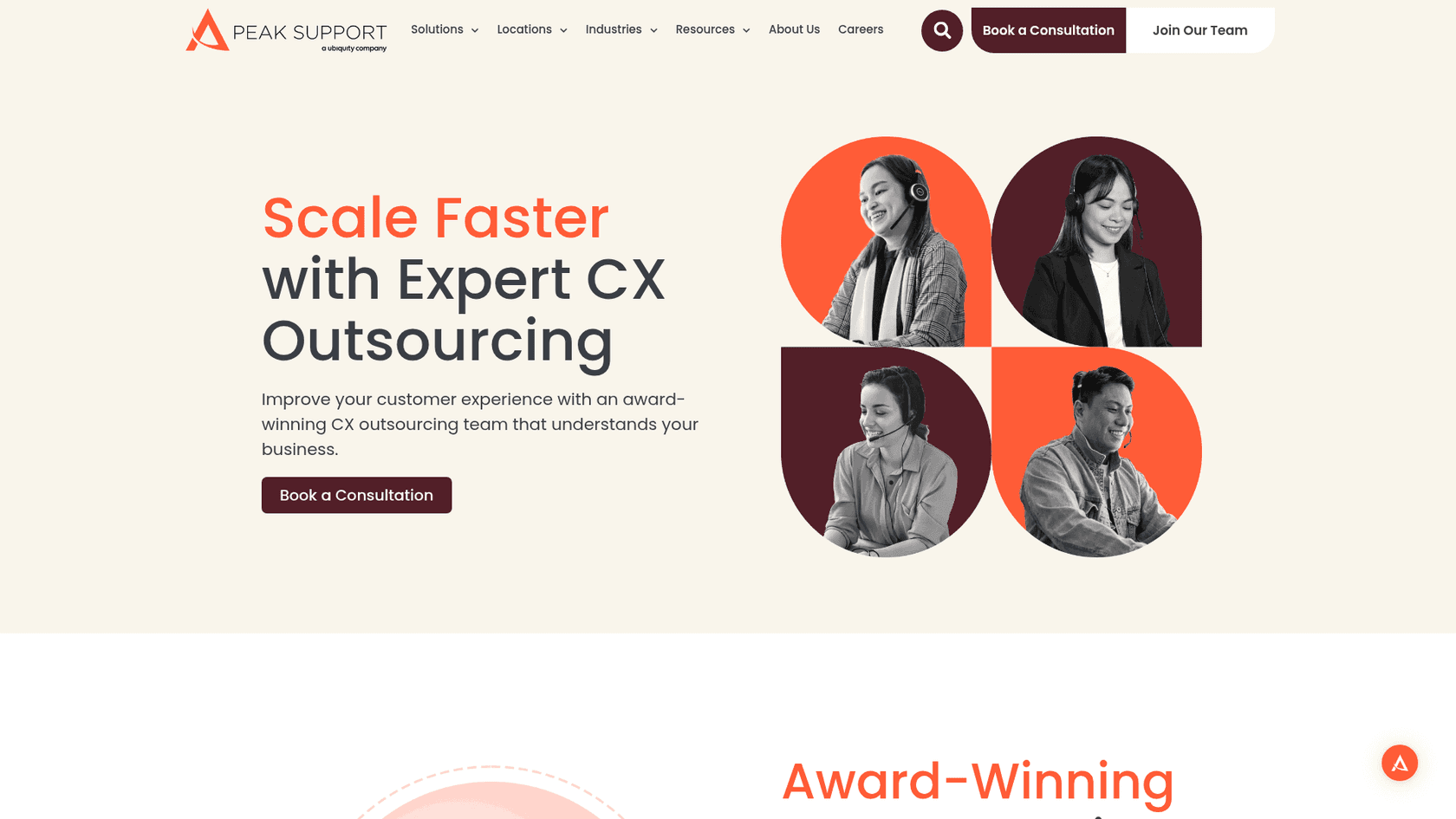
What it is. A managed CX outsourcer offering support, trust & safety, technical support, and back-office teams, with an "CX Accelerator" program layering AI tools (chatbot, sentiment analysis, QA assist) on top.
Best for. Teams that care most about agent quality and QA, it says it hires 1 in 50 applicants and runs a 95% average QA score.
Pricing. Quote-based; you book a consultation for a custom proposal.
Watch for. No published rates, and as a quality-led boutique it isn't positioned as the cheapest option. Certifications are strong (SOC 2, PCI, HIPAA). The AI tooling is delivered as part of their service rather than something you configure and keep, so the automation lives with the vendor, not in your stack.
5. PartnerHero (now Crescendo)
PartnerHero is a well-known CX outsourcer that is now powered by Crescendo, combining its outsourcing teams with Crescendo's AI platform, so this is really a people-plus-AI hybrid.
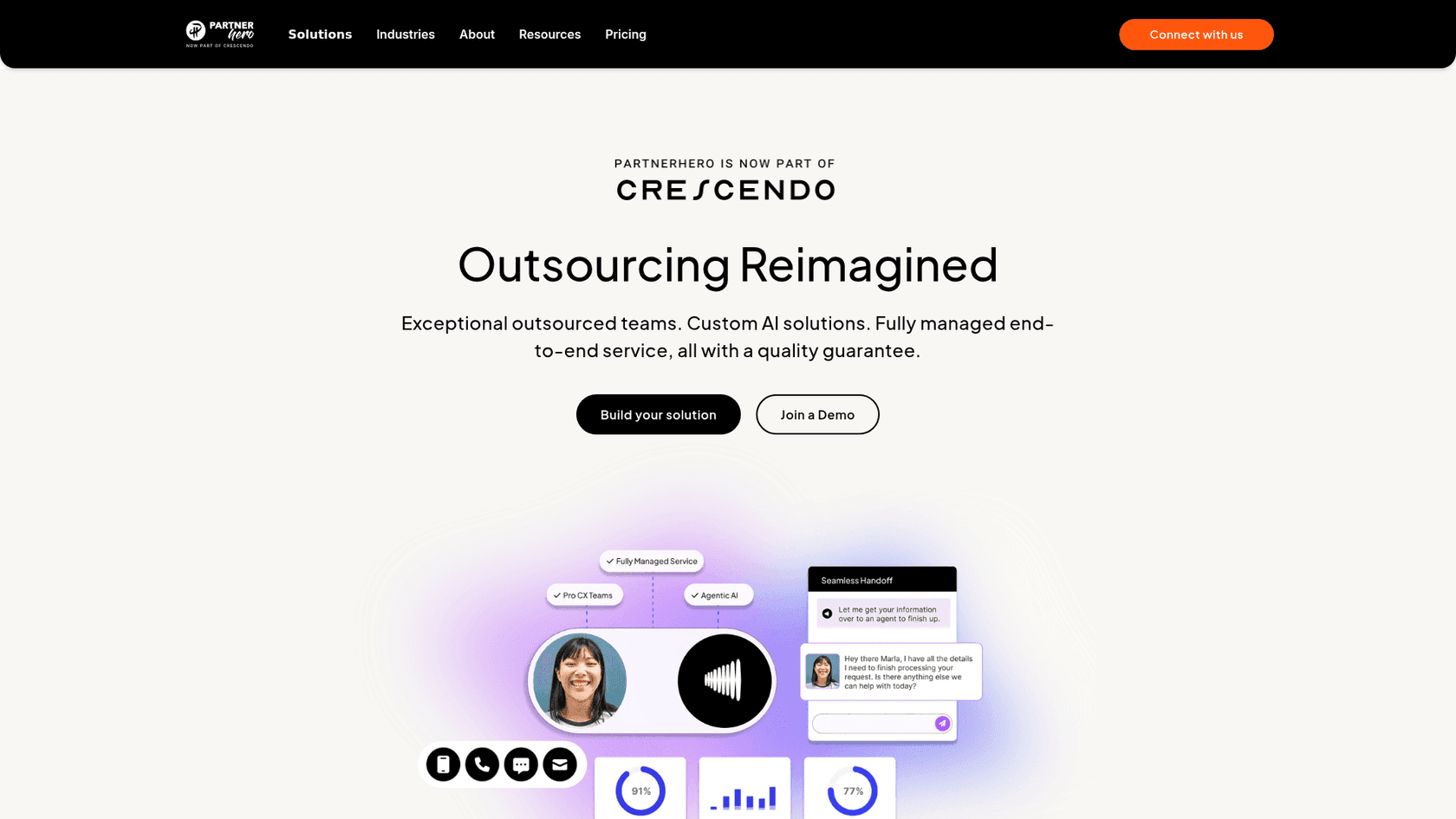
What it is. Fully managed and AI-assisted CX, with professional support teams, 100% automated QA, and Crescendo's omnichannel agentic AI, sold on outcome-based pricing.
Best for. Teams that want a single partner owning both the human and AI sides of support, launched fast (it quotes under two weeks).
Pricing. Quote-based, described as outcome-based. Crescendo's own published rate elsewhere is $1.25 per resolution with a floor, so expect resolution-style pricing plus a minimum commitment.
Watch for. There's a 60-day minimum launch commitment, and because it's now tied to Crescendo, you're buying into that AI platform specifically rather than bringing your own. If you already run a helpdesk you like, a layer that sits inside it may fit better than a full managed-service switch.
6. Boldr
Boldr is a mission-driven outsourcer and a Certified B Corp, aimed at brands that care about the ethics of how their offshore teams are treated.
What it is. A managed-outsourcing and global-recruiting provider (1,500+ team members across the US, Canada, Mexico, South Africa, and the Philippines) offering customer support, technical support, and back-office teams. It's technology-agnostic, so it works in whatever helpdesk you use.
Best for. Values-driven brands that want an ethical, culture-led outsourcing partner, it reports 97% client CSAT and 98% team-member retention.
Pricing. Quote-based; you connect with their team for a custom build.
Watch for. No public pricing, and AI is offered as a strategy/implementation service rather than a productised resolution engine. If automation is your priority, you'd be layering a tool on top anyway, which raises the same "why not start with the layer" question.
7. Helpware
Helpware is a US-headquartered BPO organised into divisions (CX, AI, Tech, Media), so it can staff support alongside adjacent functions from one partner.
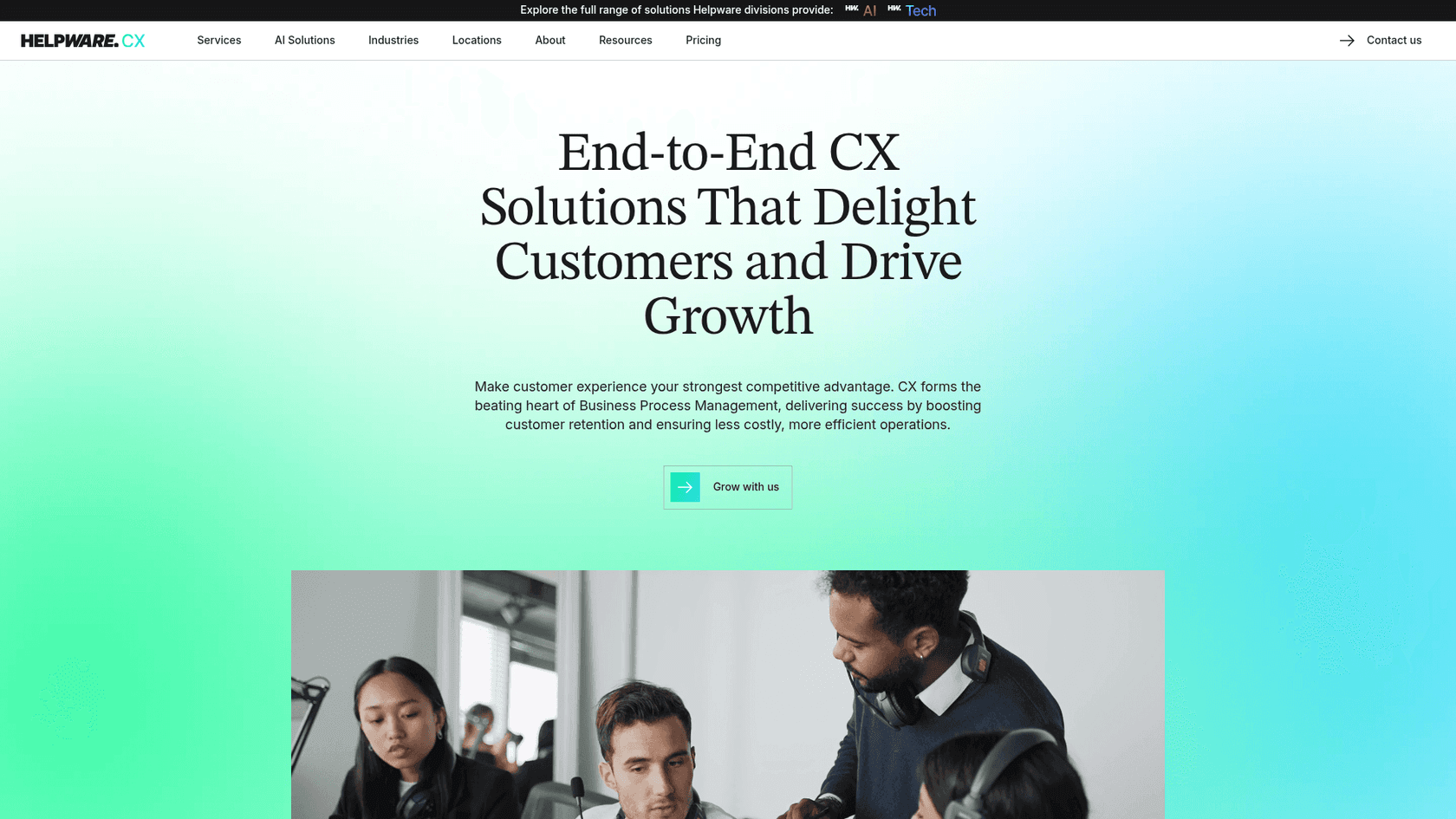
What it is. A full-service BPO covering customer support outsourcing, CX consulting, technical support, back office, and content moderation, with AI woven through its CX division.
Best for. Companies that want one vendor for support plus tech or back-office work, rather than stitching together multiple providers.
Pricing. Quote-based; contact sales for a tailored proposal.
Watch for. Its breadth is the selling point and the caveat, it's a large multi-service shop, so a small support-only engagement may get less bespoke attention than at a boutique. As with the others, the AI is part of their managed service, not something you own inside your own tooling.
8. Wing Assistant
Wing Assistant is the managed-virtual-assistant platform Influx contrasts itself against, and it's worth knowing precisely because it's a different model, not a like-for-like BPO.
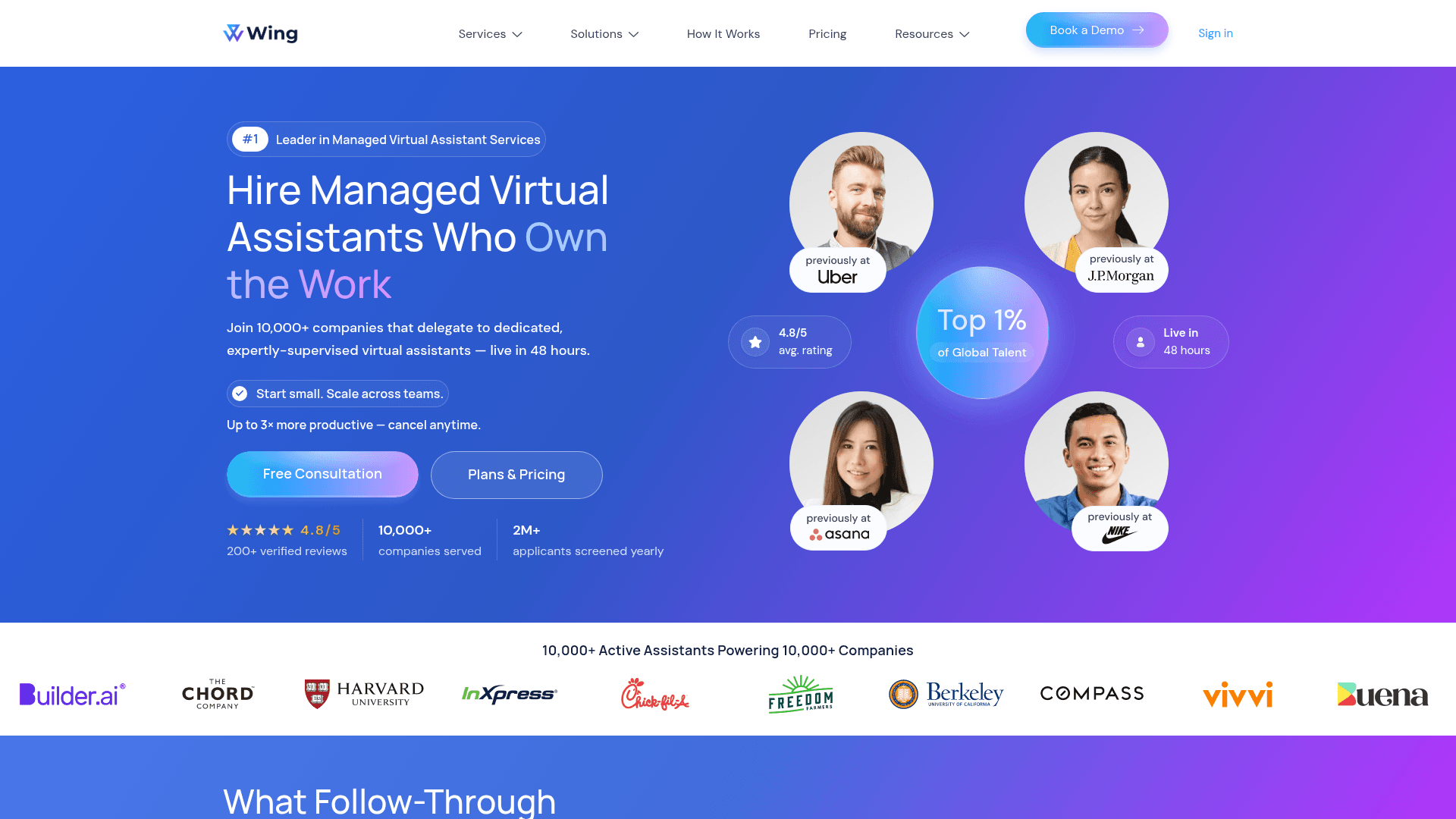
What it is. A managed VA service (10,000+ active assistants) that provides a dedicated assistant for support and general tasks, backed by its own workspace app.
Best for. Small teams and founders who want a flexible, general-purpose assistant covering support among other duties, rather than a scaled, specialist support operation.
Pricing. Quote-based; the pricing page routes to a scheduled consultation.
Watch for. This is task-based VA coverage, not a dedicated, QA-managed support operation, so it's a weaker fit if you need trained agents at volume with SLAs and reporting. For a lean queue it can be plenty; for a scaling support org, one of the BPOs above (or an AI layer) fits better.
How to actually choose
Strip away the logos and there are only three questions that matter:
- How much of your queue is repetitive? If the honest answer is "most of it," the AI layer is the highest-leverage move, full stop. Resolve that volume first, then outsource the remainder. Every pure-headcount alternative on this list bills you the same whether the AI could have handled the ticket or not.
- Do you want to manage the team, or hand it over? Talent-as-a-service and hourly agencies (TalentPop) are cheaper but you run QA. Managed BPOs (Peak Support, PartnerHero, SupportYourApp, Boldr, Helpware) cost more but own the outcome.
- How predictable is your volume? Spiky, seasonal volume is where a credit plan you can move up or down any time beats fixed agent-months, since you aren't paying for idle headcount in the quiet months.
I've worked live support queues with AI running on them long enough to have watched both failure modes: teams that over-hired humans for automatable work, and teams that dropped a raw bot on customers and eroded CSAT. The setup that actually holds up in 2026 is a lean human team for the hard tickets plus an AI teammate for the routine ones, and you can simulate the split before you commit a dollar.
If your queue looks like most queues, start with the layer. It's the one move here that lowers the bill instead of moving it.