
What an ecommerce call center actually is
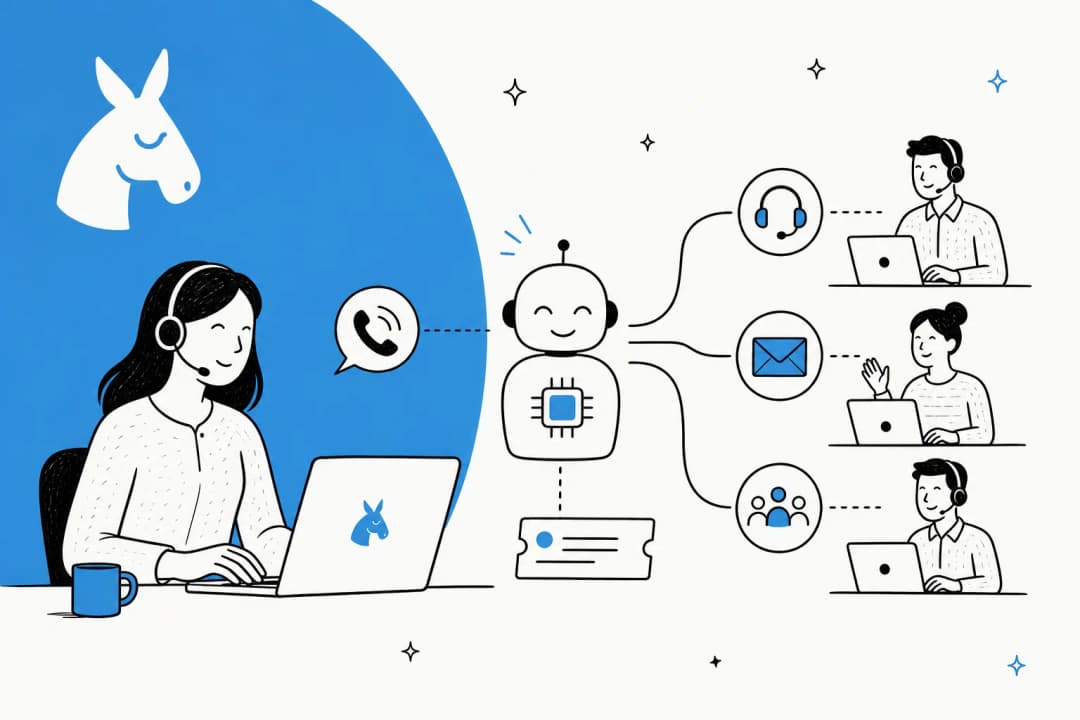
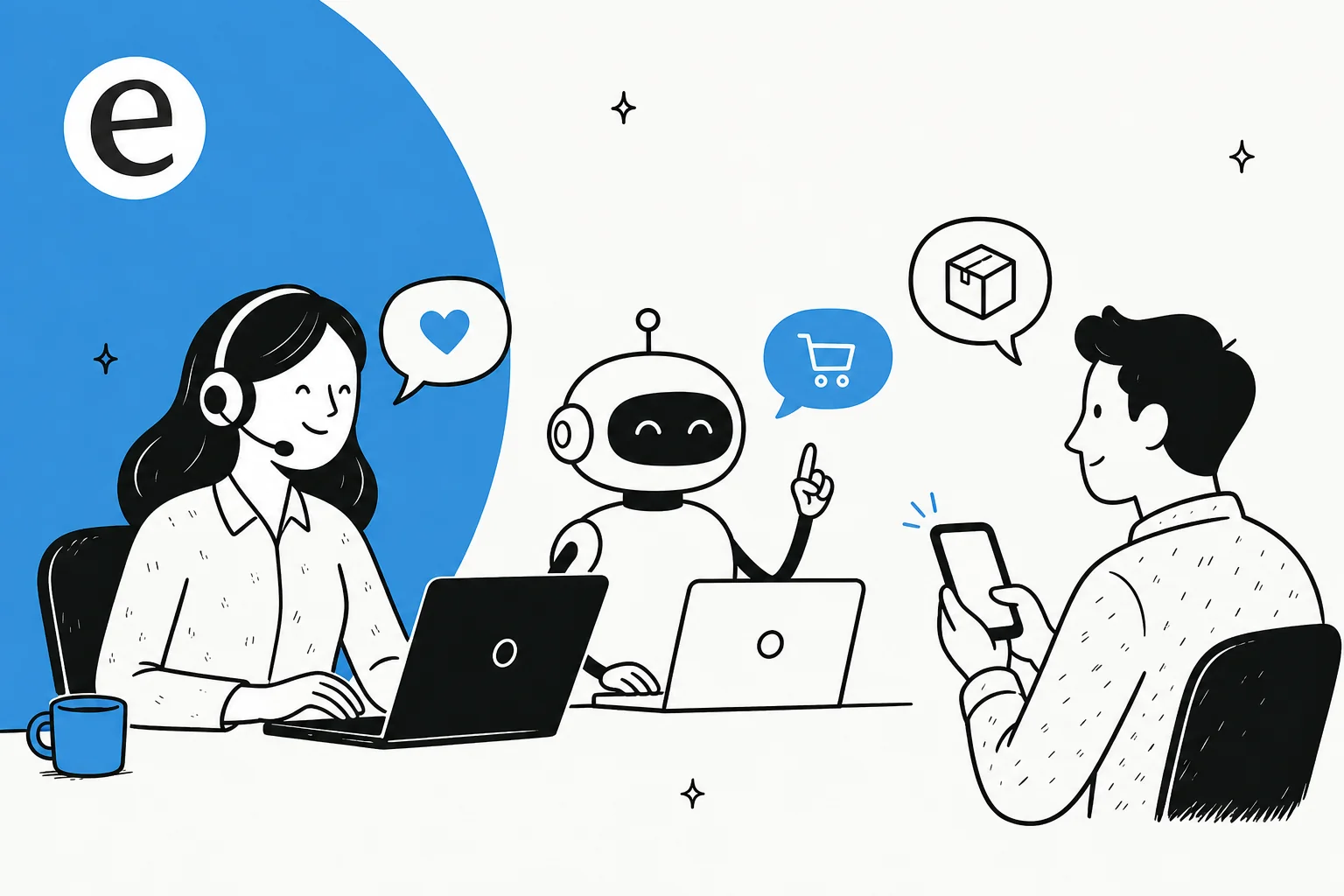
Strip away the jargon and an ecommerce call center is just the front door for everyone who bought (or is about to buy) from your store and needs a human-shaped answer. The classic mental image is a room of headsets, but that's the least accurate part. In practice, most of the volume isn't even voice anymore, and most of it is the same handful of questions.
The thing that separates it from a generic call center or contact center is context. When a customer calls a bank, the agent looks up an account. When a customer messages an online store, the answer depends on an order number, a carrier's tracking status, a return window, a discount code, and sometimes a subscription. So an ecommerce support operation isn't really a phone system, it's a helpdesk wired into the store. That's why the modern setups run on tools like Gorgias, Zendesk, or Freshdesk sitting right on top of Shopify and the order data.
And the questions are stunningly repetitive. Across the teams I talk to, the volume is dominated by the same three buckets: WISMO ("where is my order"), refunds and returns, and basic product or subscription questions. One multi-brand operator I came across handles 500+ tickets a day that are almost entirely refund, unsubscribe, and order-tracking requests. As a small store owner put it on r/ecommerce:
"I run a small e-commerce store, and lately I've been finding customer service to be a massive time sink. Most of it is dealing with [the same repetitive questions]."
That repetitiveness is the whole reason AI has a foothold here. But before we get to that, it's worth seeing how many doors that "front door" actually has.
The channels a modern ecommerce call center runs
"Call center" undersells it. A store's support surface now spans voice, email, live chat, and a growing pile of messaging apps, and customers expect the conversation to follow them across all of it. Here's the split of how US consumers actually contact businesses, from YouGov's nationally representative survey:
| Channel | Used | Preferred |
|---|---|---|
| Phone | 70% | 35% |
| 63% | 23% | |
| In person | 35% | 8% |
| Website form | 34% | 5% |
| Live chat | 31% | 10% |
| Chatbot | 18% | 1% |
| App | 18% | 2% |
| Social media | 16% | 4% |
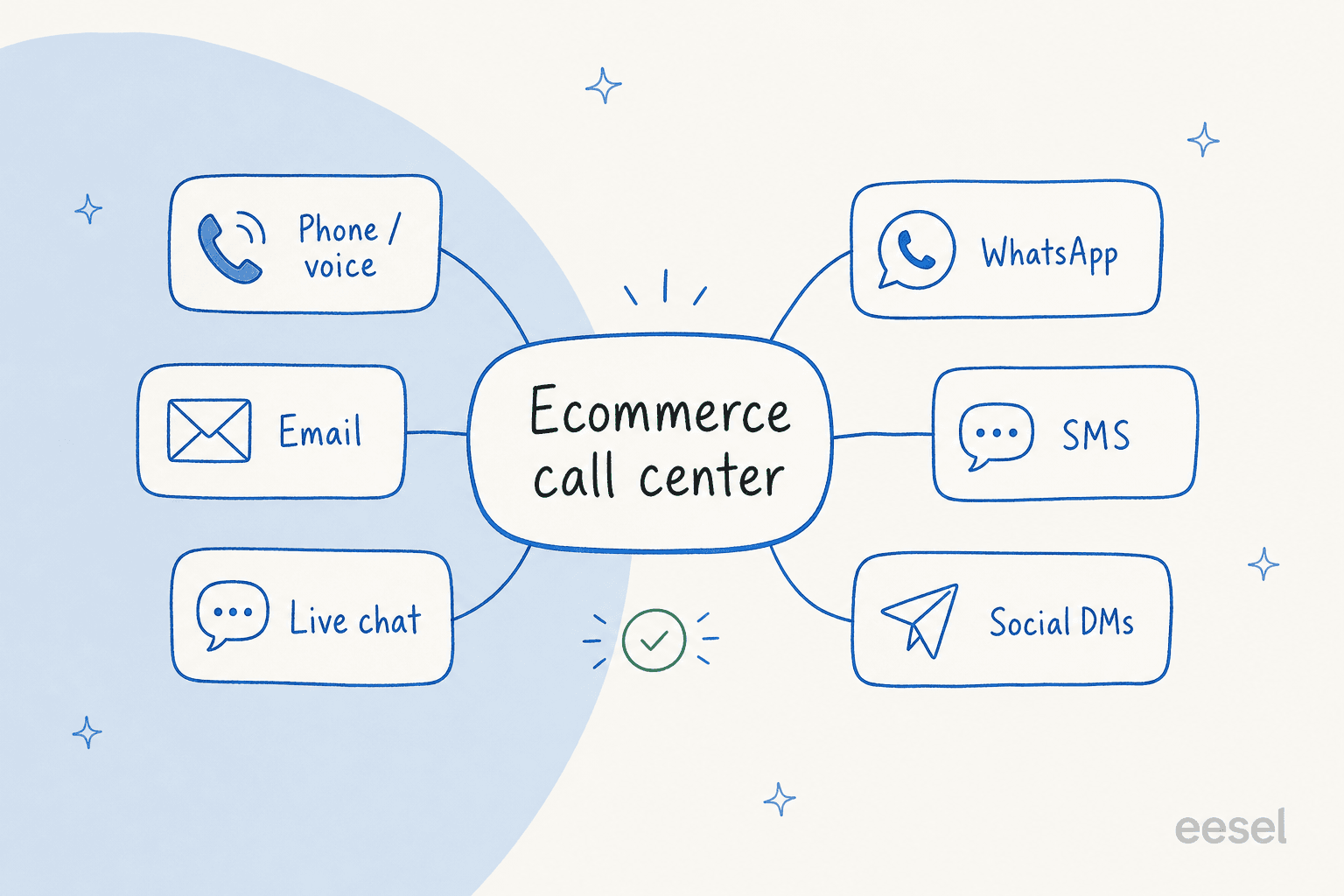
Two things in that table should shape how you build. First, the gap between used and preferred: phone is used by 70% of people but only 35% want it. People reach for whatever channel you make easiest, not the one they'd choose, so the channel mix is something you get to design. Second, the number every AI vendor hopes you won't read: 18% of consumers use chatbots and only 1% prefer them. That's a blunt warning that a bad bot is worse than no bot, and it sets the quality bar for any AI you deploy.
There's a generational wrinkle too. Phone is preferred by 52% of Boomers but only 25% of Gen Z, who lean toward email and social. If your buyers skew young, a voice-first call center is fighting the tide. The move most stores are making is omnichannel, not just multichannel: Humach's 2025 benchmark found 62% of contact centers adopted AI specifically to stitch voice, chat, email, and social into one flow so context doesn't get dropped when a customer switches from a DM to a call. If you're still adding live chat or WhatsApp as separate silos, that's the thing to fix before you add AI on top.
What an ecommerce call center actually costs
This is where most founders get their sticker shock, so let's be specific. There are three ways to staff tier-1, and they price very differently.
In-house. In the US, a customer service representative had a median wage of $20.59/hour, or $42,830/year, in May 2024 (BLS), with the low end of the market around $14-17/hour (BLS OEWS). Fully loaded with benefits, software, and a manager, a small in-house team is easily a six-figure line item. It also buys you the most control and the deepest product knowledge, which is not nothing.
Outsourced (BPO). This is where the price drops and the trade-offs begin. One DTC store owner described the quotes they got on r/ecommerce:
"[agencies] charge $4200 per month for 1 US support agent and $2400 for off shores support in the Philippines."
Offshore teams in the Philippines run roughly $12-14/hour for a good one, or $750-1,500/month for a direct full-time hire, with rates dropping "as low as $5/hour" at the bottom of the market. The cheaper you go, the more you're gambling on quality, and plenty of operators think the whole model is a mistake. As one long-time seller argued bluntly: "I absolutely advise against it. Actually speaking to customers directly is a unique opportunity to supercharge your customer relationship." The rule of thumb I see repeated is to only start outsourcing once you're doing serious monthly volume.
AI tier-1. The newest option, and the one reshaping the math. Instead of paying per seat or per hour, you pay per ticket resolved, and the market is visibly shifting toward outcome pricing (some agencies now charge a flat ~$2 per resolved ticket). Done right, AI handles the repetitive 60-70% at a fraction of a human's cost. eesel's usage-based pricing is $0.40 per AI-handled ticket with no per-seat fees, which is where the per-ticket economics get interesting: one real ecommerce account on Gorgias and Shopify was running ~700 tickets a week at about $1.07 per ticket handled by AI.
Here's the rough shape of the three models side by side:
| Model | Typical cost | Best for | The catch |
|---|---|---|---|
| In-house (US) | ~$20.59/hr, ~$42.8k/yr per agent (BLS) | Complex, high-value, brand-critical support | Expensive; slow to scale up or down |
| Outsourced / BPO | ~$2,400-4,200/mo per agent | Predictable volume, budget-constrained | Quality variance; less product depth |
| AI tier-1 | ~$0.40-2 per resolved ticket | Repetitive WISMO / refunds / FAQs | Needs a quality bar + human escalation |
The honest read: it's not really in-house vs outsourced vs AI. The teams doing this well put AI on the repetitive front line, keep a lean human team (in-house or outsourced) for the hard stuff, and stop trying to hire their way through ticket volume. If you want the full picture of the software layer underneath, we broke it down in our guide to customer service systems.
Why the seasonal spike breaks a fixed-headcount call center
Every cost model above assumes steady volume. Ecommerce doesn't have steady volume. It has Black Friday.
The scale of the peak is genuinely hard to staff for. Over BFCM 2025, Shopify merchants alone did $14.6 billion in sales, up 27% year over year, with 81 million+ consumers buying and sales peaking at $5.1 million per minute on Black Friday. More than 94,900 merchants had their single highest-selling day ever. Every one of those orders is a future support ticket: a shipping question, a "it hasn't arrived", a wrong-size return.
You can't hire a seasonal team fast enough to match a weekend, and the people who do work the peak pay for it. A burned-out agent described the reality on r/callcentres:
"At the peak, I was hitting 120-130 [calls] a day for an 8 hour shift... Please, if you can manage to find another job, get out NOW."
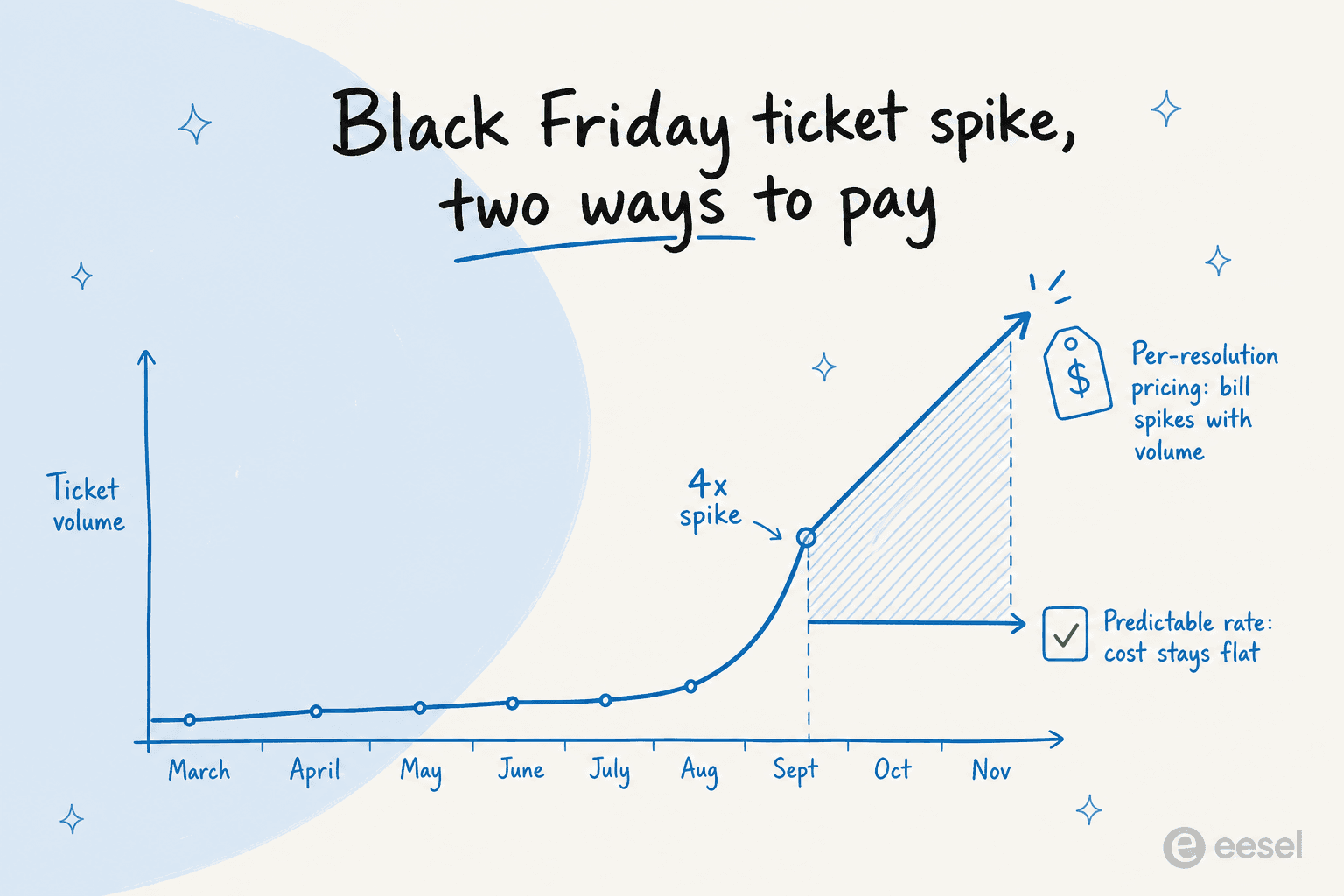
That's not a one-off. Contact-center agent attrition still runs around 28% even after improving from 34% (Everest Group), and understaffing during peaks is a big reason why. This is the strongest case for AI in an ecommerce call center: it's the only tier-1 capacity that scales instantly and doesn't quit in January.
There's a pricing trap hiding in the spike, though, and I flag it on every rollout. If your AI vendor charges per resolution, a great Black Friday is also a giant bill. Run the math: 1,000 tickets a month at 80% resolution is one number; 4,000 tickets over BFCM at the same 80% is four times that, right when margins are thinnest. A flat or predictable usage-based rate keeps November's bill in line with March's. When you're choosing tooling for a seasonal business, that pricing structure matters as much as the resolution rate.
How AI is changing the ecommerce call center
The shift is already well underway, and the numbers are real, not vendor hype. AI-driven call deflection has cut live-agent interactions by 27% (McKinsey), generative AI agents were live in over 45% of US contact centers by the end of 2024 (Gartner), and Zendesk's own customer Vagaro reported resolving 44% of incoming requests, cutting resolution time by 87%, and lifting CSAT to 92% with AI. Looking forward, 75% of CX leaders expect 80% of interactions to be resolved without a human "in the next few years." It's the same shift reshaping retail more broadly, and it's what real-time ecommerce order management increasingly runs on.
So how does it actually work? For an ecommerce ticket, a good AI agent does three things in sequence.
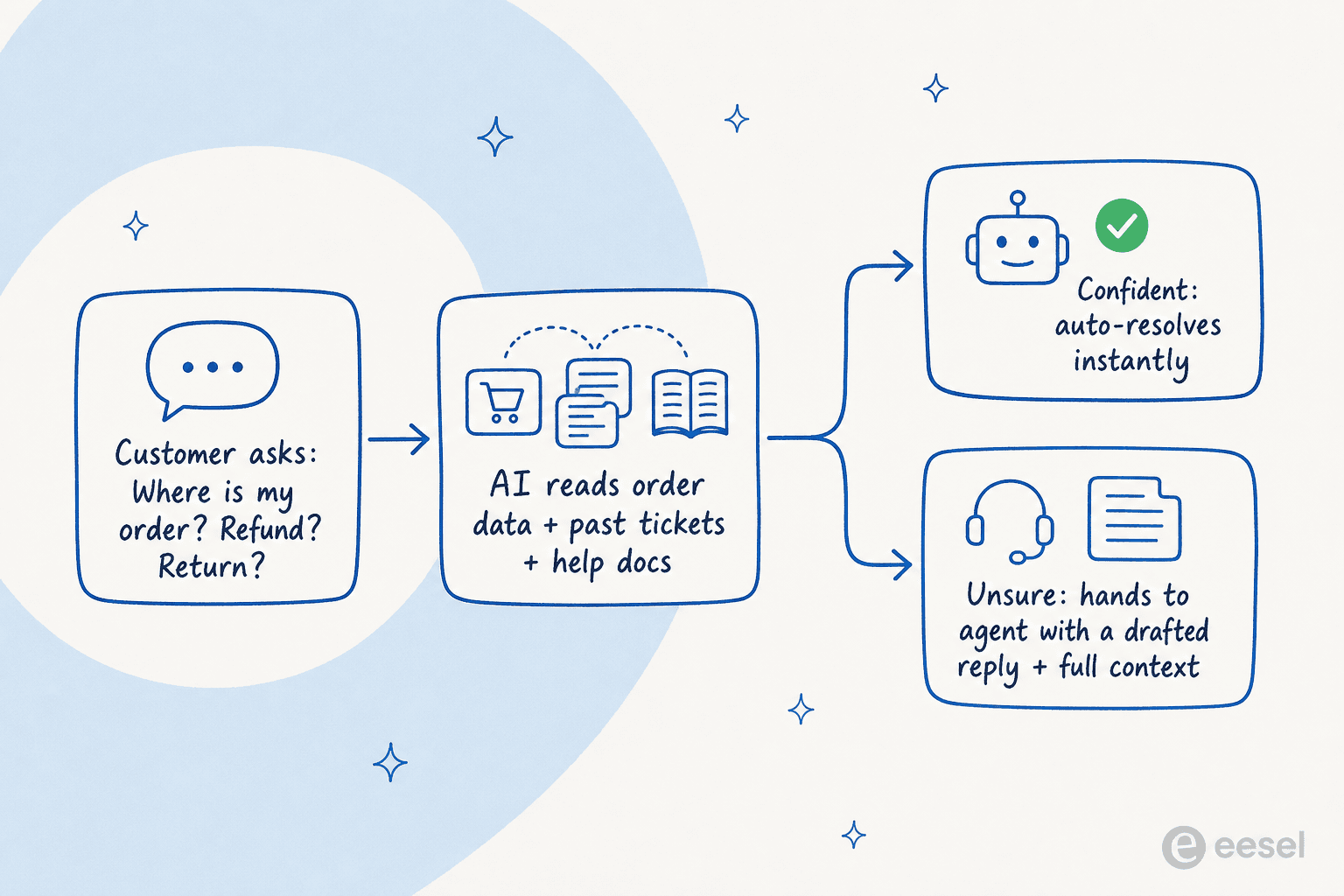
First, it reads context: the live order and tracking data from your store, your help-center docs, and your team's past ticket replies. Second, it decides whether it can answer confidently. Third, and this is the part that separates a useful agent from the 1%-preferred chatbot, it acts on that confidence: resolve instantly when sure, hand off to a human with a drafted reply and full context when not. That last behavior is the entire ballgame. As one DTC supplements CX lead framed the requirement to me:
"The AI will never be able to answer 100% of the questions. I need an AI who is only handling the tickets that it's confident to handle and all the other ones, leave them alone."
That's the design principle behind any AI you should put on an ecommerce queue: confidence-based routing, not blanket auto-reply. It's also why the chatbot vs live chat debate is the wrong frame; the answer is an AI agent that does both and knows which to use. If you want the mechanics of the deflection side specifically, we go deep in how to deflect FAQs with AI and how to automate refunds with AI.
One caution worth naming: the same Zendesk research found "shadow AI" (agents quietly using unapproved external AI tools) jumped up to 250% year over year in some industries. If you don't give your team a sanctioned tool, they'll bring their own, and that's a data-privacy problem waiting to happen. Rolling out AI properly is partly about staying ahead of that.
What a good ecommerce AI rollout actually looks like
Here's the part I care most about, because I've watched confident-sounding bots quietly give customers wrong answers, which is expensive when the "answer" is a refund policy. The single biggest thing we changed after seeing that is simple: simulate the AI against your real historical tickets before it ever talks to a customer. You get to see exactly what it would have said, on your actual past volume, and tune it before go-live instead of learning in production.

What that looks like in practice: one German jewelry retailer running about 1,000 tickets a month on Zendesk and Shopify ran a trial against their real traffic and saw 93% triage accuracy, 100% spam detection with zero false positives, and useful draft replies on 93.8% of returns and refund tickets and 100% of refund-status questions. Those categories, refunds and WISMO, are precisely the repetitive ecommerce volume you want off your humans' plates. Another gig-economy support team resolved 73% of tier-1 requests in the first month.
The pattern across all of them is the same: start with a copilot drafting replies for humans to approve, watch the accuracy on your own tickets, then flip the confident categories to full auto-resolution and keep everything else routed to a person. It's what turns a support queue into genuine real-time customer support instead of a backlog. That's how you get the deflection numbers without ever shipping the 1%-preferred bot experience. It's also, not coincidentally, how call center automation actually earns trust instead of eroding it.
Try eesel for your ecommerce support
If you're running an online store, eesel AI is built for exactly this queue. It plugs into Shopify and your helpdesk (Gorgias, Zendesk, Freshdesk, Help Scout), trains on your past tickets and help docs, and starts handling tier-1 WISMO, refund, and tracking questions in minutes, not months.
The two things that matter most for an ecommerce operation are baked in: you can simulate it on your real historical tickets before it goes live, so there's no guessing about accuracy, and the usage-based pricing means a record-breaking Black Friday doesn't come with a record-breaking support bill. You keep the confidence-based control the CX leads above kept asking for: it handles what it's sure about and leaves the rest to your team. It's free to try, and you can point it at your own tickets to see the numbers on your volume before you commit.
Frequently Asked Questions
What is an ecommerce call center?
How much does an ecommerce call center cost?
What channels should an ecommerce call center support?
Can AI handle ecommerce customer support?
How do ecommerce call centers handle Black Friday spikes?



Article by
Riellvriany Indriawan
Riell is a designer and writer at eesel AI with about two years of experience researching CX platforms, AI chatbots, and helpdesk software. She combines her design background with a sharp eye for how these tools actually look and feel in practice — making her comparisons unusually visual and user-focused.