

For most Shopify Plus brands I'd start with Gorgias, because it runs refunds, cancels and order edits from the ticket across every connected store. Choose eDesk if you also sell on Amazon or eBay, Zendesk if support goes beyond the store, and Re:amaze for per-seat pricing with unlimited brands. Plus doesn't force a helpdesk choice; store count and the price unit do. For 3,000 tickets plus 900 AI replies, the tools that publish an AI price run $1,485 to $2,040 a month.
eesel can sit inside the helpdesk you pick and replace its built-in AI line. With the eesel CLI, a coding agent can upload approved knowledge and ask test questions before anything goes live, though connecting the helpdesk still needs an admin to approve it.
What actually changes at Shopify Plus scale?
Less than the sales pages suggest. Shopify Flow is a free app that Shopify lists on every plan, so you don't need Plus for store-side automation. Every helpdesk below connects to a standard store too. What Plus changes is the shape of the store estate, and that is the part that should drive your pick.
Shopify's expansion store rules let a Plus organization hold up to ten stores on one contract: one main store and nine expansion stores. They suit international storefronts, product-line extensions, B2B stores for wholesale buyers, and employee or VIP stores. The catch for support: each store runs completely independently with its own data, settings and configuration, and nothing syncs between them by default. A customer who orders from your EU store and your B2B store is two customers as far as Shopify is concerned.
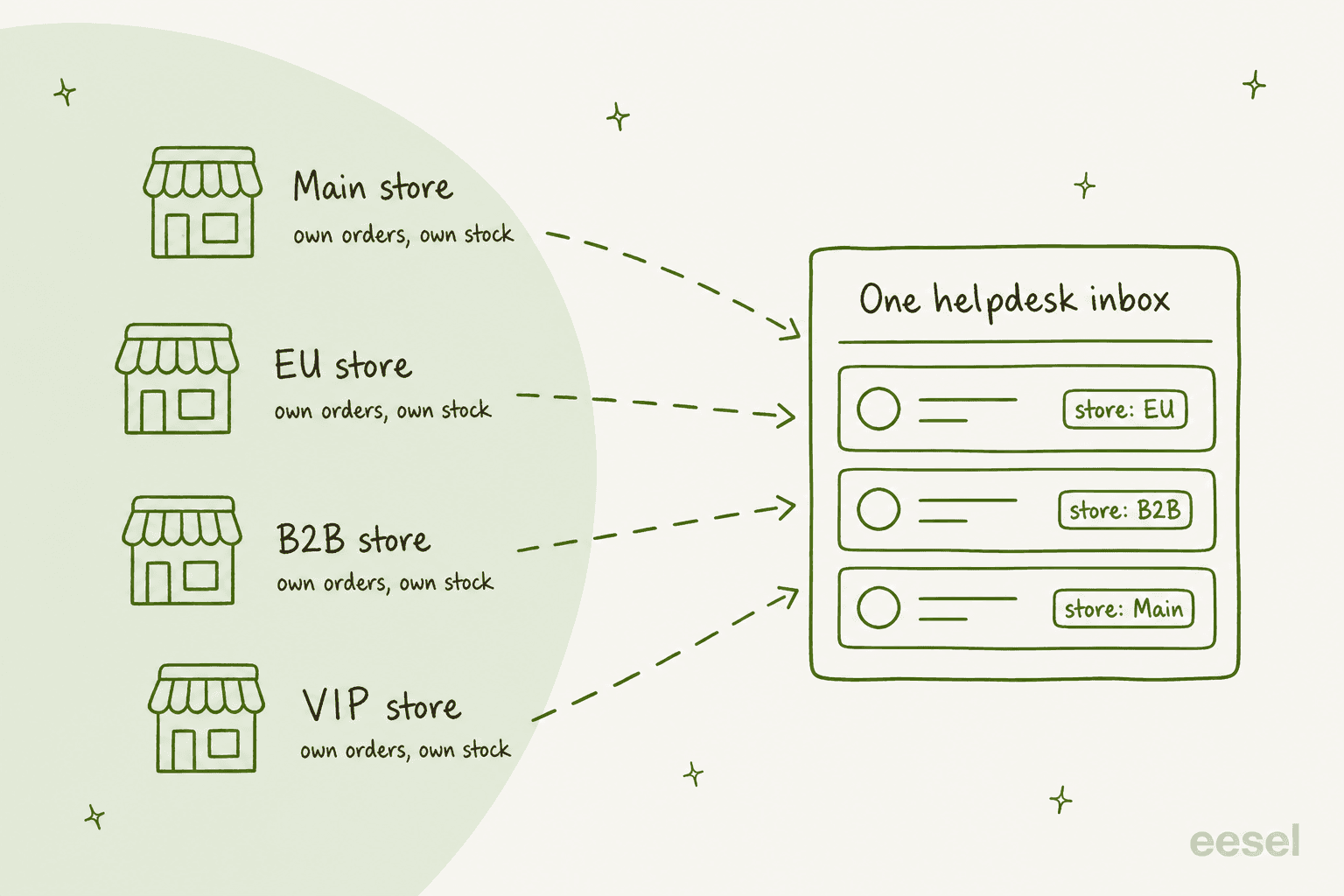
So at Plus scale the helpdesk has three jobs the sticker features don't capture. It must connect several independent stores and keep every ticket traceable to the one it came from. It must let an agent (or an AI agent) act on the right store's order, with refunds, cancellations and edits done from the ticket. And it must price in a way that doesn't punish you for the volume you already have. Shopify Plus itself starts from $2,300 a month with unlimited B2B catalogs, so a few hundred dollars of helpdesk is rarely the problem. A pricing unit that triples at peak season is.
I write eesel's helpdesk content and spend a lot of time on what buyers actually ask. When I put the question "which helpdesk should a Shopify Plus store use?" to ChatGPT, it shortlisted Gorgias, Zendesk, Re:amaze and Richpanel, then gave advice I'd sign: don't choose on the advertised AI resolution percentage, test it against your own tickets. I'll come back to that, because it is the one step most Plus teams skip.
How should I compare helpdesks for a Plus store?
Compare on four things: how each one connects multiple stores, what an agent can do to an order from inside the ticket, what the pricing unit is, and what the AI costs on top. The table uses only what each vendor publishes on its own pages as of 25 November 2026.
| Helpdesk | Pricing unit | Published entry prices | AI price | Several stores or brands | Shopify actions from the ticket |
|---|---|---|---|---|---|
| Gorgias | Tickets per month, 500 seats on paid plans | $40 (50 tickets), $90 (300), $550 (2,000), $1,430 (5,000) | $0.85 to $1.00 per automated interaction | Connect each Shopify store; assign channels and rules by store | Refund, cancel, edit and duplicate orders via macro actions |
| Zendesk | Per agent | $19, $55, $115 per agent, billed yearly; Enterprise on request | $1.50 committed or $2.00 pay-as-you-go per resolution | Multiple Shopify storefront connections | Refunds and cancellations in the Support app |
| Re:amaze | Per team member | $29, $49, $69 per month (10% off yearly) | Re:amaze AI Agent listed; price not published | 1 brand on Basic, unlimited on Pro and Plus | Refund, cancel, draft orders; orders from all connected stores |
| Richpanel | Per user (help desk), per order volume (self-service portal) | $0 (3 seats), $29, $99 per user monthly; Enterprise custom | Self-service portal priced by orders | Portal connects 1 store on Free, 2 on Starter | Order history beside the reply |
| Kustomer | Quote only | No public prices; routes to a demo | Not published | Shopify Plus integration with one-click activation | Returns and exchanges from the timeline |
| eDesk | Per seat | $45, $99, $129 per seat, billed yearly | $0.99 per outcome on every plan | 1, 5 or 10 stores or marketplaces by plan | Returns, cancellations and order adjustments inside eDesk |
Two readings jump out. First, only Gorgias prices by ticket volume; Zendesk, Re:amaze, Richpanel's help desk and eDesk all charge by seat, which is cheaper for a lean team on high volume and dearer for a big team on moderate volume. Second, eDesk's top plan covers ten stores or marketplaces, which happens to match the ten-store ceiling on a standard Plus contract, though marketplace channels count toward that number.
What does each helpdesk cost for one Plus buyer?
Prices only compare once they're set against one buyer, so here is mine: 3,000 tickets a month worked by 6 agents, plus 900 conversations an AI agent handles on top. I priced each tool from the vendor's own page, billed yearly where there's a discount, and kept the AI line separate because that is where the units diverge.
| Helpdesk and plan | Seats or tickets | AI line | Monthly total | Maths |
|---|---|---|---|---|
| Gorgias Pro | 3,000 tickets | 900 AI interactions | $1,549 | Helpdesk $360 for 2,000 tickets + 1,000 extra at $36 per 100 = $720; AI Agent $190 covers 190, then 710 x $0.90 = $639 |
| Zendesk Suite Team | 6 agents | 900 resolutions | $1,680 | 6 x $55 = $330; 900 x $1.50 committed = $1,350 |
| Zendesk Suite Professional | 6 agents | 900 resolutions | $2,040 | 6 x $115 = $690; AI as above |
| eDesk Growth (5 stores) | 6 seats | 900 outcomes | $1,485 | 6 x $99 = $594; 900 x $0.99 = $891 |
| eDesk Professional (10 stores) | 6 seats | 900 outcomes | $1,665 | 6 x $129 = $774; AI as above |
| Re:amaze Pro | 6 team members | not published | $294 plus AI | 6 x $49 monthly |
| Richpanel help desk Pro | 6 users | not published here | $594 plus AI | 6 x $99 monthly |
| Kustomer | quote only | quote only | not public | Talk to sales |
Three caveats keep this honest. Zendesk plans can include some resolutions that I didn't net off, and Zendesk's own page says committed resolutions cost less. eDesk bills an "outcome" as a reply sent or an action taken, so one AI conversation can be more than one outcome. And a resolution, an interaction and an outcome are three different units, which is why I'd never compare vendors on the per-unit number alone. One Zendesk customer put the stakes bluntly in a thread about cost creep:
"My company currently uses Zendesk, and as we've grown from just a few users to a couple of dozen, our Zendesk bill has climbed to around $5,000 per month (not including add-ons)."

To see how each vendor's numbers move at other volumes, I broke down Gorgias AI Agent pricing and Zendesk AI pricing separately, and the sections below link the rest.
Which helpdesk fits which kind of Plus brand?
Start from your biggest ticket type, not the feature grid. This is the same choice as the diagram, and the sections after it give the reasoning per tool.
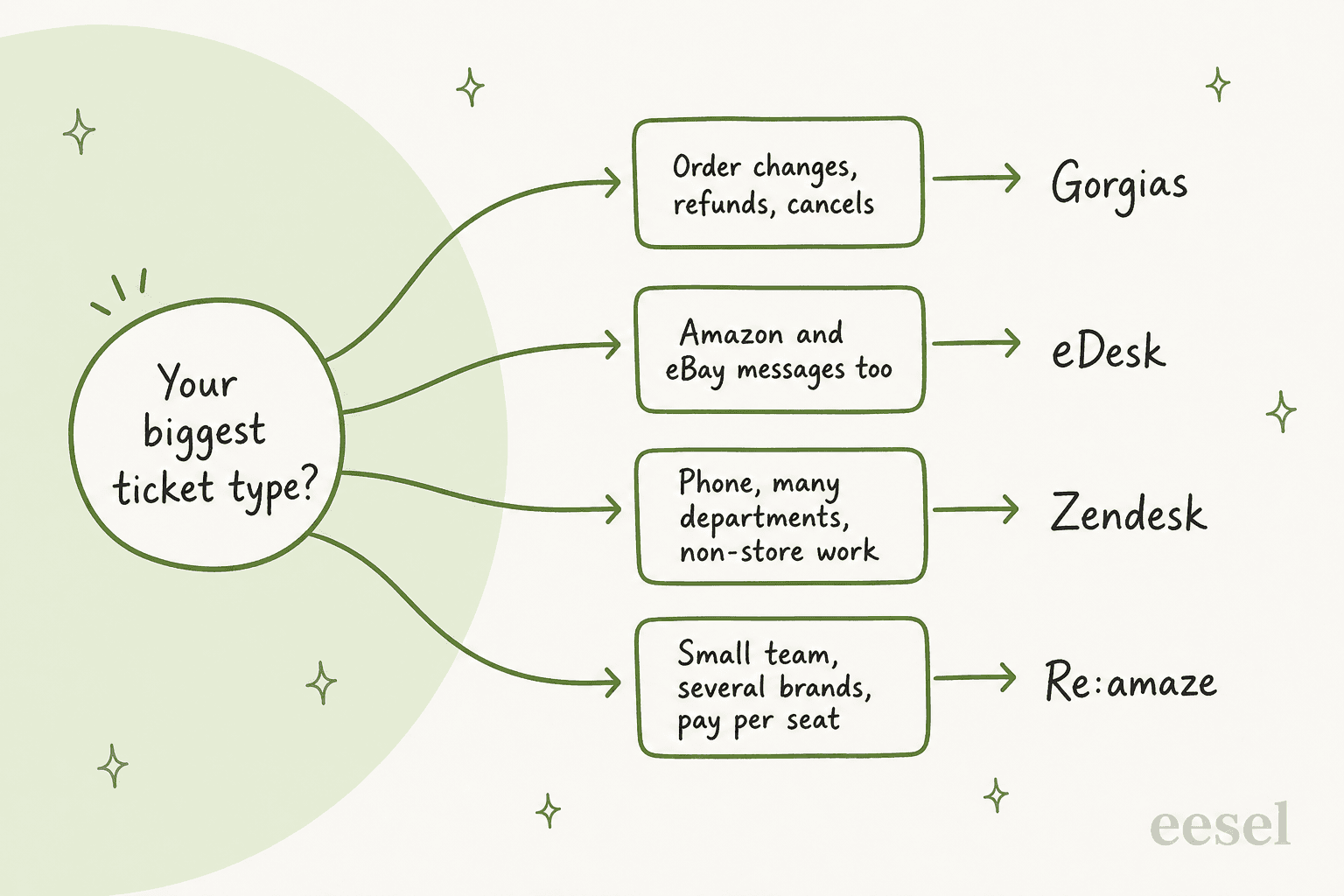
A Reddit thread comparing the two big names put the dividing line in one sentence, from an operator with ten-plus years in ecommerce:
"40%+ tickets need Shopify actions → I'd lean Gorgias. Mostly conversational support → Zendesk is fine."
I'd add a second filter for Plus: how many of your stores need their own AI behavior. If the answer is "all of them, with different policies", favor tools that let you scope knowledge and rules per store, and test that before you migrate anything.
1. Gorgias
Best for: Plus brands where most tickets are order questions that end in an action.
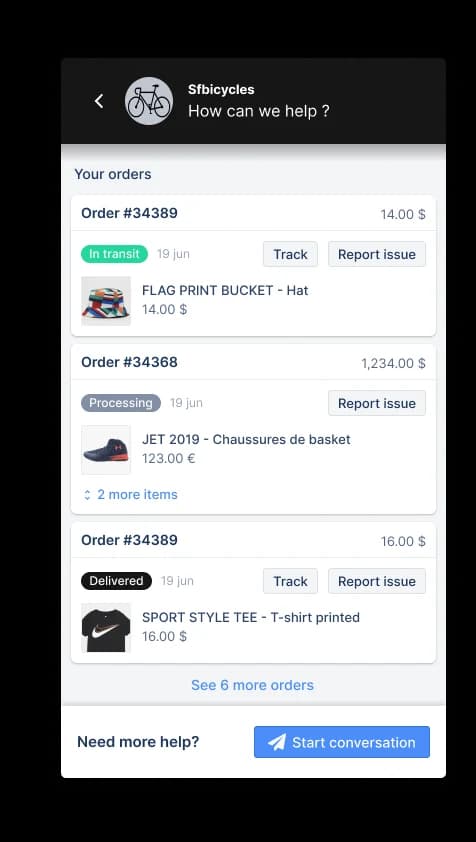
How it handles Plus: Gorgias connects each store separately: you repeat the Shopify connection for every store, then assign channels to a store so tickets can be filtered and ruled by store. Once connected, agents see order history, fulfillment status and lifetime spend, and macro actions can duplicate, cancel, refund and edit orders. Shopify is also required before the Gorgias AI Agent will run at all. See my Gorgias order tracking guide for how that plays out on where-is-my-order tickets.
Pricing: the plan prices on the page include both helpdesk and AI Agent. Pro is $550 a month ($360 helpdesk plus $190 AI Agent) for 2,000 tickets and 190 automated interactions; Advanced is $1,430 for 5,000 tickets and 530 interactions. Seats go to 500 on paid plans, and overage is $36 per 100 tickets on Pro and Advanced. Beyond 5,000 conversations a month you're on a custom plan with SAML SSO, audit logs and a dedicated CSM. My Gorgias pricing for Shopify stores post shows how that moves at other volumes.
Watch for: the multi-store AI setup. One Capterra reviewer on a Gorgias plan wrote:
"The AI Agent follows the same pattern, offering full functionality only for Shopify and requiring an awkward email-per-store setup that doesn't fit every business."

That's one reviewer's March 2026 experience, and Gorgias ships changes often, so run a second store through your trial before you assume either way. Volume pricing is the other common complaint in Reddit threads on Gorgias.
Verdict: my default pick for a Plus brand with a Shopify-heavy queue. Skip it if a large share of your tickets have nothing to do with a store, or if your store estate includes marketplaces. If you're weighing a switch away, read my Gorgias alternatives for Shopify.
2. Zendesk
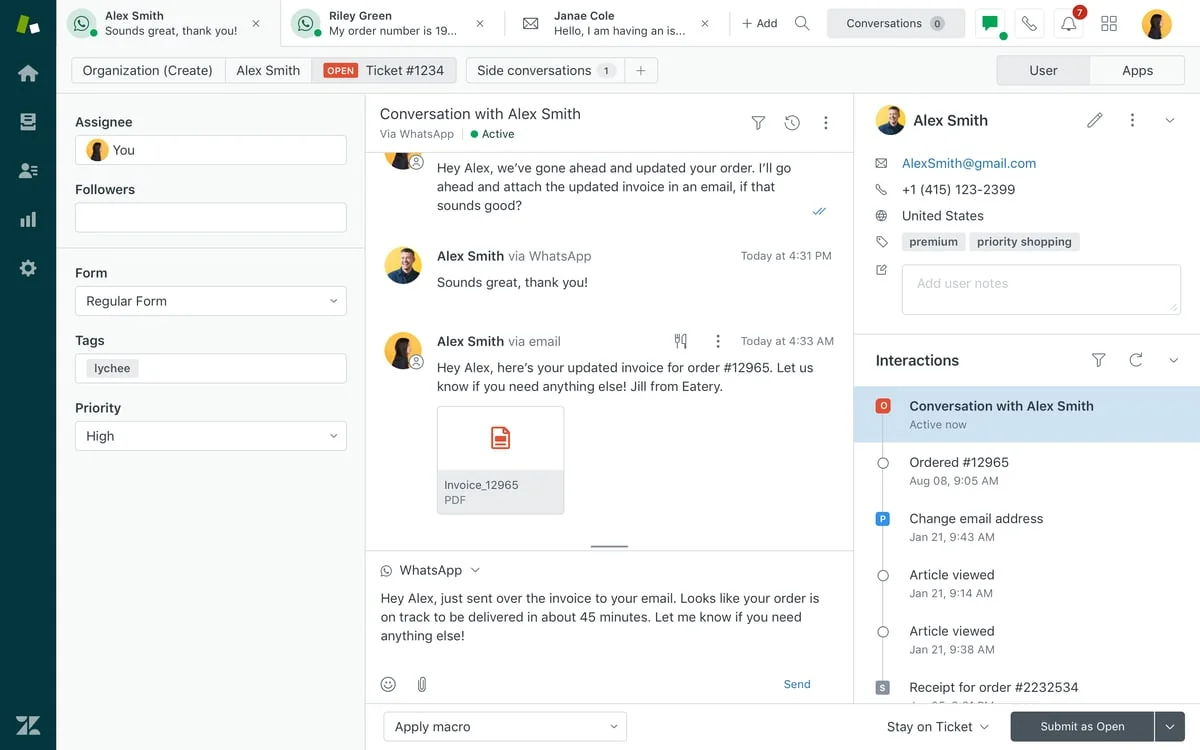
Best for: Plus brands whose support goes beyond the storefront: phone, several departments, B2B accounts and internal handoffs.
How it handles Plus: Zendesk's Shopify integration allows multiple Shopify storefront connections to one account. Agents can view Shopify order information and process refunds and cancellations in the Support app without leaving the ticket. It is a seat-based platform with the deepest workflow tooling here: Suite Professional adds skills-based routing, and Suite Enterprise adds a sandbox, approval workflows and custom agent roles, per its pricing page.
Pricing: per agent, $19 for Support Team, $55 for Suite Team, $115 for Suite Professional billed yearly ($25, $69 and $149 monthly), with Enterprise on request. AI agents are included in every plan but billed per automated resolution: $1.50 committed or $2.00 pay-as-you-go. A 14-day trial opens Suite Professional. More on the model in my Zendesk pricing breakdown and Zendesk review.
Watch for: the bill as you scale, both seats and resolutions. The thread I quoted earlier is typical, and it explains why Zendesk pricing is such a common complaint. The Shopify layer is also narrower on paper than Gorgias: the integration article lists order view, refunds and cancellations, while Gorgias also lists order edits and discount code generation.
Verdict: pick Zendesk when your Plus brand has real support operations around the store, and expect to put money into configuration. Skip it for a lean team whose queue is mostly order status. Alternatives are in my Zendesk alternatives list.
3. eDesk
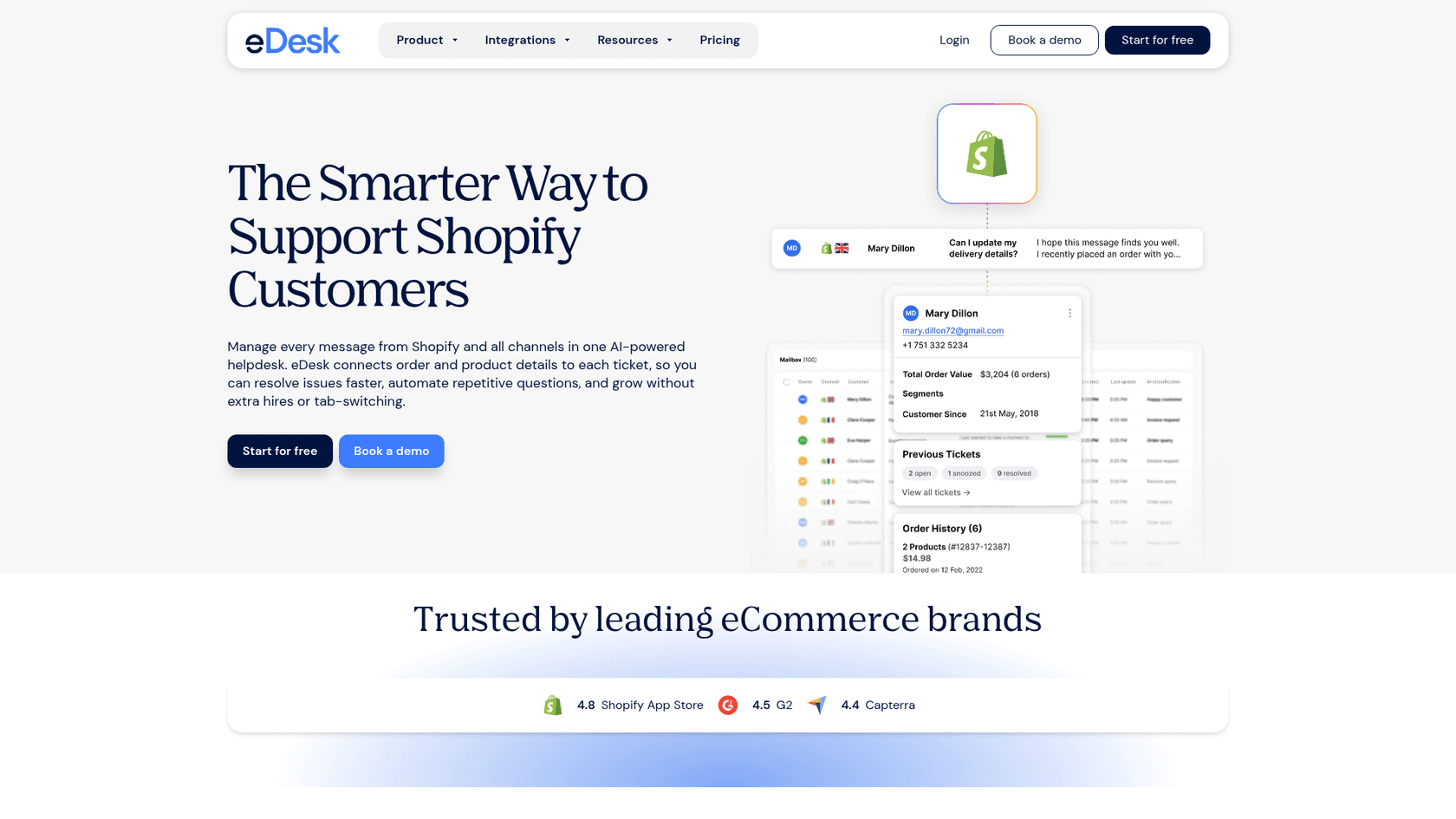
Best for: Plus brands that sell on Shopify and marketplaces and want every message in one inbox.
How it handles Plus: eDesk shows Shopify order history, product details and shipping status on every ticket and lets agents process returns, cancellations and order adjustments inside eDesk. It also connects to your Shopify product feed so the AI answers from current names, prices and stock. Store counts are a plan feature: Essential covers 1 store or marketplace, Growth 5, Professional 10.
Pricing: per seat, $45, $99 and $129 billed yearly ($55, $125 and $159 monthly), with the AI Agent included on every plan at $0.99 per outcome. There's a 14-day free trial with no card. The page also lists 24/7 support and 300-plus integrations, and shows 4.8 on the Shopify App Store, 4.5 on G2 and 4.4 on Capterra. A G2 reviewer's description of the marketplace side:
"I like that eDesk connects to most of the popular marketplaces like eBay, Amazon, Walmart, and Temu, providing a unified interface."

Watch for: the store ceiling. Professional's ten stores and marketplaces share one count, so a Plus estate of main plus nine expansion stores leaves no room for Amazon. Check the Enterprise route if you're in that spot, and see eDesk pricing for the full tier detail.
Verdict: the best fit if marketplaces are part of your Plus story. Skip it if you sell only on your own stores and want deep Shopify order edits plus a larger macro library. Compare it in my eDesk alternatives.
4. Re:amaze
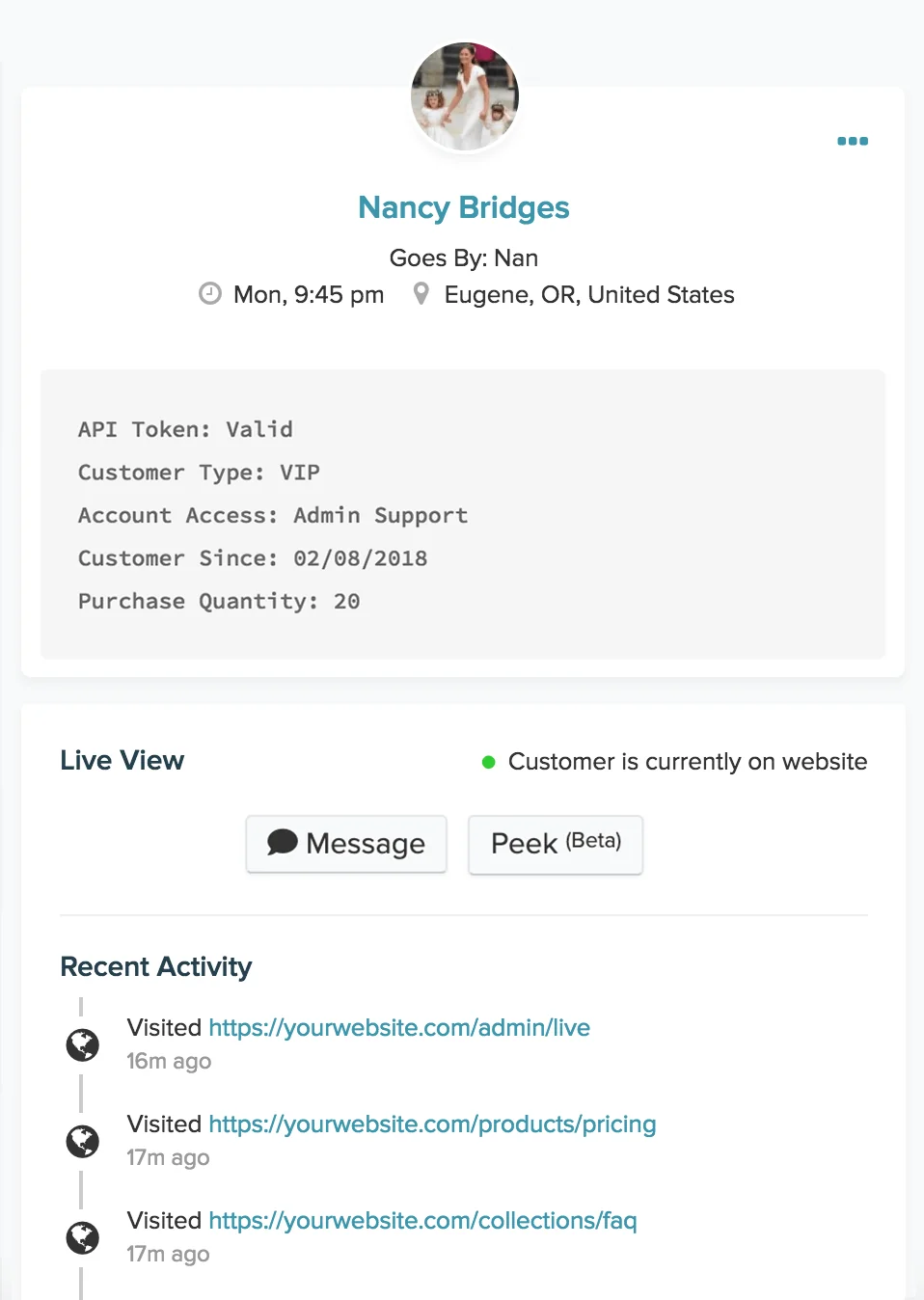
Best for: small, store-heavy Plus support teams that want unlimited brands on seat pricing.
How it handles Plus: Re:amaze's native Shopify integration lets agents pin an order to a conversation, see items, fulfillments and refund state, refund or cancel an order, and create draft orders customers can pay directly. The contact page shows the same Shopify information for a contact across all connected Shopify stores, which is the closest any tool here comes to the "same customer, several stores" problem. Basic allows 1 brand; Pro and Plus allow unlimited.
Pricing: per team member, $29 Basic, $49 Pro and $69 Plus monthly, 10% less billed yearly. Every plan lists live chat, social channels and unlimited inboxes, and the trial includes all Plus features with no credit card. The AI Agent appears in the Basic feature list, but the pricing page gives no AI price, so budget for that separately. My Re:amaze review covers the product side.
Watch for: AI depth. Re:amaze's own AI product page still carries a beta label, so for serious automation at Plus volume you'd likely add an AI layer. My list of Re:amaze AI alternatives shows the options.
Verdict: pick it for a lean team with several brands and a budget that thinks in seats. Skip it if you need heavy built-in AI resolution or enterprise controls.
5. Richpanel
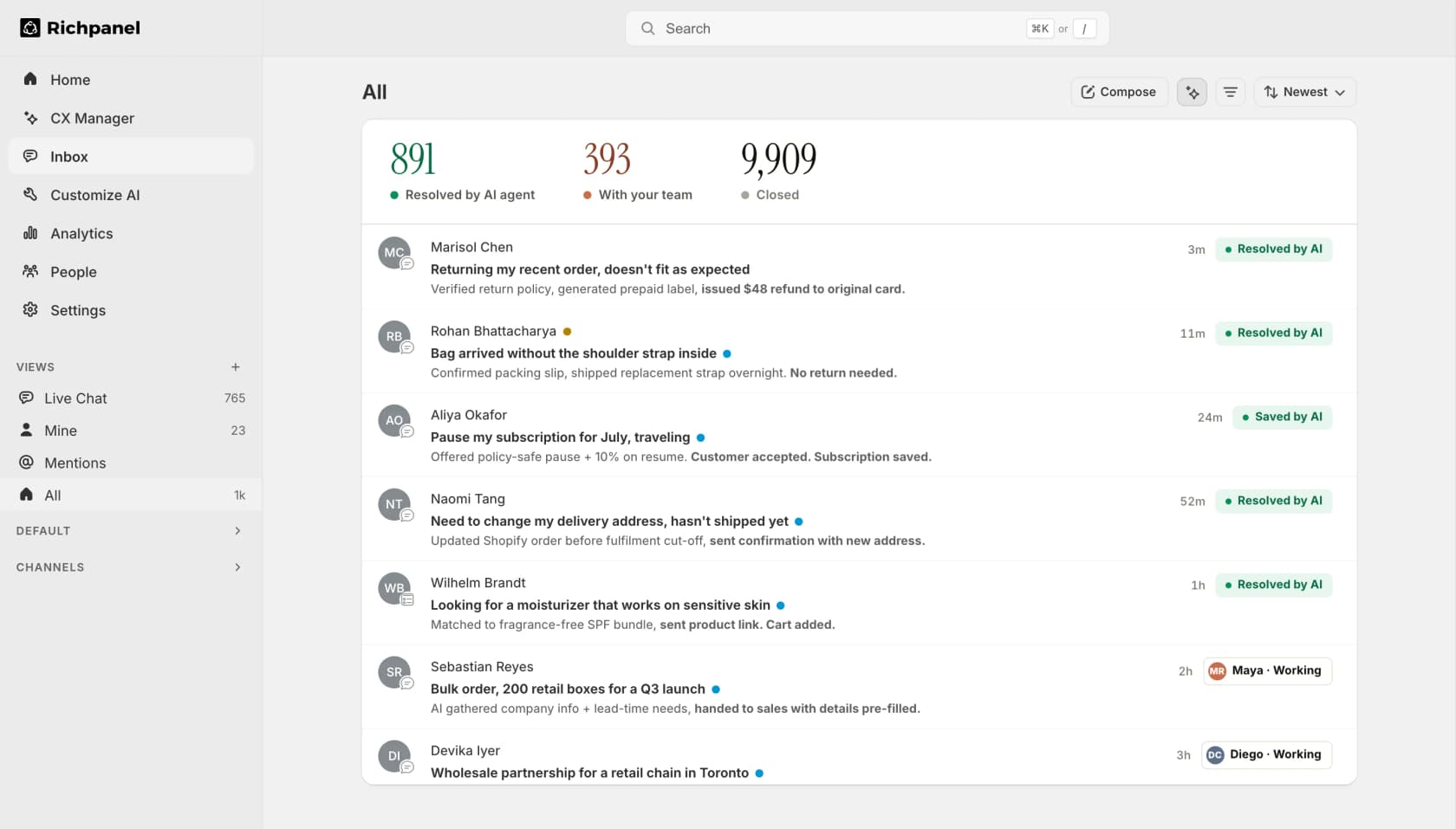
Best for: Shopify brands with many repetitive order questions who want a self-service portal alongside the inbox.
How it handles Plus: Richpanel puts order history, past conversations and your apps beside the reply, and its self-service portal lets customers handle order flows themselves. The portal connects 1 store on Free and 2 on Starter. The help desk offers 1-click migration, and the site lists SOC 2 and HIPAA audits plus GDPR compliance.
Pricing: the help desk is per user: $0 for 3 seats with 50 AI assists, $29 Starter and $99 Pro monthly ($20 and $85 yearly), with Enterprise custom. Pro adds SMS and phone, unlimited rules and revenue reporting. The self-service portal is priced separately by order volume, and Richpanel offers a guarantee: reach 50% automation in 30 days or every dollar back, where the condition is that AI resolves at least 50% of eligible conversations in the first 30 days after go-live. Details in Richpanel pricing.
Watch for: what "eligible" means in that guarantee, and how portal pricing by orders behaves at Plus order counts. Get the eligibility definition in writing, and see my Richpanel alternatives before you commit.
Verdict: worth a pilot if where-is-my-order tickets dominate and you want the vendor to share the automation risk. Skip it if you need a multi-department platform.
6. Kustomer
Best for: high-volume B2C brands that want one customer timeline across orders, chats and calls.
How it handles Plus: Kustomer describes an enhanced integration with Shopify Plus with one-click activation from its App Directory. Shopify purchases appear in a chronological timeline, an insights card shows purchase history in the customer profile, and agents can process returns and exchanges from that view. Automation rules can run on Shopify data, such as sending a promo code when a high-value customer leaves a low CSAT score. My Kustomer Shopify integration post goes through the setup.
Pricing: none published. The pricing page routes you to a demo, so any number you see elsewhere is a competitor's estimate, not Kustomer's. See Kustomer pricing for what is and isn't known.
Watch for: trial friction and channel gaps. A Reddit commenter evaluating Kustomer wrote:
"They also don't allow you to just install the app on Shopify and trial it for 14 days which is a big flag for me."
That comment dates to 2025, so check the current trial terms with Kustomer directly.
Verdict: the choice when you have a sales-led buying process and a team that lives in customer history rather than tickets. Skip it if you want a self-serve trial and published pricing. The Kustomer alternatives list covers where people go from here.
Where does an AI layer fit on a Plus helpdesk?
Whichever helpdesk you pick, the AI line is the part most likely to change in the next year, and it's priced in three incompatible units: per interaction, per resolution, per outcome. That is why I'd treat the AI as a layer you can swap, rather than a feature you inherit.
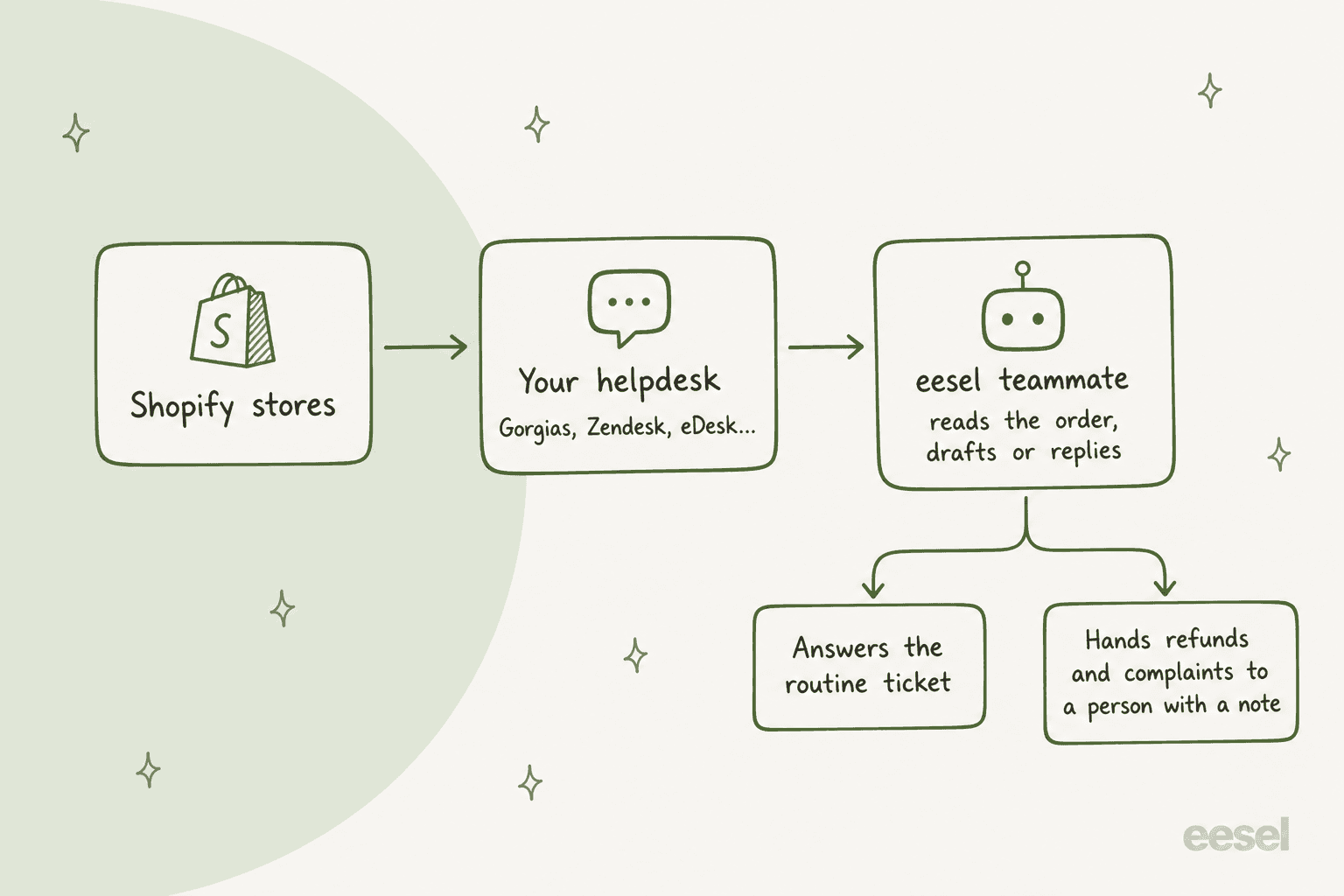
eesel is an AI helpdesk teammate that works inside the helpdesk you already run. It connects to Gorgias, Zendesk, Freshdesk, Re:amaze and Shopify, reads the order on the ticket, and either leaves a draft for a person or sends the reply.
Kustomer, Richpanel and eDesk aren't on eesel's documented helpdesk list, so for those three the built-in AI is your route. I wrote up the trade-offs in AI layer vs built-in AI.
The proof I'd point a Plus buyer to is the customer stories, because they're real Shopify-plus-Gorgias setups with production numbers:
- Rúngne, a Norwegian climbing apparel brand that sells worldwide on Shopify, runs three eesel agents on its Gorgias helpdesk. One triages and tags every ticket, one leaves a ready-to-send draft as an internal note, and one answers plain questions itself from Shopify order and stock data. Its US and Norway warehouses hold separate stock, so the draft agent checks stock per size at the right warehouse. In the month to 8 September 2026 it handled about 2,100 Gorgias tickets, and the agents sent about 440 public replies and prepared about 580 drafts.
- Question Beauty runs eesel on Gorgias and Shopify across Messenger, email and chat. In the same month it handled about 990 tickets, looked up about 290 Shopify orders before answering delivery questions, and closed about 280 tickets without a person. Refunds, complaints and anything needing a decision went to a teammate with a note attached.
- ClutchLoop uses its agent on Gorgias, Shopify and website chat for returns and product questions. STIL Classics goes the other way: eesel drafts every reply as an internal note and a person sends it.
Notice what those teams did first. They didn't flip the AI on for everything; they chose which topics it answers and which it hands off, and they started with drafts. That is the same test ChatGPT recommended, run on real tickets.
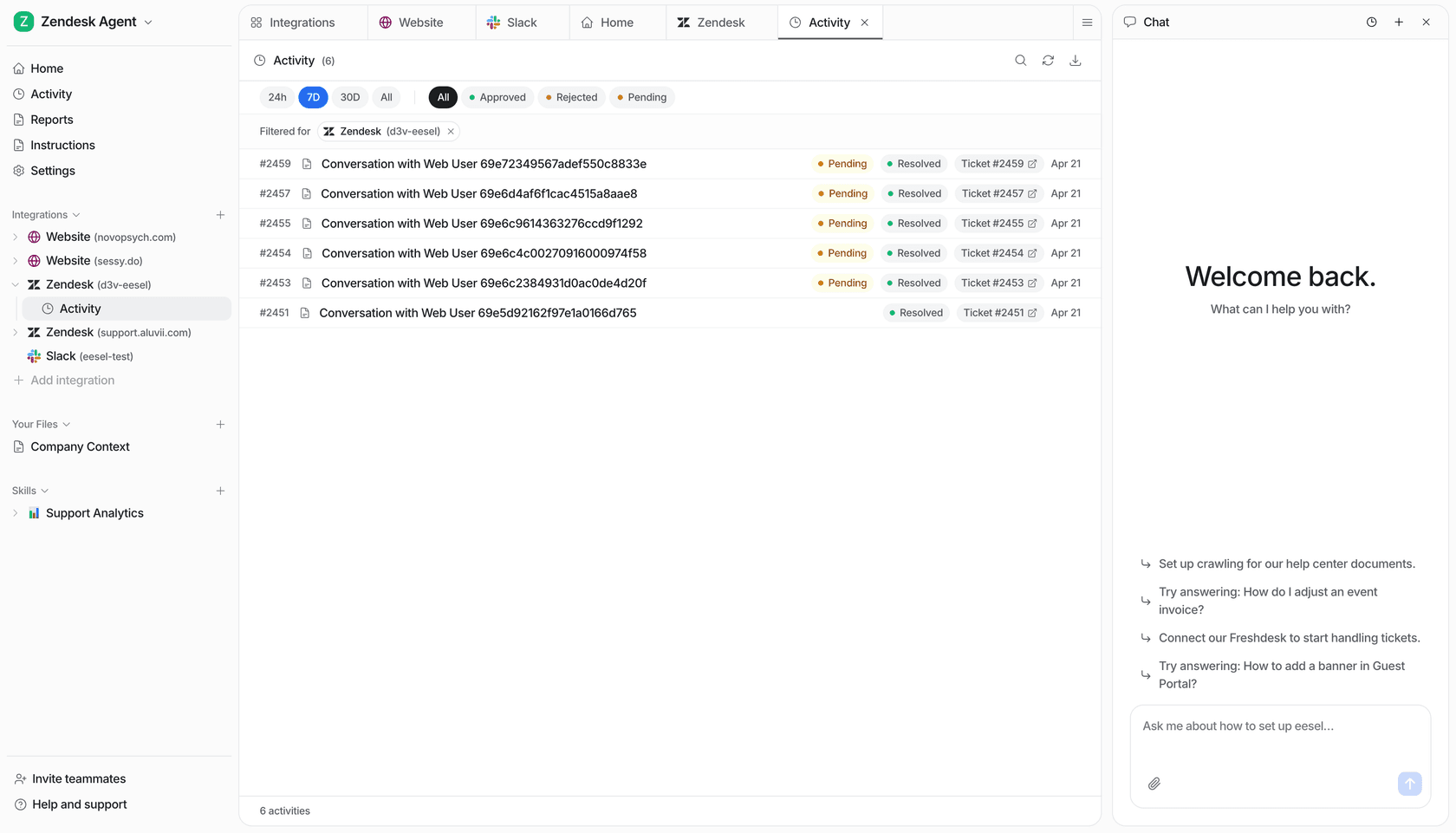
On cost, eesel's pricing is fixed credit plans where a ticket or chat is 1 credit, however long: $299 a month for 500 credits and $499 for 1,000, with extra credits at $0.80 each up to a cap you set, and a free 7-day trial with 100 credits. For my example buyer, 900 AI-handled conversations fits the 1,000-credit plan at $499. Credits count tickets handled, not tickets resolved, so compare that with the per-resolution lines above on the same footing. Swapping the built-in AI for eesel gives these monthly totals for the same buyer:
| Helpdesk | Seats or tickets | Plus eesel 1,000 credits | Monthly total |
|---|---|---|---|
| Gorgias Pro, helpdesk only | $720 for 3,000 tickets | $499 | $1,219 |
| Zendesk Suite Team | $330 for 6 agents | $499 | $829 |
| eDesk Professional | $774 for 6 seats | $499 | $1,273 |
| Re:amaze Pro | $294 for 6 members | $499 | $793 |
These assume the vendor's own AI goes unused, so you aren't paying for resolutions eesel handles. Verify that on your contract.
Try eesel on your Shopify Plus tickets
If you already know your helpdesk, the quickest test is the one ChatGPT recommended: connect eesel to Gorgias, Zendesk or Freshdesk and Shopify, run it in draft mode on your own tickets, and compare the drafts with what your team sent. Connecting the helpdesk itself still needs someone with admin access to approve it, and I'd test a second store before you roll anything out across the estate. Start with the eesel Shopify integration or try eesel free for 7 days.
Frequently Asked Questions
What is the best helpdesk for Shopify Plus?
For most Plus brands I'd start with Gorgias, because it runs refunds, cancellations and order edits from the ticket across every connected store. Pick eDesk if you also sell on marketplaces, Zendesk if support goes well beyond the store, and Re:amaze if you want per-seat pricing with unlimited brands. My full ecommerce helpdesk comparison covers the wider field.
How much does a Shopify Plus helpdesk cost per month?
For 3,000 tickets worked by six agents plus 900 AI-handled conversations, the published prices land between about $1,485 and $2,040 a month in my worked example (see the pricing table above). Seat-based tools like Zendesk and eDesk scale with agents, while Gorgias pricing scales with tickets. Kustomer publishes no price.
Do I need a different helpdesk for Shopify Plus than for regular Shopify?
No. Every helpdesk in this guide connects to standard Shopify stores too, and Shopify Flow is available on all plans. What Plus changes is the store count: up to ten stores on one contract, each with its own orders and settings, so check how a helpdesk connects several stores before you buy.
Can one helpdesk handle several Shopify expansion stores?
Yes, with differences in how. Gorgias and Zendesk let you connect each store and tag tickets by store, Re:amaze shows the same customer across all connected stores, and eDesk caps stores by plan (1, 5 or 10). Reviewers note that some AI setups need extra work per store, so test the AI on a second store during your trial. My AI helpdesk for Shopify guide goes deeper on that.
Is Gorgias or Zendesk better for a Shopify Plus store?
Gorgias wins when most tickets need a Shopify action like a refund or order edit, and Zendesk wins when you also run phone, several departments or non-store support. One Reddit operator put the split at about 40% of tickets needing Shopify actions. I broke the head-to-head down in Gorgias vs Zendesk for ecommerce.
Can an AI agent work inside my existing Plus helpdesk?
Yes. eesel connects to Gorgias, Zendesk, Freshdesk and Shopify, reads the order on each ticket, and either drafts the reply or sends it. Read AI for your existing helpdesk for how the layering works.
How do I test an AI helpdesk on my own tickets before committing?
Connect it to your helpdesk and run it on real tickets in draft mode first. eesel's free trial gives 100 credits for 7 days with no card, and a ticket or chat is 1 credit. Compare the drafts with what your team actually sent before you let it reply on its own, as STIL Classics does.