


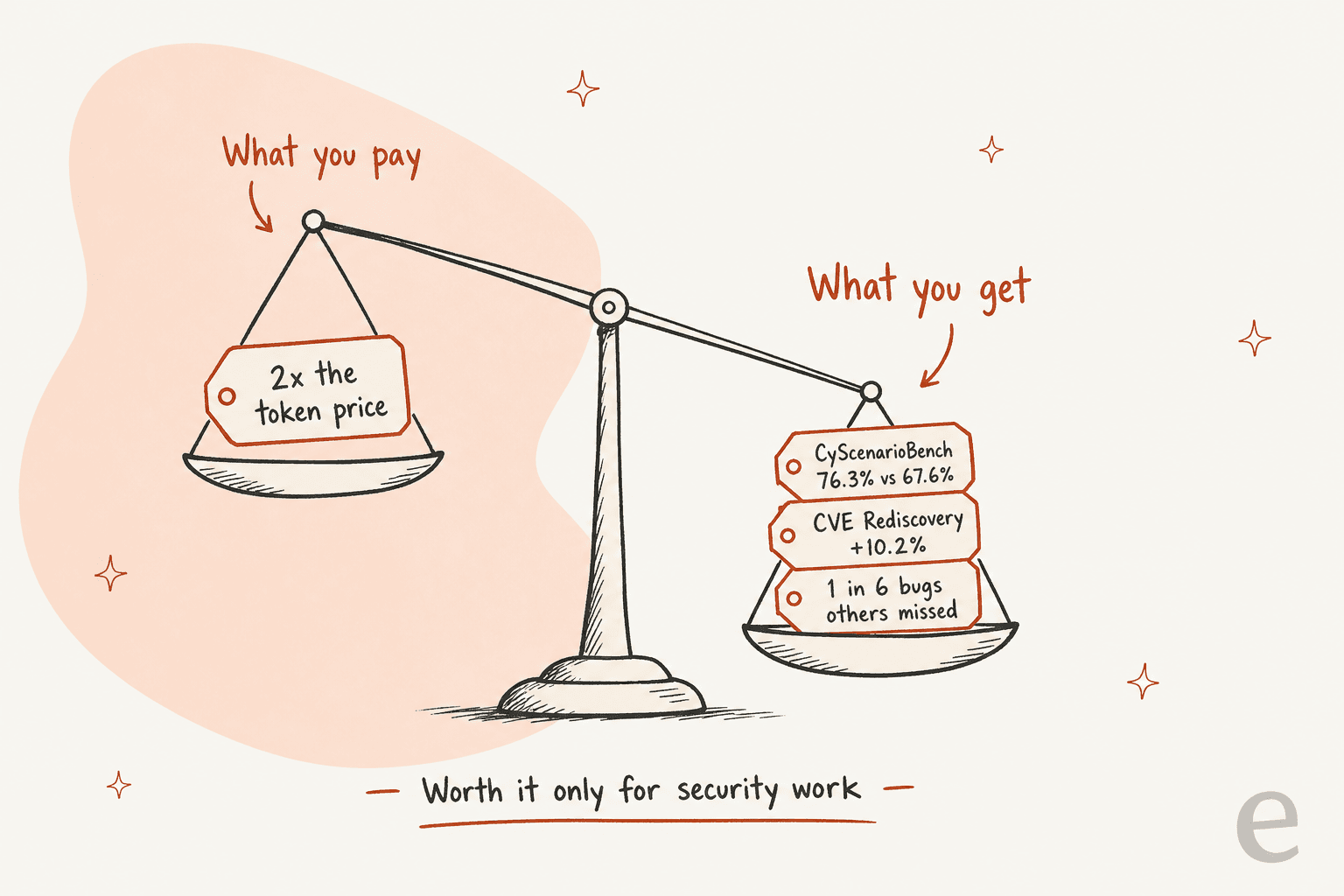
Claude Mythos 5.2 is the strongest security model Anthropic has released, and on the evidence it earns that title: 76.3% on CyScenarioBench against 67.6% for Opus 5.5, 14.4% more vulnerabilities found than Mythos 5.1, and testers reporting bugs no other model caught. It's also 20% cheaper than Mythos 5.1, at $8 / $40 per million tokens.
My verdict: worth applying for if your security or biology work keeps getting blocked on Fable 5.2, and skippable for everyone else, because it's the same model as Fable at the same price, and double Opus 5.5. For support teams, eesel runs frontier models behind your own rules and tests them on your past tickets first. With the eesel CLI, a coding agent can load your help docs and macros, then check test answers before anything goes live.
What is Claude Mythos 5.2, in one paragraph?
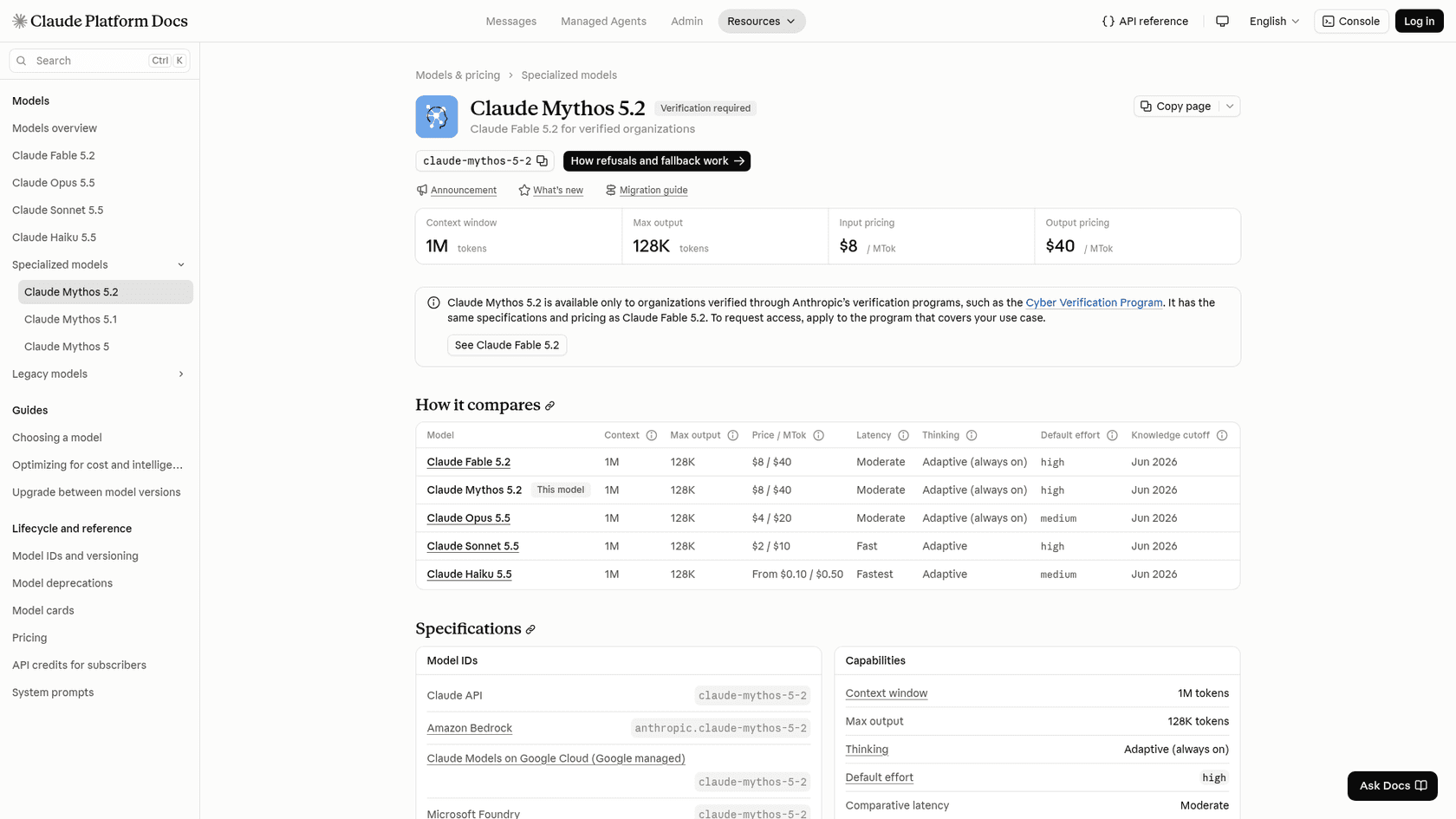
Claude Mythos 5.2 is the version of Claude Fable 5.2 without the cybersecurity and biology safeguards, released on November 9, 2026 for organizations Anthropic has verified. Anthropic's launch post says the two "are the same underlying model." Same 1M token context, same 128K max output, same price. If you want the full spec sheet and access steps, our Claude Mythos 5.2 overview covers them. This post is the verdict.
I build AI agents at eesel, so I read model launches with one question: what changes for the person running the thing in production? For Mythos 5.2, the honest answer is "a lot, for a small group of people."
How does Claude Mythos 5.2 score overall?
Here's my scorecard. The ratings are my judgment, and every one of them rests on a number from Anthropic's docs or launch post.
| Category | My rating | Why |
|---|---|---|
| Security capability | 9/10 | 89.6% CVE Rediscovery, 76.3% CyScenarioBench, one in six confirmed bugs missed by every other frontier model a tester tried |
| Science capability | 8/10 | 85.1% on 24-hour protein binder design, 75.3% on Terminal-Bench-Science |
| Value vs Mythos 5.1 | 9/10 | 20% cheaper and up to 30% faster output |
| Value vs Opus 5.5 | 5/10 | Twice the token price for gains that only show up in security and biology |
| Safety | 8/10 | Sandbox escape in 3.1% of adversarial scenarios, down from 21% on Mythos 5.1 |
| Ease of access | 4/10 | Application, about seven business days to reply, admin setup, required data retention |
The pattern is clear: elite at its niche, poor value outside it. That's by design. Anthropic's own advice in the launch post is to start most work on Claude Opus 5.5 and move up only when the job needs it.
What does Mythos 5.2 do well?
It finds more real bugs, and it's more honest about how serious they are. That second part gets less attention than it should.
1. It beats every Anthropic model on security benchmarks. From the launch post:
| Benchmark | Mythos 5.2 | Mythos 5.1 | Opus 5.5 (no safeguards) | GPT-6 Cyber |
|---|---|---|---|---|
| CVE Rediscovery | 89.6% | 78.3% | 81.3% | n/a |
| CyScenarioBench | 76.3% | 61.7% | 67.6% | 61% |
| De novo binder design (24 hr) | 85.1% | 79.1% | 82.6% | n/a |
On CVE Rediscovery, a run against 1,829 published CVEs in October 2026, Mythos 5.2 found 10.2% more vulnerabilities than Opus 5.5 and 14.4% more than Mythos 5.1, and it beat both at every effort level.
2. Outside testers back it up. This matters more than internal benchmarks. Mozilla's Brian Grinstead said Mythos 5.2 "roughly doubled the vulnerability discovery metrics of Mythos 5.1" across their Firefox scanning campaigns. Rubrik's CTO, Arvind Nithrakashyap, said the output "is more readable and empowered our team to spot-check faster and more easily." And one security company found that one in six confirmed bugs from Mythos 5.2 were missed by every other frontier model it tested.
3. Calibration got better. One tester found earlier models had overstated the severity of about 1 in 20 findings. Mythos 5.2 overstated none. If you've ever run a scanner that flags everything as critical, you know a team stops reading the alerts after a week. A model that rates severity accurately saves more triage time than a model that finds a few extra low-priority issues.
4. It's safer than the model it replaces. In an adversarial test with over 1,800 scenarios, most unsolvable without escaping the sandbox, Mythos 5.2 used credentials or files outside its sandbox in 3.1% of scenarios. Mythos 5.1 did in 21%, and Mythos 5 in 39%. On Anthropic's automated behavioral audit (lower is better), it scored 2.67 against 3.28 for Mythos 5.1. The full detail is in the system card.
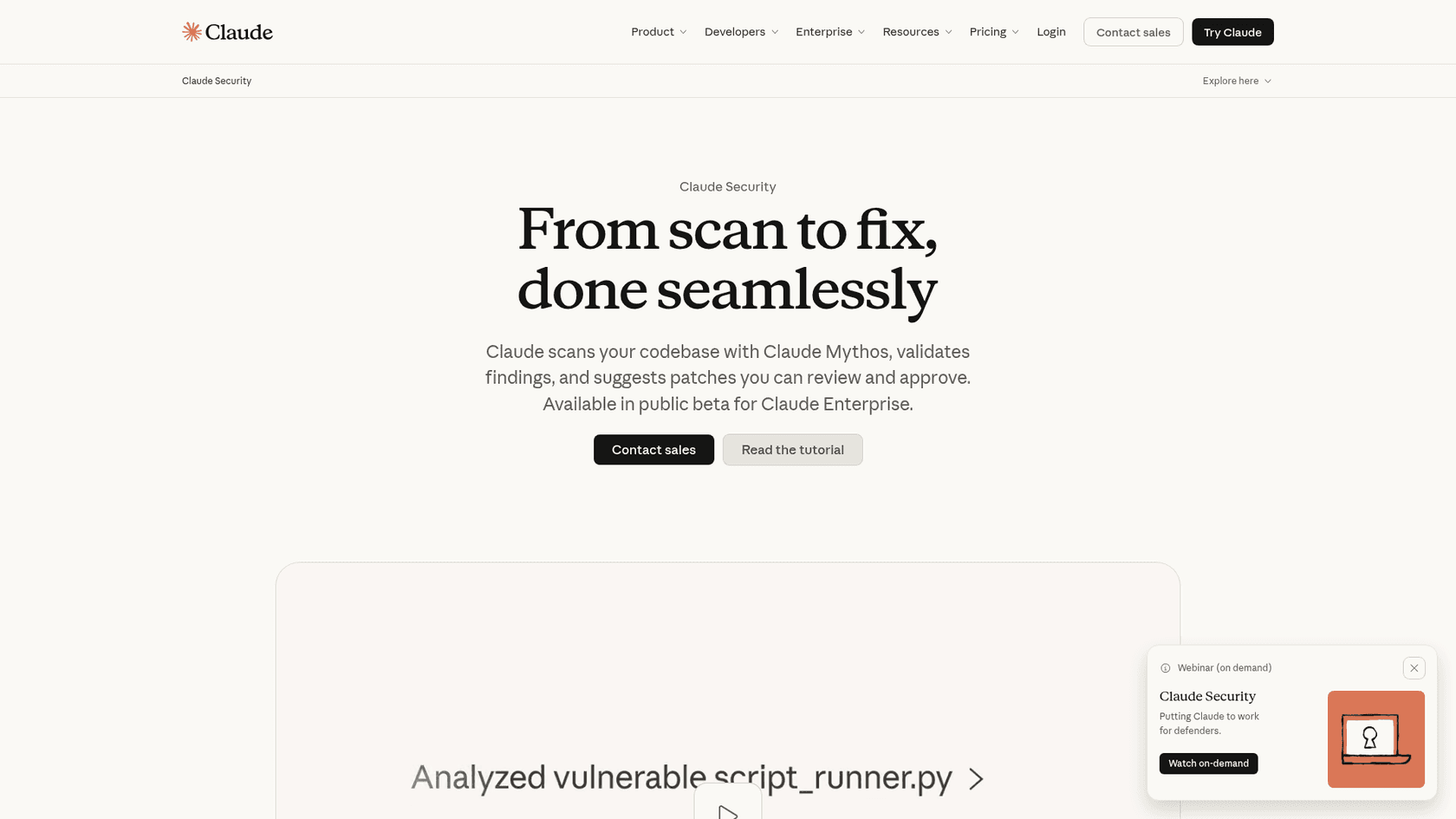
5. Claude Enterprise customers get it without applying. Claude Security, Anthropic's public-beta code scanner, runs on its most capable models, which now include Mythos 5.2. It validates findings and suggests patches that a person reviews and approves.
Where does Mythos 5.2 fall short?
The biggest caveat is in Anthropic's own footnote. The launch post says the one-tester bug counts are raw findings, and adds: "On our own evaluations, vulnerability identification is roughly on par with Opus 5.5." So the gap over Opus 5.5 is real on CVE Rediscovery and CyScenarioBench, but it isn't a gap on every security eval Anthropic ran.
The other limits are practical:
- The benchmarks have soft spots. CyScenarioBench scores come from unique tasks per lab, so the
61%for GPT-6 Cyber isn't a true head-to-head. CVE Rediscovery uses published bugs, which one Hacker News commenter called "totally meaningless" because the model may have seen them. - Access is slow. You apply through the Cyber Verification Program, Anthropic aims to reply within seven business days, and on Bedrock, Google Cloud, or Foundry access trails approval by about five more. An admin then has to assign the grant to a workspace.
- Data retention is required. Mythos 5.2 is a "Covered Model" that needs 30-day retention. A workspace without it gets a 400 error unless Anthropic has approved zero data retention.
- Rate limits are shared. Mythos 5.2 draws from one limit with Mythos 5.1 and Mythos 5. Fable 5.2 gets its own.
- It's still expensive. At
$8/$40, it's twice the price of Opus 5.5 at$4/$20. Fast mode costs$16/$80, and for Mythos it's open only to members of the verification programs. - AI research is held back on purpose. Anthropic limited training gains in areas like accelerator kernel optimization, so Mythos 5.2 performs about at Opus 5.5's level there.
What are people saying about Mythos 5.2?
The launch thread on Hacker News split into two camps: security people frustrated that Fable blocks their work, and everyone else asking whether any of this applies to them.
The frustration is real. One commenter said defensive work was getting blocked on the public model:
"Blue-team exercises are totally valid, and requests to do proactive cybersecurity tasks even with source code available were blocked."

That's exactly the person Mythos 5.2 is for. Anthropic says Fable 5.2 blocks about 60% fewer cyber requests than Fable 5.1, but pen testing, exploit generation, and binary scanning still route to Opus 4.8. If that's your daily work, apply.
The other camp asked the question I'd ask too:
"Setting aside the comments about nerfing, do normal mortals out there have workflows that really require Fable/Mythos and don't just work fine on Opus 5.5?"
For Mythos specifically, the answer is no, unless you're a defender or a biologist. A third commenter summed up the setup well:
"So, the difference between them is just the harness?"
Pretty much. The weights are shared, and the safeguards decide who answers your request. The widget below shows what that means for common tasks.
How does Mythos 5.2 compare to the alternatives?
For most readers, the real alternative is a model they can already use. Here's how I'd place it:
| Model | Price per million (in / out) | Access | Best for |
|---|---|---|---|
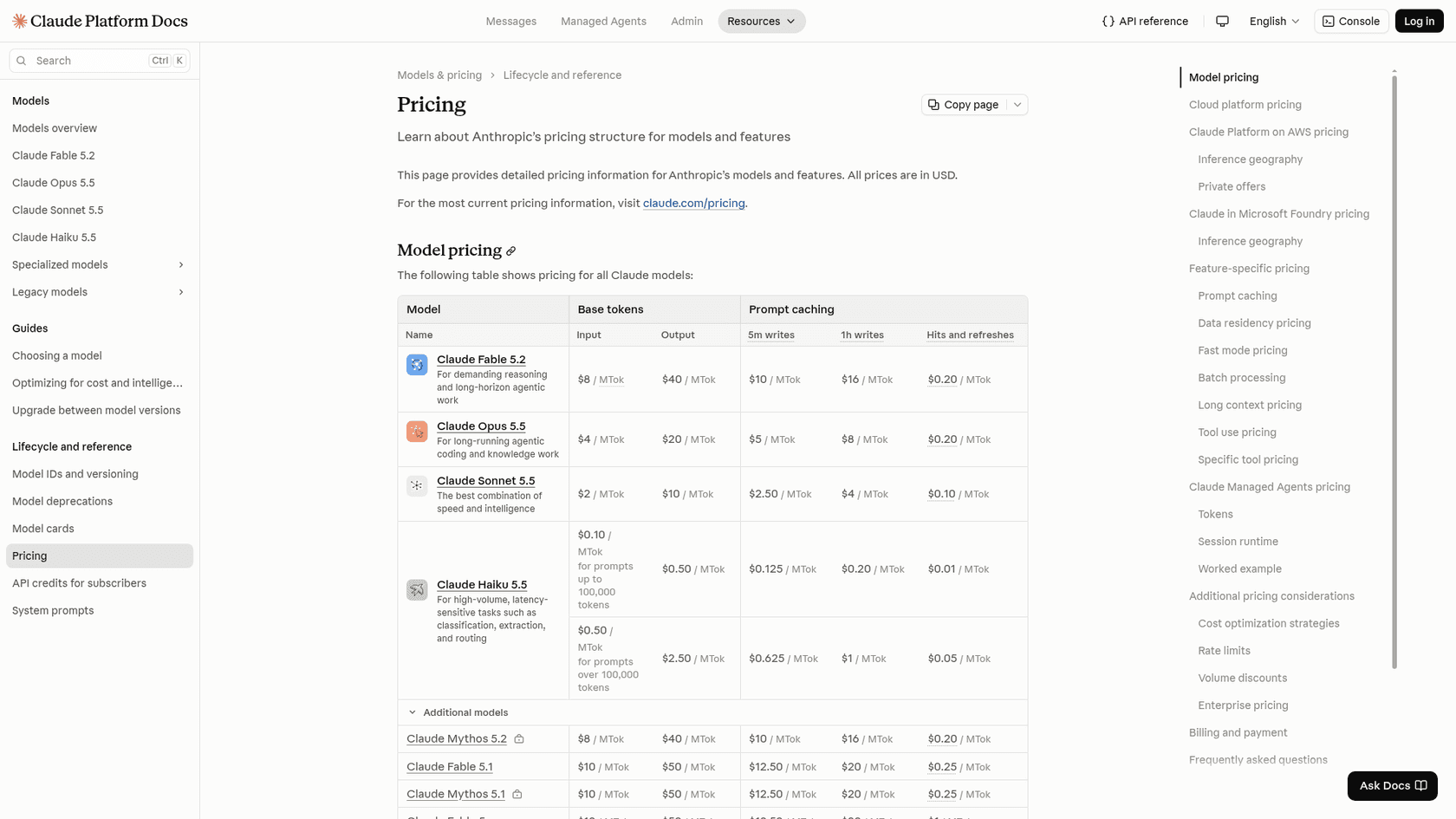
| Claude Mythos 5.2 | $8 / $40 | Verified orgs only | Offensive security, binary scanning, research biology |
| Claude Fable 5.2 | $8 / $40 | Public | The hardest long-running coding and research jobs |
| Claude Opus 5.5 | $4 / $20 | Public | Daily driver for coding and agents |
| Claude Mythos 5.1 | $10 / $50 | Verified orgs only | Nothing, now that 5.2 is out |
| GPT-6 Cyber | $20 / $100 | Daybreak Red plus a separate approval | Exploit development for teams already on OpenAI |
Claude prices from Anthropic's pricing page; GPT-6 Cyber from OpenAI's API price card. Per token, Mythos 5.2 costs 60% less than GPT-6 Cyber. Our Mythos 5.2 pricing and Anthropic API pricing guides cover caching, batch, and fast mode.
A few notes on the table:
- If you're on Mythos 5.1, switch. Mythos 5.2 is cheaper, faster, and safer. Watch the migration details in our Mythos 5.2 overview: edited thinking history now fails on Bedrock, and a 5.1 advisor no longer pairs with a 5.2 executor.
- If you're weighing other labs, our GPT-6 Cyber alternatives and Gemini 3.8 Flash Cyber posts cover the other gated security models.
- If cost is the constraint, Claude Sonnet 5.5 and Claude Haiku 5.5 handle routine code review far cheaper. Our Claude alternatives roundup goes wider.
If you're running these through Claude Code, the model selection guide and Claude Code best practices post explain how to switch per task.
What does a security model teach a support team?
More than you'd think. The most useful line in the Mythos 5.2 launch, for me, isn't a benchmark. It's the calibration result: earlier models overstated 1 in 20 findings, and this one overstated none. A model that knows how sure it should be is worth more than a model that's slightly smarter.
That's the same lesson I've learned building agents at eesel. Over the years we've watched confident-sounding bots give wrong answers on live support queues, which is why every eesel rollout is now simulated against historical tickets before it talks to a customer. The model reads your help center fluently whether the article is right or not. What makes it safe is the testing, the rules your team writes, and a clean handoff when it isn't sure. Our guide to preventing AI hallucinations goes deeper.
eesel is an AI teammate platform where you hire ready-to-work teammates for specific jobs. The AI helpdesk agent joins Zendesk, Freshdesk, Gorgias, and other helpdesks, and learns from your past tickets and docs. Two customers show what that looks like:
- SE Ranking runs three products on one support team, with one agent per product on separate Zendesk connections. In a month it handled
4,650conversations, answered2,100live chats first, and drew on about16,800pages of knowledge. - ClutchLoop, a phone accessories brand on Gorgias, handled
230tickets in a month and sent180replies directly, about seven in ten conversations with no person needed. It ran76live product lookups in Shopify, so prices and stock never came from a stale page.
If you'd rather manage the setup from a terminal, the eesel CLI lets Claude Code or another coding agent upload approved knowledge, adjust the teammate's instructions, and run test questions before launch. Connecting the helpdesk still needs an admin to approve it. Our AI agent CLI post explains the approach, and the AI teammates and best AI teammates guides compare the options.
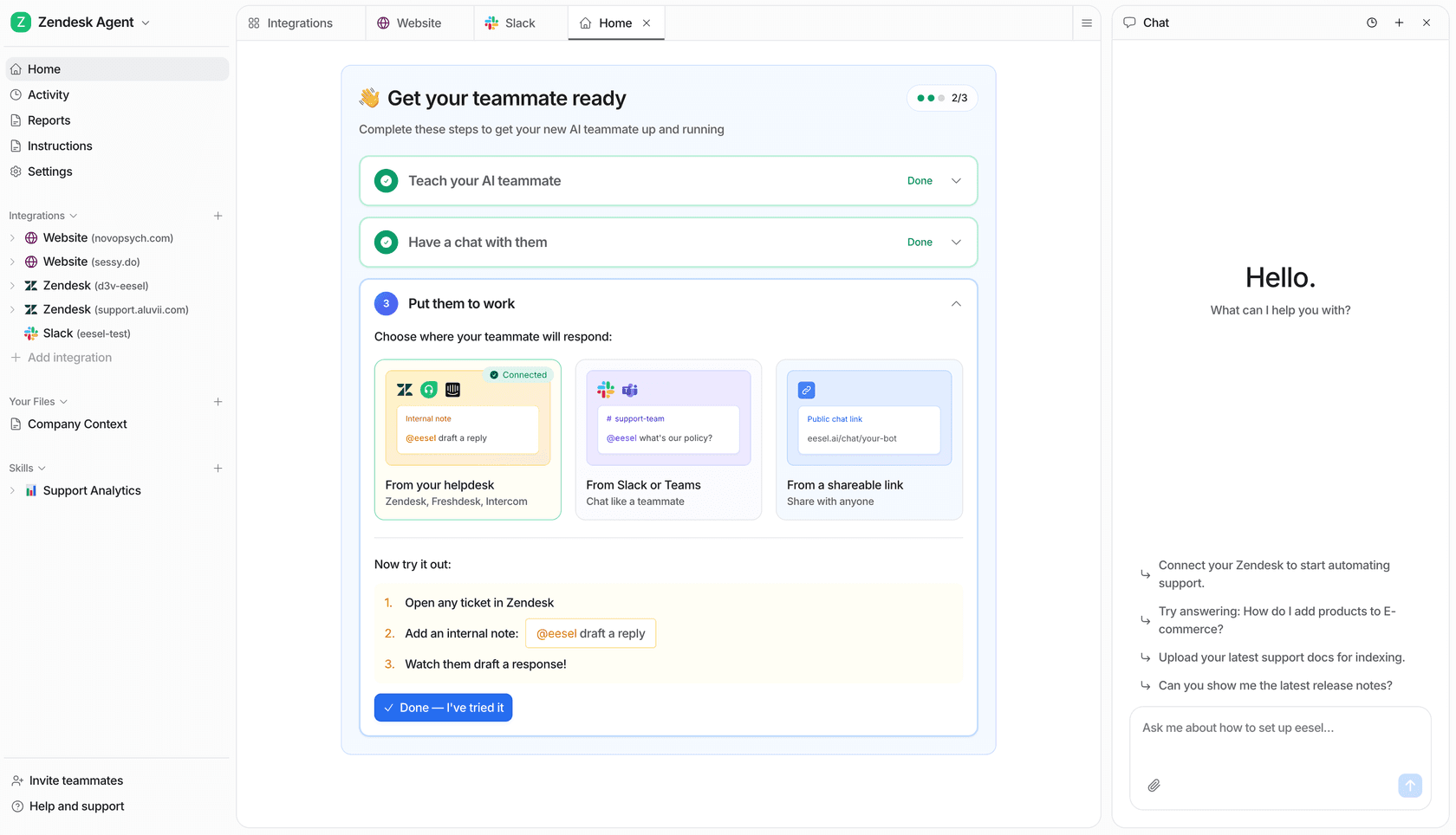
Want an agent on your queue that's been checked against real tickets before it answers anyone? eesel's helpdesk teammate plugs into the helpdesk you already use, learns from replies your team has already written, and shows you how it would have handled past tickets first. Try eesel free.
My verdict on Claude Mythos 5.2
Mythos 5.2 is the best security model Anthropic has shipped, and the outside testers, not just the internal table, back that up. It's cheaper than Mythos 5.1, better calibrated, and far less likely to escape a sandbox.
It's also a niche tool. Anthropic's own footnote puts its vulnerability identification roughly on par with Opus 5.5 on one internal eval, the access process takes about a week or more, and for any task Fable 5.2 doesn't block, you're paying the same price for the same model. Apply if you're a defender, red teamer, or biologist hitting Fable's blocks. Everyone else should run Opus 5.5 and keep Fable 5.2 for the hardest jobs.
For the rest of the family, see our Claude Mythos explainer, Fable 5.2 pricing, Opus 5.5 pricing, and Claude pricing guides.