


Why people look for Claude Haiku 5.5 alternatives
Let me start with the good news, because Haiku 5.5 deserves it. Claude Haiku 5.5 launched on October 7, 2026, it scores 43 on the Artificial Analysis Intelligence Index, ahead of every other small model in this post, it outputs 243 tokens a second, and under 100,000 prompt tokens it costs $0.10 in and $0.50 out per million. I covered all of that in my Haiku 5.5 review.
I write the API plumbing at eesel, so I read launches like this from the integration side. The questions I ask are what breaks and what it costs on a real workload, and also what I have to rewrite. Based on those checks, I see four reasons a team might decide Haiku 5.5 is not their model.
- The 100k price cliff. Per the Claude pricing docs, a prompt over 100,000 tokens pays $0.50 in and $2.50 out, plus 5x on cache reads and writes. Haiku 5.5 is the only current Claude model without flat pricing across its 1M window.
- The tokenizer. The what's new page says the same text produces "approximately 30% more tokens" than on Haiku 4.5. You pay for more tokens and you hit the 100k line sooner.
- Breaking API changes. Any non-default
temperature,top_portop_know returns an error, and so does assistant prefill. Lots of classifiers were built on exactly those two tricks, which is why this one stings. - Verbosity. Artificial Analysis counted 440M tokens generated on its index for Haiku 5.5 against 140M for GPT-6 Luna. Same sticker price, and then roughly 3x the bill for the same work.
To be fair, Hacker News did the long-prompt maths within an hour of launch.
"noticeably smarter remains to be seen in practice. For now, Haiku is a bit more expensive than Luna on < 100k token, but I just don't have any agentic work below 100k, so this is going to be 5x more expensive than shown on these charts."

So the right alternative depends on which of those four bit you, and here is the map I use.
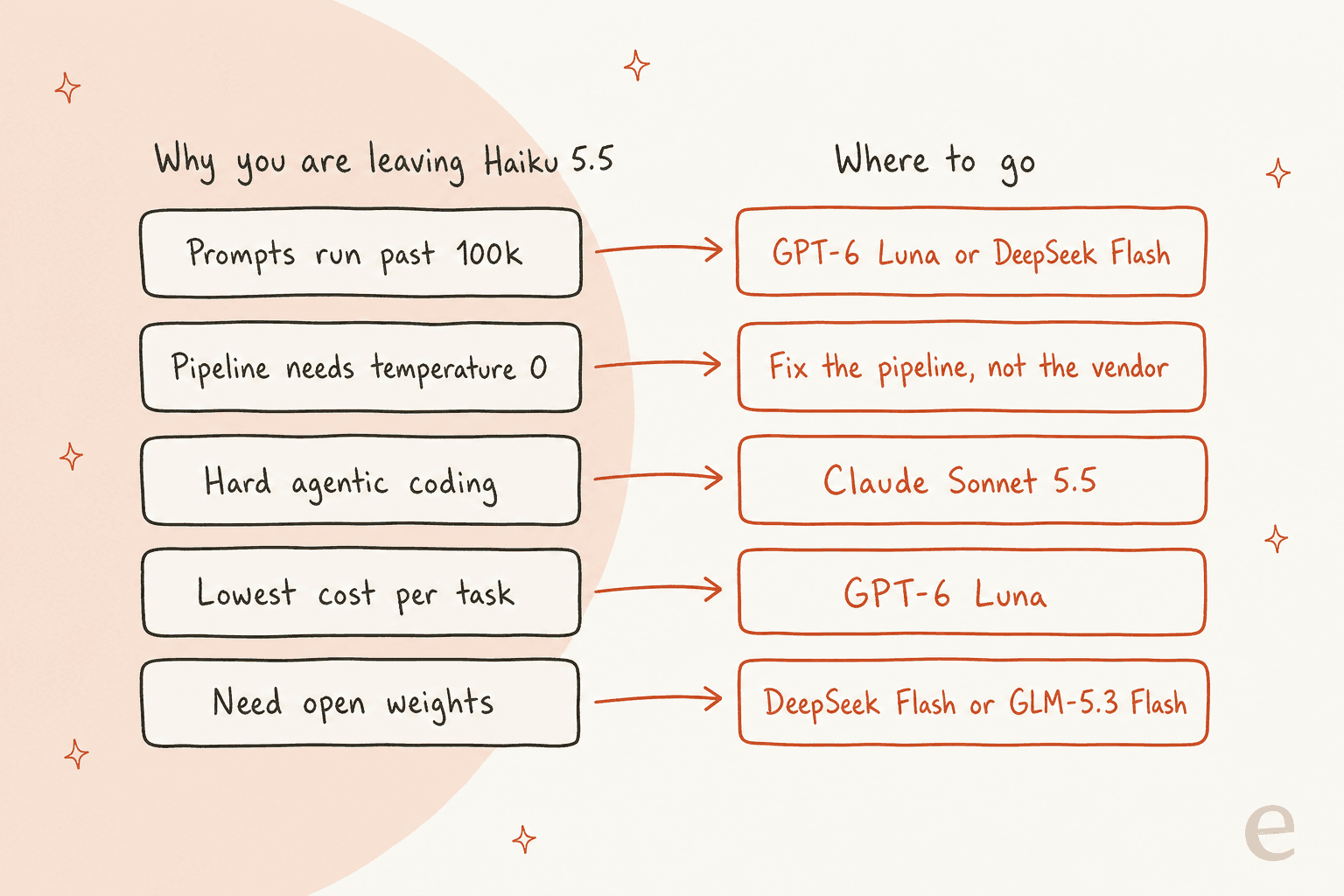
Claude Haiku 5.5 alternatives at a glance
Every price below is per million tokens at standard rates, checked against each vendor's own pricing page on October 8, 2026. The Artificial Analysis (AA) columns use their Intelligence Index v4.3.2 at the effort level AA reports.
| Model | Input / output | Long-prompt rule | Context | AA index | AA cost per task | Output speed | Temperature 0 | Open weights | Best for |
|---|---|---|---|---|---|---|---|---|---|
| Claude Haiku 5.5 (baseline) | $0.10 / $0.50 | 5x on every line past 100k | 1M | 43 | $0.21 | 243 tok/s | Error | No | Short, smart, fast jobs |
| GPT-6 Luna | $0.10 / $0.50 | 2x input, 1.5x output past 272k | 1.05M | 38 | $0.07 | 128 tok/s | Only at effort none | No | Lowest cost per task |
| Claude Haiku 4.5 | $1 / $5 | Flat | 200k | n/a | n/a | n/a | Works | No | Buying time on old prompts |
| Claude Sonnet 5.5 | $2 / $10 | Flat | 1M | 56 (max) | $7.60 (max) | n/a | Error | No | Hard reasoning and coding |
| DeepSeek V4.1 Flash | $0.30 / $1.20 peak, half off-peak | Flat | 1M | 39 | $0.27 (peak) | n/a | Ignored in thinking mode | Yes, MIT | Long prompts on a budget |
| GLM-5.3 Flash | $0.15 / $0.50 | Flat | 1M | 42 | $0.25 | 51 tok/s | Thinking always on | Yes | Open weights near Haiku's score |
| Gemini 3.5 Flash-Lite | $0.30 / $2.50 | Flat | 1M | 22 | $0.19 | 346 tok/s | Google advises 1.0 | No | Raw throughput |
| Gemini 3.8 Flash | $0.75 / $3.75 (doubles Jan 1, 2027) | Flat | 1M | 41 (high) | $1.24 | n/a | Google advises 1.0 | No | Long agent tasks in Google's stack |
A note on the speed column: "n/a" means I didn't have a same-day AA reading I trust, not that the model is slow.
How I picked these
I kept the list to models a Haiku 5.5 user could actually move to this week: generally available, priced in public, and in the same small-and-fast tier, plus one step up (Sonnet 5.5) and one step back (Haiku 4.5). I checked every price on the vendor's own page and every API behavior against the vendor's own docs, and also every benchmark against Artificial Analysis rather than launch charts.
The metric I lean on most is cost per finished task, not price per token. Haiku 5.5 and Luna have identical per-token prices but very different bills, which is the whole story of this tier.
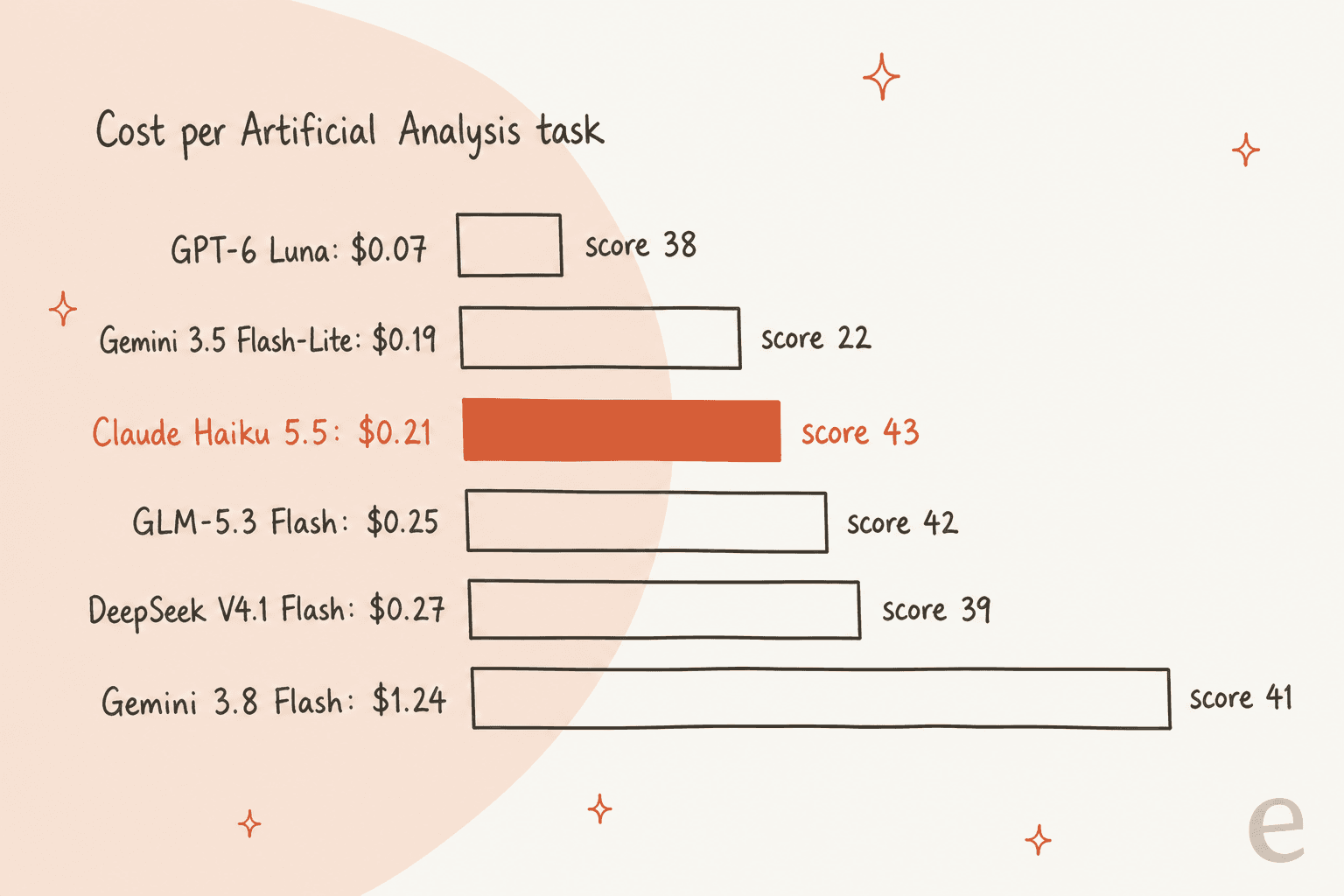
Read that chart as a trade, not a ranking. Haiku 5.5 buys you 5 more index points than Luna for 3x the cost per task. So whether that is worth it depends on whether your task is the kind where those 5 points show up.
1. GPT-6 Luna
Best for: teams that want Haiku-level prices without the 100k cliff, and the lowest bill per finished job.
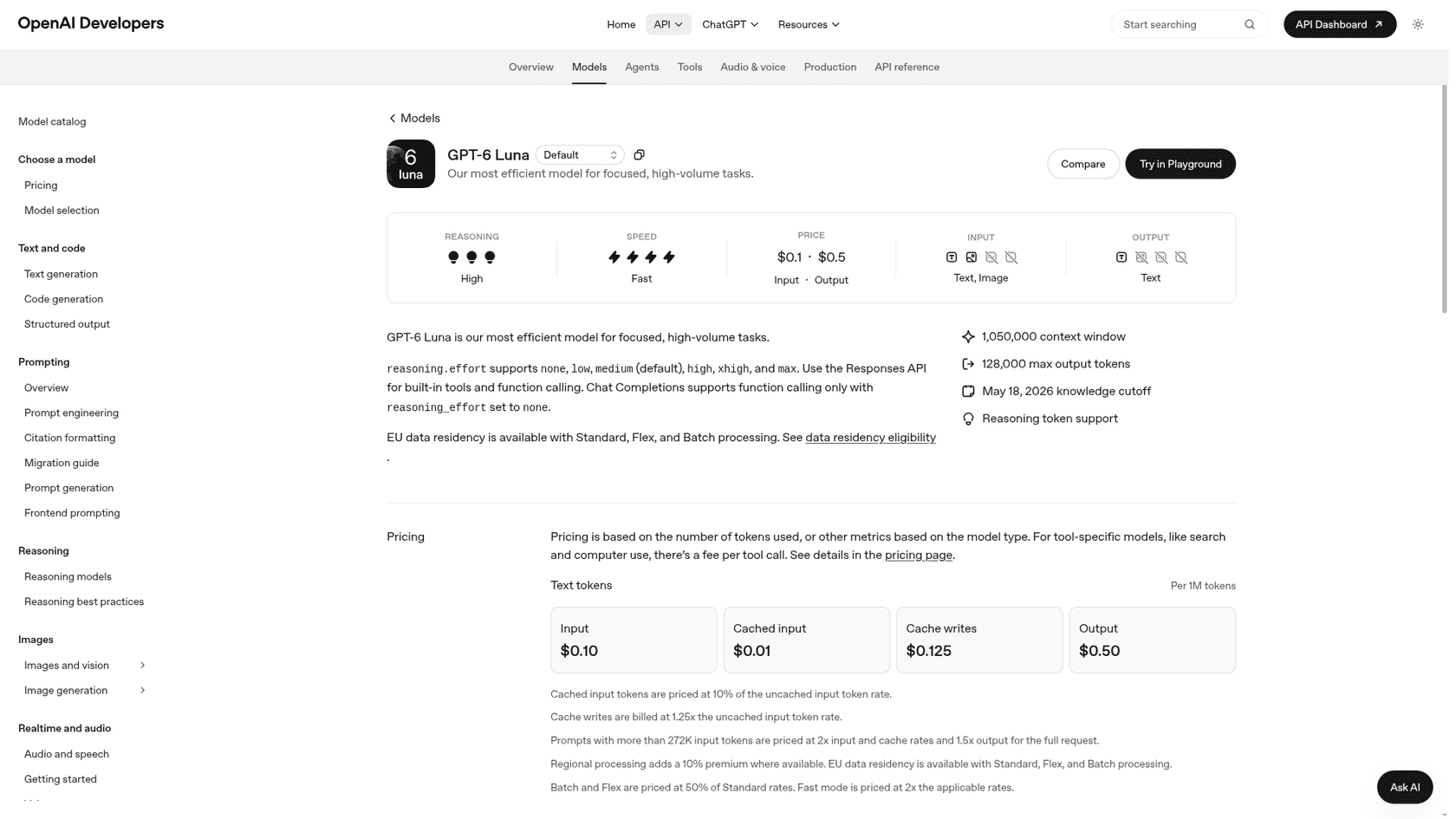
What it does better than Haiku 5.5
Luna is the model Haiku 5.5 was priced to match, and it wins on two things that matter for real bills. The first is that its long-context rule is much gentler. The model page says prompts over 272K input tokens pay 2x on input and cache and 1.5x on output, which works out to $0.20 in and $0.75 out. Haiku 5.5 steps up at 100k, and by 5x.
Second, it writes less, which shows up fast on the bill. AA put Luna at 140M tokens on its index against Haiku's 440M, and $0.07 per task against $0.21. One Hacker News tester ran the same classification job on both and found Luna about 26% cheaper on an identical per-token price. Tokenizers matter too:
"There's also a tokenizer efficiency difference: modern Claude's 100K tokens are about ~60-65K modern GPT tokens, so in reality the Luna cutoff is much further away than the Haiku one."
Where it falls short
Luna scores 38 on AA against Haiku's 43, and AA's hallucination test is the wider gap: 77% for Luna against 40% for Haiku 5.5, per my Haiku review. It is also slower, at 128 output tokens a second, and that matters for live use. And the API has its own catch. OpenAI's latest model guide says that when reasoning effort is not none, you must remove temperature and top_p, and Chat Completions only supports function calling at effort none. For tools with reasoning, you use the Responses API.
Pricing
| Rate | Up to 272K input | Over 272K input |
|---|---|---|
| Input | $0.10 | $0.20 |
| Cached input | $0.01 | $0.02 |
| Output | $0.50 | $0.75 |
| Batch / Flex input / output | $0.05 / $0.25 | $0.10 / $0.375 |
Source: OpenAI API pricing. The Luna pricing guide walks through Fast mode and regional rates.
My take
Honestly, this is the default switch. If your Haiku 5.5 usage crosses 100k tokens regularly, or you care about cost per task more than the last few points of quality, move here. Stay on Haiku if your evals show those extra 5 points (or the lower hallucination rate) landing on your actual task. My GPT-6 Luna alternatives post runs the comparison from the other side.
2. Claude Haiku 4.5
Best for: pipelines that depend on temperature: 0, prefill or manual thinking budgets, while you rewrite them.
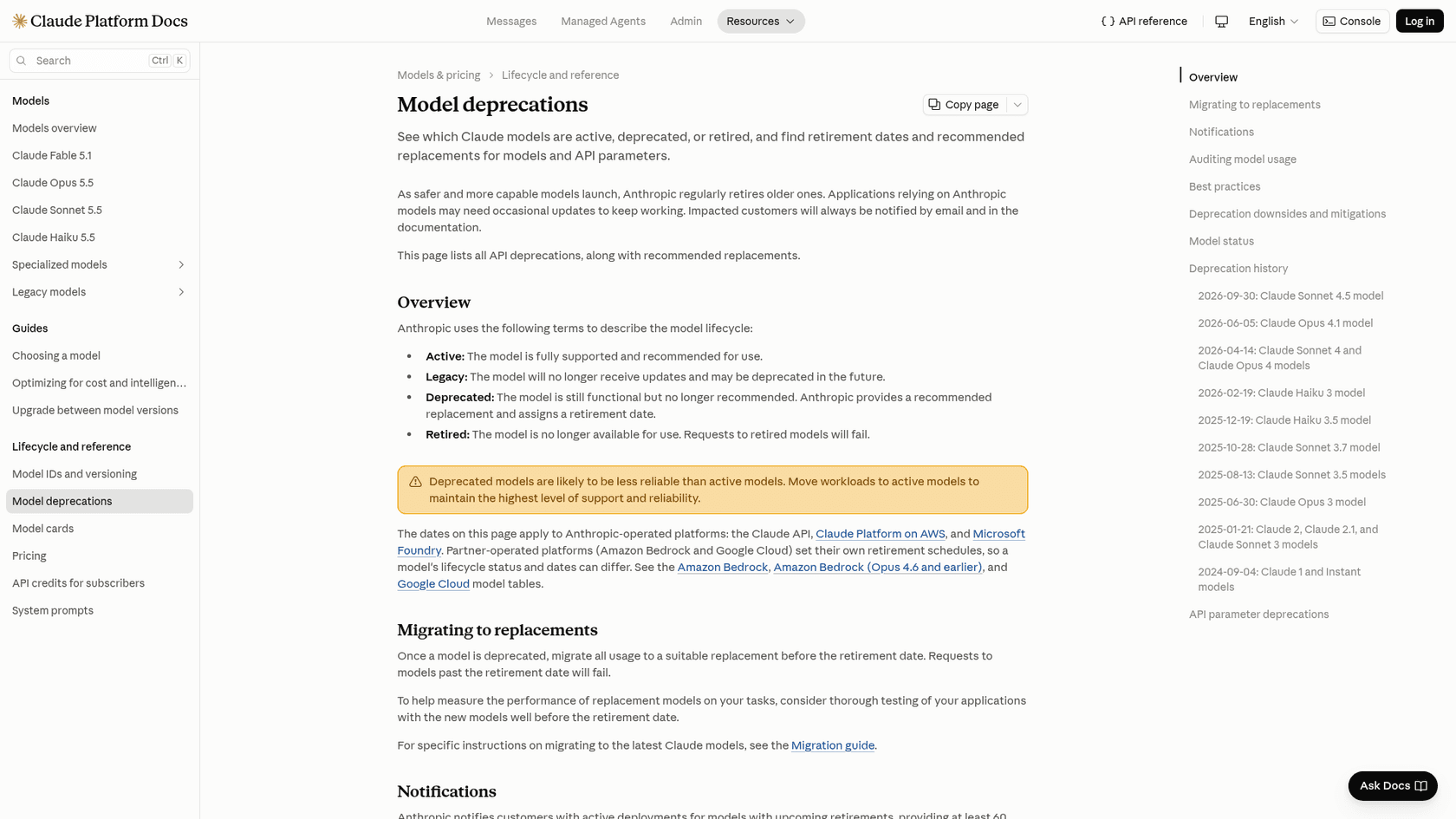
What it does better than Haiku 5.5
Nothing on benchmarks, but what it does better is not breaking your code. Haiku 4.5 still accepts the sampling parameters, prefill and budget_tokens that Haiku 5.5 rejects, its pricing is flat across its 200k window, and its older tokenizer counts fewer tokens for the same text. Some teams also simply like its output on their narrow job.
"Not really. We use Haiku 4.5 to turn users' natural language queries and requests into fairly complex structured specs for interior design and construction. It has near perfect accuracy."
Where it falls short
It is 10x the per-token price of Haiku 5.5 under 100k ($1 / $5 against $0.10 / $0.50), and the capability gap is huge: OSWorld 2.1 went from 15.7% to 72.4% between the two. The bigger issue is time. The deprecations page lists claude-haiku-4-5-20251001 as Active, with retirement "Not sooner than October 15, 2026". That is a floor, not a scheduled date, and Anthropic says it notifies customers before a retirement. So building anything new on it is a bet against the calendar.
Pricing
| Rate | Claude Haiku 4.5 |
|---|---|
| Input / output | $1 / $5 |
| 5-minute / 1-hour cache write | $1.25 / $2 |
| Cache read | $0.10 |
| Batch input / output | $0.50 / $2.50 |
Source: Claude pricing docs. The Anthropic API pricing guide covers the full lineup.
My take
Use it as a bridge, so keep the old pipeline running on 4.5 while you move the labels to structured outputs, then run both models side by side on the same tickets. Don't start anything new here.
3. Claude Sonnet 5.5
Best for: the tasks Haiku 5.5 hands up, especially agentic coding and long multi-step work.
What it does better than Haiku 5.5
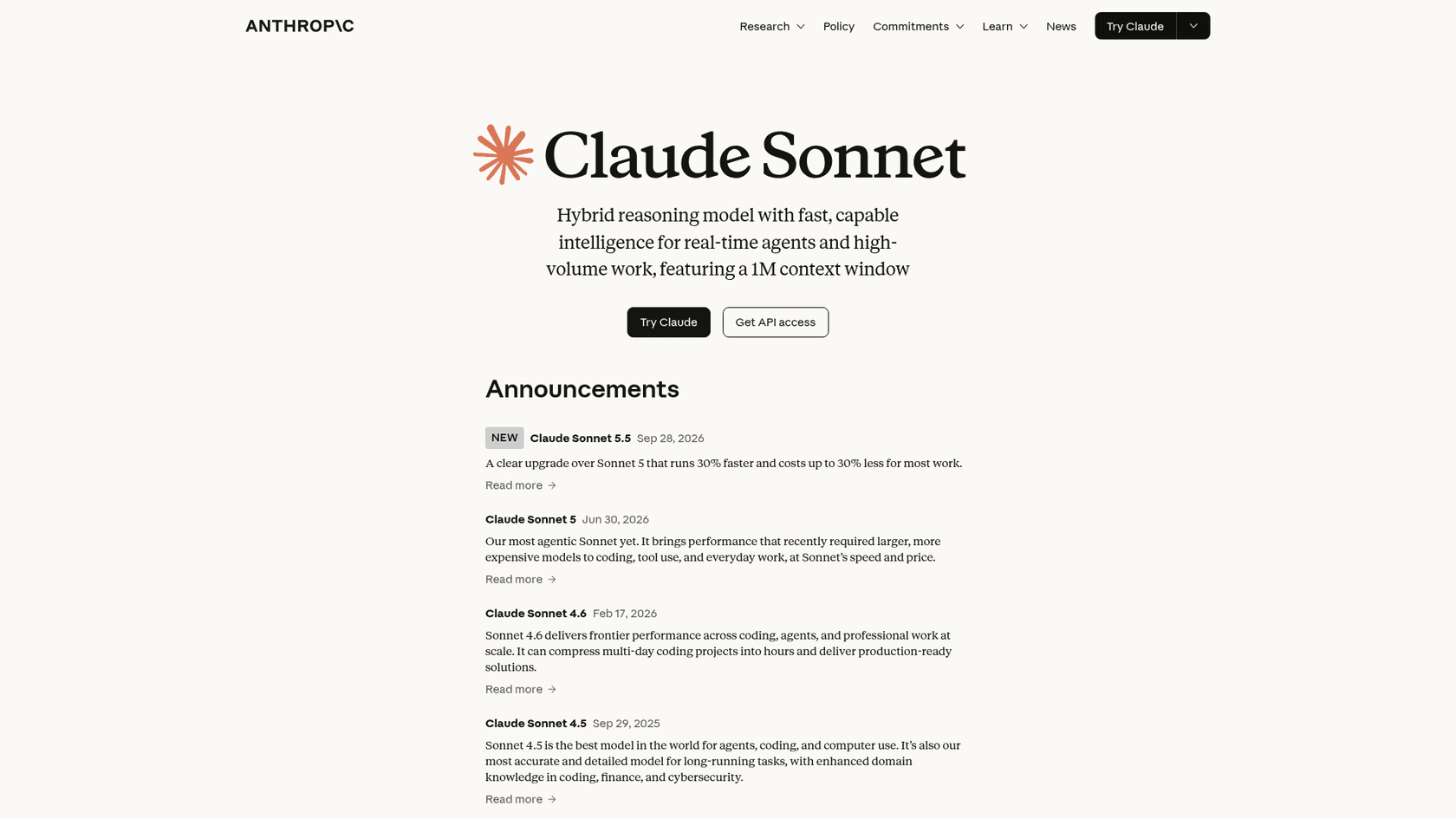
The gap is widest exactly where Haiku is weakest, which is coding. On Anthropic's launch benchmarks, Sonnet 5.5 scores 70.6% on Terminal-Bench 4.0 against Haiku 5.5's 39.2%. On knowledge work the gap is small (1840 vs 1620 on GDPval-AA), which tells you where Sonnet is worth paying for. Claude Sonnet 5.5 also has flat pricing across its full 1M window, and Anthropic halved its cache reads to $0.10 on Haiku's launch day.
Where it falls short
It costs 20x Haiku 5.5 per token under 100k ($2 / $10), and it has the same sampling and prefill restrictions plus a few of its own, like rejecting forced tool_choice. In terms of cost, effort level also matters a lot: AA measured $7.60 per task at max effort, which is why my Sonnet 5.5 review recommends Medium for most work.
Pricing
| Rate | Claude Sonnet 5.5 |
|---|---|
| Input / output | $2 / $10 |
| 5-minute / 1-hour cache write | $2.50 / $4 |
| Cache read | $0.10 |
| Batch input / output | $1 / $5 |
Source: Claude pricing docs. The Sonnet 5.5 pricing post works through real bills by effort level.
My take
Don't replace Haiku with Sonnet, route to it. Keep the short, high-volume work on a small model and send coding and long troubleshooting up a tier, and also anything high-stakes. If Sonnet 5.5's own quirks are the blocker, my Sonnet 5.5 alternatives post covers that tier.
4. DeepSeek V4.1 Flash
Best for: long prompts and batch jobs on a tight budget, with open weights as a fallback.
What it does better than Haiku 5.5
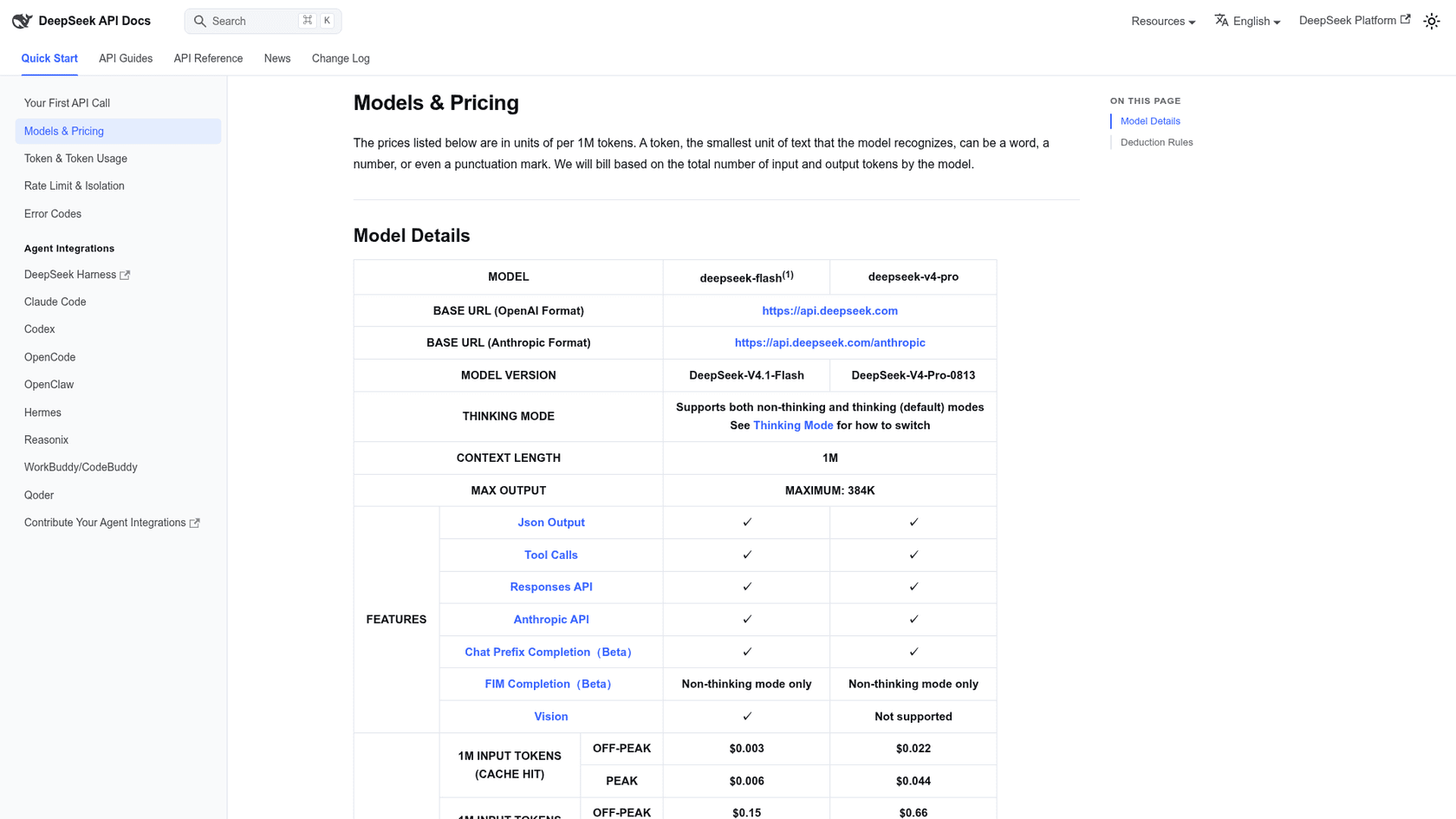
No price cliff. DeepSeek V4.1 Flash charges the same rate from the first token to the millionth, and off-peak that is $0.15 in and $0.60 out. Cache hits cost $0.003 off-peak, a third of Haiku's $0.01. So at a 150,000-token prompt, DeepSeek off-peak input costs $0.0225 while Haiku 5.5 costs $0.075.
It also speaks Anthropic's API format, which means pointing an existing Claude integration at it is mostly a base URL change, and it supports chat prefix completion (prefill, in Anthropic terms) as a beta. The weights are on Hugging Face under an MIT license.
Where it falls short
Two catches here. Peak pricing is double, and peak hours are 01:00 to 04:00 and 06:00 to 10:00 UTC on weekdays, which is the European working morning. And in thinking mode, DeepSeek's thinking mode guide says temperature "will not trigger an error but will also have no effect", so the same deterministic-label problem follows you here, just silently. AA scores it 39, four points under Haiku.
Pricing
| Rate | Off-peak | Peak |
|---|---|---|
| Input, cache miss | $0.15 | $0.30 |
| Input, cache hit | $0.003 | $0.006 |
| Output | $0.60 | $1.20 |
Source: DeepSeek pricing. My V4.1 Flash pricing post covers the peak-hour maths.
My take
The pick for long-context batch work where the 100k cliff hurts most, like summarizing long ticket histories overnight. Check data residency and your company's vendor rules first, since some teams can't send customer data to a China-based API, and self-hosting the open weights is the workaround.
5. GLM-5.3 Flash
Best for: teams that want an open-weight model scoring within a point of Haiku 5.5.
What it does better than Haiku 5.5
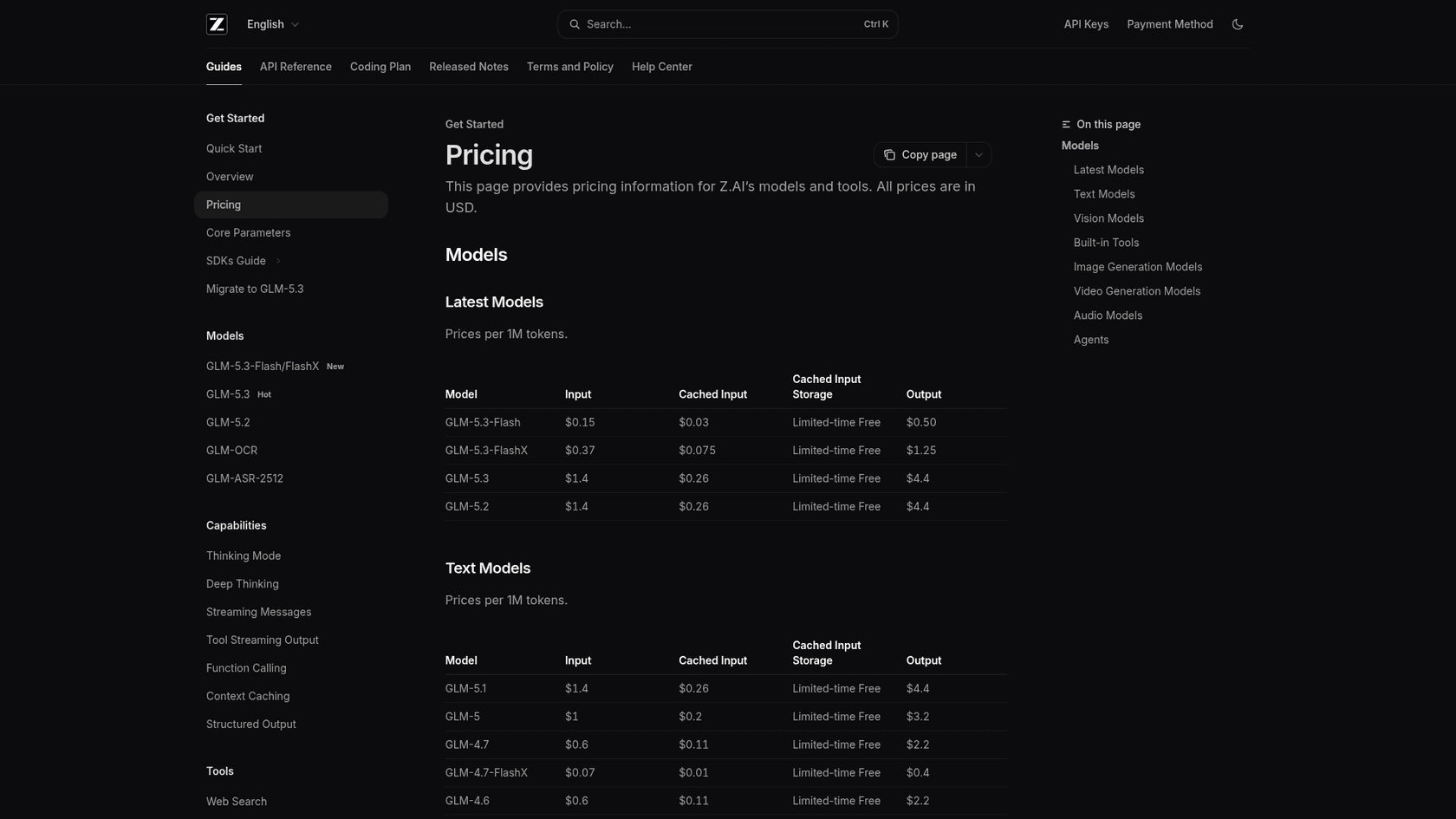
Score per dollar with no cliff. GLM-5.3 Flash scores 42 on Artificial Analysis, one point under Haiku 5.5, at $0.15 in and $0.50 out flat across a 1M window. The output price matches Haiku's cheap tier, and you never pay the 5x step. The weights are public on Hugging Face, so you can run it on your own hardware or through a third-party host.
Some developers are already using it as their everyday cheap model:
"Not me, I use GLM-5.3-Flash for almost everything (the subscription-subsidized pricing on a legacy Z.ai plan makes it the best value model by a wide margin), along with some MiMo and DeepSeek."
Where it falls short
Speed is the issue. AA measures 51 output tokens a second on the first-party API, against 243 for Haiku 5.5, so it is a poor fit for anything a person waits on. Thinking can't be turned off either: the model page says "thinking.type only supports enabled", and Z.ai recommends temperature: 1. Input is also $0.15 against Haiku's $0.10, so very short, input-heavy prompts cost slightly more.
Pricing
| Rate | GLM-5.3 Flash | GLM-5.3 FlashX |
|---|---|---|
| Input | $0.15 | $0.37 |
| Cached input | $0.03 | $0.075 |
| Output | $0.50 | $1.25 |
Source: Z.AI pricing. My GLM-5.3 Flash review and pricing post go deeper.
My take
The best open-weight answer to Haiku 5.5 on quality, and a strong pick for background jobs, though I'd skip it for live chat, where its speed shows. The GLM-5.3 Flash alternatives post covers its neighbours.
6. Gemini 3.5 Flash-Lite
Best for: very high-volume, simple jobs where throughput beats intelligence.
What it does better than Haiku 5.5
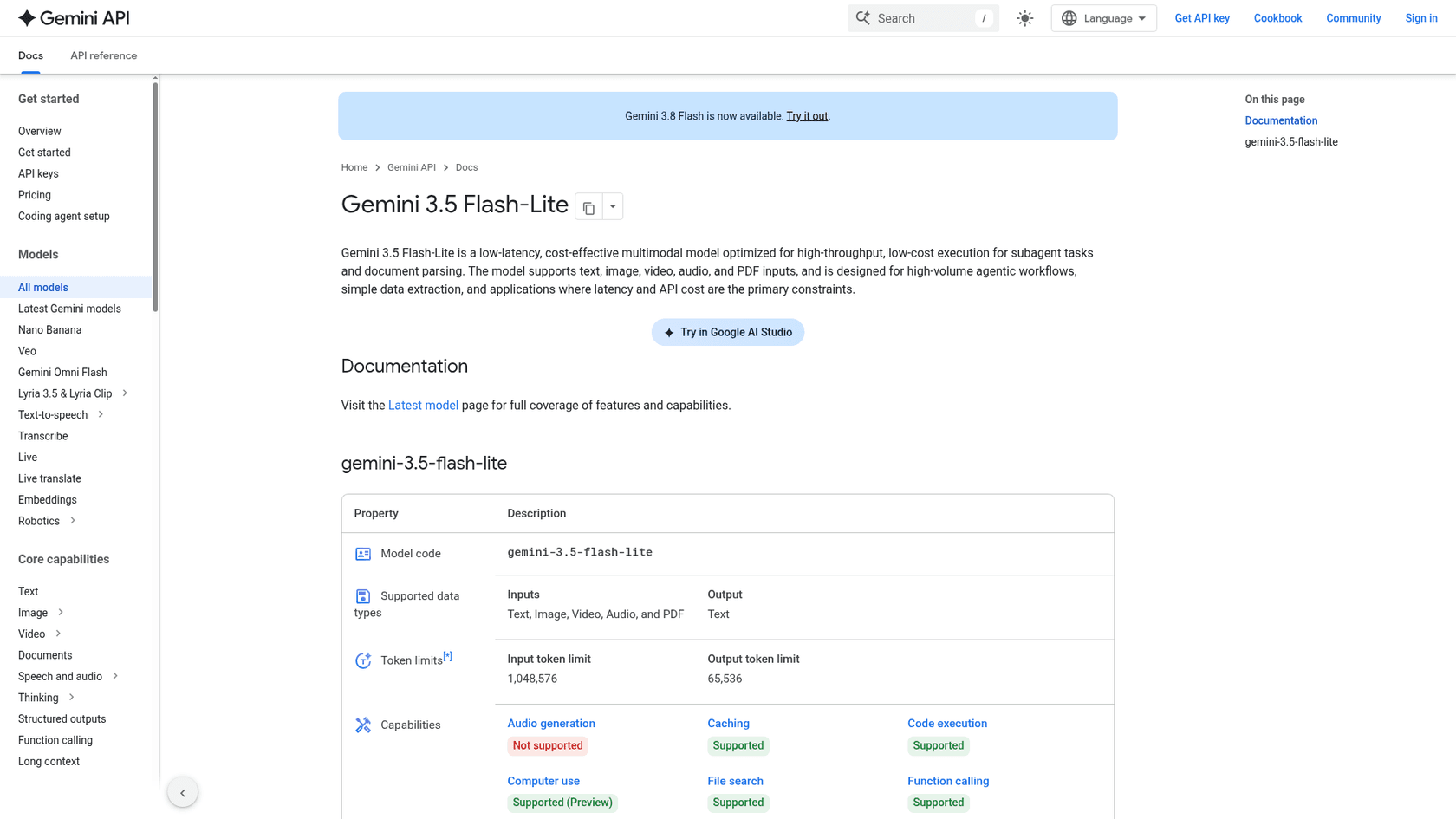
It is the fastest model here, at 346 output tokens a second on Artificial Analysis, and it is the least wordy: 59M tokens on the AA index against Haiku's 440M. Pricing is flat across its 1M window and it takes text, image, video, audio and PDF input, and also Google offers a free tier for testing. Gemini 3.5 Flash-Lite is built for parsing, tagging and routing at scale.
Where it falls short
Intelligence is the gap. It scores 22 on AA, about half of Haiku 5.5's 43, and its per-task cost ($0.19) lands close to Haiku's anyway because its output price is $2.50, five times Haiku's cheap tier. Max output is 65,536 tokens. And Google's Gemini 3 guide strongly recommends keeping temperature at 1.0 for all Gemini 3 models, warning that lower values can cause "looping or degraded performance".
Pricing
| Rate | Gemini 3.5 Flash-Lite |
|---|---|
| Input / output | $0.30 / $2.50 |
| Context cache | $0.03, plus storage |
| Free tier | Yes |
Source: Gemini API pricing. The Flash-Lite pricing post covers the batch and priority tiers.
My take
Use it for the dumbest, highest-volume step in a pipeline, like language detection or spam filtering, and keep it away from anything that needs judgment. Honestly, for most Haiku 5.5 users it is a step down, not sideways.
7. Gemini 3.8 Flash
Best for: long agent tasks for teams already on Google Cloud, where the model's extra reasoning pays off.
What it does better than Haiku 5.5
Flat pricing across a 1M window and a strong showing on long agentic work, and also the whole Google toolbox (search grounding, a free tier, Vertex AI). Gemini 3.8 Flash scores 41 on AA at high effort, close to Haiku 5.5, and it is the natural pick if your data and contracts already live in Google Cloud.
Where it falls short
Cost and wait time, mainly. AA puts it at $1.24 per task, about 6x Haiku 5.5, and the price on Google's pricing page doubles on January 1, 2027, from $0.75/$3.75 to $1.50/$7.50. AA also measured a 13.3-second time to first token at launch, which my Gemini 3.8 Flash review flags as a problem for anything a customer is watching. The temperature advice is the same as Flash-Lite: leave it at 1.0.
Pricing
| Rate | Through Dec 31, 2026 | From Jan 1, 2027 |
|---|---|---|
| Input | $0.75 | $1.50 |
| Output, thinking included | $3.75 | $7.50 |
| Cache read | $0.075 | $0.15 |
| Batch input / output | $0.375 / $1.875 | $0.75 / $3.75 |
Source: Gemini API pricing. The Gemini 3.8 Flash pricing post has the priority tier.
My take
Not a like-for-like Haiku replacement. It is a pricier model for heavier agent work, which means the January price change makes it worse value next year. If you want the Google option, budget at the 2027 rate now. The Gemini 3.8 Flash alternatives post covers that tier.
The temperature 0 problem follows you
This is the reason I see most often when teams explain why they are switching, and so it gets its own section. Haiku 5.5 returns an error for any non-default temperature, and a lot of ticket triage pipelines were built on temperature 0 for consistent labels, plus prefill to force a JSON opening brace.
So the uncomfortable bit is that the rest of the cheap tier has moved the same way.
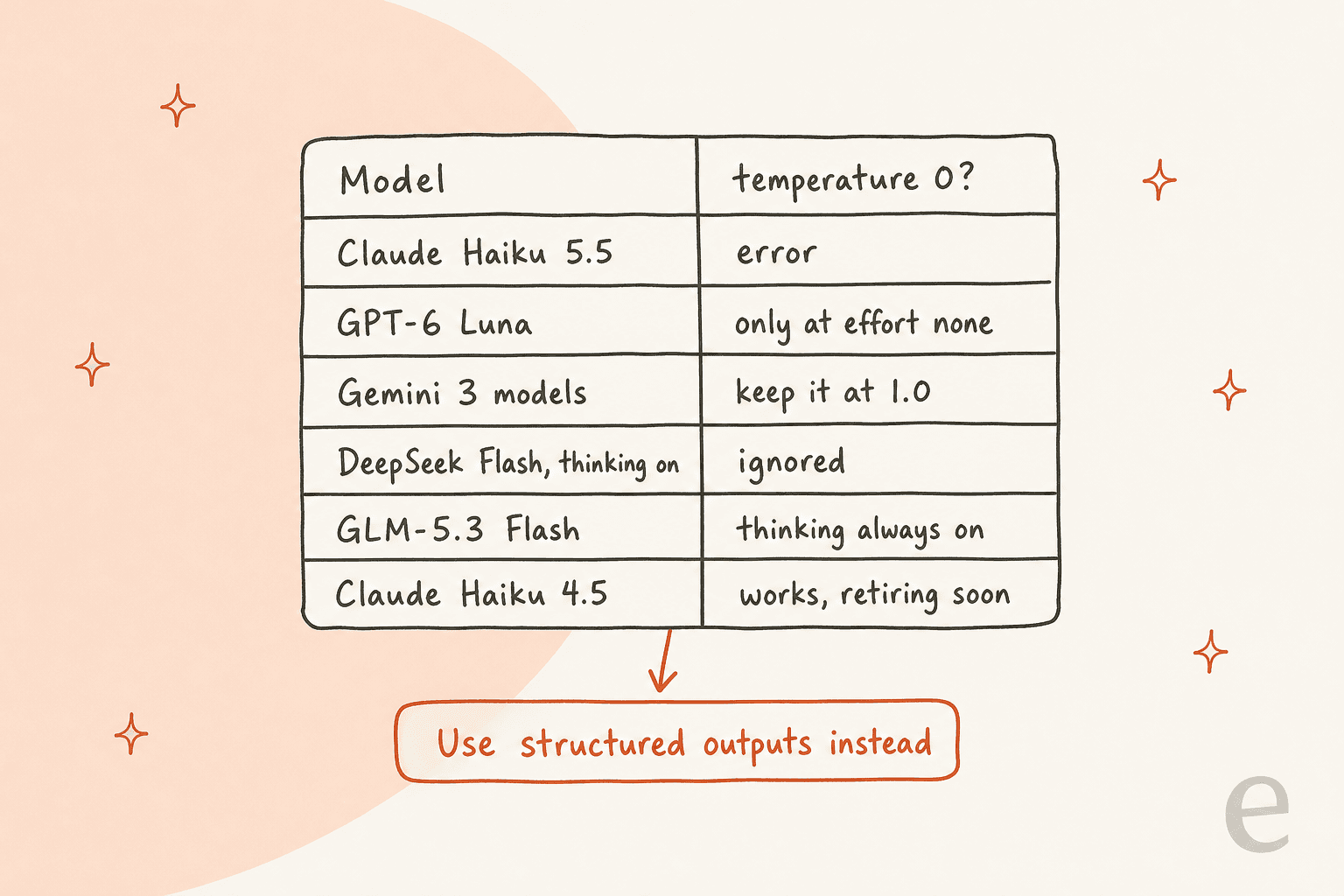
Reasoning models sample their thinking, and vendors have decided low temperatures hurt more than they help. So moving vendor to keep temperature 0 buys you a few months at most. The durable fix, then, is to stop relying on sampling for consistency.
- Use structured outputs or strict tool schemas to force a fixed label set. The model can only answer with one of your categories, whatever its temperature.
- Drop prefill. End your messages with a user turn and put the format rule in the prompt or the schema.
- Run effort low for classification. Less thinking means fewer chances to wander and also a lower bill.
- Measure consistency, don't assume it. Run the same 200 tickets twice and count label flips. That number tells you more than any temperature setting.
There's a related lesson from eesel's sales calls. A CX lead at a DTC supplements brand handling about 7,000 tickets a month told the team what they actually wanted:
"I need an AI who is only handling the tickets that it's confident to handle and all the other ones, leave them alone."
That is the real goal behind most temperature 0 setups. Not identical wording, but knowing when the model is sure. Confidence-based routing, where the AI answers what it is sure of and leaves the rest for a human, gets you there more reliably than any sampling setting, and also works the same on every model in this list.
Which Claude Haiku 5.5 alternative fits which job
Here is how I'd call it, by job rather than by benchmark.
| You are running | My pick | Why |
|---|---|---|
| Short classification, tagging, routing | Stay on Haiku 5.5, or Luna if cost per task wins | Both $0.10/$0.50 under 100k; Luna writes fewer tokens |
| Agent loops that pass 100k tokens | GPT-6 Luna | Step comes at 272k and only 2x / 1.5x |
| Long-context batch summaries | DeepSeek V4.1 Flash, off-peak | Flat $0.15 / $0.60 to 1M tokens |
| Temperature 0 or prefill pipelines | Haiku 4.5 short-term, structured outputs long-term | Every reasoning model restricts sampling |
| Agentic coding | Claude Sonnet 5.5 | 70.6% vs 39.2% on Terminal-Bench 4.0 |
| Open weights or self-hosting | GLM-5.3 Flash or DeepSeek V4.1 Flash | AA 42 and 39, both on Hugging Face |
| Simple, massive-volume filtering | Gemini 3.5 Flash-Lite | 346 tok/s, least verbose |
One more practical point before you migrate. Most teams end up with two models, not one: a cheap one for the bulk and a smarter one for the escalations. That pattern works with any pair here, so you are not tied to one vendor. For support, my guide on which LLM fits support and the list of the best AI models for tickets go wider.
Try eesel instead of rebuilding your ticket pipeline
If you are shopping for a Haiku 5.5 alternative to run a support queue, the model is honestly the smaller half of the problem. eesel is an AI helpdesk teammate that joins the helpdesk you already use, such as Zendesk, Freshdesk or Gorgias, learns from your past tickets and help center, and handles ticket classification, summaries and replies. When a vendor adds a price cliff or starts rejecting a parameter, that is eesel's migration to do, not yours.
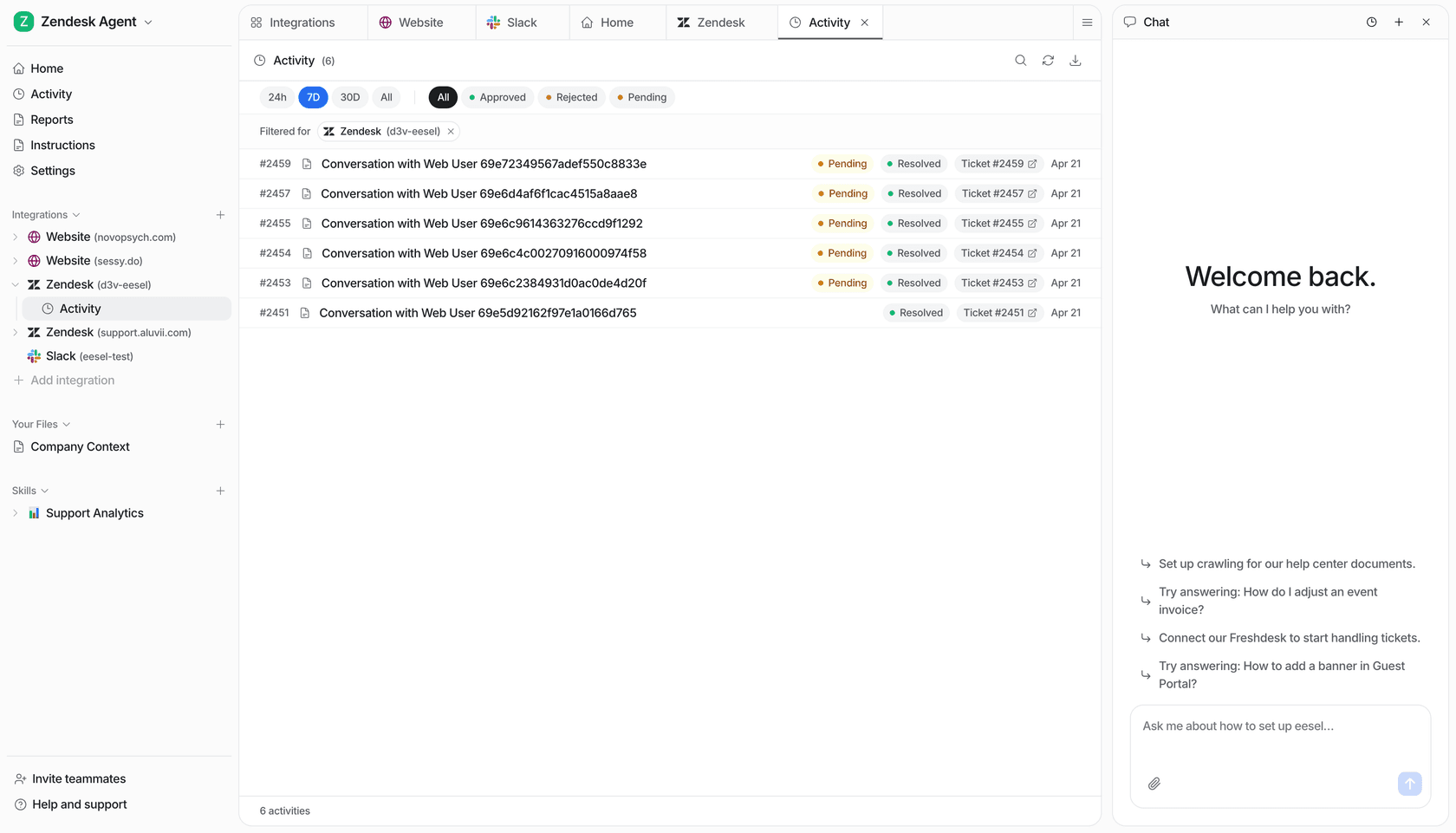
Before it answers a single customer, every rollout is simulated against your historical tickets, so you can see which tickets it would resolve and which it would hand to your team. That gives you the confidence-based routing the 7,000-ticket CX lead asked for, without a temperature setting in sight.
If you work from a terminal, the eesel CLI drives the same teammate and workspace as the dashboard. You can script it or wire it into CI, and you can also let a coding agent like Claude Code run it. My post on the AI agent CLI covers that setup.
Paid plans start at $299 for 500 credits, and you can try it free on a slice of your real tickets first. Try eesel.
Frequently Asked Questions
What is the best alternative to Claude Haiku 5.5?
Is GPT-6 Luna cheaper than Claude Haiku 5.5?
Can I keep using Claude Haiku 4.5 instead of Haiku 5.5?
Which Claude Haiku 5.5 alternative supports temperature 0?
What is the cheapest Claude Haiku 5.5 alternative?
Is there an open-weight alternative to Claude Haiku 5.5?
Should I use Claude Sonnet 5.5 instead of Haiku 5.5?
Which Claude Haiku 5.5 alternative is best for customer support?


Article by
Rama Adi
Rama is a software engineer at eesel AI with two years of experience writing about B2B SaaS, AI tools, and customer support technology. Based in Bali, Indonesia, he brings a developer's perspective to product comparisons — cutting through marketing copy to what the integrations and APIs actually do.