


Why I tested the research claim
I work on eesel's blog, and our AI blog writer runs a research step before every draft, so I read research output for a living. The number I keep in my head comes from a real-traffic trial on a German online jewelry retailer's Zendesk inbox, about 1,000 tickets a month. The agent triaged with 93% accuracy, yet its drafts carried a 7% factual error rate, and only 12% went out as written. Good agents are wrong in small, confident ways. Research is where that costs the most, because nobody rereads the answer.
So when people ask whether Instinct can "do my research," I ask two things. What does it actually look up, and how would I know when it is wrong?
Instinct is an invite-only personal AI assistant from Spear Street Technology, founded by Noah Shinn, and it launched on August 26, 2026. You text or call it. Per its homepage, it "uses its devices in the same way that humans do," so it browses the web like a person would.

I re-read Instinct's terms on October 8, 2026. They and the privacy notice are still dated August 26, and the acceptable use policy August 20. I also searched Reddit, X, LinkedIn and Hacker News for anyone using it for academic or professional research. I found people using it for decisions, and nobody posting a literature review, a market report or a paper.
Two kinds of research, and which one Instinct does
"Research" covers two jobs that need different tools. The first is research for a decision: which one to buy, when to book, what the return rule says. You act on the answer within a day or two, and a bad answer costs a refund. The second is research as a deliverable: a report, a brief or a post that other people will read and check. A bad answer there costs your credibility.
Here is how Instinct maps to each, from the documented facts and what users post.
| Research job | Instinct fit | What the evidence says |
|---|---|---|
| Compare products and prices | Documented | Shopify partnership of Sep 28: live prices, sizes and availability across brands |
| Watch a price or stock level for days | Users report it | Flight prices about 3 times a day; stock every 6 hours |
| Find and read a policy page | Users report it, with errors | A cancellation window read as 24 hours, actual 48 |
| Summarize a short list | Users report it | A few tech startups; a daily digest of articles |
| Give a source list per claim | Not documented | No page mentions sources or citations |
| Search academic databases | No connector | Privacy notice names Google Workspace only |
| Reproduce a search later | Not documented | Terms: records of actions "may not always be accurate" |
| Research for a team or employer | Outside the license | Licensed "for your personal use only" |
The top half is where I'd use it. The bottom half is where I wouldn't. Most of the rest of this guide explains why, and what to do about each row.
What Instinct does well: research around a decision
The strongest evidence is about buying and booking, because that is where Instinct's own announcements point. These are the four jobs I'd hand it.
Comparing what is for sale
On September 28, Noah Shinn wrote that Instinct "can now search Shopify's merchant network for products, and find live information on prices, sizes and availability." The same post lists "Discover and compare products across brands, with up-to-date pricing and availability" as a use. That is comparison research with live data, which is the hard part of shopping research.
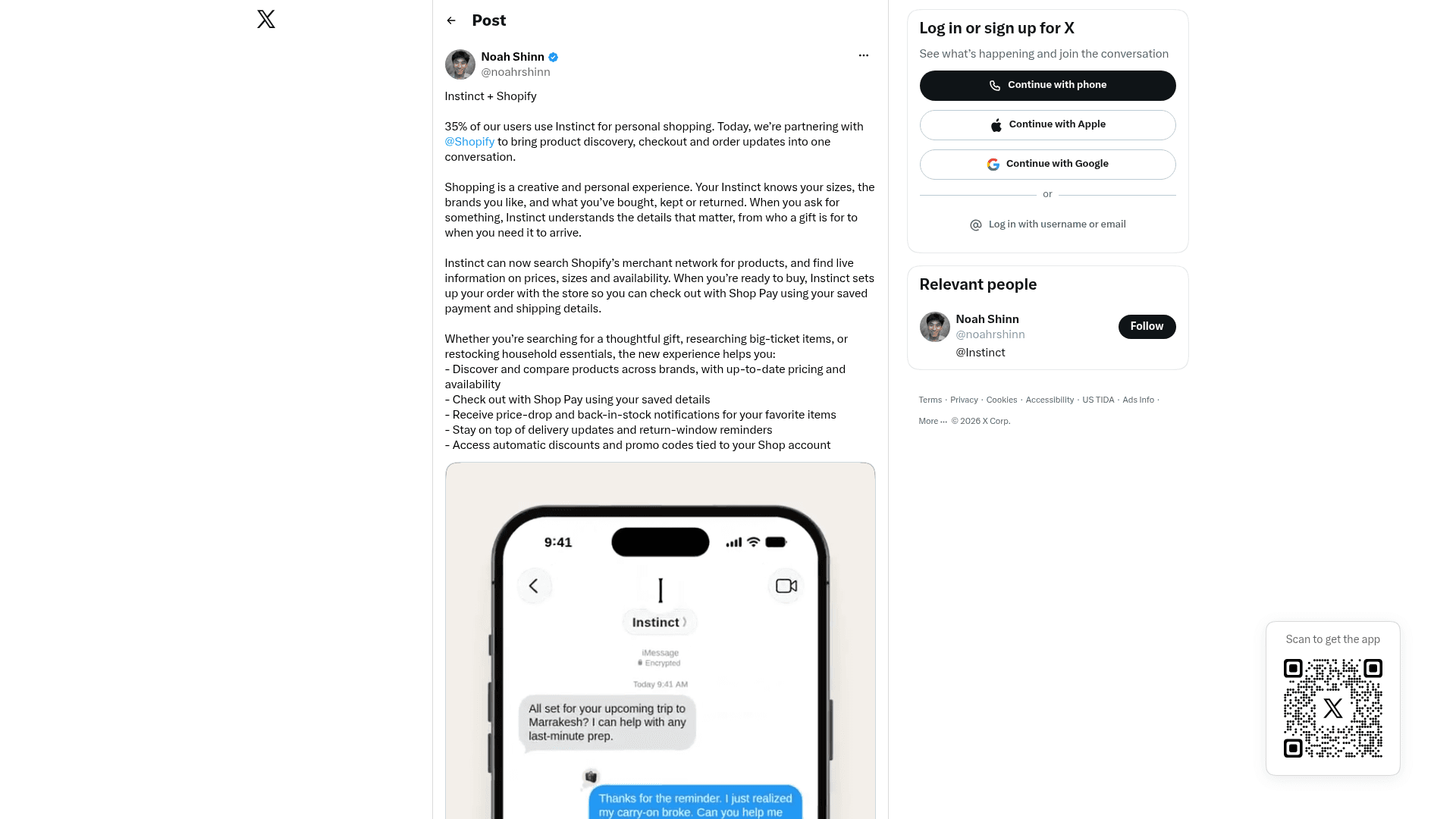
If you want the same job from a chat tool, compare ChatGPT shopping research, and see my notes on the AI shopping assistant category. Flights are the other big lane: the founder says more than 20% of users had Instinct help with flights last month.
Watching something for days
This is what a text-based agent does better than a search box. One user's stress test, posted in September:
"Asked it to monitor flight prices within a date range, identify good deals, and remind me if prices looked like they were rising or dropped. It was checking roughly 3 times a day. [...] Asked it to research a few tech startups and give me concise summary notes. Overall, I was actually pretty impressed with how well it handled these."

Another commenter, comparing it with Siri, listed work that "spans days," with a product's stock "checked every 6 hours since Tuesday" (u/worsterer, Reddit). The same commenter credits it with "research with receipts." That is the closest thing to a source claim I found, and it is one person's phrase, not a feature.
Short summaries and daily digests
Clayton Dean, a VP at Ziplines Education, described what he handed Instinct in one morning:
"create a daily digest each morning with the most important articles/posts in AI, higher ed, edtech and GTM sales [...] research rentals for a ski trip in January and contact property managers for quotes"

A digest is research where a miss is cheap: if it skips an article, you lose nothing you would have acted on. It is the same shape as the standing jobs in my Instinct for work guide. For call prep specifically, see meeting preparation.
Errands that need looking things up
Another Reddit user had it "look up scholarships for my daughter," find "class action suits I could be eligible for," and shop homeowners and car insurance rates (u/Secret_Twist3908, Reddit). Each of these has a human checkpoint built in: a form you sign or a quote you accept. That is why this research works. The agent finds candidates, and you decide.
Does Instinct show its sources?
Not in anything I can find. I searched the terms, the privacy notice, the acceptable use policy and the homepage for "source," "citation," "cite" and "research." Nothing describes a source list, inline citations or a deep research mode.
Compare how documented tools handle it. Meta's help center says you can ask Muse for sources, and gives the prompt "Show all URLs you have visited in the last week" for a browsing trail (I cover that in Meta Muse for research). OpenAI describes deep research as producing a cited report. Instinct documents neither.
There is also a clause that limits what an audit trail is worth. The terms say: "Records of Actions available through the Services may not always be accurate. You are responsible for independently verifying the accuracy and appropriateness of Actions and regularly monitoring Actions." So even asking "what did you visit?" gives you a claim, not a log.
You can still ask for receipts in the request. These are the prompts I'd start with:
| Research job | Prompt to try | Check before you act |
|---|---|---|
| Compare options | "Compare these three. For every price, give me the product page link and when you looked." | Open the link for the one you'd buy |
| Policy lookup | "Quote the exact cancellation sentence and link the page." | Compare it with the checkout page |
| Watch a price | "Check every 6 hours. Text me only when it changes, with the link." | Open the link on the first alert |
| Summarize a list | "Summarize these five startups. Mark any line you could not source." | Spot-check two lines |
| Daily digest | "Each morning, send five links on this topic with one line on why each matters." | Skim the links, not the summary |
Notice what the prompts share: every claim must arrive with a link, and the agent has to admit a gap. That is the habit I'd build, because without it you are reading a confident paragraph with nothing behind it.
Where Instinct's research goes wrong
The pattern in user reports is not random errors. It is answering before checking. One Reddit user exported their chat history and had another AI list what Instinct got wrong. Among the items:
"It gave me the wrong cancellation policy for an activity. It confidently told me cancellation was allowed until 24 hours beforehand. At checkout, it discovered the actual policy was 48 hours. To its credit, it caught this before completing the transaction."
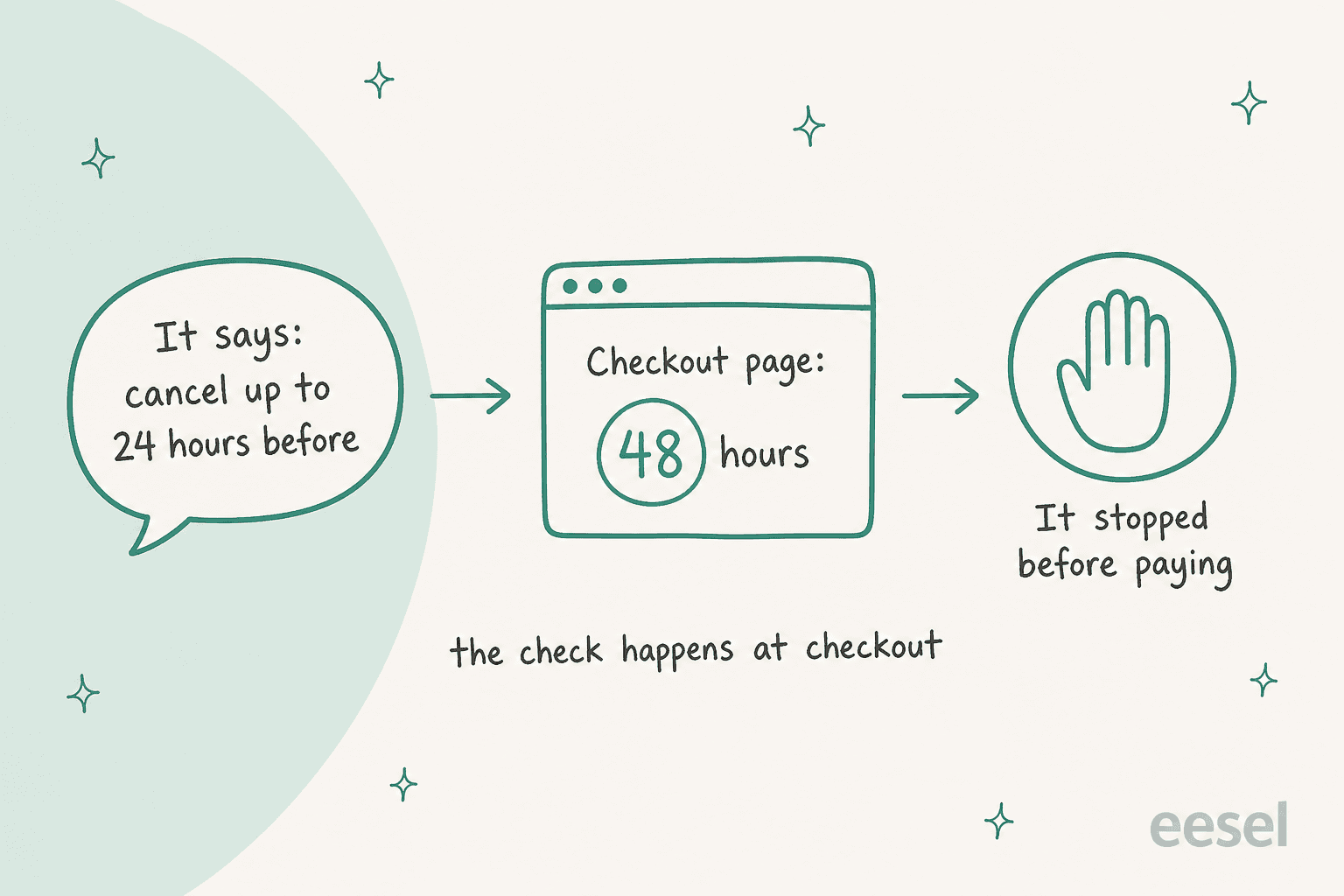
The research was wrong, and the checkout page was what caught it. Same post, same pattern: it "presented Alhambra tickets as a viable option before checking whether tickets actually existed," and later admitted, "I treated a target time as if it were a viable option before confirming inventory." The user's summary of one failure was "Again: propose first, verify later."
To be fair, this is one account of one bad stretch, and it came with a caveat from another commenter, who agreed it was "getting very basic things wrong" but is still useful for little things, and said "I just make sure to challenge it on anything I don't trust it for" (u/hbecksss, Reddit). The agent also stopped before paying. That matters. For decision research, a payment approval is the checkpoint that makes a wrong answer survivable.
The team knows about the issue. On September 23, Noah Shinn attributed an incident a user had called a data leak to "a hallucination (the model fabricated a proper noun)" and said the team built a layer that "scans and verifies every token" in the platform (Noah Shinn, X). Instinct's terms are blunter: the Services "may generate Output containing incorrect or incomplete information," and you should "verify the accuracy of any Output" before relying on it.
I'd weigh that against one gap. Instinct publishes no research benchmark that I could find. Meta publishes DeepSearchQA and long-document scores for the model behind Muse, with 90.3 on the browsing test. The benchmark the founder co-wrote, τ-bench, measures tool-using agents in customer-service settings, not research quality. For a deeper read on why agents invent details, my guide to AI hallucinations explains the mechanism.
What it cannot do: the research itself
Here is the half of the table where I'd look elsewhere.
Academic and licensed sources. Instinct's privacy notice names exactly one work suite: "Google Calendar, Gmail, Google Drive, Google Docs, Google Sheets, Google Slides and Google Tasks." It can read papers you saved to Drive. It has no documented connector for a journal database, a reference manager or a paid data service. And its terms put the responsibility on you: "You are solely responsible for ensuring that interactions the Services take with any Connected Service on your behalf are permitted under the terms and conditions that apply to your use of such Connected Service." If a site's terms ban automated access, Instinct browsing it for you is your problem.
Reproducibility. A literature search has to be repeatable: same query, same databases, same date. Instinct documents no run history, and its terms warn that records of actions may be inaccurate. You can save its answers in your own notes, but you cannot rerun the search from Instinct.
Work for an employer or a client. The terms say, "We hereby permit you to use the Services for your personal use only." They add that if you use it on behalf of a company, "you" includes that company. Competitor research for your job sits in that gray area, and I'd get a yes from IT or legal first. Instinct also has no business plan; its /business and /pricing pages both return "Page not found."
Here is how it compares with Meta's personal agent on the same questions.
| Question | Instinct | Meta Muse |
|---|---|---|
| Shows sources? | Not documented | On request, per Meta's help center |
| Lists URLs it visited? | Not documented | Yes, by prompt |
| Browsing research benchmark | None published that I found | DeepSearchQA 90.3 on Meta's scorecard |
| Academic database connector | None, Google Workspace only | None |
| Business use | "Personal use only" | Allowed in its supplemental terms |
| Training on your data | On by default, opt-out is forward-only | Opt-out under Data Controls |
For the full head-to-head, see Instinct AI vs Meta Muse. The xAI agent gets its own comparison in Instinct AI vs Grok Bot.
What its terms mean for research you send it
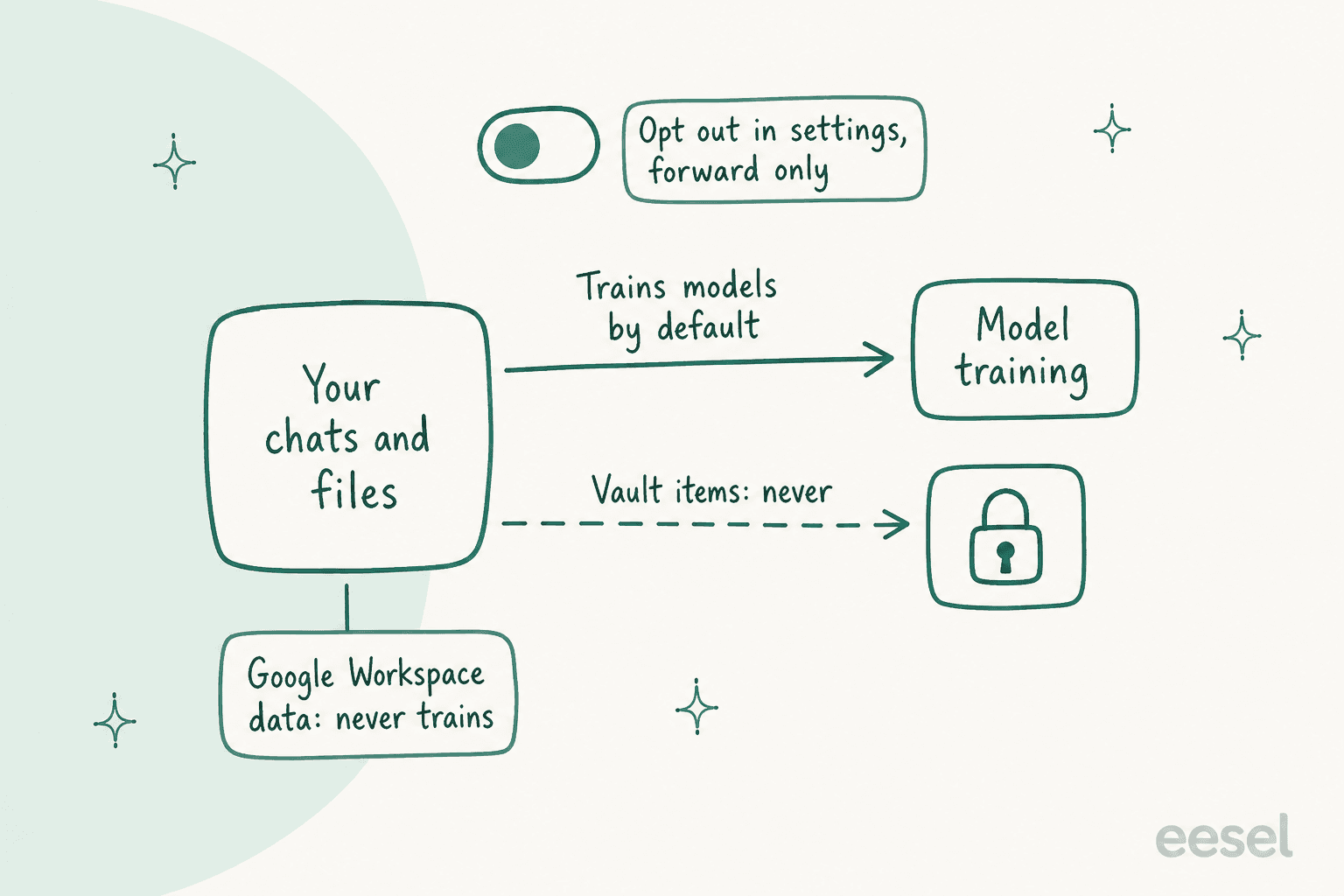
Every message you text Instinct, and every answer it sends back, counts as "Materials" under its terms. By default those can train its models. The privacy notice says the same, with a carve-out for Google data.
The details matter if your research is sensitive:
- Training is on by default. The terms say Instinct may use Materials for "training AI models." You opt out at app.instinct.com/settings.
- The opt-out is forward-only. It "applies on a go-forward basis," and Instinct "may still use AI models previously trained, fine-tuned or improved on your Materials prior to your opting out."
- Safety flags override it. Even after you opt out, flagged Materials can still be used for training.
- The Vault is excluded. Anything you add to the Vault is used "only" to provide the service, not to train.
- Google data is excluded. The privacy notice says it does not use Google Workspace API data "to evaluate, fine-tune, train, or improve AI models."
So if you are researching unpublished findings, a client's name or a competitor's numbers, opt out before your first message, and keep the sensitive files in the Vault or Drive. The acceptable use policy adds one rule for people research: it bans "collecting, disclosing, or inferring private or sensitive information about individuals" without the necessary rights. Digging into a named private person is where I'd stop. My Instinct AI review covers the rest of the privacy picture.
Hand it, check it, keep it
Putting the evidence together, the split is simple.
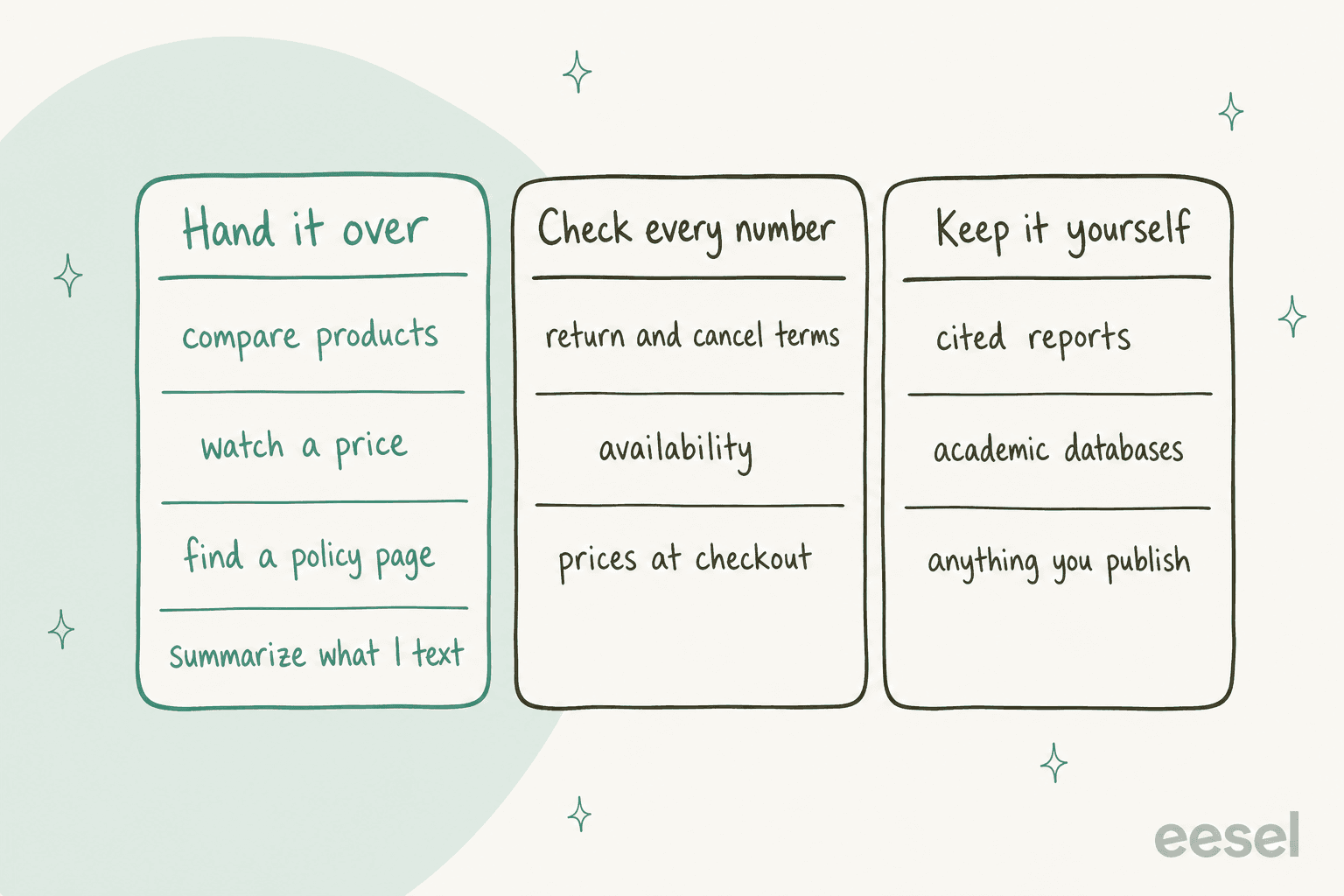
Hand it over when the output is a candidate list and you will decide. Comparing, watching, finding the page, summarizing what you texted.
Check every number when a wrong answer costs money. Return and cancellation terms, availability, and any price the agent quoted before checkout.
Keep it yourself when someone else will read it. Cited reports, academic work and anything you publish. There, the sources are the product, and Instinct does not document sources.
A research setup I'd use with Instinct
This takes about 15 minutes and keeps the checking where it belongs.
- Opt out of training first at app.instinct.com/settings if the topic is sensitive. It only works forward, so do it before the first message.
- Ask decision-sized questions. "Which of these three fits a 10-day trip under this budget?" works. "Research the market for X" produces a summary with nothing to check.
- Put the source rule in your first message. "Give me the link for every price, date and policy. If you cannot link it, say so."
- Make watch jobs quiet. "Check every 6 hours and text me only when something changes, with the link."
- Open the one link that matters. Before you act, check the single number the decision rests on.
- Keep payment approvals on. u/worsterer praised "spending my money only after I tap approve." That approval is your checkpoint when the research is wrong.
- Save what you keep. Copy the final answer and its links into your own notes. Do not rely on the chat as a record.
If your research is about email or meetings rather than the open web, my guide to Instinct for email management covers the setup. Task-heavy research is in the project management guide.
When another research tool fits better
Instinct is not the only agent that researches, and for some jobs I'd pick something else.
- You need a cited report today. ChatGPT deep research plans, reads widely and returns sources with the report. Perplexity is built around cited answers.
- You want standing research with links. OpenAI's dots for research and Meta's agent both run on a schedule. I covered the Meta side in my Meta Muse agent explainer.
- Your research lives in a team workspace. Notion research mode works inside shared pages, and Rovo deep research does the same for Atlassian teams.
- You want another personal agent. My Instinct AI alternatives list compares the field.
For work research, I'd also read my notes on Instinct for customer support, since agents researching a company now meet that company's own support agents.
Try eesel's AI blog writer for research that gets published
Let Instinct watch the price and find the policy page. When the research has to end as a post other people will read and check, that is what eesel's AI blog writer was hired for. It is one of eesel's AI teammates: a ready-to-work hire for one job, not a general agent you have to steer. It researches primary sources for your topic, keeps the source link on every claim, and drafts a long-form post with infographics, product screenshots and FAQs.
One German ecommerce brand gives it a keyword and gets a post of 2,000 to 2,900 words back in about 12 to 20 minutes. The blog writer workflow walks through each step, and my guide to researching blog topics covers what comes before it.
If your team also answers customer questions, eesel's AI helpdesk teammate works the support queue with the same company context. Try eesel and get a cited draft you can edit, not a summary you have to re-check line by line.

Frequently Asked Questions
Can Instinct AI do research?
Does Instinct AI cite its sources?
Can I use Instinct AI for academic research or a literature review?
Is it safe to give Instinct AI confidential research?
How accurate is Instinct AI's research?
Can Instinct AI do market or competitor research?
How much does Instinct AI cost for research?
What is the best AI for cited research reports?


Article by
Kurnia Kharisma
Kurnia is a software engineer and writer at eesel AI with two years of SEO experience, writing about AI tools, helpdesk software, and customer support. He pairs a developer's understanding of how these products are built with search-driven research into what actually ranks and resonates with the people searching for them.