Elfsight AI Chatbot alternatives 2026: 6 picks for what you're outgrowing

Kurnia Kharisma

Katelin Teen
Last edited October 23, 2026
The best Elfsight AI Chatbot alternatives in 2026 are Tidio for AI plus live chat in one widget, Chatbase for a straight AI-only swap, and Crisp for a flat-priced shared inbox, with Botpress for custom builds, Zendesk when chats must become tickets, and eesel when your support already runs through a helpdesk. Which one is right comes down to why you're leaving.
Most people leave Elfsight for one of five reasons: the page-view cap hides the widget during a traffic spike, answers drift when questions get specific, there's no live inbox for a person to take over, the branding only comes off on Enterprise, or chats need to land in a ticket queue. Elfsight is still the cheapest tool here at $5 to $20 a month billed yearly, so if traffic is the only issue, one tier up may beat switching.
If your chats keep turning into support work, look at eesel's AI helpdesk teammate. It learns from your site, help center and past tickets, you can simulate it on old tickets before it talks to anyone, and it hands the hard chats to your team. ClutchLoop runs it as its website chat and on Gorgias, where it sent about 180 replies in a month with no person needed.
Pick your reason for leaving to see which Elfsight alternative to try first, with the price that matters for that reason.
Why do people look for Elfsight AI Chatbot alternatives?
People look for Elfsight AI Chatbot alternatives when the site has outgrown a $5 widget: traffic trips the caps, questions get more specific, or a person needs to step in. That's not a knock on Elfsight. For what it costs, it's a tidy product, and I covered it in depth in my Elfsight AI Chatbot review.
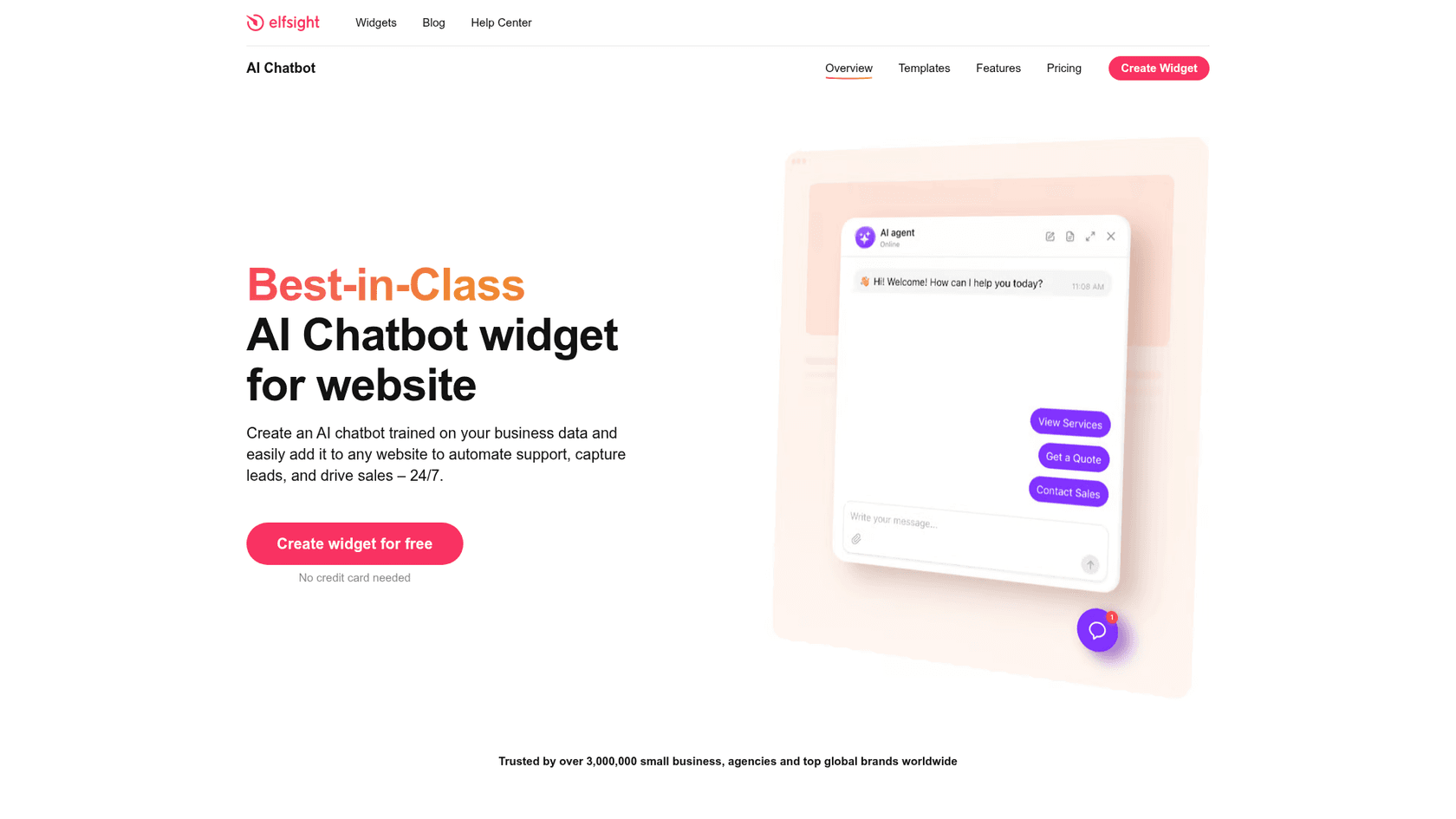
What it does well: you paste your URL, it builds an agent from your pages, and you embed it with one code snippet on any site builder. Its pricing page runs from a Free plan to $5, $10 and $20 a month billed yearly, with no seat charge. It logs unanswered questions as Knowledge Gaps, collects leads, books meetings through Calendly or Cal.com, and can create a Freshdesk or HubSpot ticket when it can't help.
The reasons people move on are just as specific:
- Two caps, and either one hides the widget. Every page load where the widget code runs counts as a view, and Elfsight's limits article says that hitting the message or view cap deactivates the chatbot until reset or upgrade. Basic allows 300 messages and 5,000 views a month.
- Answers depend on how well you write the knowledge base. It learns from your pages, files, Q&A and text blocks, but not from your past support conversations. Early users on Elfsight's own community forum said you had to phrase questions a certain way.
- The handoff is a contact card. The Contact a Human skill shows email, WhatsApp or call buttons. There's no shared inbox where a teammate picks up the chat.
- No order lookups. Elfsight's own demo on elfchatbot.com has the bot say it can't see the status of individual orders.
- Branding stays until Enterprise. White label starts on the Enterprise tiers, from $30 a month billed yearly.
That first one is the most common complaint I found, and one G2 reviewer who otherwise gave it 5 stars put it plainly:
"The monthly view and message caps mean that if your website experiences an unexpected traffic spike, the widget can pause until the next billing cycle unless you upgrade."

Which kind of tool do you actually need?
Before comparing names, decide which of three jobs you're hiring for. When I asked ChatGPT what a site owner with an Elfsight widget should switch to, its shortlist mixed all three together, and that's how people end up paying for a helpdesk when they wanted a better FAQ bot, or the other way round.
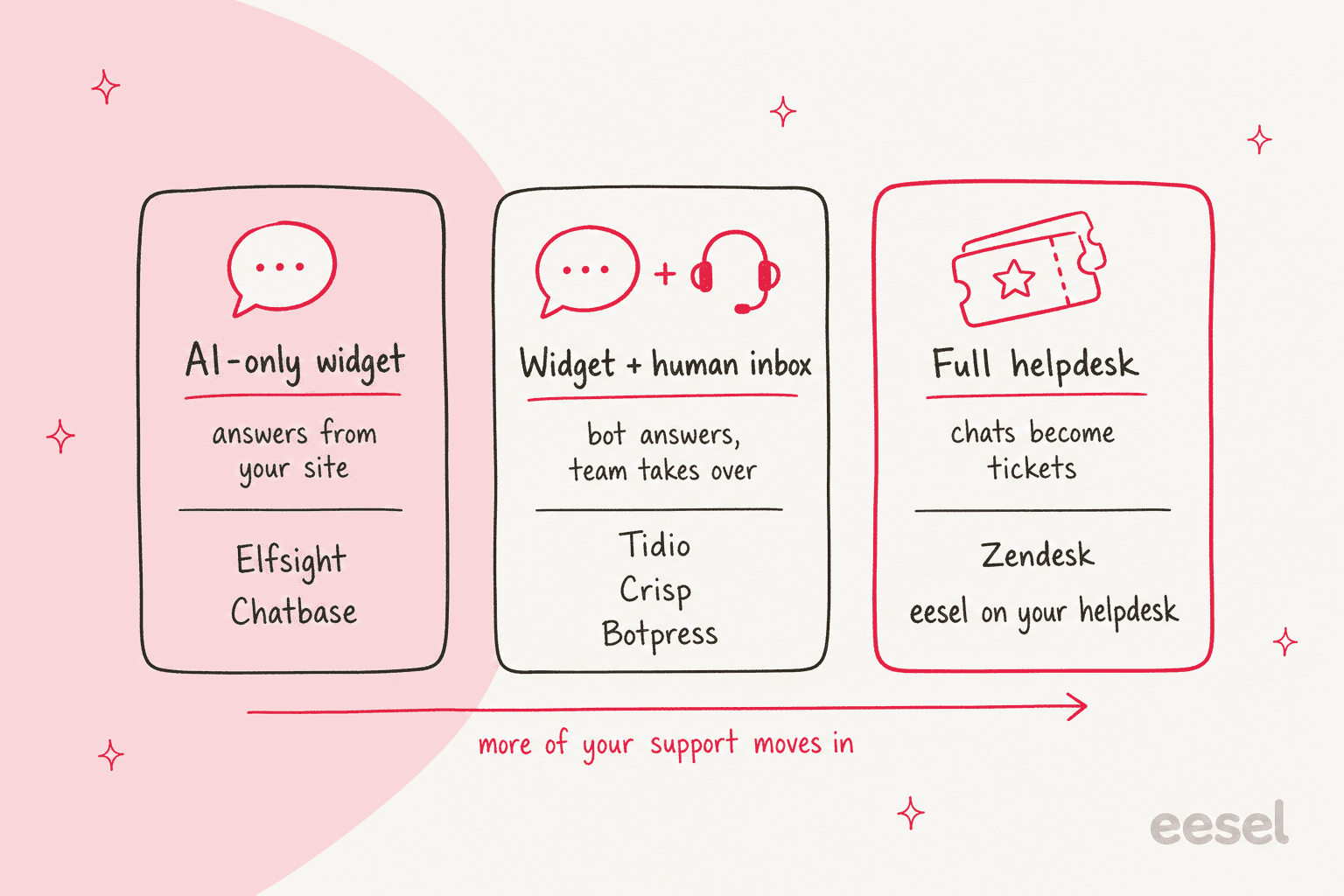
- AI-only widget. Same job as Elfsight, done differently: better answers, different limits, more integrations. Chatbase is the closest swap. Read my take on AI chatbots for websites if this is you.
- Widget plus human inbox. The bot answers first and a person takes over in the same chat window. Tidio, Crisp and Botpress all do this. This is the step most small teams need next.
- Full helpdesk. Chats become tickets with owners, statuses and follow-up emails. Zendesk is the helpdesk; eesel is the AI that works inside the helpdesk you already have. The difference between AI agents and chatbots starts to matter here.
How I compared these Elfsight alternatives
I'm Kurnia, a software engineer who writes about search at eesel, and most of my week goes into what buyers type into Google and ChatGPT before they pick a tool. For this post I started from the buyer question, then checked every price on each vendor's own pricing page on October 23, 2026, and read their docs for how the AI learns, hands off and bills. I didn't run every tool on a live site, so where I describe behavior, it's what the vendor documents or shows in its own product screenshots.
My bar for an alternative was simple: it has to fix at least one of the five reasons above better than Elfsight does, and say clearly what happens when you hit a limit. I left out tools that only rename the same AI-only widget.
The test I'd ask you to run yourself is the one that has burned me before. A buyer evaluating eesel once ran a 67-question test of eesel's own chat widget: the answers came out solid, and they still walked, because the chat felt "quite slow and often gets stuck". Answer quality is half the test. Speed, handoff and cost at your real volume are the other half.
Elfsight AI Chatbot alternatives at a glance
Here's how the six alternatives compare with Elfsight as the baseline. Prices are the lowest paid plan from each vendor's own pricing page, checked October 23, 2026.
| Tool | Best for | Lowest paid plan | Free option | AI billed by | Live human inbox | Helpdesk connections | Remove branding | Security (vendor-stated) |
|---|---|---|---|---|---|---|---|---|
| Elfsight AI Chatbot (baseline) | One-person sites, leads and bookings | $5/mo billed yearly (Basic) | Free: 50 messages, 200 views a month | Messages + page views | No, contact card | Creates Freshdesk or HubSpot tickets | Enterprise only, from $30/mo | Not stated on the pages I checked |
| Tidio | AI and live chat in one widget | Starter $24.17/mo billed yearly; Lyro from $32.50/mo | Free: 50 conversations, 50 Lyro chats once | Lyro conversations, separate from human ones | Yes | Lyro sold alone for Zendesk, Salesforce | Plus plan, from $300/mo | SOC 2 report, GDPR, CCPA |
| Chatbase | A straight AI-only swap | Hobby $32/mo billed yearly | 7-day trial on paid plans | Message credits | Chatbase helpdesk inbox from Standard | Zendesk, Freshdesk, Gorgias, HubSpot and more | $1,188/yr add-on | SOC 2 Type II, GDPR, HIPAA-eligible on Enterprise |
| eesel | Sites whose chats turn into support work | $299/mo for 500 credits | 100 credits to try, no card | 1 credit per chat or ticket | Hands off into your helpdesk | Zendesk, Freshdesk, Gorgias, HubSpot and more | Not listed | HIPAA with BAA on Enterprise; SOC 2 Type II underway |
| Crisp | Flat-priced shared inbox | Mini $45/mo per workspace | Free forever: 2 seats, no AI credits | AI credits included per plan | Yes | Own ticketing on Plus, 100+ integrations | Plus plan, $295/mo | Not stated on the pricing page |
| Botpress | Custom-built agents | Plus $150/mo billed yearly | Free: 100 conversations, 3 seats | Conversations | Botpress Desk, built in | Connects to Zendesk | Plus plan | SOC 2 Type 2, GDPR, HIPAA |
| Zendesk | Chats that must become tickets | Suite Team $55/agent/mo billed yearly | 14-day trial | Seats + automated resolutions | Yes, Agent Workspace | It is the helpdesk | Not listed on the pricing page | SOC 2 Type II, ISO 27001:2022 |
The column that trips people up is "AI billed by". Seven tools, six different meters, so the sticker prices above aren't comparable until you price them for one site.
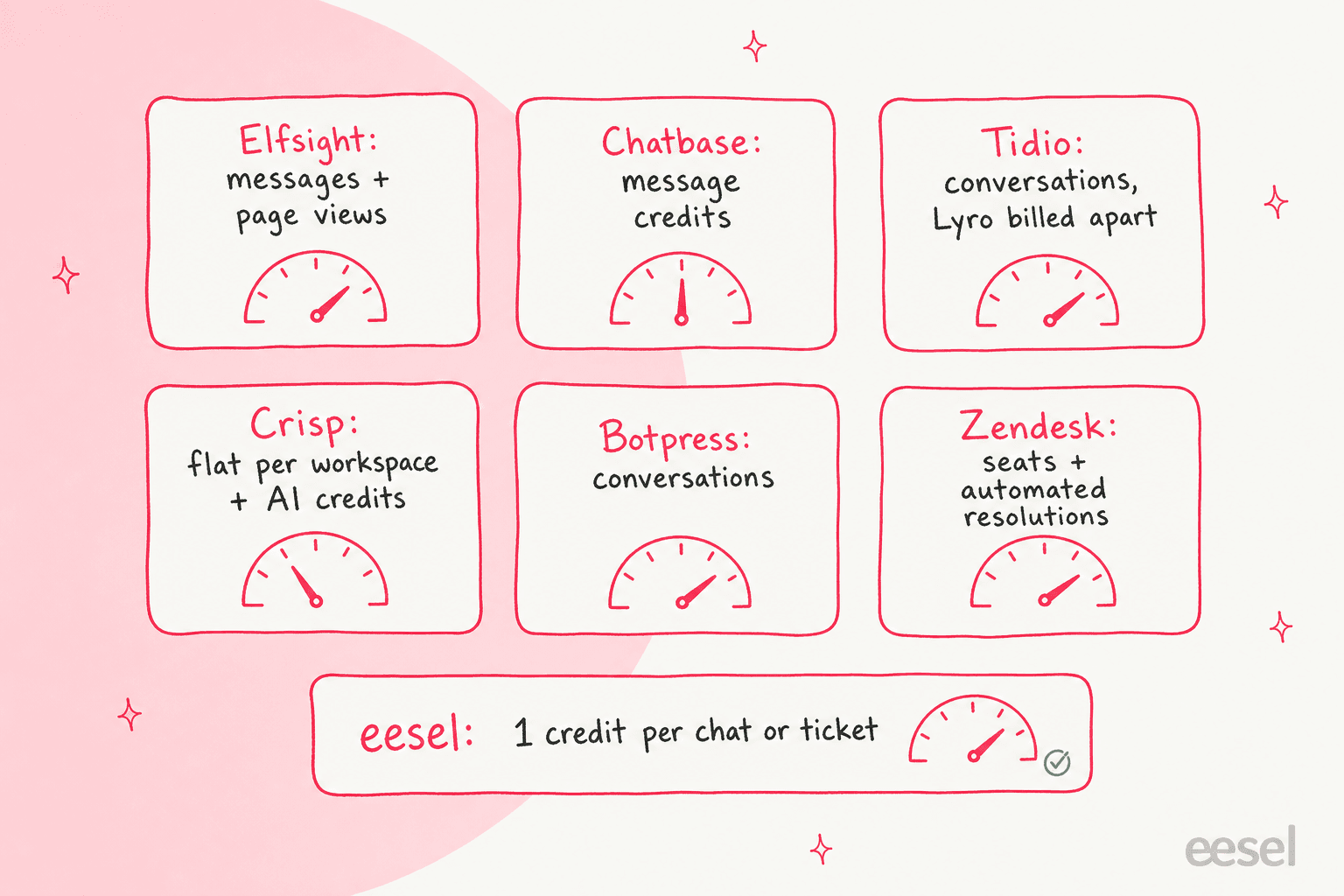
What would 400 AI chats a month cost on each?
To make the meters comparable, I priced one site: 400 AI-answered chats a month, about 4 visitor messages each, 30,000 page loads, and 2 people who occasionally answer. Yearly billing wherever the vendor offers it.
| Tool | Plan that fits | Monthly cost | The math |
|---|---|---|---|
| Elfsight AI Chatbot | Premium | $20 | 1,600 messages is over Pro's 1,000, and 30,000 views fits Premium's 150,000 |
| Chatbase | Hobby + one top-up | $72 | 700 credits included, plus $40 for 1,000 more, assuming 1 credit per AI reply |
| Crisp | Essentials | $95 | Flat per workspace, about 450 automated conversations included |
| Botpress | Plus + 2 packs | $280 | $150 for 250 conversations, plus 2 packs of 100 at $65 |
| eesel | 500-credit plan | $299 | 400 chats is 400 credits, however long each chat runs |
| Zendesk | Suite Team, 2 agents | $395 | $110 in seats, plus 190 automated resolutions at $1.50, if the AI resolves half the chats |
| Tidio | Starter + Lyro | Not published | Starter is $24.17; the 400-conversation Lyro tier is only priced in Tidio's calculator |
Two things stand out. Elfsight is the cheapest by a wide margin, so a cap problem alone isn't a reason to pay 5x more. And the tools above $200 are selling something different: an inbox, a helpdesk, or an AI that handles support work, not just answers. My chatbot cost guide and the piece on AI customer service cost go deeper on that trade.
1. Tidio (Lyro)
Best for: small businesses that want AI answers and a live chat inbox in one widget.
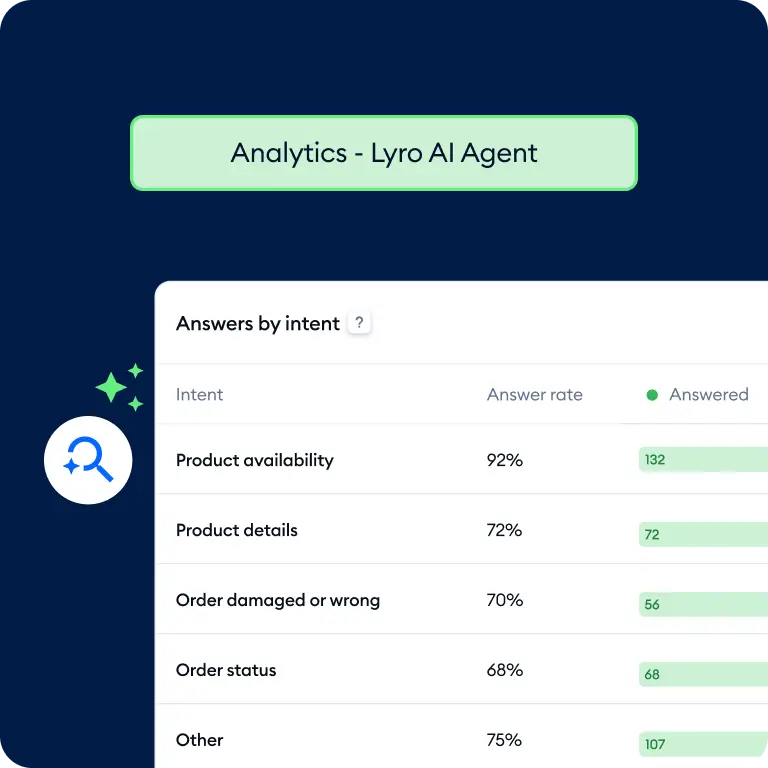
Tidio is the alternative I'd try first if the reason you're leaving Elfsight is "I need a person to jump in". Its AI agent, Lyro, answers from your support content, and the same widget feeds a live chat and ticketing inbox your team works in.
What it does
Lyro scrapes your support content and uses it as its knowledge base, then hands off to your team on rules you set, per the Lyro page. Tidio claims its customers average a 75% resolution rate with Lyro. The analytics view above breaks answers down by intent, which is the closest thing to Elfsight's Knowledge Gaps list. If you already run Zendesk or Salesforce, Tidio sells Lyro on its own as an add-on to that helpdesk.
Pros and cons
- Pro: AI and human chat live in one inbox, so a teammate can take over mid-conversation.
- Pro: Lyro is billed per AI conversation, not per page load, so a traffic spike doesn't hide the widget.
- Pro: a Reddit user running a small store said they had the widget and a basic FAQ bot live "within like an hour".
- Con: two separate meters. Human conversations and Lyro conversations are billed apart, which makes the total harder to predict.
- Con: custom branding sits on the Plus plan, which starts at $300 a month.
Pricing is the most common complaint I found:
"Just had a conversation with tidio, their pricing is so off and hidden, "free tier" is just a trap includes most services that are billed separatedly once you want to scale."

Pricing
From Tidio's pricing page, billed yearly (2 months free):
| Plan | Price | What you get |
|---|---|---|
| Free | $0 | 50 billable conversations, 50 Lyro conversations once, 100 Flows visitors |
| Starter | $24.17/mo | 100 billable conversations, 50 Lyro conversations once, live chat and ticketing |
| Growth | from $49.17/mo | from 250 billable conversations, automatic assignment, macros |
| Plus | from $300/mo + usage | custom branding, departments, discounted usage |
| Lyro AI Agent | from $32.50/mo | from 50 Lyro conversations a month |
A "billable conversation" is one where a human agent replies; Lyro conversations count on their own meter. For a full walk-through, see my Tidio pricing guide.
My take
Pick Tidio if you want the next step up from Elfsight: AI first, a person in the same window when it matters. Skip it if you want one predictable number, because the two meters make the bill harder to forecast. If you're still deciding, my Tidio alternatives roundup covers the next ring of options.
2. Chatbase
Best for: an AI-only widget that's a straight swap for Elfsight, with more room to grow.
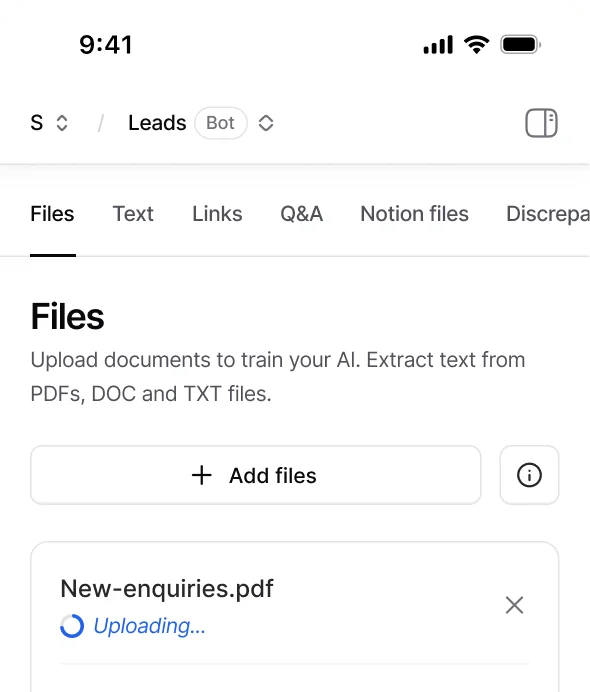
Chatbase is the closest thing to Elfsight with the ceiling raised. You train an agent on your site, files, text and Q&A, embed it, and pay by message credits rather than page views. What it adds is depth: AI actions, a built-in helpdesk inbox, and connections to the helpdesk you might already use.
What it does
The training screen above shows the same idea as Elfsight's knowledge tab: files, text, links, Q&A and Notion files. On the Chatbase pricing page, Standard adds the Chatbase helpdesk inbox, voice and API access, and Pro adds tickets as a source, which is the closest it gets to learning from your past support replies. Its helpdesk handoff can create a ticket with the full conversation attached in Zendesk, Freshdesk, Gorgias, HubSpot or Salesforce.
Pros and cons
- Pro: billed by message credits, with no page-view meter.
- Pro: auto-recharge adds credits at $40 per 1,000 when you run low, so the agent keeps going if you turn it on.
- Pro: SOC 2 Type II and GDPR, with HIPAA-eligible plans on Enterprise.
- Con: removing "Powered By Chatbase" is a $1,188-a-year add-on, about 3x the Hobby plan's yearly price.
- Con: learning from past tickets is a Pro feature at $400 a month billed yearly.
Pricing
From Chatbase's pricing page, billed yearly (20% off):
| Plan | Price | Message credits | Notable |
|---|---|---|---|
| Hobby | $32/mo ($40 monthly) | 700/mo | 1 agent, 2 members, basic integrations |
| Standard | $120/mo ($150 monthly) | 4,000/mo | helpdesk inbox, voice, API, advanced integrations |
| Pro | $400/mo ($500 monthly) | 15,000/mo | tickets as a source, advanced analytics |
| Enterprise | custom | custom | SSO, white-labeling, HIPAA-eligible |
The page I checked shows a 7-day trial on paid plans and no Free card, while Chatbase's page earlier in October still listed a Free plan with 50 credits. Check before you plan around it. My Chatbase pricing guide has the full breakdown.
My take
Pick Chatbase if you liked Elfsight's model and want better tools around the same AI widget. Skip it if branding matters on a small budget, or if you need the AI to learn from past tickets without paying for Pro. For other directions, see my Chatbase alternatives list.
3. eesel
Best for: sites where chats have turned into support work, and teams that already run a helpdesk.
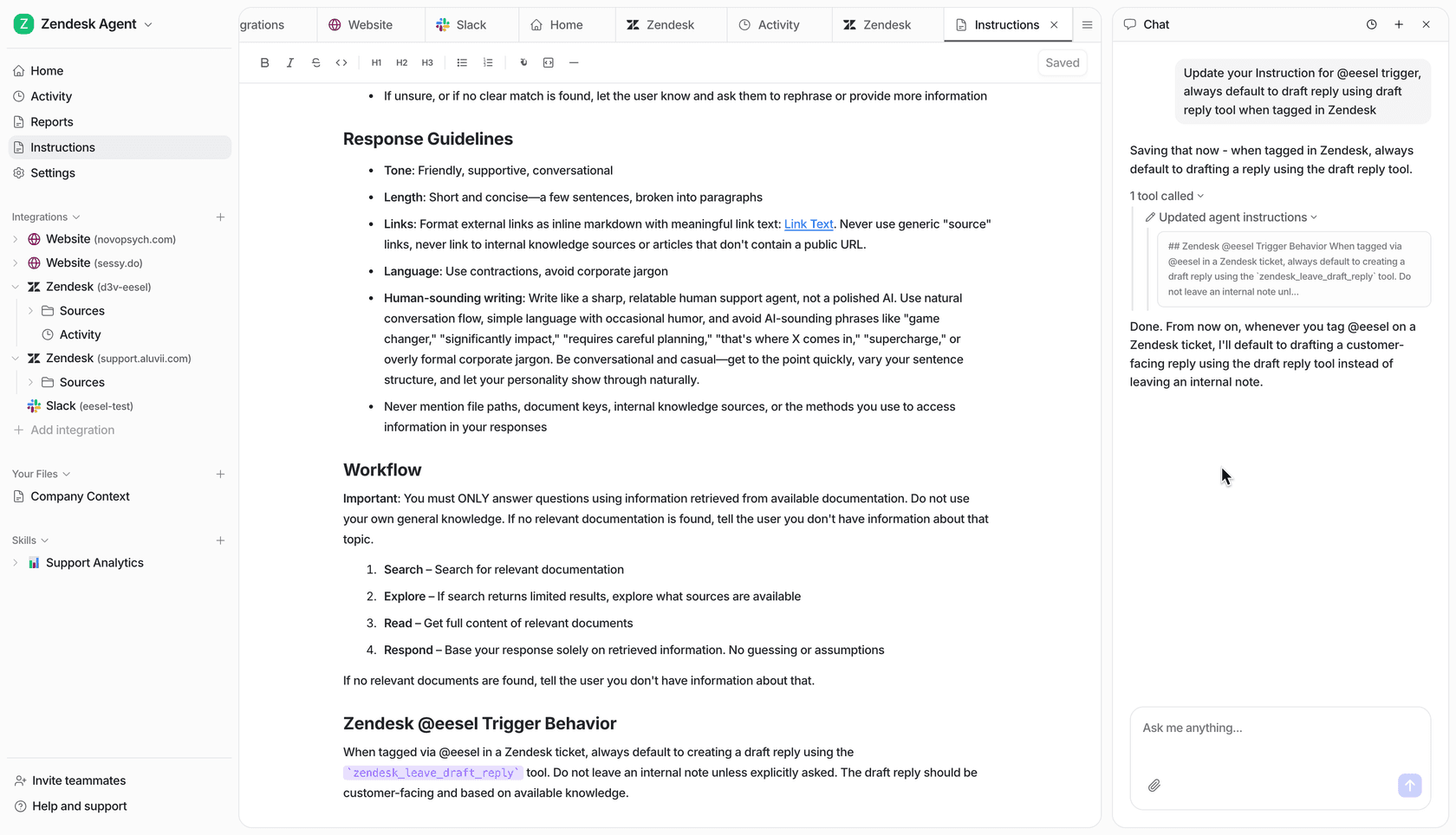
eesel didn't show up when I asked ChatGPT for Elfsight alternatives, and I get why: eesel doesn't sell a widget. It's an AI teammate for your helpdesk that also runs your website chat bubble. The difference shows up the moment a chat needs anything beyond a published answer.
What it does
You connect your site, help center and helpdesk, and eesel learns from all three, including the replies your team has already sent. It answers chats on your site, checks live data such as Shopify orders, and when a chat needs a person it hands off into your helpdesk as a ticket. It also works the email tickets in Zendesk, Freshdesk or Gorgias, which is the part a widget never touches. You change its behavior by writing instructions in plain English, as in the screenshot above.
The part I'd point an Elfsight user at is testing. Instead of typing 20 questions into a preview, you can simulate the agent on your past tickets and read what it would have said before it talks to anyone.
ClutchLoop, a phone accessory brand, runs eesel as "Loopy" on its website chat and on Gorgias. In one month it handled about 230 tickets and 27 website chats, sent about 180 replies directly, and ran 76 live product lookups in Shopify, so prices and stock never came from a stale page. Anything outside returns and product questions goes to the team.
Pros and cons
- Pro: learns from past tickets and your team's real replies, not just published pages.
- Pro: simulation on historical tickets before go-live.
- Pro: one unit: a chat or a ticket is 1 credit, however long it runs, with unlimited seats and agents.
- Con: it's not the cheap option. At $299 a month for 500 credits, it's 15x Elfsight Premium for the same chat volume.
- Con: when credits run out, agents pause until reset unless you turn on overage, so set the monthly cap before a busy season.
Pricing
From eesel's pricing page:
| Plan | Price | What you get |
|---|---|---|
| Free | $0 | 100 credits to try every feature and integration, no card |
| Teammate | from $299/mo | 500 credits; 1,000 for $499, up to 5,000 for $1,749 |
| Enterprise | custom | SSO, custom data residency, HIPAA with a signed BAA |
Optional overage is $0.80 a credit with a monthly cap you set, and paying a year upfront gets two months free.
My take
Pick eesel if your chat has become a support channel: order questions, tickets, follow-ups, a team behind it. Skip it if you're a one-person site that mostly wants leads and FAQs, because Elfsight or Chatbase will do that job for far less. My roundup of the AI helpdesks for small business puts it in context.
4. Crisp
Best for: a shared inbox at a flat price, with AI included on paid plans.
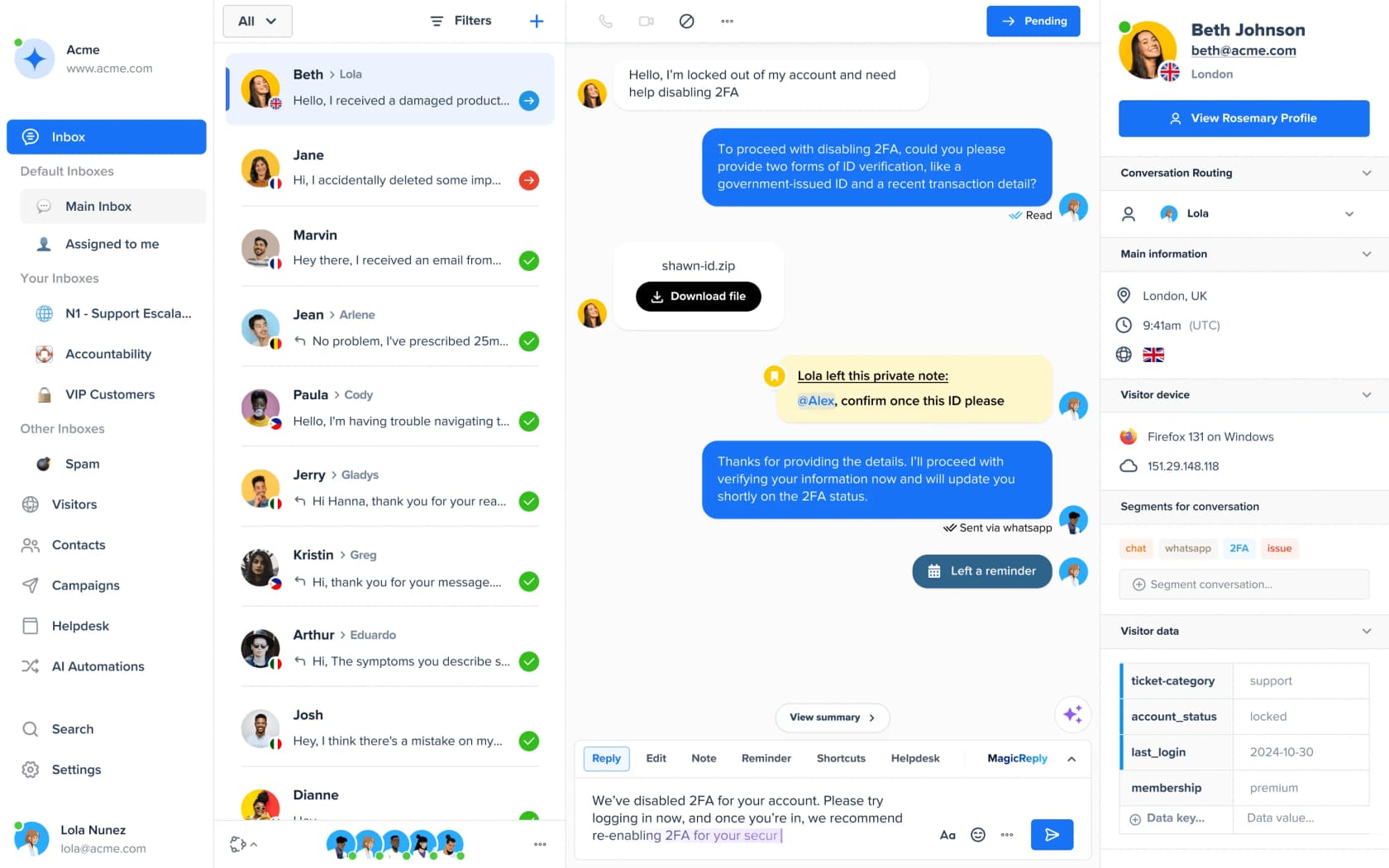
Crisp is a chat widget and shared inbox first, with an AI agent (Hugo) and AI writing tools layered on top. Its pitch is the opposite of Elfsight's: a flat price per workspace, so you pay the same regardless of how many conversations you have.
What it does
On the Crisp pricing page, every paid plan includes AI credits that Crisp translates into "automated conversations": about 90 on Mini, 450 on Essentials and 1,350 on Plus. Essentials adds the knowledge base, the no-code AI chatbot builder and an omnichannel inbox for WhatsApp, Instagram and SMS. Plus adds ticketing, 100+ integrations and white labelling. Even the free plan syncs conversations with Shopify, WooCommerce and Prestashop. See my take on Crisp AI for how Hugo answers.
Pros and cons
- Pro: flat per-workspace pricing with seats included (4 on Mini, 10 on Essentials).
- Pro: a real free plan for 2 seats of shared inbox, if you only need live chat for now.
- Pro: the inbox above shows private notes, routing and visitor data, which Elfsight's contact card can't match.
- Con: AI credits are a fixed allowance; Crisp lists them as dollars ($5, $25, $75) and approximate conversations, so heavy use needs watching.
- Con: white label and ticketing only arrive on Plus at $295 a month.
Pricing
From Crisp's pricing page, per workspace:
| Plan | Price | Seats | AI included |
|---|---|---|---|
| Free | $0 | 2 | none |
| Mini | $45/mo | 4 | $5 of AI credits, about 90 automated conversations |
| Essentials | $95/mo | 10 | $25, about 450 automated conversations |
| Plus | $295/mo | 20+ ($10 per extra agent) | $75, about 1,350 automated conversations |
Every plan has a 14-day free trial with no card, and seat count rather than chat volume is usually what pushes a team up a plan.
My take
Pick Crisp if you want a team inbox and a predictable bill more than the smartest possible AI. Skip it if you need the bot to resolve most chats alone at scale, because the included AI allowance runs out before the seats do. My Crisp alternatives list covers the neighbours.
5. Botpress
Best for: teams that want to build a custom agent and never have it switch off.
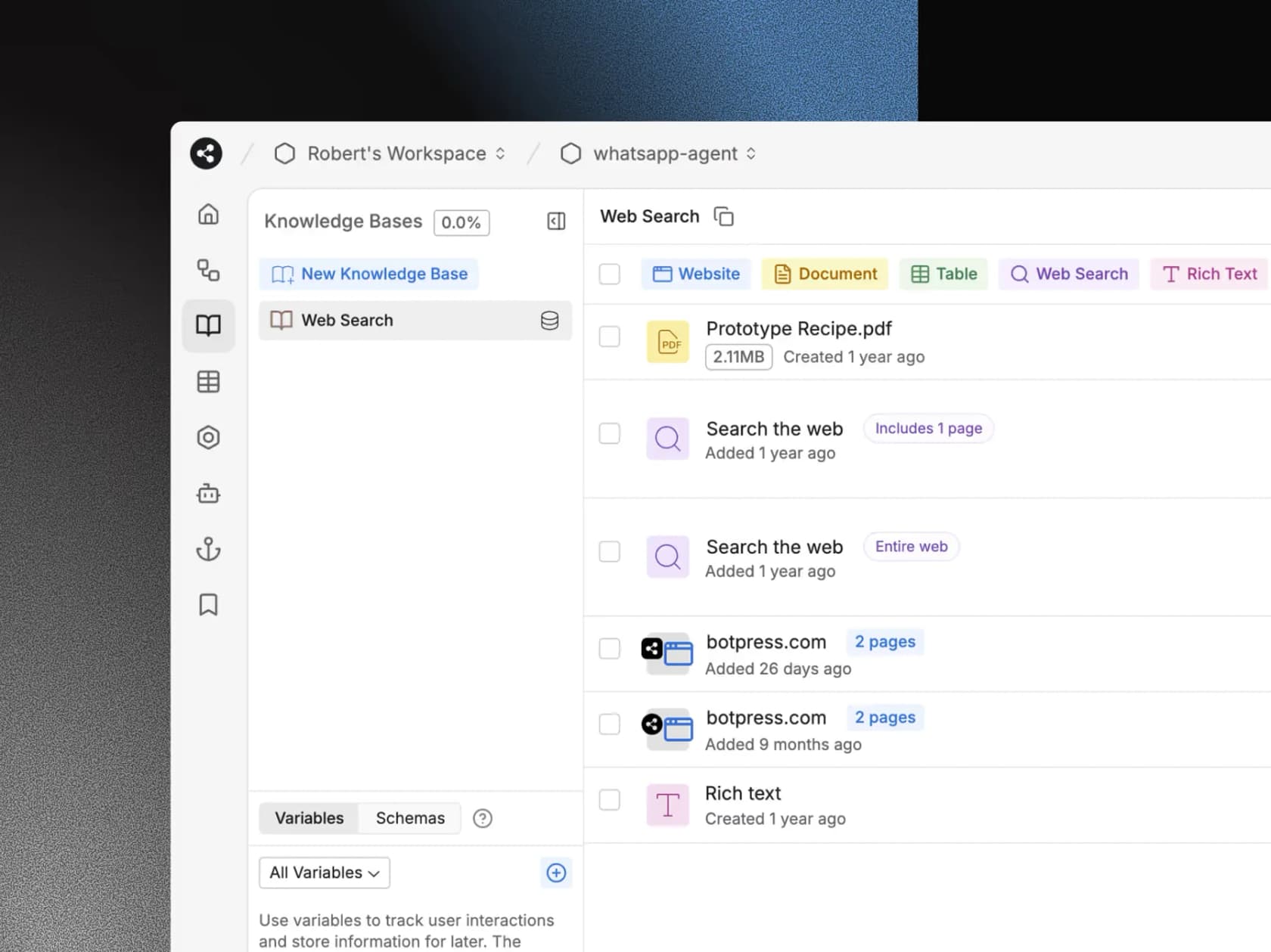
Botpress is an agent builder: a visual studio where you design workflows, connect a knowledge base and add code where you need it. It now ships its own helpdesk, Botpress Desk, so it covers both the widget and the inbox. It's more setup than anything else on this list, and more control.
What it does
The knowledge base above takes websites, documents, tables and web search, and the studio lets you build flows around them. Botpress Desk is its built-in helpdesk, and Botpress says it connects to an existing Zendesk with no migration. The detail that matters most for Elfsight users is in the pricing FAQ: "You never get cut off." Near your quota, a pack of 100 conversations is added automatically.
Pros and cons
- Pro: no point where the widget vanishes; overage packs keep it running.
- Pro: white-label webchat and unlimited AI agents on Plus, and SOC 2 Type 2, GDPR and HIPAA on its trust center.
- Pro: $0.10 of AI usage per conversation is included, so model costs don't surprise you.
- Con: the flip side of never cutting off: you can't turn off auto-recharge, so a spike costs money instead of going quiet.
- Con: it's a builder, and the learning curve is real.
"I'm using Botpress right now, and I find the studio really laggy. There's no timezone settings, and there seem to be too much going on."
Pricing
From Botpress's pricing page, billed yearly (20% off):
| Plan | Price | Conversations | Extra |
|---|---|---|---|
| Free | $0 | 100, no top-ups | 3 seats, 3 AI agents |
| Plus | $150/mo | 250/mo | $65 per 100 extra, $25 AI usage, white-label webchat |
| Team | $750/mo | 1,500/mo | $50 per 100 extra, unlimited seats, routing |
| Enterprise | custom | custom | uptime SLA, voice, security review |
Any exchange with at least two messages from the visitor counts as a conversation, and AI and human conversations count the same. My Botpress pricing guide works through examples.
My take
Pick Botpress if you have someone who enjoys building, and the thing you hate most about Elfsight is the widget disappearing. Skip it if you want a bot live this afternoon with no flows to design. My Botpress alternatives list has simpler options.
6. Zendesk AI agents
Best for: teams whose chats need to become tickets with owners, statuses and follow-ups.
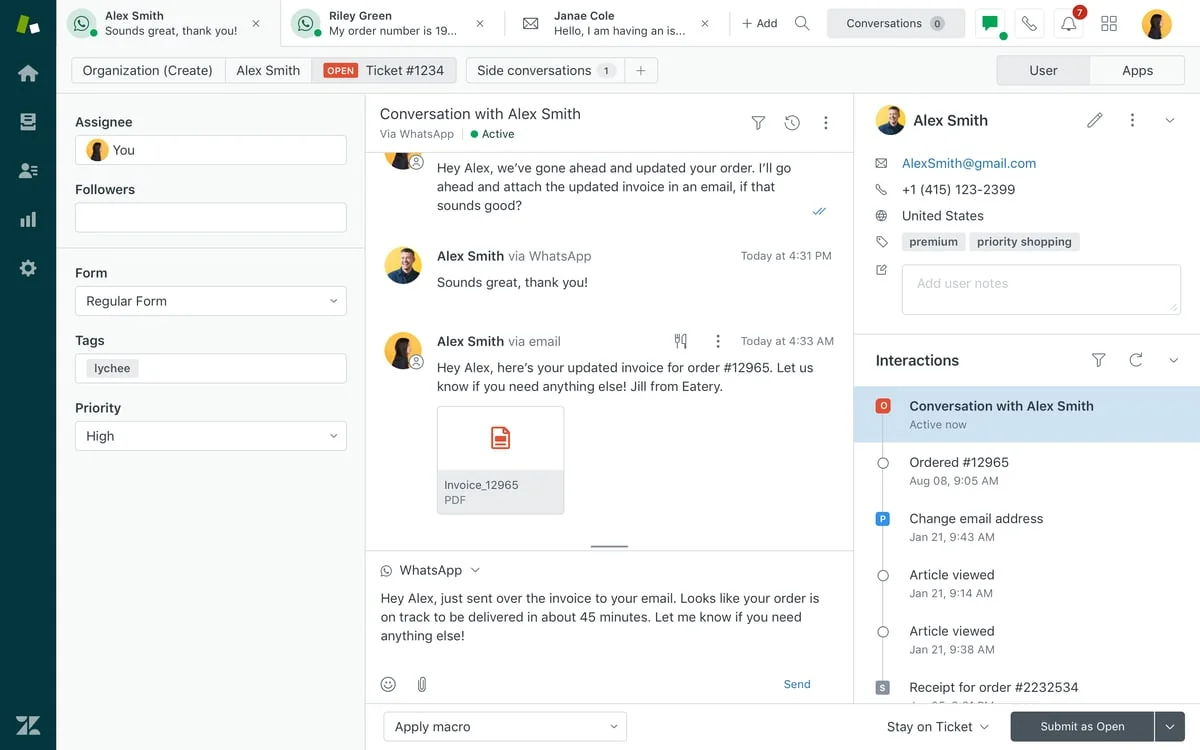
Zendesk is a full helpdesk, and on its Suite plans AI agents, messaging and live chat come in the box. It's the right alternative when Elfsight's "create a ticket and step away" has become most of your workflow, and you want the chat, the ticket and the reply in one place.
What it does
On the Zendesk pricing page, Suite Team includes AI agents, an AI knowledge base, omnichannel routing, messaging, live chat and telephony. The web chat widget opens a conversation in the Agent Workspace above, where your team sees the customer's history next to the ticket. Zendesk says its AI agents resolve "up to 80%+" of issues, and it bills them per automated resolution rather than per message.
Pros and cons
- Pro: one tool for chat, email, tickets and help center, with SOC 2 Type II and ISO 27001:2022 per its trust center.
- Pro: you pay for AI only when it resolves a request, not for every reply.
- Con: seat pricing on top, so the bill grows with your team, not just your traffic.
- Con: it's a helpdesk migration, not a widget swap, which is a lot of change for a small site.
Pricing
From Zendesk's pricing page:
| Plan | Yearly | Monthly | Automated resolutions included |
|---|---|---|---|
| Support Team | $19/agent/mo | $25 | 5 per agent a month |
| Suite Team | $55/agent/mo | $69 | 5 per agent a month |
| Suite Professional | $115/agent/mo | $149 | 10 per agent a month |
| Suite Enterprise | contact sales |
Extra automated resolutions are $1.50 each committed or $2.00 pay-as-you-go. My Zendesk AI pricing guide and Zendesk pricing breakdown go further.
My take
Pick Zendesk if you're ready to run support as a team with a queue. Skip it if you're a small site that wanted a better chat bubble, because you'd be buying a helpdesk to fix a widget. If Zendesk is close but not quite right, see my Zendesk alternatives.
Which Elfsight alternatives won't vanish when traffic spikes?
Botpress and Zendesk keep the AI answering when you go over, Crisp doesn't meter page loads at all, and Elfsight hides the widget. This is the question I'd settle before anything else, because a bot that disappears during a launch or a press mention is worse than no bot.
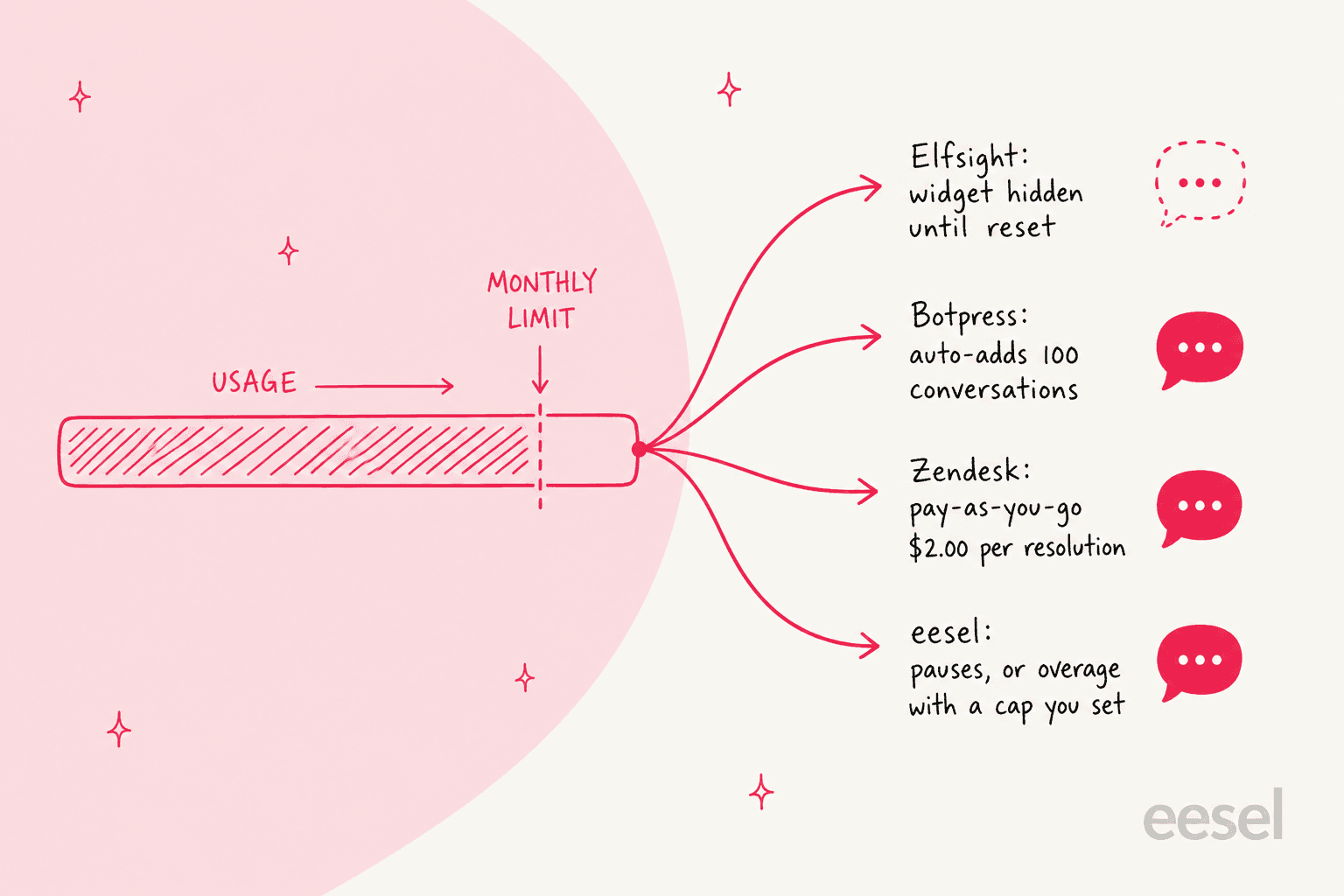
- Elfsight: either cap deactivates the widget until reset or upgrade. My Elfsight AI Chatbot pricing post shows which cap you'll hit first.
- Botpress: auto-adds packs of 100 conversations, and you can't turn that off.
- Chatbase: optional auto-recharge at $40 per 1,000 credits.
- Crisp: flat price per workspace; the AI allowance is fixed per plan.
- Zendesk: extra resolutions bill at $2.00 pay-as-you-go.
- eesel: agents pause when credits run out, unless you turn on overage at $0.80 a credit with a monthly cap.
Whichever you pick, set up a fallback. My guide to chatbot escalation covers keeping a contact path open when the bot can't help.
How to test an Elfsight alternative before you switch
The safest switch is a side-by-side test, not a leap. Here's the order I'd do it in.
- Collect 20 to 30 real questions. Pull them from Elfsight's Chats list and Knowledge Gaps, including the awkward ones. Elfsight's results dashboard tags each chat with lead, gap and feedback badges, which makes this quick.
- Load the same sources. Elfsight learns from your pages, files and Q&A, so re-crawl the same URLs and upload the same files. Copy your Q&A pairs and text blocks into a document first. My guide on AI knowledge base chatbots covers what else to add.
- Score accuracy, then speed, then handoff. Count wrong or made-up answers, time the replies, and check what happens when the bot can't help. Speed is the one people forget to measure.
- Price it at your real volume. Use your last month of chats and page loads, and the meter table above.
- Swap the embed code. Remove Elfsight's snippet, add the new one, and keep the old contact path live for a week.
If you have past support tickets, step 1 gets a lot stronger: test against how your team actually answered, not just questions you remember. That's what a pre-launch AI test on historical tickets is for.
eesel for site owners whose chat has turned into support
Elfsight is a good first AI for a site: cheap, quick, everywhere. The point to move is when the chat stops being a brochure and starts being a support channel, with order questions, follow-ups, and a team that needs the hard cases. That's the job eesel is built for. Its AI helpdesk teammate runs your site chat from your pages, help center and past replies, checks live store data, and hands the rest to your team in the helpdesk you already use.
On Freshdesk, Innr, a smart home lighting brand, has eesel prepare every ticket in the customer's language: about 190 tickets a month, 180 draft replies, answered from about 1,500 help center articles and past tickets. Pair that with ClutchLoop's website chat and you have both halves of what an Elfsight widget hands off and never sees again.
It isn't the cheapest option, and I'd tell a two-person studio to stay on Elfsight. If your chats already end in tickets, start with 100 free credits, simulate it on your past conversations, and see what it would have said. Try eesel on your own site.
Frequently Asked Questions
What is the best Elfsight AI Chatbot alternative?
It depends on why you're leaving. Tidio is the best all-round Elfsight AI Chatbot alternative if you want AI and a live chat inbox in one widget, Chatbase is the closest straight swap for an AI-only widget, and eesel fits when your chats already end up in a helpdesk. My customer service chatbot roundup covers more options.
Is there a free alternative to Elfsight AI Chatbot?
Yes, with limits. Tidio's Free plan includes 50 Lyro AI conversations once, Botpress's Free plan includes 100 conversations, and Crisp is free forever for 2 seats but includes no AI credits. eesel starts with 100 free credits and no card. See my guide to the best free AI chatbots for what free plans usually leave out.
Which Elfsight alternative won't disappear when I hit a limit?
Botpress is the clearest: its pricing FAQ says you never get cut off, because packs of 100 conversations are added automatically near your quota. Crisp charges a flat price per workspace with AI credits on top, and Zendesk bills extra automated resolutions pay-as-you-go. On Elfsight, either cap hides the widget until reset, as my Elfsight pricing breakdown shows.
Can I move my Elfsight knowledge base to another chatbot?
Mostly, yes. Elfsight's knowledge comes from your own web pages, files and Q&A, so any alternative that crawls URLs and accepts uploads can take the same sources. Copy your Q&A pairs and text blocks into a document first. My guide on how to train a chatbot covers what to add beyond your site.
Which Elfsight AI Chatbot alternative has live chat with a human?
Tidio and Crisp both put the AI and a shared inbox in one widget, so a teammate can take over a chat mid-conversation. Elfsight's Contact a Human skill shows email, WhatsApp or call buttons instead. My comparison of AI chatbots vs live chat explains when you need both.
What is the cheapest Elfsight AI Chatbot alternative for a small business?
For AI answers on a small site, Chatbase's Hobby plan at $32 a month billed yearly and Crisp's Mini plan at $45 per workspace are the lowest paid entry points I found. Elfsight itself is still cheaper at $5 to $20 a month, so if the only problem is traffic, moving up one Elfsight tier may be the cheapest fix. My chatbot cost guide runs the numbers.
Which Elfsight alternative works with Freshdesk or Zendesk?
Chatbase connects to Zendesk, Freshdesk and other helpdesks from its Standard plan, Tidio sells Lyro on its own for Zendesk and Salesforce, and Botpress connects to Zendesk. eesel runs inside Freshdesk, Zendesk and other helpdesks, and also works the ticket after the chat, not just the hand-off.