7 best Skywork AI alternatives in 2026

Kurnia Kharisma

Katelin Teen
Last edited August 6, 2026

Skywork AI is a capable super-agent: from one prompt it will research a topic and hand you a deck, a doc, a spreadsheet, or a working website. The reason people go looking for alternatives usually isn't the output, it's the meter. Skywork's Trustpilot sits at 1.5/5 across 41 reviews, almost entirely about a trial that auto-charges, a cancel button people can't find, and credits that burn fast.
So this is a list of where to go instead, sorted by what you actually want the tool to do. For hands-off, end-to-end office tasks, Manus is the closest match. For research you can cite, Perplexity or NotebookLM. For decks that look good, Gamma. For an all-purpose default, ChatGPT or Gemini.
One honest note up front: if your "super-agent" project is really about automating customer support, none of these office agents is the right tool. A purpose-built teammate like eesel that plugs into your helpdesk and runs on a transparent fixed monthly price is a much cleaner fit than pointing a do-everything agent at your ticket queue.
Why people look past Skywork AI
Let me be fair to Skywork first, because the switching story only makes sense if you know what's good. Skywork (skywork.ai) is a horizontal AI super-agent built around an agent called SkyClaw. You give it a goal, its research mode scans the web, and it writes the result straight into whatever format you asked for. On research-heavy, structured work it genuinely delivers, and I've seen PhD-and-marketer types on Reddit reach for it over prettier tools.
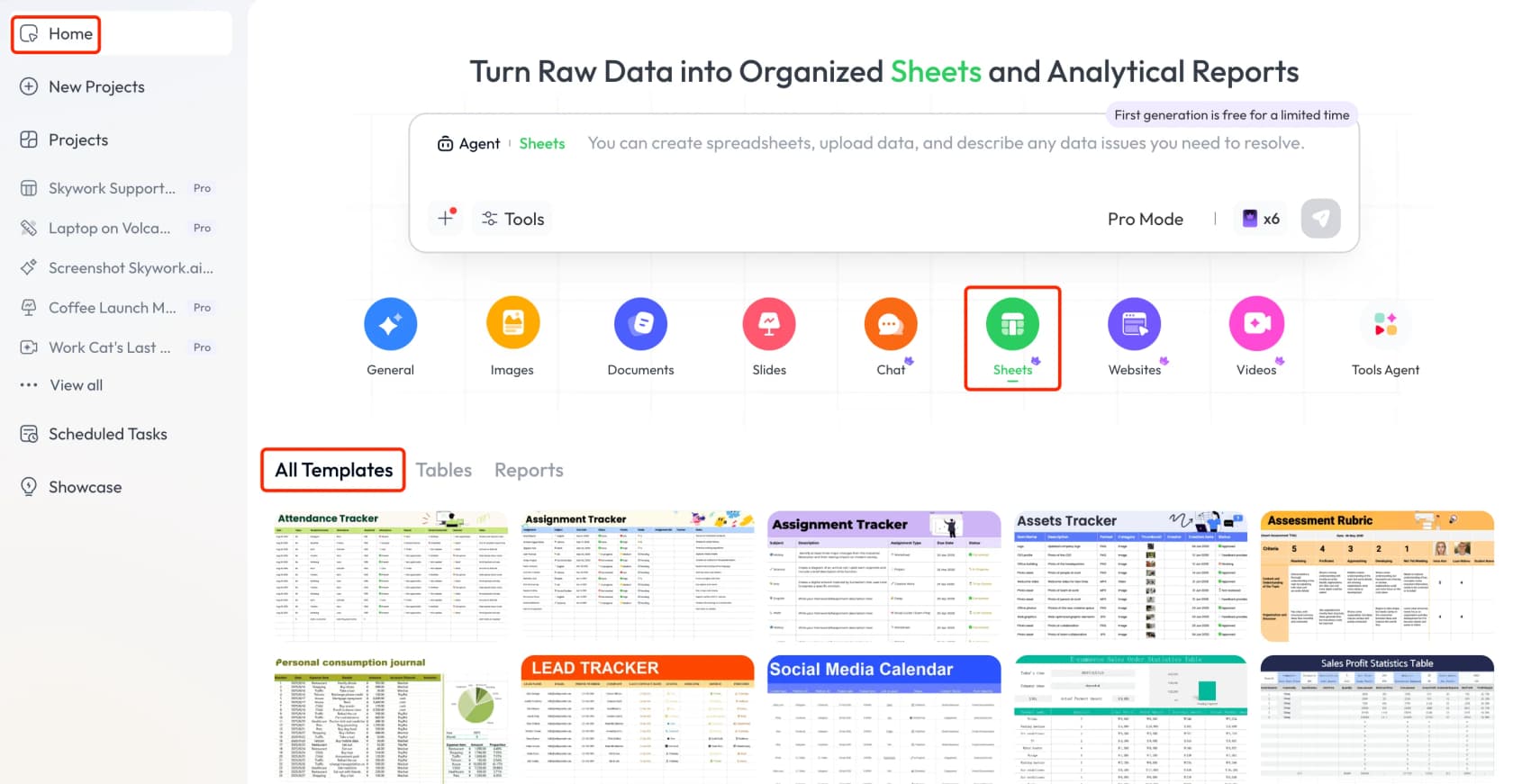
The problem sits somewhere else. When I dug into its full review, the pattern was clear: the product works, the billing burns people. Here's what actually drives the search for an alternative.
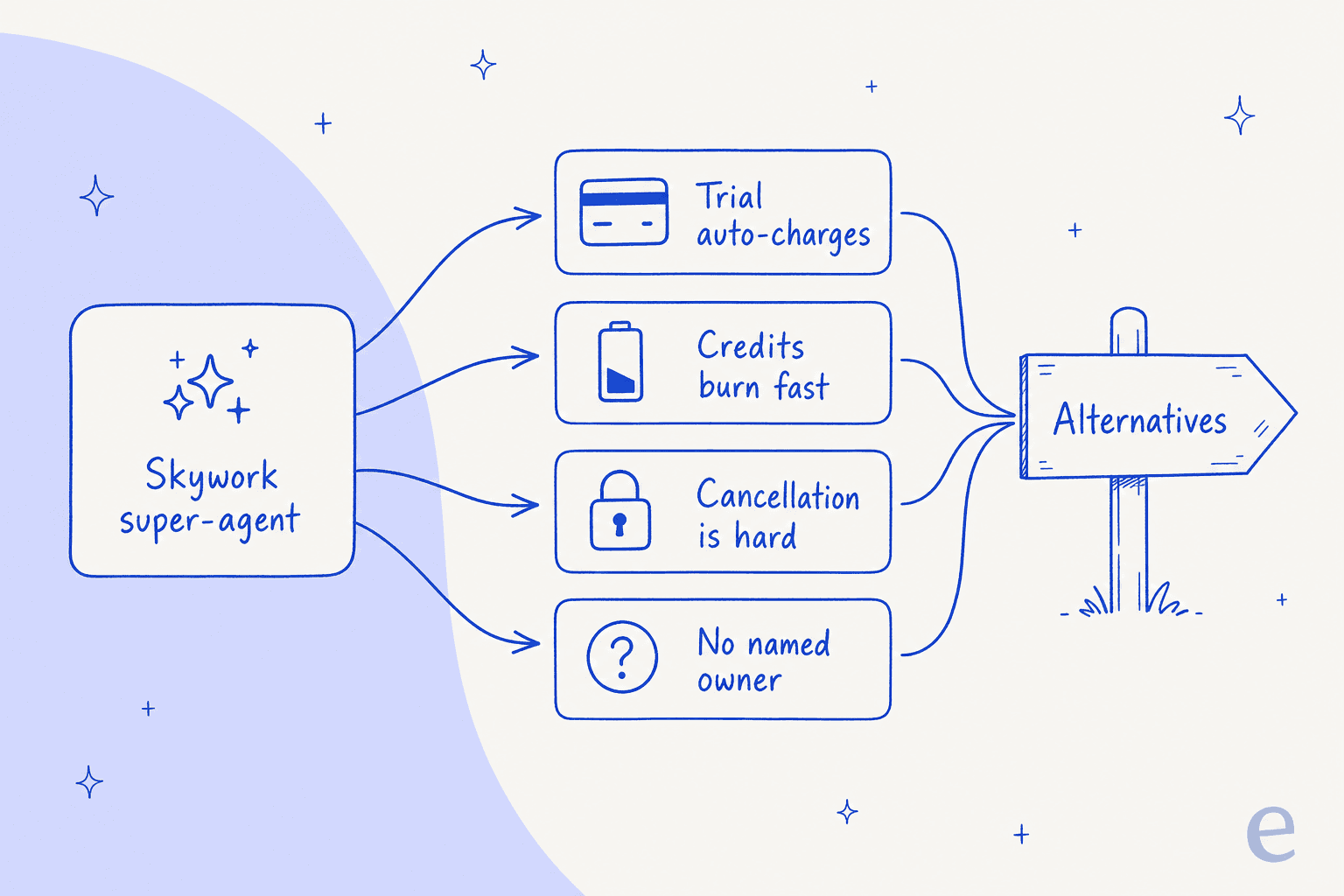
The dominant complaint is the free-trial-to-auto-charge trap. Reviewers say they weren't clearly warned the trial converts, then got hit with charges from ~$200 up to £400 and beyond. The second theme is the credit model itself. Skywork moved from an "unlimited" plan to credits with no notice, and the burn rate is what stings:
"They had an unlimited system which worked great with their Skywork 2.0. They released Skywork 3.0 and the rug was pulled out from under customers. It went from Unlimited to credit based and the credits are consumed so fast it would cost an incredible amount to do even the most simple tasks."

Tellingly, Skywork has publicly announced it's removing the credit system again and adding an "Ultra Membership," which tells you the backlash was real enough to walk back. The last friction point is trust: there's no founder, parent company, or funding surfaced on any public page. None of this makes Skywork a bad agent. It makes it a hard one to hand your card and your work to without hesitation, and that's exactly when a shortlist helps.
The Skywork AI alternatives at a glance
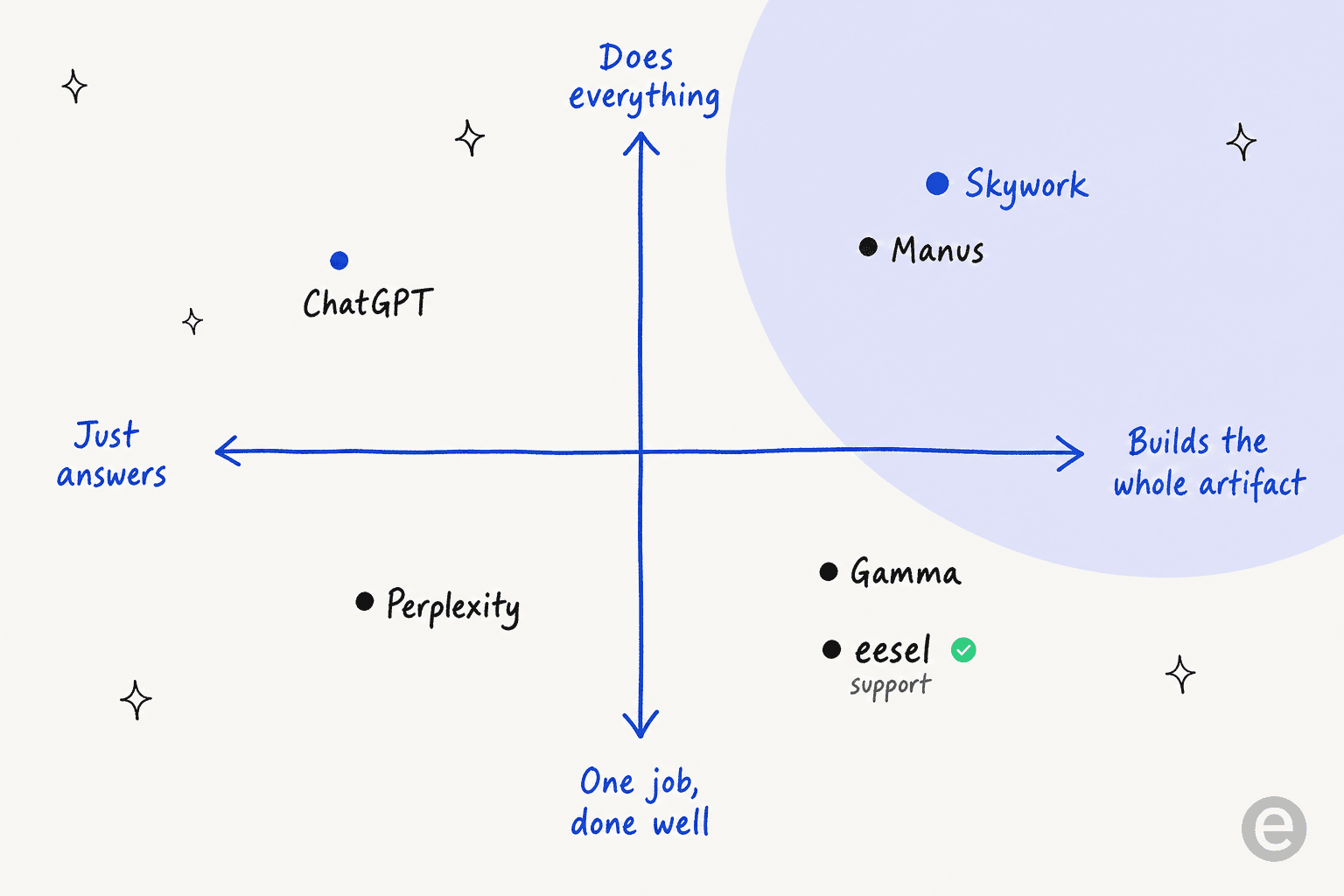
Here's the whole field before we go deep. Skywork sits in the "does everything, builds the whole artifact" corner, and the alternatives split by how focused they are and whether you want answers or finished work.
| Tool | Best for | Starting paid price | Billing unit | Free tier |
|---|---|---|---|---|
| Manus | Hands-off, end-to-end office tasks | $20/mo ($17 yearly) | Credits | Trial only |
| Google Gemini | Teams already in Google Workspace | $7.99/mo (AI Plus) | Subscription + usage caps | Yes |
| ChatGPT | The all-purpose default | ~$20/mo (Plus) | Subscription + usage caps | Yes |
| Perplexity | Research with citations | $20/mo ($17 yearly) | Subscription + credits | Yes |
| Gamma | Polished decks and sites | $9/seat/mo | Per-seat + AI credits | Yes |
| NotebookLM | Research grounded in your own docs | Free, or bundled in Google AI plans | Daily limits | Yes |
| eesel | Automating customer support | From $299/mo (500 credits) | 1 credit per ticket or chat, no seats | 100 free credits |
How I picked these
Two filters. First, does the tool actually finish work, or just chat? Skywork's whole appeal is that it hands back a deliverable, so a chat assistant that stops at advice is only half a replacement. Second, is the pricing honest? Given why people leave Skywork, I weighted tools whose cost you can predict before you commit. Every price below comes from the vendor's own pricing page, and every user quote links to a real permalink you can check.
I've kept the list to seven so it stays curated. I've also left off tools that only overlap on one narrow feature, and I've been upfront where an "alternative" is really for a different job than Skywork does.
1. Manus
Best for teams that want a general agent to run a whole task end to end, unattended, the way Skywork promises to.
Manus (manus.im) is the closest thing to a like-for-like Skywork swap. You give it an open-ended goal ("build me a website", "research this market", "make a slide deck") and it plans and executes the whole multi-step job on its own cloud VM, then hands back the finished artifact. As of 2026 it's now part of Meta, which is either reassuring or a red flag depending on how you feel about Meta owning your workflow.
Pros: It genuinely runs asynchronously, so tasks keep going after you close the tab, and every paid plan gets 20 concurrent and 20 scheduled tasks. Its Wide Research feature fans a job across parallel sub-agents for big batch work.
Cons: It's credit-based, so it inherits the same "how fast am I burning credits" anxiety that drives people off Skywork. Long autonomous runs can also drift, which is the standing risk with any fully autonomous agent.
Pricing: Standard is $20/mo ($17 billed yearly) for 4,000 monthly credits, Customizable is $40/mo for 8,000, and Extended is $200/mo for 40,000. Every paid plan adds 300 daily refresh credits. Team and Enterprise are contact-sales.
Verdict: If you liked what Skywork was supposed to do and just want it from a more established owner, Manus is the pick. Read the Manus reviews and watch your credit burn, then compare the Manus alternatives if the Meta ownership bothers you.
2. Google Gemini
Best for anyone already living in Gmail, Docs, and Sheets who wants agentic help without leaving Google.
Google Gemini is Google's frontier assistant, and its edge over Skywork is distribution: it's already inside the tools you use. It'll build a financial dashboard in Sheets, summarize your inbox in Gmail, and run deep research across the web, with the newest Gemini 3.5 Flash tuned for agentic and coding work.
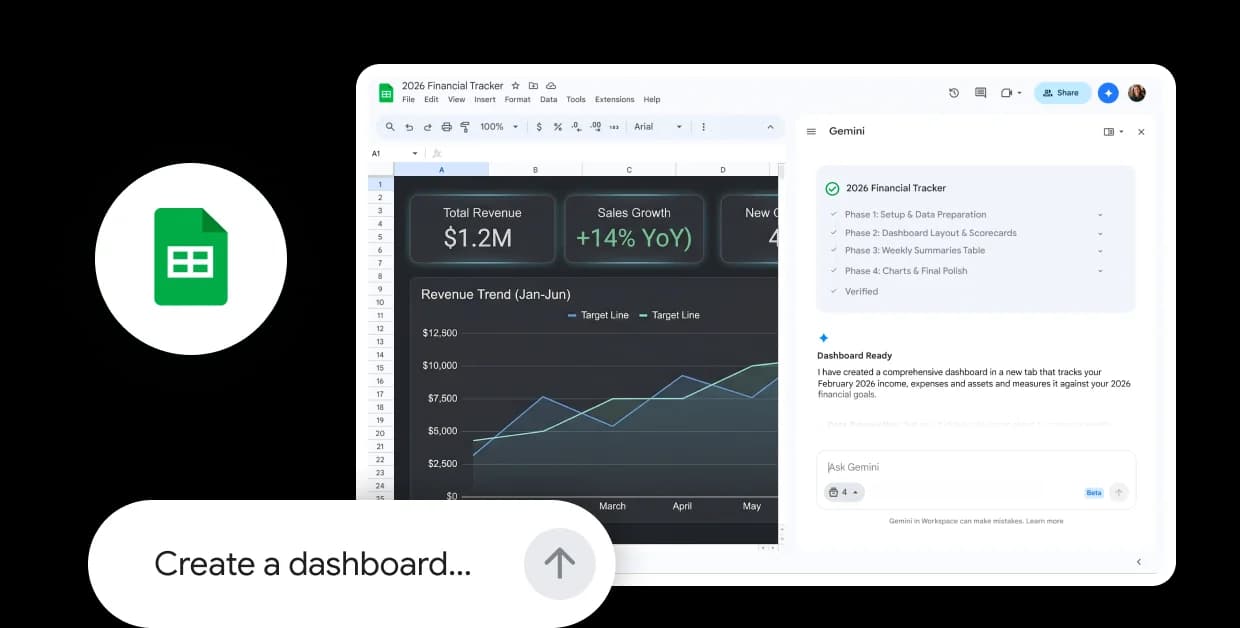
Pros: It reportedly generates roughly 2x faster than Claude, the free tier is real, and the Workspace integration means the artifact lands where you already work instead of in a separate app.
Cons: The heavy agentic pieces (Flow credits, Deep Think, the coming Gemini Spark) sit on the pricier tiers, and if you're not on Google Workspace much of the value evaporates.
Pricing: Free, then AI Plus at $7.99/mo, AI Pro at $19.99/mo, and AI Ultra at $99.99–$199.99/mo via Google One, each stepping up usage limits and Flow credits.
Verdict: For most people who wanted Skywork to "just do the office task," Gemini quietly does it inside the office tools already. See how it stacks up in Gemini vs ChatGPT, or the wider Gemini alternatives if you want out of Google's ecosystem.
3. ChatGPT
Best for the all-purpose default, when you want one assistant that does a bit of everything competently.
ChatGPT from OpenAI is the safe generalist. It won't autonomously build a website and leave it running the way Skywork or Manus will, but with ChatGPT agents, Canvas, deep research, and the current GPT-5.5 model, it covers writing, analysis, code, and research in one clean interface that everyone on your team already knows.
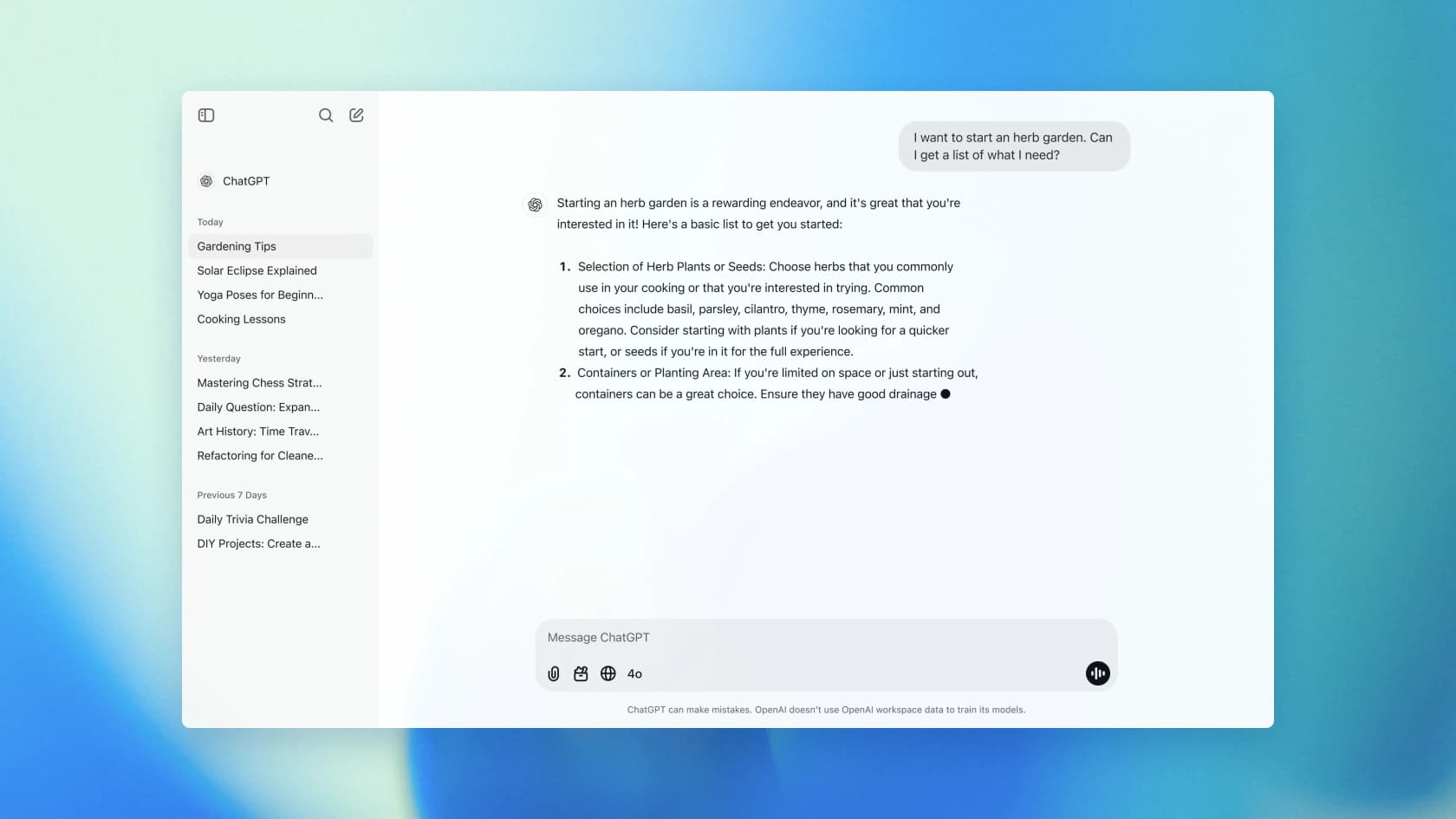
Pros: The free tier includes Canvas, Search, and Projects, the interface has the shortest learning curve of anything here, and the model is a strong all-rounder.
Cons: It's less of a true "hand it a goal and walk away" agent than Skywork markets itself as, free chats are used to train models by default (opt-out exists), and the "unlimited" Plus messaging is qualified by fair-use guardrails.
Pricing: Free, then Go ($8/mo), Plus ($20/mo), and Pro (from ~$100/mo). Business and Enterprise plans are sales-led.
Verdict: If Skywork felt like overkill and you mostly need a reliable everyday assistant, ChatGPT is the least risky choice on this list. For the writing angle specifically, the ChatGPT alternatives for blogging piece goes deeper.
4. Perplexity
Best for research where every claim needs a source you can click.
Where Skywork's research runs behind the scenes and feeds a deck, Perplexity puts the citations front and center. It's an answer engine built search-first, so every response ships with inline, verifiable sources, and its Perplexity Computer feature adds the agentic layer that deploys sub-agents to research and build in the background.
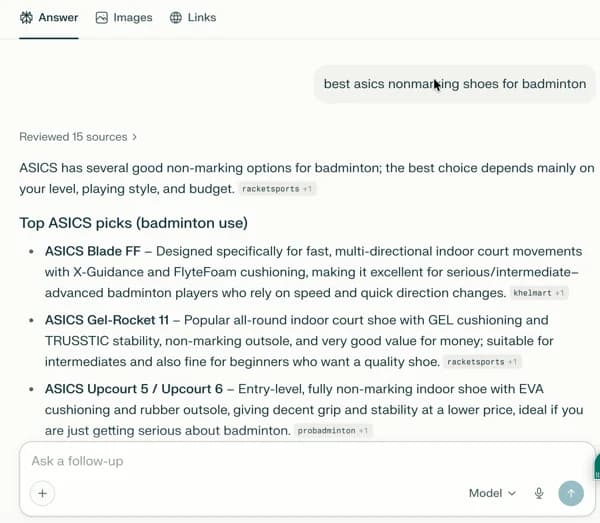
Pros: The inline citations are the single most-cited reason people trust it, the model picker lets Pro users reach Gemini, GPT and Claude behind one subscription, and there's a genuinely useful free tier.
Cons: It's an answer-and-research tool, not a full deck-or-website builder, so it only replaces Skywork's research half. Community reports also flag tightened usage limits on lower tiers in 2026.
Pricing: Free, then Pro at $20/mo ($17 annual) and Max at $200/mo ($167 annual), with Enterprise from $40/seat/mo.
Verdict: If what you valued in Skywork was the deep-research engine and not the slide output, Perplexity does that half better and shows its work. Weigh it against the Perplexity alternatives if you need the artifact too.
5. Gamma
Best for decks and sites that actually look good, which is exactly where Skywork's fans admit it's weak.
Even Skywork's Reddit defenders say its output looks "too structured, sometimes less aesthetic." Gamma is the answer to that specific complaint. It turns a prompt, outline, or file into a presentation, website, or doc built from flexible "cards" instead of fixed slides, and it's the tool people reach for when the visual polish matters.

Pros: It's the design-first pick with 70M+ users and $100M+ ARR behind it, a card that can publish as a web page, and a free tier to test the look before paying.
Cons: It's narrower than Skywork, it's presentations and pages, not spreadsheets and video, and like Skywork it carries Trustpilot billing complaints around refunds, so read the terms.
Pricing: Free, then Plus at $9/seat/mo, Pro at $18, and Ultra at $90, with Team ($240/seat/yr) and Business ($480/seat/yr) for organizations.
Verdict: If your Skywork frustration was ugly decks, Gamma is the straight upgrade for that one job. Compare the Gamma alternatives if you also need documents and data work in the same tool.
6. NotebookLM
Best for research and synthesis grounded strictly in documents you upload, with zero made-up facts.
NotebookLM is Google's source-grounded research assistant, and it's the anti-hallucination pick. Instead of scanning the open web like Skywork, it answers only from the sources you give it and cites the exact passage every time. It went viral for its Audio Overviews, and it now generates mind maps, slide decks, and study guides too.
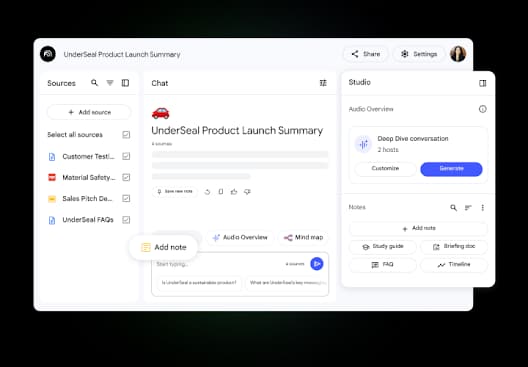
Pros: Source-grounding means far fewer hallucinations, the free tier is generous (100 notebooks, 50 sources each), and it swallows PDFs, Docs, YouTube videos, and audio up to a million tokens per source.
Cons: It's deliberately not a general-purpose agent, so it won't go build you a website. It's a closed research-and-synthesis system, and premium limits are bundled into Google's AI plans rather than sold standalone.
Pricing: Free with any Google account; higher daily limits come through Google AI Plus, Pro, and Ultra plans.
Verdict: If you trusted Skywork with your research and then worried about invented citations, NotebookLM is the safer research brain, precisely because it can only cite what you fed it.
7. eesel
Best for the reader whose real project isn't office output at all, it's automating customer support.
Here's the honest twist. If you were eyeing Skywork to answer customer tickets or run a support queue, you were reaching for a general office agent to do a specialist job. eesel is what that job actually needs: an AI support agent that layers on top of your existing helpdesk (Zendesk, Freshdesk, Gorgias, and others), trains on your past tickets and docs, and resolves conversations on its own.

We've spent the last three-plus years putting AI agents on live support queues, and the thing that makes support different from office work is risk: a confident-sounding bot that gives a wrong answer to a customer is a real problem, not a typo in a slide. That's why eesel lets you simulate the agent against your historical tickets before it ever replies to a real customer, so you see the resolution rate before you go live.
Pros: Pricing is one fixed monthly price from $299 for 500 credits (1 credit per ticket or chat) with no per-seat fees, so cost tracks volume instead of headcount, and there are 100 free credits to start with no card. It sits on your current helpdesk instead of replacing it.
Cons: It's purpose-built for support, so it won't build you a deck or a website. And if your need really is general office output, one of the six agents above fits better than eesel does.
Pricing: From $299/month for 500 credits, two months free if you pay a year upfront, and SSO and HIPAA available as add-ons. No platform fees or seat charges.
Verdict: Not a Skywork competitor in the office-work sense, and I won't pretend otherwise. But if "AI super-agent" was your shorthand for "make my support queue disappear," this is the one built for that.
So which Skywork AI alternative should you pick?
The decision comes down to one question: what do you actually need the tool to finish?
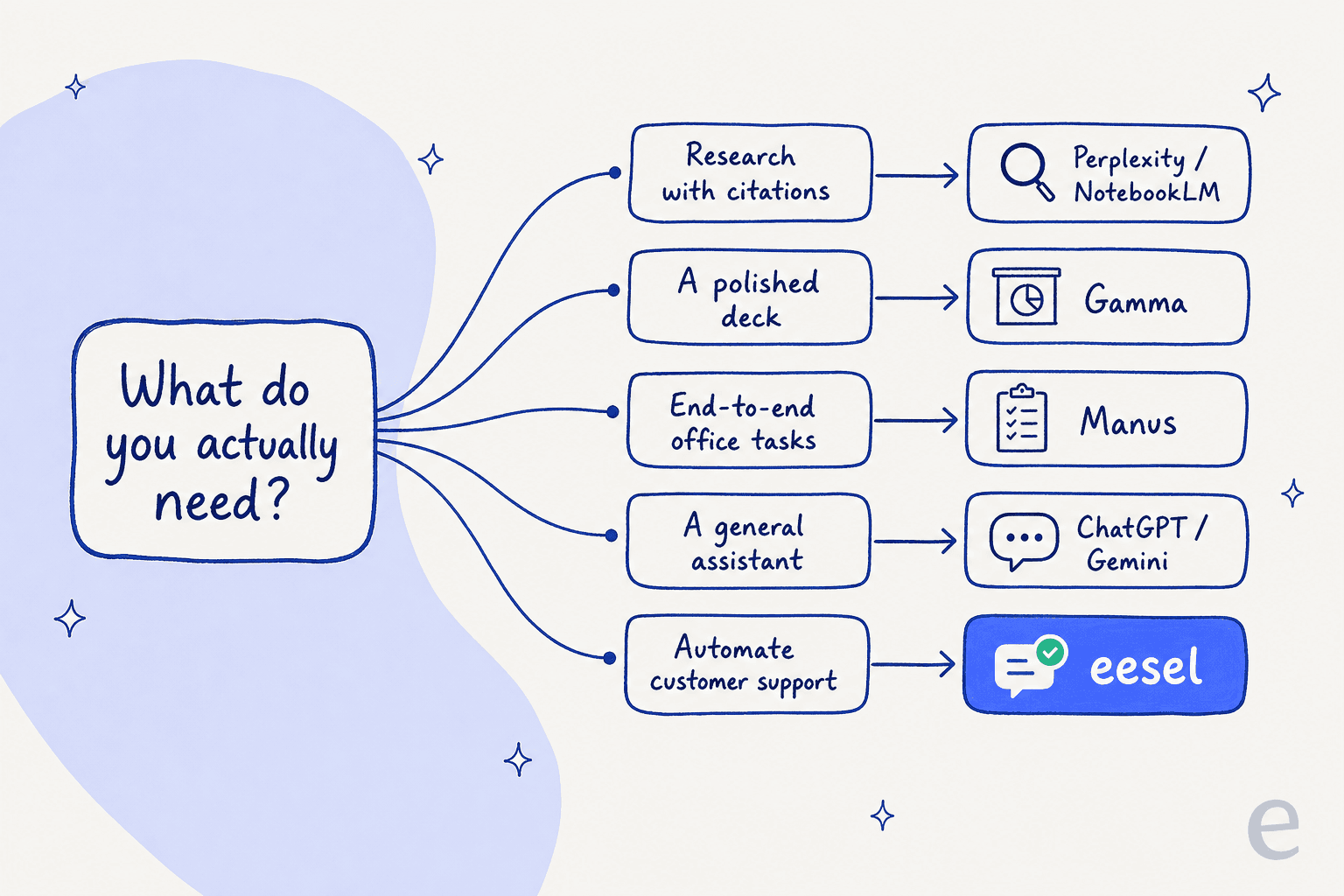
If you want the full "hand it a goal and walk away" experience, go Manus. If it's research, Perplexity for the open web and NotebookLM for your own documents. If it's decks, Gamma. If you just want a dependable everyday assistant, ChatGPT or Gemini. Across all of them, the lesson from Skywork's reviews holds: read the billing terms and prefer a meter you can predict.
And if this whole search was really about support automation, don't force a general agent into it.
eesel for support automation
If your reason for eyeing a super-agent was to take load off a support team, eesel is the tool built for that exact job. It connects to your existing helpdesk in minutes, learns from your past tickets and help center, and resolves front-line conversations on its own, so it works like a new hire that already knows your product rather than a do-everything agent you have to babysit.
The differentiator is the part general agents skip: you can simulate it on your real historical tickets and see the resolution rate before it touches a live customer, and 1 credit is 1 ticket with no seat fees, so there's none of the credit-burn guesswork that pushes people off Skywork in the first place. You can try eesel with 100 free credits, no card required.
Frequently Asked Questions
What is the best Skywork AI alternative?
It depends on the job. For hands-off, end-to-end office work the closest match is Manus; for research with citations, Perplexity or NotebookLM; for polished decks, Gamma. If your real goal is automating customer support rather than office output, a purpose-built teammate like eesel is the better Skywork AI alternative.
Are there free Skywork AI alternatives?
Yes. ChatGPT, Gemini, Perplexity and Gamma all have real free tiers, and NotebookLM is free with any Google account. They cap heavy usage, but for light work you can test them without a card, which is safer than Skywork's paid trial.
Why are people looking for Skywork AI alternatives?
Mostly billing, not the product. Skywork's Trustpilot sits at 1.5/5 across 41 reviews, dominated by complaints about the trial auto-charging and hard cancellation. The product itself builds real decks and docs, but the credit whiplash pushes people to look elsewhere.
Is there a Skywork AI alternative for customer support?
Skywork is an office-work agent, not a helpdesk tool, so for support you want something purpose-built. eesel plugs into your existing helpdesk, trains on past tickets, and runs on one fixed monthly price (1 credit per ticket or chat), which is a cleaner fit than pointing a general super-agent at your support queue.