TypeSafe Jev alternatives: 8 ways to get fast, typed AI decisions

Alicia Kirana Utomo

Katelin Teen
Last edited September 21, 2026

What actually counts as a TypeSafe Jev alternative?
Jev's pitch is narrow and specific: send it unstructured state plus typed questions, get back typed decisions with calibrated probabilities, fast. On Hacker News the launch drew 1,929 points, and the sharpest comment reframed the whole thing plainly:
"Seems like a more accurate title would be 'Jev: Trading general purpose generation for fast typed inference'... Jev can only generate structured output, right?"

That reframe is the right lens for shopping alternatives. Anything that turns a model's output into a guaranteed shape is competing with Jev on the typed part. The thing that is actually hard to copy is the calibrated, generation-free part, which is why the list splits by how close each option gets to that.
I have grouped the eight options into the three families above. Here is the whole set at a glance before I go tool by tool.
| Tool | Type | What it returns | Schema guarantee | Confidence score | Hosting | Pricing | Best for |
|---|---|---|---|---|---|---|---|
| eesel | Support teammate | A resolved ticket, not just a decision | Actions on your helpdesk | Simulated on past tickets | SaaS (SOC 2, GDPR) | Usage-based, ~$0.40/ticket | Running support end to end |
| TypeSafe Jev | System One model | Typed decision + probability | Yes, native | Yes, RLCD-calibrated | API + Cloudflare | ~$0.042/MTok in, output free | Fast, narrow decisions at scale |
| OpenAI Structured Outputs | Managed API feature | JSON that matches your schema | Yes, JSON Schema | Via logits (rough) | OpenAI API | Normal model token rate | Teams already on OpenAI |
| Gemini structured output | Managed API feature | JSON that matches your schema | Yes, JSON Schema | Via logits (rough) | Google API | Normal model token rate | Cheap classification on Flash-Lite |
| Cloudflare Workers AI | Model gateway | JSON mode / function calls | Yes, per model | Model-dependent | Edge + serverless | Usage-based (Neurons), free tier | Edge apps, and running Jev itself |
| BAML | Schema DSL + library | Typed objects from any LLM | Yes, at parse time | Model-dependent | Self-host / OSS | Free (open source) | Best DX for prompt-to-type |
| Instructor | Library (Pydantic) | Validated typed objects | Yes, with retries | Via logits (rough) | Self-host / OSS | Free (open source) | Python extraction, fast start |
| Outlines | Generation library | Structure enforced during decoding | Yes, at decode time | Model-dependent | Self-host / OSS | Free (OSS) + hosted API | Local models, strict grammars |
| Hugging Face AutoTrain | Trained classifier | Class label + probability | Fixed label set | Yes, softmax | HF Hub / self-host | Compute cost | Narrow, high-volume classification |
A note on tone before the list: none of these are bad tools, and a few of them are excellent. Where I point out a limit, it is a fact about scope, not a knock. Let me go through them.
1. eesel: the teammate layer, not a decision primitive
I'll be straight that this is a different kind of answer. Many people who search for a typed-decision model are actually trying to solve a support or ops job, and reached for a primitive because it was the shiny new thing. If that is you, the honest recommendation is to skip the primitive.

What it is. eesel is an AI teammate platform. Customers hire ready-to-work teammates for a specific job, and the current roster includes an AI helpdesk teammate and an AI blog writer. The helpdesk teammate joins your existing queue, reads your help center and past tickets, and makes the same triage, routing and escalation calls a decision model makes, then it drafts and resolves.
Where it fits. When the decision is a means to an end and the end is a resolved ticket. Jev gives you "urgent, billing, 0.94". eesel takes that judgment and actually replies, tags, routes and closes, wired into your AI customer service workflow. It behaves less like a decoding trick and more like an AI agent with your context loaded, and it sits inside your customer service software rather than beside it.
Watch-outs. eesel is not a general-purpose decision API. If you want a raw primitive to embed in an unrelated product, you want one of the tools below, not a teammate.
If you live in a terminal: eesel also ships a public CLI plus an MCP server, so the same teammate and workspace are driveable from scripts and from coding agents like Claude Code, Codex and Cursor. It is the same agent as the dashboard, not a separate toy, which matters if your instinct with Jev was to script everything. See how it compares to a Claude Code MCP integration.
Pricing. Usage-based at roughly $0.40 per resolved ticket, with no per-seat AI tax. You can simulate on your historical tickets before going live, which is the calibration step every tool on this page skips.
2. OpenAI Structured Outputs
If your stack is already on OpenAI, this is the lowest-friction Jev alternative, because it is a feature, not a new vendor.
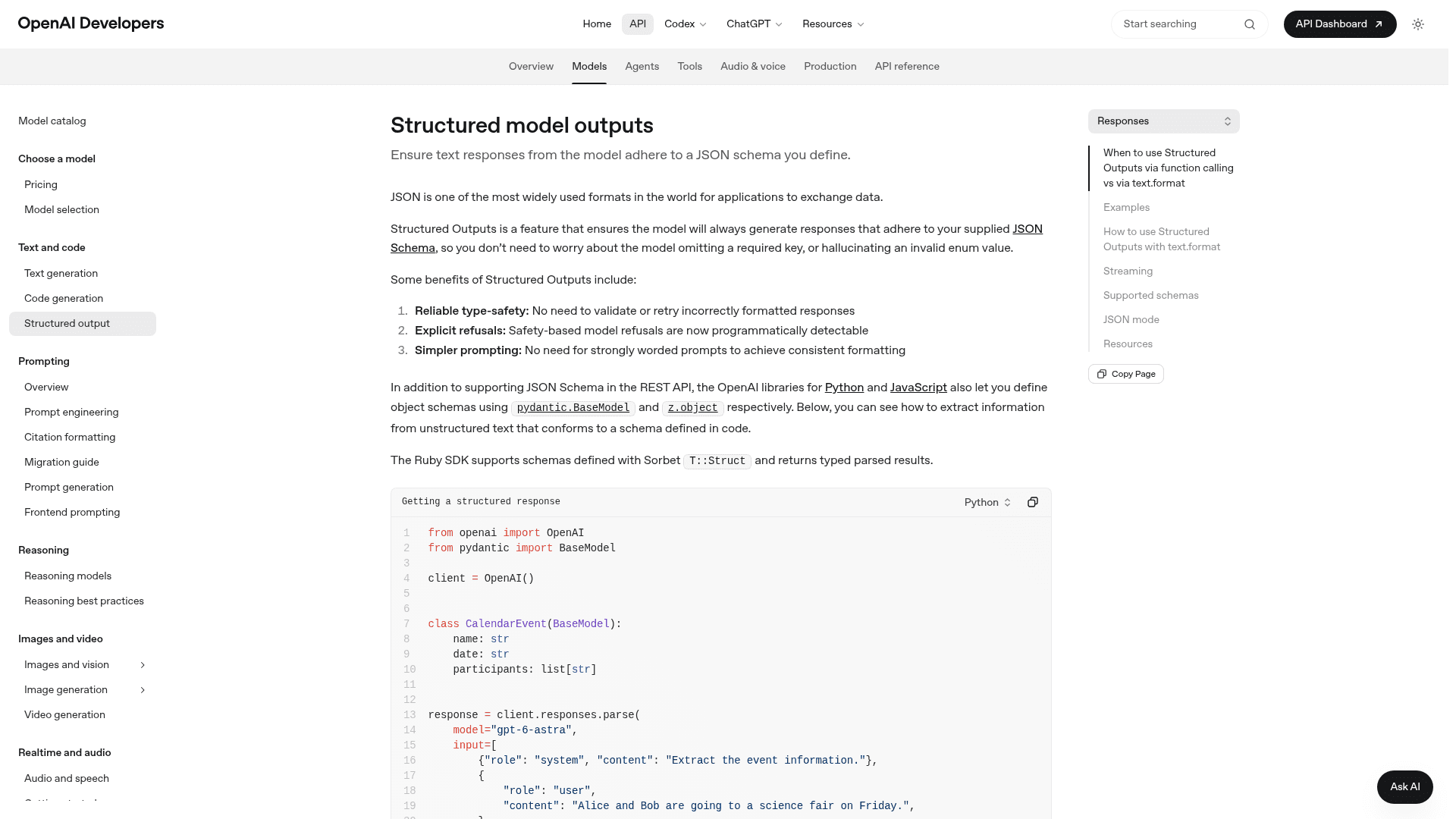
What it is. Structured Outputs makes a model always return responses that adhere to a JSON Schema you define, so it won't omit a required key or invent an invalid enum value. It also makes safety refusals programmatically detectable, and it accepts schemas defined with pydantic.BaseModel or z.object.
Where it fits. Data extraction, ticket classification and routing when you want the model's full reasoning behind the decision, and you can live with generation latency. It is a solid backbone for a home-grown ticket automation pipeline.
Watch-outs. This is a constraint on a generative model, so you still pay for token generation and wait for it. It gives you a valid shape, not a calibrated confidence score, so if you specifically want the calibration Jev is trained for, you have to derive it from logits yourself.
Pricing. Free feature; you pay the normal token rate of whatever model you call.
3. Gemini structured output
Google's version, and the one I reach for when the task is cheap, high-volume classification.
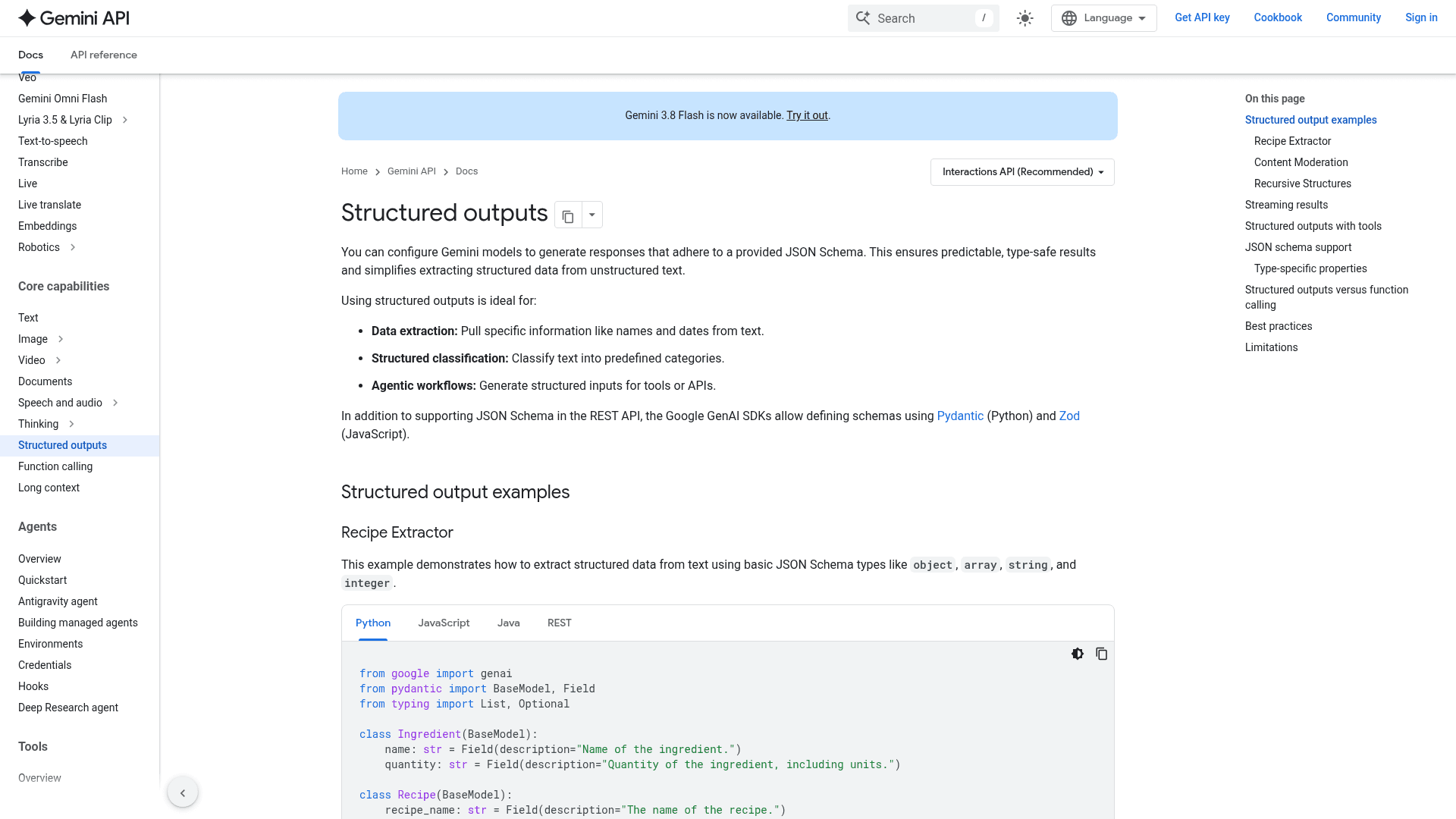
What it is. Gemini structured output configures Gemini models to generate responses that adhere to a JSON Schema, and the docs call out three ideal uses by name: data extraction, structured classification, and generating structured inputs for agentic workflows. It supports Pydantic and Zod schemas.
Where it fits. Classification and extraction at volume, including the kind of support ticket automation that used to need a hand-tuned rules engine. On the cheapest tier (Flash-Lite) the per-call cost gets close to Jev territory, which is the real competitive angle here.
Watch-outs. Same core caveat as OpenAI: it is generation with a schema clamp, not a purpose-built decision engine, so latency and confidence behave like an LLM's, not like Jev's.
Pricing. Free feature; you pay Gemini token rates, and picking the right model tier is where the cost lives.
4. Cloudflare Workers AI
The interesting twist: this is both an alternative to Jev and the place Jev actually runs.
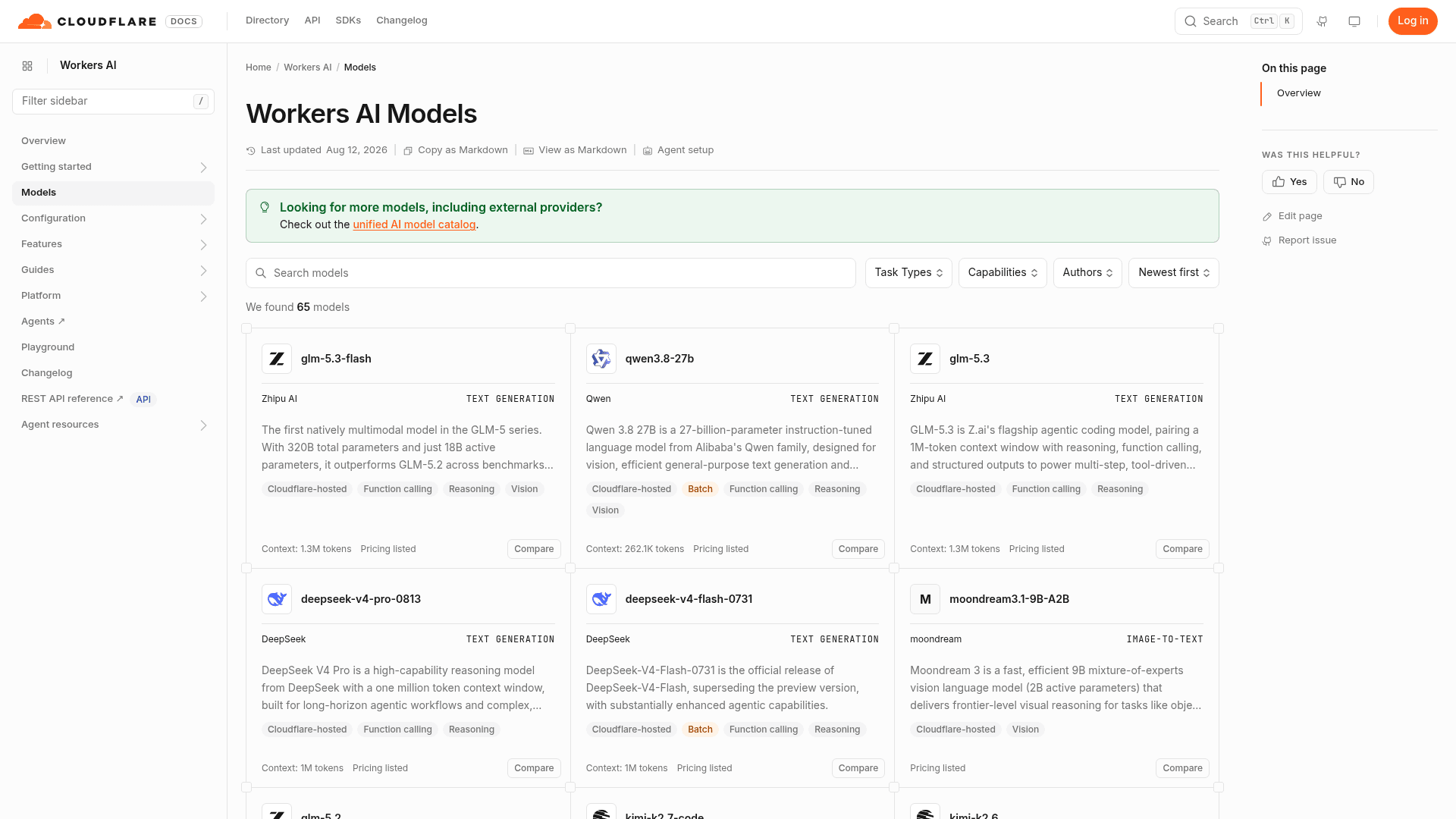
What it is. Workers AI is Cloudflare's serverless model gateway, with a catalog of 65+ models, many tagged for function calling and structured outputs, running at the edge. Jev is listed here too, under the model id typesafe/jev.
Where it fits. Edge apps that want a small fast model near the user, and teams that want one billing surface for both a general model and Jev-style decisions.
Watch-outs. The structured-output guarantee depends on the specific model you pick, not on Workers AI itself. Treat it as a distribution layer, and choose the model on the merits.
Pricing. Usage-based (billed in "Neurons") with a free daily allocation, and Jev-on-Cloudflare billing defers to the Cloudflare dashboard.
5. BAML
The best developer experience of the library options, and the one I'd hand a team that hates prompt-wrangling.
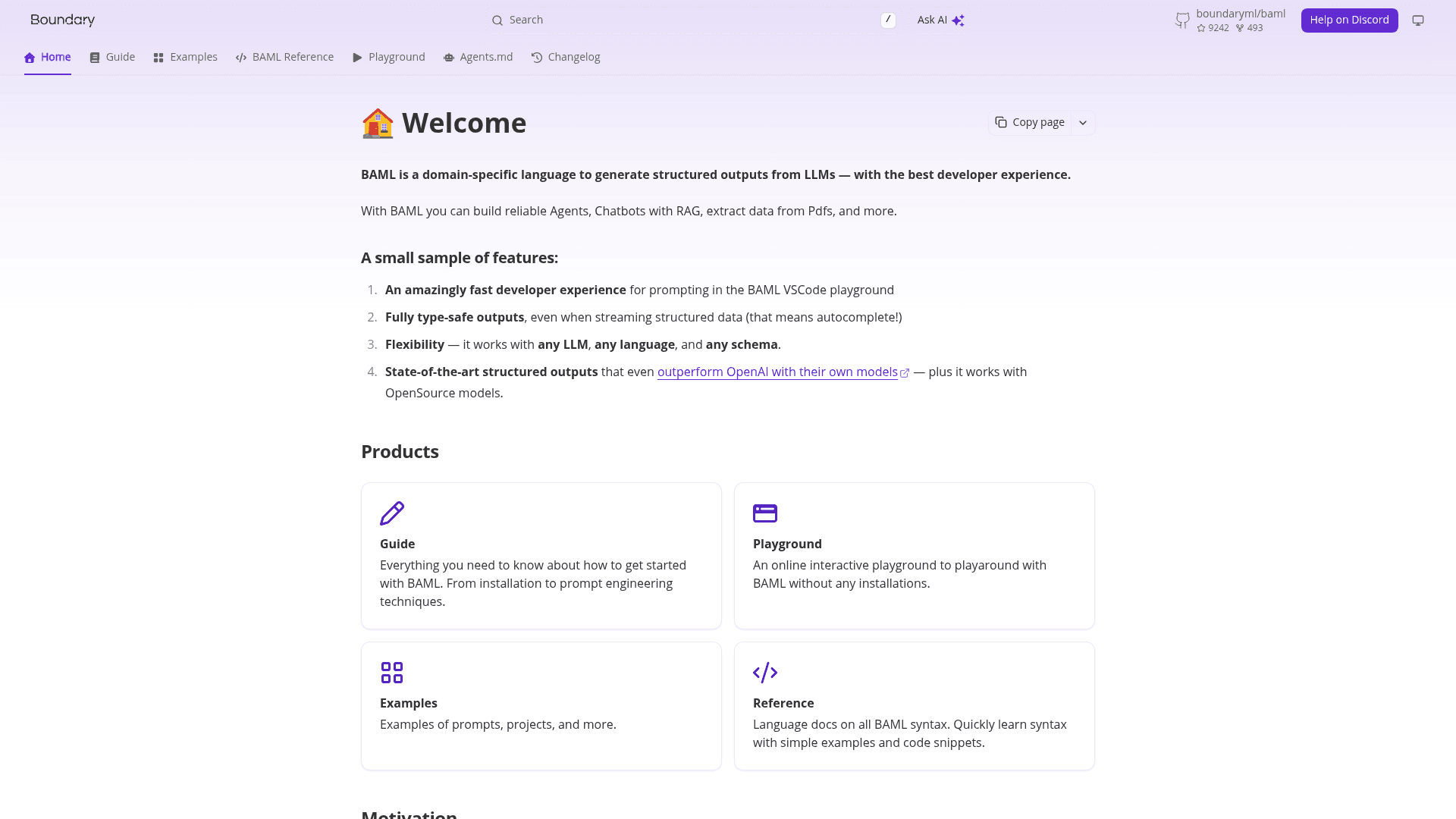
What it is. BAML is a domain-specific language for generating structured outputs from LLMs. It ships fully type-safe outputs (even while streaming), an interactive VSCode playground, and works with any LLM, any language, and any schema. It has around 9,200 GitHub stars.
Where it fits. Teams that want prompt-to-typed-object with real autocomplete and a tight edit loop, across whatever model they choose. If you are building your own AI helpdesk agent, BAML is the layer that keeps the model's output honest to your types.
Watch-outs. BAML gives you type safety at parse time, but the confidence behavior is inherited from the model underneath, so it is not a calibrated decision engine the way Jev claims to be.
Pricing. Free and open source.
6. Instructor
The most-adopted library in this space, and the fastest way to get typed extraction working in Python.
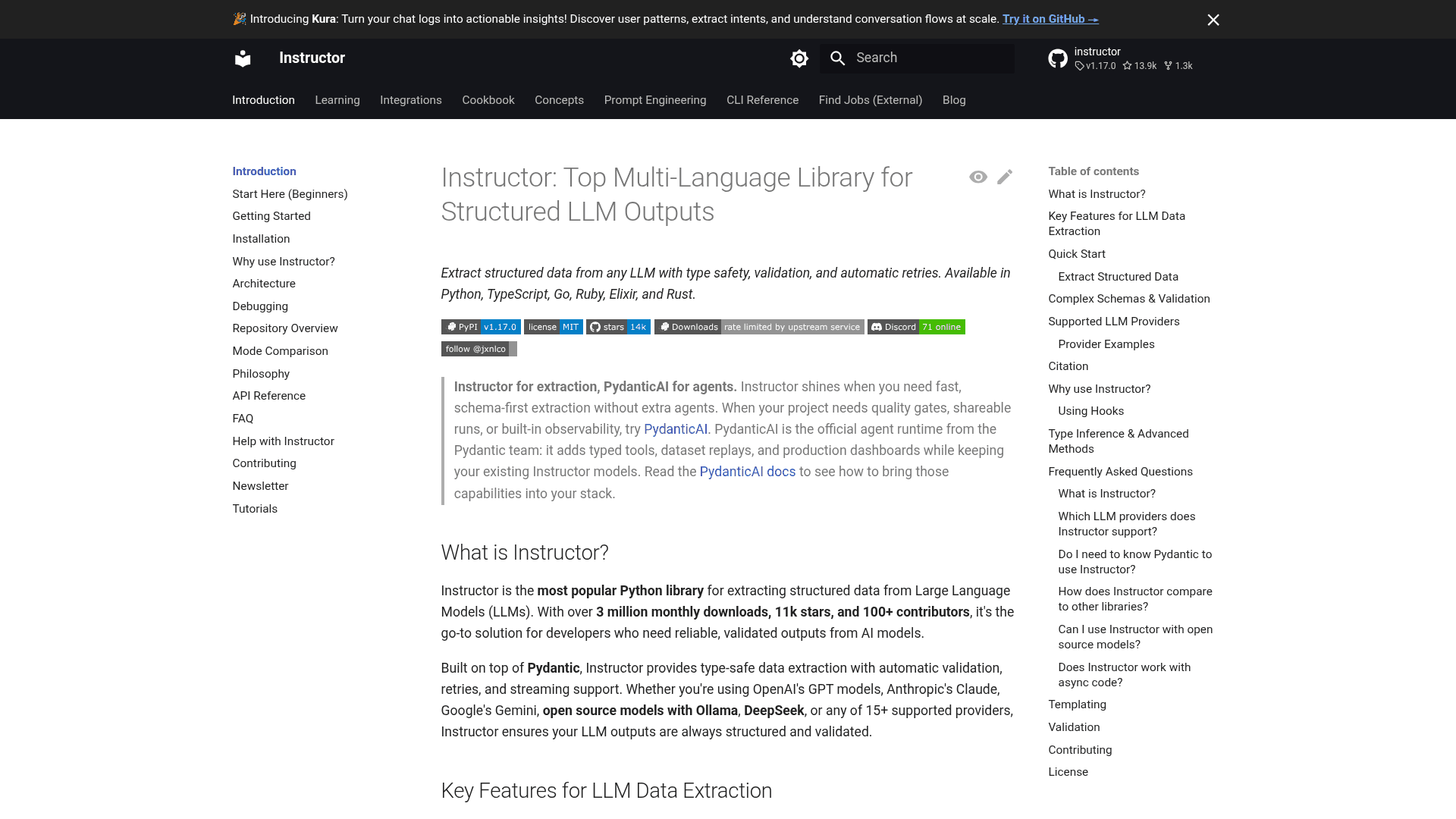
What it is. Instructor extracts structured data from any LLM with type safety, validation and automatic retries. It is built on Pydantic, at v1.17.0, with about 14k stars, 3 million monthly downloads, 100+ contributors, and 15+ supported providers including Ollama and DeepSeek. It runs in Python, TypeScript, Go, Ruby, Elixir and Rust.
Where it fits. Fast, schema-first extraction where you want validation and retries without dragging in an agent framework.
Watch-outs. Instructor's own docs are refreshingly honest that it is for extraction; for heavier agent runtimes they point you at PydanticAI. And like every library here, it standardizes the output shape, not the truth of the answer.
Pricing. Free, MIT-licensed.
7. Outlines
The option to reach for when you run your own models and want structure enforced at the token level.
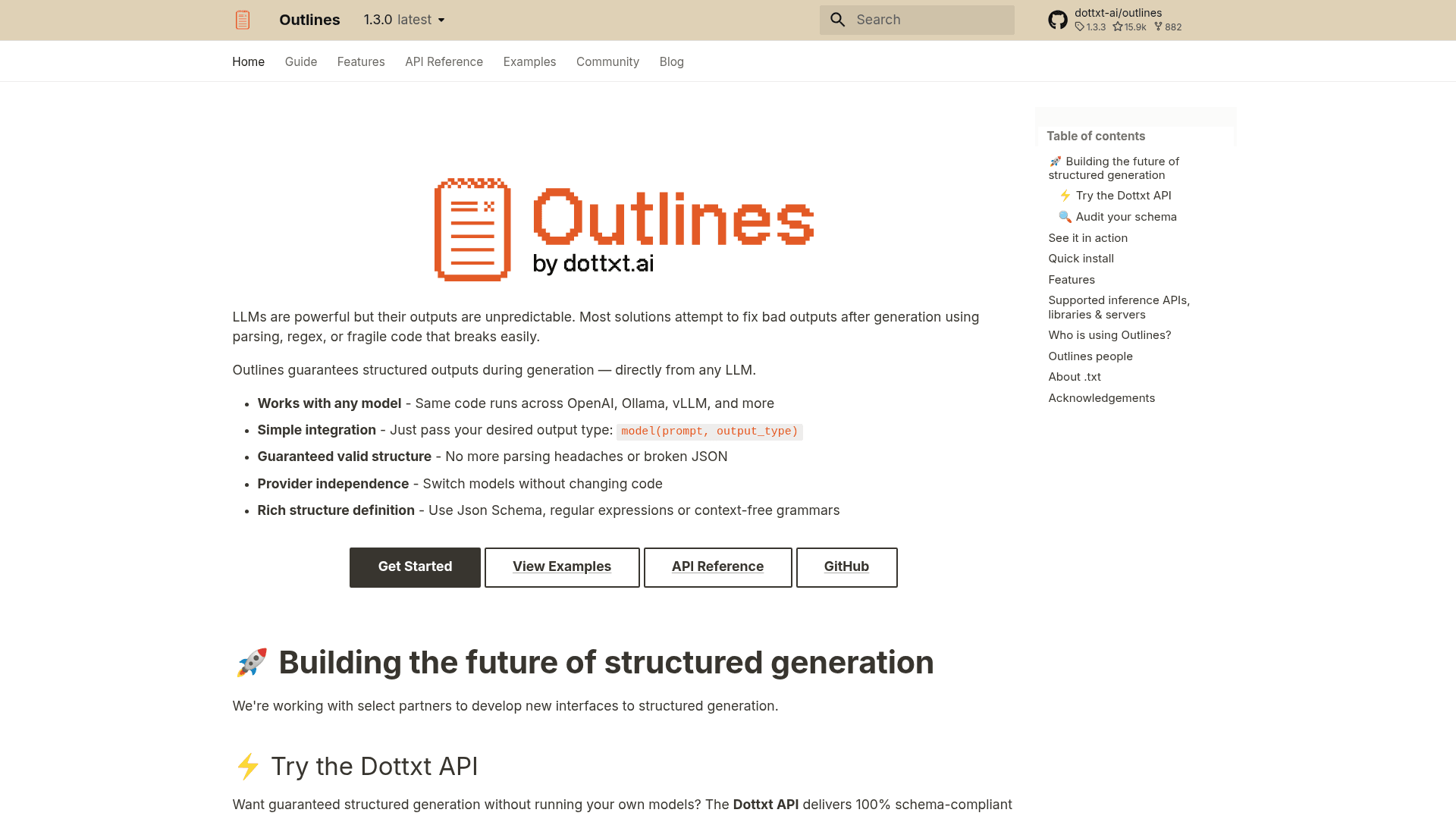
What it is. Outlines guarantees structured outputs during generation, directly from any LLM, instead of parsing or regex-fixing bad output afterwards. It works with OpenAI, Ollama and vLLM, supports JSON Schema, regular expressions and context-free grammars, sits at v1.3.0 with around 15.9k stars, and pairs with a hosted Dottxt API for 100% schema-compliant generation without running your own models.
Where it fits. Local and self-hosted models, and cases where you need a strict grammar, not just JSON.
Watch-outs. Enforcing structure at decode time is powerful but lower-level; you are closer to the metal than with a managed feature, which is either the point or a burden depending on your team.
Pricing. Open source and free; the Dottxt hosted API is the paid option.
8. Hugging Face AutoTrain
If your decision is truly narrow and high-volume, the cheapest long-run answer might be a model you train and own.

What it is. AutoTrain is Hugging Face's no-code way to train, evaluate and deploy models by uploading data. Its task list includes Text Classification and Token Classification, and the resulting models live on the Hugging Face Hub, ready to serve.
Where it fits. A fixed, well-defined label set where you have training data, like tagging tickets by reason code or routing by queue. This is the option that HN commenters kept pointing at, arguing Jev is close to a small classifier you could reproduce:
"It's a heavily constrained, tiny model that can only produce a probability score or a yes/no answer over pre-defined selections... I suspect someone will be able to recreate this within a week."
Watch-outs. You own the whole lifecycle: labeling, training, drift, redeploys. A trained classifier gives you a clean softmax probability, but it only knows the classes you taught it, and re-training is on you.
Pricing. You pay for compute time; there is no per-decision license.
Which one should you actually pick?
Here is the decision the way I'd walk a teammate through it.
The thing every one of these still owes you
Whichever tool you pick, watch the gap between a valid answer and a correct one. This was the single most-contested point in the Jev launch thread, and it applies to all eight alternatives:
"if it puts a high confidence value on a wrong answer, thats still hallucinating, no?"
The useful reframe from the same thread is that a confidence score is only worth anything if it is calibrated:
"What we would want to see is a confidence value that is in line with the actual correctness. If the value is 0.9 for 1000 different answers, then approximately 900 of those answers should be correct."
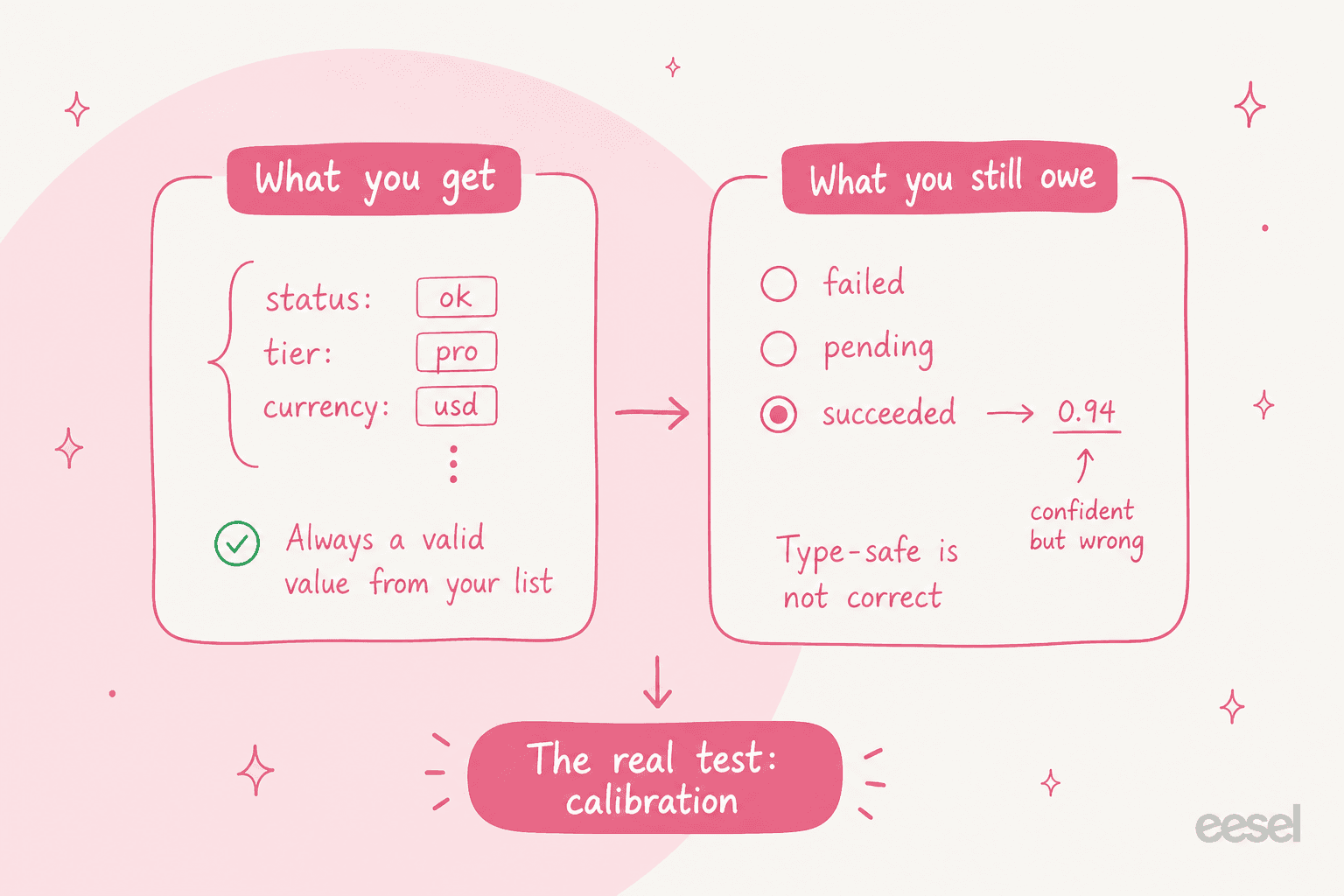
That is why, on the support side, I don't trust any decision layer until it has been run against a team's own past tickets, the same discipline I'd apply to picking an LLM for support or shortlisting the best AI support agents. A model that scores 0.94 on a routing call is meaningless until you've checked that 0.94-confidence calls are actually right 94% of the time on your data. The excitement is real, though, and where it lands people are candid about it:
"After much fumbling around with prompts and evals, this is exactly how I am using LLMs in production, to narrowly make choices and return structured data... I think this is going to quickly become the new standard approach for agentic systems."
And in production, the speed is not hype. Vercel's CEO reported real numbers:
"Jev is up to 18x faster (p95) and more accurate. It's coming to Vercel AI Gateway and likely new default."
Where eesel fits in all of this
Every tool on this page is infrastructure. They hand your code a typed decision, and then your code has to do something with it. That is the right shape if you are building a product. It is the wrong shape if your job is to run a support queue and you were hoping a decision model would do it.
eesel is the employee, not the primitive. The AI helpdesk teammate reads your help center and past tickets, makes the same triage and routing calls Jev would make, and then drafts, tags, routes and resolves inside your existing AI helpdesk. You can point it at your history and simulate the rollout before it answers a single live customer, so calibration is a step you take, not a claim you trust. And if your instinct is to script everything, the same teammate is driveable from the eesel CLI and MCP.
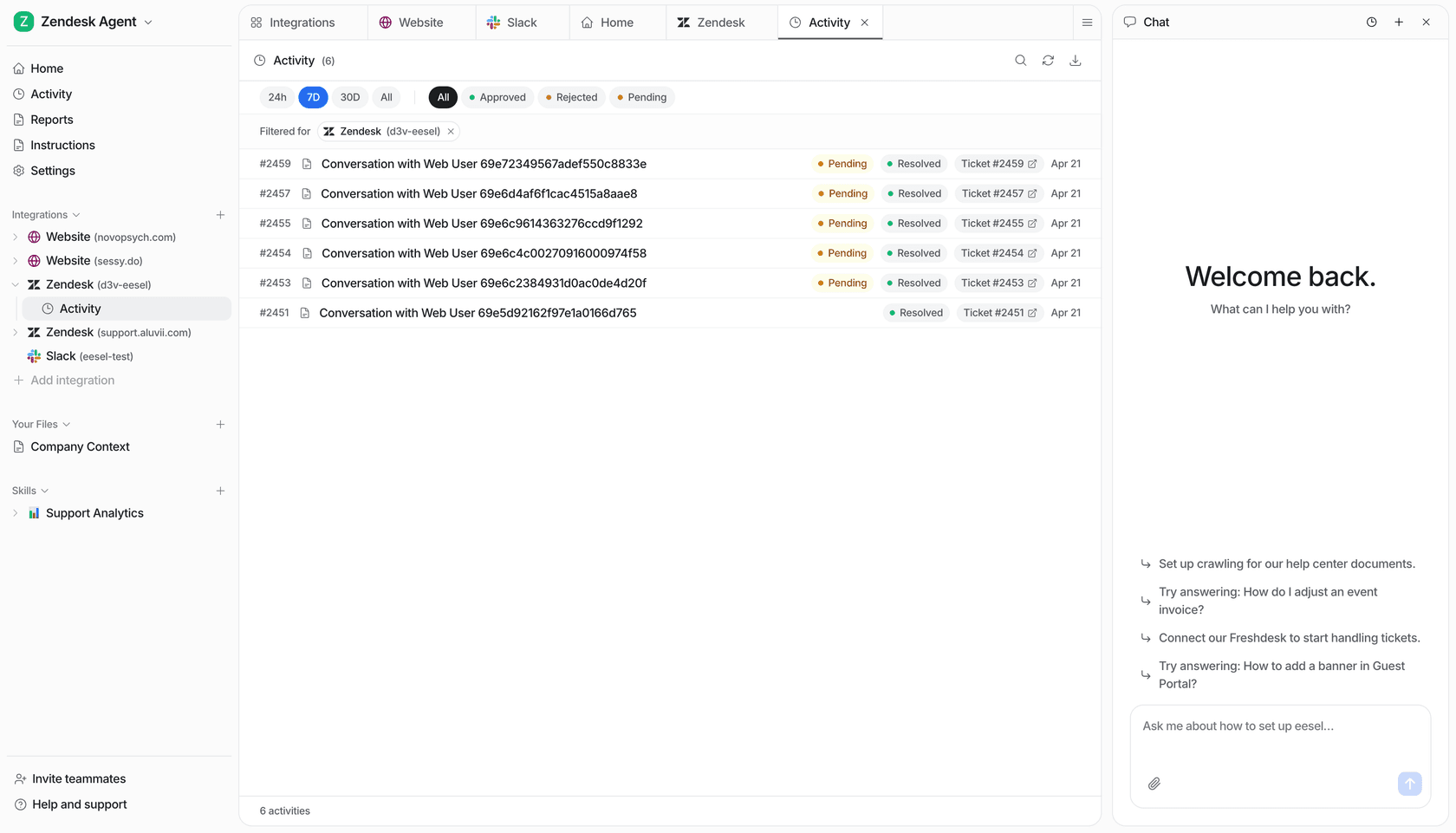
If you're weighing Jev or one of its alternatives because you want faster, more reliable support decisions, the shortest path is to try the layer that already turns those decisions into resolved tickets, the way an AI copilot drafts alongside your agents. Try eesel free, or book a demo and watch it run on your own tickets.
Frequently Asked Questions
Frequently Asked Questions
What are the best TypeSafe Jev alternatives?
The closest TypeSafe Jev alternatives are managed structured-output features like OpenAI Structured Outputs and Gemini structured output, open-source libraries like BAML, Instructor and Outlines, and a trained classifier via Hugging Face AutoTrain. If you want the decision and the action on a helpdesk, an AI agent for customer service is the layer above all of them.
Is there a free alternative to TypeSafe Jev?
Yes. Instructor (MIT) and Outlines (Apache-2.0) are free open-source libraries, and structured outputs on OpenAI and Gemini are a free feature on top of normal token pricing. You still pay for whatever model runs underneath, so "free" means the schema layer, not the inference.
What is the difference between Jev and OpenAI Structured Outputs?
Jev is a purpose-built System One model that skips text generation and returns a typed decision plus a calibrated confidence score in one parallel pass. OpenAI Structured Outputs is a constraint layered on a normal generative model, so you still pay generation latency and cost, but you get the full reasoning of a frontier LLM. Jev trades that reasoning for speed.
How much do TypeSafe Jev alternatives cost?
It varies by type. The open-source libraries are free and you pay only the underlying model's token rate. Managed features like Gemini structured output cost normal Gemini token pricing (Flash-Lite is the cheapest tier). A trained classifier on Hugging Face costs compute time. For context, Jev itself lists input at $0.042 per million tokens with free output.
Can these alternatives run customer support like Jev?
None of them run support on their own, and neither does Jev. They all return a decision your own code has to act on. To turn "this ticket is urgent, route to billing" into a resolved ticket, you need a layer that also reads your ticket classification, drafts the reply and takes the action. That is the job of an AI helpdesk agent, not a decision primitive.
Do all TypeSafe Jev alternatives give confidence scores?
Not the same way. Jev is trained with RLCD (Reinforcement Learning for Calibrated Decisions) so its probabilities are meant to track real accuracy. LLM-based options expose token logits you can read as a rough confidence, and a trained classifier gives you a softmax probability. The honest test for any of them is calibration on your own data, not the number itself.
Which TypeSafe Jev alternative is best for classification?
For narrow, high-volume classification a fine-tuned Hugging Face classifier is the cheapest per call, while Gemini structured output on Flash-Lite is the fastest to stand up. For support-specific work like triage and routing, an AI customer service workflow that already wires the classification into actions saves the glue code.


Article by
Alicia Kirana Utomo
Kira is a writer at eesel AI with a Computer Science background and over a year of hands-on experience evaluating AI-powered customer service tools. She focuses on breaking down how helpdesk platforms and AI agents actually work so that support teams can make better buying decisions.