


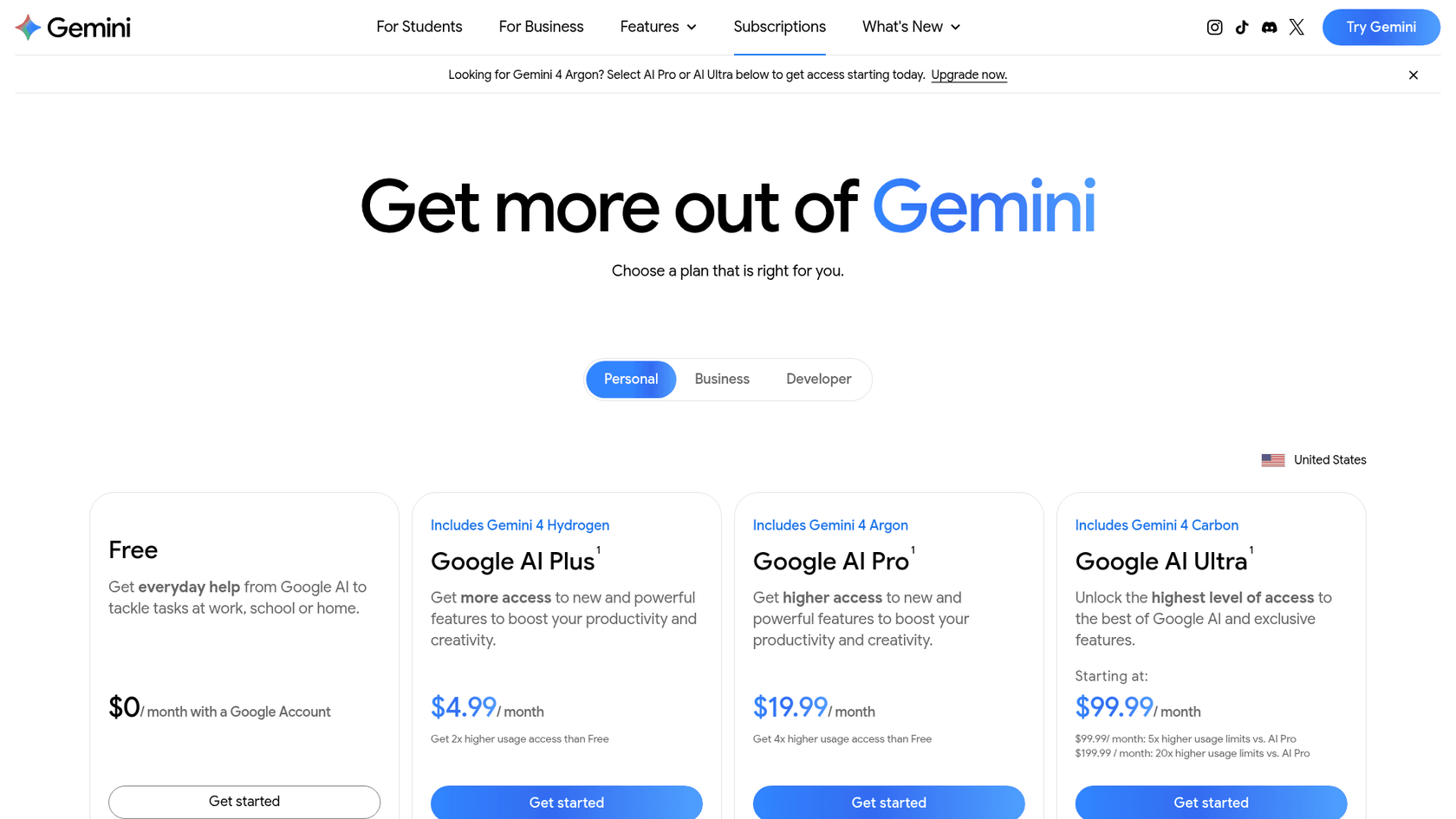
Genie 4 costs nothing per world, but you need Google AI Ultra at $99.99 a month to use it. It went live in Project Genie on 18 November 2026 for eligible Ultra subscribers. Pro ($19.99) only gets a waitlist spot, and there is no Gemini API price yet.
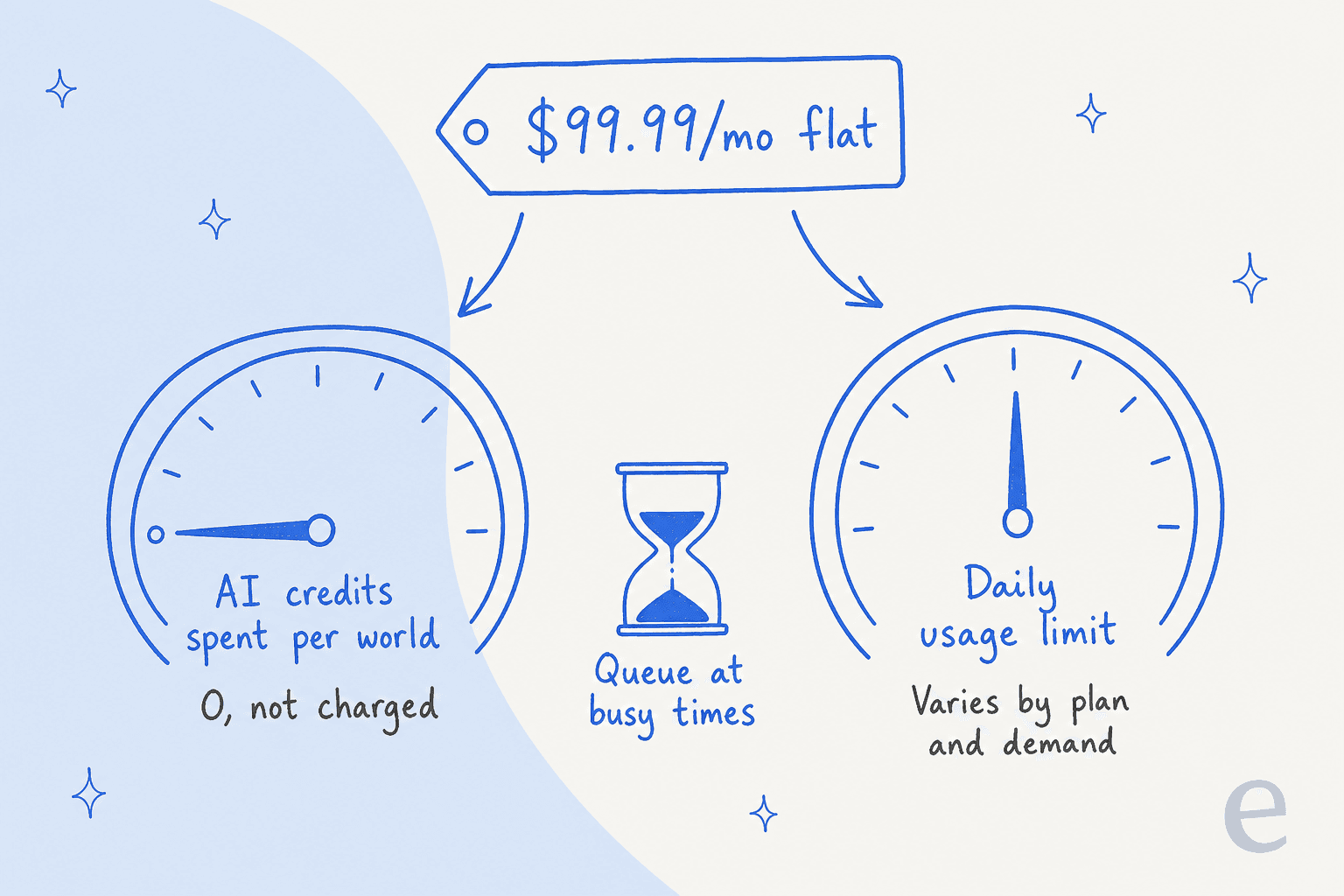
The catch most coverage misses: Google charges no AI credits for worlds, so the real limit is a daily cap that "may vary by plan and demand", with no published number. Pay for Ultra only if you'll use the rest of the bundle.
If you buy AI for a support team, demand the opposite: a visible per-ticket unit and a spend cap you set, which is how eesel prices its helpdesk teammate.
How much does Genie 4 cost?
Genie 4 has no price tag of its own. You pay for a Google AI plan, and only one plan lets you in today. (For the full Gemini lineup, see my Gemini pricing guide.)
I've spent about two years working on search intent for the blog, and "genie 4 pricing" is an odd query because the honest answer is a subscription bundle, not a rate card. So here is the bundle, plan by plan, from Google's Gemini plans page and the Project Genie help page, both checked on 19 November 2026.
| Plan | US price | Genie 4 access | Usage vs Pro | Other big perks |
|---|---|---|---|---|
| Free | $0 | No | n/a | Gemini app basics |
| Google AI Plus | $4.99/month | No | n/a | 200 Flow credits |
| Google AI Pro | $19.99/month | Waitlist only | 1x | 1,000 Flow credits |
| Google AI Ultra (5x) | $99.99/month | Yes, if eligible | 5x | 10,000 Flow credits, 20 TB storage, YouTube Premium |
| Google AI Ultra (20x) | $199.99/month | Yes, if eligible | 20x | 25,000 Flow credits, highest limits |
| Gemini API / AI Studio | Not published | Early access partners only | n/a | n/a |
The cheapest way to use Genie 4 today is $99.99 a month. Both Ultra tiers include Project Genie, and Google's footnote on the plans page says Project Genie is "only available with a Google AI Ultra plan", in more than 140 countries.
One detail worth knowing before you click buy: on the day I checked, the Ultra benefit line on the plans page still described Project Genie as running "our breakthrough Genie 3 world model". The launch post and the Project Genie page both say Genie 4 is live, so the plans page simply hasn't caught up. The word "eligible" in every Google announcement is doing quiet work too, because rollouts like this tend to reach accounts in waves.
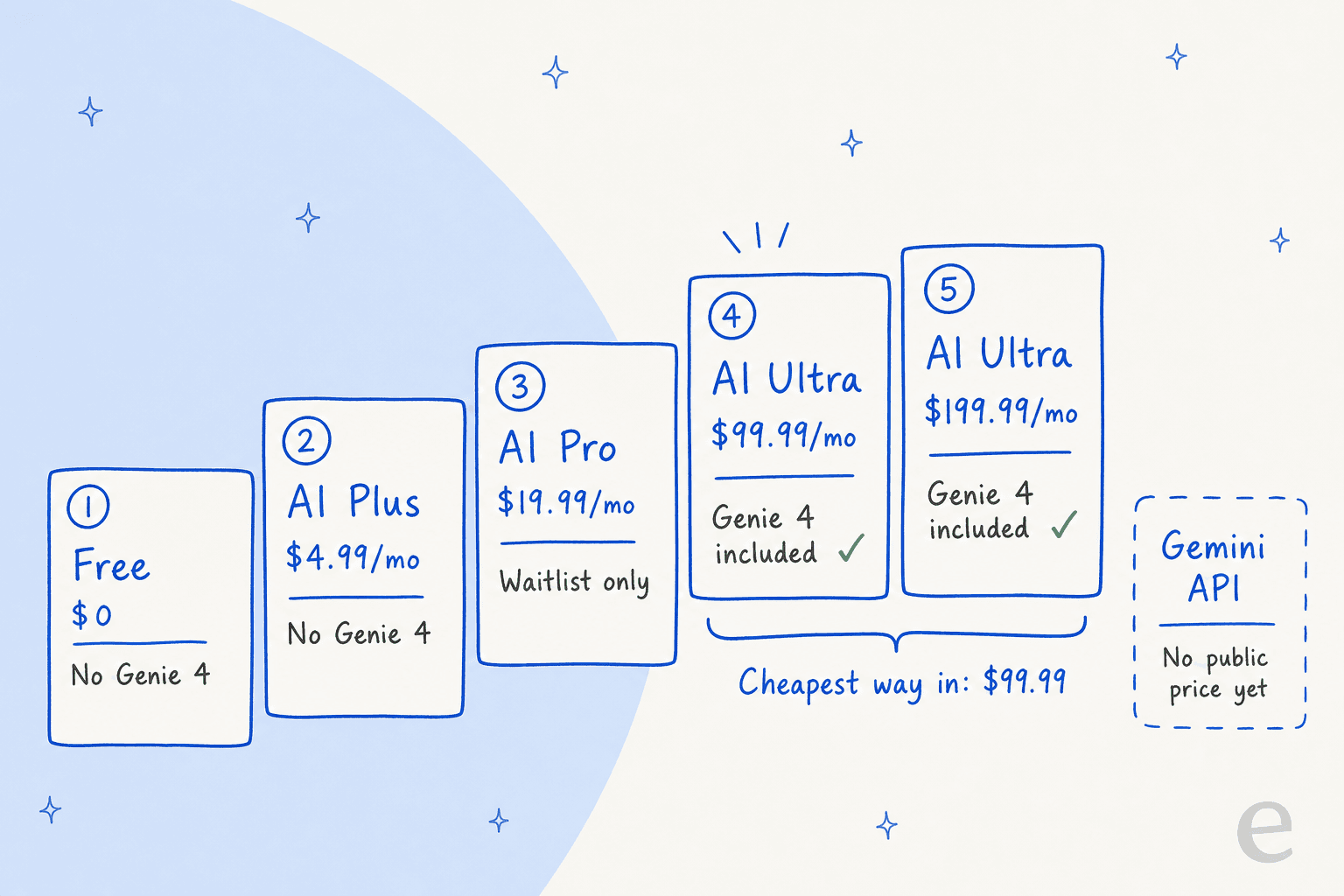
Which Google AI plan do you need for Genie 4?
That depends on what you want out of it. Pick the line closest to you:
What do you want to do with Genie 4?
Pick one to see the plan I'd choose.
$99.99 just to try a few short sessions is hard to justify.$199.99 if you keep hitting the daily cap, since Google doesn't say how much higher the 20x Genie limit is.$80 a month, so only do it if you also want the bigger Flow and storage allowance.What does the $99.99 actually buy you in Genie 4?
You get access, not an allowance. Google's Project Genie help page is the most useful pricing document here, and three lines in it matter more than the price itself:
- No credits. "Since this is still an early access research prototype, you will not need to use your AI credits to generate worlds."
- Daily limits. "Daily usage limits apply and may vary by plan and demand."
- Queues. "You may have to wait if there is high demand."
So the meter isn't money. It's an invisible daily cap plus a queue. Google doesn't publish how many worlds or minutes a day you get on either Ultra tier, and the help page adds that streaming quality "may lower based on server load". That last one is the honest tell: world models are expensive to run, and at a flat fee Google manages cost by rationing time, not by charging you more.
The compute cost is the question developers asked the moment Genie 4 was announced:
"Question I have is when will they be able to render something more then 30 seconds. And how much will it cost? There has to be a HUGE amount of computing power behind this."

Three weeks later, there's half an answer. For consumers, it costs a flat subscription. For anyone who wanted a metered rate, there still isn't one.
Genie 4 vs Genie 3: which model do you pay for?
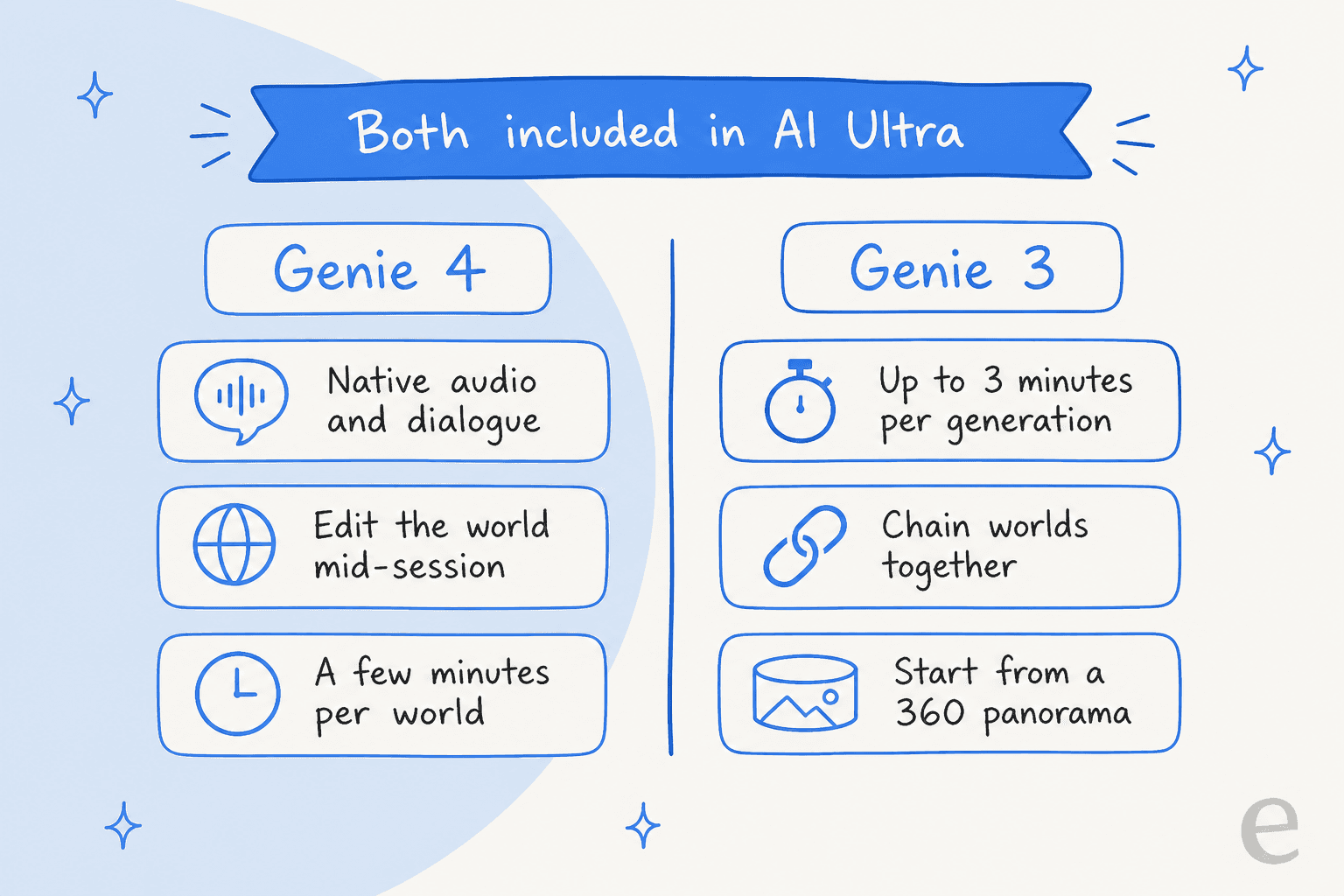
Both, for the same price. The new Project Genie keeps Genie 3 in the model picker next to Genie 4, and Google gave Genie 3 a real upgrade on launch day.
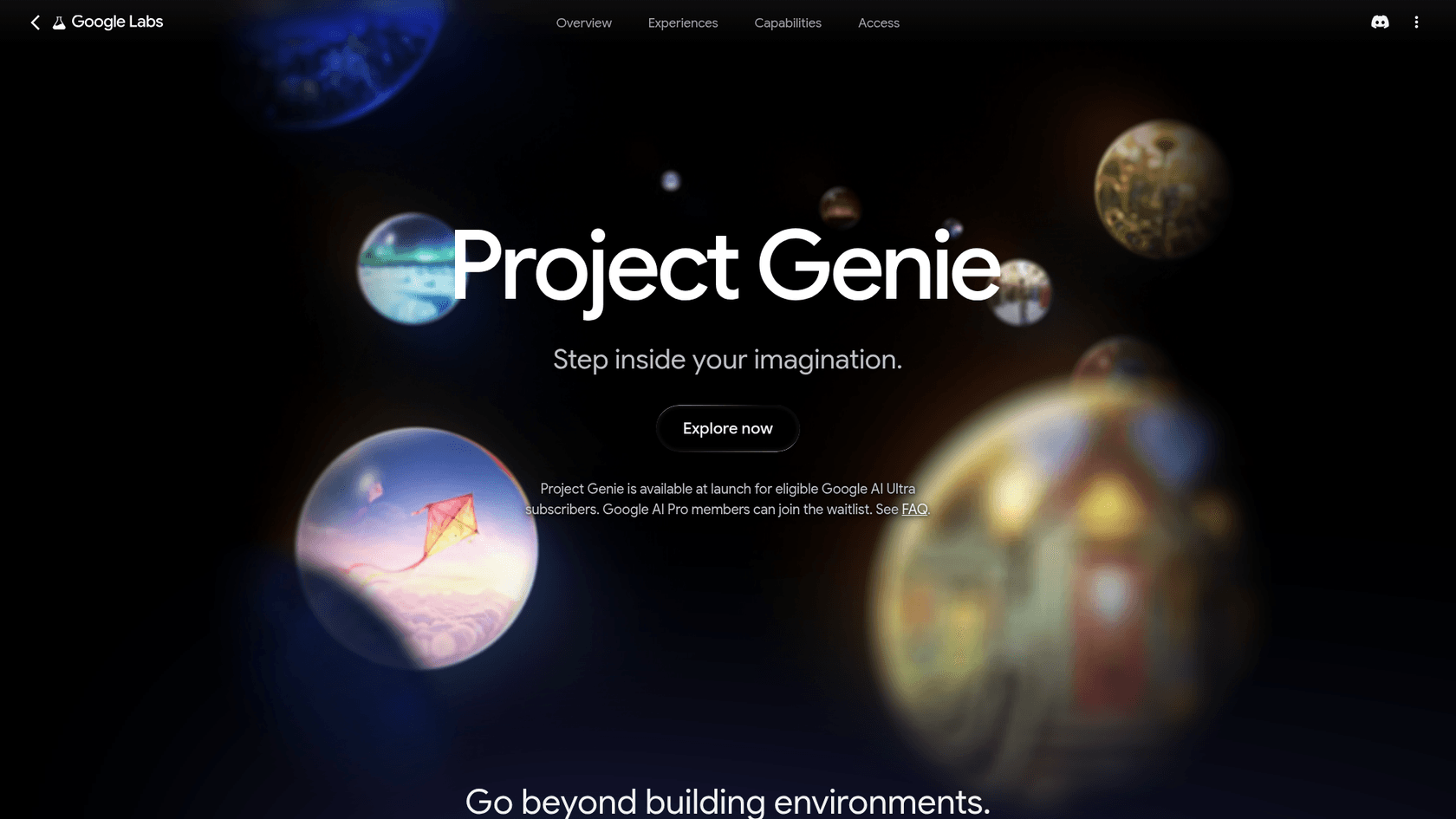
Per the launch post, Genie 4 brings native audio that adapts to the scene and lets you edit the world mid-session by typing a prompt. Genie 3 now runs up to 3 minutes per generation, up from 60 seconds, can chain several worlds together, and can start from a 360-degree panorama.
My take: if your daily cap is the scarce thing, spend it on Genie 4 for anything with sound or characters, and switch to Genie 3 when you want long flights through a scene. Google's own Genie 4 research overview warns that "visual details and object permanence can shift or drift over time", especially as a simulation runs longer, so the shorter Genie 4 runs are partly a quality choice.

The other two pieces of the launch, the Project Genie agent and the community gallery, are included too. The agent turns a conversation into a world with its own look and soundtrack, and the gallery lets you open and remix worlds other people published. Neither carries a separate fee, and both run in your browser like the rest of Google Labs.

Is there a Genie 4 API price?
No. This is the gap that matters for anyone building a product on it.
DeepMind's Genie 4 announcement lists "early access partners of the Gemini API and Google AI Studio" as a release group. But the public Gemini API pricing page has no Genie entry, no model ID and no per-second or per-session rate as of 19 November. Every "Genie 4 API cost" figure you find on a third-party site is a guess.
What Google does publish is useful context for how it might price it. Video generation APIs tend to bill per second of output, as OpenAI does in Sora 2 API pricing, and Google's own media models are priced in the same Gemini API rate card covered in my Gemini Omni Flash pricing post. A world model streams live frames and audio for minutes at a time, so I would not plan a product around a cheap rate until one is on Google's page.
If you need a model you can price and ship today, these Google options are live with public rates, and my Gemini alternatives roundup covers the rest:
- Gemini 4 Carbon pricing for the top reasoning model
- Gemini 4 Argon pricing for the cheaper frontier tier
- Gemini 3.8 Flash pricing for fast, low-cost calls
Is Genie 4 worth paying for?
It's worth it only as a bonus. As the single reason to pay $99.99 a month, Genie 4 is a hard sell: short sessions, a cap you can't see, and output Google itself calls a research prototype. As a perk on top of an Ultra plan you'd buy anyway, it's an easy yes.
Here is how the maths looks for three kinds of buyer:
| Buyer | Plan | Monthly cost | What Genie 4 adds |
|---|---|---|---|
| Curious, one-off | Free | $0 | Gallery previews only |
| Video creator already on Ultra | Ultra 5x | $99.99 (already paid) | Worlds and audio at no extra cost |
| Studio doing daily previs | Ultra 20x | $199.99 | Highest limits, still no published cap |
The creator case is the strong one. DeepMind says filmmakers are testing Genie 4 as a "draft mode" for pre-visualization, running several takes of a scene live. If you already pay for Ultra to use Nano Banana Pro, Flow credits or long Gemini 4 Argon sessions, Genie 4 is free rehearsal space.
The weak case is the hobbyist who only wants Genie. Compare that $99.99 with paying per clip on Runway pricing or Kling AI pricing, where you know exactly what each output costs, or OpenAI's Sora 2 pricing inside ChatGPT. Those tools make fixed clips rather than worlds you walk through, so they aren't a like-for-like swap, but they show what a visible unit price looks like.
Not everyone is sold on the economics, either:
"Think of the economics involved here: is it cheaper to run tens/hundreds of thousands of GPU clusters to simulate a unique game world for millions of players, or would it be cheaper to just write the god damn code once, and then host it for download, or to allow them to be streamed?"
For a deeper look at what the model can and can't do, read my Genie 4 explainer, and see the Google AI Ultra review for whether the rest of the bundle earns its keep.
What Genie 4's pricing teaches anyone buying AI for a team
A flat fee with a hidden daily cap is fine for a creative toy. It's the wrong shape for anything your business depends on.
Most of the AI pricing I research for this blog comes down to one question: can you see the unit you're paying for, and can you cap it? With Genie 4 you can't. You learn your limit by hitting it. That's tolerable when the worst case is waiting until tomorrow to fly a dragon. It's not tolerable when the thing being rationed is replies to your customers.
That's the logic behind eesel's pricing. eesel's AI helpdesk teammate charges 1 credit per ticket or chat, however many replies it takes, on fixed monthly plans from $299 for 500 credits. Extra credits cost $0.80 each, up to a monthly cap you set, so there's no surprise ceiling and no surprise bill. Before it answers anyone, you can test the agent on your own past tickets, which is the best guard against AI hallucinations in support.
MentorShow, a French video-masterclass platform, is a good example of what a visible unit looks like. In one month eesel read 1,200 HubSpot conversations and tickets and wrote 432 reply drafts for the team, in French, English or Spanish, whichever the member wrote in. Every one of those maps to a credit you can count.
With the eesel CLI, an AI coding agent like Claude Code can upload your approved help articles and saved replies, then ask the agent test questions and check the answers before it goes live. Connecting the helpdesk itself still needs someone with admin access to approve it.
Try eesel
If Genie 4 got you thinking about what you actually pay for when you buy AI, look at your support queue next. eesel works like a new teammate that joins your helpdesk, learns from your help center and past tickets, and drafts or sends replies. You see the cost per ticket up front and set the cap yourself.
Try eesel free with 100 credits for 7 days, or see how it stacks up against a general assistant in eesel vs ChatGPT.