

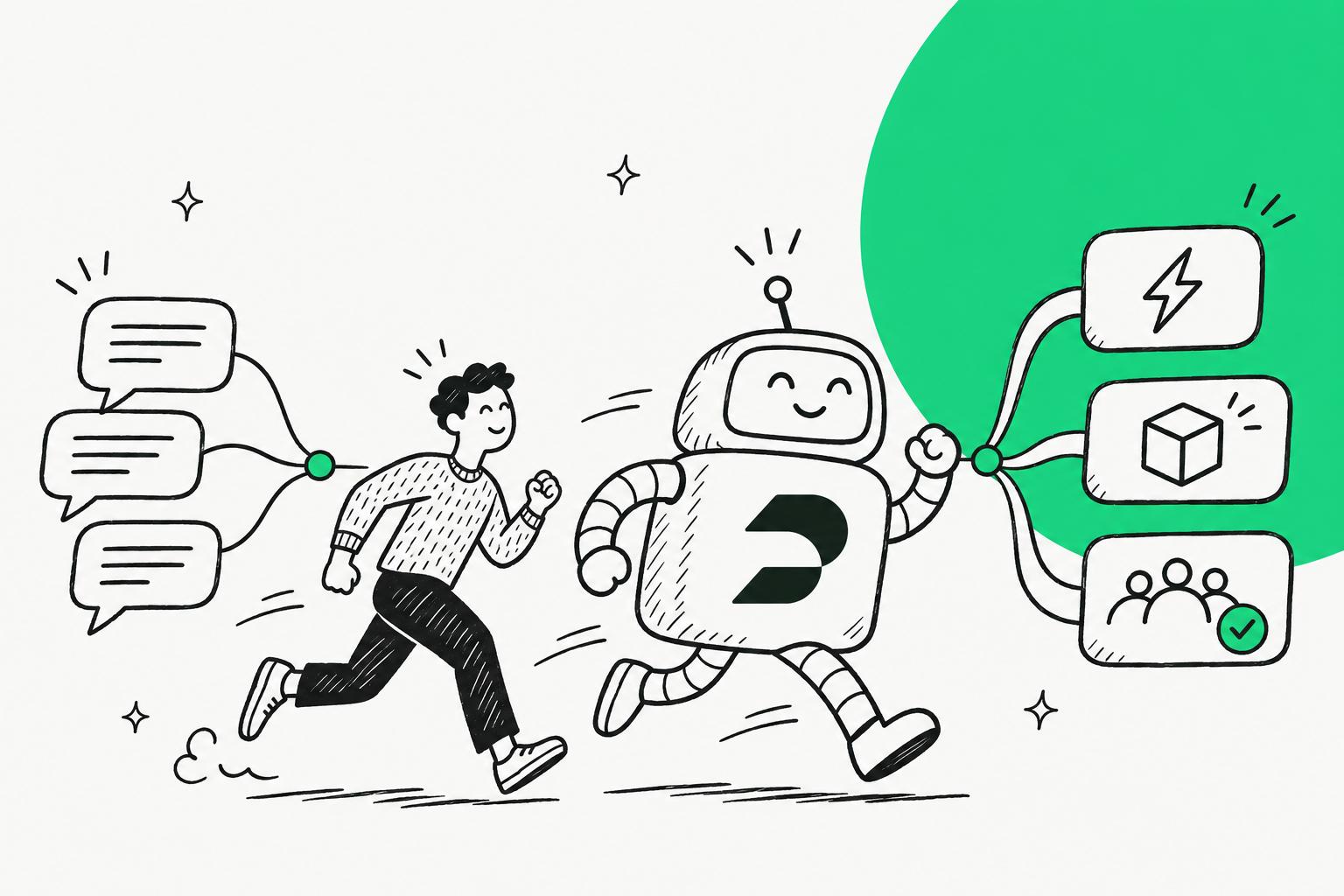
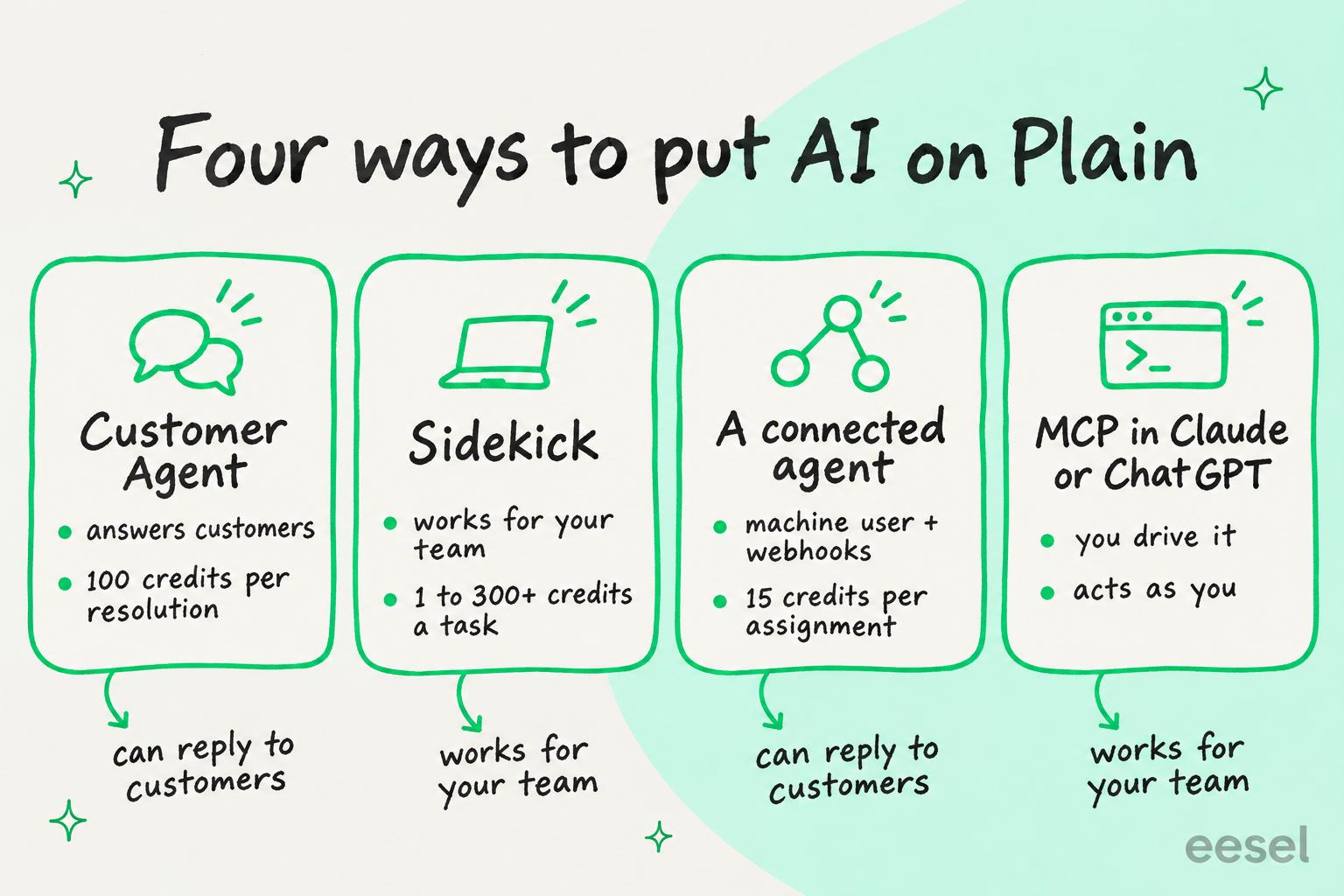
The best AI for most teams on the Plain helpdesk is Plain's own Customer Agent, which costs 100 credits (about $1 once your included credits run out) for each thread it resolves on its own. Plain gives you four more routes: Sidekick, the agent that works for your team (1 to 300+ credits a task), a third-party agent such as Decagon, Sierra or Parahelp connected through Plain's Bring Your Own Agent (15 credits per thread assignment, plus that vendor's bill), your own agent built on Plain's API and webhooks, and Plain's MCP server for Claude, ChatGPT or Cursor, which acts as you. If you haven't committed to Plain and your support runs in Slack and a mainstream helpdesk, eesel is an AI teammate that works in both, learns from past tickets and charges one credit per ticket or chat.
How I picked these
I build integrations at eesel, so I read Plain's AI options the way I'd read any agent setup: who the agent talks to, what it learns from, what starts it, and how the bill is counted. Plain is an API-first helpdesk, and that makes it unusual here: it lets an outside agent work threads as its own user, with the same routing and handoff rules as Plain's agent, so "the best AI for Plain" is a real choice between five routes.
Every Plain price and limit below comes from Plain's own pricing page and docs, checked on 24 November 2026. If you're still deciding on Plain itself, our Plain review covers the rest of the product.
The best AI for Plain, compared
| Option | Talks to | Learns from | Starts on its own? | Cost on top of Plain seats |
|---|---|---|---|---|
| Customer Agent (Plain) | Customers | Help center, knowledge sources, your instructions | Yes, on threads a workflow assigns it | 100 credits per resolved thread |
| Sidekick (Plain) | Your team | Knowledge sources, past threads, plugins | Yes, from workflows and schedules | 1 to 300+ credits per task |
| Connected third-party agent (Decagon, Sierra, Parahelp) | Customers or team | Whatever that vendor trains on | Yes, through Plain webhooks | 15 credits per assignment or discussion, plus the vendor |
| Your own agent (Plain API) | Customers or team | Whatever you give it | Yes, through Plain webhooks | 15 credits per assignment or discussion, plus your model bill |
| Plain MCP in Claude, ChatGPT or Cursor | You | Plain data, live | No, you ask | Your AI client's plan; credits only if it starts Sidekick |
| eesel (if you're still choosing a helpdesk) | Customers and team | Past tickets, help center, docs | Yes, on new tickets and messages | From $299/month for 500 credits |
Plain's seats come first in every row. Foundation is $45 per user a month billed annually, for up to 5 seats, and Horizon is $99 per user a month with a minimum of 3 seats and a maximum of 10, per Plain's pricing. Foundation includes 1,000 credits a month, Horizon 2,500, and top-ups cost $10 per 1,000.
1. Plain Customer Agent
Best for: teams on Plain who want an agent answering customers this week, from the docs they already have.
The Customer Agent is Plain's built-in, customer-facing agent. Plain's pricing page still calls it Ari. It works only on threads assigned to it, usually through a workflow rule, so you can scope it by tier, label, channel or business hours. For each new customer message it checks whether it should act, searches your knowledge "as many times as it needs", and ends with one action: reply, ask one question, hand off, answer part and hand off the rest, or skip spam.
The part I'd point an engineer at is the check before sending. Per Plain's docs, every sentence and code block must be backed by the thread, the customer's attachments, its searches or your instructions, and every link must come from a search result or your instructions. A message that fails is rewritten or handed off, and customers never see it. A message gets up to 6 rounds of searching and writing and 45 seconds. This grounding rule is the main defence against AI hallucinations in support.
What it learns from is the limit to know before you buy. It answers from knowledge sources: your customer-facing help centers, plus anything outside Plain you add as a knowledge source. Past threads are a Sidekick input, not a Customer Agent one, so a team whose best answers live in old tickets rather than in docs will see more handoffs at first. You can run it in test mode on real threads before it is allowed to send anything.
Pricing. Each thread it resolves uses 100 credits. "Resolved" has a strict meaning, and that works in your favour:
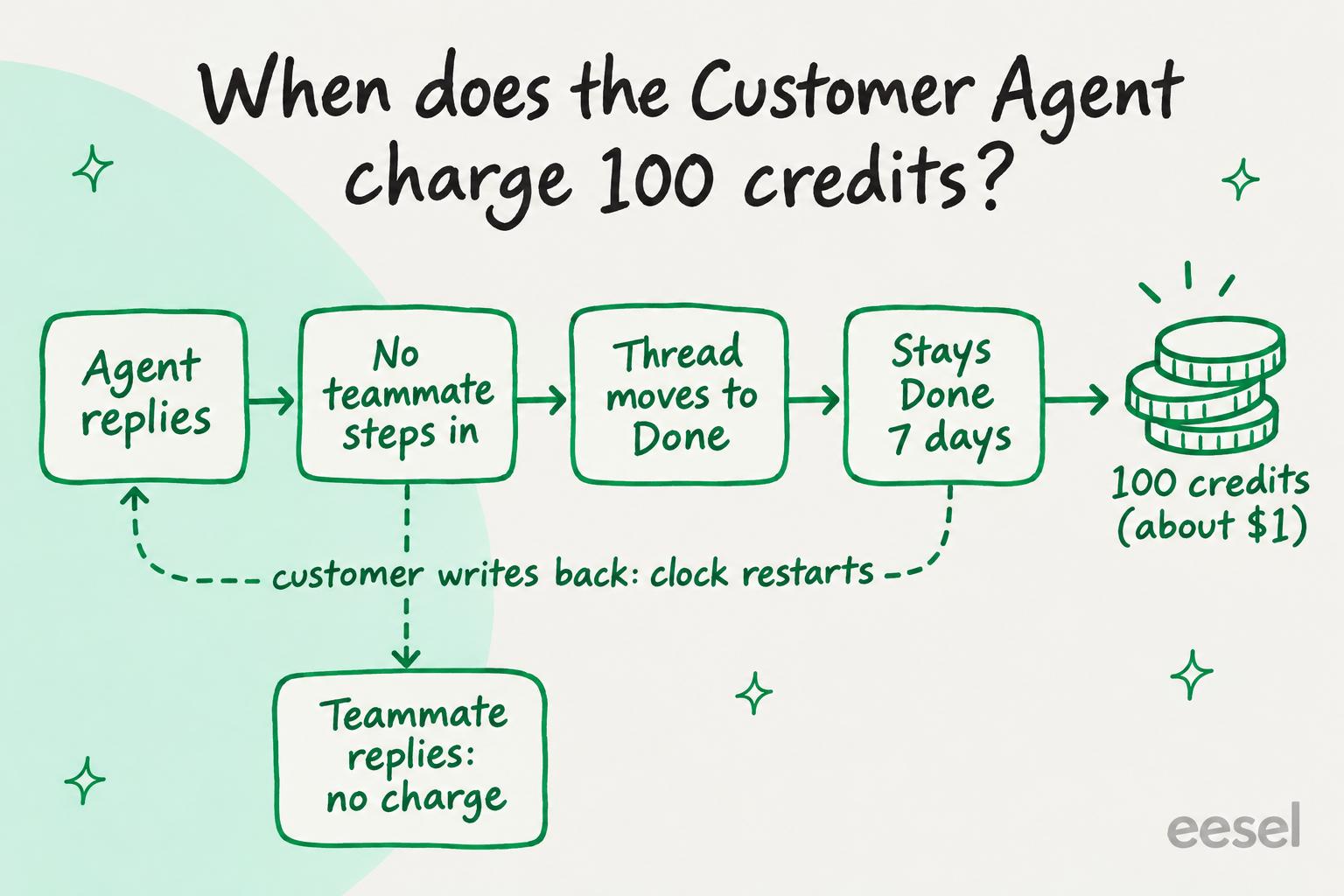
The thread must stay in Done for 7 days, and a team member replying means no charge, per Plain's credits docs. If the workspace runs out of credits, the Customer Agent hands each thread to your team with an internal note and doesn't reply.
My take: start here if your docs are good. Skip it as your only AI if most answers live in past tickets or need actions in other systems. The deciding factor is how much of your volume a help center can answer.
2. Plain Sidekick
Best for: support engineers who spend their day investigating, not typing first replies.
Sidekick is Plain's agent for your team. It works inside Plain and in your Slack, searches threads, docs and connected tools, and "takes the next step for you": linking a Linear issue, creating an incident or sending a scheduled report. It never messages customers, which is the design: the Customer Agent talks to customers, Sidekick talks to you. Our roundup of agentic support tools covers other agents built this way.
"Sidekick eliminates a lot of the redundant, mundane tasks. It genuinely operates like a really powerful, well-integrated extension of the support team at the core of the Plain platform, not just a bolt-on."
Product Support Engineer at Todyl, quoted on Plain's Sidekick page
Pricing. Sidekick bills by effort, and Plain publishes examples. Summarizing a thread is about 15 credits, investigating a straightforward bug about 200, and debugging a complex bug with code access about 2,000. You pick an effort level per session: Low for lookups (1 to 5 credits), Medium by default (10 to 300+), High for root-cause work (20 to 600+).
My take: worth turning on alongside the Customer Agent, not instead of it. Use Low effort for drafts and summaries, since a discussion keeps the effort it started with and a few deep investigations a day will eat Horizon's 2,500 included credits.
3. A third-party agent through Bring Your Own Agent
Best for: teams that already chose Decagon, Sierra or Parahelp and want Plain's queues, SLAs and Slack channels around it.
Plain's Bring Your Own Agent lets an outside agent work threads as a "machine user" with its own identity. The agent subscribes to webhooks for thread created, new messages and status changes, replies through Plain's API, and updates status as it goes. Plain keeps routing, escalation paths, SLAs and the handoff to your team. Plain names Parahelp, Sierra and Decagon among the agents teams connect. Mintlify is one team that runs a third-party agent this way:
"Plain is the only reason we can run a third-party AI support agent at all. We tried a lot of other support tools, and none came close to this level of flexibility."
Dean Sliney, Founding Support Engineer at Mintlify, quoted in Plain's launch post
Pricing. Plain charges 15 credits each time you assign a connected agent to a thread, however long it works on it, and 15 per discussion. The agent's own vendor bills separately; our breakdown of Decagon pricing covers what's known for one of them.
My take: the right route if you have an agent you trust and want to keep the option to swap it. If you're picking an agent from scratch for a small Plain team, the Customer Agent is less to run.
4. Your own agent on Plain's API
Best for: engineering-led support teams that want the agent to call their own systems.
This is the same machine-user route, with an agent you build. Per Plain's agent setup guide, you create a machine user of type Agent, give it an API key with only the permissions it needs, and point a webhook target at an HTTPS endpoint you control. From there your agent can assist your team inside Plain or handle threads end to end. A mutation without the right permission returns an error naming the missing one, which makes least-privilege keys practical.
I like this route because your agent calls your own internal APIs directly, with your own code and keys, so it can check an account's real state and act on it. The cost is that you own the model bill, the prompt, the evaluation and the on-call when it misbehaves. Text inside a customer's message can try to steer an agent, called prompt injection, so scope its key as if that will happen.
Pricing. 15 Plain credits per thread assignment or discussion, plus your model and hosting costs.
My take: build it if your hardest tickets need account-level actions your docs can't answer. Don't build it to save the Customer Agent's $1 a resolution; the engineering time costs more.
5. Plain's MCP server in Claude, ChatGPT or Cursor
Best for: individual agents and engineers who want to work the queue from the AI tool they already use.
Plain runs an MCP server at https://mcp.plain.com/mcp, and its MCP guide covers ChatGPT (an official Plain plugin), Claude, Claude Code and Cursor. It uses OAuth, so the connection "shares the same context as your normal web app user", and replies to threads appear as though they come from you. Plain says the server exposes nearly 400 tools across threads, replies, labels, thread fields and tasks; API keys, billing, roles, invites, webhooks and custom domains stay in the app.
If Model Context Protocol is new to you, it's the standard that lets an AI client call another app's tools. Our guide to MCP for customer support goes deeper, and we cover the client side in ChatGPT apps for support.
Pricing. It runs on your AI client's plan, with no Plain credits unless it starts a Sidekick discussion.
My take: a great co-pilot for one person. It starts only when you ask, so it doesn't replace an agent on the queue.
What will AI on Plain cost your team?
Seats and credits add up differently for every team, so here is the maths for yours. Set your plan, seats and how much AI work you expect; the total uses Plain's published prices and assumes Sidekick tasks average the credits you set.
Move the sliders to your own volume to see seats and credit top-ups side by side.
At the defaults (Horizon, 4 seats, 300 resolutions and 200 Sidekick tasks a month), credits cost almost as much as the seats: $396 for seats and $380 in top-ups. Resolutions are the bigger lever, since 300 of them use 30,000 credits against 2,500 included. Plain says as much in its own docs: the allowance "isn't sized to cover all of your usage once those features handle a large share of your support."
Where eesel fits, if you haven't committed to Plain
eesel is an AI teammate that joins the tools your team already works in: Slack, Zendesk, Freshdesk, Front, Help Scout, Jira and Linear. Where it earns a look is the decision before the five routes above: which helpdesk and which AI to pair for support in Slack Connect channels. Our Pylon vs Plain comparison covers the helpdesk half of that choice. If you're happy on Plain, one of those routes is your answer, since eesel doesn't run inside Plain.
What eesel may do depends on who is asking. For your team, named people, a verified customer and an anonymous visitor, each tool can act on its own, ask first or stay off, so the same teammate can refund an order for your support lead and never touch billing for a visitor. Anything set to ask first waits for a person's yes, as eesel's actions and approvals docs describe. It learns from your past tickets as well as your help center, and you can run it over historical tickets before it replies to anyone. Pricing is one credit per ticket or chat, from $299 a month for 500 credits on eesel's pricing page, with a 7-day trial and 100 free credits. If you work with a coding agent such as Claude Code or Cursor, the eesel CLI lets it load your help articles and macros into eesel and ask test questions before anything goes live, with an admin approving the helpdesk connection.
SE Ranking, which builds SEO software, runs one eesel agent per product across three Zendesk connections and handled 4,650 conversations in a month, with refunds and Tier 2 issues handed to the team.
Try eesel next to your Slack support
If your customers already reach you in Slack channels and you're weighing Plain against staying on Zendesk, Freshdesk or Help Scout, run eesel on your real tickets before you migrate anything. You'll see which questions it would answer from your past replies, and which it would hand to a person, without a single customer seeing a draft.
Try eesel free for 7 days, or compare it with your shortlist in our guide to the best AI for B2B support.
Frequently Asked Questions
What is the best AI for the Plain helpdesk?
For most teams on Plain it's Plain's own Customer Agent, since it is built in, answers only from your knowledge sources and costs 100 credits for each thread it resolves. Teams that already run Decagon, Sierra or Parahelp can connect that agent through Bring Your Own Agent instead. Our Plain review covers the rest of the product.
What is Ari in Plain?
Ari is the earlier name of Plain's Customer Agent, the customer-facing AI agent built into Plain. Plain's pricing page still lists it as Ari. It answers threads assigned to it from your help center and knowledge sources, and hands the thread to your team when it can't help.
How much does Plain's AI agent cost?
The Customer Agent uses 100 credits for each thread it resolves on its own. Foundation includes 1,000 credits a month and Horizon 2,500, and extra credits cost $10 per 1,000, so a resolution beyond the allowance costs about $1. See our breakdown of AI customer service cost for how other vendors charge.
Can I connect my own AI agent to Plain?
Yes. Plain's Bring Your Own Agent lets you create a machine user for the agent, give it an API key, and subscribe it to webhooks for new threads and messages. Each thread assignment or discussion with a connected agent uses 15 Plain credits, on top of whatever the agent's own vendor charges.
Does Plain have an MCP server?
Yes. Plain's MCP server at mcp.plain.com/mcp connects Claude, ChatGPT, Cursor and other clients with OAuth, and acts with your own Plain role and permissions. Replies sent through it appear as coming from you. Our roundup of the best helpdesk MCP servers compares it with other helpdesks.
Does Plain's Customer Agent learn from past tickets?
No. The Customer Agent answers from your knowledge sources (help centers, crawled sites and added content), the thread and your instructions. Sidekick, the team-facing agent, can also search past threads. If learning from resolved tickets matters, look at our pick of AI triage tools.
What happens when Plain runs out of AI credits?
Features that use credits stop until you add more. The Customer Agent hands each thread to your team with an internal note instead of replying to the customer. Top-up credits never expire, so buying a buffer avoids the stop.
Is Plain a good helpdesk for B2B SaaS support in Slack?
It is built for it: Slack, email and in-app chat in one queue, with Linear and Jira linked to threads. Our comparison of Pylon vs Plain and our guide to Slack Connect support cover the alternatives.