

Why most AI blog titles fall flat
Here's the trap, and nearly every tool falls into it. You type in "best CRM," hit generate, and get back ten variations of "The Ultimate Guide to the Best CRMs in 2026." They're grammatical, they're on-topic, and they're completely interchangeable with what every other site publishes. That's not a coincidence, it's the model doing exactly what it was asked: predict the most likely headline for a bare keyword. The most likely headline is, by definition, the most average one.
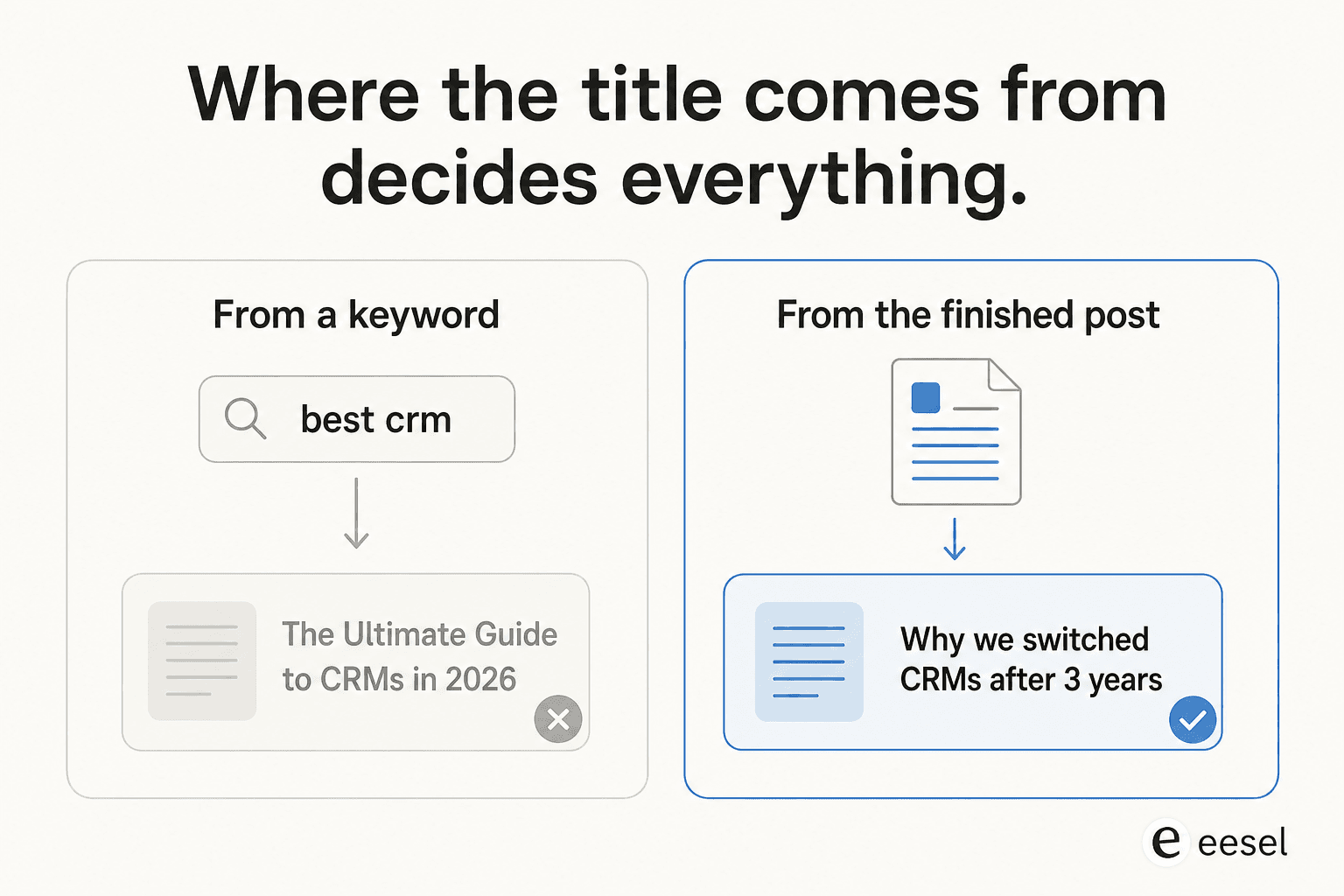
The fix is to change the input. When the AI can see the finished post, it has something specific to title: the real angle you took, the number you found, the contrarian point you landed on. A title written from the post beats a title guessed from the topic every time, because it can promise something the post actually delivers. This is the same reason raw AI drafts so often don't rank on Google, and the same fix that runs through all good SEO content creation: give the model real material instead of a prompt, and it stops reaching for the average.
What a good blog title actually has to do
Before you generate anything, it helps to know what you're scoring for. A title that earns the click and holds the ranking does five jobs at once:
- Matches search intent. It answers the query the reader actually typed. If they searched a question, the title reads like the answer to that question, which is why semantic SEO and titling are really the same discipline, and why the keyword research comes first.
- Carries a real specific. A number, a timeframe, a named outcome. "After 3 years" or "in 12 minutes" beats "fast" because it's checkable.
- Pays off the promise. The post has to deliver exactly what the title implies. Over-promise and the bounce rate does the damage.
- Fits the SERP. Roughly 60 characters before Google truncates it, so the payload sits in the part people see.
- Sounds like you. It reads in your brand voice, not in generic AI register, so it's recognisable in a list of ten blue links.
Keep these five in your head, because they become the scorecard at the end of the workflow. A headline that nails all five is rare from a first generation, which is the whole reason you generate a batch and choose. The same logic applies to your blog hooks: the opening line and the title are the two things doing the convincing.
How I generate blog titles with AI, step by step
This is the loop I actually run, and it's deliberately boring. The cleverness isn't in a magic prompt, it's in the order: post first, brief second, batch third, score last.
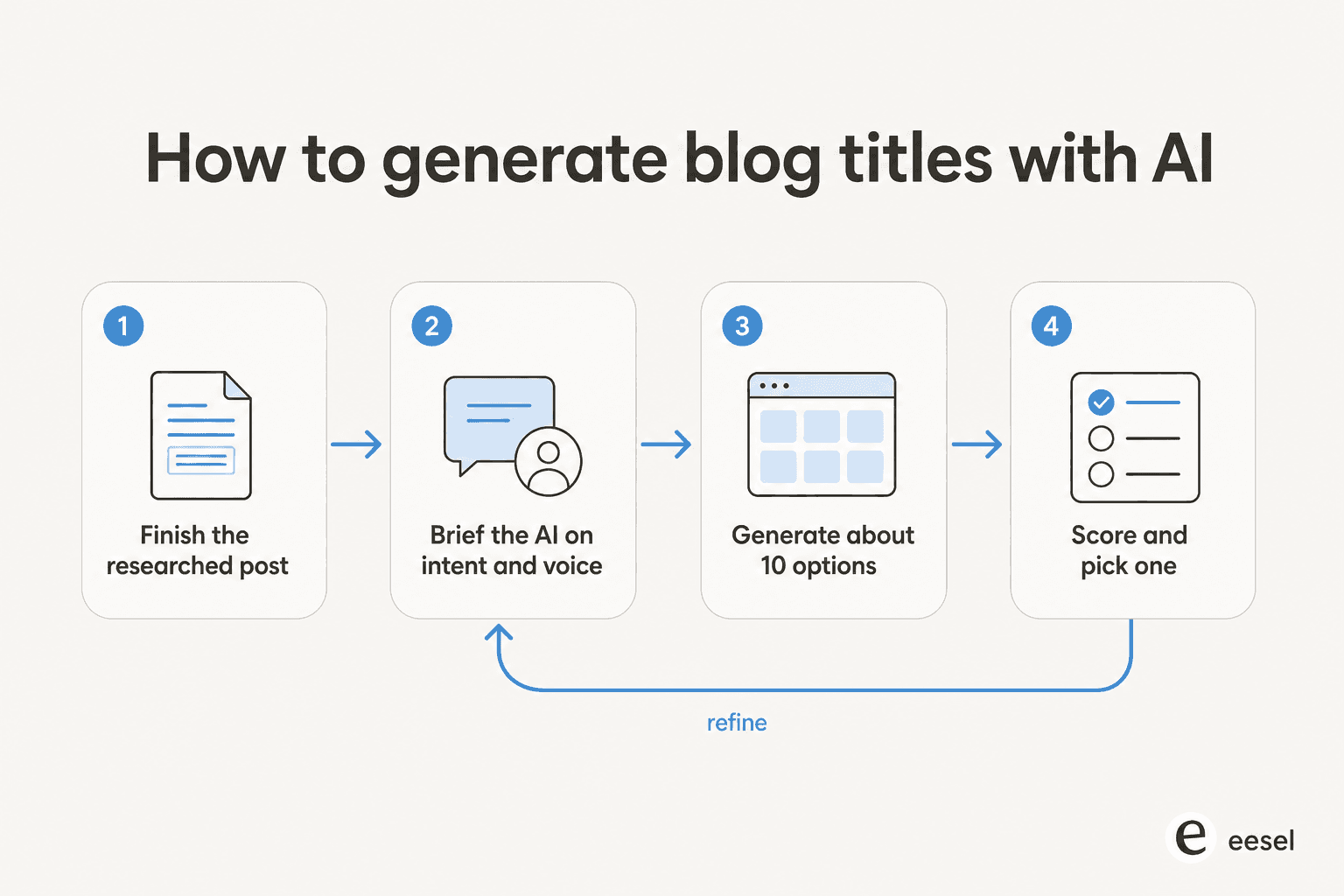
1. Write or finish the post first
This is the step that does 80% of the work, and it's the one people skip because they want the title before they start. Resist it. Draft the post, do the research, land the angle, then title it. Even a rough but complete draft gives the AI the one thing a keyword can't: the actual point of the piece. This is also just good practice for writing any blog post, the title is a summary, and you can't summarise what doesn't exist yet. If you're using an AI blog writer that handles research and drafting in one pass, the title falls out of that same context for free, which is the whole idea behind a real content pipeline rather than a stack of single-purpose tools.
If you genuinely need a working title before the post exists, treat it as a placeholder and regenerate at the end. The title you ship should always be the one written last.
2. Brief the AI on intent and voice, not just the topic
Now you set up the generation. Give the model three things beyond the draft: the target keyword, who the reader is and what they searched for, and two or three example headlines that already sound like you. That last one matters more than people expect, because examples teach voice far faster than adjectives do. "Punchy and confident" is vague; three real headlines from your blog are not.
This is also where you decide the angle. A how-to keyword wants a different headline shape than a comparison or a listicle, so tell the model which it is. The same brief-it-properly principle behind a good content brief applies to titles, and it's the same context that pays off in any blog automation setup: the more you give up front, the less generic the output.
3. Generate a batch, in different angles
Ask for about ten, not three, and ask for variety on purpose: a few that lead with the number, a few that lead with the question, a few that lead with the outcome, maybe one contrarian. You're not looking for ten usable titles, you're looking for one great one plus raw material to splice. Often the winner is the first half of option 3 with the specific from option 7.
Ten is the sweet spot. Fewer and you don't get enough range to compare; many more and they start repeating each other, the same way an AI blog outline gets diminishing returns past a point. If the batch all sounds the same, that's a signal the brief was thin, go back to step 2 and add a sharper example or a tighter audience.
4. Score the list and pick one
Don't pick on vibes. Run each candidate through the five-point scorecard from above, and the winner usually picks itself.
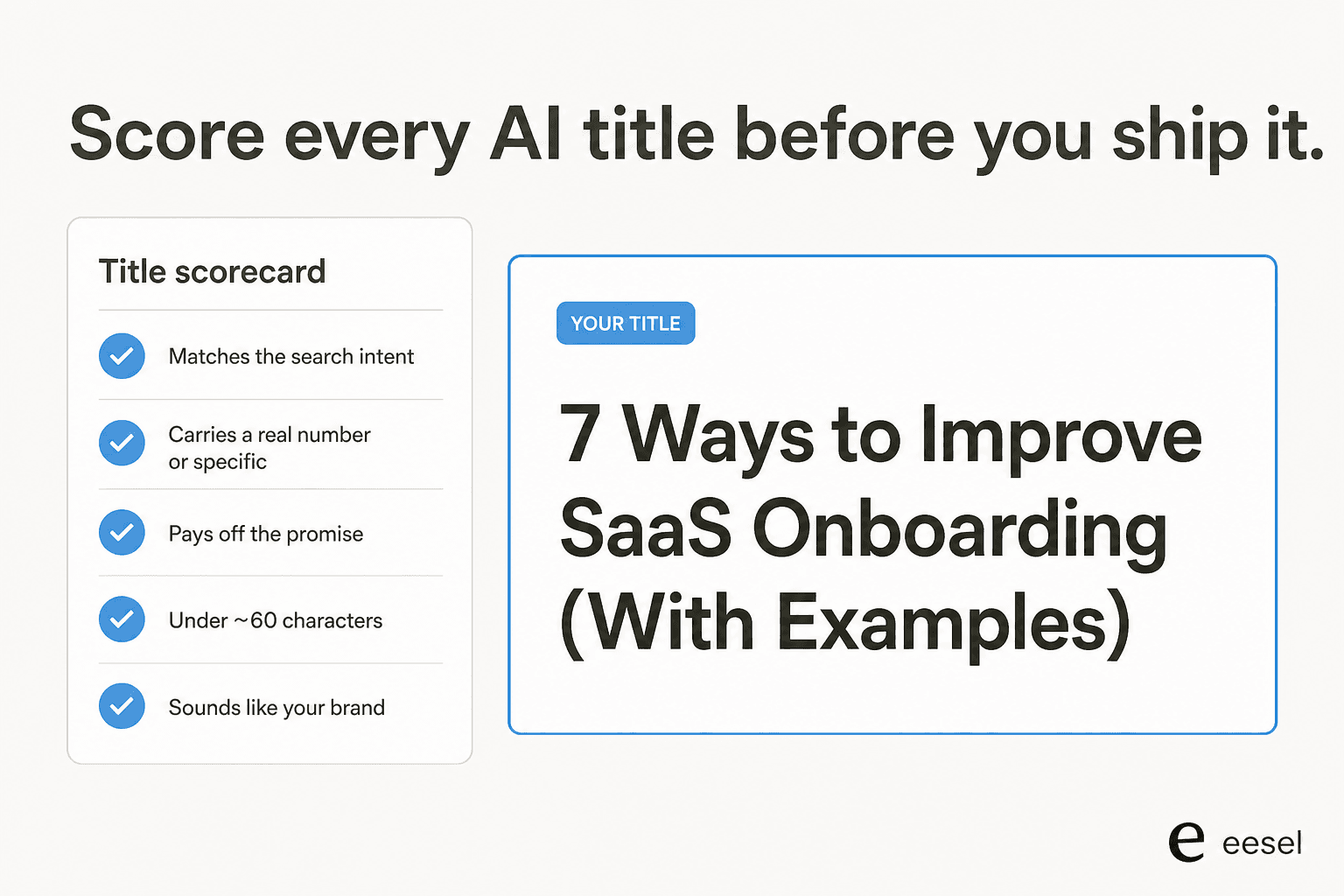
The candidate that hits the most criteria wins, with one tiebreaker: the promise has to be one the post can actually keep. A title that scores perfectly on intent and specificity but promises something the draft doesn't deliver is the worst kind, because it gets the click and then loses the reader, which over time teaches Google the page disappoints. When in doubt, pick the slightly less exciting title the post can fully back up. Then do a quick edit pass to cut any AI tells, the words like "unleash" or "supercharge" that scream machine-written. The goal is a headline that reads like a human wrote it, because that's what the reader trusts.
The prompt I actually use
If you want something to paste, here's the shape. The variables in caps are what you swap per post; everything else is the structure that keeps the output specific.
Here is my finished blog post:
[PASTE FULL DRAFT]

Target keyword: [KEYWORD]
Reader: [WHO THEY ARE + WHAT THEY SEARCHED]
Our voice, for reference, here are 3 of our real headlines:
- [EXAMPLE 1]
- [EXAMPLE 2]
- [EXAMPLE 3]

Write 10 title options for this post. Rules:
- Each must match the search intent of the keyword
- Each must carry a real number or specific the post actually contains
- Each must be a promise the post above genuinely pays off
- Keep them under 60 characters where possible
- Vary the angle: some lead with the number, some with a question, some with the outcome
- Match the voice in my examples, no generic "ultimate guide" phrasing
That's it. The reason it works isn't the wording, it's that the draft is in the prompt. Swap the keyword variables, keep the structure, and you'll get a far better batch than "give me titles about X." If you want to go deeper on prompt structure, our roundup of AI blog prompts and the prompts that read human both build on the same idea.
Mistakes that quietly kill AI-generated titles
Most title failures aren't dramatic. The post just underperforms, and the reasons are usually one of these:
- Titling from the keyword, not the post. The number one cause, covered above. If you take one thing from this guide, generate from the finished draft.
- Over-promising. The most clickable title your AI hands you is often a promise the post can't keep. The click you win is worth nothing if the reader bounces, and it slowly trains Google that the page disappoints.
- Losing your voice at the title. A body in your voice with a generic AI headline on top is jarring, and it's the first thing a reader sees. This is the same failure as generic-sounding AI posts, just concentrated into one line.
- Ignoring the SERP cut-off. A great title whose payload sits past character 60 gets truncated, and the part that made it work never shows.
- Never A/B-ing the safe choices. For your highest-traffic posts, it's worth testing two finalists rather than defaulting to the first that scored well, the same scale-it-carefully mindset behind scaling SEO content safely.
Avoid those five and your titles will already beat most of what's published, because most of what's published is titled from the keyword. Pair this with E-E-A-T-compliant content underneath and you've got a post that earns the click and holds it.
Try eesel for blog titles
eesel started as AI for the support queue, which is where the obsession with not sounding like a generic bot comes from. The eesel AI blog writer puts that to work on content: it researches, drafts, and then titles each post from the finished piece, so the headline matches the angle and the 2,000 words say the same thing. It learns your voice from your existing posts (the team reports a 94% voice match from day one), which is exactly what keeps an AI title from reading like everyone else's.
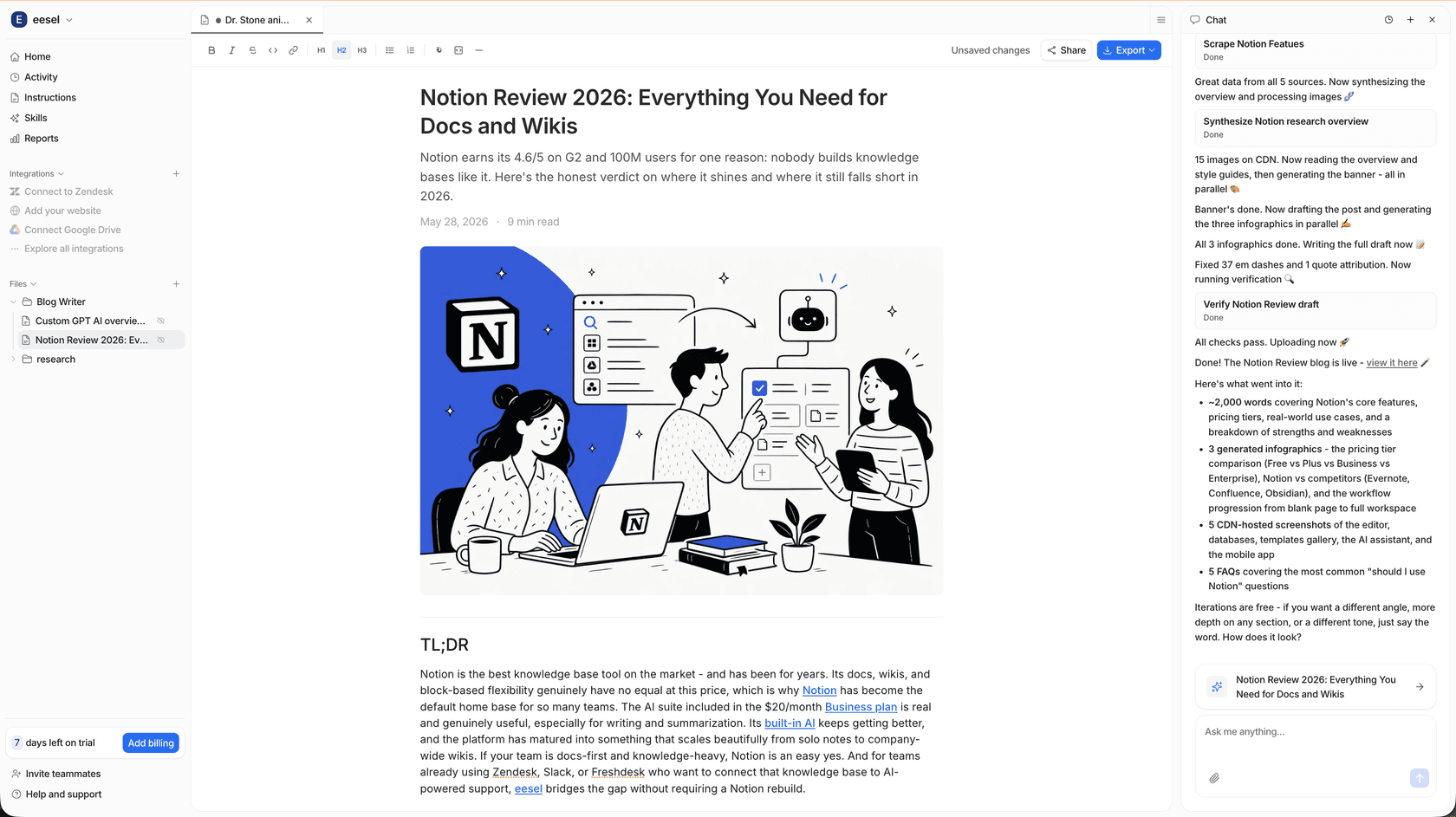
The concrete differentiator for titling is that one engine writes the post and writes the title, so the headline is generated with full knowledge of the body, not guessed from a topic field. Pricing is pay-as-you-go at $4 per blog draft with no per-seat fee, and you can try eesel with a couple of free generations before you commit. Point it at a topic you've been meaning to cover and see what title it gives the finished post, or grab a one-off headline from the free meta title generator if that's all you need today.
Frequently Asked Questions
How do I generate blog titles with AI?
What is the best prompt to generate blog titles with AI?
Are AI-generated blog titles bad for SEO?
How do I get AI blog titles that don't sound generic?
How much does it cost to generate blog titles with AI?


Article by
Kurnia Kharisma Agung Samiadjie
Kurnia is a software engineer and writer at eesel AI with two years of SEO experience, writing about AI tools, helpdesk software, and customer support. He pairs a developer's understanding of how these products are built with search-driven research into what actually ranks and resonates with the people searching for them.