


What an AI blog intro generator actually does
At its simplest, you paste a title or a topic and the tool returns a few opening paragraphs. Some bolt this onto a blog post generator, some ship it as a standalone free tool next to a meta title generator or an SEO keyword generator, and some fold it into a full AI content generation tool that writes the whole piece.
The appeal is real. The intro is the part most writers hate, because you are committing to an angle before you have written the thing that proves it. Handing that first push to a machine removes the highest-friction moment in the whole draft. The risk is just as real, and it is the whole reason this post exists: a tool that only knows your title can only write a hook for a post it has never read.
The intro is the highest-leverage 80 words on the page
Here is the reframe that changes how much care this deserves. The intro is not a warm-up. It is the single chunk of text that gets read by the most audiences, and it does three different jobs at once for three different readers.
The first reader is the human skimmer who decides in a few seconds whether to keep scrolling. The second is Google, which often pulls the opening into a featured snippet. The third, and the one most posts still ignore, is the AI search engine: ChatGPT, Claude, and Google's AI Mode lean heavily on a clear opening summary when they decide what to quote. A vague intro fails all three at once. A sharp one earns the scroll, the snippet, and the citation.
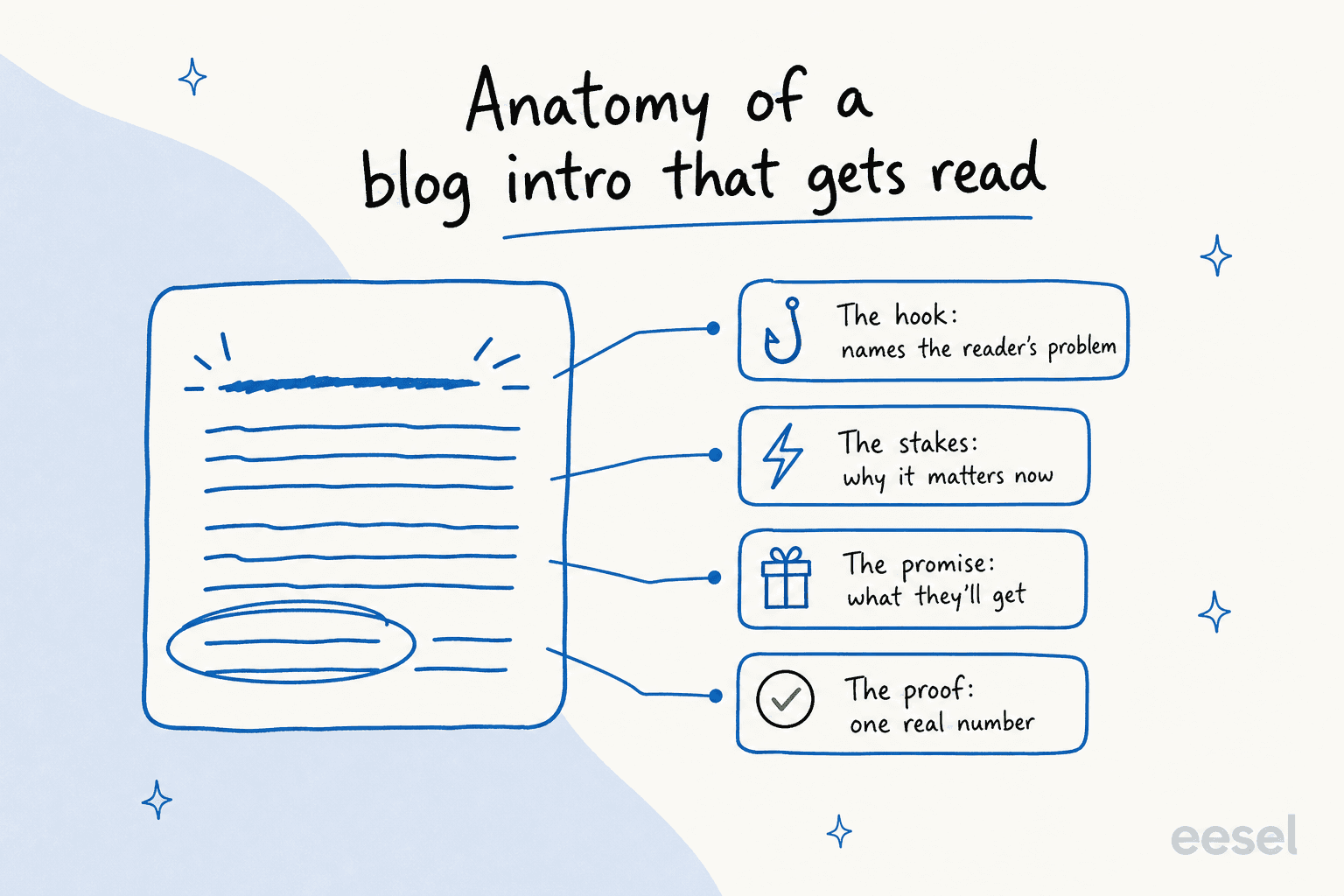
That is why I treat the intro as four moving parts, not one paragraph: a hook that names the reader's problem, the stakes that say why it matters now, the promise of what they will walk away with, and one piece of proof, usually a real number, that says I am not making this up. An intro generator that produces fluent prose with none of those four is writing decoration, not an opener.
The trap: standalone generators write detached teasers
When a tool only sees your title, it writes the most statistically average intro for that title. You have read a thousand of them. "In today's fast-paced digital world, content is more important than ever." It is grammatically perfect and says nothing, and it is the fastest way to signal "a machine wrote this and nobody edited it."
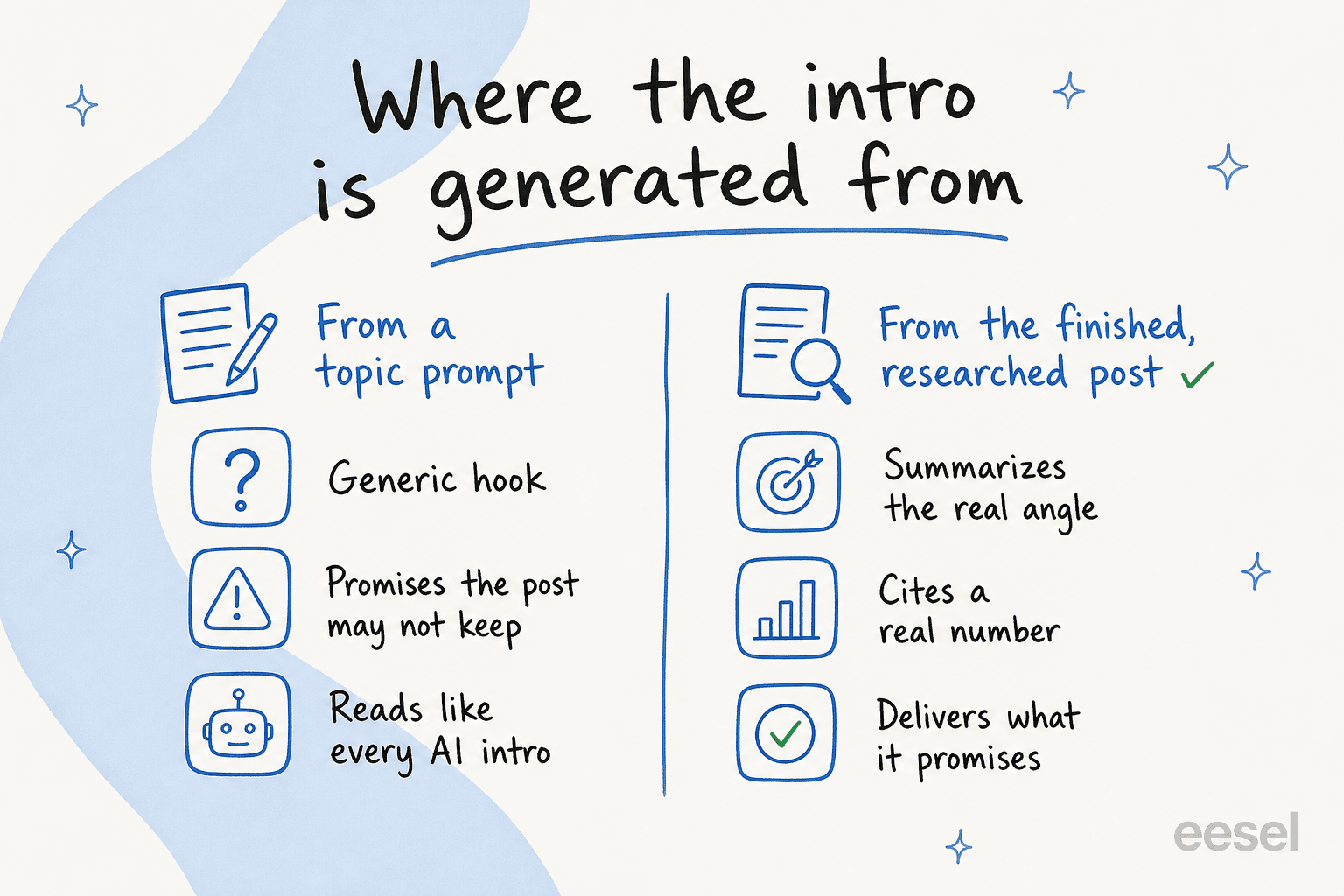
The deeper problem is the promise. An intro written from a title guesses what the post will argue, so it routinely promises a payoff the body does not deliver. The reader feels the gap immediately, even if they cannot name it, and they leave. This is the same failure mode behind repetitive AI content: the model is filling space confidently without anything specific to say. The fix is not a better hook formula. It is generating the intro from a post that already exists.
What separates a good AI intro from a generic one
Three things do most of the work. Get these right and the intro stops reading as filler.
It is grounded in the real post, not the title
This is the whole game. The intro should be written after you know the actual argument, so it can summarize the real angle instead of a guessed one. This is also why a full AI blog writer tends to write better intros than a standalone gadget: it has the finished post and the research in hand when it drafts the opener. eesel frames this difference bluntly on its own product page:
"Those are writing tools. You prompt, they generate. This is a teammate that finds topics, does real research, writes with your voice... You don't prompt it. You hire it."
eesel, on its AI blog writer
The practical version: if you only have a standalone intro tool, write the post first (or at least a tight outline with your blog writing frameworks and key points), then generate the intro from that, not from the bare title.
It sounds like you, not like an AI
The second tell of a machine intro is tone drift. The body sounds like a sharp colleague and the opener sounds like a press release. The fix is to capture your voice as durable instructions the tool reuses on every post, the same idea behind brand voice training on a single-language writer. On eesel's own writer, that voice match runs around 94% from the first post and tightens with every edit you make, which is the difference between an intro you ship and one you rewrite from scratch.
It earns the next sentence
A good intro is built so each line pulls you into the next. That is the craft behind a real blog hook, and it is what makes a post scannable instead of a wall the reader bounces off. AI is genuinely good at this once it has the material; it is bad at it when it is guessing.
How to actually generate a blog intro that holds up
Here is the pipeline I would build, whether you do it in one tool or stitch a few together. It is the same shape every time.
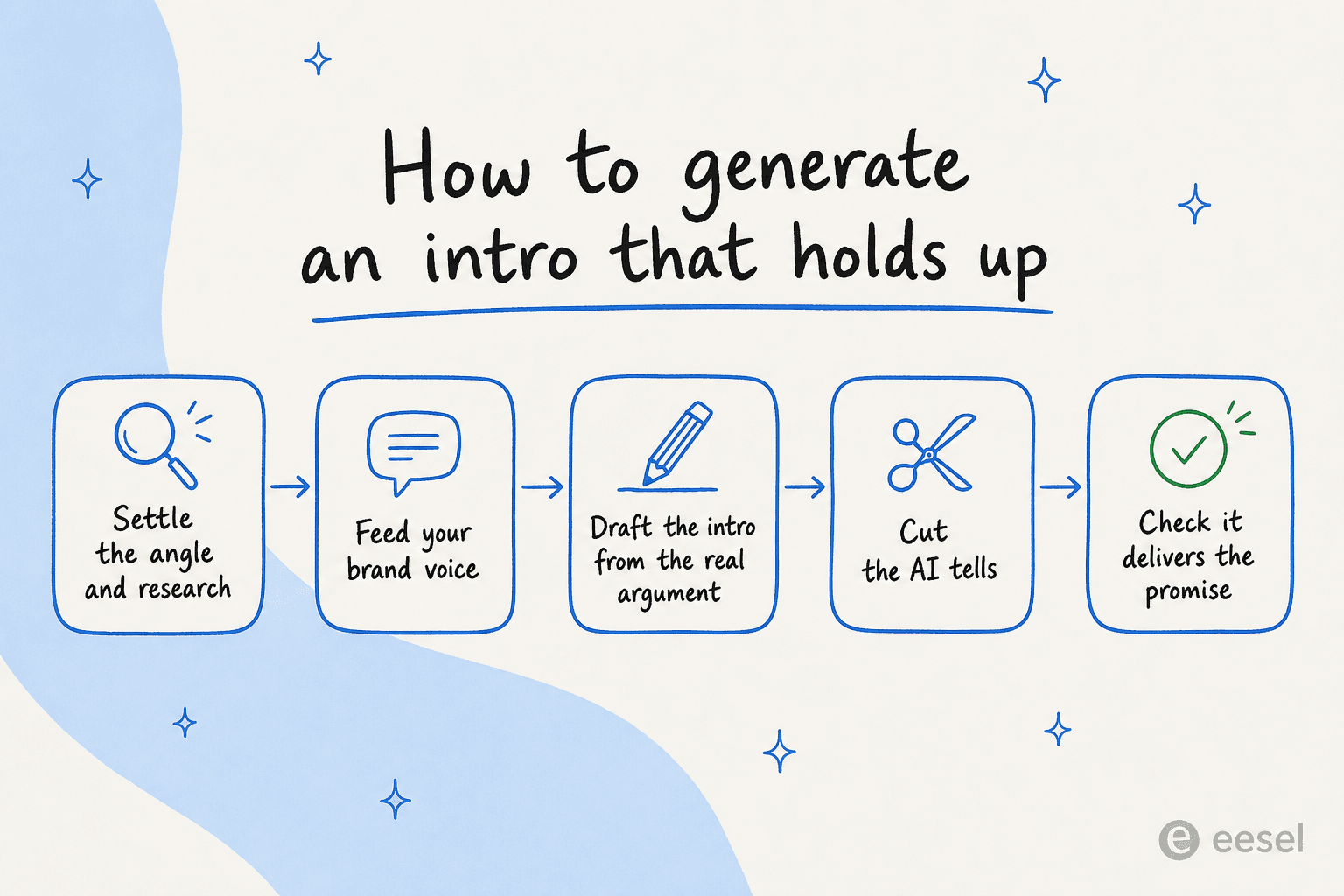
- Settle the angle and do the research first. Know what the post actually argues before you write its opener. If you start from a keyword, do the topic research and the semantic SEO pass up front so the intro can target a query a real person searches.
- Feed in your brand voice. Capture tone and vocabulary once so the opener sounds like you and not like every other AI copywriting output on the internet.
- Draft the intro from the real argument. Give the tool the finished post or a detailed outline, plus one real stat, and ask for an opener that names the reader's problem and promises the actual payoff. This is where a proper SEO AI content writer beats a title-only gadget.
- Cut the AI tells. Strip "in today's fast-paced world," the rule-of-three filler, and any sentence that would still be true if you swapped the topic. The prompts that sound human help here, but a 60-second human edit helps more.
- Check it delivers the promise. Read the intro, then the post, and ask one question: does the body pay off what the opener promised? If not, the intro is lying, and you fix the intro, not the body.
A platform like eesel collapses steps two through four into one run, because the same agent already holds your voice and the research while it drafts the post. But even stitched together from separate pieces, keep all five stages. Drop the grounding and you get a fluent opener for a post it never read.
Common mistakes I see
A few traps worth naming, because I have watched teams hit all of them:
- Generating the intro from the title alone. The number one reason AI intros read as generic. If you do one thing from this post, do this one.
- Confusing fluent with good. A grammatically perfect opener that says nothing is worse than a slightly rough one that names a real problem.
- Skipping the human edit. The intro carries your reputation more than any other paragraph. Ten seconds catching one AI tell is the cheapest insurance you will buy.
- Letting the intro over-promise. If the body does not deliver what the opener sold, the reader leaves. Match the promise to the post.
- Treating the intro as separate from the rest. The same discipline runs through the conclusion and the CTA; an intro generator that ignores the whole blog post structure is solving a tenth of the problem.
Most of these are the same discipline that keeps any AI blog writing honest: research first, ground the draft in something real, and keep a human on the parts that matter.
Where the intro generator fits in the bigger picture
If you are shopping for a standalone intro tool, you are usually solving the wrong-sized problem. The intro is hard because the post is hard, and a tool that writes openers but not posts leaves you doing the expensive part by hand. That is why most of the strongest options in any best AI blog writer roundup are full writers, not gadgets, and why I would point a beginner at a complete writer over an intro widget every time.
The economics make this easy now. A standalone intro tool is often free because it generates so little text. A full post that includes a real intro is where the value sits, and when a post costs a few dollars to draft, the question stops being "which gadget writes my opener" and becomes "which tool writes the whole thing, intro included." One content lead I work with, at an AI phone-support startup, scaled to over 360 SEO posts a month on Webflow this way, and ranked the company on the first page for a fiercely competitive category keyword. That is not a volume you reach by generating intros one at a time.
Try eesel's AI blog writer for the whole post, intro included
If you want one place to run this whole pipeline, that is what we built eesel's AI blog writer to do. You give it a domain and a keyword, and it researches the topic, drafts the full post, and writes the intro from that finished argument, holding your brand voice across every post so the opener sounds like the same person who wrote the body.
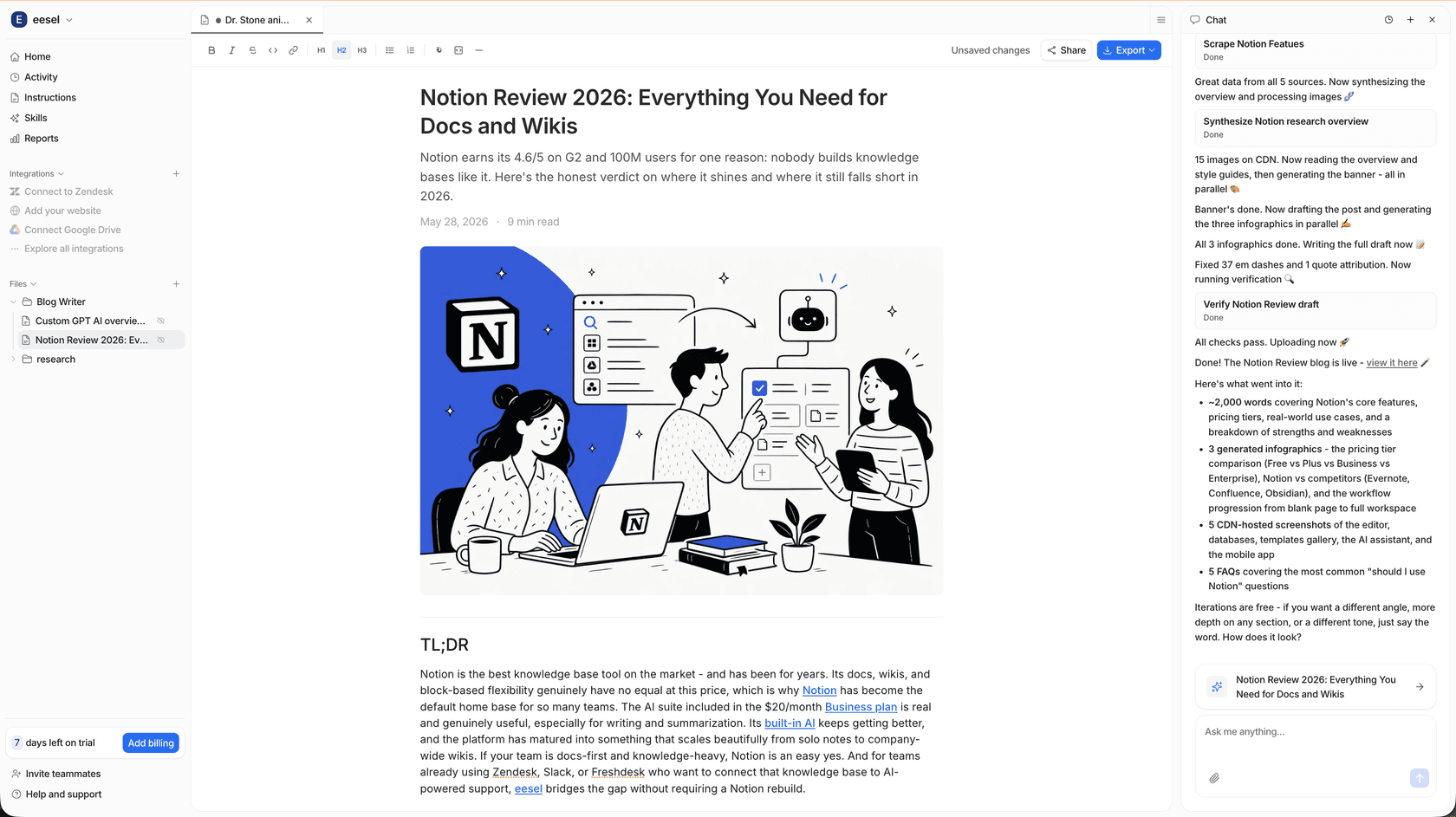
It is the same engine that runs support in 80+ languages, so the research and voice matching are the foundation, not a bolt-on. You get two free blog generations to test it on a real post, no credit card, and drafts run $4 each after that with no per-seat fee. The best first move is small: pick one keyword you actually want to win, generate the full post, and read the intro it writes from the finished piece. If the opener pulls you into the next line, you have found your generator. You can try eesel on that single post before you commit to anything.
Frequently Asked Questions
What is an AI blog intro generator?
Are AI-generated blog intros bad for SEO?
How do I write a blog intro with AI that doesn't sound generic?
How much does an AI blog intro generator cost?
Can AI write the whole blog post, not just the intro?


Article by
Kurnia Kharisma Agung Samiadjie
Kurnia is a software engineer and writer at eesel AI with two years of SEO experience, writing about AI tools, helpdesk software, and customer support. He pairs a developer's understanding of how these products are built with search-driven research into what actually ranks and resonates with the people searching for them.