

What enterprise knowledge management actually is
Strip away the jargon and enterprise knowledge management is one job: make sure the answer someone needs is captured somewhere, and that they can actually find it when they need it. That "someone" is both an employee ("what's our refund policy for EU orders?") and a customer ("how do I reset my API key?"), and the knowledge lives in wildly different places depending on who wrote it and when.
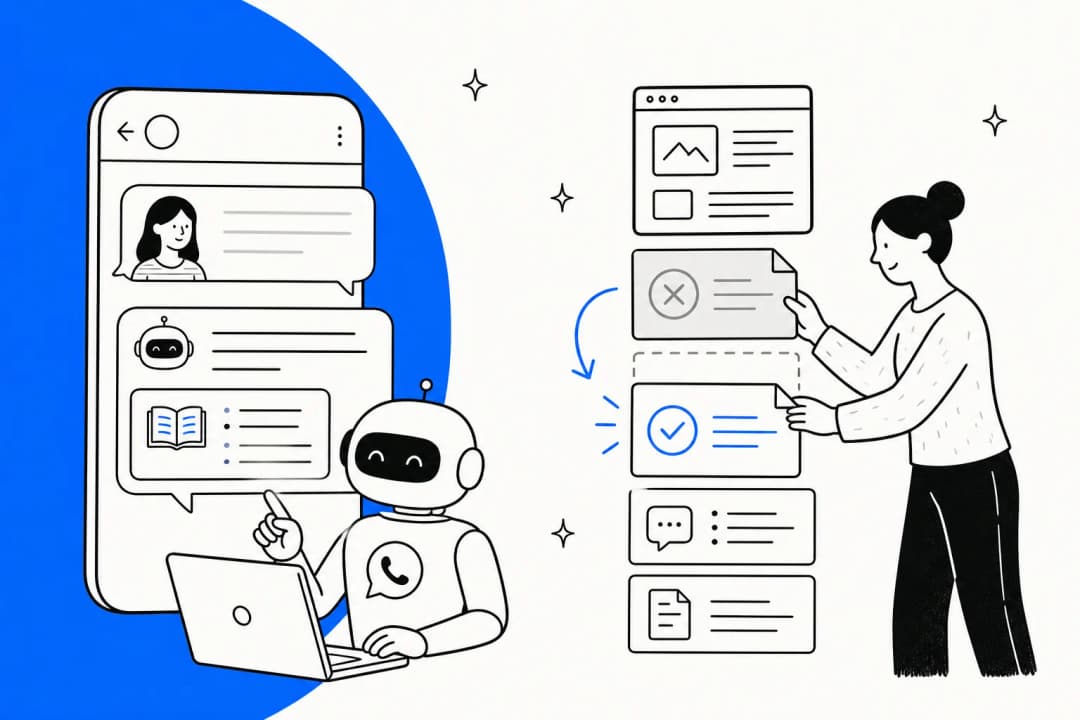
It helps to name the two halves. There's the capture side, writing things down, structuring them, keeping them current, which is what most people picture when they hear "knowledge base management". And there's the retrieval side, actually surfacing the right passage at the moment of need. Most companies pour effort into capture and almost none into retrieval, which is why they end up with a beautifully organized wiki nobody can find anything in. A knowledge base is a repository; enterprise knowledge management is the whole loop of keeping that knowledge accurate and getting it back out.
The distinction matters because the failure you feel day to day, the same question asked in Slack for the fourth time this week, is almost always a retrieval failure, not a capture one. The answer usually exists. It's just buried in a Confluence page three folders deep that nobody remembers writing.
Why enterprise knowledge management breaks at scale
At 20 people, everyone roughly knows where things are, and the person who wrote the doc sits two desks away. At 2,000 people, that breaks in specific, predictable ways:
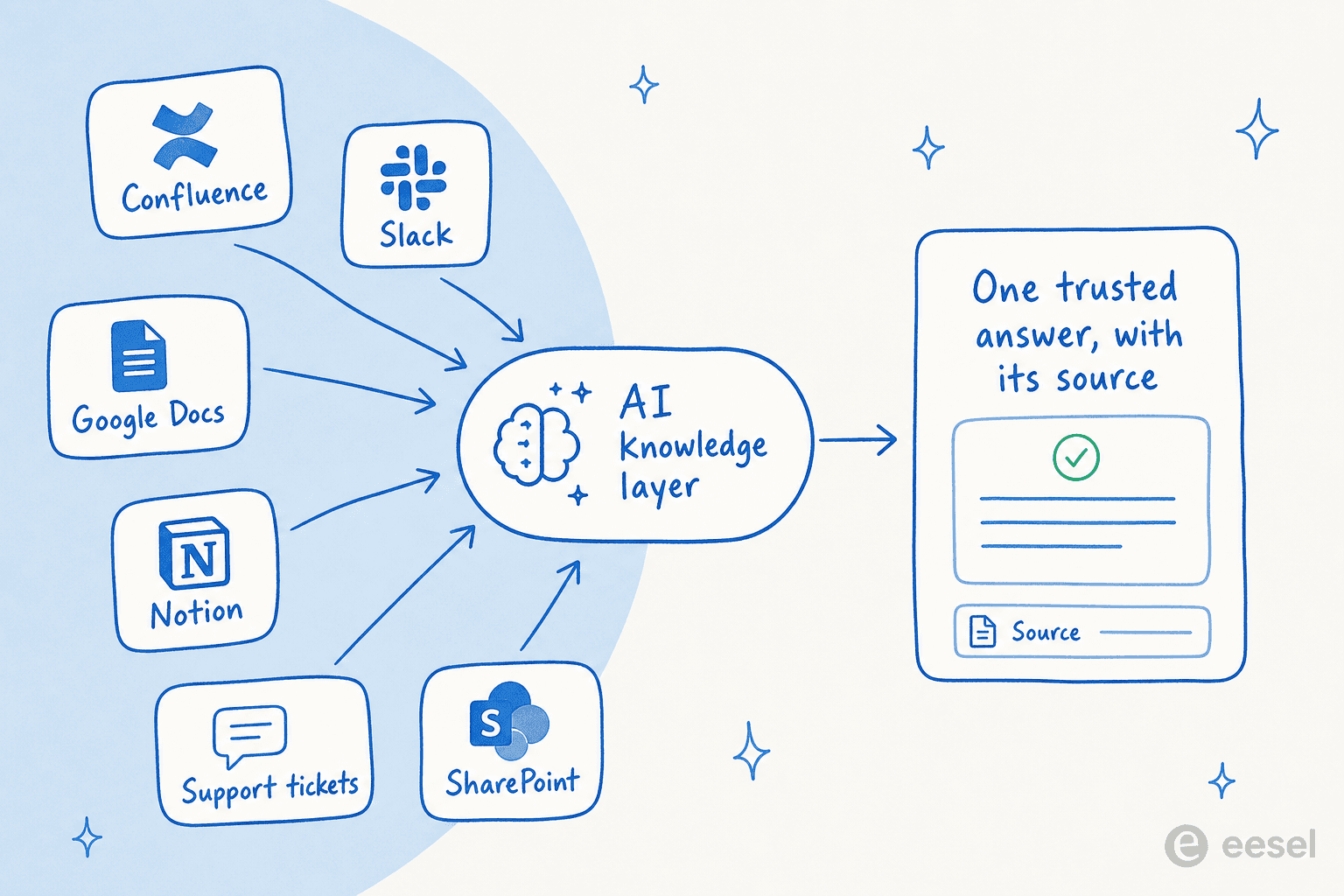
- Knowledge scatters across tools. Product decisions live in Notion, engineering runbooks in Confluence, HR policy in SharePoint, the real answer to half of it in a Slack thread from March. No single search box covers all of them.
- Content goes stale silently. A pricing page updated in 2024, a runbook for a service that was deprecated last quarter. Nobody marks a doc "wrong", they just stop trusting the wiki and start asking a human instead.
- The knowledge is tribal. The most valuable answers never got written down at all; they're in the head of the one engineer who's been there five years. When they go on leave, response times spike.
- Search is keyword-dumb. Classic enterprise search matches strings, so a query for "can't log in" misses the doc titled "authentication troubleshooting". This is exactly the gap semantic search was built to close.
The result is a quiet tax on every team. Support agents rekey the same answer. New hires spend their first month asking where things are. IT and HR help desks drown in questions that a good doc already answers, the kind an employee self-service portal is meant to catch. And the more people work around the system, in DMs, in tribal memory, the less anyone trusts the official source, which makes the decay accelerate.
The pieces of a modern EKM system
A working enterprise knowledge management setup in 2026 has four moving parts, and it's worth being precise about them because vendors love to blur the lines.
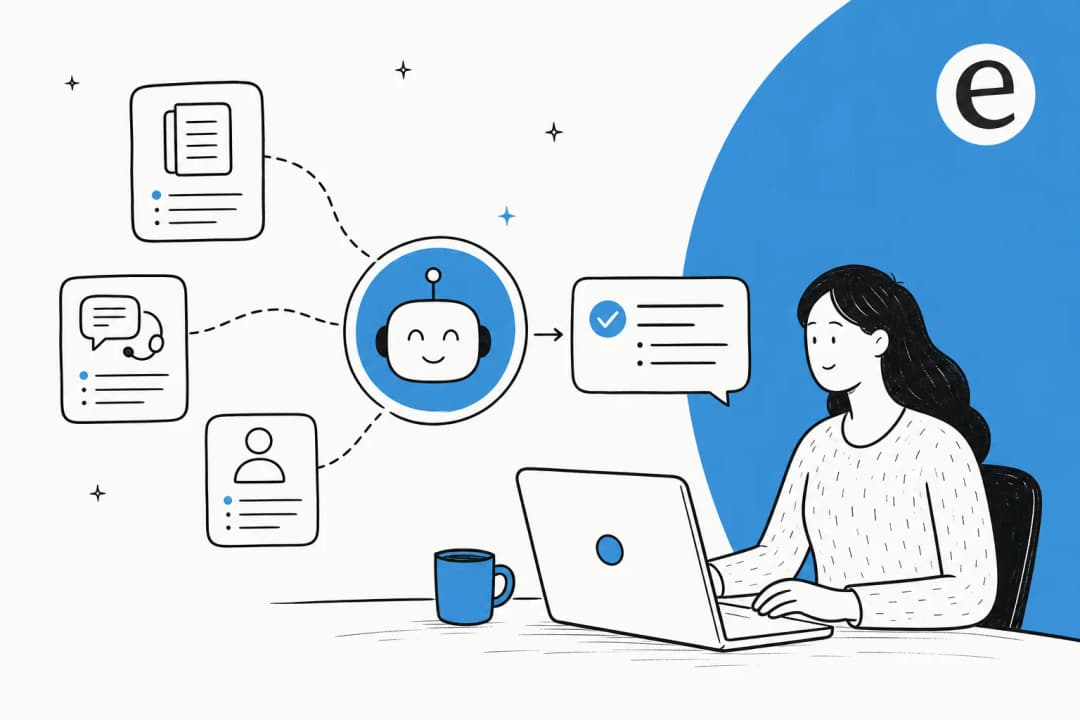
- Sources - every place knowledge actually lives. Help center articles, internal wikis, past tickets, chat logs, spreadsheets, PDFs. The realistic number is "more than you think", so the goal isn't consolidation, it's connection.
- A retrieval layer - the part that, given a question, finds the relevant passage across all those sources. This is where retrieval-augmented generation and vector search do the heavy lifting, and it is what powers AI documentation search.
- An answer layer - the AI that takes the retrieved passage and writes a direct, readable answer, ideally with a link back to the source so the reader can verify it.
- A feedback loop - the mechanism that spots what's missing (questions with no good source) and either flags them or drafts the article to fill the gap.
Most legacy tools stop at parts one and two: they store and they search. The jump that makes 2026 different is parts three and four, an answer instead of a list of documents, and a system that notices its own gaps. If you're evaluating tools, that's the line to look for. Our roundup of the best AI knowledge base tools breaks down who does which parts well.
How AI actually changes it
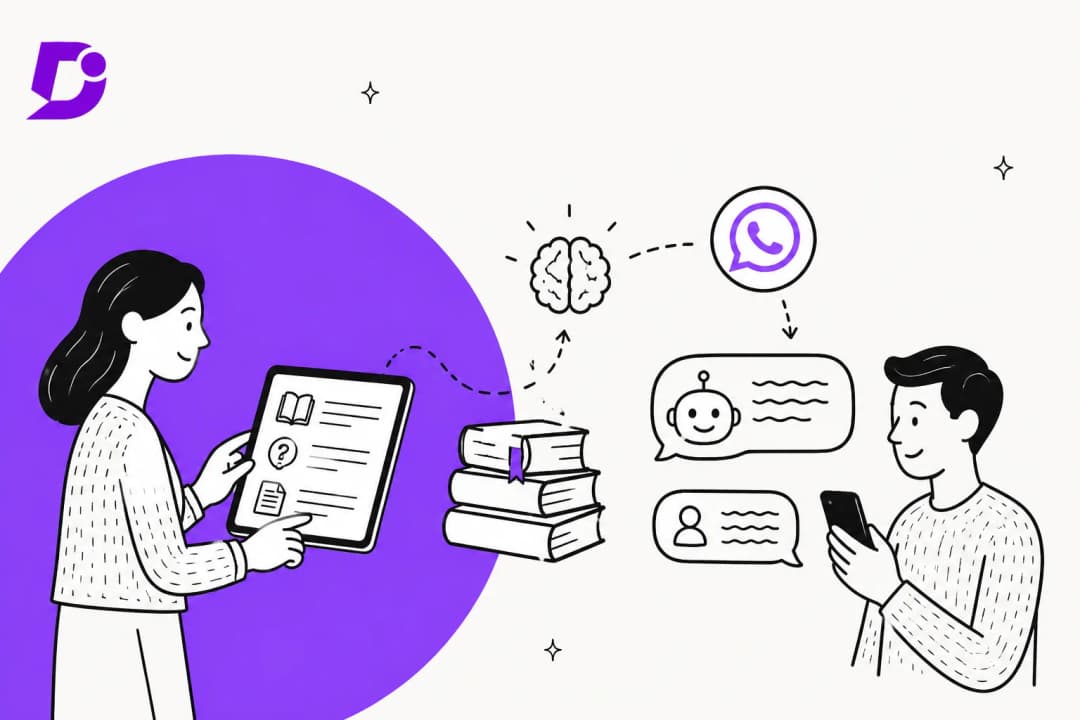
Here's the mechanism under the hood, because "AI-powered" is doing a lot of undefined work in most marketing copy. When someone asks a question, the system doesn't send that question to a language model and hope. It first retrieves: it searches your connected sources for the passages most relevant to the question, using meaning rather than exact keywords. Then it grounds: the model writes its answer using only those retrieved passages, and attaches the source. That two-step is retrieval-augmented generation, and it's the single most important idea in modern EKM.
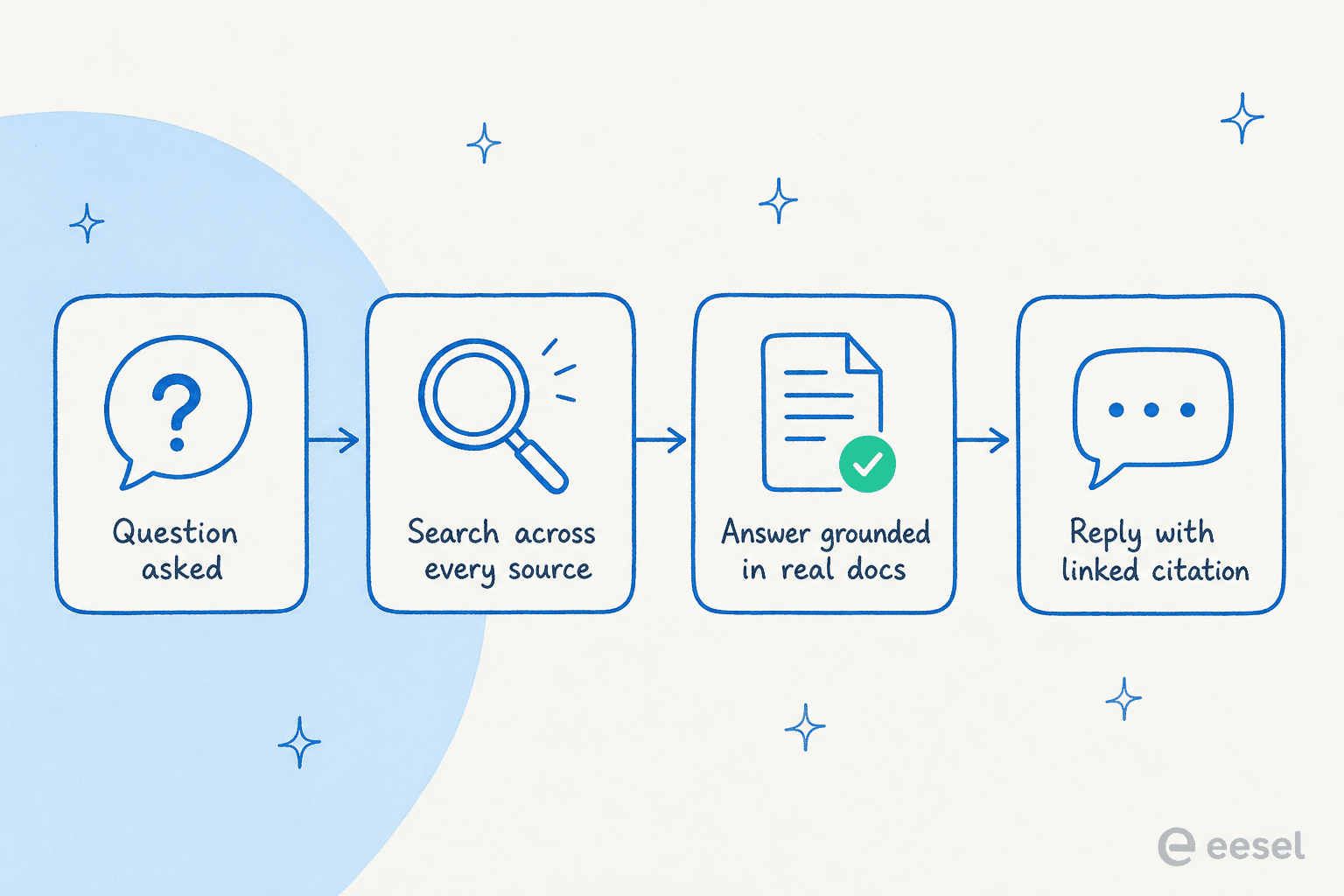
Why grounding matters so much: it's the difference between an assistant that knows your company and a chatbot that sounds confident and makes things up. The biggest objection I hear from teams evaluating this, and the one we spent years engineering around, is trust. Nobody wants an AI confidently telling a customer the wrong refund window. The answer is confidence-based routing: when the retrieval turns up nothing solid, the system should say so or hand off to a human, not paper over the gap with a plausible-sounding guess.
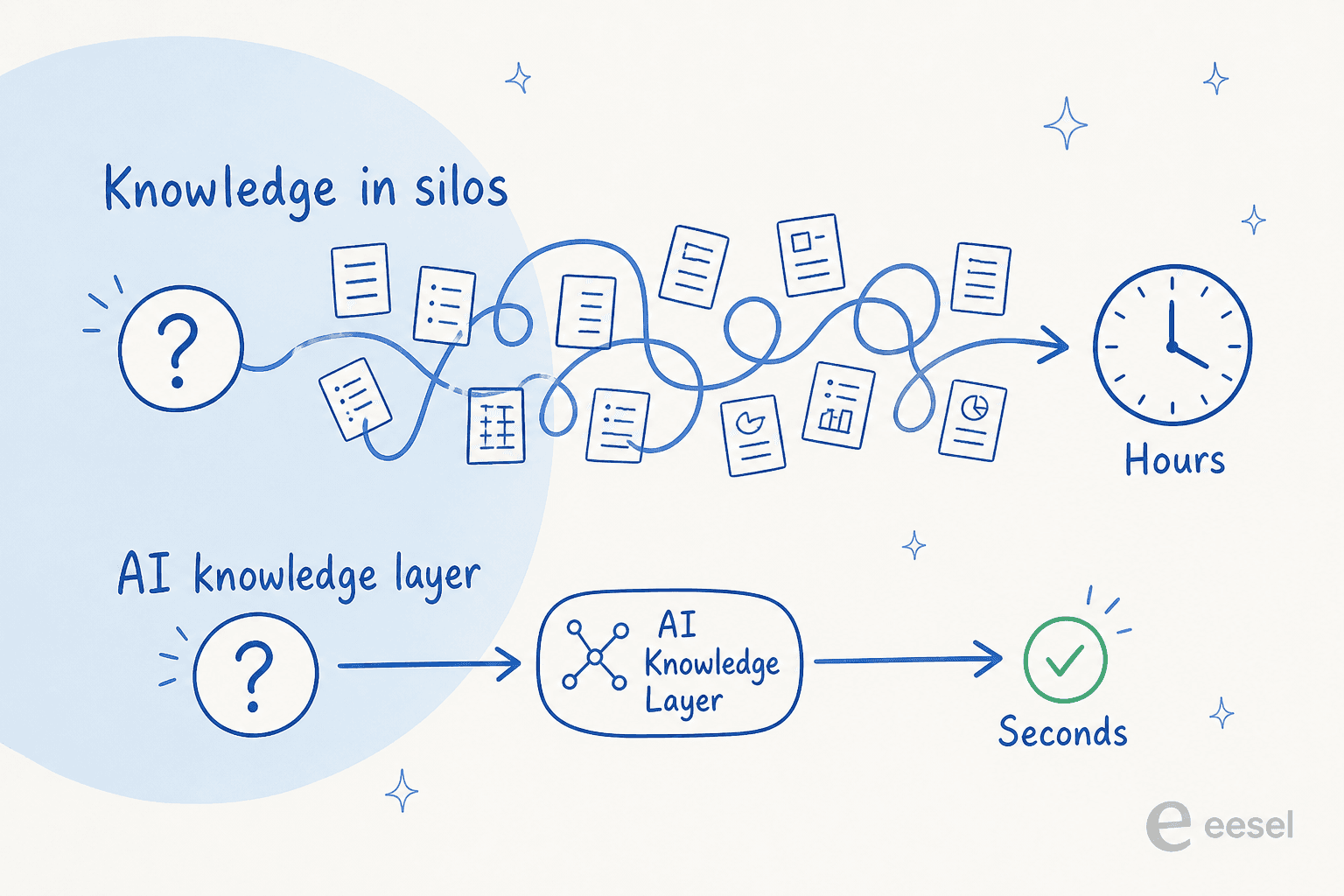
The practical payoff is speed of answer, not just quality. Instead of a searcher opening five tabs and reading three documents, they ask once and get a cited answer. That's where the time savings live. As one chief innovation officer at a payments company running AI over their Confluence put it:
"In a business where transactions need to be processed as quickly as possible, every second counts. With eesel, we can find specific answers to questions extremely fast. We can onboard new employees very quickly and have seen up to 80% time savings."
a chief innovation officer at a payments/fintech company, via eesel
The compounding win is onboarding. A new hire's first month is mostly a retrieval problem, they don't lack intelligence, they lack context. An answer layer over your knowledge collapses that ramp.
Where the old approach falls short
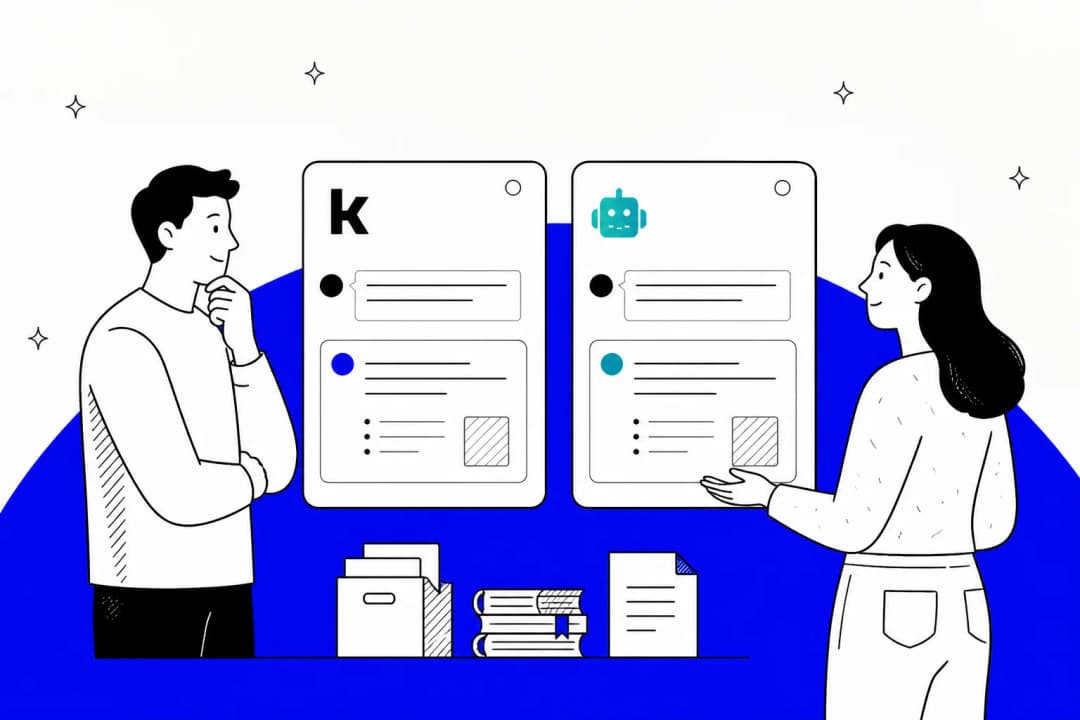
To be fair to the incumbents: tools like Confluence, SharePoint, Guru, and Notion are genuinely good at storing and structuring knowledge, and if your problem is "we have no single place to write things down", they solve it. The place they fall short is the retrieval-and-answer half.
| Capability | Traditional wiki / KB | AI knowledge layer |
|---|---|---|
| Store and structure docs | Strong | Uses your existing docs |
| Search | Keyword match, one tool at a time | Semantic, across all connected sources |
| Returns | A list of documents | A direct answer with a citation |
| Handles tribal knowledge | Only if someone wrote it down | Learns from past tickets and chats too |
| Spots its own gaps | No | Flags missing topics, drafts articles |
| Setup | Migrate everything into one tool | Connect the tools you already have |
The last row is the one that quietly decides projects. The classic EKM initiative, "let's migrate everything into one new system", fails because migration never finishes and the half-migrated state is worse than what you had. The modern approach sidesteps it: leave the docs where they are, connect them, and put the intelligence on top. If you're weighing specific platforms, we've compared Guru vs Confluence, Guru vs Bloomfire, and the SharePoint alternatives worth a look.
Building an EKM strategy that sticks
A few things separate the setups that survive contact with a real org from the ones that get abandoned in month three.
Start with the questions, not the docs. Pull the top 50 questions your support queue, IT desk, or HR desk actually gets. That list is your knowledge priority order. Building out docs nobody asks about is the most common way to waste an EKM project.
Connect before you consolidate. Don't block the whole project on a migration. Connect your existing internal knowledge base, help center, and ticket history first, prove the answers are good, then clean up structure later.
Meet people where they work. The answer has to show up in Slack, in the helpdesk, in the employee self-service portal, wherever the question gets asked. Forcing people to a separate "knowledge portal" is why they stop using it. This is also the core idea behind Slack enterprise search.
Close the loop on gaps. The system should tell you what it couldn't answer, so your content roadmap is driven by real demand. Pair that with a habit of detecting outdated content with AI and the knowledge base stops rotting.
Test before you trust. Before any AI answers a live customer or employee, run it against your historical questions and see what it would have said. If a tool can't show you that dry run, be cautious, this is the step that catches the embarrassing wrong answers before they ship. It's the same discipline that separates a real AI helpdesk from a demo.
Done well, the same foundation powers customer self-service, an IT help desk, an HR help desk, and employee support off one connected knowledge layer, rather than four separate tools each with their own stale wiki.
Try eesel for enterprise knowledge management
If the goal is an AI layer over the knowledge you already have, that's exactly what eesel AI does. It connects to Confluence, Notion, SharePoint, Google Docs, Slack, your help center, and your past tickets, then answers employee and customer questions from them with a citation, no migration required. Because it trains on your historical tickets, years of tribal knowledge become usable on day one, the same way one customer manages a huge knowledge base with it.
The two things that tend to matter most for enterprise buyers are covered directly: you can simulate the AI against thousands of past questions before it goes live, and confidence-based routing means it hands off rather than guessing when it isn't sure. Pricing is usage-based at $0.40 per ticket or conversation with no per-seat fee, so the cost scales with value rather than headcount.

You can start free and point it at your own docs to see the answers it gives before committing to anything.
Frequently Asked Questions
What is enterprise knowledge management?
How is enterprise knowledge management different from a knowledge base?
How does AI improve enterprise knowledge management?
How much does an AI knowledge management tool cost?
How do I keep enterprise knowledge from going stale?


Article by
Kira
Kira is a writer at eesel AI with a Computer Science background and over a year of hands-on experience evaluating AI-powered customer service tools. She focuses on breaking down how helpdesk platforms and AI agents actually work so that support teams can make better buying decisions.