Customer service motivation: what actually keeps agents going

Riellvriany Indriawan

Katelin Teen
Last edited July 6, 2026

The real cost of a demotivated support team
Support leaders tend to treat motivation as a soft-skills problem: run a contest, send a Slack shoutout, hope it sticks. Gallup's own workplace research says that's the wrong frame entirely. 76% of employees experience burnout on the job at least sometimes, and 28% say they're burned out "very often" or "always." That's not a minority-of-bad-fits problem, it's closer to the default state.
The cost compounds fast. Gallup's data shows frequently burned-out employees are 63% more likely to take sick days, 23% more likely to visit the emergency room, and 2.6 times as likely to be actively job hunting. On a support team, that shows up as slower first response time, more escalations to already-stretched senior agents, and rising ticket volume right when you can least afford it.
And Gallup's own list of the top five burnout correlates is worth sitting with, because none of them are about customers:
- Unfair treatment at work
- Unmanageable workload
- Unclear communication from managers
- Lack of manager support
- Unreasonable time pressure
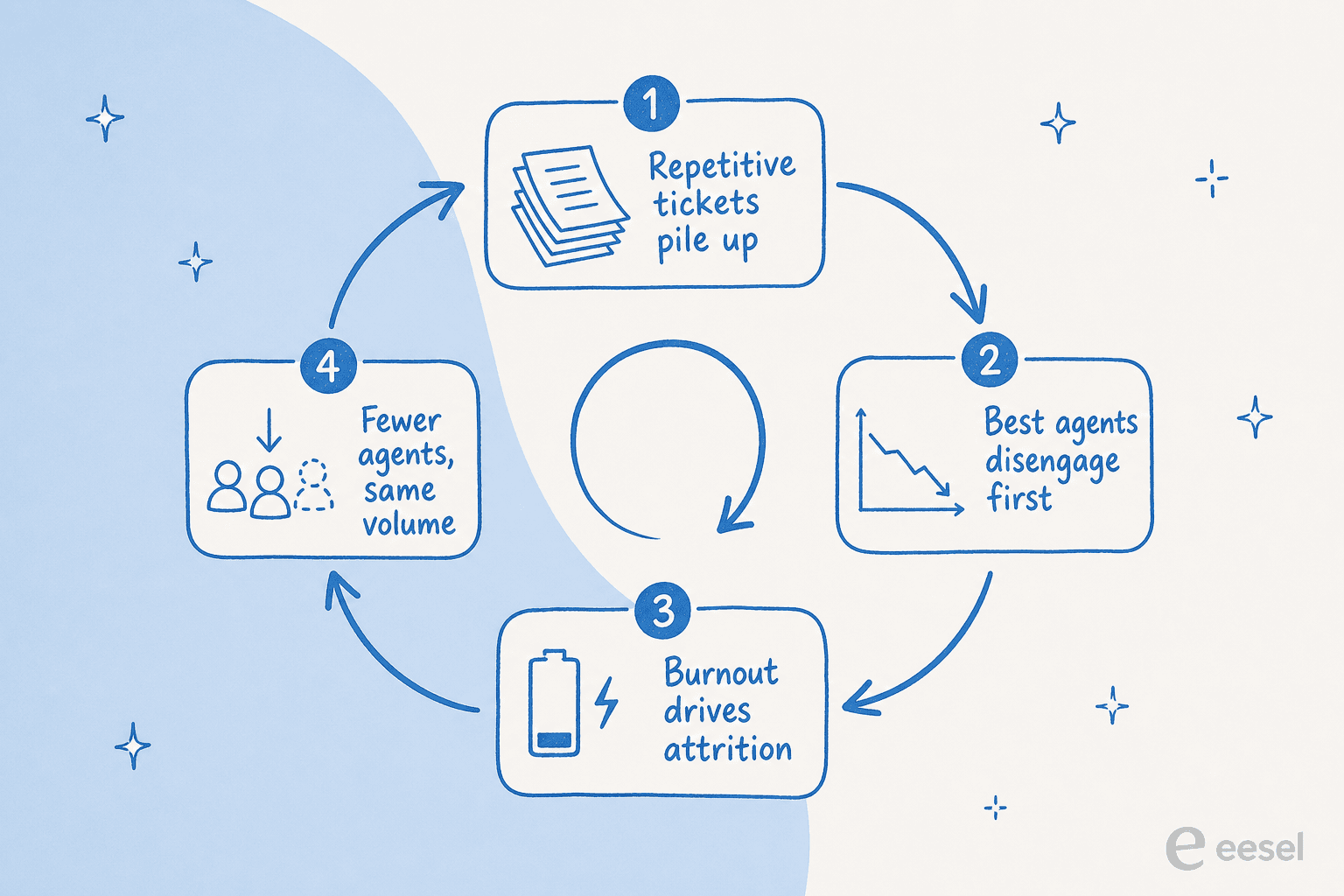
Every one of those is a management and workload design problem, not a "some people can't handle angry customers" problem. That reframes the whole exercise: customer service motivation is mostly an operations problem wearing a morale costume, and the same operations problem shows up in most customer experience research, not just the contact center literature.
What actually burns agents out (it's rarely the customer)
Ask agents directly and the picture sharpens. A 20-year customer service veteran on r/CustomerService put it bluntly:
"I have been in customer service nearly 20 years, and im so burnt out from it. Going to work makes me want to die, its so overwhelming."

That's not a new-hire problem or a bad-week problem. It's an accumulated, career-long toll, which lines up with why Gallup treats burnout as structural rather than a personality trait. A separate thread, "Why is it so exhausting to work in a call centre", has 110+ comments unpacking why phone-based support work drains people faster than jobs with comparable hours: the forced positivity is its own tax. One agent describes it directly: "Years and years of positivity finally feels drained out of me."
Then there's the part vendors don't love talking about: the tooling itself. A recent r/Zendesk thread from a tech support rep opens with "I am looking at tickets and unable to continue. I think I am quitting my job," and a reply from user LuckyPeace663 names the actual mechanism:
"In my opinion, Zendesk has created a platform that entirely caters to managers. Employees are second[ary]."
That's a sharp point: a lot of "support tech" is built to optimize ticket routing and reporting for managers, not to give the agent doing 200 tickets a day less to do. And it lines up with a top comment on r/callcentres' "dream call centre" thread: "Understanding that extreme micromanagement leads to burnout, resentment and low morale. Which in turn affects quality and productivity." Management practice, not customer behavior, is the recurring villain in every one of these threads.
What managers try first vs. what practitioners actually credit
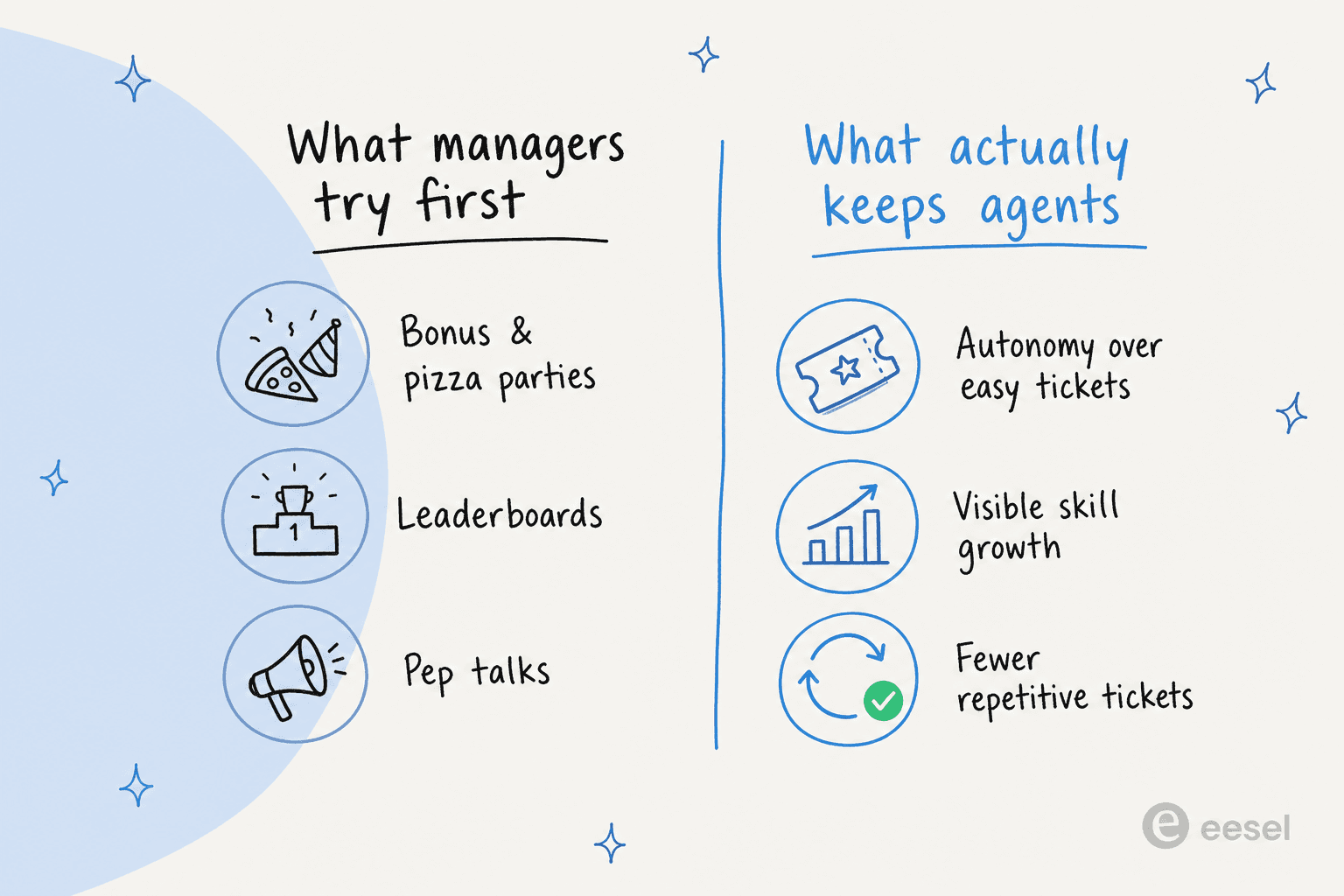
The instinct when morale is visibly bad is to run a contest or send pizza. It's not that those are actively harmful, they're just aimed at the wrong layer of the problem. The clearest counterpoint I found comes from a LinkedIn post by Scalivo, which names three concrete, structural levers instead:
"Burnout can be avoided when teams feel supported through: realistic workloads, the right tools and training, recognition and appreciation for great work. Because at the end of the day, customer experience starts with employee experience."

None of those three are a leaderboard. "Realistic workloads" and "the right tools" both point back at the same structural fix Gallup's data implies: change what's actually landing on an agent's plate, not just how you cheer them on once it's there. It's the same fix that shows up whenever customer retention and customer satisfaction research looks at frontline teams specifically, not just customers.
It's also worth being honest that there's no tidy fix here. Dawn Murden, a Customer Success practitioner writing on LinkedIn, admitted: "I have no idea how to prevent burnout. But I do know how to come back from it." That candor is rarer than the 5-tips-listicle version of this topic, and it's a fair caveat to everything below: these are levers that move the odds, not a guarantee.
Compensation matters, but it's not the whole answer
If you're weighing where to spend a limited budget, pay is a real lever. SHRM's own research found 39% of HR professionals cite inadequate compensation as the single biggest driver of voluntary turnover, ahead of every other factor they measured. That's the primary-sourced number worth citing, so I'll flag what I'm deliberately not citing: the commonly repeated "call centers see 30-45% annual turnover" stat. I traced every version of it back to SEO aggregators restating the same round number with no live link to an original study, so it doesn't get a home in this post. If you've seen that figure attributed to Gallup or McKinsey, be skeptical of the specific attribution.
The practical read: pay under-market and you'll see it on both sides of the desk, agent turnover first, then customer churn once the tenure and product knowledge walk out the door with them. But Gallup's five burnout correlates (workload, unfair treatment, unclear communication, lack of support, time pressure) are things a raise alone doesn't touch. Compensation is necessary and not sufficient.
Three things that actually move the needle
None of the three levers below are unique to eesel, they're just the concrete version of what the research above is pointing at. Whether you get there with a customer service AI platform or a manual process redesign, the target is the same: less repetitive load, more real autonomy, visible growth.
1. Cut the repetitive volume before you try to make it more bearable
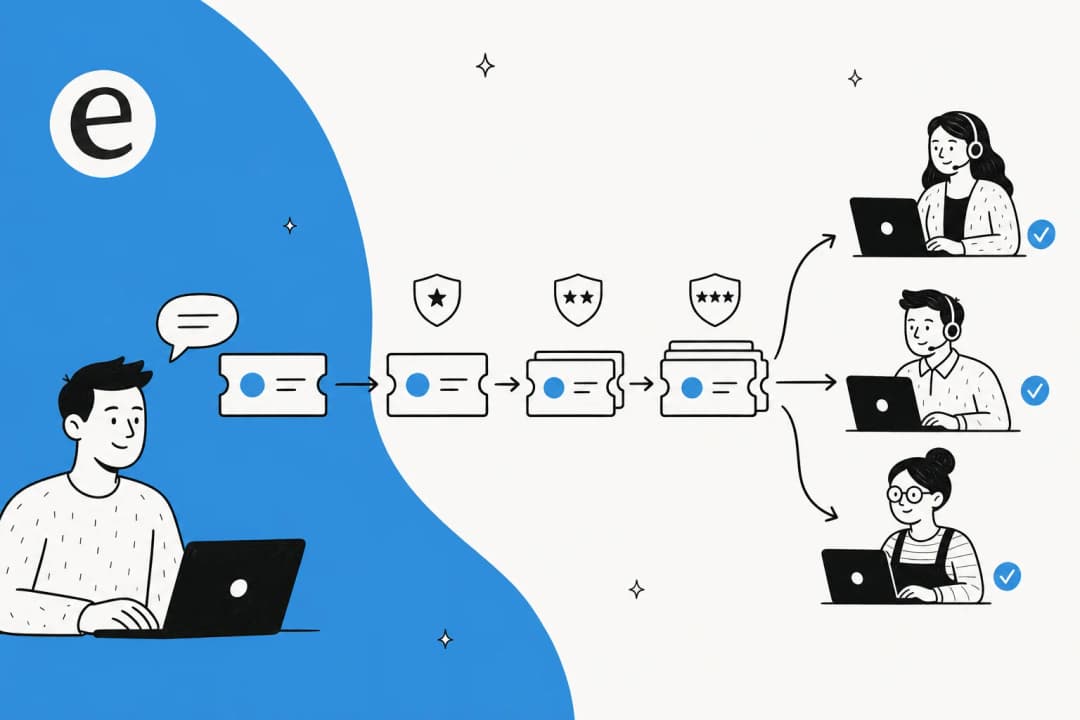
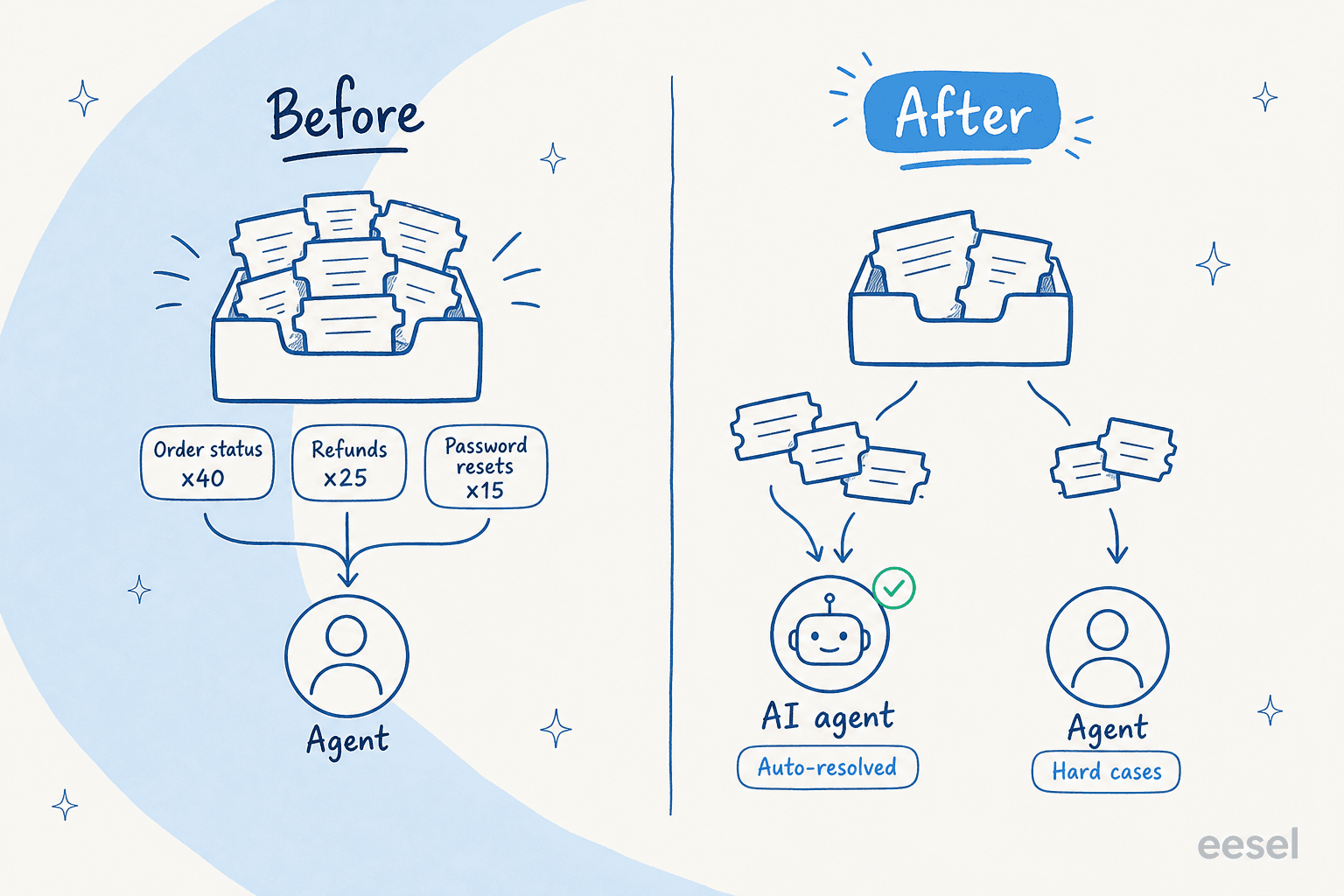
If Gallup's #2 burnout cause is unmanageable workload, the highest-leverage fix isn't a better attitude about the workload, it's a smaller one. This is the single most common reason eesel customers give for adopting an AI helpdesk agent in the first place: teams handling 500+ tickets a day of repetitive refund, unsubscribe, and order-tracking queries, or an ops lead running roughly 7,000 Gorgias tickets a month who came in looking for a copilot and realized the team needed to auto-resolve at least half of email volume just to keep up, not to get ahead.
That's the connection worth being explicit about: eesel's AI agent learns from a company's own past tickets and help docs, then handles auto-triage and automated resolution for the tier-1 volume (order status, password resets, "where's my refund") that dominates most queues, aiming for real first contact resolution instead of a back-and-forth thread, while flagging anything it isn't confident about for a human to handle. Gridwise's team saw 73% of tier-1 requests resolved in the first month. That's not a morale gimmick, it's a lower ticket volume landing on the humans left in the queue.
2. Give agents real autonomy over easy decisions
Micromanagement showed up twice in the research above as a named cause of low morale, once directly on r/callcentres and once implicitly in the Zendesk thread's "the platform caters to managers" complaint. The fix isn't removing oversight entirely, it's being deliberate about where it's applied. eesel's own approach is to start every deployment supervised (the AI drafts, a human approves) and grant autonomy gradually on the tickets that keep proving themselves low-risk, backed by a confidence score that decides when to draft instead of send, using simulation against historical tickets to show exactly where coverage is solid before anyone flips that switch. It's the same idea behind agent assist tooling elsewhere, just with real oversight instead of blanket micromanagement. The point isn't automation for its own sake, it's freeing an agent from re-approving the same answer for the hundredth time so their judgment gets spent on the tickets that actually need it.
3. Make growth and impact visible
Recognition was the third lever in Scalivo's post, and it's also the easiest to do badly, since a generic "great job team" in Slack doesn't register as recognition to anyone. What tends to land instead is specific: naming the ticket someone handled well, showing an agent the volume they personally cleared, or giving them visibility into a customer service KPI that they actually moved, or a CSAT survey score they personally lifted. If an agent's day is 90% the same three ticket types, there's very little to point at as growth. Free that time up, and the harder, more interesting tickets that are left become the thing worth recognizing well.
Where quick motivational tactics fit, honestly
None of this is an argument against a genuine kudos channel, a good motivational quote on a Monday standup, or a well-run contest now and then. They're fine as texture. They're just not a strategy on their own, and treating them as one is exactly the gap the r/callcentres and LinkedIn commentary above are pointing at. If your team's actual problem is unmanageable workload or unclear management, a "quote of the week" post won't fix a broken customer service mindset, and it won't move the customer service standards your team is actually being measured against.
Try eesel for customer service motivation
I've watched this pattern play out across thousands of real support rollouts: teams don't burn out because agents are fragile, they burn out because the queue never stops handing them the same repetitive ticket. eesel's AI helpdesk agent plugs into Zendesk, Freshdesk, Gorgias, and 100+ other tools, learns from your team's own past tickets and help docs on day one, and takes the order-status, refund, and password-reset volume off an agent's plate before it ever reaches them, while flagging anything it's not confident about for a human to actually decide. It's the same customer service automation idea behind most of this post, just pointed at the agent's workload instead of a poster about it.

Pricing is one fixed monthly price, from $299 for 500 credits (1 credit per ticket or chat), no seat fees, so you're not paying more just because your team is bigger. There's a free plan with 100 credits included, no credit card required, if you want to see what it actually clears off a queue before deciding anything.
Frequently Asked Questions
Why is customer service such a stressful job?
Can the helpdesk software itself cause burnout?
Does higher pay fix customer service turnover?
Does AI actually reduce customer service agent burnout?
What are the warning signs of customer service burnout on a team?


Article by
Riellvriany Indriawan
Riell is a designer and writer at eesel AI with about two years of experience researching CX platforms, AI chatbots, and helpdesk software. She combines her design background with a sharp eye for how these tools actually look and feel in practice — making her comparisons unusually visual and user-focused.