
Gladly AI deflection: does the anti-deflection platform actually deflect?

Kira
Written by

Kira

Katelin Teen
Reviewed by

Katelin Teen

Last edited June 17, 2026

Expert Verified
Illustration of Gladly's Sidekick AI resolving customer conversations

The deflection-versus-engagement framing

Give Gladly credit, because this is a real idea and not just marketing spin. Most AI support is sold on deflection rate: how many tickets can you stop a human ever seeing. Gladly argues that framing is backwards for consumer brands, where a support conversation is a chance to retain a high-LTV customer, and that optimizing purely for deflection trains your AI to brush people off.
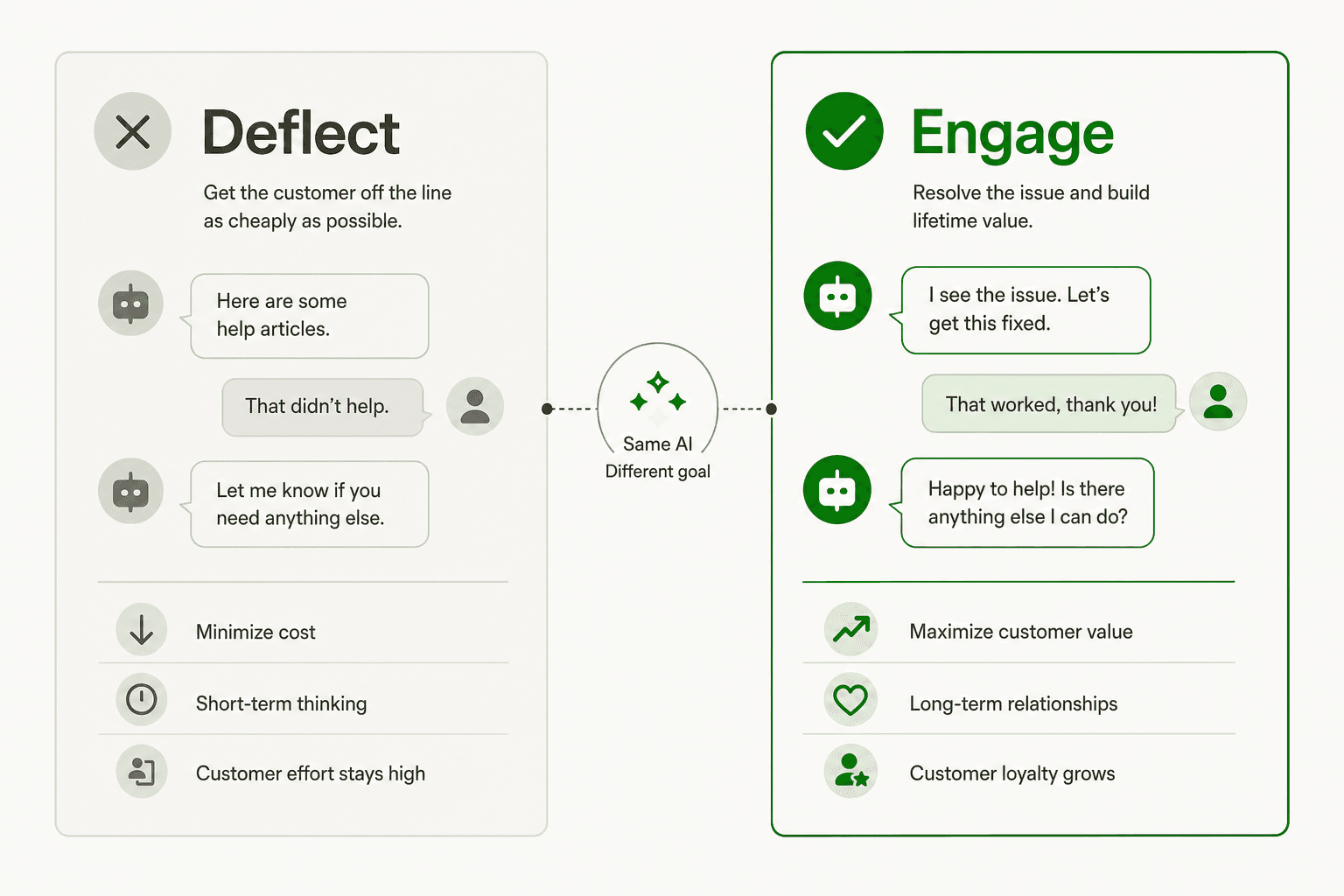
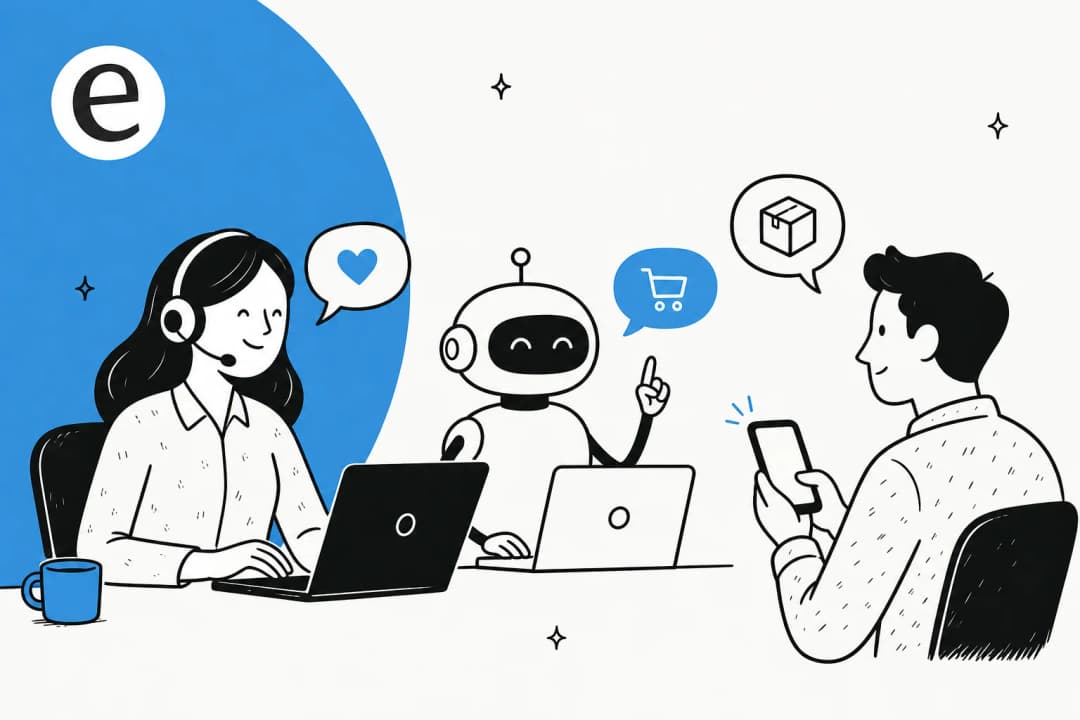
Two philosophies of AI support: deflect, meaning get the customer off the line cheaply, versus engage, meaning resolve the issue and build lifetime value

There's truth in it. An AI tuned to close tickets at any cost can absolutely tank your CSAT. But there's also a sleight of hand: whether you call it engagement or deflection, the operational reality is the same, a ticket gets resolved without a human. The distinction is about how well the AI resolves, not whether it deflects. And on that, Gladly's Sidekick is the thing doing the work.

What Sidekick actually does

Gladly is built on a "people, not tickets" model, one lifelong conversation per customer rather than discrete tickets, aimed squarely at DTC and retail brands (its roster includes TUMI, Ulta, UGG, and Nordstrom). If you're cross-shopping the category, our Kustomer vs Gladly and best AI for Gladly comparisons are useful. The AI layer, Sidekick, runs on top of that.

Gladly's AI customer service agent page, showing how Sidekick resolves conversations, as taken from Gladly

What makes Sidekick more than a chatbot is that it takes real actions, not just answers. It can cancel an order, process a return or exchange, and make a price adjustment, across chat, voice, email, SMS, and social, working from a unified 360-degree customer profile so customers never repeat themselves. Gladly claims a 3x resolution-rate increase in the first 30 days and 300M+ conversations to date.
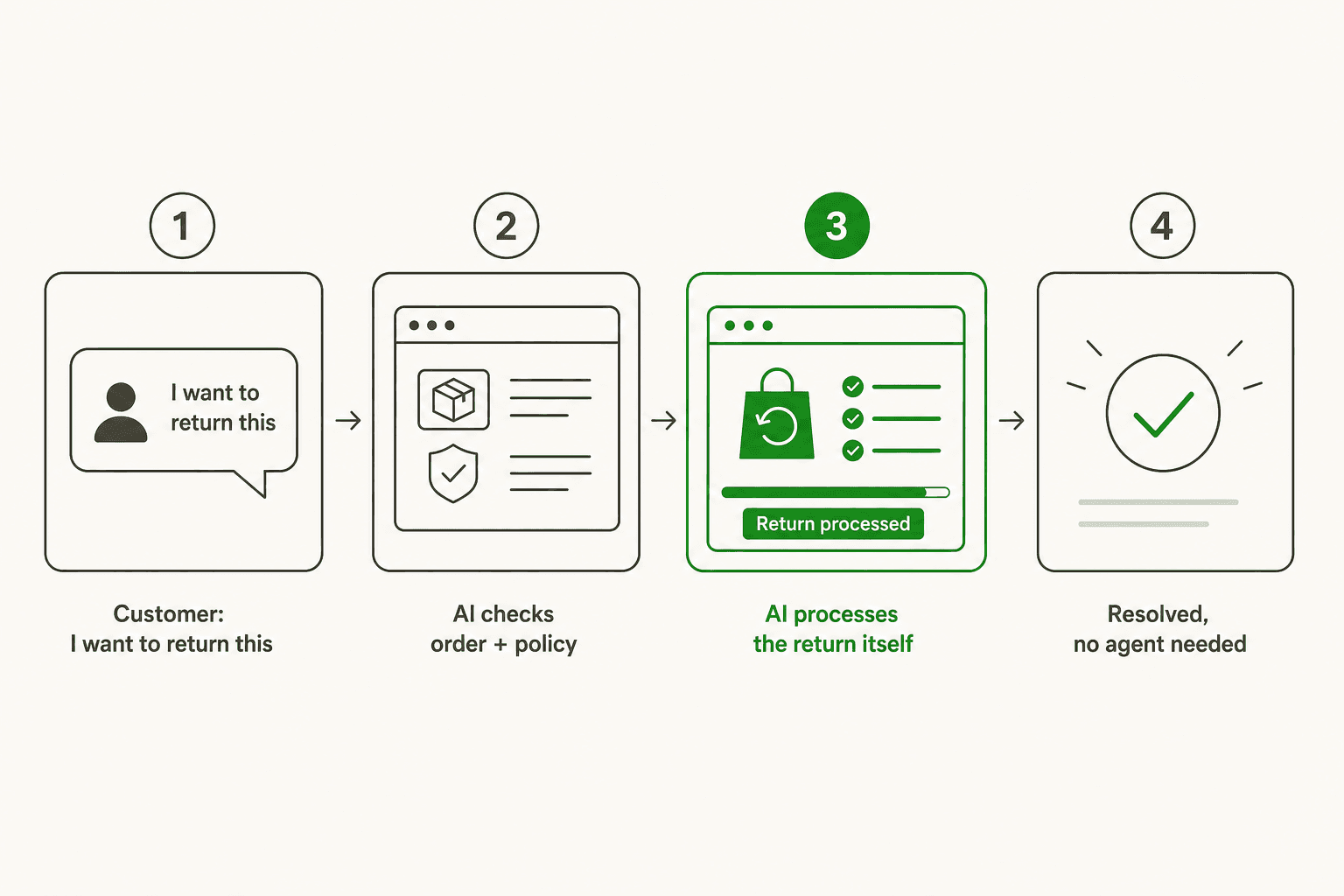
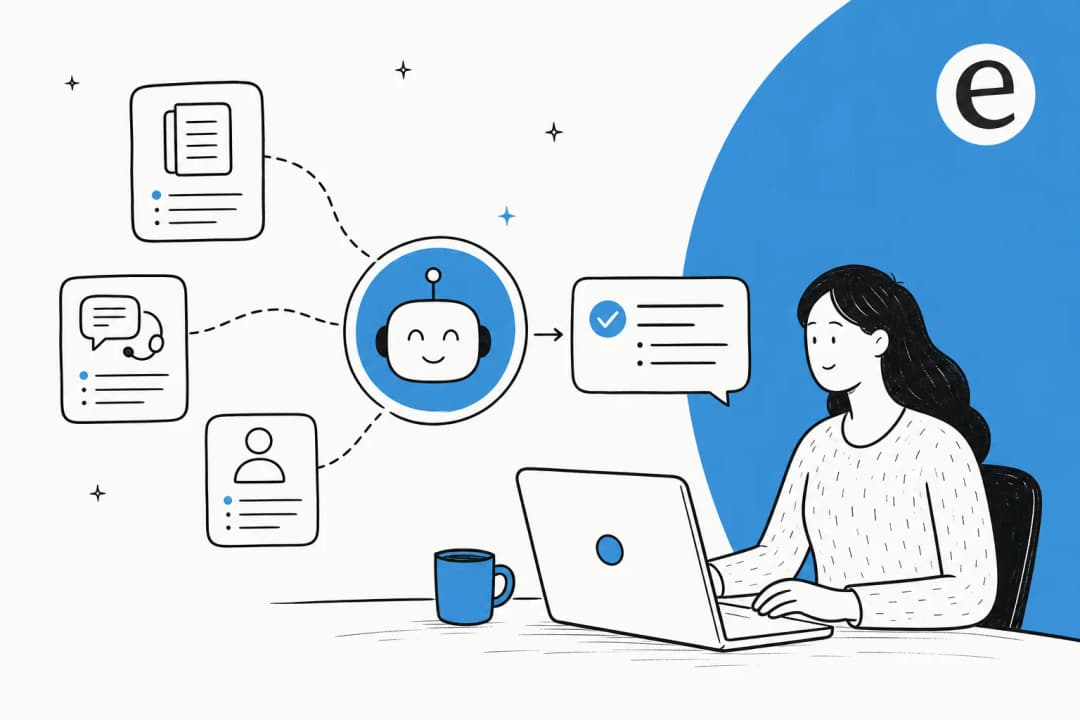
How an action-taking AI agent works: the customer asks to return an item, the AI checks the order and policy, processes the return itself, and resolves it without an agent

That action-taking is the part worth respecting. Answering "here's how to return an item" is deflection-lite; actually processing the return is real resolution. This is the bar a modern AI customer service agent should clear for ecommerce support, and Sidekick clears it for retail use cases.

What it costs (and the catch)

Here's where the LTV story gets complicated. Gladly doesn't publish platform pricing, the core "Hero" platform is contact-sales only. The one place it shows real numbers is its Shopify App Store plan.
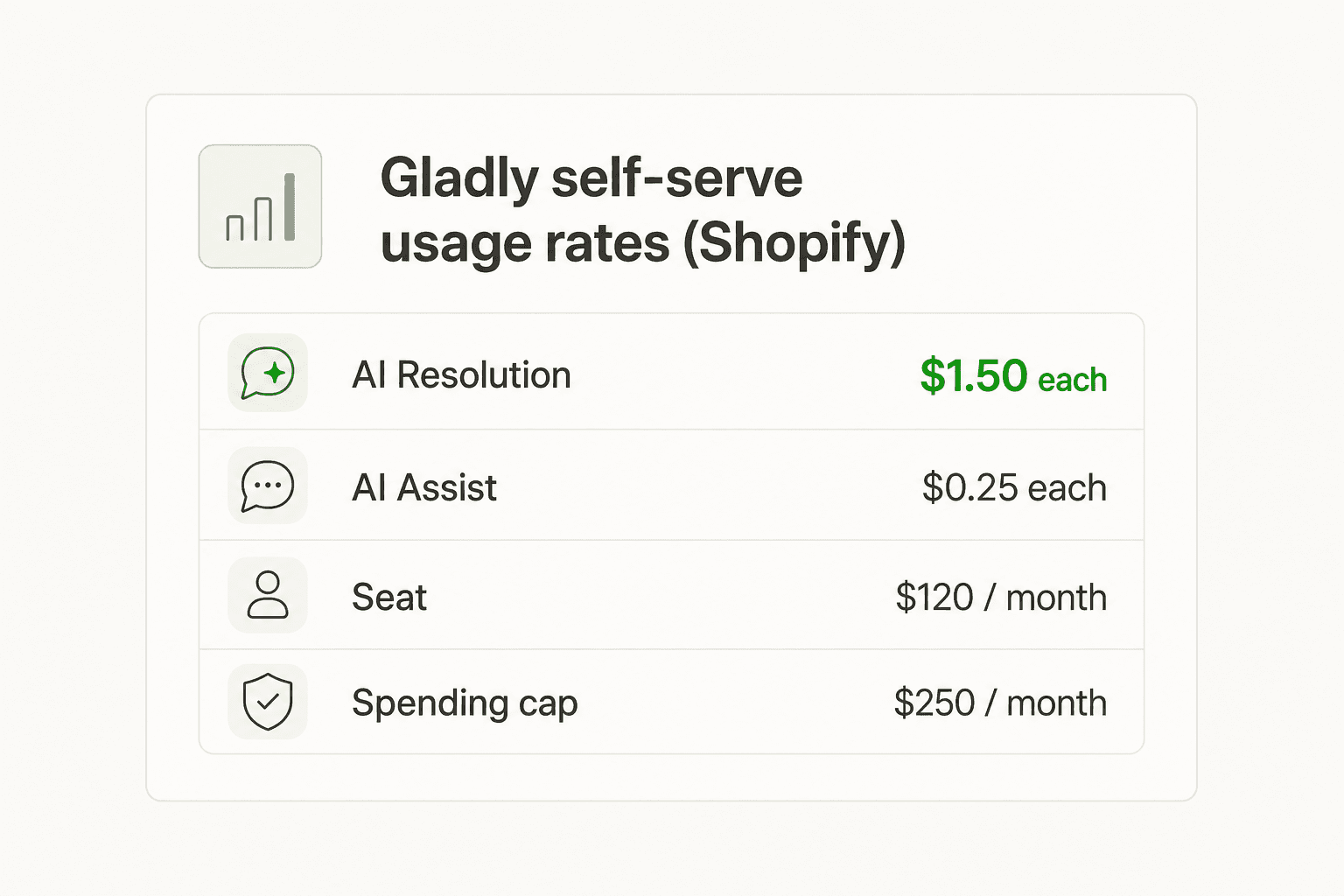
Gladly's self-serve usage rates on Shopify: $1.50 per AI Resolution, $0.25 per AI Assist, $120 per seat per month, under a $250 monthly cap

Read those numbers carefully, because they reveal the model: $1.50 per AI Resolution is per-resolution pricing. For a platform that argues against optimizing for deflection, the AI is billed by the deflection. The more Sidekick resolves, the more you pay, which is exactly the volume-scaling cost that makes per-resolution pricing nervy for high-volume brands. Third-party sources peg the full Hero platform at roughly $180 to $210 per seat per month, but since Gladly doesn't publish it, treat that as directional. Our full Gladly pricing breakdown digs in.

Where this leaves you

Gladly is a strong pick if you're a consumer brand that wants an all-in-one CX platform, your AI to take real actions, and you're comfortable with quote-only pricing and per-resolution AI costs. The engagement framing is more than spin, it's a real design philosophy that suits high-LTV retail.

The ceiling-first version: Gladly is built for DTC brands that want to migrate onto a complete platform. If you don't want to move helpdesks, or you want pricing you can see before a sales call, it's not the natural fit, and our best Gladly alternatives roundup covers where to look instead.

A layered, see-the-price-first alternative

If what you want is the autonomous resolution, not a platform migration, the layered approach gets you there on your current stack. eesel AI sits on top of the helpdesk you already run and resolves tickets the same way, takes actions, hands off with context, but with two differences that matter here: it trains on your own past tickets so it sounds like your brand from day one, and it has a simulation mode so you can see exactly what it would resolve across your historical tickets before going live. Pricing is public, pay-as-you-go per task, so you're not deducing your bill from a Shopify listing.

Try eesel

If you like the idea of action-taking AI resolution but want to prove it and price it before you commit, eesel AI lets you simulate against your real past tickets, see the resolution rate, then go live confidence-gated, all on your existing helpdesk.
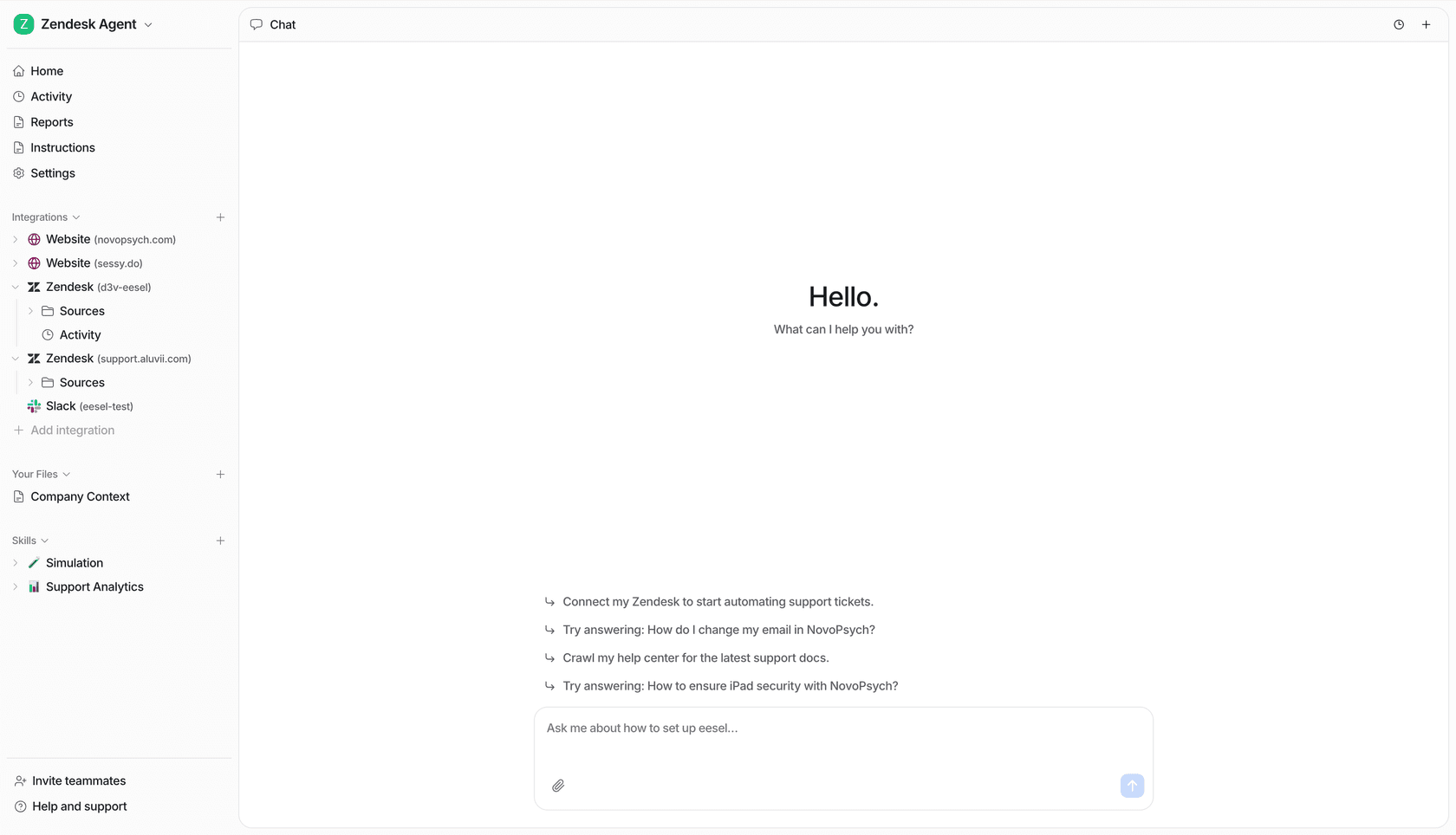
The eesel AI dashboard showing AI resolving and drafting on connected support conversations

It's transparent pay-as-you-go with $50 of free usage to start, no demo gate. Try eesel and see your real resolution rate before deciding anything.

Frequently Asked Questions

Does Gladly do AI deflection?
Functionally, yes, even though Gladly markets itself against 'deflection bots'. Its Sidekick AI resolves customer issues end to end without an agent, which is deflection by outcome. Gladly just frames it as engagement and lifetime value rather than ticket avoidance. See our Gladly AI overview for the full picture.
How does Gladly's Sidekick AI work?
Sidekick reads your knowledge and the unified customer profile, then takes real actions like cancelling an order, processing a return, or making a price adjustment across chat, voice, email, SMS, and social. When it can't resolve, it hands off to a human with full context, a pattern any good AI helpdesk agent follows.
How much does Gladly AI cost?
Gladly's platform pricing is quote-only. The one place it publishes hard numbers is its Shopify plan: $1.50 per AI Resolution, $0.25 per AI Assist, and $120 per seat per month under a $250 monthly cap. That's per-resolution pricing, so the cost rises with volume; our Gladly pricing breakdown has the detail.
Is Gladly's per-resolution pricing a good deal?
It depends on volume. At $1.50 per resolution, a high-deflection month gets expensive fast, which is the trade-off with usage pricing. Tools with flat or transparent per-task pricing can be more predictable; weigh it against our Gladly alternatives.
Can I get Gladly-style AI deflection on my current helpdesk?
Yes. Gladly is a full platform you migrate onto, but a layered tool like eesel AI adds autonomous resolution on top of your existing helpdesk, trained on your own tickets, with a simulation you can run before going live.

Share this article

Kira

Article by

Kira

Kira is a writer at eesel AI with a Computer Science background and over a year of hands-on experience evaluating AI-powered customer service tools. She focuses on breaking down how helpdesk platforms and AI agents actually work so that support teams can make better buying decisions.
Related Posts

All posts →
Illustration of an AI agent deflecting customer support tickets in Dixa
Customer Support

Dixa AI deflection: how Mim deflects tickets and what it costs

How Dixa's AI deflection works through its Mim agent, the flat-rate pricing angle, where it's gated, and how to think about deflection on your own terms.

Rama Adi NugrahaRama Adi NugrahaJun 18, 2026
Illustration of AI routing support tickets in HubSpot Service Hub
Customer Support

AI ticket routing for HubSpot Service Hub: how it works

How ticket routing works in HubSpot Service Hub, why the smartest routing is locked to Enterprise, and how to add AI-driven routing on any tier.

Riellvriany IndriawanRiellvriany IndriawanJun 18, 2026
Illustration of AI drafting and sending automatic replies inside Kustomer
Customer Support

Kustomer AI auto-reply: how it works and what to expect

How Kustomer's AI auto-reply works, the difference between Concierge and Envoy, the real numbers behind it, and the trade-offs to weigh before you switch it on.

Riellvriany IndriawanRiellvriany IndriawanJun 18, 2026
Illustration of AI sorting incoming support tickets in a Help Scout inbox
Customer Support

AI ticket triage for Help Scout: a practical guide

Help Scout's native AI is built to answer tickets, not triage them. Here's how AI ticket triage for Help Scout actually works, and how to add it without leaving your inbox.

KiraKiraJun 18, 2026
Illustration of support tickets moving safely from one helpdesk to another during a migration
Customer Support

How do I switch helpdesks without losing ticket history?

A practical 2026 guide to switching helpdesks without losing ticket history: what to export, how to map it, and the migration you might not even need to do.

KiraKiraJun 18, 2026
Illustrated hero banner for a roundup of the best helpdesk tools for startups in 2026
Customer Support

The best helpdesk tools for startups in 2026 (a hands-on list)

A hands-on list of helpdesk tools for startups in 2026, with real pricing, free tiers, and a clear pick for every stage from your first ten tickets to your first thousand.

KiraKiraJun 15, 2026
Banner image for Zendesk vs Hiver in 2026: Which helpdesk is right for you?
Customer Support

Zendesk vs Hiver in 2026: Which helpdesk is right for you?

Evaluating Zendesk vs Hiver? This 2026 comparison breaks down the architecture, hidden costs, and AI capabilities of both platforms.

Amogh SardaAmogh SardaApr 28, 2026
Chatbot analytics dashboard with ticket themes bar chart, resolution rate gauge, and CSAT score panel
Customer Support

Chatbot analytics guide: how to track and improve chatbot performance

A practical guide to chatbot analytics: the 8 metrics that actually matter, industry benchmarks for each, and a feedback loop that turns data into real improvements.

Quinela WenskyQuinela WenskyMay 15, 2026
Zendesk AI agent review 2026 - hero banner with Zendesk logo on a minimal white background
customer support

Zendesk AI agent review (2026): features, pricing, and what users actually think

A real-world Zendesk AI agent review for 2026: what agentic AI delivers, how AR pricing works, and what 6,837 G2 users and Reddit actually say.

Riellvriany IndriawanRiellvriany IndriawanMay 21, 2026

Ready to hire your AI teammate?

Set up in minutes. No credit card required.

Get started free