

Trying to scale personalized customer service can feel impossible. Your customers expect you to remember them and their past issues, but most ticketing systems treat every new message as a separate event. It’s a broken process that forces customers to repeat themselves and leaves support agents digging through old tickets just to figure out what’s going on.
Gladly AI says it has the answer. Its big promise is to focus on people, not tickets, by building a platform that pulls every customer interaction into a single, lifelong conversation. It’s a neat idea, but is it the right move for every team?
In this post, we'll walk through a complete overview of Gladly AI. We’ll look at its main features, try to make sense of its pricing model (or the lack of one), and see how it compares to more flexible alternatives that give you powerful AI without locking you into a whole new way of working.
What is Gladly AI?
Gladly basically flips the traditional help desk model on its head. Instead of organizing support around case numbers and ticket IDs, it puts the customer at the center of everything. In practice, this means every email, phone call, chat, or social media message from a single customer gets threaded into one continuous timeline.
This approach is powered by two main parts:
-
Gladly Hero: This is the dashboard where your agents work. It’s built to give them a chronological view of a customer’s entire history, so they don’t have to jump between different systems to get the full story.
-
Sidekick: This is Gladly's AI agent. Sidekick helps out in the background, automating simple conversations, giving agents real-time suggestions, and handling repetitive tasks so your team can focus on trickier problems.
The whole point is to make customer service feel less like a series of transactions and more like a real conversation. By giving agents all the context up front, Gladly hopes to help them provide faster and more helpful support.
The main features of the Gladly AI platform
Gladly’s platform really comes down to three things: its all-in-one channel approach, its no-code setup for CX teams, and its ability to connect with other apps to get things done. Let's take a closer look at what each of these means for your team.
All your conversations in one place
Gladly's most unique feature is how it pulls all your communication channels together. It combines voice calls, chat, SMS, email, Facebook Messenger, and Instagram Messaging into a single view. So, if a customer sends an email and then follows up with a chat an hour later, both messages show up in the same thread.
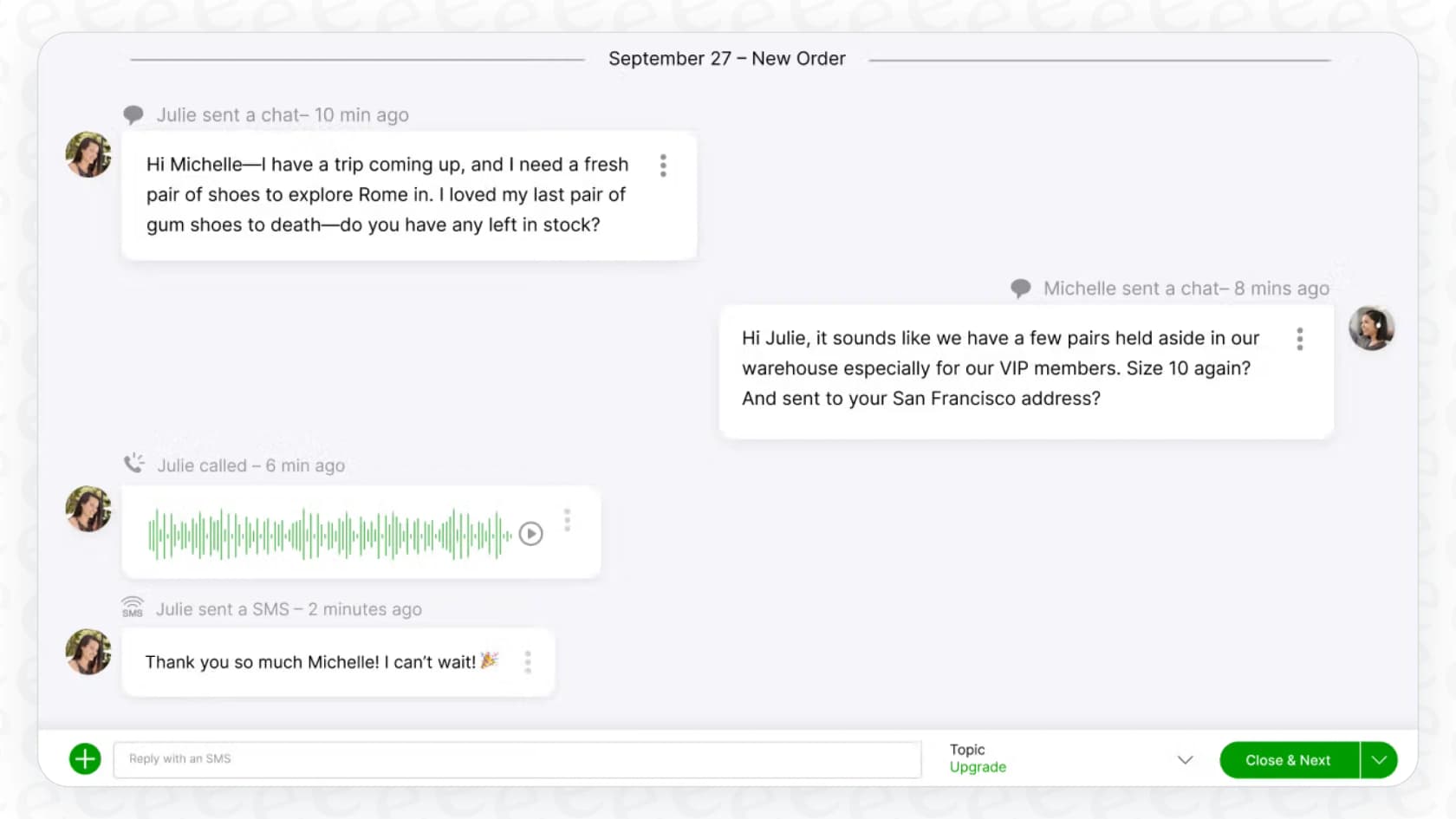
The upside here is pretty clear: agents get the full history instantly, so customers don't have to explain their issue over and over. This makes things smoother for everyone. Gladly also supports help centers in over 45 languages, which is a big plus for global teams.
But this unified view comes with a big catch: you have to go all-in on the Gladly ecosystem. If your team is happy with its current help desk or uses specific tools for different channels, moving everything over to Gladly is a huge project. This all-or-nothing approach can feel pretty rigid if you value flexibility and just want to add AI to your current setup without ripping everything out. You’re essentially working within a "walled garden" that can be tough to leave once you’re in.
No-code setup and rollout
Gladly really pushes the idea that its platform is made for customer experience folks, not developers. You can see this in their "no-code" approach to setting up the AI. Instead of needing someone who can write code, Gladly gives your team tools to manage the AI using plain English.
Here are the main tools you'll use:
-
Guides: This feature lets you write simple instructions to tell the Sidekick AI how to act. You can use Guides to set its brand voice, map out specific workflows, and decide when it needs to pass a conversation to a human.
-
Journeys: This tool gives you a visual way to map out and track how your AI is performing across all your channels, so you can see what’s working and what isn’t.
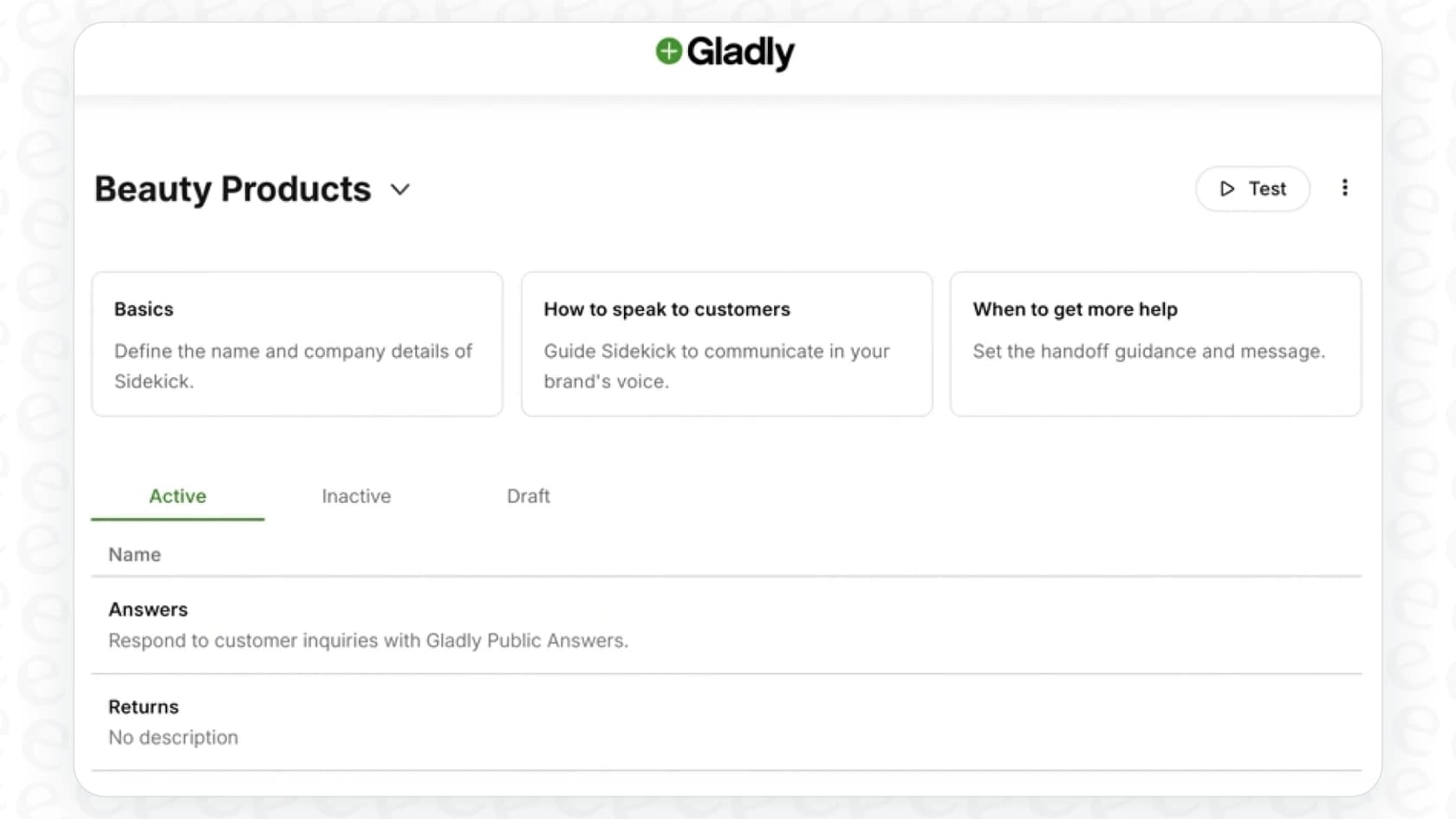
Gladly says this lets teams "deploy AI in days, not months." While a no-code setup is definitely easier to get started with, it has its limits. The "Guides" system, for example, still needs someone to write and update a whole lot of instructions by hand. This can take a ton of time and might not cover all the weird, specific issues customers run into. It’s kind of like writing a manual for every possible problem instead of letting the AI learn from what has actually happened.
This is different from how a tool like eesel AI works. It can learn directly from thousands of your team's past support tickets, automatically picking up on your brand's tone, common problems, and what solutions worked best. This helps it get up to speed with a deep understanding of your business from day one, without you having to write out hundreds of manual guides.
Taking action with apps and integrations
A useful AI assistant doesn't just find answers; it actually solves problems. Gladly's App Platform is designed to do just that by connecting to external systems. This is where the platform really starts to pay off, especially if you’re in e-commerce.
Gladly focuses heavily on integrations with major e-commerce platforms like Shopify and BigCommerce. By hooking into these systems, the Sidekick AI can do more than just talk. It can take action right inside the conversation, like:
-
Checking on an order’s status.
-
Processing a full or partial refund.
-
Generating a discount code.
-
Canceling an order.
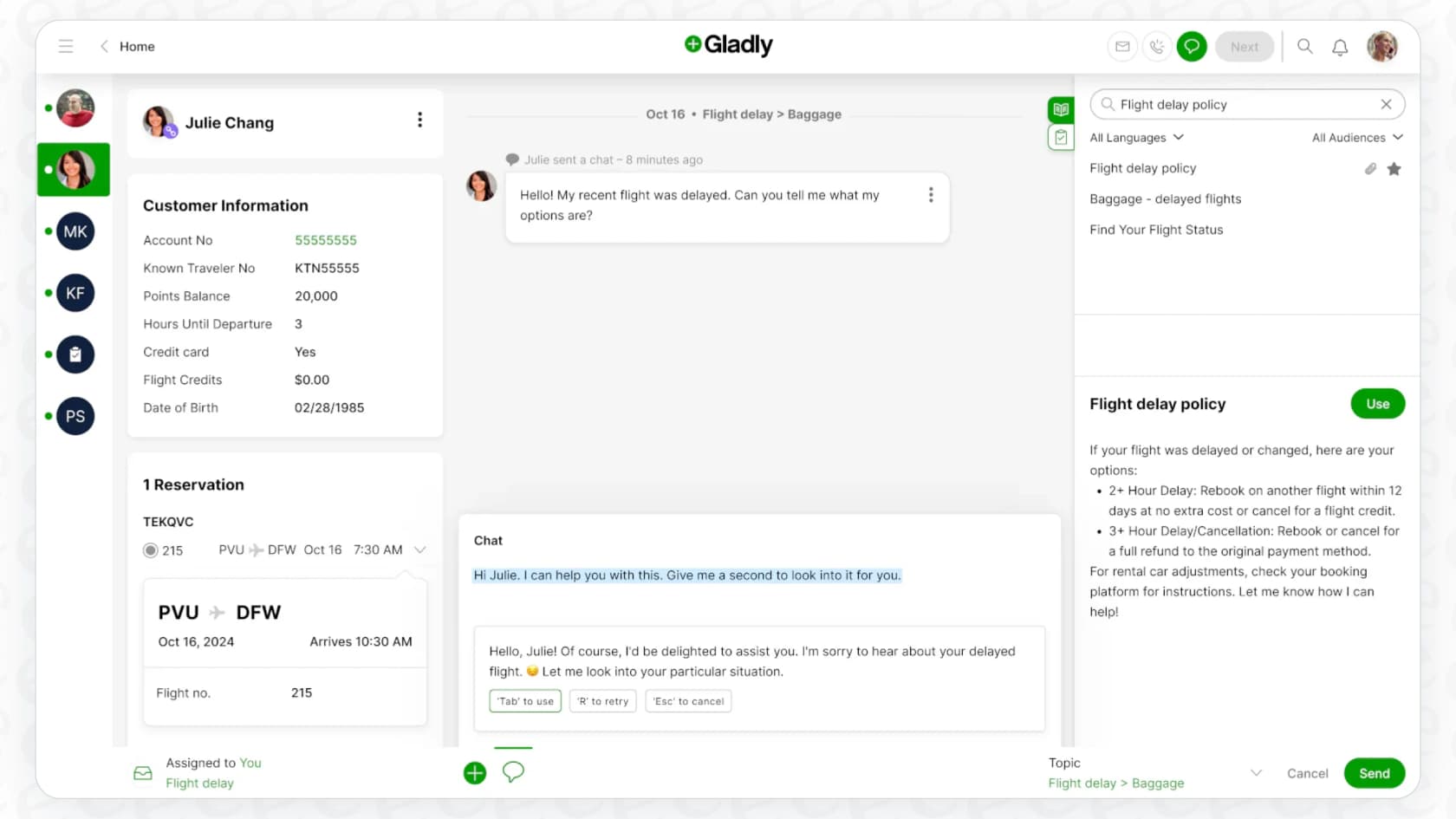
Being able to resolve common requests without a human stepping in is a major move toward true automation. The downside? The platform's strong focus on e-commerce might not be as useful for businesses in other industries. If your team relies on knowledge from a bunch of different places, like internal wikis, technical docs, or project management tools, you might find the integration options a bit thin.
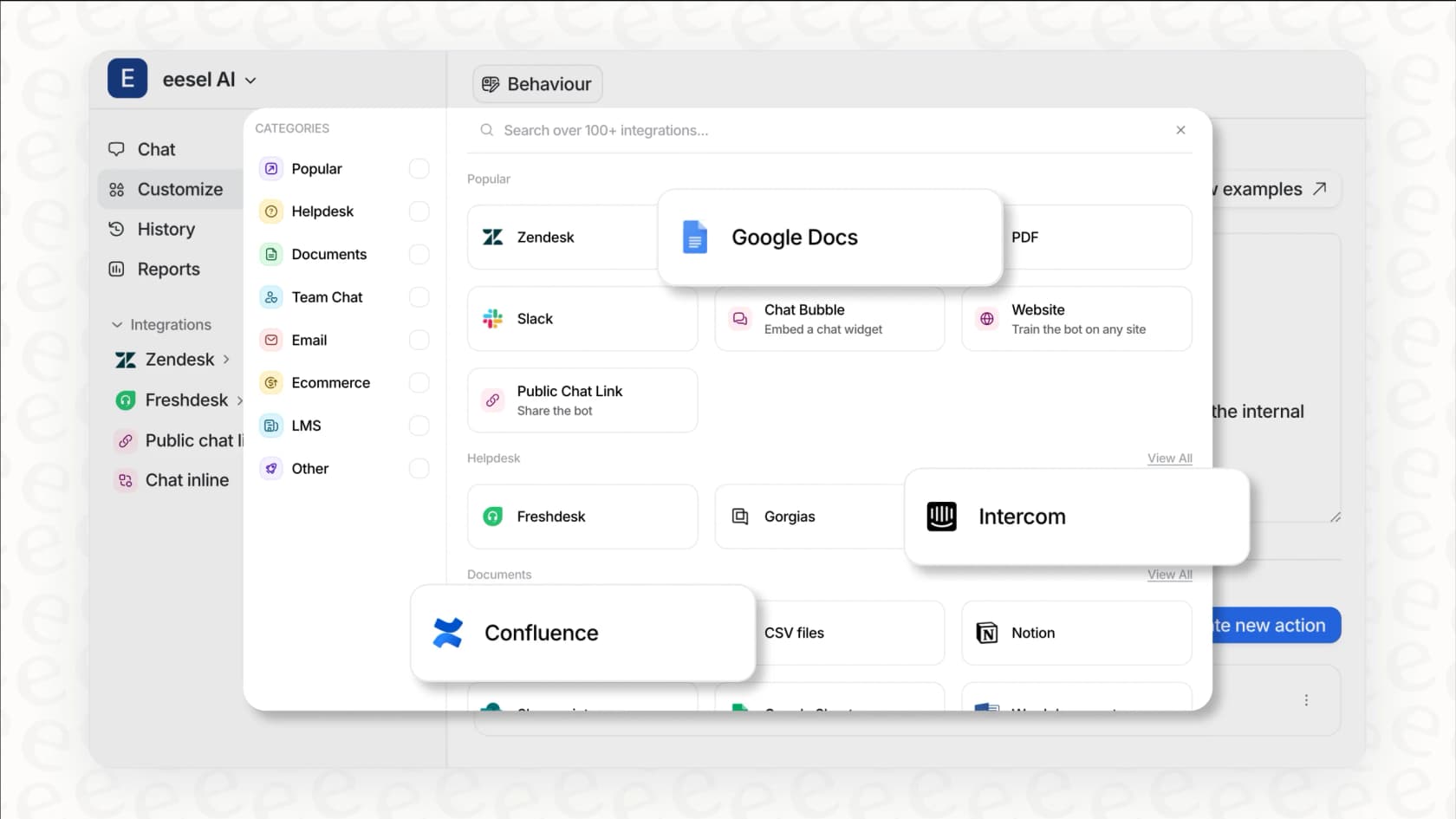
This is another spot where a platform like eesel AI offers more flexibility. It’s built to pull knowledge from a much wider range of sources. It can connect to internal wikis like Confluence and Google Docs, project tools like Jira, and chat platforms like Slack, on top of help desks like Zendesk and e-commerce platforms like Shopify. This creates a more complete knowledge base, letting the AI answer a bigger variety of questions more accurately.
Gladly AI pricing
Cost is a huge factor when choosing a new platform, and this is where things with Gladly can get a little frustrating. Gladly doesn't share any pricing information on its website. If you want a quote, you have to book a demo and talk to their sales team.
This lack of transparency causes a few problems:
-
It’s hard to budget: You can't know if Gladly is even in your price range without spending time on a sales call first.
-
It slows you down: If you’re trying to compare a few options quickly, the mandatory demo becomes a roadblock. You can’t just sign up for a trial and see for yourself.
-
You might face hidden costs: A sales-led process can sometimes hide the true total cost. You might find out about extra fees for setup, more seats, or certain features late in the game.
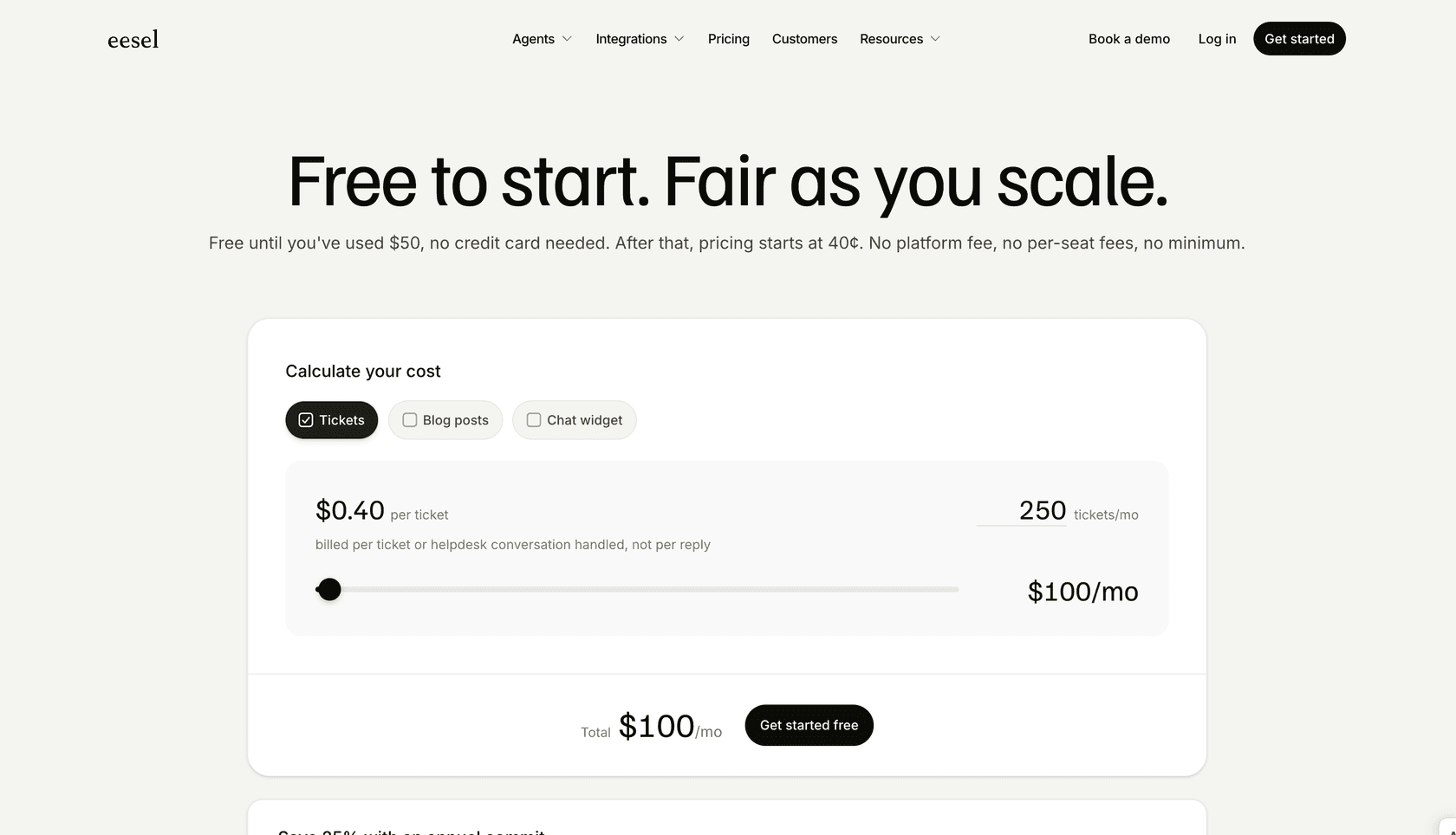
This is a big difference from the clear, predictable model you get with a service like eesel AI. With eesel AI, the rate is right there on the website for anyone to see: plans from $299/month for 500 credits, where 1 credit is one ticket or helpdesk conversation handled, with no platform fee and no per-seat charge. You can work out your own bill before you talk to anyone, start on 100 free credits, and move up or down when you're ready, all without sitting through a sales pitch.
A better alternative to Gladly AI for flexible AI automation
If your team values speed, flexibility, and staying in control of your tools, Gladly's all-in-one, sales-gated approach might not be the best fit. This is where eesel AI comes in as a great alternative. It’s designed to bring powerful AI into the workflows you already have, not force you to start over.
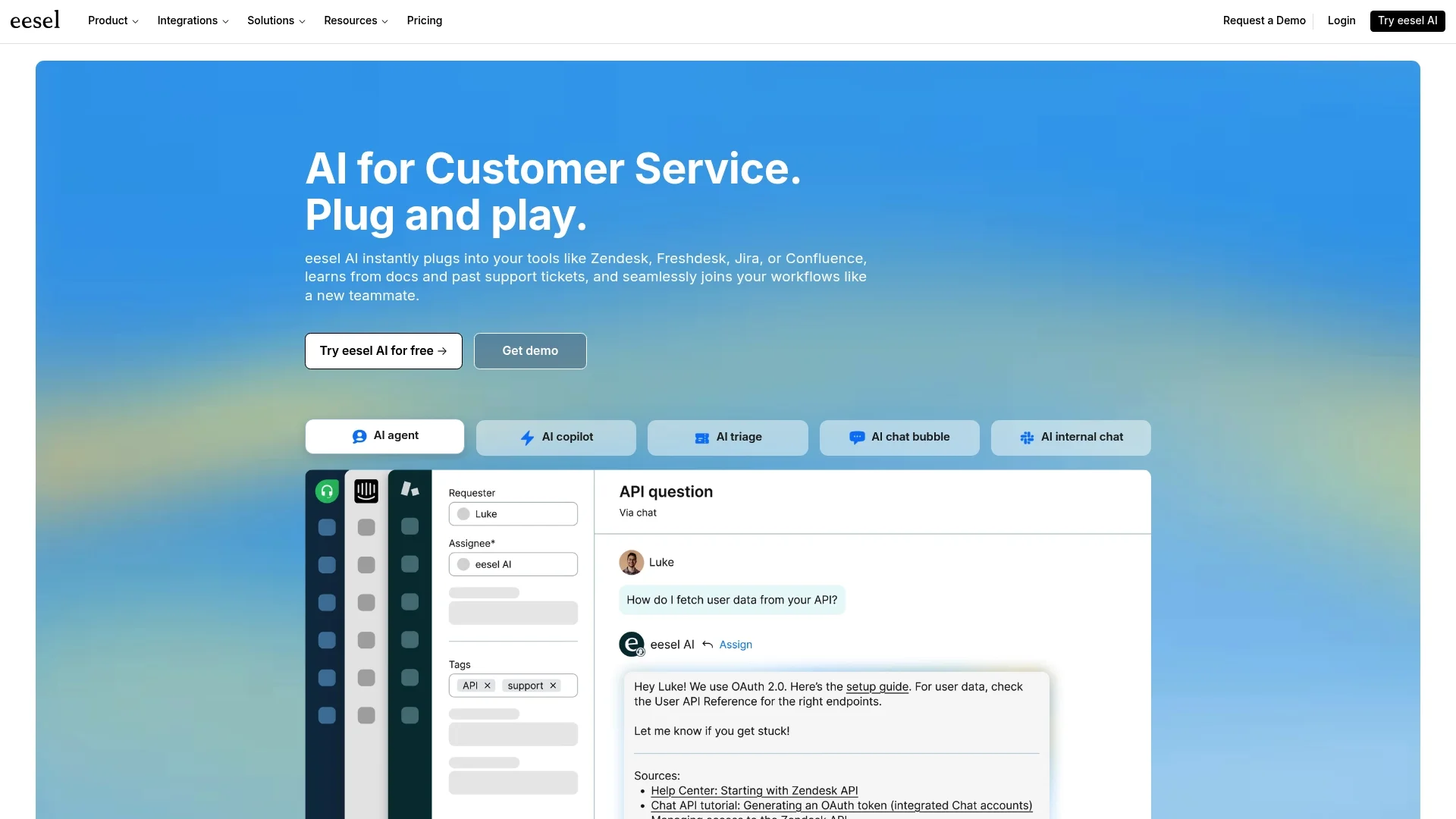
Here are a few reasons why eesel AI's AI Agent might be a better choice:
-
Get started in minutes, not months: eesel AI is truly self-serve. You can sign up, connect your help desk, and start training your AI with a few clicks, without ever having to talk to a salesperson.
-
Connect all your knowledge, instantly: Don't fence your AI in with just a help center. eesel AI learns from your past tickets, internal docs in Confluence and Google Docs, Slack chats, and over 100 other sources. This gives it the full picture it needs to be genuinely helpful.
-
Test it out safely: Before the AI ever talks to a real customer, you can use eesel AI's simulation mode. This lets you see how it would have handled thousands of your past tickets, giving you a clear forecast of its potential resolution rate.
What's the verdict on Gladly AI?
Gladly AI presents an interesting vision for the future of customer service. For brands, especially in e-commerce, that are ready to go all-in on a single, tightly integrated platform, its unified conversation view and action-taking AI could be a huge win. It really does put the customer at the center of the experience.
But that vision comes with some serious trade-offs. The hidden pricing makes it hard to evaluate, the manual setup can be a time sink, and the all-in-one system can feel limiting if you like picking the best tools for different jobs.
For teams looking for a more nimble, transparent, and broadly compatible solution that improves their existing tools instead of replacing them, it's worth looking at other options. A platform like eesel.ai gives you the power of AI automation with the freedom to work your way, making it a smart choice for any business ready to improve its customer support.
Frequently asked questions
How does Gladly AI change the way customer service is organized compared to traditional ticket-based systems?
Gladly AI shifts the focus from individual tickets to a single, continuous conversation centered around the customer. It gathers every interaction (email, chat, call) into one lifelong timeline, giving agents full context without customers having to repeat themselves.
What communication channels can Gladly AI consolidate into a single view for customer interactions?
Gladly AI brings together voice calls, chat, SMS, email, Facebook Messenger, and Instagram Messaging into one unified view. This allows agents to see a customer's entire history across all these channels instantly.
Can a customer experience team easily set up and manage Gladly AI without needing developers?
Yes, Gladly AI emphasizes a no-code approach, allowing CX teams to manage the AI using plain English through tools like "Guides" and "Journeys." This is designed to enable quick deployment without technical coding expertise.
What kind of integrations does Gladly AI prioritize, and how might that affect businesses outside of e-commerce?
Gladly AI heavily focuses on integrations with major e-commerce platforms like Shopify and BigCommerce, enabling actions like order status checks and refunds. Businesses in other sectors relying on diverse knowledge sources like internal wikis or technical docs might find these integration options less comprehensive for their specific needs.
Why is it difficult to find clear pricing information for Gladly AI?
Gladly AI does not publish pricing details on its website, requiring potential customers to book a demo and speak with their sales team for a quote. This lack of transparency can make budgeting and direct comparison with other platforms challenging.
For which types of businesses or teams might Gladly AI be a particularly strong fit?
Gladly AI is particularly well-suited for brands, especially in e-commerce, that are prepared to fully adopt a single, tightly integrated platform. Its unified conversation view and action-taking AI can be highly beneficial for such organizations.
What are some key reasons to consider an alternative solution if Gladly AI's all-in-one approach isn't ideal for my team?
If your team values flexibility, speed of deployment, and desires to integrate AI into existing workflows rather than replacing them entirely, an alternative might be better. Solutions like eesel AI offer more transparent pricing and wider knowledge source integrations, allowing you to retain control over your current tools.