Ayudo alternatives in 2026: 8 options, and the tier that hides the test

Riellvriany Indriawan

Katelin Teen
Last edited August 20, 2026
Why I care about the test more than the feature list
I work eesel's support queue. eesel has been putting AI agents on live support queues for more than three years now, across thousands of real tickets and a lot of customer rollouts that did not go to plan the first time.
Here is the scar that shaped how I read a pricing page. I have watched paying customers' bots fabricate answers when knowledge retrieval came back empty: one energy company's agent invented solar-cell subscription claims and sent them to real customers, and another account got a chemical element back as an answer to a business question. Nobody demoed that. It showed up in production, in front of people who were paying for it.
That is why the replay matters. A support lead running about 7,000 tickets a month put the objection better than I can, on a call eesel lost:
"The AI will never be able to answer 100% of the questions, but if it tries and just answers 'sorry I don't know this,' I cannot go and check all my 7,000 tickets to see if the AI actually made a good answer — then the point is a little bit gone. I need an AI who is only handling the tickets that it's confident to handle and all the other ones, leave them alone."
He was right, and he bought elsewhere. What he was asking for is not a feature toggle, it is evidence: show me, on my own history, which tickets this thing should touch. Every tool below either gives you that or does not, and the difference shows up in the first month rather than the demo.
What Ayudo actually is
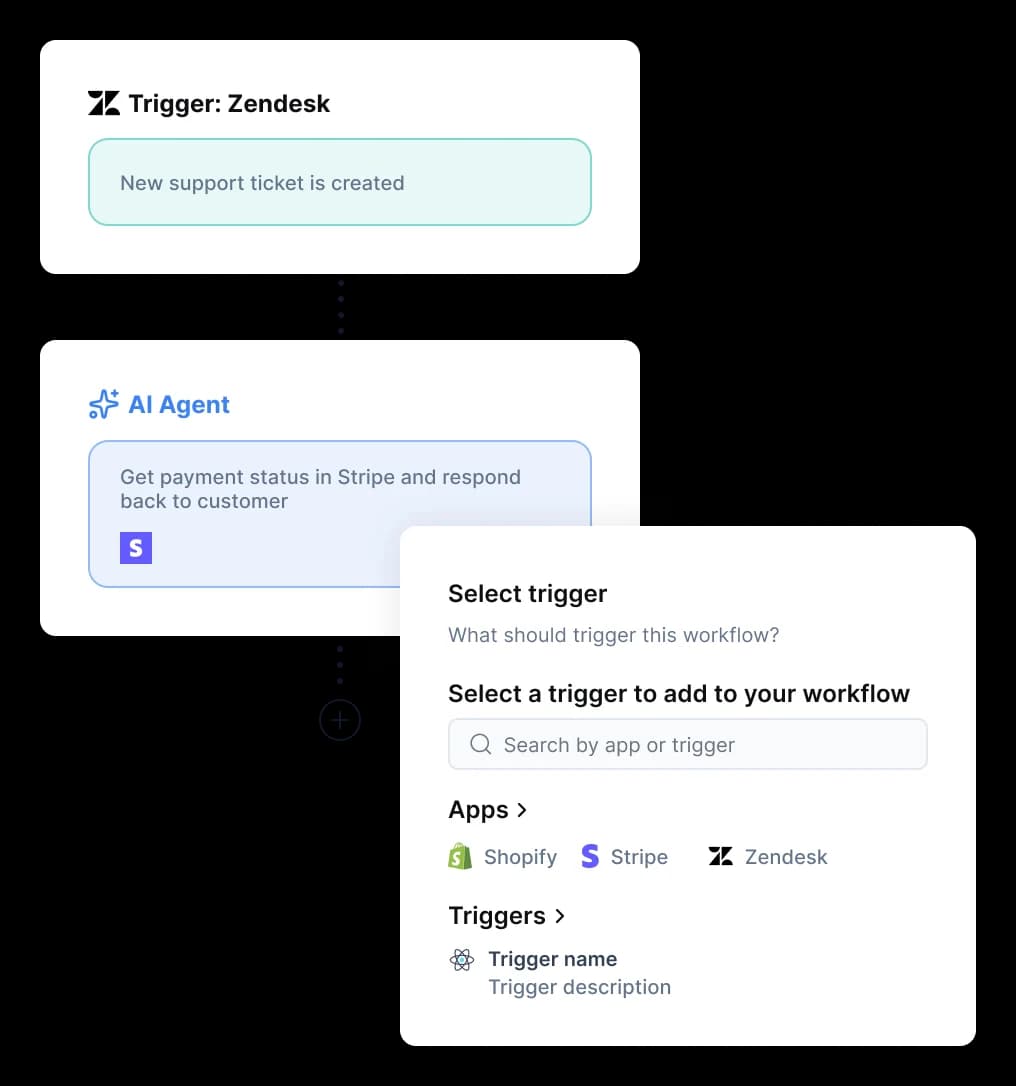
Ayudo describes itself as a unified support and automation platform with a built-in AI agent workforce: a helpdesk agent that answers from past conversations and live system data, an escalation agent that coordinates across teams and outside partners, and an insights agent that recommends workflow and knowledge changes. Channels cover WhatsApp, email, Slack, Discord, SMS, social and voice through providers like Twilio and Exotel, plus a mobile SDK.
The credentials are not thin. Co-founders Shashwat Jain and Nitin Panwar both came out of Freshworks, where Jain launched Freddy AI and Panwar worked on the Freddy engine, with earlier time at Intel, Samsung and Info Edge. Security is broad and not tier-gated: SOC 2 Type II, ISO 27001, GDPR, BAA, audit logs and message redaction appear on every plan. Their published customer proof is SafeGold, whose co-founder and COO says the AI agents "automatically respond to customers with real-time order updates and follow up with vendors for tracking info."
The headline results on the homepage are 42% faster resolution, better than 80% deflection, and 35% lower cost per resolution. Those are vendor figures with no methodology attached, which is normal, and worth treating as a target rather than a forecast.
The two numbers that do not match
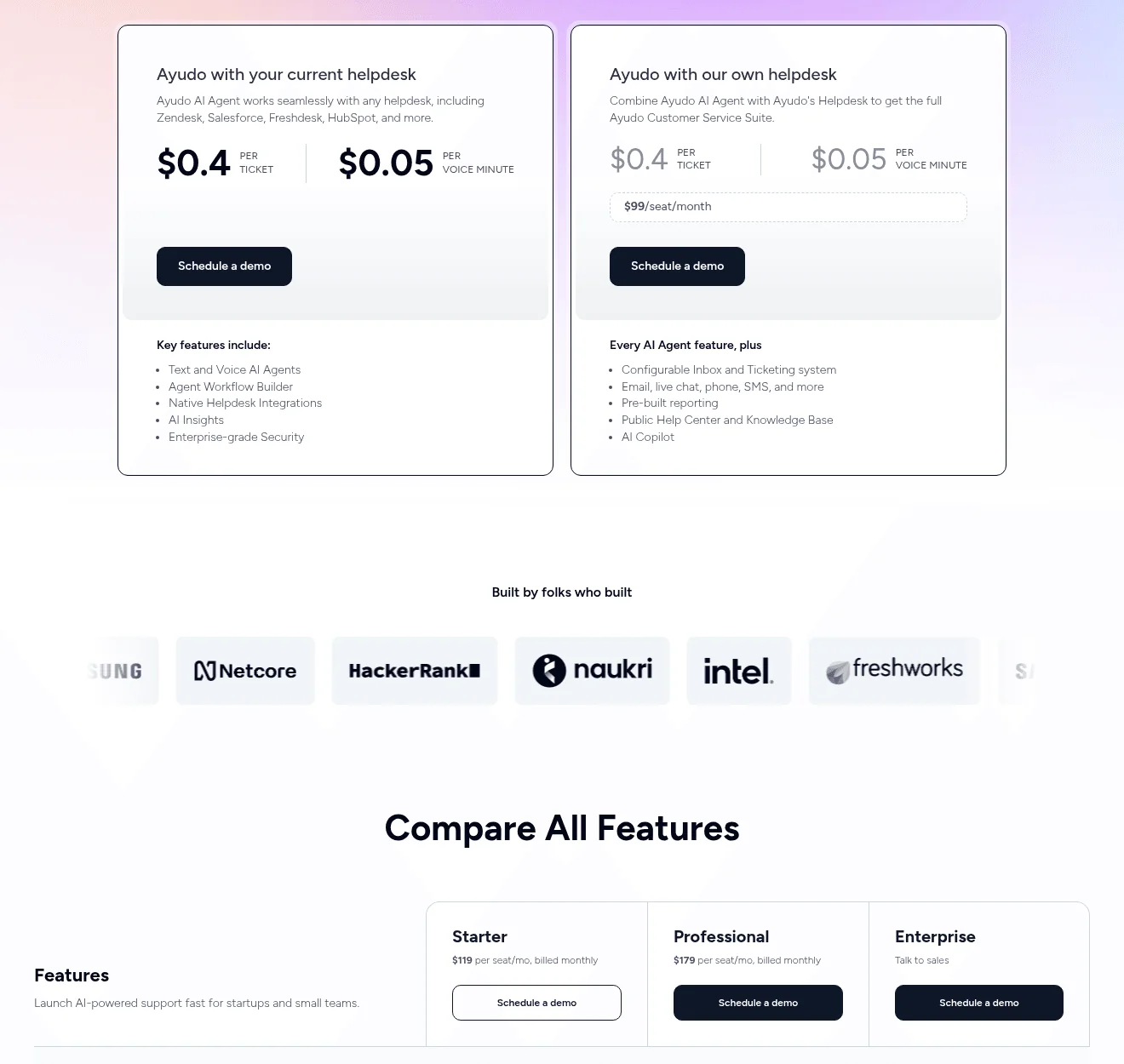
Two purchase paths sit side by side on the pricing page. "Ayudo with your current helpdesk" is the AI layer alone: $0.40 per ticket, $0.05 per voice minute, no seat fee. "Ayudo with our own helpdesk" adds the inbox, ticketing, help center and copilot, and the card prints $99/seat/month underneath the same usage rates.
Scroll down to Compare All Features on that same page and the cheapest suite tier is Starter, $119 per seat/mo, billed monthly, with Professional at $179 and Enterprise quote-only. The most likely explanation is that $99 is the annual rate and $119 is the monthly one, but the card never says annual, and a 20% difference on a per-seat line is not a rounding error at ten seats.
What Starter does not get
The comparison table is long and mostly green, which is what makes the gaps easy to skim past. These are the rows where Starter differs, taken straight off the page:
| Capability | Starter $119 | Professional $179 | Enterprise |
|---|---|---|---|
| Agent Simulation (historical data) | No | Yes | Yes |
| Agent A/B Testing | No | Yes | Yes |
| Advanced Models | No (Basic Models) | Yes | Yes |
| Synthetic data generation | No | Yes | Yes |
| Sandbox | No | Yes | Yes |
| SSO | No | Yes | Yes |
| HIPAA | No | Yes | Yes |
| External actions / integrations | Basic | Standard + Premium | Standard + Premium |
| Custom objects | 10 | Unlimited | Unlimited |
| Remove "Powered By Ayudo" branding | No | Yes | Yes |
| Voice cloning and voice profiles | No | Yes | Yes |
| Data masking | No | No | Yes |
| Workspaces | No | No | Yes |
| Dedicated CSM and SLAs | No | No | Yes |
| Support channels | Chat, Email | Chat, Email | Chat, Slack, Email, Phone |
| Priority support, security review, onboarding | No | Yes | Yes |
Two of those deserve to be said plainly rather than left in a table. Historical simulation and A/B testing both start at Professional, so the tier that costs less is also the tier where you find out how the AI behaves by shipping it. And Starter runs on "Basic Models" rather than Advanced, so you pay the same $0.40 per ticket for output from the cheaper model.
None of that makes Ayudo a bad product. It makes Starter a bad place to run a first rollout, which is exactly the tier a small team would pick.
What the same volume costs elsewhere
Per-unit rates are easy to compare and almost always misleading, because the denominators differ: Ayudo and eesel bill a ticket handled, Zendesk bills a resolution, Gorgias bills an automated interaction, Front bills a conversation. Seats change the answer again. Plug in your own numbers.
The pattern that shows up as soon as you move the sliders: a pure usage rate wins at low volume and loses at high volume, and a bundled plan does the reverse. At 2,000 tickets and 6 seats, Gorgias Pro's bundle is competitive; push to 15,000 tickets and the per-ticket rates pull ahead of everything with a seat line in it.
Ayudo alternatives at a glance
| Tool | Billing unit | Published entry price | Seat fee | Replay your own tickets? | Self-serve start | Keeps your helpdesk | Voice | HIPAA | SOC 2 / ISO 27001 |
|---|---|---|---|---|---|---|---|---|---|
| Ayudo | Ticket + voice minute | $0.40/ticket, $0.05/min | $99 card, $119 table | Professional $179+ | No, demo only | Yes | Yes | Professional+ | Yes / Yes |
| eesel AI | Ticket or chat handled | $0.40/ticket | None | Yes, any plan | Yes, $50 free | Yes | Via helpdesk | Enterprise | Yes / Yes |
| Zendesk | Automated resolution | $19/agent annual | Yes, required | Sandbox on higher plans | Yes, trial | It is the helpdesk | Talk add-on | Yes | Yes / Yes |
| Freshdesk | AI session (72h window) | $19/agent, Freddy included | Yes, required | Sandbox on higher plans | Yes, free plan | It is the helpdesk | Add-on | Enterprise | Yes / Yes |
| Gorgias | Automated interaction | $40/mo, 50 tickets | No fee, seats capped | No historical replay | Yes, 30-day trial | It is the helpdesk | Add-on | No | Yes / Partial |
| Front | Conversation | $25/seat annual | Yes, required | Scenarios you write | Yes, trial | It is the helpdesk | Add-on | Yes | Yes / Yes |
| Decagon | Not published | Not published | Not published | Testing suite, vendor-led | No, demo only | Yes | Yes | Yes | Yes / Yes |
| Sierra | Outcome, blended | Not published | Not published | Vendor-led | No, demo only | Yes | Yes | Yes | Yes / Yes |
| Crescendo | Was per solve, now quote | Not published | Not published | Vendor-generated evals | No, demo only | Replaces it | Yes | Yes | Yes / Yes |
A note on that last column and the HIPAA one: I am reporting what each vendor publishes, and "Partial" means the certification is claimed but not evidenced the same way on the page. Check your own compliance requirements against a signed document, never a badge row.
1. eesel AI
What it is
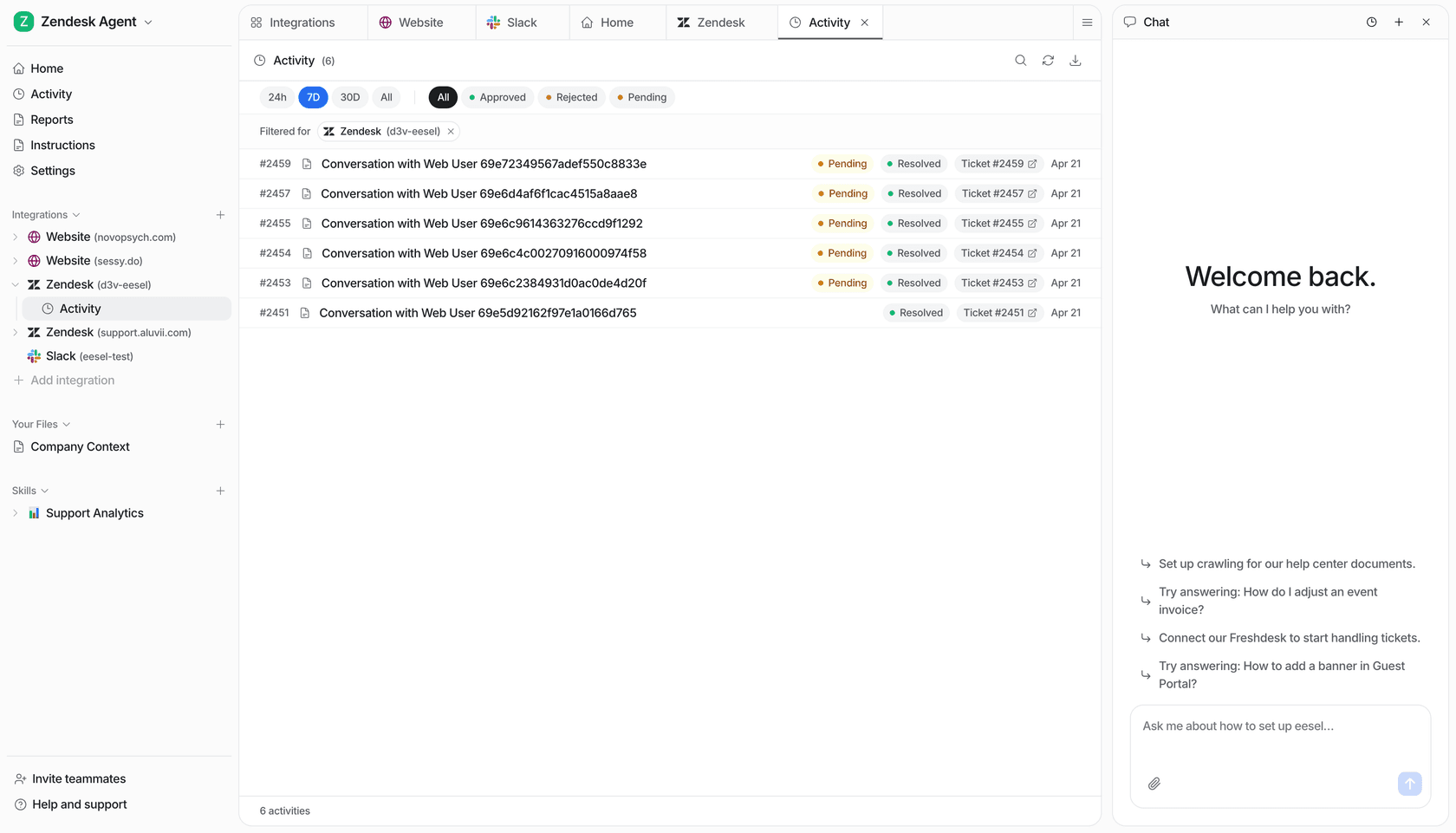
An AI layer that sits on the helpdesk you already run rather than replacing it. It connects to Zendesk, Freshdesk, Gorgias, Front, Help Scout, HubSpot, Salesforce and Jira Service Management, learns from your past tickets and your existing knowledge, and either drafts replies for a human or handles conversations end to end.
I am on the team that builds it and works its queue, so read this section with that in mind. The facts are checkable on eesel's own pricing page, which is the standard I am holding everyone else to here.
Where it fits
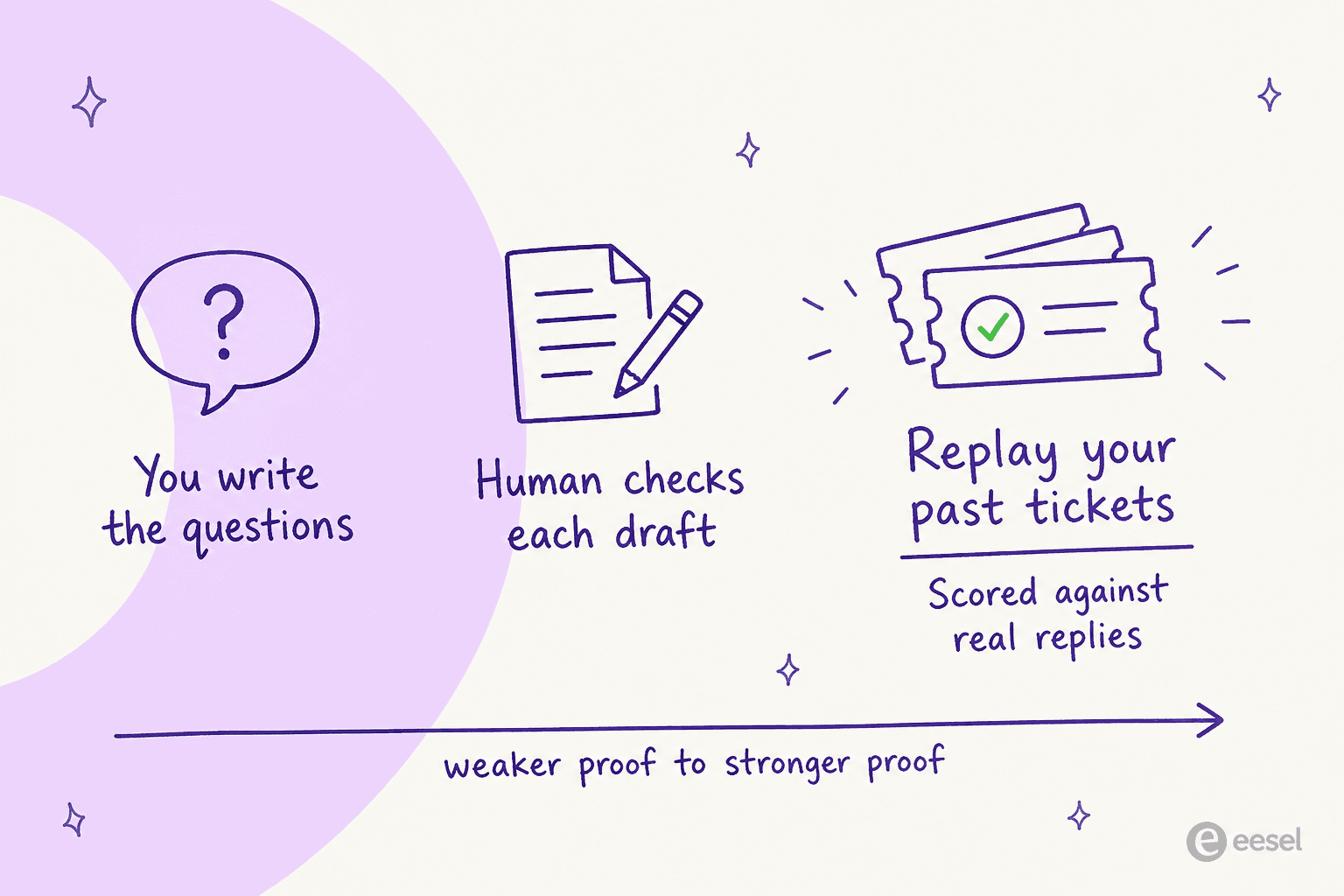
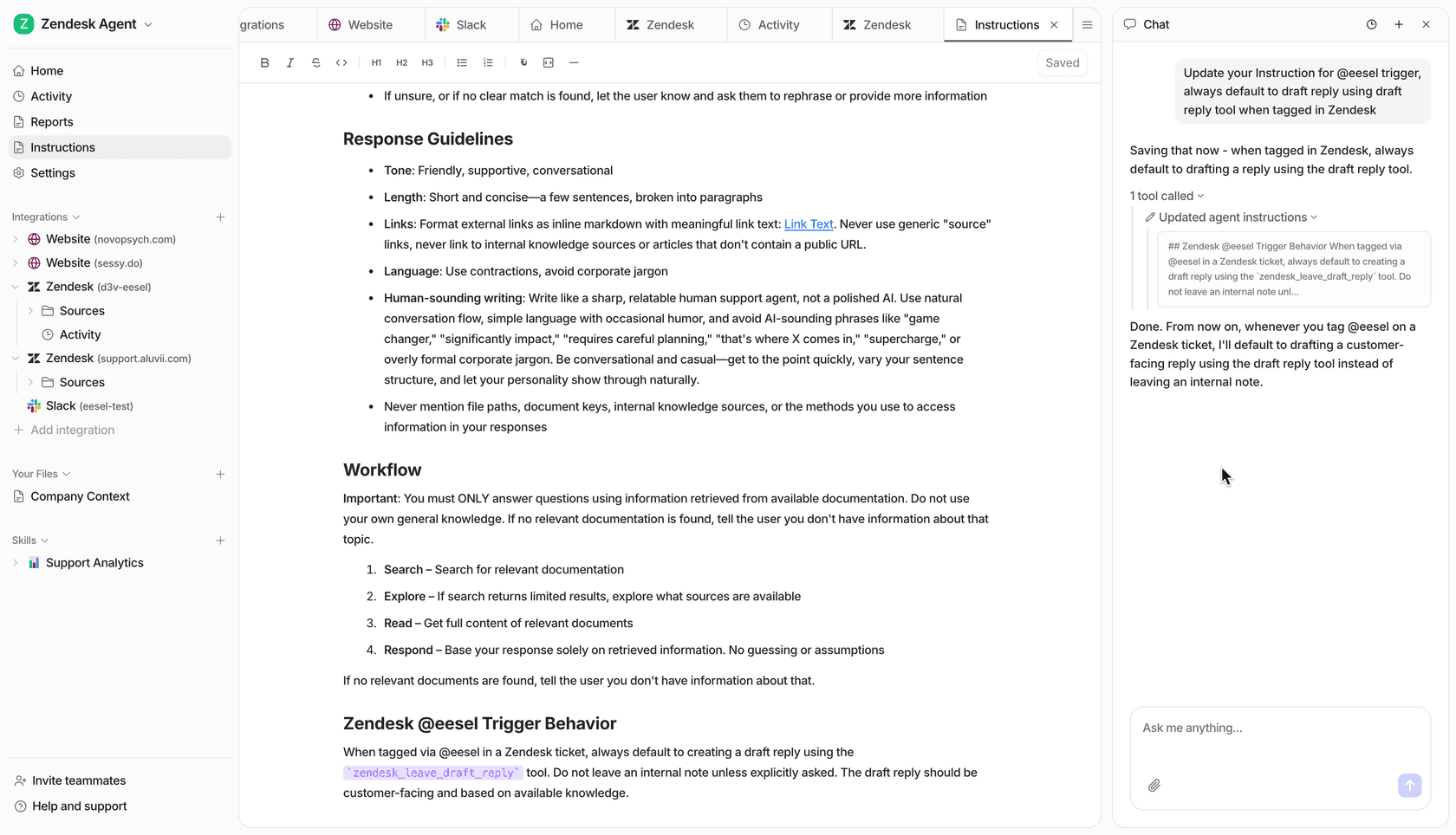
Same job as Ayudo's "with your current helpdesk" path, and the closest direct comparison in this list. The difference is the rollout. Simulation is a skill you invoke by asking for it in plain language: it replays hundreds of your past tickets and scores each answer against what your team actually sent, then hands back the gaps and the instruction changes that would close them. It does not forecast a resolution rate or a cost, and I would not trust a tool that claimed to.
Pricing
$0.40 per ticket or chat session handled, where one conversation counts once regardless of how many replies it takes. Heavier jobs like a full blog generation are $4. Dashboard lookups are free. No platform fee, no per-seat charge, no monthly minimum, and a hard spend cap you set yourself. Commit to $300/month for a year and it drops 25%. Enterprise adds a $1,000/month platform fee for a dedicated engineer, SSO, HIPAA and a BAA. The trial is $50 of free usage with no card.
One honest wrinkle: the unit is a task handled, not resolved. eesel bills whether or not the AI closed it. Gorgias and Zendesk bill outcomes, which is a real difference in your favour on the tickets AI cannot solve, and against you on the ones it can.
Limits
There is no eesel helpdesk, so if you want one product for the inbox and the AI, this is the wrong shape and Ayudo's suite is the better fit. Coverage is narrower than a 13,000-connector catalogue: Zoho Desk is not supported, and neither are Crisp, LiveAgent or Helpshift. Voice arrives through whatever your helpdesk already does, not as a native channel with its own per-minute meter.
Verdict
The best pick if you want Ayudo's economics without the tier gate on the test, and you are happy keeping your current helpdesk. If you need the helpdesk itself, keep reading.
2. Decagon
What it is
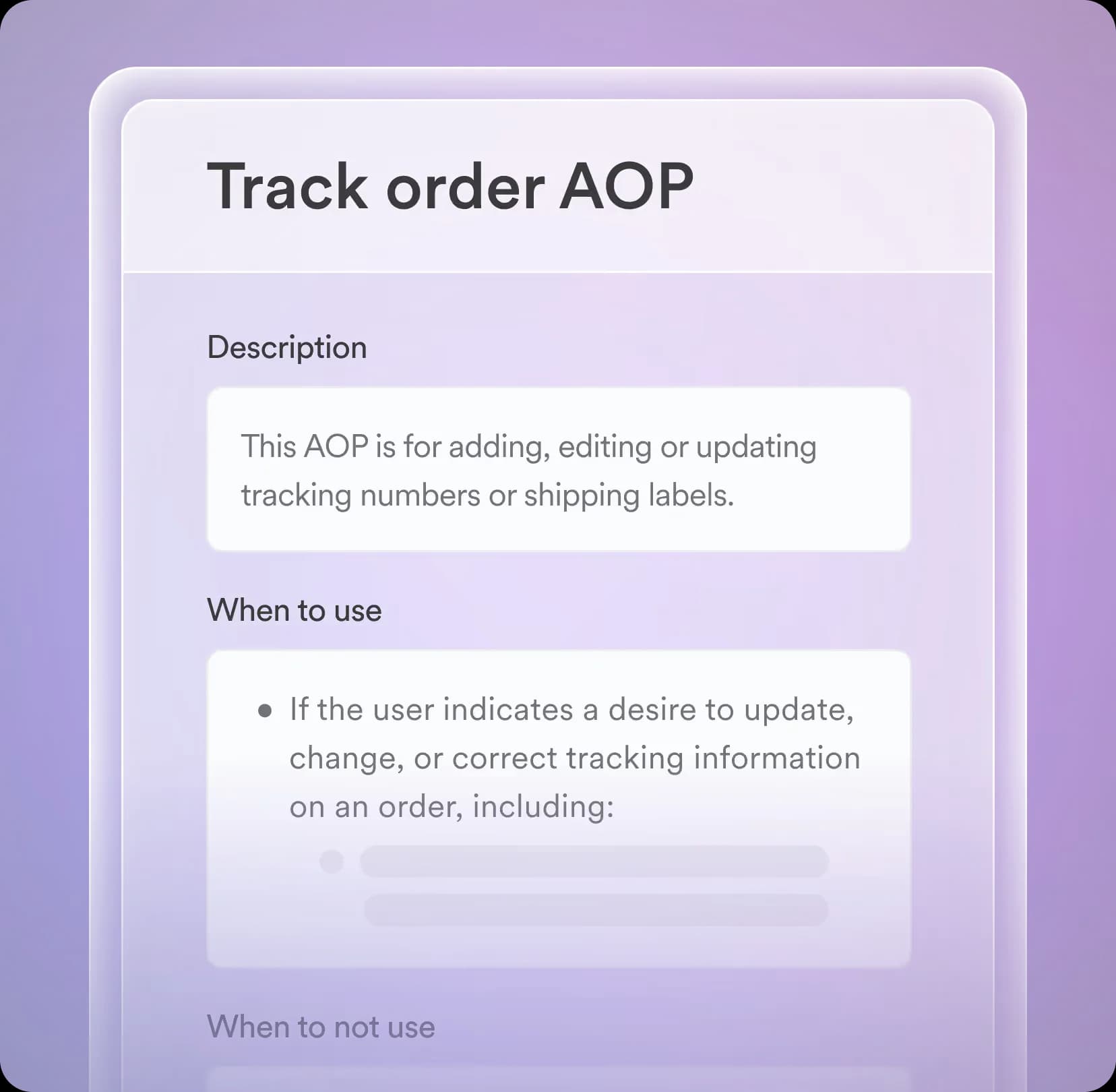
The enterprise end of this market, and the vendor Ayudo names on its own alternatives page. Decagon's core idea is Agent Operating Procedures: you write agent behaviour in natural language the way you write an SOP for a human, and Duet drafts, tests and refines those procedures for you. Duet Autopilot, launched June 2026, closes the loop by translating production signals into validated updates for human review.
Where it fits
Large support organisations with enterprise procurement and a named implementation partner. Decagon closed a $250M Series D led by Coatue and Index in January 2026 at a $4.5B valuation, and says it added more than 100 new global enterprise customers that fiscal year.
Pricing
None published. /pricing returns a 404 and every call to action is "Get a demo". Decagon's own glossary confirms a resolution-based model, but no amount, minimum or term appears anywhere on the site. Any specific dollar figure you find for Decagon in a comparison post is somebody's guess.
Limits
The customer numbers are strong and real: Chime reports 70% chat and voice resolution, Duolingo 80% deflection, ClassPass a 95% cost reduction. What is missing is anything you can budget or schedule against. There is no published implementation timeline either, in any direction. And per Decagon's own product page, while non-technical teams own agent logic, technical teams retain control over "guardrails, integrations, and versioning", so a CX lead cannot ship every change alone.
Verdict
Pick it if you are enterprise and want the category's most-funded platform with a real testing story. Skip it if you need to know the price before the third call. My Decagon alternatives roundup goes deeper, and Decagon versus Sierra covers the head-to-head.
3. Zendesk
What it is
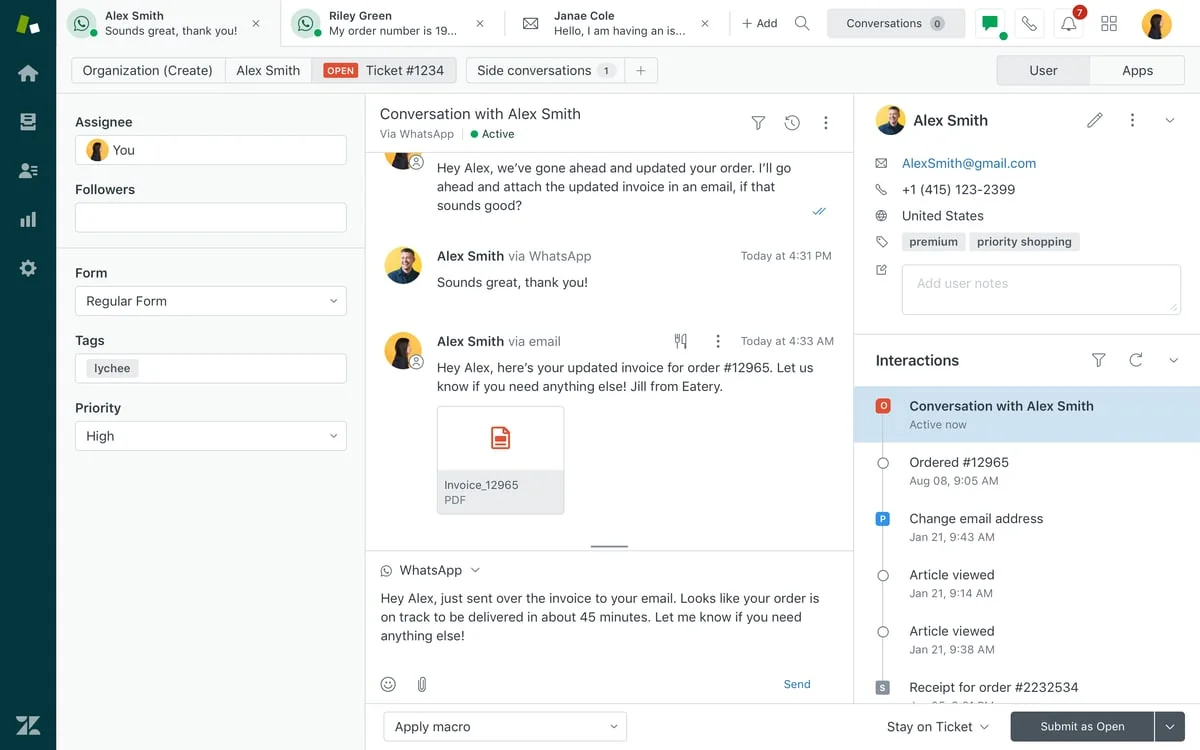
The default helpdesk, with AI agents, Copilot, intelligent triage and QA layered on top. If you are evaluating Ayudo's suite path, this is the incumbent it has to beat.
Where it fits
Teams that want one vendor for ticketing, knowledge, voice, reporting and AI, and that will pay per seat for the privilege. The ticket lifecycle and reporting depth are still the best in the category.
Pricing
Per agent per month: Support Team $19 annual or $25 monthly, Suite Team $55 or $69, Suite Professional $115 or $149. Suite Enterprise is quote-only. AI is metered separately as automated resolutions, and the rates are published in the Compare all plan features table rather than on the plan cards: $1.50 committed, $2.00 pay-as-you-go. Included allowance is 5 resolutions per agent per month on Team plans and 10 on Professional, capped at 10,000 a year. Copilot is a $50 per agent add-on.
Limits
That per-resolution rate is roughly four to five times Ayudo's per-ticket rate, and it stacks on top of a seat fee that Ayudo's AI-only path does not charge at all. The unit definitions differ, so it is not a straight multiple, but the direction is not close. Testing happens through a sandbox on higher plans rather than a replay scored against your archive.
Verdict
The safe institutional answer, and the expensive one. Read Zendesk pricing and the AI agent review before you commit, and Zendesk AI alternatives if the resolution rate is the blocker.
4. Freshdesk
What it is
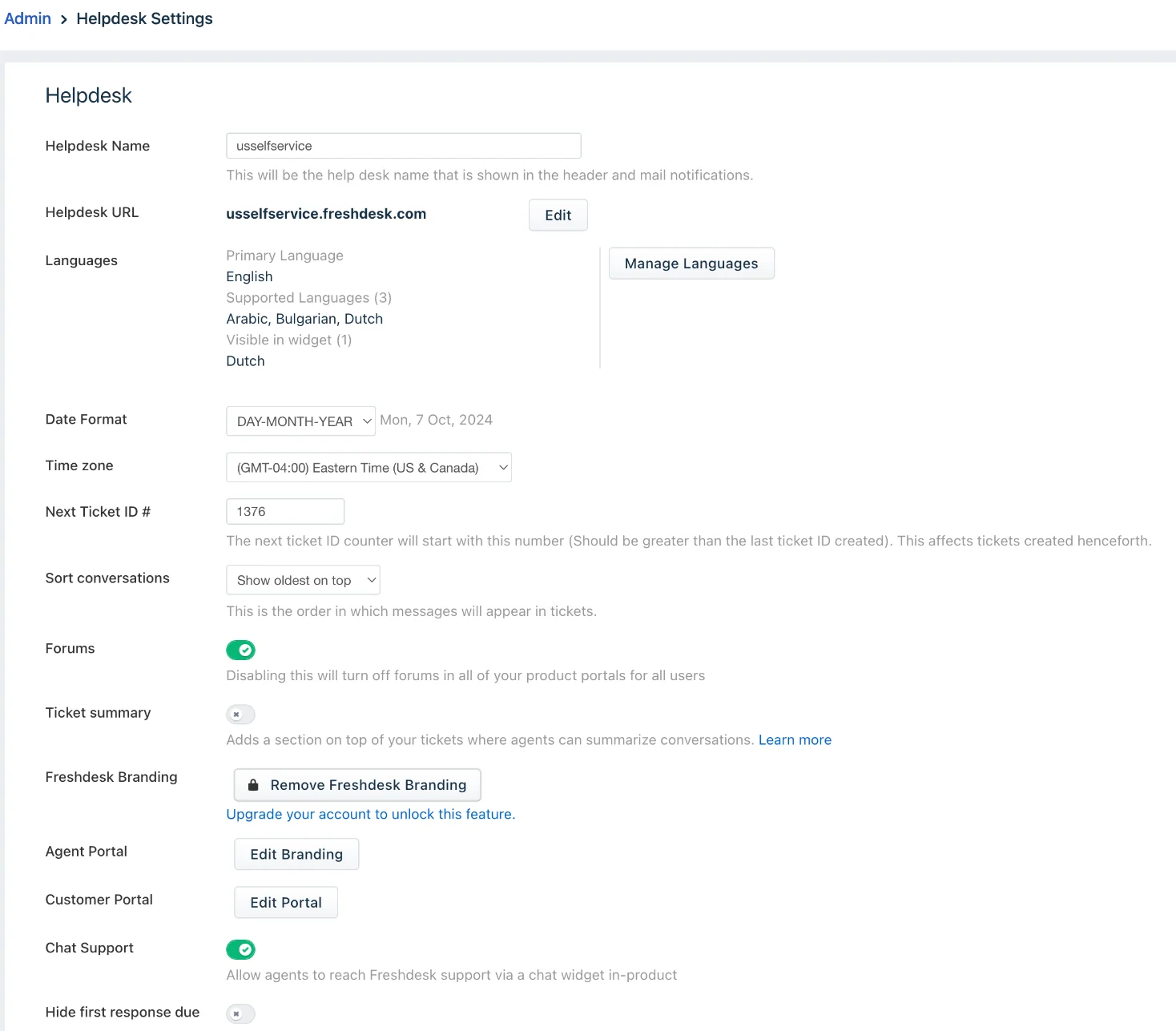
The other big suite, and the one Ayudo's founders came from, which makes it the most interesting comparison on this list. Freddy AI Agent is the autonomous bot, Freddy Copilot is the agent-assist layer, and Freddy Insights is the analytics tier.
Where it fits
Small and mid-sized teams that want a real helpdesk with an autonomous agent included at the bottom of the range. This is the lowest genuine entry point in the roundup.
Pricing
The autonomous Freddy AI Agent is on all three plans, including Growth at $19 per agent, each with the first 500 sessions included and additional sessions at $49 per 100. The 500 is one-time, not a monthly refill. Freddy Copilot is a separate $29 per agent add-on that starts on Pro, and Insights is Enterprise-only. An email session is a 72-hour window from the customer's first message, with every AI reply inside it counting once.
Limits
$49 per 100 sessions works out to $0.49 a session, which is above Ayudo's $0.40 per ticket, and the 72-hour session window means a slow email thread and a fast chat cost the same. Copilot and the AI Agent are two different products with two different gates, and the plan tables make that easy to misread. Historical replay is not the testing model; a sandbox on higher plans is.
Verdict
The best answer if you want the helpdesk and the agent in one bill for under $20 a seat. See Freshdesk AI pricing for the plan gates. How the meter actually runs is in session consumption. If the numbers do not work, try Freddy alternatives.
5. Front
What it is
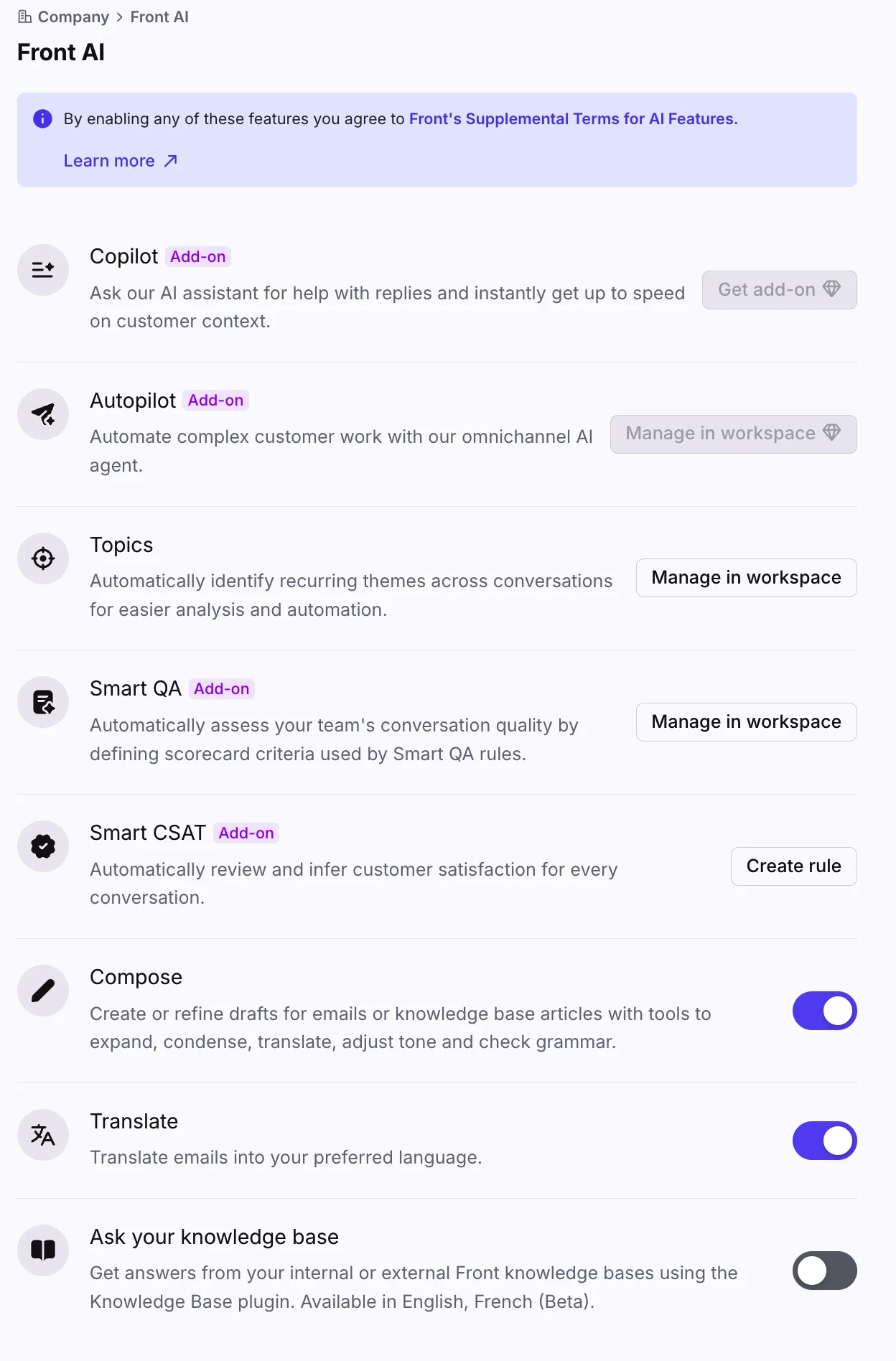
A shared inbox that grew into a helpdesk, with four separately billed AI products: Autopilot for autonomous resolution, Copilot for agent assist, Smart QA and Smart CSAT.
Where it fits
Teams whose support looks like collaborative email rather than a ticket queue. Front is the closest thing here to Ayudo's "one inbox for every conversation" pitch.
Pricing
Per seat per month, annual: Starter $25 up to 10 seats, Professional $65 up to 50, Enterprise $105 uncapped and annual-only. Autopilot starts from $0.05 per conversation and is an add-on on every plan, Enterprise included. Copilot and Smart QA are $20 per seat each, Smart CSAT $10, with QA and CSAT bundled at $25. The last three come free on Enterprise.
There is a trap in that structure. Professional at $65 plus all three add-ons is $115 per seat, which is more than Enterprise at $105. If you want the full AI set, the bigger plan is the cheaper plan.
Limits
Autopilot does have simulation, which is more than some of this list can say, but it runs against scenarios you write rather than a replay over your own history. External knowledge is limited to public-website crawls, up to five selectable sources, which rules out gated stores like Confluence and authenticated help centers. One chatbot answers from a Front knowledge base or a public site, not both.
Verdict
Strong if email collaboration is the shape of your support. Check the add-on arithmetic before picking a tier, because Front AI has the full breakdown. If the seat maths kills it, there are Front alternatives.
6. Gorgias
What it is
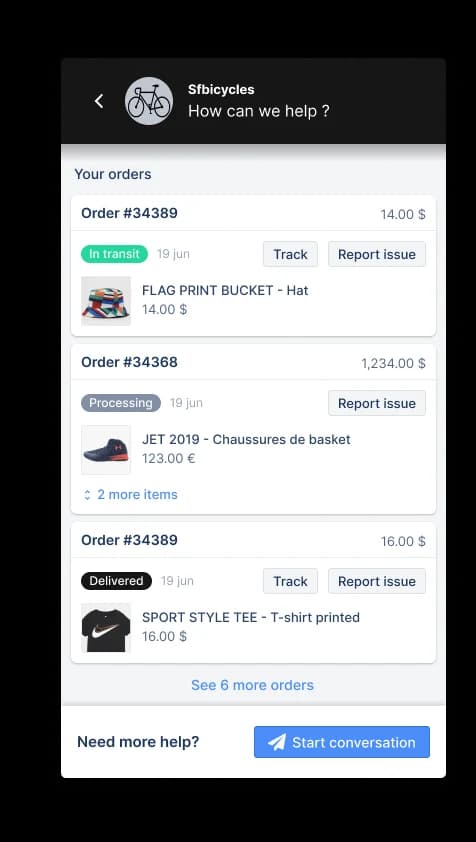
The ecommerce helpdesk, built around order data, returns and revenue attribution, with an AI Agent that can take actions against a store rather than just answer questions.
Where it fits
Shopify merchants, specifically. If your tickets are "where is my order" and "can I exchange this", the product depth here is real and hard to match with a general platform.
Pricing
Monthly: Starter $40 for 50 tickets and 30 AI interactions with a 3-seat cap, Basic $90 ($77 annual) for 300 tickets, Pro $550 ($471) for 2,000, Advanced $1,430 ($1,227) for 5,000. Every card reads "$1.50 per automated interaction past your limit", so $1.50 is the overage, not the base rate. Inside the allowance the effective rate lands nearer $0.90 annual, which matches Gorgias's own blog. Ticket overage is $0.40 on Starter and Basic, $0.36 on Pro and Advanced.
Limits
Two things catch buyers late. The AI Agent requires Shopify and is not supported on BigCommerce, Magento or WooCommerce, even though the helpdesk itself supports them. And on accounts opened after 28 May 2025, a fully automated ticket is billed twice: the ticket fee and the automation fee on the same conversation. Hand it to a human and you pay the ticket fee only. "Unlimited users" is also not quite right, since the compare table caps seats at 3 on Starter and 500 elsewhere.
Verdict
If you are on Shopify, the ecommerce depth may outweigh the double-billing. If you are not, the AI gate is disqualifying. See Gorgias AI and the pricing calculator.
7. Sierra
What it is
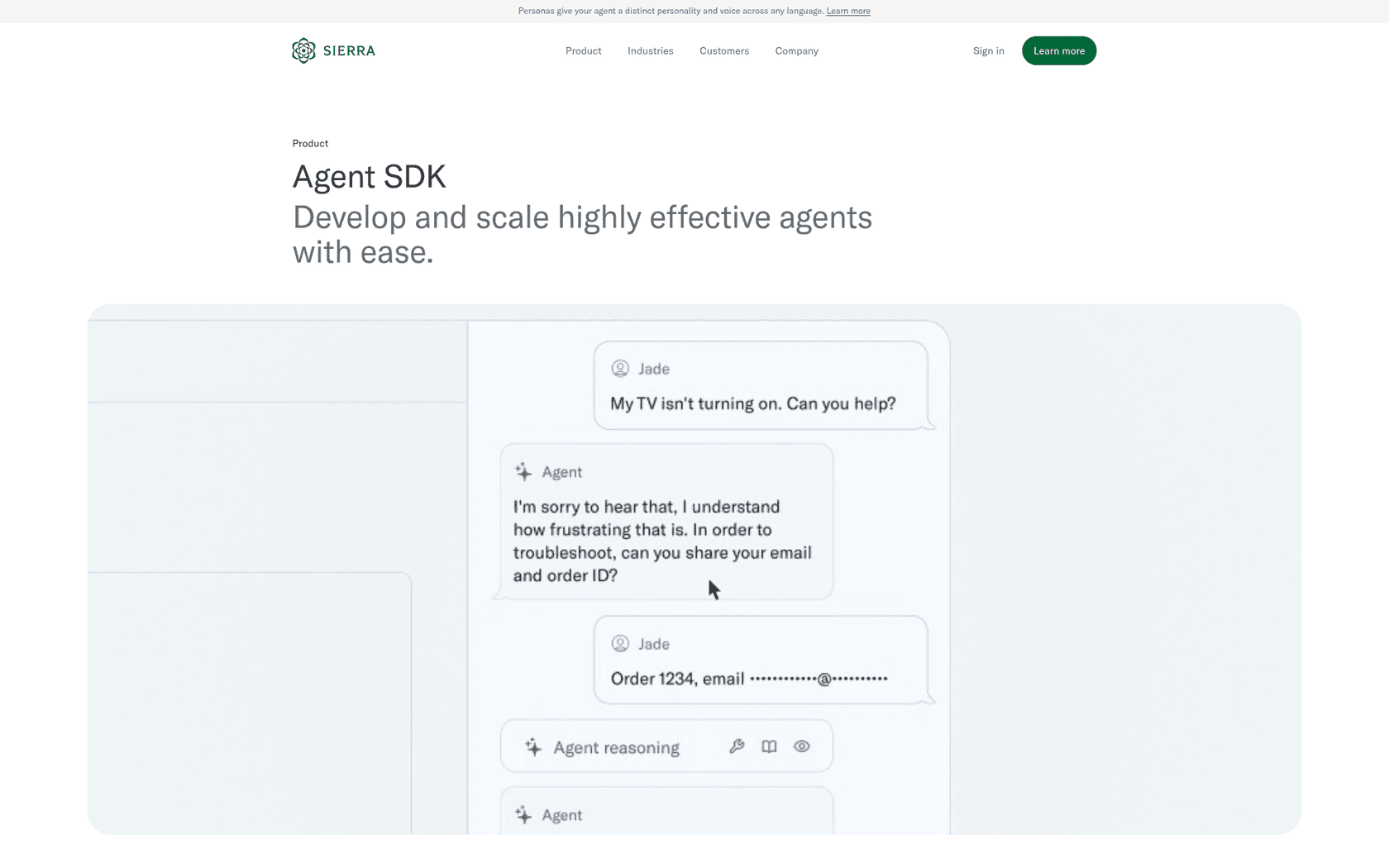
Bret Taylor's outcome-priced agent platform, and the most credentialed name in the category. May 2026's Series E raised $950M at a valuation the founder describes as "over $15 billion".
Where it fits
Large enterprises that want a partner rather than a tool, and that find outcome-based billing easier to defend internally than seats or consumption.
Pricing
Nothing published. No price list, no per-outcome amount, no minimum, no commitment length, no volume tiers. What Sierra does publish is more useful than a guess: its July 2026 Outcomemaxxing post concedes that outcome pricing "is more complex than seat-based or consumption pricing", that it "only works where the software is highly autonomous and highly attributable", and that Sierra is "not dogmatic" and does consumption-style work where it fits. Read that as: real contracts are blended.
Limits
The same problem as Decagon, one step further. You cannot model a Sierra deal from public information, and the vendor has said its own headline pricing model does not apply universally. Testing and rollout are vendor-led.
Verdict
A serious platform with an unknowable price. Worth a conversation at enterprise scale, not worth shortlisting if you need a number this quarter. Sierra pricing covers what is knowable about the model. For how it lands in practice, read the Sierra reviews.
8. Crescendo
What it is
A platform-plus-people model: Crescendo replaces the whole CX stack, agents through workforce management, and deploys a team that keeps it calibrated. It acquired the BPO PartnerHero in October 2024, and Alorica founder Andy Lee became CEO in July 2026.
Where it fits
Teams that want to hand over the operation, not just install software. The pitch is "live in 4 weeks, not 6 to 18 months", with a Self-Healing agent that reviews conversations and redeploys fixes, and a Safe Action Framework governing what the AI may do alone.
Pricing
No longer published. As of 20 August 2026, crescendo.ai/pricing serves the homepage and the footer has no pricing link at all. Until recently that page carried $1.25 per solve plus a $2,900 starting monthly service fee, which set a floor of $34,800 a year before a single ticket. Treat those figures as price history, not a current quote.
Limits
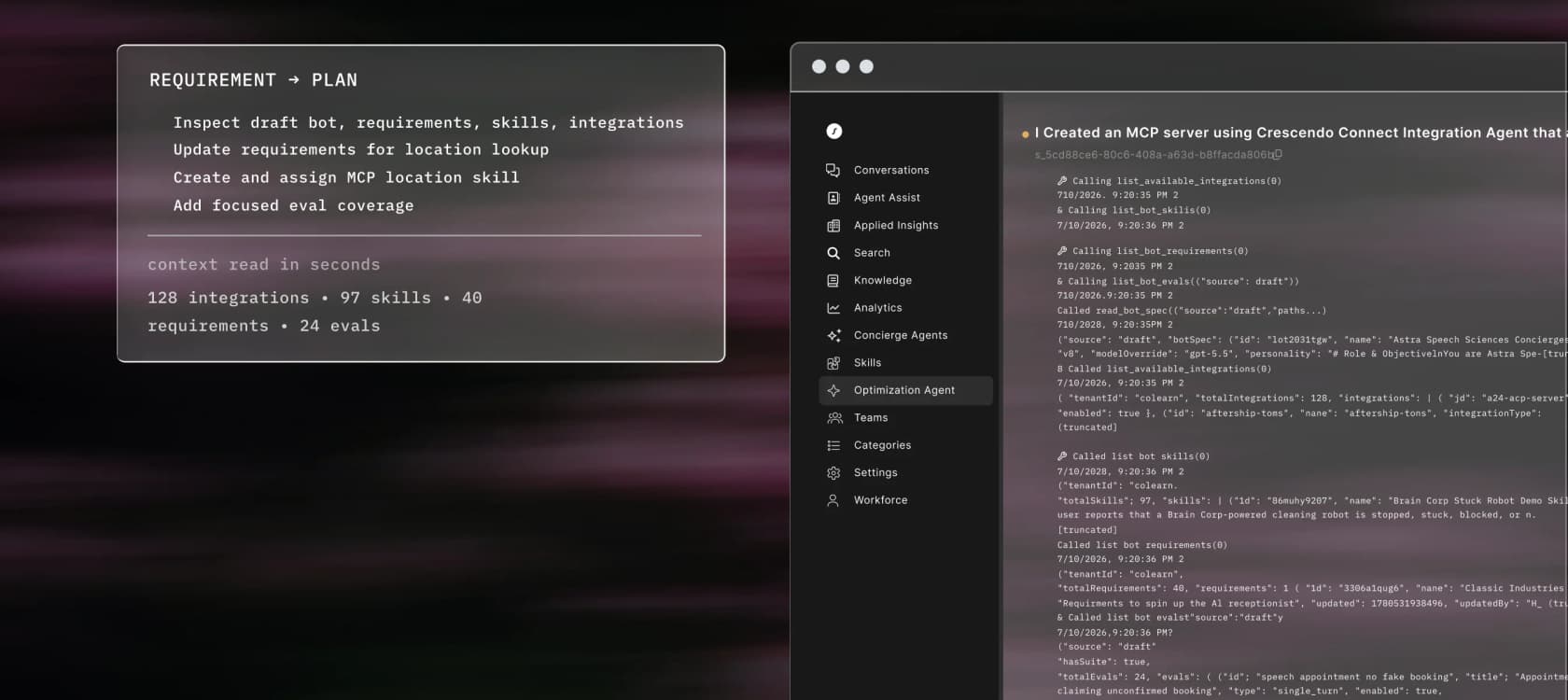
Losing the published rate is a real step backwards for buyers, and it puts Crescendo in the same bucket as Decagon and Sierra: you find out the cost on a call. The deployment is vendor-led by design, so the evals in that screenshot are generated from your requirements by Crescendo's team rather than something you run yourself over your archive. Crescendo's own comparison blog concedes it is overkill for small teams and expensive at low volume.
Verdict
The right shape if you really do want to outsource the operation and have the budget for a managed engagement. See Crescendo alternatives for the shortlist. The old figures still work as context in Crescendo pricing.
How I would actually choose
Four questions, in this order.
- Do you already have a helpdesk you like? Then buy the AI layer, not another suite. That is Ayudo's own first path, eesel, Decagon or Sierra. Paying per seat for an inbox you already own is the most common avoidable line on these bills.
- Can you replay your own tickets before launch, and on which tier? This is where Ayudo's Starter falls down and where I would spend the extra money if I stayed with them. eesel does it on any plan, Front simulates scenarios you write, and the enterprise three do it as part of a vendor-led rollout.
- Do you need a printed rate this quarter? Ayudo, eesel, Zendesk, Freshdesk, Gorgias and Front all publish one. Decagon, Sierra and Crescendo do not, and Crescendo stopped this month.
- What does one unit mean? A ticket, a resolution, an automated interaction, a conversation and a 72-hour session are five different denominators. Compare bills at your volume, never rate cards.
Where eesel fits if Ayudo was your shortlist
If you liked Ayudo's first card, the one with no seat fee, you already like eesel's model: the same 40 cents a ticket handled, no platform fee, no per-seat line. The difference is what happens in week one. eesel replays hundreds of your real past tickets and scores each answer against what your team actually sent, then tells you which topics it should touch and which to leave alone, and that runs on every plan rather than starting at $179 a seat. It plugs into Zendesk, Freshdesk, Gorgias or Front in an afternoon and answers from the help center you have already written.
That is the honest pitch from someone who works the queue: I would rather hand you a boring report about last quarter's tickets than a confident demo. Start with $50 of free usage, no card, and point it at your archive before you point it at a customer.
Sources
- Ayudo homepage, scraped 20 August 2026
- Ayudo pricing, scraped 20 August 2026
- Ayudo team page
- Zendesk pricing
- Freshdesk pricing
- Gorgias pricing
- Front pricing
- Decagon AOPs
- Sierra Outcomemaxxing
- Crescendo homepage, where
/pricingnow redirects - eesel Customer Voice Dossier, internal sales-call and churn records, quotes anonymized
Frequently Asked Questions
How much does Ayudo cost?
What are the best Ayudo alternatives for a small support team?
Does Ayudo let you test the AI on your own past tickets?
Is Ayudo pricing cheaper than Zendesk AI?
What is the best Ayudo alternative if I want to keep Zendesk or Freshdesk?
Does Ayudo have a free trial?
How many integrations does Ayudo actually have?
Who built Ayudo?


Article by
Riellvriany Indriawan
Riell is a designer and writer at eesel AI with about two years of experience researching CX platforms, AI chatbots, and helpdesk software. She combines her design background with a sharp eye for how these tools actually look and feel in practice — making her comparisons unusually visual and user-focused.