
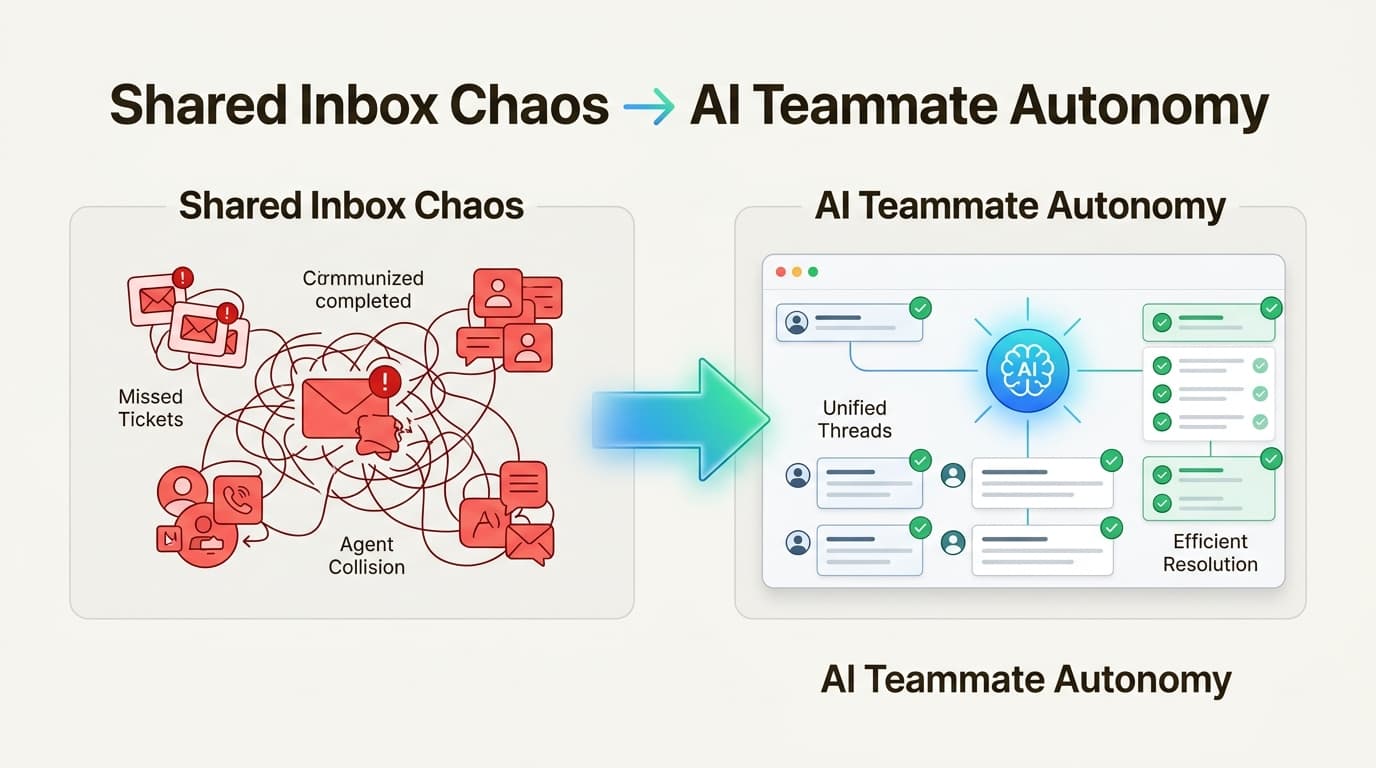
Most startup helpdesks are just glorified shared inboxes where tickets go to die and "agent collision" is a daily reality. We tested 14 platforms against three core startup constraints: setup speed, AI autonomy, and cost transparency. Only seven held up as genuine teammates that scale without adding headcount. The winners, and why they matter, below.
The shortlist that follows is built around one criterion the demos never show: how each tool handles tickets that require context from past conversations. Here is who made the cut, what they do well, and where each one still needs a human in the loop.
What is helpdesk software for startups?
Helpdesk software is more than just a shared email address. While a basic inbox works when you have ten customers, it quickly fails as you scale. Modern helpdesk platforms for startups centralize all customer communication across email, chat, phone, and social media into a single workspace.
In 2026, the definition has shifted from "tools you configure" to "teammates you hire." Instead of spending weeks setting up complex "if-this-then-that" rules, startups are now hiring AI agents that learn their business in minutes.
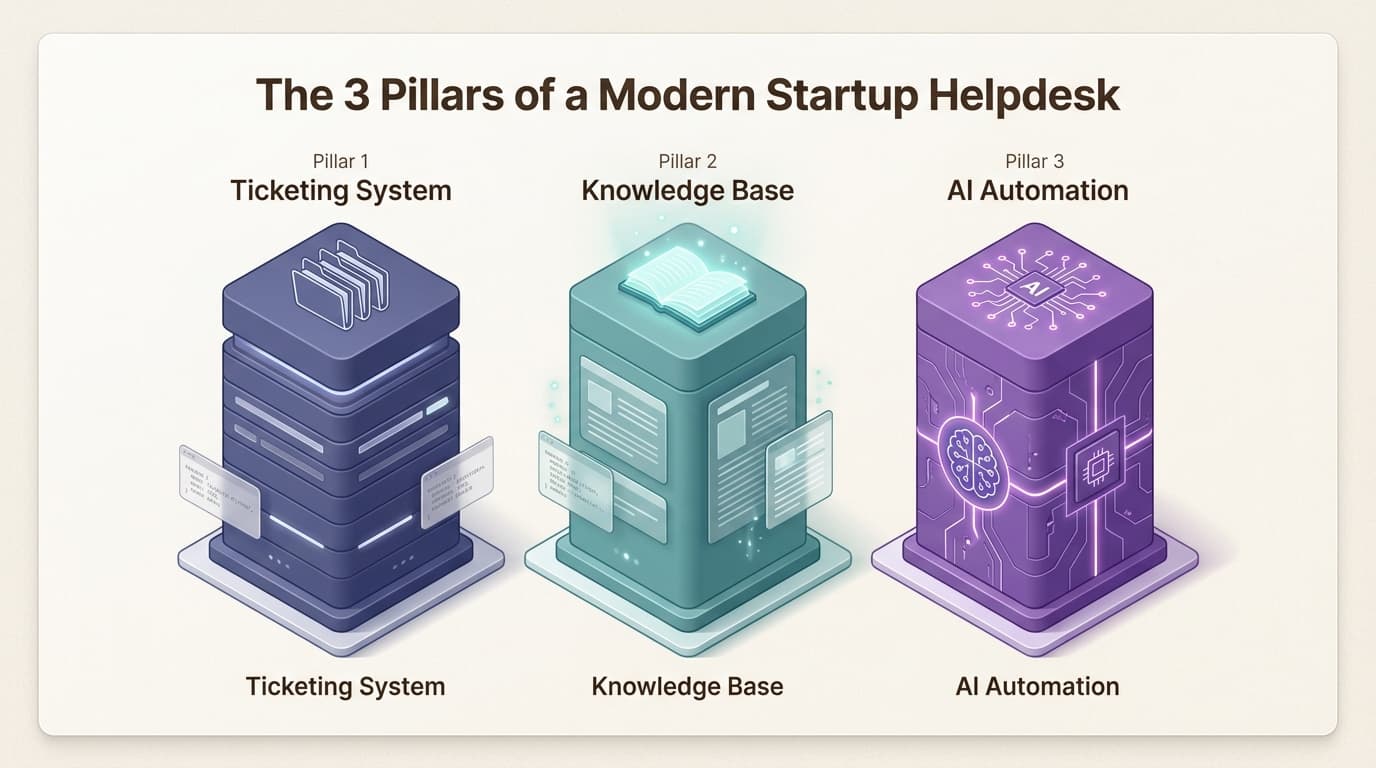
A core helpdesk suite typically includes:
- Ticketing system: Organizes customer inquiries into manageable tasks with unique IDs.
- Knowledge base: A self-service portal where customers can find answers themselves.
- AI automation: Autonomous agents that resolve routine questions without human intervention.
Why startups need a dedicated helpdesk
Shared inboxes eventually hit a breaking point. When two agents reply to the same email or a high-priority ticket gets buried under a pile of "thank you" notes, missed tickets and slow responses become your new reality. A dedicated helpdesk prevents this by providing clear ownership and status tracking for every conversation.
Beyond organization, the right helpdesk lowers operational costs by automating the frontline. AI agents can now deflect up to 80% of routine volume, allowing your small team to focus on complex cases that build long-term loyalty.
Finally, these tools unify your customer data. When your support platform knows a customer's order history and previous complaints, every interaction feels personal rather than transactional.
How we chose the best helpdesk tools
To make this list useful, we evaluated each platform using a consistent set of criteria relevant to the startup lifecycle. Here is what we looked for:
- Setup speed: Startups don't have months for "implementation." We prioritized tools that are productive in minutes, not weeks.
- AI autonomy: We looked for autonomous agents that can reason and take action, rather than simple rules-based chatbots that just point to help articles.
- Scalability and pricing: We looked for transparent pricing models that grow with your volume without punishing you for adding more human seats.
Comparison of top helpdesk software for startups
| Platform | Best For | Starting Price | Key AI Feature |
|---|---|---|---|
| eesel AI | Hire-and-go AI teammates | From $299/mo (500 credits) | Autonomous resolution |
| Zendesk | Enterprise scalability | $19/agent/mo | Intelligent triage |
| Freshdesk | Budget-conscious teams | 14-day trial, then 6-month Free Program | Freddy AI automation |
| Salesforce | CRM-heavy operations | $25/user/mo | Einstein AI |
| HubSpot | Sales/Marketing alignment | Free tier | Breeze Customer Agent |
| Gorgias | Ecommerce (Shopify) | $10/mo | Shopify order editing |
| Help Scout | Simplicity and "human" feel | $25/user/mo | AI Drafts and summaries |
The 7 best helpdesk software for startups in 2026
1. eesel AI
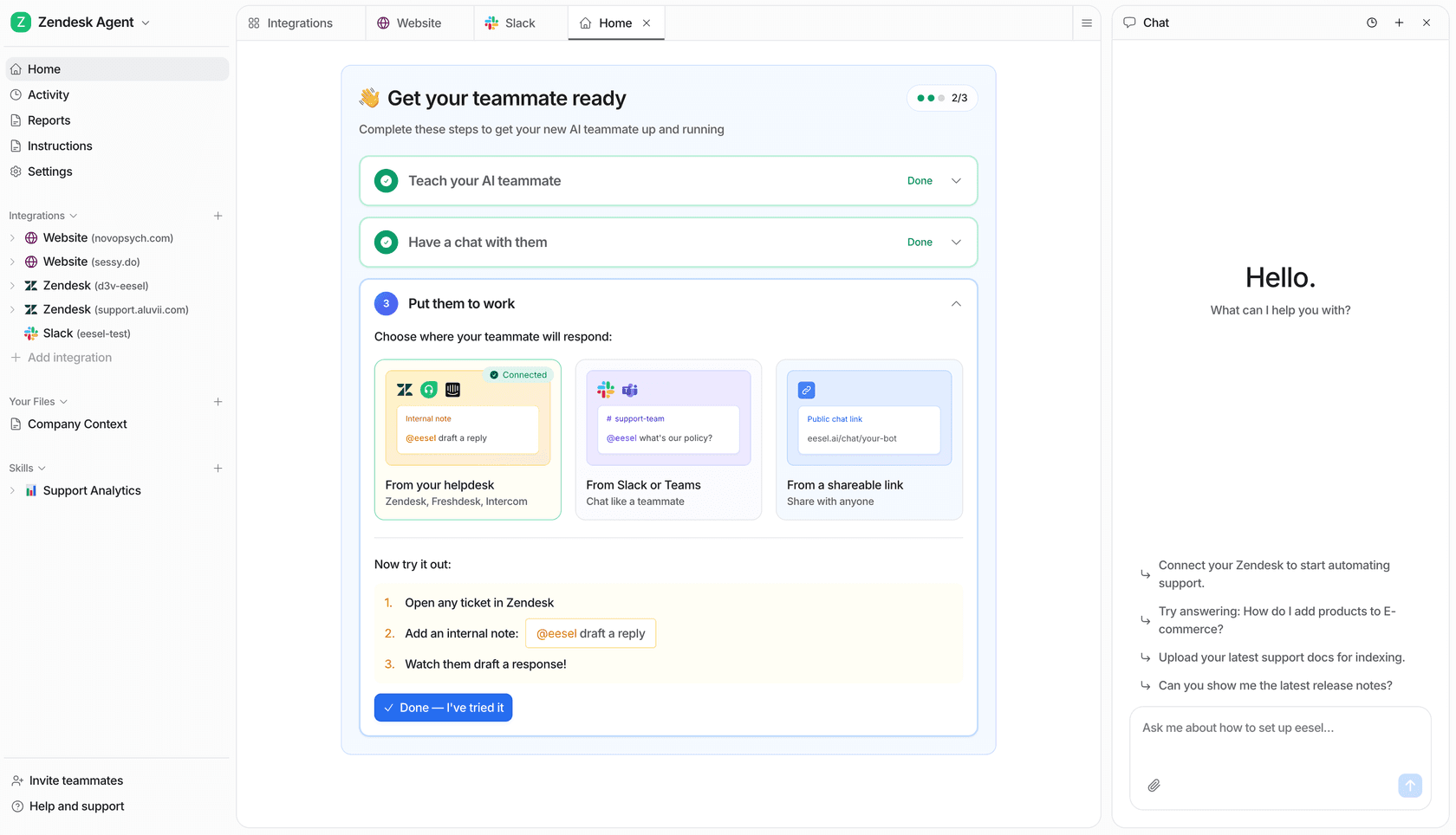
eesel AI represents the new wave of "hireable" AI. We designed our AI Helpdesk Agent to be a teammate, not a tool. Unlike traditional platforms that require you to build complex trees, our agent learns your business by reading your existing documentation, past tickets, and wikis in minutes.
The core advantage of our approach is autonomy. Our AI Agent doesn't just suggest links; it resolves tickets across email, chat, and social media. You can even use our simulation tool to test how the agent would have handled your last 100 tickets before letting it talk to real customers.
- Pros: No configuration wizards, works in 80+ languages, and includes a simulation testing tool to ensure accuracy.
- Cons: Best for digital-first teams; lacks a native physical phone system for high-volume voice centers.
| Plan | Price | Usage | Key Features |
|---|---|---|---|
| Free | $0 | 100 credits | Full access to AI Agent, Simulation tool |
| Teammate | From $299/mo | 500 credits (1 credit per ticket or chat) | No seat fees, unlimited integrations |
2. Zendesk
Zendesk is the gold standard for startups that plan to scale into enterprise giants. It offers a massive ecosystem of 1,000+ integrations and a unified workspace that handles everything from basic email to complex telephony.
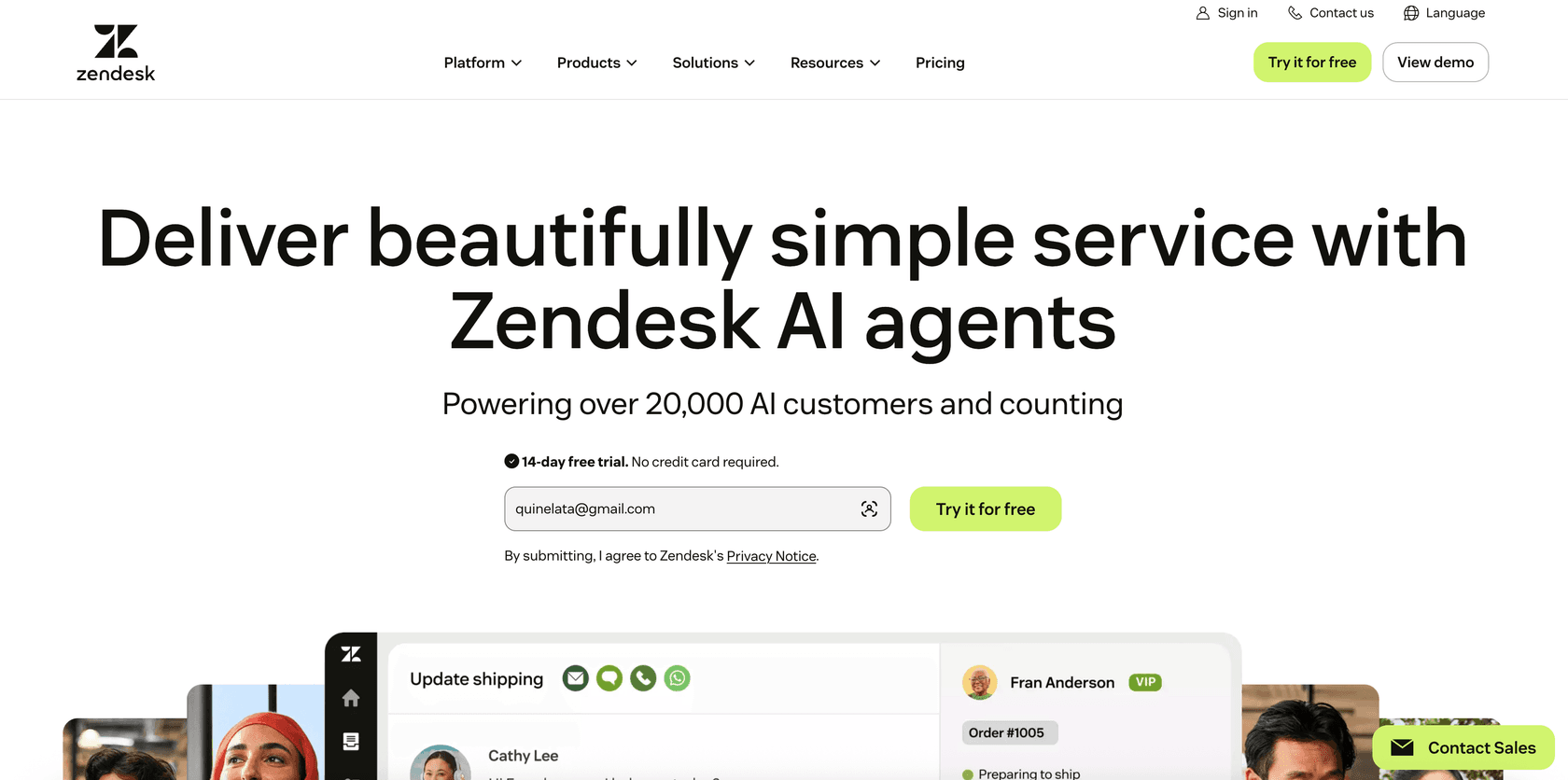
While the platform is powerful, it is not "plug and play." Startups often find themselves needing a dedicated administrator to manage the complexity. However, for teams that need deep analytics and reporting, it remains hard to beat.
- Pros: Highly customizable architecture and an extensive app marketplace.
- Cons: Steep learning curve and costs can escalate quickly as you add AI agents and advanced features.
| Plan | Price (Annual) | AI Included | Key Features |
|---|---|---|---|
| Support Team | $19/agent/mo | Essential AI only | Email, Social, Pre-written responses |
| Suite Team | $55/agent/mo | AI agents (Essential) | Messaging, Voice, Help Center |
| Suite Professional | $115/agent/mo | AI agents (Essential) | Skills-based routing, HIPAA compliance |
3. Freshdesk
Freshdesk is built for speed and affordability. Its free program for up to 2 agents (6 months) makes it a popular starting point for bootstrapped startups. The interface is intuitive, allowing teams to get up and running without specialized training.
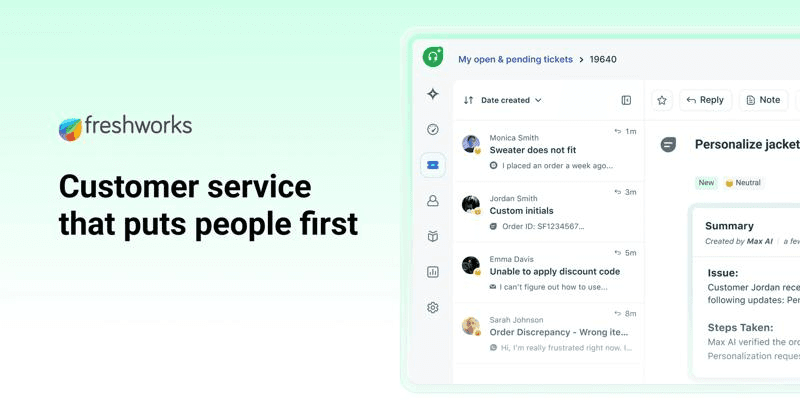
Their "Freddy AI" handles basic triage and suggests responses, but the most advanced autonomous features are gated behind the higher-tier Professional and Enterprise plans. It's a great "middle ground" tool that balances ease of use with solid features.
- Pros: A free program for small teams and a very low barrier to entry for small teams.
- Cons: You'll likely need to upgrade to expensive tiers to get the AI autonomy that modern startups expect.
| Plan | Price (Annual) | Seat Limit | Key Features |
|---|---|---|---|
| Free Program | $0 (6 months) | 2 agents | Email, Social, Knowledge Base |
| Growth | $19/agent/mo | Unlimited | Automations, Marketplace, SSL |
| Pro | $55/agent/mo | Unlimited | Omnichannel, Custom reports, Multilingual |
4. Salesforce Service Cloud
If your startup is already living in the Salesforce CRM ecosystem, Salesforce Service Cloud is the logical choice. It offers the deepest CRM integration on the market, giving agents a truly 360-degree view of the customer.
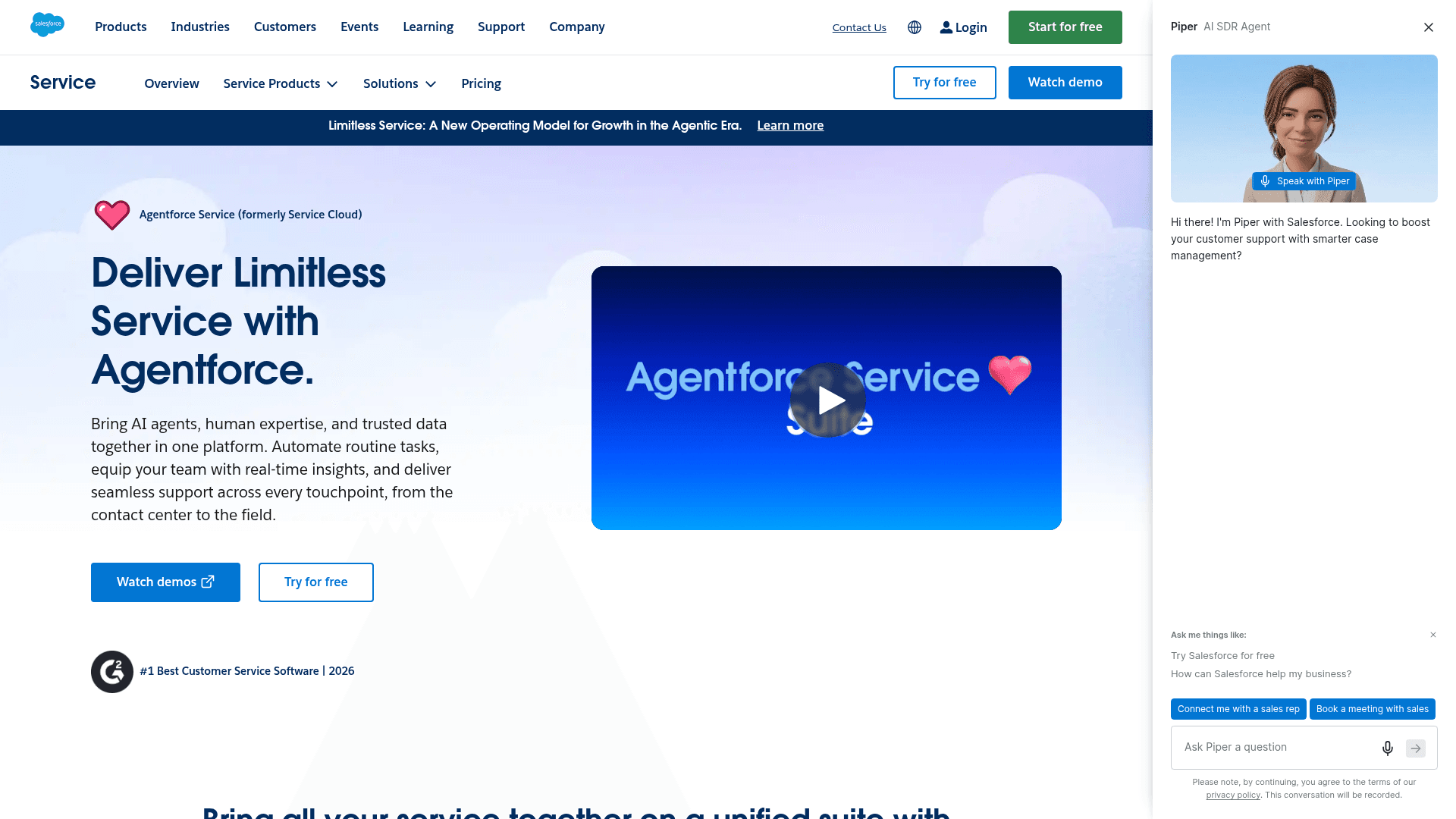
Their Einstein AI provides predictive routing and sentiment analysis, which is incredibly useful for high-volume operations. But be warned: the setup is notoriously complex. You will likely need an implementation partner or a certified admin to get the most out of it.
- Pros: Unmatched scalability and integration with sales and marketing data.
- Cons: Overkill for many early-stage startups; setup is slow and administrative overhead is high.
| Plan | Price (Annual) | Best For | Key Features |
|---|---|---|---|
| Starter Suite | $25/user/mo | Small teams | Email, Case management, Knowledge |
| Professional | $80/user/mo | Growing teams | Service contracts, Work orders |
5. HubSpot Service Hub
HubSpot Service Hub focuses on the "full customer journey." Because it's built on the same database as their sales and marketing hubs, your support team always has full context on who they are talking to.
In 2026, their "Breeze" AI agents handle common inquiries by pulling data from your HubSpot CRM. It's a powerful solution for alignment, but the Professional and Enterprise tiers carry a heavy price tag compared to standalone helpdesks.
- Pros: Seamless integration across sales, marketing, and support departments.
- Cons: Pricing is seat-based and credit-based, which can become expensive as you scale your support volume.
| Plan | Price (Annual) | AI Cost | Key Features |
|---|---|---|---|
| Free | $0 | N/A | Ticketing, Live chat, Calling |
| Starter | $9/seat/mo | N/A | Ticket pipelines, Routing |
| Professional | $90/seat/mo | 100 Credits/Conv | Knowledge base, Customer portal |
6. Gorgias
Gorgias is the undisputed leader for ecommerce startups. It integrates so deeply with platforms like Shopify and BigCommerce that agents can edit orders and process refunds without ever leaving the ticket.
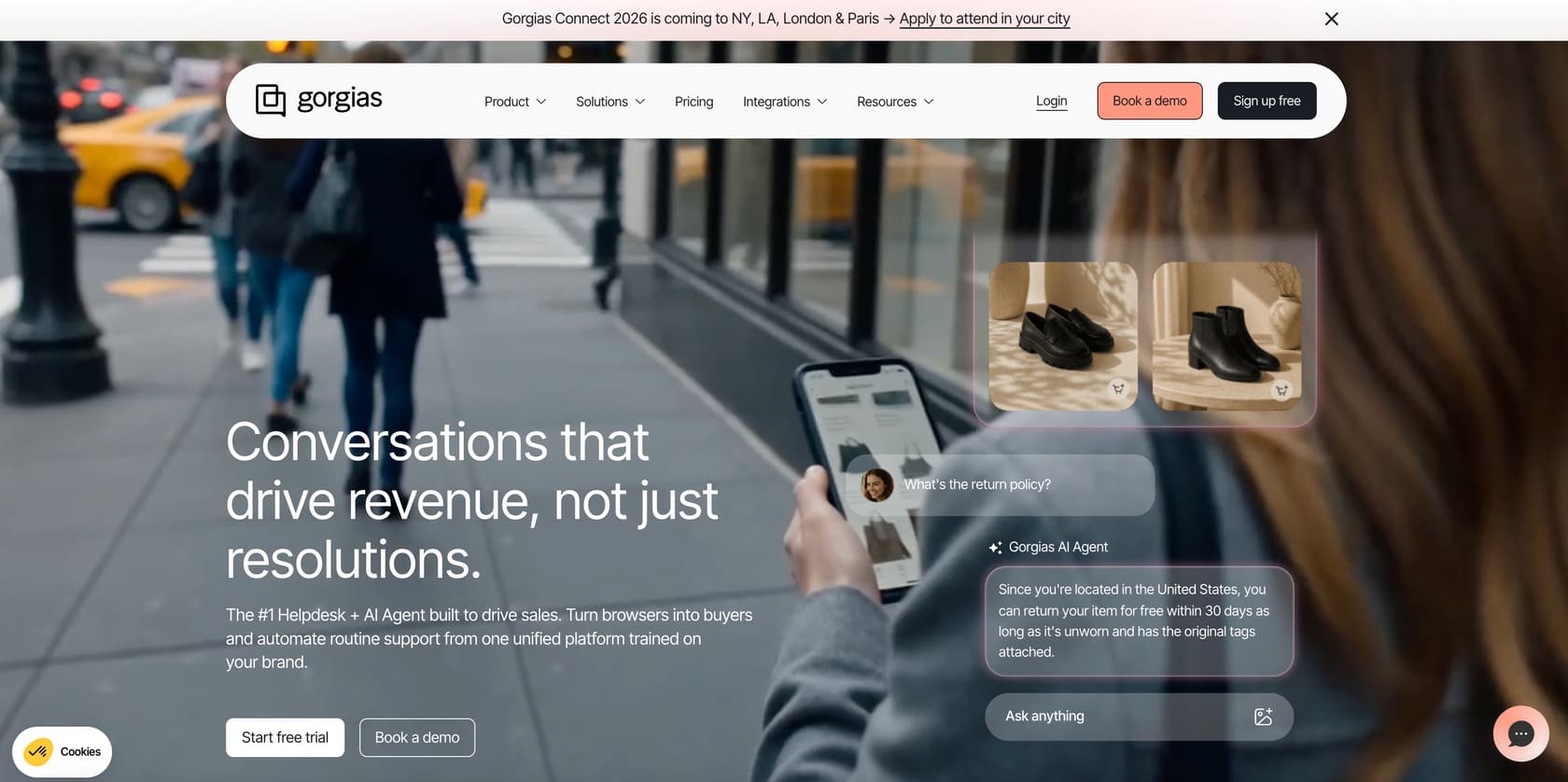
Their AI Agent is specialized for ecommerce workflows, such as "where is my order" (WISMO) queries. It's a highly specialized tool that works exceptionally well for D2C brands but may feel limited for a general SaaS startup.
- Pros: Near-instant ecommerce integration and the ability to take order actions inside the helpdesk.
- Cons: Not built for complex B2B support workflows or general technical ticketing.
| Plan | Price (Monthly) | Ticket Limit | Key Features |
|---|---|---|---|
| Starter | $10/mo | 50 tickets | Shopify, BigCommerce, 3 channels |
| Basic | $60/mo ($50 annual) | 300 tickets | 150+ integrations, macros |
Customers like that the discount code is coming from what looks like a chat. It's the most successful of all of our campaigns.
G2
7. Help Scout
Help Scout is designed for teams that want their support to feel like a personal email conversation. It avoids the "ticket number" aesthetic in favor of a clean, human-centric inbox.
Their AI features focus on helping humans work faster through AI Drafts and summaries. While it doesn't offer the same level of fully autonomous resolution as some other tools, it's perfect for startups that want to maintain a high-touch, "un-automated" feel.
- Pros: Beautifully simple UI and a very fast setup process.
- Cons: Lacks the robust automation and autonomous agent features needed for high-volume technical support.
| Plan | Price (Annual) | Seats Included | Key Features |
|---|---|---|---|
| Standard | $25/user/mo | 2 | 2 mailboxes, Docs, Live chat |
| Plus | $45/user/mo | 2 | 5 mailboxes, unlimited AI Drafts |
Tips for choosing your first AI teammate
When you're choosing your first helpdesk software for startups, it's easy to get distracted by feature lists. Instead, focus on these three things:
- Prioritize setup speed over feature bloat. You need a tool that helps you today, not a complex platform that requires a three-month implementation project.
- Hire an agent, don't build a bot. Look for autonomous agents that learn from your documentation rather than tools that require you to manually map out every conversation path.
- Demand pricing transparency. Avoid "seat taxes" that make it expensive to bring your product and engineering teams into the support conversation. Usage-based pricing often aligns better with startup growth.
Hire your AI helpdesk agent with eesel AI
In 2026, the best helpdesk isn't the one with the most buttons. It's the one that acts as a true teammate. We built our AI Helpdesk Agent to solve the biggest headache startups face: scaling support without losing that early-stage personal touch.
Our agent joins your team in minutes, learns from your existing knowledge, and starts resolving tickets so you don't have to. Whether you're on Zendesk, Freshdesk, or just a shared inbox, our AI Agent works where you work.
Start free today and see how our AI Teammate handles your toughest tickets.