

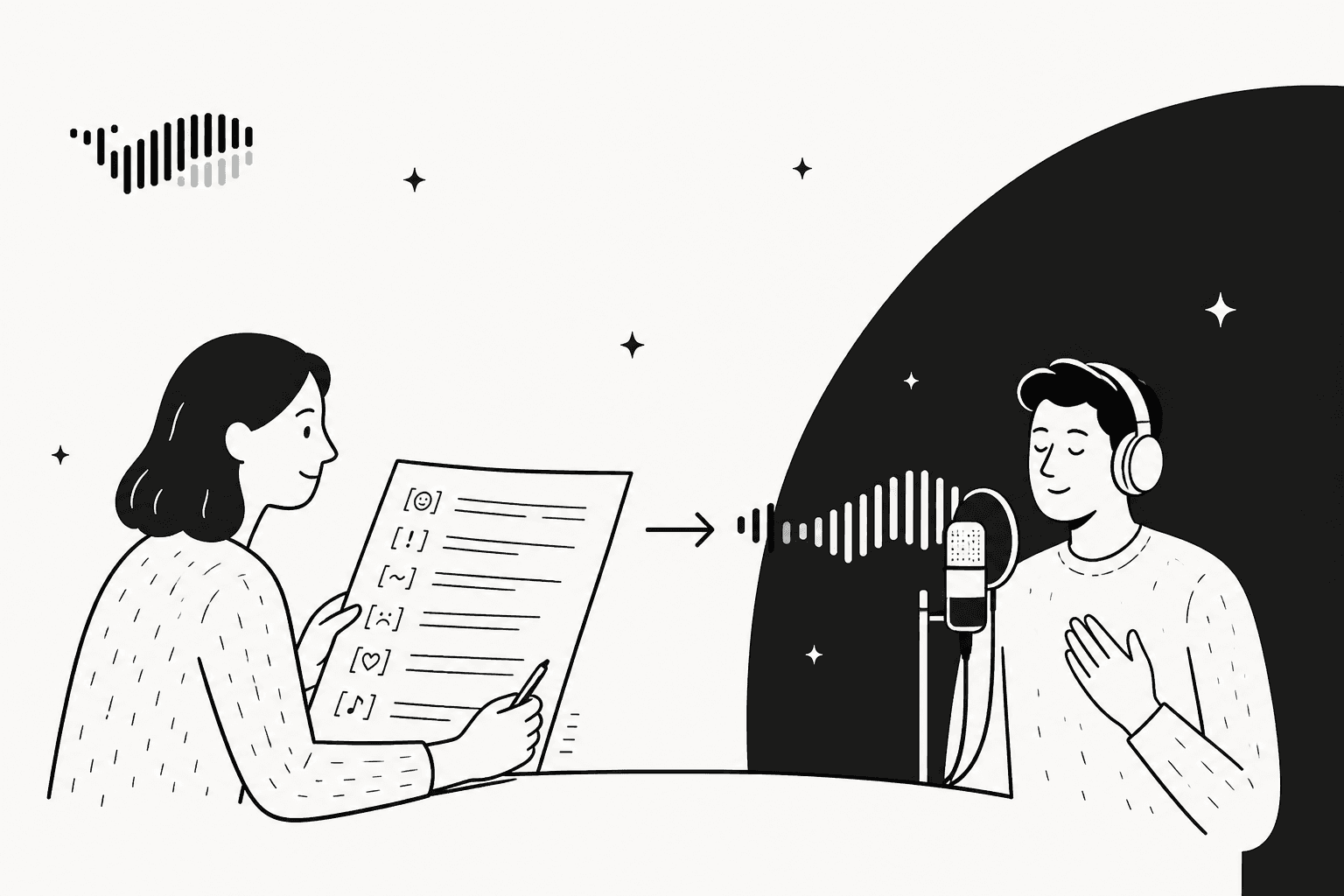
What is Fish Audio Drama 3?
Drama 3 is Fish Audio's new text-to-speech model, released on 13 October 2026 in the fish.audio web app, the iOS and Android apps, and the API. A preview went out to API users on 23 September under the name drama-3-preview, and the landing page still carries a "Preview" badge today.
I work eesel's support queue every day, and most of that job is telling apart the tools that demo well from the ones that hold up on the hundredth run. eesel has spent years putting AI on live customer queues, and the biggest lesson is that a confident output can still be wrong, which is why every eesel rollout is simulated against past tickets first. I read Drama 3 through the same lens: past the launch video, into the docs, the technical report, the pricing pages and the first community reactions.
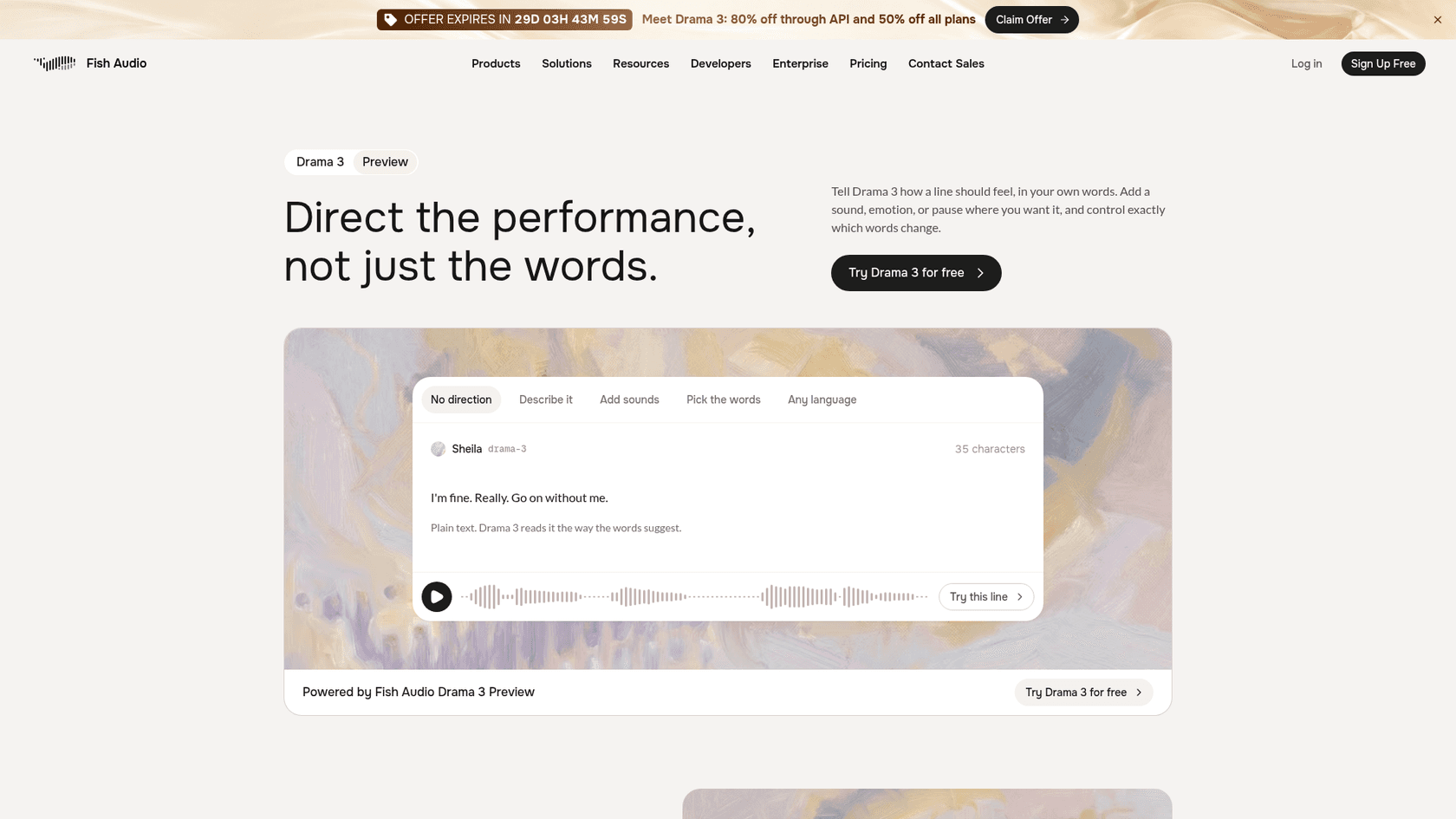
The headline facts, all from Fish Audio's own pages:
- 83 languages, and the direction can be written in a different language from the line (launch post).
- Open weights on Hugging Face under the new Fish Audio Community License v1.0. New to the hub? My Hugging Face guide covers the basics.
- 35B-parameter mixture-of-experts, about 3B active per token, initialized from the language model of Qwen3.5-35B-A3B, per the technical report.
- Same API endpoint as S2.1 Pro, so switching is one header:
model: drama-3.
Fish Audio itself is a young company with real traction: founded in 2025, it reports $21 million in annual recurring revenue and more than 15 million users in its launch press release, with HeyGen, Runway and Vercel named as customers.
How directing a line works
This is the part that makes Drama 3 different from the ElevenLabs and OpenAI speech API workflow most people know. Instead of picking from a fixed list of emotion presets, you write stage directions straight into the script.
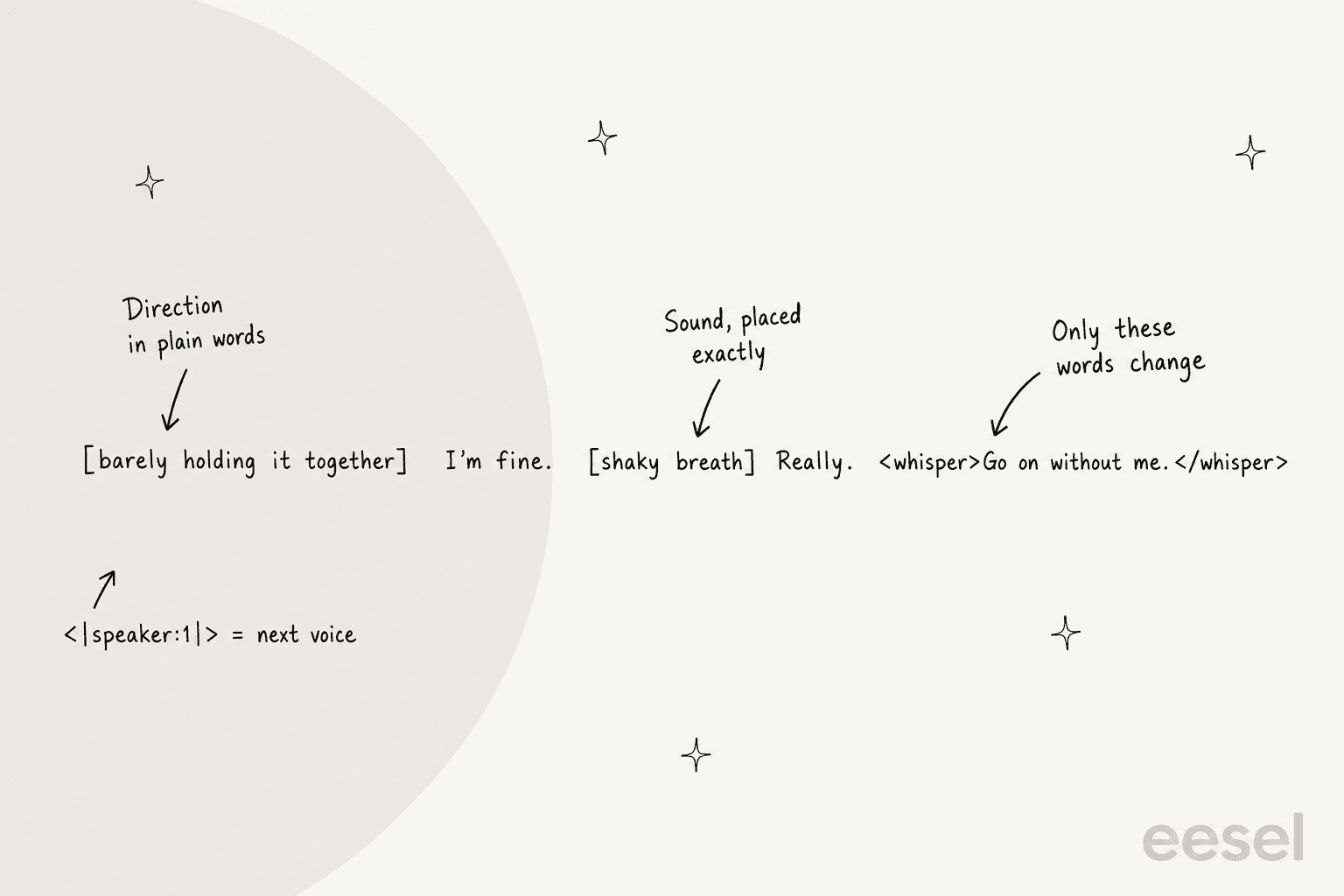
The Drama 3 docs describe five tools, and you can mix all of them in one line:
| What you want | How you write it | Example |
|---|---|---|
| Set the delivery | Plain words in square brackets | [slow, dangerously quiet] Just one. |
| Place a sound or pause | A bracket where it happens | I'm fine. [shaky breath] Really. |
| Change only some words | Paired tags: <whisper>, <emphasis>, <soft>, <fast>, <slow>, <stress>, <forceful> | <whisper>Go on without me.</whisper> |
| Switch language mid-line (experimental) | Language tags | <french>Je voudrais une table pour deux</french> |
| Pin a pronunciation | Phoneme tags (CMU Arpabet, pinyin, romaji) | <|phoneme_start|>EH1 N JH AH0 N IH0 R<|phoneme_end|> |
A whole scene goes in one request: you pass one voice ID per speaker in reference_id and start each turn with <|speaker:0|>, <|speaker:1|> and so on. The model card says one text can carry up to 16 characters. In the web app, an Auto Tag button writes first-draft directions for a plain script, which is a nice on-ramp if you've never written stage directions before.
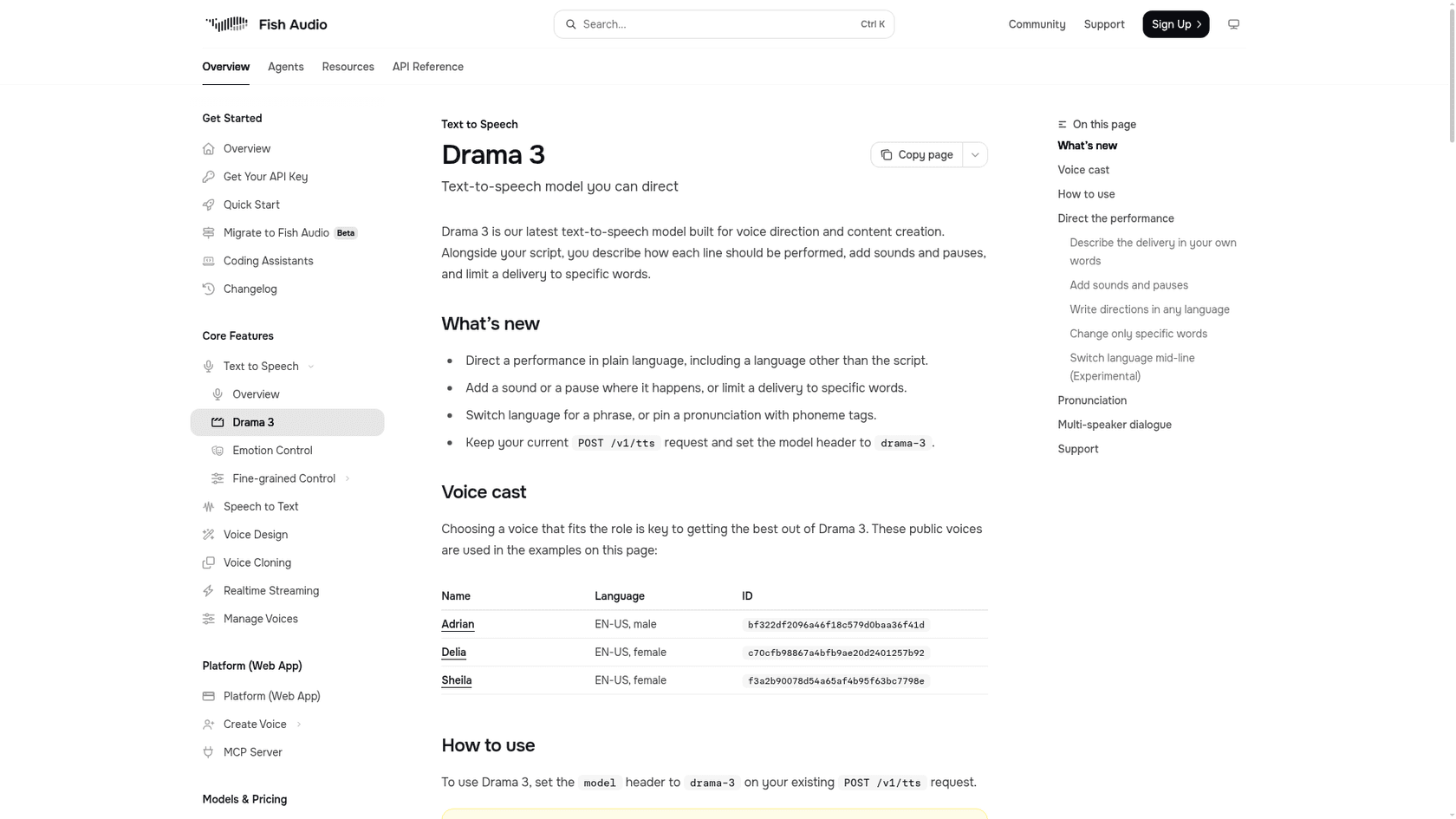
One gotcha in the docs is worth tattooing somewhere: if the model header is missing or misspelled, the request doesn't fail; it quietly falls back to s2.1-pro. You get audio, you get billed, and you never get Drama 3. If your directed lines sound flat, check the header before you blame the model.
What Drama 3 does well
Three things stand out, and they are measurable rather than vibes.
It reads hard words right
More emotion only helps if the words survive it. On Artificial Analysis' Pronunciation Robustness test, where human reviewers check brand names, numbers, codes and context-dependent words, Drama 3 scored 93.2%, first on the board, ahead of Eleven v4 at 91.7% and Eleven v4 Turbo at 90.1%.
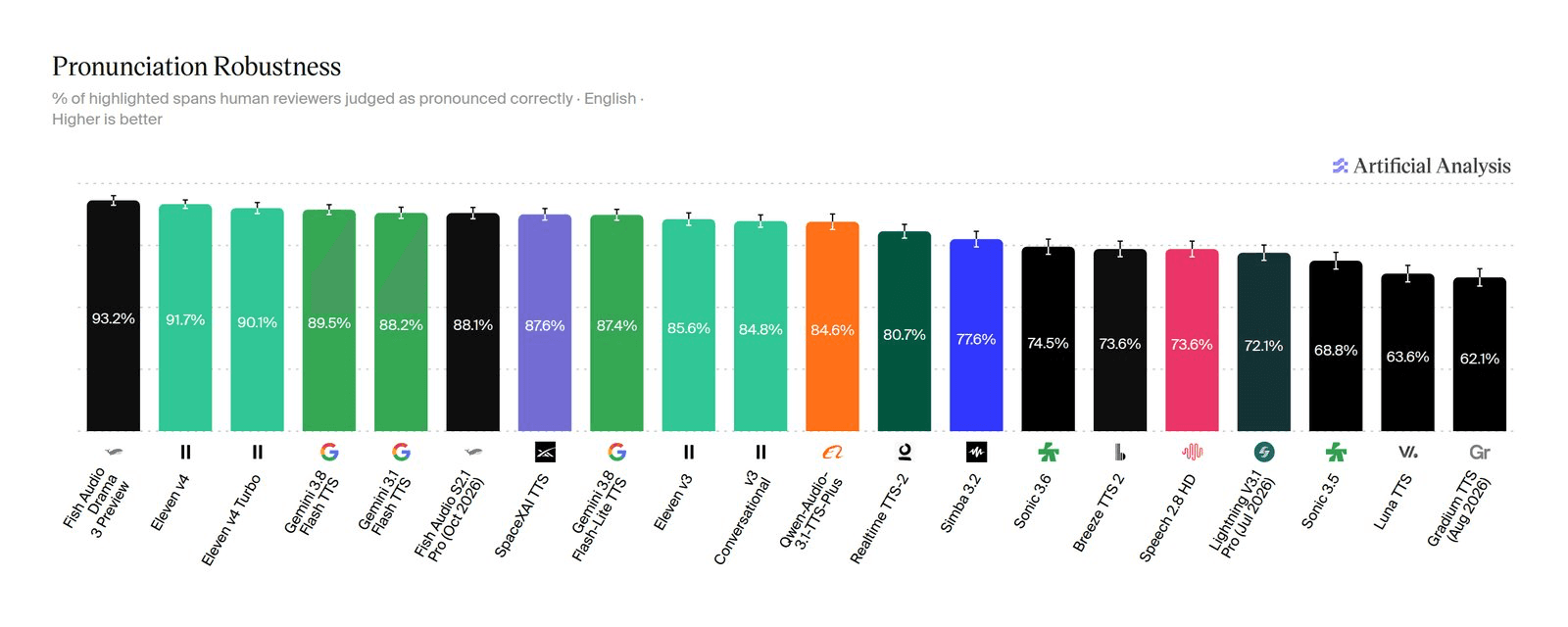
The category split from Fish Audio's launch post shows where the jump over its own predecessor came from:
| What's being read | Drama 3 | S2.1 Pro |
|---|---|---|
| Brands, places, technical terms | 95.9% | 87.3% |
| Words whose reading depends on context | 95.3% | 86.1% |
| Numbers, dates, units | 93.6% | 92.7% |
| Codes, file paths, emails | 86.3% | 79.4% |
| Overall | 93.2% | 88.1% |
For an audiobook that says "Chapter XVII" or a product explainer full of SKUs, that 8.6-point gain on brand and technical terms is the difference between one render and three.
It takes direction mid-line
Fish Audio trained Drama 3 differently from its earlier models. Speech models are usually rewarded for being easy to transcribe and close to the reference clip, which quietly punishes a laugh or a whisper. Drama 3 was tuned with a single learned reward model of which take people preferred, according to the launch post. In practice that means a line can start breathless, drop to a whisper and end deadly serious, and the read turns where you put the bracket.
It also generates a multi-character scene in one pass, and ComfyUI shipped it as a partner node on day one for exactly that reason. If you script for AI video or podcasts, being able to write the emotion into the script file itself is a cleaner workflow than tweaking sliders per clip.
You can actually download it
Open weights are the reason the TTS crowd on Reddit got loud. Fish Audio publishes the weights, the code on GitHub and the serving recipe for SGLang-Omni, and its model card reports first audio in 88.9 ms for a single stream on one H200. Artificial Analysis lists it as the #1 open-weights model on all three of its TTS leaderboards, 15 points clear of Mistral's Voxtral TTS on pronunciation.
"After getting banned on Eleven Labs three times, I'm so happy something like this is finally open weight. It's fast and sounds great."

That same user got it running on two RTX 3090s at about 39 GB of VRAM with help from Claude Opus 5.5, which tells you both that it's possible on consumer hardware and that it isn't a one-click install.
Where Drama 3 falls short
None of these are deal-breakers. They're the things the launch video doesn't mention, and the things I'd want to know before betting a production pipeline on it.
It's the best open model, not the best-sounding model
The #1 headline is about pronunciation accuracy. When Artificial Analysis asks listeners which voice they prefer, the picture changes.
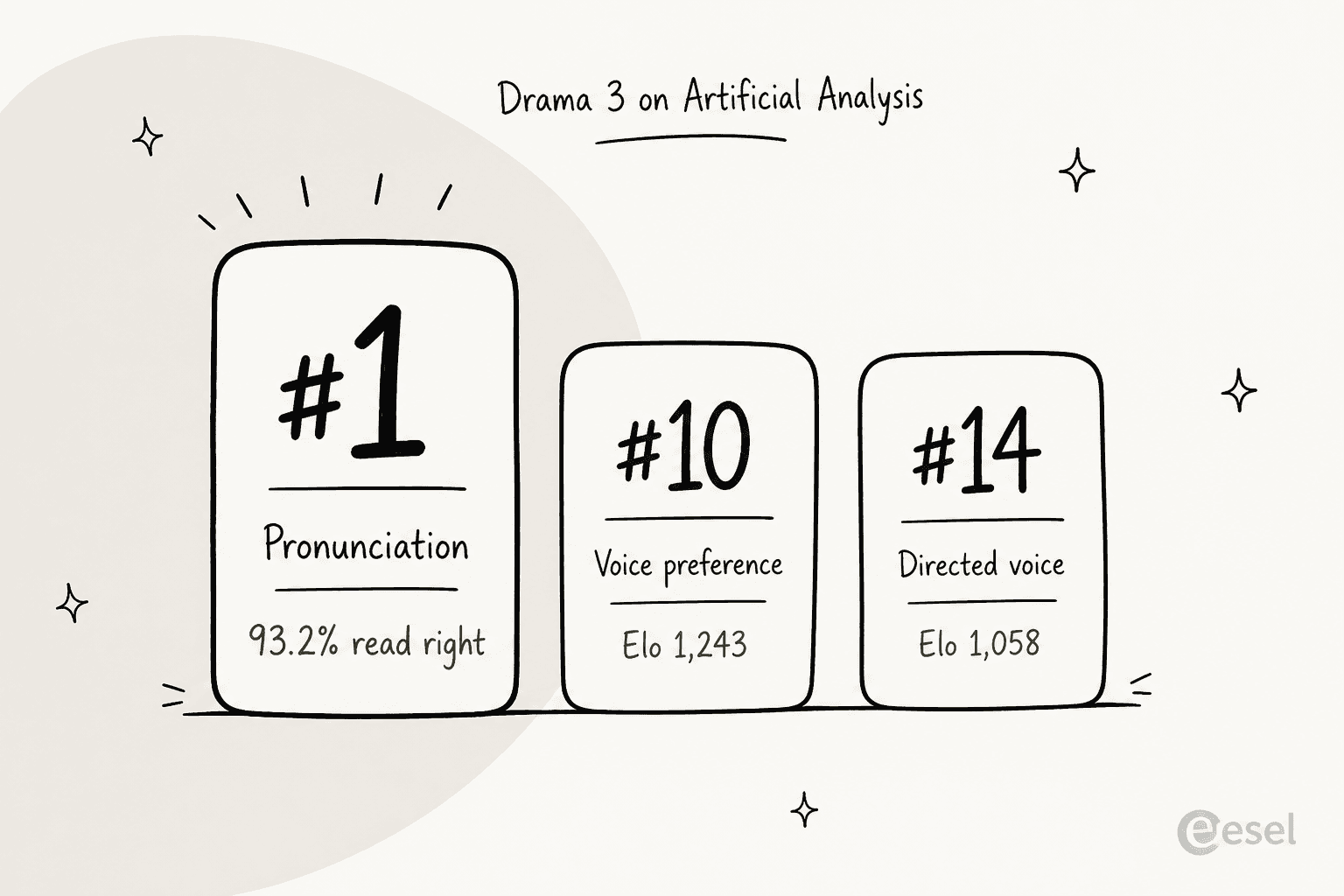
In the Provider Voice arena, Drama 3 has an Elo of 1,243 across 1,857 matchups, ranked #10, just behind Speechify's Simba 3.2, per Artificial Analysis' thread. That's a 101-point jump over S2.1 Pro, which is a big step. But nine models still win more blind comparisons on overall voice quality, and in the Controlled Voice arena it sits at #14. Not everyone on Reddit was sold, either:
"barely better than breeze with nearly 10x the size"
Takes vary, and the editing tools aren't here yet
Fish Audio is upfront about this: "Takes vary, so render a few and keep the one that plays," says the launch post, and the landing page FAQ explains the Preview label the same way. That is fine for a narrator rendering a chapter once. It is a real cost for anyone generating thousands of lines automatically, where nobody is there to pick the best take.
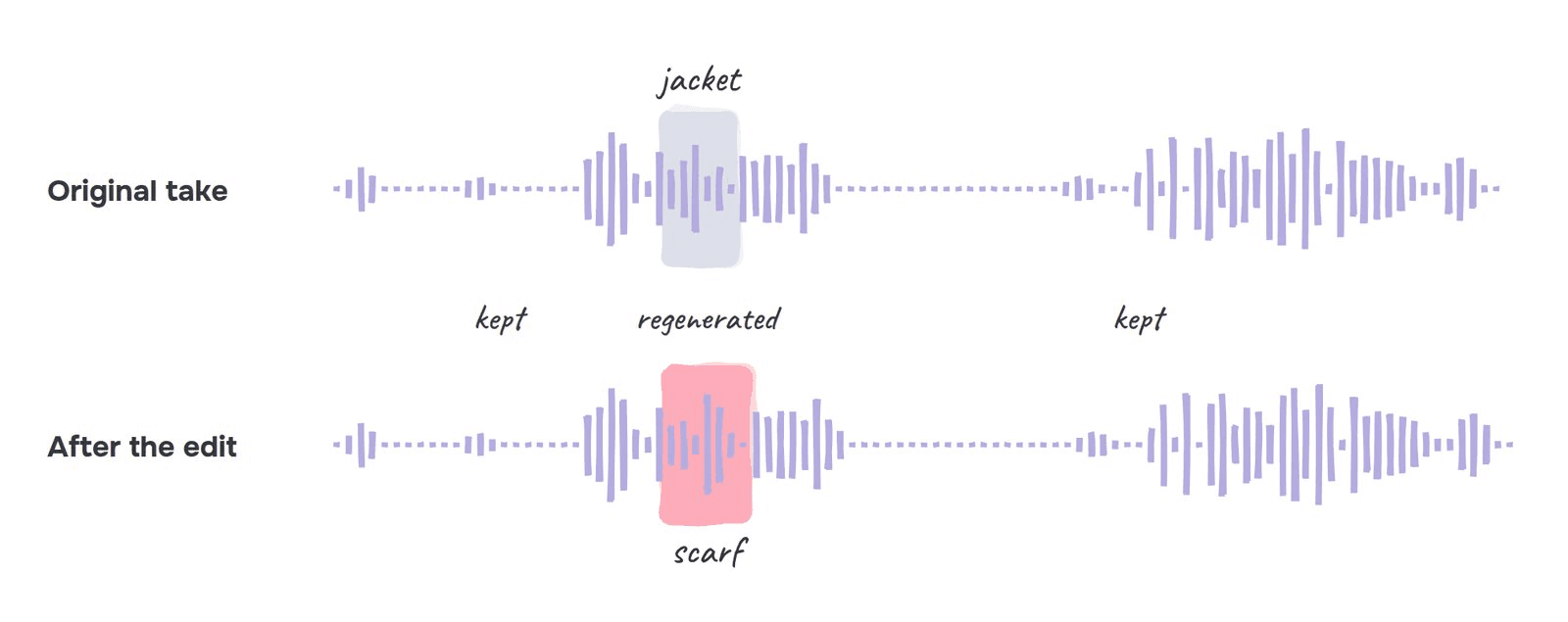
The two features that would fix most of that, interactive editing ("softer than that one") and audio inpainting (regenerate a single word inside an approved take), are in invite-only testing, with an editing API "coming soon".
The license has a ceiling, and the hardware has a floor
The Fish Audio Community License is free for commercial use only while you and your affiliates earn under US$500,000 a year. Above that, or if you want to offer Drama 3 to others as a voice API, you need a paid license. Fish Audio's own FAQ calls it "open-weight rather than open source," and the community noticed:
"Lame license."
The license also bans cloning a real person's voice without consent, which I'd count as a feature. On hardware, the thread's original poster put the bar at a 48 GB CUDA card; a community 4-bit quant brings it to 32 GB. Either way, this is not a laptop model.
Fish Audio Drama 3 pricing
There are two ways to pay: the developer API, billed by text, or a creator plan in the web app, billed in credits. The API price is the one with a cliff in it.
| API model | Price | Unit | Source |
|---|---|---|---|
| Drama 3, launch offer (Oct 13 to Nov 12, 2026) | $10 | per 1M characters | Launch post |
| Drama 3, list price | $50 | per 1M characters | Launch post |
| S2.1 Pro | $15 | per 1M UTF-8 bytes | API pricing docs |
| S2.1 Pro Free | $0 | per 1M UTF-8 bytes | API pricing docs |
Two things to watch. First, as of 14 October the official pricing docs table doesn't list drama-3 at all, so the launch post is the only place Fish Audio states the number. Second, at list price Drama 3 costs 3.3x what S2.1 Pro does, so after November 12 you're paying a premium for the acting, not the voice. Fish Audio's docs put 1M UTF-8 bytes at roughly 180,000 English words, or about 12 hours of speech; for English text one character is one byte, so the units line up.
Plug in your own monthly volume to see where the November 12 change lands:
A worked example: a 90,000-word novel is about half a million characters. Voicing it once costs about $5 on Drama 3 at the launch price, $25 at list, and $7.50 on S2.1 Pro. Render each chapter three times to pick the best take and those numbers triple. For a solo creator that's still cheap; for a platform voicing millions of words a month, the list price is the one to budget for.
On the creator side, Fish Audio says Drama 3 uses the same credits as S2.1 Pro, at roughly 600 to 625 credits per minute of audio according to the plans page.
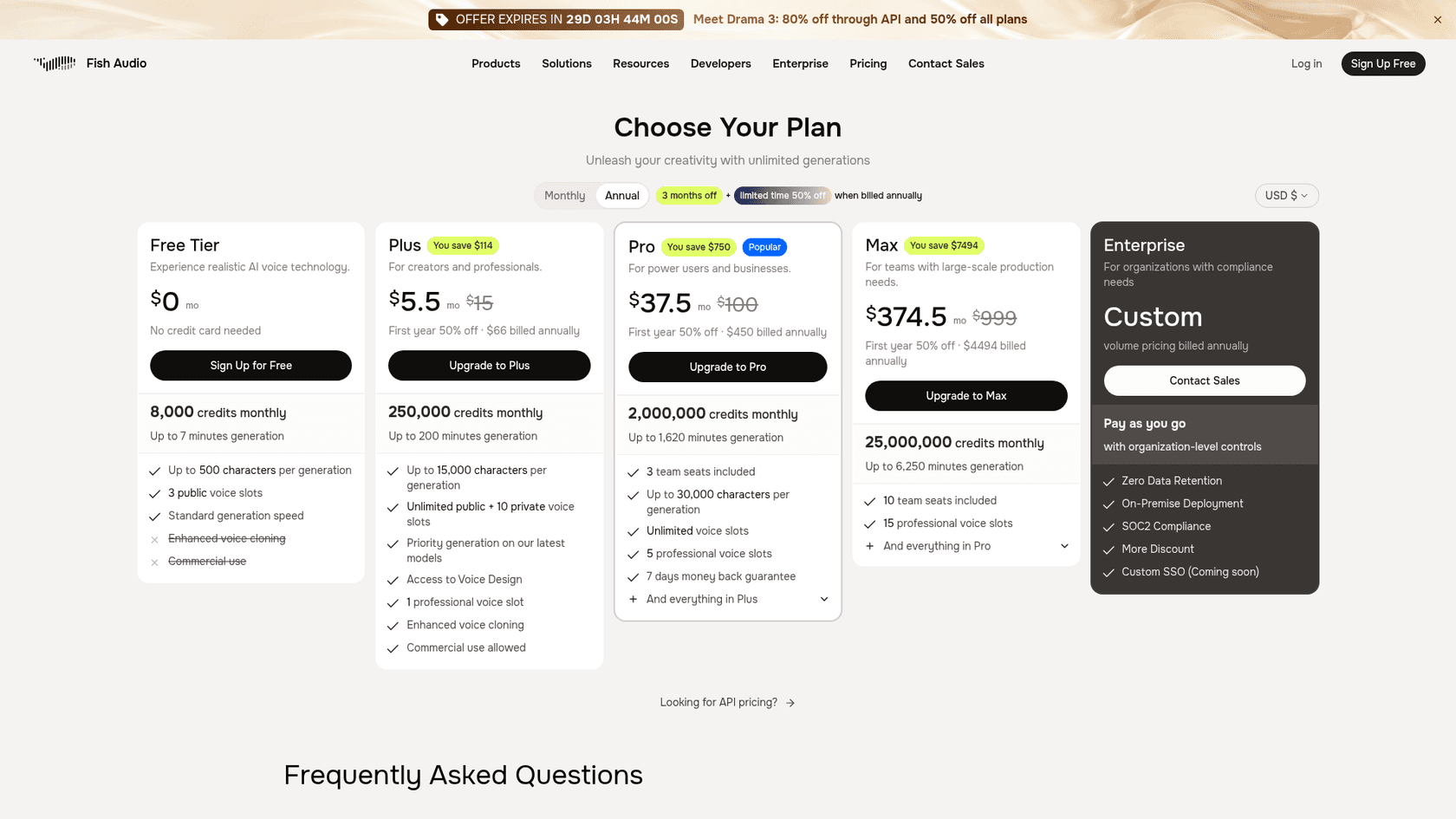
| Plan | Monthly list price | First year, annual (launch offer) | Credits per month | Audio per month | Characters per generation | Worth knowing |
|---|---|---|---|---|---|---|
| Free | $0 | $0 | 8,000 | Up to 7 min | 500 | No voice cloning, no commercial use |
| Plus | $15 | $66 | 250,000 | Up to 200 min | 15,000 | Commercial use, Voice Design, 1 professional voice slot |
| Pro | $100 | $450 | 2,000,000 | Up to 1,620 min | 30,000 | 3 team seats, 5 professional voice slots |
| Max | $999 | $4,494 | 25,000,000 | Up to 6,250 min | 30,000 (as Pro) | 10 team seats, 15 professional voice slots |
| Enterprise | Custom | Custom | Custom | Custom | Custom | Zero data retention, on-premise, SOC 2 |
Until November 12, new Plus, Pro and Max subscriptions are 50% off the first month on monthly billing, or the first year on annual billing. Unused credits don't roll over. Enterprises switching from another voice provider get their first three months free, per the press release.
How Drama 3 compares
Here's how it sits against the voice models people are most likely weighing it against. Pronunciation scores are from the same Artificial Analysis leaderboard; for each rival's price, follow the link to my breakdown.
| Model | Pronunciation (AA) | Open weights | Review | Pricing |
|---|---|---|---|---|
| Fish Audio Drama 3 | 93.2% (#1) | Yes, revenue-capped license | You're reading it | $10 launch / $50 list per 1M chars |
| Eleven v4 | 91.7% | No | ElevenLabs reviews | Eleven v4 pricing |
| Gemini 3.8 Flash TTS | 89.5% | No | Gemini TTS review | Gemini TTS pricing |
| Fish Audio S2.1 Pro | 88.1% | S2 family, research license | Covered above | $15 per 1M bytes, free tier |
Two notes the table can't hold. Gemini 3.8 Flash TTS beats Drama 3 on context-dependent words (97.9% vs 95.3%), so test both if your scripts are full of words like "read" and "lead" (AA thread). And if ElevenLabs is your current tool, my ElevenLabs pricing breakdown is the fair baseline to compare against.
If your use is a real-time voice agent rather than a rendered script, the comparison set changes entirely. Start with my Cartesia Sonic 3 review, which is built around latency. The Grok Voice Think Fast 2 write-up covers the speech-to-speech side.
For emotion-led voice specifically, Hume AI is the other name worth a look, and my Hume AI pricing post has its numbers. If you're still choosing between speech models and transcription models, Whisper vs TTS API untangles the two.
Who should use Drama 3, and who should skip it
Fish Audio is unusually honest about its own sweet spot: "Drama 3 does its best work on scripted lines you render once and keep." I'd take that at face value.
Use it if you are:
- An audiobook or audio drama producer. Direction in the script, top-tier pronunciation and one-pass multi-character scenes are exactly your workflow.
- A game or animation studio. Per-line direction and word-level tags beat re-recording, and the open weights let you run it in-house if you're under the revenue cap.
- A short-video creator. The web app's Auto Tag and the 50% launch discount make it cheap to try. For the visuals, an avatar tool like HeyGen pairs well. My AI content creation guide covers the rest of the stack.
- A developer who wants a self-hostable voice. It's the strongest open option on Artificial Analysis today, with a published serving recipe.
Skip it, or wait, if you are:
- Running live voice at volume. Take-to-take variation and the 3.3x list-price premium over S2.1 Pro point you to S2.1 Pro or a real-time model instead. My best AI voice agents list covers those.
- A company over US$500,000 in revenue planning to self-host. Budget for the commercial license conversation first.
- Someone who just needs plain narration. S2.1 Pro reads plain text well and costs less; you'd be paying for acting you don't use.
If you're here because you're thinking about voice for customer support, a caution from the support side of my job: the voice is rarely the hard part. An expressive voice reading a wrong answer is still a wrong answer, which is why I'd read up on AI hallucinations in support and look at purpose-built AI voice agents for support, like Decagon Voice 3, before reaching for a performance model.
eesel for teams turning writing into audio
Drama 3 is a voice model. It reads whatever you hand it, beautifully, but it doesn't decide what's worth saying. If you're turning blog posts into narrated audio, podcasts or video scripts, the bottleneck usually sits one step earlier: getting a researched, accurate script in the first place.
That's the job eesel's AI blog writer does. It's an AI teammate that researches a topic from primary sources, writes the long-form post in your brand voice, generates the images and hands you a draft ready to publish, or to feed straight into Drama 3. Think of the split this way: Drama 3 is the performer, eesel is the writer you hired. You can see how it holds up in my AI blog writer review, and how it slots into content repurposing.
Want a script worth directing? Write your next post with eesel and check pricing when you're ready. Try eesel.