

What an AI content repurposing tool actually is
Here's the problem it's built for. You spend a day on a genuinely good blog post, and then it sits there. The version of you that wrote it is out of energy for turning it into a LinkedIn post, a thread, three short clips, and a newsletter section, so the post reaches the people who happened to find it and nobody else.
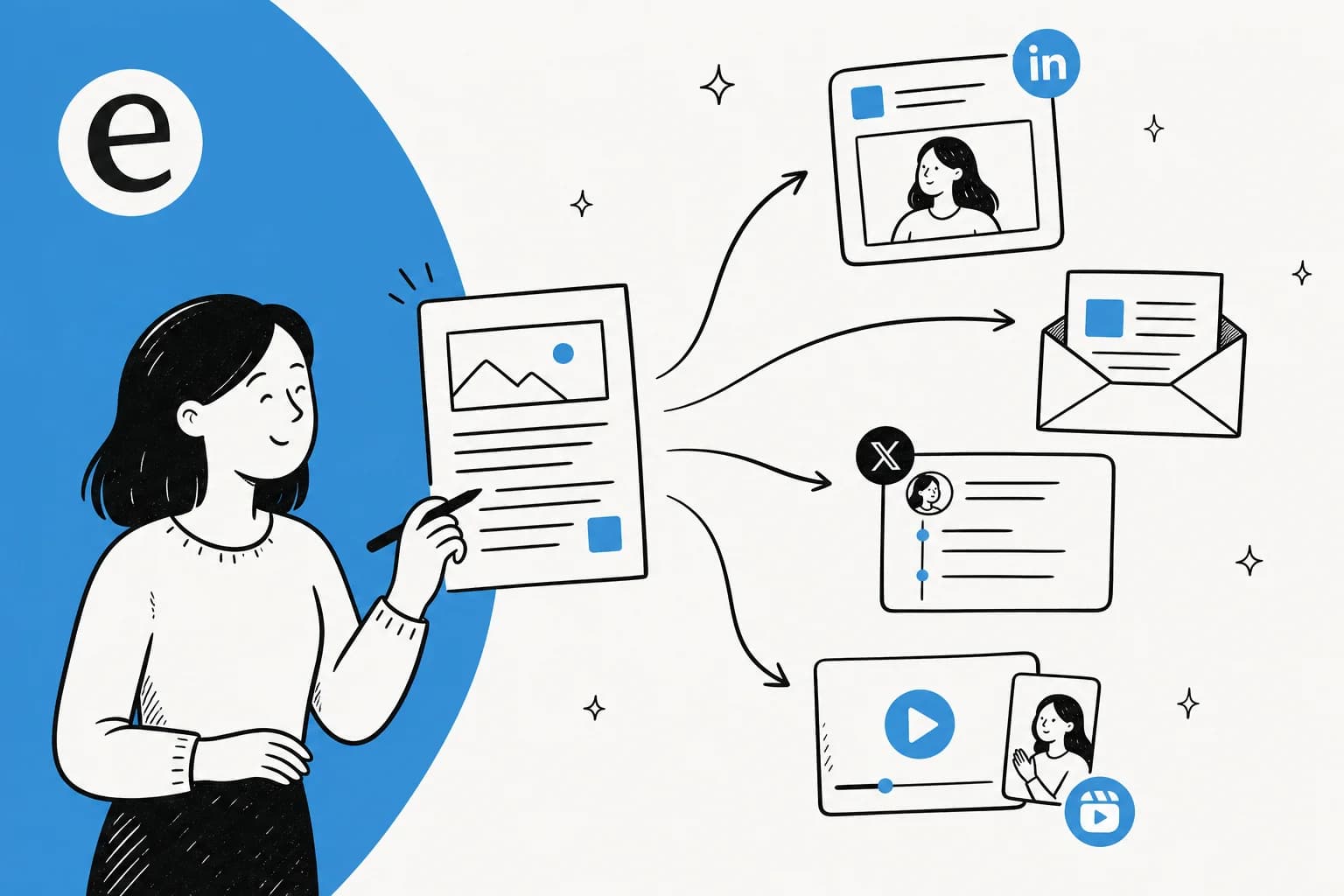
An AI content repurposing tool is the thing that takes that one asset and fans it out into all the formats you'd publish if you had the hours. Point it at a source, and it produces the channel versions: a hook-first LinkedIn post, a numbered X or Threads thread, an email section, captions for short video, even the FAQ snippets that get you picked up in AI search.
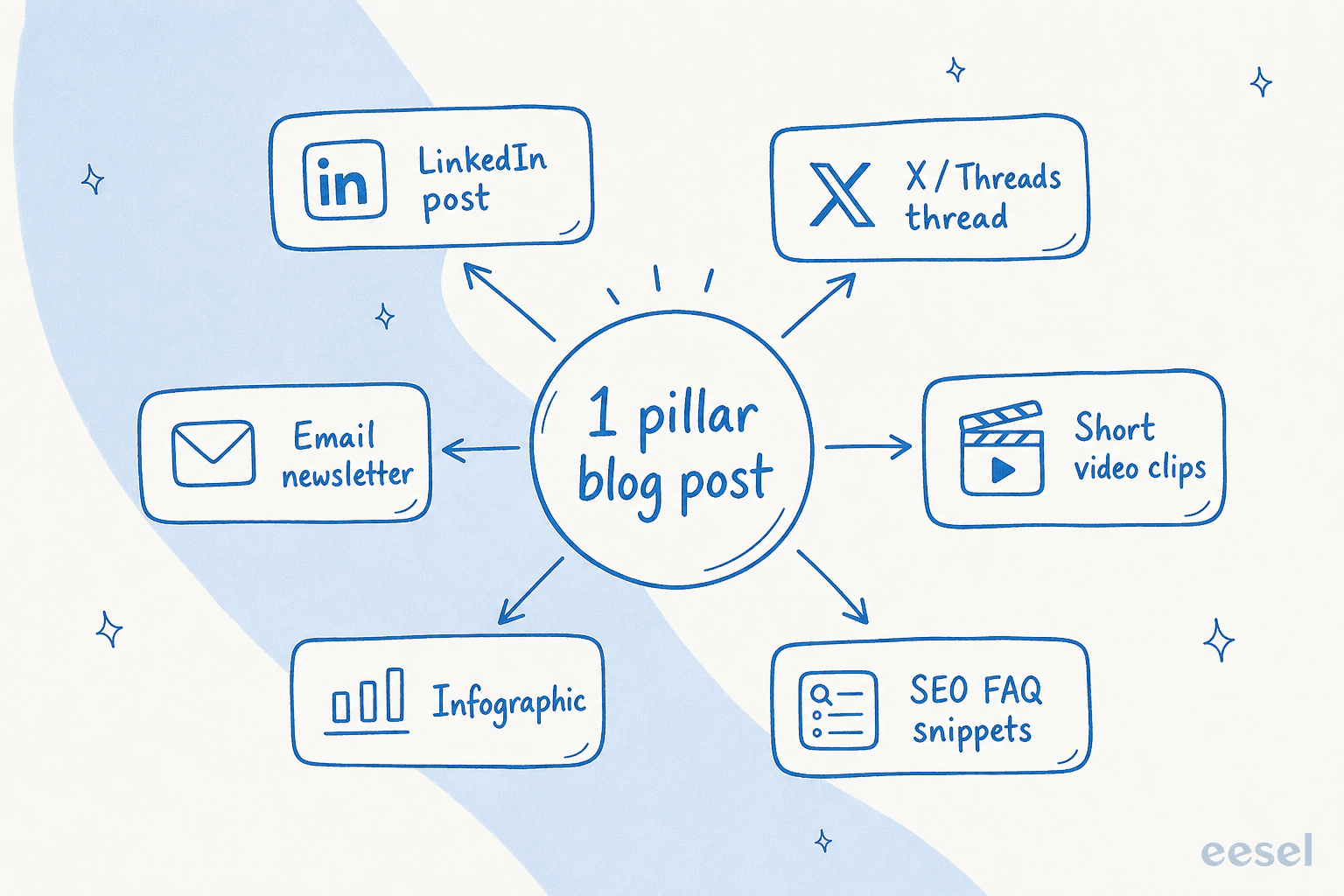
The mental model that matters: you make one pillar piece, and everything else is a derivative of it. That's different from an AI content generator that invents new posts from scratch, and different again from a bulk content generator that just produces more first drafts. Repurposing is about getting more reach out of the work you already did, which is also why it sits at the heart of any sane AI content workflow.
Why repurposing is worth the trouble
The case for it is almost embarrassingly strong. In a Referral Rock survey, 94% of marketers said they repurpose content, 46% said repurposing brought in their best results (beating both creating new content and updating old), and 65% called it the most cost-effective strategy they run. The work is already done once; repurposing is how you stop paying for it to reach one audience, and it's a big part of building real topical authority on a single subject.
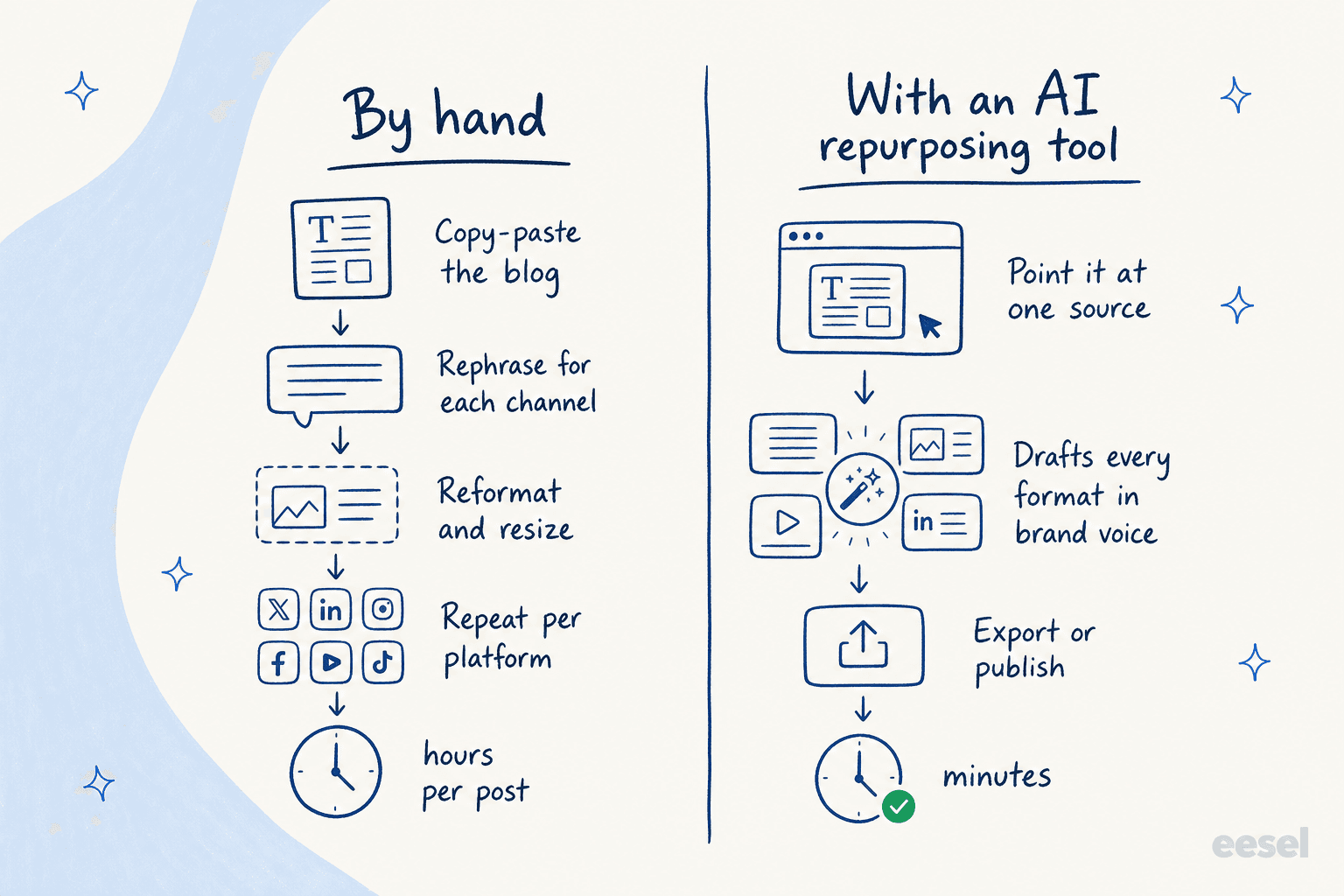
The reason people don't do more of it isn't that they don't believe in it. It's that doing it by hand is grinding, repetitive work. A marketer on r/content_marketing put the daily reality of it plainly:
"A common challenge I keep running into is the time it takes to adapt a single, well-researched blog post into good, native-feeling content for LinkedIn, a Twitter thread, an email snippet, etc. My current process involves a lot of manual copy-pasting, rephrasing, and summarizing, which feels like a huge time sink."
That time sink has a cost you can feel. On r/SaaS, one founder admitted the obvious consequence: "I find it super time-consuming, so half my blogs just sit there without much promotion." The blog gets written and then abandoned, because the distribution step is the part that never gets automated. That's the gap a repurposing tool is supposed to close.
A generic spinner vs a real repurposing engine
Here's where I'd push back on most of the category, because this is the bit that decides whether the tool is worth your money. A lot of what gets sold as a repurposing tool is a thin wrapper that takes your blog and reskins it into a shorter blog. The skeptics on Reddit have noticed: the recurring complaint is that these tools "just take your blog post and spit out generic" copy that reads the same on every platform.
That matters because channels aren't interchangeable. A LinkedIn post that opens with your blog's intro paragraph dies. A thread that's just your H2s pasted in order isn't a thread. If the tool doesn't understand that the format changes per channel, not just the length, you've automated the production of content nobody engages with. Faster bad content is still bad content.
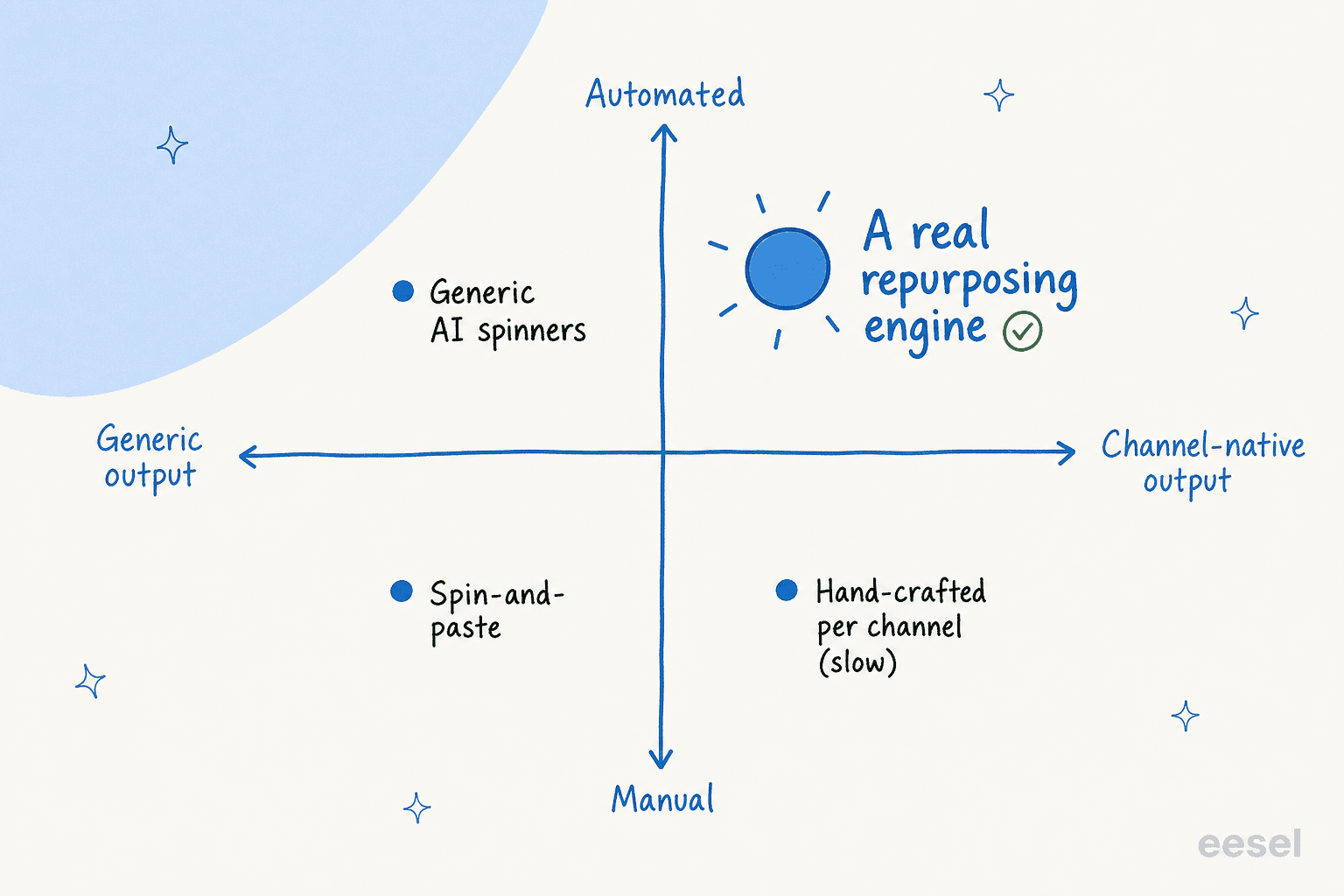
The top-right corner is the only one worth paying for: automated and native to each channel. Doing it by hand gets you native output but burns the hours you were trying to save. Generic spinners give you speed and nothing else. A real engine has to land in the corner that's both, which means it needs to actually know your source and your voice, not just paraphrase a paragraph. It's the same line I'd draw when picking any AI content writing software: if you can swap your brand name out of the output and it still reads fine, the tool isn't doing the job.
Where these tools quietly break
I get to be specific here, because repurposing and publishing is what I work on. I run eesel's content engine, and this post came out of it, so most of what I know about where these tools fail came from watching real ones fail, across thousands of generations, in places nobody demos.
The breakages are almost never at the drafting step. They're three other places.
The first is silent output. More than one trial user has told us a generation "finished" with credits spent and no asset they could find. One freelance consultant on our blog writer put it bluntly: "i spent 2 credits and no blog is showing. So weird." A repurposing run you can't see the output of isn't a workflow, it's a slot machine. Whatever tool you pick, make sure every run lands somewhere obvious.
The second is the brand-voice cliff. The temptation with any repurposing tool is to turn the volume up and stop reading the output. Reach goes up, quality falls off a cliff, and you've built an AI content machine that publishes forgettable posts at scale. The fix is keeping a real source and a trained voice in the loop, not a tone dropdown. (If you're worried about the detection angle too, it's worth knowing how AI content detectors work before you publish at volume.)
The third, and the one I keep coming back to, is the CMS wall. A licensed therapist running our blog writer told us her AI-optimized posts were perfect in the app but she "can't even copy and paste the blog as is" into her website builder without losing the formatting, the FAQ dropdowns, and the metadata. The content was done and stranded. If a repurposing tool can't get the finished asset into your channels cleanly, every upstream step was wasted motion, which is why CMS integration and auto-publishing deserve more weight in your decision than the drafting demo does.
The throughline: a repurposing tool is only as good as its weakest stage, and the weakest stage is almost never the writing.
What good looks like
So if you're shopping for one, here's the checklist I'd actually use, in priority order:
- It stays grounded in your source. The output should trace back to what you wrote, not drift into plausible-sounding filler. This is the same discipline behind learning to fact-check AI content.
- It reshapes per channel. A LinkedIn post, an X thread, and a newsletter section should look different, because they are. If they all read the same, the tool only changed the word count.
- It holds your brand voice. Trained on your real writing, ideally, not a slider. Generic input makes generic output, every time.
- It gets the asset out cleanly. Clean export or native publishing, so you're not re-pasting and re-formatting by hand. Check this before you check anything pretty.
- It fits a pipeline. Repurposing is one stage of a larger content ops workflow; the tool should hand off to planning, editing, and refreshing content for SEO rather than living on an island.
You can stitch this together from separate apps, a planner here, a repurposer there, a publishing plugin somewhere else, and plenty of teams do. The cost is the seams: every handoff is a place where the source gets lost, the voice resets, or the formatting breaks. If you go that route, weight your evaluation toward the stages that hurt, publishing and voice, not the drafting demo every vendor leads with. My comparison of AI content platforms and the wider field of content writing software are reasonable starting points.
How I'd actually run the workflow
In practice, the repurposing job is four moves, and they map onto how I'd set up any AI content pipeline.
- Start from one strong source. A pillar blog post, a webinar transcript, a podcast episode. The richer the source, the more native the derivatives.
- Brief the tool like a colleague. Tell it the channels you want, the voice, the angle, the non-negotiables. The best tools take a plain-language brief instead of a form.
- Let it draft every format, then read them. This is the step people skip and shouldn't. Skim for the brand-voice cliff and anything that drifted off-source, the heart of any real content editing process.
- Publish or export cleanly. Push to your channels or your CMS without losing structure.
That second step is where eesel's approach is different from a one-shot generator. You brief an eesel teammate in plain language, the same way you'd brief a good blog writer, and it keeps that brief in context across everything it produces.
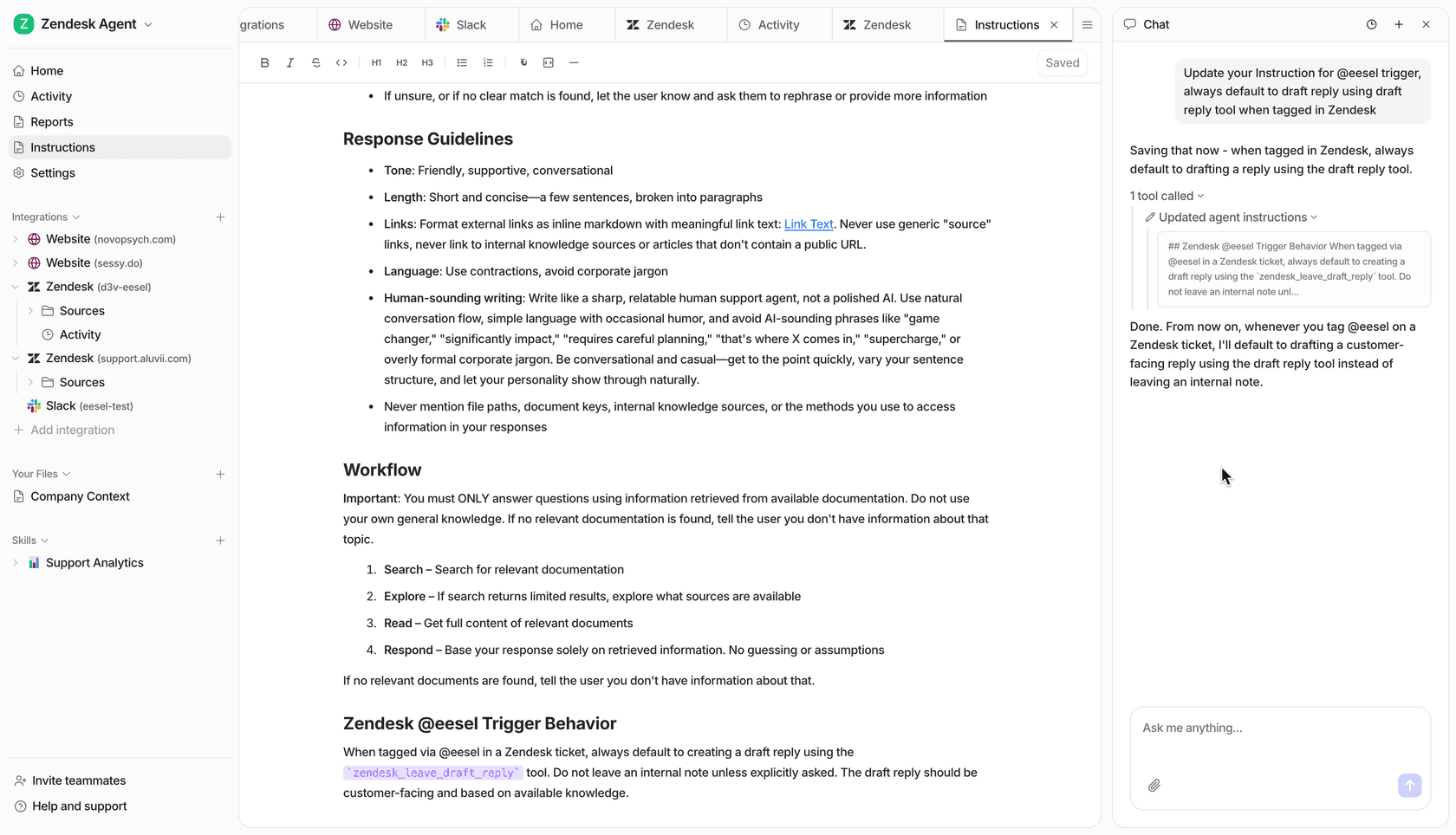
It's the same setup I'd point an agency content team to, and the same logic behind scaling SEO content safely: the brief and the voice travel with the work, so the tenth piece sounds like the first. If raw throughput is what you're chasing, the same logic shows up in any content scaling tool worth using.
Try eesel for content repurposing
I'll be upfront that I work here, so take the recommendation with that in mind. But the reason I'd reach for eesel on this specific job is that it owns the whole pipeline instead of just the drafting. eesel's AI blog writer researches from real sources, matches your brand voice, and produces publish-ready assets, so the source, the voice, and the publishing target stay connected from one piece to the next.
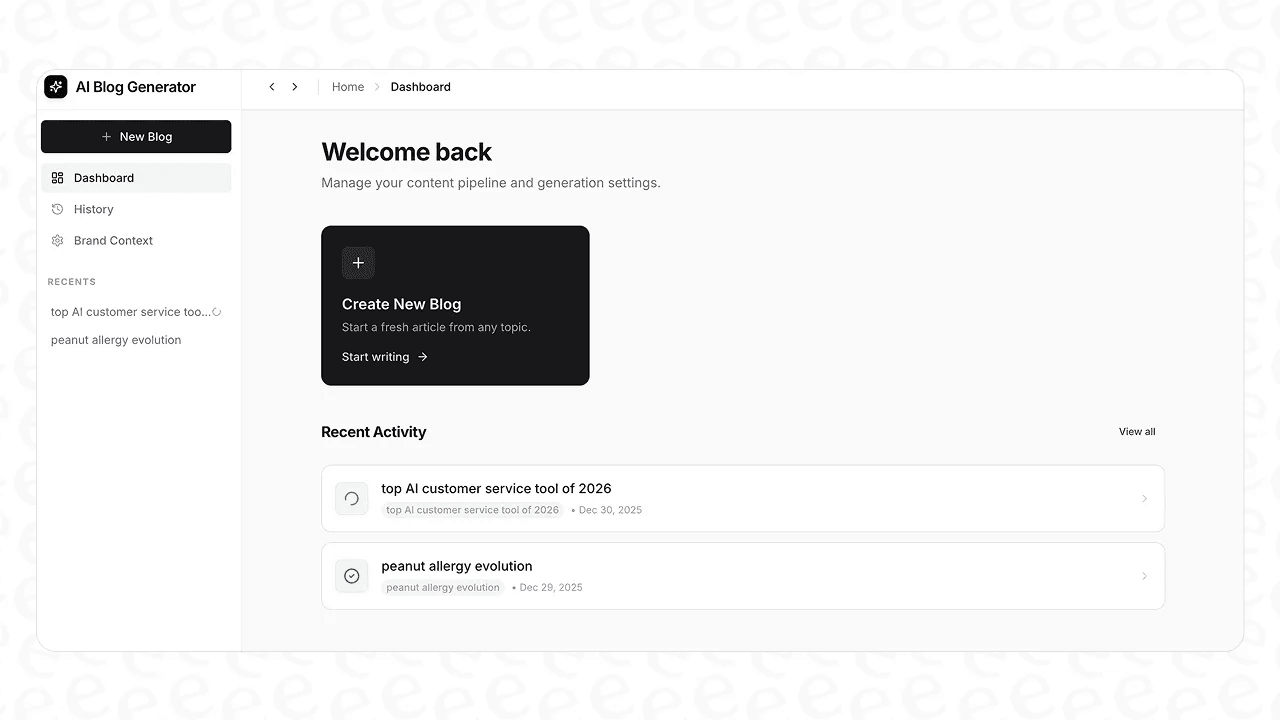
It's the same engine we run our own blog on, and it plugs into your existing tools rather than asking you to move. You can try eesel free, no credit card, and run a real source through it before you decide. Judge it on the assets that come out the end, since that's the only part that ever mattered.
Frequently Asked Questions
What is an AI content repurposing tool?
An AI content repurposing tool takes one source asset, a blog post, webinar, or podcast, and adapts it into many channel-native formats: LinkedIn posts, an email newsletter, an X thread, short video clips. The useful ones rewrite for each platform's format rather than pasting the same text everywhere. For the hands-on version, see my guide to repurposing blog content.
How is content repurposing different from just reposting?
Reposting drops the same words into a new place. Repurposing reshapes the idea to fit how people read on that channel, a punchy hook on LinkedIn, a numbered thread on X, a scannable section in a newsletter. A good AI content workflow handles the reshaping, not just the copy-paste.
Will an AI content repurposing tool make my posts sound generic?
It can, if all it does is reword. The fix is grounding every draft in your real source and training the tool on your own brand voice instead of a tone slider. It also helps to know how AI content detectors work before you publish at volume.
How much does an AI content repurposing tool cost?
The honest unit is cost per published asset, not per credit. Standalone repurposing apps run on monthly seats or credit packs; platform tools like eesel charge per generated piece. eesel's AI blog writer starts free, and the live numbers are on the pricing page.
Can an AI content repurposing tool publish straight to my channels?
Some can, and it matters more than the drafting. The value evaporates if you hand-paste every post and lose the formatting on the way into a restrictive CMS. Look for clean export or native auto-publishing, and check CMS integration before you scale.


Article by
Kurnia Kharisma Agung Samiadjie
Kurnia is a software engineer and writer at eesel AI with two years of SEO experience, writing about AI tools, helpdesk software, and customer support. He pairs a developer's understanding of how these products are built with search-driven research into what actually ranks and resonates with the people searching for them.