There is no official Claude for Instagram. Neither Anthropic nor Meta lists an Instagram connector in Claude's marketplace, and searching it for "Instagram" turns up six third-party connectors, mostly for analytics, ads and posting. So Claude is great for the one-person side of Instagram (captions, content plans, reading your numbers through a connector like Windsor.ai), and it has no supported way to answer your customers' DMs by itself.
For DMs there are three real routes. Build a bot on Meta's Instagram messaging API with the Claude API underneath. Turn on Meta's own Meta Business Agent. Or hand the inbox to an AI teammate that already works there.
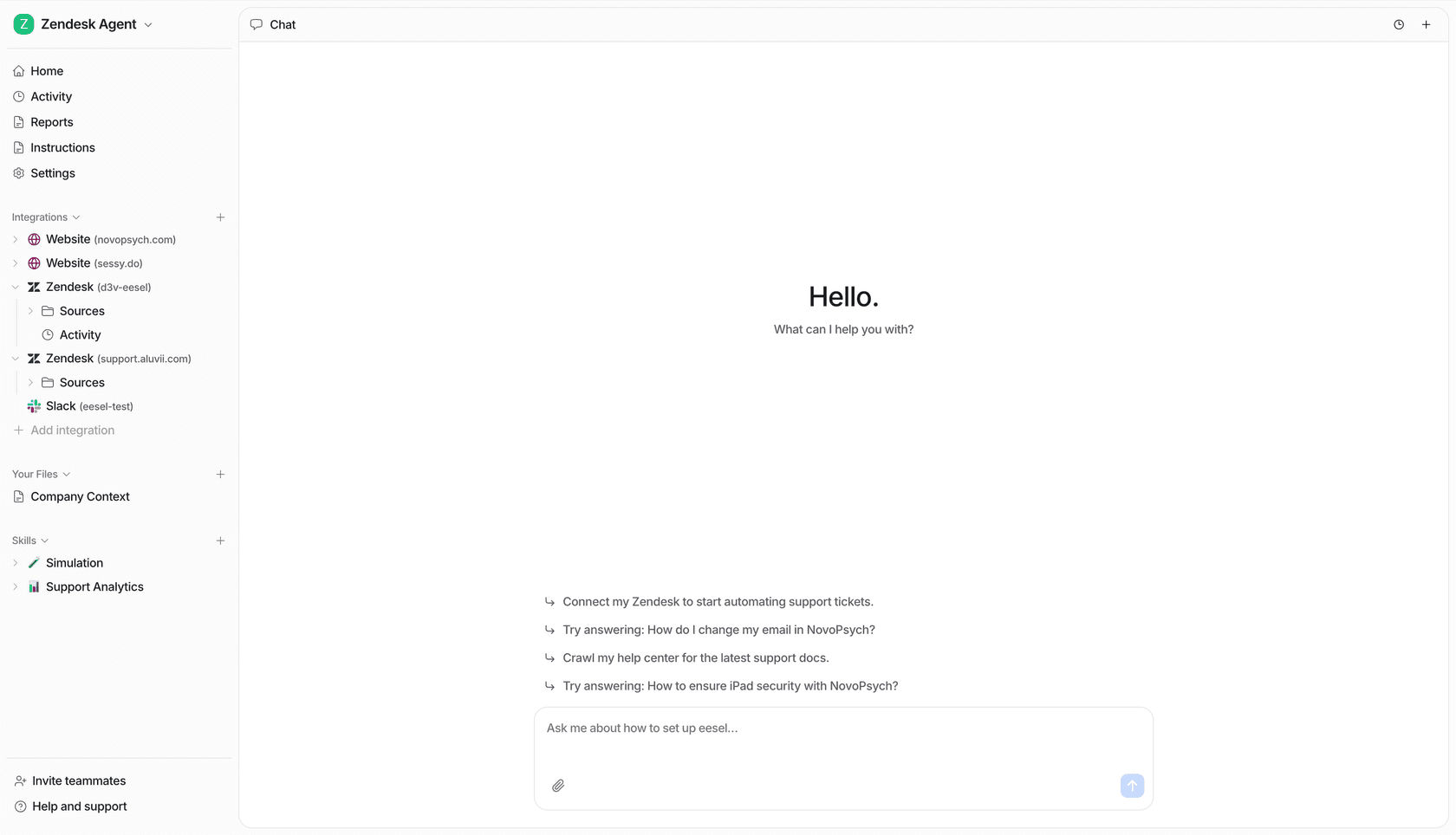
That last one is eesel. It answers DMs on your Instagram Business account from your own docs and store data, takes requests from your team in Slack, and what it may do depends on who is talking: your social lead can approve a held refund, a verified customer gets their own order, and a stranger in the DMs gets public answers only. You can even have Claude Code set it up: the eesel CLI loads your shipping and returns docs and asks test questions before a single customer sees a reply.
Why I wrote this one
I spend my days on the part of eesel that connects an AI to the apps a team already uses, and Instagram is one of the channels where that gets interesting fast. eesel has spent years letting an AI act inside teams' own tools, and the lesson is always the same. The model is the easy part. The hard part is deciding what the AI may do on its own, what waits for a person, and what it must never hand to someone who just slid into your DMs.
Most "Claude for Instagram" searches come from one of two people. A creator or marketer who wants help with posts. Or a brand whose DM inbox is getting away from them. Claude is great for the first. The second needs something else, and I'll show you why.
Is there an official Claude app for Instagram?
No. I searched Claude's marketplace, which lists 1,137 connectors and plugins, for "Instagram". The results were Windsor.ai for Social Media, vidIQ, Windsor.ai, Zapier, Supermetrics Marketing Analytics and Adspirer Social Ads. None of them is from Anthropic or Meta, and the Instagram-specific ones are about analytics, ads and posting rather than your DMs.
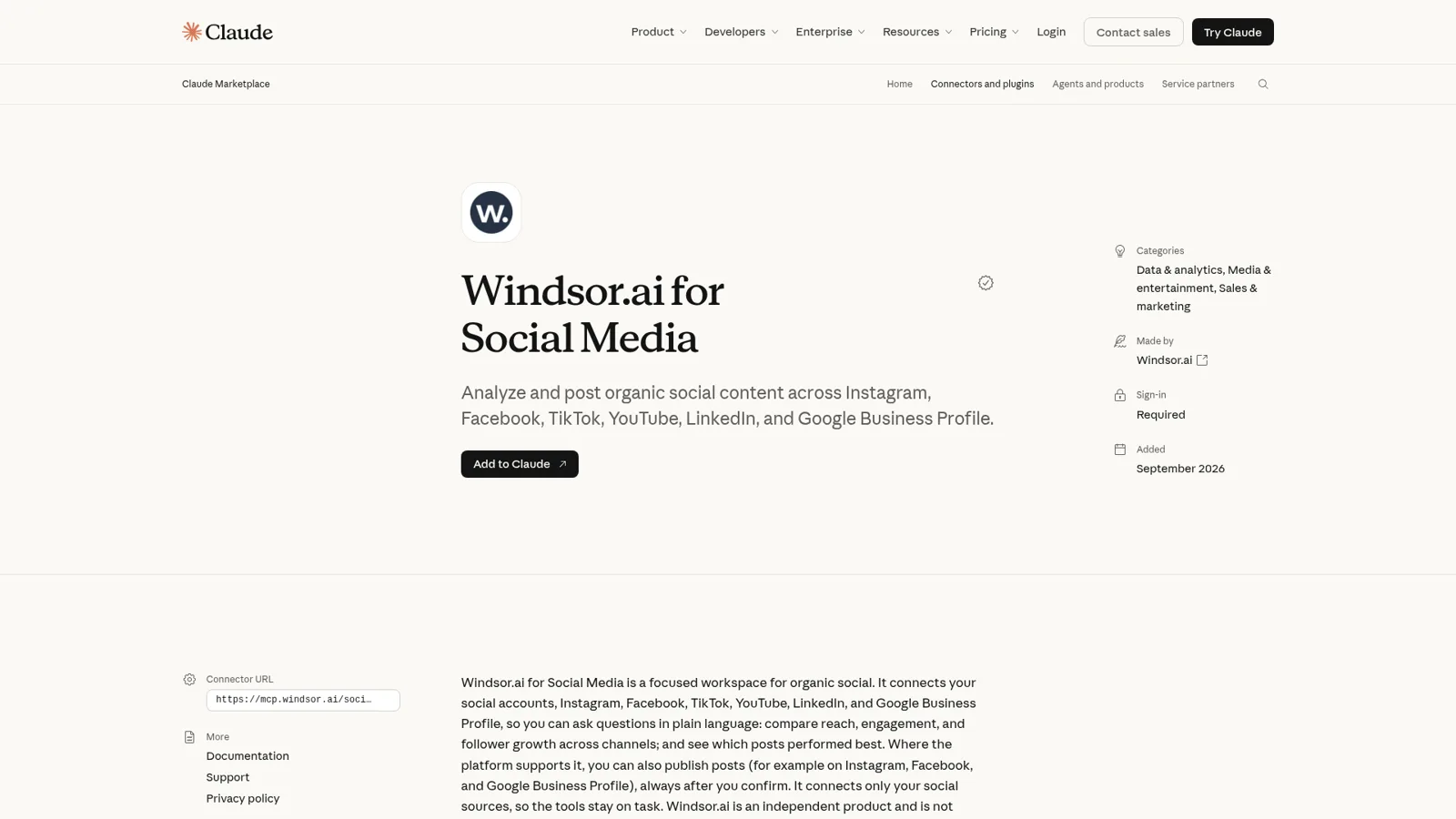
The Windsor.ai for Social Media connector is the closest fit. It connects your social accounts so you can "compare reach, engagement, and follower growth across channels; and see which posts performed best", and where the platform supports it you can publish posts to Instagram, "always after you confirm." The listing also says plainly that Windsor.ai "is an independent product and is not affiliated with or endorsed by the platforms it connects to."
Here's the full map of what Claude can do with Instagram today.
| Route | What it does with Instagram | What it doesn't do | Cost |
|---|---|---|---|
| Claude chat, no connector | Captions, hooks, content calendars, reply drafts you paste in | Touch your account at all | Claude plans from $17 a month on Pro billed annually |
| Third-party connector (Windsor.ai and others) | Reads your Instagram analytics; publishes posts after you confirm | Answer DMs (not what they're built for) | Your Claude plan plus the connector vendor's plan |
| Claude in Chrome | Reads the page you're signed in to, then clicks, types and fills forms | Run unattended on your DMs within Instagram's terms | Any paid Claude plan |
| Claude API + Meta's Instagram API | Answers DMs on your business account, if you build it | Anything you don't build: lookups, handoff, permissions | Claude API tokens plus your hosting |
The Chrome route deserves a warning. Instagram's Terms of Use say you can't access or collect information "in an automated way without our express permission, regardless of whether such automated access or collection is undertaken while logged-in to an Instagram account." Asking Claude to check one thing in your account is one matter. Leaving a browser agent to work your inbox every morning is the kind of thing that gets accounts flagged, and people who have tried unofficial routes say so:
"Personally working with reverse engineered Instagram APIs, A.K.A private APIs, There are high chances of accounts getting banned immediately after using these APIs for automation."

What Claude is good at for Instagram
Plenty, as long as the work is yours. I'd use Claude for a week of caption variants in your brand voice, a content calendar built around a launch, a rewrite of your bio, or a breakdown of why last month's Reels beat the carousels (with Windsor.ai feeding it the numbers). Its Canva connector helps on the creative side. I've written up where Claude shines more broadly in Claude for work, and the store-owner angle in Claude for ecommerce.
It also drafts a fine reply to a tricky DM if you paste the message in. That's the ceiling, though. Pasting customer messages into a chat window one at a time is how most brands start, and it's also why they end up searching for something that runs on its own.
Can Claude answer your Instagram DMs?
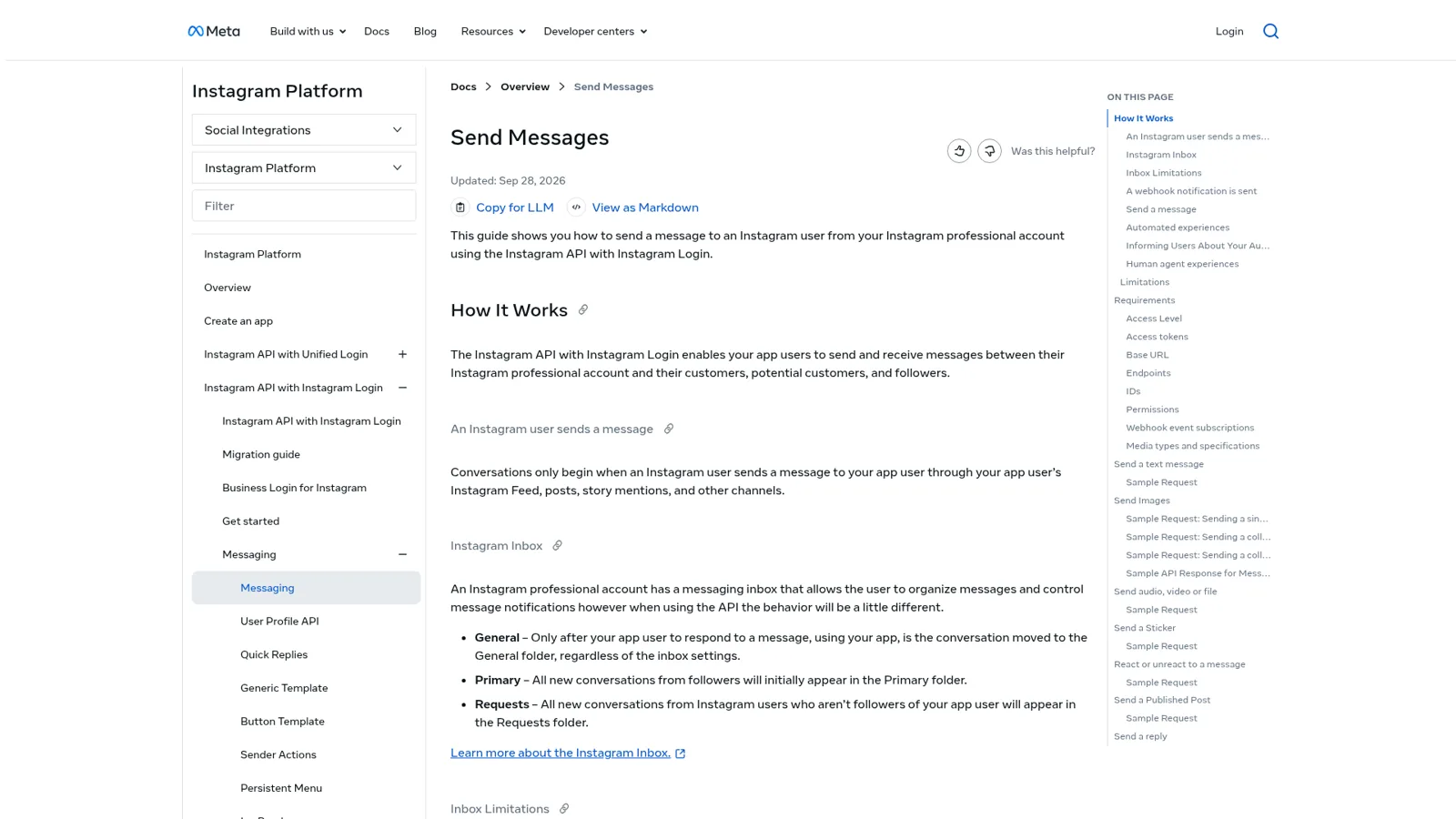
Only if you build it, on Meta's terms. The sanctioned route is Meta's Instagram messaging API, and its rules shape everything your bot can do.
The rules worth knowing before you write a line of code:
- The customer goes first. "Conversations only begin when an Instagram user sends a message" to your professional account. Your bot can't open a cold DM.
- The reply window. For most user actions you have 24 hours to respond, or up to 7 days after a first message from a Click-to-Direct ad. Meta's messaging policy adds a Human Agent tag that lets a person (not a bot) reply within a separate 7-day window.
- A way out. Meta's docs give automated experiences two escalation paths: a custom inbox in the same app, or a handover to another app through its Handover Protocol.
- Say it's a bot where the law asks. When required by applicable law, automated chats must disclose it at the start of a conversation, after a long gap, or when a human hands back to automation. Meta calls out California and Germany by name.
- Small details that bite. Message text is capped at 1,000 bytes, group messaging isn't supported, and the API needs the
instagram_business_basicandinstagram_business_manage_messagespermissions.
The build itself is a webhook server that receives each message, calls Claude, and posts the reply to the /<IG_ID>/messages endpoint. The model is cheap. On Anthropic's API pricing, Claude Sonnet 5.5 is $2 per million input tokens and $10 per million output, and Haiku 5.5 is $0.10 and $0.50 for prompts up to 100,000 tokens. My Anthropic API pricing post has the full table.
The paperwork is less cheap. An app serving only Instagram accounts you own or manage can run on Standard Access. One serving other people's accounts needs Advanced Access, which means Meta's App Review, and developers have stories:
"I've previously gone through review for IG basic + messaging permissions, it took several months of constant submissions to get approved."
Then comes everything that isn't the model. Order lookups in Shopify, a handoff to your helpdesk, memory per customer, logging, and some way to stop the bot from doing what it shouldn't. If you only want an opening-hours responder, a weekend build is fine. If you want it to answer "where's my order?", which is the most common DM a store gets (my Instagram order tracking guide covers it), the project grows quickly.
What about Meta's own AI on Instagram?
Meta has two, and one of them is a real option for a business. Meta Business Agent is an AI for your Instagram messages that you set up from Tools in your inbox, with no code. It "learns from your Instagram posts, website, product catalog and more", you can test it privately first, and you choose what it responds to and when to step in. It's "available to eligible businesses in select markets", with more markets promised.
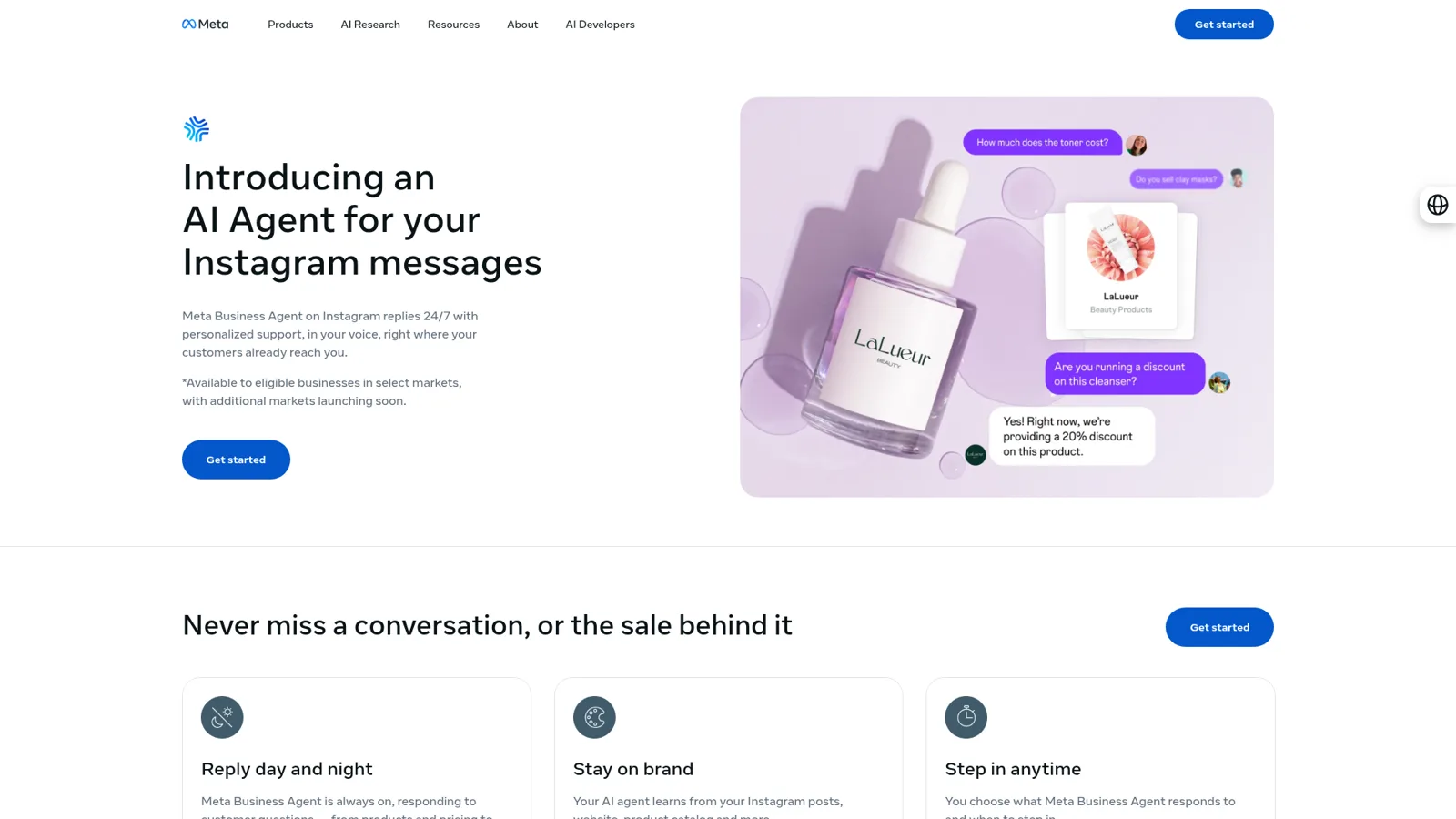
If your DMs are mostly product and pricing questions and you're in an eligible market, try it. It sits right in the app, and that's hard to beat. Where I'd look further is when answers live outside Instagram (order status in your store, a returns policy in your help center, a past thread in your helpdesk) and when you want rules that change with who's asking. Creators get a lighter version too: Instagram's AI auto replies let a creator AI answer messages from an audience you pick, labelled "AI · your name".
The other one is Meta AI in your own chats, which can summarise unread chats, rephrase a message or answer a question when someone mentions @Meta AI. It's a personal helper, like Claude, just living inside the app. I compare it with other assistants in my Meta AI chatbot post.
What does an Instagram DM bot need to know about who's asking?
Who it's talking to, and what that person is allowed to get. This is the gap that matters most, and it isn't about Claude being weak. Claude works for whoever is typing, which is the right design for a personal assistant. It has real controls. Team and Enterprise admins manage connectors, and each connector tool can be set to Always allow, Needs approval or Blocked, per Claude's connector docs. Those controls follow the person using Claude. They don't change with who a request is for.
Your Instagram inbox is full of different people:
- Your social lead, who wants to know what customers asked about the new drop and to approve a refund the bot held back.
- A verified customer, asking where their order is.
- A stranger, asking about sizing, or asking for someone else's order details.
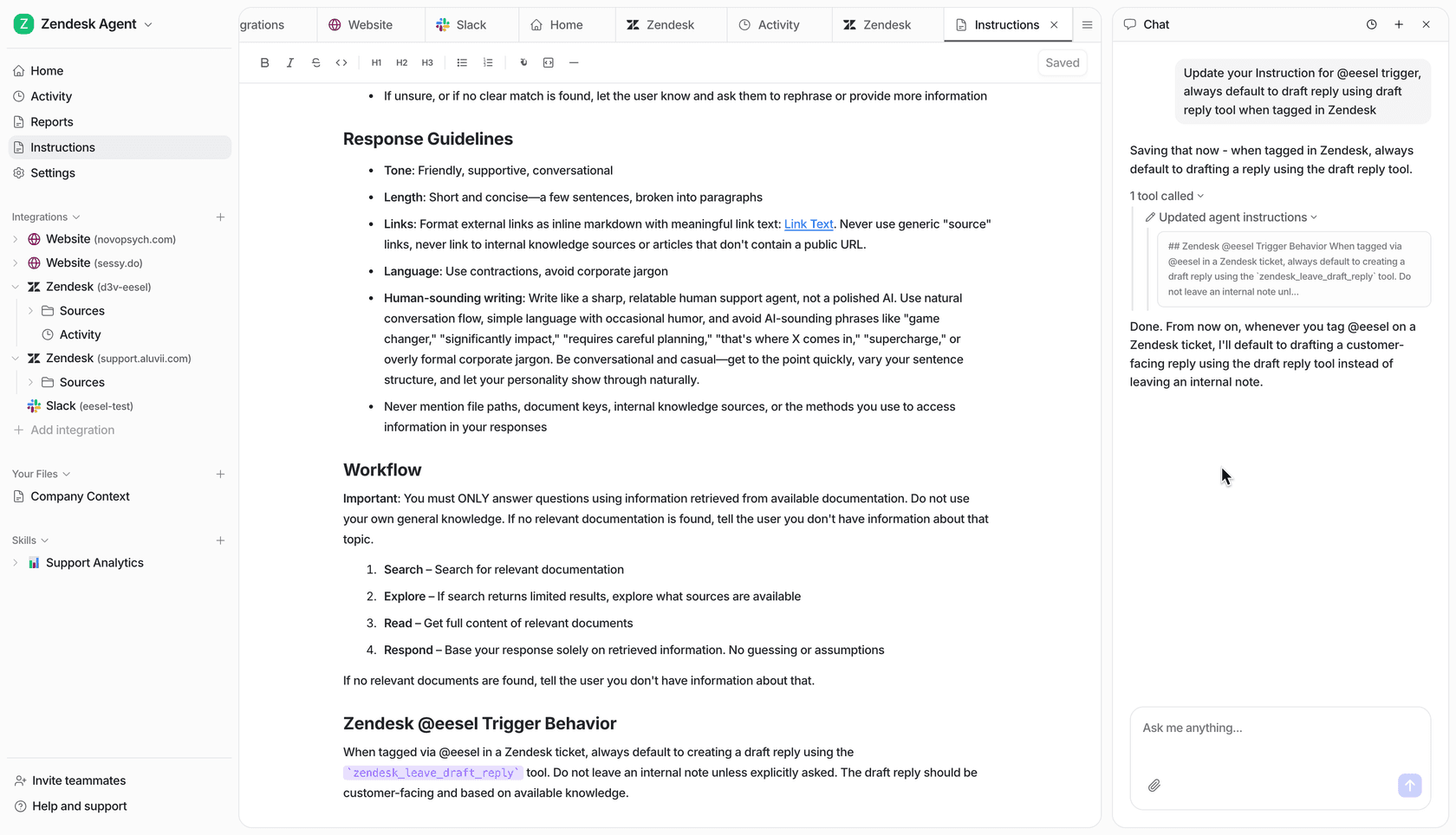
eesel was built around exactly that split. Every action is set to On, Ask first or Off, per agent and per action, and you can set it in plain words ("look orders up on your own, but ask me before any refund"), per eesel's actions and approvals docs. Ask first shows the exact action with Approve and Deny, on the dashboard, by email, or in a Slack channel you pick, and only editors can approve. Actions tagged Team only run only when someone on your team asks, never for a customer in a conversation. On top of that, what eesel does changes with who is talking: your team, specific people you name, a verified customer, or an anonymous visitor.
Here's how that plays out across the four routes.
| Claude + connector or Chrome | Your own Claude API bot | Meta Business Agent | eesel | |
|---|---|---|---|---|
| Works for | You, at your keyboard | Whoever you build it for | Your business, in Instagram | Your business and your team |
| Who can ask it | You | Anyone who DMs you | Anyone who DMs you | Customers in DMs, teammates in Slack and other channels |
| What decides what it may do | Your Claude permissions, set per tool | Whatever you code | Guardrails you set in the inbox | On, Ask first or Off per action, plus who is asking |
| Works with nobody at the keyboard | No | Yes, once built | Yes | Yes, including scheduled work |
| Answers from | What you paste or connect | What you wire in | Your posts, website and catalog | Your docs, help center, store, helpdesk and Slack history |
| Cost | From $17 a month on Pro, billed annually | API tokens plus hosting and engineering | Free to get started, per Meta | From $299 a month, 7-day free trial |
How eesel works in Instagram DMs
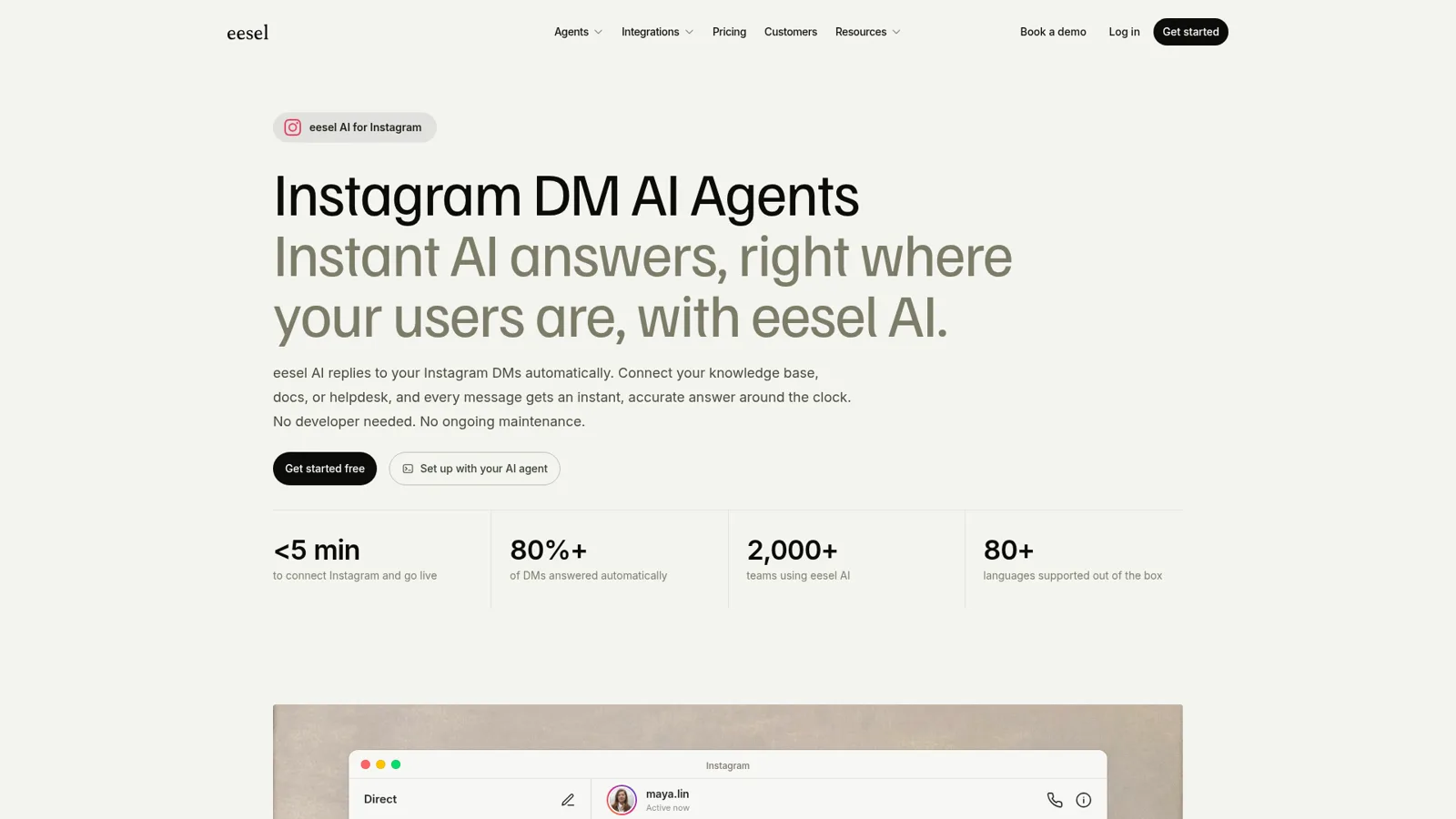
You connect your Instagram Business or Creator account, and eesel starts answering the DMs that arrive from your profile, posts and stories, per its Instagram integration page. No developer needed.
What it brings that a Claude-plus-webhook build doesn't:
- Answers from your own content. It reads your help center, Google Drive, Notion, Zendesk articles and website, and pulls order, product and customer data from your Shopify store. It also learns from past work and your team's Slack history.
- A test run first. You ask it real questions and check the answers before customers see anything, then decide when it goes live.
- Setup by conversation. "Only answer questions about shipping and sizing." "Always hand refund requests to a person." It writes those rules into its own instructions, and corrections stick through memory.
- A real handoff. When a conversation should go to a person, it hands it to your team by email or into your helpdesk, such as Zendesk or Gorgias.
- Your customer's language. It replies in 80+ languages without extra setup.
And it isn't only a DM bot. The same teammate answers your team in Slack ("what did people ask about the restock this week?"), and automations start work from a schedule, an event in a connected app or a webhook, so the Monday summary of DM themes arrives without anyone asking.
The closest customer story is Question Beauty, a cosmetics brand whose short multilingual messages from Messenger, email and chat land in Gorgias. In a month eesel sent 960 replies directly and looked up 290 Shopify orders before answering, while refunds and complaints went to a person with a note attached. That's the who-is-asking split in practice. My roundups of AI for Instagram DMs and Messenger support compare the alternatives.
One more option, for brands that would rather not run any of this. eesel's Managed Support runs your whole support team, Instagram and Facebook DMs included, for $5,000 a month flat as a founding-partner offer.
Keep Claude for your own Instagram work
None of this means dropping Claude. Keep it for captions, campaign plans and reading your analytics. The two even connect: your eesel workspace is an MCP server, so you can add it to Claude as a custom connector and ask "what did eesel answer in our DMs today?" or "have eesel draft a reply to that collab request". Editors can change things, viewers get the read side, and anything set to Ask first still asks. If you're weighing eesel against Claude more broadly, my eesel vs Claude comparison goes deeper.
It's the same split I recommend on other channels. My WhatsApp Claude connector post covers Meta's much stricter WhatsApp rules, and ChatGPT for Magento makes the case for a store's own website chat.
Try eesel as your Instagram DM teammate
If you came looking for Claude for Instagram because the DMs are piling up, what you need is an AI that answers from your real policies and orders, hands the right conversations to a person, and knows the difference between your social lead and a stranger. eesel does that in your Instagram inbox and in Slack. It's a free 7-day trial with 100 credits and no card, then plans from $299 a month on the pricing page, with unlimited seats. Every DM conversation is one credit, however long the back and forth.