On-page SEO
The practice of optimizing the content and HTML elements of an individual web page, like its title, headings, copy, and structure, to rank higher in search.
What on-page SEO means
On-page SEO is the practice of optimizing the content and HTML elements of an individual web page so that search engines understand it and rank it for the right queries. It covers everything within your direct control on the page itself: the title, the headings, the body copy, the URL, the internal links, and the structured signals that describe the page. The goal is to make a single page both clearly relevant to a query and genuinely useful to the person who lands on it.
In content marketing, on-page SEO is the layer that turns a good draft into a page that can rank. A post can be well written and still underperform if its title tag is vague, its headings don't reflect the topic, or its content drifts away from the intent behind the keyword it targets.
What makes on-page SEO different
- You control all of it. Unlike off-page SEO, which depends on other sites, every on-page element is yours to change directly, which makes it the fastest lever to pull.
- It's content-led, not infrastructure-led. Where technical SEO handles crawling and site speed, on-page work is about whether the words and structure on the page answer the query.
- It spans visible and invisible signals. It includes what readers see (headings, copy, images with alt text) and what they don't (the meta description and other metadata).
- It rewards matching intent. A page optimized for the wrong search intent will struggle no matter how clean its tags are, so intent is the on-page factor that anchors the rest.
- It connects pages together. Thoughtful internal linking passes relevance between related pages and helps a topic cluster read as a coherent body of work.
It can be easier to grasp these elements by seeing where each one actually lives on a page.
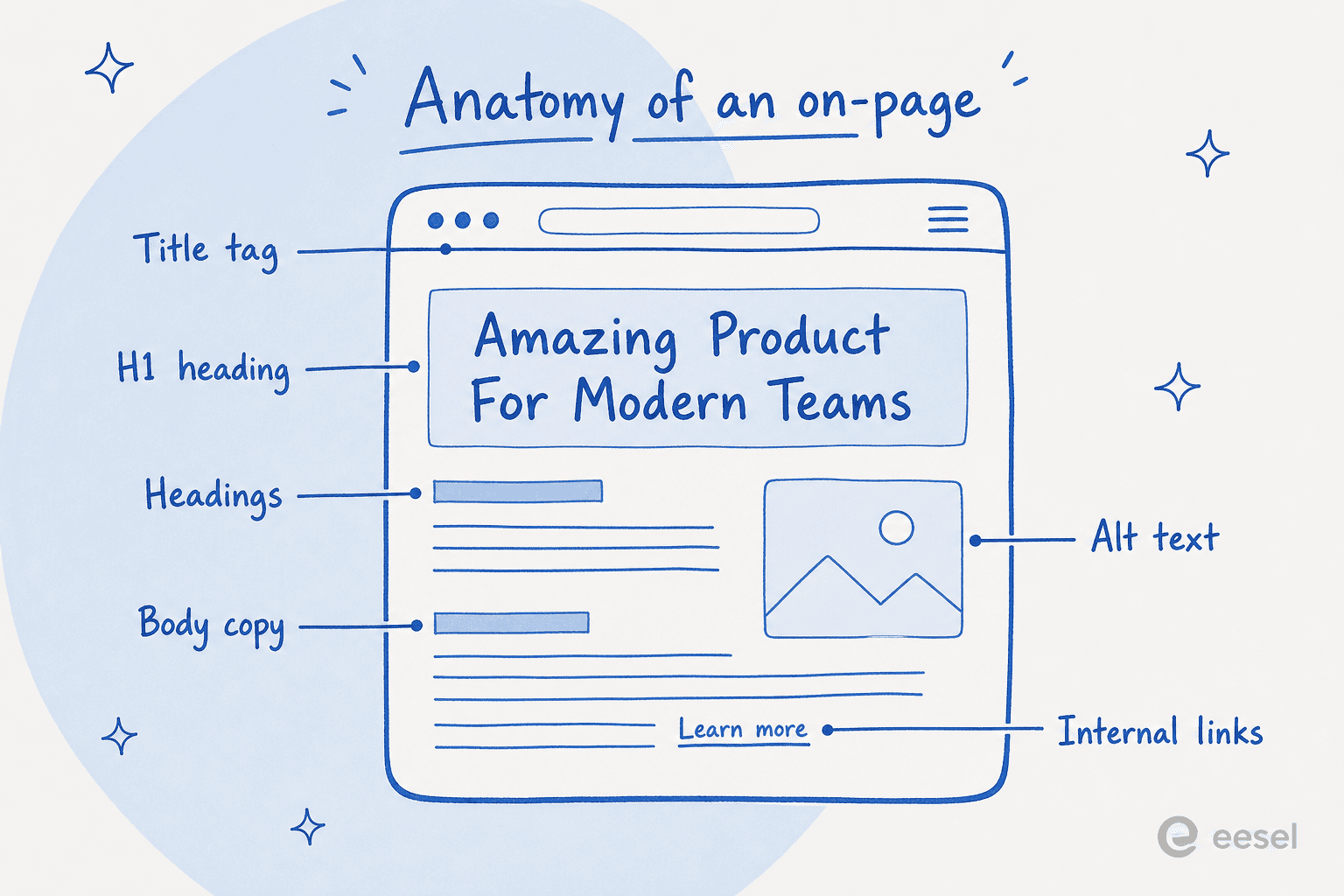
Every callout here is something you edit directly in the page itself, from the title tag at the top to the internal links in the body. That is what makes on-page work the fastest lever, nothing is waiting on another site to act.
How on-page SEO works
A typical on-page pass works through the page from the top down:
- Set the target. Confirm the primary keyword and the intent behind it, so every other choice serves that one query.
- Shape the title and metadata. Write a title tag and meta description that name the topic clearly and earn the click from the SERP.
- Structure the content. Use a logical heading hierarchy so both readers and crawlers can follow the argument, and cover the subtopics the query implies.
- Add supporting signals. Optimize images with descriptive alt text, add structured data where it fits, and link out to related pages.
- Connect internally. Link to and from related pages so the page sits inside a clear site structure rather than as an orphan.
When eesel AI drafts a post, it builds these in from the start: the title, heading structure, and internal links are shaped around the target keyword and its intent, so the on-page work is part of the draft rather than a cleanup pass afterward.
On-page SEO in practice
The trap most teams fall into is treating on-page SEO as a checklist of tags to fill in, then wondering why rankings don't move. The element that actually decides outcomes is alignment with intent: a page that comprehensively answers what the searcher wanted will outrank a tag-perfect page that misses the point. Treat the title, headings, and structure as ways to make that answer easy to find, not as boxes to tick.
We go deeper on this in on-page SEO score.
Get on-page SEO right from the first draft
eesel AI drafts posts with titles, headings, structure, and internal links already shaped around the target keyword and its intent.