Search intent
The underlying goal a person has when they type a query into a search engine, usually grouped as informational, navigational, commercial, or transactional.
What search intent means
Search intent is the underlying goal a person has when they enter a query into a search engine: the reason behind the words, not just the words themselves. It is most often grouped into four types: informational (the searcher wants to learn something), navigational (they want to reach a particular site or page), commercial (they're researching before a purchase), and transactional (they're ready to act, such as buy, download, or sign up). The same phrase can carry very different intent, so reading it correctly is what separates content that ranks from content that merely mentions the keyword.
In content marketing and SEO, search intent is the constraint that decides a post's format before a word is written. A query with informational intent calls for an explainer; a commercial one calls for a comparison or a listicle; a transactional one calls for a product or pricing page, not an article at all.
Why search intent matters
- It dictates the content type. The right answer to a "how to" query is a guide, while the right answer to a "best X" query is a comparison. Picking the wrong format loses before you start.
- It overrides keyword volume. A high-volume term is worthless to target if its intent doesn't fit what you can offer, which is why intent sits at the heart of keyword research.
- It explains why good pages fail. A well-written page that misses the intent will see weak engagement, often visible as poor dwell time as visitors bounce straight back to the results.
- It shapes the SERP layout. Intent drives which features appear, from a featured snippet on informational queries to shopping modules on transactional ones.
- It carries into AI search. As more answers surface inside answer engine optimization, correctly read intent decides whether your content gets cited or skipped.
A useful way to picture this is as a routing problem: the signal words in a query point to an intent type, and that intent type points to the format you should actually write.
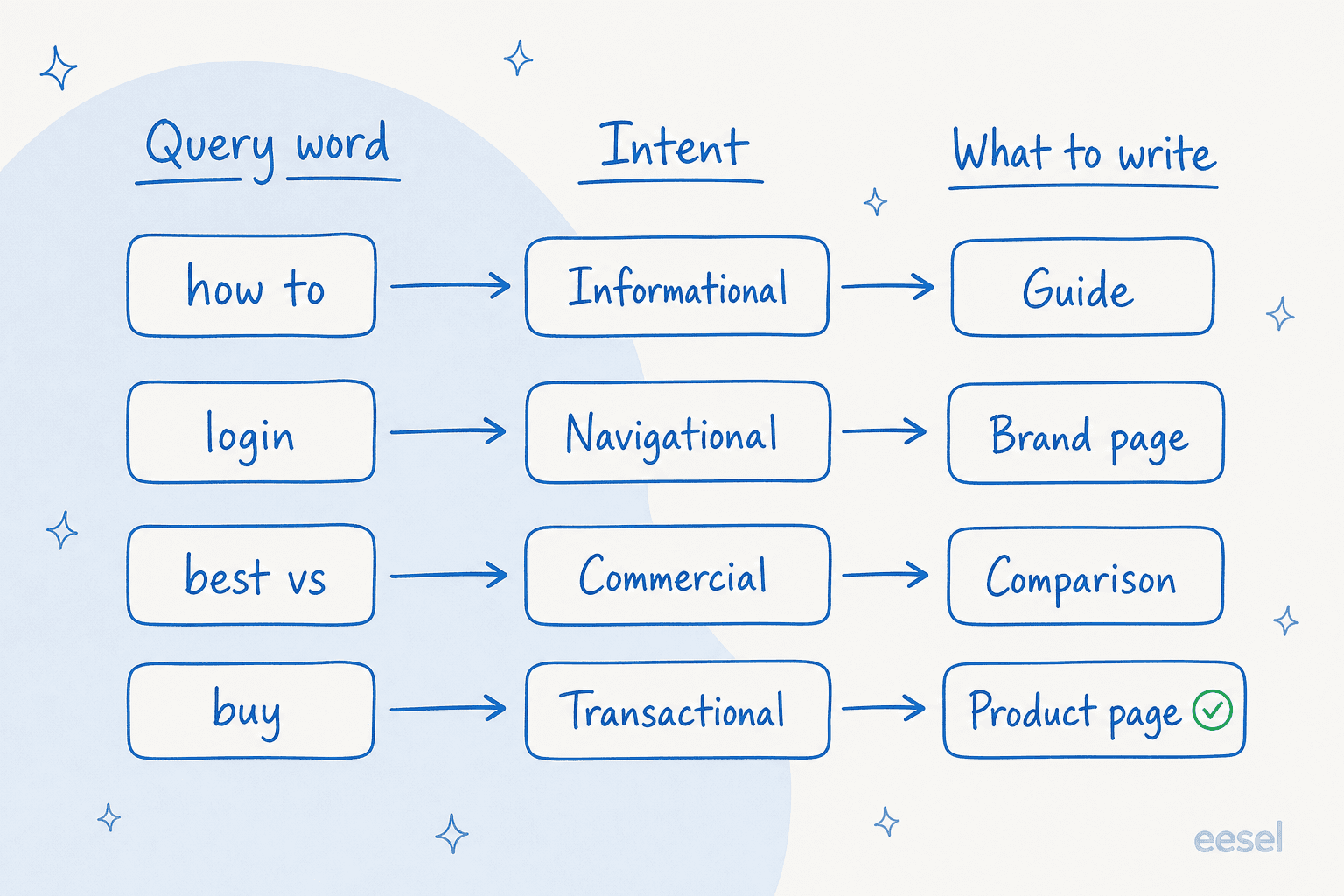
Read left to right, the same query word almost always lands on one format. A "buy" query wants a product page, not the explainer you might be tempted to publish, which is why the format decision should follow the intent rather than your content plan.
How search intent works
Identifying intent follows a reliable pattern:
- Read the query phrasing. Words like "how," "what," or "guide" lean informational; "best," "vs," or "review" lean commercial; "buy," "pricing," or "login" lean transactional or navigational.
- Study the current SERP. The pages already ranking are the engine's own verdict on intent. If the first page is all guides, the intent is informational, full stop.
- Match the format. Choose the content type that intent calls for rather than the one you'd prefer to write.
- Build the content to satisfy it. Cover what the intent implies completely, so the searcher has no reason to return to the results and click a competitor.
An AI blog writer like eesel AI does this reading as part of drafting: it looks at what ranks for the target query, infers the intent behind it, and structures the post in the format that intent demands, so the draft matches the query's intent from the first version.
Search intent in practice
The most common failure is targeting a keyword by its volume and ignoring what searchers behind it actually want. The fix is to let the SERP settle the question: if every result for your target term is a buyer's comparison and you publish a definition, no amount of on-page polish will close the gap. Treat intent as the brief, then write to it, and the format choices that follow usually make themselves.
Match every post to its search intent
eesel AI reads what already ranks for a query, infers the intent behind it, and drafts a post in the format that intent calls for.