Answer engine optimization (AEO)
The practice of structuring content so AI answer engines and search features can extract a direct answer and cite it, rather than just rank a page in a list of links.
What answer engine optimization means
Answer engine optimization (AEO) is the practice of structuring content so that answer engines can extract a direct answer to a query and present it, often with a citation, rather than simply ranking a page among a list of links. An answer engine is any system that returns a synthesized response instead of ten blue links: featured snippets, voice assistants, and AI search features all qualify. AEO optimizes for being the answer the engine surfaces, not just one of the results below it.
In content marketing, this is a shift in the target of optimization. Traditional SEO competes for a ranking position; AEO competes to be the passage an engine quotes, reads aloud, or attributes. As more searches end without a click, getting cited inside the answer becomes its own goal.
Why answer engine optimization matters
AEO matters because the surface where readers and engines meet has changed, and the tactics that win it are concrete:
- Zero-click answers are rising. When the engine answers in place, the citation inside that answer is the visibility, so unstructured content that buries its point gets skipped entirely.
- Engines reward extractable structure. Clear headings, a direct lead sentence, and tight question-and-answer blocks make it easy for a model to lift a clean passage, which is why FAQ formatting and featured snippet targeting overlap with AEO.
- Citations depend on trust signals. Answer engines weigh authority and E-E-A-T when choosing which source to attribute, so vague or unsourced claims rarely get picked.
- Machine readability counts. Structured data and clean metadata help an engine parse what a passage is actually asserting.
- Verifiability is the bar. A specific, sourced claim is more quotable than a hedged generalization, because the engine can stand behind it.
It helps to picture what the goalpost actually moved from:
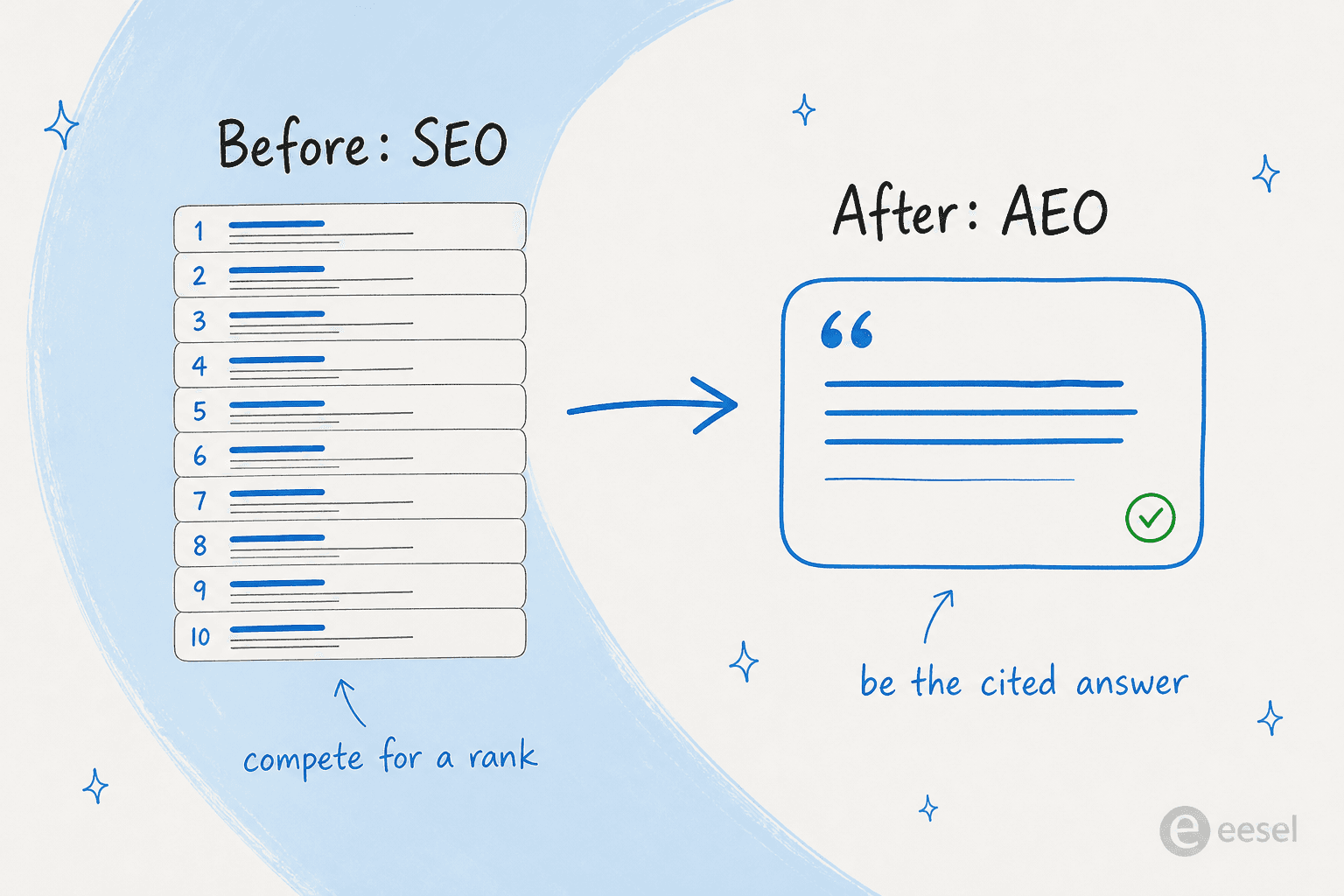
Classic SEO fought for a slot in a list of ten links. AEO targets the single answer the engine surfaces and attributes, so the win condition shifts from ranking somewhere on the page to being the passage worth quoting.
How answer engine optimization works
Optimizing for answer engines follows a repeatable pattern:
- Identify the question behind the query, the exact thing a reader wants answered in one breath.
- Answer it up front in a self-contained sentence or two that makes sense lifted out of the page.
- Structure the support into scannable sections, lists, and Q&A blocks the engine can parse.
- Ground every claim in primary or verifiable sources so the answer is safe to cite.
- Add machine-readable signals like schema markup and clean headings.
An AI blog writer is suited to this because the format it produces is already answer-shaped. A tool like eesel AI researches a topic against real sources and drafts a post that opens with a direct answer, breaks the rest into clean sections, and keeps claims tied to citations, which is exactly the structure an answer engine wants to extract from.
Answer engine optimization in practice
The trap teams fall into is treating AEO as keyword stuffing for robots. It is closer to the opposite: the clearest, best-sourced answer usually wins the citation, because the engine is choosing which passage it can confidently stand behind. Practical AEO means writing the snippet-worthy sentence first, supporting it with structure a machine can parse, and grounding the whole thing well enough that an engine has no reason to reach past you. The same discipline that earns a featured snippet tends to earn an AI citation, so AEO rewards depth and clarity rather than tricks.
Want the toolkit? See our guide to AEO tools.
Write content answer engines will cite
eesel AI drafts source-grounded, well-structured posts that give answer engines a clean, quotable answer to lift.