Generative engine optimization (GEO)
The practice of optimizing content so that generative AI engines surface, synthesize, and cite it when they assemble an answer from multiple sources.
What generative engine optimization means
Generative engine optimization (GEO) is the practice of optimizing content so that generative AI engines surface, synthesize, and cite it when they assemble an answer from multiple sources. A generative engine, such as an AI search experience or chat assistant, does not return a ranked list; it reads across many pages and composes a single response, sometimes attributing the sources it drew from. GEO is about becoming one of those drawn-from, cited sources.
In content marketing and SEO, GEO sits next to traditional search optimization but aims at a different endpoint. Where classic SEO competes for a ranking position, GEO competes to be a building block in the answer a model generates. As AI engines take a larger share of discovery, being part of the synthesized response becomes a distribution channel in its own right.
Why generative engine optimization matters
GEO matters because generative engines change both how content is found and what earns a mention:
- The answer replaces the link list. Generative engines compose a response instead of listing results, so a page that is never pulled into the synthesis is invisible regardless of where it would have ranked.
- Multiple sources blend into one reply. Unlike a single featured snippet, a generative answer stitches several sources together, which means content competes to be one of several cited inputs.
- Authority drives inclusion. Engines lean on topical authority and E-E-A-T to decide which sources are safe to synthesize, so breadth and depth on a subject increase the odds of being pulled in.
- Clarity makes content liftable. Direct statements, clean structure, and unambiguous claims are easier for a model to extract and recombine without distorting them.
- Freshness and grounding count. Current, well-sourced content is more likely to be trusted in a synthesized answer than stale or unverifiable pages.
The shape of a generative answer is what makes GEO its own thing:
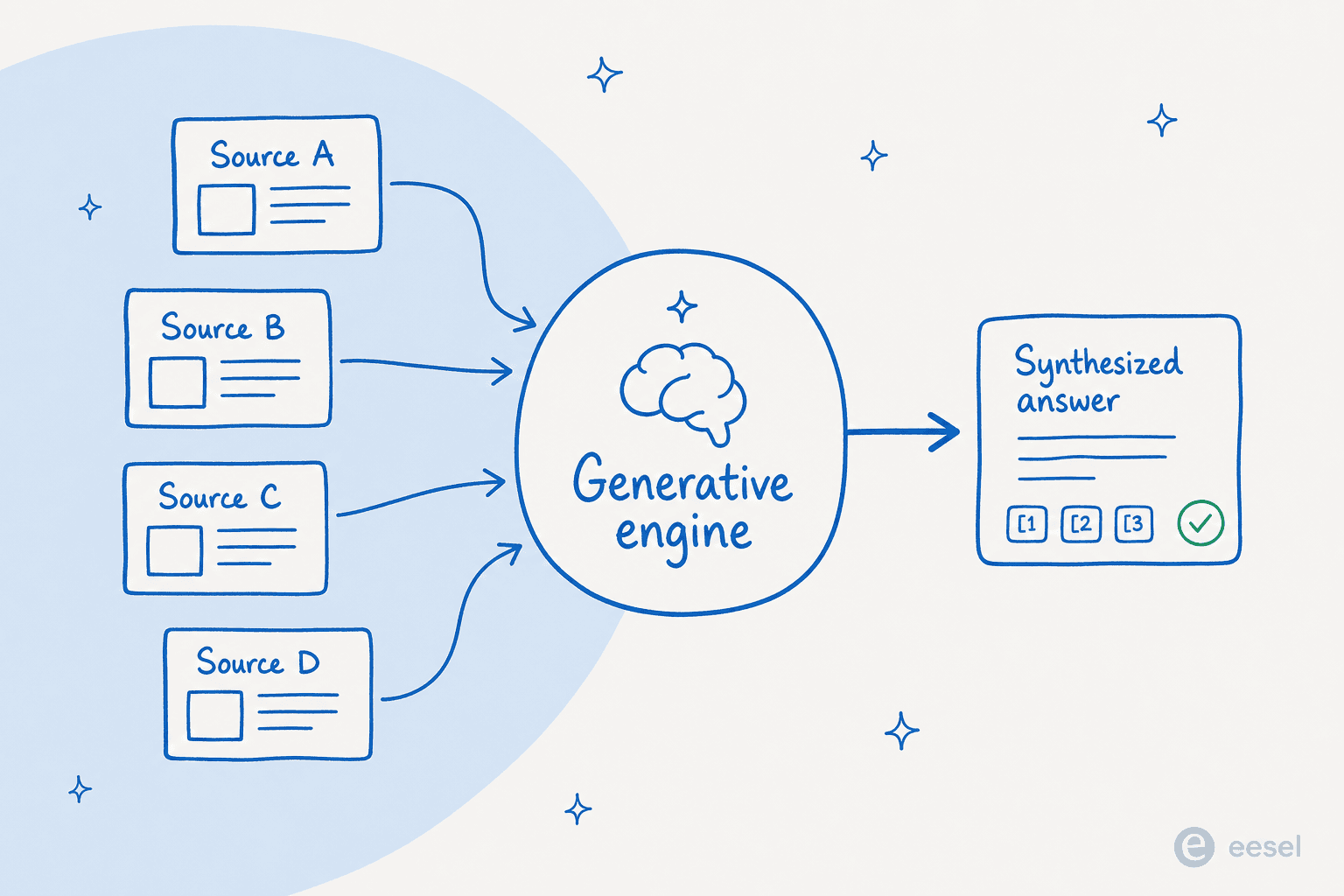
A generative engine reads across several pages at once and blends them into a single reply. The GEO goal is to be one of those drawn-from sources, which means competing for inclusion in the synthesis rather than for one extracted passage.
How generative engine optimization works
GEO follows a practical pattern that builds on, rather than replaces, good SEO:
- Establish topical depth by covering a subject thoroughly across related pages, so an engine sees you as a primary source.
- Write extractable statements that hold their meaning when lifted out of context and recombined.
- Ground claims in citable sources so a model can synthesize them with confidence.
- Structure for parsing with clear headings, lists, and direct lead sentences.
- Monitor citations to see whether generative engines actually mention and attribute your content.
An AI blog writer fits this work directly. A tool like eesel AI researches a topic against real sources and drafts long-form posts that are structured, source-grounded, and clear, which is the exact profile a generative engine prefers when choosing what to synthesize and cite. Producing that kind of content consistently is how a site builds the topical depth GEO rewards.
Generative engine optimization in practice
The misread of GEO is to treat it as a brand-new discipline that abandons everything from search. In practice it is mostly SEO fundamentals applied to a new consumption surface: authority, clarity, structure, and grounded sourcing still decide who gets used. The newer part is that the payoff is a citation inside an answer rather than a click from a ranking, and the measurement is messier as a result. Teams that win at GEO tend to build deep, verifiable coverage of a topic and accept that visibility now shows up as a mention in a generated reply, not only as a position on a results page.
We go deeper on this in GEO tools.
Write content AI engines pull from
eesel AI drafts source-grounded, well-structured posts built to be synthesized and cited by generative engines.